
How and When to Prune Peppers in Mild-Winter Climates
In mild-winter climates like where I live (the low desert of Arizona, zone 9b), pepper plants often live for many years. If left to continue growing, plants get spindly and are prone to breaking. Plants are also damaged by infrequent (but still possible) frost events or extreme summer heat.
Knowing when and how to prune peppers in mild winter climates is essential for keeping them healthy and productive for many years. In this post, I’ll show you when to prune pepper plants, how to tell what growth to remove, how far back to cut, and what to avoid in hot climates. Learn more about how to grow peppers in this guide.
Key Takeaways: How and When to Prune Peppers
- In mild-winter climates, knowing how and when to prune peppers is essential for their health and productivity.
- Prune during spring after frost and in early fall after heat; look for new growth as a sign to cut.
- Younger plants need light pruning, while older plants can handle harder cuts to promote regrowth.
- Avoid heavy pruning during extreme heat or before frost to prevent stress and damage to the plant.
- Watch for the plant’s response to pruning, adjusting care based on its growth and health.
- For the full planting and care details, see the complete guide on how to grow peppers.
What We’ll Cover:
- Quick Answer: How and when to Prune Peppers
- When is the best time to prune peppers in mild winter climates?
- My Pepper Pruning Rules
- How to prune peppers in mild-winter climates
- Hot-climate pruning cautions
- What About Pruning Pepper Seedlings?
- A Few Notes From My Garden
- How long do pepper plants last in mild-winter climates?
- Frequently Asked Questions About Pruning Peppers

Quick Answer: How and when to Prune Peppers
I don’t automatically cut every pepper plant back hard every spring and fall. Healthy younger plants may only need light pruning. Older, established plants with strong root systems can usually handle a harder prune if they’re overgrown, frost-damaged, or need reshaping.
In my low desert garden, I usually prune pepper plants that need it when I see new growth beginning. That’s often in spring after the danger of frost has passed, or again in late summer or early fall after the worst of the heat has eased a little.
The key is to look for new growth at the nodes and prune just above that point. Avoid heavy pruning during extreme heat, right before a freeze, or when removing too much foliage would expose fruit to sunburn.
| What to do | When this applies |
|---|---|
| Prune now | The plant is actively pushing new growth, the worst heat has passed, frost danger is over, or the plant has dead or damaged growth after summer. |
| Wait | You’re in extreme heat, a freeze is coming, the plant is newly transplanted, or the plant isn’t showing new growth yet. |
| Prune lightly | The plant is young, healthy, flowering, fruiting, or only slightly overgrown. |
| Prune harder | The plant is older, well-established, damaged, leggy, or breaking under its own weight. |
When is the best time to prune peppers in mild winter climates?
The extreme weather of very hot summers and occasional frosts in the winter leaves my pepper plants a little haggard. I usually prune pepper plants twice a year. Once in the spring (after the danger of frost has passed)and again in the early fall, once temperatures have dropped from the summer heat.


If the plants are a manageable size and healthy, you may only need to prune them once a year.
My Pepper Pruning Rules
Young pepper plants with overall healthy growth usually only need light pruning. I remove damaged, crossing, or weak growth and let the plant keep building its root system and structure.
Older, established pepper plants can tolerate a harder prune, especially if they have a vigorous root system. If the plant is overgrown or has extensive damaged growth, I may cut it back to about one-third of its original size. Younger plants don’t always handle that kind of pruning as well, so I usually remove no more than one-third of the plant and then watch how they respond.
During extreme heat, especially when temperatures are 110°F to 115°F, I wait. Even if I see a little new growth, I don’t want to add more stress. In late summer, once monsoon humidity increases, and I start seeing new growth at the nodes, that’s usually a better time to prune. If I wait too long until the weather is really cool, I may miss the chance for a large fall harvest.
Evaluating what made it through the heat before deciding what to prune, replace, or leave alone for fall harvests will help you transition your garden from summer to fall.
How to prune peppers in mild-winter climates
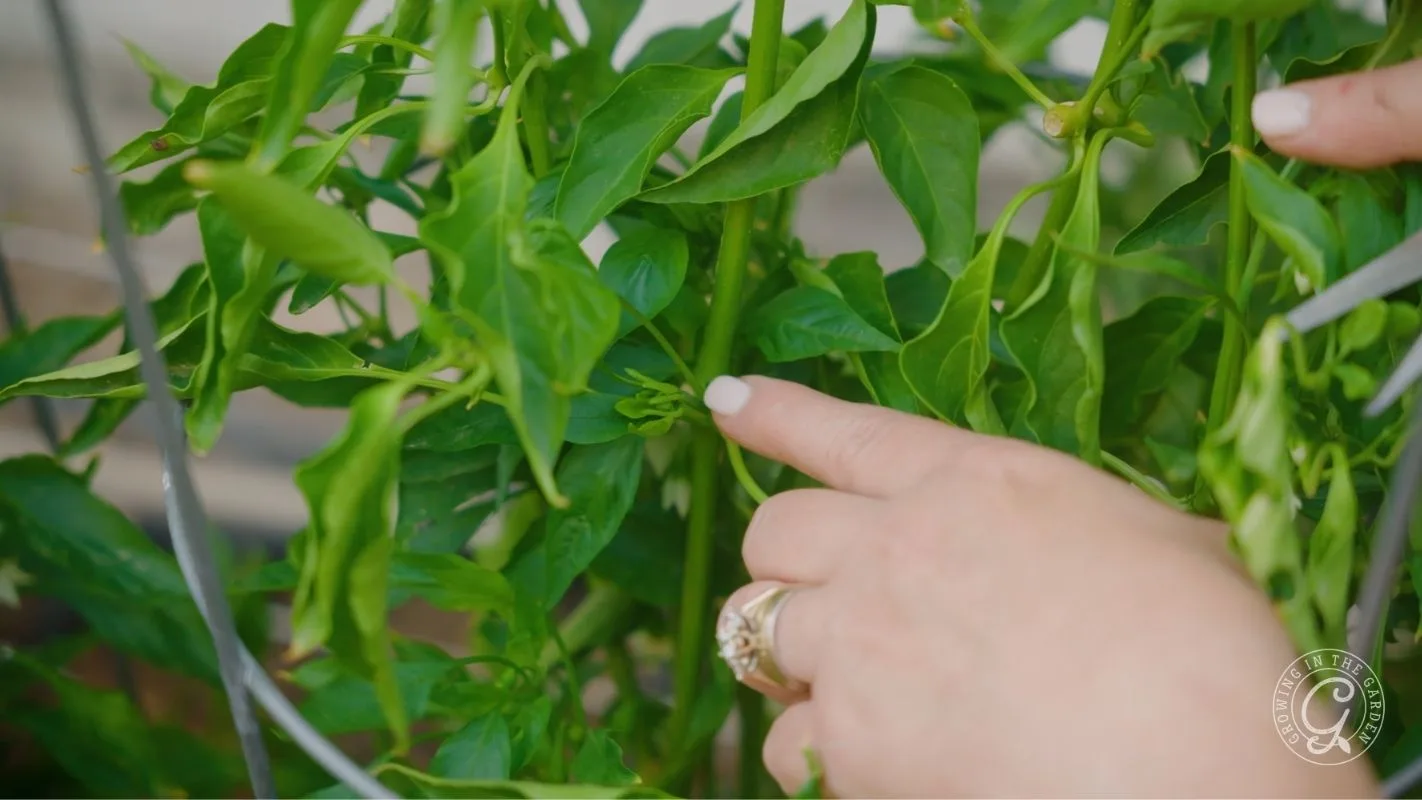
I don’t like to prune until I see new growth forming at the nodes. That tells me the plant is actively growing and ready to respond. Before pruning, assess the plant’s overall shape, identify which growth is alive and which is damaged, and make your cuts where the plant has the best chance to regrow.
- Step 1: Look for new growth first.
New growth is a good sign that the pepper plant is actively growing and ready to respond after pruning.
- Step 2: Remove problem growth.
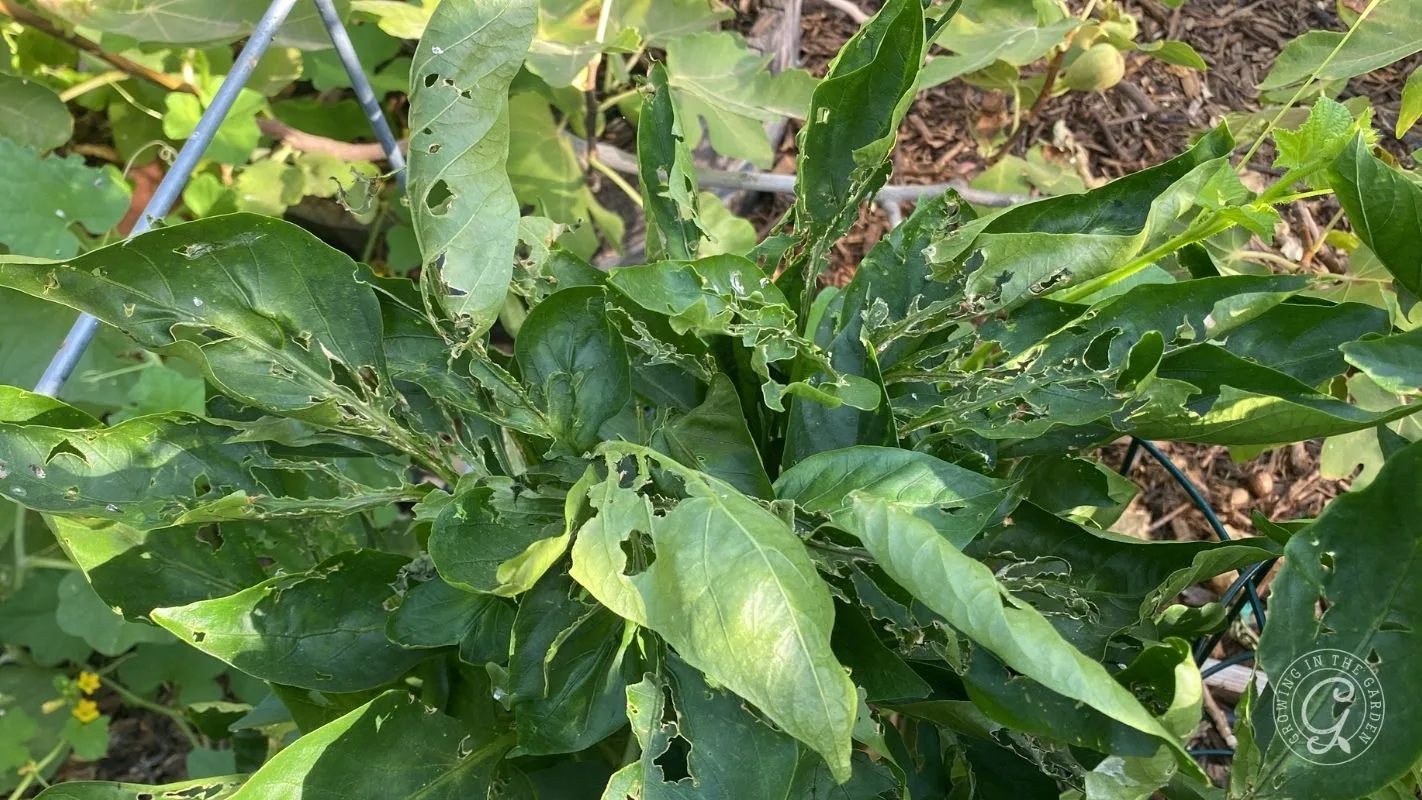
Start by removing dead, damaged, weak, or crossing stems.
- Step 3: Cut just above a healthy node.
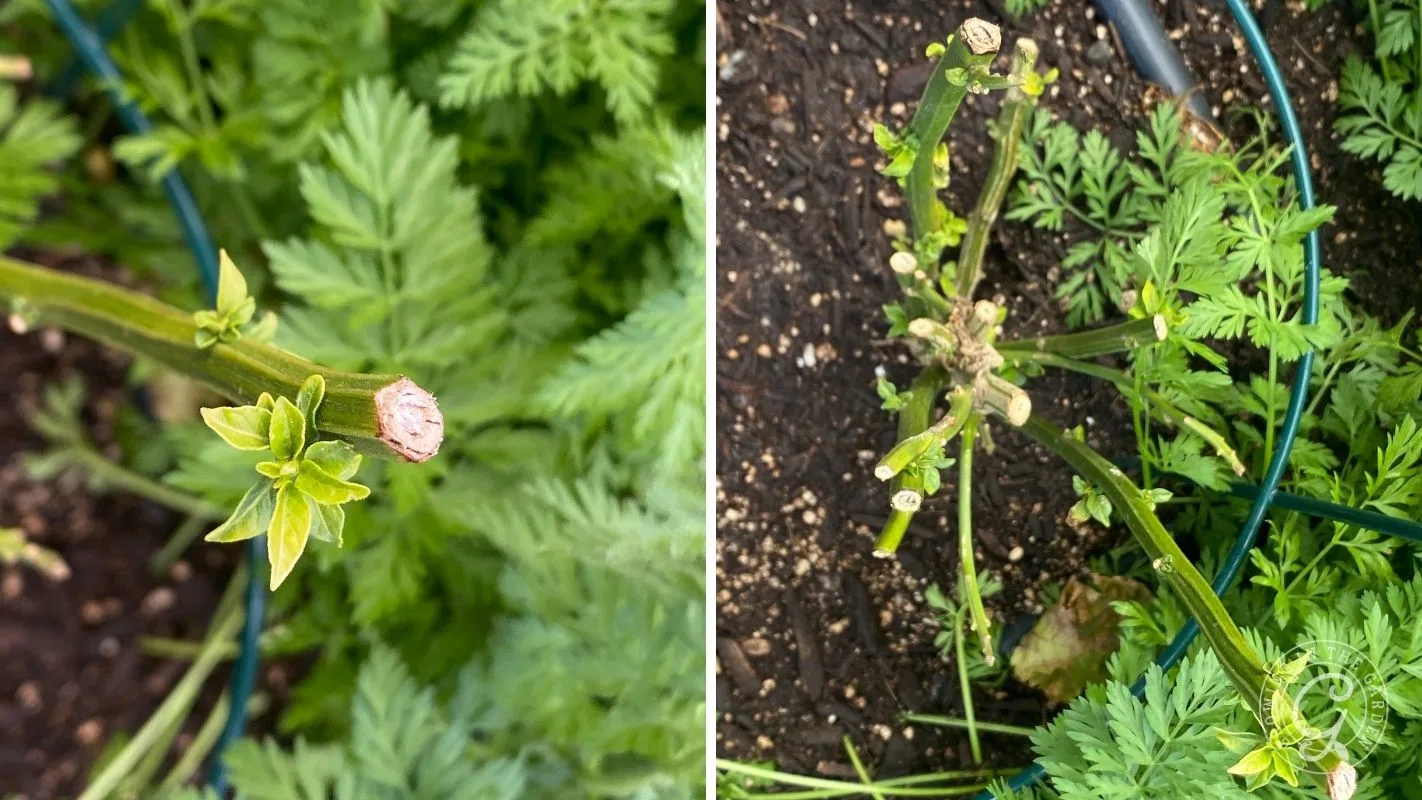
Make your cuts just above a node where new growth is forming.
- Step 4: Prune for shape and strength.
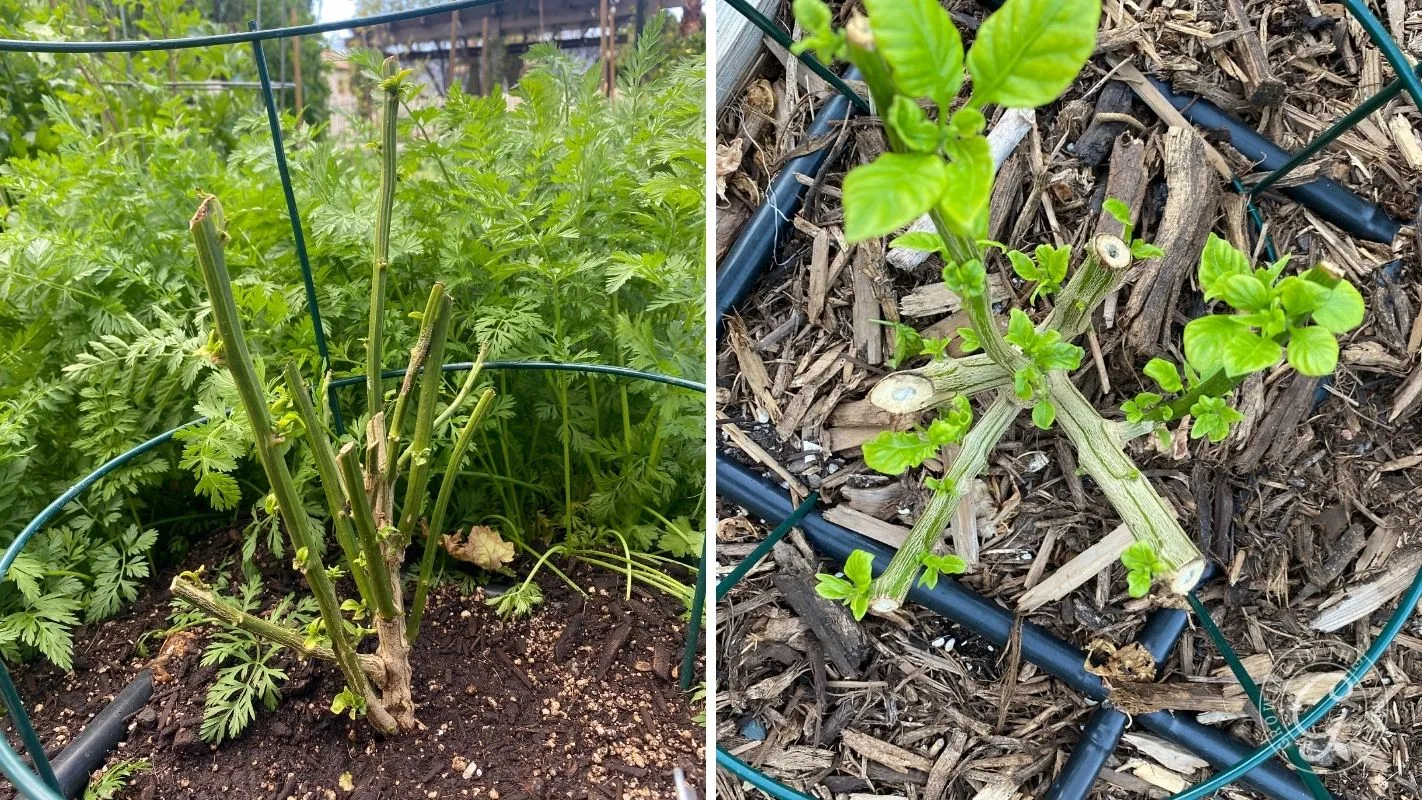
A good after-prune shape should have several strong branches, enough foliage to shade the plant and fruit, and multiple nodes where new growth can develop.
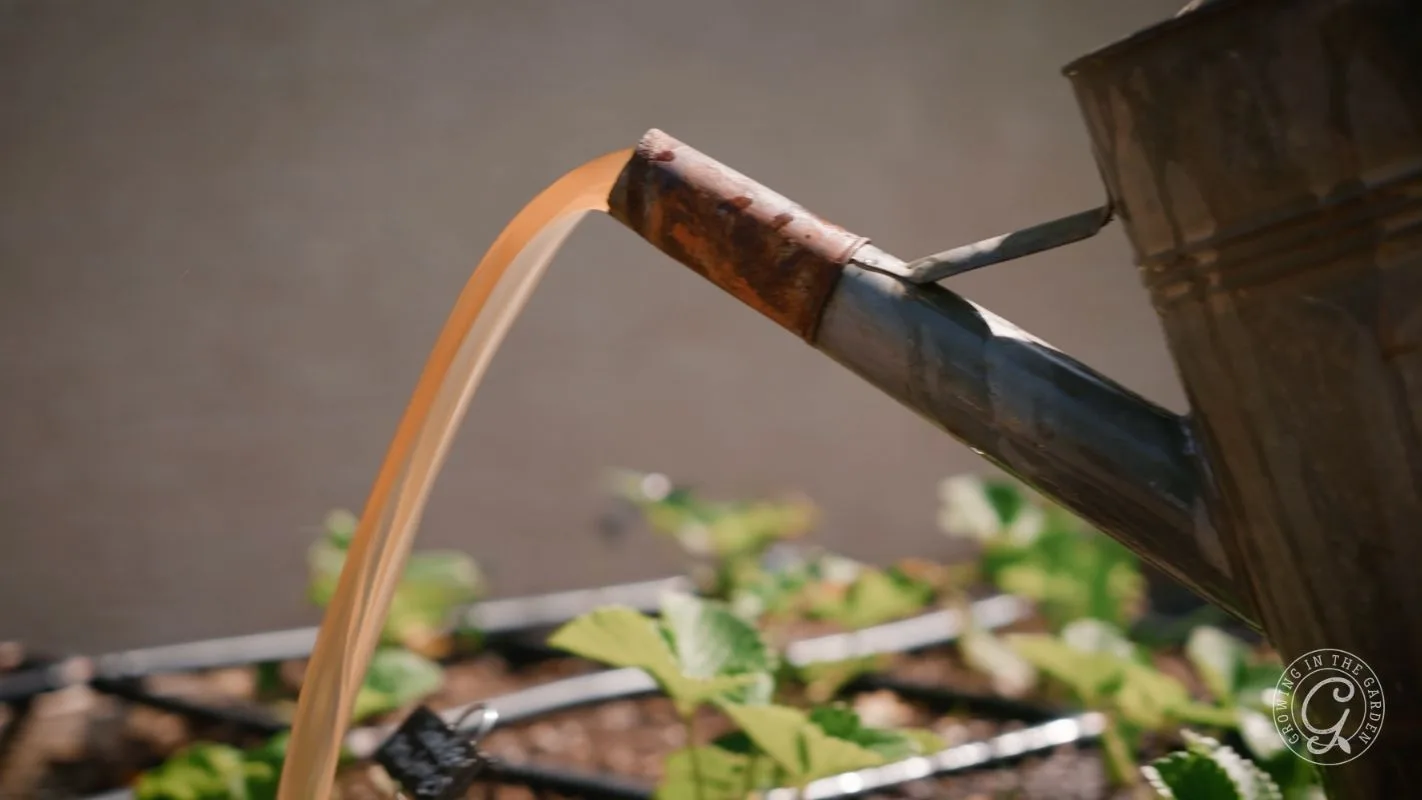
- Step 5: Water well and feed lightly when the plant is actively growing.
After pruning, water the plant well. When the plant is actively growing and not heat-stressed, support regrowth with compost, worm castings, and a gentle liquid fertilizer.
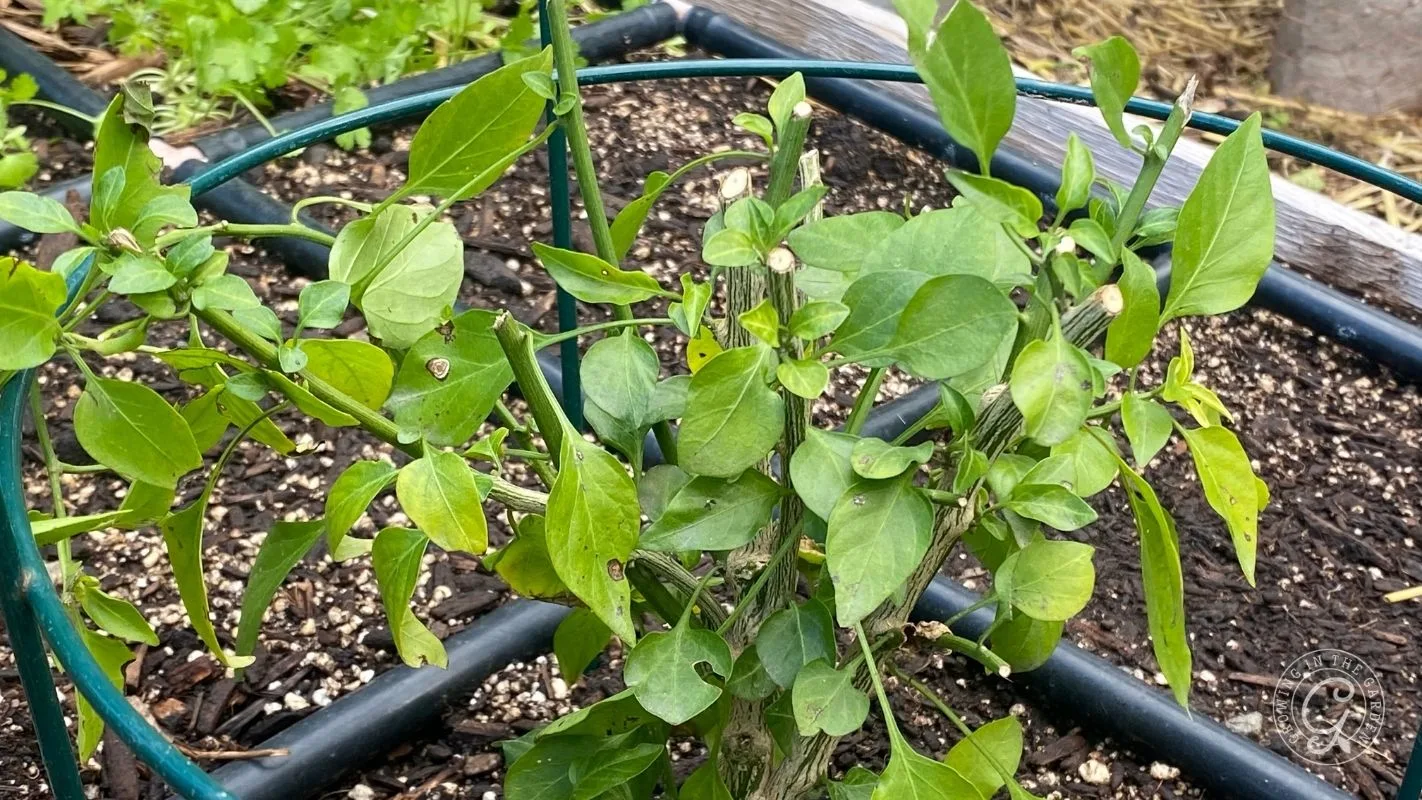
- Step 6: Watch how the plant responds.
If the plant responds with healthy new growth, you can continue normal care. If growth is slow, the weather may still be too hot, too cold, or the plant may need more time to recover.
- Be sure to clean and sharpen your pruning tools before and after each use to prevent the spreading of disease or pests.
- When conditions are right, you’ll usually see new growth begin within a couple of days after pruning. Warm temperatures, healthy roots, consistent moisture, and active growth all help the plant recover and push new leaves.
What is a node?
Nodes are the points on a stem where the buds, leaves, and branching twigs originate. Identify the nodes on pepper plants by noticing where the branches divide.

- If more severe pruning is necessary, cut branches to just above where you see new growth beginning, just above a node. Usually, count up from the bottom of the plant and cut just above the 2nd or 3rd node. Pruning to this point allows light to penetrate the bottom of the plant.
- You can also prune back long or thin branches, which are more vulnerable to breakage and can become unwieldy.
- Make sure to prune all over the plant for the best results.
How to tell if a pepper stem is dead or dormant
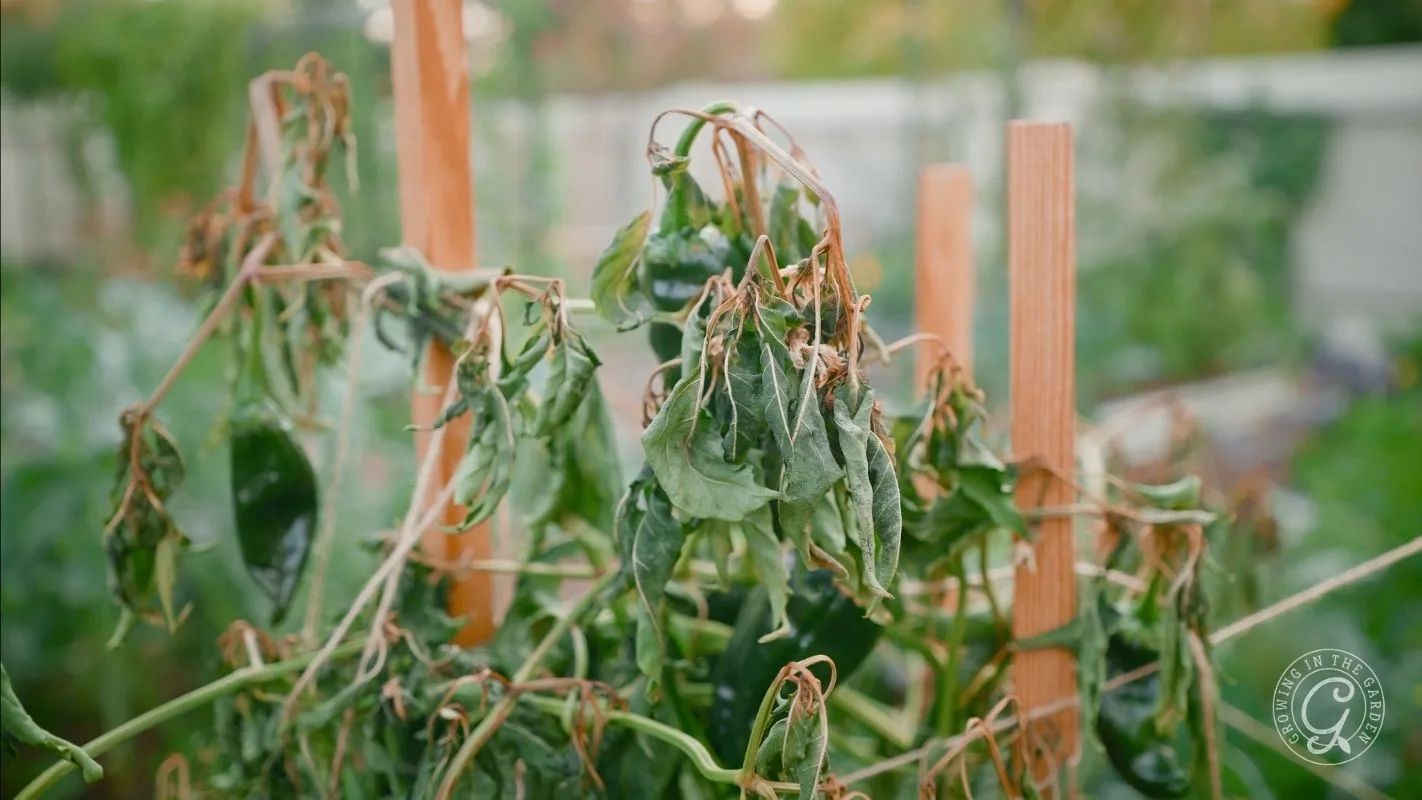
Before cutting off frost-damaged growth, check whether the stem is actually dead. Scrape the outside of the stem gently with your fingernail. If you see green underneath, that part of the stem is still alive.
Dead stems are usually harder to scrape, brown on the outside, and brown all the way through when cut. If you’re not sure, start by pruning back a little at a time until you reach green, healthy tissue or a node with new growth.
In spring, I wait until after the last frost and after I see new growth before pruning off frost damage. That new growth tells me where the plant is still alive and where to make my cuts.
How far back is too far?
It depends on the plant’s age and health. Older, established pepper plants with strong root systems can usually handle being cut back harder. In my garden, I’ll sometimes cut an older plant back to about one-third of its size if it needs reshaping or has a lot of damaged growth.
For younger plants, I’m more cautious. I may cut back by about one-third, then give the plant time to respond. If the plant is already stressed from heat, transplanting, pests, or poor growth, I prune less.
A good “after” prune should still leave a strong plant shape with several branches. Each branch should have a few nodes, or more, where new growth can form.
Hot-climate pruning cautions
In hot climates, pruning at the wrong time can stress the plant rather than help it. Avoid heavy pruning during extreme heat, especially during a heatwave. Don’t prune right before a freeze, because new growth is tender and more vulnerable to frost damage.
Be careful not to remove too much foliage when fruit is exposed. Those leaves help shade the peppers, and removing too much can lead to sunscald.
After pruning, don’t push a heat-stressed plant with heavy fertilizer. I like to support healthy regrowth with compost, worm castings, and a gentle liquid fertilizer like AgroThrive when the plant is actively growing and conditions are improving.
Overall, when gardening in extreme heat, it’s better to focus on shade, mulch, and deep watering instead of heavy pruning.
What About Pruning Pepper Seedlings?
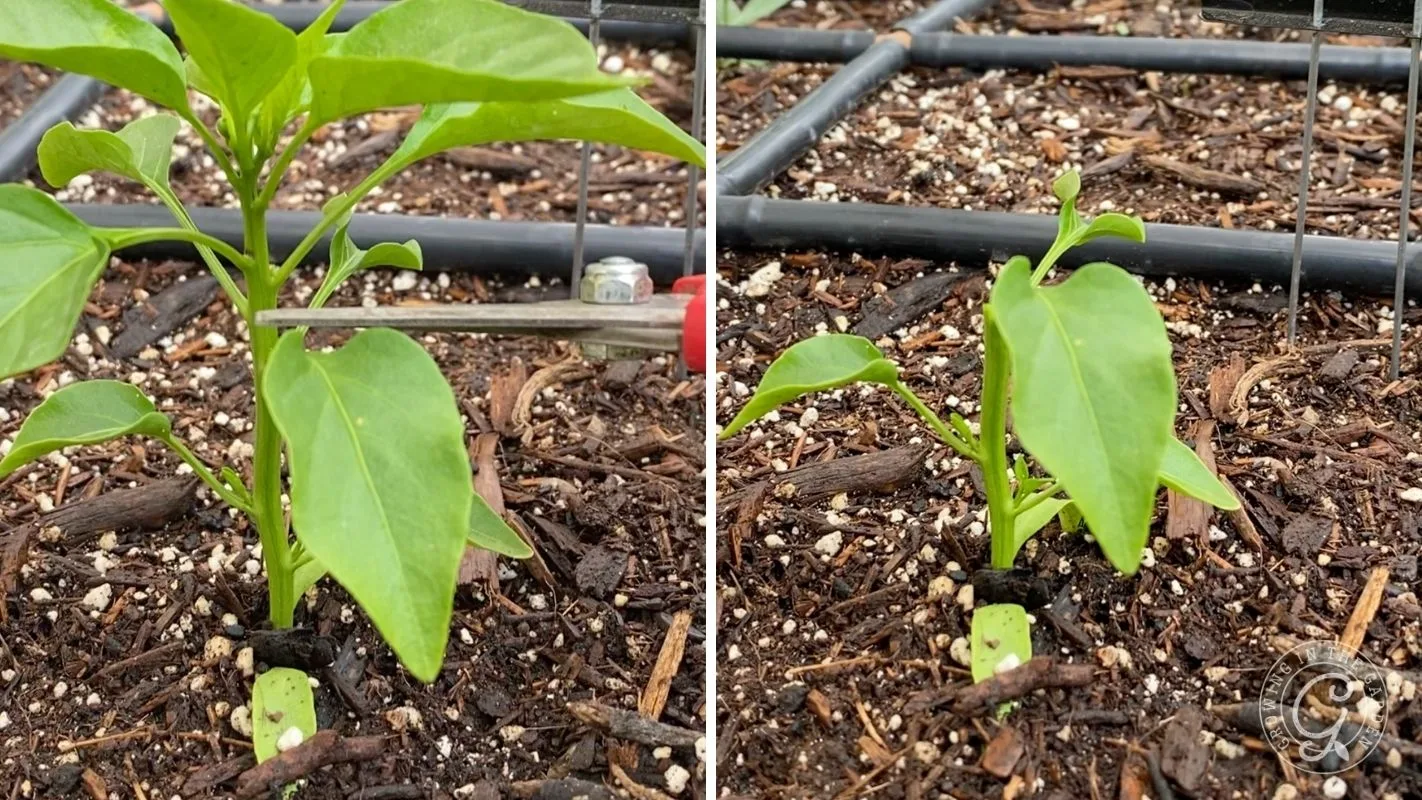
Topping pepper seedlings is often done to encourage a bushier habit and stronger stems. To prune your seedlings, cut the main stem just above a node.
Topping pepper seedlings is a popular practice, but I’ve gotten more cautious about it. In my experience, removing a lot of growth from a newly planted pepper can be stressful, especially if it’s going into hot weather.
Now I usually let young pepper plants get established first. Once I see new growth and conditions are good, I may or may not top the plant depending on the variety. Small-fruited peppers like jalapeños, serranos, and many other chiles often respond well to topping and may branch more. Large-fruited peppers, including bell peppers, generally don’t need it, so I usually let them grow naturally.
Topping is optional either way. A healthy pepper plant can branch and produce well without it.
A Few Notes From My Garden
I’ve found that I don’t need to severely prune my peppers every spring and fall. Often, they need a harder prune one season, and just a cleanup prune the next.
Support also makes a difference. If I’m using a strong trellis or tall cage, like the tall cages from Garden in Minutes, the plants can grow taller without breaking. That means I don’t always have to prune as hard just to keep the plant manageable.
Chiltepin peppers are different from many garden peppers. They can get large and sprawling. The best time to prune them is often after harvesting, and I always look for new growth before cutting. You can keep them smaller with pruning, or you can let them grow larger for a bigger harvest. In my garden, I’ve even let them climb into a neighboring fig tree, which gives them some support and shade. Learn how to grow chiltepin peppers in this guide.
My pepper plants often become less productive after about three years, but that varies by plant. If yours is still healthy and producing well, don’t feel like you have to remove it just because it’s old.
How long do pepper plants last in mild-winter climates?

When growing pepper plants, you may find that the quantity of peppers decreases after about three years of successful production. This is a sign that it is time to replace the plants. Save seeds from your favorite peppers to start new plants. Plant a new pepper seedling in a different location and enjoy fresh peppers for many years.
- Once your plants are producing more peppers than you can use, it’s the perfect time to learn how to roast and freeze peppers. You’ll capture that rich, smoky flavor to enjoy long after the season ends.
- If you live in a mild-winter climate, pruning your peppers can keep your plants healthy and productive for many years. Read the complete guide to pruning peppers, tomatoes, and eggplants after winter here.
- Learn about the different types of peppers, and then plant a few varieties to spice up your garden. In this article, I share 16 pepper varieties to grow in your garden.
Frequently Asked Questions About Pruning Peppers
Gently scrape the stem with your fingernail. If there’s green underneath, the stem is still alive. Dead stems are usually brown, harder to scrape, and brown all the way through when cut.
Prune peppers when you see new growth beginning. In mild-winter climates, that’s usually after the last frost in spring or in late summer to early fall after the worst heat has passed.
Older, established pepper plants with strong root systems can often be cut back to about one-third of their size. Younger plants need lighter pruning, usually no more than about one-third, so you can see how they respond.
Avoid heavy pruning during extreme heat. In hot climates, wait until the plant starts pushing new growth again, often during monsoon humidity or as temperatures begin to ease.
Yes, harvest peppers before pruning when possible. You can prune a plant with flowers or fruit, but pruning just after new growth begins and before heavy flowering is usually best.


Hi Angela, I planted pepper transplants 3 weeks ago in a raised garden bed and they have looked fine. They have started to have new growth these last couple of days after the recent rains we have had. Do you think I should prune them, or wait longer? Thank you!
What are your goals with pruning? With new transplants, you usually don’t need to prune. If you’re thinking about topping them, you can top small-fruited peppers; don’t top large-fruited peppers. I’ve tended to top my young peppers less and less.
Hello! Before I ask my question, I also live in the southern desert of AZ and have found all your posts VERY helpful. Thank you!
I have a Serrano pepper plant that has grown huge. I started indoors in June and transplanted mid Aug. It finally started to bud just after mid October and now (mid November) full of flowers and growing peppers. I feel that it started flowering later than I would have liked. Will I be able to harvest peppers even when night time temps get in the 40’s? I have 1.5 frost cloth that I plan on using. Thanks!
Things start to slow down as temps fall. I usually have my best harvests of peppers in November and December, but it all depends on the weather. You may have to pick some earlier than you would like if we are going to get a freeze.