
How to Grow Armenian Cucumbers in Hot Climates
Armenian cucumbers are one of my favorite crops to grow through the low desert summer. Regular cucumbers can struggle in the heat and turn bitter, but Armenian cucumbers handle hot weather much better and produce long, crisp fruit that we actually enjoy eating. Learn more about gardening through the summer heat here.
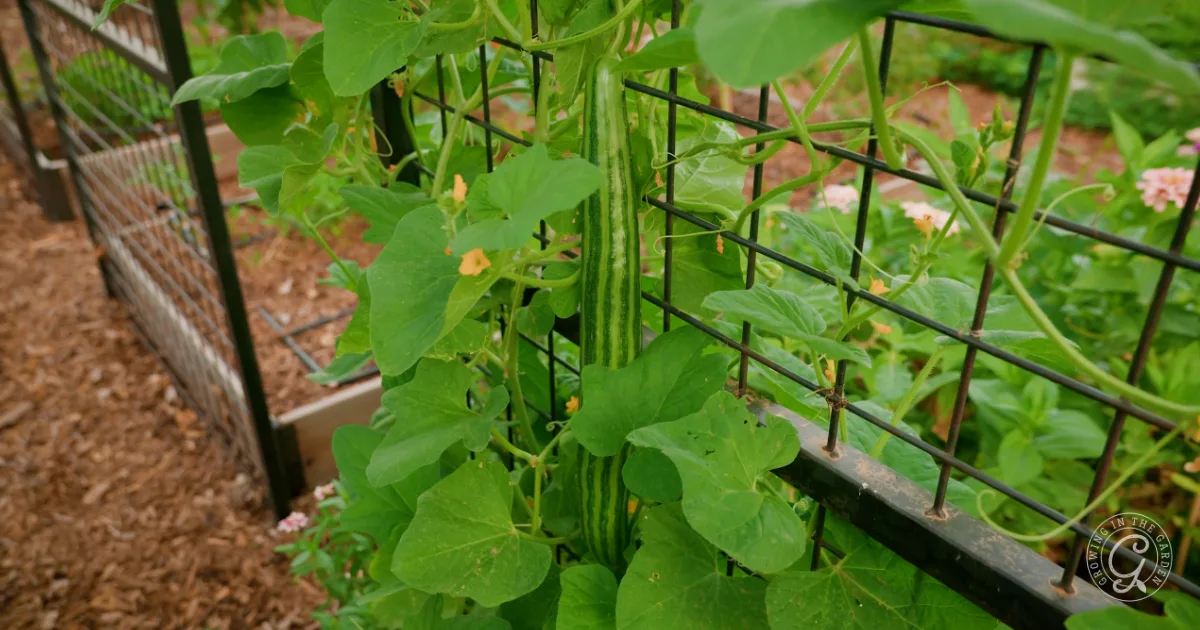
I’ve grown them on arch trellises, in containers, and in different areas of my garden, and they’ve become one of my most reliable warm-season crops. In this post, I’ll share when to plant Armenian cucumbers, where they grow best, how to care for them, and when to harvest so they stay crisp and flavorful.
Key Takeaways: Growing Armenian Cucumbers
- Armenian cucumbers thrive in the low-desert summer, offering a crisp, mild flavor unlike that of regular cucumbers.
- Plant seeds indoors from February to June, and transplant in the garden from March to July for best results in hot climates.
- Choose a sunny spot with good drainage; they prefer to climb, so use a sturdy trellis to improve airflow and make harvesting easier.
- Water consistently, mulch to retain moisture, and remove yellowing leaves to promote healthy growth.
- Harvest when fruit is 12 to 18 inches long, noting that flavor varies with size; try different varieties for the best taste.
What We’ll Cover:
- Why I Grow Armenian Cucumbers Every Summer
- Are Armenian Cucumbers Really Cucumbers?
- When to Plant Armenian Cucumbers
- Where to Grow Armenian Cucumbers
- Caring for Armenian Cucumbers
- Pruning Armenian Cucumbers
- When and How to Harvest Armenian Cucumbers
- How to Use Armenian Cucumbers
- Armenian Cucumber FAQs
- Final Thoughts

Why I Grow Armenian Cucumbers Every Summer
Armenian cucumbers have earned a regular spot in my summer garden because they’re reliable, productive, and something we actually enjoy eating.
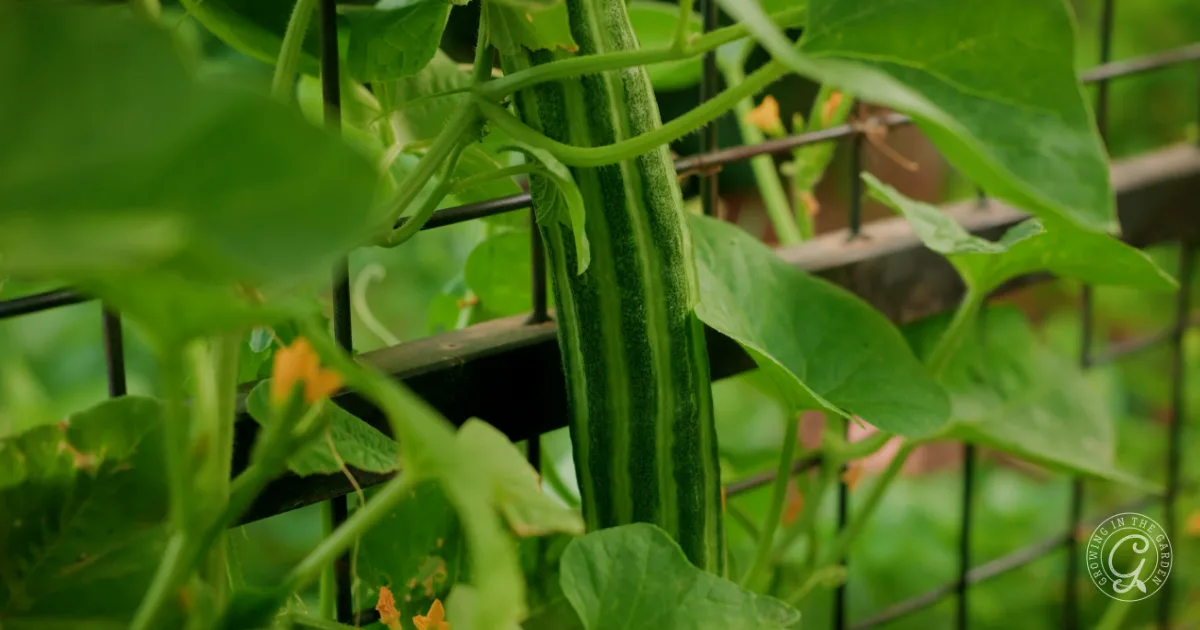
I’ve grown them on arch trellises, in a large container with a trellis in a north-facing area, and in my side yard. They’ve handled different parts of my garden better than regular cucumbers, which often struggle once our low desert heat settles in.
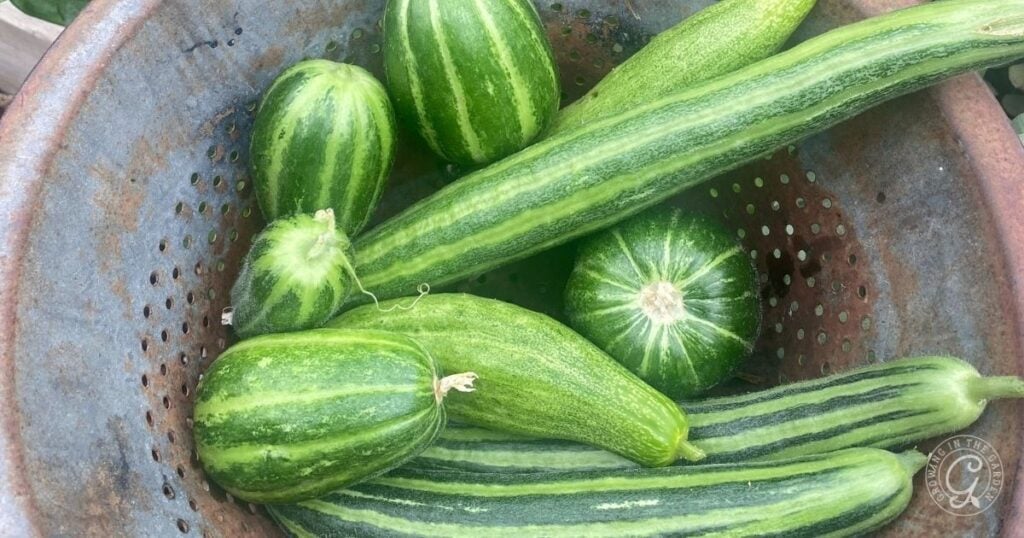
Painted Serpent has been my most dependable variety so far. It’s a steady producer with mild, crisp fruit when harvested at the right stage. I’ve tried other varieties too, and it’s worth experimenting because flavor, texture, and best harvest size can vary.
Knowing what to plant in the summer can be difficult. Armenian cucumbers are one of my favorite answers when gardeners ask what to plant in May and June in arizona because they handle the heat so much better than many regular cucumbers.
Are Armenian Cucumbers Really Cucumbers?
Armenian cucumbers, also called yard-long cucumbers or snake melons, are not true cucumbers. They are a variety of muskmelon (Cucumis melo var. flexuosus) that looks and tastes like a cucumber but is more heat-tolerant and less prone to bitterness.
They were first cultivated in Armenia in the 15th century and are a great choice if you have struggled with bitter or heat-sensitive cucumber varieties. Learn more about why some cucumbers turn bitter here.
When to Plant Armenian Cucumbers
Armenian cucumbers are ideal for hot climates and are one of the few crops you can plant well into the summer.
For the low desert of Arizona (zone 9b and similar):
- Start seeds indoors from February through June
- Plant seeds or transplants in the garden from March through July
In general (for other climates):
- Wait to plant until after the last frost, when soil temperatures are consistently above 65°F (18°C)
- For best germination and growth, soil temperatures between 80 to 90°F (26 to 32°C) are ideal
- In cooler climates, Armenian cucumbers can be started 4 to 6 weeks indoors before your last expected frost and transplanted after the danger of frost has passed
Direct sowing works best for these vigorous growers. Before planting, amend the soil with compost and make sure it drains well.
Planting tips:
- Plant 2 to 3 seeds ½ to 1 inch (1 to 2 cm) deep, spaced 1 foot (30 cm) apart
- Once seedlings are 3 to 4 inches tall, thin to 1 plant per foot
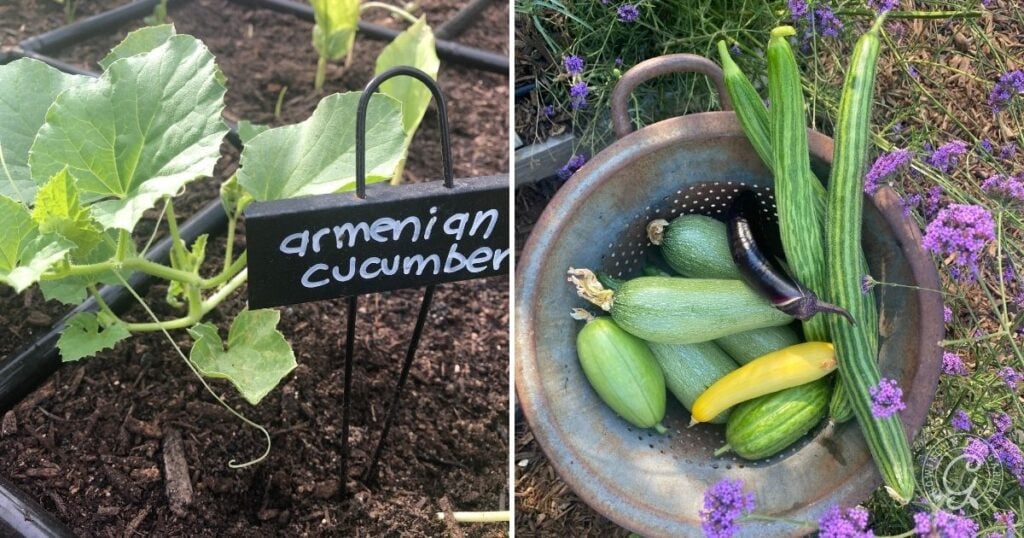
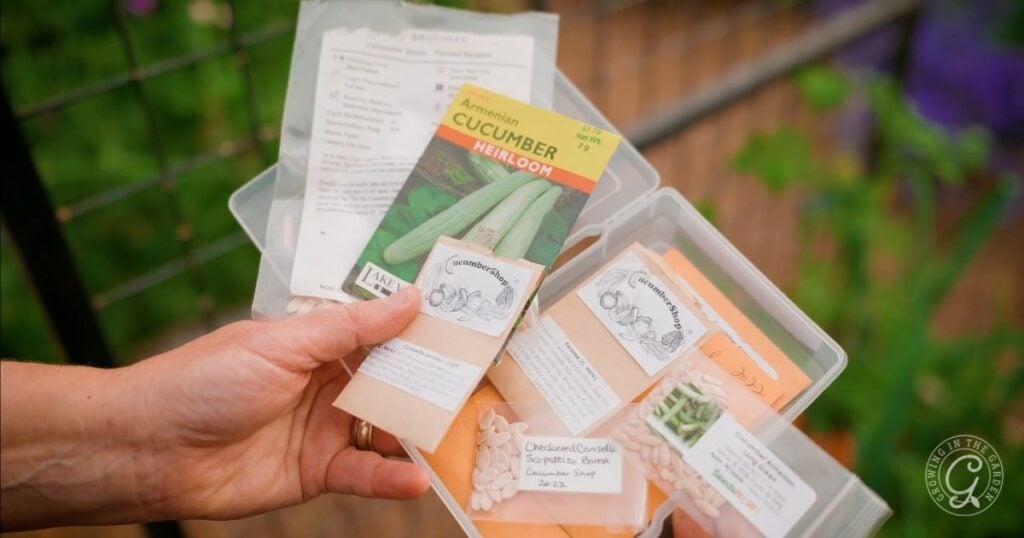
- Try different varieties. Painted Serpent is my personal favorite
If you’re looking for another heat-loving summer crop, peanuts are also a good option for hot-climate gardens. Learn how to grow peanuts here.
Where to Grow Armenian Cucumbers
Choose a sunny location with at least 6 to 8 hours of sun. In very hot climates, afternoon shade can be helpful, especially during the hottest part of summer.
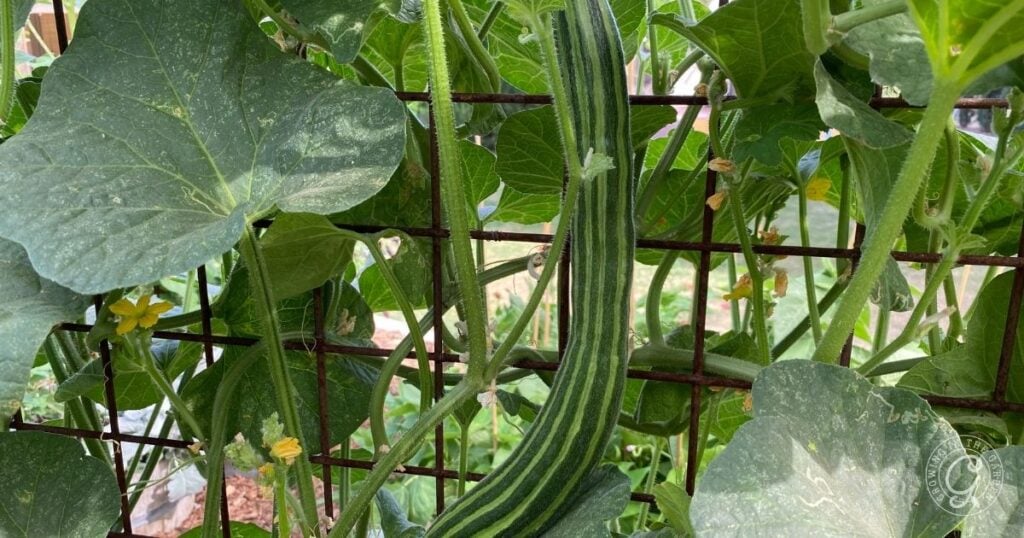
Armenian cucumbers love to climb. A sturdy trellis helps keep fruit straighter, improves airflow, saves space, and makes harvesting easier. They aren’t too picky about the support. I’ve grown them successfully on arch trellises, in side-yard garden spaces, and in large containers with a trellis. These budget-friendly vertical gardening ideas are helpful if you want a simple trellis that works in raised beds or containers.

If you’re growing Armenian cucumbers in a container, choose a large one. A whiskey-barrel-size container, or a similar size, works best because smaller containers dry out quickly in hot weather.
Plant spacing:
- Plant 1 foot (30 cm) apart when growing on a trellis
- Allow 2 to 3 feet (60 to 90 cm) if letting vines sprawl
Rotate planting locations when possible, and avoid planting where melons, squash, or cucumbers grew the previous year.
- Corn makes a good companion plant and can even serve as a living trellis.
- For more ways to support vining crops, see these vertical gardening ideas.
Caring for Armenian Cucumbers
Armenian cucumbers still need consistent moisture, especially once vines begin growing and setting fruit, but they handle heat stress better than many common cucumbers in my garden.
- Mulch around the base to help retain moisture and keep roots cool
- Water deeply and regularly once vines begin growing
Not sure if you’re watering deeply enough? This article can help.
Pollination
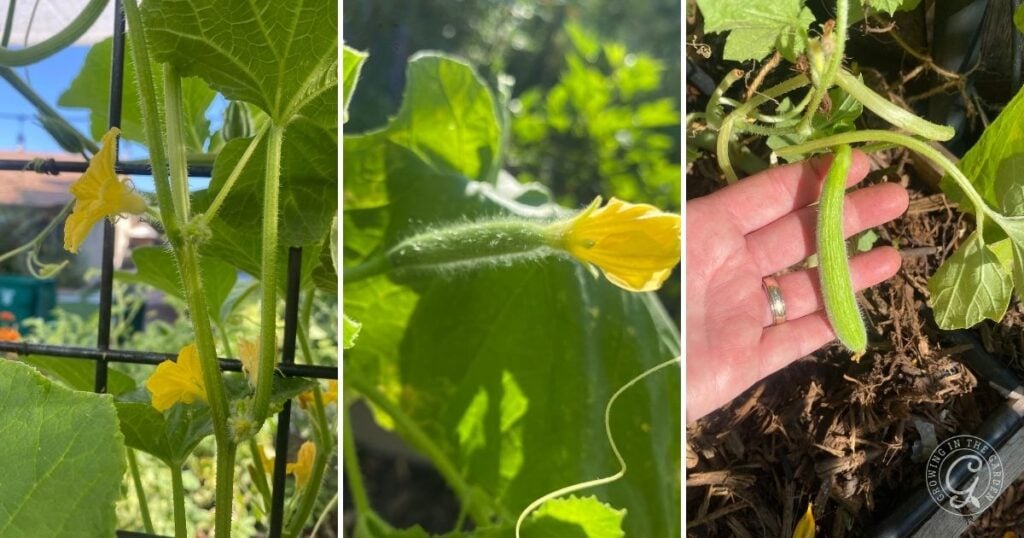
These plants produce both male and female flowers. Male flowers appear first and fall off after blooming. Female flowers appear later and, if pollinated, develop into fruit.
Hand-pollination is rarely necessary. Attract pollinators by planting nearby flowers like basil, oregano, and zinnias.
Pruning Armenian Cucumbers
You do not need to prune, but removing a few side shoots can help improve airflow and manage the plant’s size.
- Cut off any yellowing or diseased leaves
- Remove some side shoots if vines are getting too large, but avoid pruning the main vine
To prune a side shoot:
- Identify the main vine, which grows from the base of the plant
- Find a side shoot growing from the base of a leaf stem
- Cut the side shoot about a quarter inch above its connection to the main vine
Leave some side shoots in place to maintain structure and ensure plenty of male blossoms. Pruning isn’t exact, so don’t worry if you’re not sure what to prune. The plant will keep growing.
When and How to Harvest Armenian Cucumbers
Frequent harvesting helps keep the plant producing through the season.
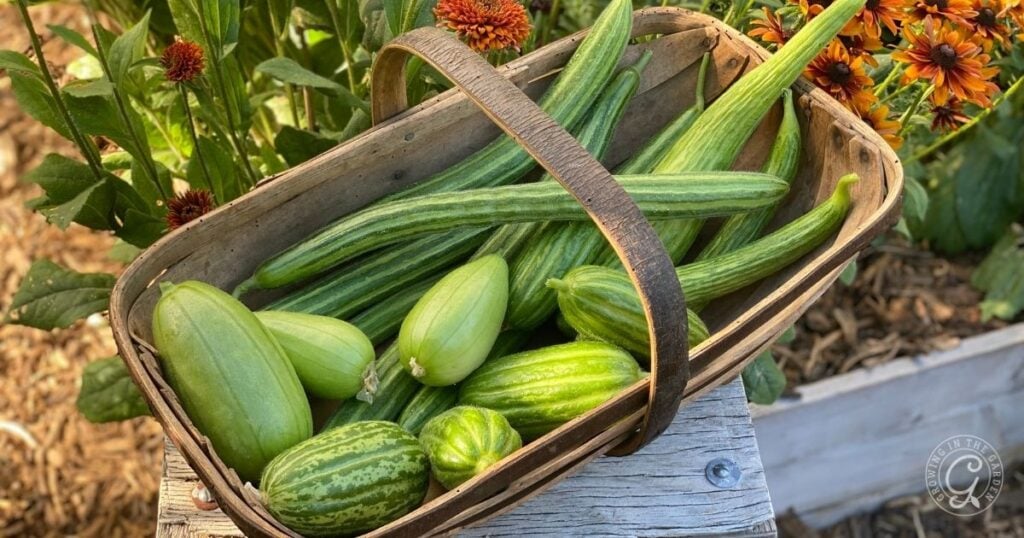
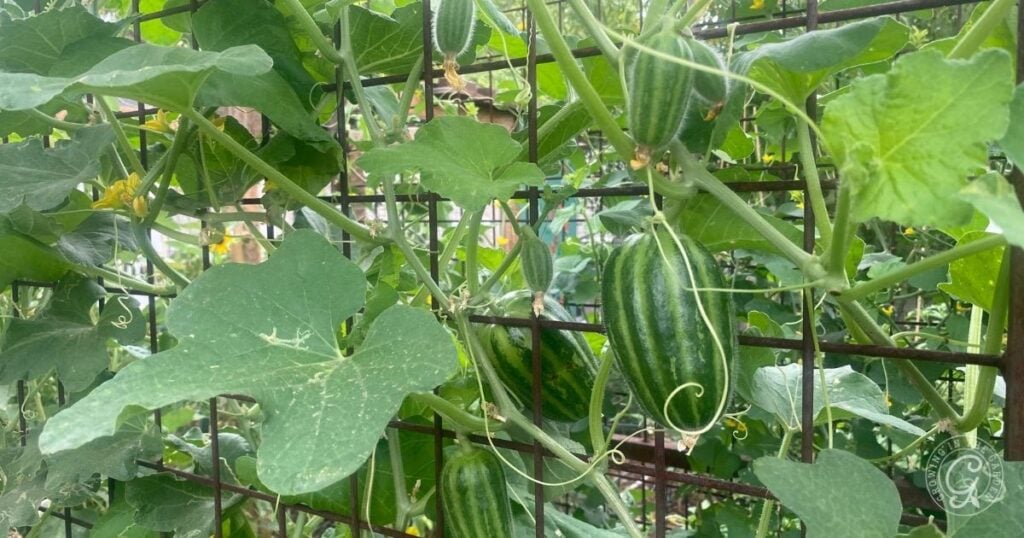
- Harvest when fruit is 12 to 18 inches (30 to 45 cm) long and about 2½ inches wide
- Larger fruit has tougher skin, bigger seeds, and tastes more like watermelon rind
- Pick early in the day for the best flavor and texture
- Use scissors or pruners to cut the fruit instead of pulling it
The best harvest size can vary by variety. Some Armenian cucumbers stay tender when they’re long and slender, while others are better picked smaller. Taste a few fruits at different stages to learn when the variety you’re growing has the best texture and flavor.
In the low desert, Armenian cucumbers often produce through summer and into fall when plants are healthy and harvested often. See the low-desert harvest guide for other crops ready this month.
Succession Plant for a Longer Harvest
Armenian cucumber vines are productive, but they don’t last forever. As plants age, production can slow, especially after weeks of heat, heavy harvesting, or pest pressure.
For a longer harvest, plant a few early in the warm season and consider planting again later as the first vines get tired. In the low desert, this can help keep harvests going through summer and into fall.
How to Use Armenian Cucumbers
Armenian cucumbers are mild, crisp, and much less likely to become bitter than regular cucumbers. Generally, the thin skin is tender and does not need to be peeled.
My favorite ways to use them:
- Raw in salads, sandwiches, or with dip
- Pickled for a crisp and refreshing snack
- Sliced and grilled or added to stir-fries
- Blended into smoothies (try it!)
They pair well with pork, fish, dill, mint, oregano, feta, and yogurt.
Looking for more tips? Here’s how to grow cucumbers in Arizona.
Armenian Cucumber FAQs
Yes, Armenian cucumbers can grow in containers, but they need a large container, consistent watering, and a sturdy trellis. I’ve grown them successfully in a large container with a trellis. The larger soil volume helps the plant handle heat and reduces how quickly the container dries out.
Armenian cucumber plants can slow down when they’re stressed, when temperatures are extreme, when pollination is inconsistent, or when the vines are getting old. Check that the plant is getting deep, consistent water and that pollinators are visiting the flowers. If the plant is tired and production has dropped, it may be time to start another plant for continued harvests.
Yes, Armenian cucumbers are one of my favorite crops for summer harvests in the low desert. They handle heat better than regular cucumbers in my garden and can produce through summer and into fall when they’re planted at the right time and kept consistently watered.
Painted Serpent has been the most dependable variety for me. It’s productive, beautiful, and tastes best when harvested before the fruit gets too large. Other varieties are worth trying too, because each one can have a slightly different flavor, texture, and ideal harvest size.
Final Thoughts
Armenian cucumbers are one of the crops I count on for steady summer harvests in the low desert. They’re productive, flexible about where they grow, and much more reliable for me than regular cucumbers once the heat arrives.
If you’ve struggled with bitter cucumbers or tired vines in summer, try Armenian cucumbers this season. Plant a few early; give them something sturdy to climb; harvest often; and consider planting again later if the first vines slow down.
If you found this guide helpful, please share it with a fellow gardener.


I gave up on Armenian cucumbers when I discovered Indian Snake cukes from Baker Creek – Indian Snake cukes grow so much better in our heat & drought, and I think they taste better!
Thanks for the tip. Just ordered seeds. I’ll give them a try.
Hi Angela
This has been really hot dry summer, even if it is supposed to be monsoon. I’ve been seeing a lot of stress on the plants, and not much fruitage.
Thank you for the tips on Armenian cucumbers. I will try this. I think pollination is my issue since I haven’t seen many bees around.
I appreciate your monthly videos and wanted to give you a kudos for all the hard work you’ve done for us. Big shout out to you!!
thanks again and keep up the hard work that we get to benefit from.
Thanks so much. I appreciate it. Good luck with your Armenian cucumbers!
Hi, again! Okay, so my Armenian cucumber plant is about 1 foot high, so far, planted from seed. It is already starting to blossom. Should I pick off these early blossoms to encourage more growth? (I tried looking for this info but couldn’t find it, sorry!)
No. I don’t pick off early blossoms on these. Most likely they are male and won’t form fruit. By the time females form the plant will be ready for them.
How large of a container is needed here in the desert? I have 10 gal pots or 15 gal pouches.
Thanks!
A minimum of 10 gallons. Gardening in smaller containers over the summer can be challenging.
In AZ will cucumbers if planted in early September will they grow through cooler months
Cucumbers will keep going until temperatures get cool – they don’t like temps below 50°F.
Hello! I have learned so much about gardening in AZ from you! Thank you! A question on armenian cucumbers. Mine are actually looking decent still, but only producing a few here and there. Do you pull the vine out at the end of the season and plant something else there or leave the vine on the trellis? Thank you!
As the plants age, production often slows down. Remove the plant and amend the area with compost and plant something else. You can cut it off at the base of the plant and leave the roots in the soil to add organic matter if desired.
I have 2-3″ pollinated female Armenian cukes that have all yellowed and withered on the vine in Southern Arizona.
Hmmm… could be the eat or other issues. Hopefully you’ll have more that survive.
I have a pest that destroyed my leaves in one night, any idea what it could be?
Probably rollie-pollies – here’s a blogpost that may be helpful: https://growinginthegarden.com/5-ways-to-keep-pill-bugs-from-destroying-your-garden/
Hi Angela! I was wondering if you have any experience with growing Beit Alpha cucumbers here. I’ve started some seeds, but am a little concerned I should have started them earlier in the year… I haven’t been able to find much information specific to this variety regarding tolerating our temps. Thanks!
They seem to be more heat tolerant than most, but not nearly as heat tolerant as the Armenian type cucs.
Thank you for these wonderful articles! I grew an Armenian cucumber plant this July, and it has been great. I’ve fertilized it with fish emulsion, but the plant seems to be stunting its growth now. The stems growing are tiny, along with the fruit. None of them have been vital even after hand pollination, and the plants leaves are turning yellow. Any suggestions welcome. The plant is pest free as well.
It’s probably finishing up. They produce well for several weeks and then production slows.
I have grown Armenian cucumbers for a few seasons. Every season my Armenian cucumbers have been light green except this season. All of my Armenian cucumbers are dark green. Why? Any idea why the same variety became dark green?
Thanks,
It may have crossed with another variety.
I have planted for 1st time & now have 4 cucumbers about 13 in. already. Look very interesting.
That’s great!
Hey there Angela,
I have over a dozen carosello cucumber varieties (including one called the Striped Carosello Leccese that I have supplied to San Diego Seed and Hoss Tools). These are very similar to the Armenian cucumbers, except that they grow faster and have a better texture and, depending on the variety, a better taste. If you would like to try some, just let me know. -Jay
Hi Jay, Sure I would love to give some a try. I’ll send you an email. Thanks.
I have trouble with Aphids every year by mid July. What is the best way to control or kill the Aphids infestation? I’ve ordered Lady Bugs in past years that seems to help a little but I didn’t do it this year…….. they seem to be exploding this year for some reason.
Cut off the most damaged vines. Spray remaining vines a couple of times a day with a strong blast of water. You may have to treat for several days to get on top of it.
Hi Angela,
Can you quickly explain how to save Armenian Cucumber Seeds for next season? Are they supposed to stay on the vine until they grow really big?
Yes, leave them on the vine until over-ripe. Don’t save if you are growing other melons in your garden. Here is a blog post with more info: https://growinginthegarden.com/how-to-save-seeds/
These do well in the summer in Georgia – both in ground in containers. You definitely need a trellis, fence or something for them to grow onto. You can start the seedlings outside around Memorial Day or earlier inside. They grow well all through the summer and into the early fall. So Yummy!!
Great to know, thanks for sharing.
My Armenian Cucumbers were doing well the first month but now the cucumbers are super seedy and mushy no matter the size small or large.. They are also groing fatter instead of longer, what is happening? We have had a heat wave from 85 to 100 the last few weeks so wondering if that is doing something. I water once to two times a day because it dries out. It’s planted in a pot and trellised on my back fence. What could be the issue?
How large is the pot? The larger the pot the more soil, water and nutrients are available to the plant.
Can you share your Armenian cucumber pickle recipe ?
Sure. Here’s the one I used: https://whatscookingamerica.net/KarenCalanchini/Pickled-Armenian-Cucumbers.htm
I planted Armenian cucumbers in the last week of May. They are just flowering in the last 2 weeks, but the flowers close within a day and then wither. For the life of me, I cant tell the difference between male & female flowers. One of the plants’ tendrils are shriveling up as well. At one point I had a tiny fruit or 2 but they withered in the heat and died. Any tips?
Hi. The tiny fruit or two you are referring to are the female blossoms. Next time you see one of those, use a different blossom to pollinate it. Hope that helps.
It’s my 1st time planting this Armenian cucumber. I picked 2 I was more darker green then the other and both with about 2′. We cut into it and it was a little hollow in the middle and the taste was like eating a old cucumber . Any ideas as to what happen?
For best flavor pick them a little sooner. I like to pick mine between 12-18 inches long.
My Armenian White plant has been producing flowers for almost 5 weeks. Still no female flowers. I see bees on the flowers almost every time I’m near the plant, but still no fruit. I have watered the fabric pot container frequently and added composted worm castings. Any suggestions to help it produce female flowers?
Be patient. It can take a while for the female flowers to come, but it sounds like you are doing everything right and they should come.
Found your site while looking for Armenian cucumber growing tips and wanted to just say thank you for your informative article. Used to live in Arizona and work on a farm there in the late 70’s thru the early 80’s. Now live in San Francisco Bay area and am growing more and more food in the garden (and containers), and will be back to visit your site to learn more. Thank you for sharing your knowledge and passion. No Farms No Food. Organic Forever.
Thanks so much. I’m sure you have a lot of wisdom to offer. Best of luck with your continuing garden adventures!
What is causing my cucumbers to get fat and turn yellow? At the beginning they were growing longer, thinner and greener. Does it have anything to do with watering too much or too little?
It’s possible. Clip the yellow cucumbers from the vine and give the plant a good drink. Mulch plant well to help retain moisture. Feed it with a diluted fish emulsion fertilizer to give it a little boost.
I grew these in Iowa during a drought year and they were amazing! Huge fruits that were a conversation starter as well as tasty. They also made the best pickles ever-and it usually only took a couple cucumbers for a whole batch. I scraped out the mostly hollow & seed-filled centers and cut them into spears (probably let them grow to the watermelon rind stage as you’ve described). Came out crisp and wonderful.
I saved seeds for the next year, but the 2nd year I realized they had cross-pollinated with loofas…very odd result, not as crisp, fuzzier, leaf shape was from the loofa not the cucumber. 🙂
Love hearing this. Thanks for the details about the pickles. I’d love the recipe if you are willing to share it. I’ve had several people ask me for an Armenian cucumber pickle recipe. I did the same thing with saving seeds. It crossed with a melon, from now on I always buy fresh seeds for Armenian cucumbers (or use seeds I bought previously). Thanks for commenting.
We live in the Central Valley of California and grow these cucumbers every year. Our issue is harvesting, for some reason we don’t see all of them and all of a sudden we see a huge cucumber! Any tips for finding them? It’s like they camouflage!
Ha! Yes, they remind me of zucchini. Nothing one day and the next, they are huge. I’m a big fan of spending time in the garden each morning. That’s a good time to notice them and see what’s going on. I like to pick mine small, the taste is better and the seeds are smaller.
Leave our turning brown was told to spray THEM WITH soap and water
Be sure to rinse off any soap if you spray the leaves with soapy water. The soap can burn the leaves in the sun.
I would love to try the cucumber variety you mentioned.
Great to know, thanks. I’ve always heard it’s best to harvest in the morning, but it’s nice to know the science behind it. Thanks for sharing.
How often do Armenian cucumbers need to be watered. I have a lot of flowers on mine and it looks like some are starting to grow but some are turning yellow then brown?
During the heat of the summer it can be watered daily – but it depends on the depth of your beds and how deeply you water. Aim to water to the depth of the root zone each time and then let the top inch or two dry out between waterings.
As far as flowers, male flowers appear first, followed by female flowers which look like miniature fruit. If the female flowers are withering and not being pollinated you may want to try hand pollination. Remove a male flower, peel back the petals and gently pass pollen from the male flower to the female flower when both are in bloom. Hope this helps.
We planted this plant in a large pot with compost and it is very healthy, but I am getting a lot of flowers but no fruit.. do I need to hand pollinate and if so how do I do this? Thanks for the help!
That’s great! Be patient – male flowers appear first, followed by the female blossoms (look like a small fruit) If you want to hand-pollinate, transfer pollen from the male blossom to the female blossom. Normally hand pollination is not necessary with Armenian cucumbers.
Thank you. I will try this.
Hi i love your gardening. Encouraging me to do.I am growing Armenian cucumber this year. Please tell me what plant food I should feed it.
Thank you. I add mulch with compost during the season, and also a fish emulsion solution.
I grew up in the San Joaquin Valley the only “cucumbers” we grew were Armenian. I now live in Arkansas. Can they be grown here?
Good question. Armenian cucumbers do best in hot climates. I would recommend asking local gardeners if they grow them. It can’t hurt to give them a try and see what happens.
I am jealous! I cannot get these to grow no matter what I do! I have a 4 inch one on right now, has been the same size for two weeks and the plant is dying. They get plenty of water and heat in very fertile soil.
Hmmm… Does it get enough sun? Let the soil dry out a bit between waterings, maybe it’s getting too much water. What zone are you in?
Thanks! I’m definitely going to use your cucumber tips!
Thanks Jeanette! Thanks for commenting!