
Permanent and Beautiful Vertical Garden Trellis Ideas
Vertical gardening can be more than a way to save space. The right trellis, arbor, or wall support can become a beautiful, permanent part of the garden.
Over time, I’ve added vertical supports that changed how my garden looks and functions. These trellises and arbors support heavy vines, create shade, soften block walls, make harvesting easier, and add structure even when nothing is growing on them. They cost more and take more planning, but the right ones can become part of the garden for years.
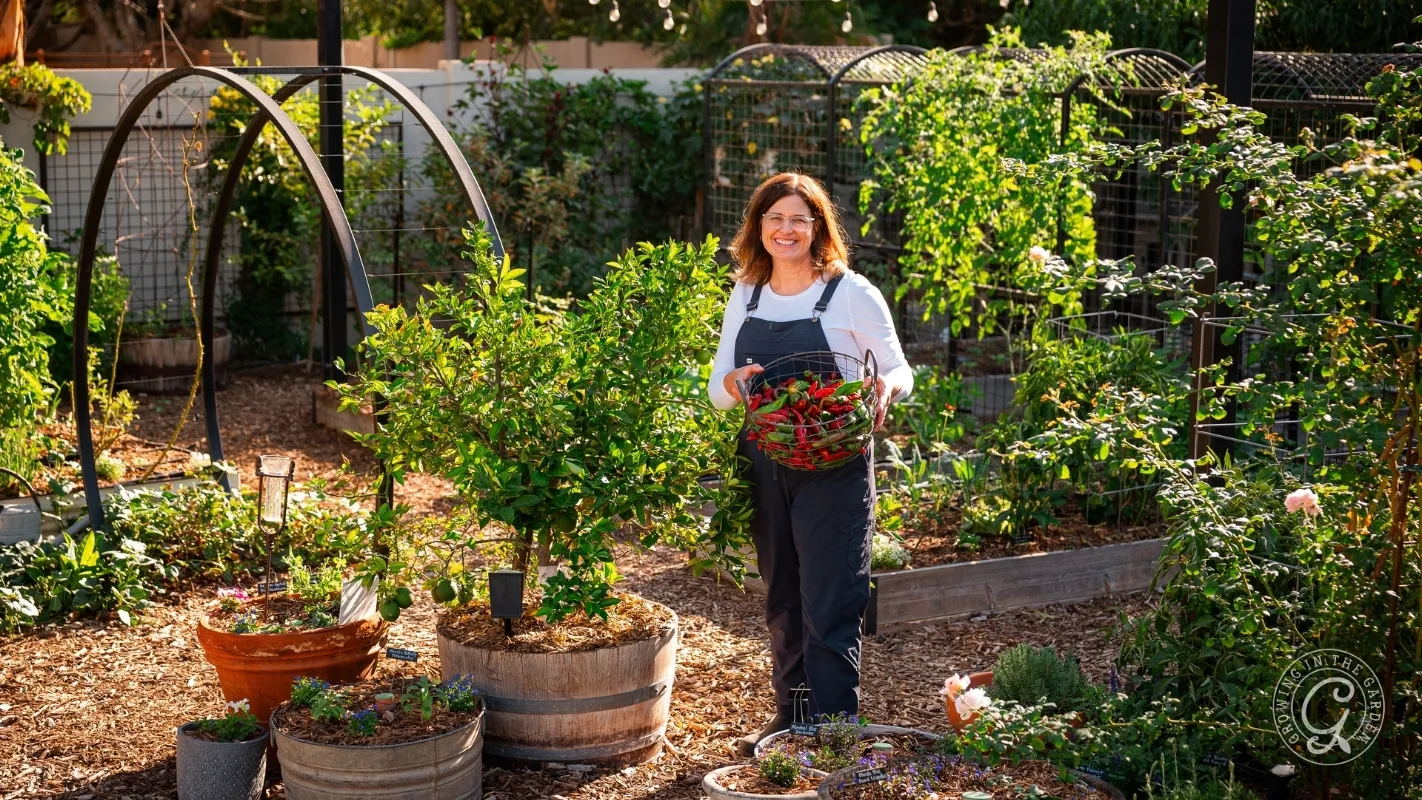
If you’re just getting started or still figuring out what works in your space, begin with simpler supports. See my post on inexpensive vertical gardening ideas for budget-friendly options.
Key Takeaways
- Vertical gardening enhances space and aesthetics with permanent structures like trellises, arbors, and wall supports.
- Consider your garden’s needs: food production, shade, or visual appeal when choosing these supports.
- Start with simple, budget-friendly options and gradually invest in permanent supports for long-term benefits.
- Explore various styles such as arch trellises, Freyr trellises, and decorative arbors for added beauty and functionality.
- Use vertical gardening techniques not just in raised beds but also in containers for maximum space utilization.
What We’ll Cover:
When a Trellis Becomes Part of the Garden
A temporary support solves a short-term problem. A permanent trellis does more than that. It shapes how the garden looks, how you move through the space, where shade falls, and what you can grow year after year.
Before adding a permanent support, think about what you want it to do.
- Is it for food production?
- Does it need to support heavy vines?
- Will it create shade?
- Will it help cool a hot wall?
- Will it be visible all year?
- Does it need to look good even when plants aren’t growing?
A trellis can cool a wall or shade a path, but it can also block winter sun if it’s in the wrong place. In many gardens, taller supports work well on the north edge of beds so they don’t shade other crops, but pay attention to your garden all year long. Sun patterns change, and the best placement depends on your space.
For more help with garden design, see my posts on raised-bed garden design and backyard garden layout ideas.
How to Choose the Right Permanent Trellis
The right support depends on what you need it to do.
- For long-term value: Pick supports that still look good when they aren’t covered with plants.
- To add beauty and structure: Use an arbor, arch, or decorative trellis.
- To support heavy vines: Choose strong arches, cattle panel tunnels, sturdy arbors, or wall-mounted trellises.
- For cucumbers and beans: Use arches, cattle panels, Freyr-style trellises, or almost any sturdy vertical support.
- To cool a hot wall: Choose a wall-mounted trellis that holds vines away from the surface and gives them room to grow.
Adding more trellises is the easy part. This guide to the best crops for vertical gardening will help you decide what to grow on them.
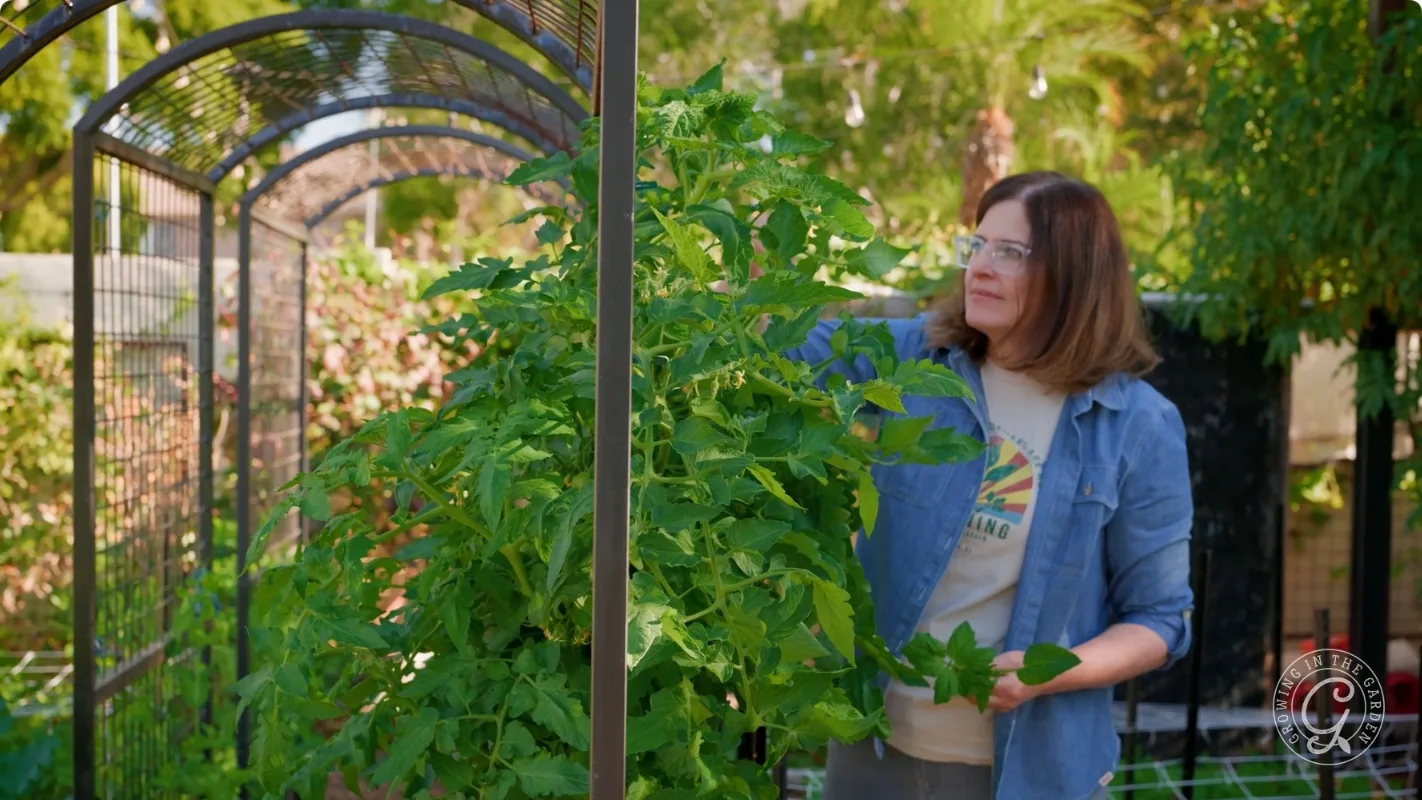
1. Arch Walkway Trellises
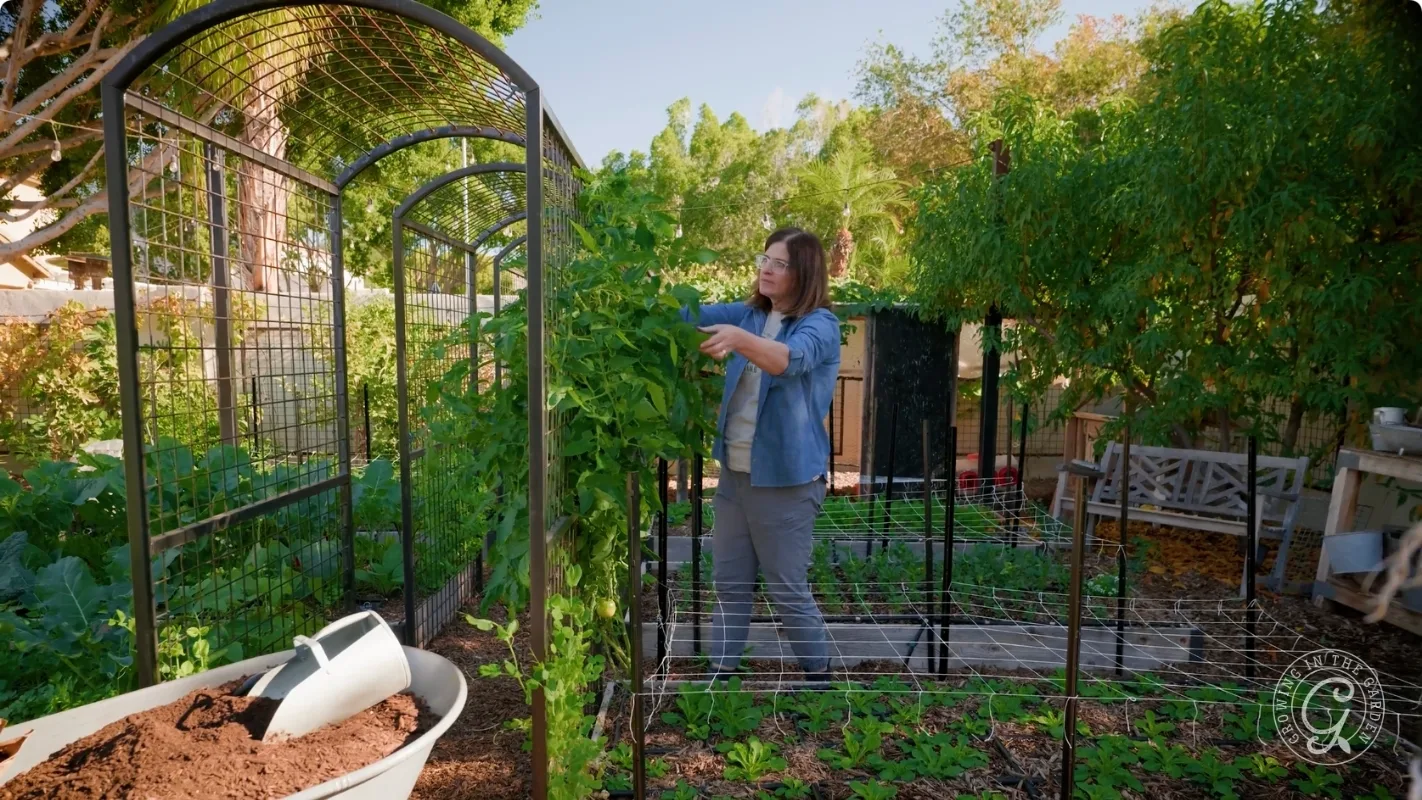
When I expanded my garden in 2020, I knew I wanted a permanent arch walkway between the six raised beds. I had three beds on the north side and three on the south side, and I wanted the walkway between them to become part of the garden. I reached out to a local welder and explained what I wanted. When he installed the arches, I was so excited to see that part of the garden come together.
They’ve become one of the key features in my garden, and I love them just as much today as I did when they were first installed.
Arch trellises are especially useful in raised-bed gardens because they use the space above paths rather than taking up more room in the bed. In a hot climate, they can also create filtered shade and make the garden feel cooler.
If you’re planning a permanent arch, think about the width of your path, the height you want, and how the structure will look when plants aren’t growing on it. Get more details about the arch walkways trellises in this guide.
2. Freyr Trellises
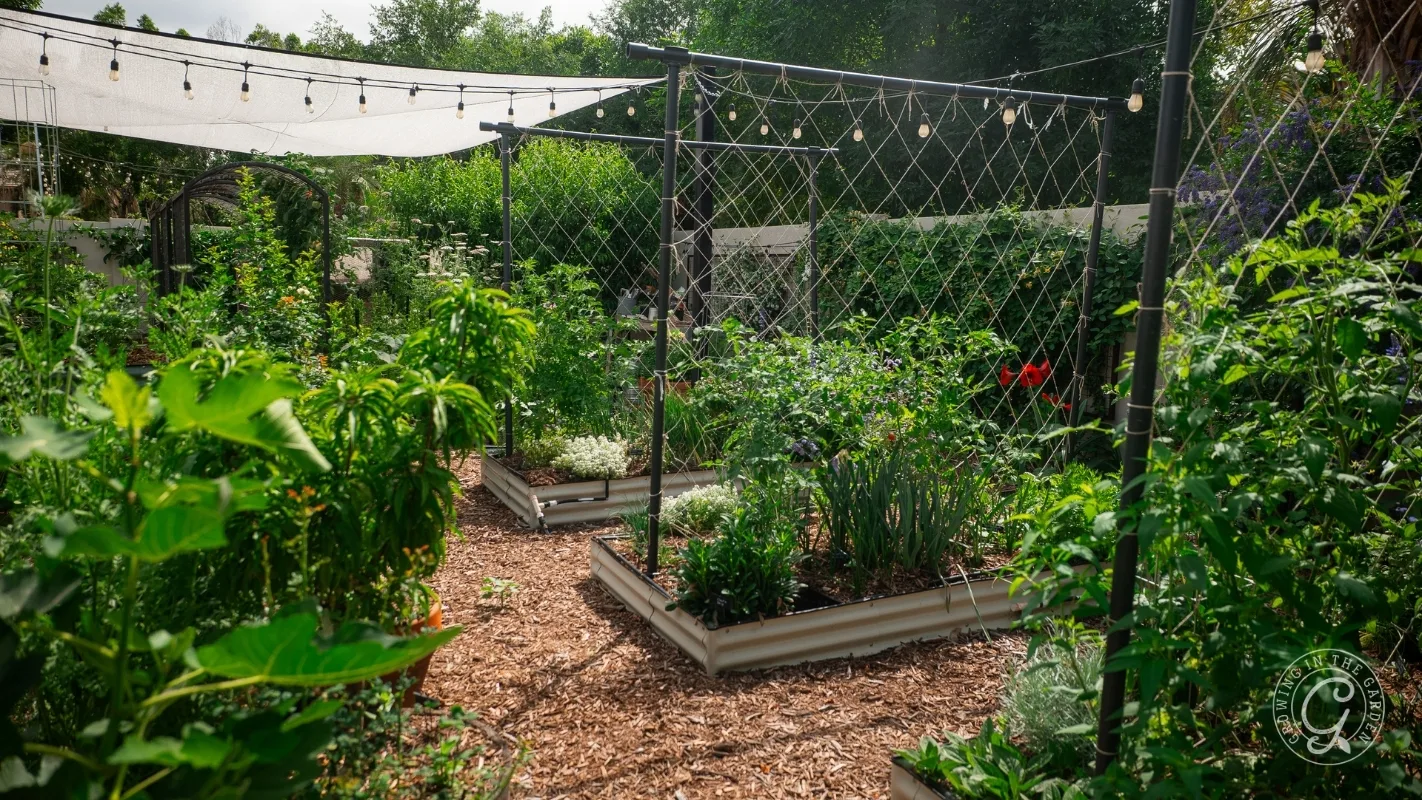
I first added a Freyr trellis and was immediately impressed with how well it was made. I’ve been DIY’ing garden supports for years, so I notice quality when I see it. This is a well-designed, well-made piece that will last as long as my garden does.
When I replaced some worn-out beds with new metal raised beds, I added Freyr trellises down the middle of each one. Those four trellises are now an integral part of how I garden in that area of my yard.
I use jute netting on them, which has to be replaced every couple of seasons, but I like that it’s compostable and looks nice in the garden. You can also attach strings to the pole and use a vertical string method, depending on what you’re growing.
The Freyr trellis is not inexpensive, but it’s a long-term support. This is the kind of trellis I’d consider if you want something durable, attractive, and functional. The Freyr trellis is available from Seattle Urban Farm Company. I added this jute netting from Amazon.
Climbing trellises are perfect spots to thread in host and nectar plants from my Arizona Butterfly Garden Guide.
3. Gracie Modern Arbor
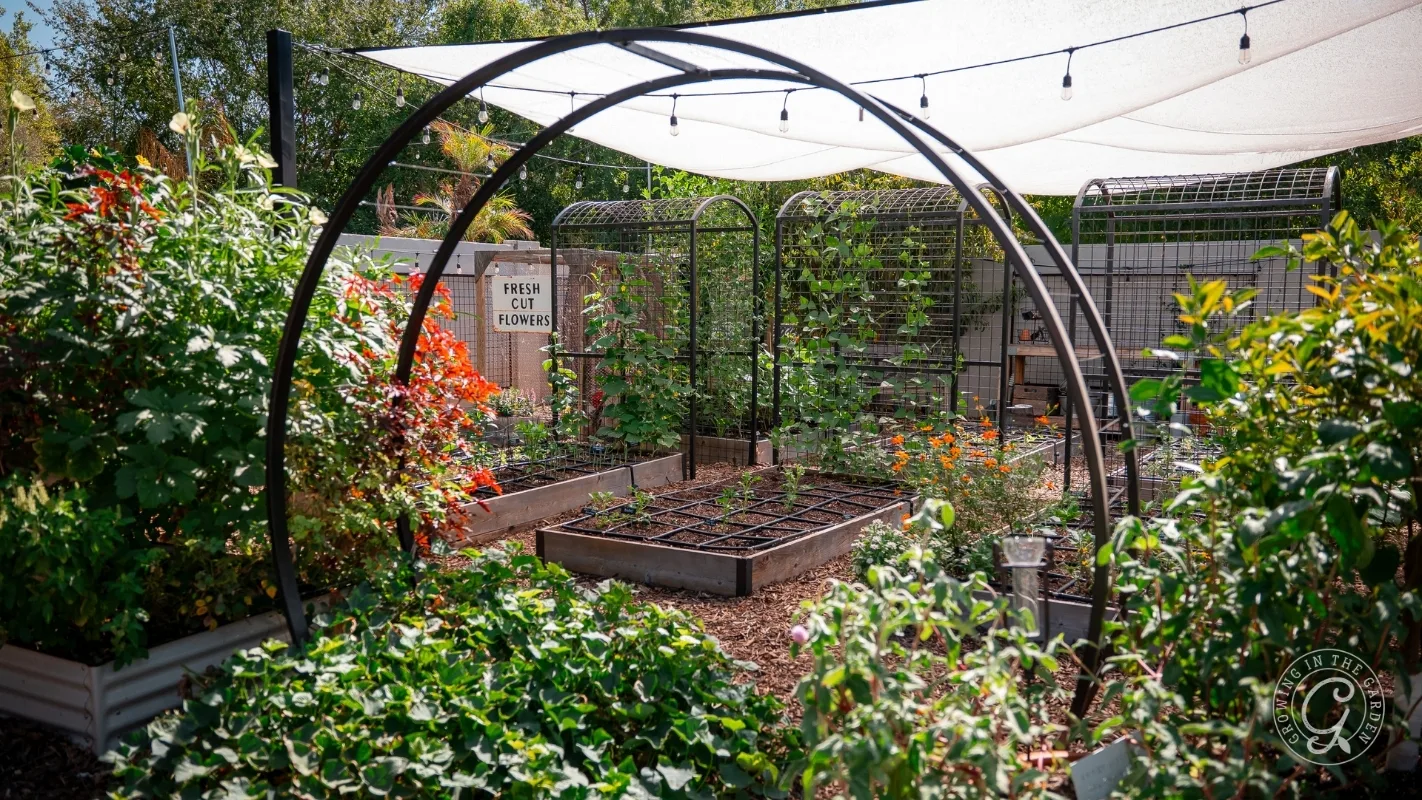
I admired the beauty and elegance of the Gracie Modern Arbor for years before adding one to my garden. It’s a statement piece. I added mine at the entrance to my garden. It gives the garden a focal point and creates a sense of entry.
Even empty, it’s beautiful. It’s often the spot where people want to have their picture taken when they visit the garden. It adds height, beauty, and function, and I can’t imagine my garden without it now.
If you’re ready to add a long-term focal point to the garden, an arbor like this can completely change how the space feels. The Gracie Modern Arbor was simple to install, exceptionally well-made, and available for purchase from Terra Trellis. I love growing skyflower over my arbor for color and pollinators.
4. Permanent Rebar Wall Trellises
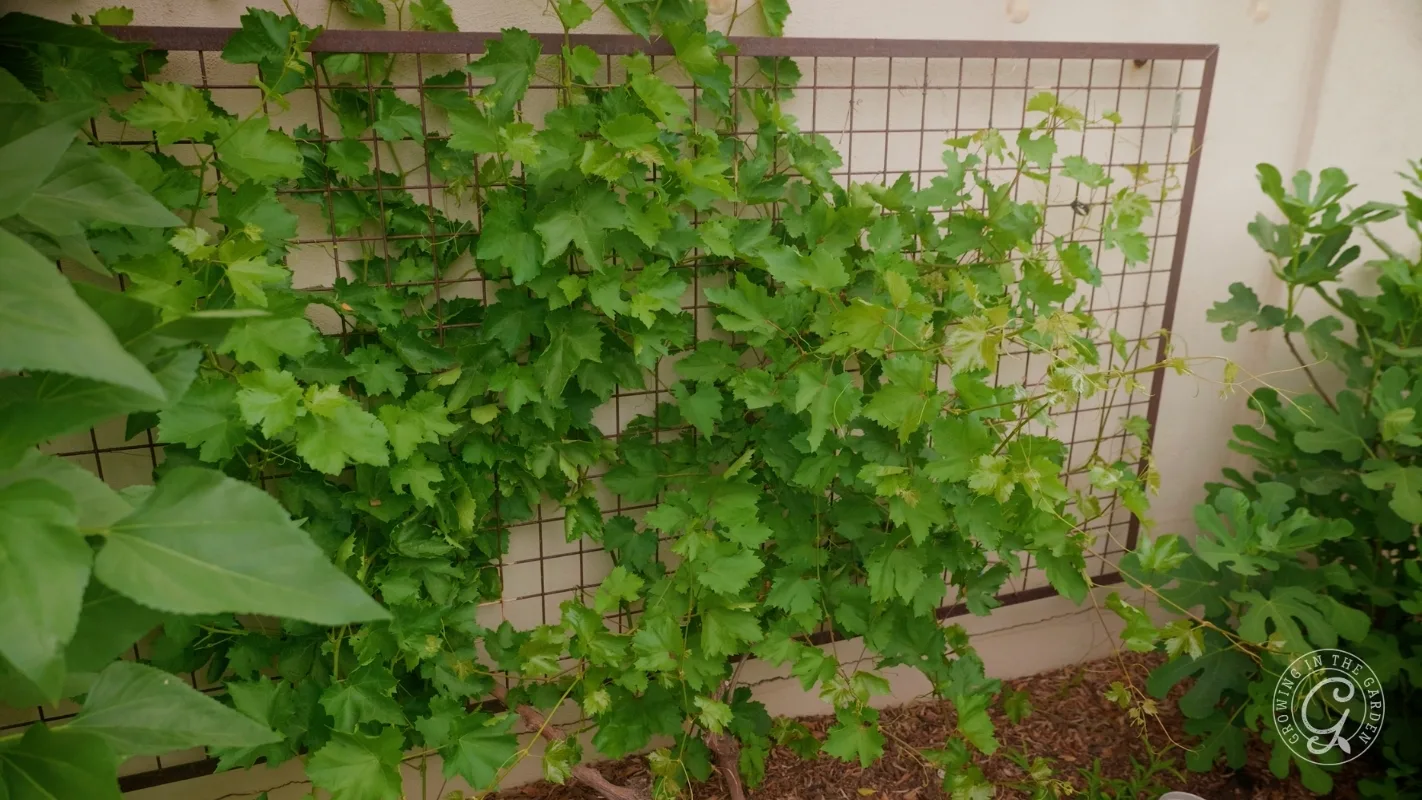
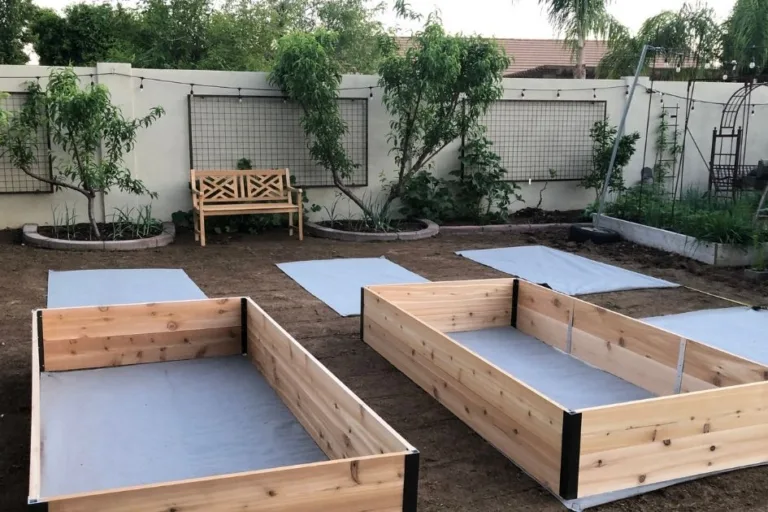
Vines have become one of my favorite ways to cool hot block walls, and wall-mounted rebar trellises are now on most of the block walls in my garden.
A local welder made mine, and they’ve become one of the most useful permanent supports in my yard. They soften the hard edges of the garden, add year-round greenery, and give vines the space they need to grow.
I use them for ornamental vines and grapes, and they’ve become part of my approach to managing heat in the garden. A bare block wall can radiate a lot of heat, especially in the afternoon. Covering that wall with vines helps create a cooler, softer microclimate.
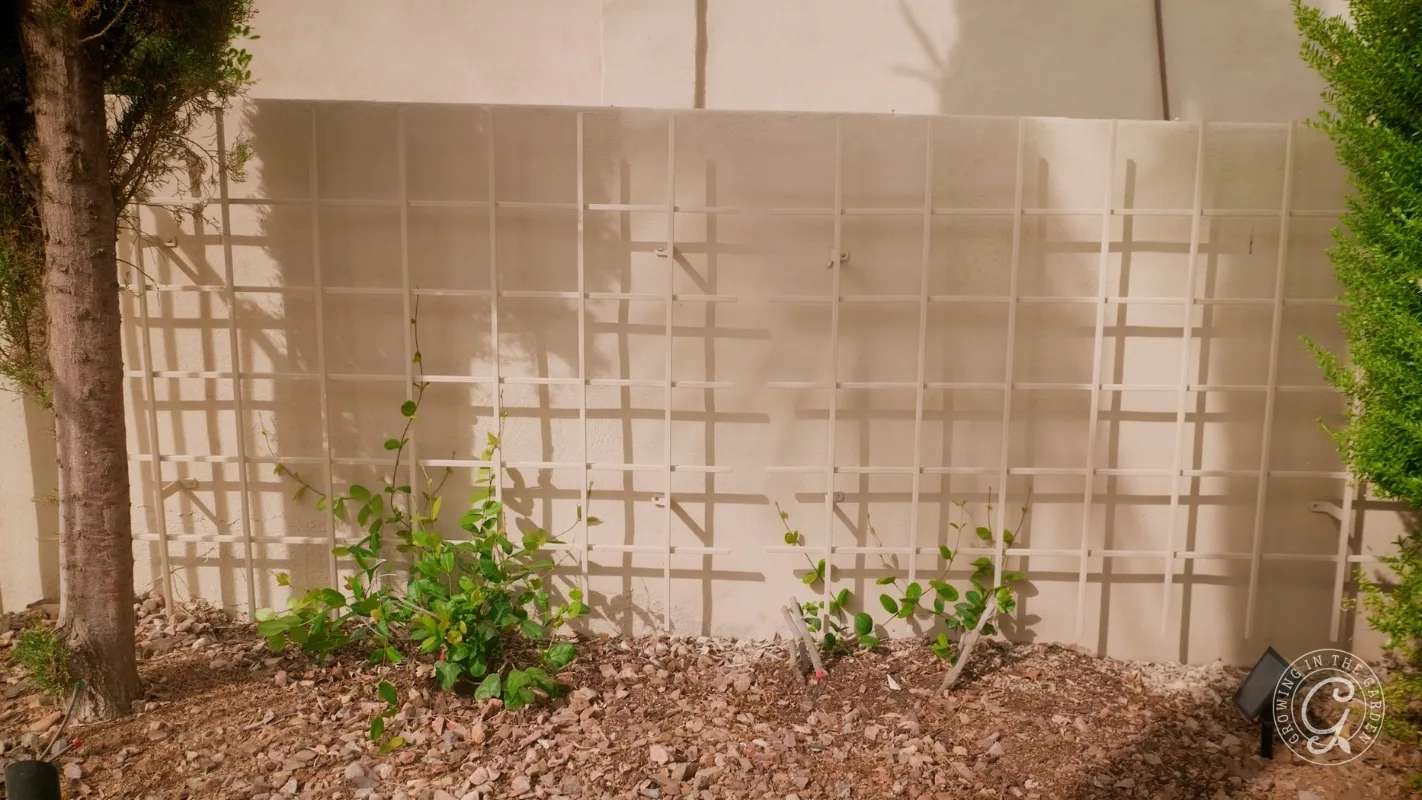
Wall trellises are also a good way to use vertical space, which is especially helpful in smaller yards where every planting area has to work hard. The main thing to consider is exposure. A west-facing wall is very different from an east-facing wall, and not every plant wants the same amount of heat. Choose vines that match the location. For more ideas, see my Arizona Vine Guide.
5. Cattle Panel Arches and Tunnels
Cattle panels can be an inexpensive support, but when they’re installed well, they can also become a long-lasting part of the garden. They work especially well between raised beds with a path in the middle. Bend the cattle panel into an arch, secure it well, and you’ve created a strong vertical support that uses the space above the pathway.
The main downside is that cattle panels can be awkward to transport and install. But once they’re in place, they’re sturdy, useful, and long-lasting. In hot climates, cattle panel arches can also create useful filtered shade. I like that they can grow food and help create a little microclimate at the same time.
Get more details about how to use and install trellis netting for cut flowers in this guide.
Not Permanent, But Worth the Upgrade
Not every support in my garden is permanent, and not every upgrade needs to become part of the garden structure. Some supports are still worth spending more on because they’re stronger, easier to use, and last for years.
Heavy-Duty Tomato Cages
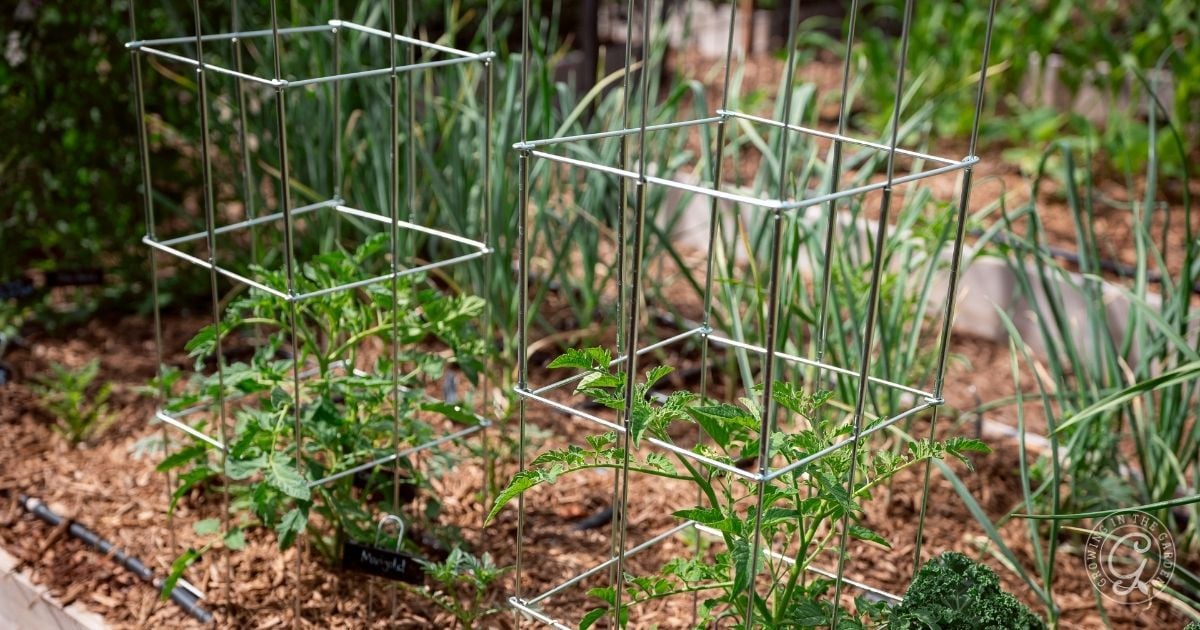
I’ve tried several tomato cages through the years, and these are my favorite. The Garden in Minutes tomato cages fit inside my watering grids and are tall enough for many tomato varieties.
These are 64 inches tall, with about 55 inches above the soil. They’re made from heavy-duty steel, have eight legs for stability, and fold flat for storage. I also like that the cattle-panel style gives plants plenty of places to be supported.
I use them for tomatoes, peppers, and pole beans. They’re sturdy, easy to use, and especially helpful in raised beds where I want supports that fit neatly inside the bed and work with my watering grid setup.
Whiskey Barrel Supports
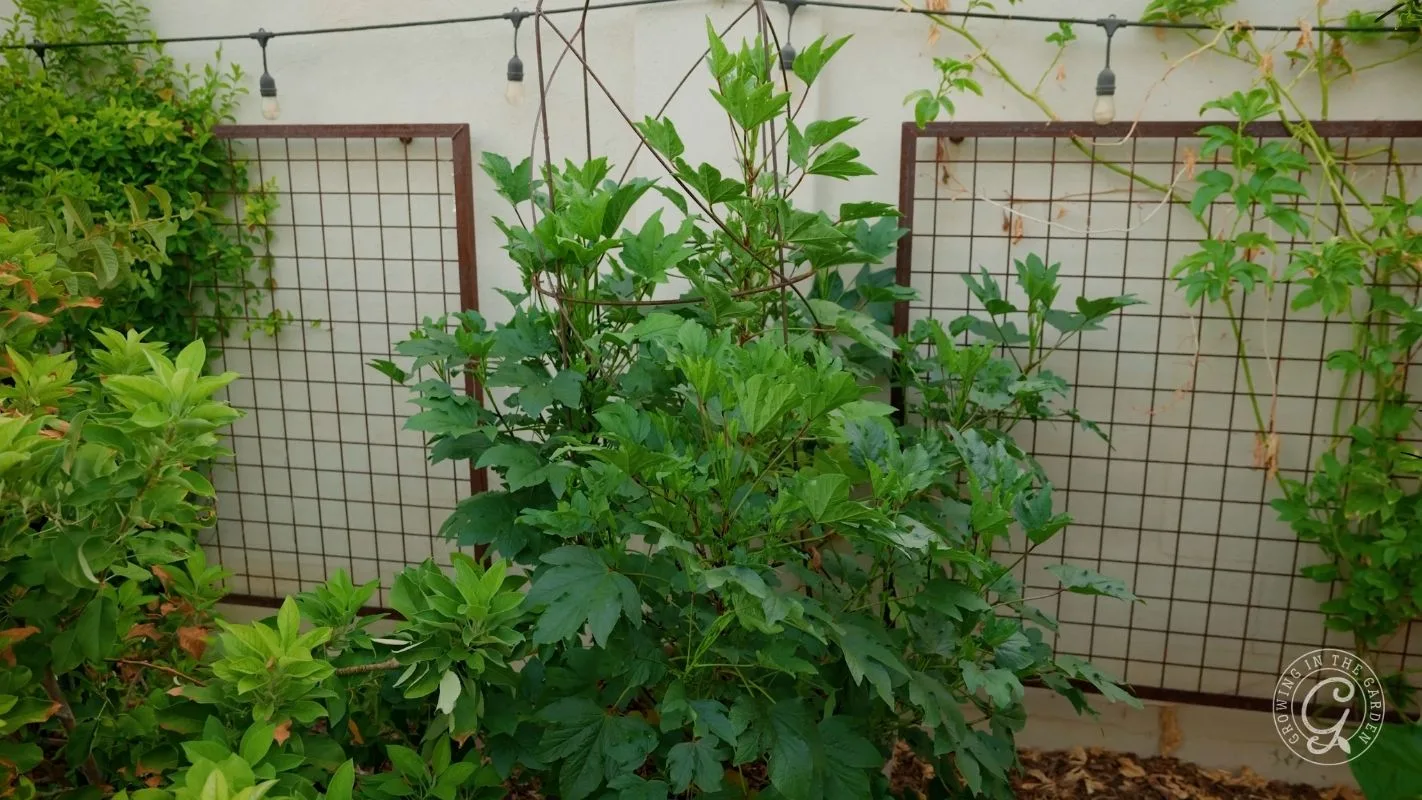
I first saw whiskey barrel supports in my friend Jill’s garden at Sweet Life Garden in Phoenix. Her husband welds them, and he was gracious enough to weld some for me.
I love having these in my garden because they let me grow vertical crops in containers without using space in my raised beds. Right now, two of my favorite crops to grow this way are roselle and luffa.
Both roselle and luffa have a long growing season. In my garden, they’re often still going strong when I’m ready to start planting fall crops in my raised beds. Growing them in whiskey barrels keeps them contained and frees up bed space for the next season.
The supports make the barrels tall and beautiful, and they turn a container into a more productive growing space. They’re also a good reminder that vertical gardening isn’t just for raised beds. Containers can grow up too, as long as the support is sturdy and the container has enough soil volume.
Which Trellis Would I Add First?
Each garden is different, so I wouldn’t give everyone the same answer. Spend time in your garden and pay attention to what would actually solve a problem in your space.
- Do you need more room for vining crops?
- Do your tomatoes need better support?
- Do you have a hot wall that needs cooling?
- Do you want a focal point or entrance?
- Do you need to get long-season crops like luffa or roselle out of your raised beds?
If you’re not sure yet, start with less expensive options while you make a plan for more permanent supports. A thoughtful investment provides long-term benefits in the garden.
That’s how my garden developed. I started with budget-friendly DIY supports and added more permanent trellises over time as I learned what each space needed.
Final Thoughts
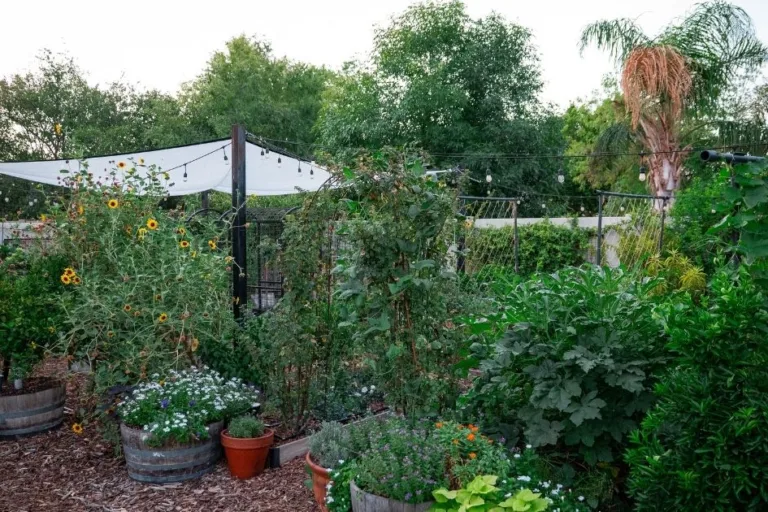
Permanent trellises are an investment, but the right ones can change how your garden works. They help you grow more food, support heavy vines, make harvesting easier, create shade, cool hot walls, and add structure to the garden. They also make the garden feel more intentional.
If you’re just getting started, begin with inexpensive vertical gardening ideas and learn what you actually need. Once you know how you use your space, then it makes sense to add more permanent supports.
The goal is to choose supports that help your garden grow better and make the space more useful and beautiful season after season.

Hi, I love the idea of using ladder mesh block for vertical gardening but I can’t find it at any building supply stores here or near Vancouver, BC, Canada where I live. Any way you could suggest a supplier that would ship from the US to Vancouver? Thanks in advance for your help!
I wish I knew one. It seems to be much easier to find in areas where block fences are common.
Those clips that you link to Amazon for $8 are at the dollar store spring to summer.
Thanks for the tip!