
How to Grow Skyflower in the Low Desert Garden
I grow skyflower over an arbor and up a trellis against a wall, and it looks good for most of the year. When it’s blooming, it draws butterflies and hummingbirds all day. It’s an upright shrub you can train like a vine, and my neighbor keeps hers pruned into a round bush, so you can shape it to fit your space. It handles desert heat better than you’d think, as long as you give it some protection from the worst afternoon sun.
Key Takeaways: Growing Skyflower
- Skyflower (Duranta erecta) is a versatile shrub that can bloom in deep purple and be shaped as desired.
- The best planting time in hot climates is fall or late February to March; it requires good light and protection from harsh sun.
- Care includes deep, regular watering, mulching to retain moisture, and guiding growth with vertical training.
- It blooms for an extended time; heavy pruning occurs in early spring and fall to maintain shape and health.
- Skyflower is not suitable for harsh unprotected spots, and its berries can be toxic to kids and pets.
What We’ll Cover:

What Is Skyflower?
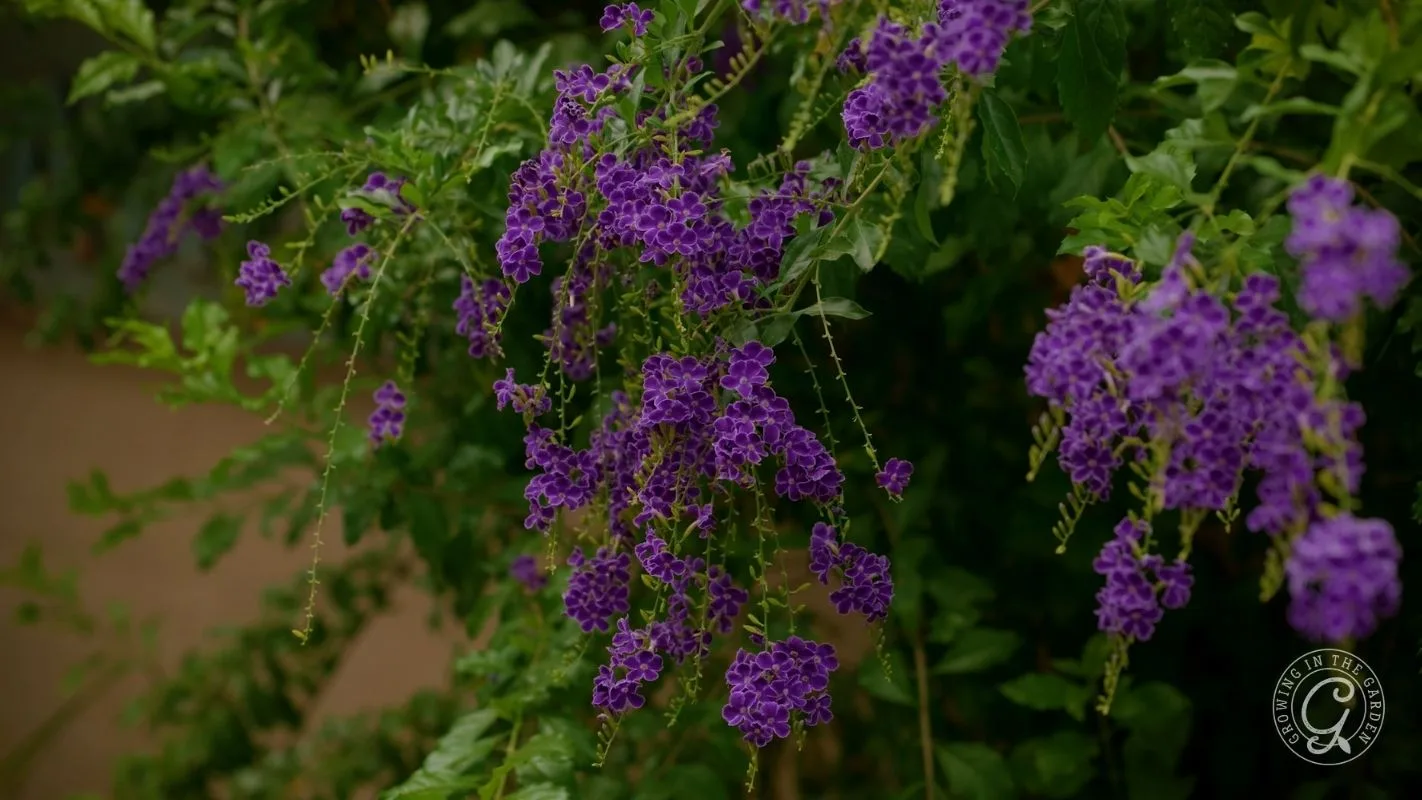
Skyflower (Duranta erecta) is an upright shrub with arching green branches and sprays of deep purple flowers through spring and summer. Most people grow it as a large flowering shrub, but you can train it up a trellis or wall and use it like a vine or a screen. That’s how I grow mine.
Quick facts:
- Size: 5 to 10 feet tall, 5 to 8 feet wide
- Flowers: deep purple sprays, spring and summer
- Hardy to: about 28°F
- Grows as: upright shrub, or trained on support like a vine
It’s more shrub than true climber, so if you want something that climbs a trellis on its own, look at these flowering vines you can grow from seed.
Where to Plant Skyflower in Hot Climates
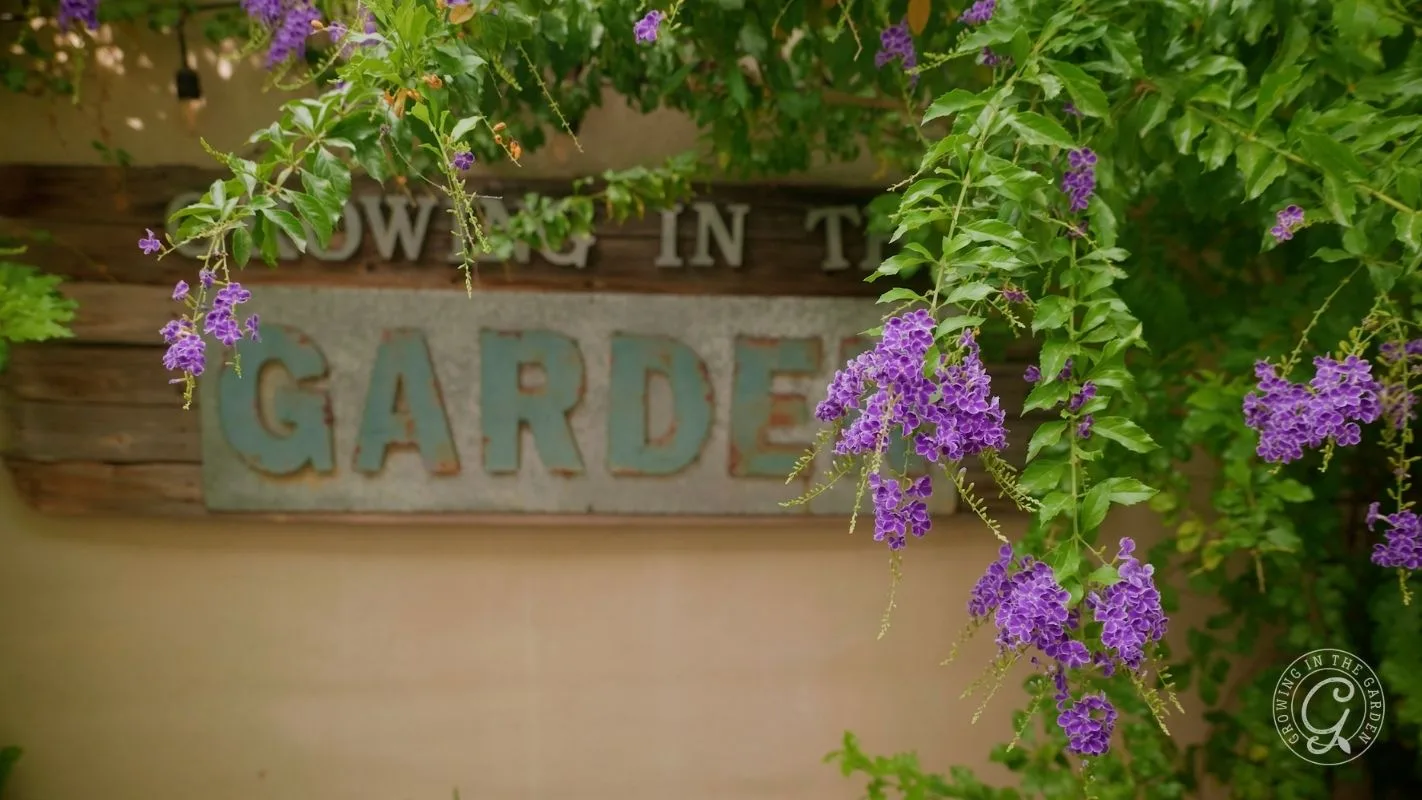
The best time to plant skyflower in the low desert is fall, around October. That gives the roots all winter and spring to settle in before summer. Late February into March is the second-best window. For a fuller planting calendar, this low-desert vine planting guide breaks it down by season.
I have one skyflower on either side of a north-facing arch trellis, and two more growing up wall-mounted trellises on an east-facing wall in a protected side yard. Those spots have worked well for years.
Give it good light, some shelter from the harshest afternoon sun, room to fill in, and support if you want to train it upward. It handles more heat once it’s established, but it still looks best with some protection in the hottest spots. I wouldn’t put it in the worst reflected-heat corner and expect it to thrive.
How to Grow and Care for Skyflower
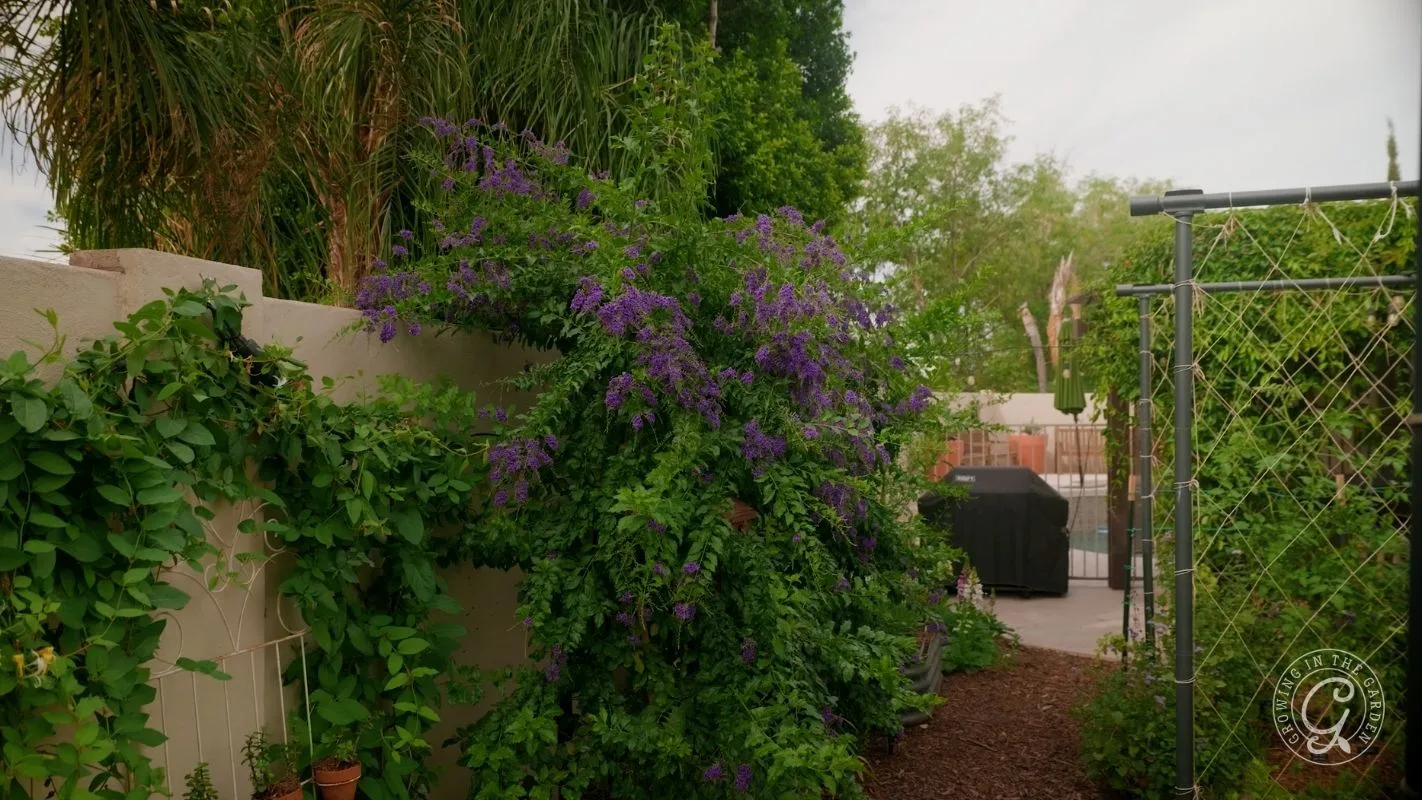
Skyflower fills in fast once it settles. Mulch well after planting. A thick layer of mulch holds moisture, keeps the roots cooler, and means less watering in summer. Learn how and why to mulch here.
Water deeply and regularly. In my garden, established plants get a deep soak about once a month in the coldest months and up to once a week in summer. Young plants need more while they root in.
To grow it vertically, give it support and guide the branches where you want them. It won’t climb on its own. Growing it up a wall or trellis adds color and attracts pollinators without taking up much ground, and there are more vertical gardening ideas for small spaces if you’re short on room.
Pruning, Bloom Time, and Winter
Skyflower blooms for a long stretch. Mine look good most of the year and fill with pollinators when they’re flowering.
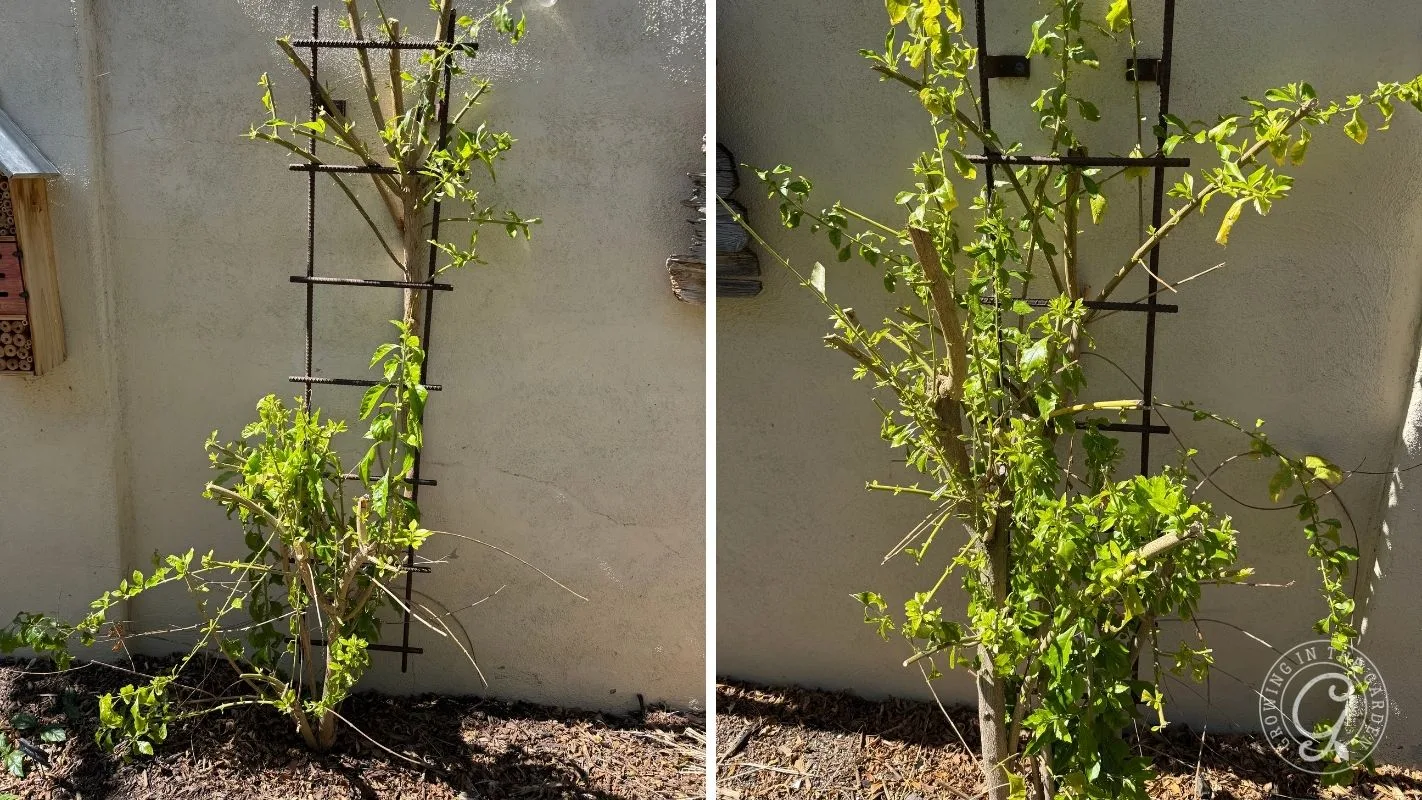
I cut mine back as needed, sometimes hard. The heavier pruning happens in early spring or in fall after summer. I might cut it back hard every 2-3 years. Through the season, I trim the ends of the flowering growth and cut back to a branch to keep the shape I want. It bounces back well. I’ve cut mine to within a few feet of the ground, and it grew right back.
Skyflower is hardy to about 28°F. Mild winters haven’t bothered my established plants much, especially the ones in protected spots. A harder frost can knock it back, but mine have always returned.
Is Skyflower Right for Your Yard?
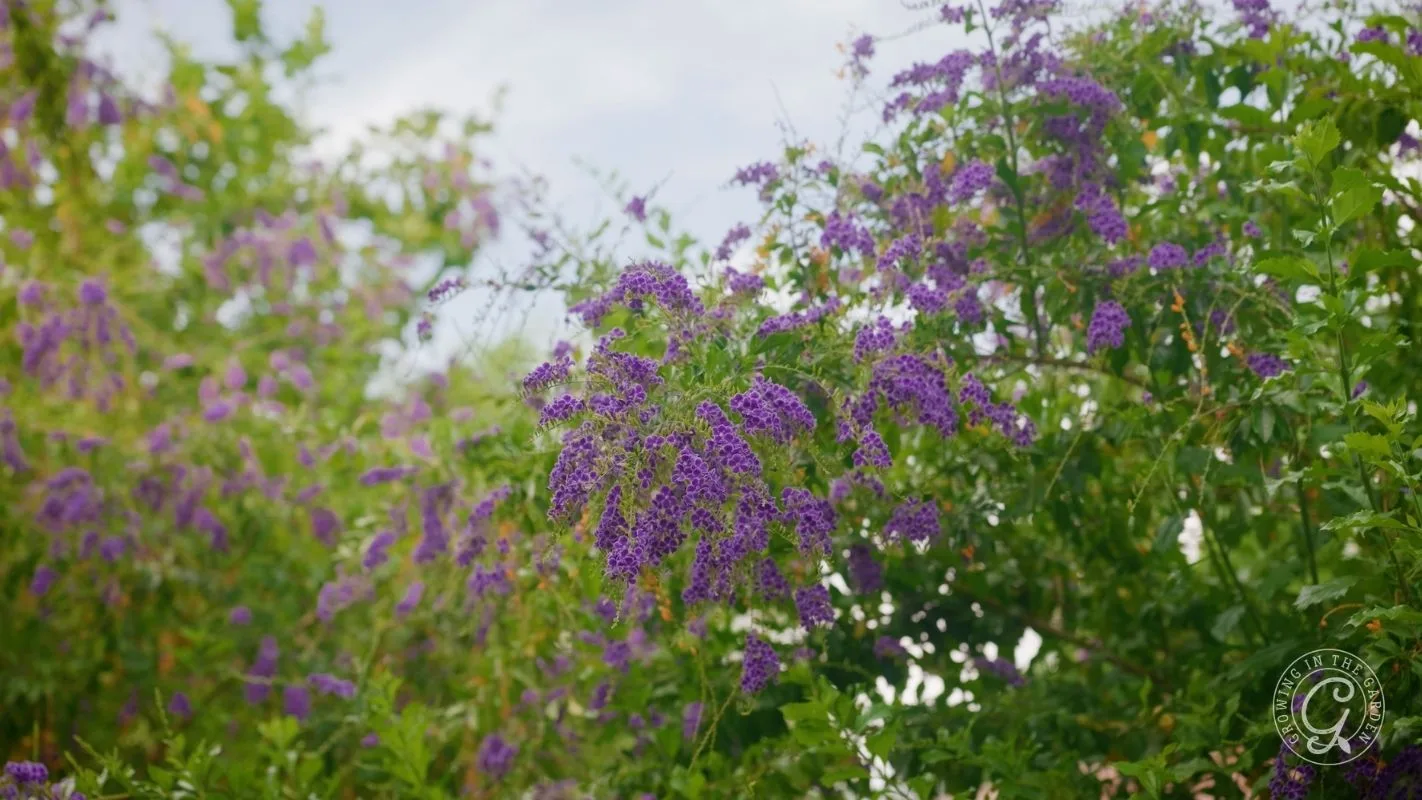
Skyflower is a good pick if you want long bloom, steady pollinator activity, and a soft, full look you can train on support or use as a flowering screen. Skip it if you want something for the harshest unprotected spot, or a plant you never have to prune. If it’s not the right fit, there are plenty of other tough desert shrubs to plant that take more abuse. Skyflower is one of many flowering plants hummingbirds visit in the low desert. See my complete guide to attracting hummingbirds in Arizona for more options.
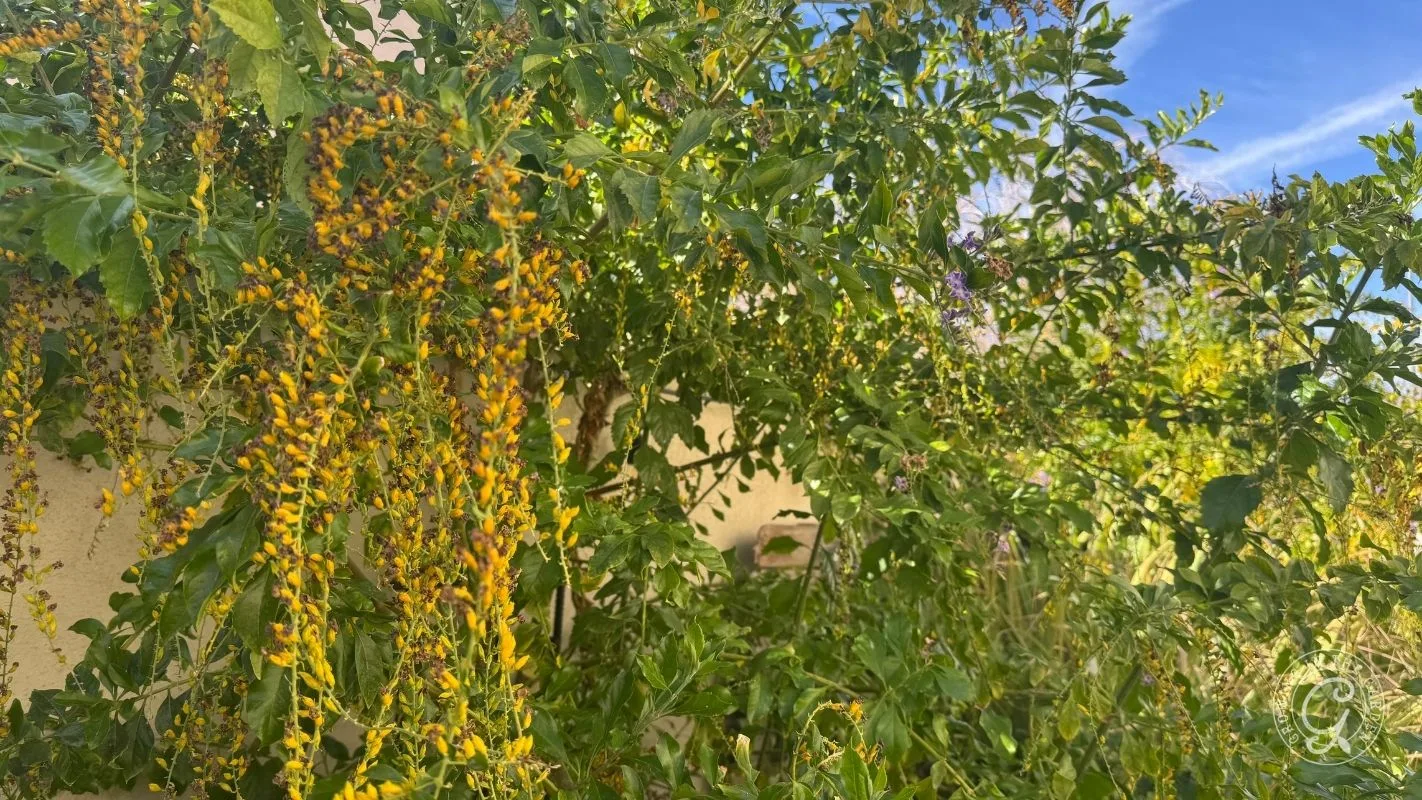
The berries can be toxic if eaten, so keep that in mind around young kids and pets.
For me, it’s been worth the space. It’s beautiful, useful, and tougher than it looks.
Growing Skyflower FAQs
Fall, around October, is the best time in the low desert. Late February into March is the second-best window. Both give the roots time to settle in before summer heat.
It takes a lot of sun once established, but in a hot climate it looks best with some protection from the harshest afternoon exposure.
It’s an upright shrub, but you can train it like a vine if you give it support and guide the growth.
Skyflower roots easily from cuttings, which is the usual way to make more plants. I haven’t propagated mine, but it’s a common method for this shrub.
In my garden, established plants get a deep soak about once a month in the coldest months and up to once a week in summer. Young plants need more while they get established.
I prune in early spring or early fall, and trim the ends of the flowering growth through the season. It handles a heavy cutback well.
Skyflower is hardy to about 28°F. Established plants in protected spots have handled mild winters well in my garden. A harder frost can cause more dieback.
The berries can be toxic if eaten, so keep them away from young kids and pets.

Leave a comment on How to Grow Skyflower in the Low Desert Garden