
Inexpensive Vertical Gardening Ideas for Raised Beds
Vertical gardening is one of the easiest ways to grow more food in a small space, but you don’t need expensive custom trellises to do it. Some of my most useful garden supports started as thrift-store finds, hardware-store materials, and things someone else was ready to get rid of.
These budget-friendly vertical gardening ideas work especially well in raised beds and are easy to adapt for crops like cucumbers, peas, beans, Armenian cucumbers, and small melons. If you’re wondering what to plant, start with my favorite crops to grow vertically
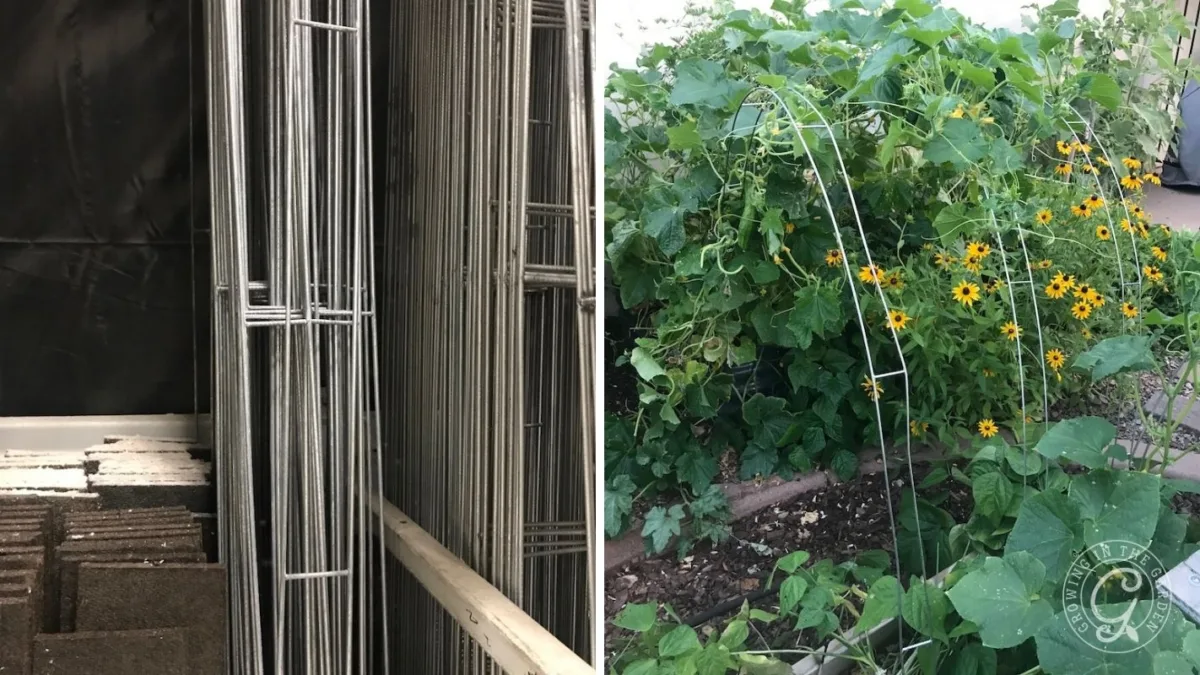
Key Takeaways
- Vertical gardening ideas utilize budget-friendly materials, allowing you to grow food in small spaces without custom trellises.
- Common supports include old ladders, bamboo poles, cattle panels, and thrift store finds, making vertical gardening affordable and creative.
- Growing vertically enhances airflow, eases harvesting, and frees up space for other crops, while also providing shade in hot climates.
- The best vertical gardening supports depend on your crops, available budget, and whether you prefer temporary or permanent solutions.
- Start with simple, inexpensive options to learn about gardening before investing in more permanent structures.
Look at Everyday Materials With a Gardener’s Eye
When I first started gardening, I didn’t have a big budget for custom trellises. I walked up and down the aisles at home improvement stores and thrift stores, looking at everything with one question in mind: Could I use that in the garden to help crops grow vertically?
Once I started looking that way, I found a surprising number of options. Old ladders, ladder mesh block, conduit, cattle panels, bamboo poles, and tomato cages all became useful supports in my garden. When my mom had an old ladder she didn’t need and asked if I wanted it, I said yes because I was already thinking about how I could use it in the garden.
Most of these ideas are inexpensive, easy to find, simple to use, and versatile. Some of my newer trellises are much more expensive and permanent, but these original vertical gardening ideas helped me grow more food without spending much money. If you’re ready for something more long-term, see my favorite permanent vertical gardening ideas. Necessity and low funds really are the mother of invention in the garden.
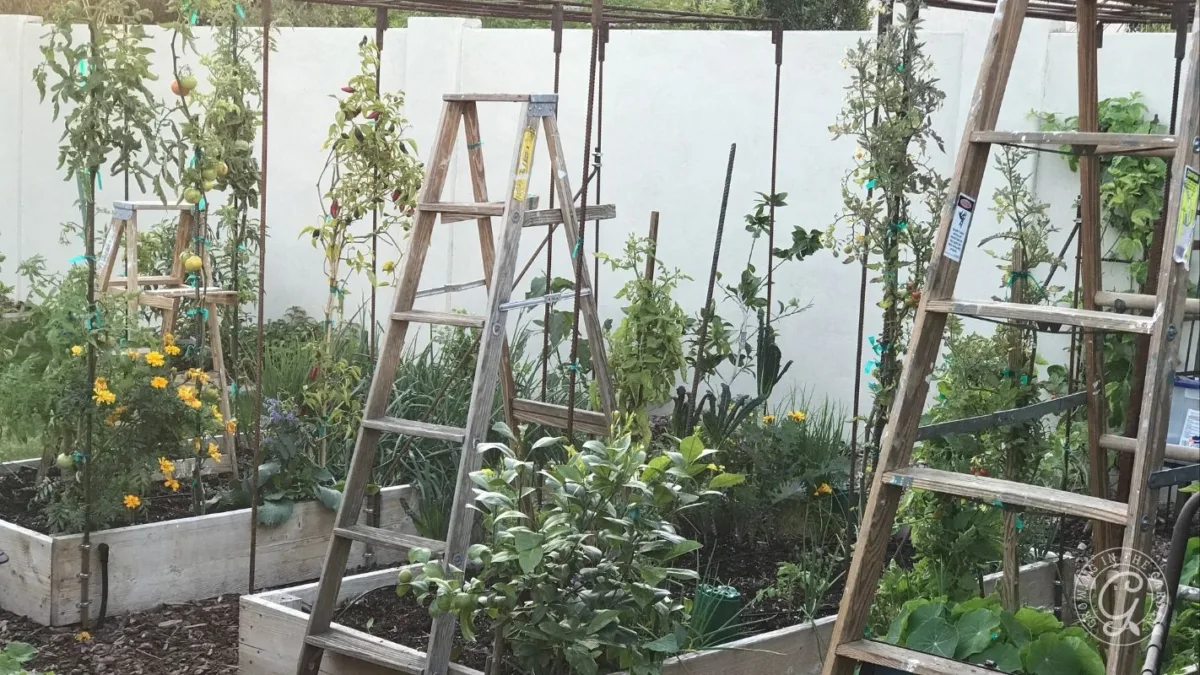
Why Grow Vertically?
- Growing vertically helps you make better use of the space you already have. Instead of letting vines sprawl across the ground or take over a raised bed, you can train them up a support and leave more room for other crops.
- Vertical gardening can also improve airflow, make harvesting easier, keep fruit cleaner, and help you spot pests or problems sooner. In hot climates, vertical supports can also provide useful shade for nearby plants if placed carefully.
- The key is choosing a support that fits your garden, your crop, and your budget. You don’t always need the prettiest or most expensive trellis. Sometimes you just need something sturdy enough, easy enough, and affordable enough to get the crop off the ground.
How to Choose a Budget-Friendly Vertical Gardening Support
Most of these vertical gardening ideas are more versatile than people realize. The best choice usually depends less on the crop and more on your space, budget, tools, and whether you want something temporary or permanent.
- Best for cucumbers: Almost all of them. Cucumbers are the universal vertical crop because they vine easily, and the fruit usually isn’t too heavy.
- Best for raised beds: Ladder mesh block, ladders, conduit trellises, cattle panels, bamboo poles, and tomato cages can all work in or near raised beds.
- Cheapest option: Usually, the cheapest option is whatever you already have or can find secondhand. Old ladders, thrift-store finds, bamboo poles, and simple hardware-store materials are often much less expensive than buying a custom garden trellis.
- Best for renters or containers: Ladders, bamboo poles, tomato cages, ladder mesh pieces, and other movable supports are usually the easiest because they don’t have to be permanently installed.
- Best for heavier vines: Cattle panels, sturdy conduit trellises, and welded rebar trellises are better choices for heavier crops or vigorous vines.
- Needs welding: Rebar trellises are the main option that requires welding experience or help from someone who can weld. The materials are inexpensive and easy to find, but the construction takes more skill.
- Best for shade in a hot climate: Cattle panel arches, taller trellises, and sturdy vertical supports can provide helpful shade, especially when placed to cover a path, bed edge, or a neighboring crop during the hottest part of the day.
1. Use an Old Ladder as a Garden Trellis
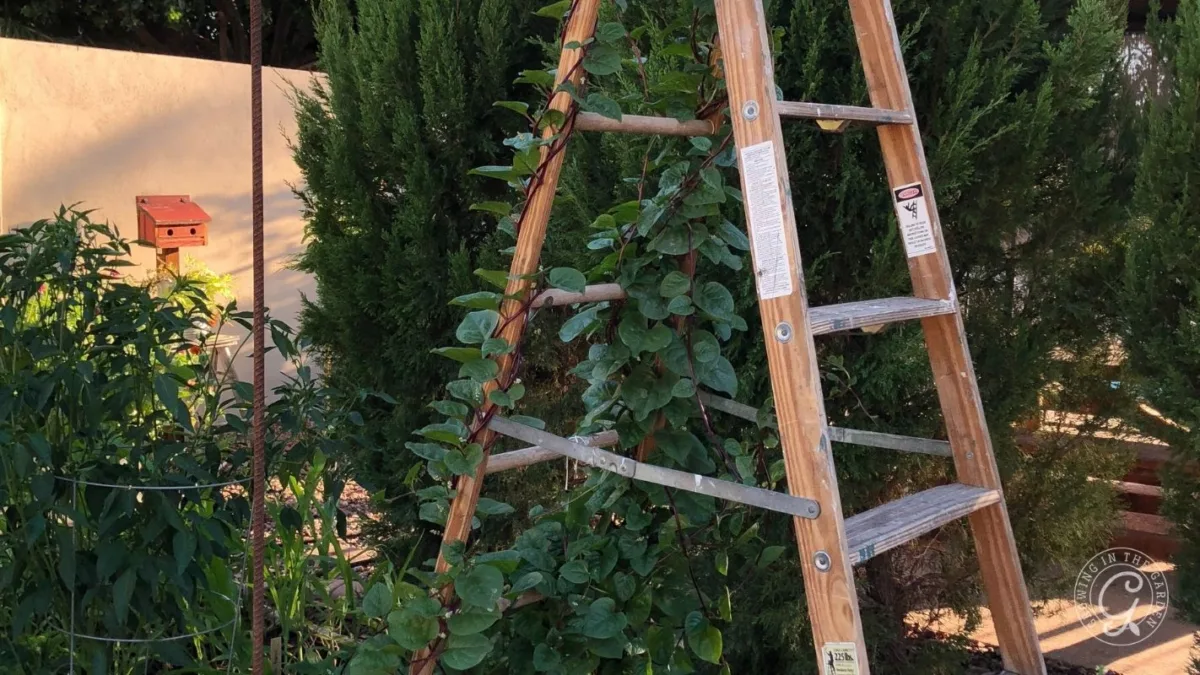
An old ladder is one of the easiest ways to add vertical space to a raised bed. It doesn’t have to be fancy. A worn wooden ladder, a small stepladder, or a ladder someone is ready to get rid of can serve as a simple support for vining crops.
I like this idea because it’s easy to move, easy to find, and doesn’t require building anything. You can place a ladder directly in a raised bed and plant around the base. As the crop grows, gently guide the vines toward the ladder and tie them if needed. Check out this article about ladders in the garden.
The main thing to watch is stability. Make sure the ladder is secure before the plant gets large. Once vines are full of leaves, flowers, and fruit, they can catch wind and become heavier than you expect.
2. Add Ladder Mesh Block to Raised Beds
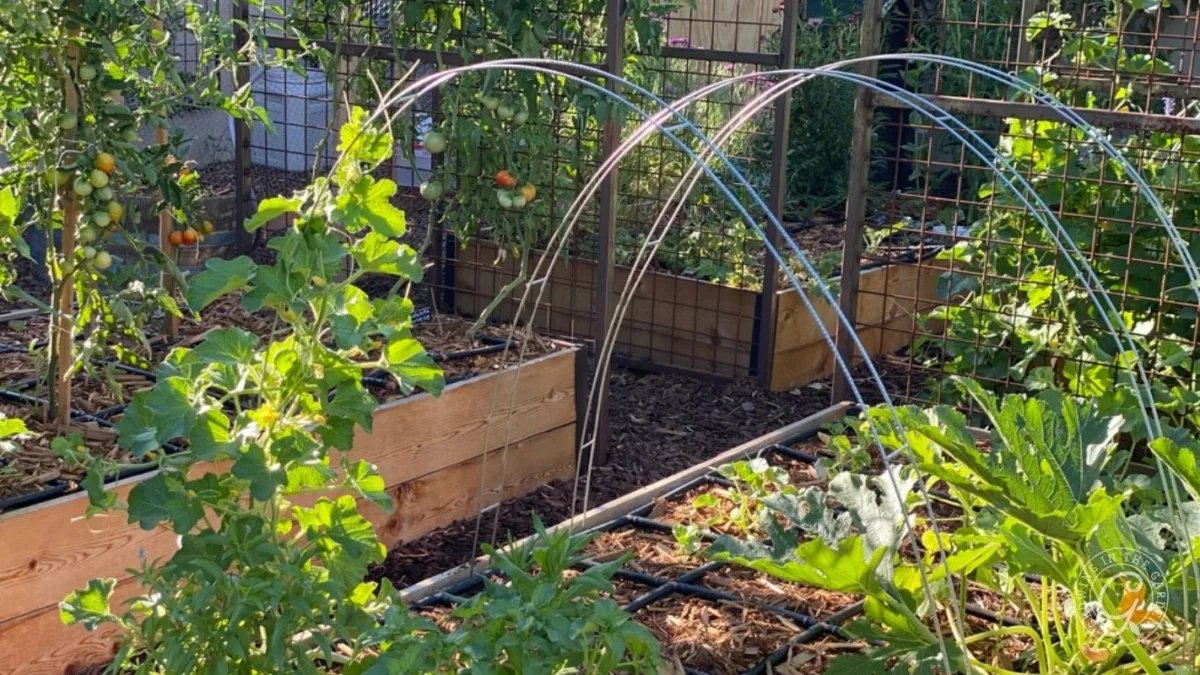
Ladder mesh block is one of my favorite inexpensive vertical gardening materials because it’s easy to use and can be placed almost anywhere in a raised bed. You can cut it to size, place it where you need it, and use it for many different crops.
This is a great option if you want something simple and flexible. It doesn’t take up much room, and it can be moved or adjusted from season to season. That makes it useful if you’re still figuring out what grows best in each part of your garden.
This is the kind of material I probably wouldn’t have noticed before I started gardening. It can be hard to find in some areas, but here in Arizona, it’s in the masonry department at most big box hardware stores. Learn more about using ladder mesh block as a trellis here.
3. Build a Simple Conduit Trellis


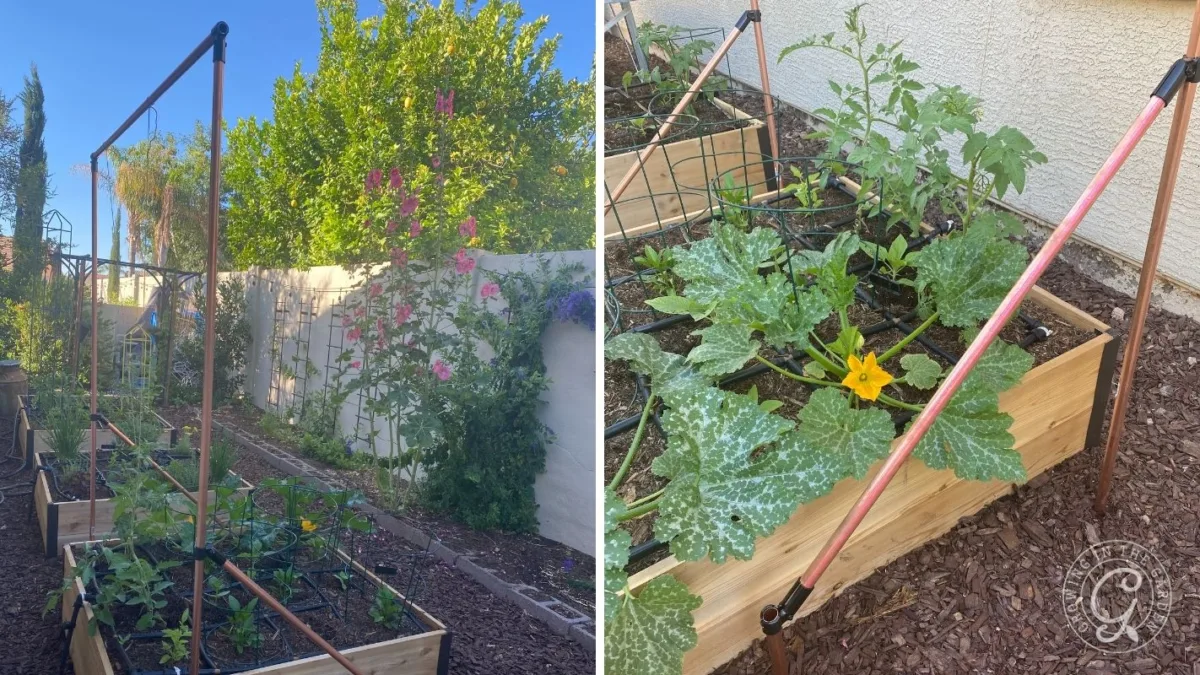
Conduit is another inexpensive hardware store material that can be turned into a strong garden support. A conduit trellis can be built beside a raised bed or attached in a way that gives vining crops a sturdy place to climb.
- Pound 2 foot rebar into ground about a foot deep.
- Slide electrical conduit over the rebar. (Most home improvement stores will cut the electrical conduit for you.)
- Fit pieces of conduit together using plumbing fittings.
- Can be built as a single trellis or as the multi-paneled one seen here.
- Use a cattle panel or a string trellis between the supports. The panels can be cut to size using a bolt cutter.
- Attach the cattle panel to the electrical conduit with metal zip-ties.
This type of trellis works well when you want something a little more structured than a ladder but still fairly affordable. It’s useful for cucumbers, beans, small melons, Armenian cucumbers, and other crops that benefit from a taller support.
The nice thing about conduit is that it’s easy to find and can be adapted to fit different bed sizes. You can build it tall, wide, narrow, or simple, depending on the space you have.
4. Use Cattle Panels Between Raised Beds
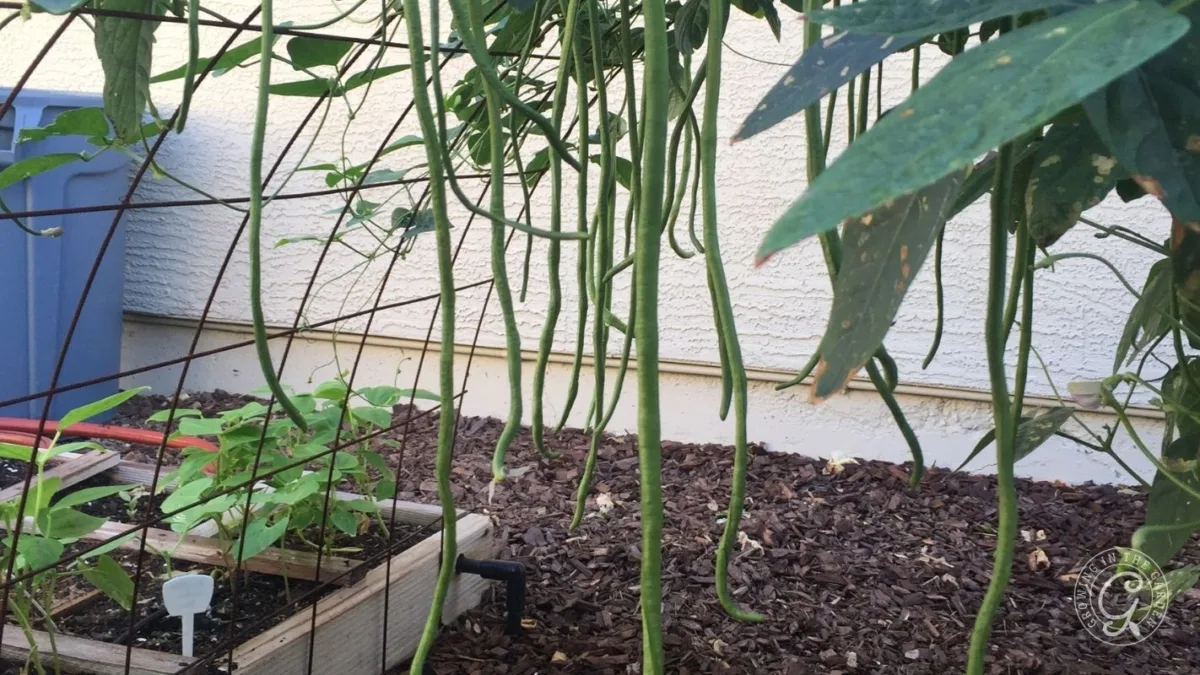
Cattle panels can be used as a temporary or more permanent garden structure, but they’re also one of the best budget-friendly ways to add serious vertical space to a garden. The simplest way is what you see here: the frame is bent, and the two beds hold it in place. It’s an excellent temporary trellis.
They work especially well between two raised beds with a path in the middle. Bend the cattle panel into an arch, secure it well, and you’ve created a strong vertical support that can handle significant growth.
The main downside is that cattle panels are awkward to transport and install. But once they’re in place, they’re sturdy, useful, and long-lasting. In hot climates, cattle panel arches can also create useful filtered shade. I like that they can grow food and help create a little microclimate at the same time.
5. Make a Bamboo Pole Trellis
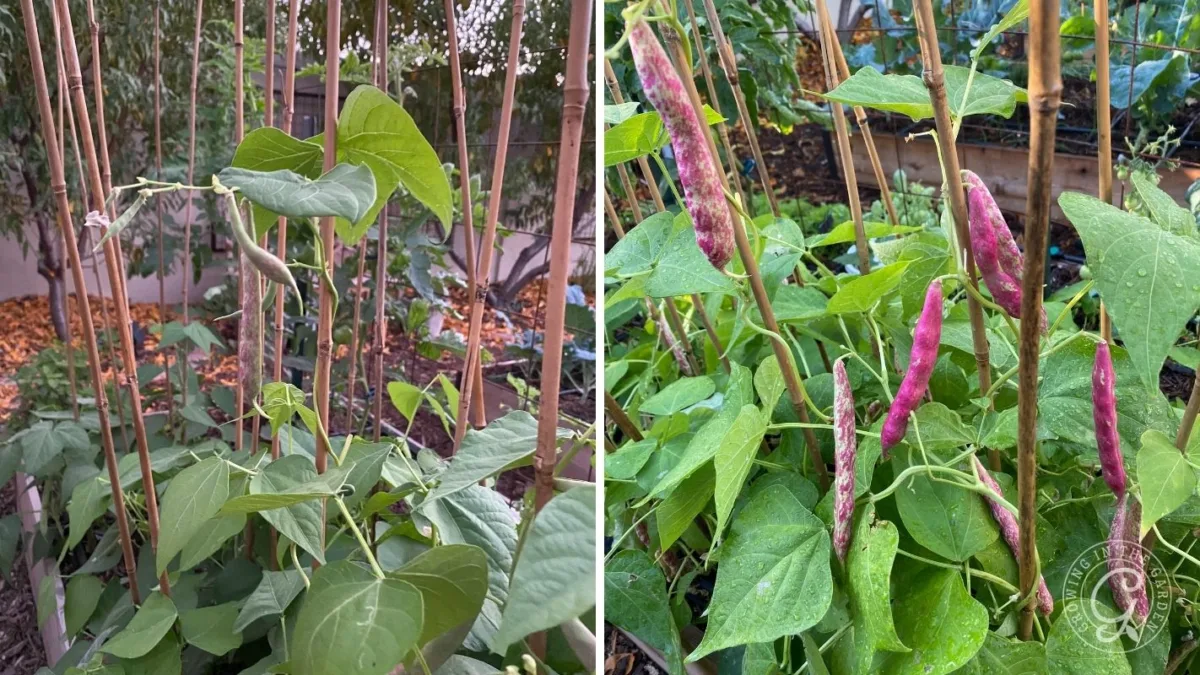
Bamboo poles are inexpensive, easy to find, and simple to use. They’re a good option when you need a quick seasonal support and don’t want to build anything complicated.
You can use bamboo poles to make a teepee, a simple A-frame, or a row of upright supports tied together with twine. This works well for peas, pole beans, yardlong beans, cucumbers, and small flowering vines.
Bamboo is especially helpful when you’re experimenting. If you’re not sure where you want a permanent trellis, start with bamboo. It lets you try a support in a spot for one season before committing to something larger or more expensive.
The tradeoff is that bamboo is not as strong or long-lasting as metal. It works best for lighter crops and seasonal use. But I’ve found it lasts for several seasons and is well worth the initial small price.
6. Use Simple Tomato Cages Creatively
Tomato cages aren’t just for tomatoes. They can also support smaller vining crops, flowers, peppers that need support to stay upright, and container plants.
This is one of the easiest options for renters and container gardeners because tomato cages are movable, readily available, and don’t require permanent installation. They’re not strong enough for everything, but they’re useful for quick, temporary support.
Use them for compact cucumbers, peas, smaller beans, peppers, eggplant, and flowers that tend to flop. For heavier crops or vigorous vines, use something stronger like cattle panels, conduit, or rebar. A small tomato cage won’t hold a huge tomato plant or a heavy vine, but it can be very useful when used for the right crop.
7. Add Trellis Netting for Flowers and Lightweight Crops
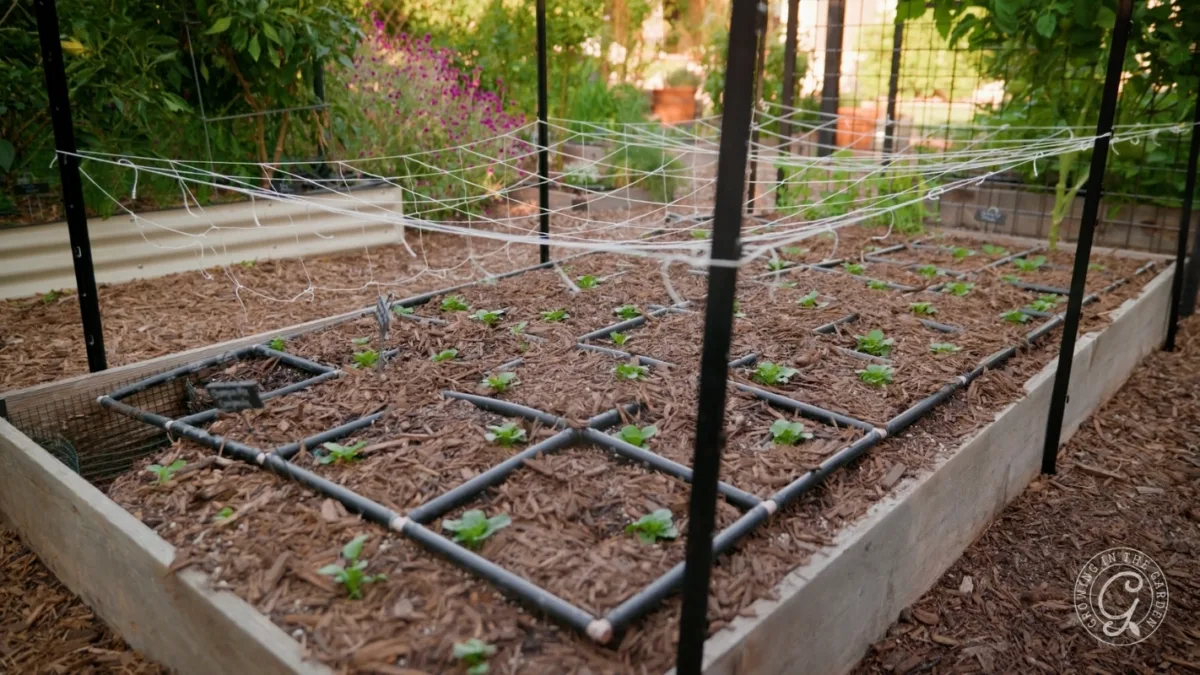
Trellis netting is an inexpensive way to support plants without staking each one individually. It’s especially useful for cut flowers, peas, beans, and other crops that need gentle support as they grow.
For flowers, netting helps keep stems upright and makes the planting look less messy. Many flowers look fine when they’re small, but once they start blooming, they can lean, flop, or break. Netting gives them support before they need it.
You can also use trellis netting on a simple frame made from bamboo, conduit, T-posts, or other supports. That makes it flexible and budget-friendly. This is the trellis netting I use from Amazon.
The main thing to remember is that netting usually needs a frame. The netting itself is inexpensive, but it works best when it’s stretched and secured well. I use these supports from Amazon. Learn more about adding trellis netting to your garden in this guide.
8. String Jute or Twine Between Existing Supports
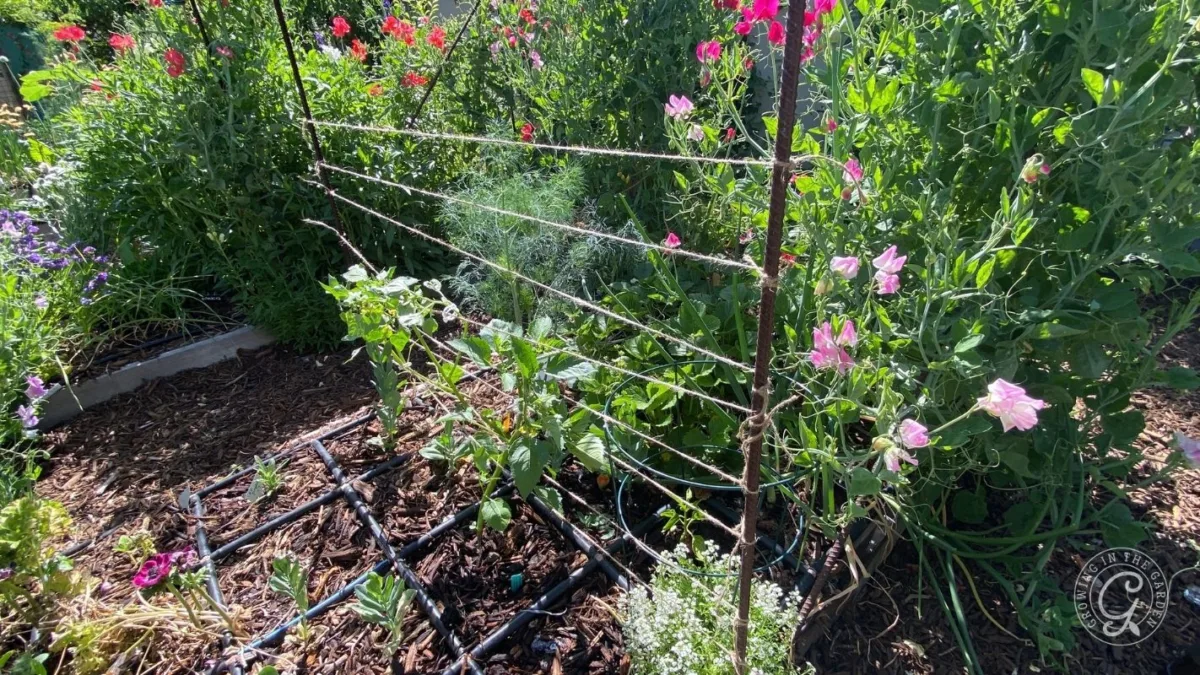
Sometimes the cheapest vertical gardening idea is to use what’s already in the garden. If you have posts, rebar, a frame, a fence, or another sturdy structure, you may be able to string jute or twine between the supports and create a place for crops to climb.
This works well for peas, beans, cucumbers, and lightweight vines. It’s also an easy way to use the middle of a bed or an area with some structure already in place.
I like this idea because it’s simple and inexpensive. It’s also easy to remove at the end of the season, which is helpful when you’re rotating crops or changing the layout of a bed. Just make sure the support is strong enough before the plant gets large. A full vine can become much heavier than it looks.
9. Repurpose Thrift Store Finds
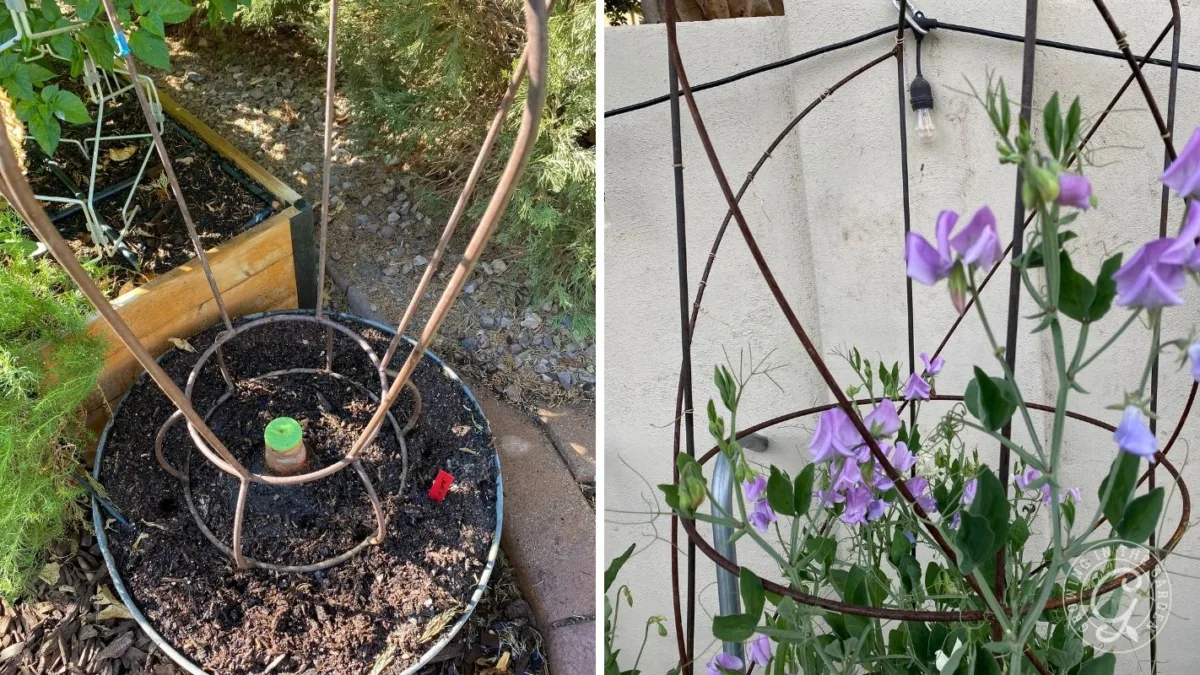
Once you start looking at thrift store items as possible garden supports, you’ll see options everywhere. Old ladders, metal racks, crib rails, headboards, gates, bed frames, and sturdy decorative pieces can all become vertical supports if they’re safe, stable, and the right size.
This is where gardening gets creative. Not everything will work, but many things can. The goal is to look for something strong enough to hold the crop, open enough for the plant to climb, and easy enough to secure in place.
Thrift store finds are especially helpful for renters, container gardeners, or anyone who wants to experiment without spending much money. If an idea doesn’t work, you haven’t invested a lot.
Avoid anything with unsafe paint, sharp edges, or materials you don’t want near food crops. If you’re not sure what something is made of, use it for flowers instead of edible crops. Climbing trellises are perfect spots to thread in host and nectar plants from my Arizona Butterfly Garden Guide to create your own butterfly garden.
10. Use Rebar for Strong Garden Supports
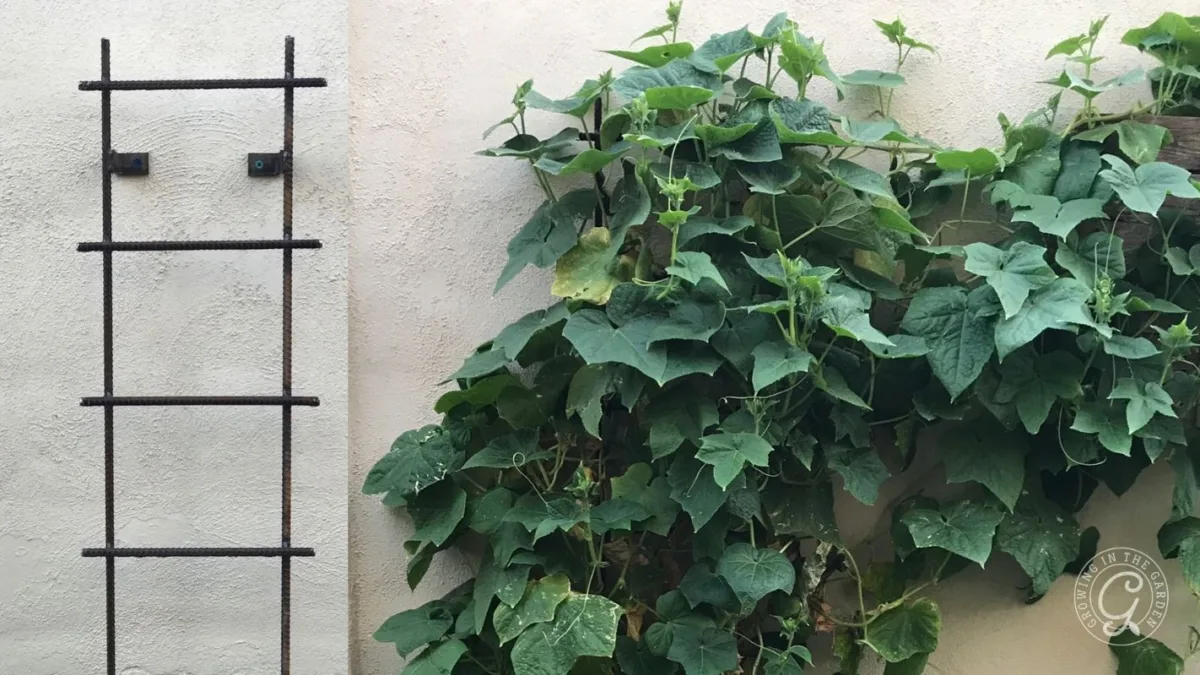
Rebar is easy to find, sturdy, and useful in the garden, especially if you want a stronger support than bamboo, twine, or a lightweight tomato cage. The material itself is usually inexpensive, but this idea works best if you have welding experience or know someone who can help.
A welded rebar trellis can support heavier vines and last for years. It works well for cucumbers, Armenian cucumbers, beans, small melons, luffa, and other vigorous crops that need a strong place to climb.
Rebar can also be useful for holding shade cloth or creating simple support frames in hot climates. That makes it more than just a trellis. It can become part of how you manage sun and shade in the garden. Learn more about how to add shade to your garden in this guide.
Best Crops for Budget Vertical Gardening
Most of these inexpensive supports work for several different crops. Cucumbers are one of the easiest crops to start with because they vine readily, aren’t too heavy, and will climb on almost anything you give them.
Other good options include peas, pole beans, yardlong beans, Armenian cucumbers, small melons, Malabar spinach, sweet peas, and flowering vines. Some crops, like tomatoes, need to be tied or clipped to a support because they don’t climb on their own.
For more ideas and tips on which crops grow best vertically, see my favorite crops to grow vertically.
Which Budget Vertical Gardening Ideas Would I Still Use?
I’d still use most of these ideas because they’re inexpensive, flexible, and easy to adapt. The main difference now is that I also have some more permanent trellises in my garden. Those are beautiful and useful, but they’re much more expensive. You can see those more permanent vertical gardening ideas in this post.
If you’re just getting started, don’t feel like you need custom trellises right away. Start with the simple things. Use what you have. Walk through the hardware store or thrift store and look at ordinary items with a gardener’s eye.
Ask yourself:
- Can it support a cucumber?
- Can it fit in or near a raised bed?
- Can I move it if I need to?
- Can I secure it safely?
- Can it help me grow more food without spending a lot of money?
That’s how many of these ideas started in my garden, and they still work.
Final Thoughts
Vertical gardening doesn’t have to be expensive. Some of the most useful garden supports come from thrift stores, hardware stores, and things you already have.
These budget-friendly vertical gardening ideas helped me grow more food in raised beds without spending much. They also helped me think differently as a gardener. Instead of only looking for garden products, I started looking for useful shapes, sturdy materials, and simple ways to solve problems.
That’s one of the best parts of gardening. You learn to see possibilities everywhere.


I found a real good piece of metal fencing to use for this. Tractor Supply has 5′ by 16′ horse panels with 2″ x 4″ openings for about $100.00 each. you can cut them in to 2 pieces of 5′ x 8′ and use some 2″ by 1/4″ strap to weld between the tops.
Thanks for sharing!
Hi, Angela–I live in South Scottsdale, and over the next 12-18 months my husband and I plan to build wooden vertical planters and attach them to our backyard block walls. We’ll be adding shade covers for all of them, as well as a drip watering system. Aside from strawberries and seasonal herbs, would you please recommend vegetables that would do well in this type of vertical garden? Thanks very much!
This blogpost lists several of my favorite vertical crops: https://growinginthegarden.com/vertical-gardening-10-vegetables-that-love-to-climb/
Hi -Do you treat the rebar before adding it to the walls to avoid the staining from the rebates?
I haven’t, no.
Hello. Where can I buy the small individual square trellises in image #3? I want to create an arch as well on my backyard wall.
These were made out of rebar by a local welder.
It’s difficult for me to find cattle panel in the area. What do you recommend to use instead?
I’ve used this string netting between poles many times. It is surprisingly strong. https://amzn.to/3dQD6bG
Love the idea to build a trellis with metal conduit and cattle panel. What kind of plumbing fitting did you use to connect the joints? I’m having trouble finding something with the correct diameter.
They are simple plumbing fittings on electrical conduit. They don’t fit perfectly on (or screw on) but they stay in place pretty well. I would take your conduit to the plumbing aisle and find one that slides on but is snug. Hope that helps.
Great article! I love the idea of the ladder mesh wire, I am on a hunt for it now. I am not going out due to Covid 19 but I will find it and a way to get it here.
I’m glad it’s helpful. The best part is you can use it where you need it and then store it away until it’s needed again. Stay healthy and best of luck.
Where do I buy the screen trellis from Arizona if I live in Massachusetts.
Where do I get directions for building a rebar trellis?
Do you provide directions for all the ideas you show?
Hi. Check with local welders or iron work companies to see if they offer similar screen type trellises. I’m sorry I don’t have directions for building the rebar trellises, they were welded together by a neighbor. Someone who welds may able to make them.