
Ladybugs in the Garden: Lifecycle and How to Attract Them
If you have ever wondered what ladybug eggs or larvae look like, or why the ladybugs you bought and released disappeared overnight, this guide covers it all. My friend Jean S. Elston, who is finishing her doctoral studies in entomology, walks through the full ladybug life cycle from egg to adult, explains how to identify the different stages, and shares exactly what it takes to attract ladybugs and keep them in your garden.
Ladybugs are one of the most effective beneficial insects for pest control you can have in the garden, and Jean’s photos make it easier to recognize every stage when you spot the real thing.
Key Takeaways in this Guide to Ladybugs
- The ladybug life cycle includes stages: eggs, larvae, pupa, and adult, each crucial for pest control in gardens.
- Ladybugs thrive on aphids, so allowing some pest presence helps attract them.
- Create an inviting environment with food, water, shelter, and no broad-spectrum insecticides to keep ladybugs around.
- Buying ladybugs is often unproductive, as they tend to leave quickly and may introduce diseases.
- Recognizing ladybug life stages enhances your gardening success and benefits ecosystem health.
What We’ll Cover:
Guest post and photos by Jean S. Elston. This post is part of her series Low Desert Garden Insects.
A Gardener’s Guide to Ladybugs
Guest post and photos by Jean S. Elston
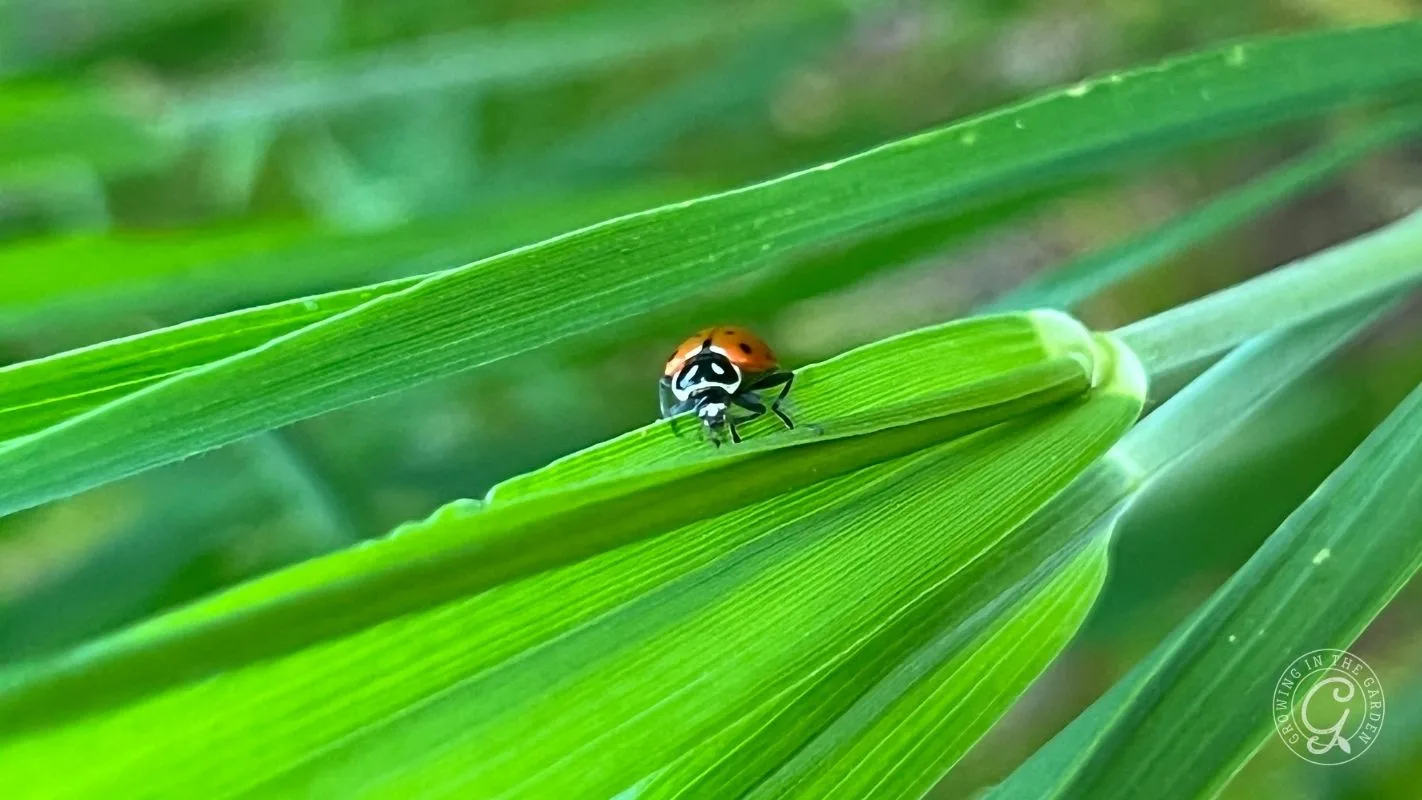
Most people picture the same thing when they hear “ladybug” — a small red beetle with black spots. Here in North America, that makes sense, since the convergent ladybug is native and genuinely beautiful to spot among the green foliage. But there is a great deal more to this insect than the adult form we are used to seeing, plus many others in the family worth knowing.
One quick note before we get into it: the correct entomological term is lady-beetle, since it is a beetle and not a true bug. But “ladybug” is what most of us say, and that is what you will see used throughout this post.
When Do Ladybugs Show Up in the Garden?
While a great portion of North America thinks of the red ladybug in spring and early summer — bursts of green growth and specks of red dotting the land — in the low desert, their arrival is usually an indication of fall. Hot summer temperatures force them to migrate to higher elevations to seek shelter (a process called aestivation, or summer sleep). That is not to say you will not find them in spring or early summer, but if you do, they are finishing up their time in the garden rather than getting started.
The Ladybug Life Cycle
Understanding each stage of the ladybug life cycle helps you recognize what you are looking at in the garden — and know when beneficial help is on the way.
Eggs
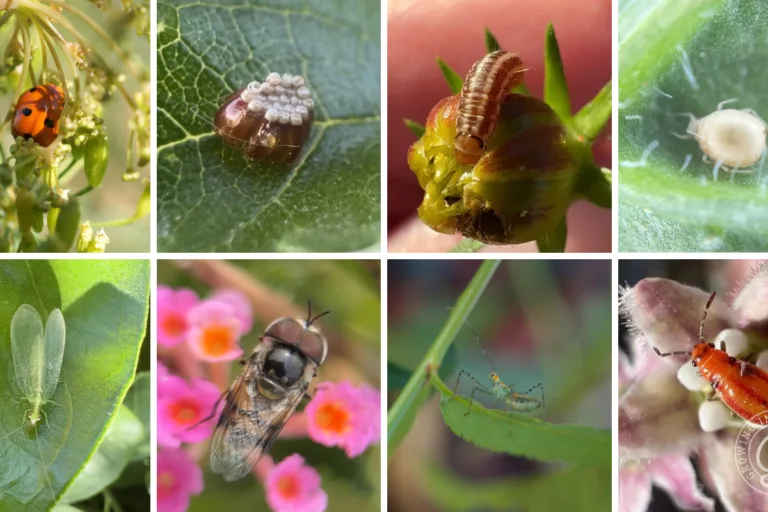
As you check on plants and notice various insects, hope to come across yellow oblong clusters. Often found directly on a plant, but also on row covers, mesh netting, fencing, and shade cloth — these are ladybug eggs. While not always neatly organized, the coloring and shape is distinct once you know what you are looking for. For a broader look at identifying beneficial insect eggs beyond ladybugs, this identification guide covers five beneficial insects and how to tell their eggs apart from common pests.
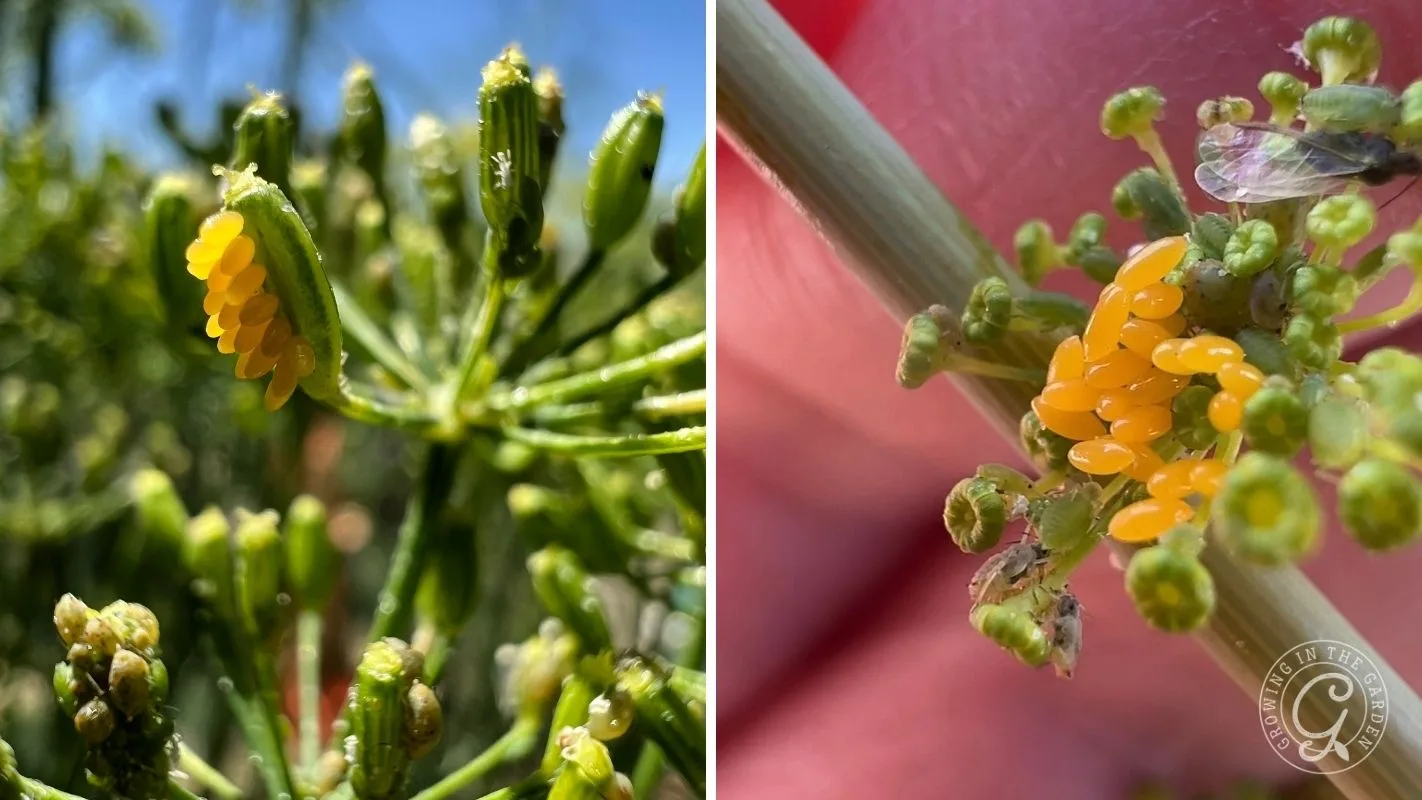
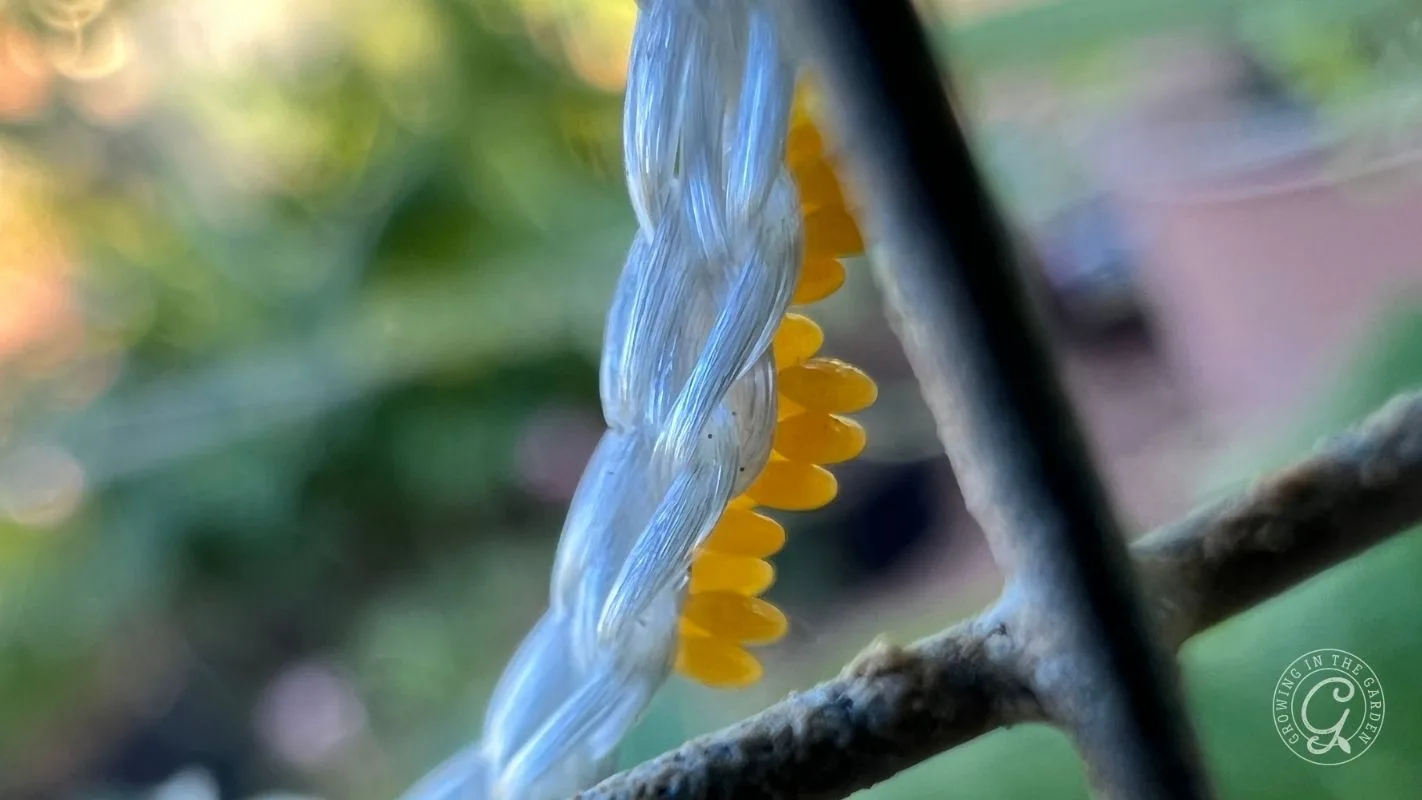
Once you have discovered these in your space, it is only a matter of time before help is on the way to deal with the aphids. This is a far better sight than just seeing the adults, as it indicates the space is seen as a home, providing all that the larvae need to thrive into adulthood.
Spotting eggs, larvae, and pupae at different stages is also one of the best ways to get kids interested in the garden — the lifecycle is genuinely surprising to watch up close
Larvae
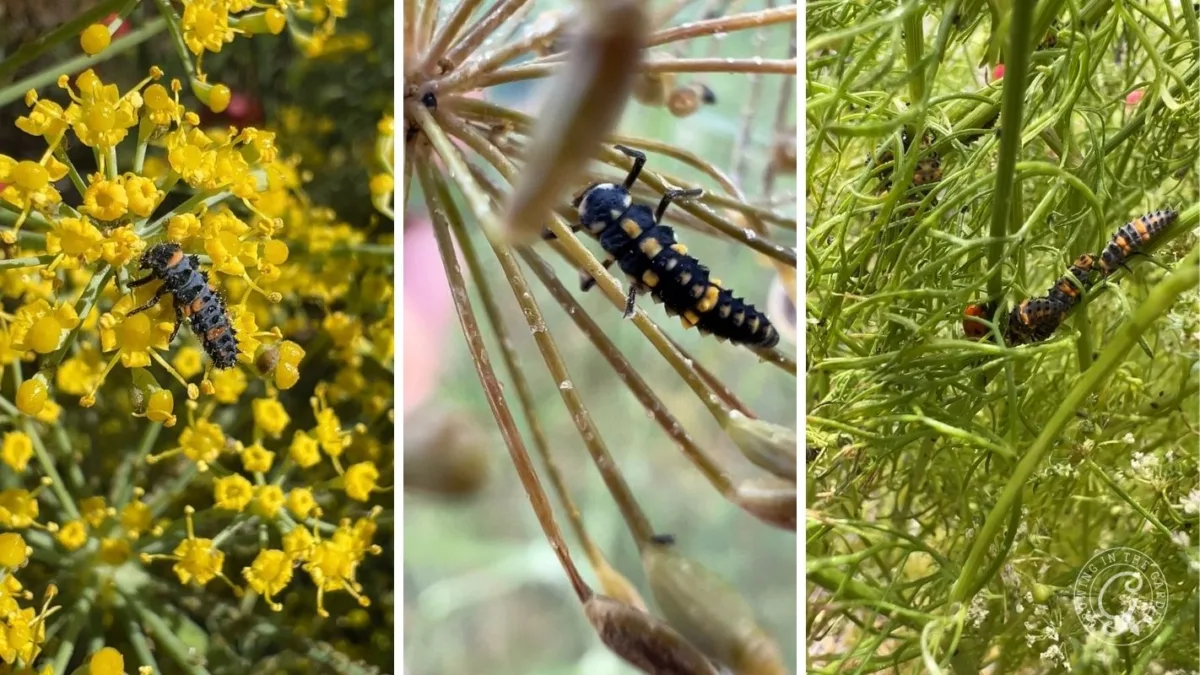
Roughly a week after the eggs are laid, tiny strange creatures emerge. Often black when they first hatch, they look almost reptilian — prehistoric, even. As small as your thumbnail, it is surprising how different they appear compared to the adults.
This larval stage is arguably the most valuable one in the garden. For the next two to three weeks, the larvae will feast on aphids — up to 400 during this period — along with whitefly pupae, thrips, leafhopper nymphs, mites, and scale insects. Hoverfly larvae eat just as many aphids as ladybug larvae and are just as easy to mistake for something else. This guide to hoverflies in the garden shows you what to look for.
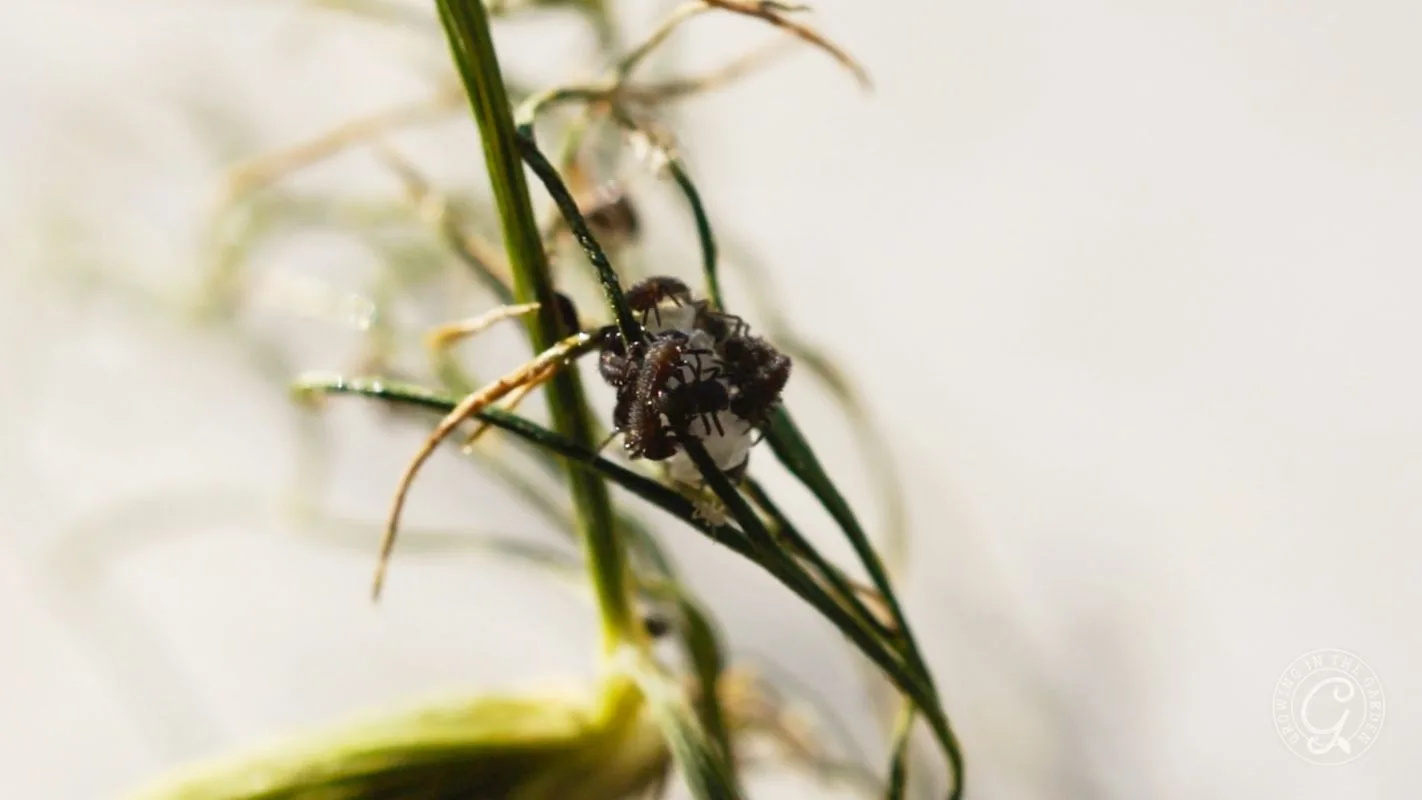
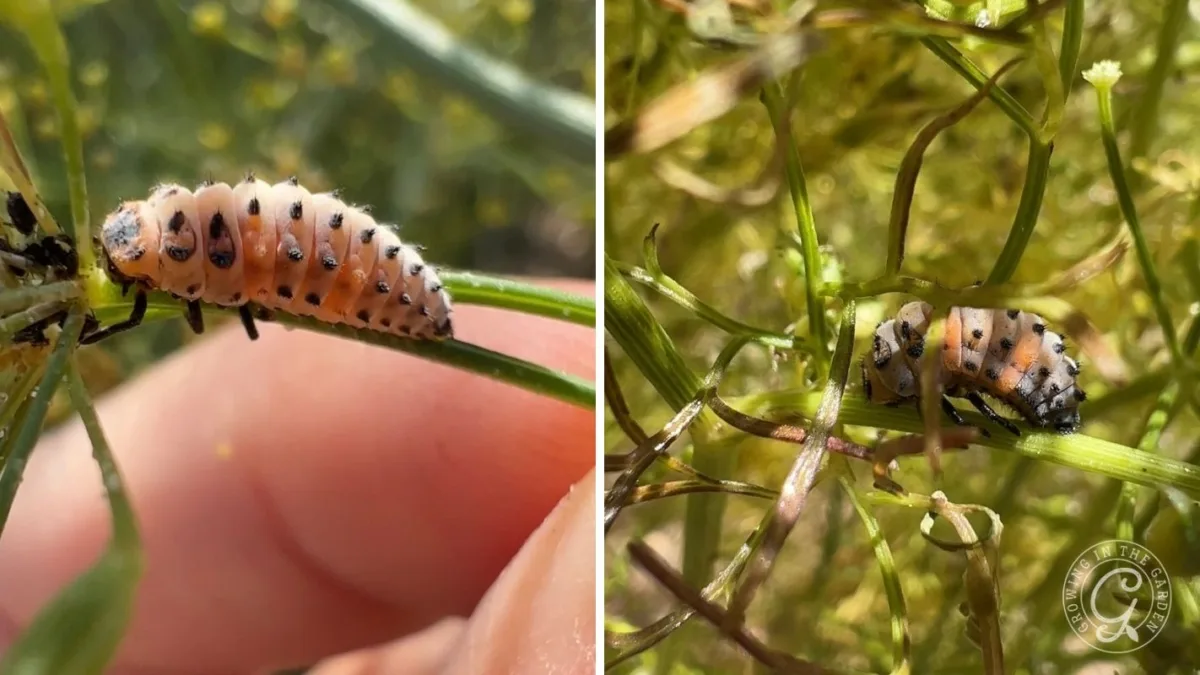
During this time the larvae will go through four molts, shedding its skin to make room for its growing body. Coloring shifts with each molt, going from mostly black in the first stage to gray and red-orange by the final one.
Pupa
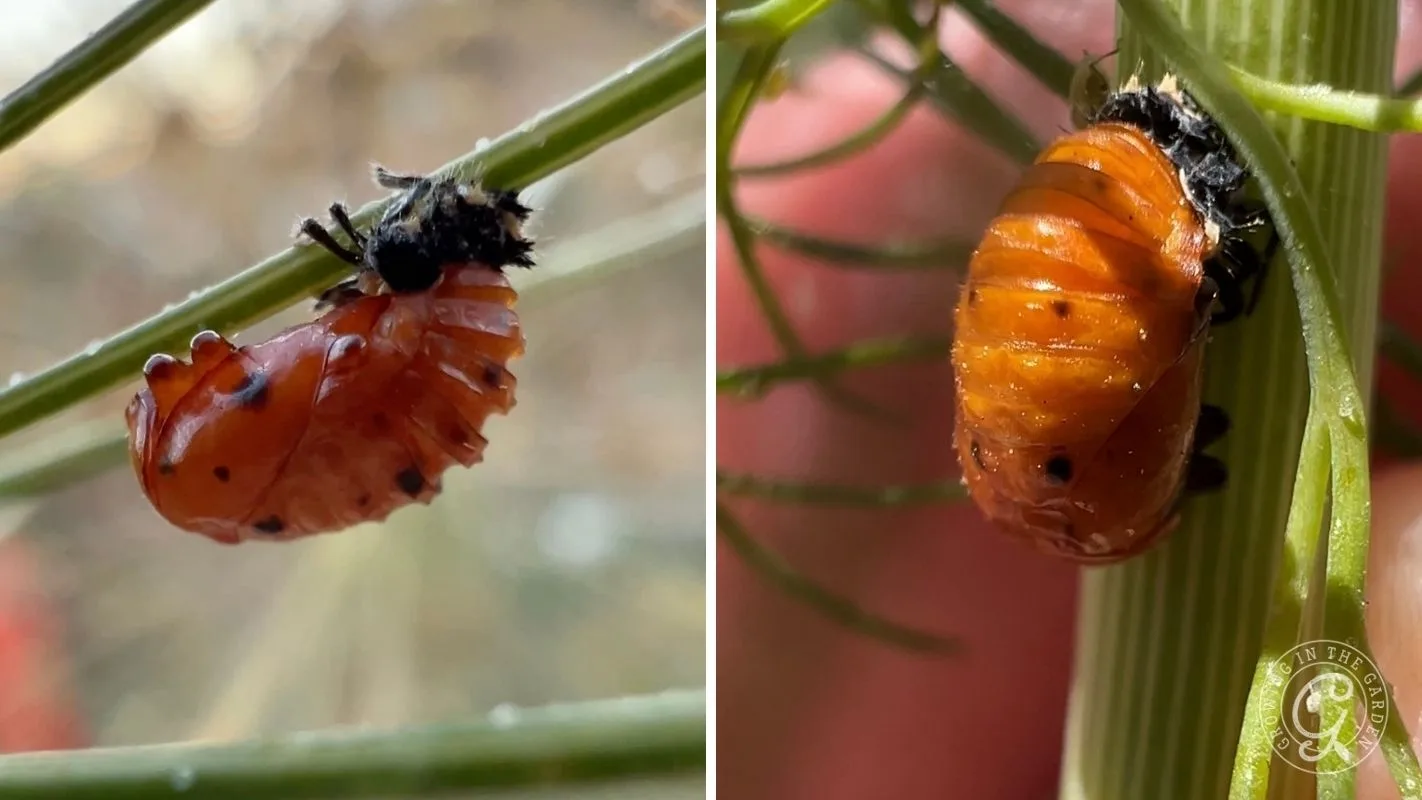
Once it has reached the fourth molt, looking as though it will burst from how much it has consumed, the larvae is ready to enter the pupa stage. Finding a sturdy spot to attach itself, it develops a chrysalis or cocoon. Seasonal temperatures determine how long this lasts — as few as five days or as long as two weeks — but generally it takes less than a week before adults emerge.
Adult
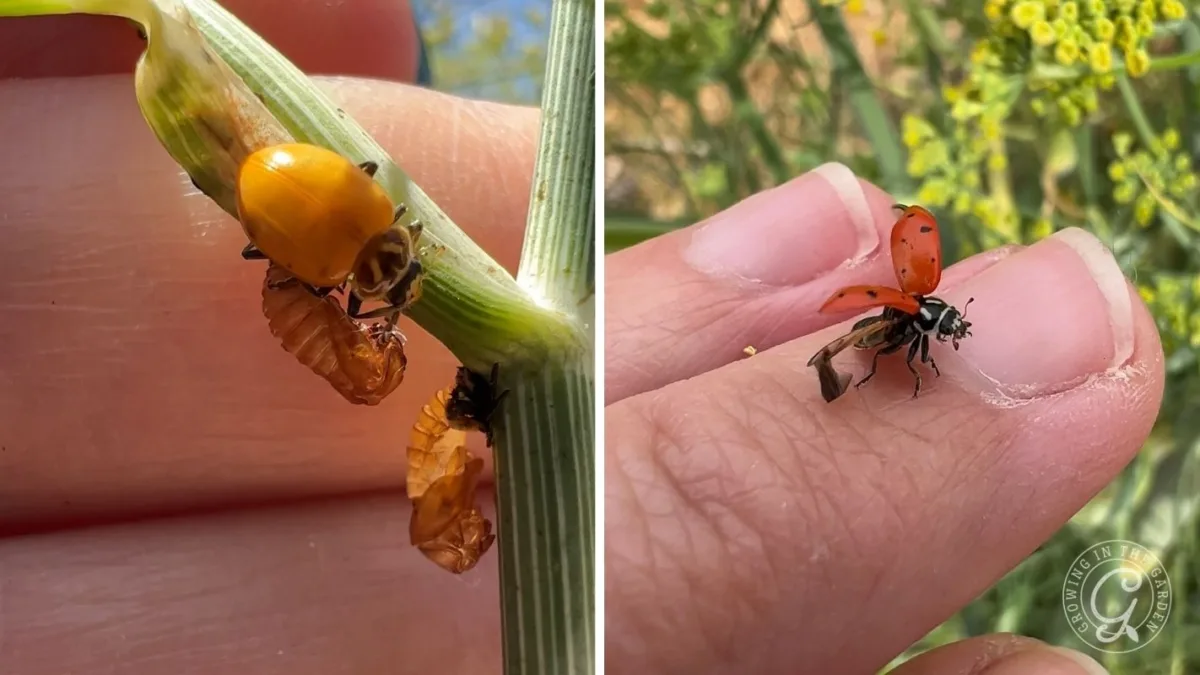
The newly emerged adult is the form most of us recognize. Red with spots, however, is not the only thing to look for.
More Than Red and Spotted: Ladybug Varieties
Even among our native convergent ladybugs, the number of spots can vary widely — sometimes none at all. There is a much broader range of colors, patterns, and sizes across this family than most gardeners realize, from the ashy-gray ladybug (Olla v-nigrum) to the twice-stabbed ladybug (Chilocorus stigma). All share a similar lifecycle: laying eggs, larval feasting, pupating, and emerging as adults.
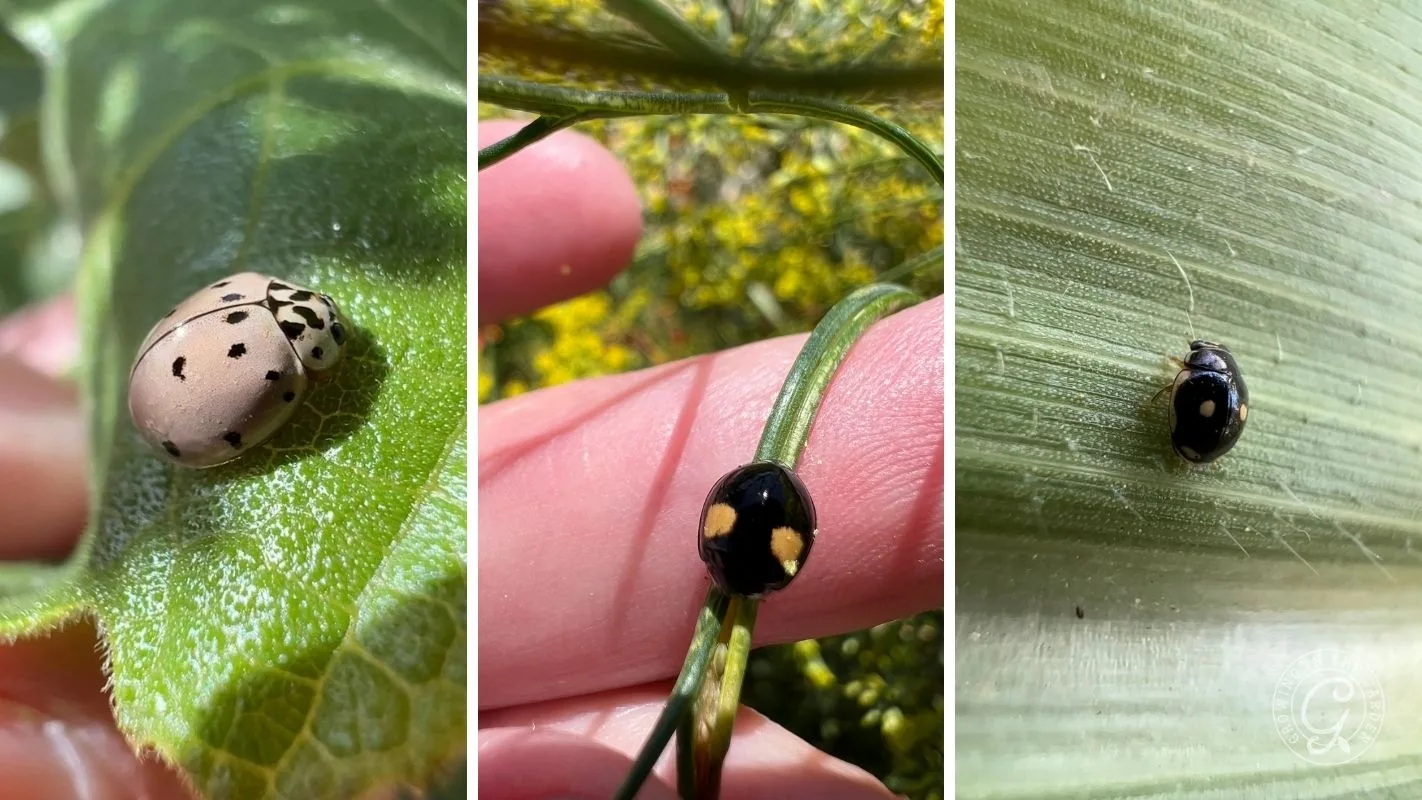
One group worth highlighting is the Scymnini tribe, particularly because of what their larvae look like. The Scymnus species of ladybug can be tricky to identify, both as adults and larvae. This guide to common garden insects and their lookalikes walks through what to look for so you do not mistake them for a pest.
The Mealybug Destroyer
If you are ever dealing with mealybugs, you might mistake the beneficial larvae for the pest itself.
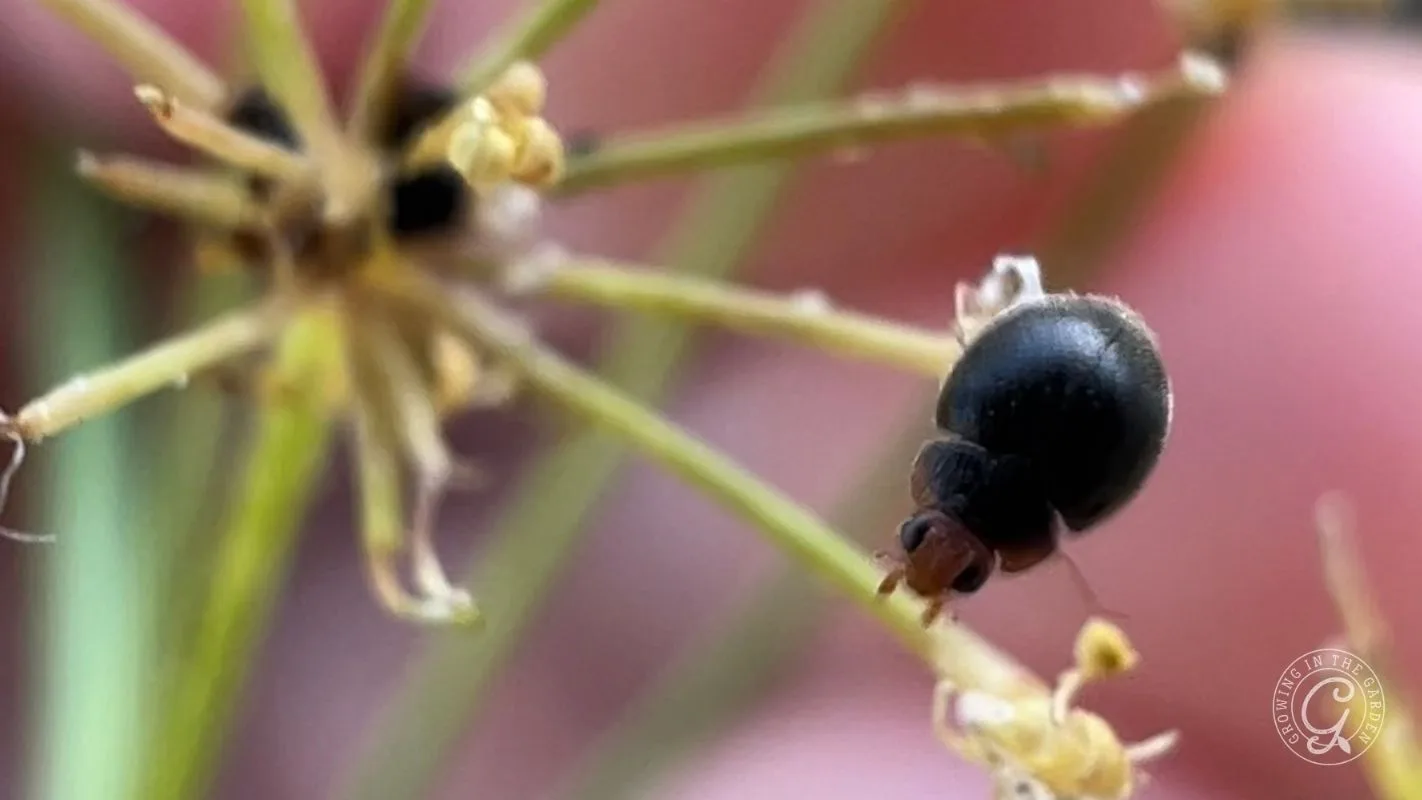
While they will, as all ladybugs do, consume any soft-bodied insect they can find, these ladybug larvae are more likely to be targeting mealybugs. The adults are small — roughly the size of a pinky fingernail — predominantly black, sometimes with a few hairs on their shells or small patterns. For the predators handling the pests too small to see easily, this guide to the predators of thrips, spider mites, and whiteflies covers three that are commonly mistaken for pests.
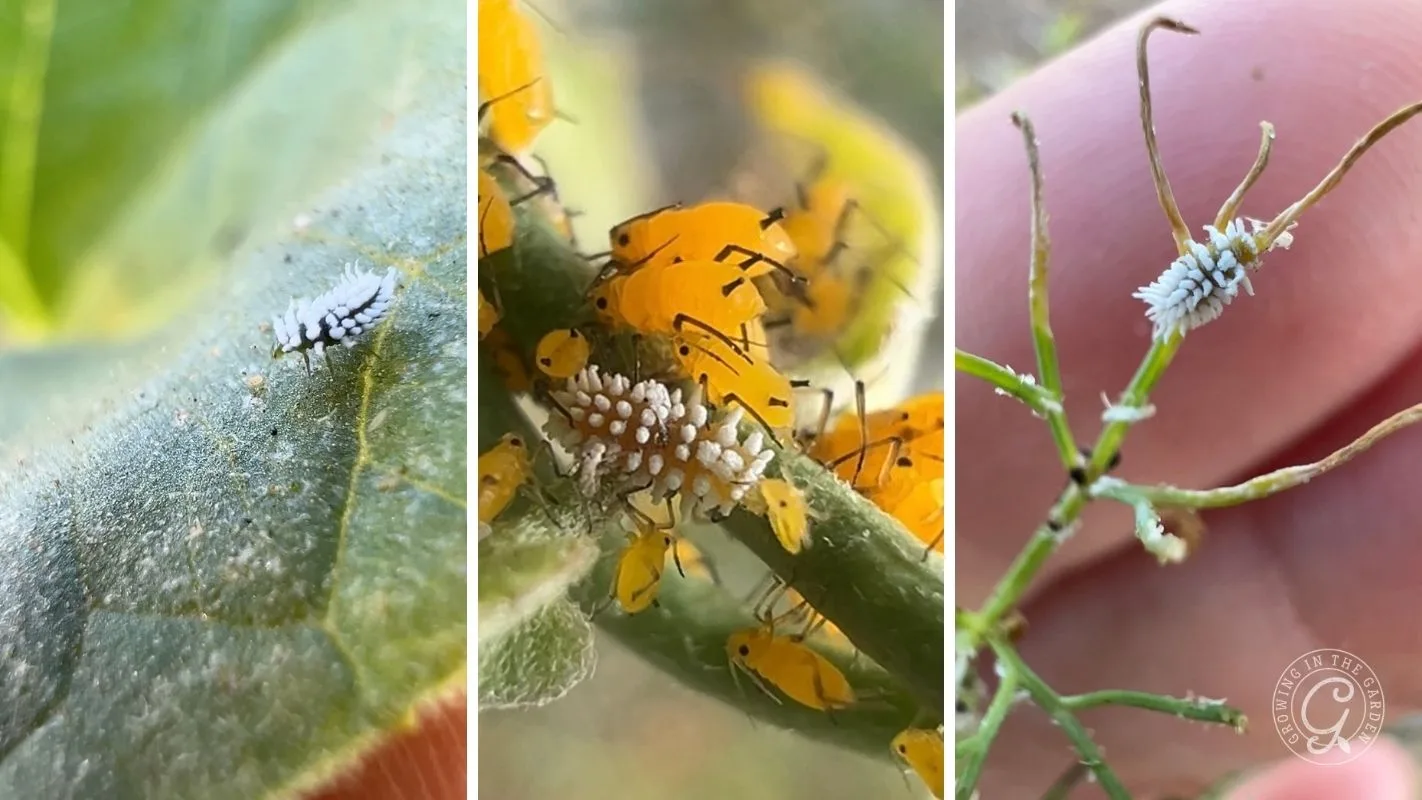
In the larval state, they mimic the prey they are feasting on, blending in with the group. Unlike the ladybug larvae we just talked about, these have a white appearance with waxy points protruding from their bodies. The easiest way to tell the difference between the ladybug larvae and a mealybug is movement. These larvae are fast. Mealybugs are not.
How to Attract Ladybugs and Keep Them Around
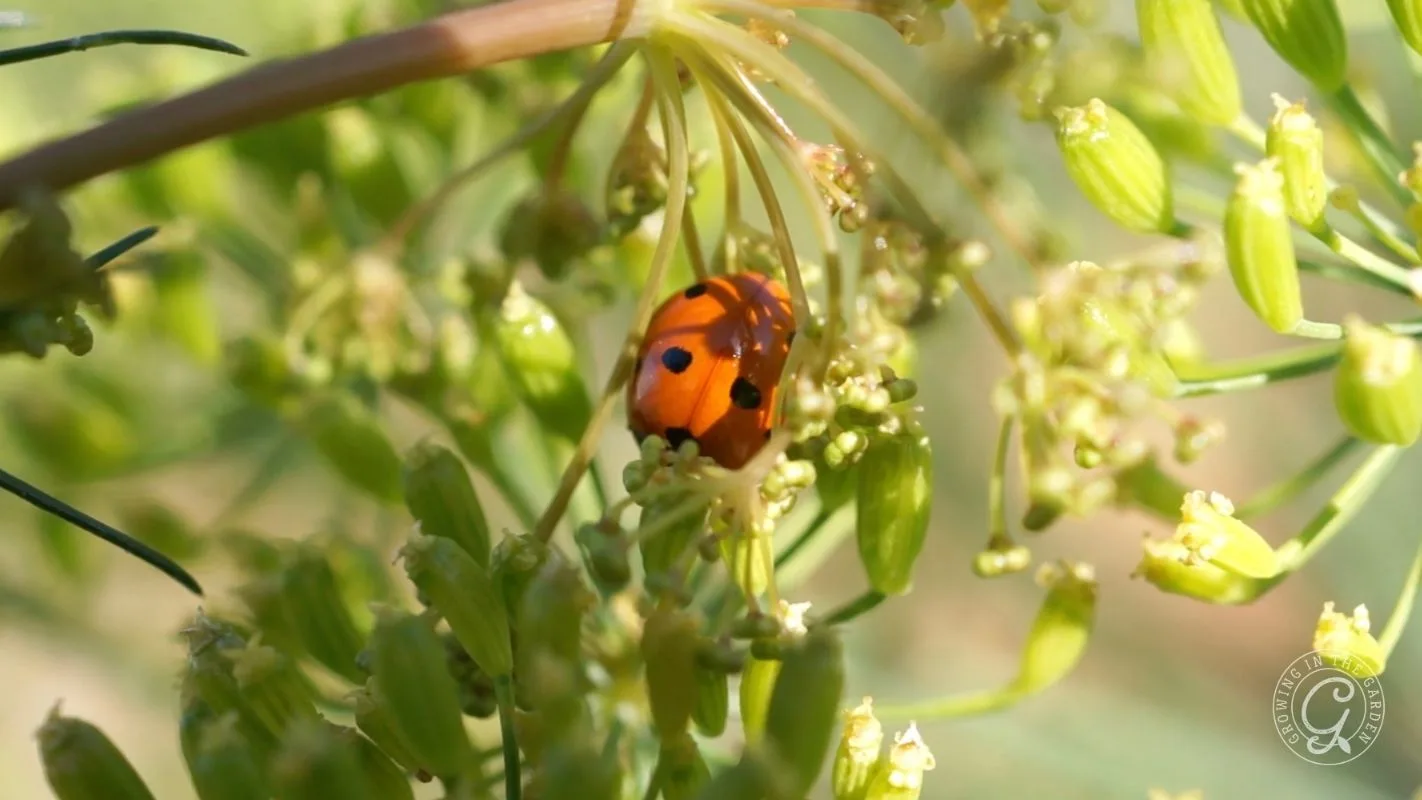
Creating a space that not only attracts adult ladybugs but also encourages them to stay and reproduce comes down to four basics: food, water, shelter, and no broad-spectrum pesticides.
Food: Tolerate Some Aphids
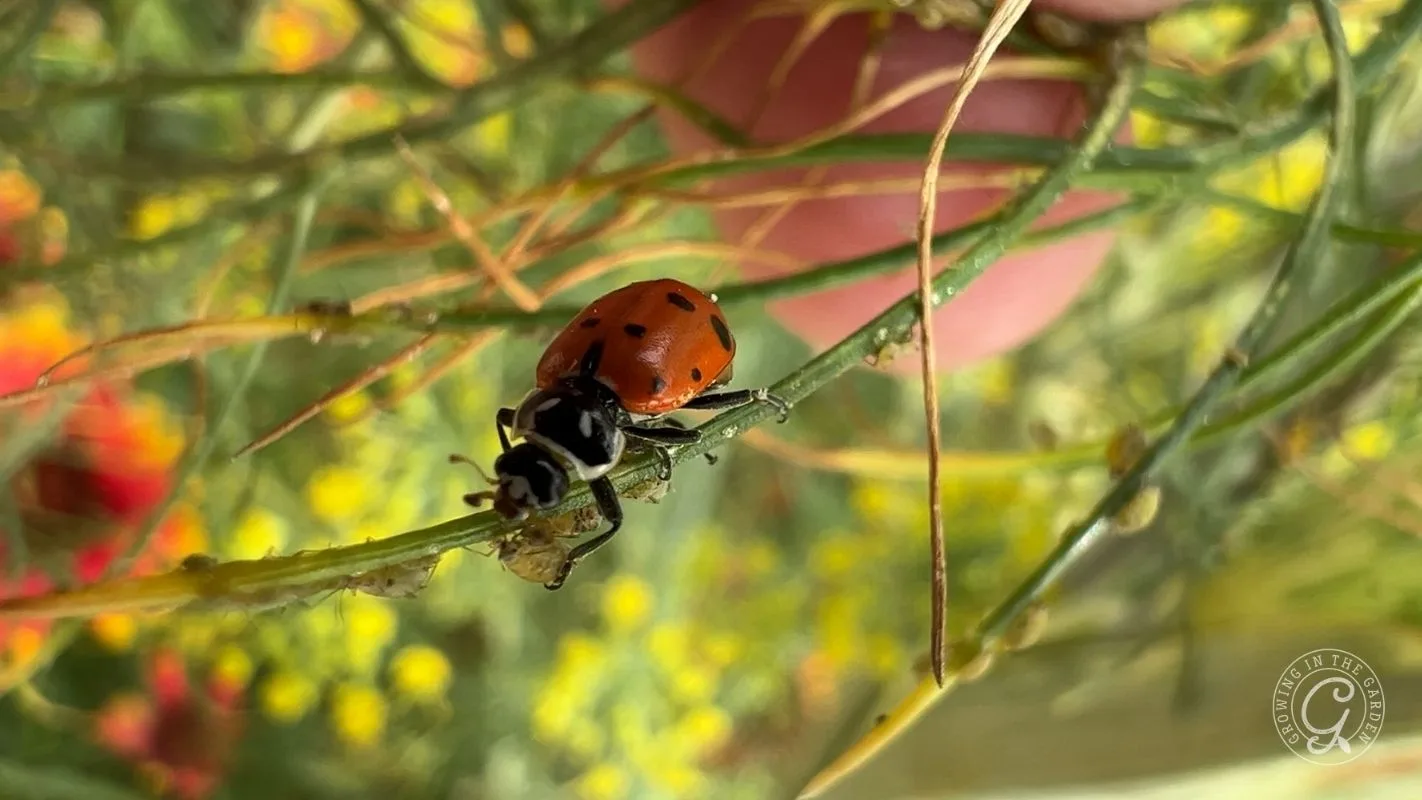
This one requires some restraint. The food source for both larvae and adults is predominantly aphids. While keeping aphids in check with a bit of water or hand-removal is fine, avoid wiping them out entirely. If you want ladybugs, you have to put up with some aphids to give them a reason to stay.
Growing dill and milkweed are especially good at attracting aphids and have been reliable in drawing ladybugs as a result. For a broader list of plants that bring beneficials into the garden, this guide to plants that attract beneficial insects and pollinators is worth bookmarking.
Water: Shallow Trays, Not Deep Containers
Ladybugs need water at least every other day — probably daily as temperatures rise. They cannot easily use a bird bath or a deep container. Instead, set up a shallow tray filled with rocks or marbles that gives them a surface to stand on. They will also drink from water droplets left behind after watering the garden, but having trays in place ensures they are not relying solely on your irrigation schedule.
Shelter: Layers and Leaf Litter
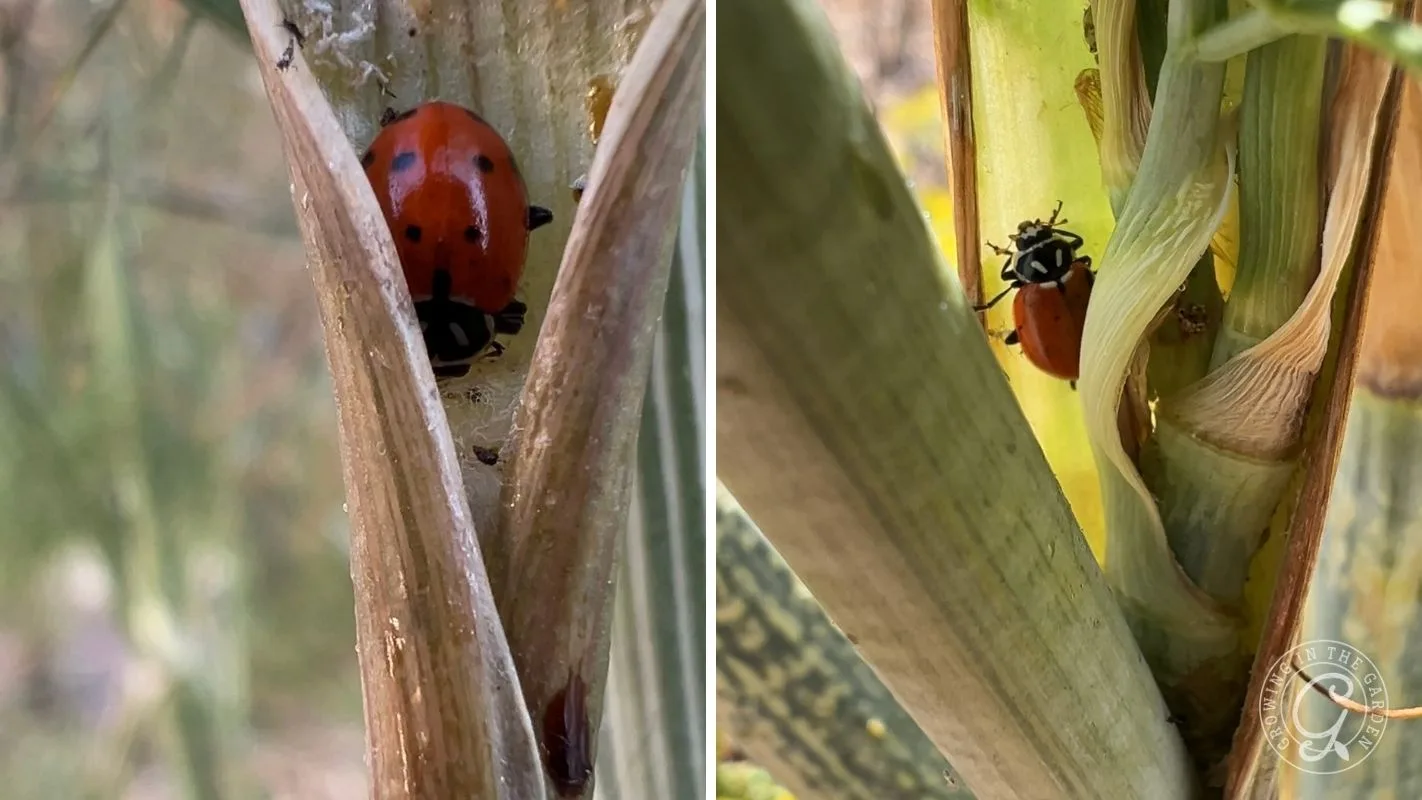
Ladybugs, despite their coloration and the unpleasant taste they signal, are still eaten by birds, spiders, dragonflies, and wasps. Leaf litter, mulching your garden well, and dense foliage all provide cover — and not just for adults. Larvae and eggs also need places to shelter or find some protection. Creating layers in your garden creates habitat.
If you are also working on building a garden that supports beneficial wildlife more broadly, this Arizona butterfly garden guide covers many of the same planting principles.
No Broad-Spectrum Insecticides
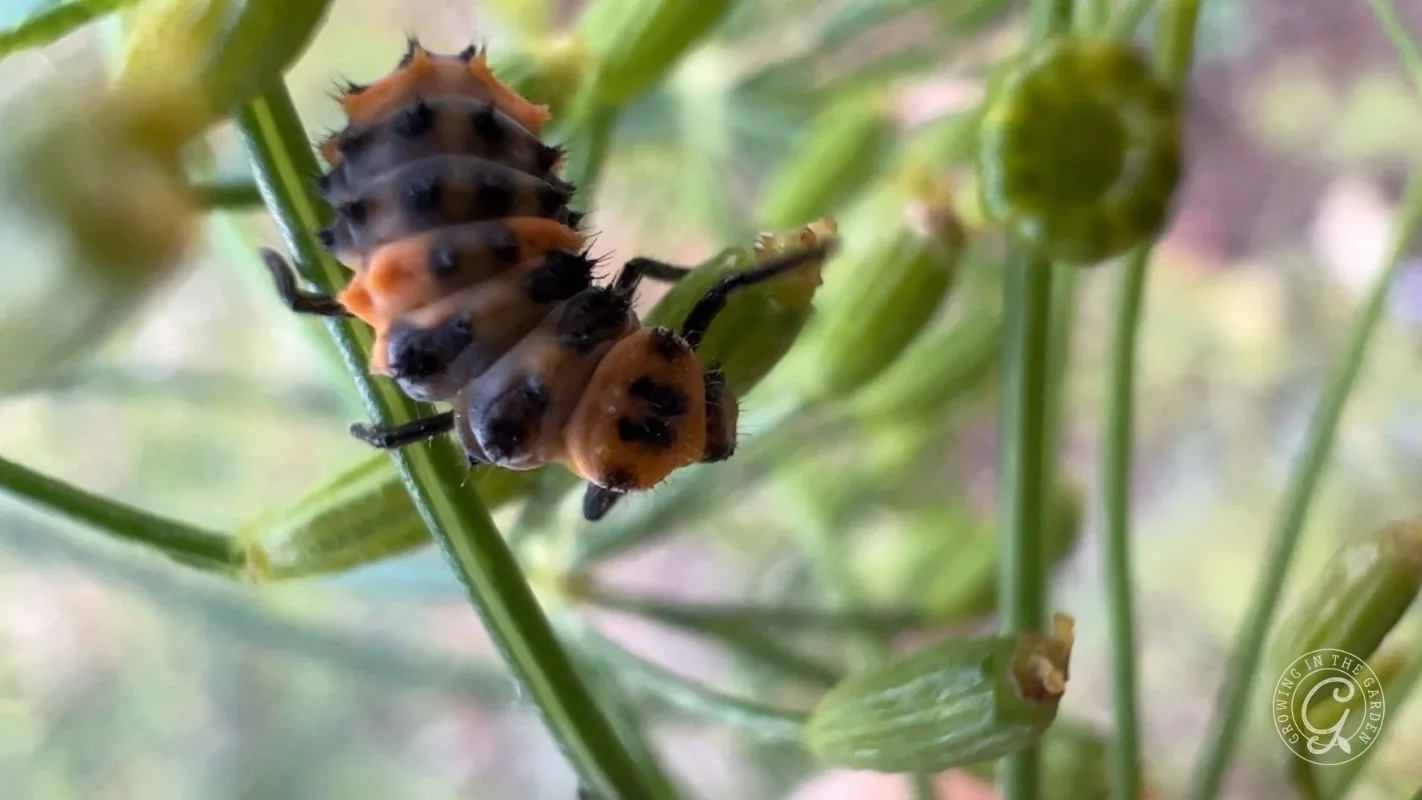
This includes products labeled as organic. Broad-spectrum insecticides will kill larvae. Moving away from chemicals overall is the long-term strategy here — it takes time to build a garden that can absorb some pest pressure, but over time it becomes a more resilient and abundant space for both the plants you want to grow and the insects you want to encourage.
For more on building that kind of garden from the ground up, preventing garden pests organically covers the full approach.
What About Buying Ladybugs?
The short answer is don’t buy ladybugs: learn how to attract them instead. While it is tempting, there is real uncertainty about where purchased ladybugs are sourced, along with the risk of introducing diseases or parasites into the wild population. More practically, they almost always leave — generally gone within a day of release, because the conditions for keeping them are not yet established.
Build those conditions first, and the ladybugs will show up on their own.
Ladybugs in the Garden Final Thoughts
With the four basics in place — food, water, shelter, and no pesticides — combined with recognizing their lifecycle stages, we can not only enjoy the benefits of having these wonderful beetles in our space but also know we are helping them thrive. If you are also noticing green lacewings in your garden, they are equally valuable allies with a surprisingly fierce larval stage — read “Lacewings in the Garden: Lifecycle and How to Attract Them” to learn more about what to look for.
Ladybug FAQs
Ladybug eggs are yellow and oblong, found in clusters. They are not always neatly organized, but the coloring and shape is distinct once you know what you are looking for. You will find them on plants, as well as on row covers, mesh netting, fencing, and shade cloth.
Ladybug larvae look almost reptilian — prehistoric, even. They are as small as your thumbnail when they first hatch, often black, and look nothing like the adult. Coloring shifts with each molt, going from mostly black in the first stage to gray and red-orange by the final one.
From egg to adult, the full ladybug lifecycle typically takes four to six weeks, depending on temperatures. The larval stage lasts two to three weeks, the pupal stage generally less than a week, and the newly emerged adult is ready to fly within about an hour of leaving the cocoon.
Yes — aphids are the primary food source for both larvae and adults. Larvae are especially voracious, consuming up to 400 aphids during the two to three weeks before they pupate. They will also feed on whitefly pupae, thrips, leafhopper nymphs, mites, and scale insects.
Purchased ladybugs almost always leave within a day of release because the conditions to keep them — food, water, and shelter — are not yet established. Build those conditions first, and ladybugs will find their way to your garden on their own.
About the Author
For more than thirty years, Jean S. Elston has been growing plants and spending time in nature, both in California and Arizona. With a background in fine art, she honed her skills in observation, a critical element for anyone striving to have a garden. Currently, she is finishing her doctoral studies in ecology (special focus on entomology), while helping others to work with nature in order to have a thriving ecosystem. You can find more of her work as “Red Shoe Gardener” on YouTube and Instagram.


Leave a comment on Ladybugs in the Garden: Lifecycle and How to Attract Them