
How to Get Rid of Thrips on Roses, Citrus & More
When I see deformed and brown petals on roses, it’s frustrating to know that thrips have found my beautiful blooms. Thrips love hiding inside rosebuds and flowers (and they can also be a problem on citrus), so you usually notice the damage first and the insects second. But luckily, the damage is usually cosmetic, and with a few targeted steps, you can get ahead of them by focusing on the right life stage at the right time.
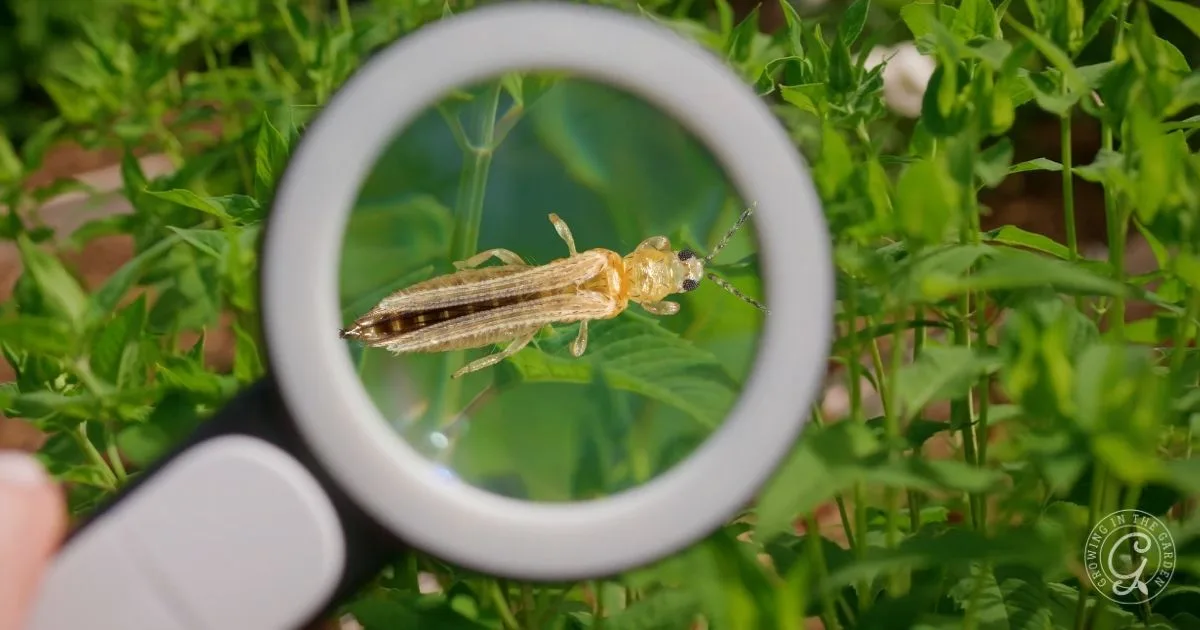
Key Takeaways: How to Get Rid of Thrips
- Thrips are small pests that feed on plant tissues, causing cosmetic damage to roses and citrus.
- To confirm thrips presence, use a white paper tap test under affected blooms to catch tiny moving thrips.
- Control thrips effectively through sanitation, beneficial nematodes, and the use of predatory mites and bugs.
- Treat thrips only when their damage is significant enough to affect your plants, focusing on specific growth stages.
- For organic control, consider insecticidal soap or kaolin clay, and apply during cooler times to avoid harming plants.
What We’ll Cover:
What are Thrips?
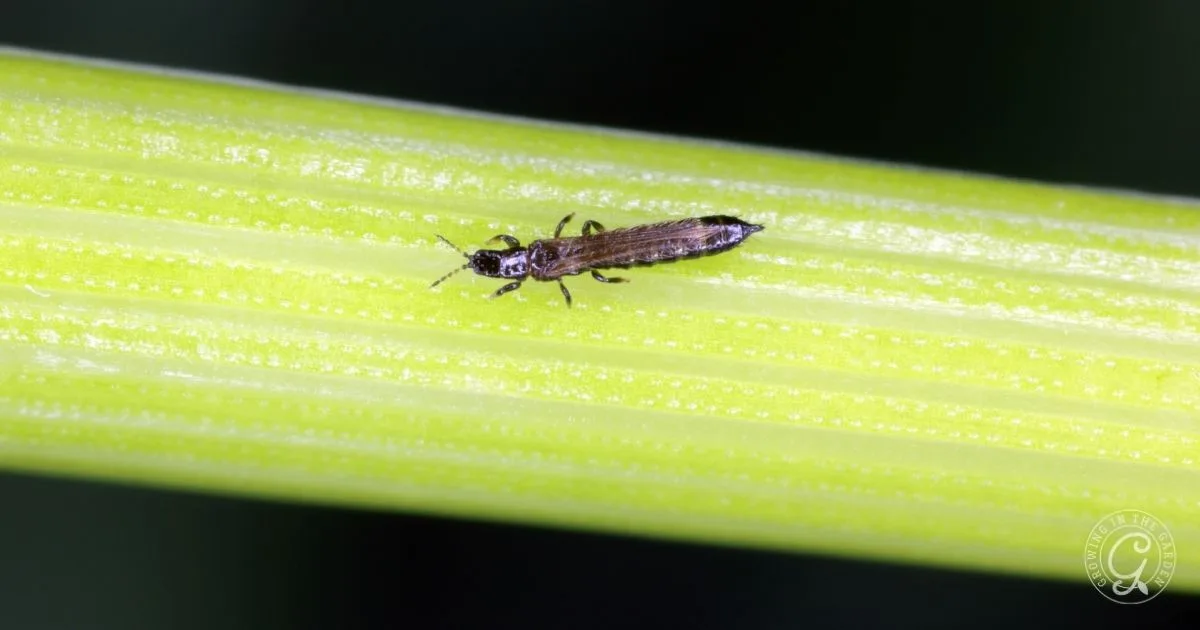
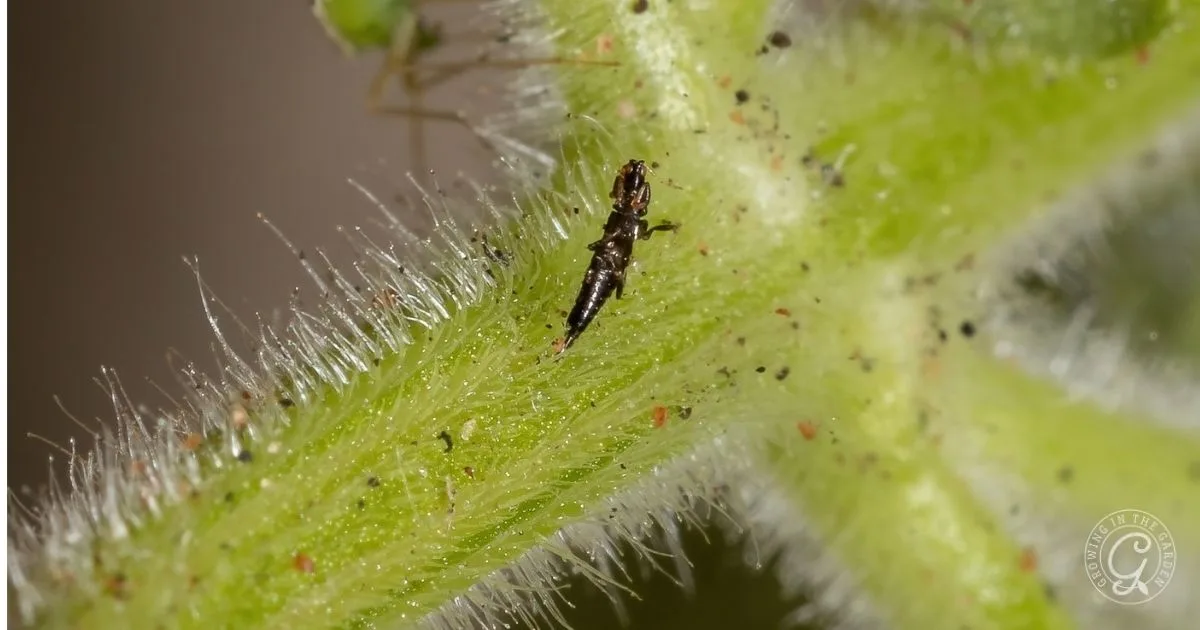
Thrips are very small, often less than 1–2 mm long, and can be pale yellow to dark brown. They feed by scraping and piercing soft plant tissue and sucking out plant juices.
Thrips are tricky because:
- Eggs are inserted into soft plant tissue (you cannot spray eggs directly).
- Before removing eggs you find near a pest colony, it is worth knowing whether they belong to a beneficial insect. This guide to identifying beneficial insect eggs in the garden covers what to look for
- Larvae feed on leaves, flowers, and fruit.
- Some types fall to the ground and then emerge as winged adults.
The best way to control thrips usually requires a multifaceted approach, not just a one-time spray.
How to Confirm You Have Thrips
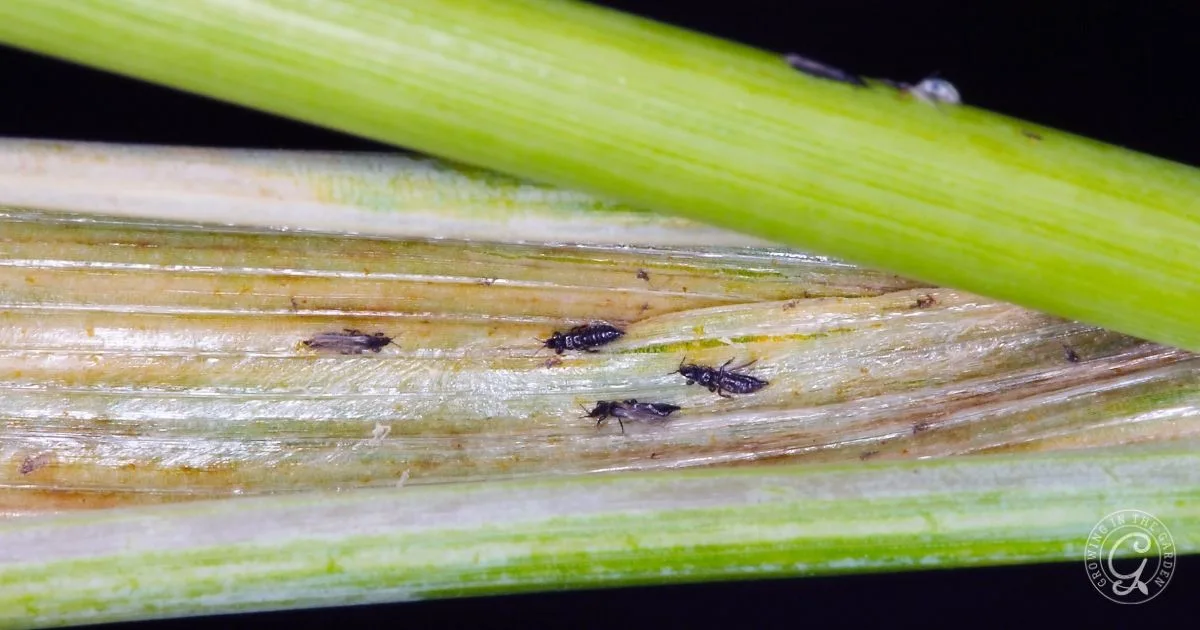
Hold a sheet of white paper under a rose bloom or new citrus growth. Tap the plant firmly. Thrips look like tiny moving slivers on the paper. Using a hand lens can help you see them better, especially on citrus.
If thrips are showing up now, it’s a good time to tighten up your overall approach too. Here are my favorite methods to prevent garden pests organically. These habits make the biggest difference long-term as you work toward an organic garden. Read how to be an organic gardener and what organic gardeners do differently.
What Thrip Damage Looks Like
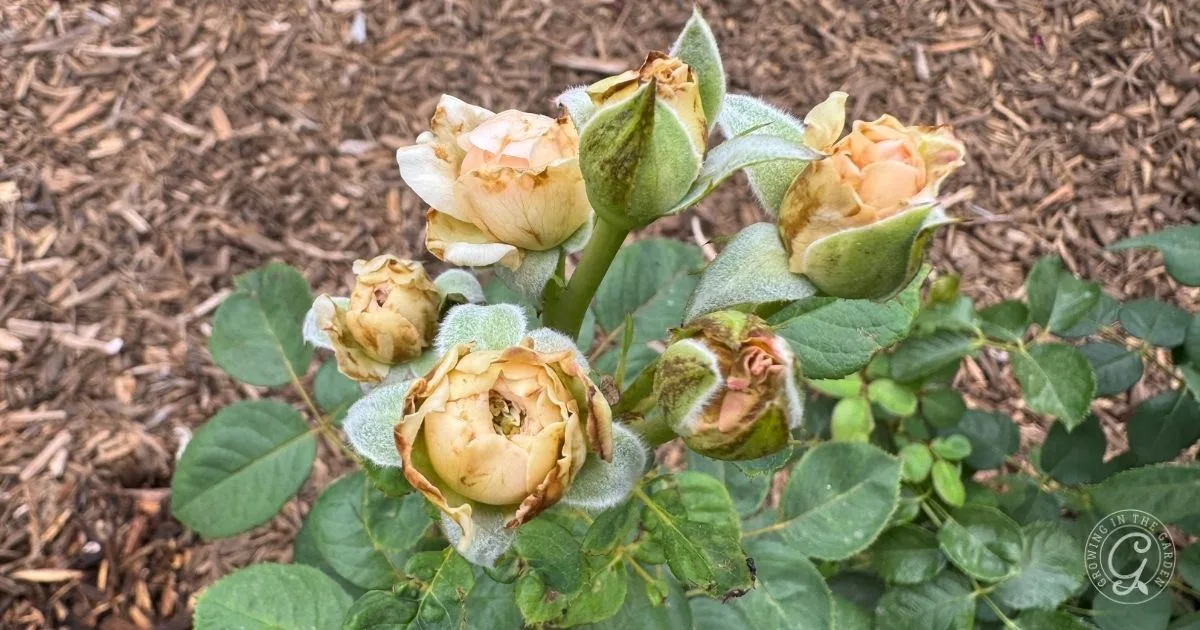
Thrips on Roses
Thrips often feed at the base of rosebuds and on petals inside open flowers. They commonly seem more attracted to light-colored blooms.
Look for:
- Buds that look distorted and may not open well
- Petals with brown streaks or browned edges that look “scorched”
- Black specks on petals (thrips droppings)
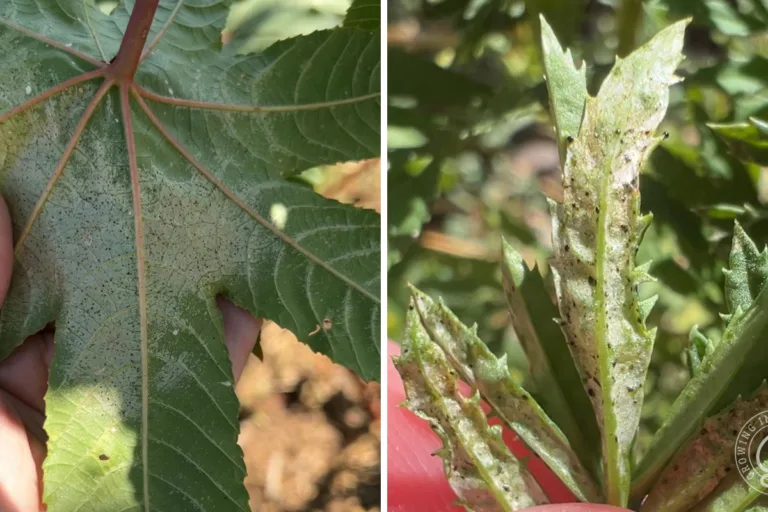
- Pale stippling or a silvery sheen on leaves closest to blooms
Thrips on Citrus
Citrus thrips are most damaging right after bloom when the fruit is small and tender.
Look for:
- Rough, ringed, or patchy scarring on young fruit as it grows
- Distorted new leaves
In most home gardens, citrus thrips scarring is cosmetic. The fruit inside is usually fine.
Thrips on Other Common Garden Plants
Thrips can also show up on: (click the link to get more information on that specific crop)
- Peppers and tomatoes (silvering, distorted new growth, flower drop)
- Cucumbers and squash (stippled leaves, distortion)
- Onions and garlic (silvery streaking)
- Beans (leaf scarring and distortion)
- Ornamentals like lantana, vinca, and many flowers (browning petals, distorted buds)
If you see silvery scarring plus tiny insects on the tap test, thrips are a strong suspect.
How to Control Thrips Organically
Step 1: Sanitation and Physical Control
These steps help immediately and make everything else work better:
- Deadhead damaged rose blooms and remove badly affected buds.
- Clean up weeds and debris (they become breeding sites for thrips).
- Rinse plants with a strong spray of water to knock thrips off.
Step 2: Target the Soil Stage with Beneficial Nematodes
Because many thrips pupate in the soil or debris, if you can control them in the soil stage, you can get one step ahead of them.
Best option: Steinernema feltiae (beneficial nematodes)
How to apply beneficial nematodes (soil drench):
- Apply at dusk or on a cloudy day.
- Water the soil before applying.
- Drench the soil under the plant canopy with the nematode solution.
- Keep the soil lightly moist for several days afterward.
Hot climate tip: In low humidity, focus on soil applications. It’s too dry for foliar nematode sprays. They work only if leaves stay wet long enough, which is harder outdoors in desert conditions.
Step 3: Use Beneficial Predators for the Flower Stage (Especially Helpful on Roses)
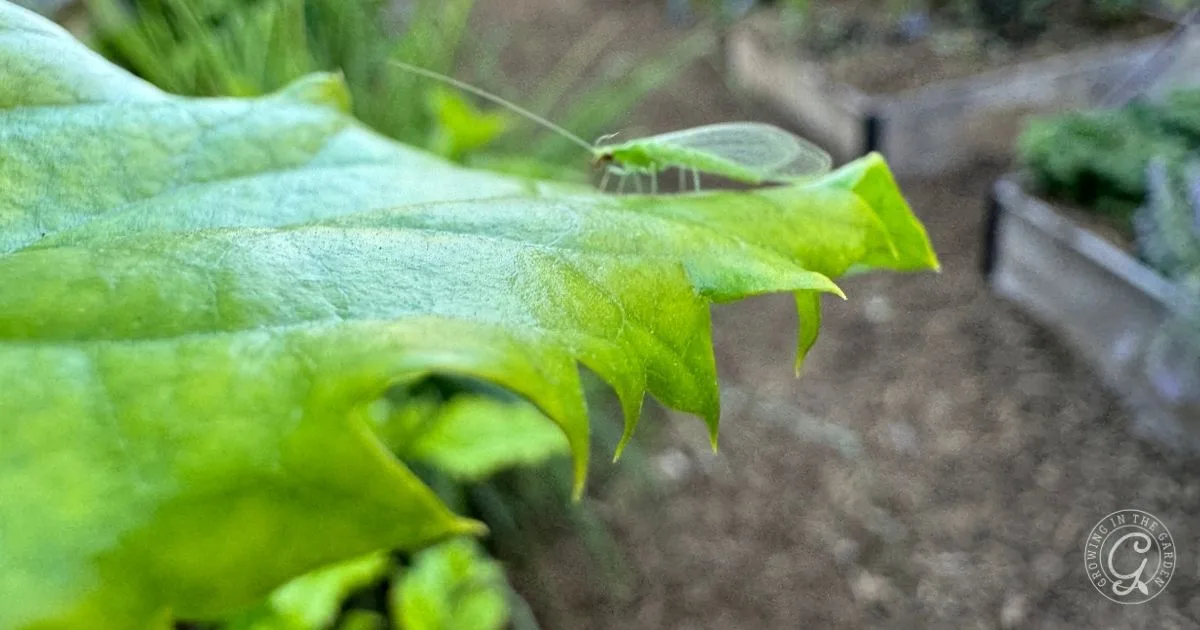
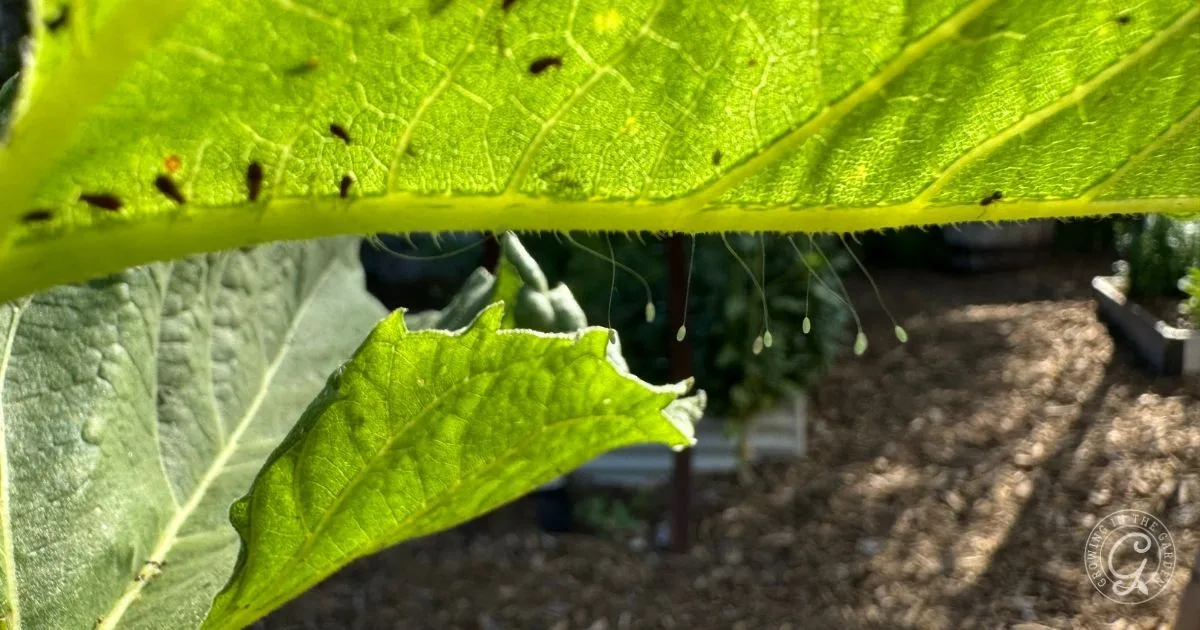
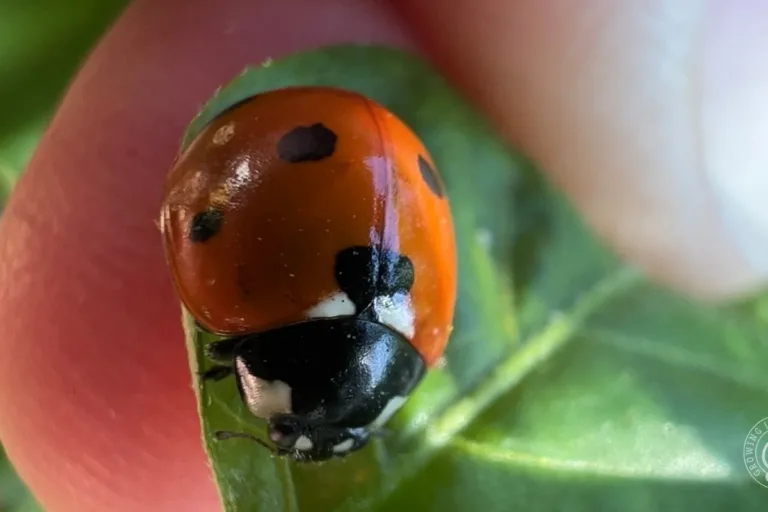
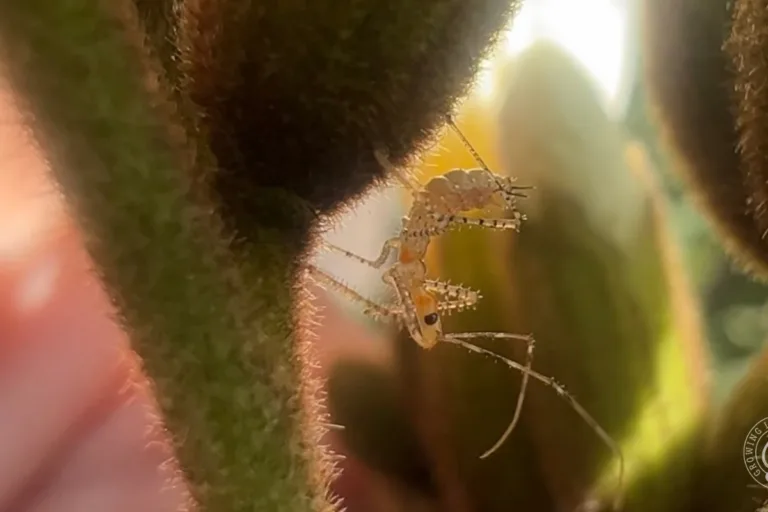
Before reaching for any treatment, it is worth knowing that thrips have predators already hunting them. This guide to the predators of thrips, spider mites, and whiteflies covers the ones most gardeners mistake for pests. These are best when started early, before thrips pressure is intense. Encourage beneficial insects like lacewings in your garden. Lacewing larvae feed on thrips as well as aphids and spider mites, making them one of the most versatile beneficial insects you can encourage. Here is how to attract lacewings and what their lifecycle looks like.
Predatory mite: Neoseiulus cucumeris
- Works best in moderate temperatures and higher humidity.
- Slows down in hot, dry conditions outdoors.
- Performs better in higher numbers, so early, heavier releases help.
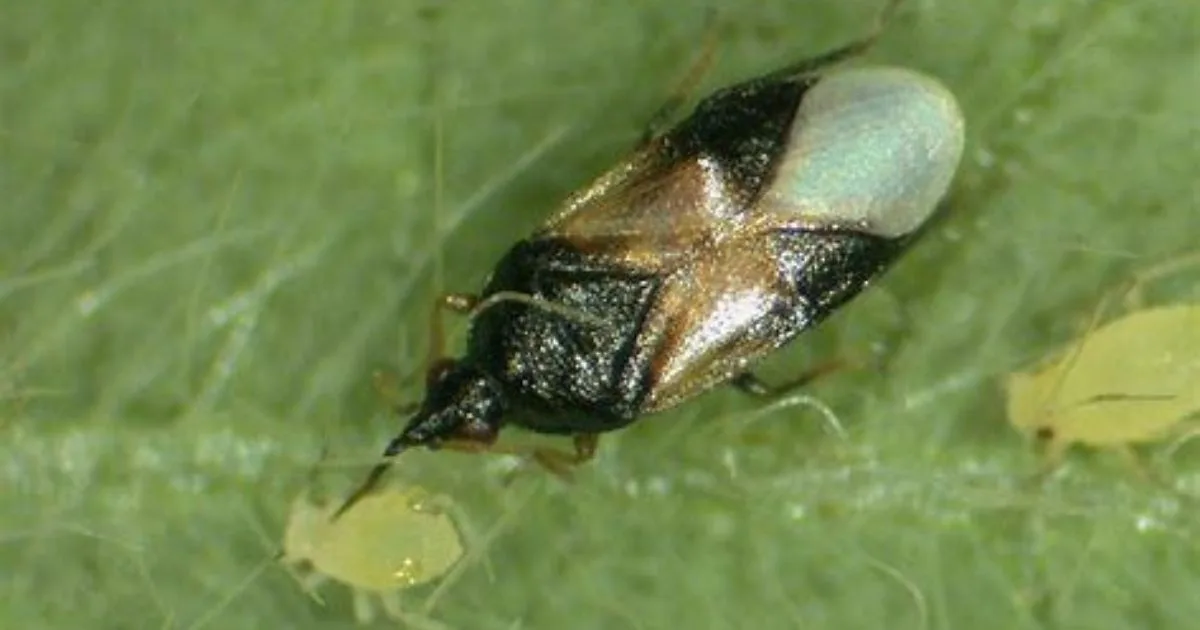
Minute pirate bug: Orius (often Orius insidiosus)
- A strong thrips predator that hunts in flowers.
- Helps most when it can establish itself in the garden over time.
Thrips are a good reminder that healthy gardens rely on more than sprays and treatments. Beneficial insects play an important role in keeping pest populations in check, and creating a garden that supports them is one of the best long-term pest management strategies. Learn more about how beneficial insects work as natural pest control.
Step 4: Well-Timed Sprays
Thrips spend most of their time tucked inside buds and deep in blooms. That means a quick spray over the outside of the plant often does not reach them.
If you want to use a spray, choose something as gentle as possible and apply it when it will work best.
- Insecticidal soap can help knock back thrips you can actually hit (on leaves and outer flower parts). Spray in the cool part of the day and avoid using it during hot weather to prevent leaf burn.
- Spinosad is a stronger organic option. But it can also harm beneficial insects. Keep it off of flowers and don’t spray while bees and other pollinators are active during the day.
Citrus Option Many Home Gardeners Like: Kaolin Clay
A kaolin clay film on leaves and fruit can reduce thrips feeding and scarring on citrus, especially when applied early during the susceptible fruit stage.
When to Treat Thrips
The best approach is not “spray early,” it is “intervene early with the least disruptive tools, then step up only if you need to.”
- If you confirm thrips and you care about the blooms or fruit looking good, start with less invasive early steps right away (deadhead damaged blooms, spray off with water, add predators, control the soil stage with nematodes).
- Escalate if damage stays unacceptable after that (use a carefully timed spray).
On roses: treat at the first signs of a new flush of buds for nice blooms. Once buds are already streaked and browned, you are mainly preventing the next set of blooms from getting hit.
On citrus: start monitoring when the blossoms begin to fall and act early during the small-fruit stage if you are trying to prevent scarring. Once fruit is scarred, sprays won’t undo it.
One of the easiest ways to prevent recurring pest problems is to plant with beneficial insects in mind. These annual and perennial plants attract beneficial insects and pollinators. If you want more helpful insects to stick around, give them food and shelter. Here’s how to plant an insectary border that attracts beneficials.
Tips for thrips in hot climates
- Apply nematodes at dusk and keep the soil hydrated afterward.
- Don’t spray soaps and oils when it’s hot. They will damage leaves. If the temperature is above 90°F, rinse the leaves after treating them to prevent burning.
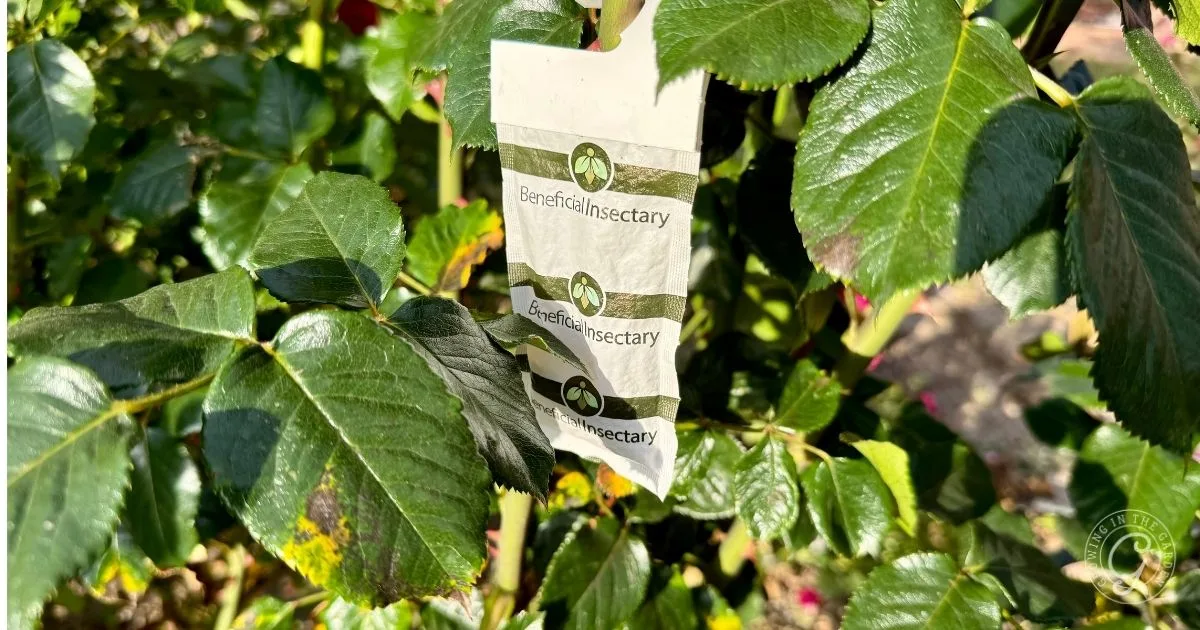
- If using cucumeris outdoors, place sachets in the shadiest part of the plant and begin releases when temperatures are cooler.
FAQ About Getting Rid of Thrips
Usually no. They mainly cause cosmetic damage to blooms, leaves, and young fruit.
Thrips feeding inside tight buds can distort petals and cause browning, leading to blooms that open poorly or look scorched.
Thrips are more common inside flowers and buds and often leave black specks (droppings). Spider mites usually cause stippling on leaves and may leave fine webbing. Learn how to identify and treat spider mites here.
The scarring on the peel stays, but it is usually cosmetic. The fruit inside is typically fine.
Use Steinernema feltiae as a soil drench and stay on top of deadheading and sanitation (especially on roses).
Look for reputable insectaries that ship at the right time for your climate. Arbico Organics and Nature’s Good Guys are common sources for home gardeners.
Other Common Garden Pests and How to Treat Them:
- If tiny white insects flutter up in a cloud when you touch the plant, you’re dealing with whiteflies, not thrips. Start here: How to Get Rid of Whiteflies (Even in Hot Climates).
- If you’re also seeing sticky leaves or clusters of soft-bodied insects, you may have aphids along with thrips. Here’s how to get rid of aphids.
- If leaves look stippled or dusty and you see fine webbing, spider mites may be the real issue (add link to your spider mite post).
- Squash bugs and black bugs on sunflowers are different pests that require different approaches.
- Long brown bugs with leaf-shaped hind legs are leaf-footed bugs, not aphids or beetles. Learn how to get rid of leaf-footed bugs here.
- If seedlings are disappearing overnight, pill bugs may be the real issue. Try these ways to keep pill bugs from destroying your garden.
- If you’re dealing with thrips in containers and also seeing tiny flies around the soil, fungus gnats might be part of the problem. Here’s how to treat and prevent fungus gnats indoors.

Leave a comment on How to Get Rid of Thrips on Roses, Citrus & More