
How to Get Rid of Leaf-Footed Bugs (Effective IPM Strategies)
Leaf-footed bugs are the worst. Few things are more frustrating than cutting open a beautiful pomegranate and finding the inside ruined, and they can do the same thing to tomatoes. I remember during my Master Gardener classes standing in line to ask the guest lecturer how to get rid of leaf-footed bugs, especially on pomegranates. I was sure he would have an easy answer (he had a PhD in Horticulture), but unfortunately, he confirmed that this pest is not easy to control.
But with some effort, you can manage them without reaching for chemicals. The key is timing and an integrated pest management (IPM) approach: catch them early, remove what you can, block access to fruit, and reduce the places they survive between seasons.
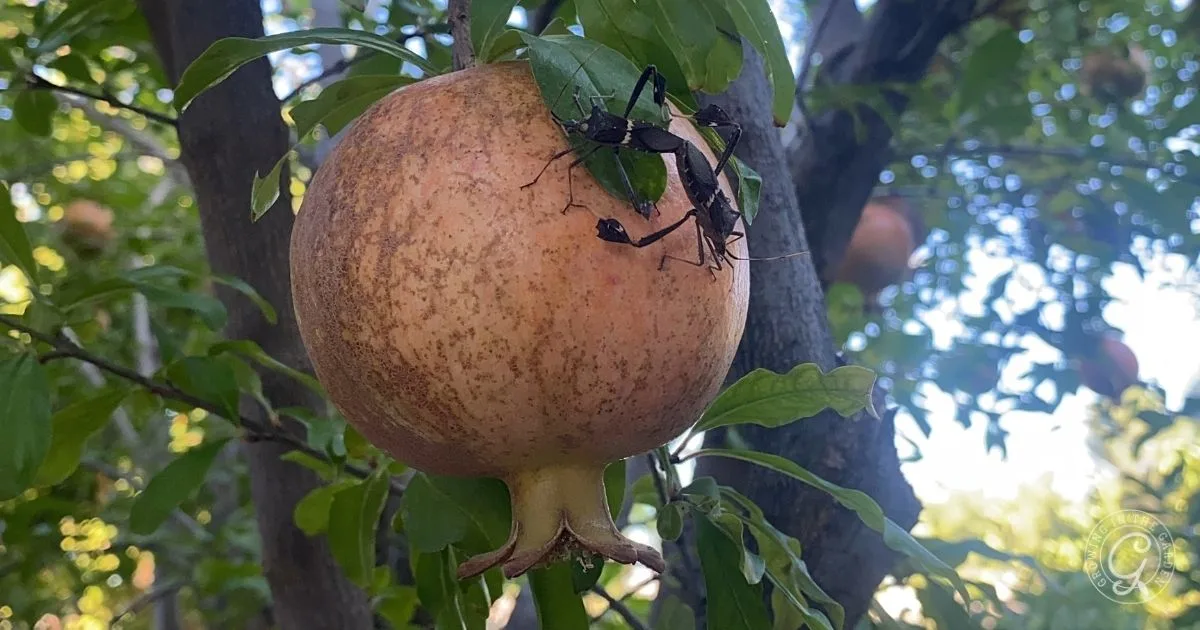
Key Takeaways: Getting Rid of Leaf-Footed Bugs
- Leaf-footed bugs cause significant damage to pomegranates, tomatoes, and other fruits through their feeding.
- Recognizing their eggs, nymphs, and adults is key to early detection and management of leaf-footed bugs.
- An IPM approach, including monitoring, physical removal, and exclusion, can effectively control leaf-footed bug populations.
- To prevent infestations, clean up hiding spots and encourage natural predators, such as egg parasitoids.
- Organic sprays can be a last resort but are most effective on young nymphs when used correctly.
What are leaf-footed bugs?
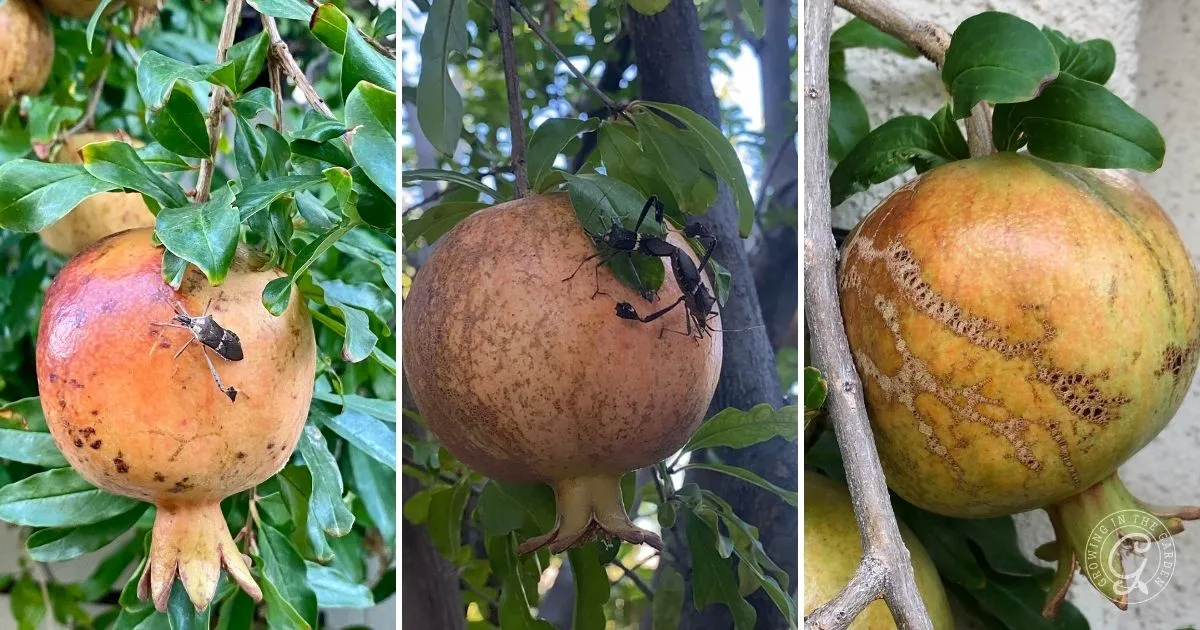
Leaf-footed bugs are “true bugs” (family Coreidae) with piercing-sucking mouthparts. They feed on fruits, fruiting vegetables, nuts, and seeds. Many species are reported across Arizona, and they are commonly confused with other “big bugs,” including kissing bugs.
How to recognize them:
- Adults: about 3/4 to 1 inch long, often brown or gray, sometimes with a pale zigzag band across the back. Many have the classic “leafy” expansion on the hind legs (but not all species show it strongly).
- Eggs: typically laid end-to-end in a string along stems or leaf midribs.
- Before you wipe any eggs off of a plant, it is worth knowing what you are looking at. This guide to identifying beneficial insect eggs will help you tell the difference between a pest and something working in your favor
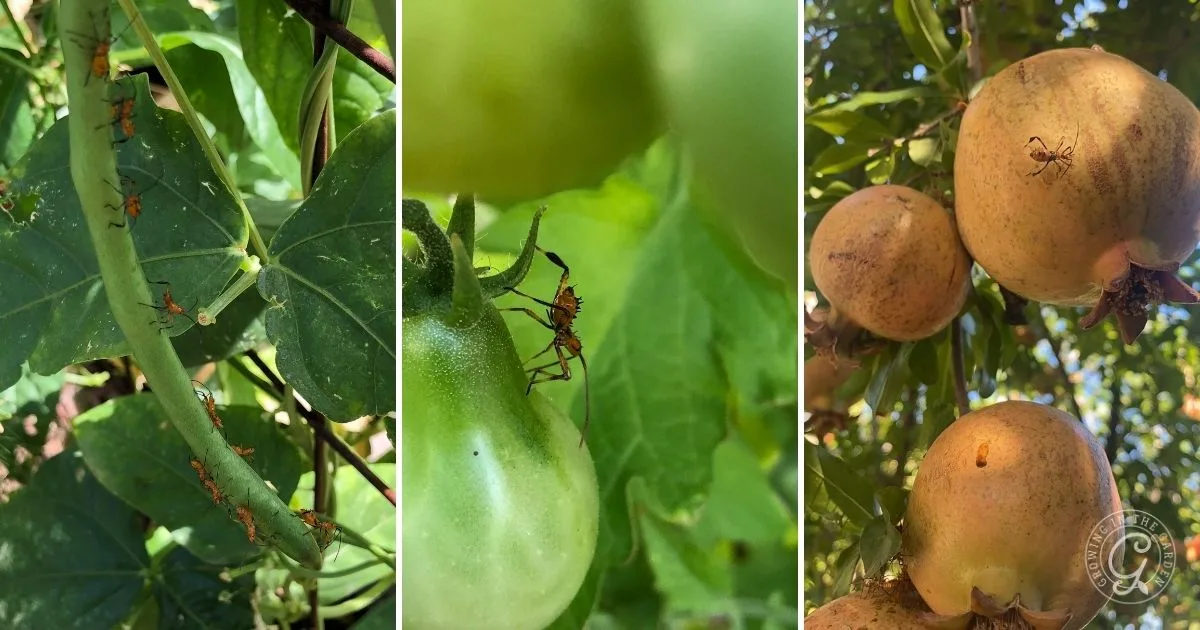
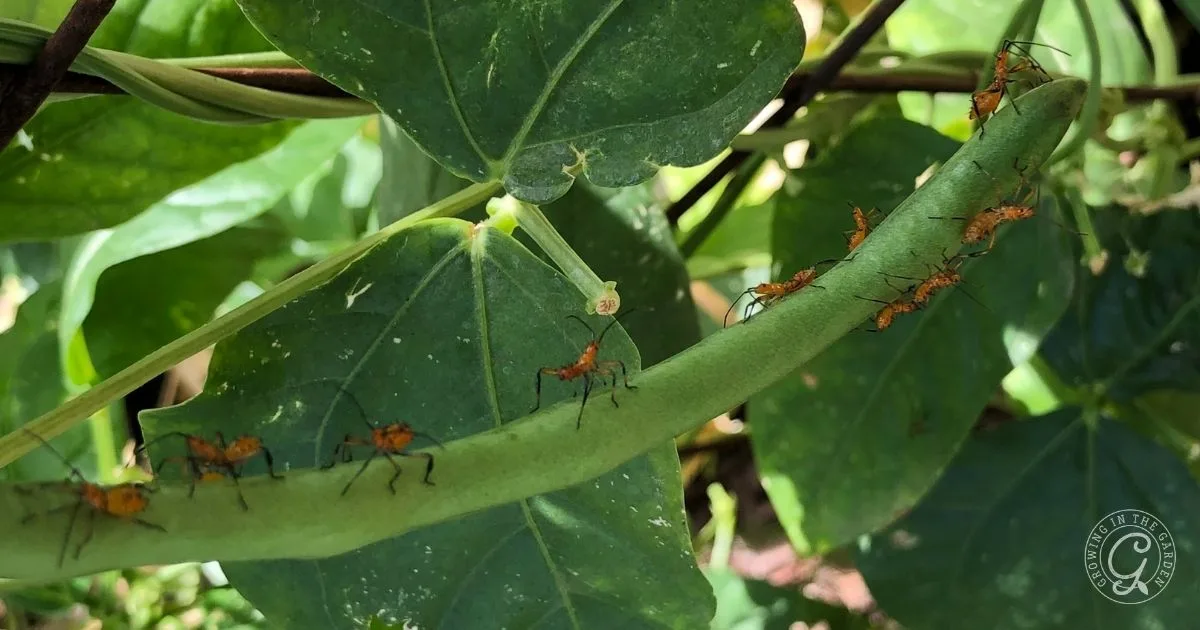
- Nymphs: orange to reddish-brown bodies, often clustered when young.
Leaf-footed bug nymphs are easy to confuse with assassin bug nymphs, especially right after they hatch. This guide to common garden insects and their lookalikes shows you how to tell them apart.
What damage do leaf-footed bugs cause
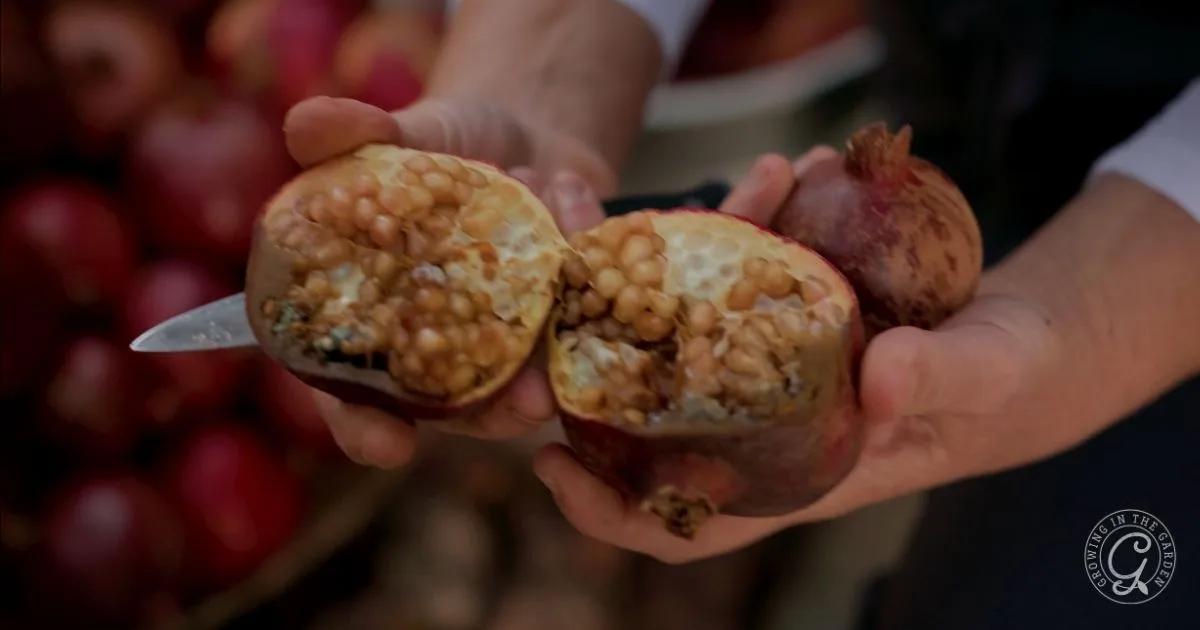
Leaf-footed bugs puncture plant tissue and feed, which can lead to:
- Tomatoes: fruit drop (especially if feeding happens while fruit is small), or discolored/depressed spots as fruit expands.
- Stone fruit and other fruit: “cat-facing” scars, undersized fruit, or premature fruit drop.
- Pomegranates: often scaley-looking external damage, internal damage shows up as brown spots inside the rind, and withered/darkened arils. Feeding wounds can also allow pathogens to enter, leading to soft rot or internal rotten areas.
Why leaf-footed bugs are especially frustrating in the low desert
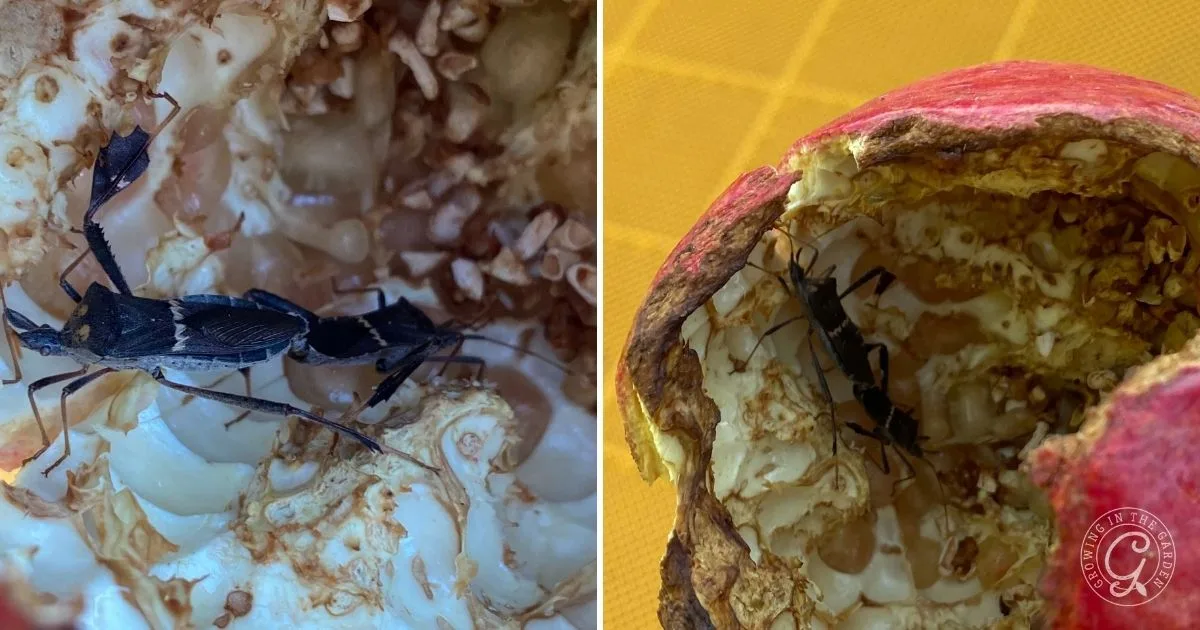
Leaf-footed bugs commonly overwinter as adults in protected places like woodpiles, under bark, in outbuildings, and in dense plants. Populations tend to be worse after mild winters, which is why they can feel relentless in warm-winter climates.
For pomegranates specifically, adults can overwinter in sheltered plants (including citrus and ornamentals), and orchards with split fruit left hanging are favored overwintering sites.
How to get rid of leaf-footed bugs organically
Step 1: Start with monitoring (and catch them early)
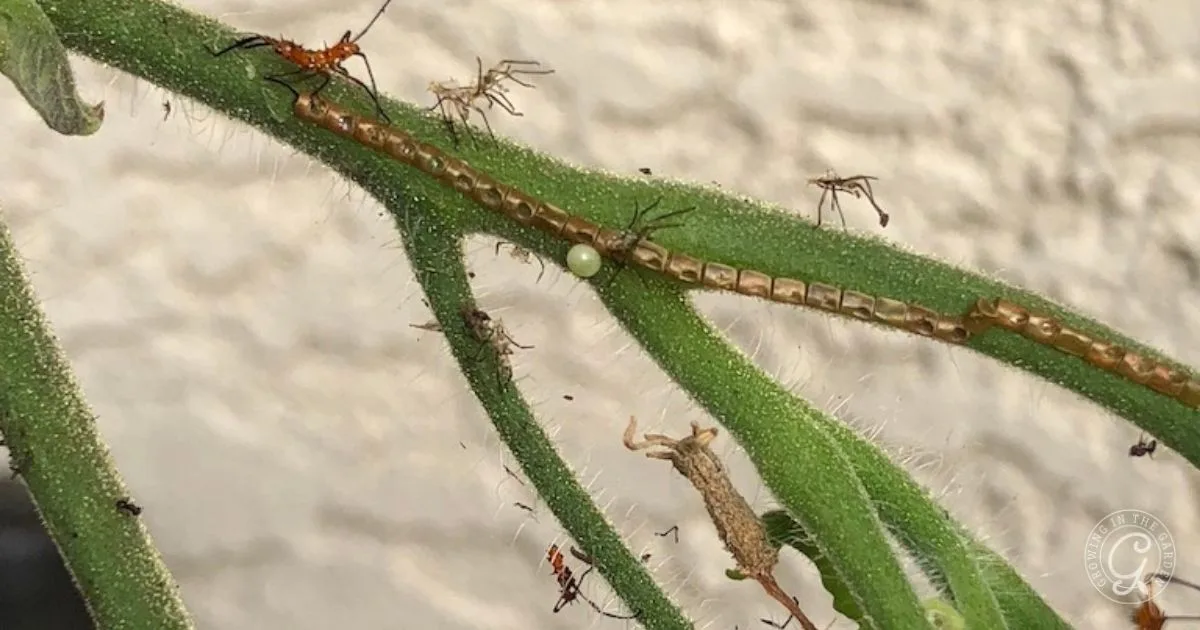
Check plants daily to a few times per week when fruit is forming and ripening. Morning is a good time to check because bugs move less and adults are less likely to fly. Look for:
- egg strings on stems and leaf midribs
- clusters of tiny nymphs (this is your easiest moment to win)
- adults tucked into dense foliage or fruit clusters
If you are dealing with multiple pests at once, this guide on how to get rid of aphids will help you spot them early and choose organic controls that actually work.
Step 2: Physical removal (the most effective organic option)
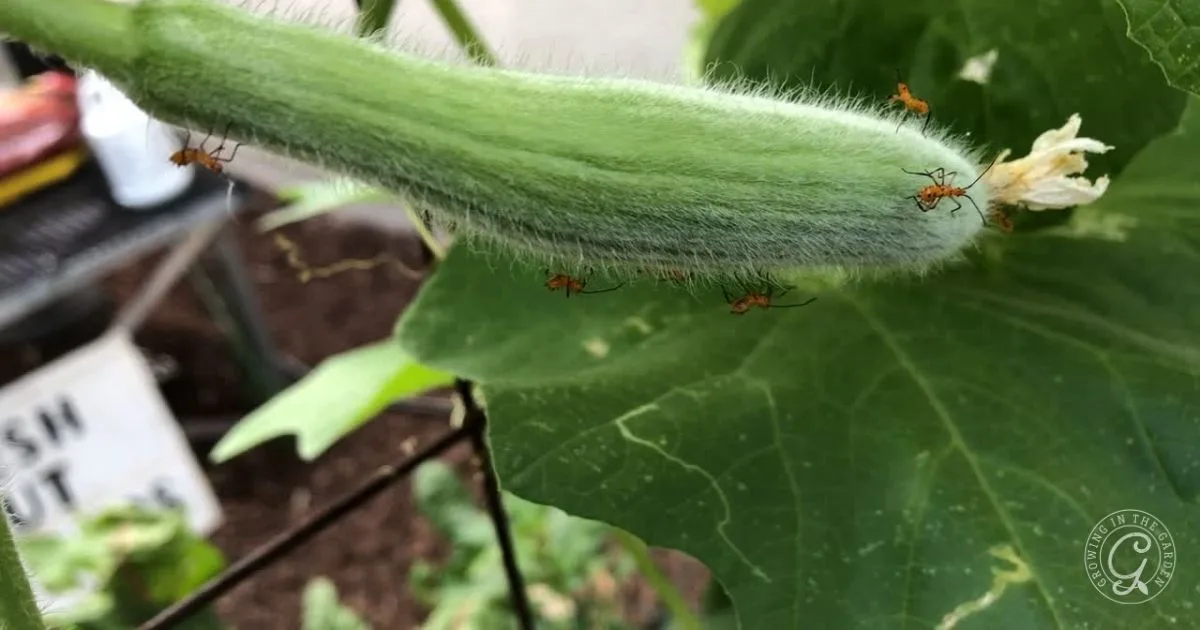
- Remove egg strings (wipe off, prune off the small section, or crush).
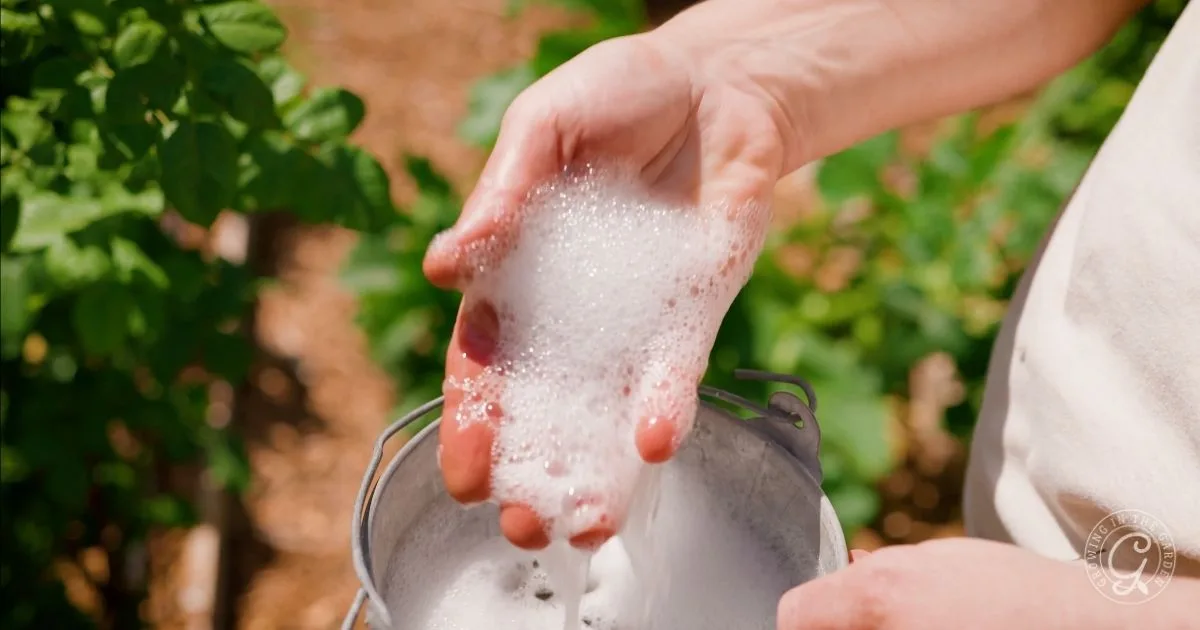
- Handpick nymphs and adults into a container of soapy water, or crush them. Wear gloves if you want; they stink.
- Use a handheld vacuum dedicated to garden use. This can work surprisingly well if you do it regularly.
A great pomegranate trick for late-season infestations
For pomegranate trees, UC IPM recommends pruning to leave space between limbs and the ground, then knocking nymphs out of the canopy by shaking branches, tapping branches with a stick, or using a strong spray of water. Once they fall, you can smash them. This works best on nymphs, not flying adults, so repeat every 1–2 weeks as needed. Laying a light-colored sheet under the tree helps you see what drops.
Step 3: Exclusion (protect fruit before bugs arrive)
- Row covers on vegetables (especially when plants are young). Covers must go on before bugs arrive and lay eggs, or you trap them inside. Remember, row covers also block pollinators and some beneficial insects.
- Bagging fruit (especially pomegranates): lightweight organza bags or similar can reduce feeding. The goal is a physical barrier during the ripening window when pressure spikes.
Step 4: Reduce overwintering sites and spring build-up
- Clean up woodpiles, clutter, and protected hiding spots near food plants when possible.
- Keep weedy areas mowed or removed, especially in late winter and spring. Leaf-footed bugs commonly feed on thistles and other weeds early, then move into gardens when fruit ripens.
Pomegranate-specific sanitation (this matters!)
Remove and dispose of any split or cracked fruit still hanging on the tree and any fallen fruit under the tree. Leaving fruit behind gives overwintering populations somewhere to hide.
Step 5: Protect and encourage natural enemies
Egg parasitoids can help suppress populations. Both UC IPM’s home guidance and pomegranate guidelines highlight Gryon pennsylvanicum, a tiny wasp that parasitizes leaf-footed bug eggs. Eggs with round exit holes are a clue that it’s working.
- Leaf-footed bugs are tough, but supporting the right predators and parasitoids can reduce overall pest pressure. Here’s a guide to beneficial insects as pest control and how to encourage them in your garden.
- One of the simplest ways to do that is to plant an insectary border. Here’s how to create an insectary border that brings in pollinators and predators.
- If you want ideas that thrive through summer, try a few of these warm-season companion plants near tomatoes and other fruiting crops.
- These annual and perennial plants that attract beneficial insects and pollinators are a great place to start.
Step 6: Organic sprays (last resort, and timing matters)
Most sprays are temporary and are most effective on small nymphs, not adults. If you spray at the wrong time, you’ll feel like nothing happened. If you know you have a population of small nymphs, use insecticidal soap. These will only help provide control of young nymphs; they work by contact. Always follow label directions and pre-harvest intervals.
Preventing leaf-footed bug damage on pomegranates
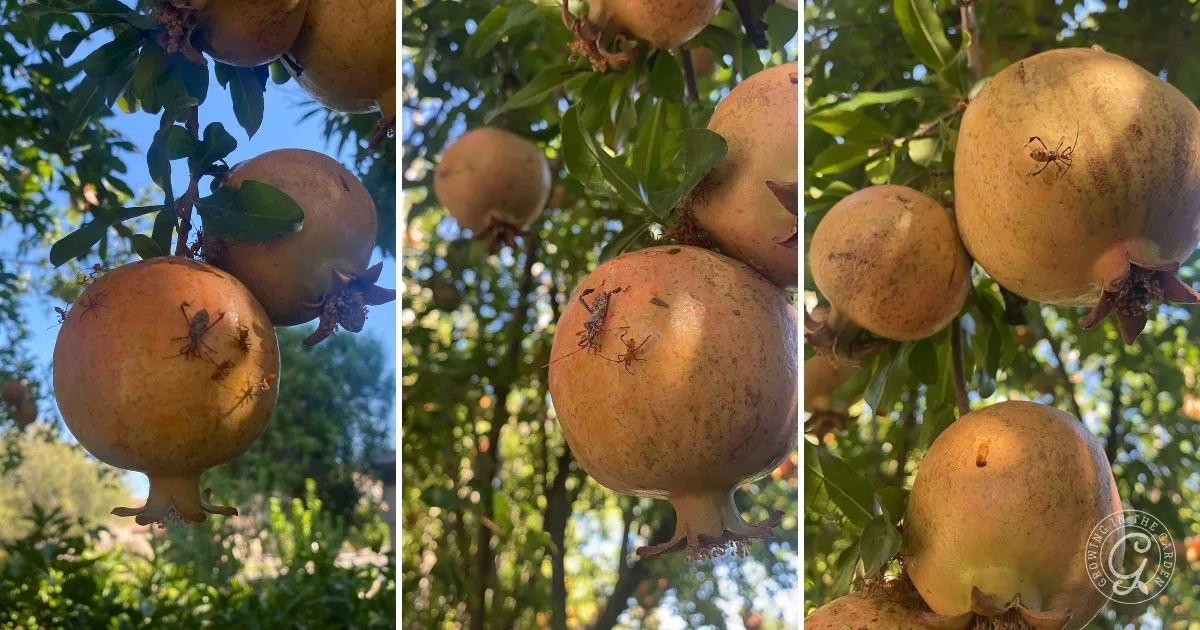
In Arizona, adults often begin emerging in March, eggs are laid through spring and summer, and by late June you can find all life stages on plants in much of the state. In pomegranates, UC IPM describes adults entering to feed and reproduce in late spring to early summer, with mixed life stages by late June, and very large numbers building mid-August through harvest in some years.
- If leaf-footed bugs are hitting your pomegranates hard, good pruning, watering, and harvest timing can help the tree stay productive. Here are my best tips on how to grow pomegranates.
- A lot of leaf-footed bug control comes down to prevention, and these practical tips to prevent garden pests organically will help reduce pest pressure before it starts.
A simple IPM checklist for pomegranates
- Late winter: remove old fruit and clean up culls, thin out cluttered hiding spots nearby.
- Spring: start checking for egg strings on twigs and early nymph clusters. Remove them immediately.
- Summer: keep the canopy manageable and continue monitoring, especially as fruit begins to size up.
- Late summer to harvest: if nymphs show up, use the knock-down method (shake or spray) and repeat weekly or every other week until numbers drop.
- After harvest: remove remaining fruit, especially split fruit, so you are not hosting next season’s problem.
Optional tool: particle films (kaolin clay)
Some gardeners use kaolin clay particle films as a physical deterrent. Extension resources describe particle films as barriers that can discourage insect feeding and reduce pest pressure for some insects. If you try it, think of it as a preventive coating that works best when applied before heavy pest pressure and maintained through the season.
If you are working toward a more organic garden overall, these seven things organic gardeners do differently fit perfectly with an IPM approach to pests like leaf-footed bugs.
FAQ: leaf-footed bugs
They are primarily plant feeders. In Arizona, they are frequently mistaken for kissing bugs, but they are not the same thing.
Often like a neat string of brown, cylindrical eggs laid end to end along a stem or leaf midrib.
Leaf-footed bug feeding damage can be hard to see externally. Cutting fruit open may reveal internal brown spots near puncture sites and arils that wither or darken.
Consistent physical removal (eggs and clustered young nymphs) plus sanitation and exclusion is the most reliable organic approach. Sprays tend to be temporary and most useful only on very young nymphs. If you want a bigger picture plan beyond leaf-footed bugs, this roundup of organic pest control that really works is a great reference to keep handy.
Related pest guides:
- Whiteflies often show up right alongside other warm-season pests, so if you notice tiny white insects fluttering up when you touch leaves, use this guide to get rid of whiteflies with organic methods.
- If your cool-season garden is getting chewed up while you are dealing with leaf-footed bugs elsewhere, this guide will walk you through how to get rid of cabbage worms using organic methods.
- Thrips are likely the culprit if your leaves are looking scarred, silvery, or stippled and you spot tiny, narrow insects. Learn how to get rid of thrips here.
- Spider mites thrive in hot, dry conditions, so if leaves start to look dusty, stippled, or bronzed, use these tips for spider mite prevention and organic control.
- If you are growing squash or melons near the same time leaf-footed bugs show up, this guide on squash bug prevention and organic control is a helpful companion.
- Leaf-footed bugs are tough, but supporting the right predators and parasitoids can reduce overall pest pressure. Here’s a guide to beneficial insects as pest control and how to encourage them in your garden.
Sources
- University of Arizona Cooperative Extension, Backyard Gardener #36. Leaf-footed Plant Bug (Dec 29, 2022). (UA Cooperative Extension)
- University of Arizona Cooperative Extension. Leaffooted Bugs Want Your Veggies, Not Your Blood (PDF, May 2022). (UA Cooperative Extension)
- UC Statewide IPM Program. Leaffooted Bug: Home and Landscape. (UC IPM)
- UC Statewide IPM Program. Pomegranate Pest Management Guidelines: Leaffooted Bug (Leptoglossus zonatus). (UC IPM)
- Penn State Extension. Particle Films as a Deterrent for Insect Pests (Jun 12, 2024). (Penn State Extension)

Leave a comment on How to Get Rid of Leaf-Footed Bugs (Effective IPM Strategies)