
Lacewings in the Garden: Lifecycle and How to Attract Them
If you have ever found tiny eggs suspended on thin threads around your garden and wondered what they were, there is a good chance they belong to a lacewing. In this article, my friend Jean S. Elston, who is finishing her doctoral studies in entomology, walks through the full lacewing life cycle from egg to adult, explains how to tell lacewing larvae apart from other insects you might confuse them with, and shares exactly what it takes to attract lacewings and keep them in your garden. Wait until you see Jean’s amazing photos.
Lacewings are one of the most effective beneficial insects for pest control you can have in the low desert, and they are present in Arizona almost year-round. Spend some time looking at the photos. Understanding the lacewing lifecycle and knowing what the eggs, larvae, and cocoons look like will make all the difference in your garden.
Key Takeaways for Attracting and Identifying Lacewings
- Green lacewings are beneficial insects that control pests like aphids and spider mites in gardens.
- Their life cycle includes distinct stages: eggs, larvae, pupae, and adults, each with unique characteristics.
- Attract lacewings by maintaining a habitat with food sources, such as aphids, and providing shelter.
- Avoid using broad-spectrum insecticides to ensure lacewing populations thrive in your garden.
- Creating a supportive environment for lacewings requires patience and long-term planning, but it enhances garden health.
What We’ll Cover:
Guest post and photos by Jean S. Elston. This post is part of her series Low Desert Garden Insects.
Lacewings: Your Garden’s Best Friend
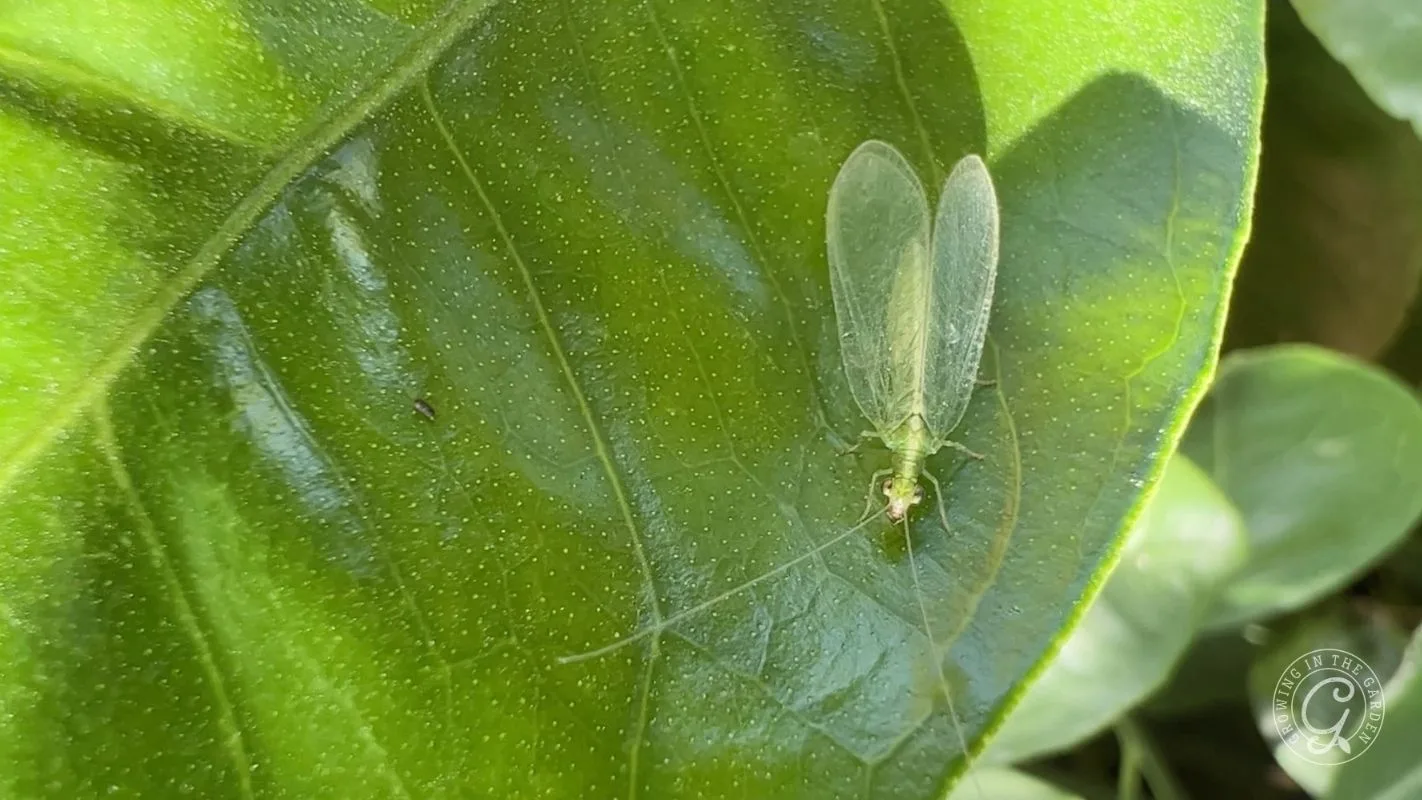
Stepping out into the garden in the early morning or early evening is one of the best times to find lacewings; they often hide on a leaf, their antennae moving rapidly as though picking up radio signals.
Here in the low desert of Arizona, green lacewings are native and can be abundant. In fact, there is a good chance you have seen evidence of them in your garden, perhaps finding the tiny eggs on a leaf or one fluttering around a porch light at night.
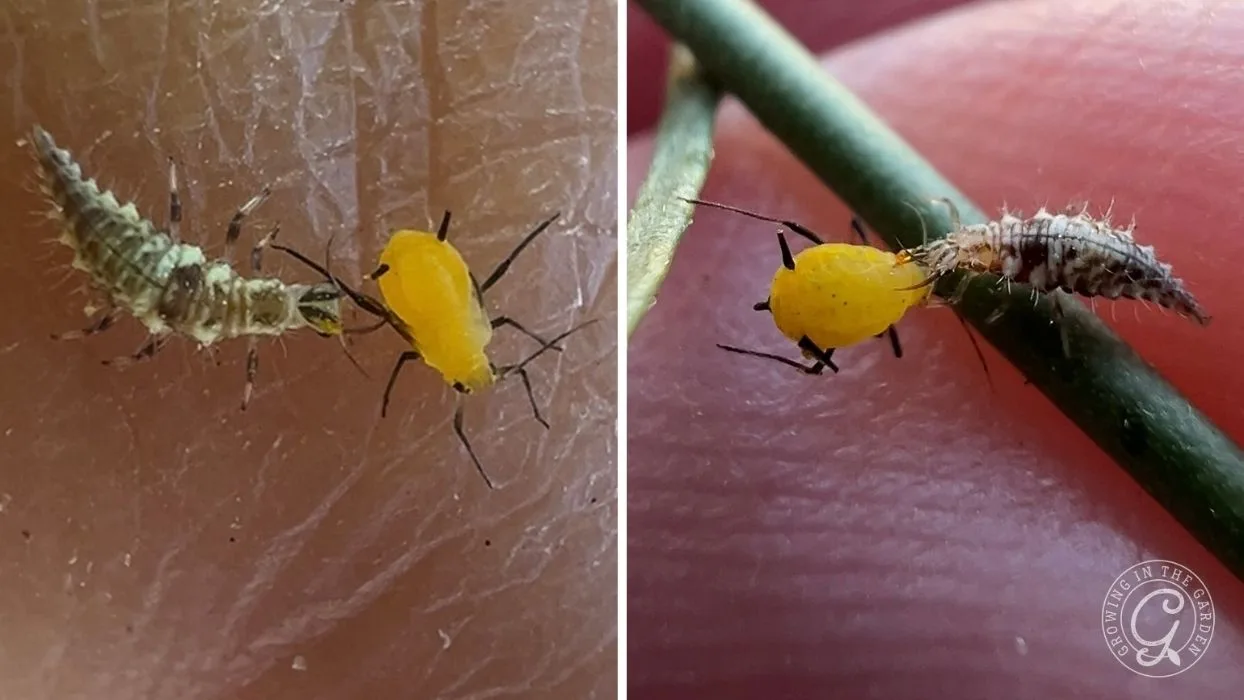
Despite their delicate appearance as adults, in their larval stage, they are voracious predators of various soft-bodied insects. If you wonder how to get rid of aphids or how to get rid of spider mites, lacewings are one of the best allies you can have.
Green Lacewings vs. Brown Lacewings
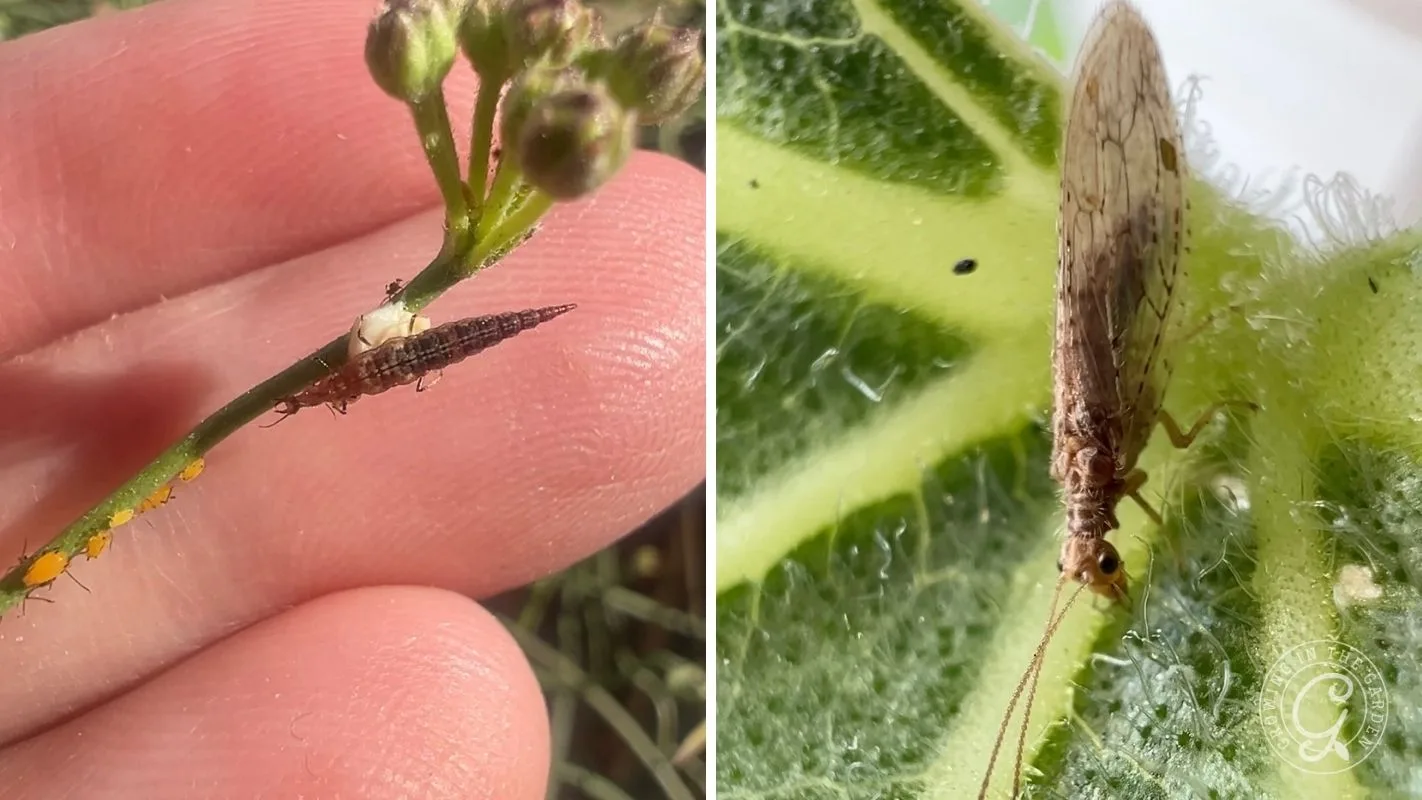
As a brief side note, there are brown lacewings as well. Not as common, but they can be found in our arid desert region. In contrast with the green lacewing, the brown one is smaller and predatory throughout its entire lifecycle, while the green lacewing is predatory only during its larval stage.
The Lacewing Life Cycle
Eggs
Before we can discuss the larval stage, we need to look for the eggs. There is a good chance you have seen them in your space, perhaps dismissing the white or green specks as nothing important — or maybe even believing they are a pest to be removed. Before you wipe any eggs off of a leaf, it is worth knowing what you are looking at. This guide to identifying beneficial insect eggs will help you tell the difference between a pest and something working in your favor.
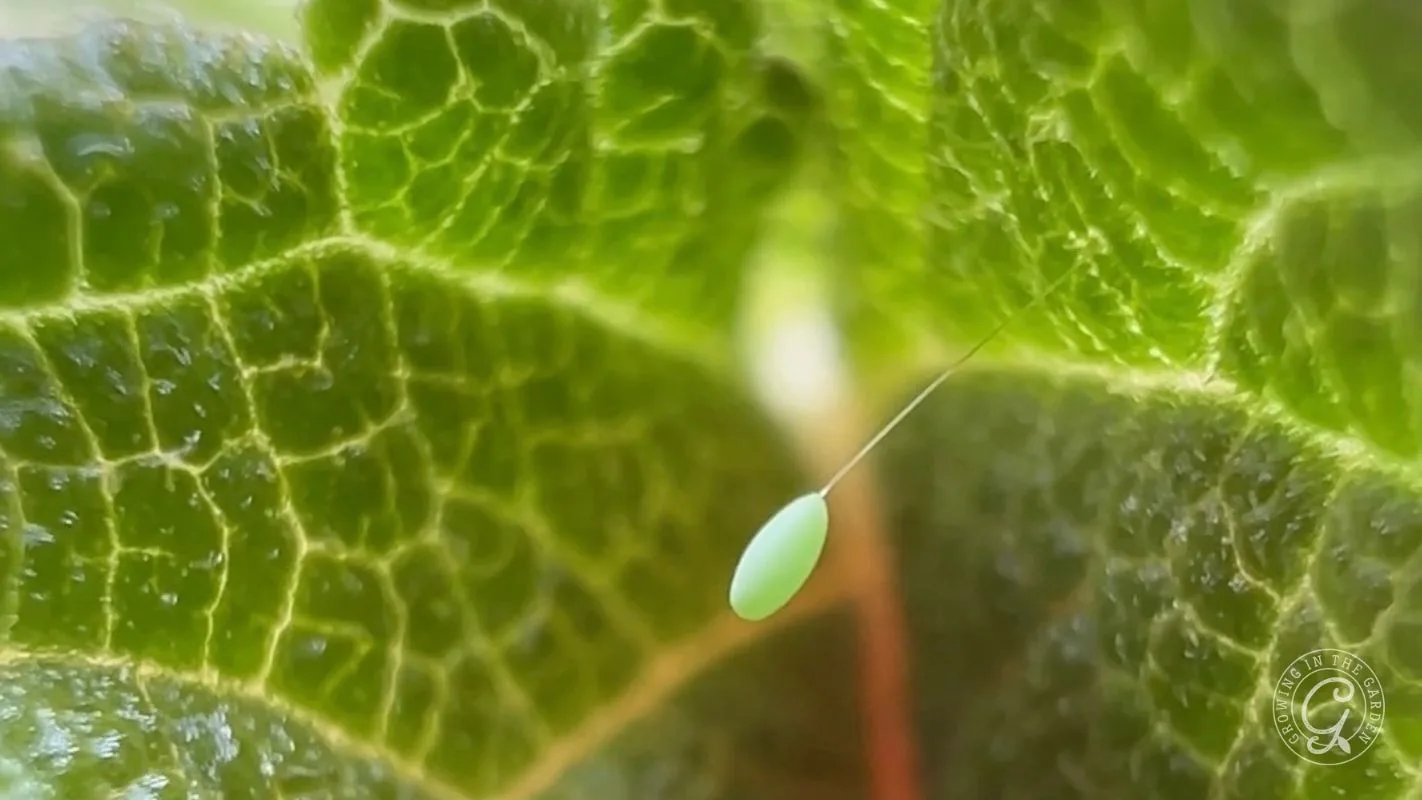
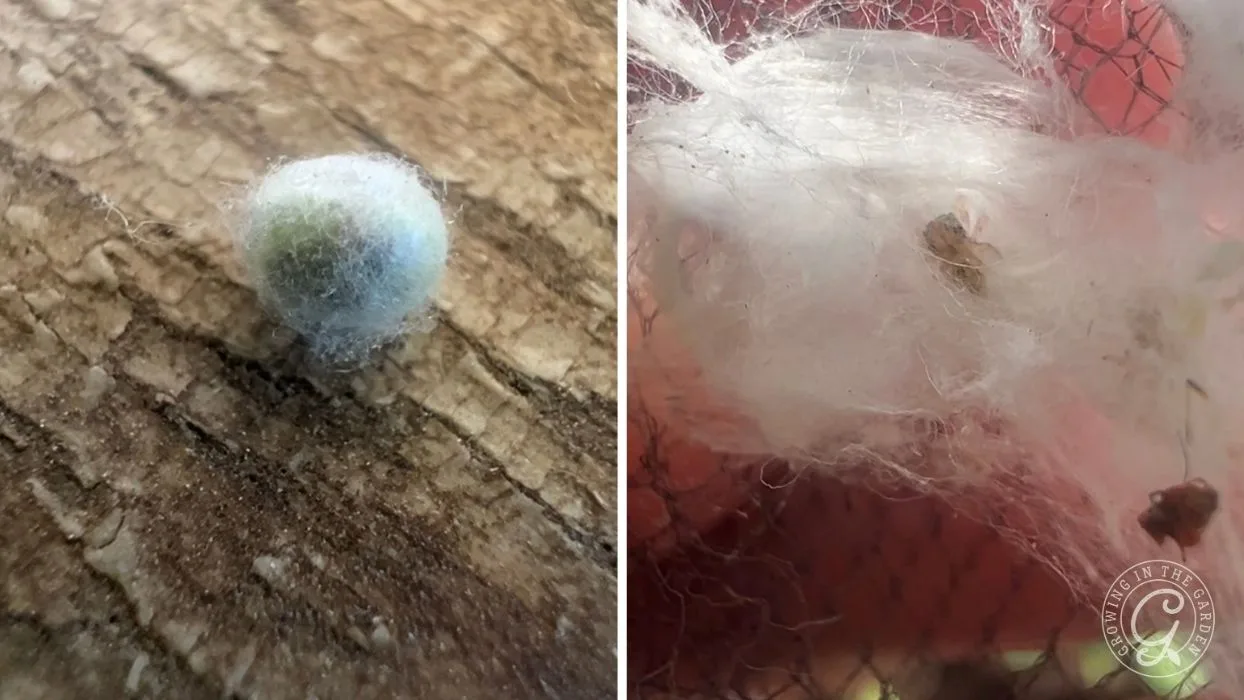
You will find them almost anywhere outside. Patio furniture that is left long enough will turn up tiny threads with a mass smaller than a grain of rice at the tip. From fencing to gates to shade cloth, any location will be suitable for them.
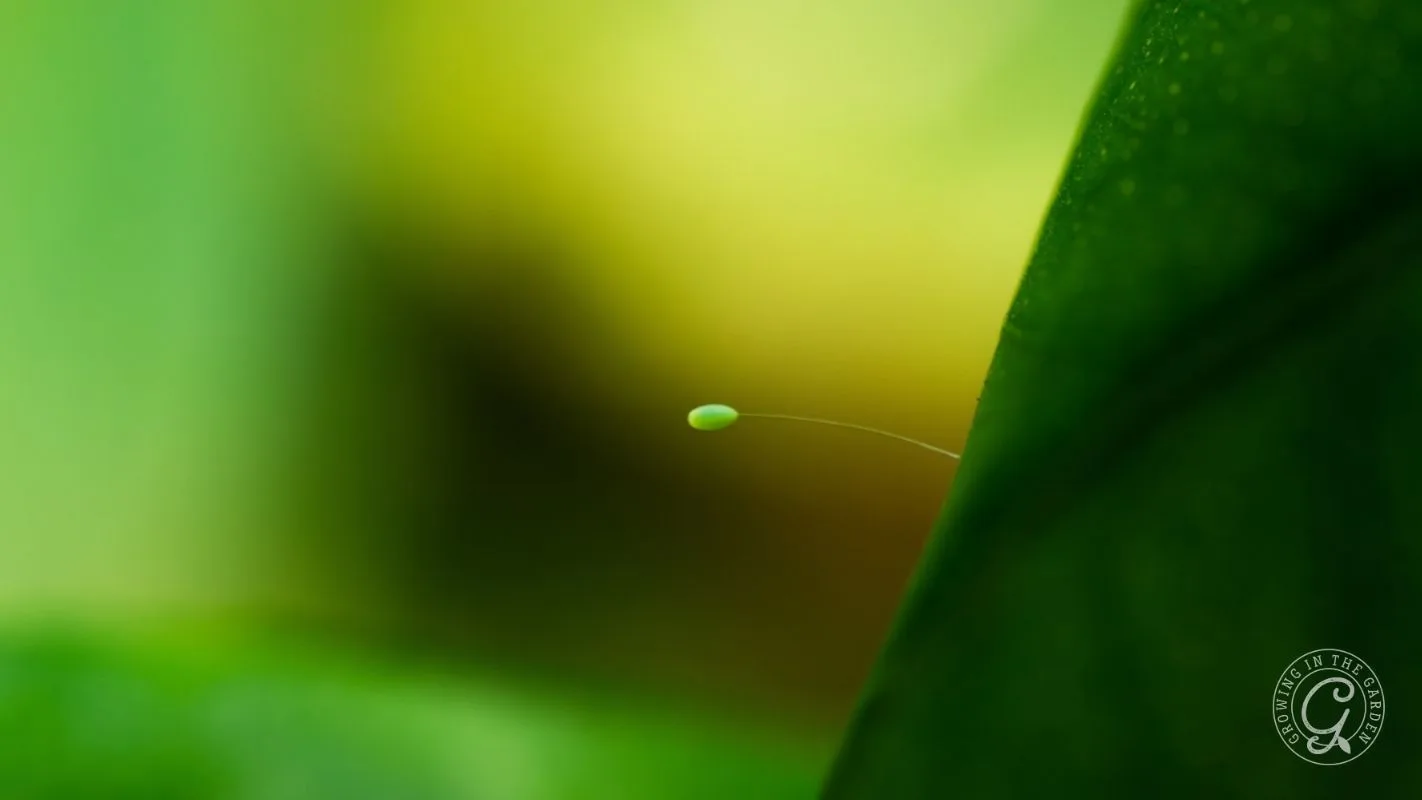
Once you have discovered the eggs, you can almost guarantee there are larvae roaming around — which are truly the great helpers in our gardens for dealing with various pests. Spotting lacewing eggs is also one of the best ways to get kids interested in the garden — the lifecycle is genuinely surprising to watch up close.
Larvae
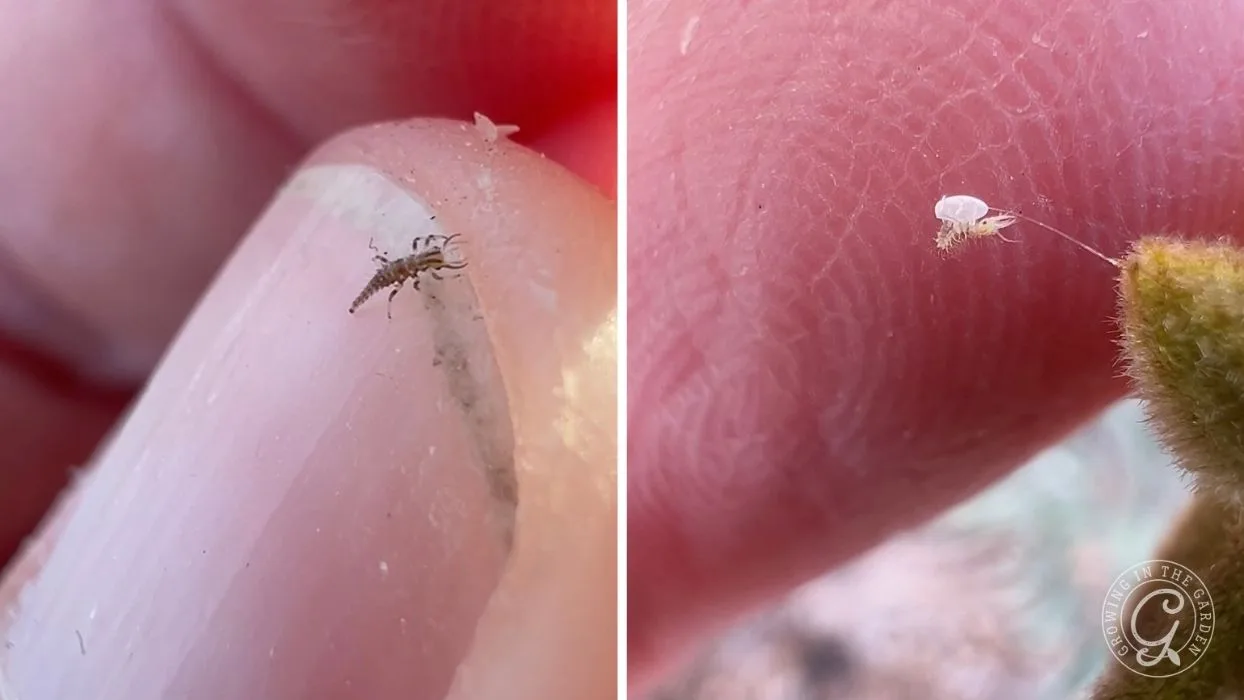
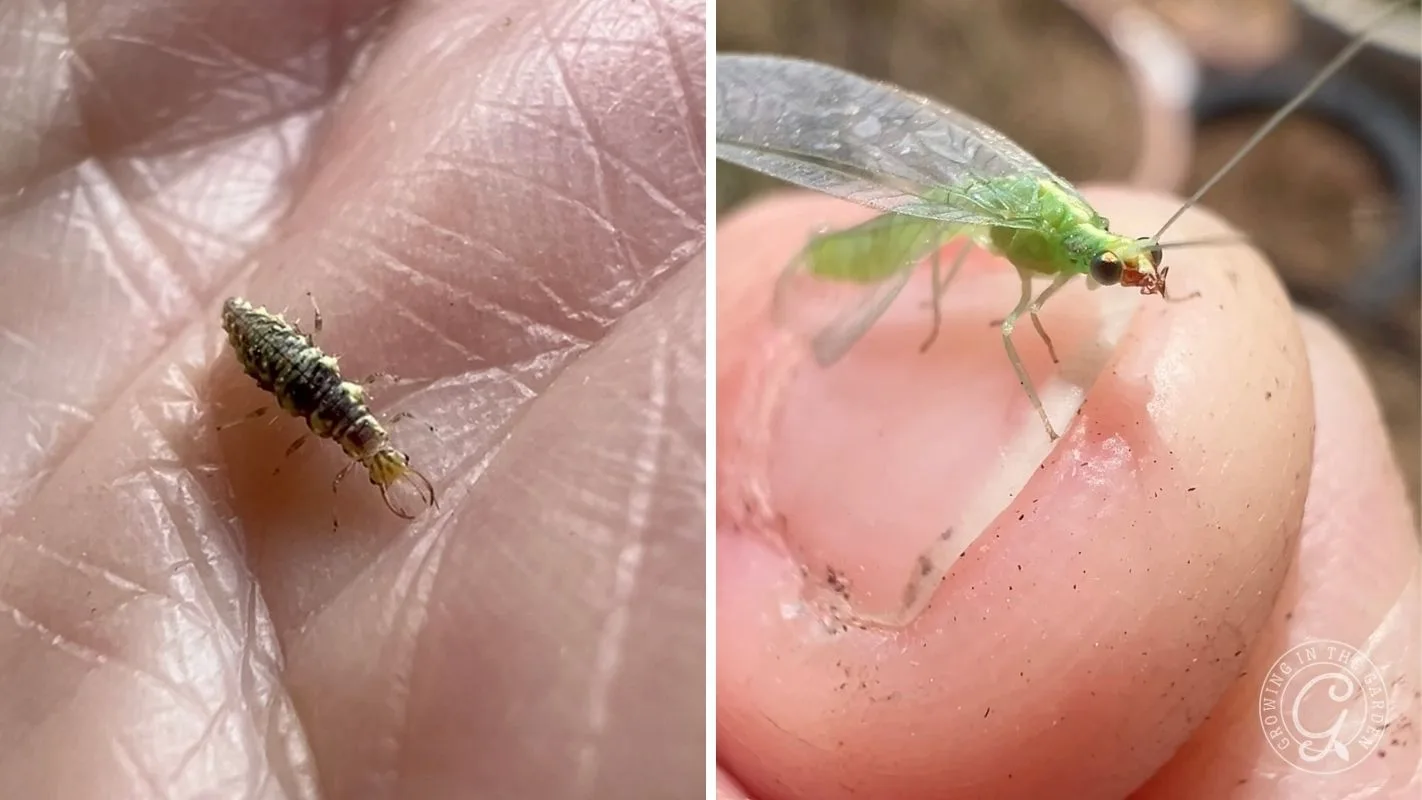
They are extremely tiny when they first emerge, which makes sense given the size of the egg, starting off smaller than your pinky fingernail. However, do not assume that because of their size they are not ready to feast — they emerge hungry from the start.
Similar to their more colorful, equally aphid-eating distant relative, the ladybug, lacewing larvae also have a reptilian quality about them. With their long mandibles and unusually shaped bodies, it truly is hard to imagine such a creature turning into a winged adult.
Over the course of the next three weeks, the lacewing larvae will consume anything they can grab — spider mites, aphids, whitefly larvae, and even each other if desperate enough. In the low desert of Arizona, I have found that as temperatures rise they do decrease slightly, but so far I have not witnessed their complete absence, unlike the ladybugs which migrate to cooler regions during summer. It is good to have a predator that tolerates the heat a bit better than our red-spotted friends. Lacewing larvae are not the only predators working at this scale. This guide to the predators of thrips, spider mites, and whiteflies covers tomato bugs, stilt bugs, and minute pirate bugs.
How to Tell Lacewing Larvae Apart from Other Insects
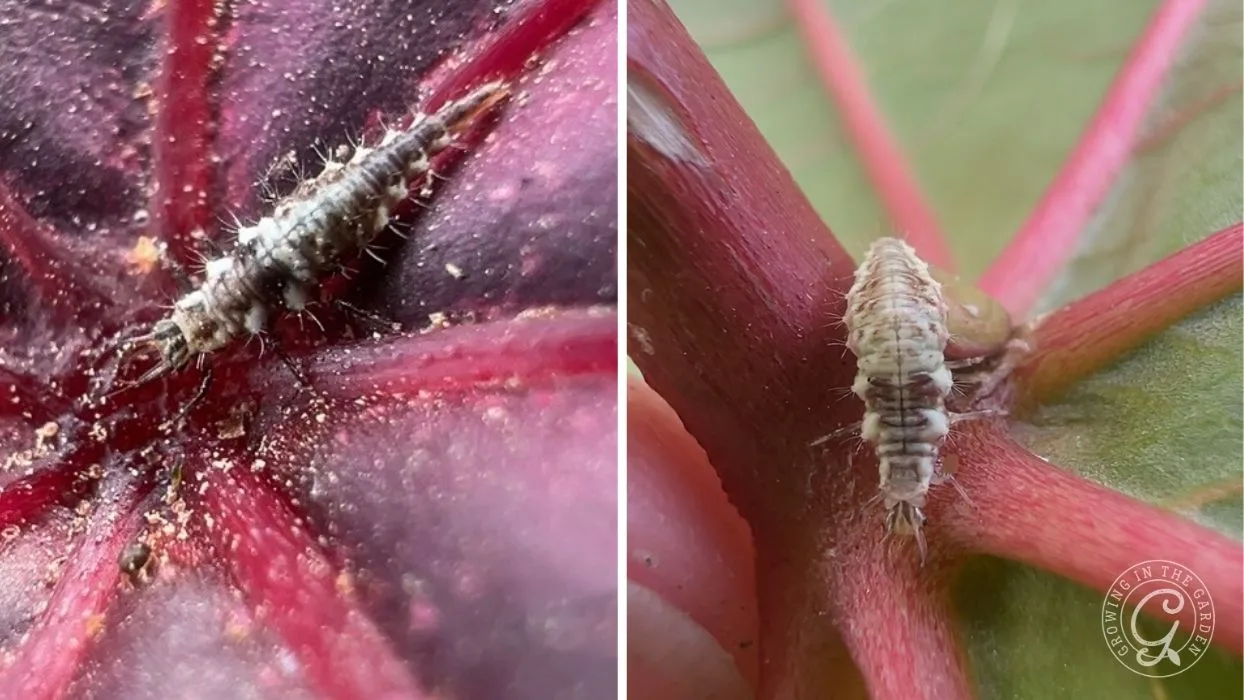
When looking closely enough, lacewing larvae are fairly distinctive. But at a brief glance, a few other small insects in their early stages can cause confusion. Here are the most likely mix-ups and how to tell them apart.
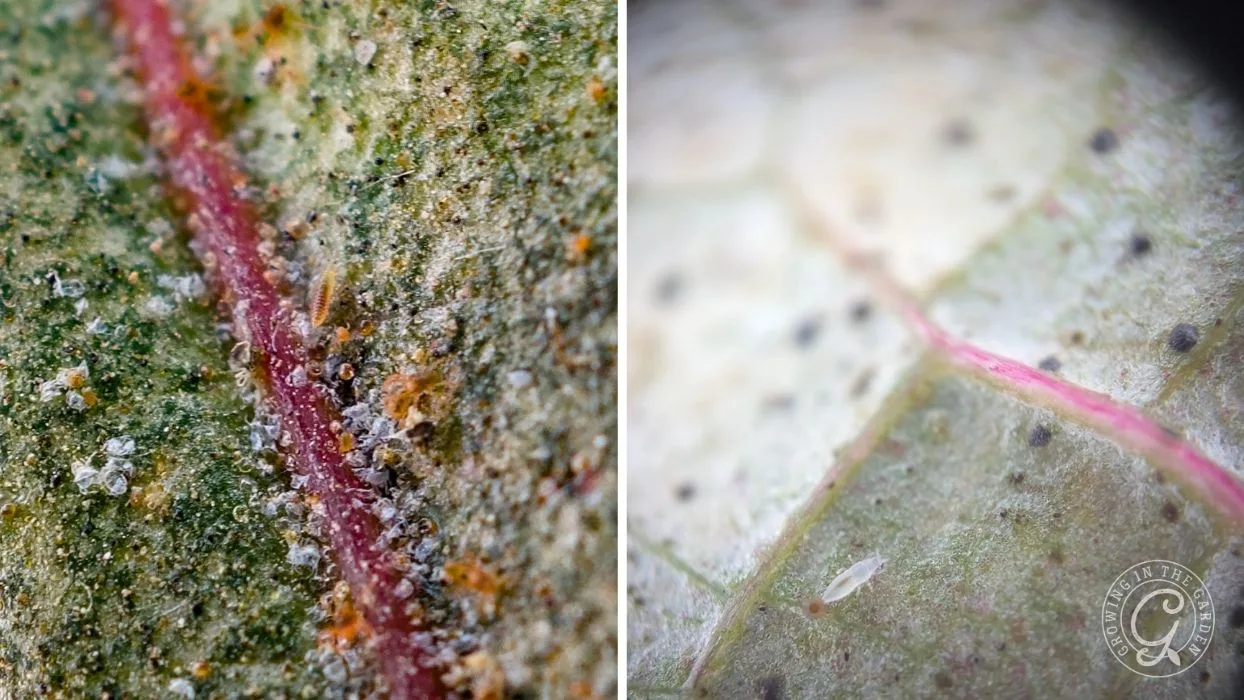
Thrips. Given the small size of the lacewing larvae when it first emerges, confusing it with thrips could happen. First, thrips are a bit smaller, often translucent when young and darkening as adults. Second, thrips tend to be found in groups — you will find a number of them on one leaf. It is rare to find two lacewing larvae in the same space, simply because they are so voracious it is not uncommon for them to feed on each other. Finally, the shape: thrips are long and narrow, with an even narrowness from head to tail, whereas lacewing larvae start with a broad front and taper toward the end — plus those unmistakable mandible jaws. Learn how to get rid of thrips.
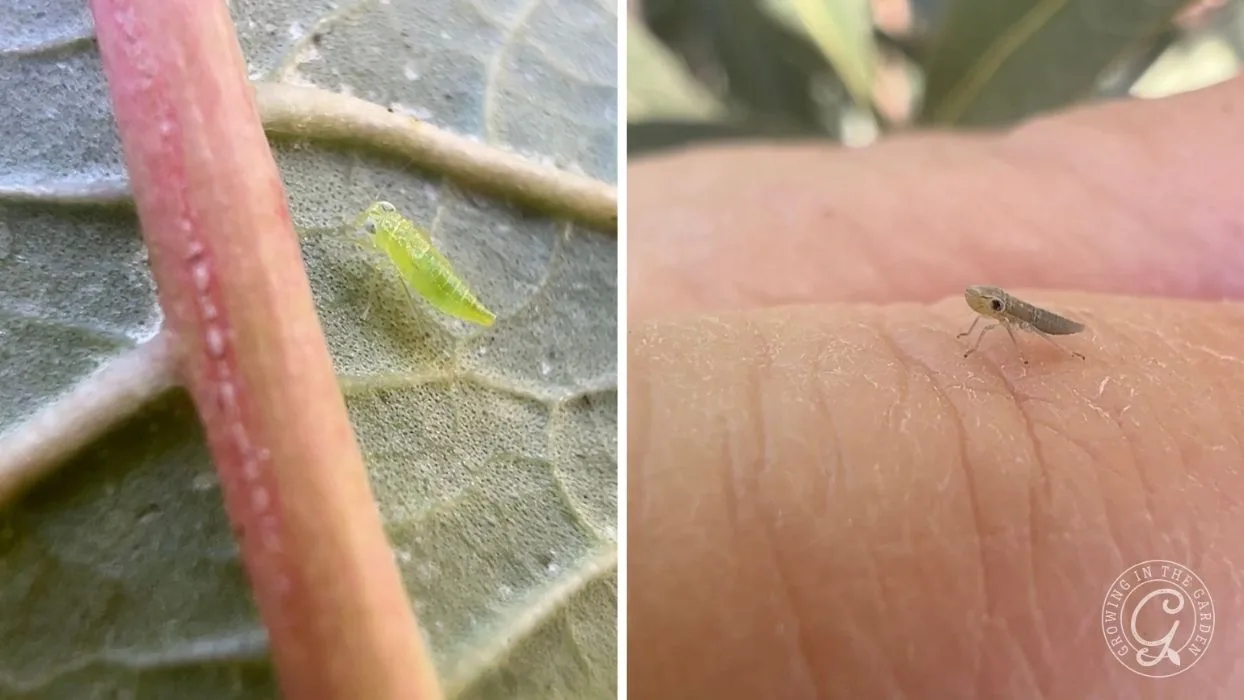
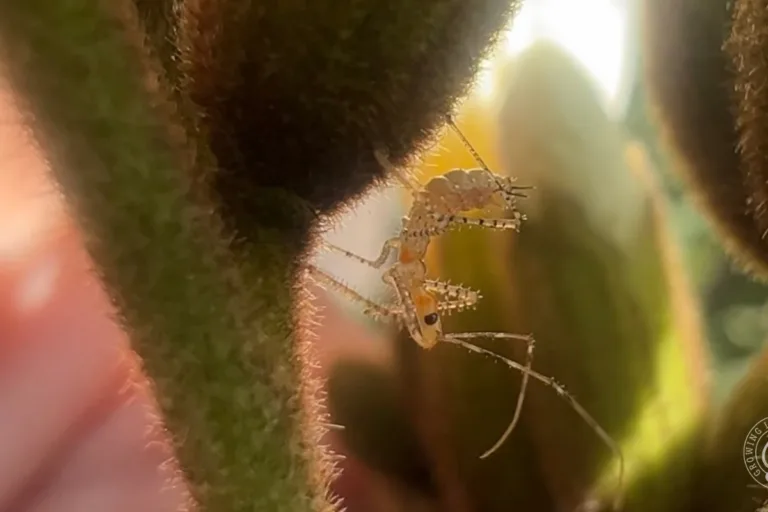
Leafhopper nymphs. Considering how small leafhopper nymphs are and the fact that some species will be a gray color, one could at quick glance mistake the two. Closer inspection will reveal that leafhopper nymphs have a leaf shape to their bodies when viewed from the side. The movement alone is enough to separate them: leafhopper nymphs focus on moving away from you by scooting, often with a sideways shuffle. Lacewing larvae, on the other hand, move forward — almost charging head first toward food. Leafhoppers also tend to remain stationary, whereas lacewing larvae are often seen actively moving or feasting.
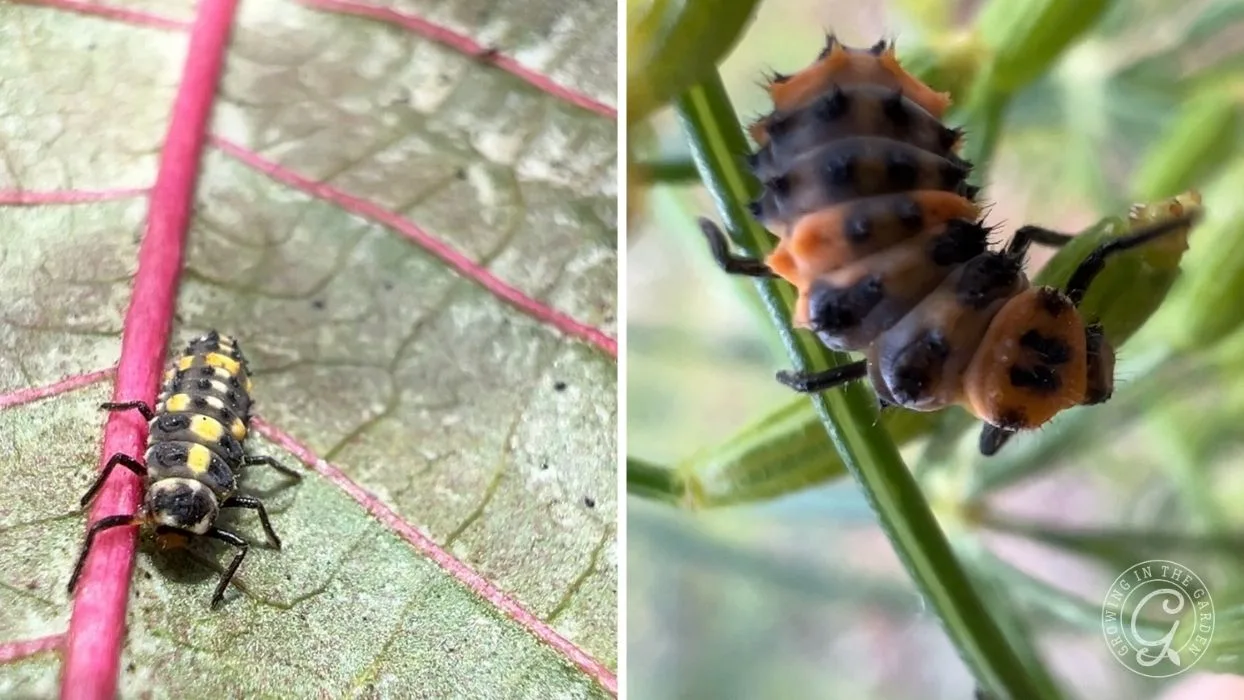
Ladybug larvae. While ladybug larvae do have a similar reptilian quality to them, their coloring along with their size is a noticeable enough difference that I do not believe one could be mistaken for the other. For a closer look at the full ladybug lifecycle, see Ladybugs in the Garden: Lifecycle and How to Attract Them.
Hoverfly larvae are often found in the same aphid colonies as lacewing larvae and can look similar at a glance. This guide to identifying common garden insects and their lookalikes explains how to tell them apart. Read more about hoverflies — another voracious aphid predator worth knowing.
Pupa
Growth continues at a rapid pace. The larvae eventually reaches a point of needing to enter the next phase: the pupal stage.
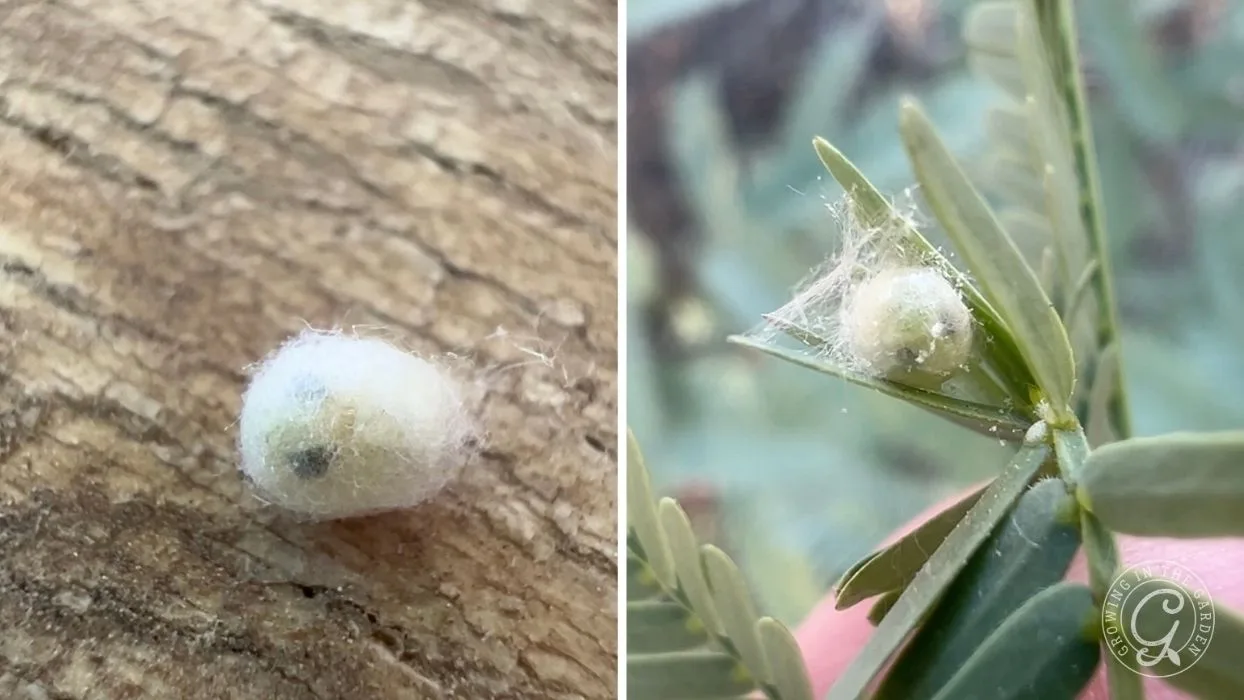
Unlike the eggs, there is a bit more care put into where this will take place. The location needs to be protected enough to avoid interest from potential predators, since this is a vulnerable state. In my space, this has often been between leaves or on a mesquite leaf. Once the spot is located, the larvae will spin a silken cocoon.
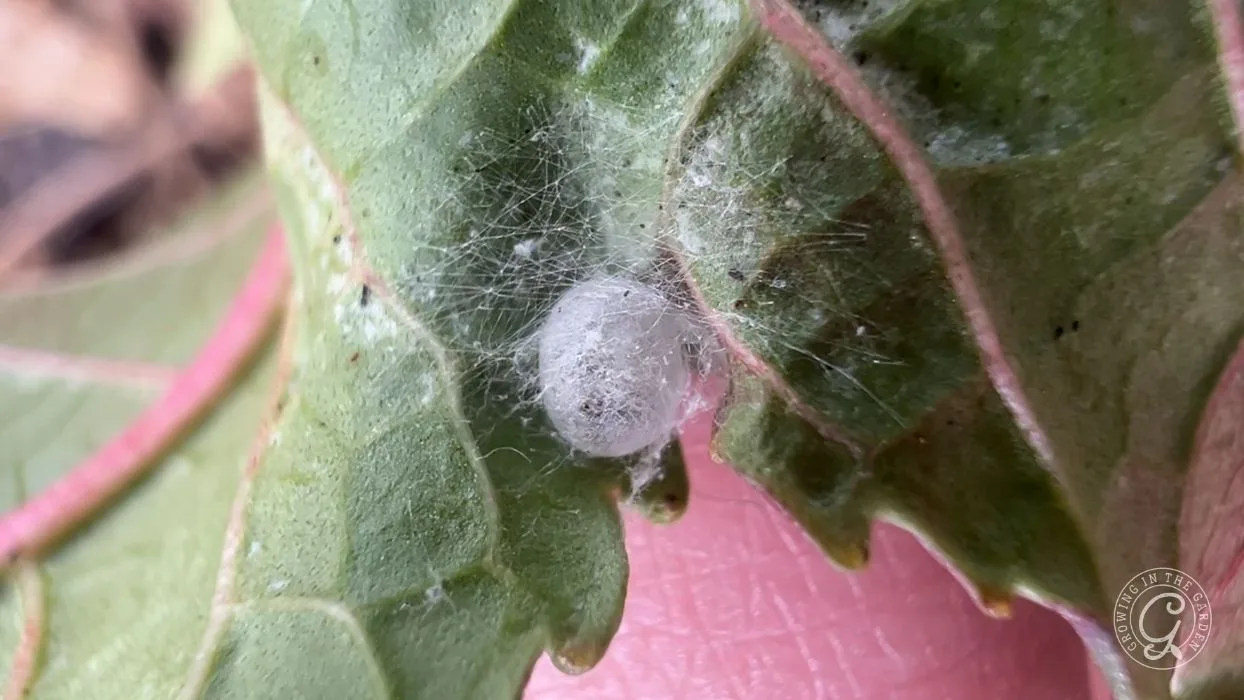
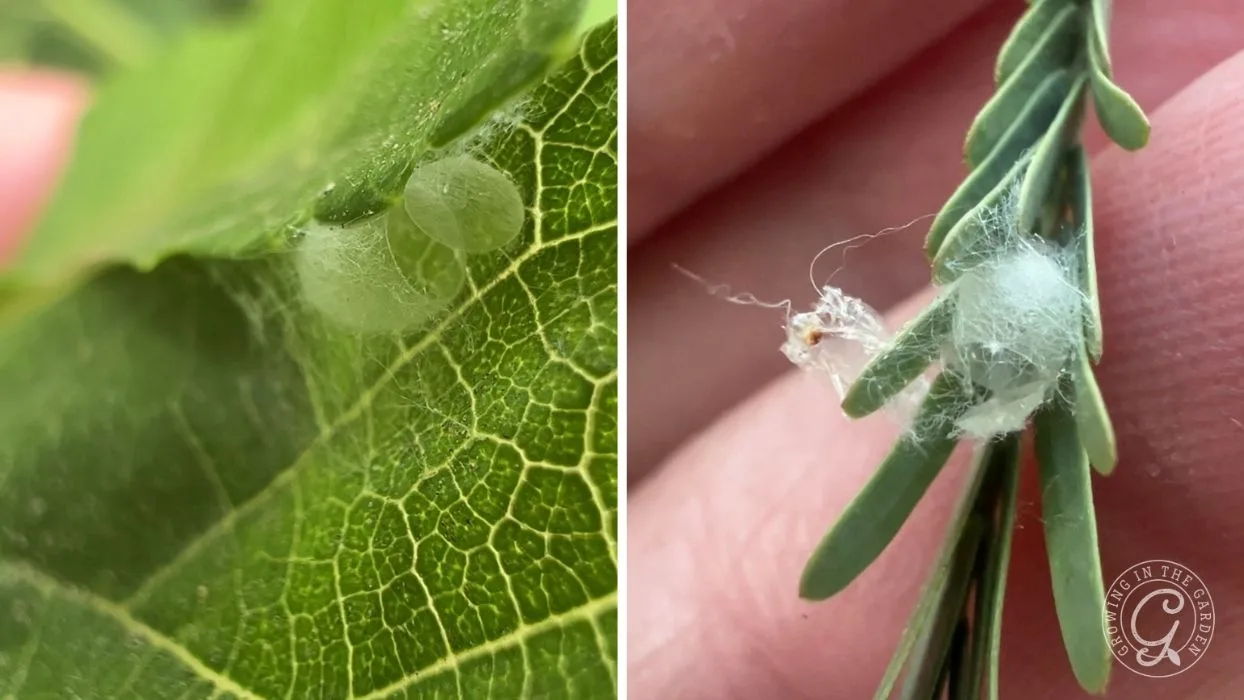
This is another stage where it could be mistaken for another garden creature: spiders. While I realize there can be a significant phobia around spiders, they are serving a purpose in the garden and I would leave any cocoon or webbing alone. A distinguishing feature to tell the difference between a lacewing cocoon and a spider nest is the silk itself. Spider nests are thicker, trying to create a large protective enclosure for eggs and young, and the silk is sticky. The lacewing cocoon has a firmness while still being almost transparent.
As the larvae develops and slowly becomes the adult, movement can be noticed and the two dark masses of the eyes become readily visible. It is at this stage the pupa is a lacewing pharate — an insect that has finished maturing into an adult but is still within the cocoon.
Adult Emergence
Often under the cover of darkness, since they are predominantly nocturnal, the lacewing pharate will emerge from the cocoon by biting through the top and creating a lid. Then it will quickly stretch out of this exoskeleton, a process taking about ten minutes.
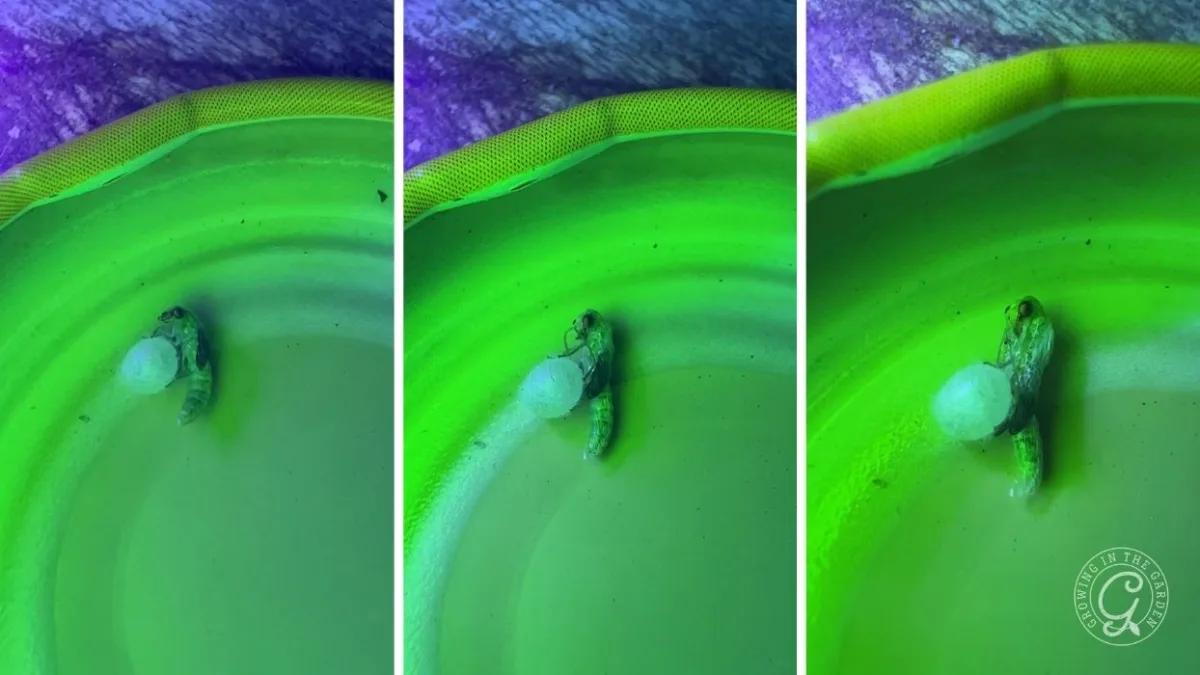
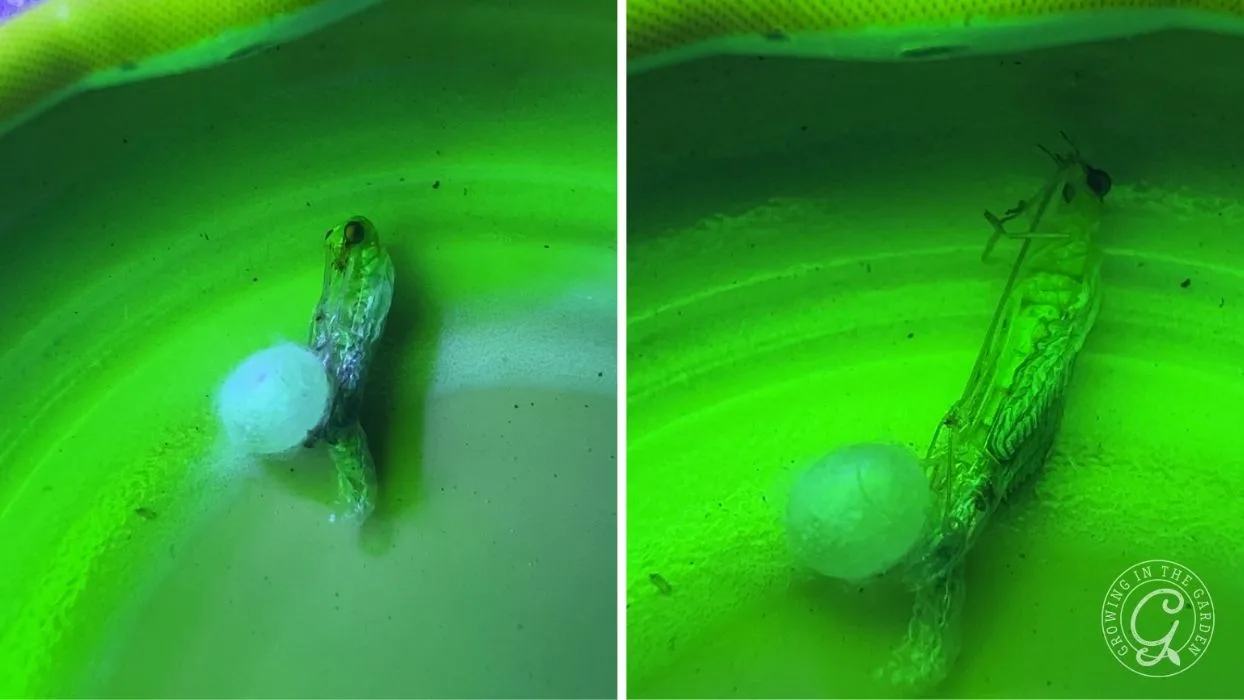
From this point, it immediately finds a vertical spot where the wings can expand and harden. This entire process — from emergence to a recognizable adult with fully expanded wings — can take about an hour, sometimes a bit longer.
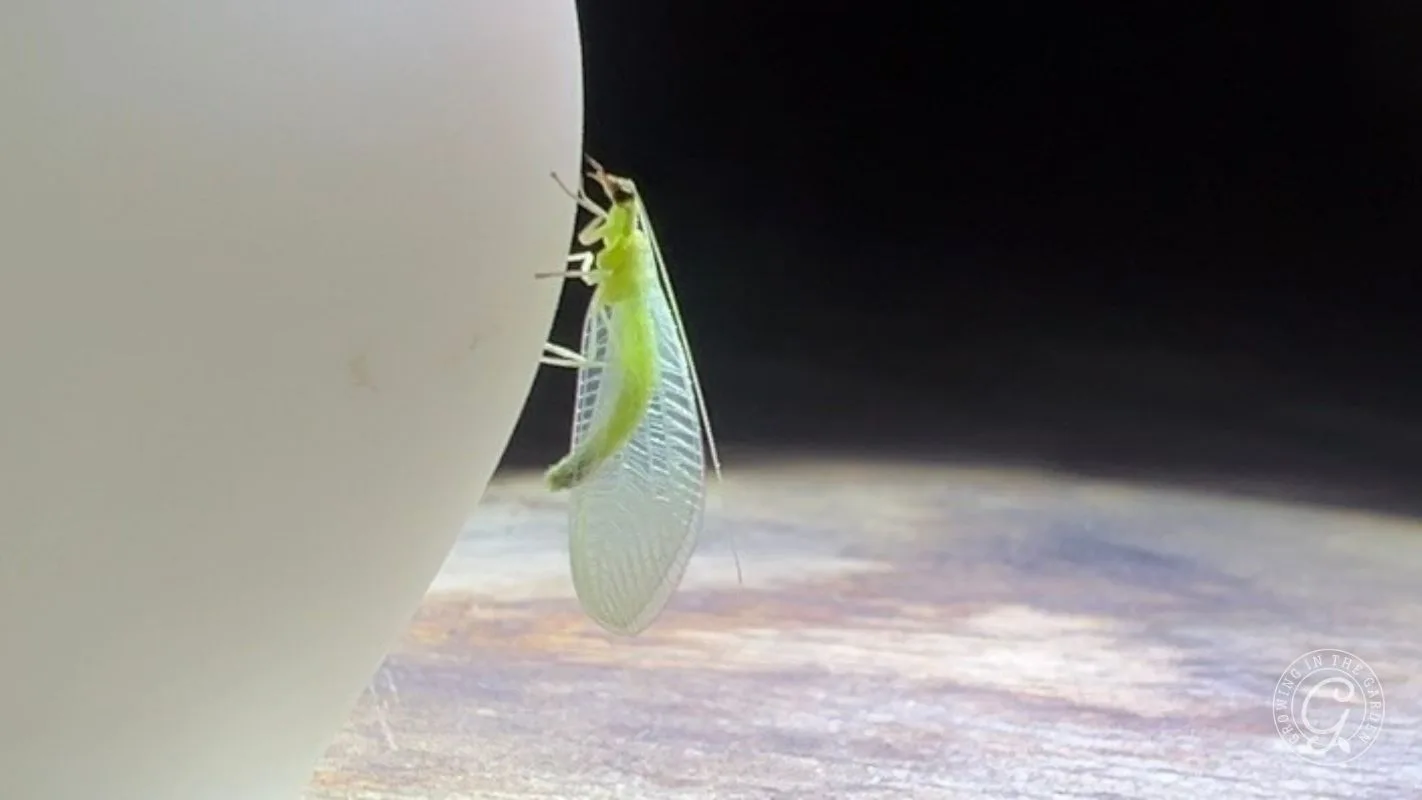
Hard to believe, but their entire lifecycle from egg to adult is typically less than three months.
How to Attract Lacewings and Keep Them Around
Creating a home for them in our gardens is rather straightforward, with a great deal coming down to the same elements as for all beneficial insects: food, water, shelter, and avoiding chemicals.
Food: Keep Some Aphids Around
Wipe off aphids occasionally or use a bit of water from the hose if you need to keep them in check, but otherwise allow them to exist. We cannot have beneficial insects show up if there is no food for them to eat.
At this point, I have not found any particular plant to be essential for attracting lacewing adults. Desert willow, yellow bells, and Mexican olive have all proven to be just as effective as dill and yarrow. Milkweed has provided a great deal of food for the larvae by attracting aphids, but other plants have also attracted thrips and spider mites, which have been eagerly consumed by the lacewing larvae. For more on which plants bring in the most beneficials, this guide to plants that attract beneficial insects and pollinators is a good starting point.
Take advantage of the rare gift we have in the low desert of being able to have various things blooming most of the year in order to attract adults. Many of the same plants that attract lacewings will also bring in butterflies and other beneficial visitors. This Arizona butterfly garden guide is a good companion resource if you are thinking about your garden as a whole habitat.
Water and Shelter
There is less need for water in terms of a specific setup for lacewings. They do need shelter, though. Adults need spaces to hide from birds and other predators during the day.
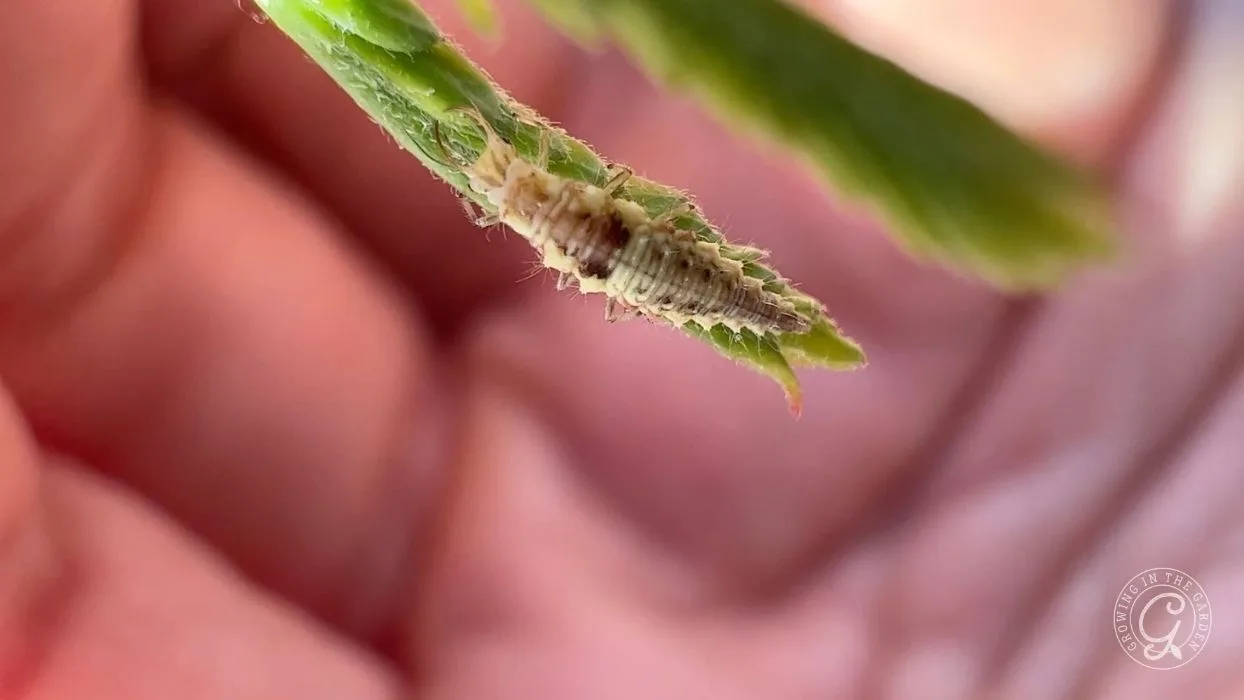
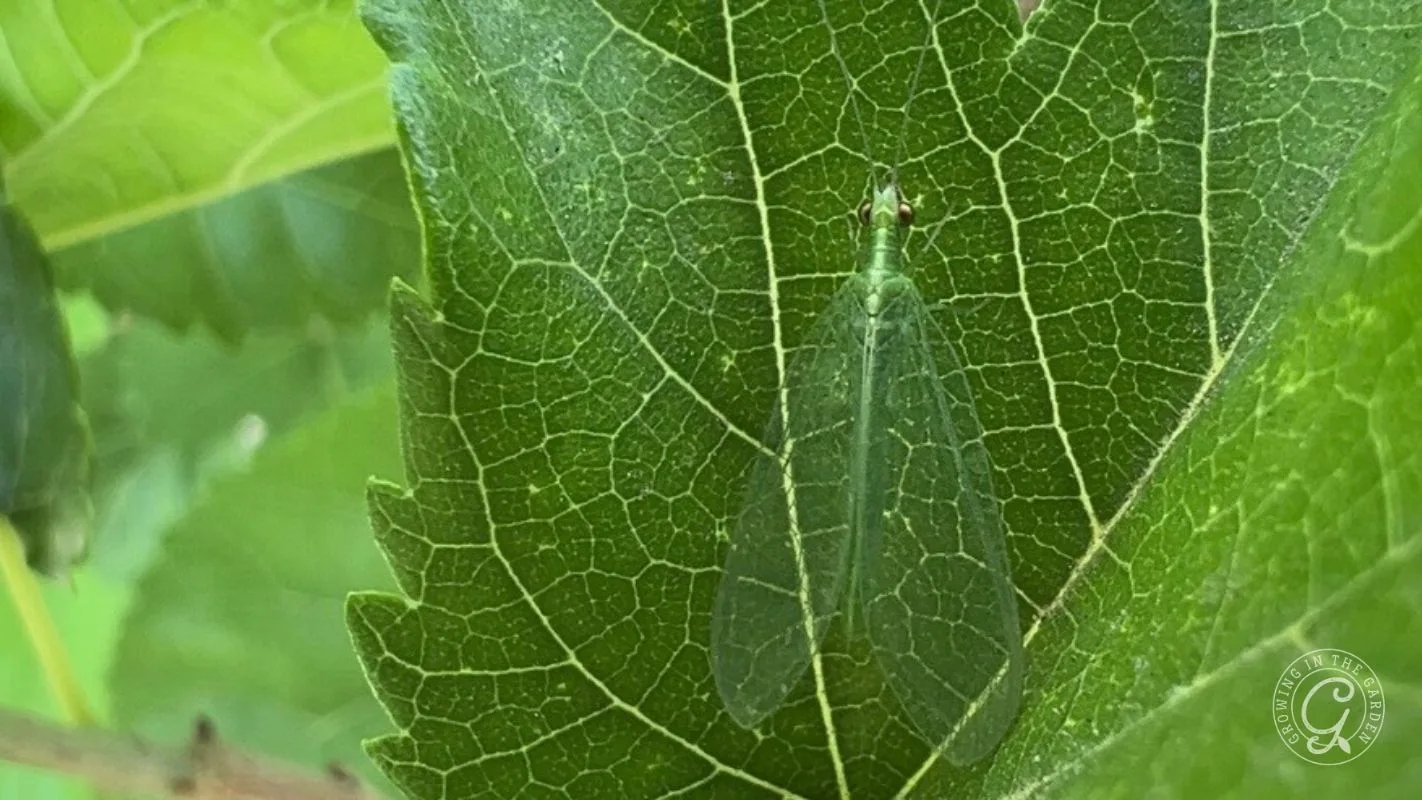
The larvae seem largely unconcerned about shelter during their feeding period, but will want less-disturbed spaces once it is time to spin their cocoon. Leaf litter and mulching your garden well create exactly the kind of layered habitat both adults and larvae can use.
No Broad-Spectrum Insecticides
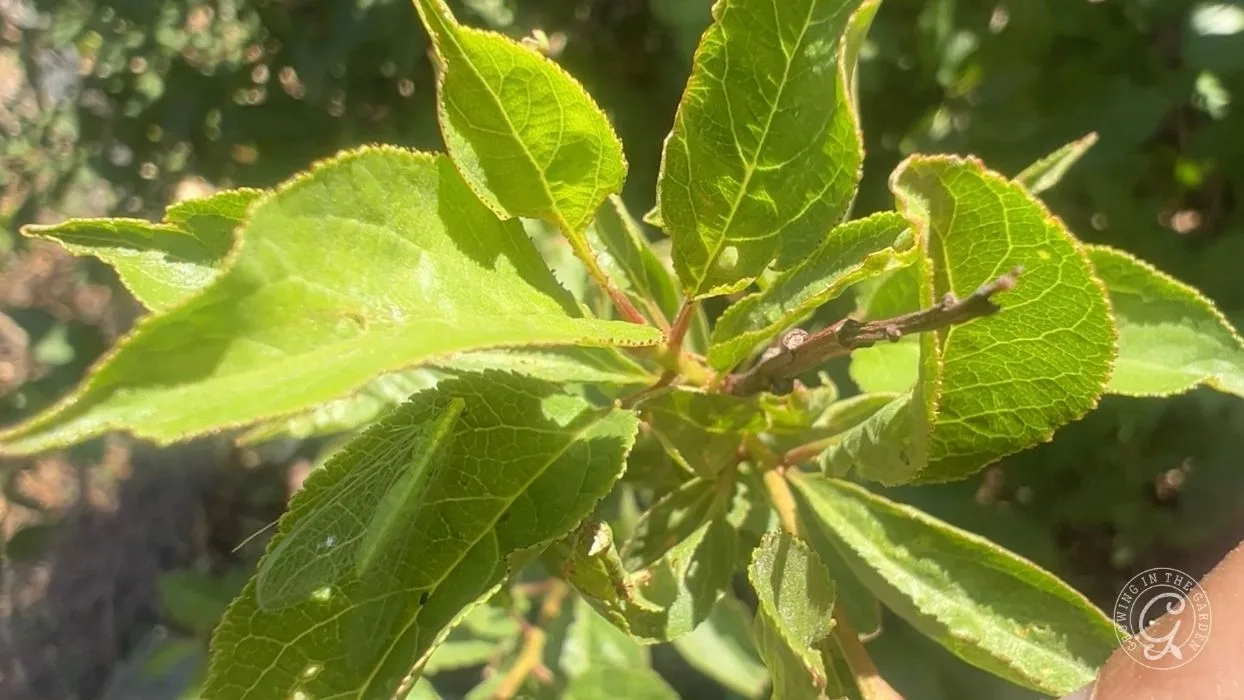
I realize that avoiding chemicals is a difficult approach. But we have to think about the consequences of our actions. We are trying to create a space that allows not just the adults to show up, but for the larvae to thrive. When we spray chemicals—even ones listed as organic—we are often causing harm to the very insects we strive to encourage.
This is not a fast or quick solution. This is about long-term planning to create a healthy growing space that will produce abundance. For a broader look at building that kind of garden, preventing garden pests organically covers the full picture well. Keep the aphids and other soft-bodied insects around at a level that does not destroy your plants, and the lacewings will have a reason to stay.
It will not happen overnight, and there will be challenges, but ultimately it will pay off, and the space will thrive.
Lacewing FAQs
Lacewing eggs are tiny — smaller than a grain of rice — suspended on thin threads. You will find them almost anywhere outside: on patio furniture, fencing, gates, shade cloth, and directly on plants. They appear as small white or green specks and are easy to overlook or mistake for something else.
Lacewing larvae are extremely tiny when they first emerge and have a reptilian quality about them. With long mandibles and an unusually shaped body that tapers toward the tail end, they look nothing like the delicate winged adult. They start smaller than your pinky fingernail and grow rapidly over the next three weeks.
Brown lacewings are smaller and less common than green lacewings, but can be found in the low desert. The main difference is that brown lacewings are predatory throughout their entire lifecycle, while green lacewings are predatory only during the larval stage.
No. Adult lacewings are delicate, nocturnal insects that feed on nectar, pollen, and honeydew. The larvae are aggressive predators of soft-bodied insects but pose no threat to humans.
In the low desert of Arizona, lacewings are present most of the year and tolerate heat better than ladybugs, which migrate to cooler elevations in summer. You are most likely to spot adults near porch lights at night or resting on leaves in shaded spots during the day.
Lacewings are one of the best beneficial insects you can have in the garden. In their larval stage they are voracious predators of aphids, spider mites, whitefly larvae, thrips, and other soft-bodied insects. Adults feed on nectar, pollen, and honeydew and cause no harm to plants whatsoever.
Food is the biggest draw. Allowing some aphids and other soft-bodied insects to remain in the garden gives lacewings a reason to stay and reproduce. Plants like dill, yarrow, milkweed, desert willow, yellow bells, and Mexican olive have all proven reliable for attracting adults in the low desert. Avoiding broad-spectrum insecticides and providing layers of shelter through mulch and leaf litter rounds out the habitat.
They serve similar roles but have one key advantage in the low desert: lacewings tolerate heat better than ladybugs, which migrate to cooler elevations during summer. That means lacewings are working in your garden during months when ladybugs are largely absent. Having both present gives you beneficial insect coverage across more of the year.
About the Author
For more than thirty years, Jean S. Elston has been growing plants and spending time in nature, both in California and Arizona. With a background in fine art, she honed her skills in observation, a critical element for anyone striving to have a garden. Currently she is finishing her doctoral studies in ecology (special focus on entomology), while helping others to work with nature in order to have a thriving ecosystem. You can find more of her work as “Red Shoe Gardener” on YouTube and Instagram.


Leave a comment on Lacewings in the Garden: Lifecycle and How to Attract Them