
How to Grow Roselle Hibiscus: Planting, Harvest, and What to Expect
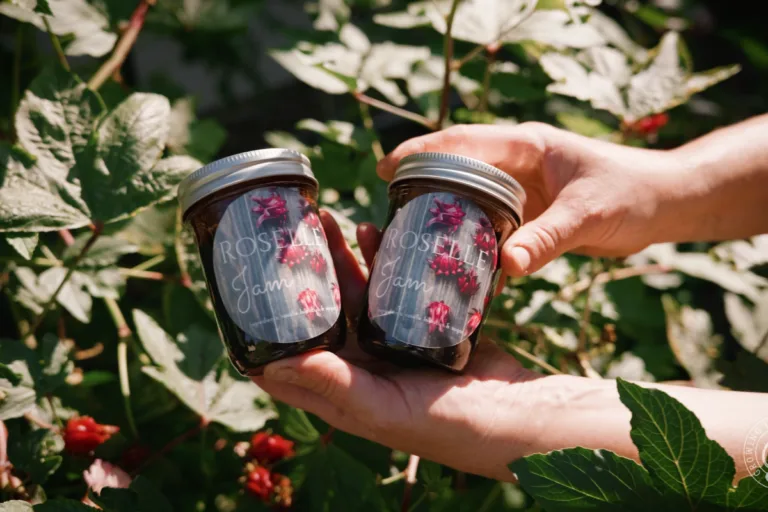
Roselle hibiscus is one of the few plants I grow every single year. My whole family loves it. I drink the tea hot in the winter and iced all summer, and in the fall I make roselle jam from the deep red calyces. The plant is beautiful too, with big blooms, red stems, and plenty of growth through our hottest months.
Roselle is in the okra family, and it handles a low desert summer better than almost anything else I grow. Along with Mahogany Splendor hibiscus, it’s one of the summer champions in my garden. While many plants struggle through June and July, these two keep growing.
Here’s what I’ve learned about when to plant roselle, how to grow it, and what to expect when harvest time finally arrives.
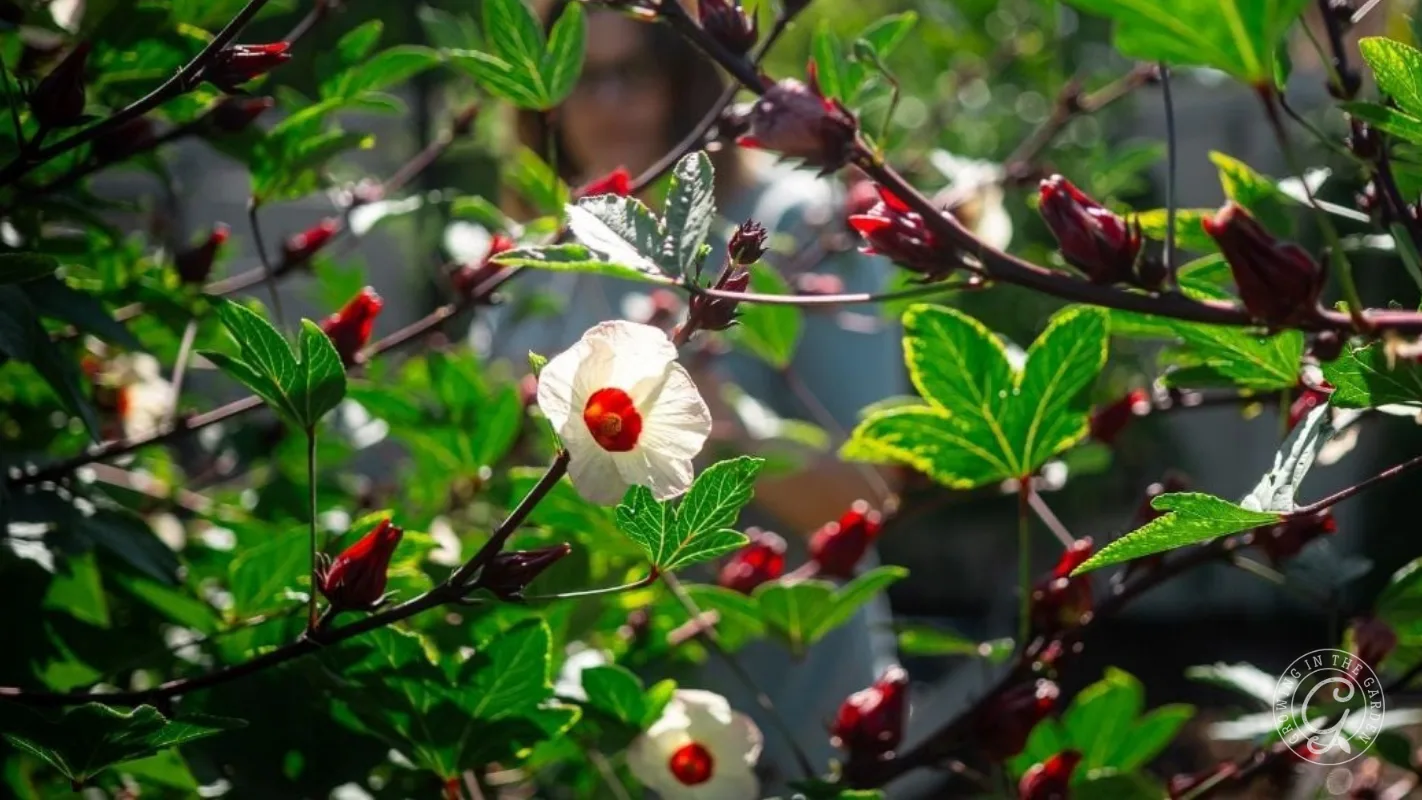
Key Takeaways: How to Grow Roselle Hibiscus
- Roselle is easy to grow from seed and handles hot summers especially well.
- Plant once the soil is warm. I aim for soil temperatures around 75 to 85°F.
- Give roselle plenty of sun, good drainage, and more room than you think it needs.
- Most roselle begins flowering as the days shorten in fall.
- Harvest the calyces about 7 to 10 days after the flowers drop.
- One plant can get very large. Give it support early, especially if you get summer storms.
- Roselle also grows well in large containers. I now grow mine in whiskey barrels so they don’t take up raised-bed space all fall.
What We’ll Cover:
- What is Roselle Hibiscus?
- When Should You Plant Roselle?
- Why I Grow Roselle in Containers
- Where to Plant Roselle
- Supporting and Pruning Roselle
- How Do You Water Roselle?
- Why Doesn’t My Roselle Bloom Until Fall?
- How and When to Harvest Roselle
- Does Roselle Come Back Every Year?
- How Do You Save Roselle Seeds?
- Does Roselle Get Pests or Diseases?
- What Do You Do with the Harvest?
- Roselle Hibiscus FAQs
What is Roselle Hibiscus?
Roselle (Hibiscus sabdariffa) is a shrub in the Malvaceae family, the same family as okra and cotton. You’ll also see it sold as red sorrel, Jamaican sorrel, Florida cranberry, gongura, or karkade.
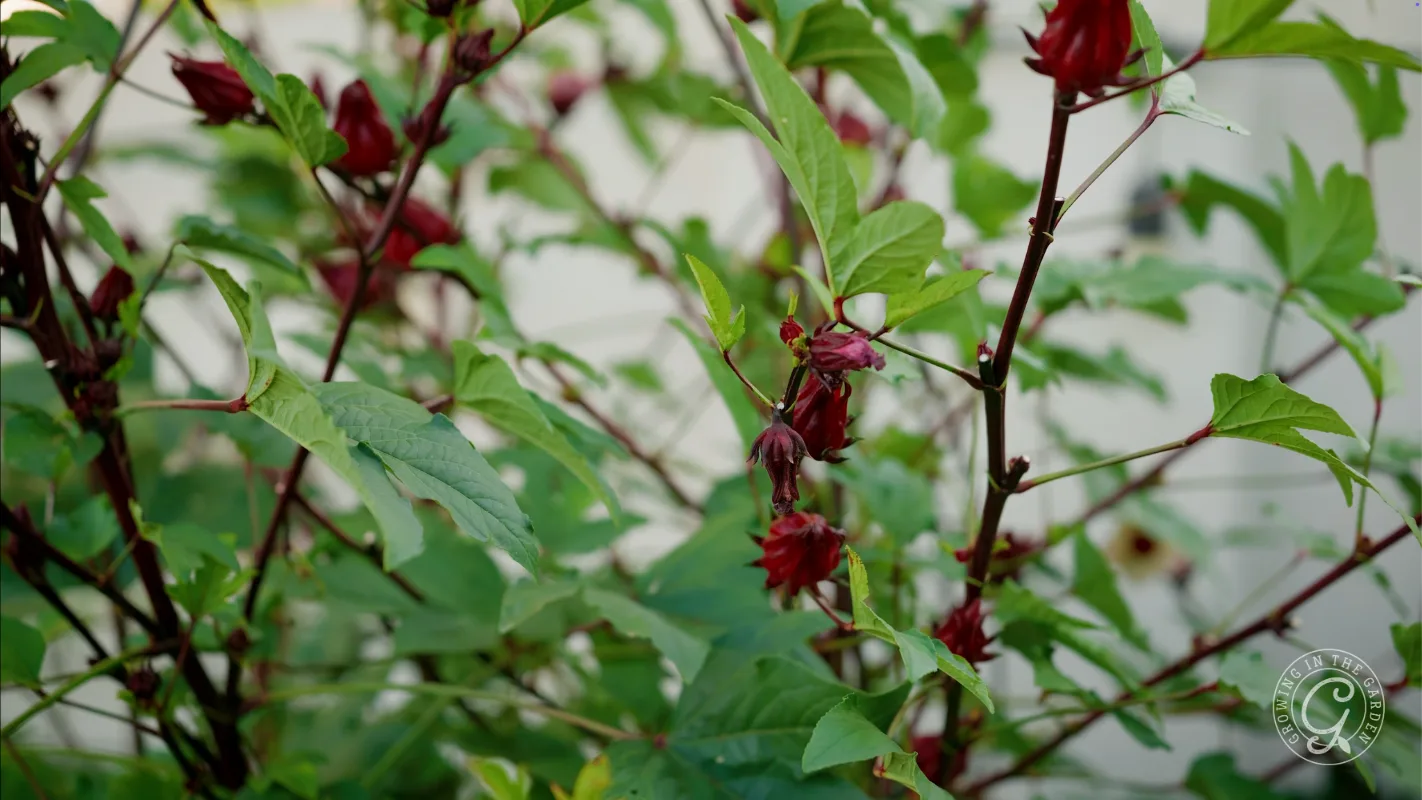
Most people know roselle for the red calyces, but the leaves are useful too. The fleshy red calyx forms around the seed pod after the flower drops and is used for tea, jam, sauces, and traditional sorrel drinks. The tart leaves are widely used in cooking in many cultures and can be eaten fresh or cooked like other greens.
Roselle can be perennial in frost-free areas. It’s often grown as an annual.
When Should You Plant Roselle?
Roselle wants warm soil. Once soil temperatures are warm enough, seeds usually germinate in five to ten days. Plant them about half an inch deep, right where you want them to grow. Sow a few seeds in each spot, then thin to the strongest seedling once it’s a couple of inches tall.
- Soil temperature: 75 to 85°F (24 to 29°C)
- Planting depth: ½ inch
- Germination: 5 to 10 days
- Days to harvest: roughly 90 to 100 for early varieties, longer for most
Low desert timing. Start seeds indoors February through April. Plant outside from seed or transplant March through May.
Cooler climates. Start seeds indoors 6 to 8 weeks before your last frost. Transplant when seedlings are 3 to 4 inches tall, and frost danger has passed.
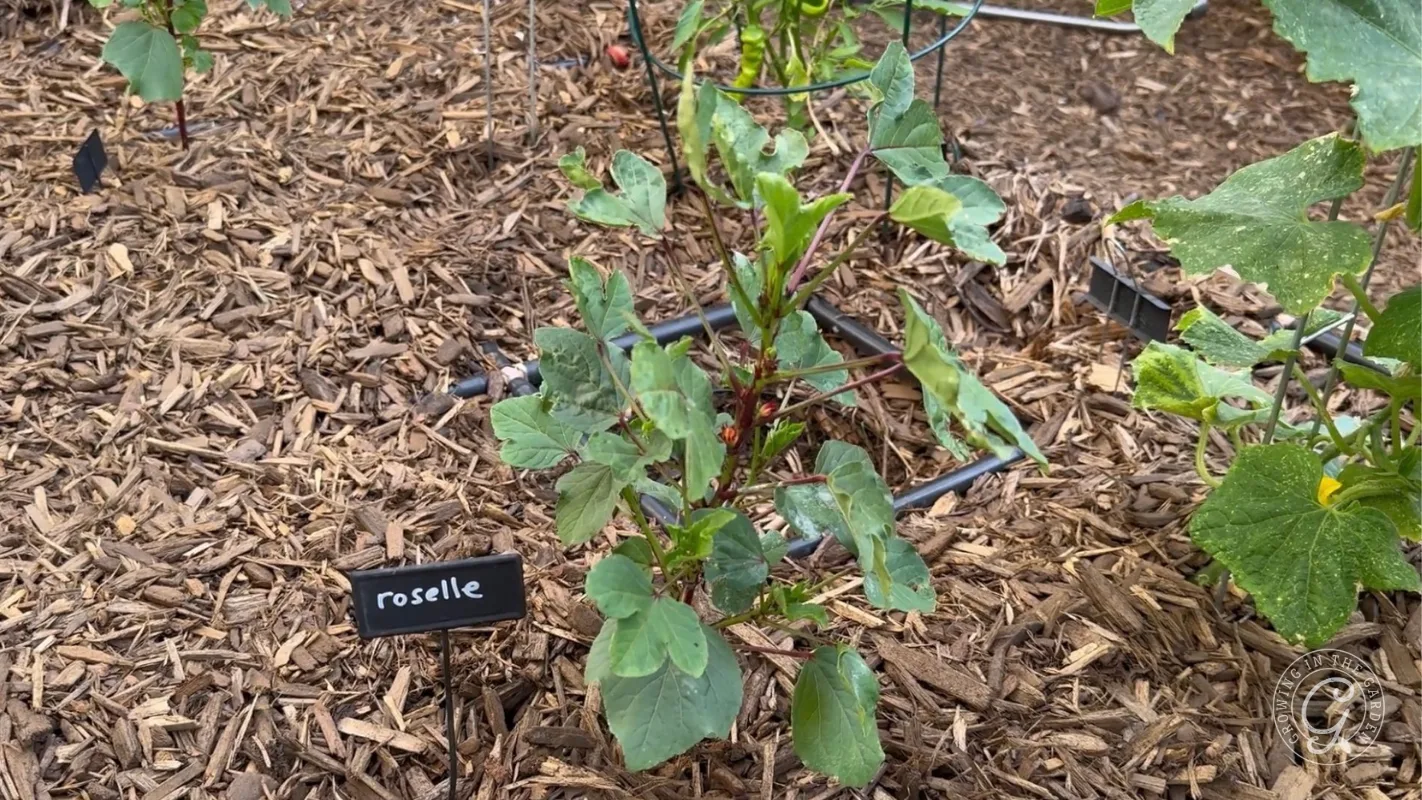
Plant as early as your climate allows. Roselle needs time to grow a large, well-branched plant before flowering begins. Most of the harvest comes later in the season.
Should You Start From Seed or Buy a Transplant?
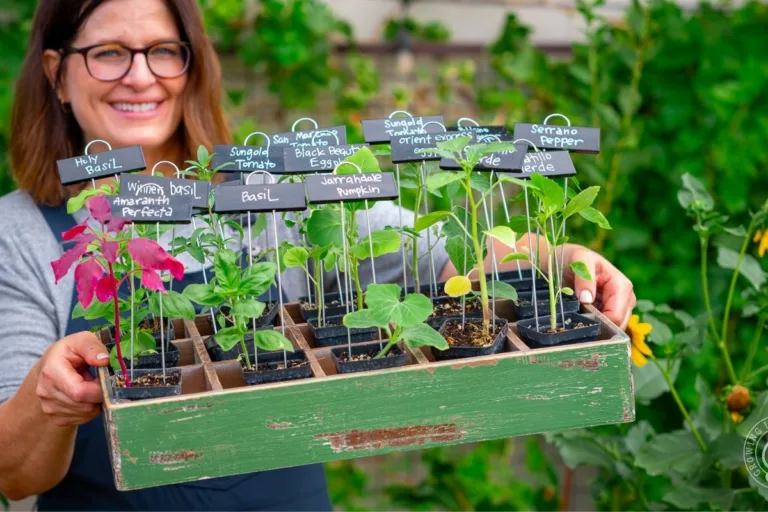
Roselle can be hard to find at nurseries, but if you do, transplants work well too. Fortunately, it’s one of the easier plants to start from seed. You can start seeds indoors or direct-seed; both methods work well. I get my seeds from Renee’s Garden.
Can You Still Plant Roselle in August?
Yes, you can if you live in the low desert. The soil is plenty warm in August, so the seeds should come up quickly. You’ll need to adjust your expectations, though.
Roselle blooms in response to day length, not the age or size of the plant. Once the days shorten in fall, it begins flowering whether it’s a seven-foot shrub or a two-foot seedling.
A roselle planted in August will flower at about the same time as one planted in spring. It will just be much smaller. A smaller plant has fewer branches, and fewer branches mean fewer calyces.
You should still get a harvest. It probably won’t be the hundreds of calyces you can get from a spring-planted roselle, but it may be enough for a batch of jam or several pitchers of tea. Then make a note to start earlier next year.
Why I Grow Roselle in Containers
For the last few years I’ve grown roselle in whiskey barrels instead of my raised beds. It grows just as well either way. I switched because of bed space.
Roselle doesn’t finish producing until December. In a raised bed, that means it occupies prime real estate through October and November, which is exactly when I want my fall crops in the ground. By December, when the roselle is finally done, the best planting window of the year has passed.
Growing it in a whiskey barrel solves that problem. I can leave the plant in place and continue harvesting into December without giving up raised-bed space during my busiest planting season.
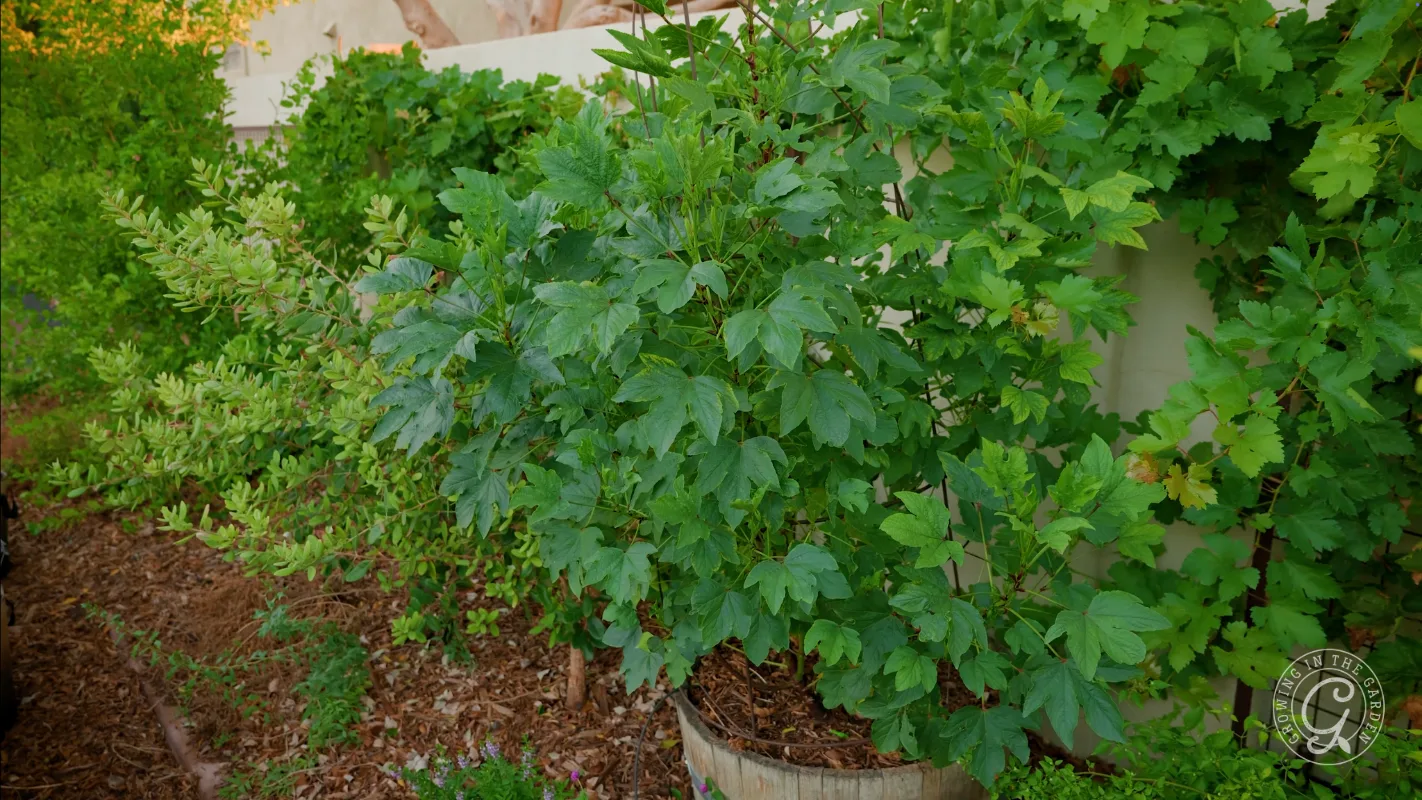
A few things I’ve learned about growing roselle in containers:
- One plant per barrel. They get large, and one is plenty.
- Drill several large drainage holes. Roselle rots in hot wet soil, and a barrel without real drainage will kill it.
- Add a large olla. I put a large olla from GrowOya in each barrel. I put the olla in the middle of the container and then plant on one side. Each time I water, I fill the olla and water the surrounding soil. This allows me to water much less often.
- The harvest isn’t smaller. This surprised me. One plant in a barrel still grows very large and produces just as well as one in a bed.
- It still needs support. I use whiskey barrel supports, and a rebar stake works just as well.
- Be careful of the olla when you stake. Driving rebar into a barrel with an olla buried in it can crack the olla. Put your support on the edge of the barrel, not in the middle where the olla is.
- Give it room on all sides. The branches want to spread. Either leave space around the barrel or plan to trim a little.
Between seasons, I don’t dump and replace all the soil. I pull out the old roots, which come out as a substantial mass, and top the barrel back up with fresh soil.
The barrel doesn’t sit empty in winter either. I grow sweet peas up a trellis in mine through the cool months. They finish right about the time it’s warm enough to plant roselle in spring, so the barrel works year-round. Shelling or snap peas would do the same job.

Where to Plant Roselle
Full sun, well-draining soil, and more room than you think you need. It grows well in raised beds, in whiskey barrels, and in the ground.
- Roselle does best in sandy loam to loamy sand with a pH between 5.5 and 6.8 and organic matter above 1%. I use the raised bed mix from Arizona Worm Farm in both my beds and my containers, and add compost at planting.
- Go easy on nitrogen. Too much and you get a big leafy plant with disappointing fruit. Compost at planting is usually enough.
- I’ve grown roselle in full afternoon sun, and it handles it well. Still, in the low desert, nearly every plant appreciates some relief from the afternoon sun. Roselle is no exception. Add afternoon shade for the best results.
- Pay attention to drainage. Roselle will rot in soggy soil faster than it will suffer from being a little dry.
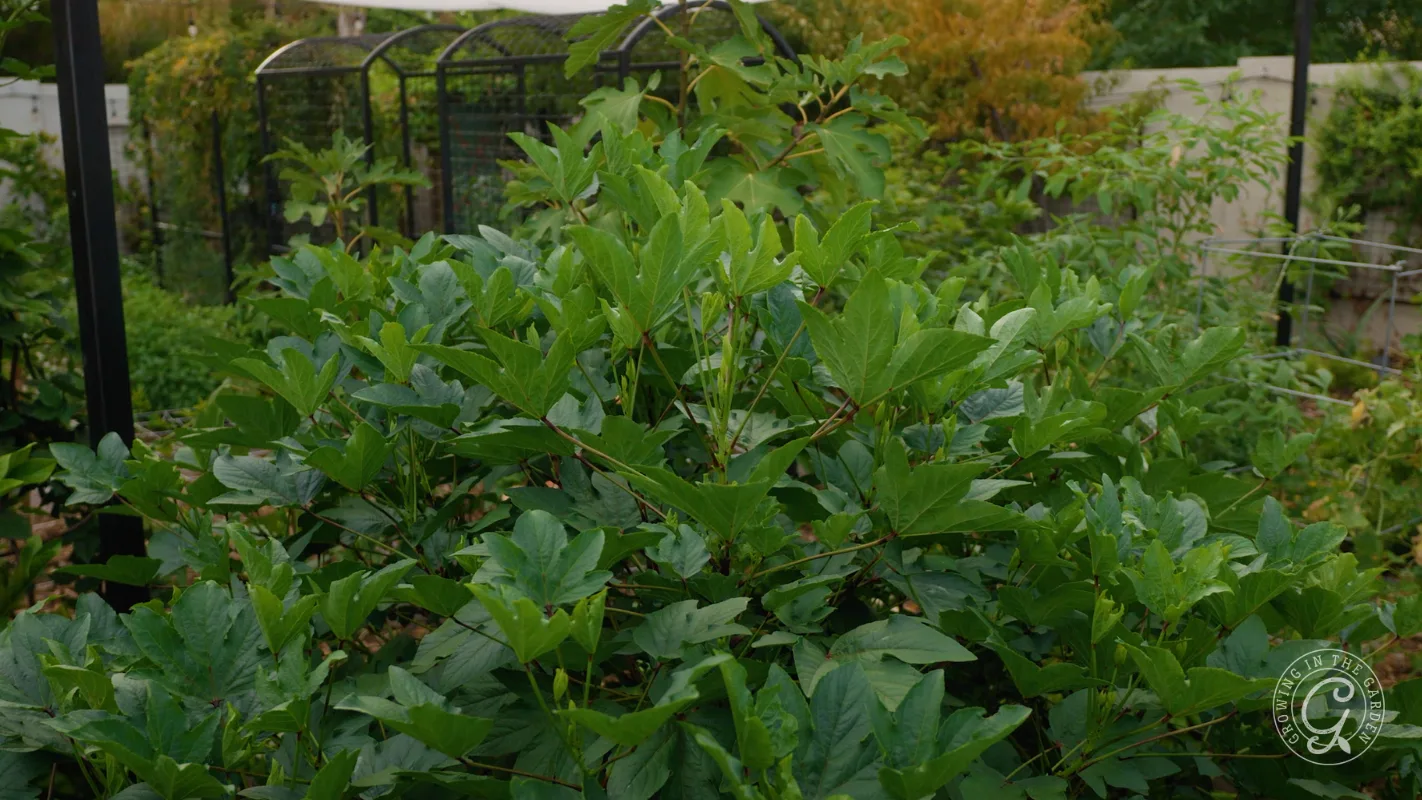
How Much Space Does Roselle Need?
A mature plant reaches 5 to 7 feet tall and just as wide. The central stem gets thick, sometimes as big around as your wrist.
- In a 4×8 raised bed: plant 2, or 3 at the very most. Put them down the middle of the bed.
- In a whiskey barrel or large container: one plant.
- In the ground: 3 to 6 feet between plants, 5 feet between rows.
While the roselle is still small, use the outside edges of the bed for quick warm-season crops like squash and green beans. They’ll finish and come out right about the time the roselle needs the room.
What Grows Well with Roselle?
- Plant squash and green beans along the outside of the bed at the same time. They finish before roselle needs the space.
- Cucumbers appreciate the dappled shade. See companion plants for cucumbers.
- Sweet potato vines work well in the ground around a roselle, or trailing off the outside of a raised bed.
One caution with sweet potatoes: Give them some space from the roselle, and they can grow well together. In my garden, both are usually ready around Thanksgiving.
Supporting and Pruning Roselle
Staking
Roselle usually needs staking, and it’s easier to do it early. The branches are brittle and break easily in monsoon storms. Once the branches load up with calyces, they get heavy.
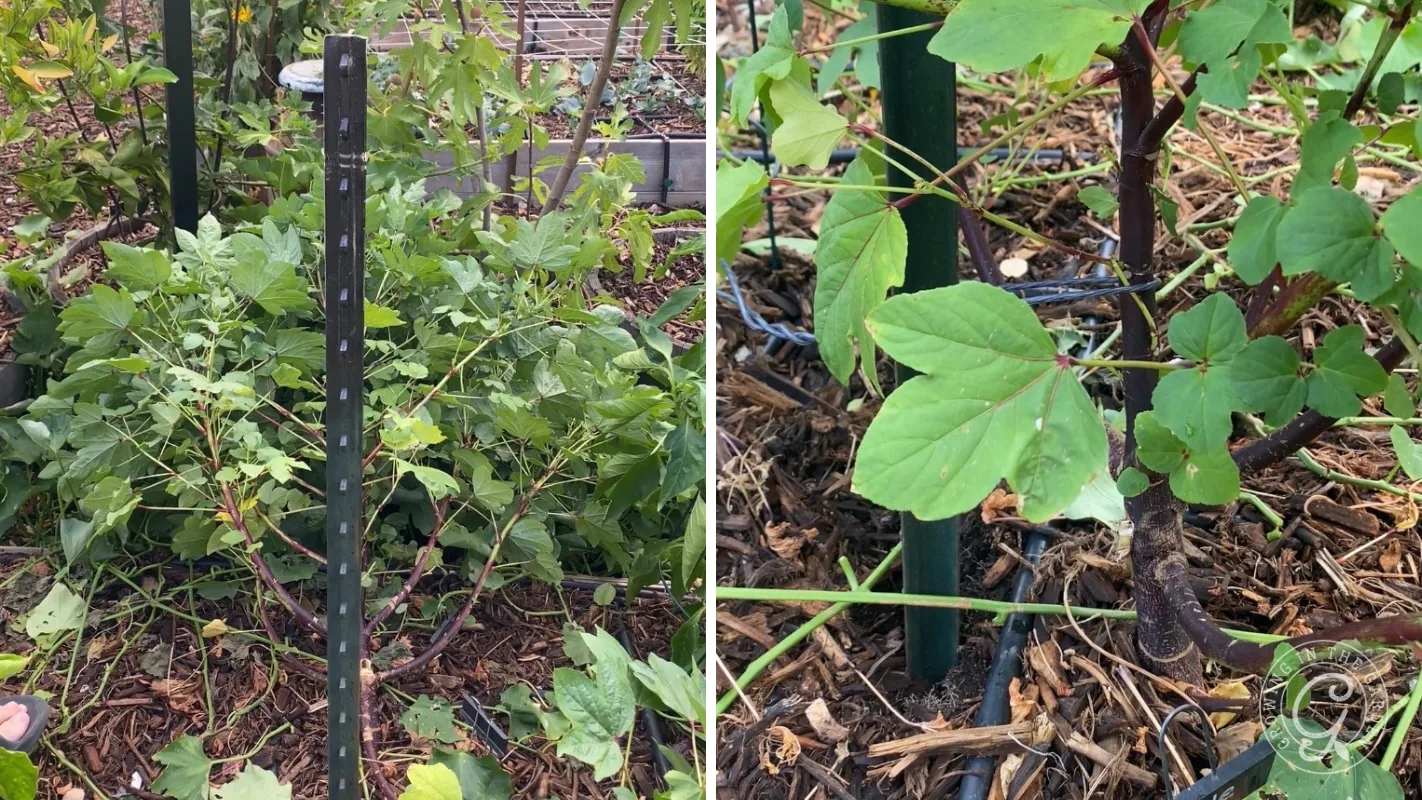
I use a length of rebar pounded at least 12 inches into the ground next to the plant, and tie the main stem to it. In whiskey barrels, I use barrel supports, though rebar works there too. Put the stake in when the plant is young so you’re not driving metal through an established root system, and if you’ve buried an olla, place the stake where it won’t hit it.
Pruning
You don’t have to pinch or prune roselle. Mine branches well without it, so I usually leave it alone.
Early pruning can encourage more branching, but once the plant is established and you’re getting closer to fall, I avoid cutting it back. Flowers and calyces form along the branches, and I don’t want to remove growth just before flowering begins.
Light trimming of lower branches is fine if you need clearance underneath or if a plant is crowding a path.
How Do You Water Roselle?
Keep the soil consistently moist without keeping it wet. Roselle likes water, but root rot is a real risk in poorly draining soil. If the top of the soil is still moist, wait. Let it dry down a bit before watering again.
In my whiskey barrels, I use a large olla. In beds, drip irrigation or a Garden Grid works well. Add mulch in either location. Mulch helps keep the soil cooler and the moisture level more consistent through a low desert summer.
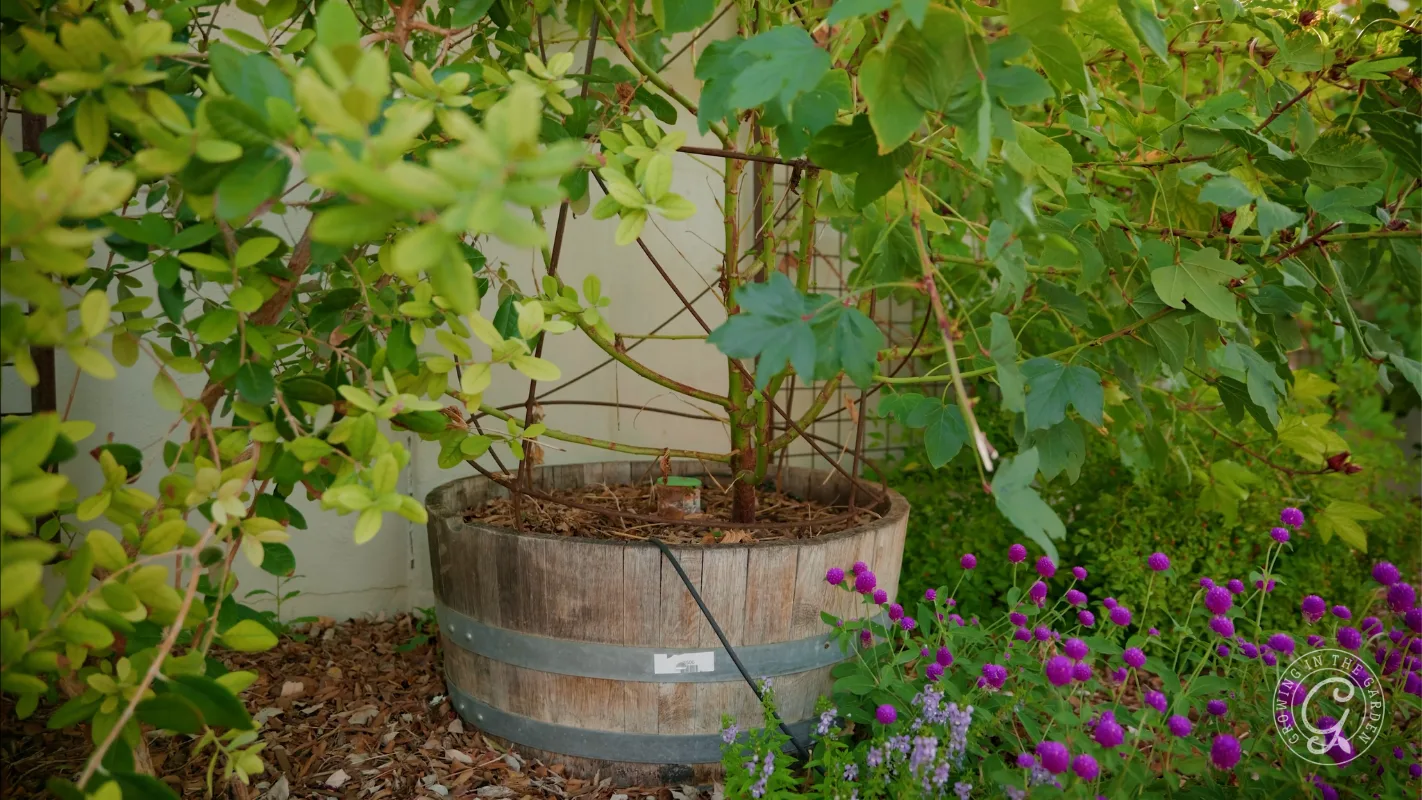
Roselle often takes off once monsoon humidity arrives. It loves warm, humid conditions, and that burst of summer growth helps set up the fall harvest. If your plant doesn’t seem to be doing much in early summer, give it time. The heat and humidity will get it moving.
Why Doesn’t My Roselle Bloom Until Fall?
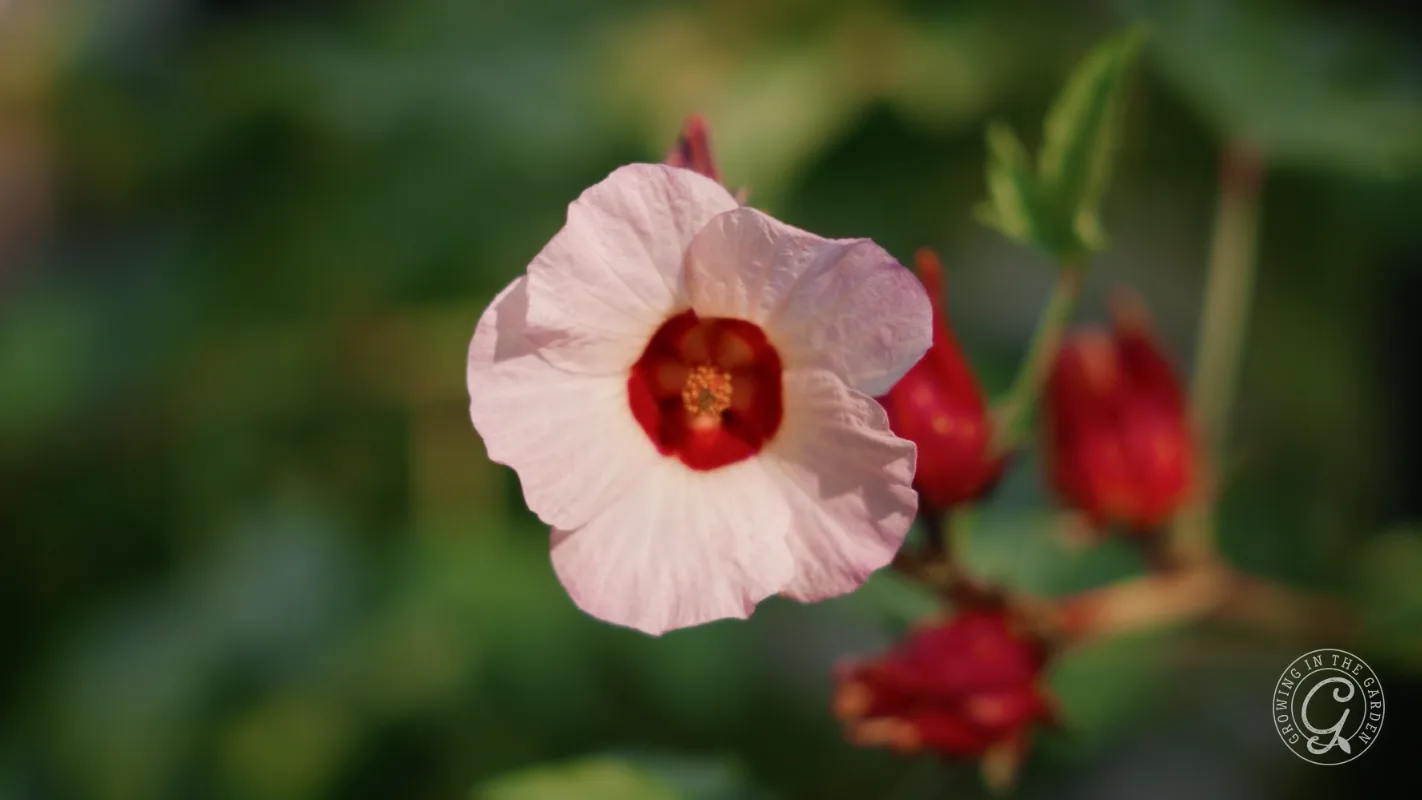
Roselle is photoperiod sensitive. It starts flowering as days get shorter, usually late September into October in the low desert, with the heaviest bloom in mid to late October. You can grow a huge, healthy plant all summer without seeing a single flower. Right about the time you begin wondering what went wrong, the blooms start appearing.
That late flowering can be a problem in short-season climates. Rutgers found that most red roselle types don’t begin flowering until late September in New Jersey. Mature fruit may not develop until November or December, long after the first frost.
In an area with an early frost, you may grow a beautiful plant and never get a harvest. A large container you can move indoors, or a greenhouse, may help extend the season.
How and When to Harvest Roselle
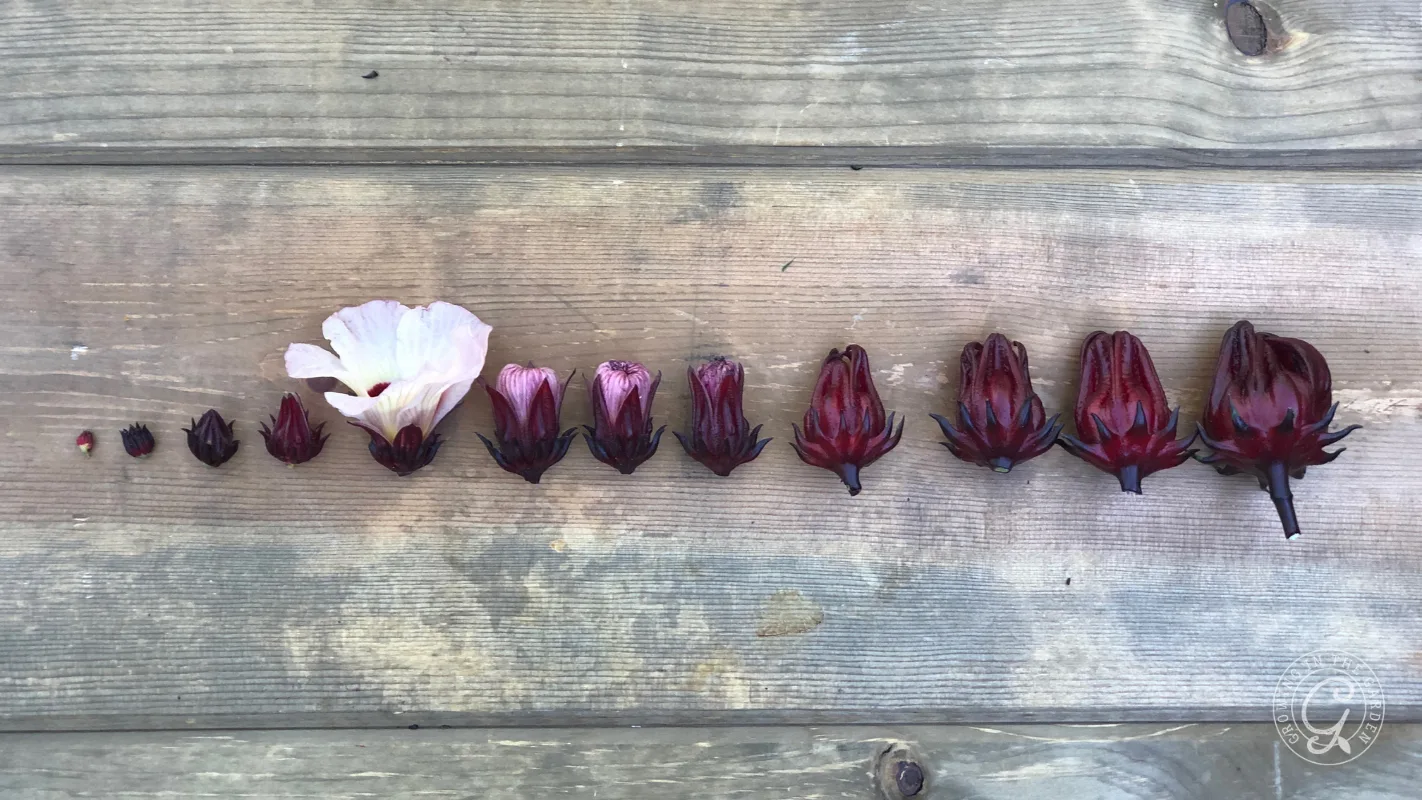
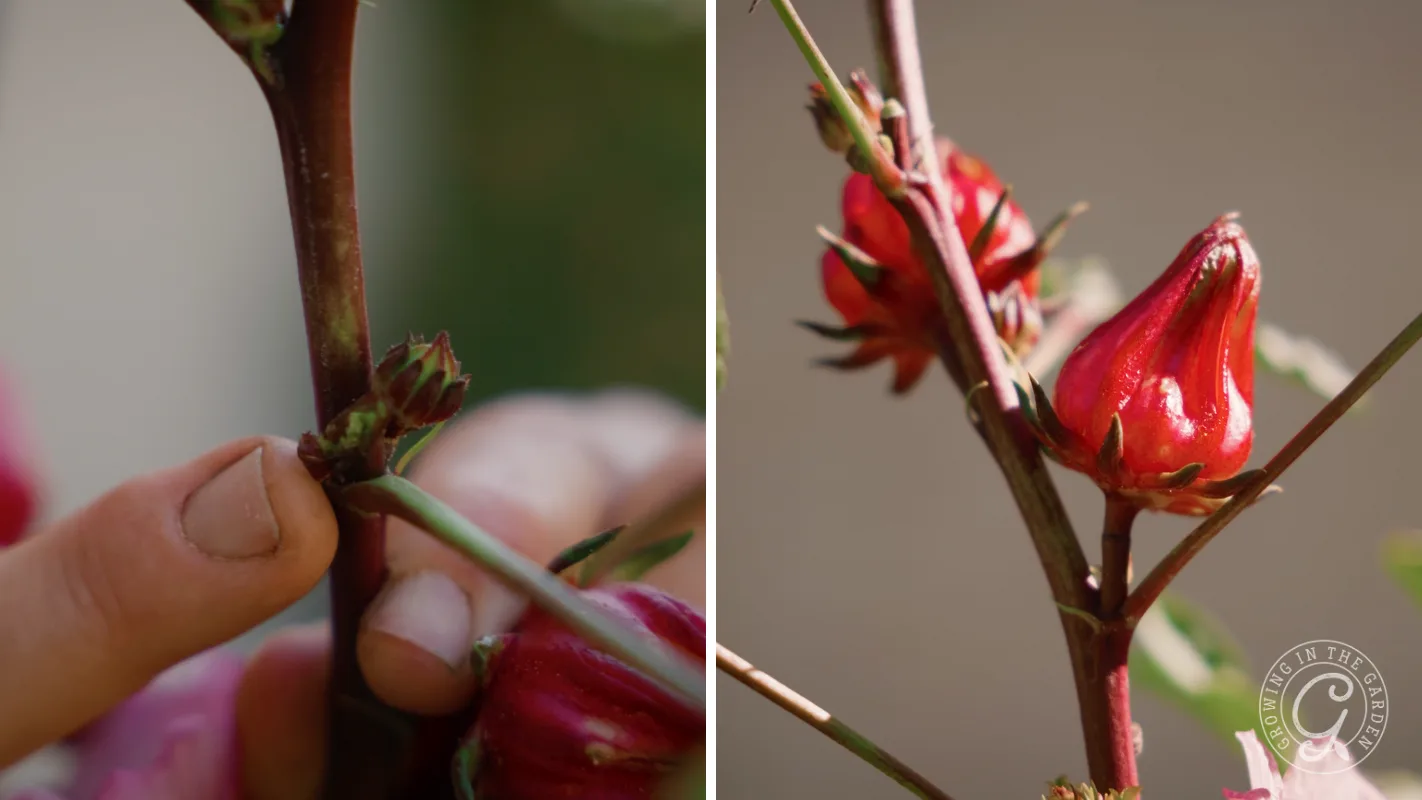
The blooms look like okra flowers and last a single day. After the flower drops, the calyx forms around the seed pod.
- Harvest window: 7 to 10 days after the flower drops
- Size: calyx just over 1 inch wide
- Feel: seed pod fully formed but still tender
Use clean clippers and cut the calyx off rather than pulling, so you don’t tear the branch. Picking regularly encourages the plant to keep producing.
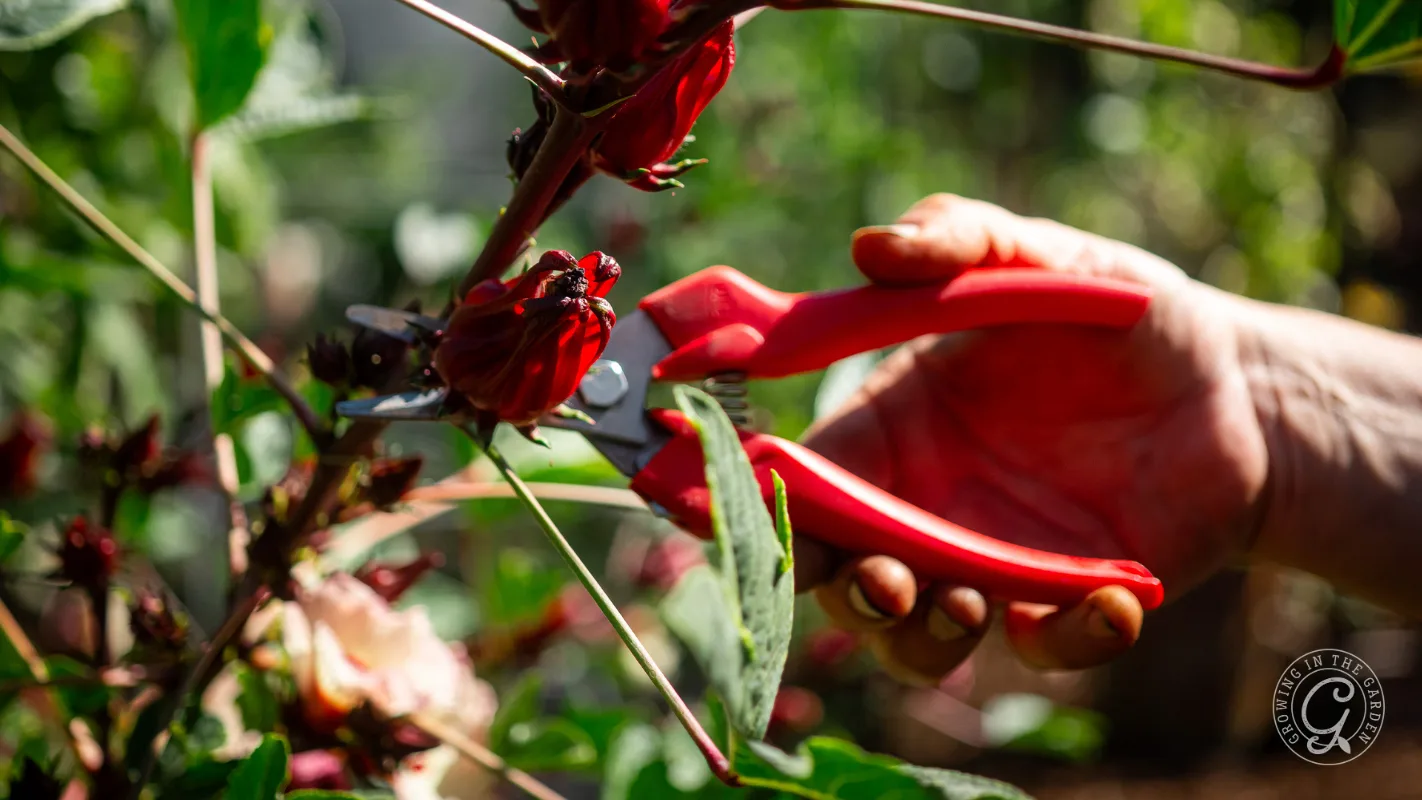
If you’re not sure whether yours have bloomed, they probably have. The flowers open and close in a day and are easy to miss on a large plant.
How much will one plant give you?
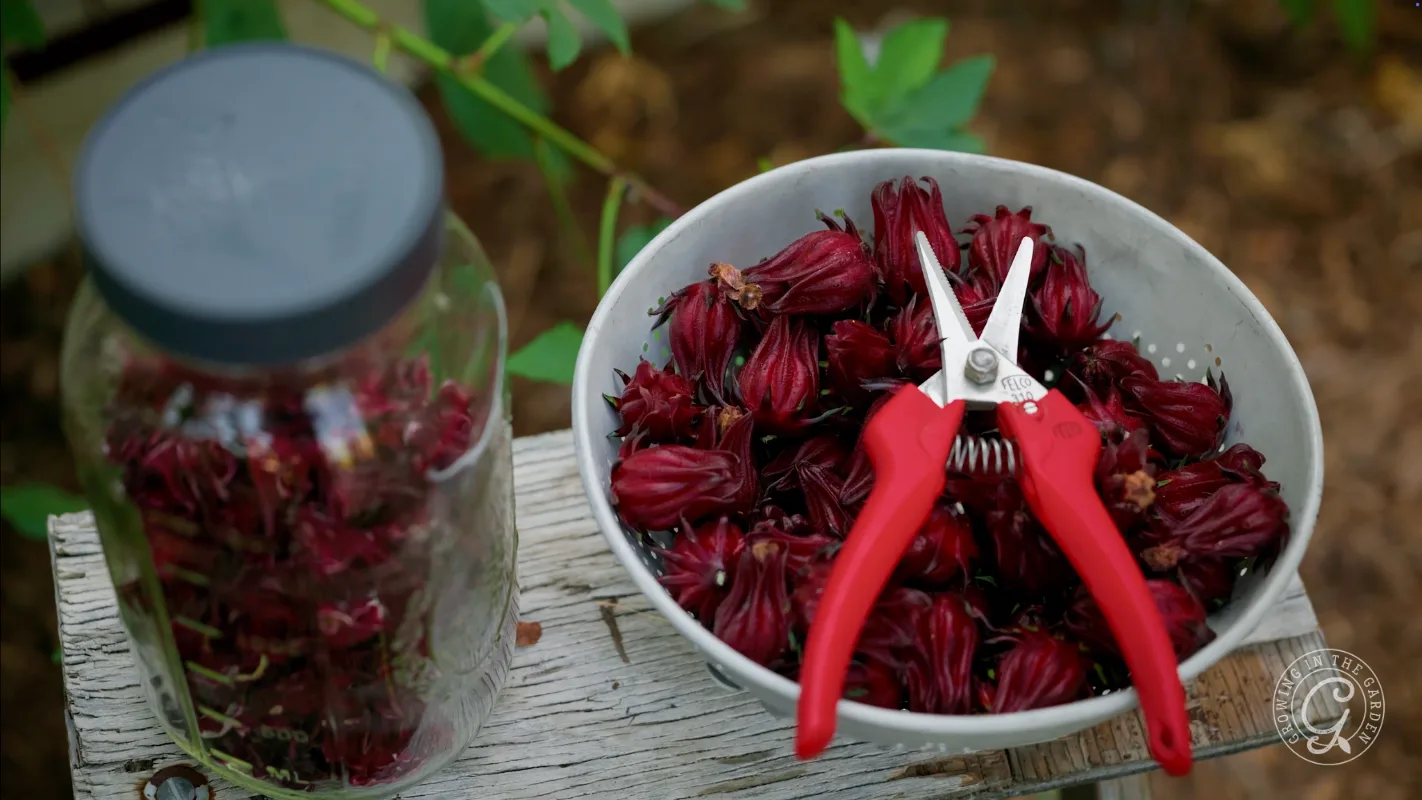
One plant fills a 4 to 5 quart colander about once a week, for 4 to 5 weeks. My harvest window is generally October and November. One plant is enough for jam, a year of tea, holiday sauce, and a jar or two to give away. Two plants is generous. If you’re planting three or more, have a plan for them, because processing calyces takes time and they don’t hold long once picked.
How Do You Separate the Calyx From the Seed Pod?
Process the calyces while they’re fresh. Don’t dry the entire thing and plan to separate it later. Once dried, it becomes much harder to pull apart. Cut across the bottom of the calyx where it meets the seed pod. The red, fleshy calyx should pull away in one piece. Rinse it, and it’s ready to use.
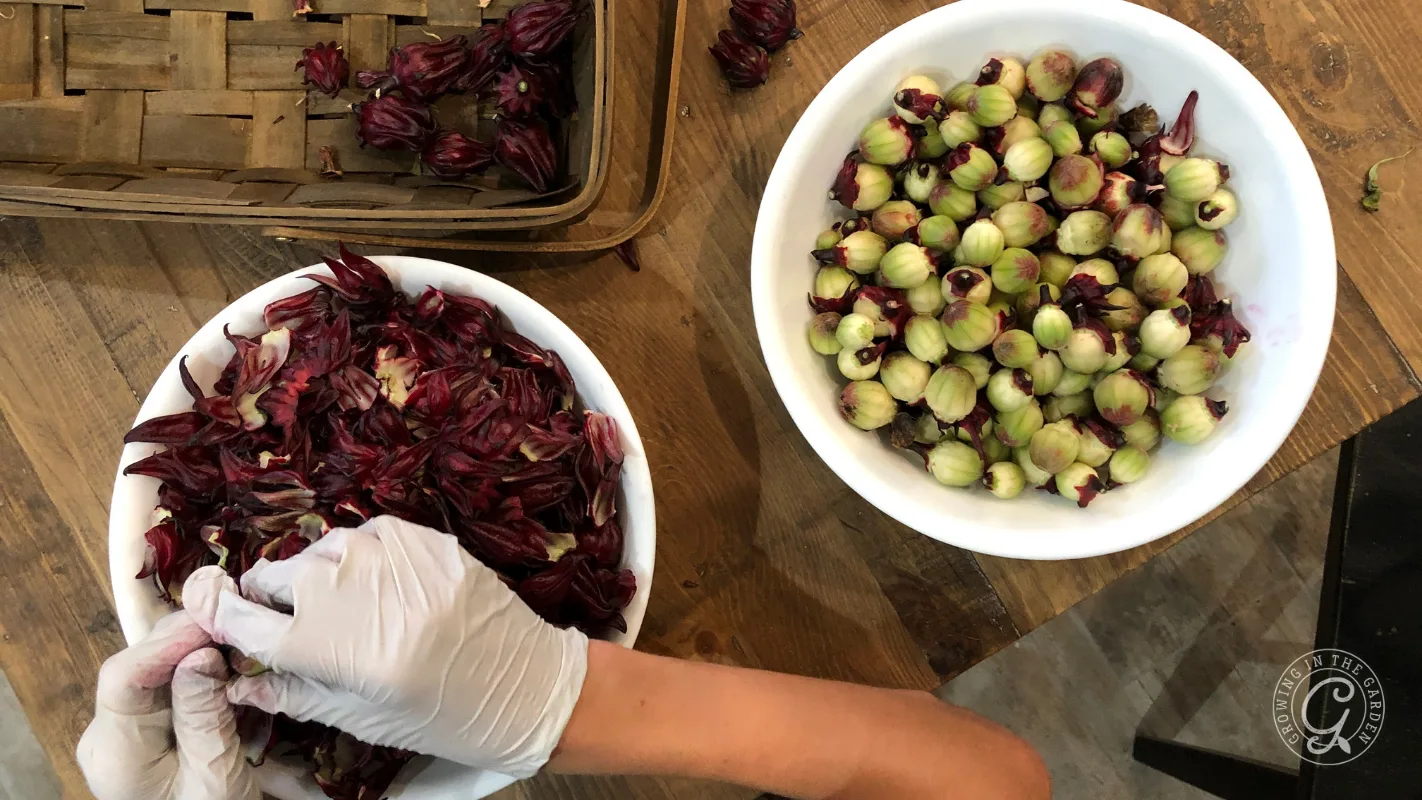
Save the seed pods. They contain natural pectin, and I use them to help thicken roselle jam. Check your recipe before tossing them into the compost.
If you need to store the calyces before using them, remove the dried blossom from inside each one first. That dried flower is usually where mold begins. Refrigerate the calyces in a container that allows a little air to circulate. These are the ones I use.
Why Are My Calyces Pale, Striped, or Bitter?
Almost always, it’s the variety. Some produce deep, uniformly red calyces. Others come out variegated, striped, or lighter burgundy, and the flavor can be different too. If yours came out pale and you were expecting the deep red you see in every photo online, you likely have a different type rather than a growing problem.
If they taste bitter, let them size up a little more and taste again. Some varieties are just less sweet.
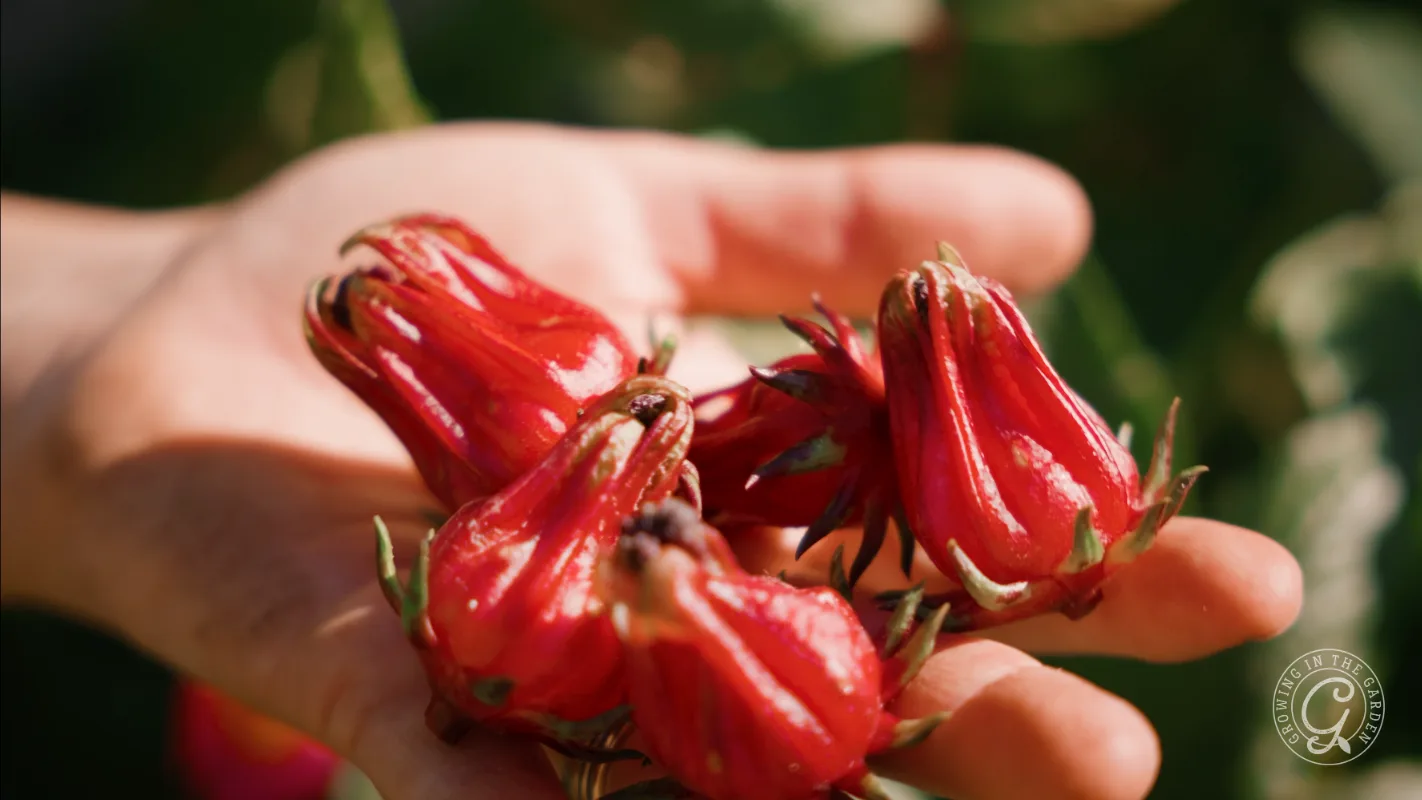
For jam and tea, look for varieties bred for calyx production:
- Thai Red is widely available and is one of the earlier-flowering roselle varieties. In Southern Exposure Seed Exchange trials, it flowered substantially earlier than their other varieties, which can matter in shorter growing seasons.
- Victor has performed well in South Florida and also does well in hot climates.
Some roselle varieties are grown mainly for their tender leaves rather than their calyces. Check the variety description before buying seeds if tea and jam are your main goals.
Does Roselle Come Back Every Year?
Roselle is a frost-tender perennial, but most gardeners grow it as an annual. In frost-free climates, it may live for more than one season.
I’ve never had one overwinter successfully in Mesa, even through our mild winters. Mahogany Splendor hibiscus survives for me. Roselle doesn’t. I replant every year and get better results doing it that way.
If you want to try, put it in your warmest microclimate against a south-facing wall. If you’ve managed it, leave a comment. I’d like to hear how you did it.
Will a spring plant bloom early?
Sometimes, a little. If a plant takes off early in the season, you may get a bloom or two in spring, because the days are still short enough to trigger it. It’s never been a substantial harvest for me, just a few calyces. Blooming stops as the days lengthen into summer, and the plant goes back to growing until fall.
Plant early so the plant gets big before the real bloom starts in October, not because you’re counting on a spring crop.
How Do You Save Roselle Seeds?
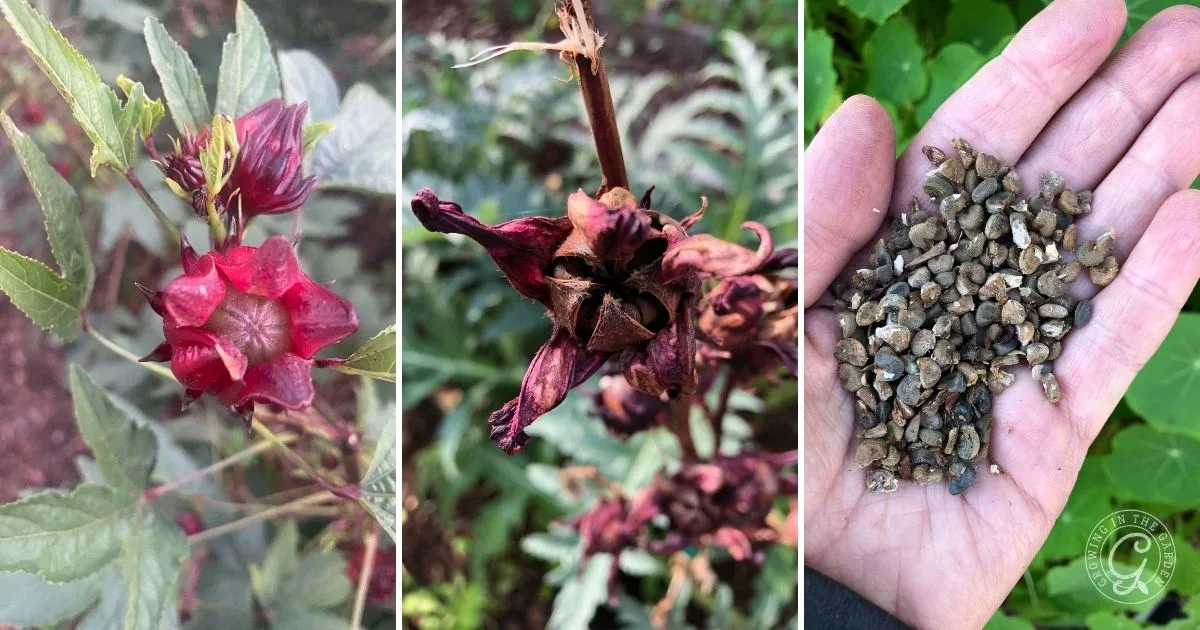
Don’t harvest every calyx. Choose a few healthy ones on a vigorous plant and leave them in place so the seed pods can fully mature.
- Let the pods dry on the plant until they turn brown and crack open easily
- Shake the seeds out; if you leave them in the pod, they may turn moldy if not fully dry.
- Store somewhere cool and dark for next season
One plant produces far more seed than you’ll need. Seed saving is one of my favorite parts of the season, and roselle is a forgiving place to start.
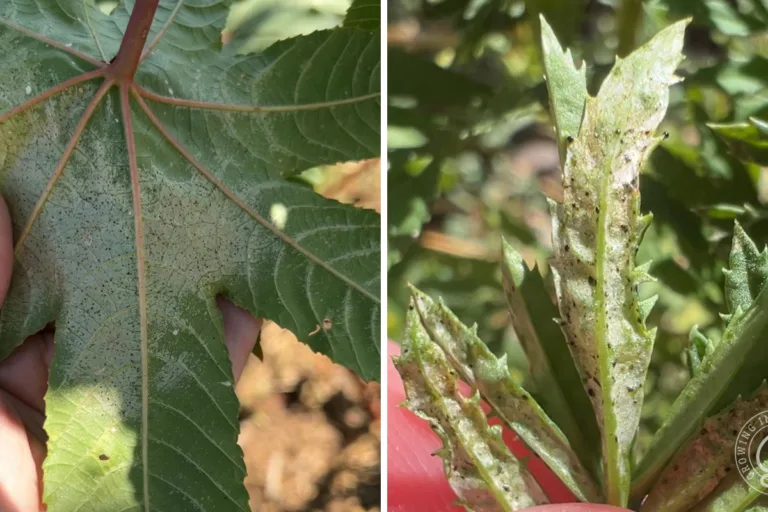
Does Roselle Get Pests or Diseases?
Not many. It’s one of the more trouble-free plants I grow.
- Aphids and whiteflies turn up occasionally, especially in humid weather.
- Root rot from overwatering or poor drainage is the real risk. Ensure good drainage before planting; a plant often doesn’t recover from root rot.
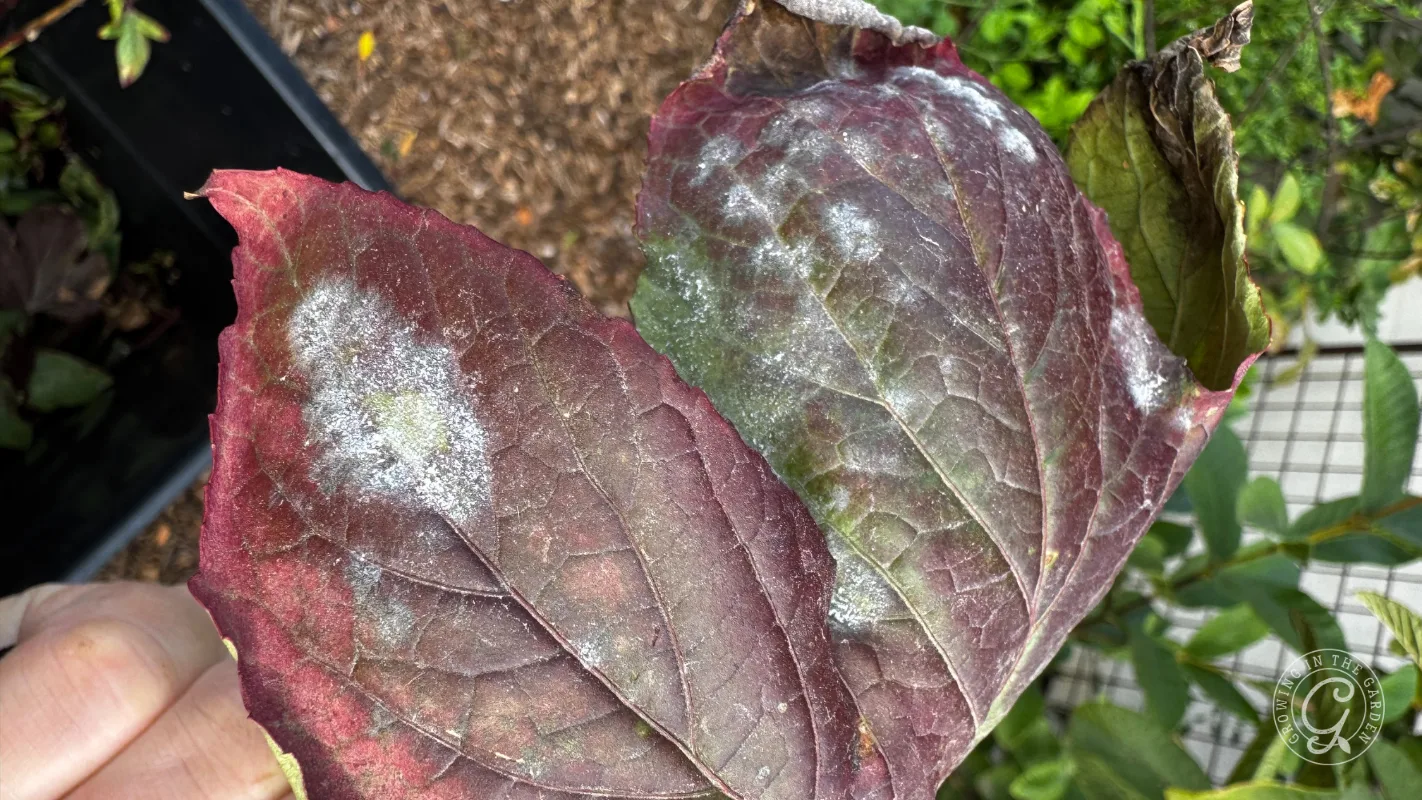
- Powdery mildew is uncommon. I’ve only seen it once or twice, and both times it was at the very end of the season on a plant that was clearly spent. Remove affected leaves as you see them, and if it keeps spreading, use the treatment in my guide to preventing and treating powdery mildew. Late-season mildew on a tired plant is usually a signal that it’s time to pull it out.
- Root-knot nematodes can also affect roselle. If they’re a problem in your garden, rotate planting locations rather than growing roselle in the same spot year after year.
What Do You Do with the Harvest?
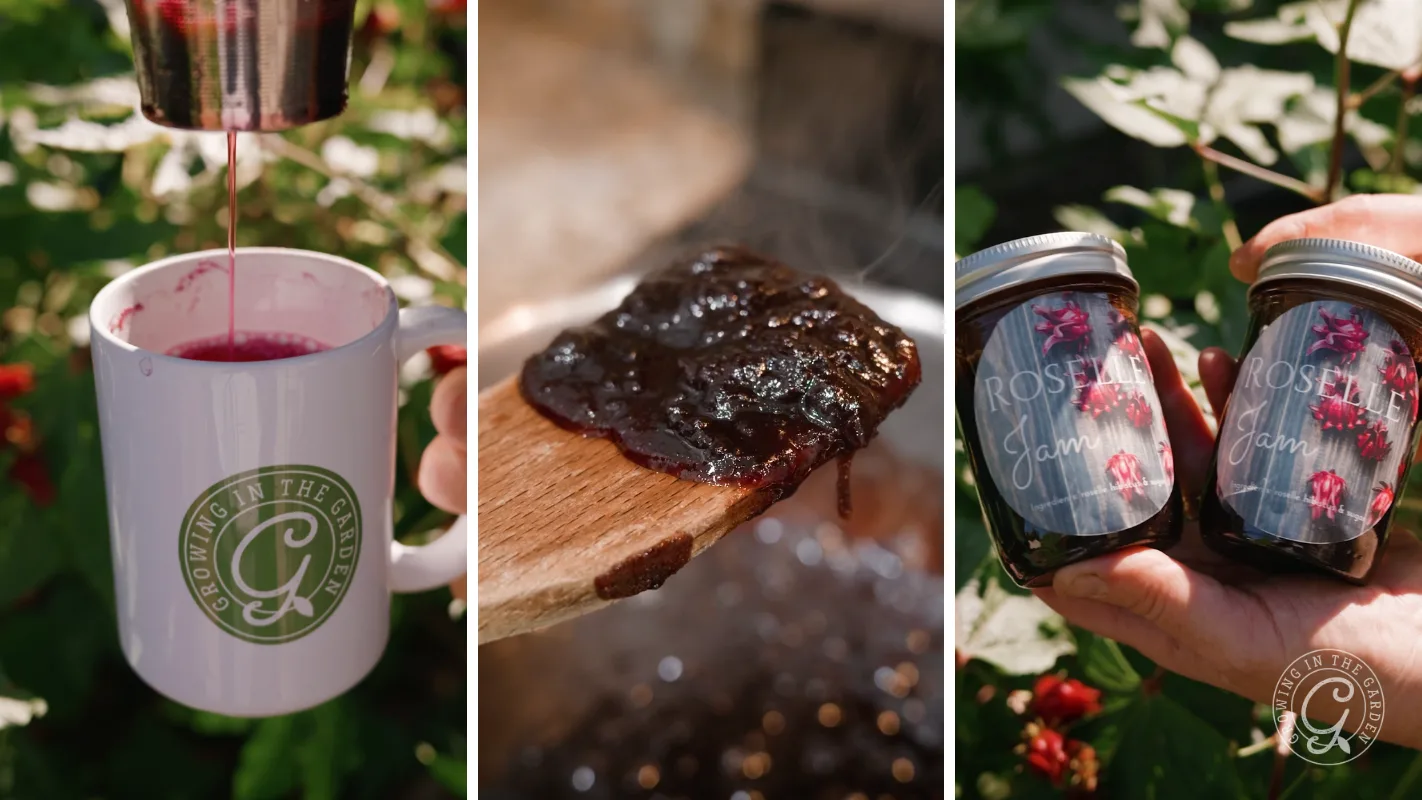
The calyces taste like cranberry with lemon undertones and less bitterness. Cut them open, remove the white seed capsule, rinse, and use.
- How to Make Roselle Tea (Plus My Citrus Blend)
- Hibiscus Holiday Sauce That Replaces Cranberry
- How to Use Roselle Hibiscus: Recipes From My Garden
- Roselle Jam Recipe: Easy Rosella Jam Without Added Pectin
The leaves taste tart, a little like spinach or sorrel, and can be used fresh or cooked.
Roselle Hibiscus FAQs
Roselle needs four to five months of warm weather before it blooms. Once flowering starts in fall, calyces are ready to pick about 7 to 10 days after each bloom drops.
Nurseries carry it inconsistently, so seed is usually the easier route. I get mine from Renee’s Garden.
Five to seven feet tall and wide is typical, and it can go larger in a long season.
October and November for the main harvest, with picking continuing into December on a plant that has room to keep going.
Yes. Branches get heavy with calyces and break in monsoon storms. Drive rebar at least 12 inches into the ground next to the plant and tie the main stem to it.
Yes, and I now prefer it. Use a whiskey barrel or something similar in size, one plant per container, with support. In a container that size the harvest is just as good as in a bed, and it frees up bed space for fall planting.
Most likely a different variety. Some roselle types are variegated or lighter in color and taste different too. It’s usually not a growing problem.
Remove the dried blossom from inside the calyx before storing. That’s where mold typically starts. Refrigerate in a container with a little airflow.
Roselle is a frost-tender perennial, but most gardeners grow it as an annual. In frost-free climates, it may live for more than one season. I’ve never overwintered one successfully in Mesa.
Sources and Further Reading
- Rutgers New Jersey Agricultural Experiment Station, Roselle (Hibiscus sabdariffa L.) Production and Marketing, Ultra-Niche Crops Series FS1298
- Southern Exposure Seed Exchange, Thai Red Roselle
If you grow roselle this year, I’d love to hear how it does for you and what you make with the harvest.


Hello. I enjoyed the Gardening 101 class yesterday. When is a good time to plant Fiesta hibiscus? In the ground or container is best? (obtained from Home Depot). And how much sun should it have?
Now through October would be a good time to plant. Fiesta is different than this type (roselle). I would give it some afternoon shade if possible. So glad you liked the class.
How & when can I prune my Roselle? It’s growing amazingly!
I would avoid pruning if possible. You can lightly prune lower branches or tips of branches, but be aware that the fruit will form along the branches very soon and fewer branches mean less fruit.
I just bought my first Roselle hibiscus from Logee’s. I’ve bought plants from them throughout the years and they’ve always been high-quality. But this hibiscus has two canes, the plant is 18 inches tall and there are no leaves on the first 12 inches. The top leaves look very healthy, but is this normal?
It could be. New growth is a good indicator of the plant health. Roselle hibiscus also grows very well from seed if you want to try that.
I grew Roselle hibiscus this year for the first time. I grew them in a raised beds. My calyxes are not as deep red as yours and others are. Even your stems are deep red. Some even are white with some red stripes. There are a lot of the flowers and calyxes. I’ve been keeping them picked so they keep producing but I’d like them to be plump and deep red for jam and tea.
There are different varieties of roselle. The striped one is a different type, but similar.
My calyces aren’t turning fully red and taste bitter. They do have the dried flower tip so I know they’ve bloomed. Could I have under watered?
Could be a different variety. Allow them to get a little bit larger and see how they taste. Some varieties have a more variegated look and aren’t all red. The flavor may be different as well.
Hi Angela! I love your informative blog, YouTube channel, and the calendars! You have opened a window of hope to gardening in the low desert! I am growing and harvesting Roselle Hibiscus right now and unsure of the best way to remove the sepals from the calyxes? I have been drying the whole thing in the sunshine and then trying to remove them and they just fall apart. I noticed in your picture above they were “fresh” on the dehydrator rack… Could you please provide the best way to harvest these to remain whole? Many thanks!
Hi Barbara, I harvest the individual calyces with clippers when the plant is still growing. To separate the “fruit” from the seed pod I cut it off on the bottom. I’ve found this is the easiest way to harvest and process large amounts of calyces. Hope this helps.
I am currently growing mahogany splendor hibiscus, do most of the attributes apply to it? Are the leaves edible, calyxes ok to make tea or jelly, etc? Any other suggestions would be appreciated
This is a different plant, mahogany splendor hibiscus doesn’t fruit.
I wish I had come across your post much sooner. When I planted mine, I planted them 6“ apart in a raised bed and never thinned them out. Thankfully I have a 4’x12’ bed!! They have taken over all but 2’ on an end where a couple tomato plants are still fighting for space. One of them are at least 10’ tall (including the 26“ raised bed) and my husband was ready to pull them all out until I found some tiny buds appearing!! Yea!! Such beautiful plants, but I will designate a separate area next year for them. The stem alone is over half the size of my wrist!! I live in zone 8a in NC. Garden space is much too precious these day, not to be able to use it for veggies. 😉
I plant my roselle in a big pot, they are now flowering (3rd of September now). However, I think I underestimated the pot. Can I still transplant the plant to the ground instead at this flowering stage?
I would leave it alone for now. Transplanting it may shock it and you may not get a harvest.
I’m planting my first roselle this afternoon. (Phoenix) If I were to try to keep this as a perennial, how would I overwinter it?
I have yet to have mine overwinter successfully – put it in your warmest location and hope for the best.
@Angela Judd,
My packet says to plant 8-12” apart rather than 4×4 space. It is the zinger Hibiscus. Is that just a different variety?
It could be a smaller type yes. If you have a long growing season I would still give it plenty of room because most varieties grow quite large.
I would Love to grow these! Any advice for growing in NE Ohio?
Start seeds indoors for sure, and choose the warmest/sunniest spot in your yard.
Oh, please disregard. I found your link to Renee’s Garden. Thank you!
Where do you purchase the seeds, Angela, please. Thank you.
I’m here in central west Florida and this is my first year of having a thai red rozelle covered with calyces. The plant is about five feet tall and maybe four feet wide. Each of the calyces is about an inch long and maybe 3/4 inch wide and a burgundy red. Some are even about 1/5 inch long and one inch wide. I read that the calyces should be picked before they get brown, but I haven’t seen any white flowers. I read that you don’t pick them until the white flower dies. I would think that they would be blooming by now. I have seen pictures of bowls of calyces that were picked and getting ready to make jam and they looked just like mine, but I haven’t seen blooms. Do I pick them now before they bloom? If I wait much longer they may turn brown. Or must I wait until I see a bloom and the bloom falls off before I pick them? If I do wait until then, then what I pick won’t look like the ones that someone showed in a picture that they picked in order to make jam. I’m confused.
Hi Diana – sounds like they have already bloomed and are ready to pick. The blooms may not have been noticeable.
I wish I’d read this last March. I was thinking I could plant now, but no. Definitely on my Spring planting list, I think. Should it be shaded in the really hot Yuma AZ months?
It will tolerate full sun but doesn’t mind having shade during the hottest months.
When all the blooms have been harvested seeing as though it’s an annual. Should we uproot the existing sorrel plants and replant seeds in the following fall for a new harvest?
In some areas it’s a perennial, I’ve had the most luck replanting each year.
I am growing roselle for the first time and have two small plants right next to each other. I’m not sure how sensitive their roots are and am wondering if I could I have any luck uprooting and moving one of the plants or should I just snip it out?
I would snip it – they can be tricky sometimes, especially when it’s hot out.
Is it beneficial to pinch the seedlings?
I haven’t needed to. It seems to branch on its own.
What are the best soil to use for in ground? A bag that I can buy from lowes? Thanks
For in ground beds adding organic matter like compost is key. I like the bagged Omni compost that is available at Lowe’s.
@Angela Judd, thanks I will check it out.
I’m grateful to have found this. I would love to grow my own roselle plants to make Sorrel, which so many think is the same as Hibiscus tea. I’m excited for this resource and to grow closer to my culture.
What would recommend for a square foot gardening space?
I would recommend at least a 4×4 area per plant.
I live in zone 6b in southeast Pennsylvania. I tried Roselle two years ago , starting seed indoors and transplanting outdoors in May and they were beautiful. They bloomed, but didn’t have a chance by October to develop the calyces before it got chilly. I absolutely love sorelle tea and am going try again, but appreciate any advice you may have to complete my harvest this year.
That’s tough – It may be too short of a season for you to grow it. You could try putting it in a large container and bringing it indoors with a strong light.
@Twanda Brisbon, maybe if you could build a greenhouse? I heard of a man in the rockies who grew a fig tree in a greenhouse.
what type of soil do you use? I just bought 3 about foot tall roselles. Am planning on pot growing for awhile. I was planning on putting them in front of the house but there’s a lot of rain run off, although it does drain well. also lots of shad until late morning ,then sun. in the afternoon, the sun goes on the other side of the house, so it’s in shade. Is this enough sun?
I used the raised bed mix from Arizona Worm Farm. Here is a post with more information about the soil: https://growinginthegarden.com/best-soil-for-raised-bed-vegetable-gardening/ Roselle is a warm season plant, if your area gets a freeze they will die. Good drainage is vital – too much water and they will rot. They need at least 6-8 hours of sun. Hope that helps.
I just bought a 19 inch roselle at Summerwinds Oct.9th. Is there any hope for growing this in container? Help
Possibly – that sounds like a good size plant. It should begin flowering soon if it hasn’t already.
Thank you would the hard AZ ground be better?
You could try transplanting it into a larger container – or into the ground if the pot it is in isn’t large enough.
Thanks so much
Hi,
I planted roselle seeds in mid March- in Tempe. The one plant that came up is only about 8 inches tall with around 10-12 leaves. Does that seem right? I’ve been providing afternoon shade because it’s so hot. Does it need more sun or this growth is normal?
Thank you to whoever has any info about this!
Hopefully you are growing it in good soil. The plants don’t need additional shade. Be careful not to overwater, if the top of the soil is moist, let it dry out a bit before watering. Mulch the plant well. You should see good growth with these great temps and humidity we’ve been having.
I grew some from seed in 15″ clay pots. They did not get very big or develop a lot of leaves, but they were covered with calyses. Next year I supplant in 15 gal. Bags. I didn’t know they were annuals, as I have another hibiscus that’s been with me for ten years.
10 years! Wow! Although a perennial, roselle is usually grown as an annual in cooler climates. I imagine you will have better luck with a larger container. I’m glad to hear you got a lot of calyxes.
HI,
I just purchased some seeds and will plant this Spring. Just curious can you grown them in grow bags?
Thank you
The plants get large and will need staking. Use a large grow bag (at least 10 gallon) and try to give the plant some support.
Thank you so much for the tips. I want to try those. Where do I buy roselle seeds?
I’m glad it’s helpful. You can buy seeds from Baker Creek Heirloom Seeds or Southern Exposure Seeds
I grew my first Roselle last year and I’m totally hooked. I’d like to plant several more this week along with a bunch of other stuff. I want to try to pack in as much stuff as I can to help keep the soil cool. My question is, does Roselle grow well with others? Maybe, sweet potato growing near by can stretch it’s vines under the Roselle like a living mulch or particular herb or flower that makes the Roselle happy?
Good question. Roselle gets quite large and can shade other plants, but it takes a while to grow that large. I like the idea of trying sweet potatoes underneath. Make sure to allow plenty of room around the plant for the potatoes as well. You may need to prune some of the lower branches on the roselle to give the sweet potato room. I grew roselle near zinnias last year and they both did well. Sunflowes and beans would also make good companions. Happy planting. Let me know how it goes.
@Christy Keeling, how did it go? I want to try this too
@Hannah, I have sweet potatoes under my roselle, next to the side of the house (creates a microclimate). They both have been going strong for over 1 1/2 years (survived ‘21’s frosts). They’re definitely friends!!
@Christy Keeling, I grew mine this year with okra. They worked very well together. I am going to try your sweet potato vine underneath as my Georgia clay got very dry.
@Christy Keeling, I grew sweet potatoes in pots and decided to plant Jamaican Sorrel together with them. They did well until the sweet potatoes started to take over the soil. They crowded out the Sorrel so I ultimately harvested the sweet potatoes and replanted what had survived of the Sorrel plants. The Sorrel recovered, but it was a lesson I won’t soon forget. The sweet potato roots had grown to fill the entire container. I won’t be doing that again. Plant them a few feet apart if you want the soil protected by the sweet potato folliage for cool soil, but keep in mind that sweet potato plants can deprive your Sorrel of growing room and nutrients in the soil.