
How to Use Roselle Hibiscus: Recipes From My Garden
You grew it. Now you’re standing in the kitchen with a colander full of red calyces and about a week to use them before they start to go bad.
I know that feeling well. The first year I grew roselle, I planted four plants, which is about three more than anyone needs. One plant can fill a 4- or 5-quart colander each week for a month or more. That first fall, I had so much roselle that I had to get creative, and I’m so glad I did.
Now it’s hard to imagine a year without roselle tea, hibiscus holiday sauce at Thanksgiving, and roselle jam on toast. I originally grew roselle on a lark because I heard it did well in hot climates, and somehow it worked its way into our family traditions.
Below are the six recipes I try to make every year, along with how to prep the calyces, keep them from molding while you work through your harvest, and preserve whatever you can’t use right away. If you haven’t planted yet, start with how to grow roselle hibiscus.
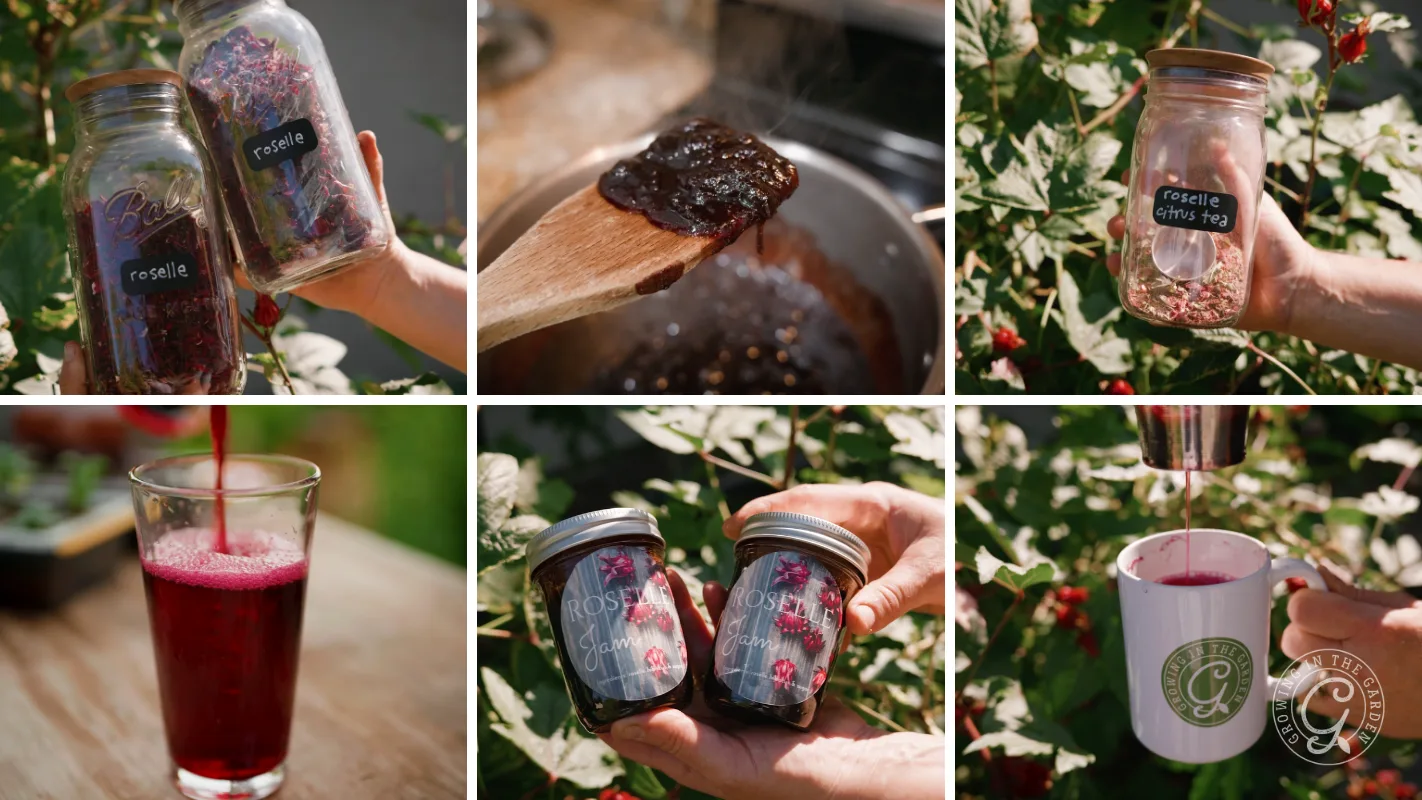
Key Takeaways: Using Roselle Hibiscus
- Roselle has a tart flavor similar to cranberry and works well in tea, jam, sauces, syrups, and drinks.
- Prep fresh calyces by removing the seed pod and dried blossom, then rinse well.
- Fresh roselle doesn’t keep long. Mine lasts about a week in the refrigerator if I remove the dried blossom and give it some airflow.
- Freeze, dehydrate, or freeze-dry extra calyces so you can use them throughout the year.
- Don’t forget the leaves. They’re edible too and are used as a cooking green in many cultures.
What We’ll Cover
- What Does Roselle Taste Like?
- How to Prep Roselle Calyces
- How to Store Roselle Calyces so They Don’t Mold
- How to Preserve a Big Roselle Harvest
- 1. Roselle Jam
- 2. Roselle Citrus Tea
- 3. Roselle Holiday Sauce (Mock Cranberry Sauce)
- 4. Hibiscus Syrup
- 5. Agua de Jamaica
- 6. Jamaican Sorrel
- Don’t Skip the Leaves
- More Ways to Use Roselle
- Using Roselle FAQs
- Grow Your Own

What Does Roselle Taste Like?
Roselle calyces are tart and bright, with a flavor similar to cranberry but without as much bitterness. That flavor is why it works in so many recipes. It goes sweet in jam and syrup, tangy in tea, and complements meat the way cranberry sauce does at Thanksgiving.
The leaves taste like a tart, slightly spicy spinach, similar to sorrel.
How to Prep Roselle Calyces
Fresh calyces are easier to prep. Once they get soft, they are harder to work with.
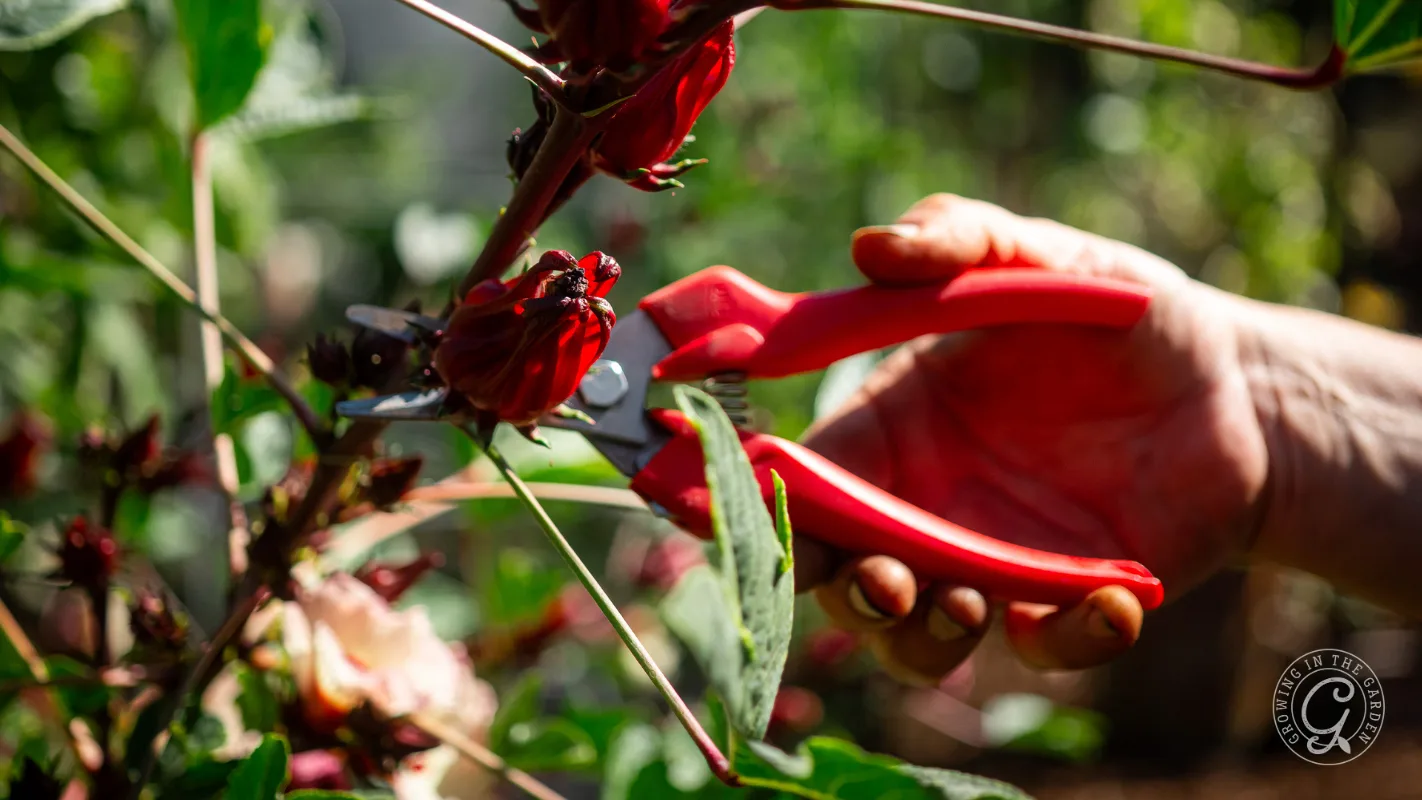
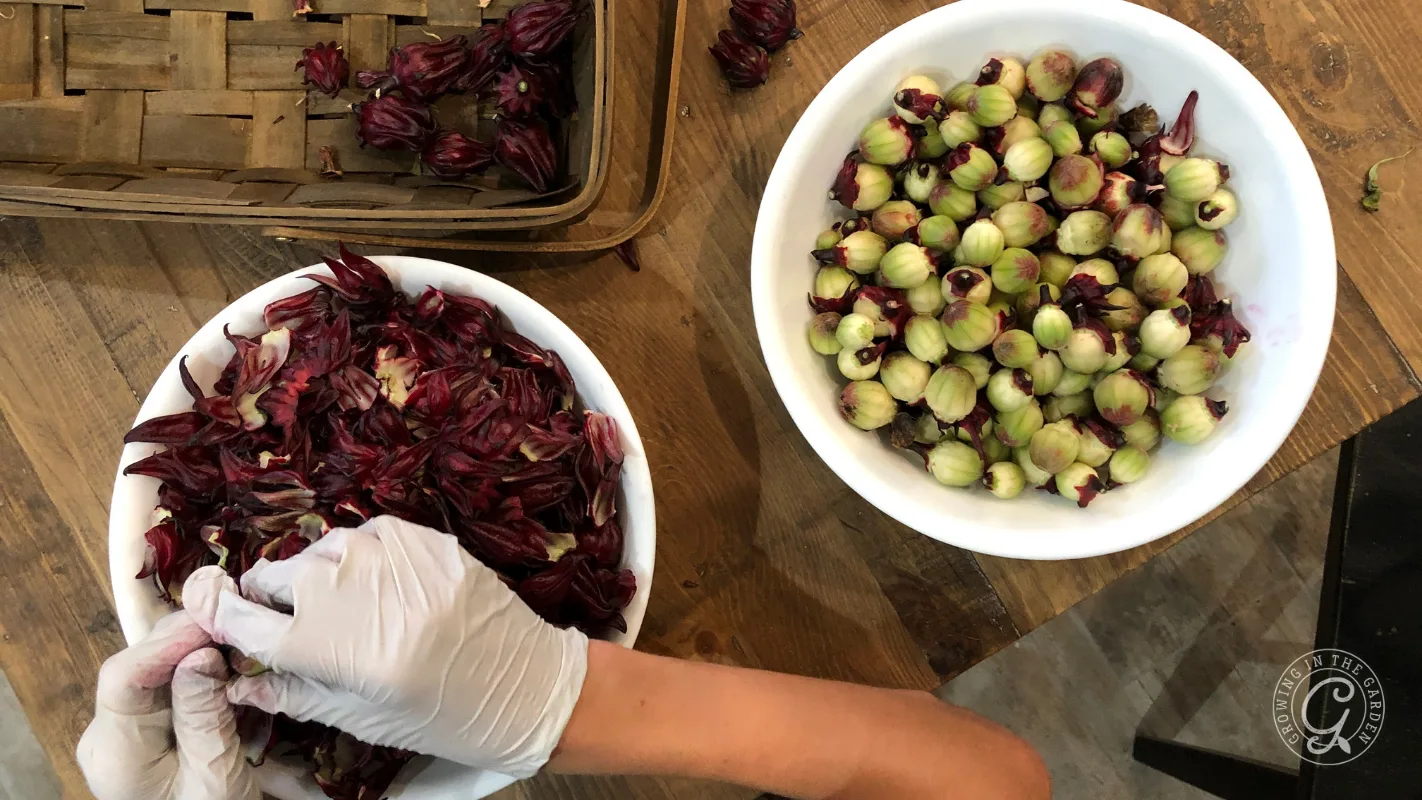
- Cut the calyx off at the bottom, where it meets the green seed pod. The red fleshy part comes away in one piece.
- Pull out and discard the dried blossom if it’s still tucked inside. If you leave it in, they get moldy more quickly.
Save the seed pods. They’re loaded with natural pectin, which thickens roselle jam without any added pectin. Check your recipe to see if you’ll need them before you compost them.
Using fresh calyces in recipes written for dried
Most hibiscus recipes you’ll find online use dried calyces because that’s how roselle is usually sold.
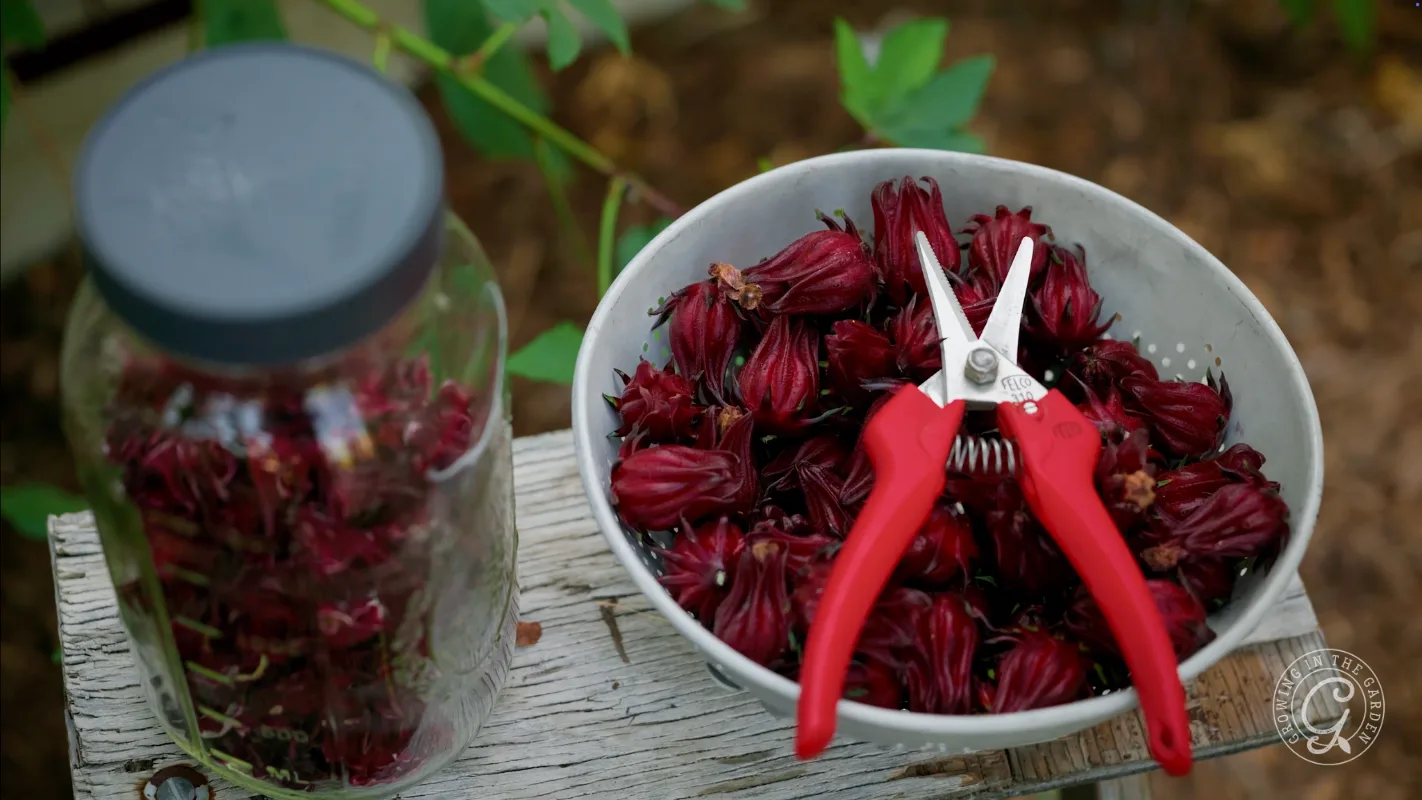
If you’re using fresh roselle from the garden, you’ll need more because the fresh calyces contain a lot of water. Measure once you’ve separated the roselle from the seed pod. For drinks, I usually start with about twice as much fresh roselle by volume as the recipe calls for dried, then taste and adjust.
There isn’t a perfect conversion because fresh calyces vary in size and moisture, and dried hibiscus varies in concentration.
How to Store Roselle Calyces so They Don’t Mold
- Remove the blossom from inside the calyx. That shriveled flower left in the center is almost always where mold starts. Pull it out before you put anything in the fridge.
- Don’t rinse off until you’re ready to use them.
- Refrigerate in a container with some airflow. I like using these produce savers. They really do help the calyces last longer in the fridge.
- Try to use them within a week. Fresh calyces don’t last long. Preserve or use them quickly.
How to Preserve a Big Roselle Harvest
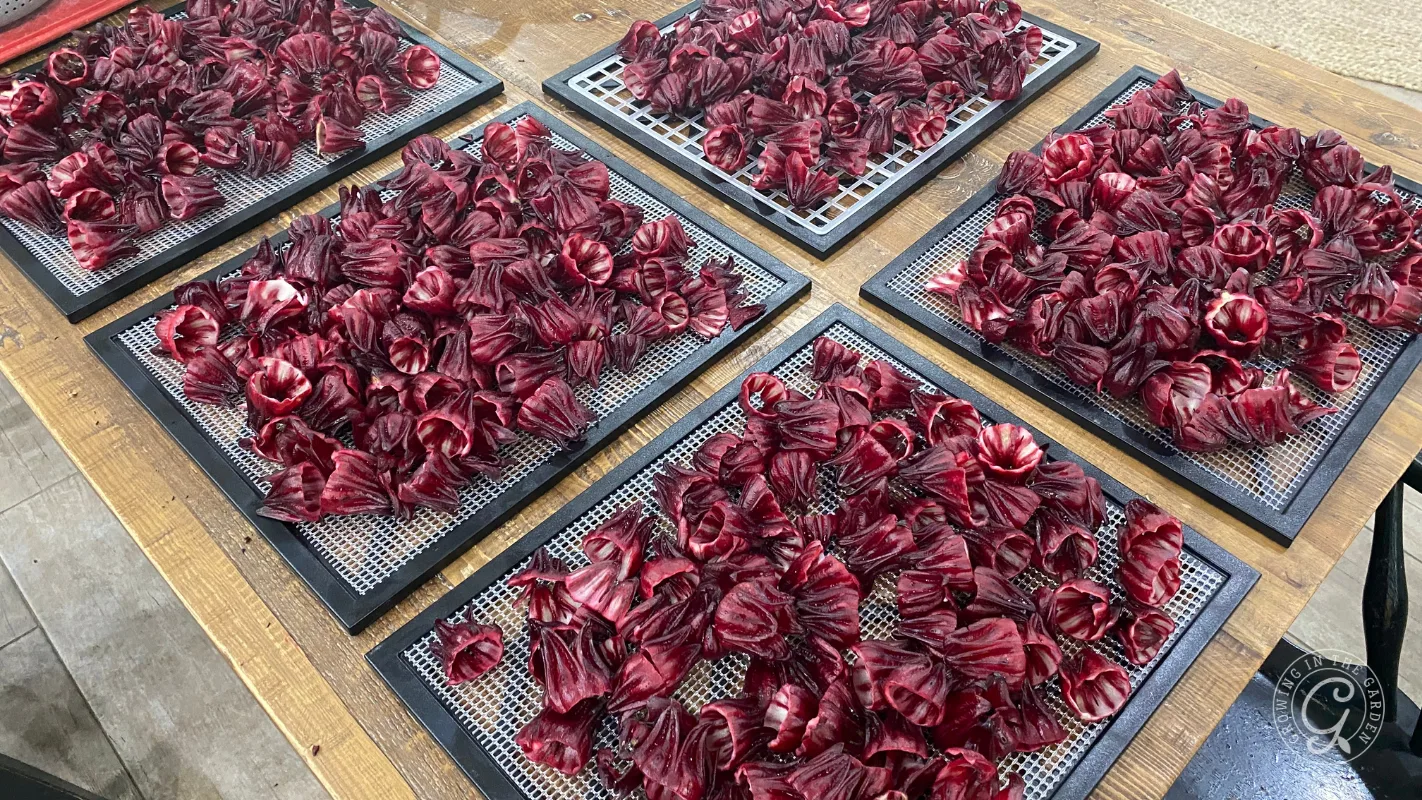
Freeze them. Prep the calyces, spread them on a sheet pan to freeze, then bag them. Frozen calyces work in jam, syrup, and sorrel drink. You lose a little texture, which doesn’t matter for anything you’re cooking down.
Dehydrate them. Dried calyces are what you want for tea, and they hold a year or more in a jar. I dry mine at 135°F, spread in a single layer with room for air to move.
The dehydrator you use makes more of a difference with roselle than with herbs. Calyces are thick and fleshy, and a small basic machine that handles basil fine will take all night and then some on roselle. This is the dehydrator I use.
Freeze-dry them. This is what I do with most of mine. I prefer freeze-dried roselle because it keeps the color and flavor so well. I’ve written about freeze-drying for beginners if you would like to learn more.
1. Roselle Jam
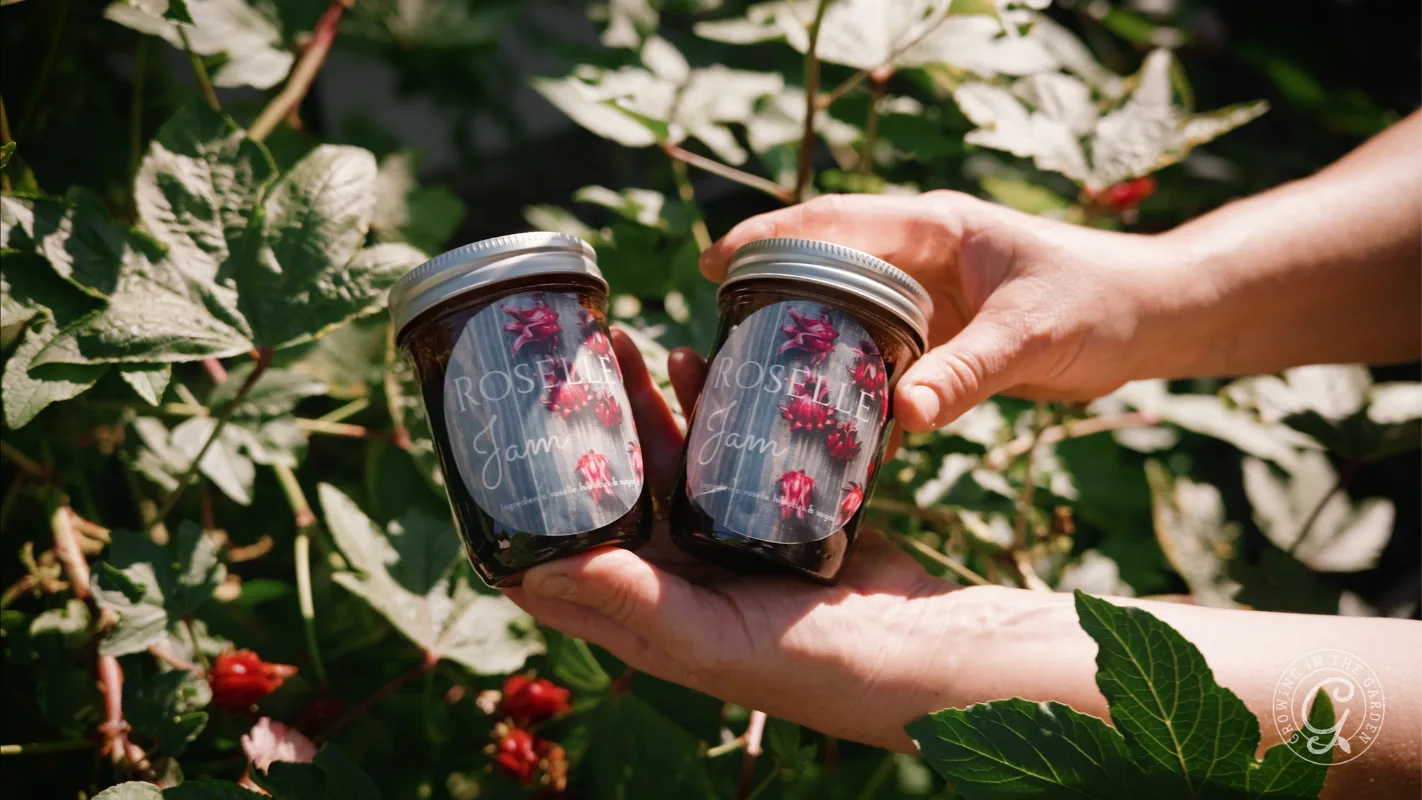
Our favorite thing to make with roselle, and the one I make every year.
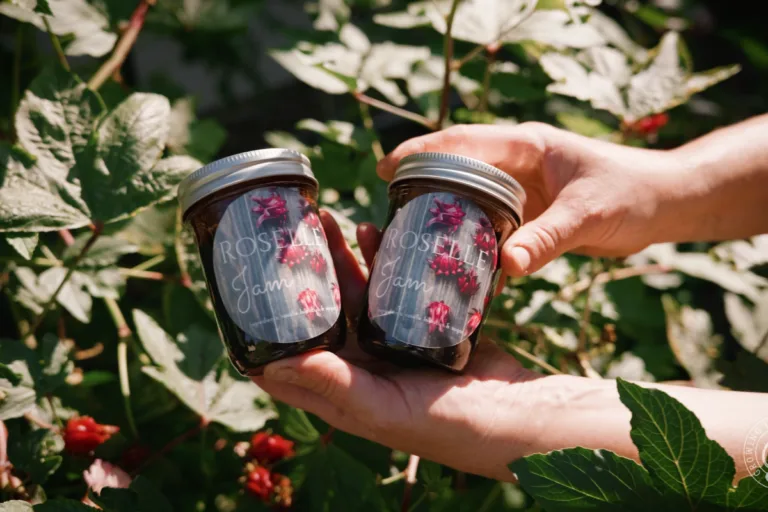
Save the seed pods when you prep the roselle. I simmer them first to make the pectin-rich liquid that helps the jam set without boxed pectin. It lands somewhere between cranberry sauce and a tart berry preserve, and it’s what goes into jars for Christmas gifts.
2. Roselle Citrus Tea
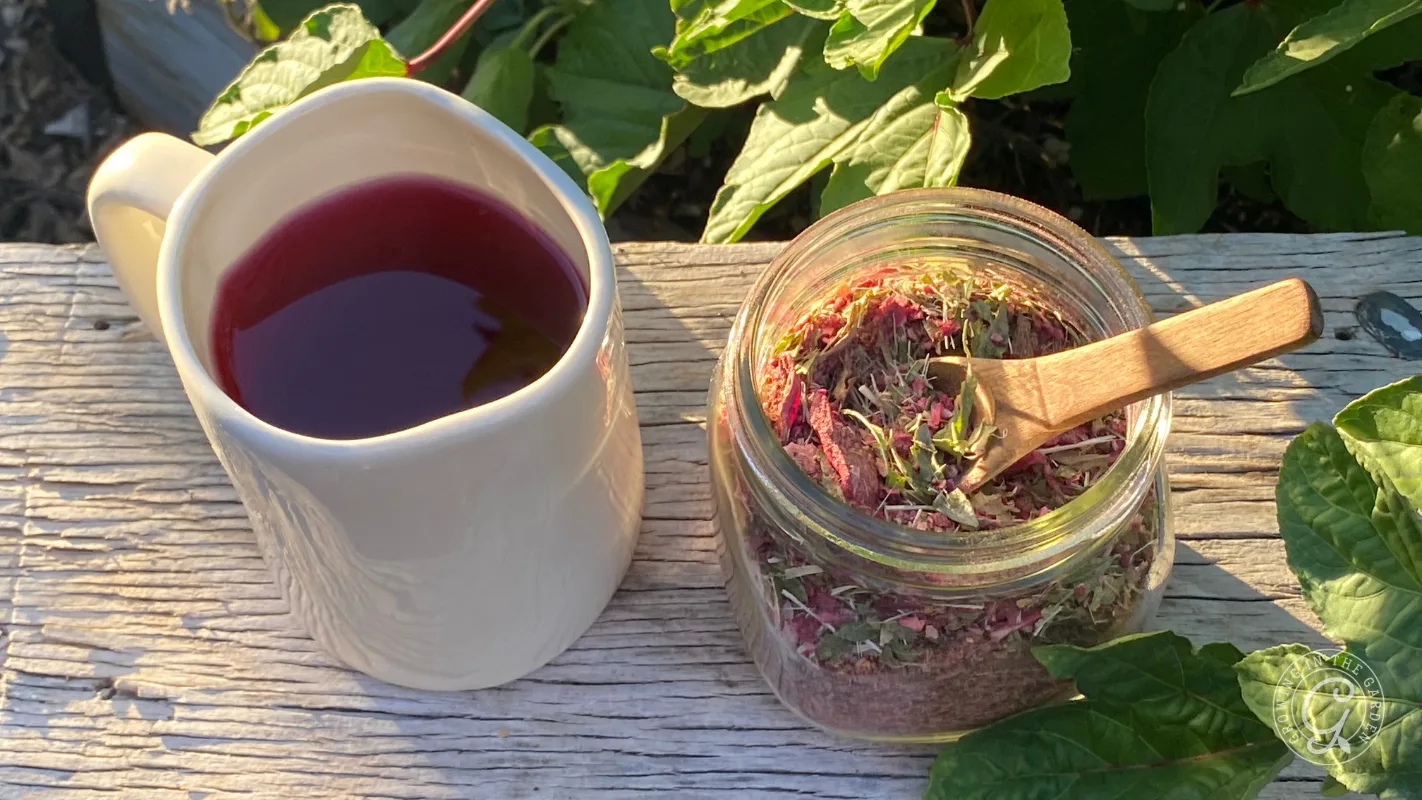
I drink this hot through the winter and iced all summer. It’s roselle blended with lemon verbena, stevia, lemongrass, and lemon peel, all of which grow well in a low desert garden.
Blend the dried ingredients, store them in a jar, and steep two teaspoons per cup.
3. Roselle Holiday Sauce (Mock Cranberry Sauce)
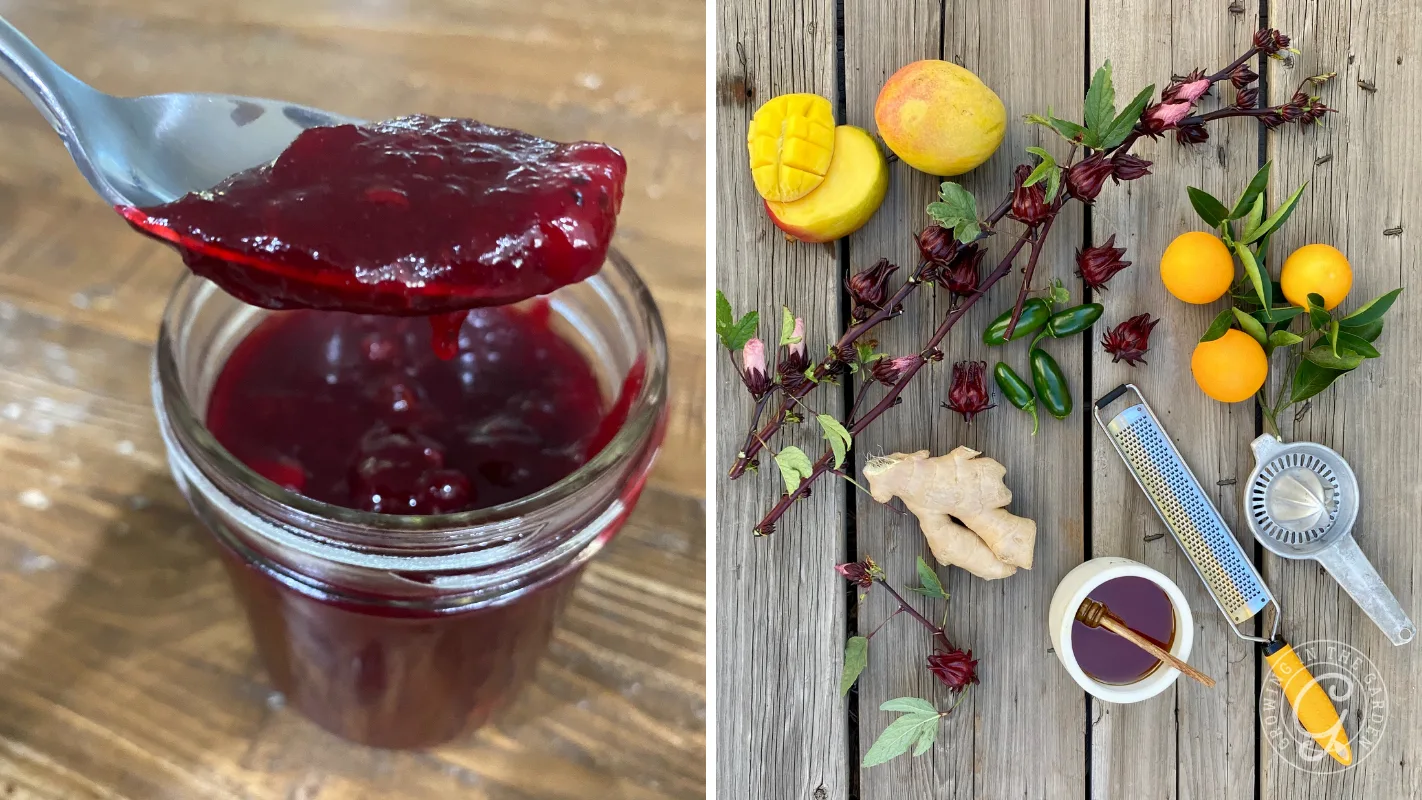
This has replaced cranberry sauce at our Thanksgiving table.
Roselle does everything cranberry does on a holiday plate, brighter and without the bitterness. If you grow roselle and still buy the canned stuff in November, you have to try this once.
4. Hibiscus Syrup
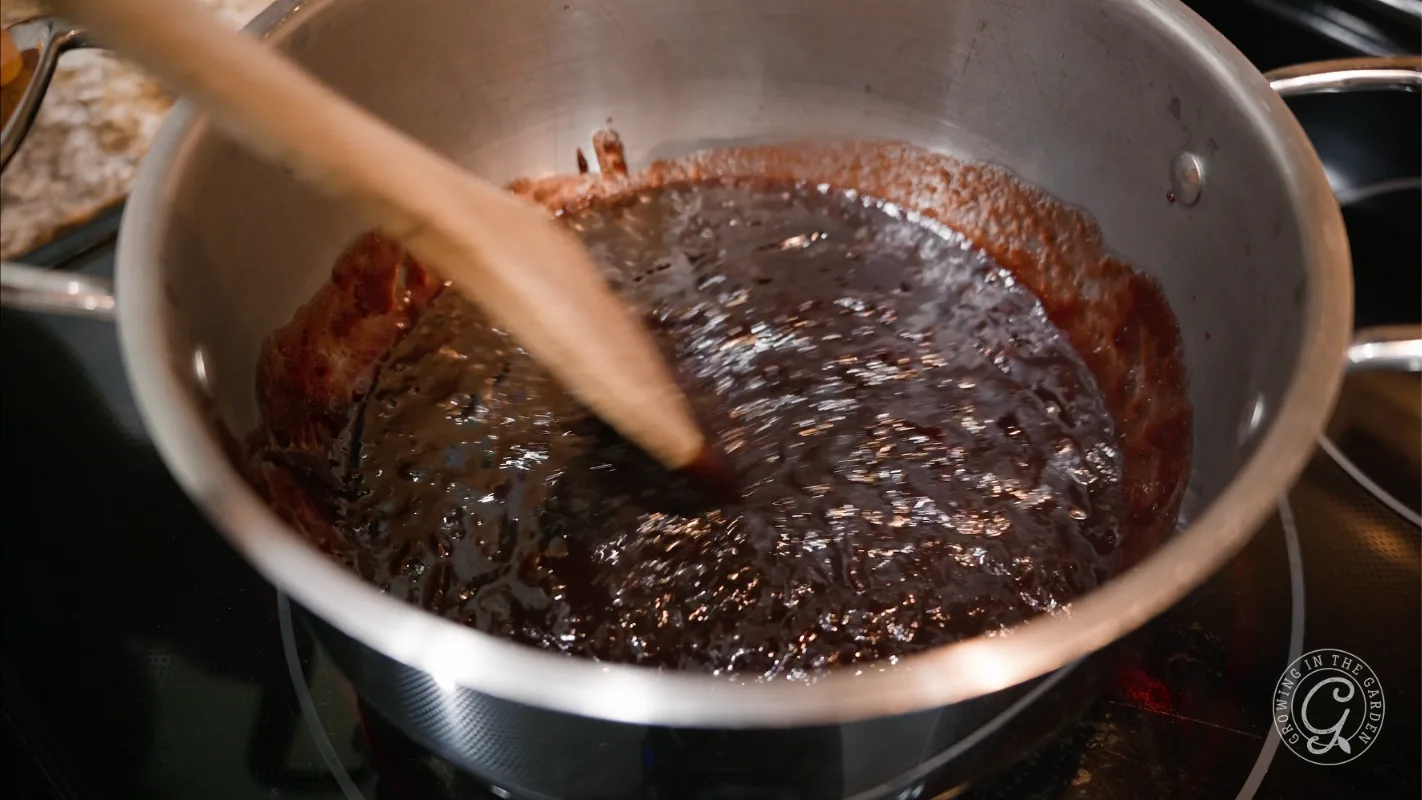
Syrup turns into a dozen other things. Stir it into sparkling water, pour it over pancakes or ice cream, brush it on a pork loin, or use it as a drink base.
It stores well, making it a good landing spot when calyces come in faster than you can use them.
Makes about 1½ cups
Ingredients:
- 1 cup fresh roselle calyces, prepped (or ½ cup dried)
- 1 cup water
- 1 cup sugar
Directions:
- Combine everything in a saucepan and stir over medium heat until the sugar dissolves.
- Bring to a gentle simmer and hold it there 10 minutes. The syrup will turn deep red.
- Remove from the heat, cover, and let steep for 20 to 30 minutes. Longer steeping means deeper color and more tartness.
- Strain through a fine mesh sieve, pressing gently on the solids.
- Cool and refrigerate. Freeze extra syrup in an ice cube tray for longer storage.
For a spiced version, add a cinnamon stick and a few slices of fresh ginger with the calyces.
5. Agua de Jamaica
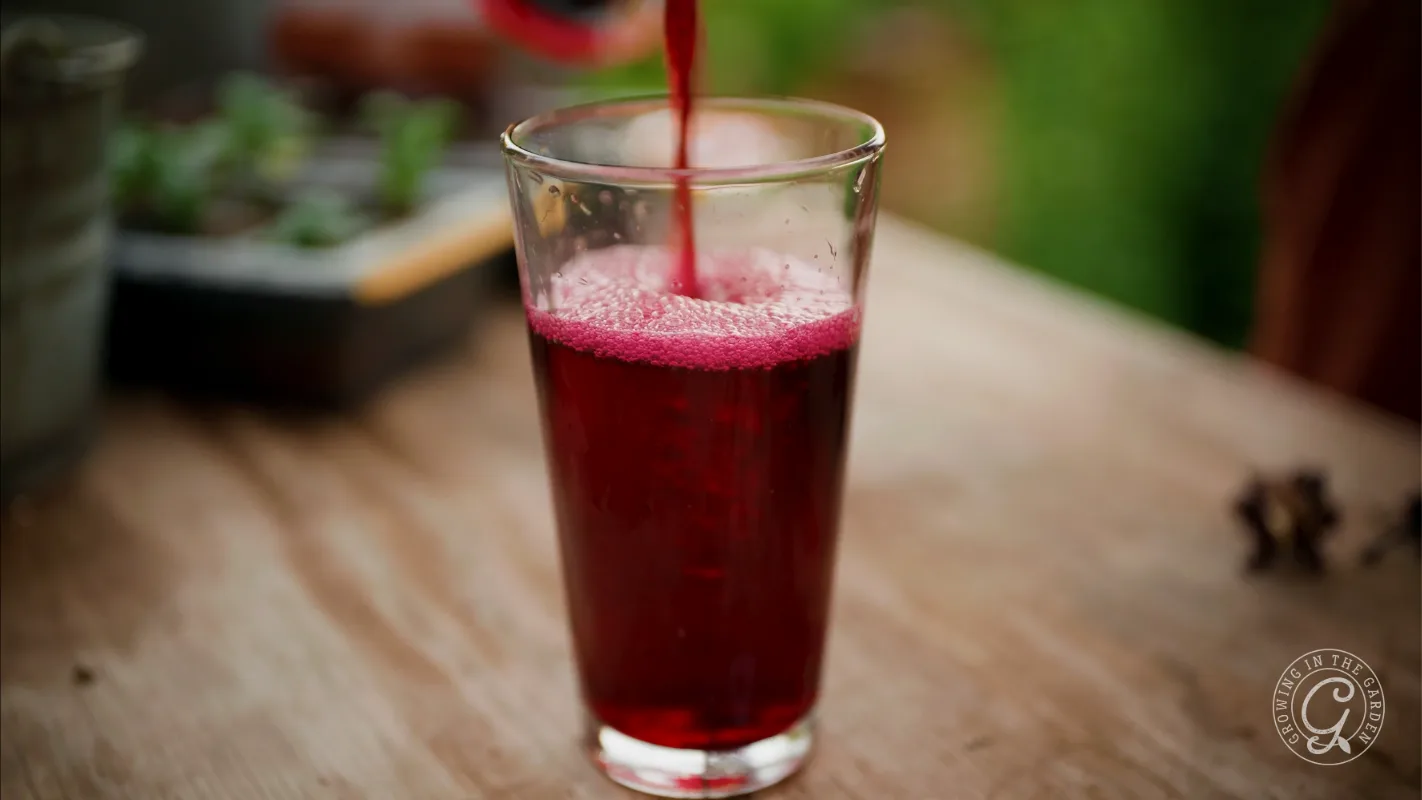
This is the ruby red drink you get when you order Jamaica at a Mexican restaurant. Hibiscus, water, sugar, served very cold. It’s an agua fresca, made and drunk year-round.
Makes about 2 quarts
Ingredients:
- 2 cups fresh roselle calyces, prepped (or 1 cup dried)
- 8 cups water, divided
- ½ cup sugar, more or less to taste
- Lime wedges, for serving
Directions:
- Bring 4 cups of the water to a boil. Add the calyces, reduce to a simmer, and cook 5 minutes.
- Remove from the heat, cover, and steep for 15 to 20 minutes.
- Strain into a pitcher, pressing the solids to extract all the color and flavor.
- Stir in the sugar while the liquid is still warm so it dissolves.
- Add the remaining 4 cups of cold water. Taste and adjust.
- Chill thoroughly and serve over ice with a squeeze of lime.
Sweetness is personal here. I usually start with ½ cup of sugar. Use less if you like it more tart.
6. Jamaican Sorrel
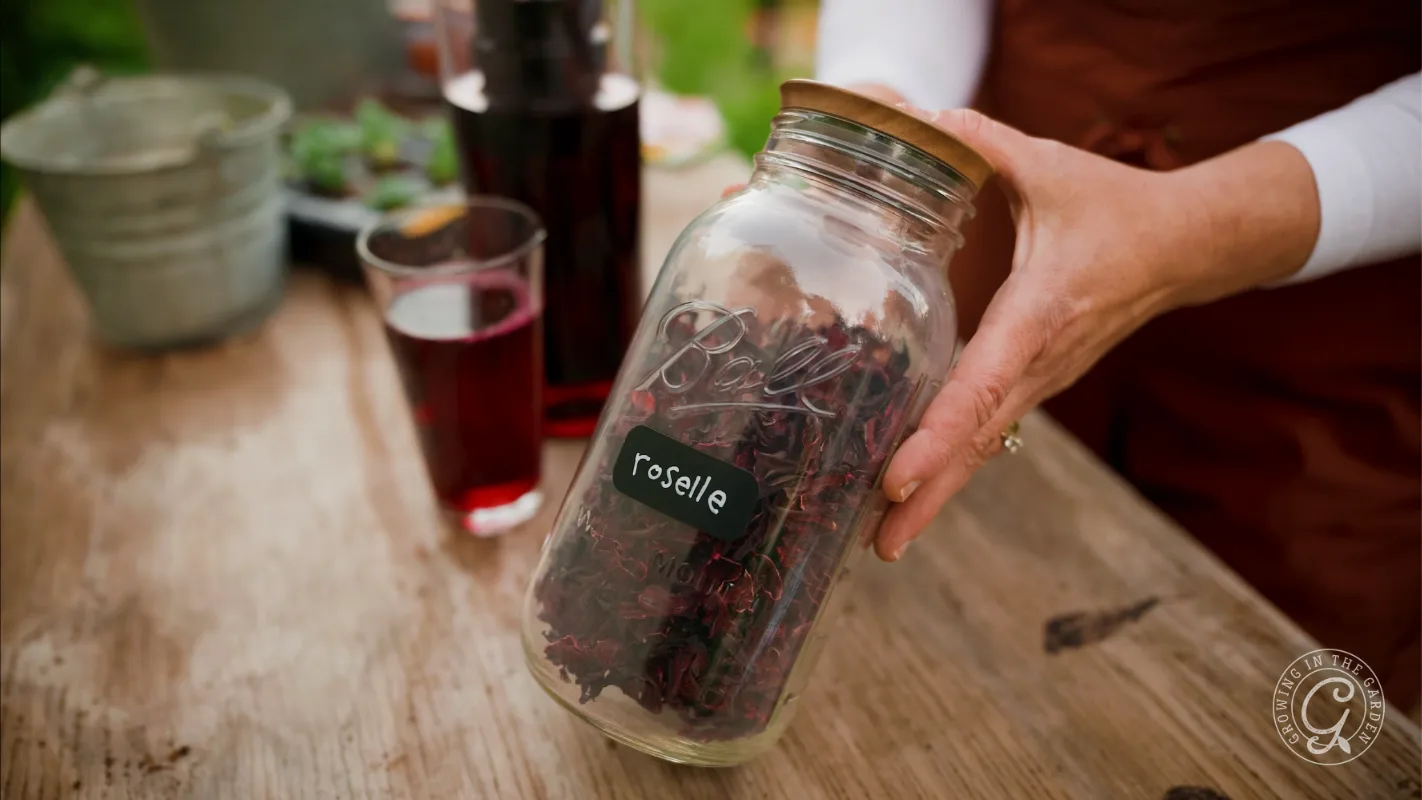
Sorrel is a traditional Caribbean holiday drink made with roselle, ginger, warm spices, and sugar. It starts with the same plant as agua de Jamaica but tastes completely different: deeper, spicier, and much more like a holiday drink. Some versions include alcohol, but I make mine without it.
Make both, and you’ll taste the difference. Agua de Jamaica is bright and refreshing. Sorrel is deeper, spicier, and tastes like the holidays.
Makes about 2 quarts
Ingredients:
- 4 cups fresh roselle calyces, prepped (or 2 cups dried)
- 8 cups water
- 2 to 3 inches fresh ginger, sliced thin or roughly grated
- 8 to 10 pimento berries (allspice), whole
- 4 to 6 whole cloves
- 1 cinnamon stick
- Peel from half an orange (optional)
- ¾ to 1 cup sugar, to taste
Directions:
- Bring the water to a boil with the ginger, pimento, cloves, cinnamon, and orange peel. Simmer for 5 minutes to release the spices’ flavor.
- Take the pot off the heat and add the calyces. Stir, cover, and leave it alone.
- Let it cool, then cover and refrigerate overnight. The long steep gives sorrel its deeper flavor.
- Strain into a pitcher.
- Sweeten to taste while stirring.
- Chill and serve over ice.
Every family makes this differently. Some go heavy on ginger, some add more cinnamon. Treat the amounts above as a starting point.
Don’t Skip the Leaves
Many gardeners grow roselle for the leaves rather than the calyces, and you may want to try them even if you planted for jam.
They taste tart and a little spicy, somewhere between spinach and sorrel. In parts of India, roselle is grown primarily for the leaves and is known as gongura. The leaves are also used in cooking in parts of West Africa.
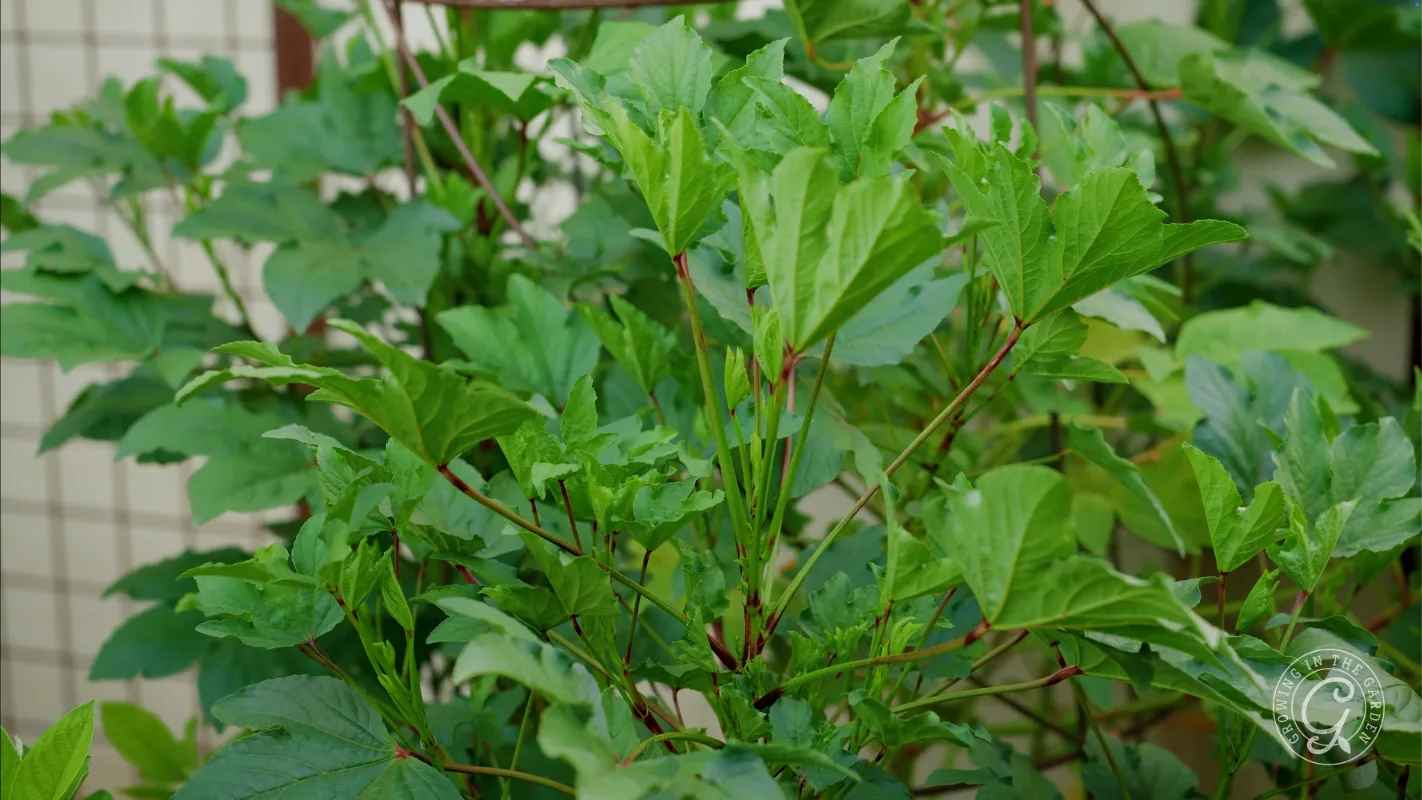
Ways to use them:
- Cooked down as greens, the way you’d cook spinach, collard, or mustard greens
- Stirred into dal, curry, or stew
- Raw in small amounts in a salad, where the tartness does the work of a vinaigrette
- Dried for tea
You can start harvesting leaves months before the calyces are ready. Cut branches back and the plant regrows. More on leaf harvest timing here.
Use them fast. Cut leaves wilt within hours, though standing the stems in water buys you a day or two, and refrigeration gets you about a week.
More Ways to Use Roselle
- Smoothies. Fresh or frozen calyces, seed pod removed. Leaves work here too.
- Sauces. Roselle adds color and a tart edge to both sweet and savory sauces.
- Anywhere you’d use cranberry. Muffins, quick breads, relish, a glaze for pork or turkey.
- Iced tea and lemonade. A handful of dried calyces turns homemade lemonade deep pink and adds tartness.
Using Roselle FAQs
Use however much you have. Cook the prepped calyces first, then measure the cooked-down roselle and add about the same volume of sugar. Save the seed pods because you’ll use them to make the pectin-rich cooking liquid. Full details are in the roselle jam recipe.
No. It keeps in the fridge for a few weeks and freezes well. Canning is for shelf-stable jars and gifting. The roselle jam post covers both.
I use them for pectin in jam and don’t eat them on their own. If I’m not using them or after using them to extract the pectin, I usually add them to my in-bed vermicomposting bins.
Yes. Use your oven on its lowest setting. Monitor closely.
Readers have told me they’ve had roselle pickled in restaurant salads and loved it. I haven’t made it myself. If you try it, I’d like to hear how it goes.
About a week in the fridge, as long as you’ve pulled the dried blossom out of the center first. That blossom is where mold starts.
No. The calyces and seed pods both contain natural pectin, which is why roselle jam sets so readily.
For tea, syrup, and sorrel drink, yes. For jam, you want fresh or frozen calyces and the seed pods.
Grow Your Own
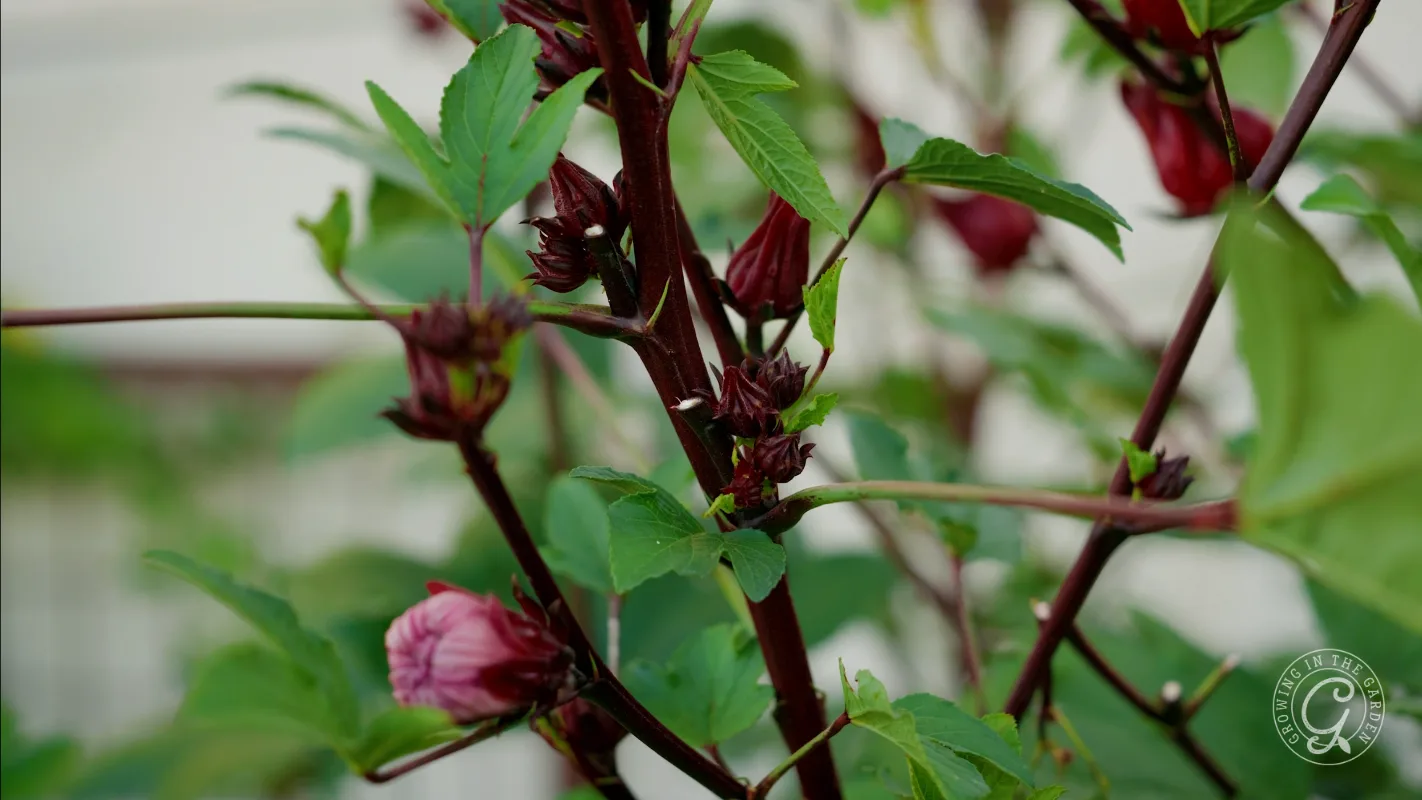
Roselle is one of the most productive plants in my garden and one of the easiest to grow in a hot climate.
Here’s my full guide to growing roselle hibiscus, including when to plant in the low desert, why it doesn’t bloom until fall, and why I now grow mine in whiskey barrels.


https://www.theseedcollection.com.au/blog/Rosella-Jam
Hi, Angela. My teen daughters and I have made three batches of Roselle jam using the recipe from the Australian blogger that you had a link to. I include the link here in case anyone needs it. Although the instructions were unclear (and we’ve never made jam before) we tried it and here’s what we have learned. Our first two batches were way too thick, but edible. The third was pretty good. We then used your link for canning in your comment above.
For our third and successful batch we used approx. 6 cups roselle and 1 cup seed pods. That reduced down to about three cups, so we added three cups of sugar. We ended up with about 4 cups jam.
We learned that “boil” meant “simmer” and we needed a lot more water when simmering the seed pods. When we simmered the roselle and sugar we had really overcooked it the first two tries by waiting until it looked like jam. But it thickens up a lot after it cools! So the third time we didn’t thicken it up as much. It was looser than jam when we filled our jars, but it ended up being the perfect thickness for a nice jam.
This was a great jam for beginners like us as roselle jam is a very forgiving recipe.
Thank you. Appreciate you sharing your experience here. That is very helpful.
Thank you, Angela. I can’t wait to see your jam recipe. We are so excited to discover Roselle Hibiscus! We’ve been drinking “agua de Jamaica” for years and had no idea that we could grow it ourselves down here in Zone 10 on the deep South Texas coast. Your blog, books and videos are hands down the most helpful I’ve ever found. I’m finally learning how to grow things in my garden thanks to you.
☘️
Hi, Angela. We are harvesting our first Roselle and have made a batch of delicious mock-cranberry sauce. Now we would like to make the jam. But I am a bit confused. The recipe doesn’t say how much Roselle is needed. Also, does the ratio of seed pods to calyxes need to be equal? Many of our calyxes do not have seed pods, or they are very tiny.
Thanks for your help.
Faith
Hi Faith. Thanks for letting me know. The recipe I link to has changed, the directions are much less clear than they used to be. I need to write down what I do and get a recipe posted here. But to answer your question you use as much as you have of the roselle and seed pods it doesn’t have to be equal. Use the amount of roselle calyces you have as the measurement for the sugar. Hope to get a recipe posted soon.
I specifically grew roselle this year because your videos got me excited about it! I am presently making the Jamaican Sorrel drink. A lovely woman in our ward who is from Jamaica got so excited when she found out! She asked where I got the recipe and without thinking I said, “from my friend Angela!” ;’D Anyway, it’s cooling right now and this lady is gonna come get some of it this evening. She said seeing it in my garden filled her heart bc she misses her home country so much. Thank you!
I love it! Congrats on a successful harvest.
Angela I plan on making roselle jam the receipt does not say if I need to seal the jars or how long it will keep can you help me out with these answers
Hi Sherrie, I use the jam canning instructions from Ball. You can find them here: https://www.ballmasonjars.com/blog?cid=black-raspberry-jelly
Any recipe you have to make a liqueur? Any I have seen have been from dried hibiscus but looking to make with fresh that I picked up at the farmers market. Thanks!
I don’t have one – sorry!
Angela, thank you so much!! First timer here, made 2 batches of the jam already, getting ready to make the holiday sauce for tomorrow, I can’t wait for family and friends to try this it is so good and easy to make!! I will also be making the tea, and giving jam and tea for Christmas gifts. We’re addicted so thanks again : ) Enjoy thanksgiving!!
Hope you enjoy it! Happy Thanksgiving!
We just harvested out first batch of Roselle! You mention the seed pods being edible. Do you have any more info on that? What they taste like, or how best to prepare them?
Thanks for always being such an amazing resource!
I don’t. I use them for jam, but haven’t used them other ways. Maybe a quick google search could bring up some ideas. If you find ways you enjoy, please let me know.
Hi Angela, I first tasted Roselle in a delicious Asian salad at my Son’s home when I was visiting from out of State. He had picked up a to-go salad on the way home from work. Bright red Roselle garnished the lovely green salad. It tasted like pickled in vinegar with a twinge of sweet flavor.
I purchased seeds to grow the treat in my garden. Became ill and wasn’t able to plant in my garden. Your video makes me excited to plant them next spring. I’m going to try pickling them, maybe similar to Bread & Butter pickles that I used to make? Yummmm. A 6th recipe to add to your repertoire of Roselle Recipes from MaryElizabeth Calais 🙂
P.S. I was a subscriber to your YouTube and so enjoyed. Then had cancer, but starting to garden again. God is Good to me. And you’re in good hands with Kevin….. I’ve following him for years.
Blessings! Keep up the good Gardening….. :):):)
Do you have any tips on dehydrating the calyxes for someone who doesn’t have a dehydrator?
You could look up how to dehydrate using your oven. It may work to use your oven on it’s lowest setting.
Thanks for the recipes, Angela! With our (over)abundance of roselles this year, we have now made all 5 of these delicious recipes! Everyone loved the relish at Thanksgiving and the jam given as gifts. I’ve started making the jam recipe with 2/3 the volume of sugar and it comes out slightly more tart with more of the roselle flavor! It’s so good, I’m making jars for everyone for a Christmas!