
How to Use Broccoli and Cauliflower Leaves
Broccoli and cauliflower leaves are one of the most overlooked parts of the garden harvest. While most people toss them into the compost, they’re completely edible and surprisingly delicious. Their mild flavor and tender texture make them easy to use in many of the same ways you’d cook kale, collards, or Swiss chard. Learn how to harvest, prepare, and cook broccoli and cauliflower leaves so you can make the most of every plant you grow.
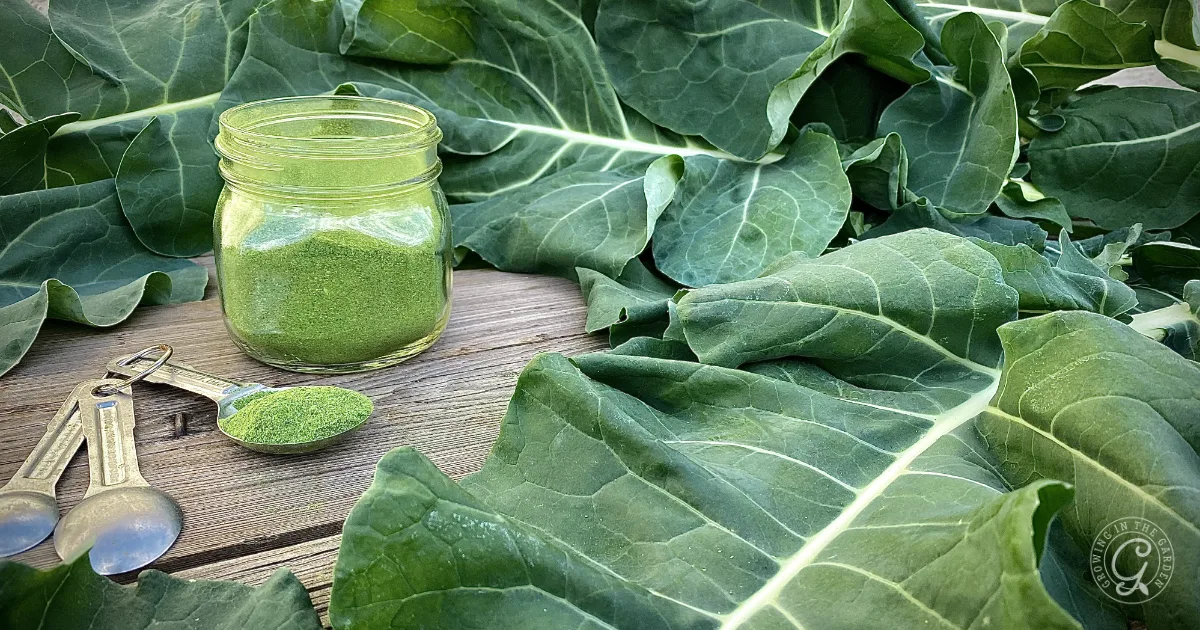
Key Takeaways: Preserving Broccoli & Cauliflower Leaves
- Broccoli and cauliflower leaves are edible and nutritious; they are often overlooked and tossed away.
- These leaves contain more beta-carotene than florets and are rich in vitamins A, C, K, and other nutrients.
- You can use broccoli and cauliflower leaves in various ways, such as in soups, salads, smoothies, or as crispy chips.
- To preserve these leaves, consider dehydrating or freeze-drying them, then grind them into a powder for easy storage.
- Use the superfood green powder in different dishes to enhance their nutritional value without altering the flavor.
Can You Eat Broccoli and Cauliflower Leaves?
Cool-season gardening brings an abundance of brassicas – broccoli, cauliflower, cabbage, and more.
We usually eat the tender parts of the plant, the broccoli and cauliflower unopened florets, and the center head of the cabbage. But what about all of the leaves and outer leaves of the plant? Can you eat broccoli and cauliflower leaves?
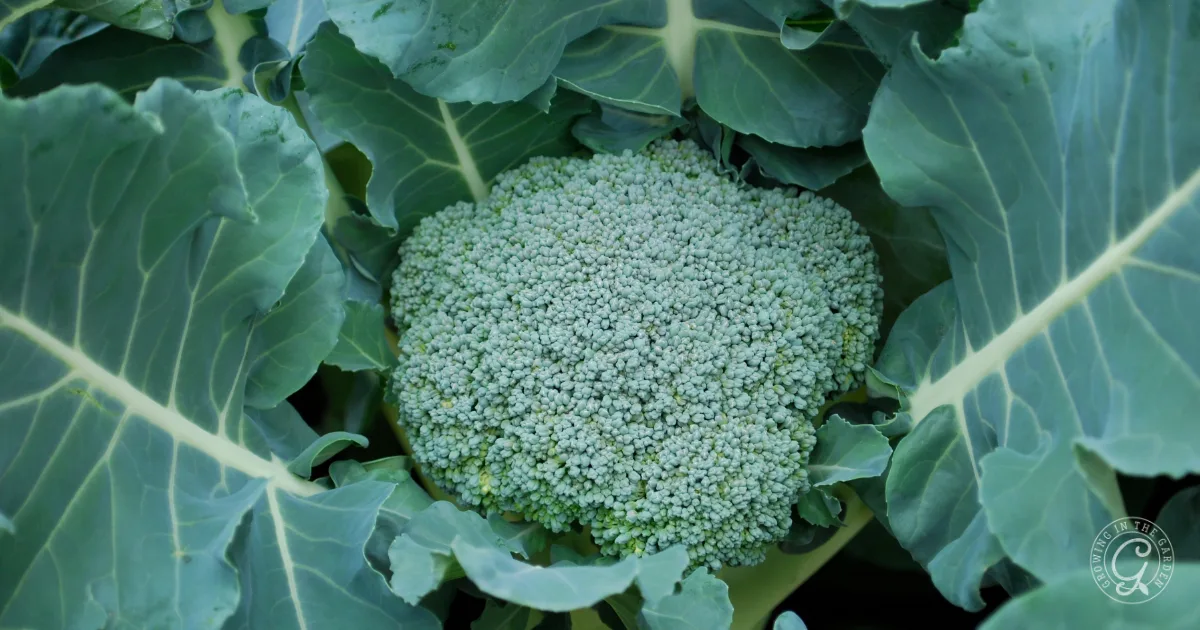
The answer is yes! In fact, according to Registered Dietician Karen Donaldson, MS, RD, LD, the “leaves actually are a richer source of beta-carotene than either the stems or florets.”
“Superfood” is not too strong a word for these nutrient-dense leaves. They are packed with healthy vitamins and minerals like A, C, and K, and calcium, fiber, iron, niacin, potassium, and thiamine.
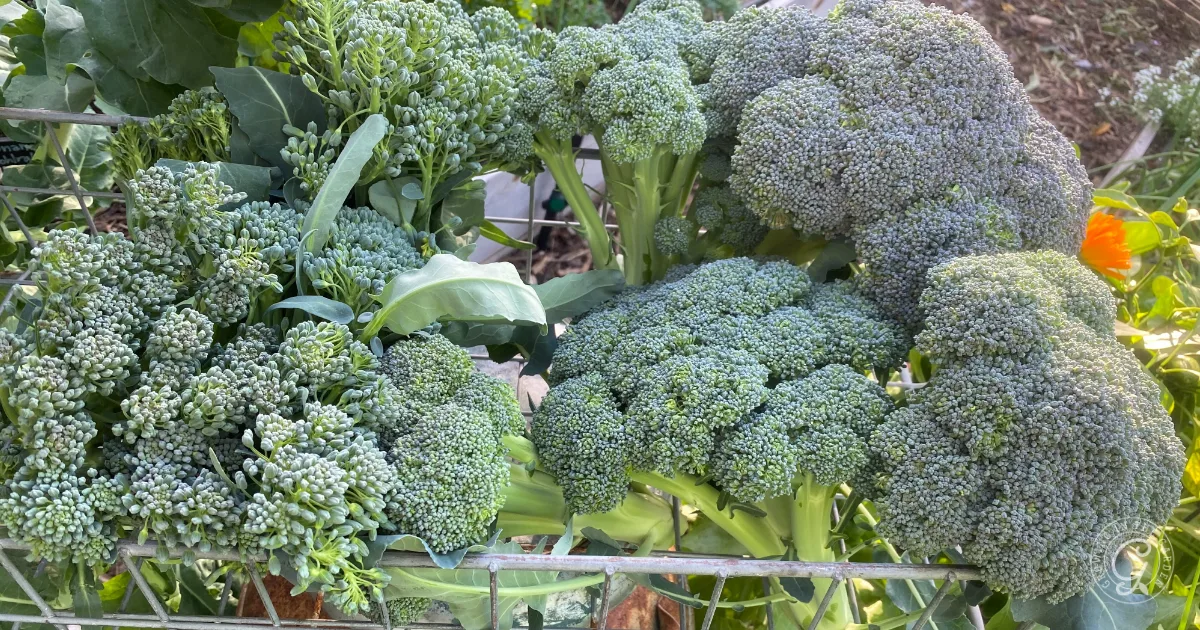
Don’t let all this nutrition and garden goodness go to waste. The part of the plant we usually eat is quite small compared to the abundance of outer leaves and stems.
How to Use Cauliflower and Broccoli Leaves Fresh
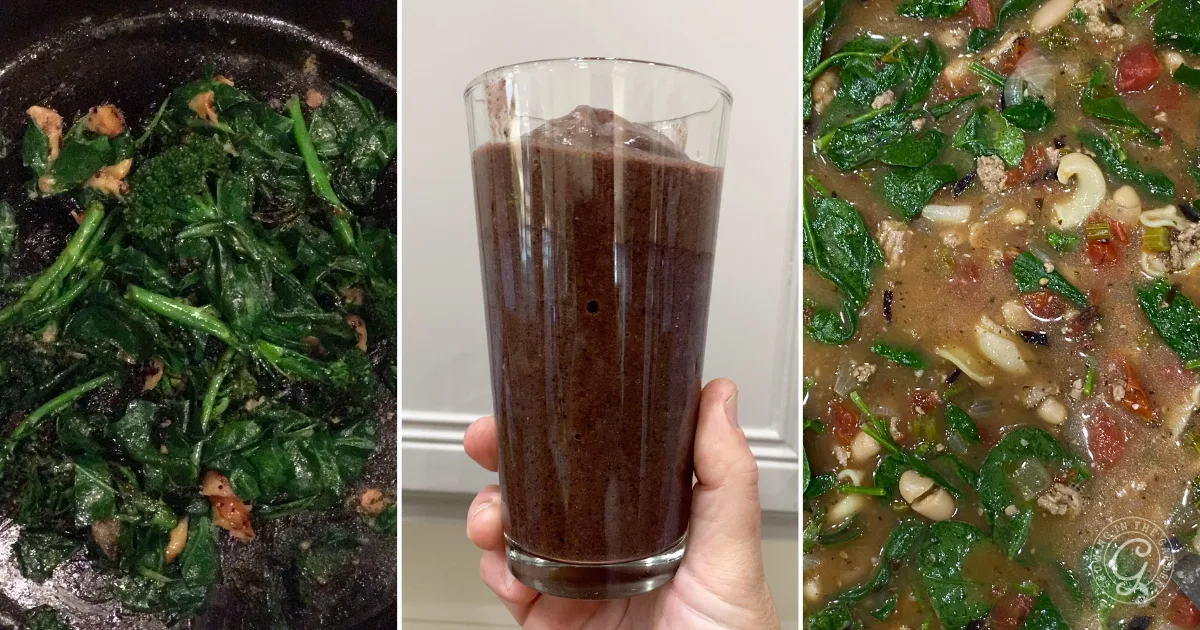
Here are some ideas for using fresh broccoli, cauliflower, and other brassica stems and leaves.
- Add the leaves to stock or soup. They add depth and nutrients to homemade soups especially when simmered with other vegetables.
- Make crispy leaf chips! Kale isn’t the only green that packs a crunch as chips. Season the leaves and bake them into a savory snack.
- Grate and use for coleslaw or salads. Finely shred the leaves after removing the center stems and toss into coleslaw or salad for added texture and nutrition.
- Add leaves to smoothies. A handful of leaves blends well into smoothies, adding nutrition without changing the flavor.
- Sauté like leafy greens. Treat the smaller, tender leaves like spinach or chard, quickly sautéed with garlic and oil for a delicious side dish. I love sautéing Swiss chard with garlic and lemon, and brassica leaves would be a perfect substitute.
- Juice the leaves. Brassica leaves can be juiced with other vegetables or fruit for a nutrient-rich drink. This is my favorite juicer.
- Use leaves in wraps. Large, flexible leaves make excellent wraps. Use smaller leaves in wraps or sandwiches.
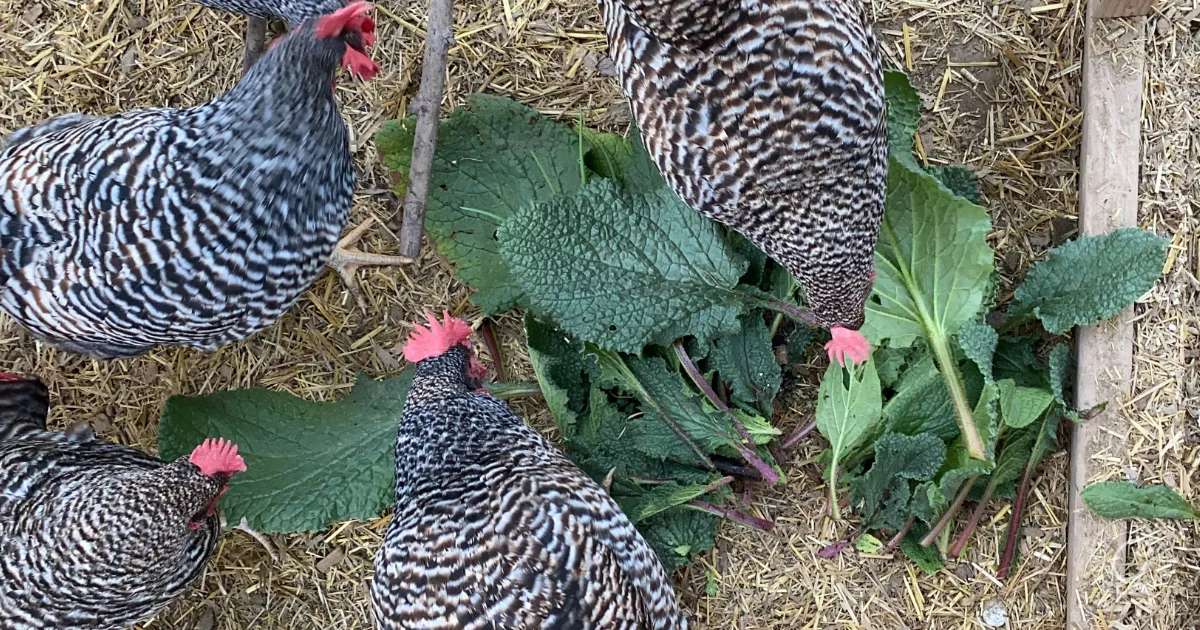
- Feed them to your chickens. Reduce garden and kitchen waste by feeding your extra leaves to your backyard chickens.
How to Preserve Broccoli and Cauliflower Leaves
Even with all the ways to use fresh broccoli and cauliflower leaves, you may still have an abundance. What is the best way to preserve broccoli and cauliflower leaves?
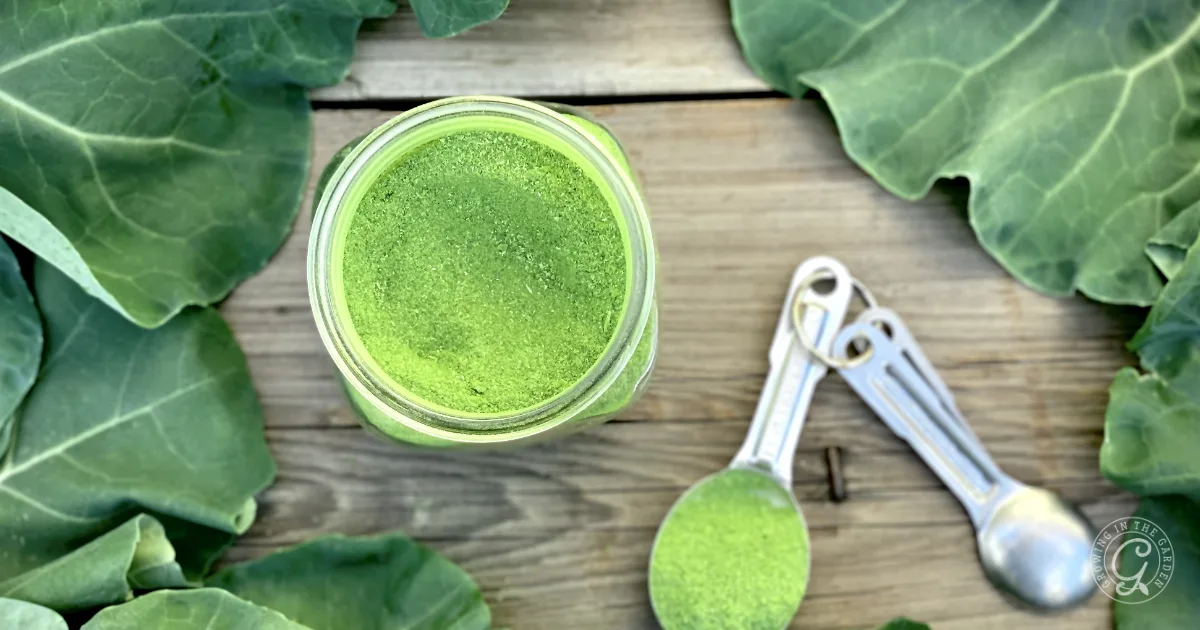
Preserve them by dehydrating or freeze-drying them and then use the leaves as a powder. This process makes the bulky leaves simple to use and store. Here’s how I do it:
1. Collect the leaves after harvesting the heads and florets
Don’t harvest the leaves too soon; they provide energy to the growing plant. The best time to harvest the leaves is when you are ready to remove the plant. Use the harvested leaves right away.
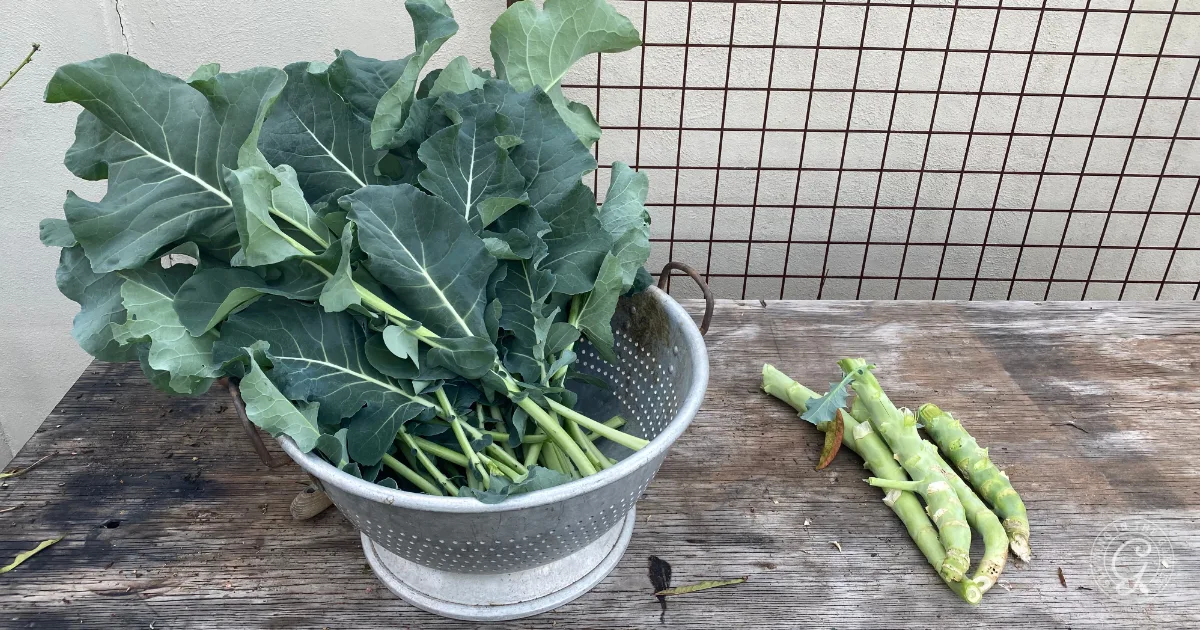
2. Prepare the cauliflower and broccoli leaves
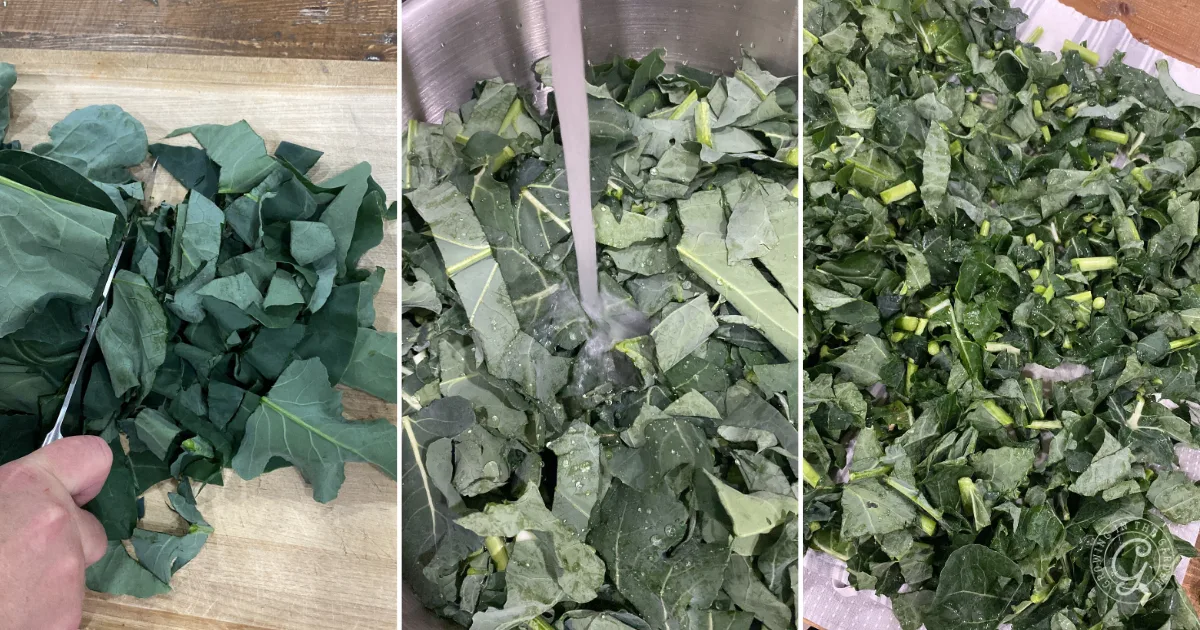
- Give leaves a rough chop.
- Remove the stems if you want to use them and freeze dry or dehydrate them separately.
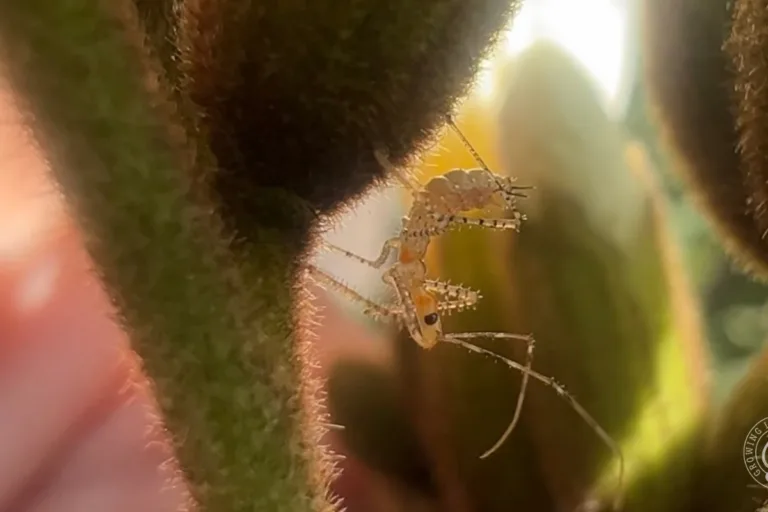
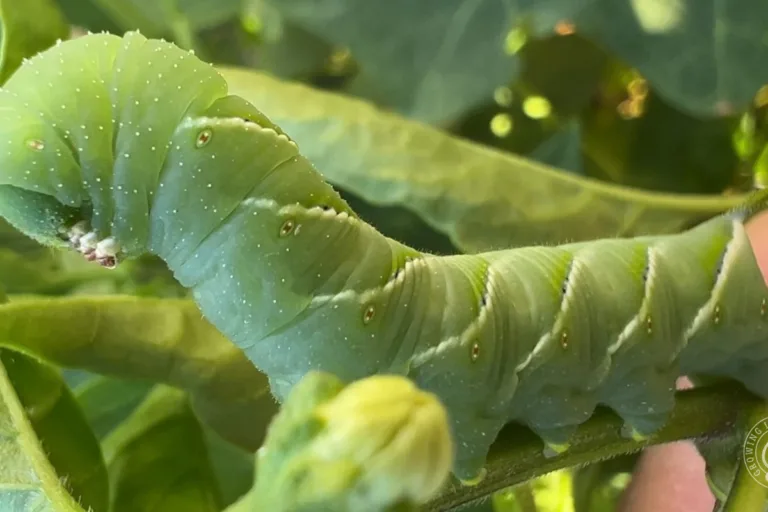
- Soak in a bowl full of water for 5-10 minutes. Stir with your hands to dislodge any dirt or unwanted visitors.
- Lay flat and allow to dry on a dish towel.
3. Process the leaves in a freeze dryer or dehydrator

You can learn about the difference between freeze-drying and dehydrating here. Both processes will work, but freeze drying preserves the most nutrients.
I used a dehydrator to preserve broccoli and cabbage greens for several years, which worked fine. Now I use the Medium Freeze Dryer with the Premier Pump from Harvest Right.
To Freeze Dry:
- Fill trays up to the sides with the prepared leaves.
- Processing times may vary. Freeze drying can take 12-18 hours if you leave the stems in the leaves intact. If you remove the stem from the leaves, they will take 6-8 hours.
- Remove from freeze dryer when complete and put in an airtight container as soon as possible.
To Dehydrate:
- Fill trays evenly with prepared leaves.
- Process on the low heat setting (95°F / 35°C) until the leaves are crispy.
- The process may take 12-48 hours.
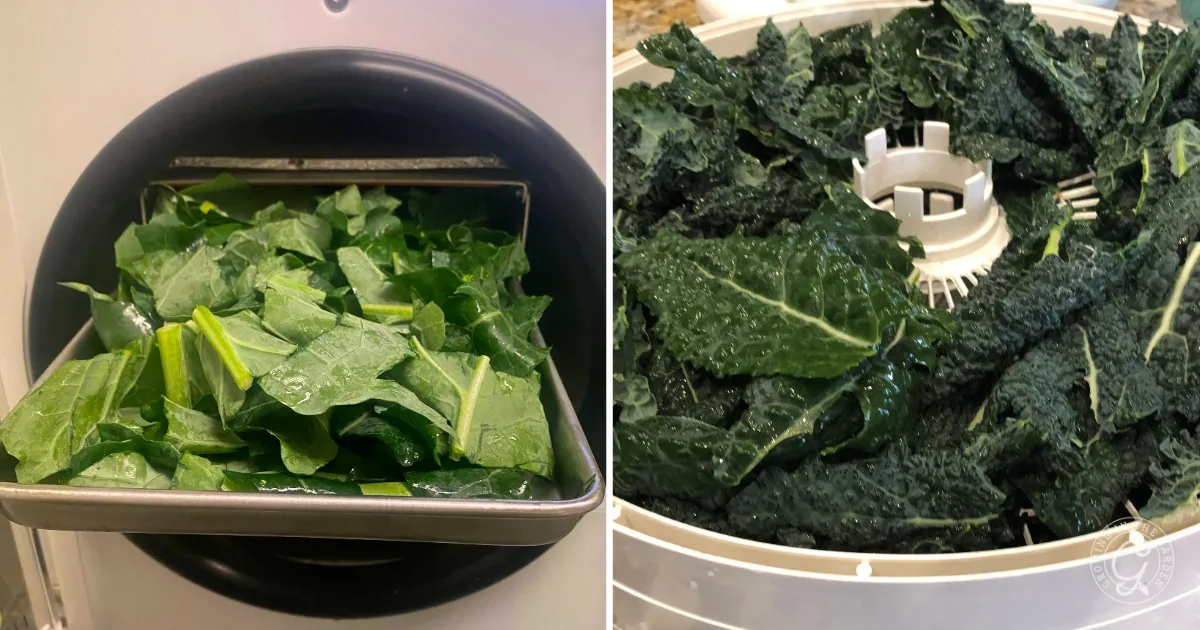
Freeze drying or dehydrating items of the same thickness prevents leaves from being processed longer than necessary.
If you have a large amount, process the stems together, then process all the leaves.
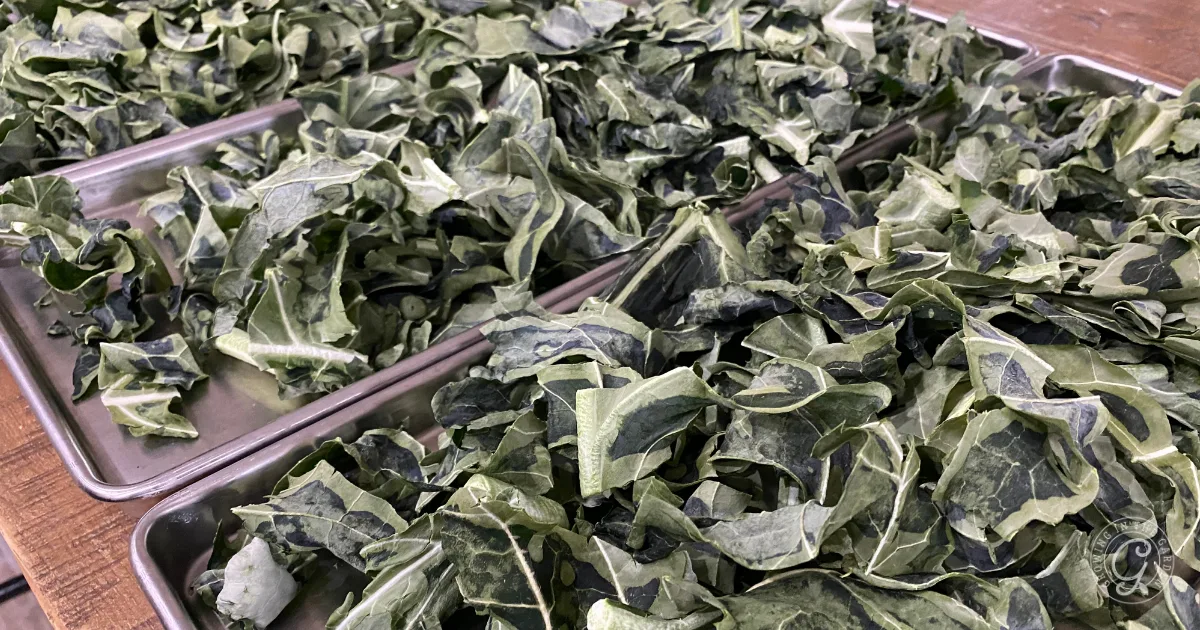
4. Grind the dried leaves into a powder
Once the leaves and stems are completely dry, they should crumble easily.
I use my favorite Vitamix blender to grind the dried leaves into a powder quickly. You can also use a potato masher.
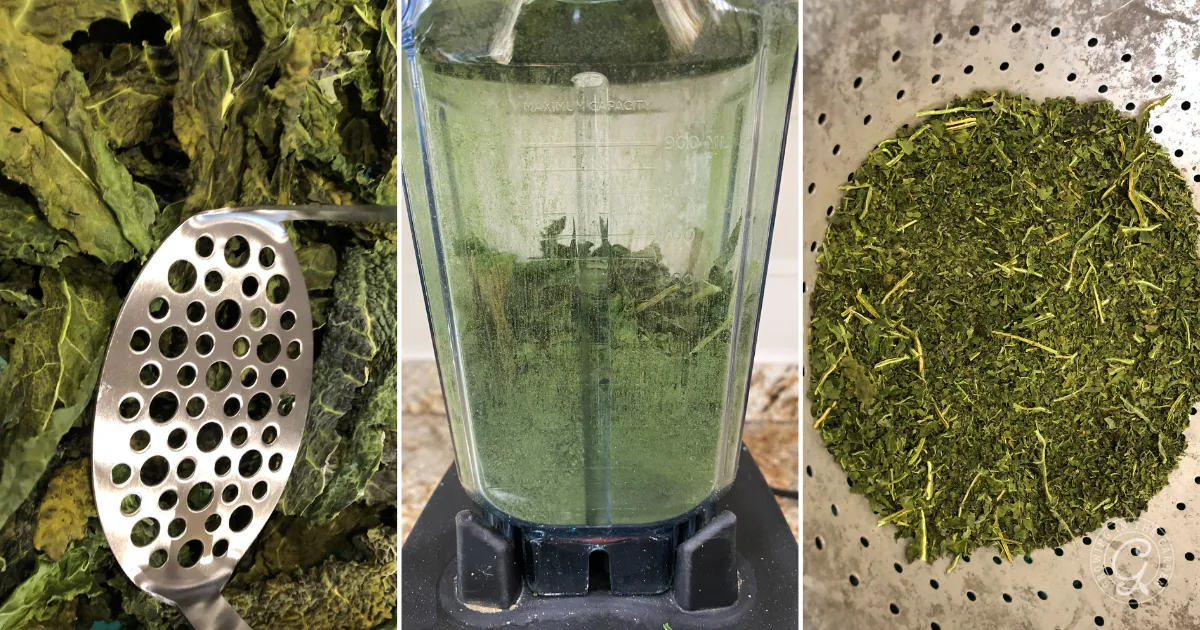
The volume decreases significantly, making storing them simple. I store the powder in an airtight jar.
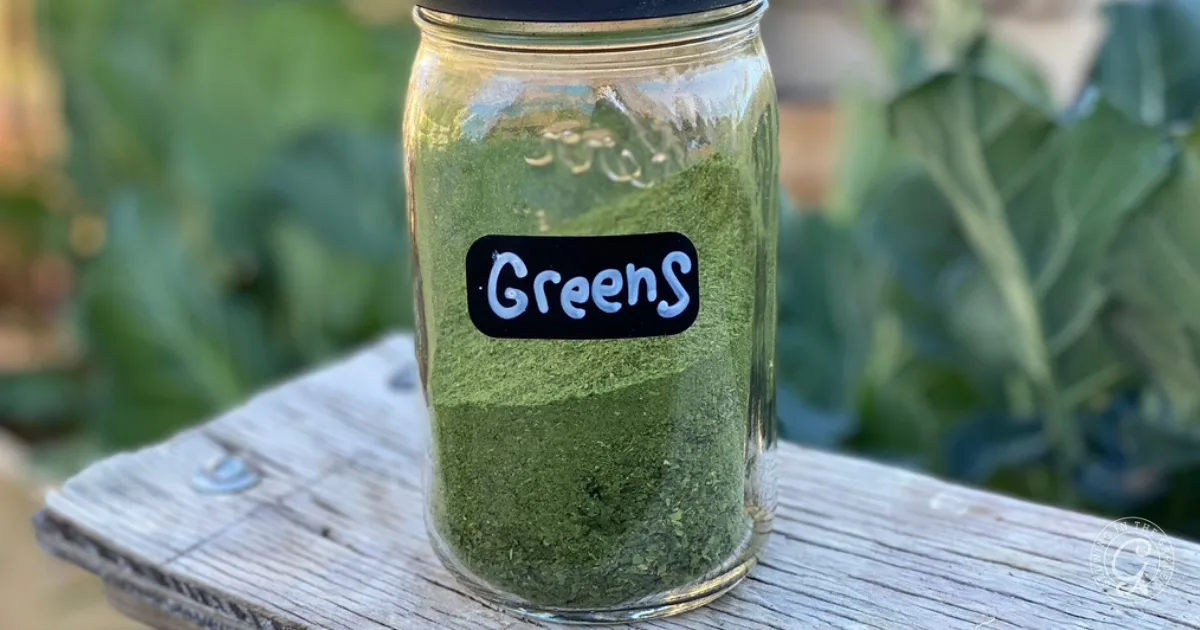
5. Use the superfood green powder in everything
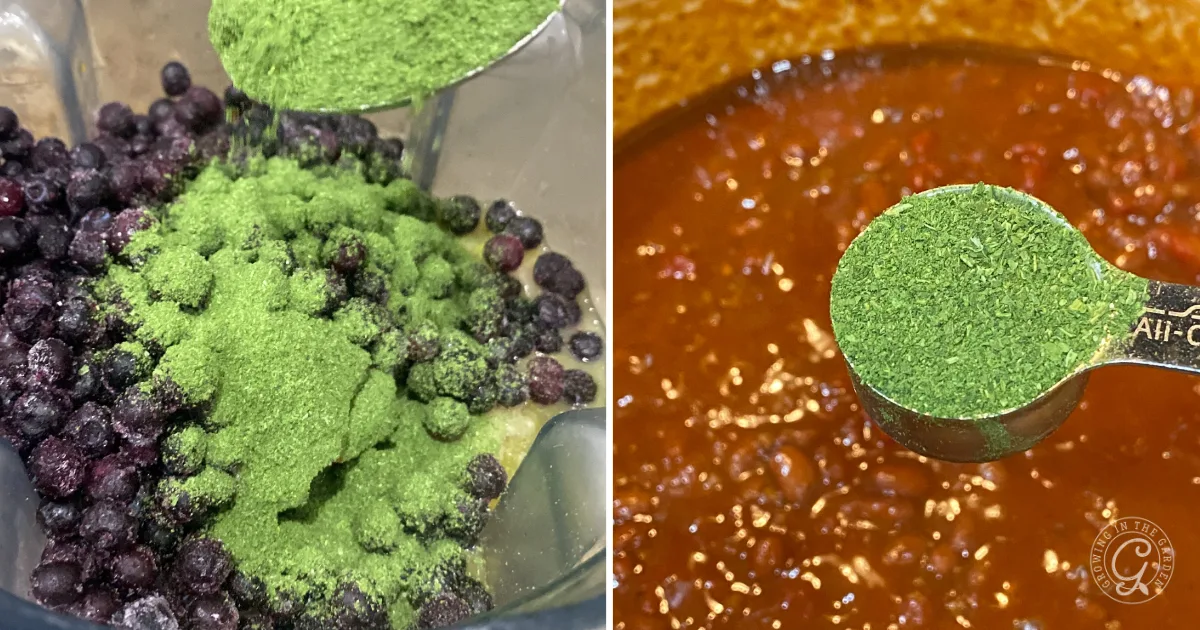
Adding the greens powder to smoothies, soup, chili, or whatever you want is simple. Add as much or as little as you would like.
Experiment and try adding the powder to different foods. You can add the powder to smoothies or soups for a nutrition boost without changing the flavor.
Preserve Broccoli and Cauliflower Leaves & Create Your Own Greens Powder
Ingredients
Equipment
Method
- Don’t harvest the leaves before you harvest the heads and florets as they are a good source of energy for the main crop. Harvest everything at the same time for best results.
- Remove leaves where they connect to the main stem by snapping them away from the spine.
- Give the leaves a rough chop.
- Rinse the leaves very well by letting them soak in a large bowl full of water.
- Lay them out on a towel to dry completely.
- For years I used a dehydrator to process my leaves. I’ve switched over to freeze drying the leaves as this preserves the most nutrients. Use what you have on hand!
- Fill your trays with leaves and follow the processing directions on your machine and make sure the leaves are completely dried out. This usually takes 12-36 hours.
- If you are using stems as well, dry them separately to cut down drying time.
- Use a blender or potato masher to crumble your dried leaves into a fine powder.
- Store in an airtight container for up to a year.
Video

Notes
Tried this recipe?
Let us know how it was!If this post about what to do with broccoli and cauliflower leaves was helpful, please share it.




Like you I dehydrate the leaves. I also chop and steam the large thick stems with chopped onion and garlic and herbs. When steamed soft and cooled I process them to a nice thick creamy sauce. It freezes well and is great in soups or on pasta or in patties etc. Good flavour. Just check the stalks for strings.
Sounds delicious, thanks for sharing.
I realized this year I was wasting a lot of garden veg. I’ve been using fresh young broccoli leaves as a salad green, and cabbage leaves (plant leaves, not from the head) to wrap cabbage rolls and dolmas. I hope to dehydrate broccoli leaves for use in soup, and I’ll try your powder idea as well. All these years and I’ve been wasting most of the plant!
Probably an air fryer on low temp would work very well. I had much better luck drying orange slices there than in the oven. (And probably less electricity on my power bill.)
Can you dehydrate using your oven? I’d love to know the time and temperature for that!
What a fantastic idea! Thank you so much for this info.