
Lawn Alternatives: Low-Water-Use Groundcovers for Hot Climates
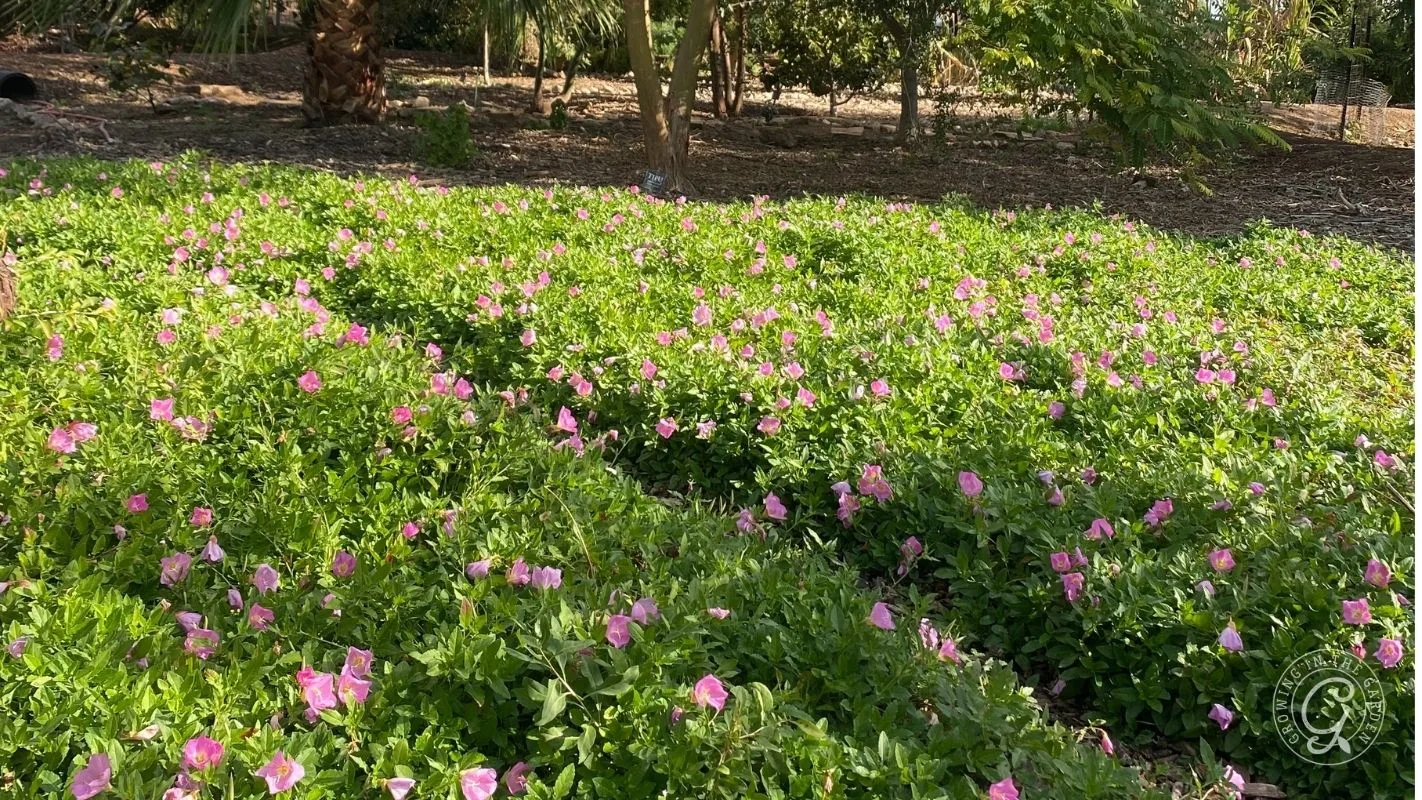
Tired of all the water, upkeep, and lack of wildlife in a typical grass lawn? Groundcovers make excellent lawn alternatives. They provide habitat for pollinators, use less water than grass, and cover and cool the soil in ways rock and artificial turf can’t. If you’re tempted to pull out the lawn and put in rock or plastic turf, choose some of these groundcovers instead. Artificial turf and rocks are hotter than living plants and won’t actually cool your yard. I explain more in my post on 5 reasons to replace grass, and why rock and turf fall short.
Not everything sold as a groundcover grows the same way, though. Some stay low and spread into a walkable mat, while others are small spreading shrubs that mound up and cover more space. I’ve divided this list into both groups and included the mature size and my best tips so you can choose the right ones for your yard.
Key Takeaways: Lawn Alternatives
- Groundcovers offer a lower-water alternative to grass lawns, suitable for hot climates.
- These plants reduce water use and maintenance while helping cool the soil.
- True groundcovers include Kurapia and frogfruit, which can handle light foot traffic.
- Small spreading shrubs like tufted evening primrose and damianita are also effective but mound up, not lying flat.
- Combining groundcovers with drought-tolerant shrubs and trees optimizes cooling in your yard.
What We’ll Cover:
- Cooling With Groundcovers
- True Groundcovers
- Kurapia ( Lippia nodiflora )
- Frogfruit ( Phyla nodiflora , Arizona native)
- Gray Ice Plant ( Malephora crocea )
- Creeping Myoporum ( Myoporum parvifolium )
- Outback Sunrise Emu ( Eremophila glabra ‘Mingenew Gold’)
- Yellow Dot ( Sphagneticola trilobata )
- Creeping Germander ( Teucrium chamaedrys ‘Prostratum’)
- Mexican Evening Primrose ( Oenothera speciosa )
- Trailing Gazania ( Gazania rigens )
- Small Spreading Shrubs
- Tufted Evening Primrose ( Oenothera caespitosa , Arizona native)
- Blue Euphorbia ( Euphorbia rigida )
- Damianita ( Chrysactinia mexicana , Southwest native)
- Bush Morning Glory ( Convolvulus cneorum )
- Trailing Lantana ( Lantana montevidensis )
- Blackfoot Daisy ( Melampodium leucanthum , Arizona native)
- Trailing Rosemary ( Rosmarinus officinalis ‘Prostratus’)
- Lawn Alternatives FAQs
Cooling With Groundcovers
The best time to plant most of these groundcovers in the low desert is fall, October through November, so roots have time to establish before summer heat arrives. Spring planting works too, but expect to monitor them more closely through that first summer while they’re getting established.
Groundcovers alone won’t solve every cooling problem in a yard. For the most cooling, pair them with drought-tolerant shrubs and the right shade tree; groundcovers are a good bottom layer, but shrubs and trees are also essential parts of your low desert yard.
If you’re replacing Bermuda grass, see my guide on removing it without chemicals before you plant.
True Groundcovers
These stay low and spread to form a mat, but that doesn’t mean they hold up to foot traffic. Kurapia and frogfruit can take light foot traffic. The rest fill in the ground well but aren’t made for walking on.
Kurapia (Lippia nodiflora)
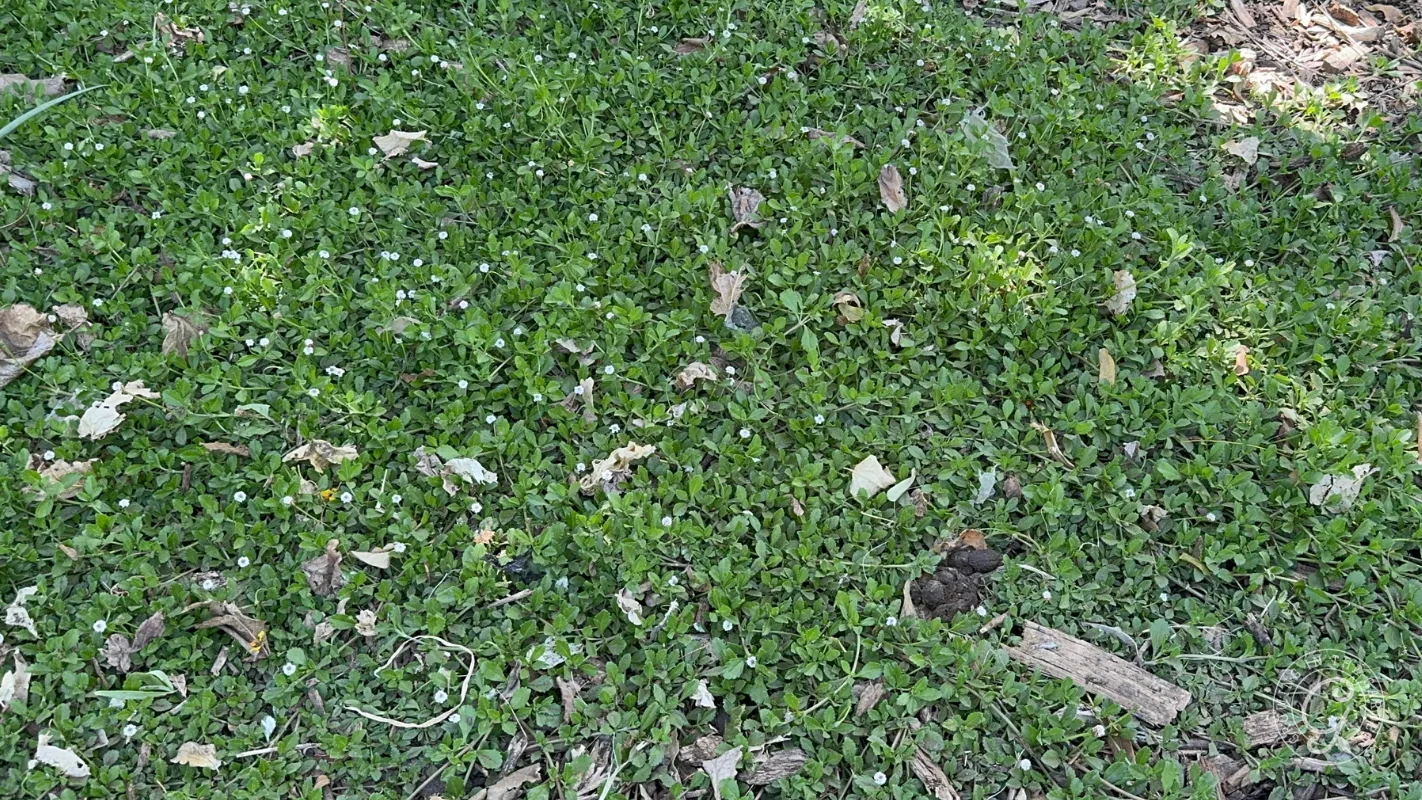
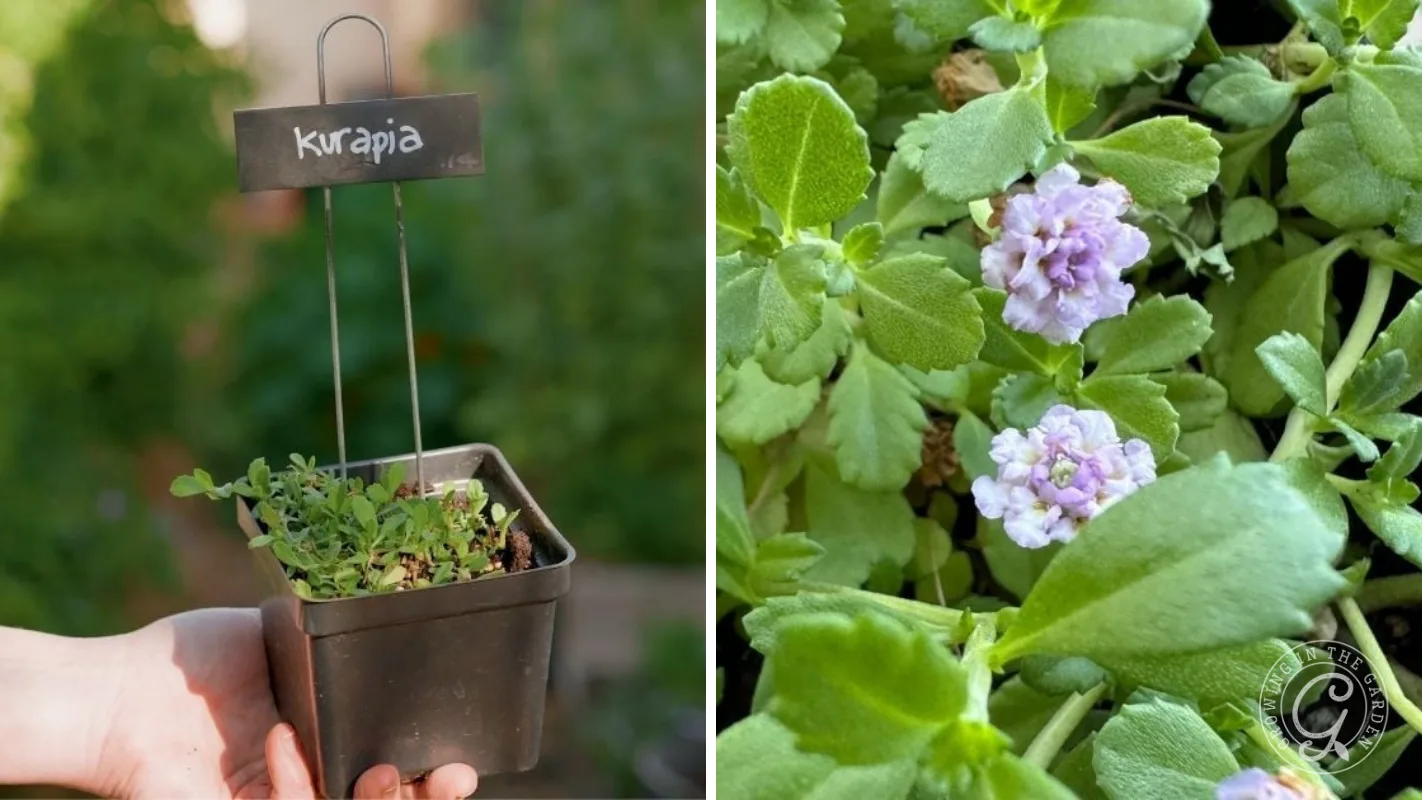
Kurapia is a patented, sterile cultivar bred from frogfruit. It stays about 3 inches tall in full sun if left unmowed. Planted as plugs 18 inches apart, it fills in and covers the area in about 3 months. It holds up well through Phoenix summers according to University of Arizona Cooperative Extension research. I’ve been growing it myself with great results so far; it’s the closest thing to an actual lawn substitute on this list and takes light foot traffic reasonably well. Because it’s sterile, it won’t reseed or spread where you don’t want it, unlike its parent plant below. Hardy to about 13°F.
Frogfruit (Phyla nodiflora, Arizona native)
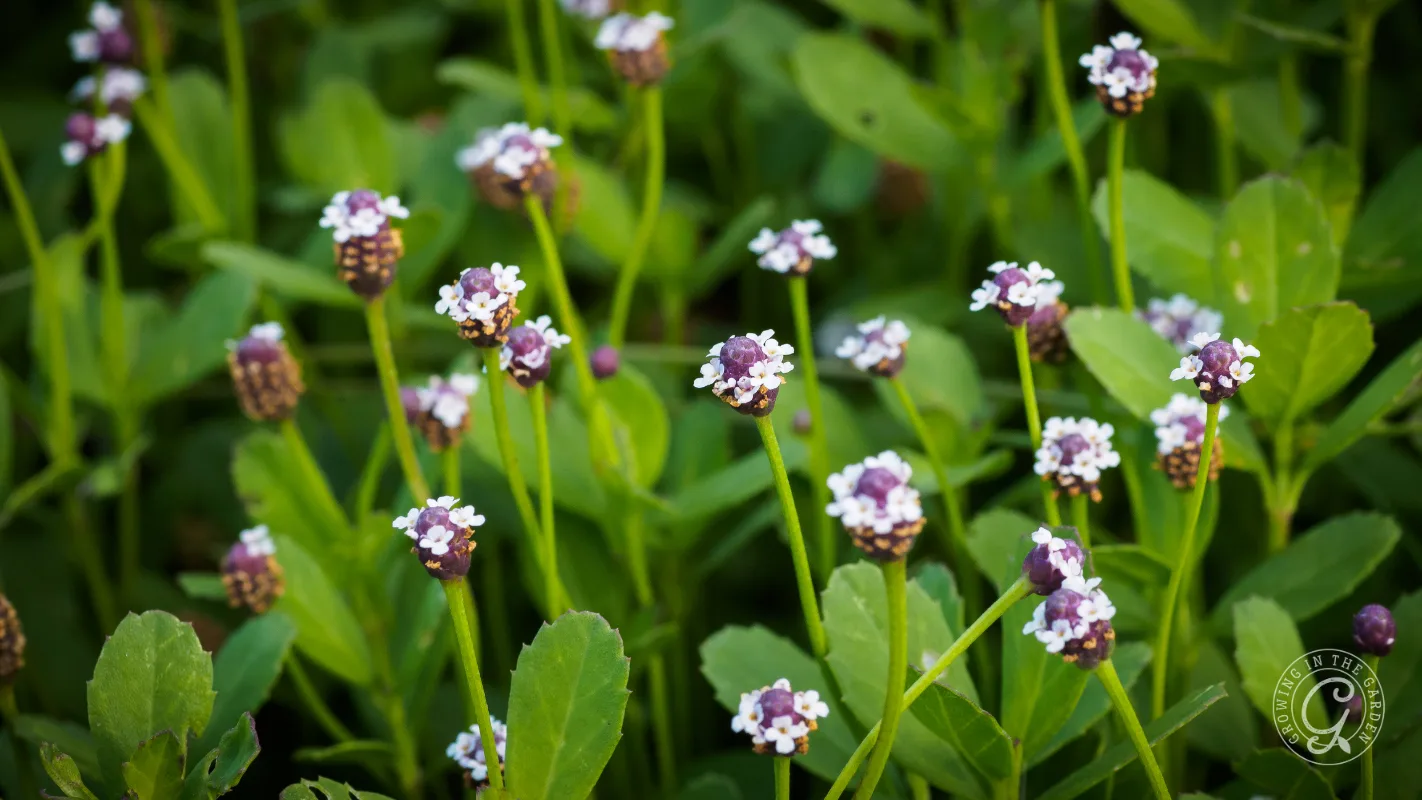
Frogfruit is the native species Kurapia was bred from. Frogfruit stays low and spreads by runners like Kurapia, but it flowers and seeds, which means it can pop up where you didn’t plant it. It grows to about 6 inches tall and has small white to purple button flowers nearly year-round in mild winters. A host plant for buckeye butterflies. It’s root-hardy through low desert winters, though foliage can die back in a hard frost. Like Kurapia, it takes light foot traffic reasonably well. If you want the true native and don’t mind some volunteer spread, choose frogfruit. If you want the tidier, non-reseeding version, choose Kurapia. See more Arizona natives in my native plants guide.
Keep in mind: Frogfruit spreads quickly by runners and can grow beyond the area where it’s planted. Give it room to spread, or use edging and occasional trimming to keep it contained.
Gray Ice Plant (Malephora crocea)
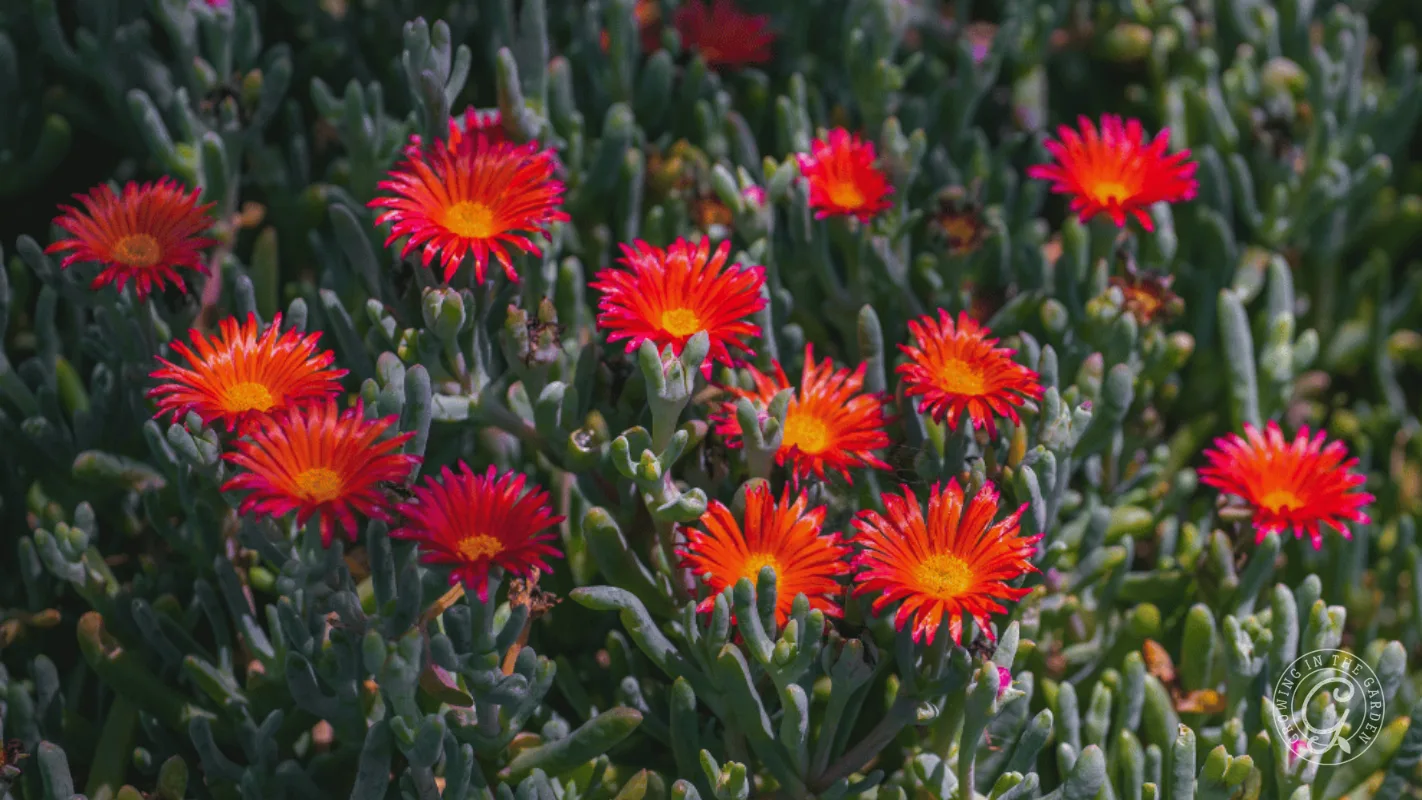
Native to South Africa, gray ice plant tolerates temperatures down to 20°F and forms a low, trailing mat about a foot tall and up to six feet wide. Orange to red flowers with a yellow center show up in spring. Low litter, no thorns, and it does fine in containers too. It doesn’t take foot traffic; plant it somewhere it can fill in without getting stepped on.
Creeping Myoporum (Myoporum parvifolium)
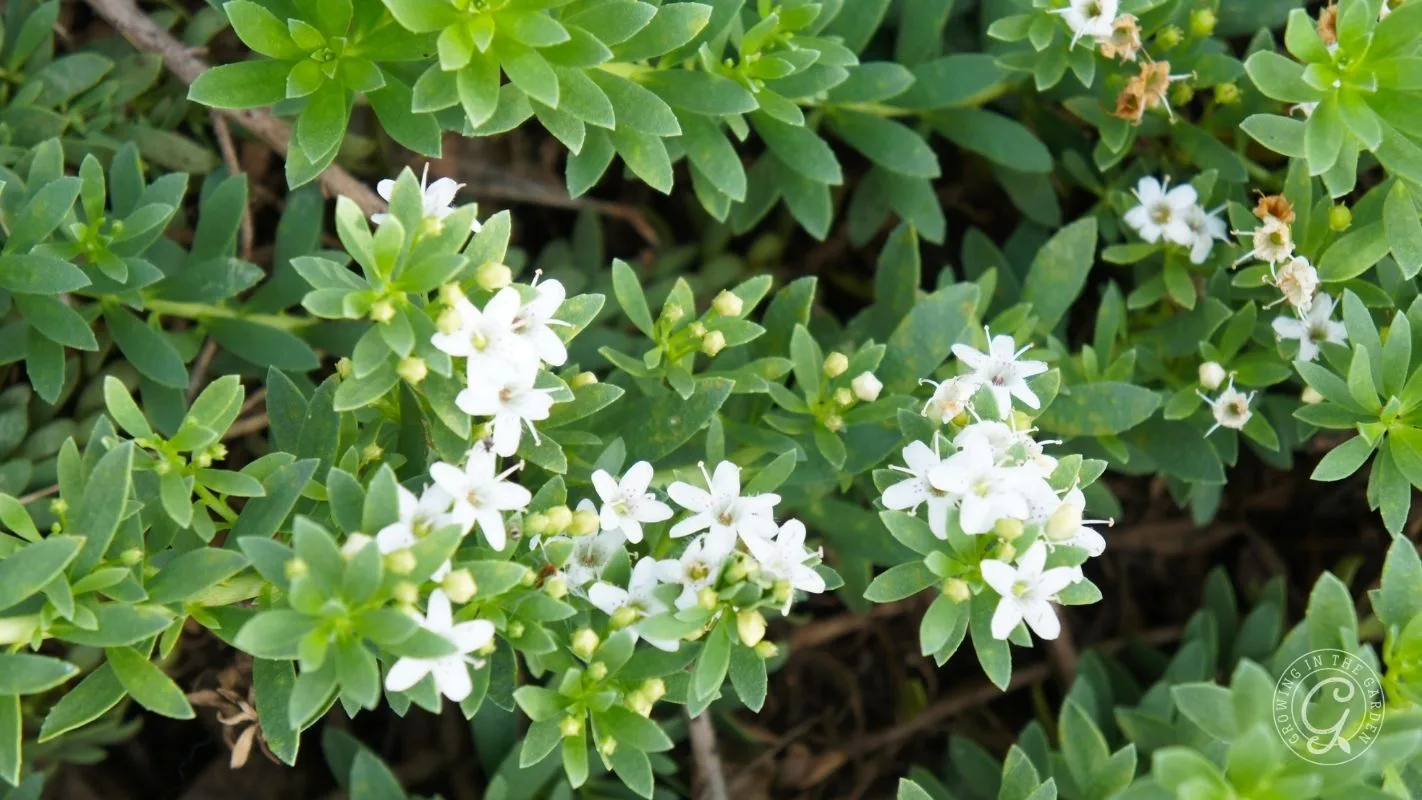
An Australian native groundcover that can spread up to six feet wide while staying less than a foot tall. It handles full sun to partial shade and works on slopes as well as flat ground. It won’t hold up to regular foot traffic, so it’s better for filling a slope or bed than a path. One caution from my own experience: don’t overwater this one. I lost mine to overwatering; it prefers to stay on the dry side. Hardy to 20°F.
Outback Sunrise Emu (Eremophila glabra ‘Mingenew Gold’)
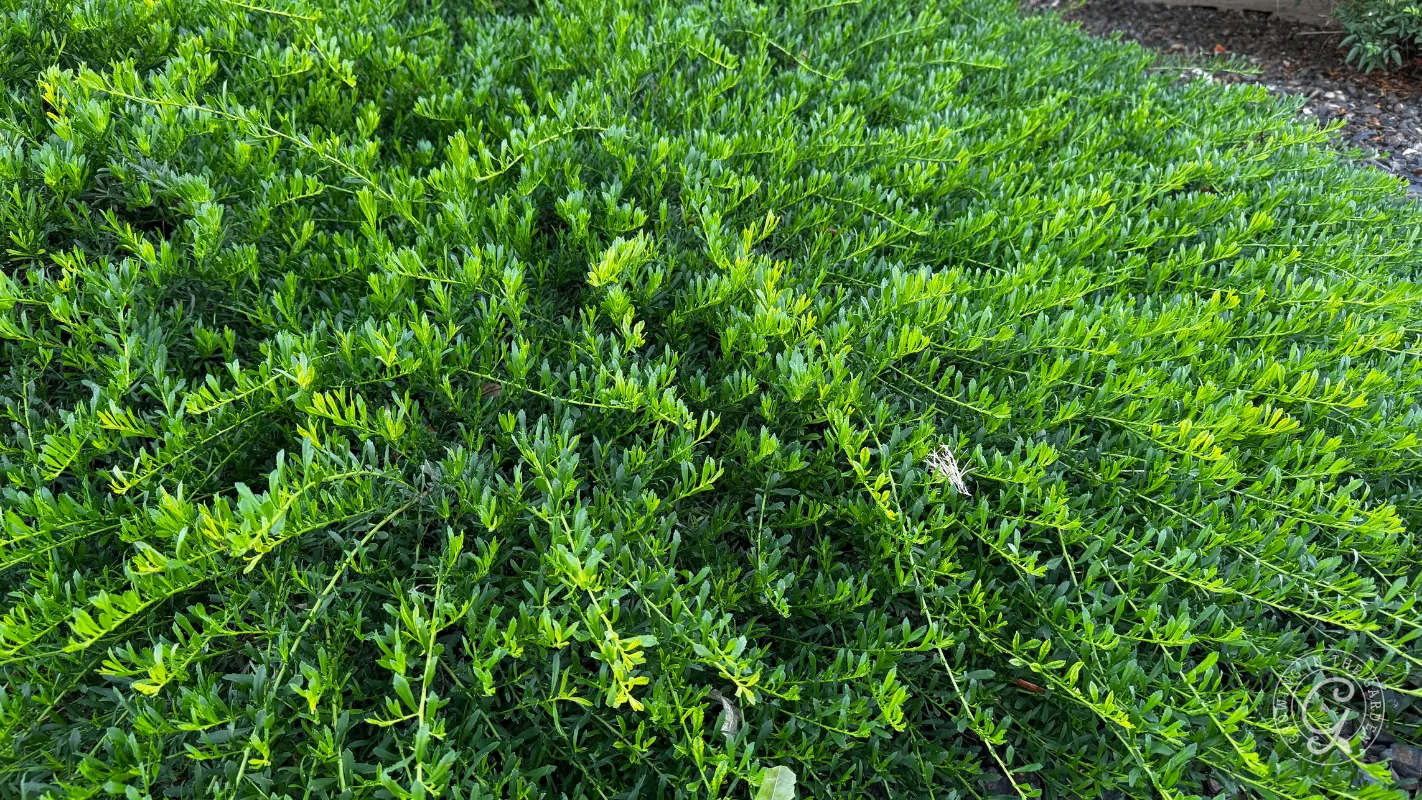
My neighbor grows this, and it’s massive; I mistook it for myoporum until someone set me straight. It’s easy to see why: also an Australian native, but it spreads even wider, up to 6 to 10 feet, while staying about a foot tall. Masses of yellow tubular flowers cover it through spring. It handles reflected heat as well as regular full sun, hardy to 15°F, and needs no pruning once established. Seeing how much ground it covers in her yard is inspiring. It doesn’t take foot traffic.
Yellow Dot (Sphagneticola trilobata)
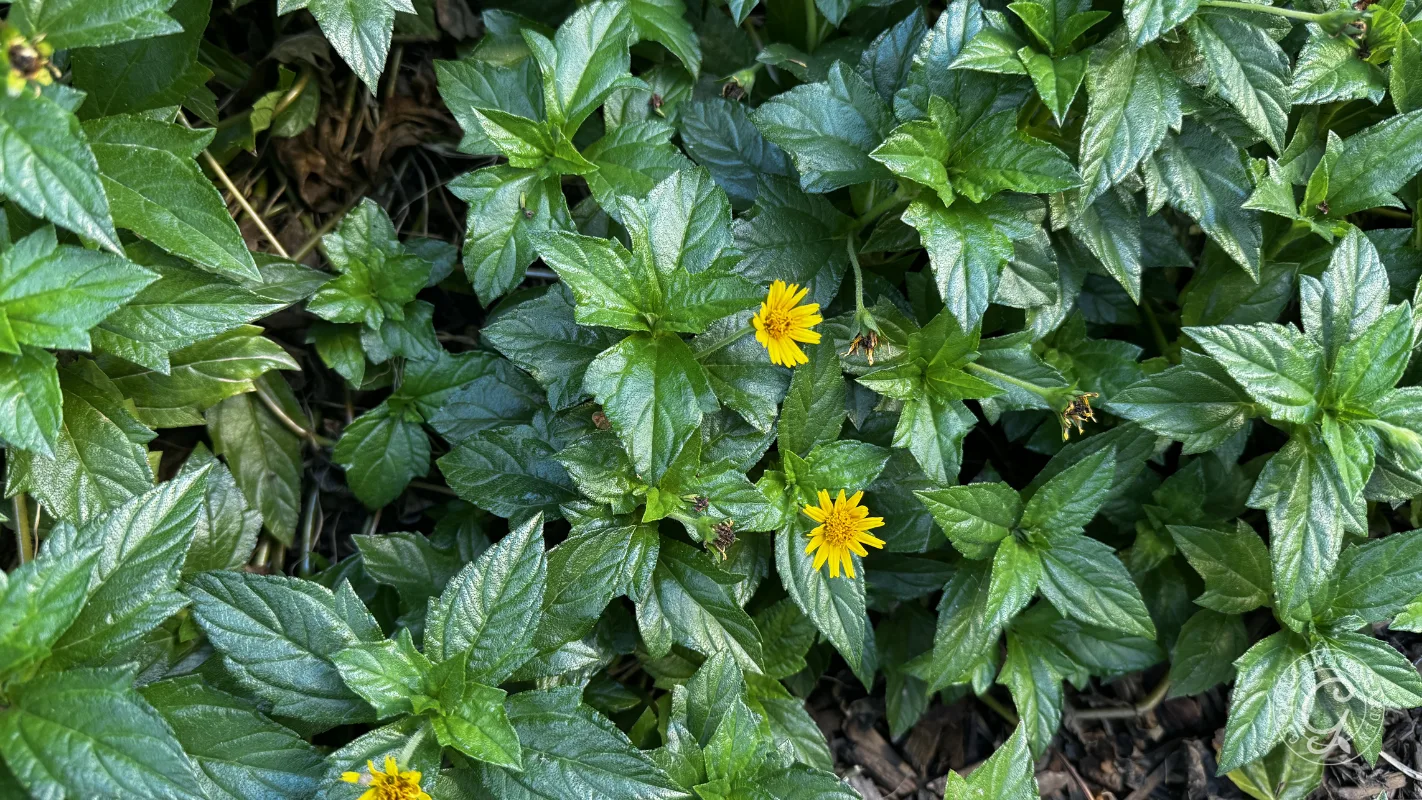
A fast-spreading groundcover with yellow daisy-like flowers spring through summer, good for quickly covering a large area or a container. It tolerates a wider range of light than most of this list, from sun to shade. It’s not meant to be walked on; plant it where it can spread freely rather than in a path. Keep an eye on it, though; it can spread more aggressively than you want if left unchecked. It requires regular water to grow well. Hardy to 30°F.
Creeping Germander (Teucrium chamaedrys ‘Prostratum’)
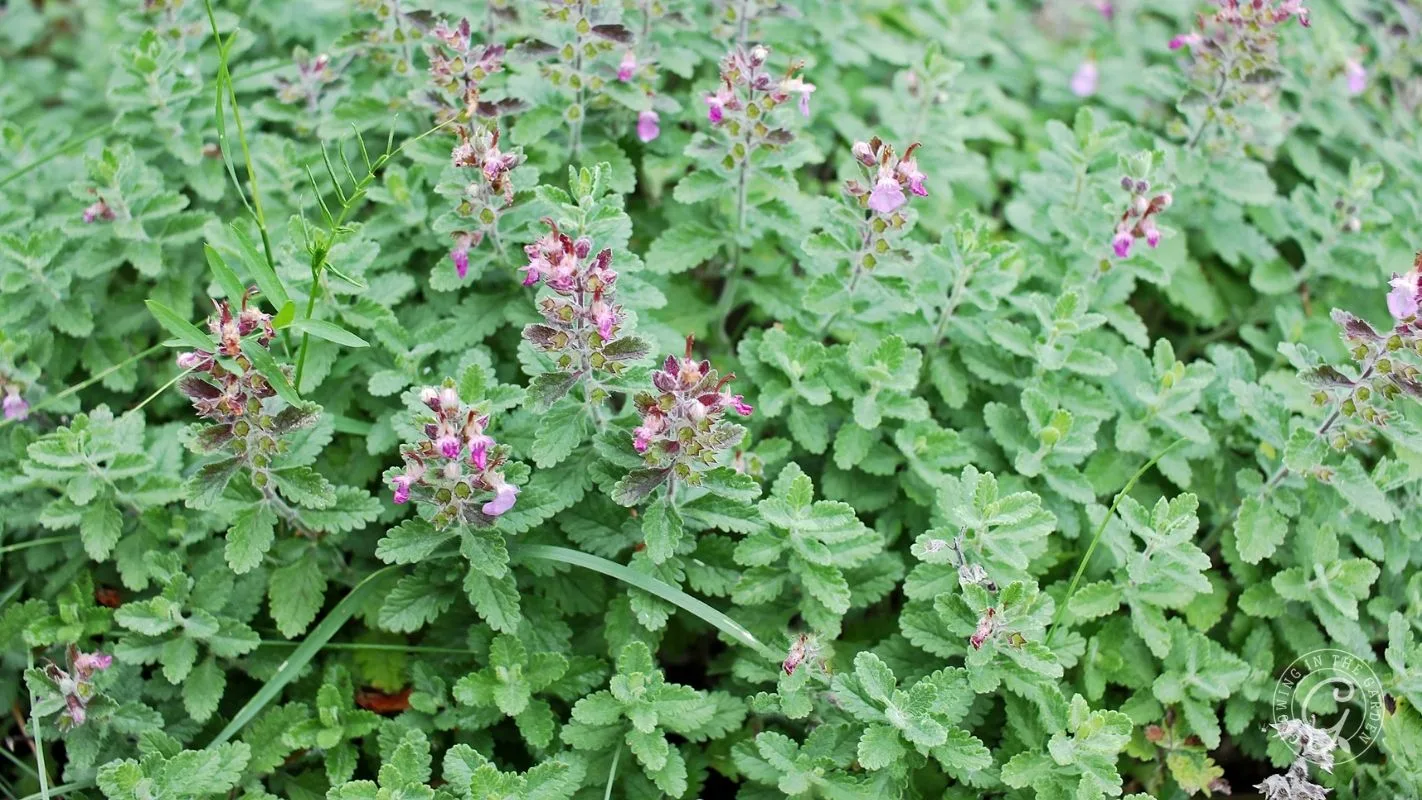
A great choice for full sun spots that get 8 to 12 hours of light. It stays low, about a foot tall and three feet wide, and the pale pink flowers show up in winter and spring. It doesn’t take foot traffic, so treat it as a fill-in plant rather than a path. Hardy to 0°F.
Mexican Evening Primrose (Oenothera speciosa)
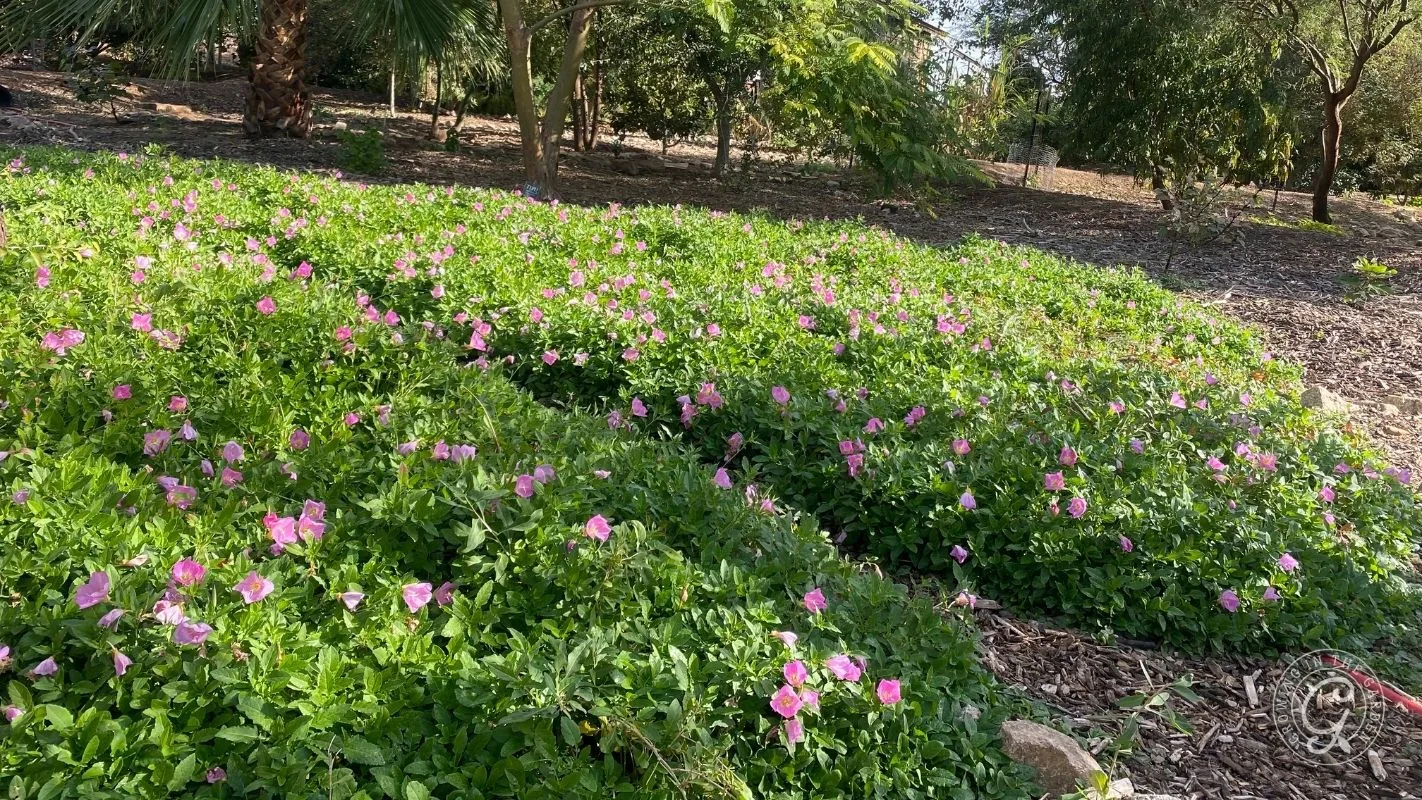
Not to be confused with tufted evening primrose below, this one stays low and spreads by underground rhizomes rather than clumping in place. Pink, cup-shaped flowers open during the day, spring through summer. This plant spreads and can show up well beyond where you planted it, so give it a bed of its own or something to contain it. It doesn’t take foot traffic.
Trailing Gazania (Gazania rigens)
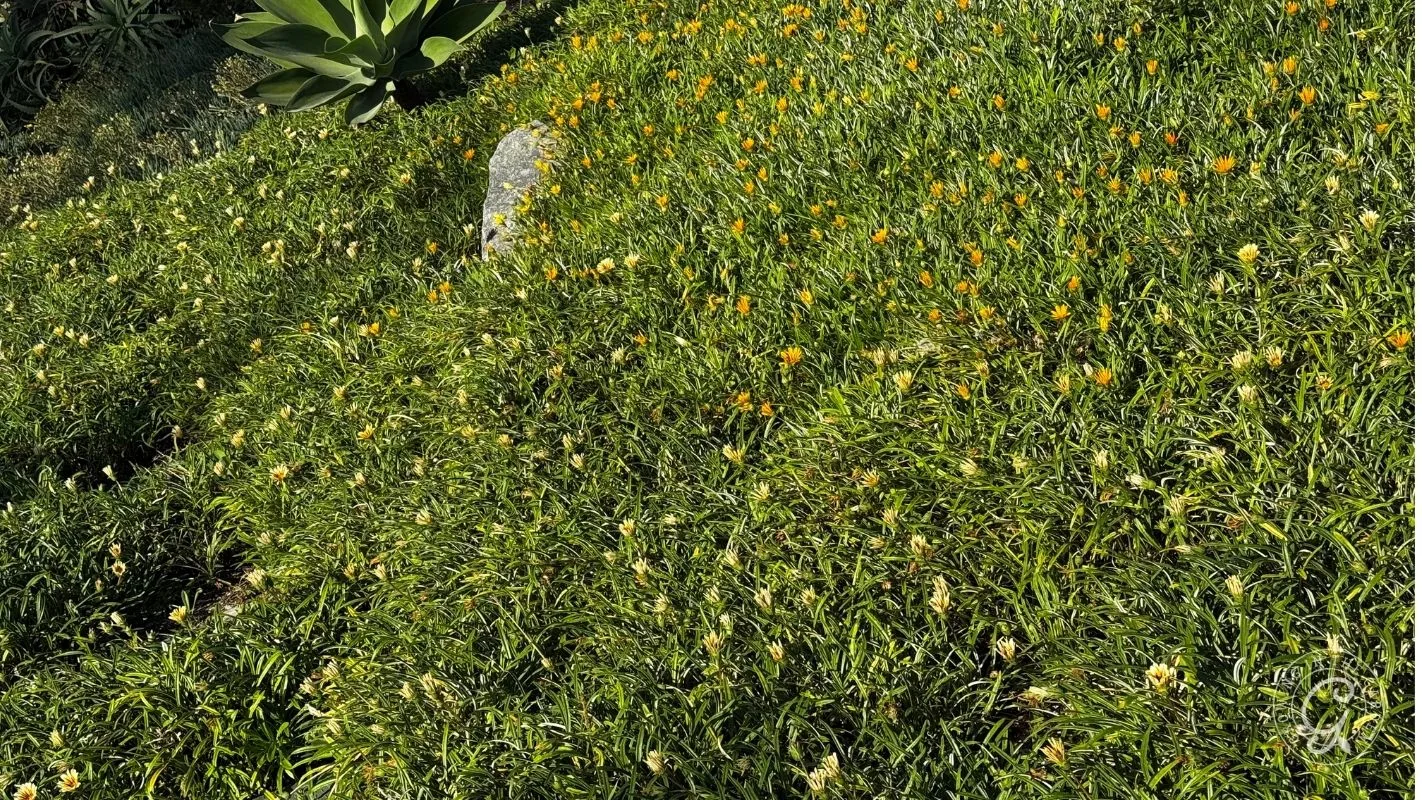
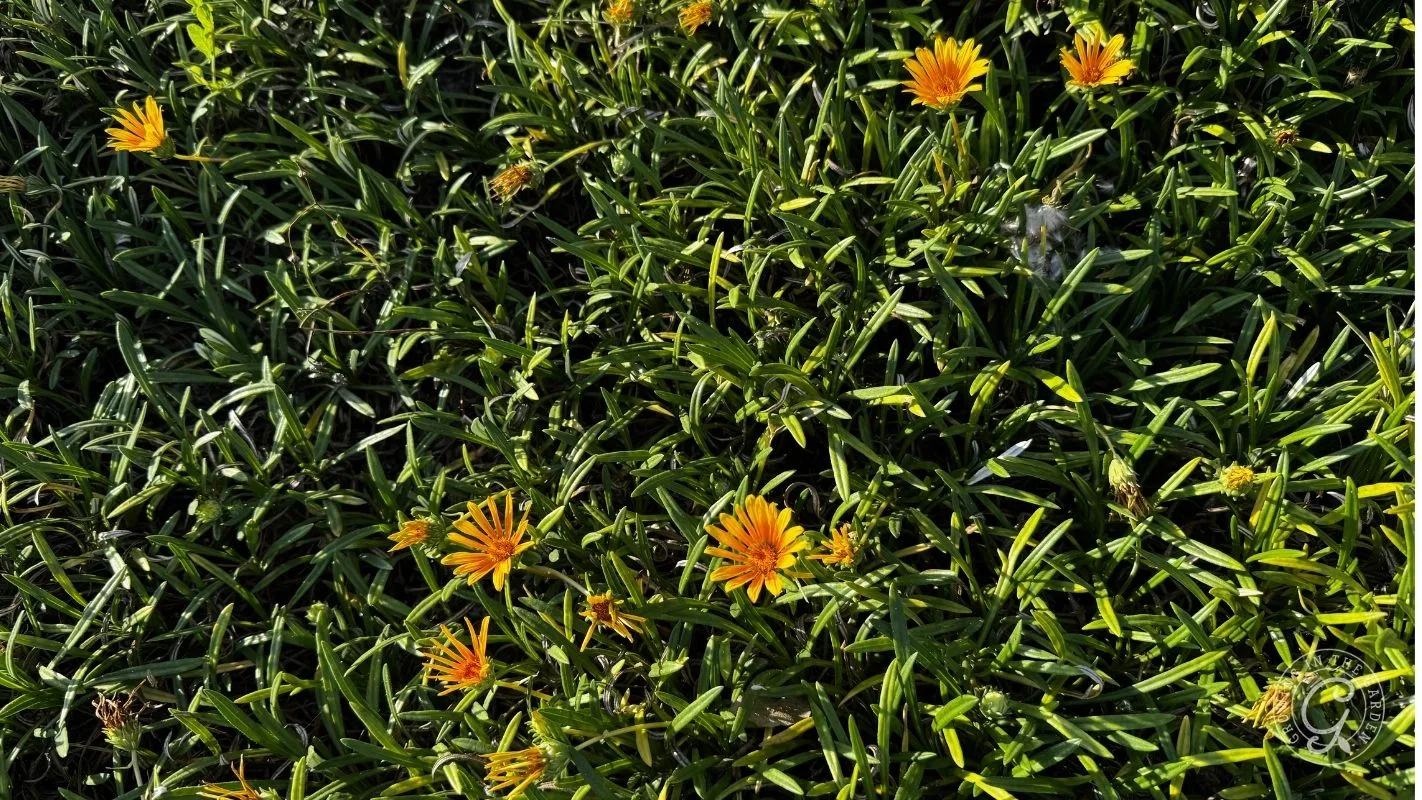
Native to South Africa, these trailing flowers can spread to about one foot high and three feet wide. They are evergreen with flowers from late winter through spring. Can rot or die out in the summer if it gets too much water. Good choice for pool areas; it’s low litter without thorns. Hardy to 15°F.
Small Spreading Shrubs
These cover ground well, and most need very little water, but they mound up rather than lie flat. Plant them expecting a low shrub, not a lawn.
Tufted Evening Primrose (Oenothera caespitosa, Arizona native)
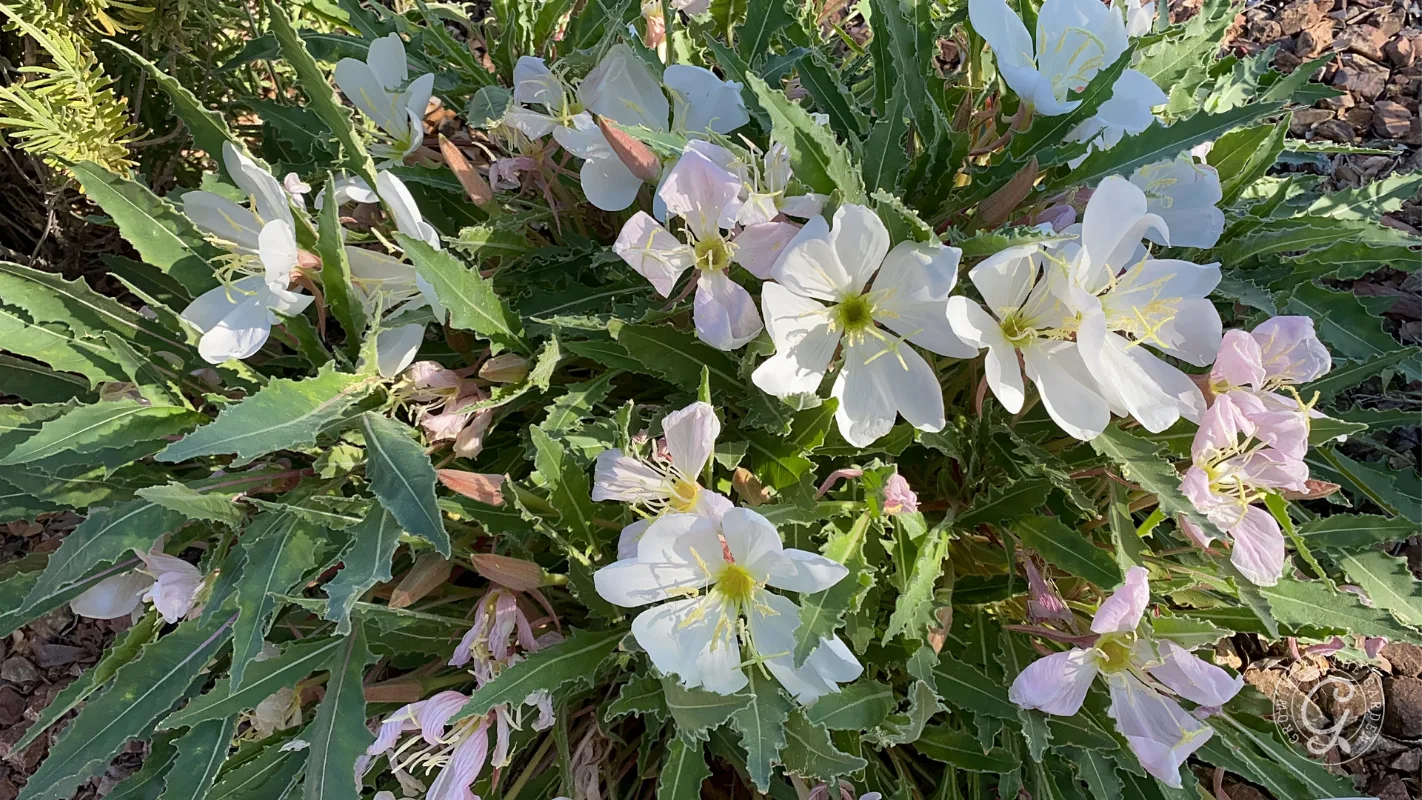
Large, fragrant white flowers that fade to pink, opening from dusk into early morning. Covered in more depth in my native plants guide. It clumps rather than spreads, so unlike Mexican evening primrose above, it stays where you plant it. About one foot tall and two feet wide. Hardy to 10°F.
Blue Euphorbia (Euphorbia rigida)
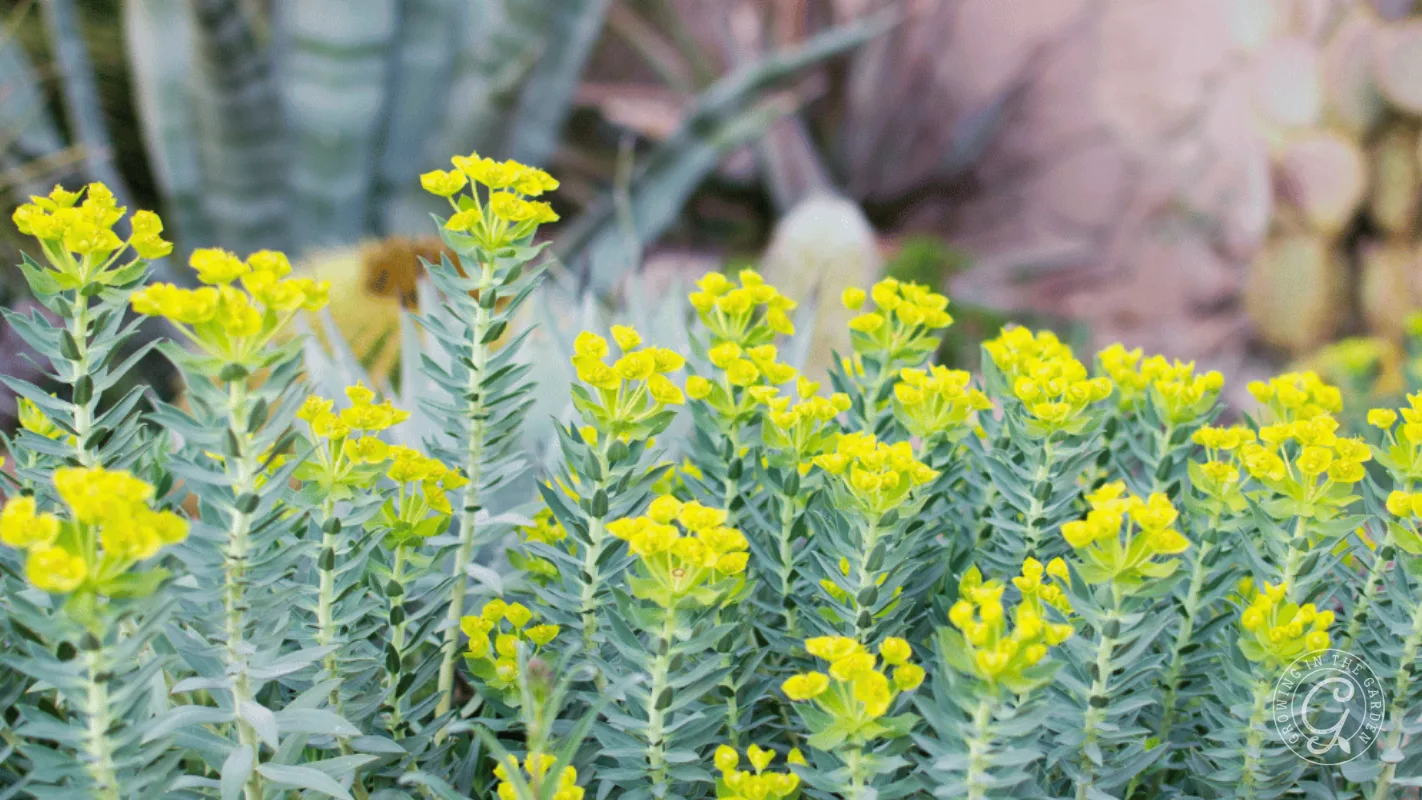
A Mediterranean native with blue-green foliage and green flowers in winter and spring. Sap can irritate skin, so wear gloves if you’re cutting it back. Low litter, thornless, and pool-friendly. Hardy to 15°F. About two feet tall and three feet wide.
Damianita (Chrysactinia mexicana, Southwest native)
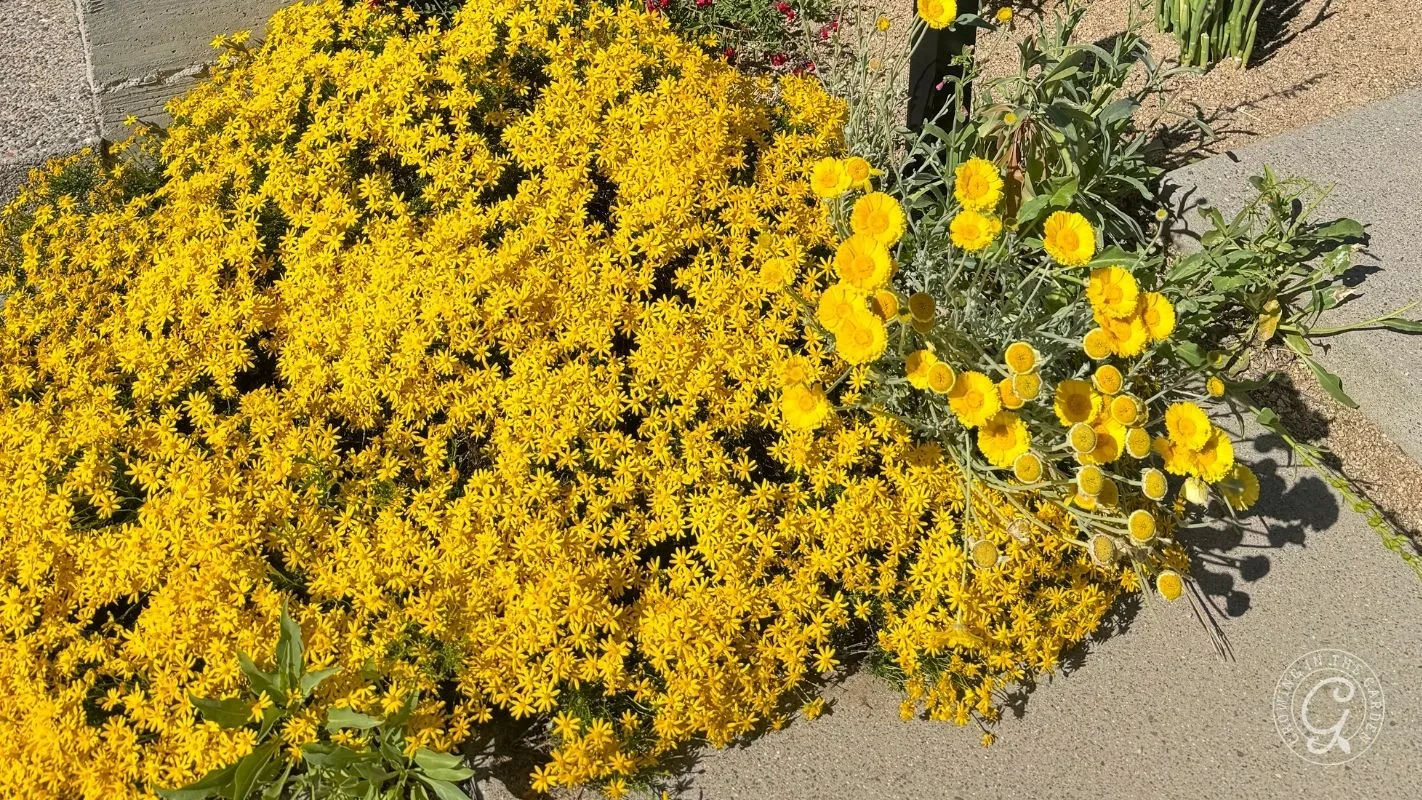
Yellow daisy-like flowers in spring and fall on a small, tough shrub that handles reflected heat as well as regular full sun. Hardy to 0°F. Grows to about 2 feet by 2 feet. Low litter with no thorns; this is a good choice by a pool.
Bush Morning Glory (Convolvulus cneorum)
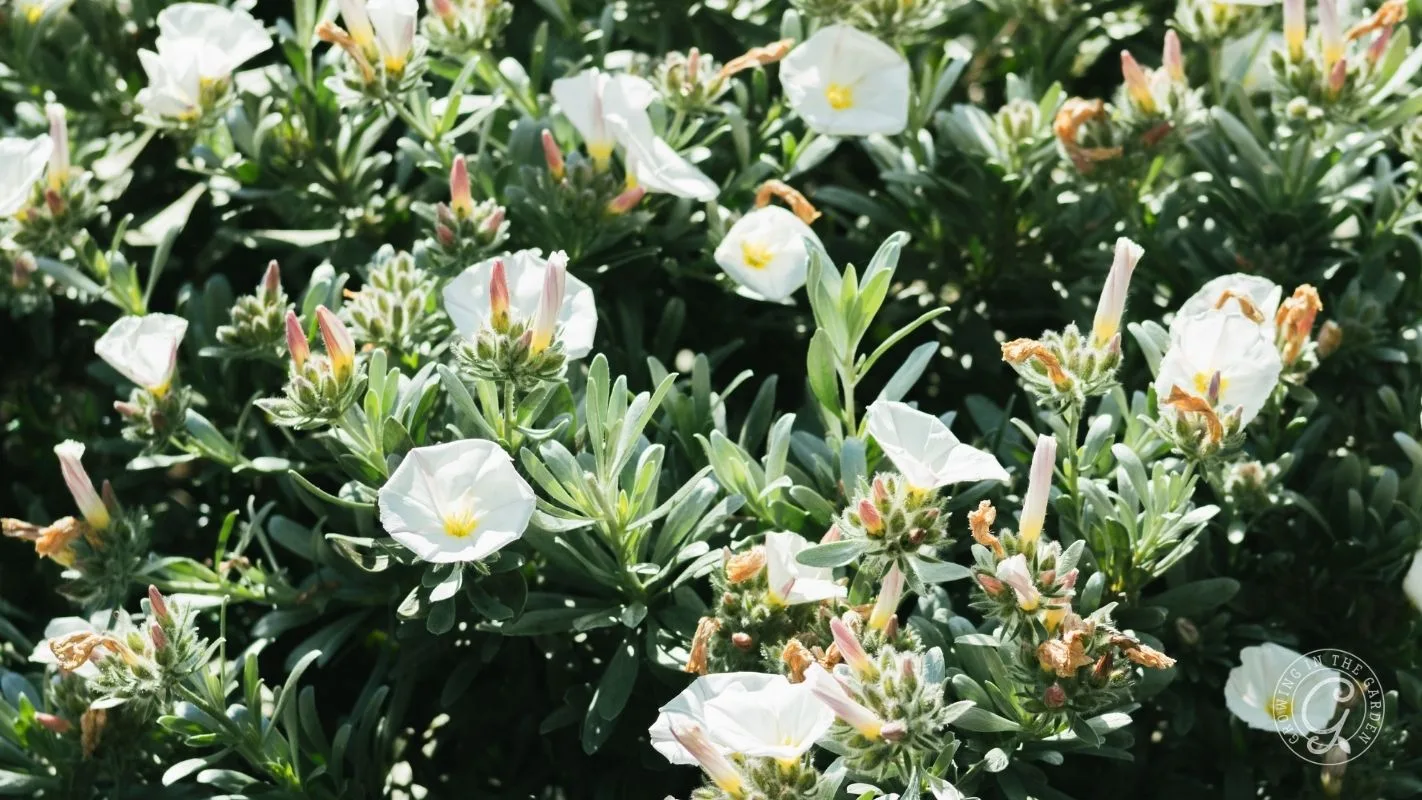
A fast-growing, silvery-leaved shrub from southern Europe with white funnel-shaped flowers most of the year. Pollinators are drawn to it, and it’s low-growing, thornless, and doesn’t cause allergies or skin irritation; an easy plant to place near a patio or pool. Hardy to 15°F. About two feet tall and three feet wide.
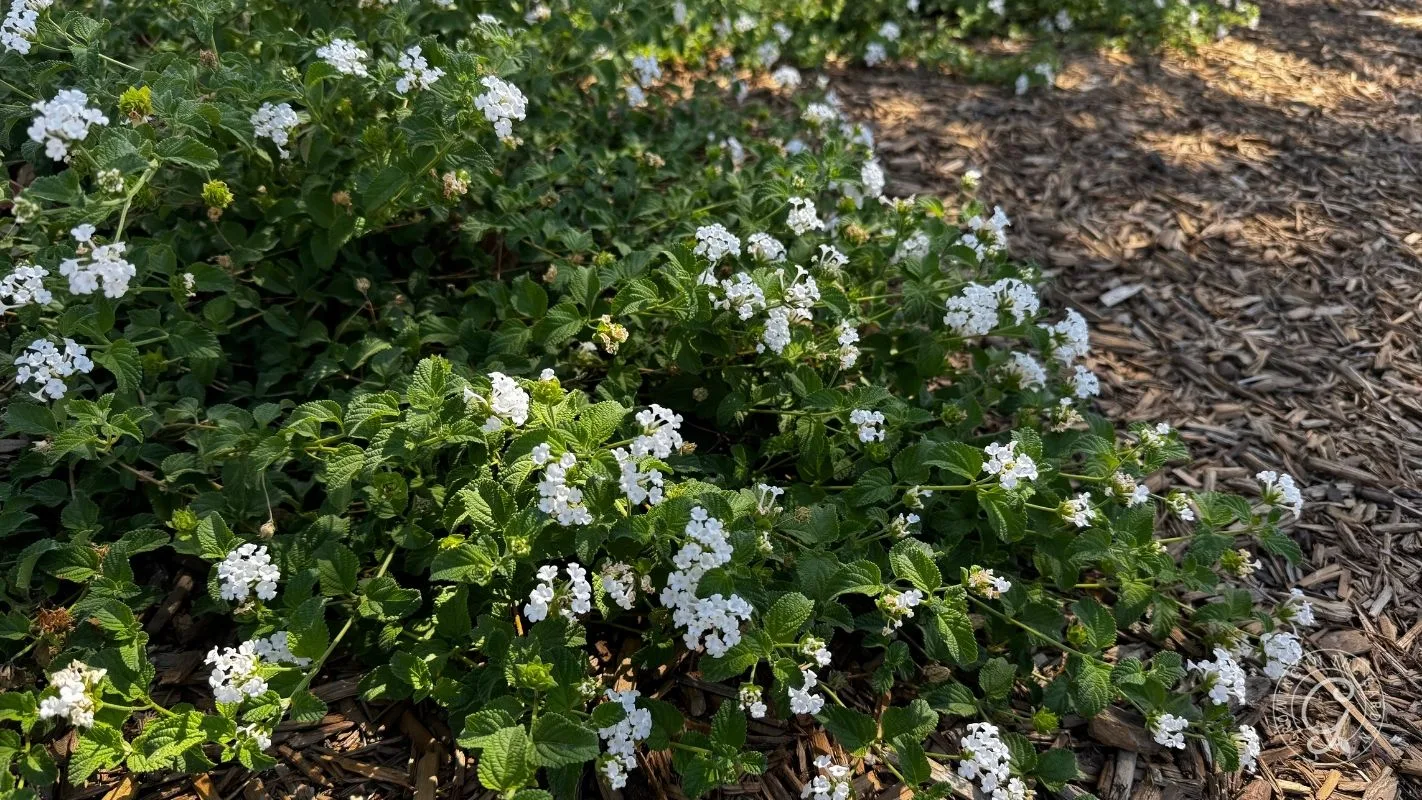
Trailing Lantana (Lantana montevidensis)
One of the easiest plants on this list to grow, and a genuine pollinator magnet, but it comes with a real caution: the berries and foliage are toxic to pets, not just an irritant to skin. If you have a dog that grazes in the yard, plant this with that in mind. It’s rabbit-resistant, hardy to 25°F, and spreads about a foot tall by four feet wide with lavender or white blooms from spring through winter.
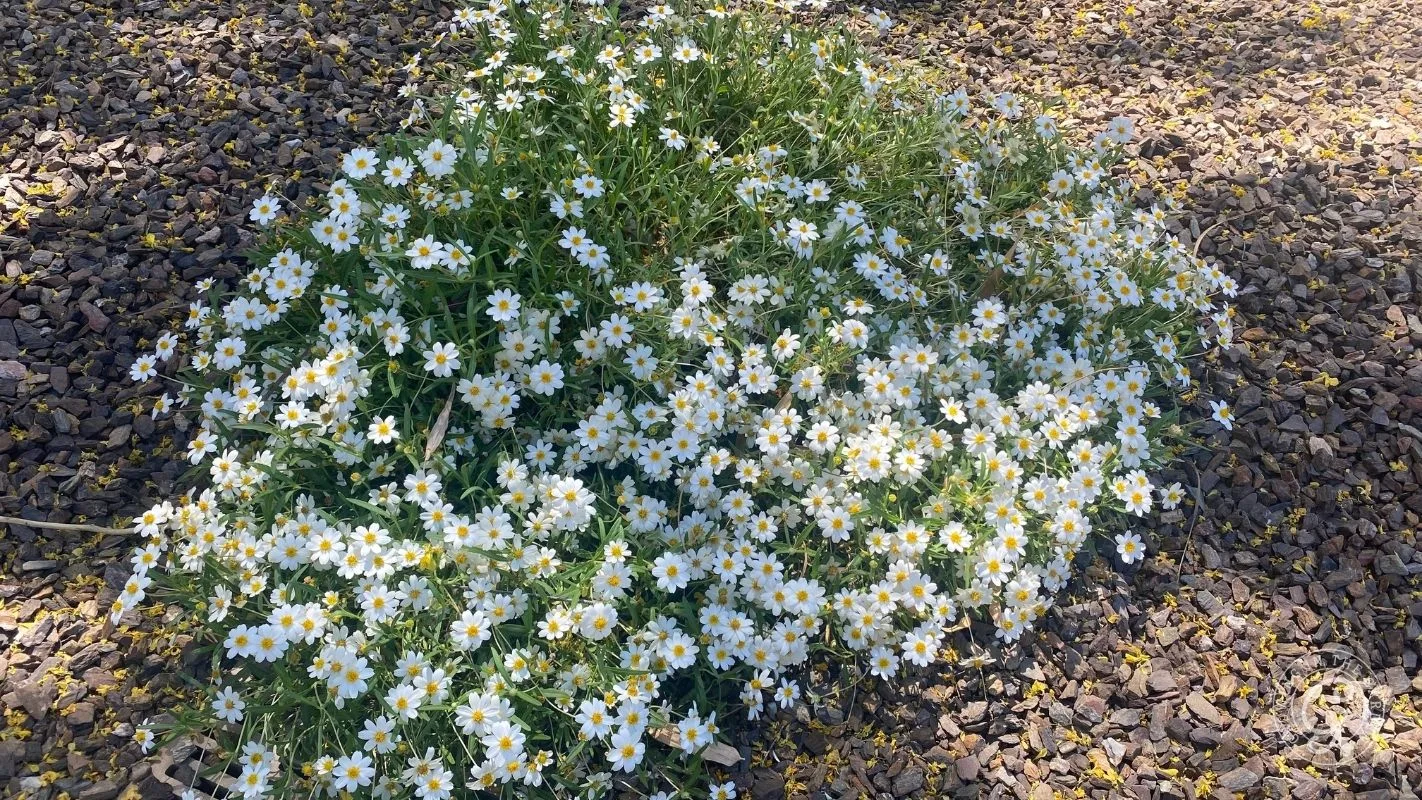
Blackfoot Daisy (Melampodium leucanthum, Arizona native)
A true Arizona native that stays small, about a foot tall and two feet wide, in a low mound. White daisy-like flowers bloom nearly year-round in mild winters, more bloom time than almost anything else on this list. It needs well-drained soil and very little water once established. Low litter, no thorns. Hardy to 0°F.
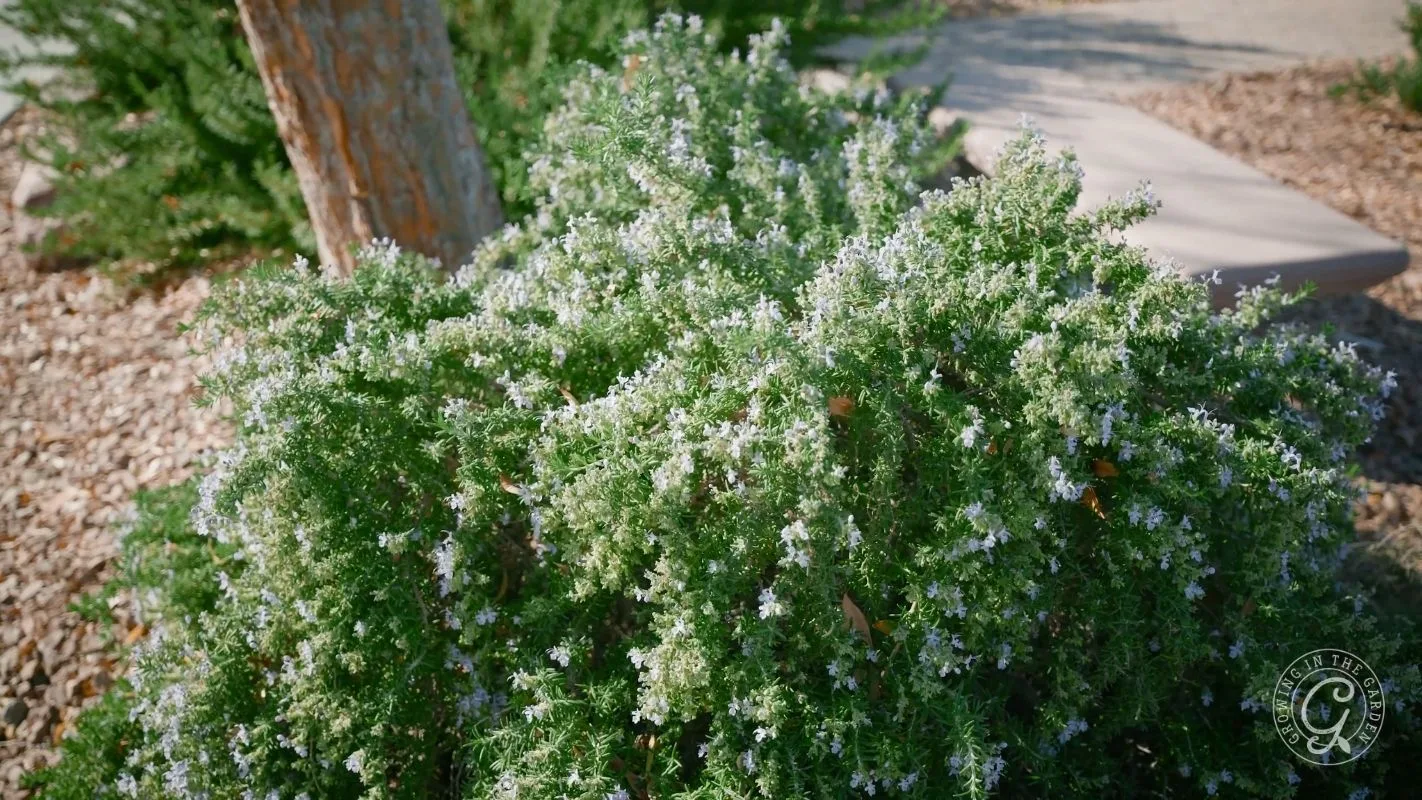
Trailing Rosemary (Rosmarinus officinalis ‘Prostratus’)
Fragrant, edible, and a good low-water choice, but it gets taller than the “groundcover” label suggests. Give it room to mound up over time rather than expecting it to stay flat against the ground the way Kurapia or myoporum do. Blue flowers show up in spring and winter, and the bees love them. Hardy to 15°F. About two feet tall and four feet wide.
Lawn Alternatives FAQs
Kurapia is a sterile cultivar bred from frogfruit, Arizona’s native species. Kurapia won’t reseed or spread on its own, while frogfruit will, since it flowers and sets seed. Both stay low and spread by runners.
Not most of them. Kurapia and frogfruit are the only two on this list that take light foot traffic. Everything else, including the other true groundcovers like gray ice plant, creeping myoporum, Outback Sunrise Emu, yellow dot, creeping germander, trailing gazania, and Mexican evening primrose, fills in the ground well but isn’t made for walking on regularly. The small spreading shrubs, like tufted evening primrose, damianita, and blackfoot daisy, aren’t meant to be walked on either.
Be cautious. The berries and foliage are toxic to pets, not just an irritant. If your dog spends time in the yard and tends to graze on plants, consider a different option from this list.
Not entirely on their own. Groundcovers help more than bare rock or gravel, but shrubs and trees do more of the cooling work once established. A layered planting of groundcover, shrubs, and trees cools a yard more effectively than any one category alone.
Frogfruit, tufted evening primrose, and blackfoot daisy are true Arizona natives. Damianita is a Southwest native widely grown here, though AMWUA’s own text lists its range as New Mexico, western Texas, and Mexico rather than Arizona specifically. Mexican evening primrose is native to south-central states and Mexico, not Arizona. The rest on this list are drought-tolerant introductions from other parts of the world.
Fall, from October through November, gives roots time to establish before summer heat arrives. Spring planting works too, but plan on watering more closely through that first summer while the plants are still getting established.
Sources
- Arizona Municipal Water Users Association (AMWUA). Landscape Plants for the Arizona Desert.
- University of Arizona Cooperative Extension. Kurapia: A Low-Water Use Groundcover and Turfgrass Alternative.
- Lady Bird Johnson Wildflower Center. Phyla nodiflora.
- Arizona-Sonora Desert Museum. Outback Sunrise Emubush plant care sheet.
Thank you for your research and recommendations. Where can I buy frog fruit seeds or plugs in the metro Phoenix area?
I’ve seen places like Home Depot carry it when checking online. It’s also worth calling a few local specialty native plant nurseries to see if they have recommendations.
Hi there! Super new to gardening — like, in the research phase and haven’t planted anything yet new. I’ve heard of a ground cover called ruschia nana that we want to put in our yard instead of grass/gravel. I haven’t been able to find many instances of people using it here in AZ. Do you know anyone who has successfully used it, and whether it is as full sun friendly as described? I’m always a little hesitant when people say this because as you know it gets HOT here and I don’t want to spend the money if it will die by the end of summer. Thanks so much! I am soaking up all your content, you are making this process much less daunting.
I haven’t tried that one. I’ll put it on my list to research. I have been using kurapia this summer with great success, that may be one for you to look into as well.
Hello Angela,
We are considering planting clovers as a lawn. We have mature ficus trees under our lawn, they are beautiful but the grass lawn and the trees are competing for water, we believe. Reading this article we would like to plant clovers as a lawn. What shade and heat tolerant clovers can we grow in a zone 9b. (Surprise area)
You could try Dichondra. It can grow in full sun or part shade.