
Best Plants Around a Pool in Low Desert Arizona
With five kids, our pool has been the center of summer life for years. From May through September, we spend a lot of time out there, so the plants around it need to handle intense reflected heat without creating extra work.
I want plants that soften the space, add color and greenery, and still look good through a low desert summer. Low litter and minimal pruning matter too, especially once swimming season slows down and I’m not behind the pool fence as often.
After nearly two decades of trial and error, these are the plants that have worked best around my pool. Our recent backyard pool remodel gave me a chance to keep the longtime favorites and try a few new plants in containers.
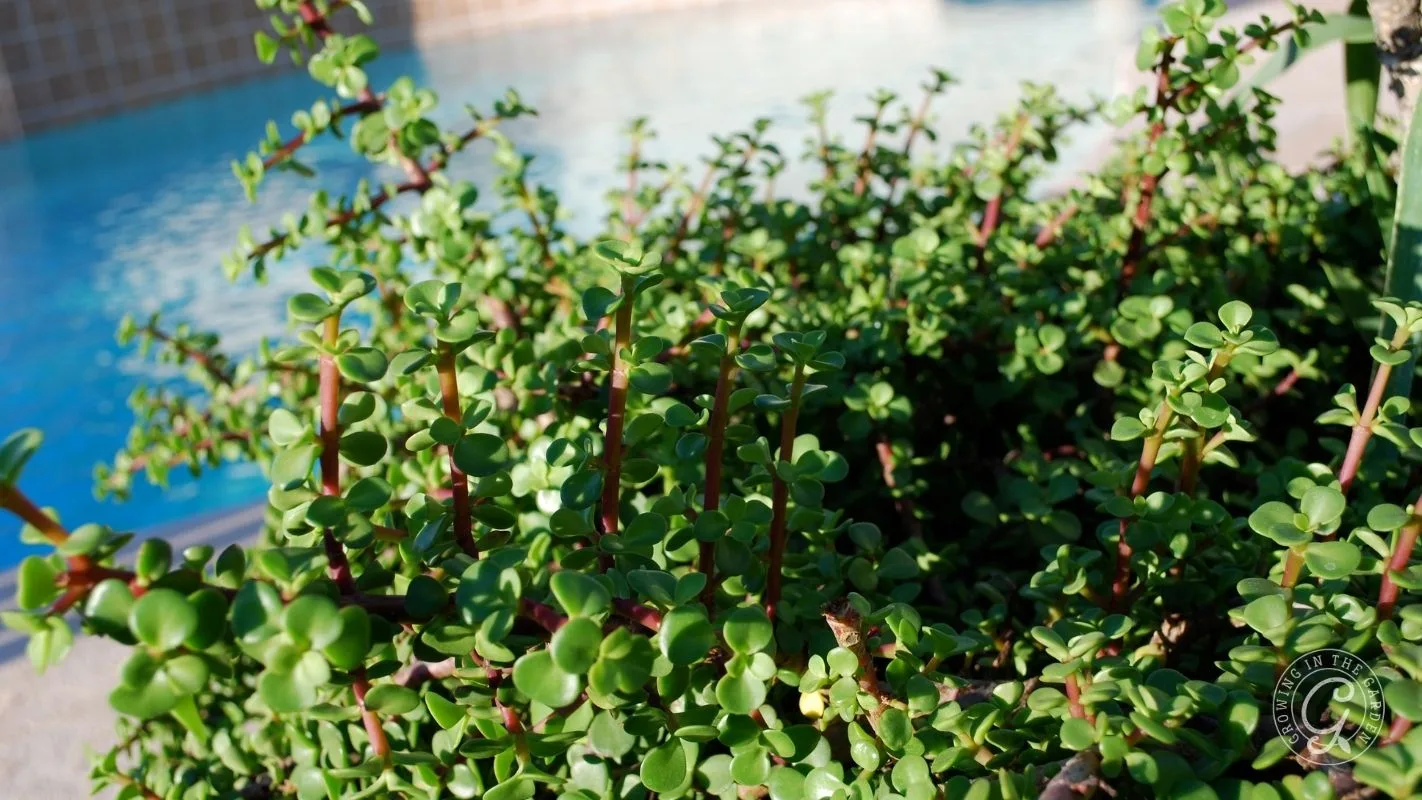
Key Takeaways: Best Plants Around a Pool
- Choose low-litter plants that tolerate reflected heat, and keep anything thorny or sharp well back from the pool edge and walkways.
- Trees and palms can add height, structure, and shade around a pool. Choose low-litter varieties and give larger trees plenty of room from the pool and equipment.
- Avoid planting queen palms and aggressive-rooted trees near the pool to prevent damage.
- Utilize self-watering containers for low maintenance solutions around the pool area.
- Consider the effects of reflected heat and splash when selecting plants around a pool in Arizona.
Before You Plant
A few things make a big difference near a pool.
Water and heat considerations
- The pool surface itself reflects heat and light back onto nearby plants, the same way a stucco wall does. I cover that effect in more detail in my reflected heat plants guide; take a look if your pool area gets a lot of sun.
- Splash zone plants need to be tough. Occasional chlorine or saltwater splash can damage sensitive foliage, so keep delicate plants away from the pool edge and choose tougher plants for areas that get splashed regularly.
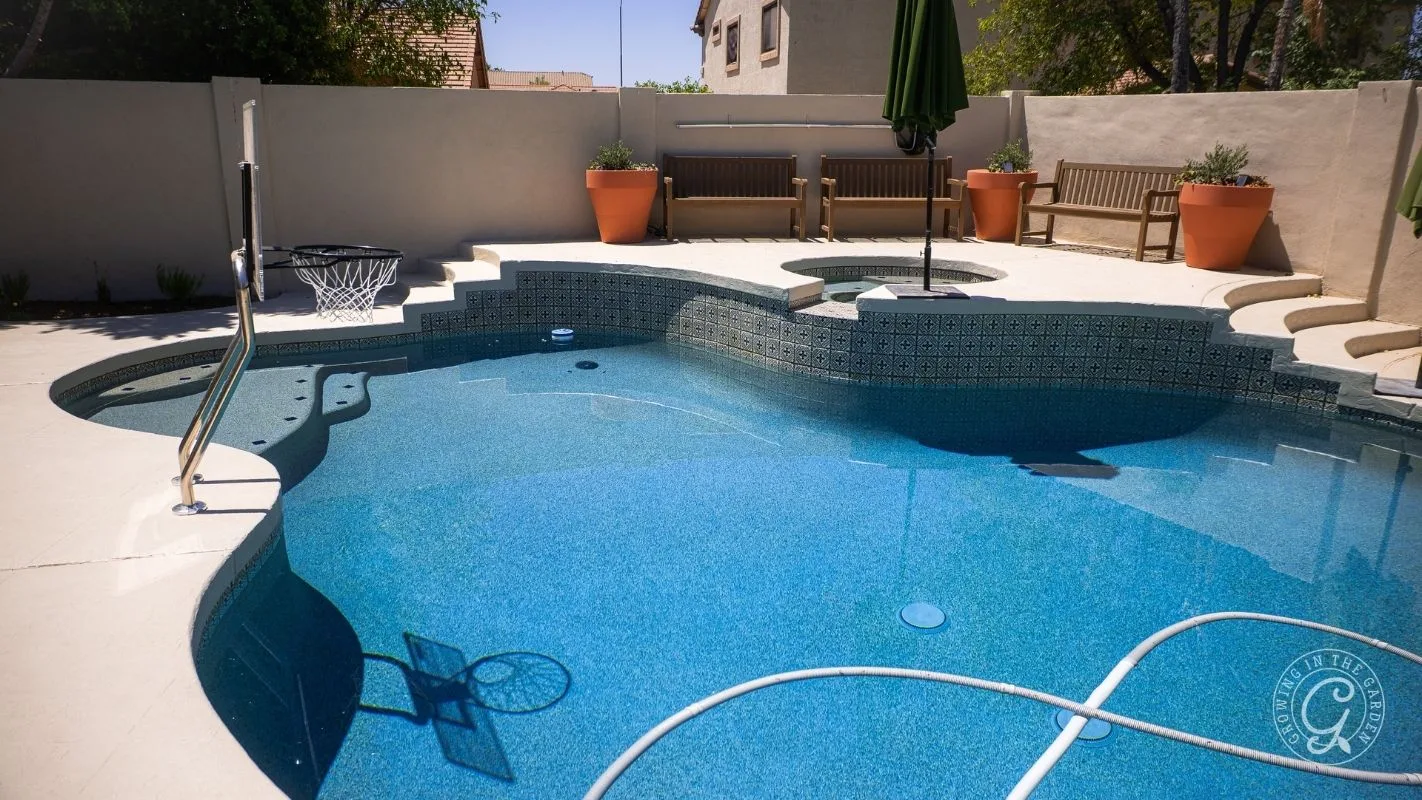
Keep large trees away from the pool
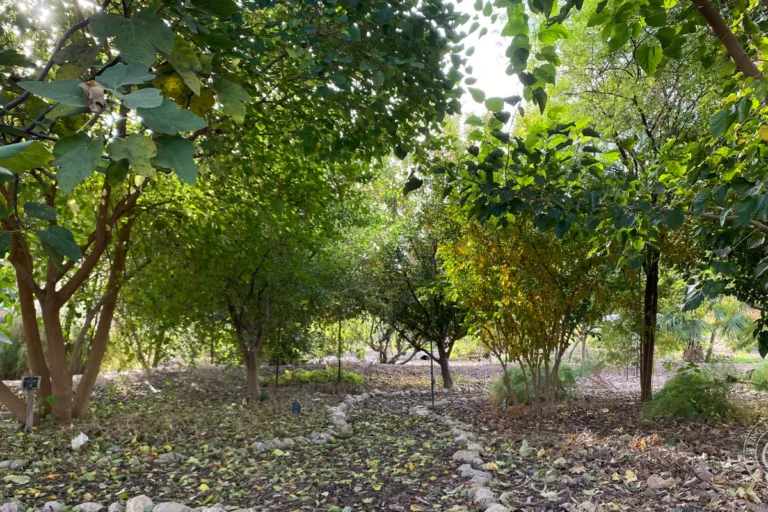
Give trees plenty of room from the pool, equipment pad, plumbing, and block walls. Tree roots can spread much farther than the canopy and may interfere with underground lines or hardscape. The larger the tree, the more room I’d give it. Avoid trees with especially aggressive, spreading roots close to the pool.
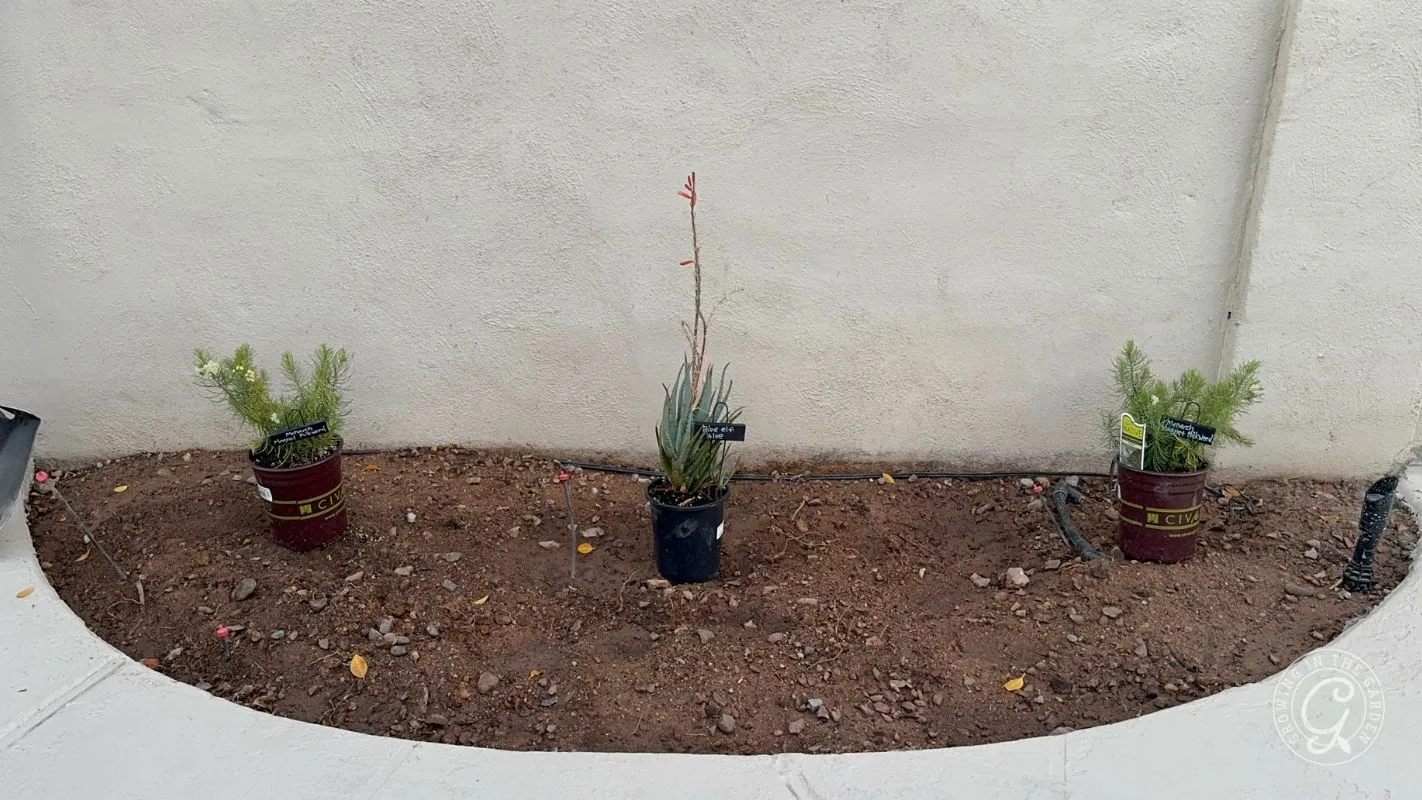
Practical design tips
- Repeat a few plants instead of using one of everything. A pool feels designed instead of cluttered when the same two or three plants show up more than once.
- Give shrubs room to reach their natural mature size instead of planting them too close together and pruning them every few weeks. A plant kept at its natural form needs less maintenance right where you don’t want the mess. I get into this more in my guide to pruning desert shrubs.
- If you’re using containers near the pool, try self-watering ones. You don’t have to drag the hose to water them nearly as often. This also prevents standing water in a saucer that can breed mosquitoes, or draining water that can stain pool decking.
One tree to skip
Although queen palms have a graceful tropical look, they struggle in the low desert. Two backyard neighbors have them right next to their pool, and I’ve watched them all die. I write more about why in my Queen Palms in the Arizona Low Desert post. Choose something else.
Trees and Palms for Height and Shade
| Plant | Mature size |
|---|---|
| Mexican Fan Palm | 50-70 x 12 ft |
| Pygmy Date Palm | 6-10 x 6-8 ft |
| California Fan Palm | 40-60 x 10-15 ft |
| Mastic Tree | 15-20 x 15 ft |
| Leatherleaf Acacia | 10 x 8 ft |
| Kidneywood | 15 x 10 ft |
| Fruitless Olive | 25 x 25 ft |
| Texas Mountain Laurel | 10 x 8 ft |
- Our Mexican fan palms have done well, but they take upkeep. We keep them trimmed and skin the trunks regularly so there aren’t sharp edges from cut fronds. They are not near the pool equipment or the pool perimeter.
- Pygmy date palm takes a couple of years to get established and doesn’t like to dry out in that time, but once it’s settled in, it’s a good small palm. It needs afternoon shade and can grow in a container.
- California fan palm is a similar look to Mexican fan palm but more compact, and it’s a Southwest native.
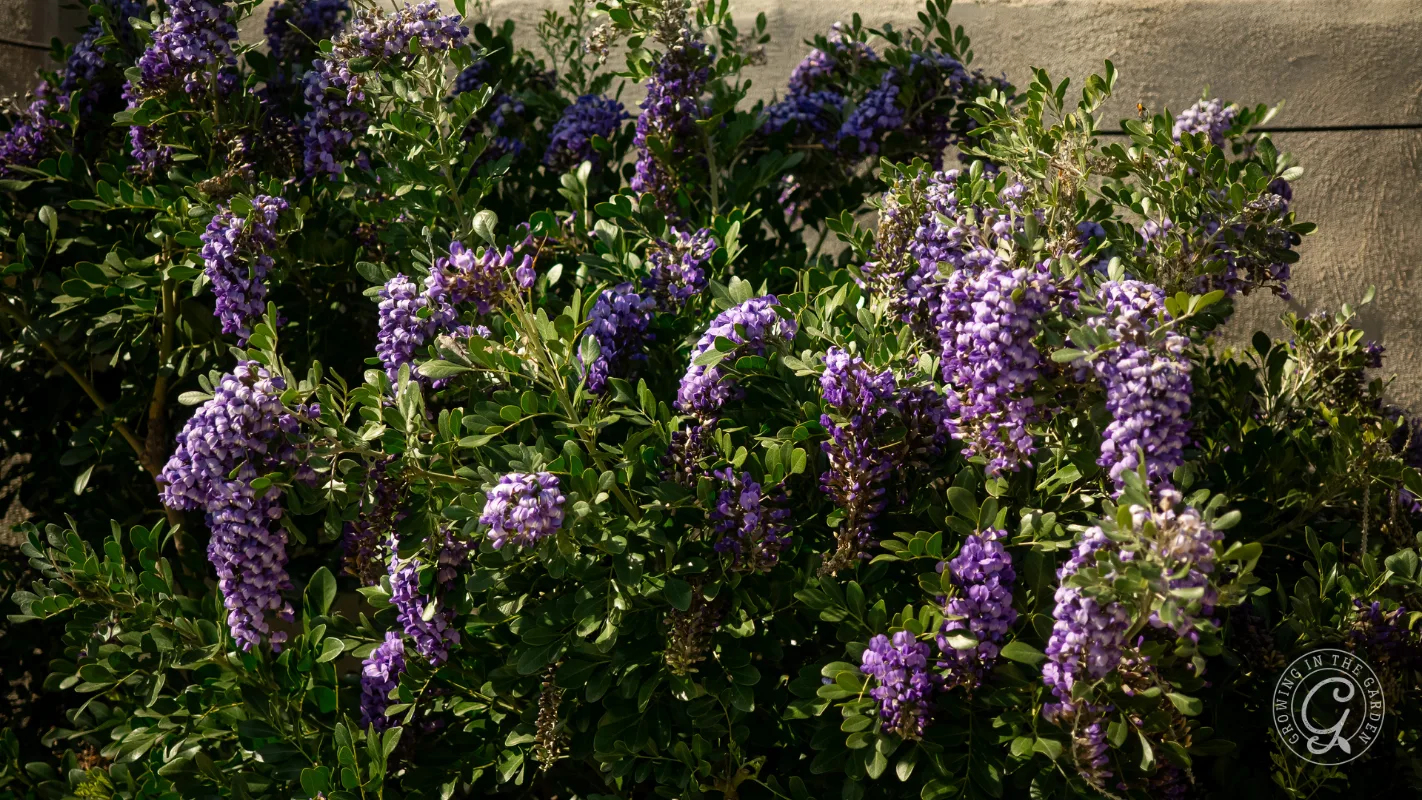
- Texas Mountain Laurel was one of the first plants I added around the pool, and it’s still there. It’s slow-growing with minimal litter, and I love the seasonal blooms. See my full guide to growing Texas mountain laurel for more.
Learn more about many of these trees in “Best Trees for a Low Desert Yard“.
Screening and Privacy
| Plant | Mature size | Sun exposure |
|---|---|---|
| Italian Cypress | 40-60 x 4 ft | Full sun |
| Star Jasmine | Vine, 15-20 ft on a support | Partial sun to afternoon shade |
| Arizona Rosewood | 10 x 8 ft | Full sun to partial shade |
| Jojoba | 6 x 6 ft | Reflected sun |
| Little Leaf Cordia | 6 x 6 ft | Reflected sun |
| Sugar Bush | 8 x 8 ft | Full sun to partial shade |
| Hop Bush | 10 x 8 ft | Full sun to partial shade |
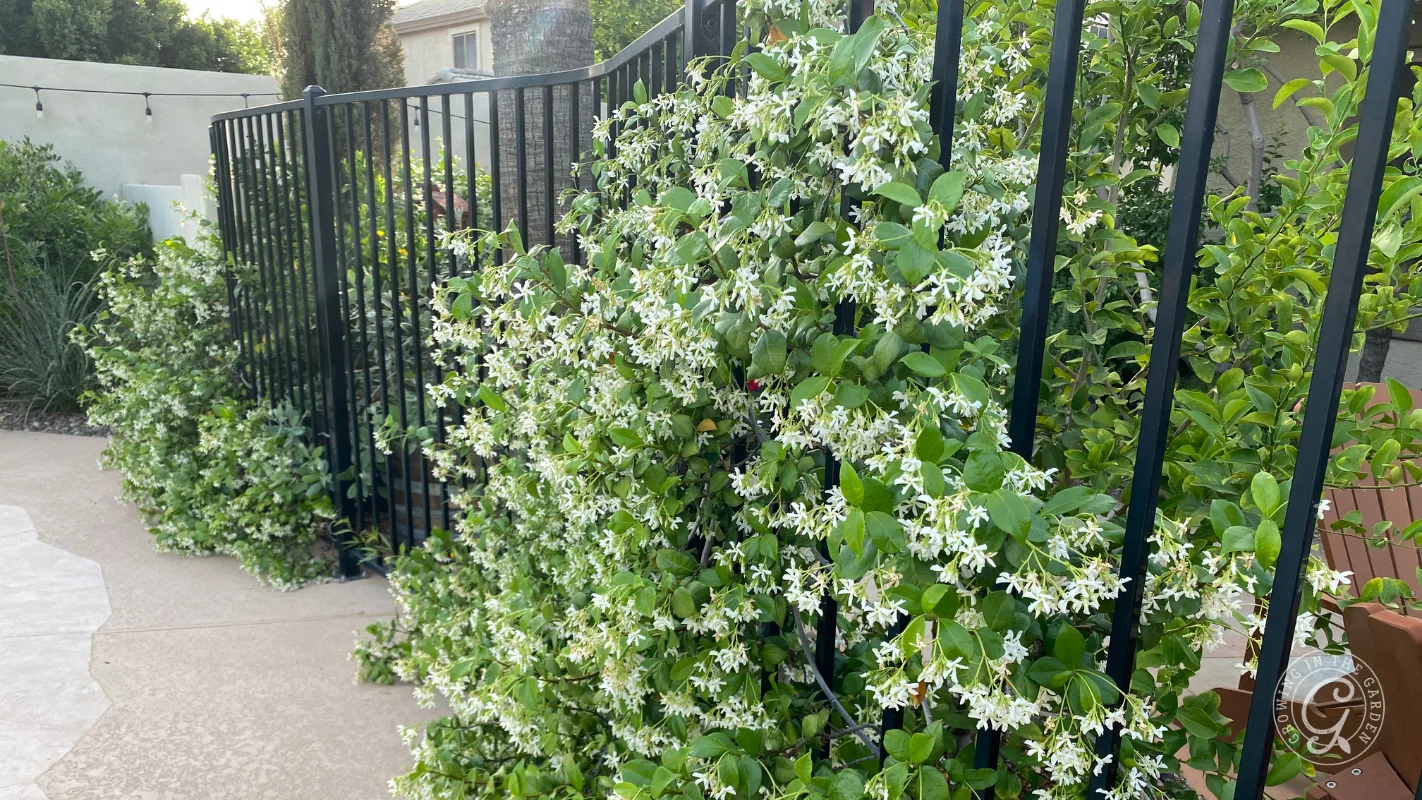
Italian cypress gives us some height along the pool fence without taking up much ground space. Star jasmine covers our pool fence and gives us a nice screen with some afternoon shade. The bees love it when it blooms, but it usually flowers before pool season really gets going, so bees aren’t an issue near the pool. It does have seasonal litter when it drops the spent blooms.
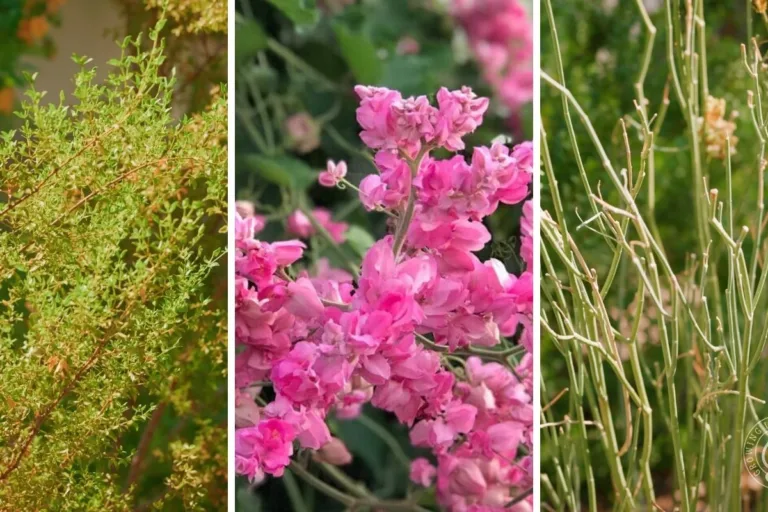
Jojoba and sugar bush are Arizona natives, and both work well as an informal hedge or screen. Arizona rosewood is often recommended as a native alternative to oleander, without the toxicity concerns. If you’re looking for more Arizona natives to plant, check out my full guide to native landscape plants.
Architectural Succulents and Accents
| Plant | Mature size | Sun exposure |
|---|---|---|
| Agave | Varies by species | Full sun |
| Red Yucca | 3 x 5 ft | Reflected sun |
| Aloe Vera | 2 x 2 ft | Needs afternoon shade |
| Lady Slipper Plant | 3 x 3 ft | Full sun |
| Elephant’s Food | 3 x 4 ft | Needs afternoon shade |
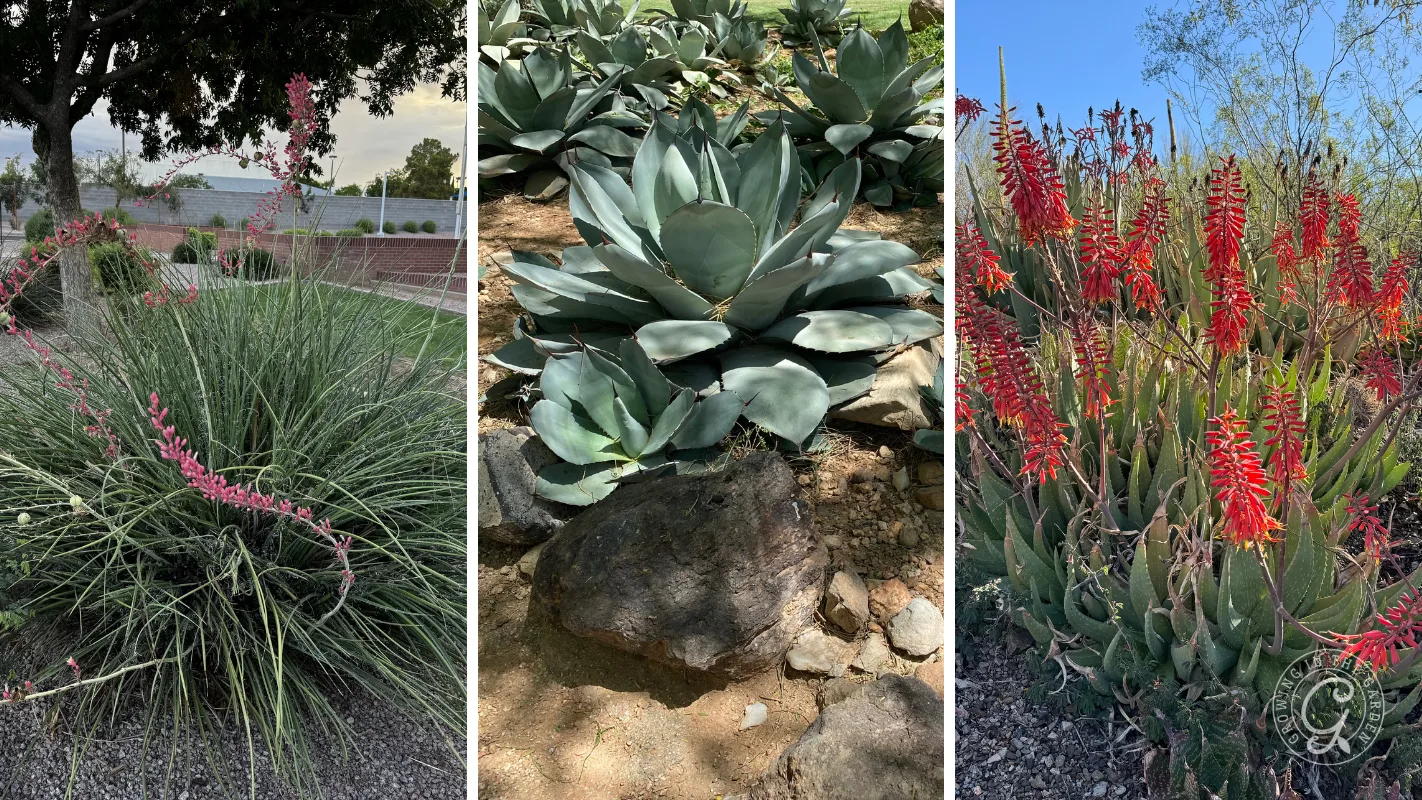
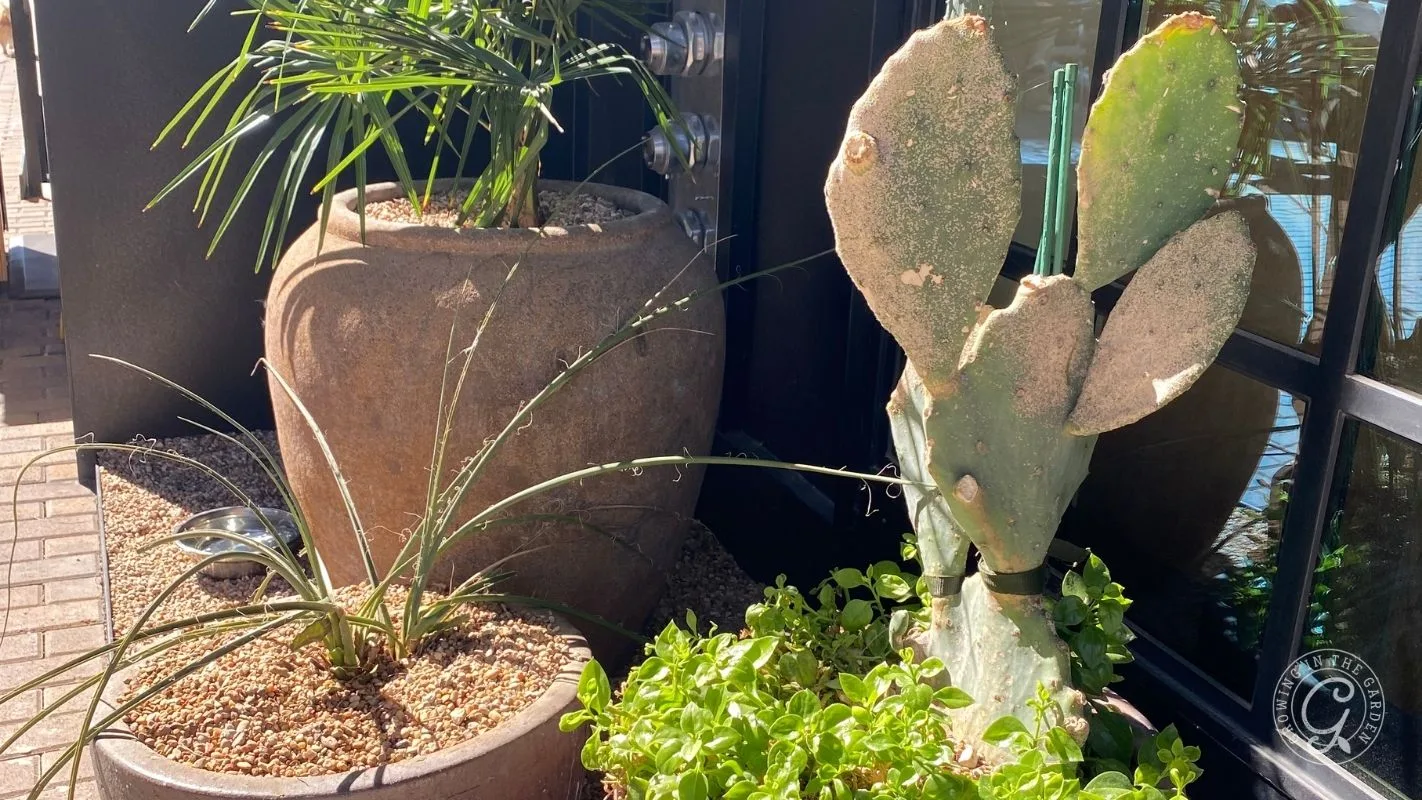
We keep agave set back against a wall and snip off any spine tips we notice. Red yucca is also set back from the pool edge, since the leaf tips can be sharp. Lady slipper plant is a good container or accent choice too, low litter, no thorns, though the sap can irritate skin.
If you have a shady spot, plant aloe vera. It has a tough desert reputation, but it actually sunburns in intense sun, something I cover in my full sun plant guide. If you have a spot with some afternoon shade plant one near the pool, and you’ve got sunburn relief if you need it.
I planted elephant’s food in two large containers about 15 years ago and they are still growing. They get full sun now that they are established, but younger plants need some afternoon shade.
Shrubs and Perennials
| Plant | Mature size | Sun exposure |
|---|---|---|
| Rosemary | 2 x 4 ft | Full sun |
| Milkweed | Varies by species | Full sun to partial shade depending on variety |
| Coral Fountain | 4 x 4 ft | Full sun |
| Dwarf Olive | 3-4 x 3-4 ft | Full sun |
| Blue Bells | 2 x 3 ft | Reflected Sun |
| Turpentine Bush | 2 x 3 ft | Full Sun |
| Red Eremophila | 4 x 5 ft | Full Sun |
| Desert Tea | 4 x 4 ft | Full Sun |
| Black Dalea | 3 x 4 ft | Full Sun |
| Baja Fairy Duster | 5 x 5 ft | Full Sun |
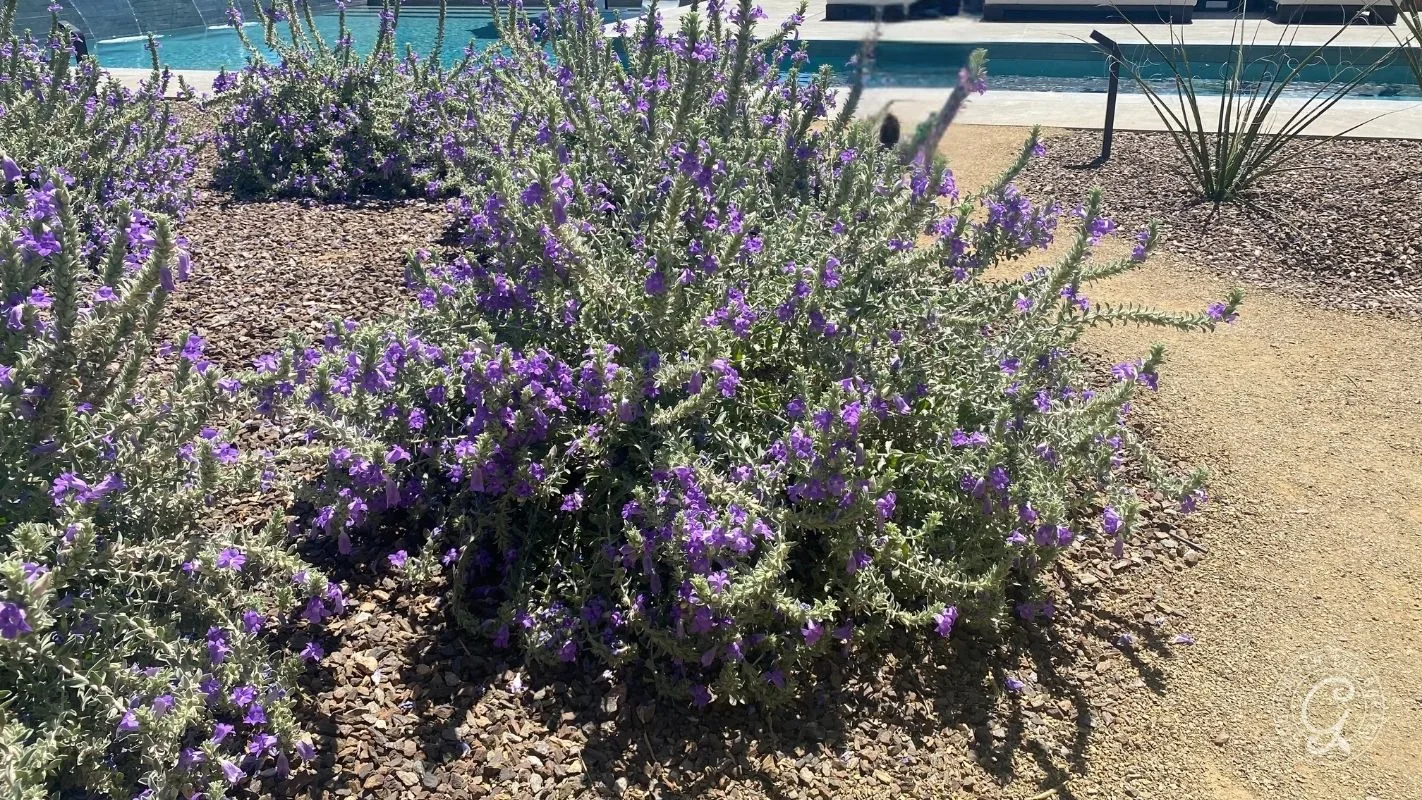
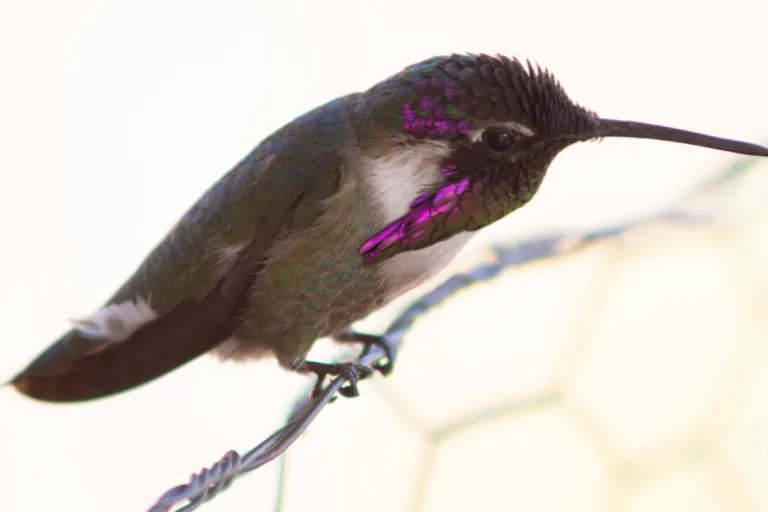
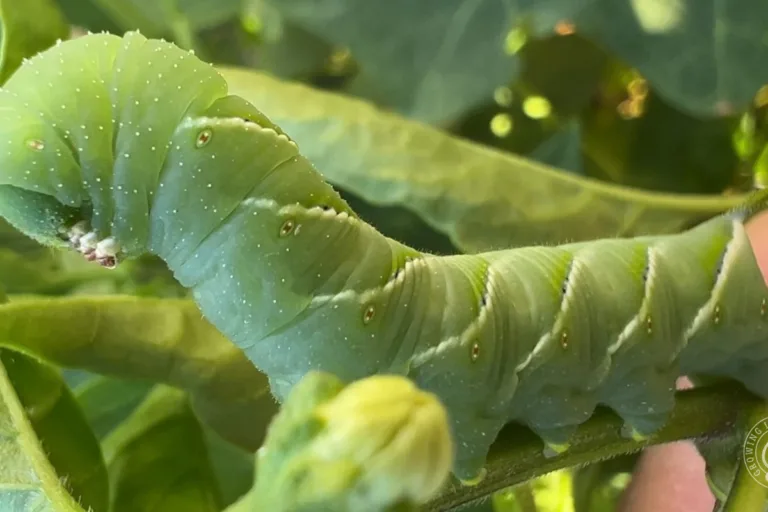
Rosemary is a low, tough perennial herb that handles full sun near a pool well. We also have milkweed growing in this area, a good pollinator plant, and it may give you a monarch or queen butterfly caterpillar sighting. Coral fountain is a hummingbird favorite. I love having hummingbirds visit the plants around my pool. If you’d like to attract more of them, here are my favorite plants for hummingbirds in Arizona, organized by bloom season.
Grasses and Groundcover
| Plant | Mature size | Sun exposure |
|---|---|---|
| Bamboo Muhly | 4 x 4 ft | Full sun to partial shade |
| Pink Muhly (Regal Mist) | 3 x 3 ft | Full sun |
| Trailing Lantana | 1 x 4 ft | Full sun |
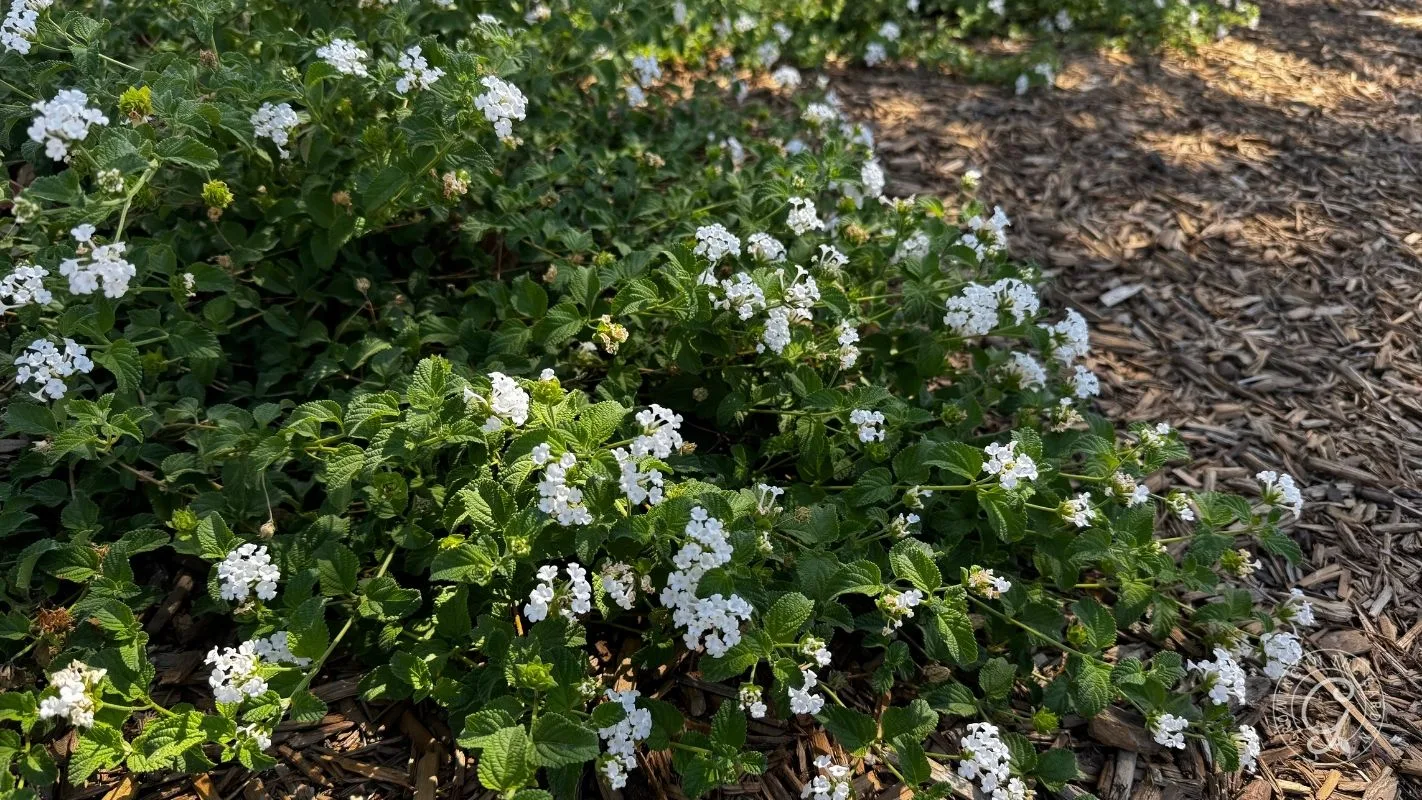
Bamboo muhly is an Arizona native with a soft, bamboo-like look that adds texture near a pool with very little litter. Pink muhly puts on a showy pink plume display in fall. Trailing lantana works as a low, spreading groundcover along a pool wall or bed edge. Lantana will have seasonal flower litter. Learn more about low-water-use groundcovers to plant.
Containers Around the Pool
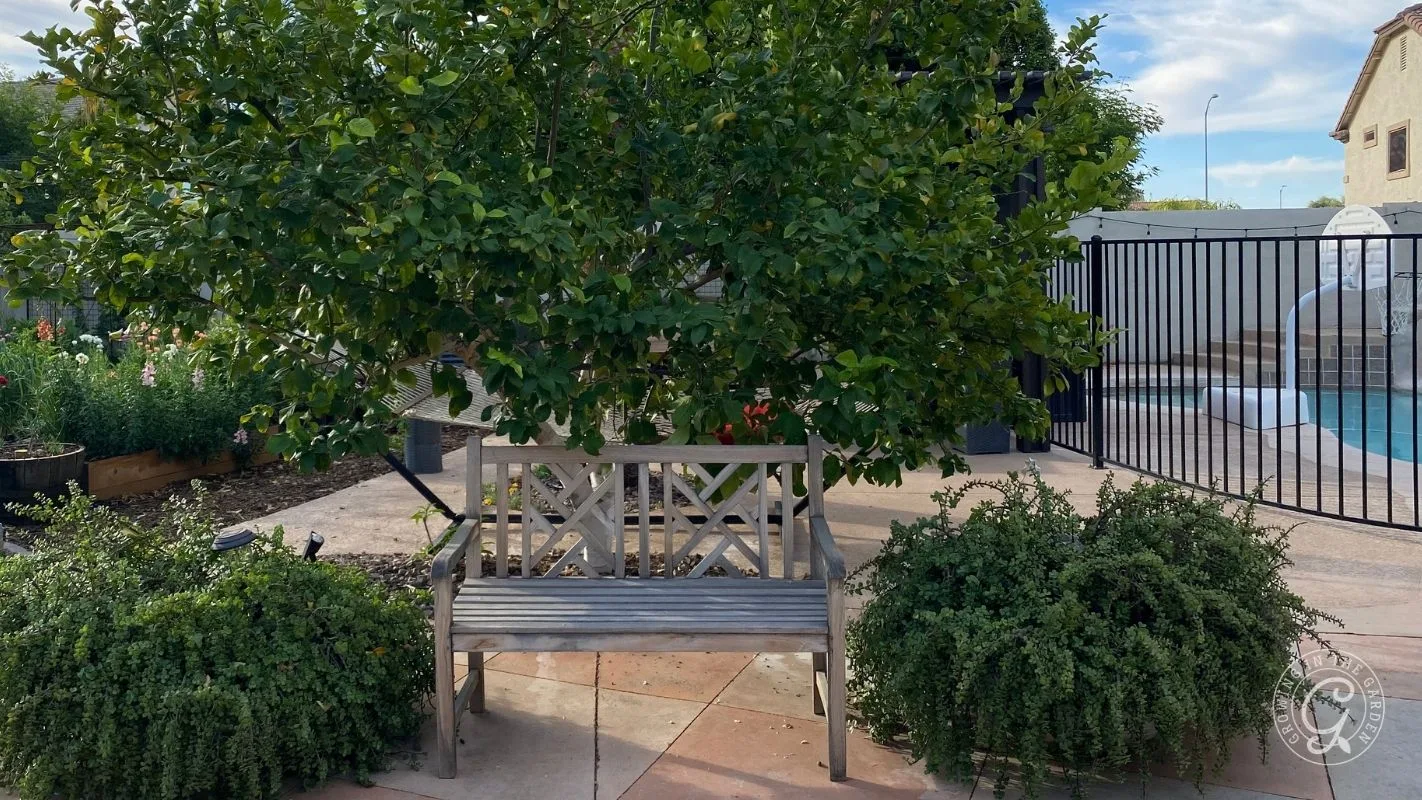
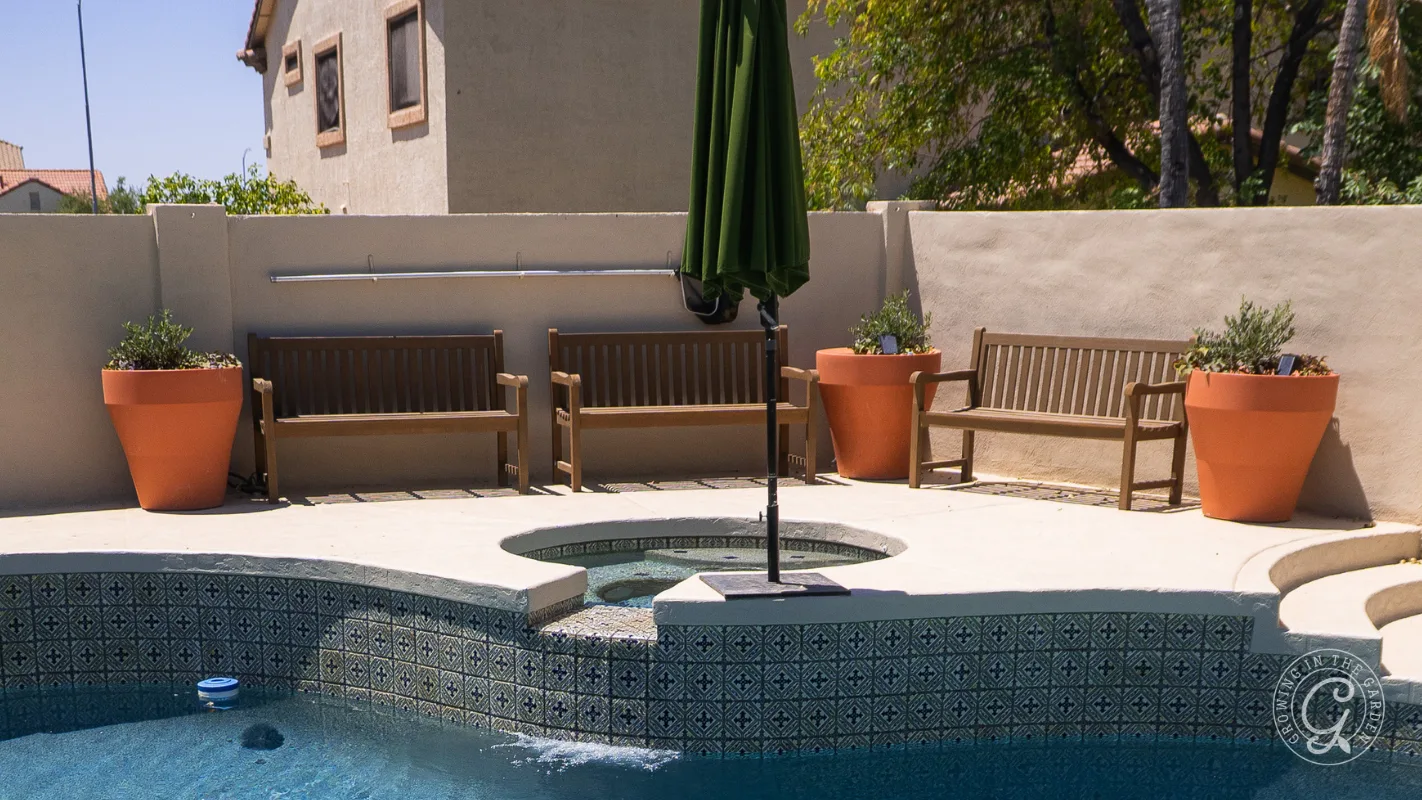
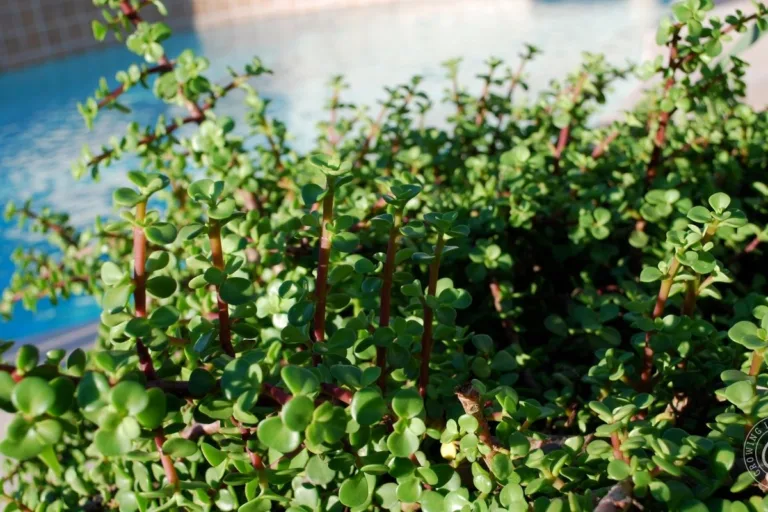
We use self-watering pots on our pool deck with dwarf olive planted in them, and they’ve been great, low-maintenance, and no daily watering to keep up with.
A Note on Wildflowers
Wildflowers have found their way into our pool area on their own over the years. It’s a nice surprise, not something I’d plan around, but I love that a few of them reseed and come back each year.
Best Plants Around a Pool FAQs
Low-litter plants that tolerate reflected heat and occasional pool splash work best. Jojoba, Arizona rosewood, red yucca, and coral fountain are good examples. Agaves can work too, but keep them well back from the pool edge and walkways.
Queen palm is one to skip. It’s common in Arizona yards, but it doesn’t hold up well long-term next to a pool; dead fronds and declining trees are a common result. Any tree with aggressive surface roots or heavy fruit and pod drop is worth avoiding too.
Not necessarily low water, but heavy irrigation near a pool can damage decking and equipment over time. Most of the plants in this guide are low water use.
Yes. Self-watering containers work especially well since they need less frequent attention. Just make sure they drain properly so you don’t end up with standing water near the pool.
A pool’s surface reflects sunlight and heat back onto nearby plants, similar to a stucco wall. Plants that already handle reflected heat elsewhere in a low desert yard tend to do well in this spot too.
Sources
- Arizona Municipal Water Users Association (AMWUA). Landscape Plants for the Arizona Desert.
- Bradley, Lucy. Plants for Poolside Landscapes. University of Arizona Cooperative Extension, Maricopa County, August 1998. Publication AZ1058.
Leave a comment on Best Plants Around a Pool in Low Desert Arizona