
Assassin Bugs in the Garden: Identification and Benefits
I see assassin bugs in my garden quite often, and I’ve grown to really enjoy finding them. There are a few spots where I know to look, especially my rose and zinnia blooms. Sometimes I’ll stop and watch one for a while to see what it’s up to.
One of my favorite things about Jean Elston’s articles is learning more about the insects we garden alongside. This time, she takes a closer look at assassin bugs, how to recognize them at every stage, what they eat, and why it’s encouraging them in the garden. You can find all of her articles in the Low Desert Garden Insects series.
Guest post and photos by Jean Elston
Key Takeaways: Assassin Bugs in the Garden
- Assassin bugs are valuable garden predators that help maintain ecological balance by eating a wide variety of insects.
- Identifying assassin bugs can be challenging due to their similarities with other insects and their varying life stages.
- To attract assassin bugs, create a diverse garden with flowering plants, avoid chemicals, and allow some pests to thrive as a food source.
- While they can bite if mishandled, assassin bugs generally do not seek out humans as a threat.
- Observation and documentation are essential for understanding and identifying assassin bugs in your garden.
What We’ll Cover:
- Assassin Bugs: The Garden’s Secret Weapon
- Finding Assassin Bug Eggs
- Why Are Assassin Bugs Hard to Identify?
- What Do Assassin Bugs Look Like?
- Why Assassin Bugs Are Valuable Garden Predators
- How to Attract Assassin Bugs to Your Garden
- Are Assassin Bugs Dangerous to People?
- Observation Is the Best Tool
- Assassin Bug FAQs
- About the Author
Assassin Bugs: The Garden’s Secret Weapon
One of the great difficulties of gardening is all the insects that can look similar. Particularly when new to gardening, you are constantly debating which insects are “good” and which ones are “bad.” It does not help when the insect in question looks intimidating, unlike a red ladybug or a butterfly. Assassin bugs can look like other insects at every life stage, and it may be hard to believe something so delicate-looking could be useful in the garden. Despite their unusual appearance, with elongated bodies and curved beaks, assassin bugs are valuable residents of a healthy garden.
Finding Assassin Bug Eggs
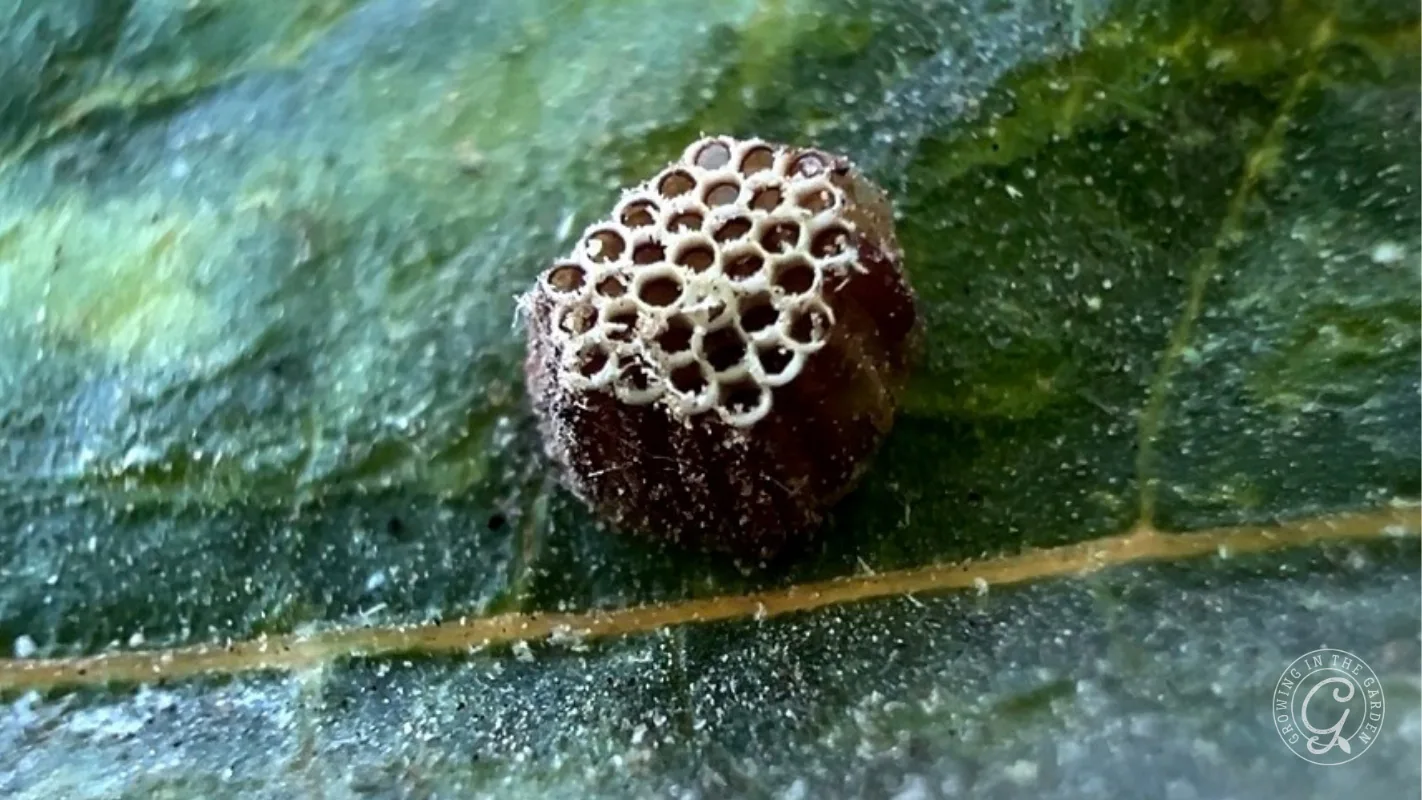
When looking for insects in the garden, finding eggs is a great start. For more examples, see my guide to identifying beneficial insect eggs. The good news is that once you’ve seen most assassin bug eggs, they’re hard to forget. There are exceptions, which I’ll point out in a moment, but most often you’ll find tightly grouped clusters of amber-brown eggs with white caps.
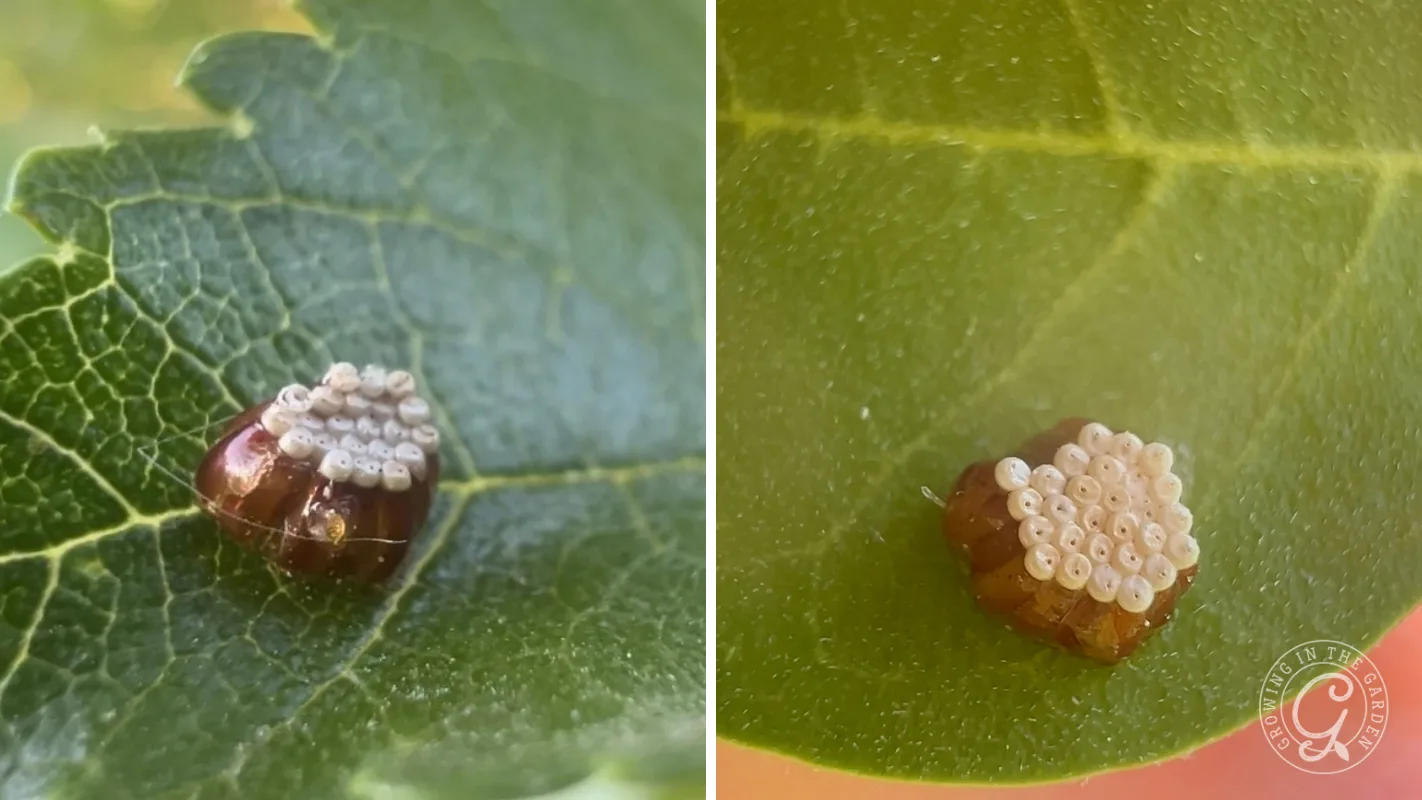
While some sources mention finding large clusters of assassin bug eggs on tree bark, that has not been my experience in the garden. Some of these differences may be due to the species, while others could be related to climate or the growing space itself. The important thing to remember is the shape of the eggs, whether you find them on tree bark or on a leaf.
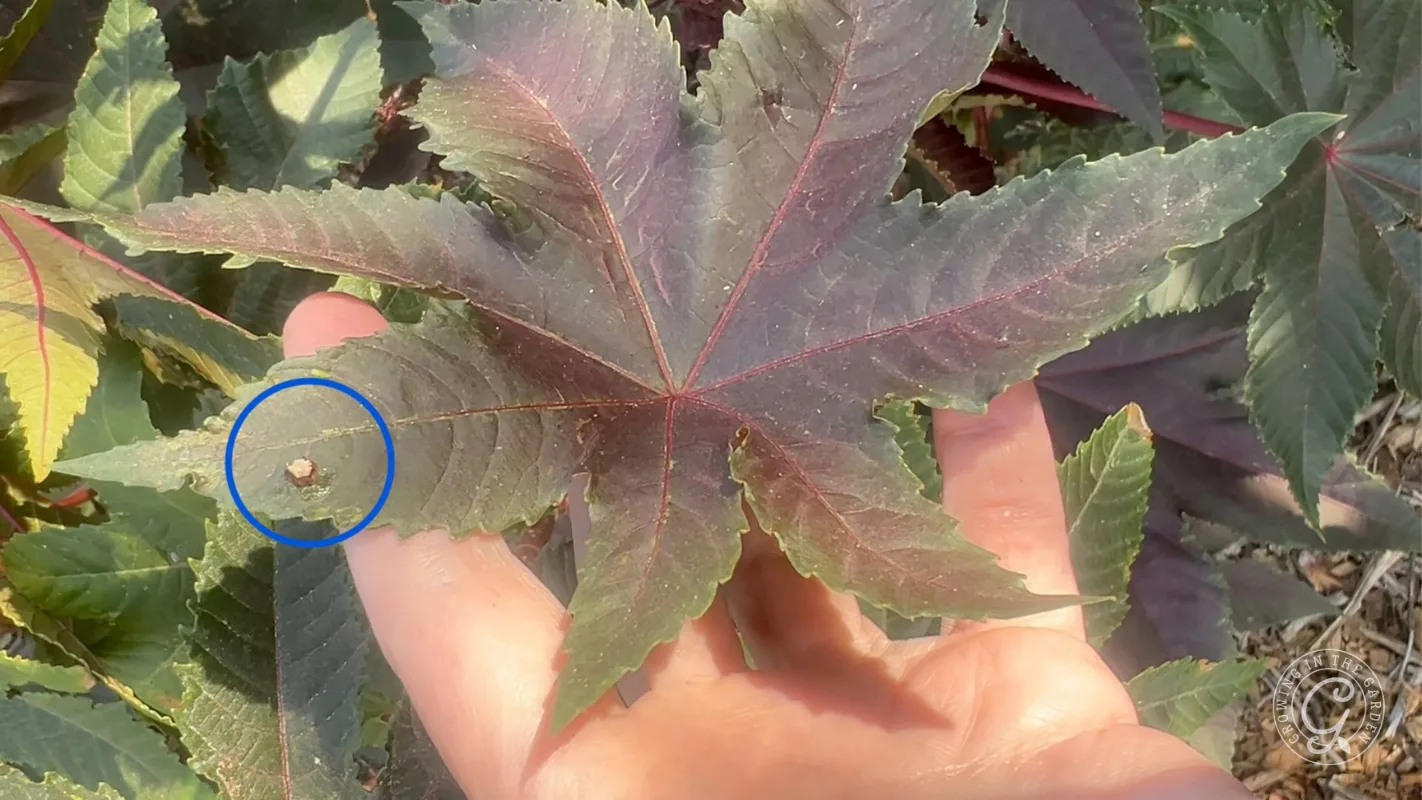
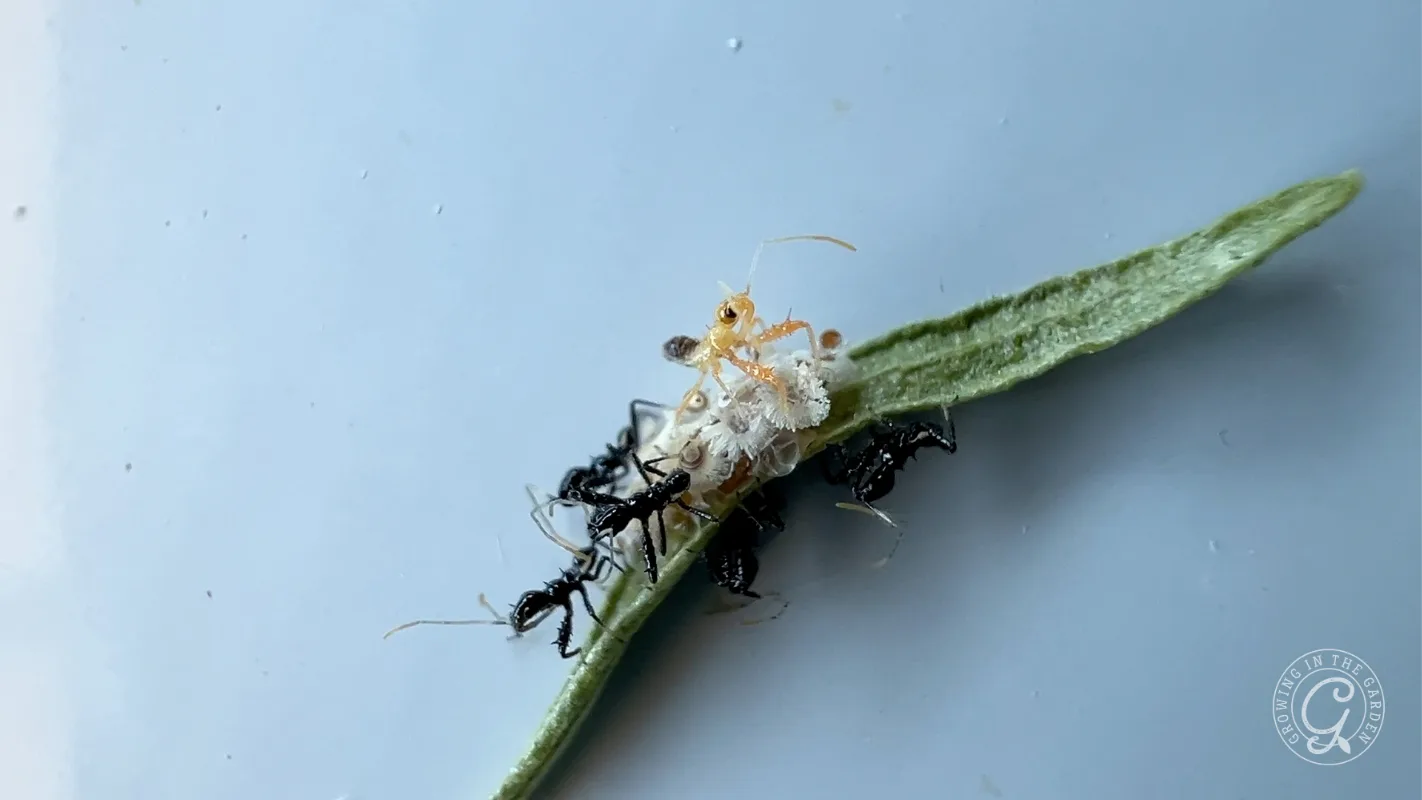
I mentioned that there can be some variation in the appearance of assassin bug egg clusters, and the Spined Assassin (Sinea diadema) is a good example. I would not consider this assassin bug especially common, at least not in my garden, but it is a regular visitor and just as helpful as other assassin bugs.
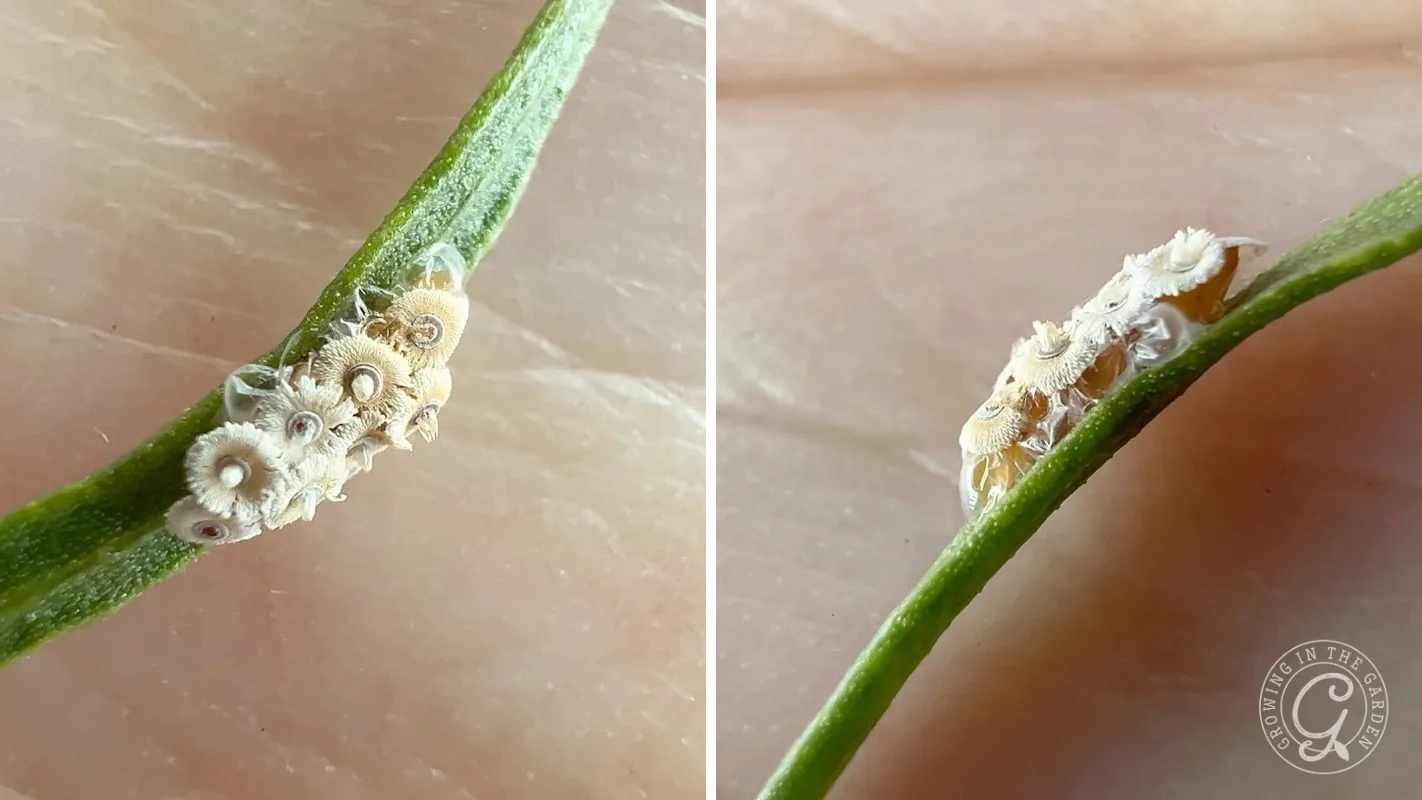
Its egg clusters, however, look a little different. Like many true bugs, Spined Assassins lay their eggs in clusters, but the eggs are lighter in color, and the cap on top is what really stands out. Instead of a simple circle, the cap has frilled edges that almost resemble a tiny sea creature. The few clusters I have found also have not been arranged in quite the same pattern as other assassin bug eggs.
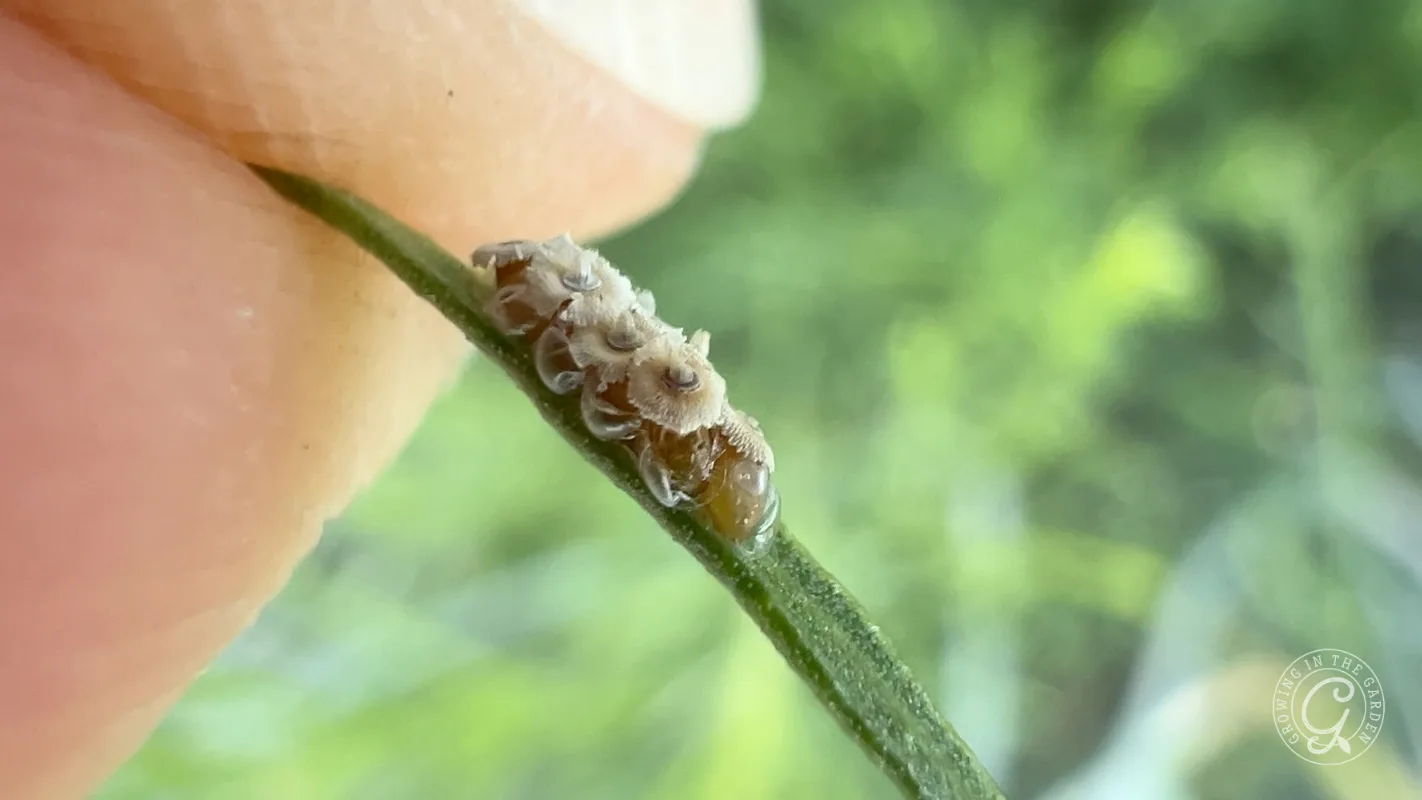
This is a good example of why it’s important to be confident in your identification before removing or destroying insect eggs.
Why Are Assassin Bugs Hard to Identify?
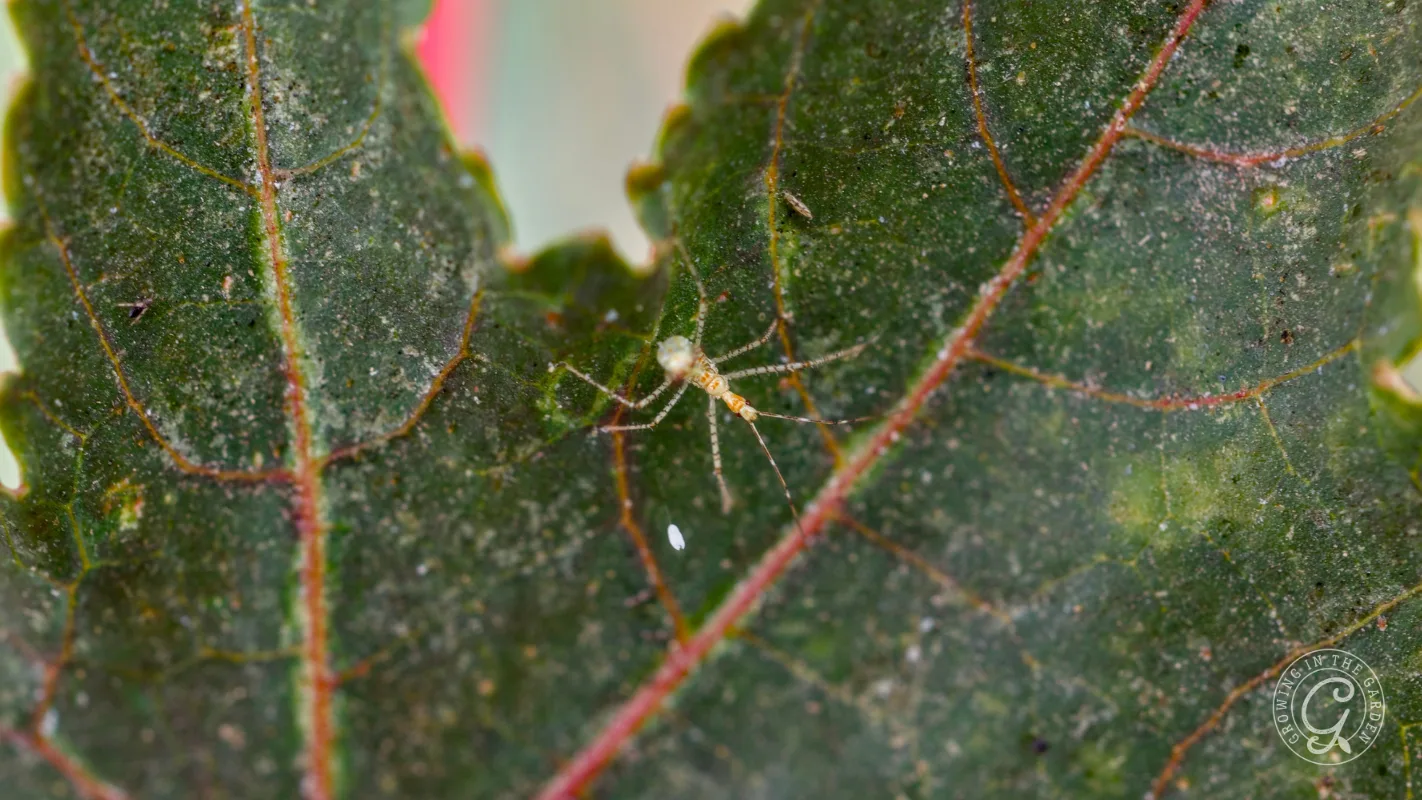
Part of what makes assassin bugs difficult to recognize, especially in the nymph stage, is that they share many characteristics with other insects in the order Hemiptera, including leafhoppers, aphids, stink bugs, and other common garden insects.
Their mouthpart, called a rostrum, has the same piercing-sucking structure found throughout this group, and their body shape can also resemble other true bugs. This is where careful observation becomes important. My earlier article on garden insects and their lookalikes shows just how easy it is to confuse one insect with another.
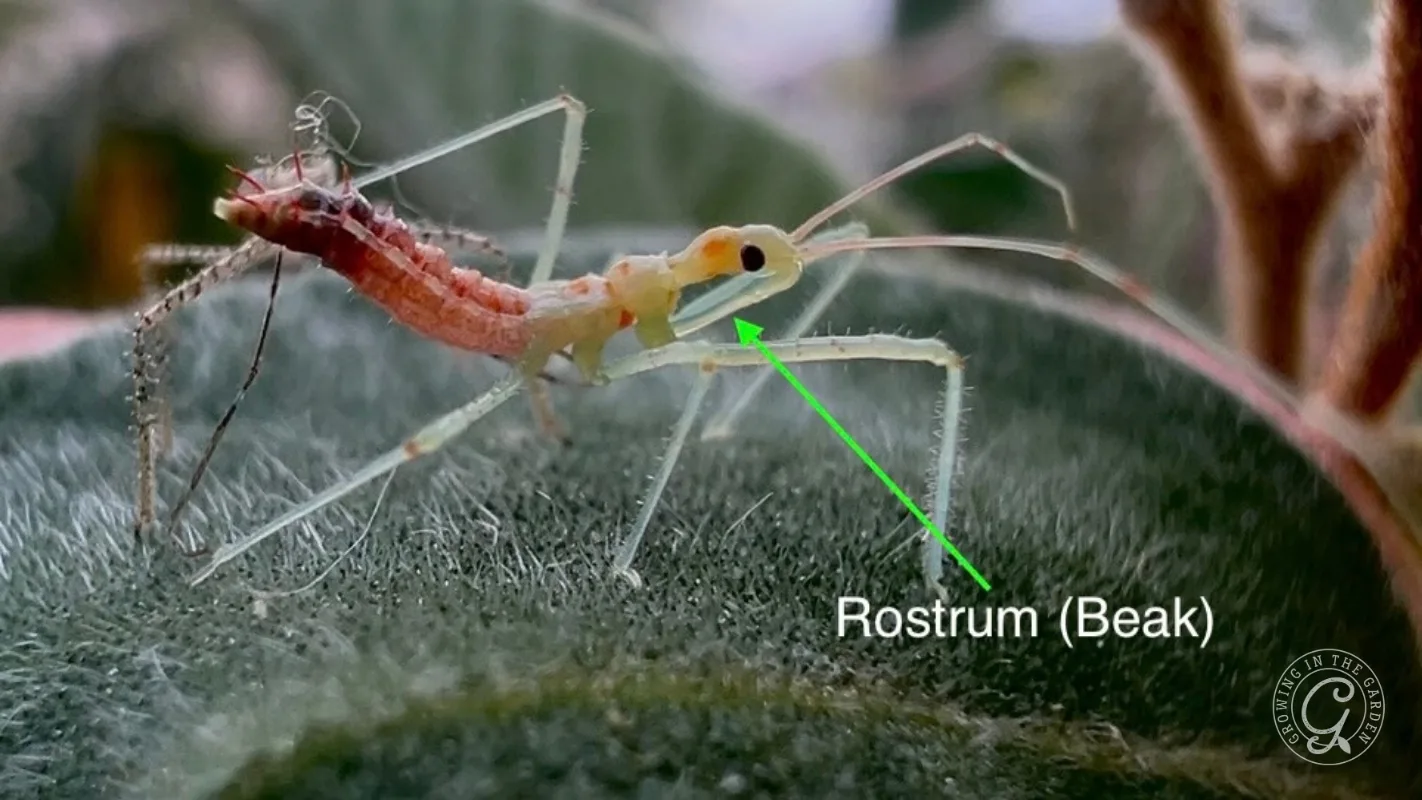
One useful clue is the head. A squash bug, for example, appears to have little or no distinct “neck,” while an assassin bug has a noticeable separation between the head and the rest of the body.
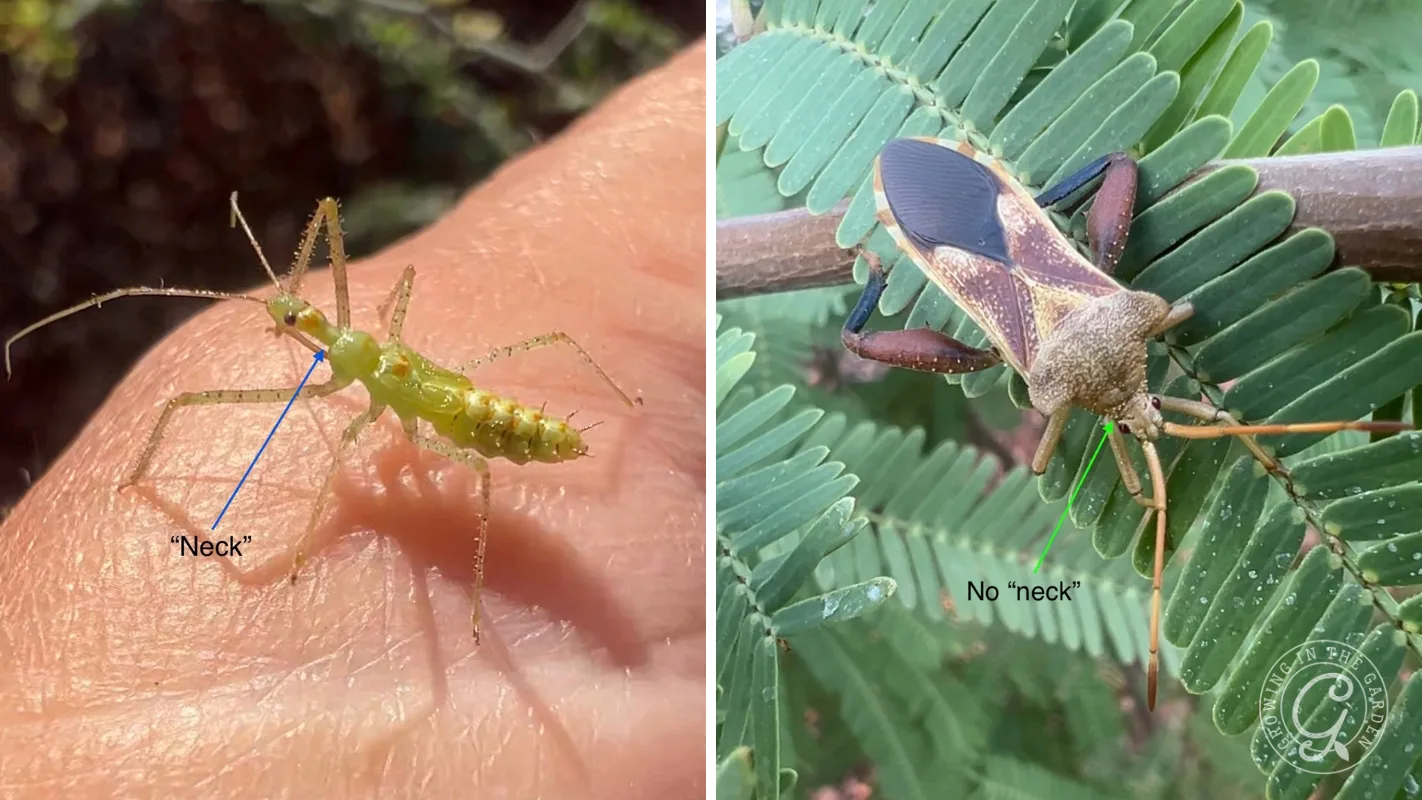
Right: Head blends into the body of other true bugs
Movement can offer another clue, although it shouldn’t be used by itself for identification. Assassin bugs often move slowly and deliberately, especially as adults, stalking prey before striking.
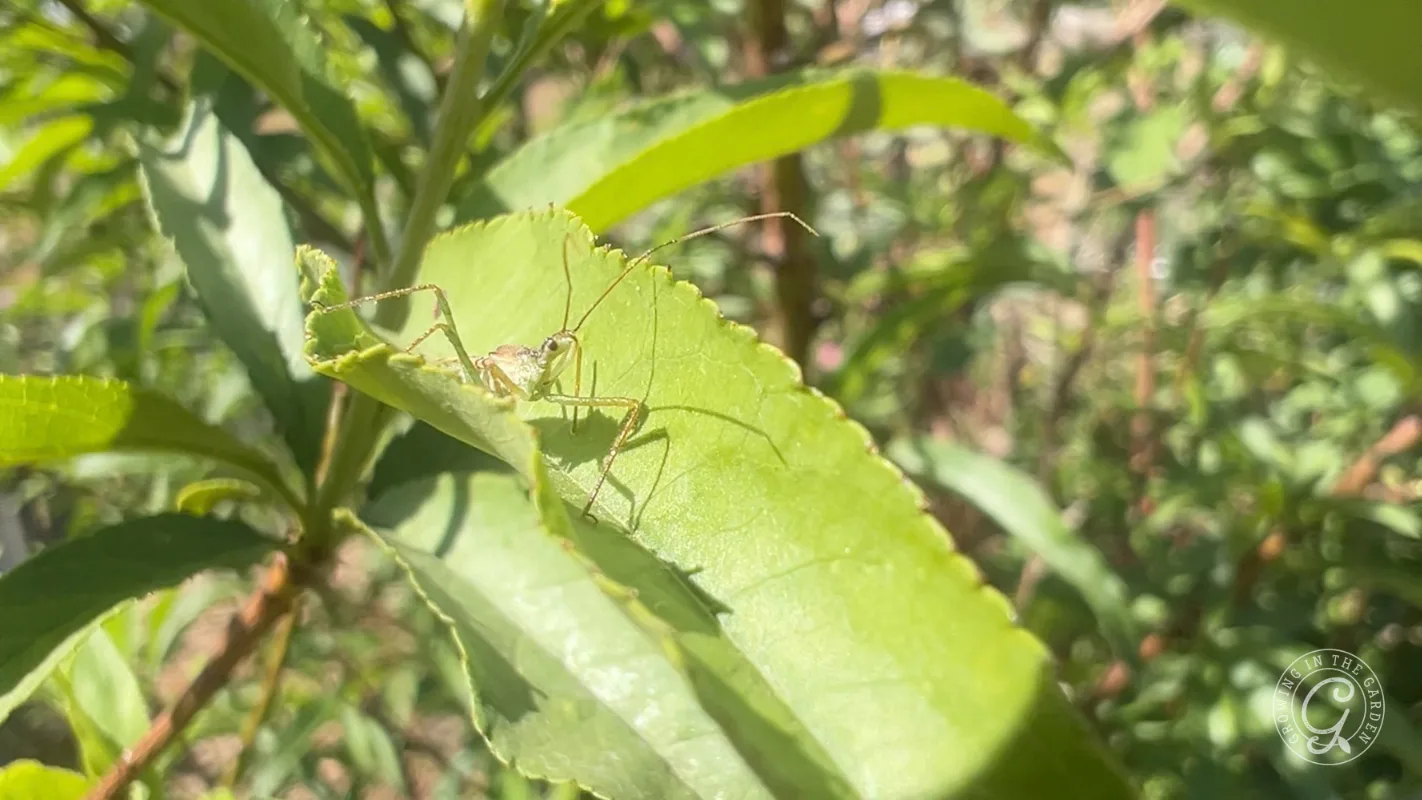
This doesn’t mean an assassin bug won’t move away quickly if disturbed, but even its faster movements often seem more deliberate and controlled than the hurried scrambling of many other insects.
Another reason assassin bugs can be difficult to identify is that the term refers to a large group of species rather than one specific insect. They share some common features, but there can be significant differences in size, color, and even body shape. A Leafhopper Assassin, for example, can look quite different from a Bee Killer Assassin. Even with those differences, there are still some useful characteristics to look for. I’ll break down a few of the most common ones, especially in the nymph stage, where identification can be particularly tricky.
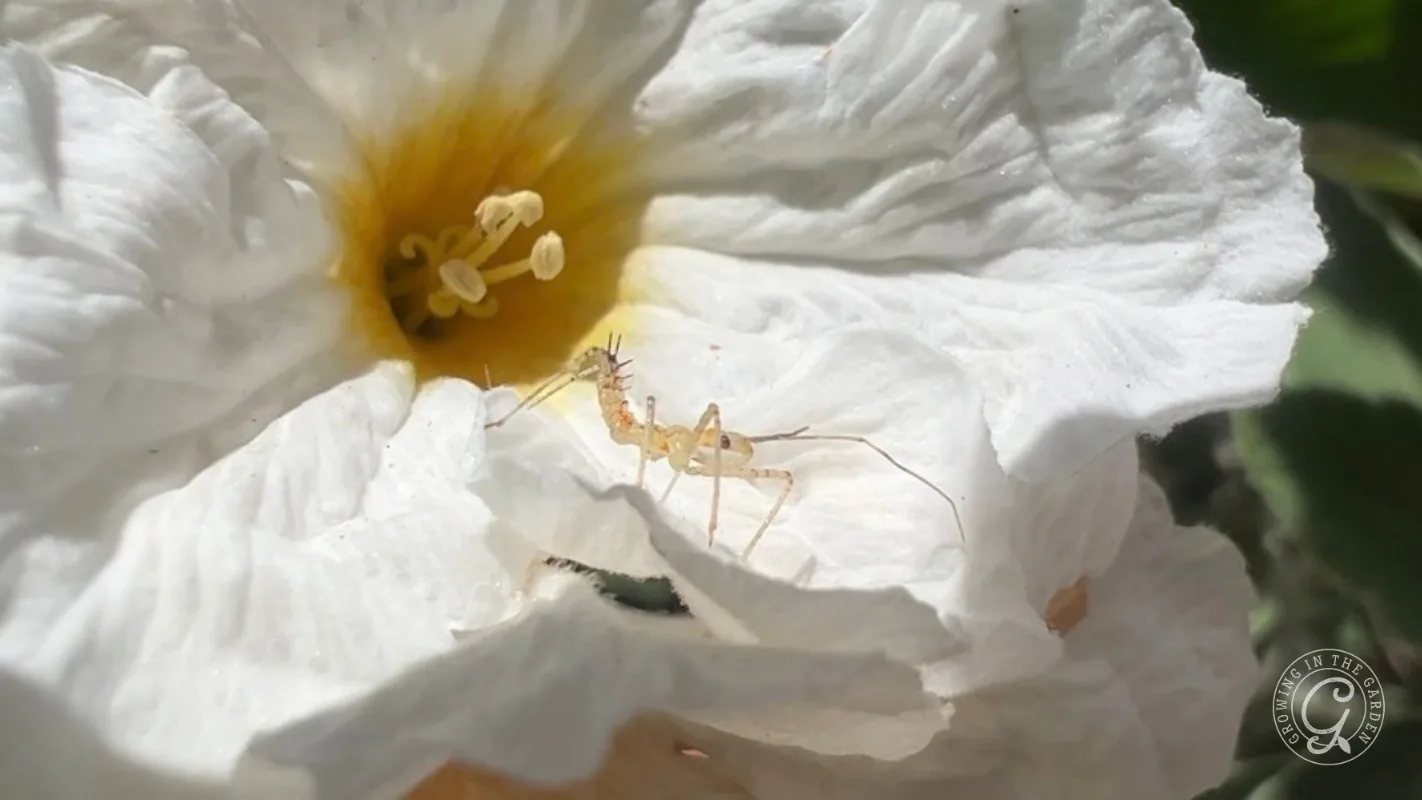
What Do Assassin Bugs Look Like?
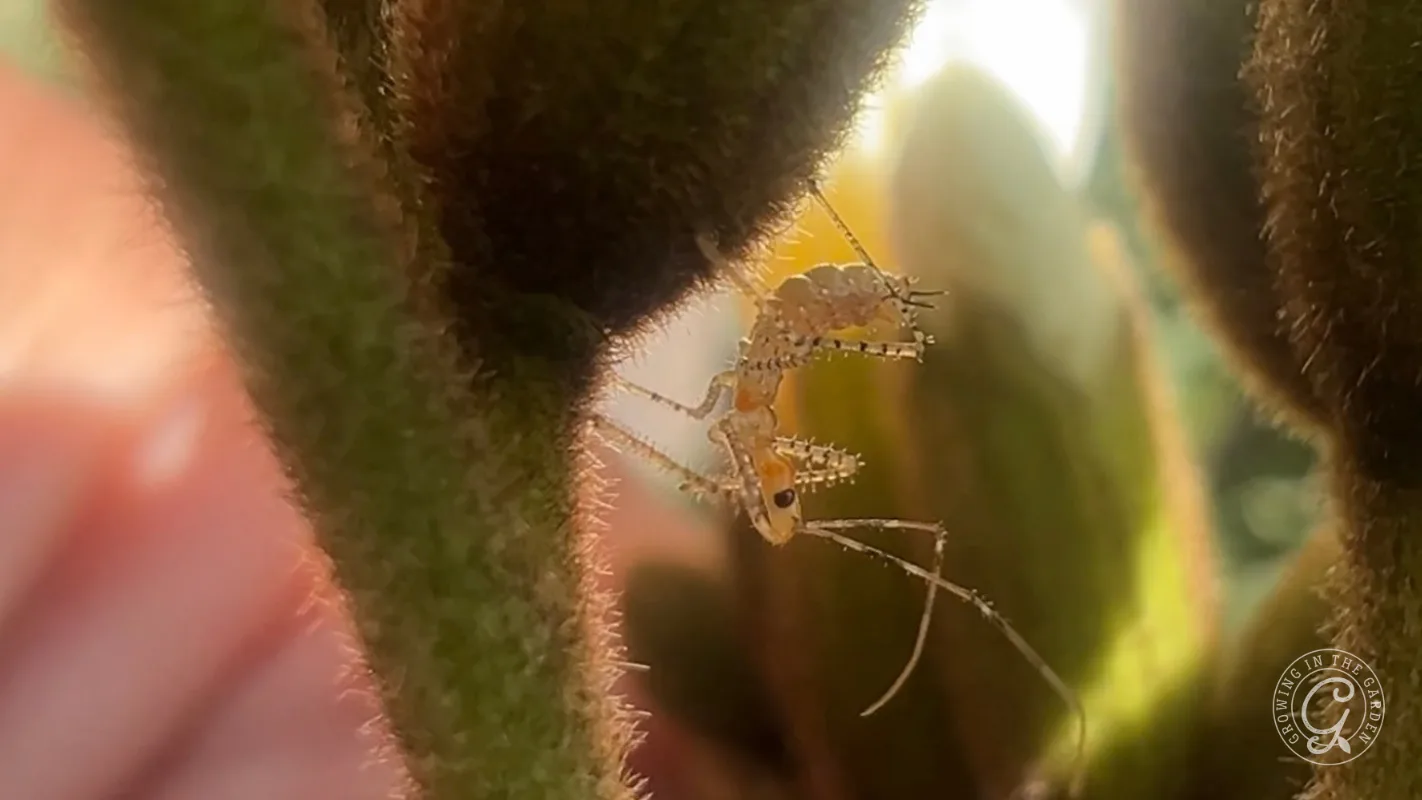
As they wiggle their bodies, head first, out of the egg, assassin bugs do look strange. While their long limbs are noticeable at every stage of development, they are an almost a defining feature at this early stage.
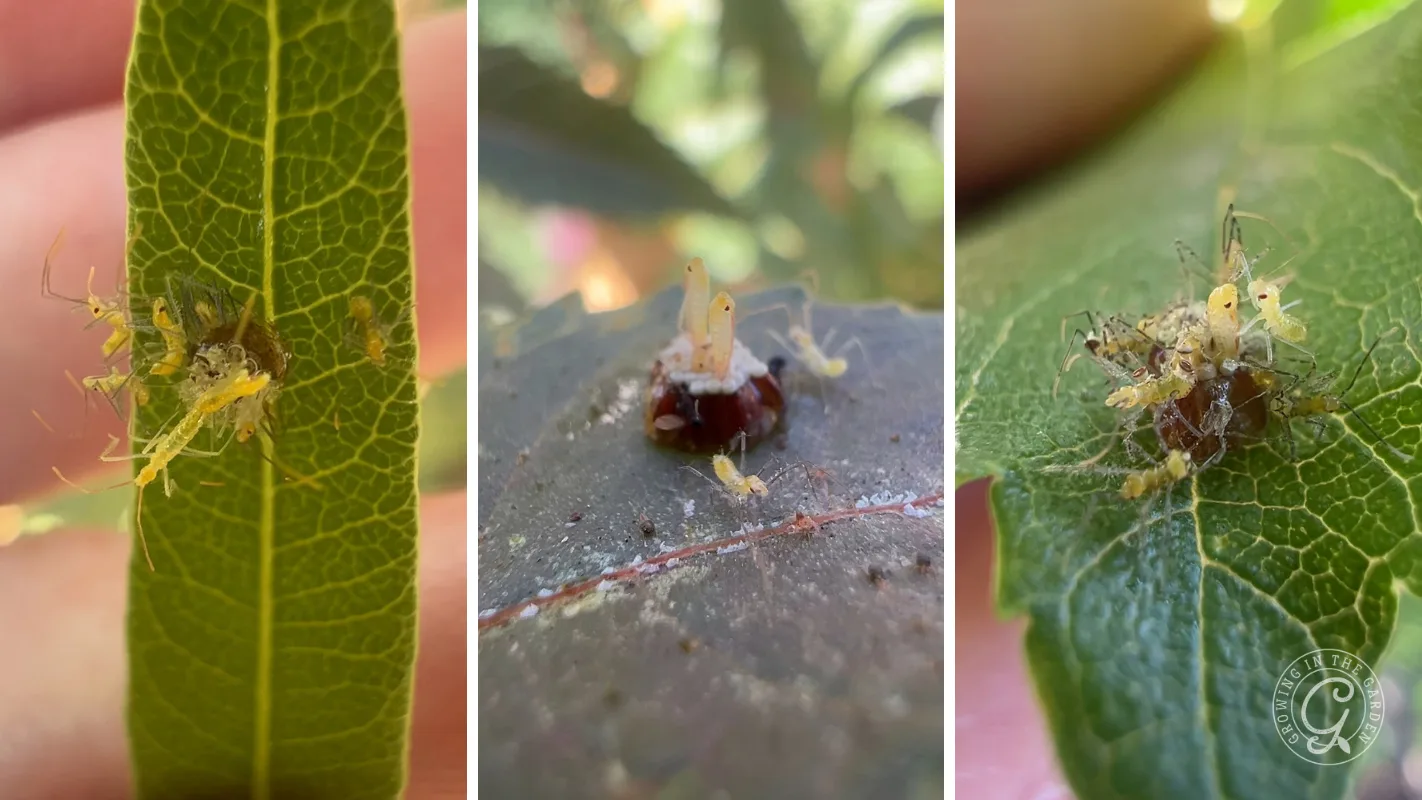
Once fully emerged, they will stay clustered together for a brief moment while sorting out how to move. It does not take long, though, before they have figured things out, the exoskeleton has hardened, and it is time to find food.
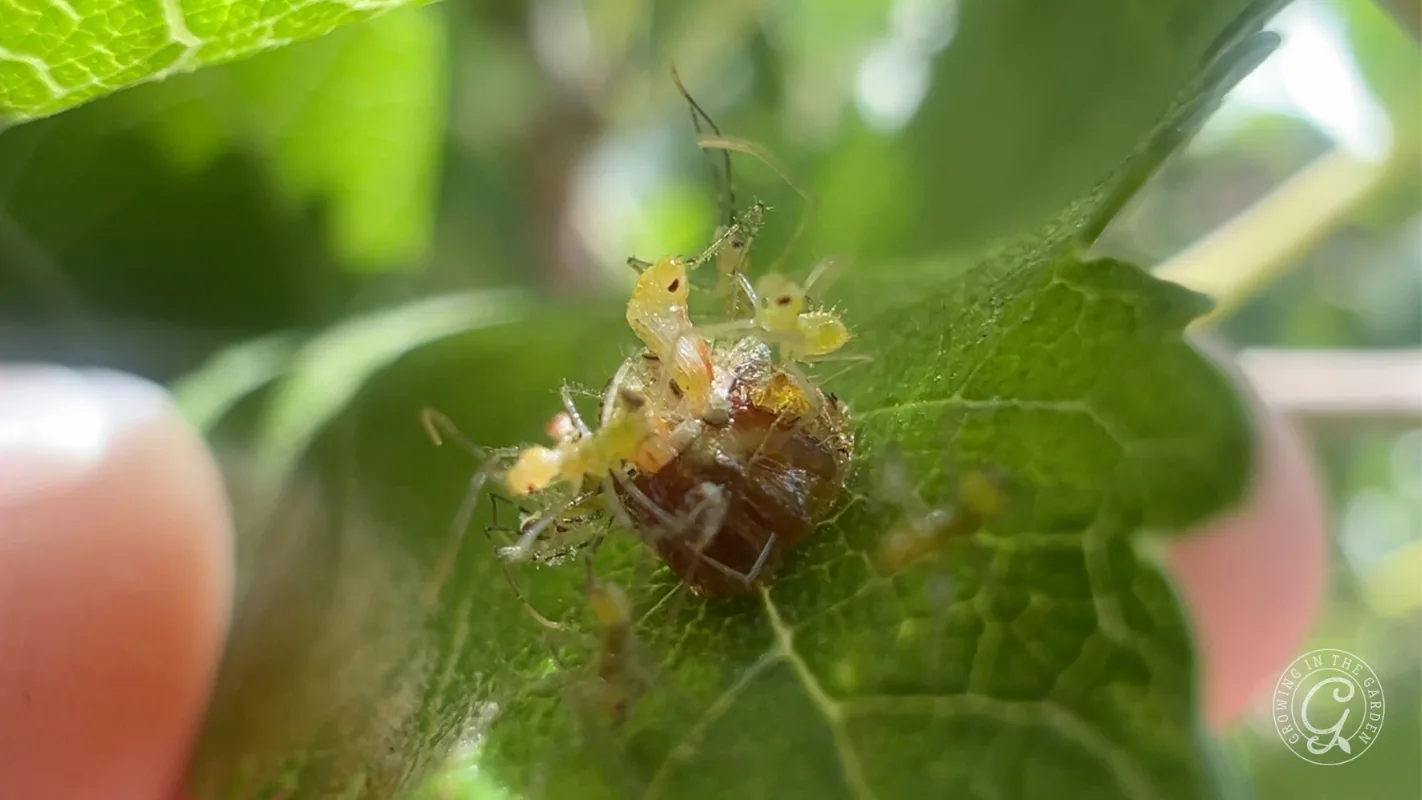
At this small size, their food is also a bit smaller, focusing on flies or aphids. As they get larger, the feasting will increase, from leafhoppers to caterpillars and even bees.
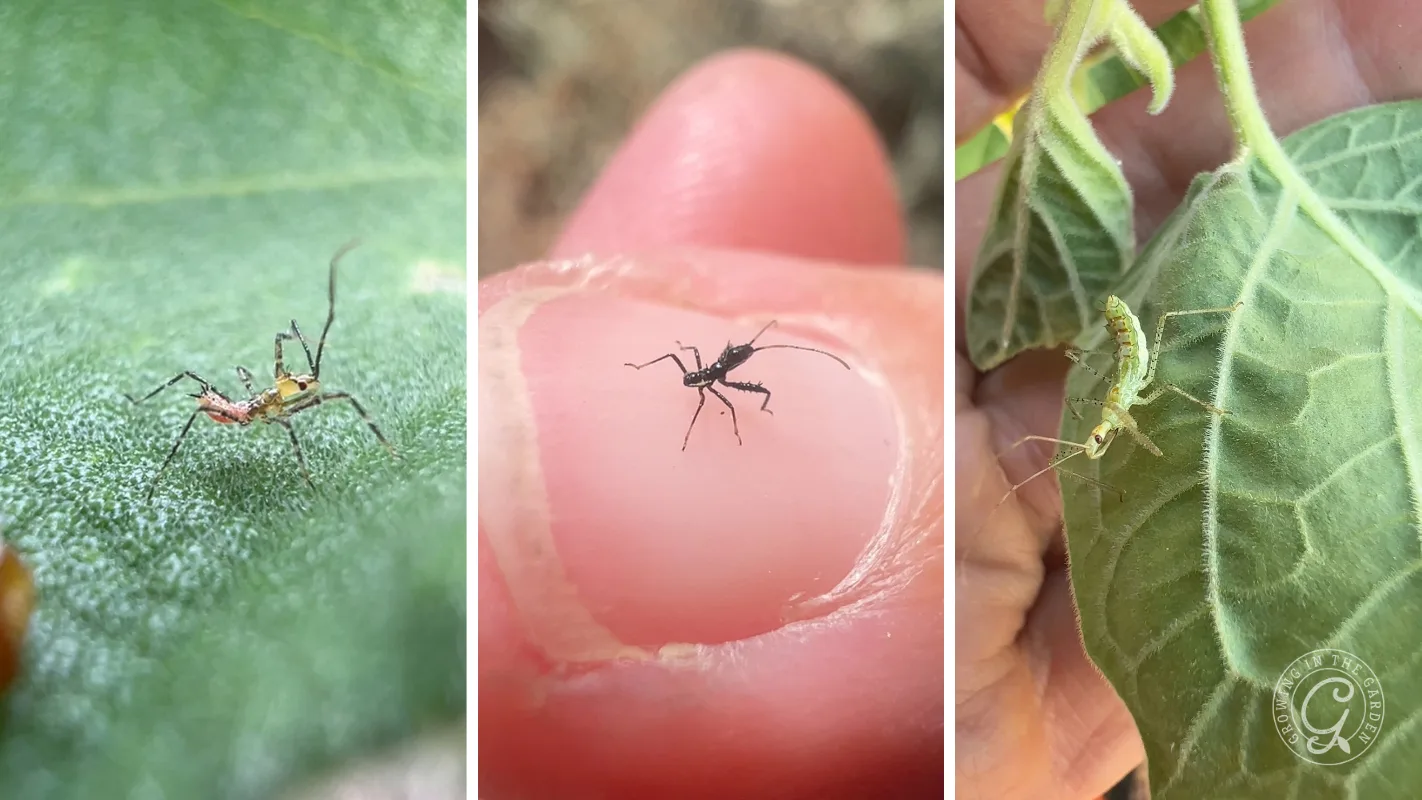
Since they hatch from the egg in a small state, rather than as full adults, they have to go through several molts, shedding their skin several times as they grow. Each time, their coloring will change a bit, sometimes becoming brighter or darker depending on the species.
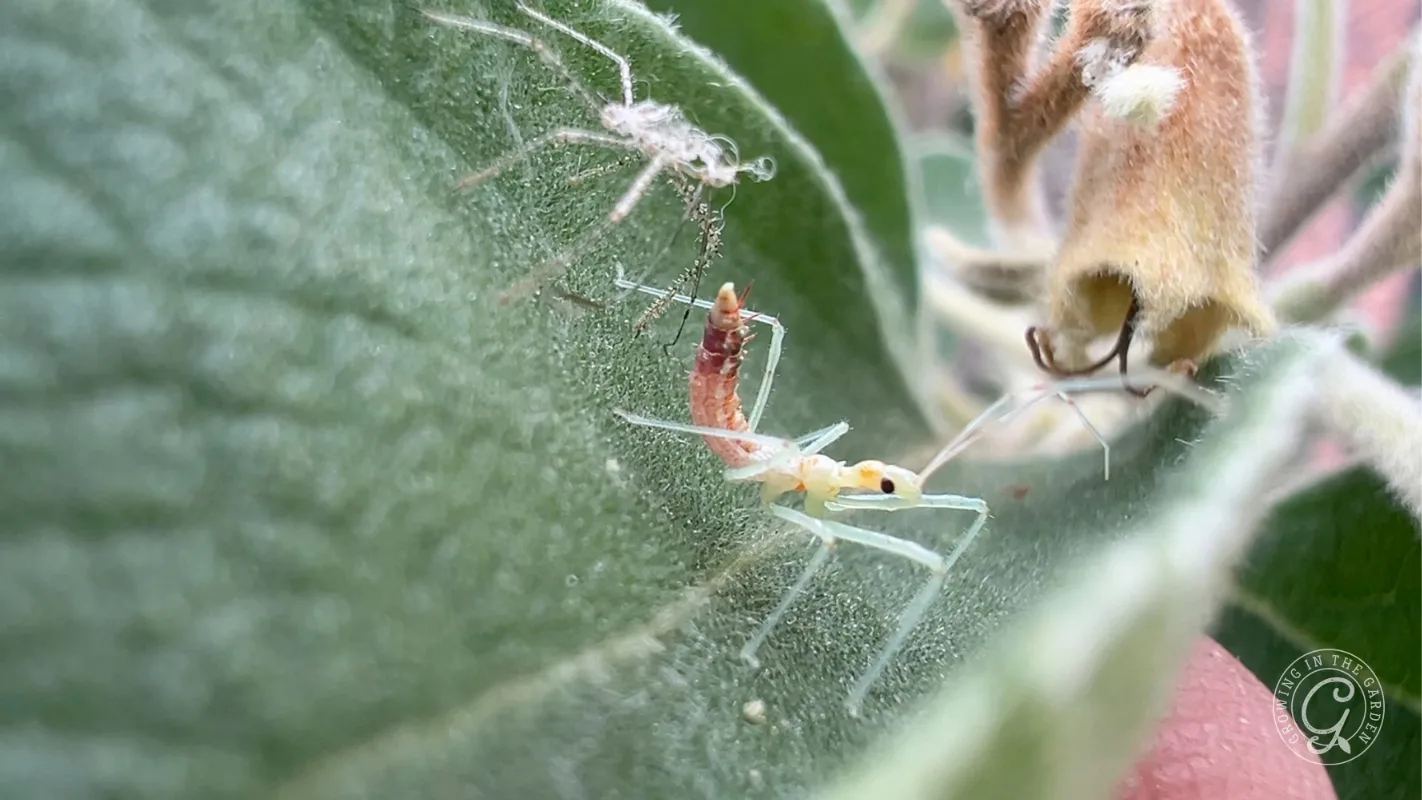
So if we cannot rely on coloring or even size, how can we truly know we’ve found an assassin bug? No matter what stage, nymph or adult, they all have a narrow head and long, delicate-looking legs.
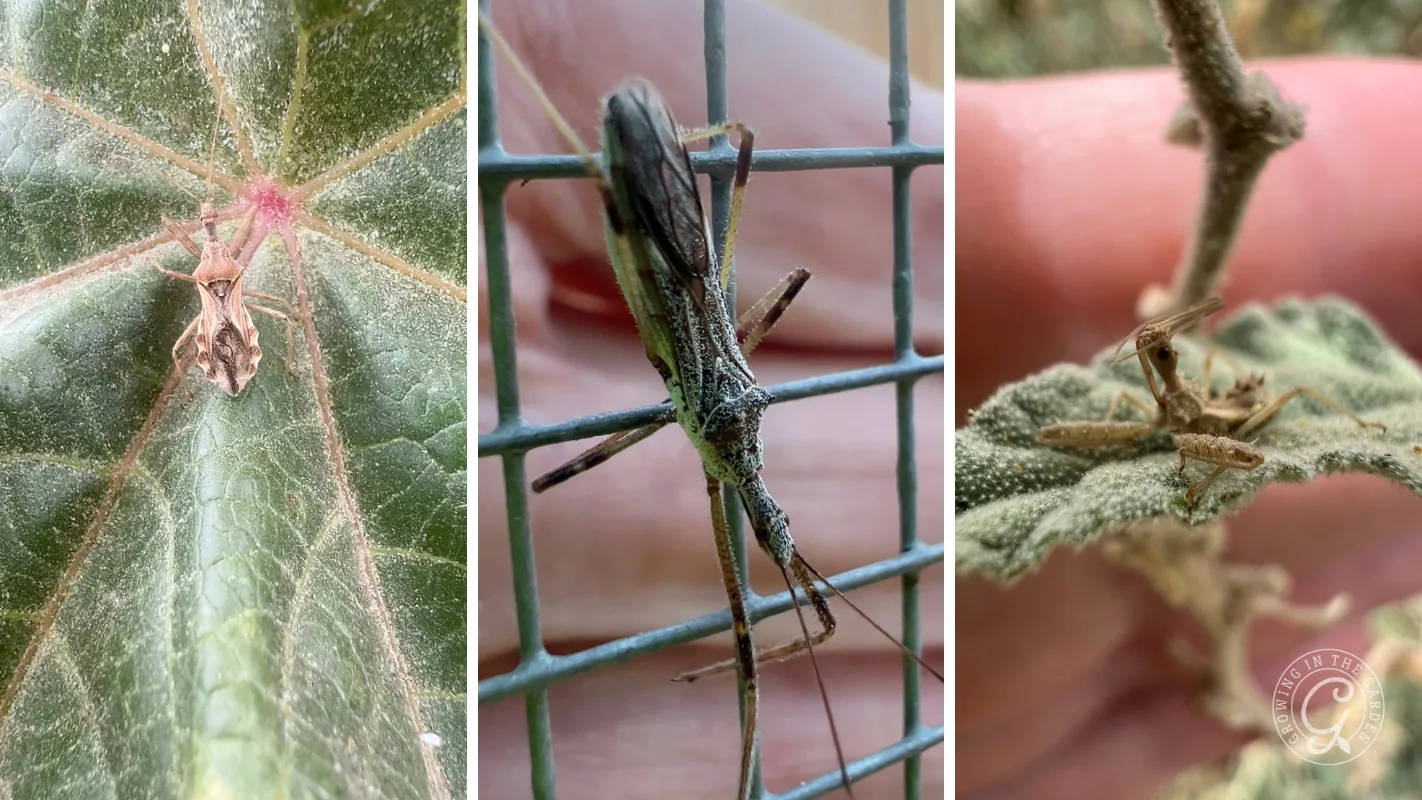
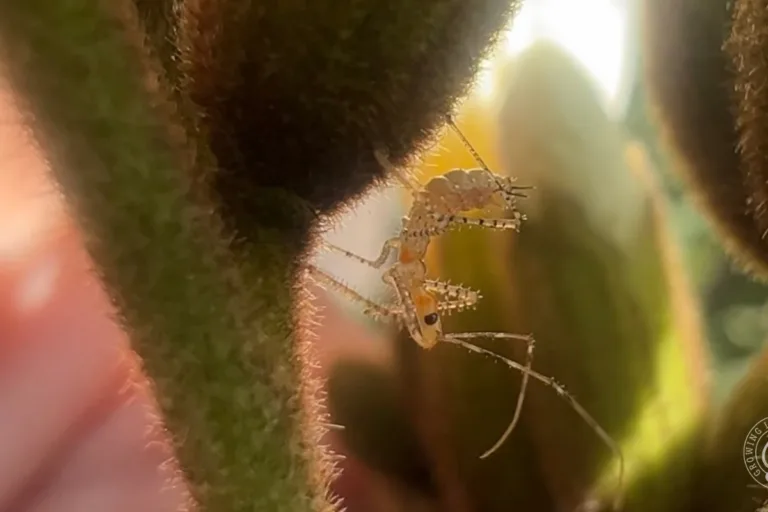
While their rostrum (some call it a beak) is similar to that of other true bugs, it is technically more curved and has three segments rather than four. That detail, however, is not something most of us are going to notice. Focus instead on the overall head shape and whether or not the bug in question has a “neck.” At the nymph stage, the extreme curve of the abdomen (body) is also rather unique. This is not to suggest that there are no other insects that could look similar; however, it would be rare to find such insects in the garden.
But why do we want assassin bugs in the garden?
Why Assassin Bugs Are Valuable Garden Predators
The simplest answer: they eat other insects.
Our gardens are miniature ecosystems. It does not take long before we realize that growing plants also means having insects. While many are pollinating flowers, others are helping to compost organic matter, and, to our frustration, some are feeding on the plants we want to consume. A generalist predator such as the assassin bug helps keep the garden ecosystem in balance.
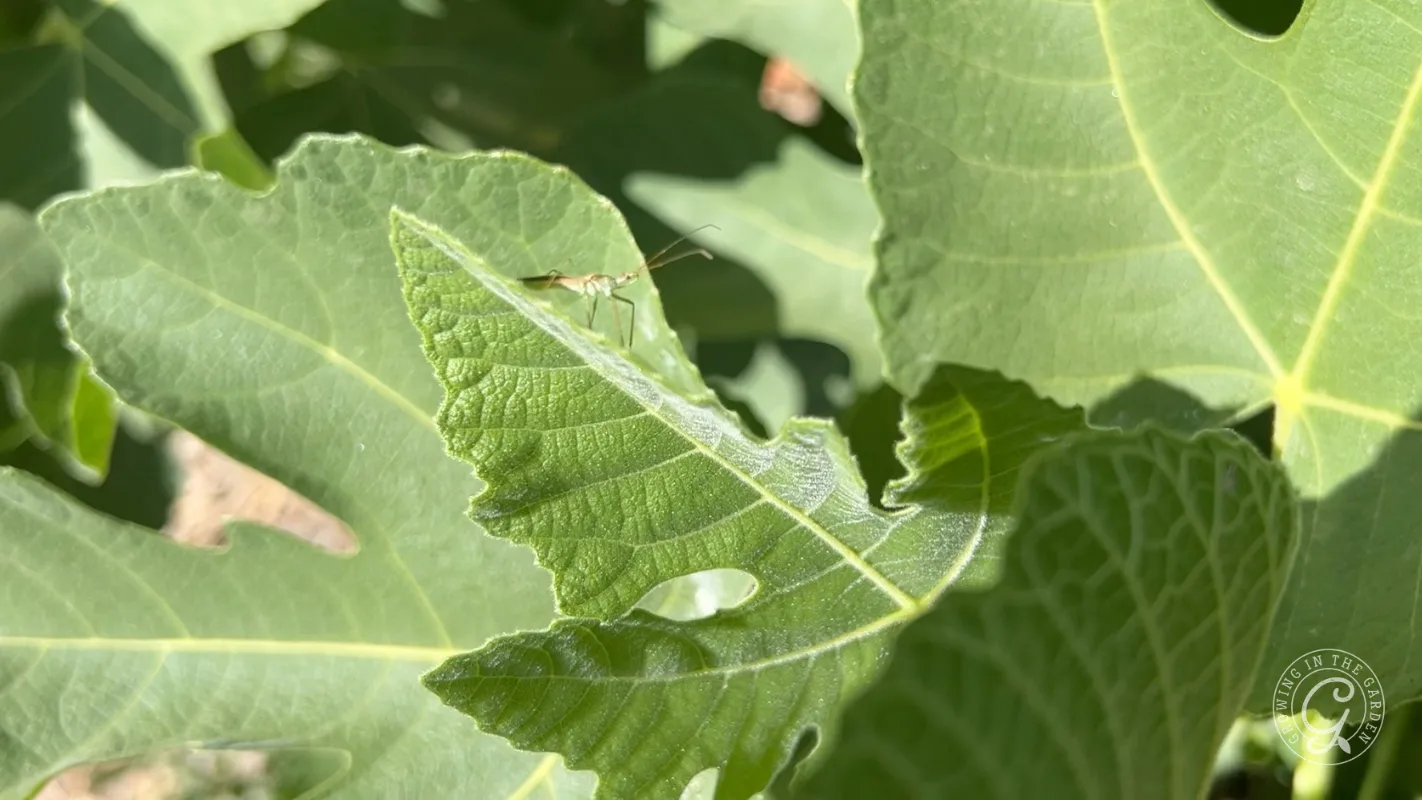
Unlike ladybugs, which focus mostly on aphids, or lacewing larvae, which feed mainly on small, soft-bodied insects, assassin bugs will consume almost any insect they can grab.
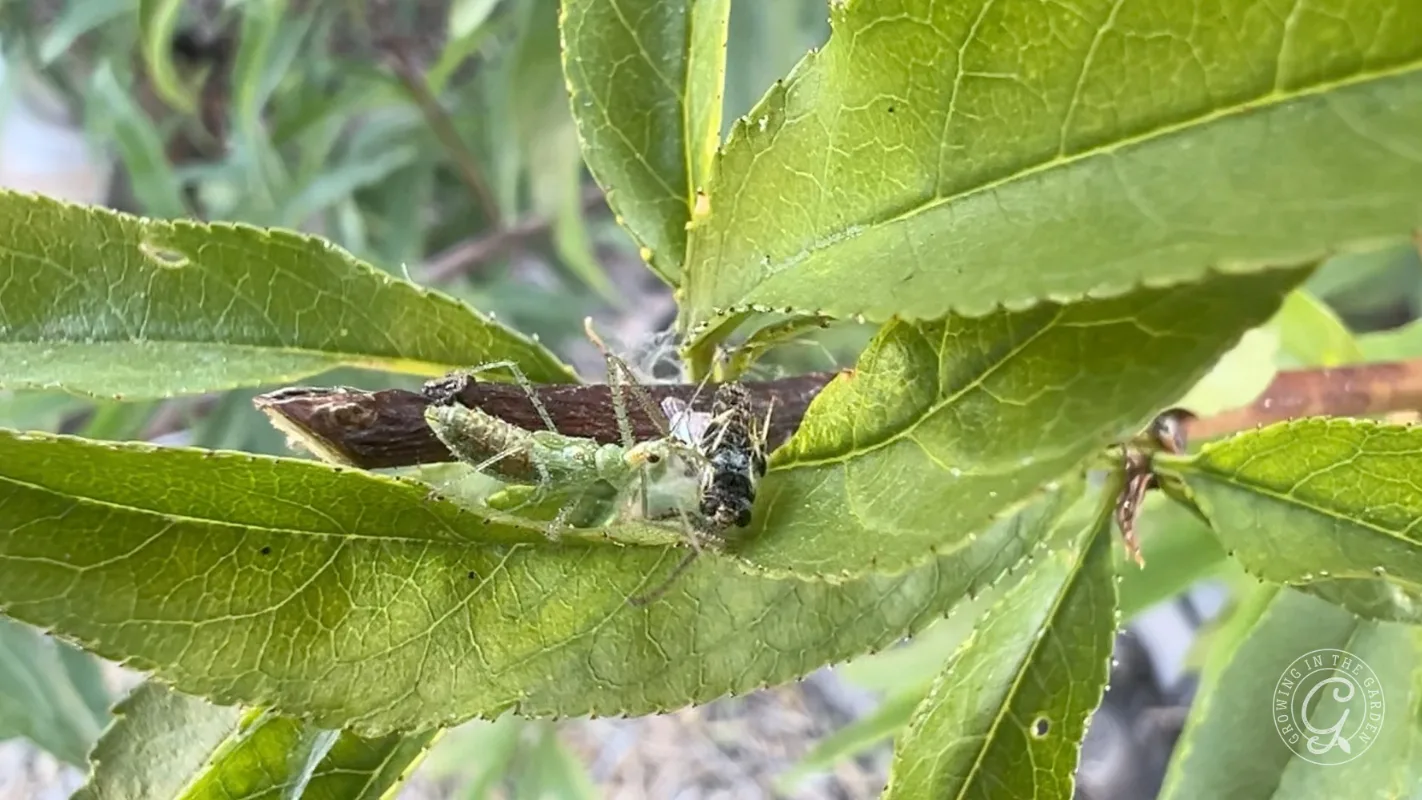
While some species may have a favorite type of prey, assassin bugs will feed on aphids, caterpillars, leafhoppers, flies, beetles, moths, bees, and even each other if cornered.
Their feeding strategy can be a bit gruesome to think about, but it is highly effective. They pierce their prey with the rostrum, inject digestive enzymes, and eventually consume the liquefied tissue.
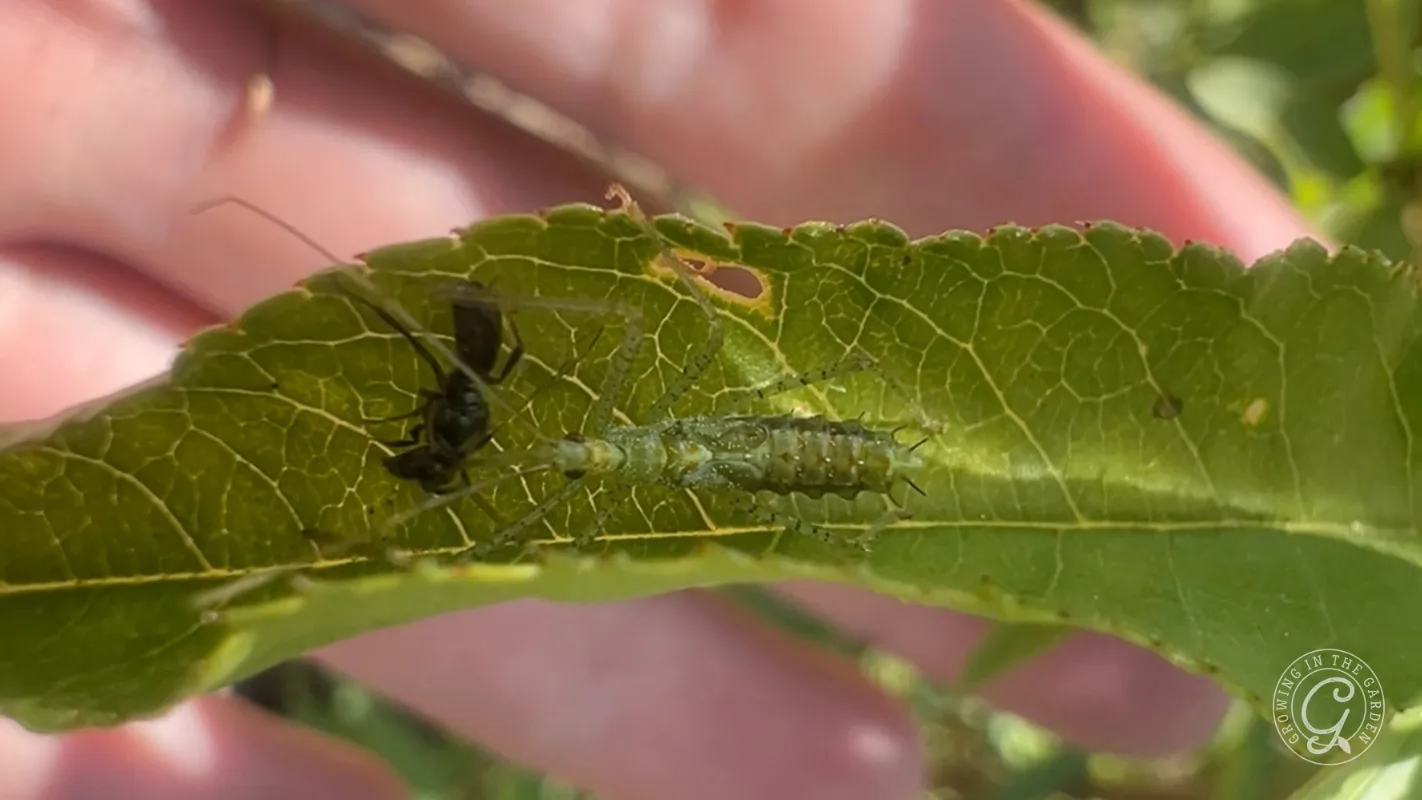
Feeding is not something gardeners get to witness very often, as assassin bugs seem to spend much of their time motionless, waiting for prey to approach. But it is that patience that helps make them such effective predators.
Still, we do need to set aside some of our ideas about “good” and “bad” insects. The fact that assassin bugs will consume bees, butterfly caterpillars, and many other insects we consider “good” can easily lead us to label them as “bad” bugs.
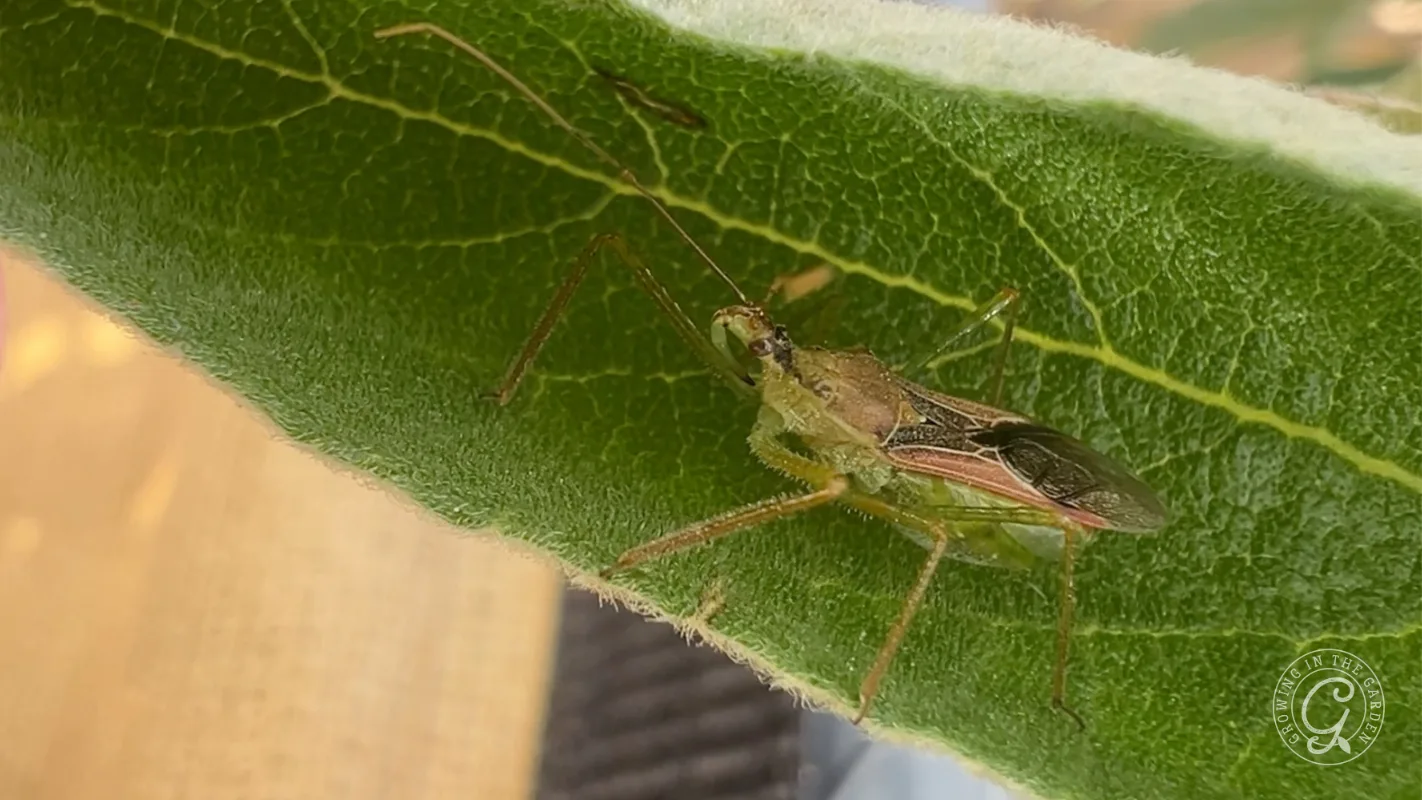
But that is not how nature works. Even pollinators and the insects we consider beautiful or want to see more of need to be kept in balance. Without that balance, overpopulation can lead to disease and other problems in the ecosystem.
How to Attract Assassin Bugs to Your Garden
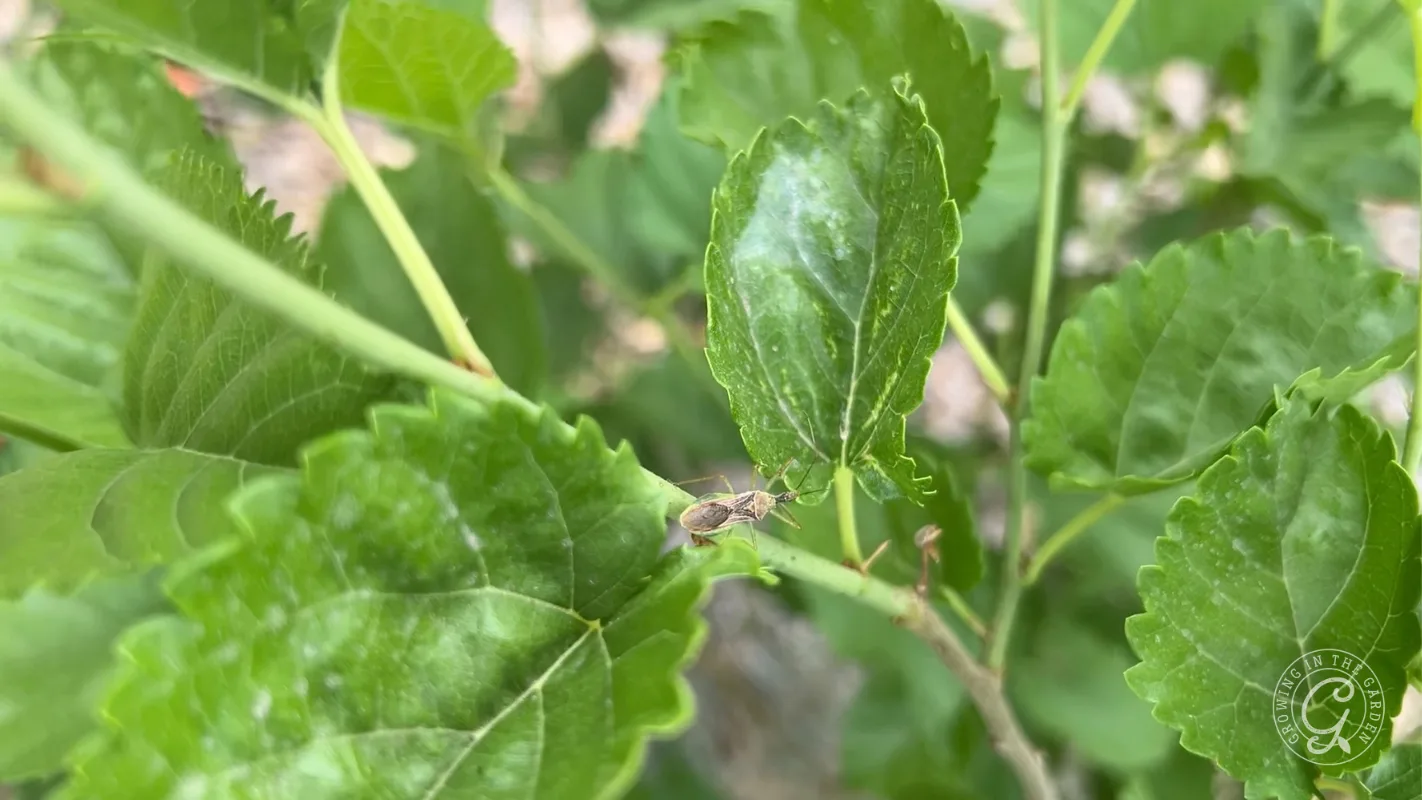
The presence of assassin bugs is a sign that your garden has a diverse insect community. Including flowering plants, a variety of vegetation, places for shelter, and avoiding chemicals as much as possible helps ensure that a wide range of beneficial insects will call your garden home.
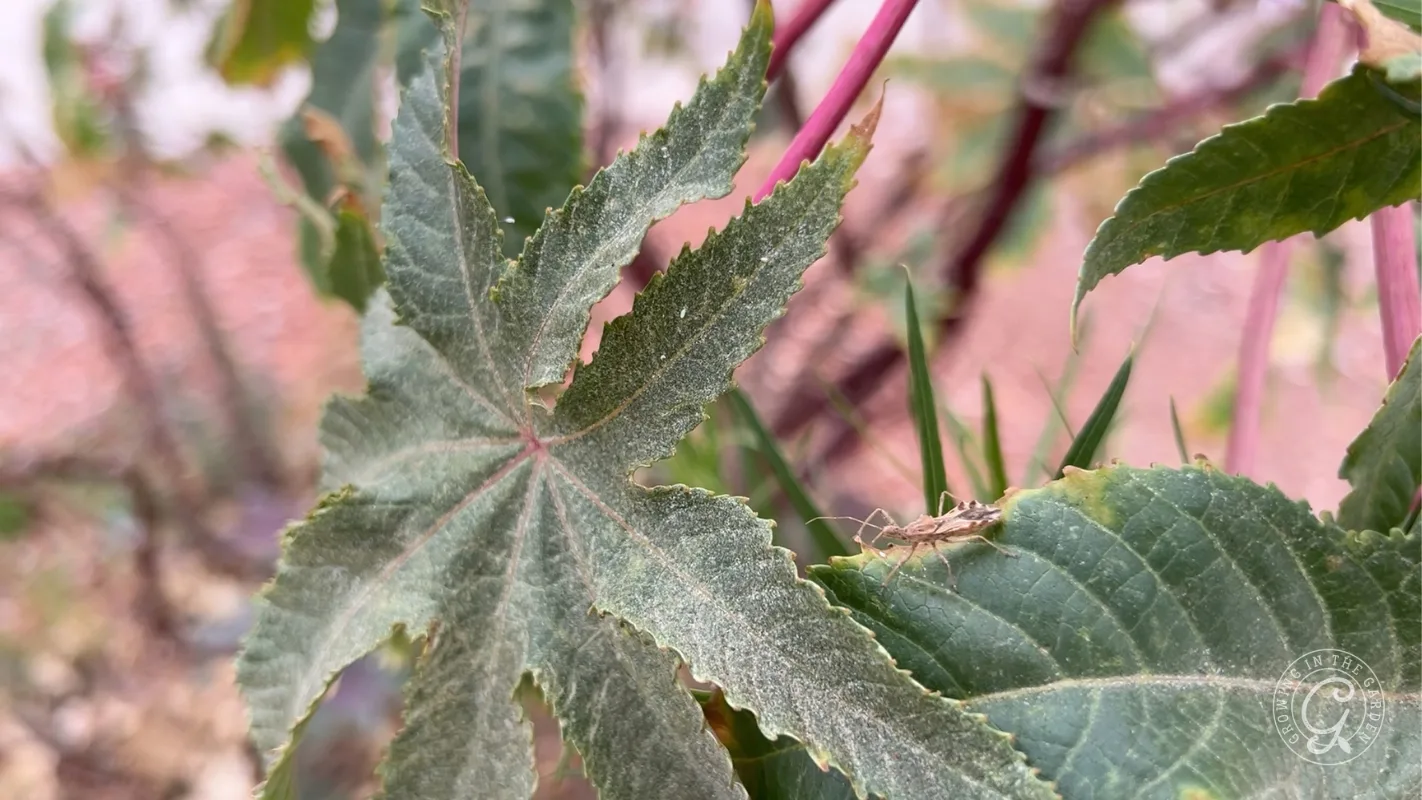
That said, predators need prey to feed on. No matter how many flowers you have blooming or how much leaf litter you leave for insects to hide in, beneficial insects have little reason to show up if there are no aphids or other prey available. You can also read about how parasitic wasps and hoverflies help control aphids if you’re needing more help.
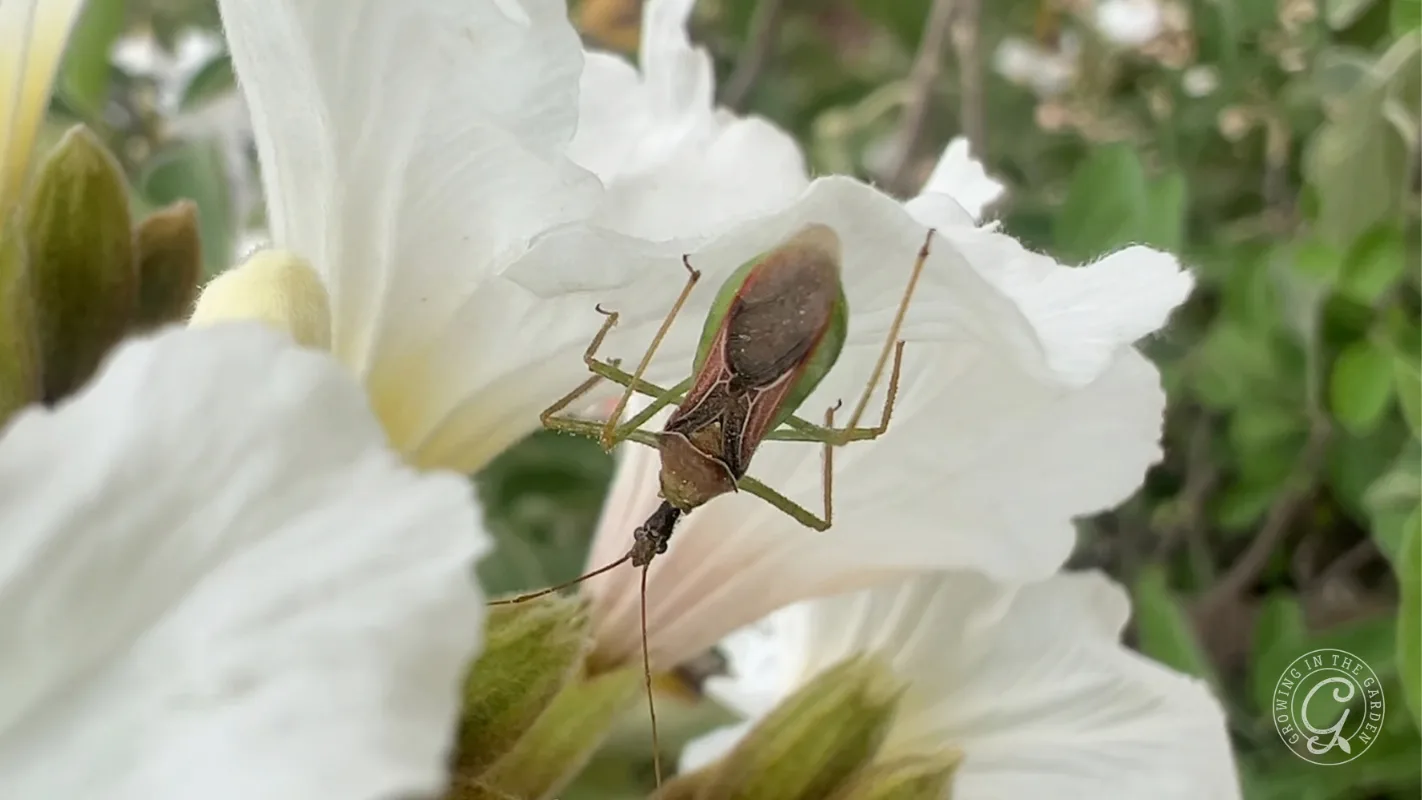
Moving away from the idea of the garden as a sterile environment and instead creating a space that supports natural pest control through beneficial insects is one of the best ways to encourage assassin bugs. We do not, however, need to create a special “assassin bug garden.”
Allow a few areas to stay a little rough. Leaves, dense vegetation, and even some dead branches can provide shelter for a variety of insects. This gives assassin bugs places to hide while also providing plenty of prey.
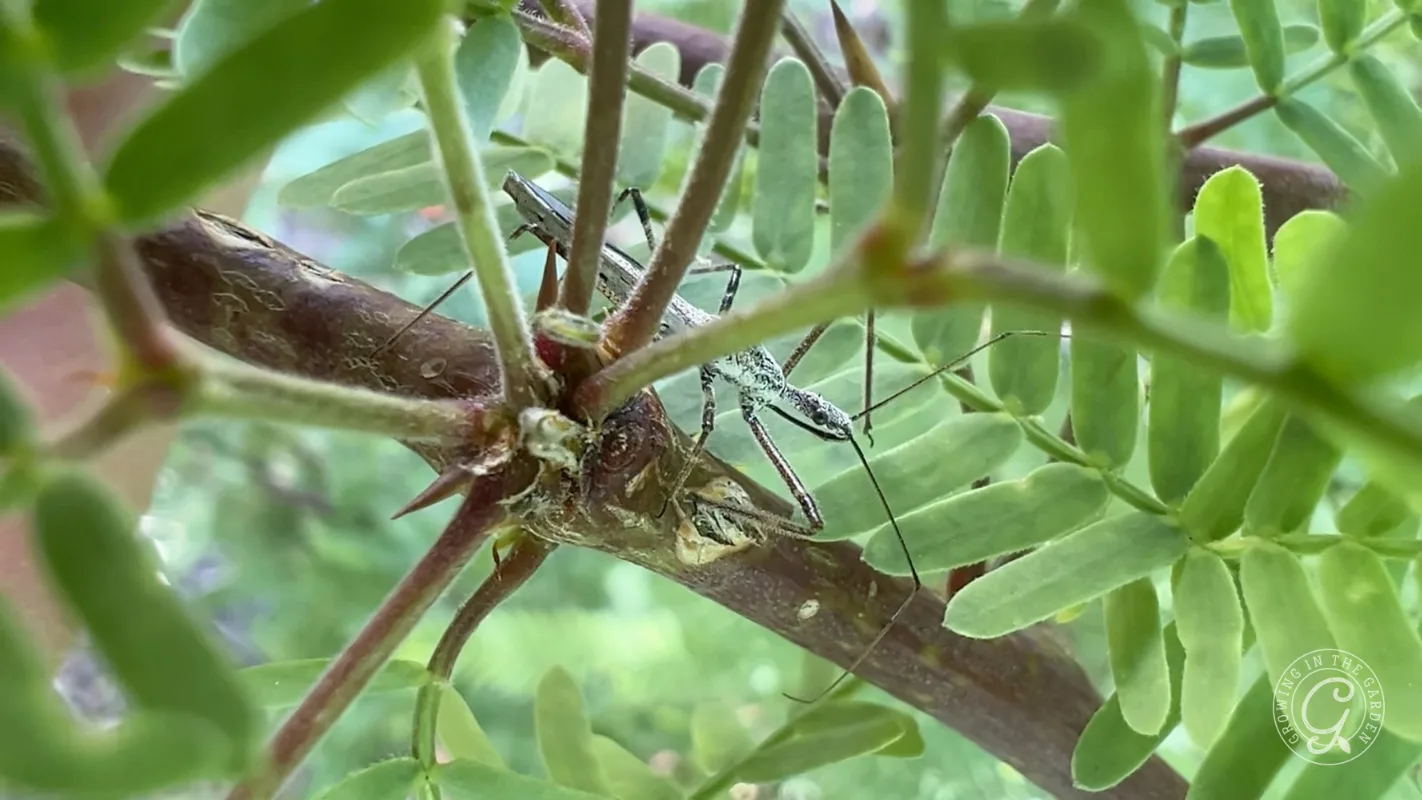
The goal is never to make the garden insect-free. There are times when a targeted approach is necessary, but ideally those situations should be few and far between. Whenever possible, reduce chemical use and intervention, and allow predators such as assassin bugs to help keep pest populations in balance.
Are Assassin Bugs Dangerous to People?
Of course, if we are actively looking through our garden, checking plants, and encouraging a variety of insects to show up, we should eventually come across an assassin bug.
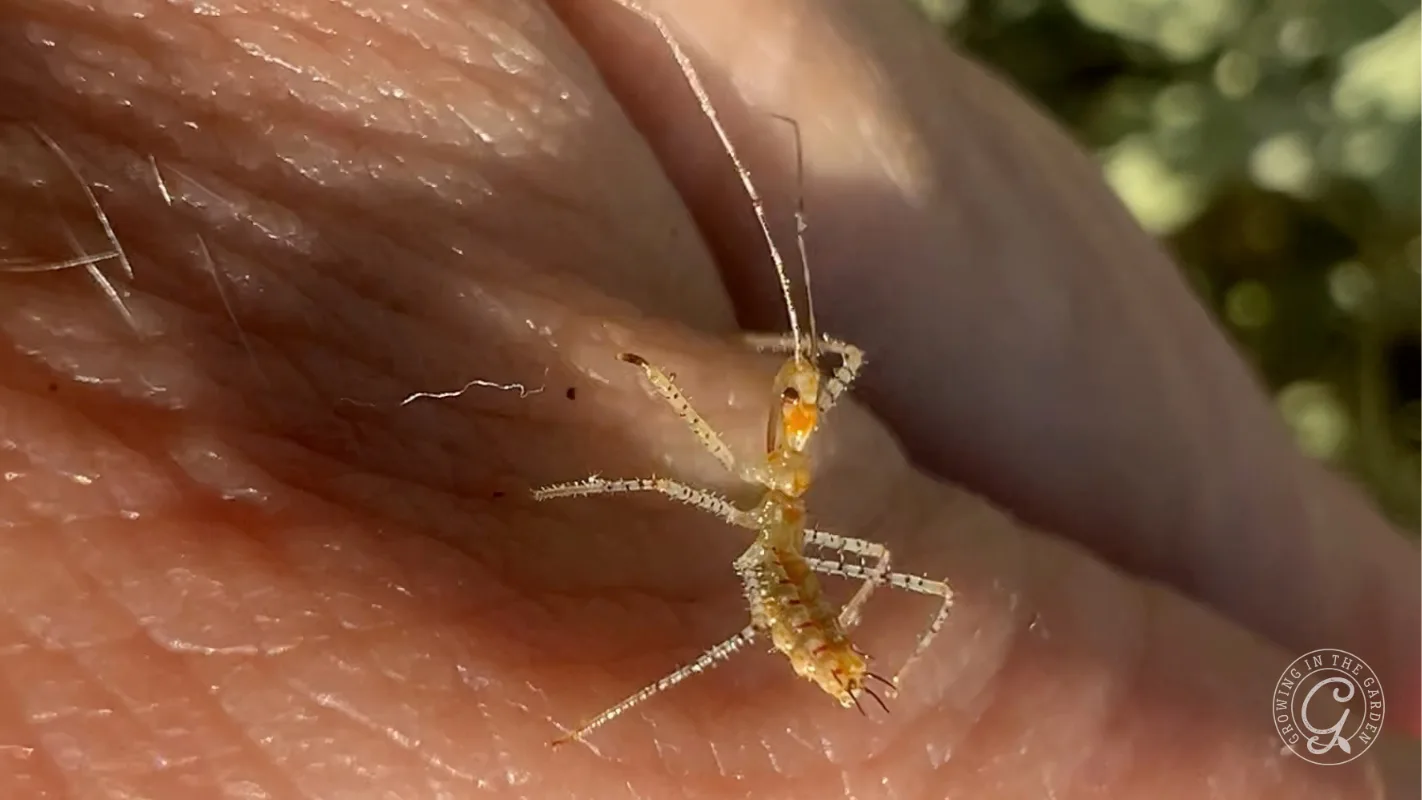
While I have had some crawl on me, there is a bit of caution involved. There is a difference between allowing one to use your hand as a bridge to the next stem and mishandling it. Assassin bugs can use their rostrum to pierce human skin, and the bite can be painful. Still, this is not something they are actively trying to do. It is a defensive response and usually happens when a person traps or corners them.
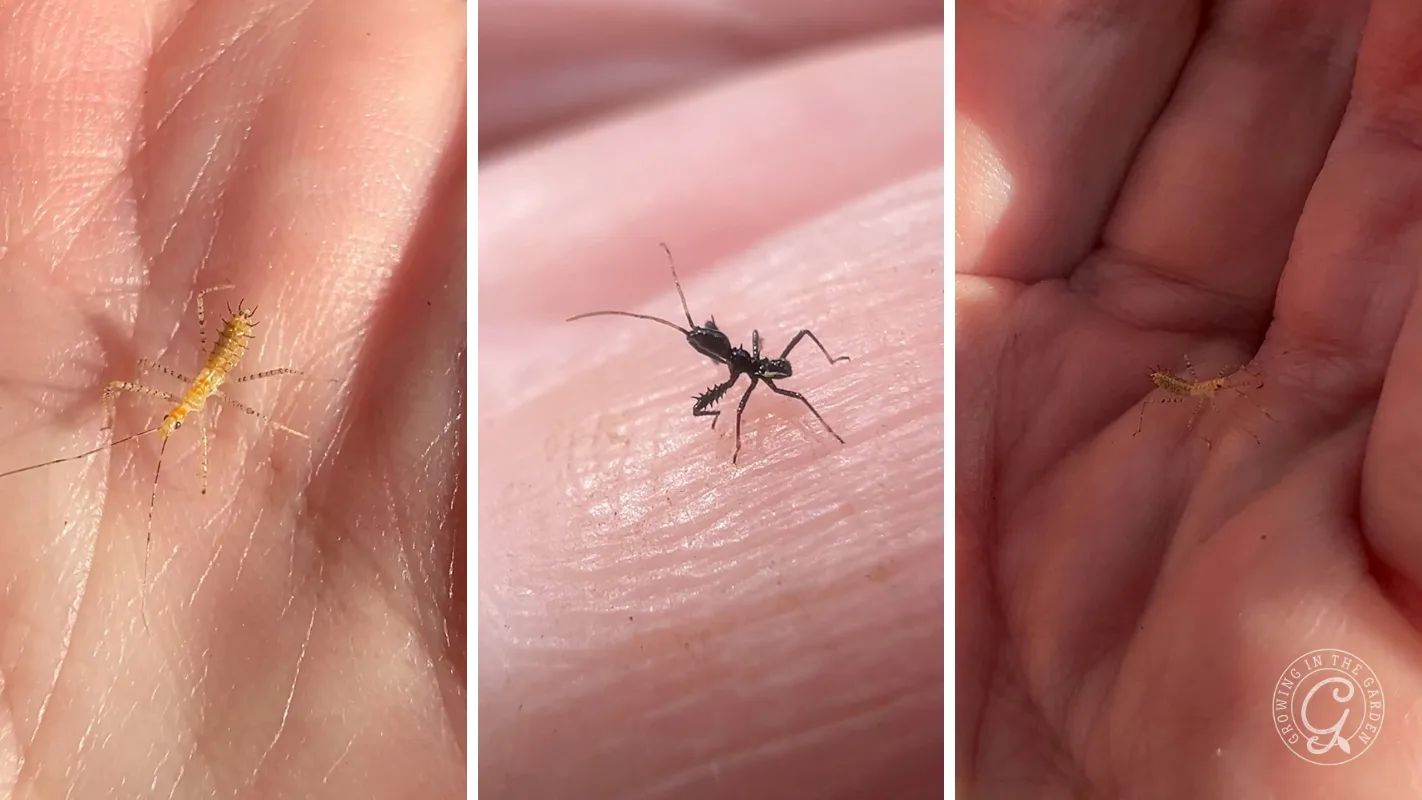
This does bring up a concern some gardeners may have about a specific type of assassin bug called a “kissing bug.” While kissing bugs are also part of the Reduviidae family, they belong to a different subfamily that feeds on the blood of animals and humans. In our area of the desert, there are three common species: Triatoma rubida, Triatoma protracta, and Triatoma recurva. Honestly, they serve a purpose as well, so if they are in the garden, let them get on with their work.
Throughout the desert region, they generally spend their time in pack rat nests, and as long as your house is kept in good repair, with cracks and other openings sealed, there is little cause for concern.
Observation Is the Best Tool
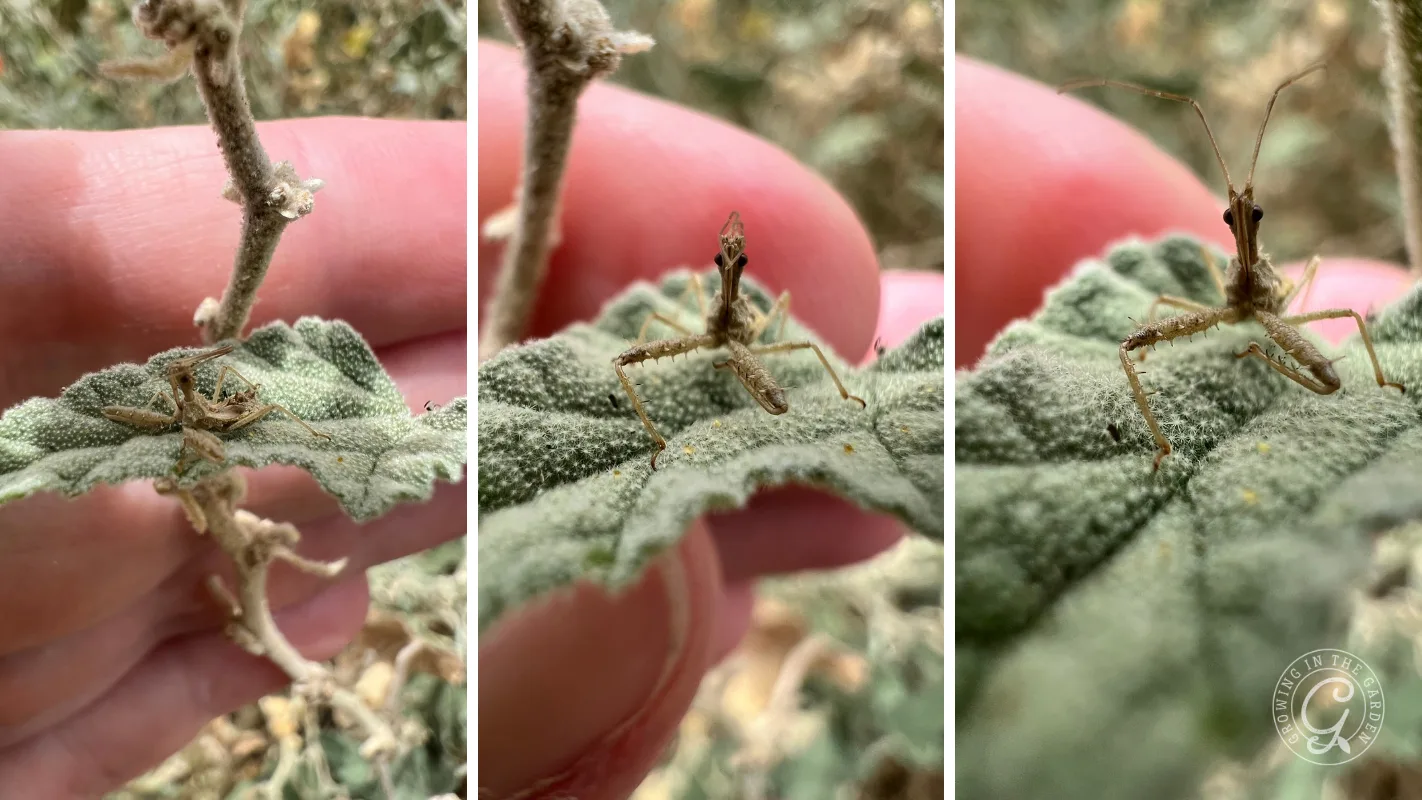
Ultimately, it always comes down to observation. One of the key aspects of observing assassin bugs is slowing down. Look carefully at stems and leaves, and think about where an insect might hide while waiting for prey.
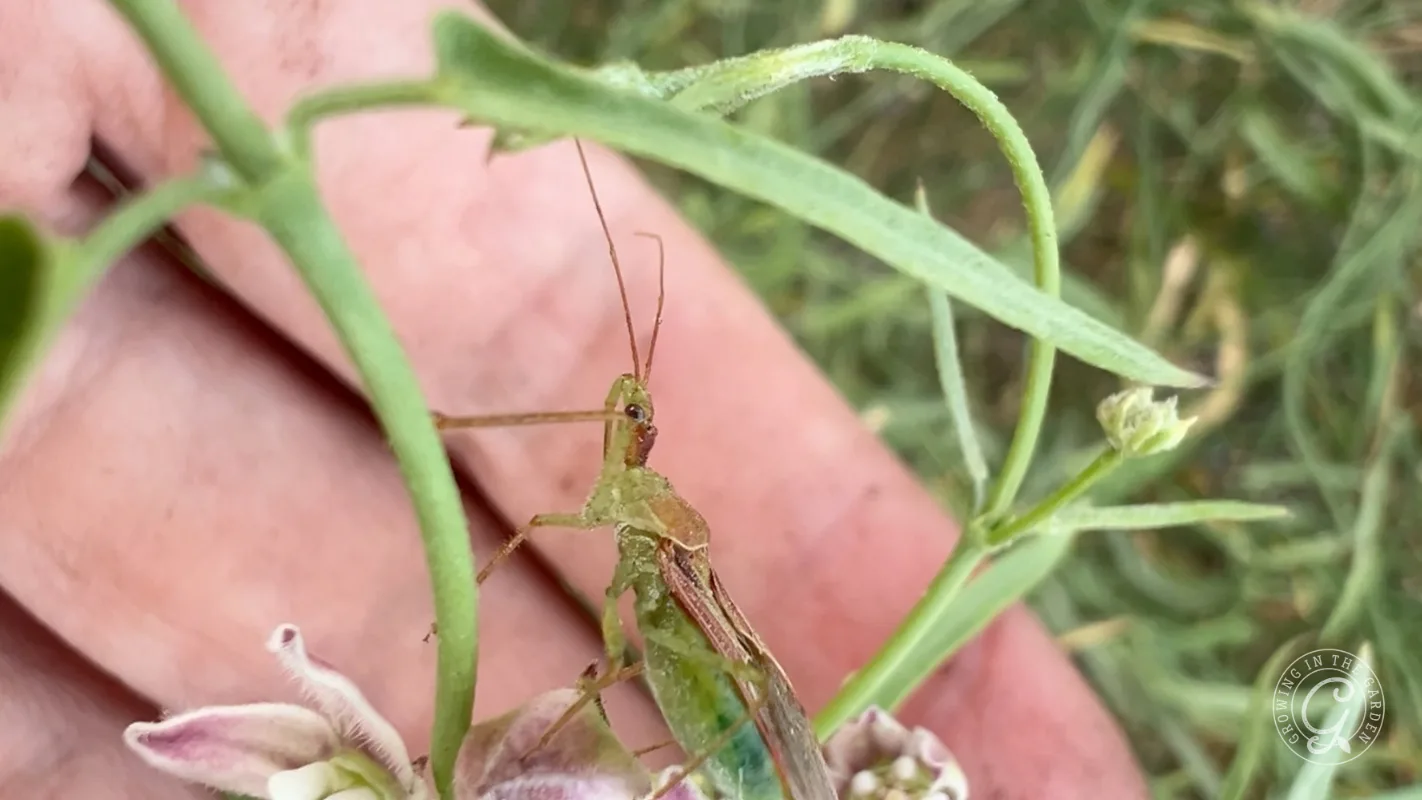
Then, when you find an insect you think is an assassin bug, do not automatically assume that it is. Take a few photos if you are unsure, observe it a little longer, and go through the checklist of key identifiers to see if it matches up.
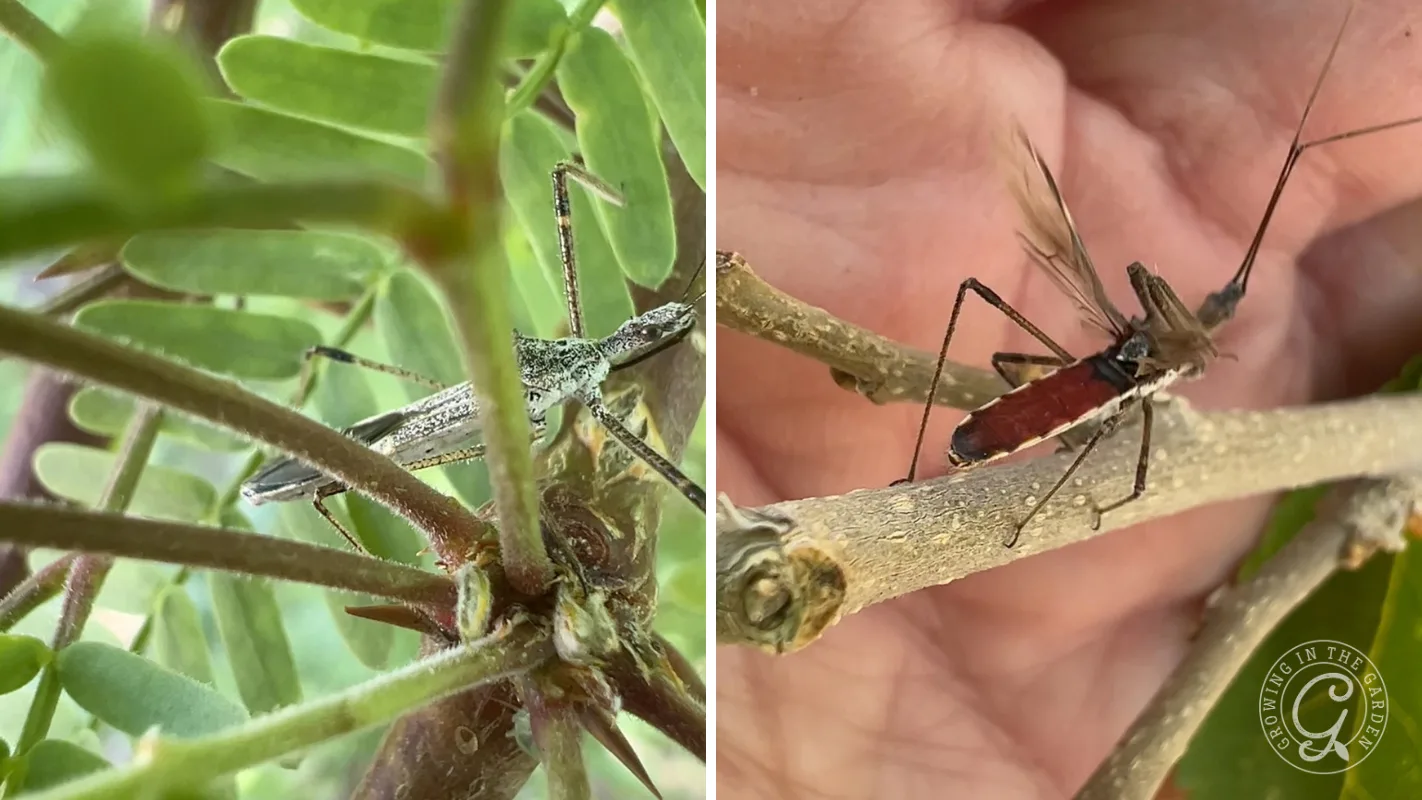
Right: Four-spurred assassin bug adult preparing to fly
The answer to identifying any insect in the garden comes down to observation and documentation, noticing behavior before taking any action. Most of the time, you will discover that no action is needed.
The more closely we observe, the more interesting the garden becomes. What initially looks like a collection of “pests” and pollinators is actually a much larger community of predators, prey, composters, and pollinators. It is this balance that leads to a thriving ecosystem and a healthy, abundant garden.
Assassin Bug FAQs
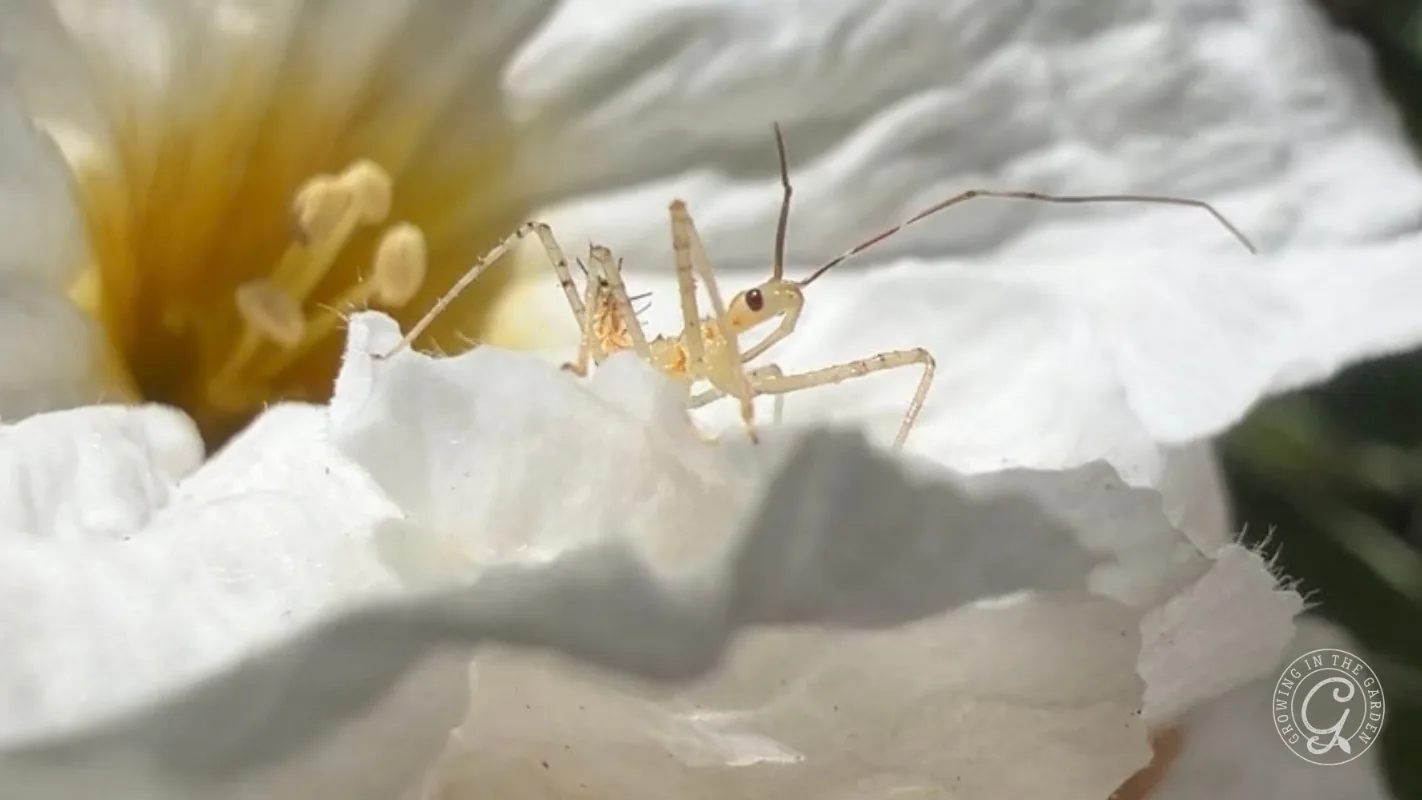
There can be some variation between species, but in general, assassin bugs have a long, narrow body with a distinct elongated head that gives the appearance of a “neck,” long legs, and a prominent beak called a rostrum.
They can, but they do not intentionally seek out people to bite. Most bites happen when someone mishandles an assassin bug or corners it to the point that it feels threatened.
First, avoid using chemicals as much as possible. Isolated, targeted use may sometimes be necessary, but the goal should be to reduce intervention whenever you can. Remember that assassin bugs are predators, so they need other insects to eat. Allowing some aphids, leafhoppers, and other insects we consider “pests” to remain gives them a food source. It also helps to grow a diversity of plants at different heights and leave some leaf litter or other sheltered areas where insects can hide. Having plenty of blooming plants will also encourage the other insects that assassin bugs feed on.
Assassin bugs are generalist predators, which means they will eat almost anything they can grab. Sometimes that includes bees or butterfly caterpillars. For most assassin bug species, these beneficial insects are not their main target, but they are unlikely to pass up an opportunity when one presents itself. Overall, their role in controlling insects we consider pests far outweighs the occasional beneficial insect they may consume.
About the Author
For more than thirty years, Jean has been growing plants and spending time in nature, both in California and Arizona. With a background in fine art, she honed her skills in observation, a critical element for anyone striving to have a garden. Currently, she is finishing her doctoral studies in ecology (special focus on entomology), while helping others to work with nature in order to have a thriving ecosystem. You can find more of her work as “Red Shoe Gardener” on YouTube and Instagram.

Leave a comment on Assassin Bugs in the Garden: Identification and Benefits