
Tomato Hornworms: Life Cycle, Identification & Control
I recently spotted a large hornworm in the garden while I was out with my grandson. We spent some time watching it. He was a little afraid of it, and I can’t blame him. It was huge!
I loved learning more about these fascinating caterpillars from my friend Jean Elston. In this next article in her Low Desert Garden Insects series, Jean shares how to identify hornworms, how much damage they can cause, and what happens when they become moths. Her photos show the entire process, including a moth she raised and released.
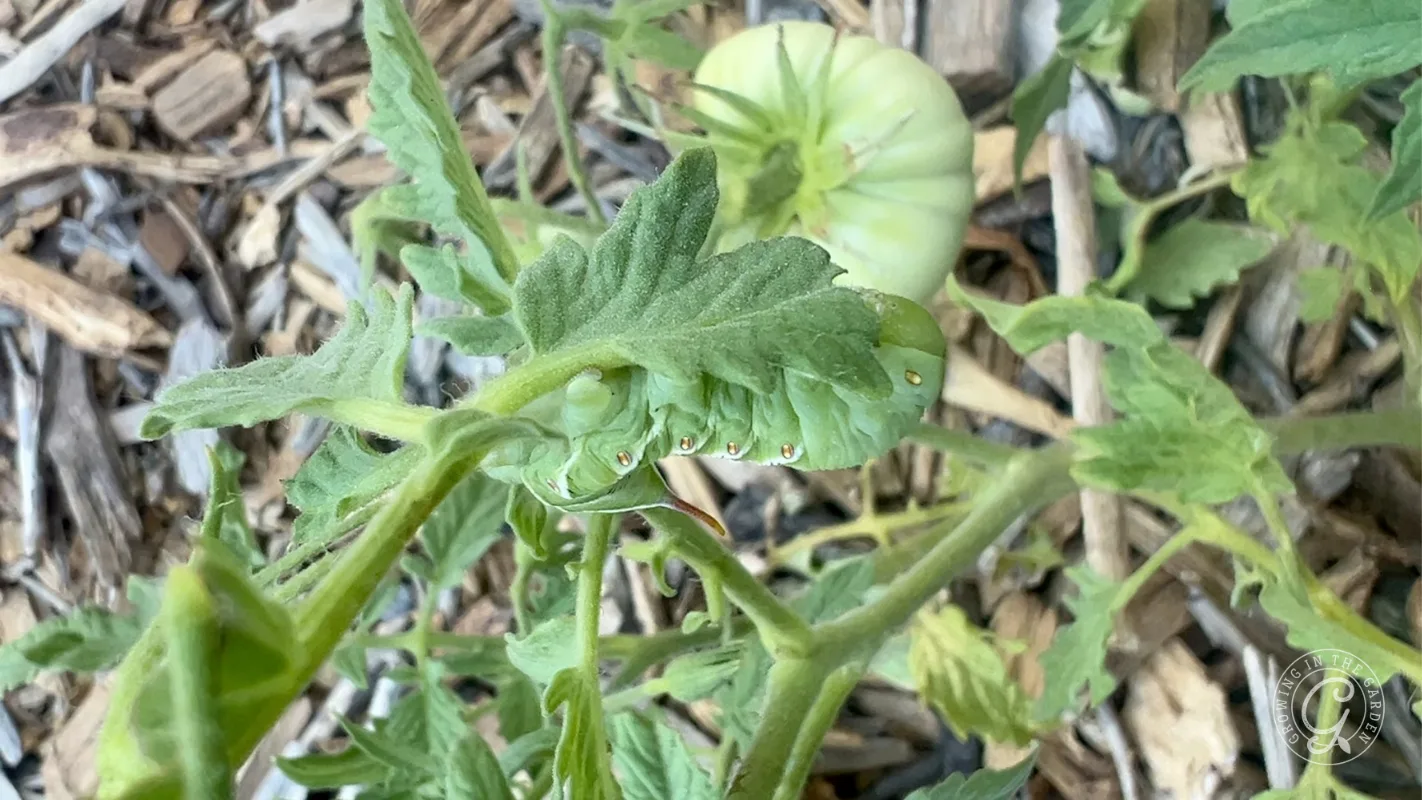
Guest post and photos by Jean Elston.
Key Takeaways: Tomato Hornworms
- Hornworms, particularly the tomato and tobacco hornworms, are significant pests for gardeners, often damaging plants rapidly.
- The lifecycle of hornworms involves several stages, starting from tiny eggs laid on tomato plants to hungry caterpillars and eventually moths.
- Natural predators of hornworms include various birds and parasitic wasps, helping control their population in gardens.
- Gardeners can find hornworms by looking for leaf damage and droppings, and they can use methods like hand-picking to manage them.
- Adult sphinx moths, which hornworms develop into, are crucial pollinators for certain plants, emphasizing the need for a balanced approach in gardening.
What We’ll Cover:
There are several insects that are notorious challenges for gardeners. Almost everyone that has grown plants for at least one season has heard of squash bugs (and perhaps dealt with them) along with aphids. However there is one plant, quintessential for most people as to why they start gardening, that is associated with a particular caterpillar. Why does this caterpillar frustrate us so much? Do we truly understand the importance of the adult form? Of course we are wanting to eat the fruits of our labors. But is there a way to have a balance, maybe even grow extra to support the insect? It starts with finding an egg, and exploring why the Carolina Sphinx moth (Manduca sexta) and it’s close relative, focuses on plants from the Solanaceae family.
Why Do Hornworms Choose Tomato Plants?
Why a tomato plant? While the hornworm is generally called tomato hornworm, that seems to be interchangeable for most gardeners. There is a visual difference though between the tomato hornworm and the tobacco hornworm, which will be addressed soon. But what is it about the nightshade plants that the female moth finds attractive? It is not an isolated single smell, but rather a blend, part of it being the smell that even we recognize when getting up close to tomato plants. These scents let a moth know if the plant is healthy, as the plant will start producing a different smell indicating there are already caterpillars feasting or potential predators. So during the night, when the female is looking for places to lay her eggs, she’s guided by these scents.
Once she has found what she considers to be the perfect leaf, she lays a single egg on it—a light green sphere, sometimes with a small dent in the middle, that can easily be overlooked. One of the challenges of finding this egg, besides the coloring, is the fact it is alone. She does not lay in clusters, and sometimes might only deposit two eggs on an entire plant. They can be found on the underside or topside of the leaf, often on the outer edge.
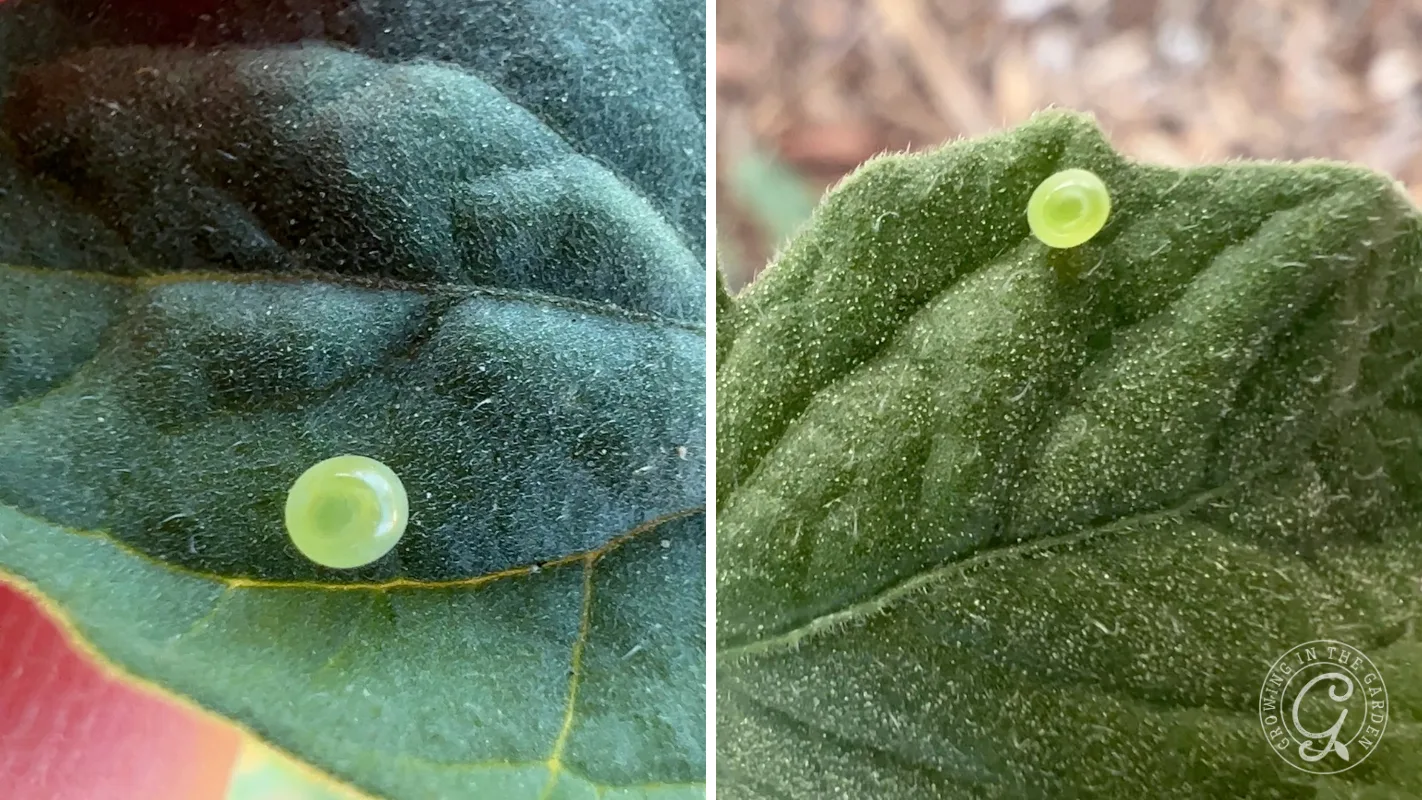
Of course the more plants one has, particularly grouped together, the more likely to have a massive amount of moths laying eggs on all the plants.
Related reading: Jean’s guide to identifying beneficial insect eggs can help you recognize other eggs you may find on your plants.
From Egg to Hungry Caterpillar
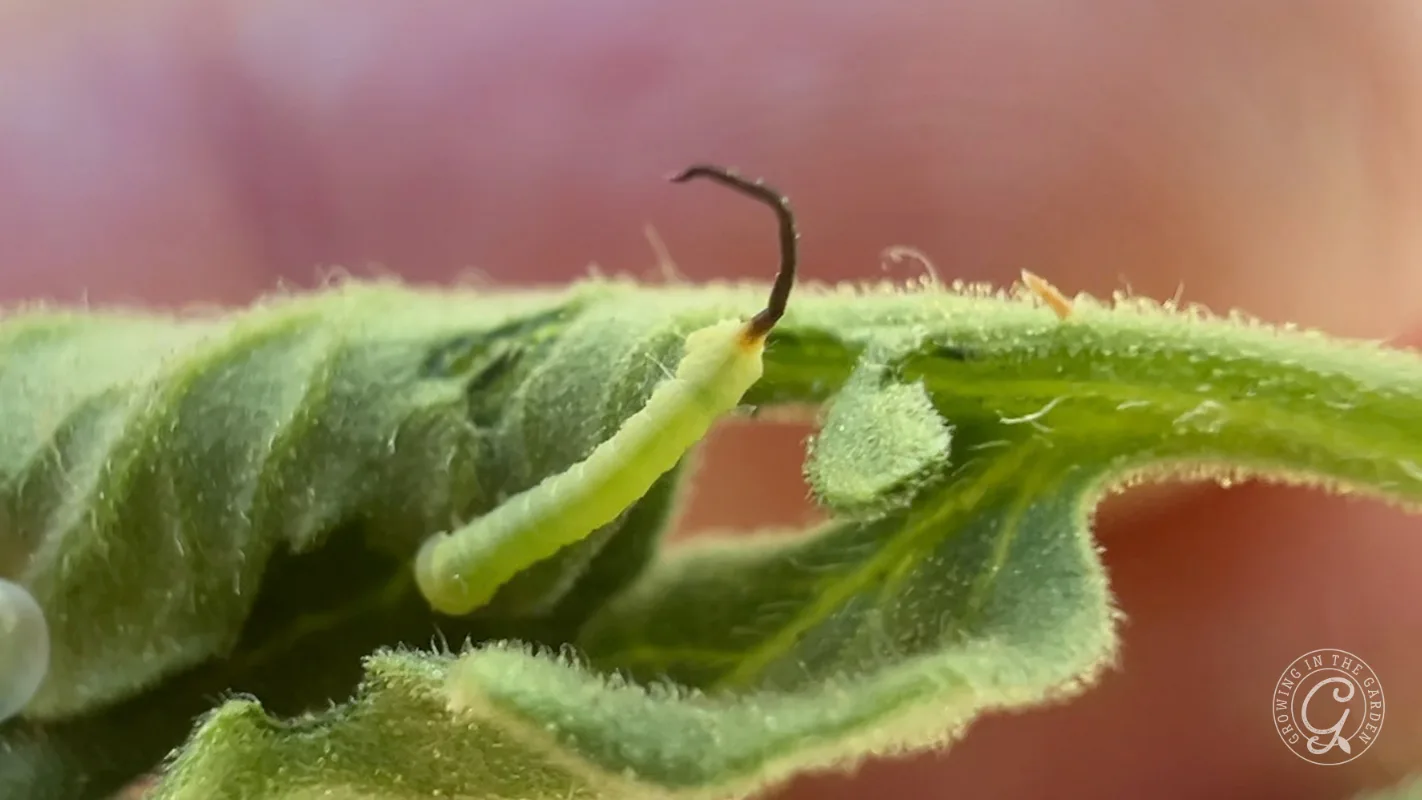
In the warm weather, it does not take long before this tiny egg hatches. In less than a week after being deposited on the leaf, a tiny caterpillar emerges and gets to work.
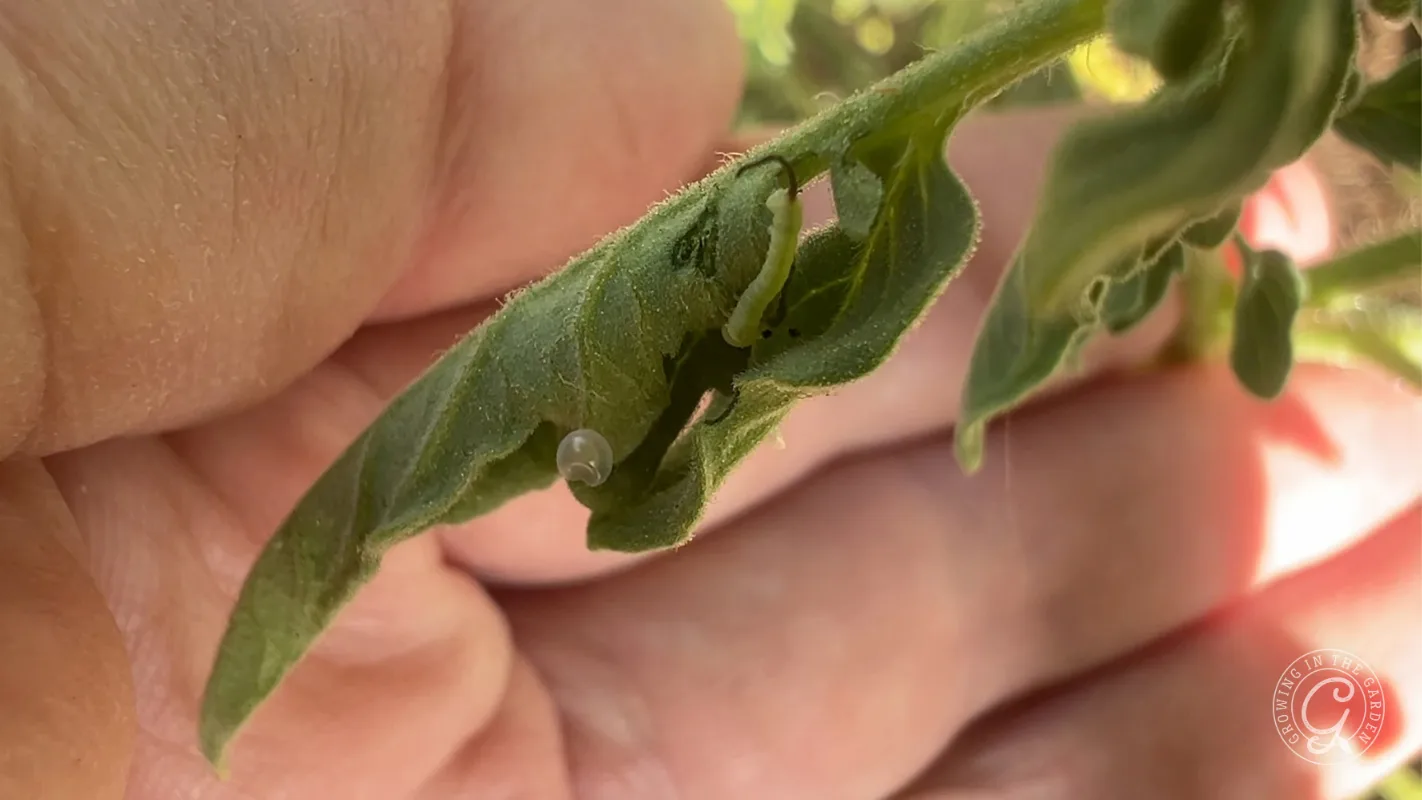
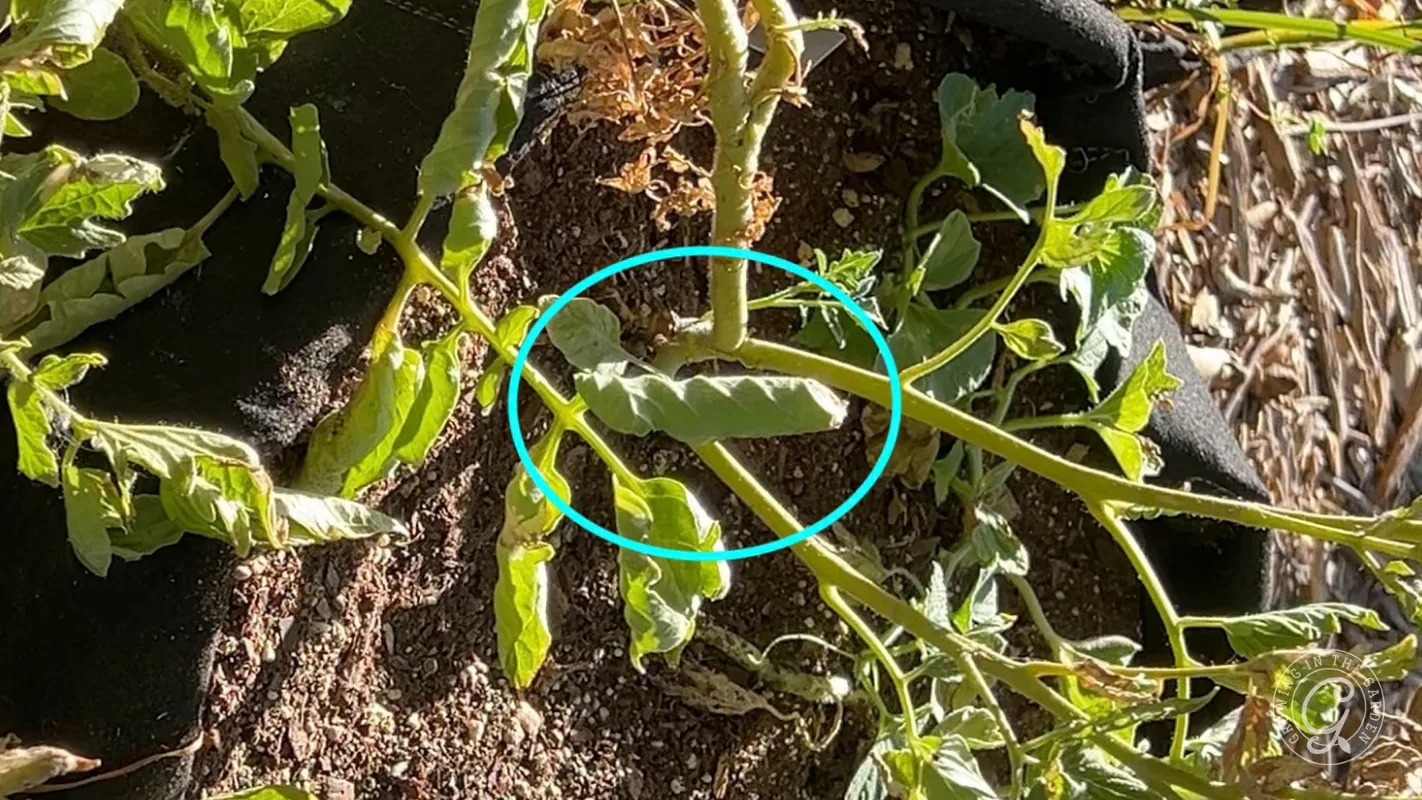
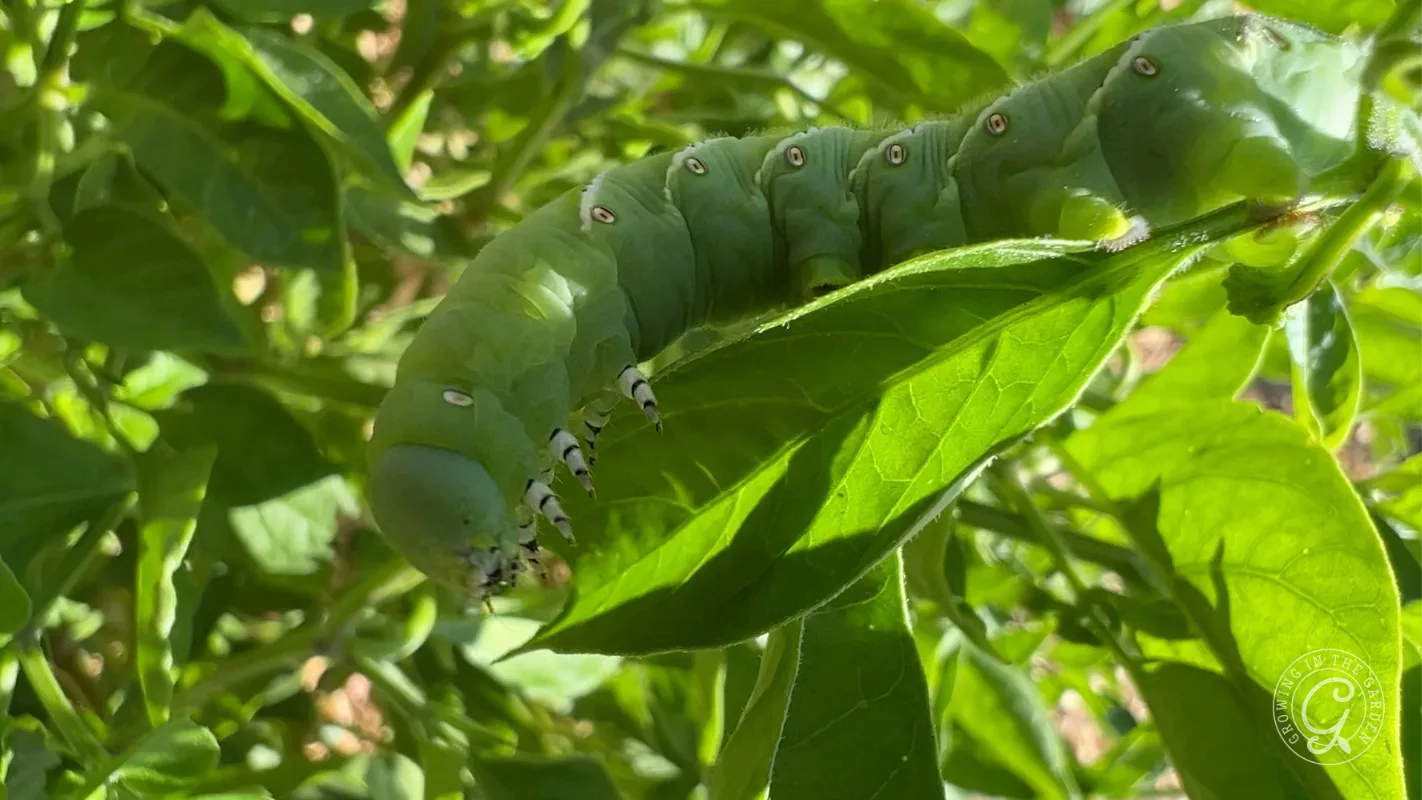
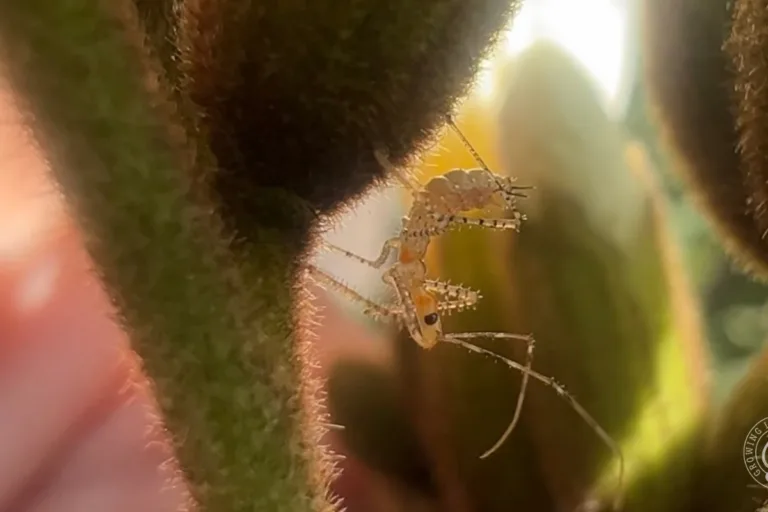
At this early stage there is no question as to why it’s hard to find such a caterpillar. Their bodies are designed to blend in with the tomato plant, not just in terms of the green coloring, but even their curvature. Looking at the curl of a tomato leaf and the pattern and coloring of a hornworm, the two are almost hard to distinguish from each other.
How Quickly Do Hornworms Grow?
Weather (particularly temperature) plays a huge role in how quickly the hornworm develops.
Since our low-desert region has a lot more warm months than cold, we often will find them any time of the year if we have peppers, eggplants, tomatoes or even goji berries growing. So the warmer conditions means the larval stage is often less than a month, growing through the five instars (growth stages) at a fast pace.
In order to put on that mass, this caterpillar requires food. A lot of it.
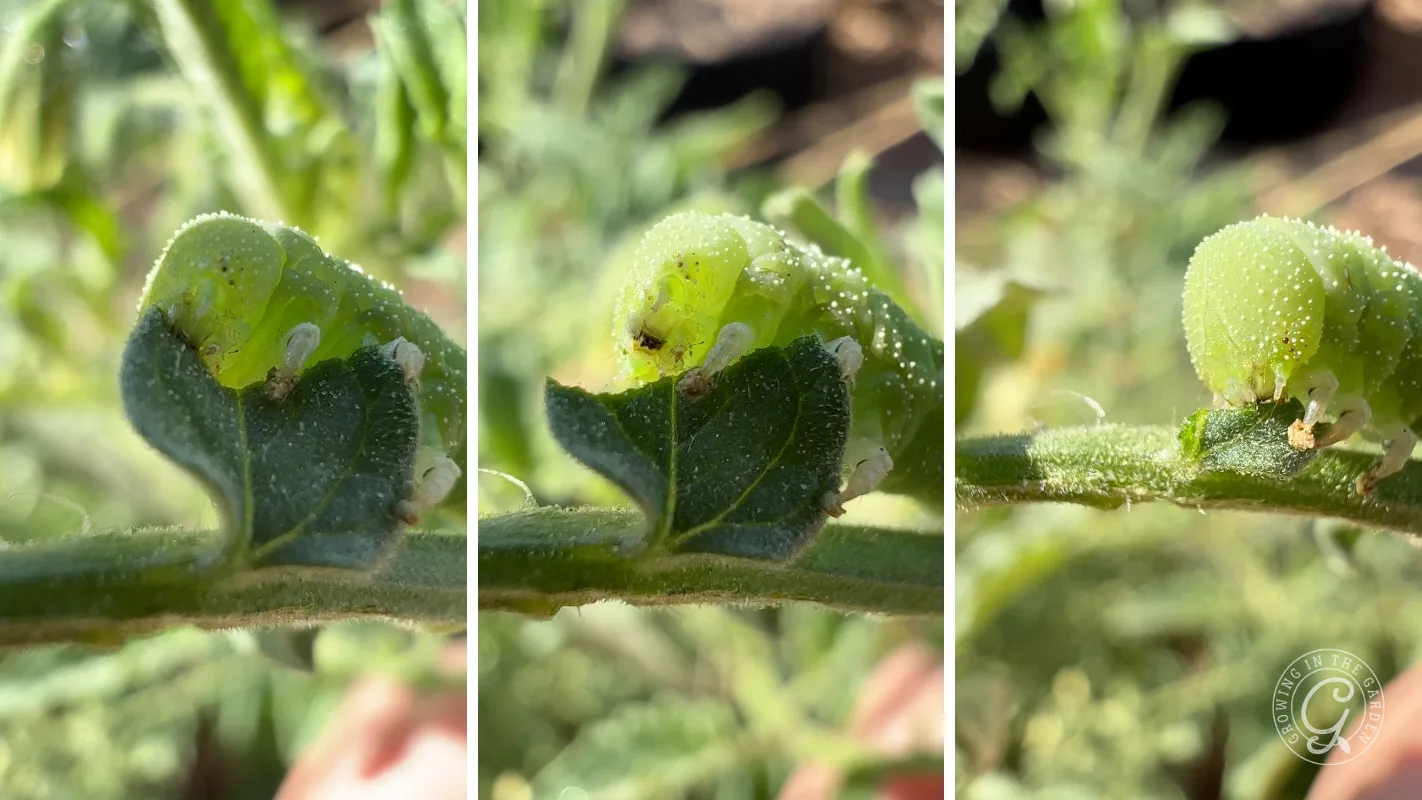
I have witnessed and filmed hornworms and other caterpillars completely devour a leaf in less than two minutes, then continue on to the next stem or leaf. When taking that into account, one can easily see how a plant that looked fine one morning now looks completely defoliated in a matter of a day.
Tomato Hornworm vs. Tobacco Hornworm
One of these is not entirely like the other
This is a good spot to get back to a topic that was touched upon: there are two species we interchangeably call tomato hornworms. One truly is the tomato hornworm (Manduca quinquemaculata) and the other is the tobacco hornworm (Manduca sexta).
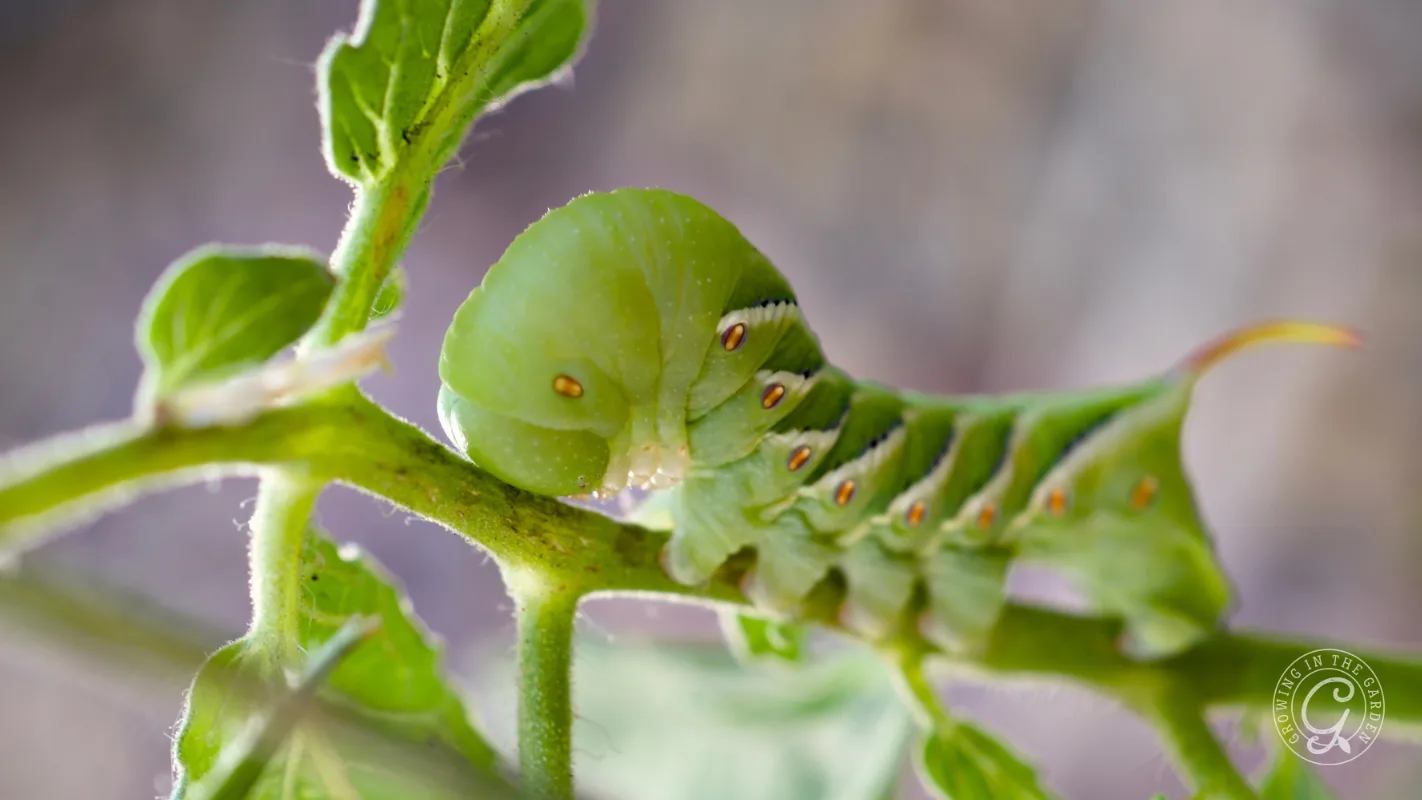
Why does this matter? In terms of gardening, it does not have a major impact, as both hornworms are feeding on the same plants. When it comes to identification, exploring curiosity and being more knowledgable…it has a large impact.
Technically, here in our desert region you are less likely to encounter the tomato hornworm as they are more common in the northern states. This is not to suggest it will never happen, both are found throughout North America, but the tobacco hornworm tends to prefer the warmer southern regions.
So for the sake of curiosity, how does one tell the difference?
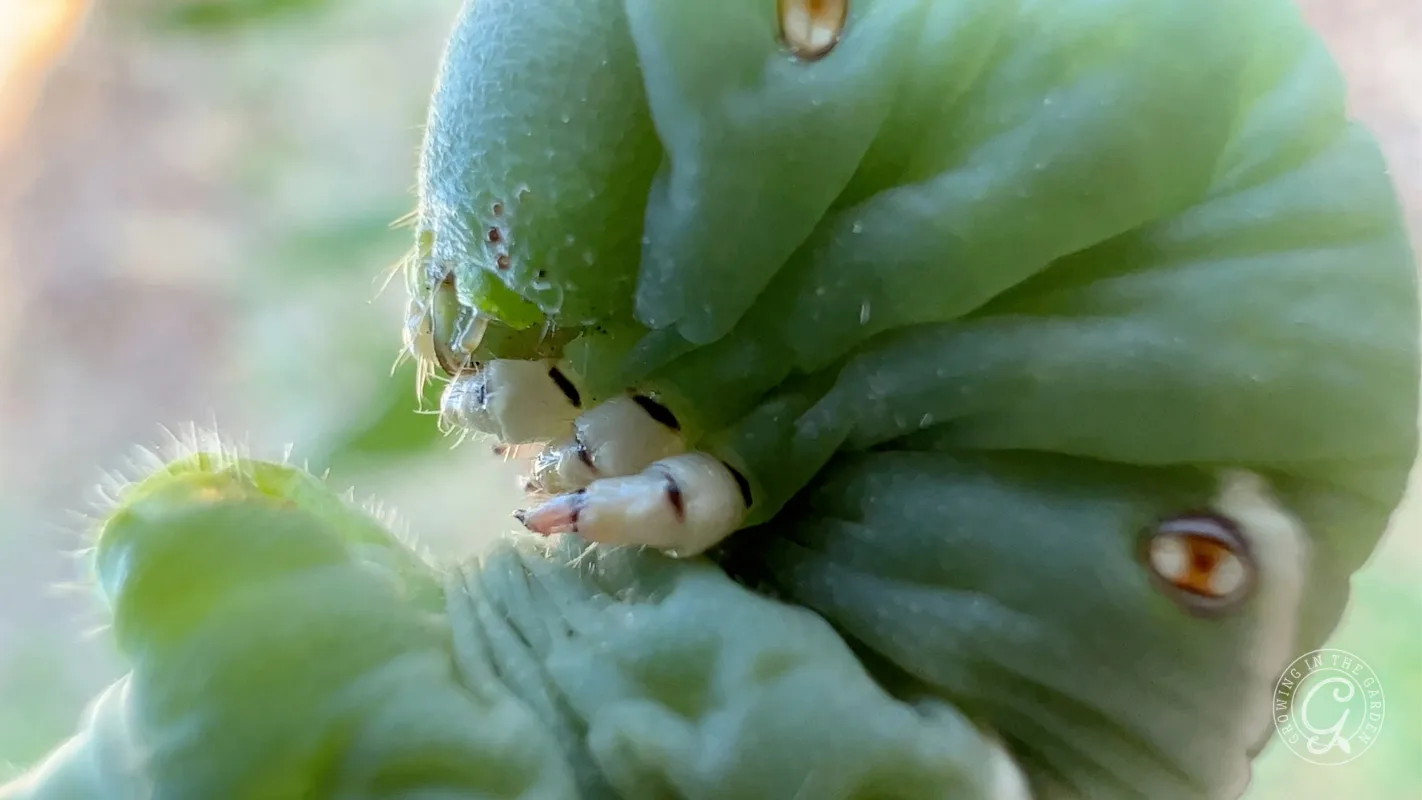
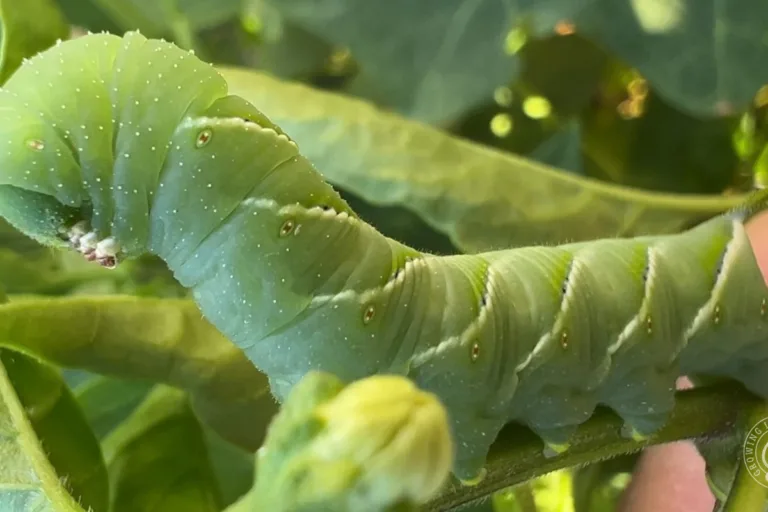
The easiest aspect is the tobacco hornworm having a yellow-orange to red-orange horn, whereas the tomato hornworm has a blue to black colored one.
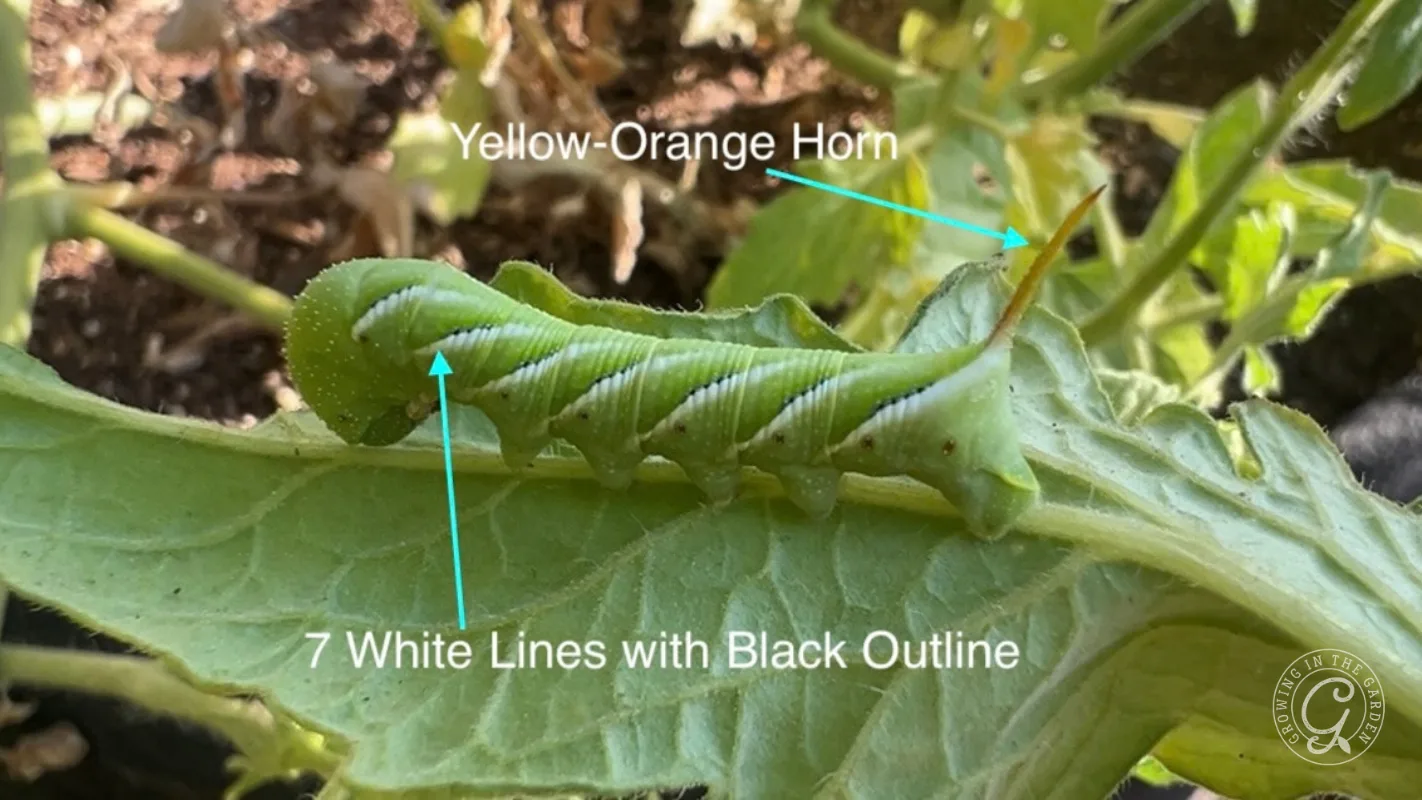
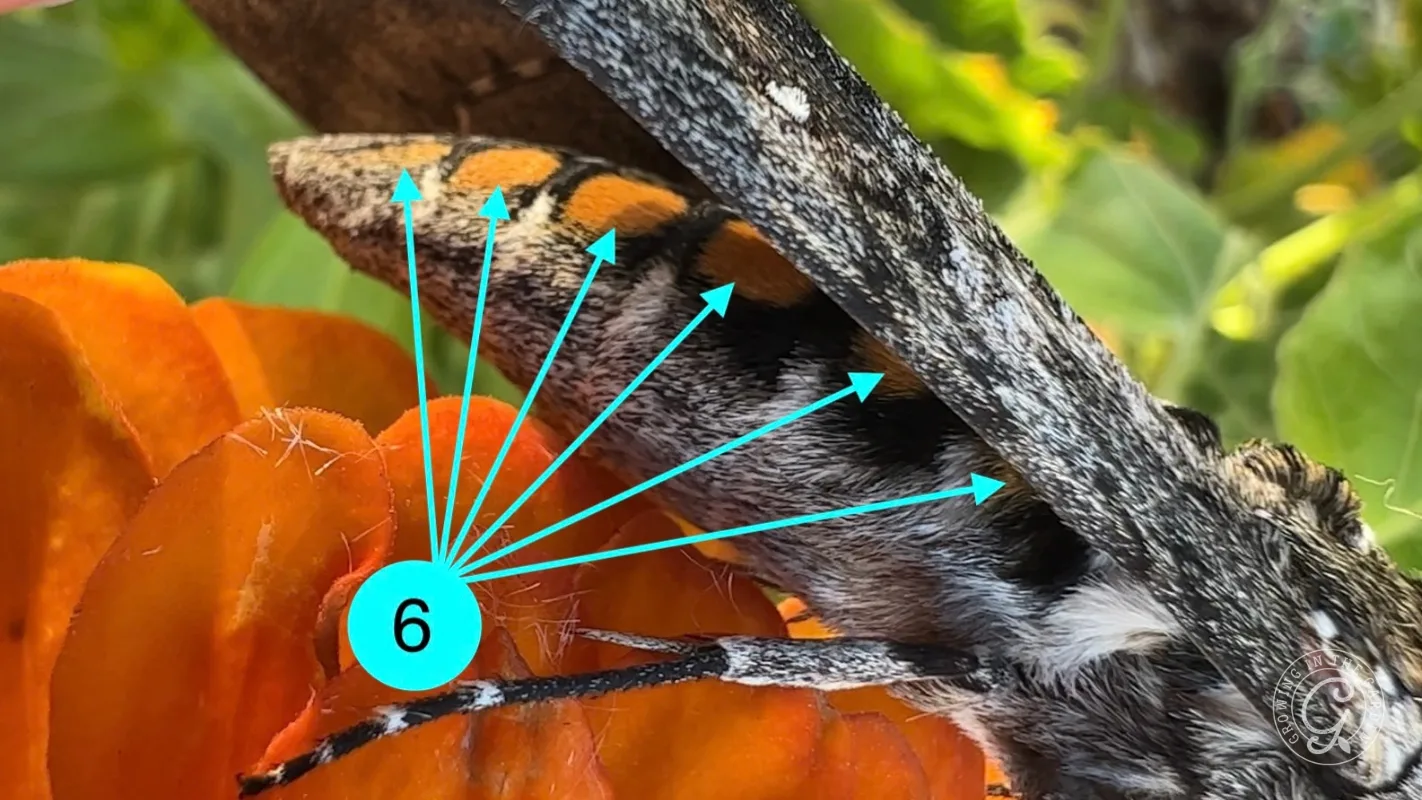
If you want to get more precise, notice the stripes as well. The tobacco hornworm has seven diagonal white stripes on each side with a thin blue-black border compared to the eight V-shaped white marks on a tomato hornworm. Yes, it is not easy to distinguish the two at this stage and even worse in adulthood, as the only real difference between a Carolina sphinx moth and a Five-spotted Hawkmoth are the spots on their abdomen.
Growing Overnight
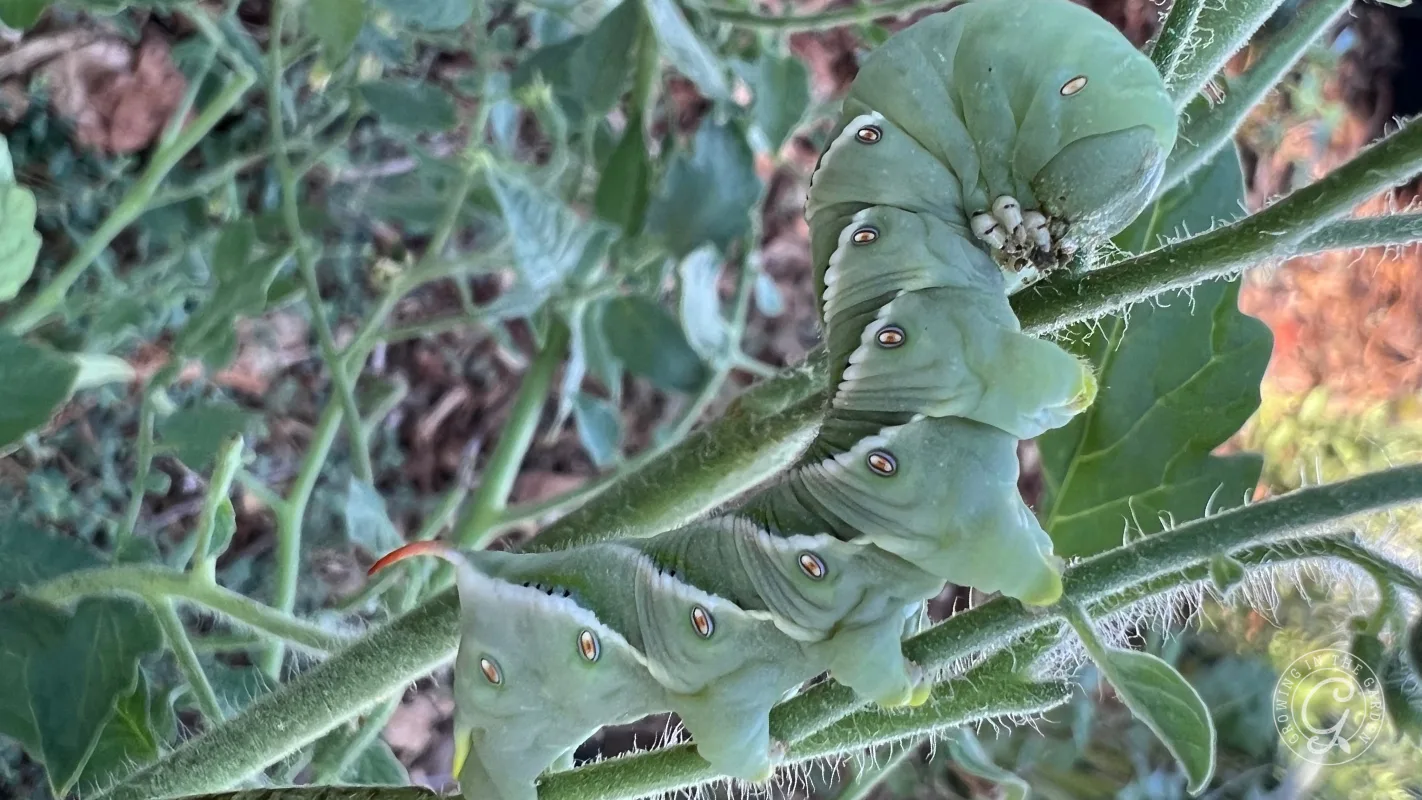
Back to the overall issue: a gluttonous caterpillar. As a feeding and growing machine, the hornworm puts on rapid size. While doing so, they still manage to hide in plain sight.
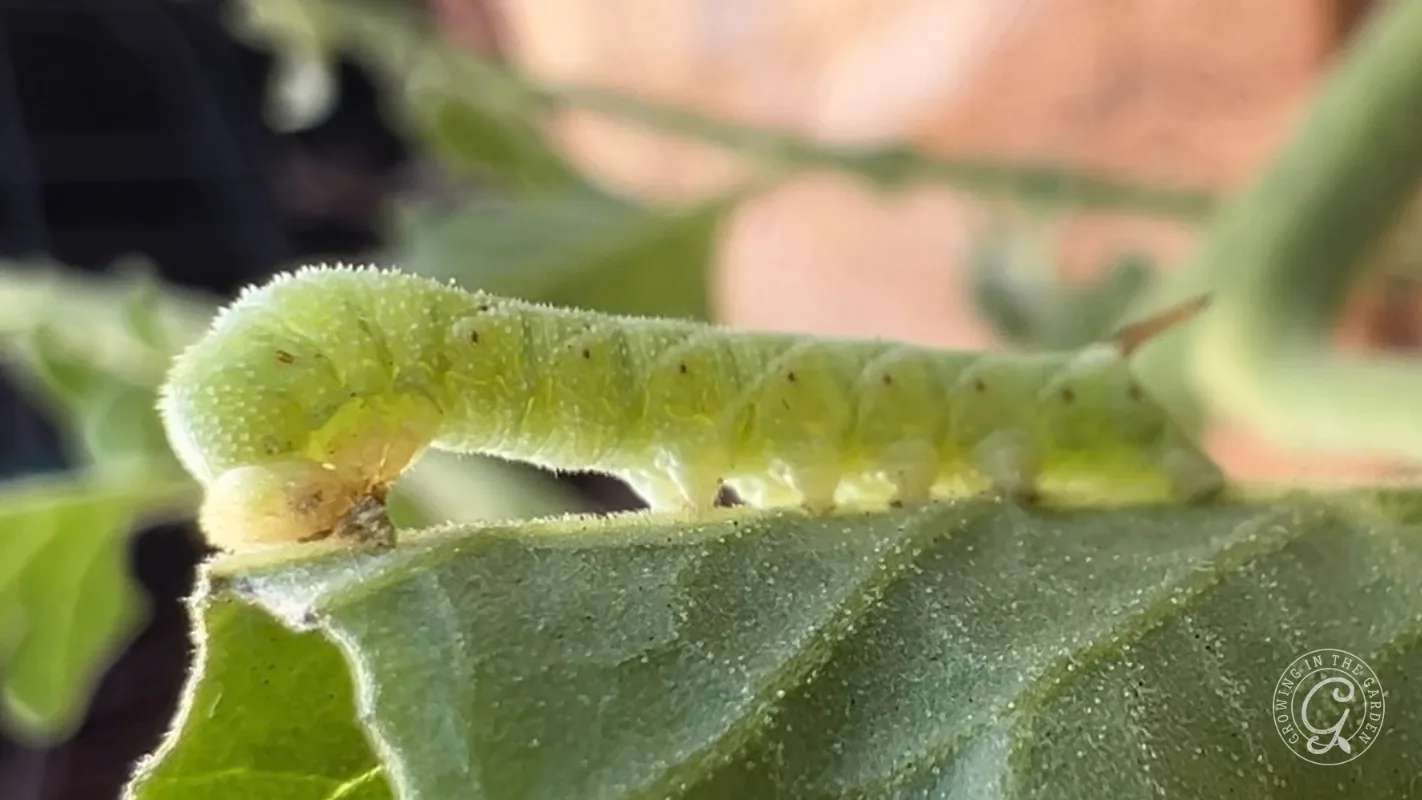
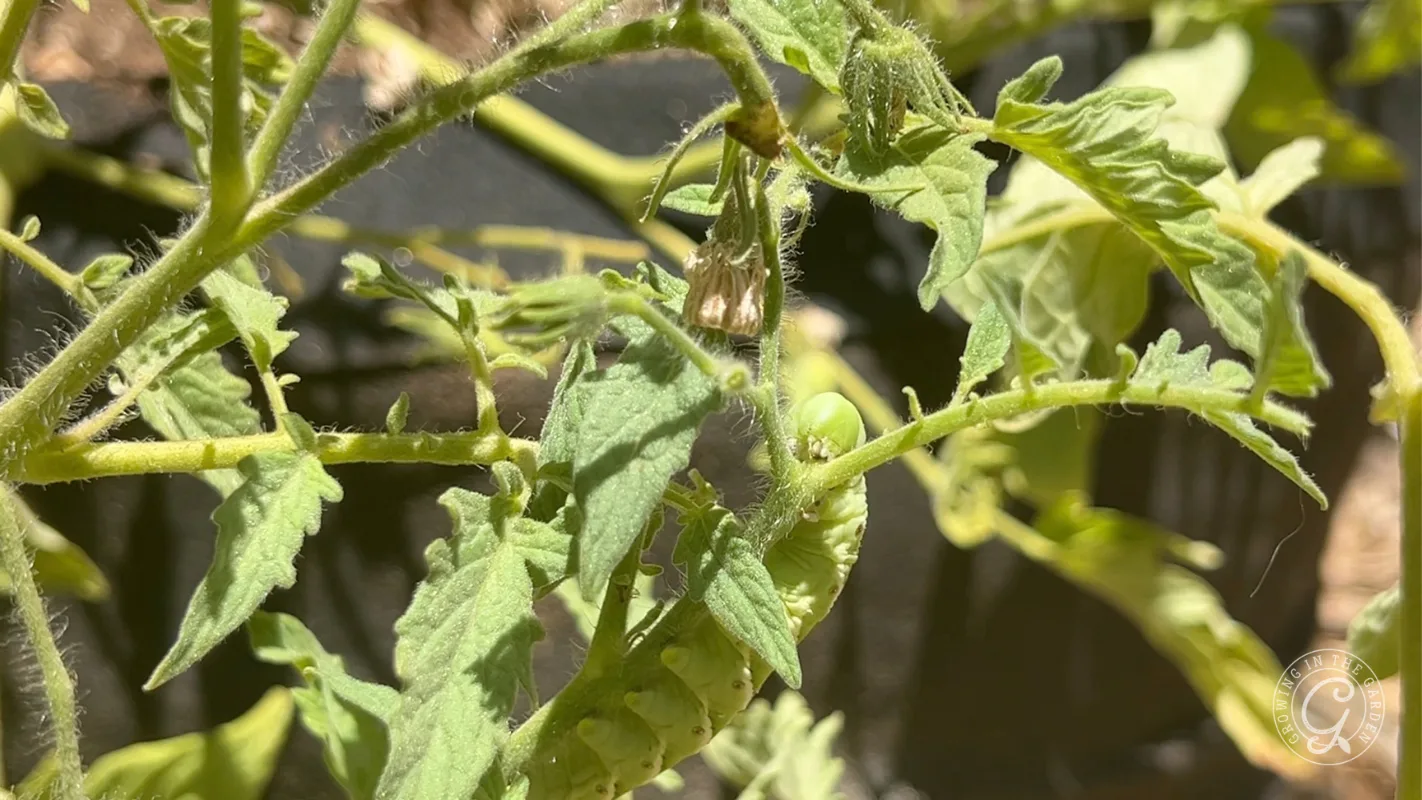
It is not just their coloring and pattern, it is also the fact they are rarely moving during the day, curling their bodies on the underside of the leaves.
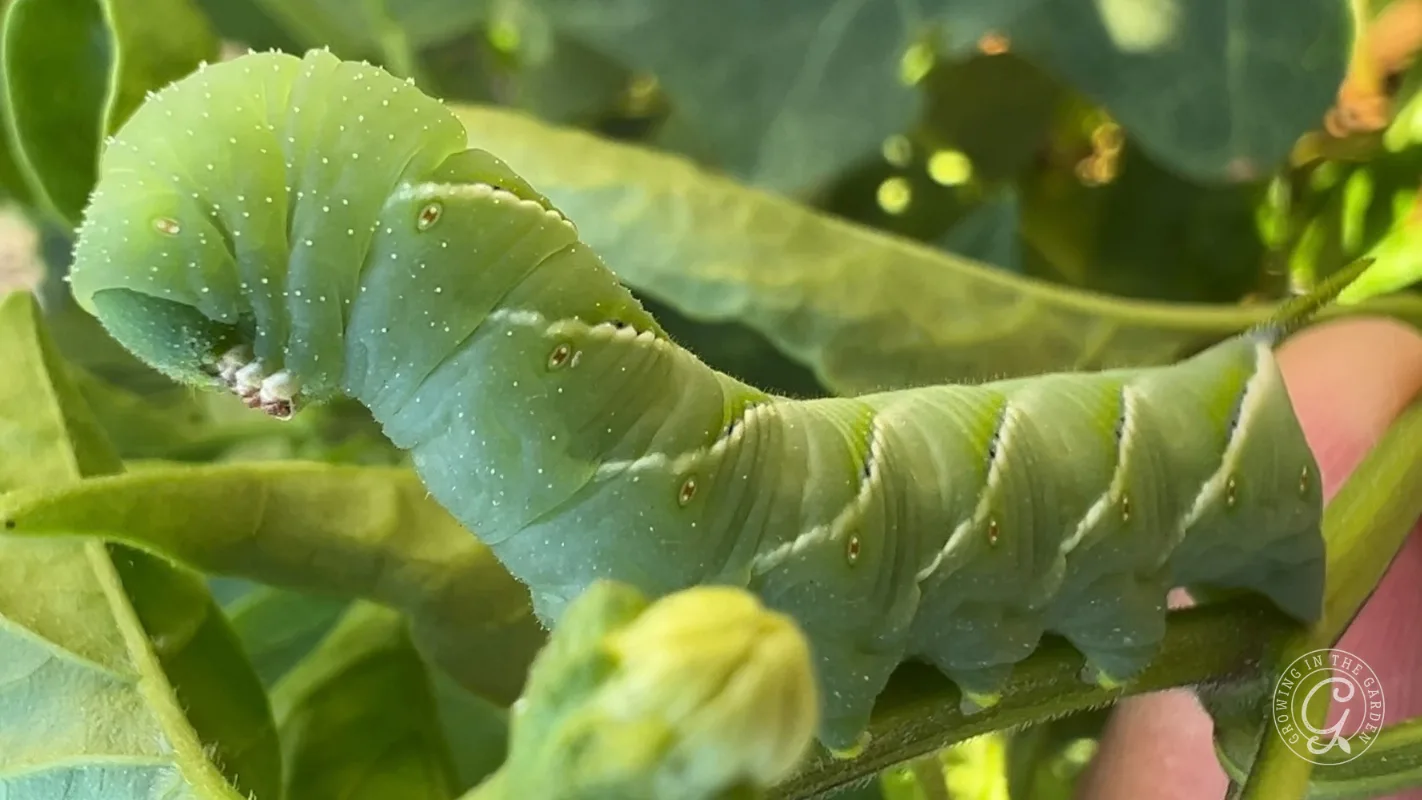
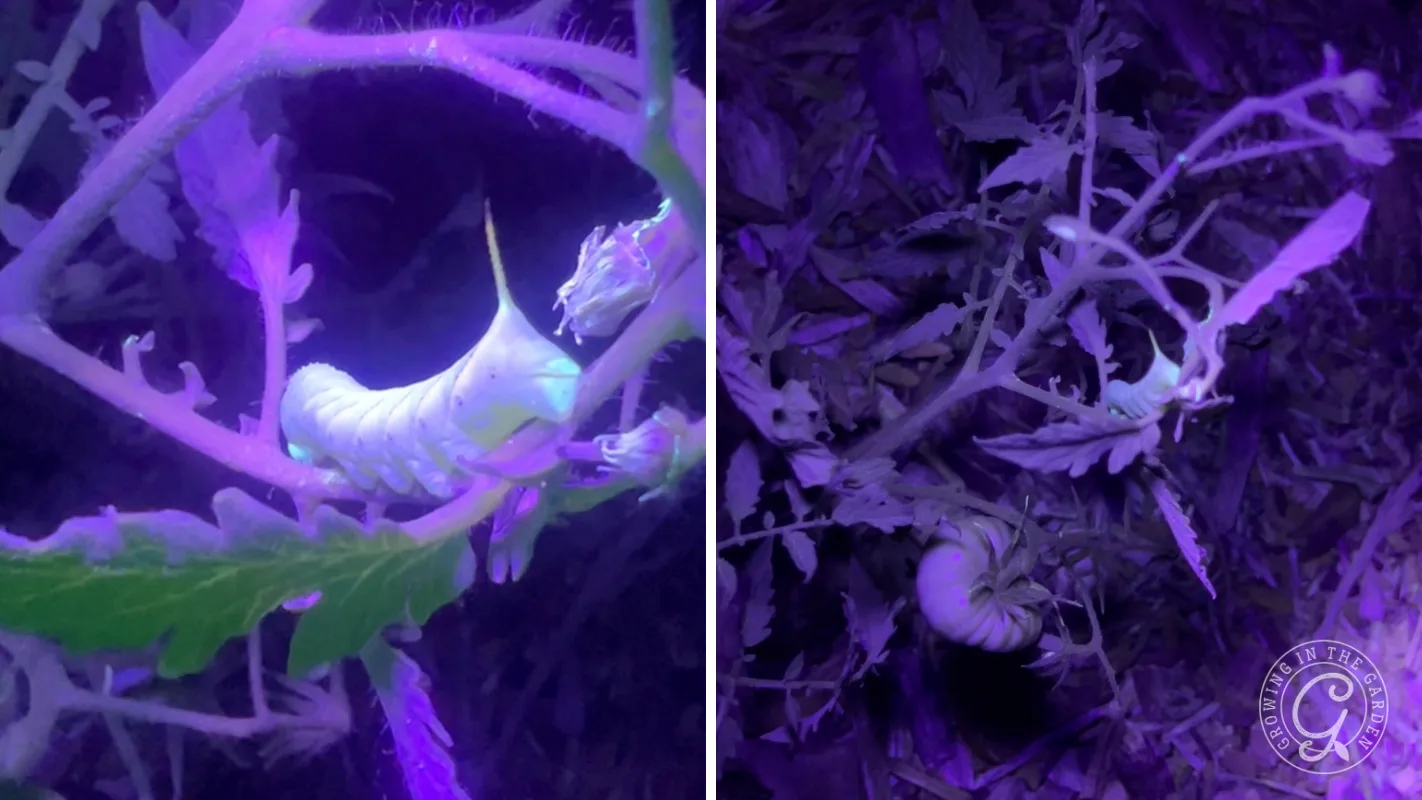
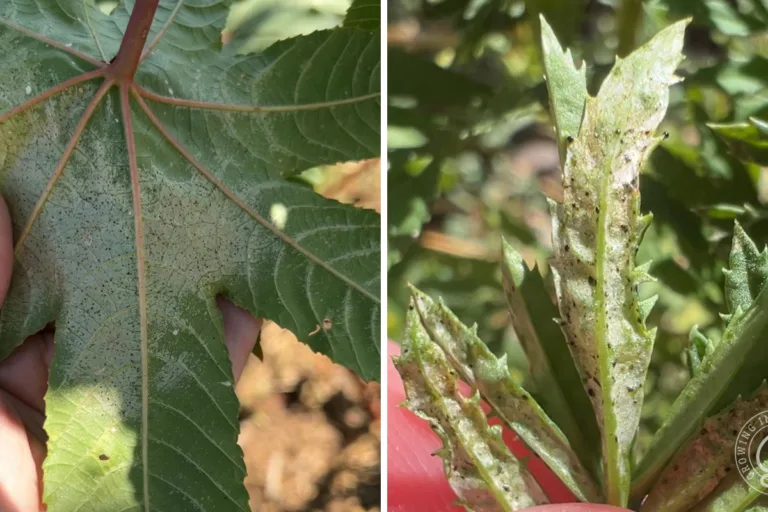
More often than not, it is the leaf damage or the dark droppings (frass) that we notice before finding the caterpillar itself. Of course a fun way to find them is at night with a blacklight.
Now the wavelength (ideally shorter wavelength) of the light does matter in getting the best reaction, but even a basic one does help the hornworm show up a little better against the tomato plant. This is because their skin contains natural phosphors which react to UV or black light. Not to suggest you have to buy a blacklight for hornworms, though if one is truly having a massive problem with them or enjoys finding them, it might be a worthwhile consideration.
What Should You Do When You Find a Hornworm?
Busted! Now what?
No matter what the stage, size or method, what are we supposed to do with a hornworm once found? I’m going to give an answer that most will find frustrating: there is no answer that applies to every garden or gardener.
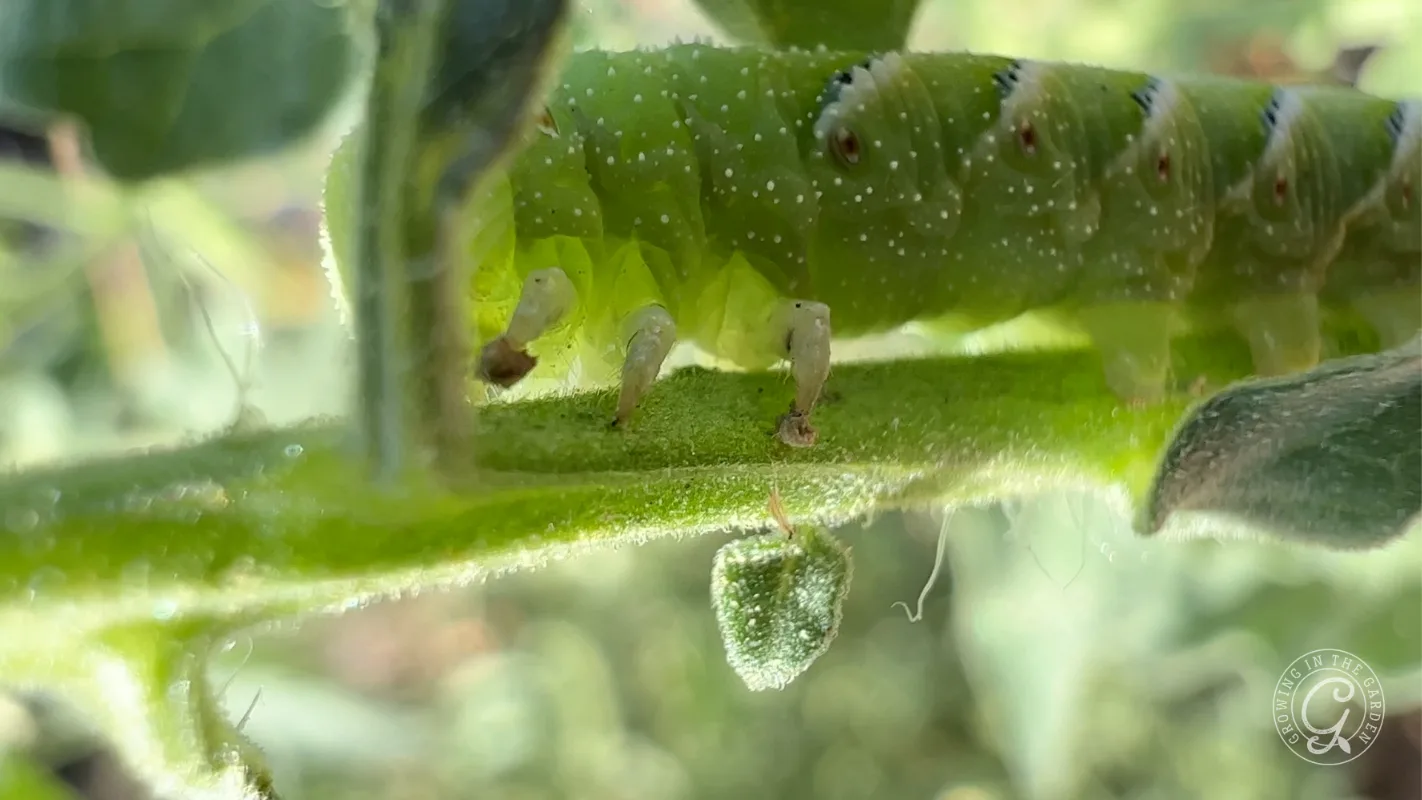
Firstly the amount of damage varies. A single hornworm on a large healthy plant is less of a concern than several feeding on a small container grown tomato or pepper. Is the hornworm feeding on the one plant you are growing? Is your sole focus on being able to harvest enough tomatoes and peppers for the season? Then maybe you need to remove the hornworms (hand-picking being the best method).
However, if you have several plants and want to provide a space for yourself to enjoy food and still have insects, then you might tolerate more feeding. The decision depends on the purpose of your garden.
For myself, I strive for both. Growing enough plants that hornworms can grow while I’m still getting a harvest of tomatoes and peppers.
The main way this is accomplished is by growing a few extra plants. This of course depends on space.
Natural Predators of Hornworms
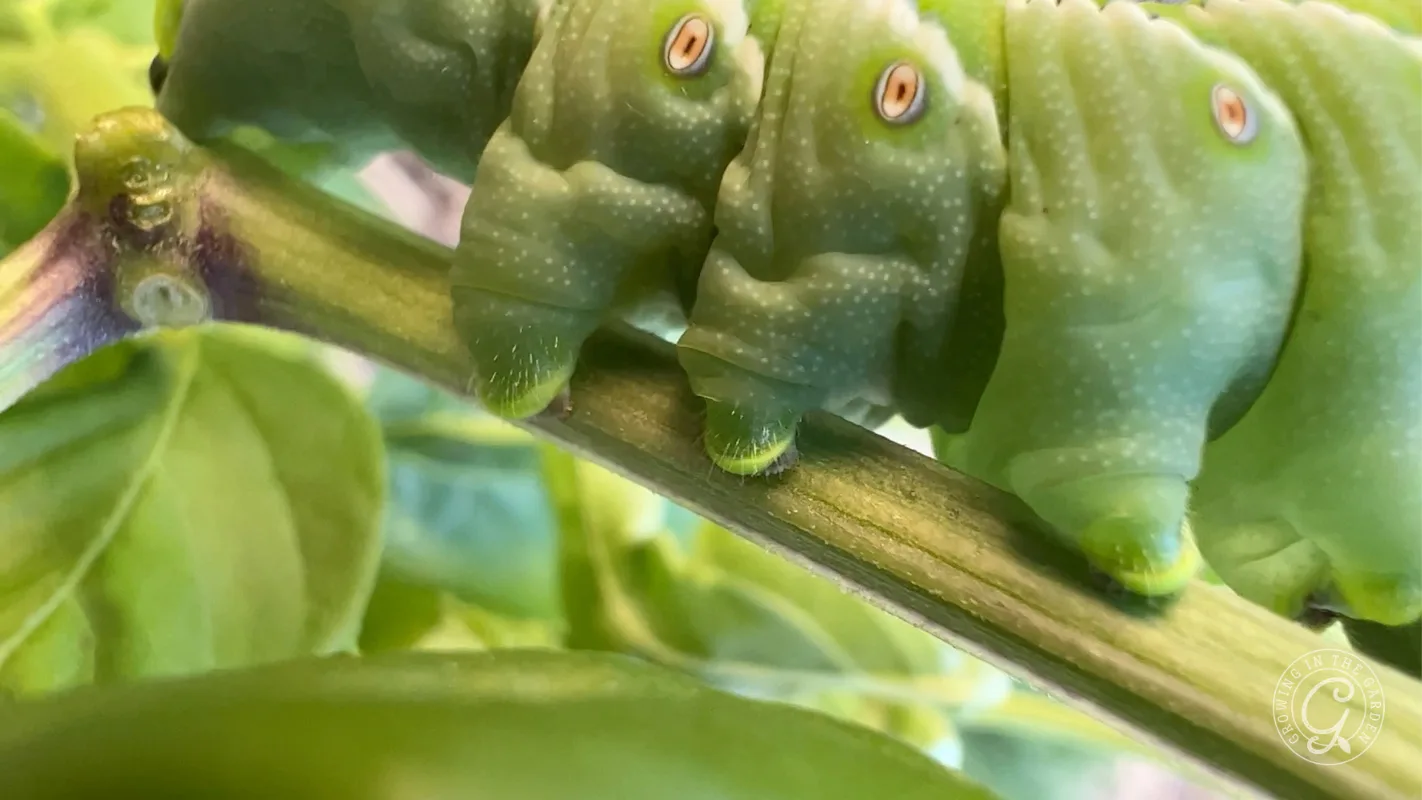
It’s worth remembering that hornworms are food for others. Many predators are feeding on them, which is a huge reason I’ve never had to remove them as others have rarely allowed them to reach a large size.
And it’s not just birds that are feeding on them. There are parasitic wasps that actively seek them out. For a closer look at these beneficial insects, see Jean’s article on aphid mummies and parasitic wasps. The female will lay her eggs inside the caterpillar, once they hatch they feed from the inside out. If you ever find a caterpillar with rice-like cylinders on its back, leave it alone as that is the next generation of wasps getting ready to emerge.
From Hornworm to Moth
Assuming the hornworm either managed to avoid detection or we decided to leave it alone, it does eventually stop feeding. Crawling off the plant that has been its home for almost a month, it can sometimes wander a considerable distance before choosing a spot.
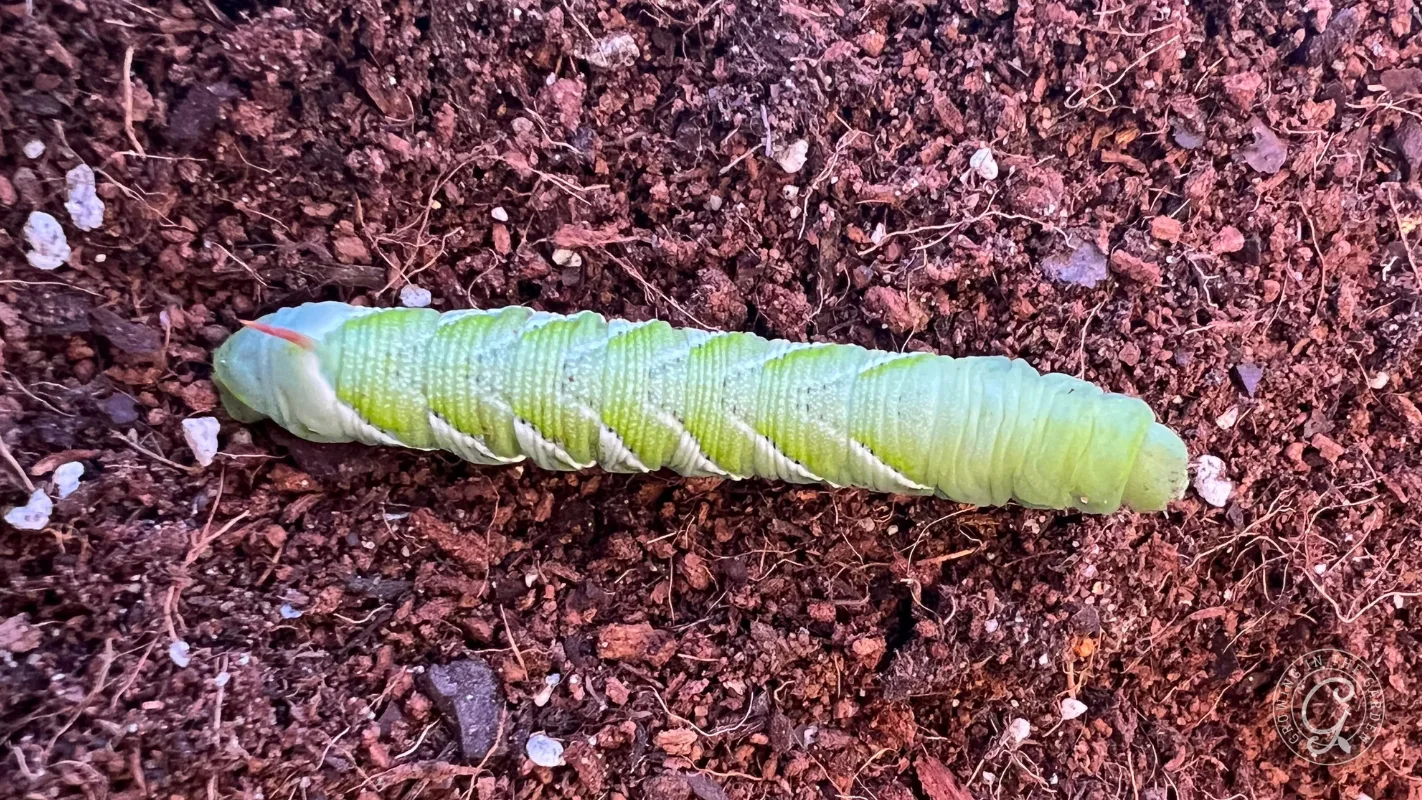
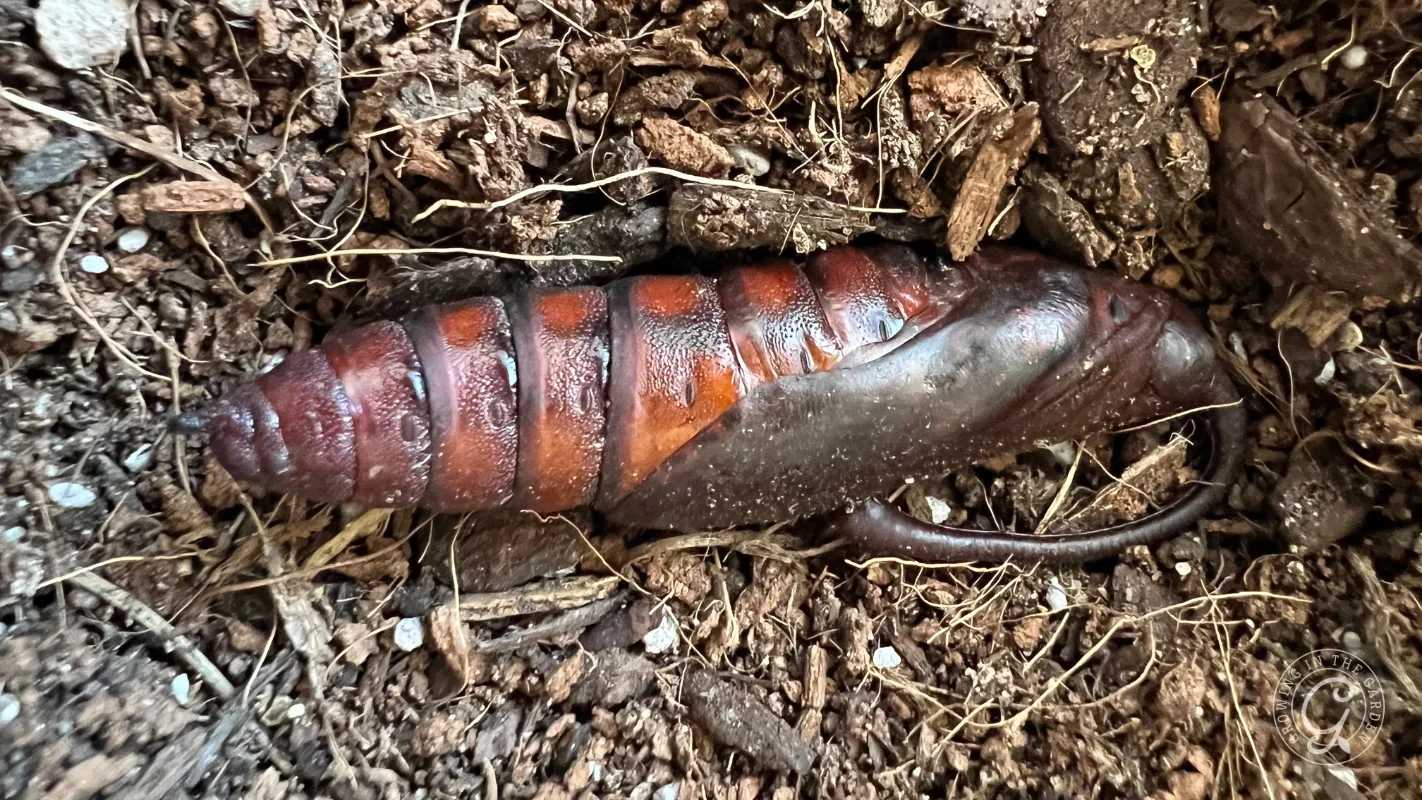
Once it has found the location, it will burrow into the soil, just an inch or so beneath the surface to start the next chapter. While it does not take long for the hornworm to form the pupal casing (around a week to settle down and form) it does take a bit of time to hatch.
After I knew enough time had passed, I dug around in the soil that I had purposefully set up for this situation. The pupa was easily found, even moving a bit when shuffled around too much.
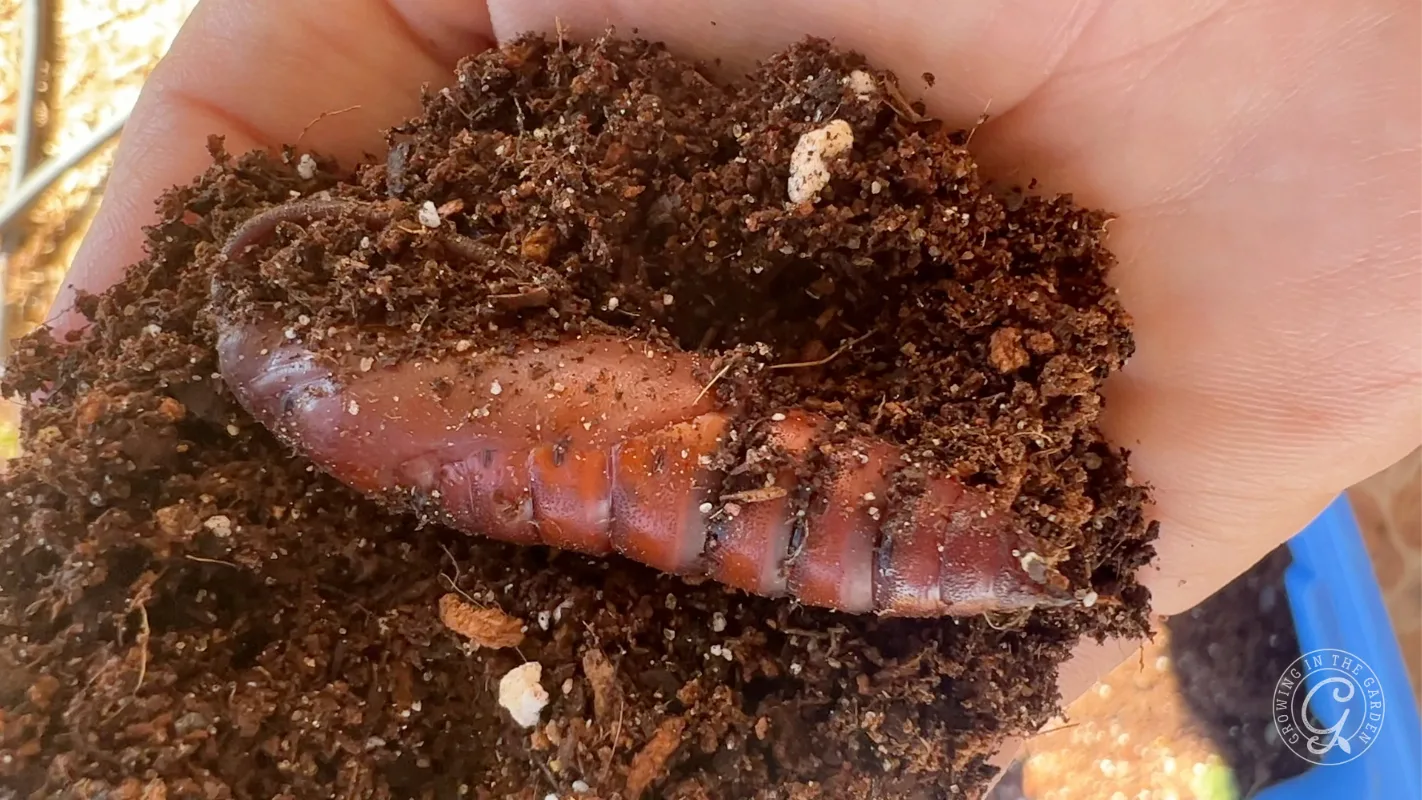
I placed the casing back under some soil in a smaller container in a mesh butterfly cage. Then, it was a matter of waiting.
About three weeks later, the cage safely sitting on the dining table, it happened. Sadly such events occur when one is out of the room. It is rather shocking how quickly the moth emerges from the casing to a spot to stretch the wings out. Even more shocking? How less than a month ago, this large, beautiful moth was a giant green caterpillar with a large horn.
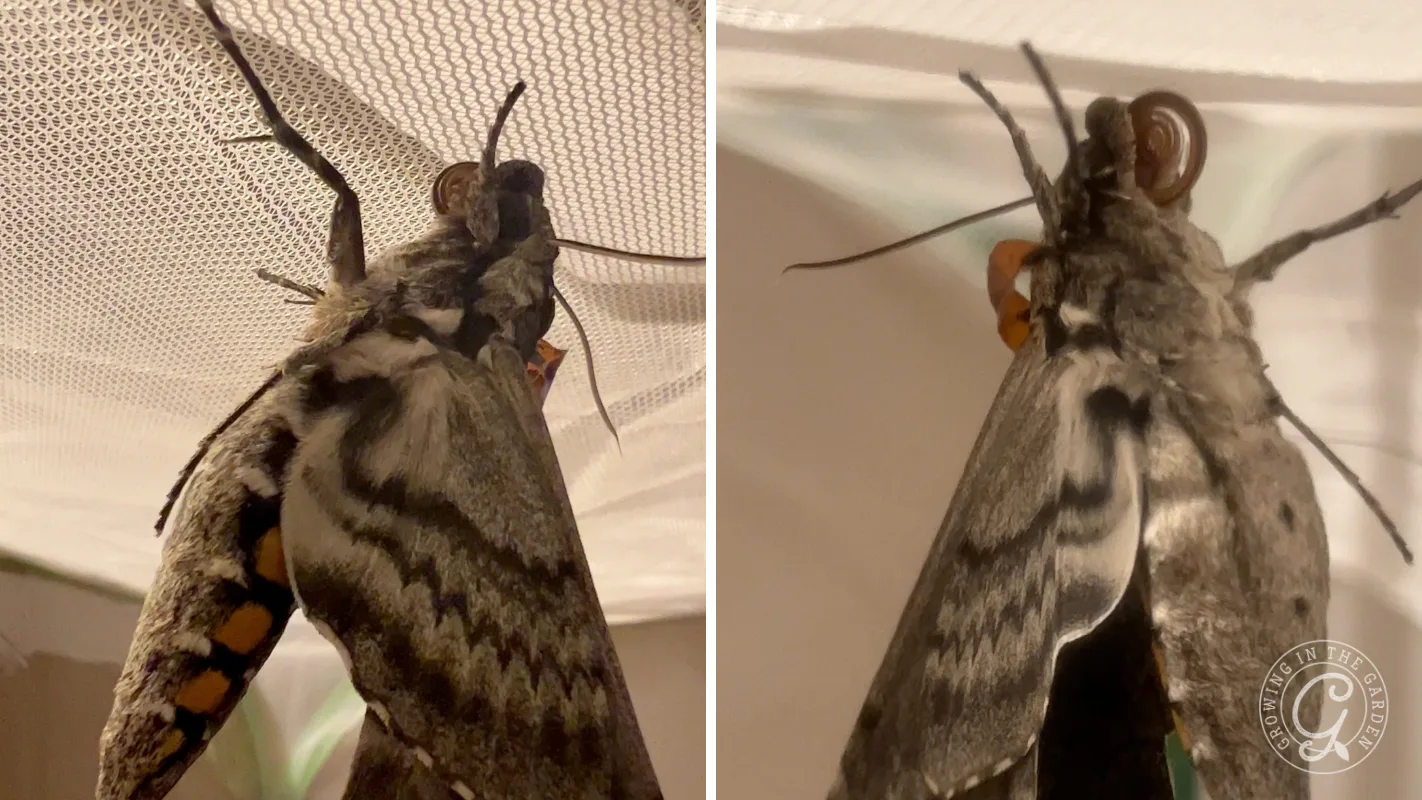
Releasing the Adult Moth
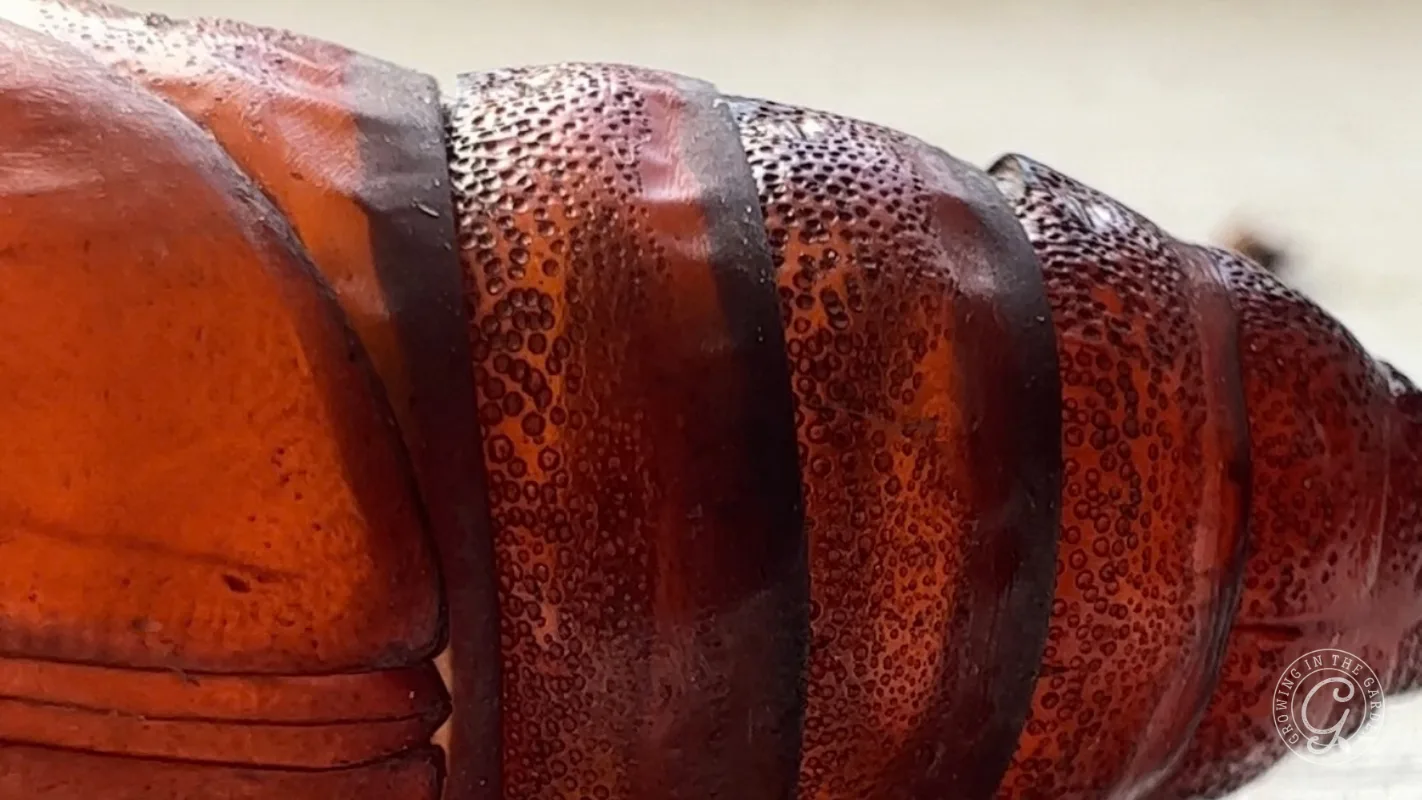
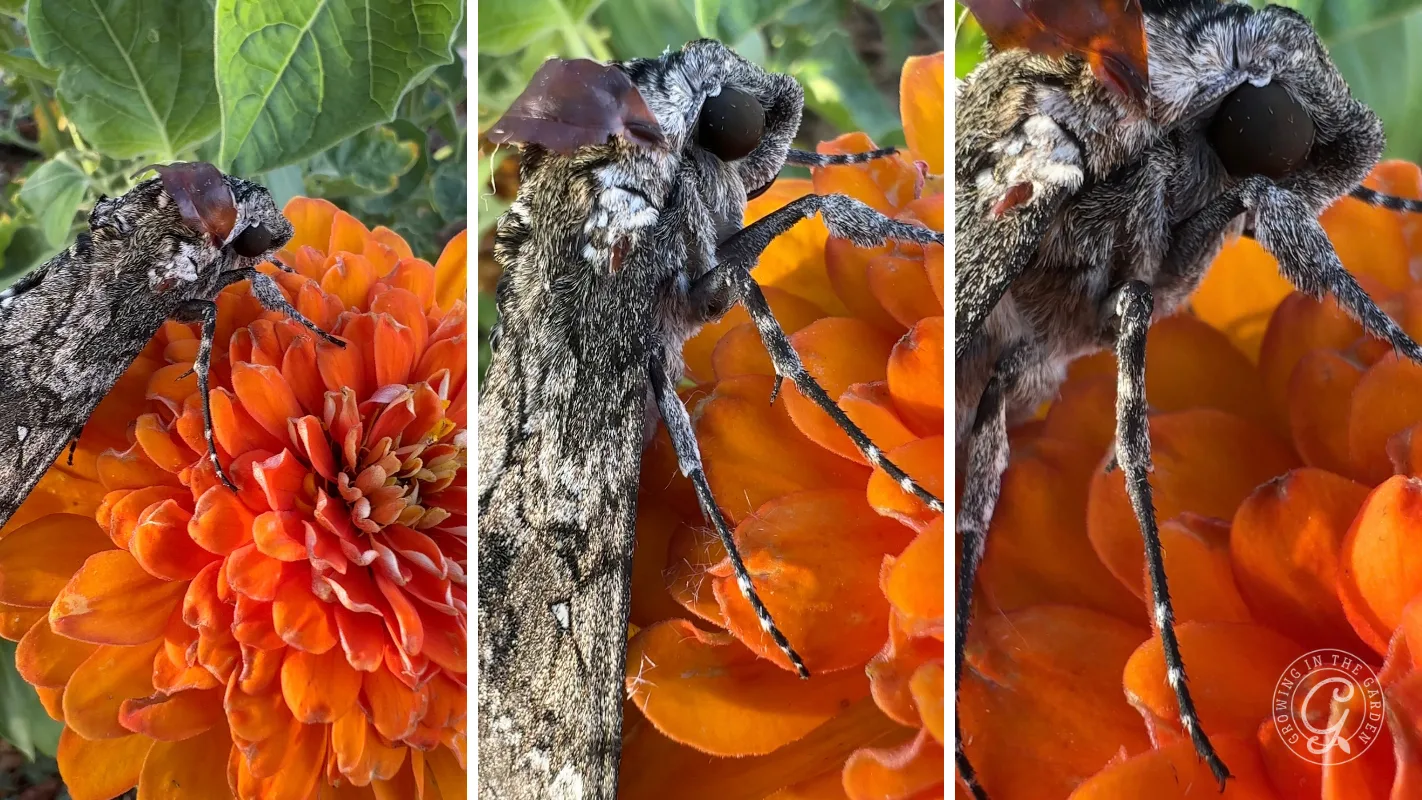
The next morning was dedicated to releasing it. With a portion of the casing still stuck (it did fall off eventually), it climbed onto my hand. I was not entirely prepared for the weight, the feeling of the tiny feet gripping my fingers. Putting it close to a zinnia, it eventually made its way onto the flower.
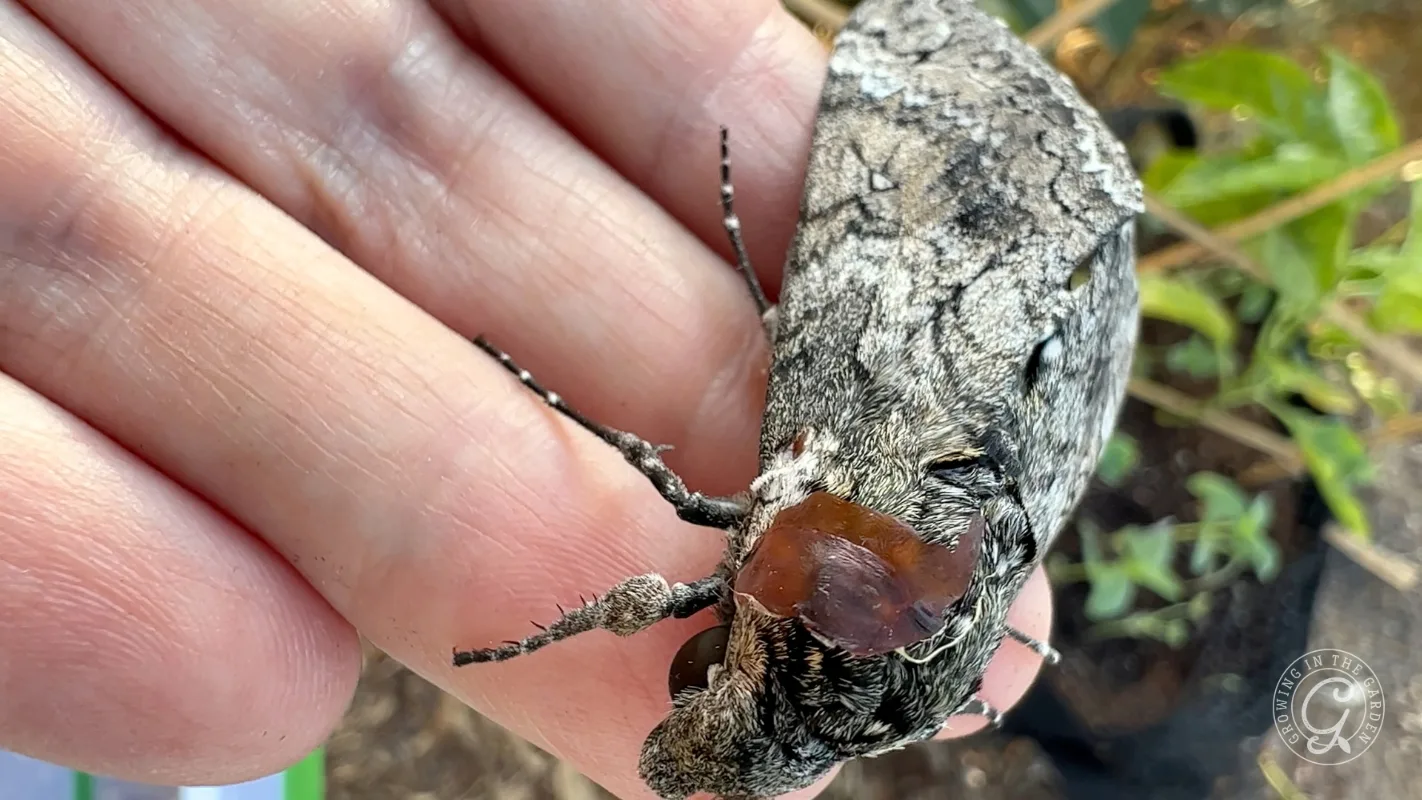
Taking this rare opportunity to study the moth up close, to see the wing pattern and the large eyes.
Why Adult Sphinx Moths Matter
This is what the hornworm eventually becomes. It is part of the lifecycle that we forget about. Plus they are important pollinators.
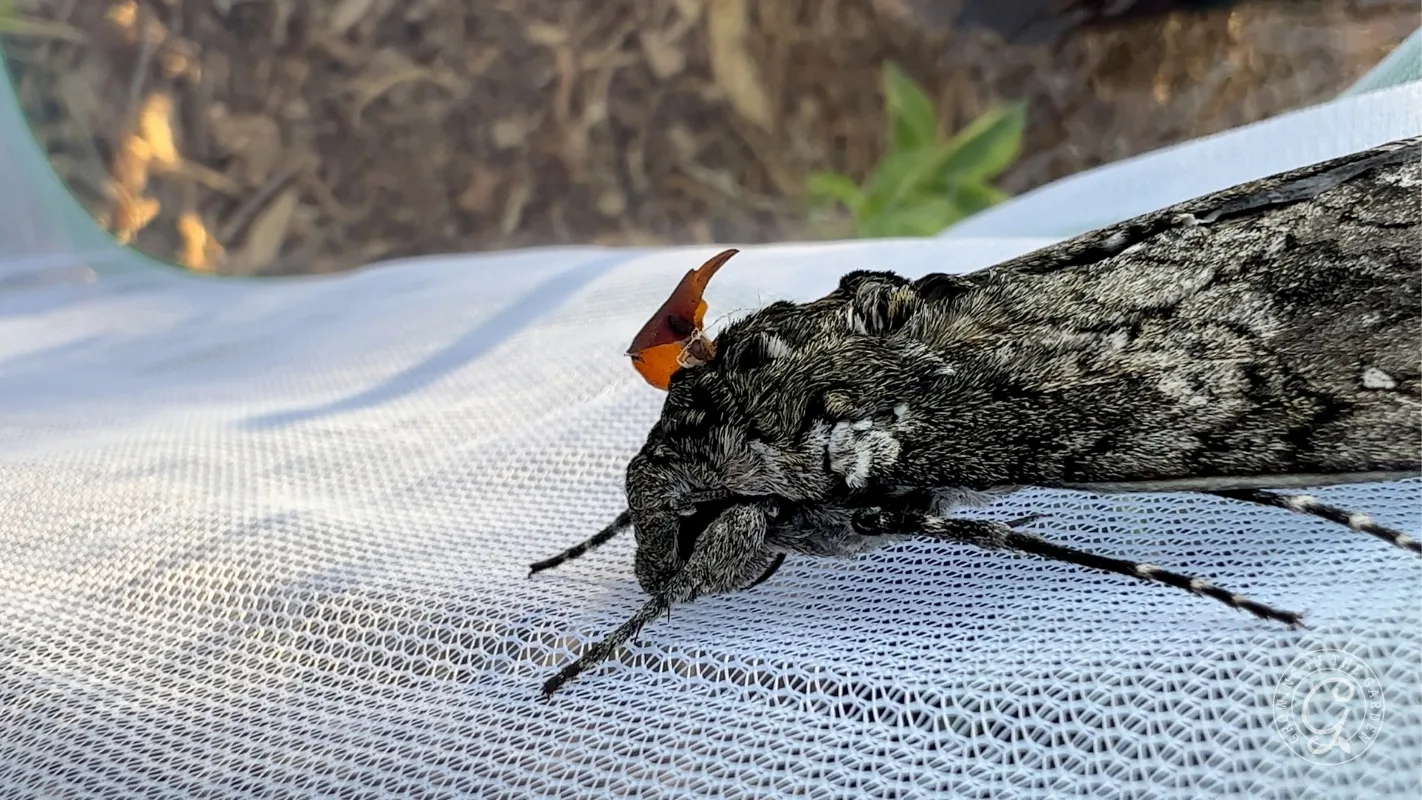
Plants that have deep tubular flowers are popular. Wild tobacco seems obvious for them to pollinate, but they also frequent datura, agave, and a number of other night blooming plants.
Ultimately we cannot allow the hornworms to completely take over the garden; we still want and need some of that food for ourselves. But the question is not truly whether hornworms are good or bad. The more useful question is: how much damage am I wiling to tolerate and what role does this insect play in my space?
Tomato Hornworms Frequently Asked Questions
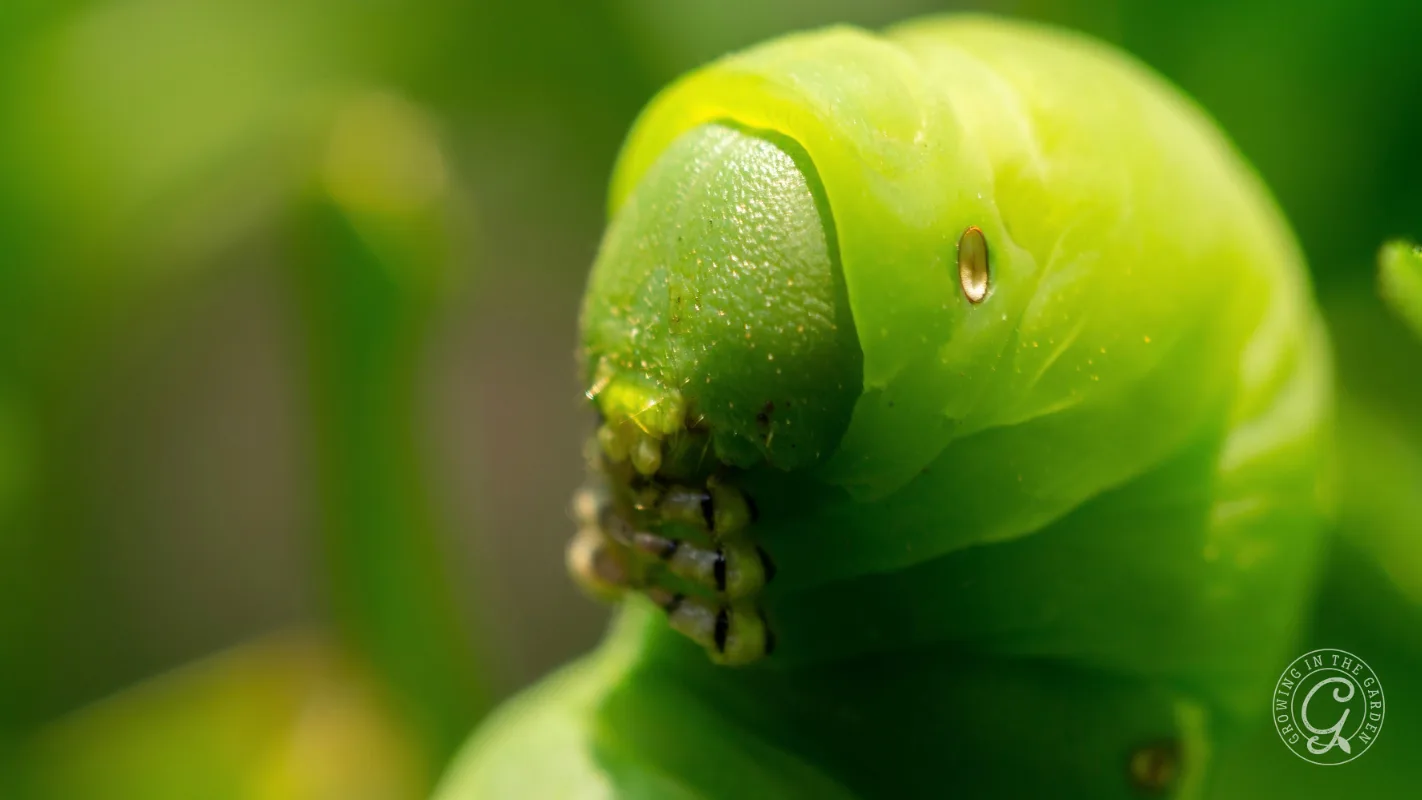
The two biggest things, aside from finding the hornworm itself, would be the type of damage and finding frass. If you are finding entire leaves gone along with stems, especially starting at the top, it most likely is a hornworm.
If you are wanting to remove it, hand-picking is the best method. You might want to wear gloves as their bodies can feel a bit strange to handle, especially when they are larger. Then toss it for birds to find (or to chickens if you have them). Otherwise, consider leaving it alone, provided you do not have too many for the plant to handle and can sacrifice the plant.
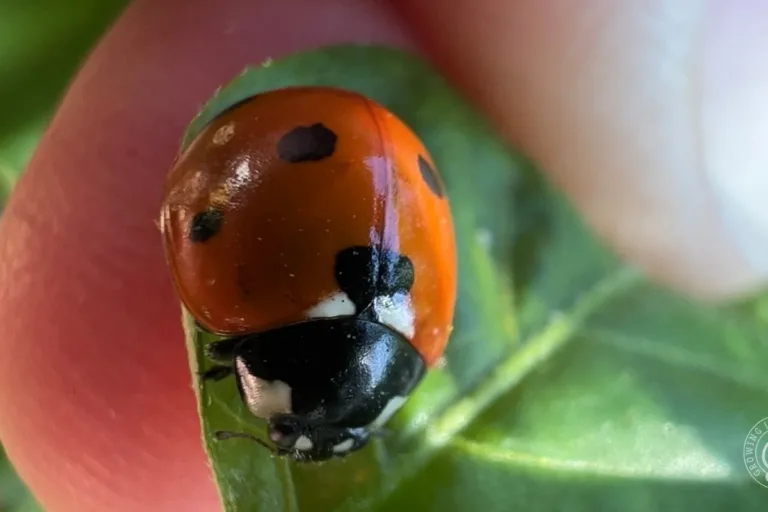
There are a number of predators, such as birds (bluebirds, blackbirds, finches), braconid wasps, paper wasps (especially the Polistes species), lady beetles and lacewing consume eggs along with newly hatched caterpillars, and stilt bugs consume the eggs. Learn more in Jean’s guides to ladybugs and lacewings.
There is no 100% guarantee of avoiding them. There are some methods that can help and have high success rate. Mostly companion planting to create scent confusion. Having basil as an understory with the tomatoes is effective. Alliums also have some success, though not as high as the basil. Also encourage predators, such as parasitic wasps, by planting yarrow, dill, parsley or borage.
No they are not harmful or dangerous to people despite their appearance.
About Jean Elston
For more than thirty years, Jean has been growing plants and spending time in nature, both in California and Arizona. With a background in fine art, she honed her skills in observation, a critical element for anyone striving to have a garden. Currently, she is finishing her doctoral studies in ecology (special focus on entomology), while helping others to work with nature in order to have a thriving ecosystem. You can find more of her work as “Red Shoe Gardener” on YouTube and Instagram.

Leave a comment on Tomato Hornworms: Life Cycle, Identification & Control