
How to Identify Beneficial Insect Eggs in Your Garden
Most gardening content focuses on identifying pest eggs so you can remove them. Squash bugs, stink bugs, leaf-footed bugs; we spend a lot of time learning what to wipe off a leaf. But what about the beneficial insects? Would you recognize a hoverfly egg or a cluster of ladybug eggs if you found them?
My friend Jean Elston, who is finishing her doctoral studies in entomology, has spent years documenting both in her garden. This is the fourth post in her series on beneficial insects, and it is the one to bookmark. If you missed her earlier guides to ladybugs, lacewings, and aphid mummies, start there and come back to this one.
This list serves as a great starting point to ensure that your garden thrives by allowing these insects to play a vital role.
Guest post and photos by Jean Elston. This post is part of her series Low Desert Garden Insects.
Key Takeaways: Identifying Beneficial Insect Eggs
- Most gardening guides focus on pest eggs, but recognizing beneficial insect eggs is crucial for a healthy garden.
- Identifying beneficial insect eggs requires understanding four key traits: color, shape, pattern, and location.
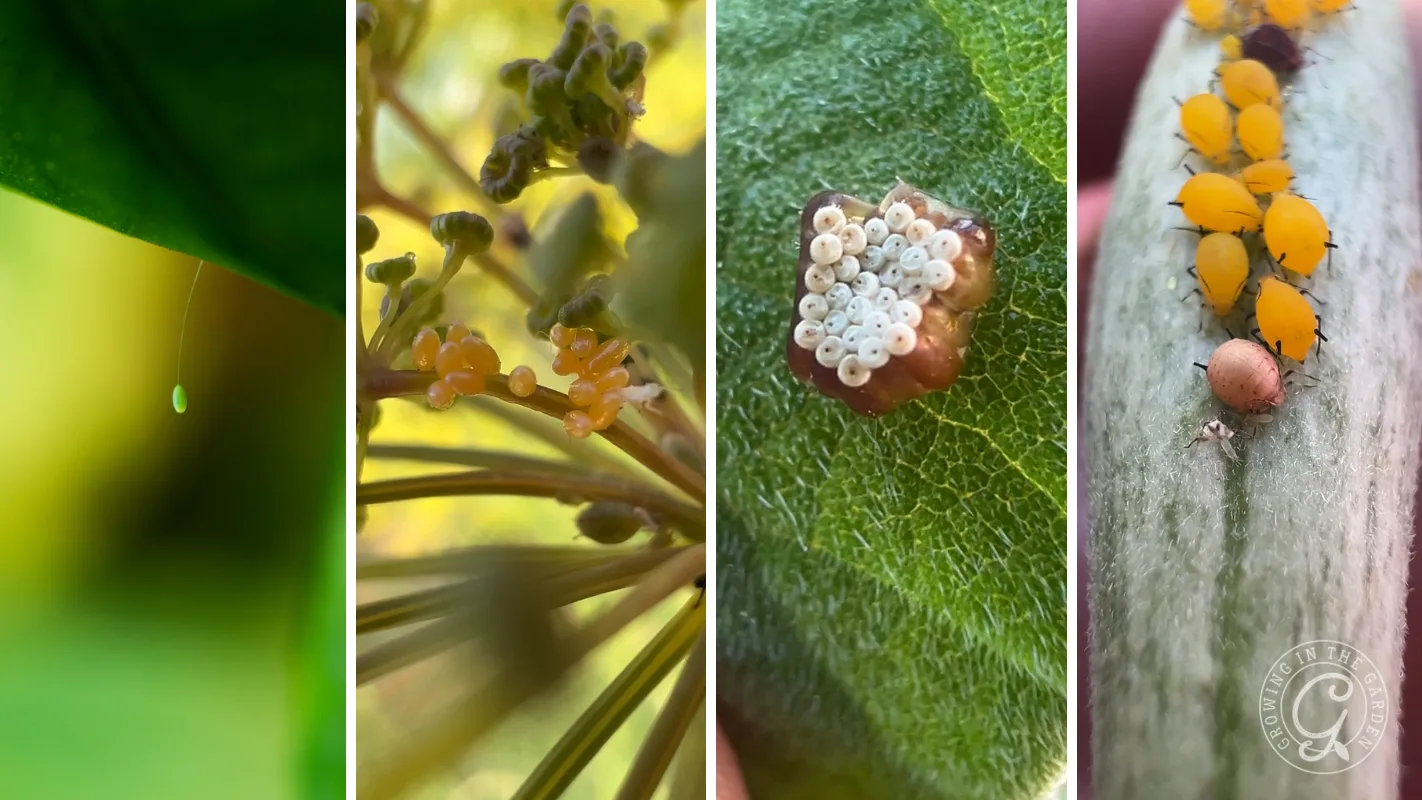
- Ladybug eggs are yellow, oblong, and usually found near aphids, while lacewing eggs are green and laid on threads of silk.
- Assassin bug eggs are barrel-shaped with a hexagon pattern, distinct from other pests, making them easy to identify.
- Hoverfly eggs are small, often hidden among aphid colonies, while parasitic wasps lay eggs inside host insects, indicated by bloated aphids.
Four Key Traits for Identifying Insect Eggs
Before looking at each insect, these four traits will help you identify almost any egg you find in the garden.
Color: can vary from pale white to yellow, green, brown, or even with some stripes.
Shape: most are round, oval, or oblong cylinders. Some have distinct shapes or methods of laying, such as the lacewing, which lays a single egg on a strand of silk.
Pattern: true bugs, beetles, and others will lay eggs in clusters that are carefully arranged. Caterpillars lay a single egg on a leaf.
Location: not just about where the eggs are on the plant — it is also about the plant itself. Eggs under the leaf of a nightshade plant likely belong to a different insect than eggs found under the leaf of a squash plant.
Once you can identify the eggs, the next step is knowing what the nymphs and adults look like. This guide to common garden insects and their lookalikes picks up where the egg identification guide leaves off.
Ladybug Eggs
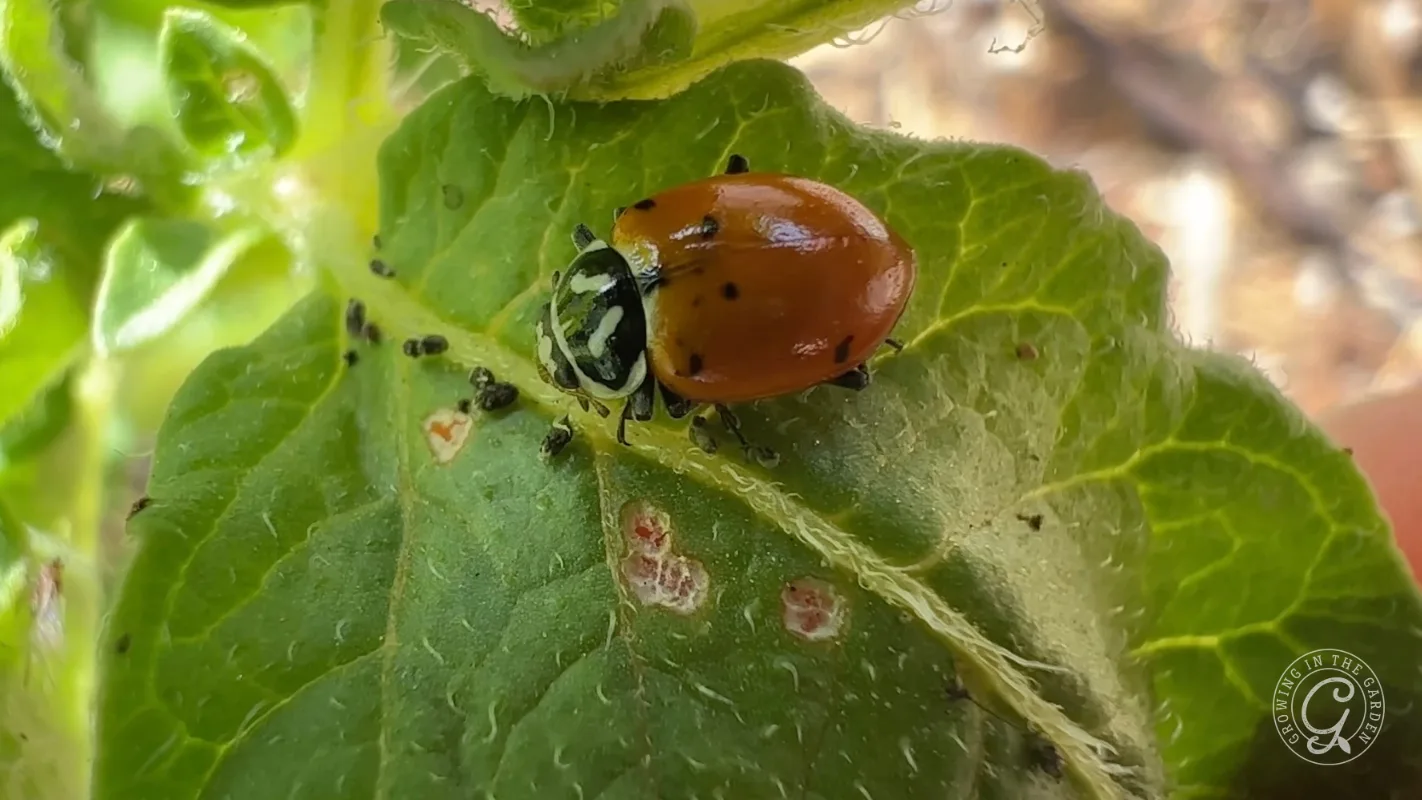
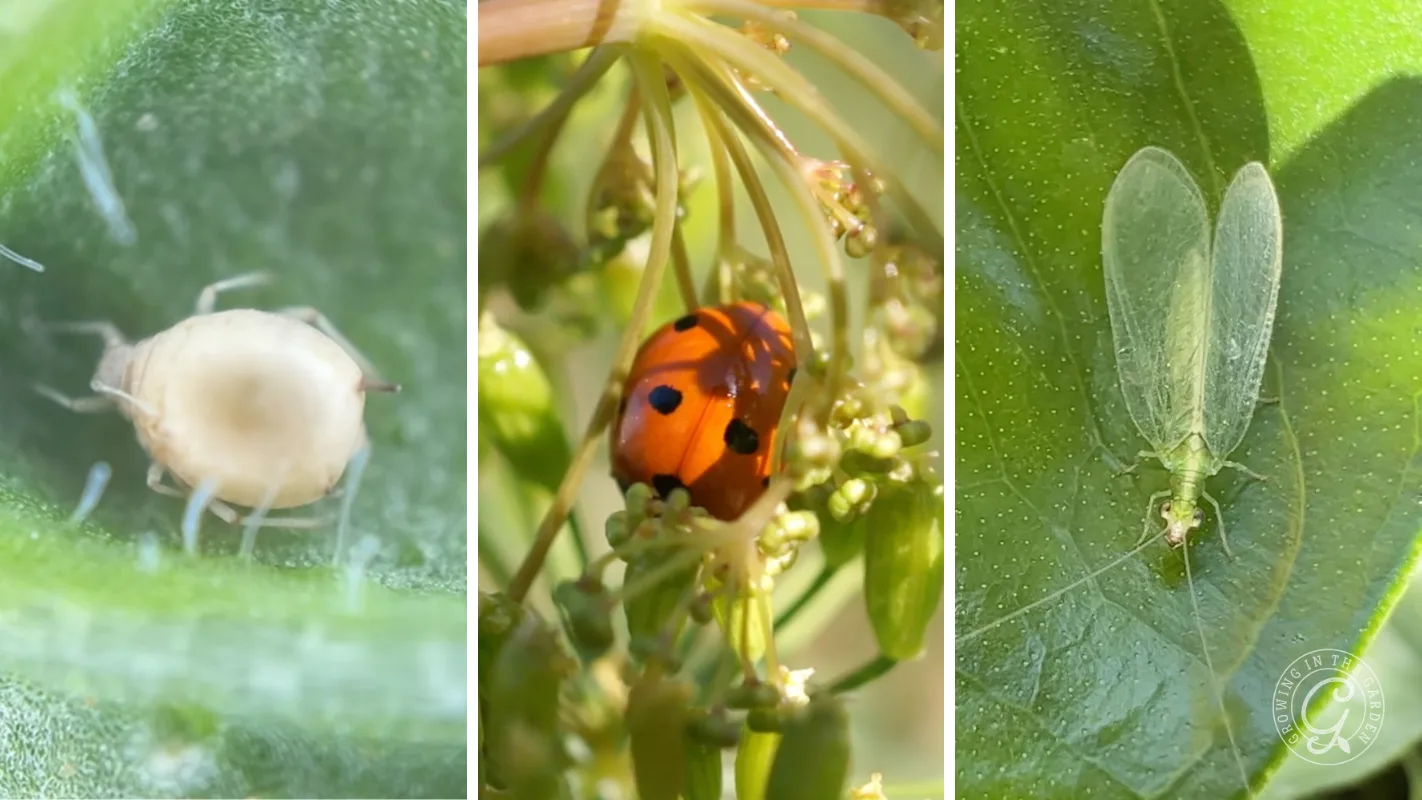
Aphids and ladybugs are often associated with each other. It is true that ladybugs will eat hundreds of aphids in their short lifetime. A common issue, though, is wanting to purchase ladybugs to release into the garden, only to find that the beetles stay for less than a day. Instead of purchasing, we need to encourage them to come to our gardens by providing enough food and shelter so they decide to create a home. Learn how to create a garden that attracts and supports ladybugs in this article.
How do we know if they are deciding our garden is a worthy home? Eggs.
Interestingly, there does not appear to be a specific location where the female will lay her eggs. The only variable that matters are the aphids. That said, dill does appear to be a more popular choice for both aphids and ladybugs. Learn how to grow dill to attract beneficial insects in this guide.
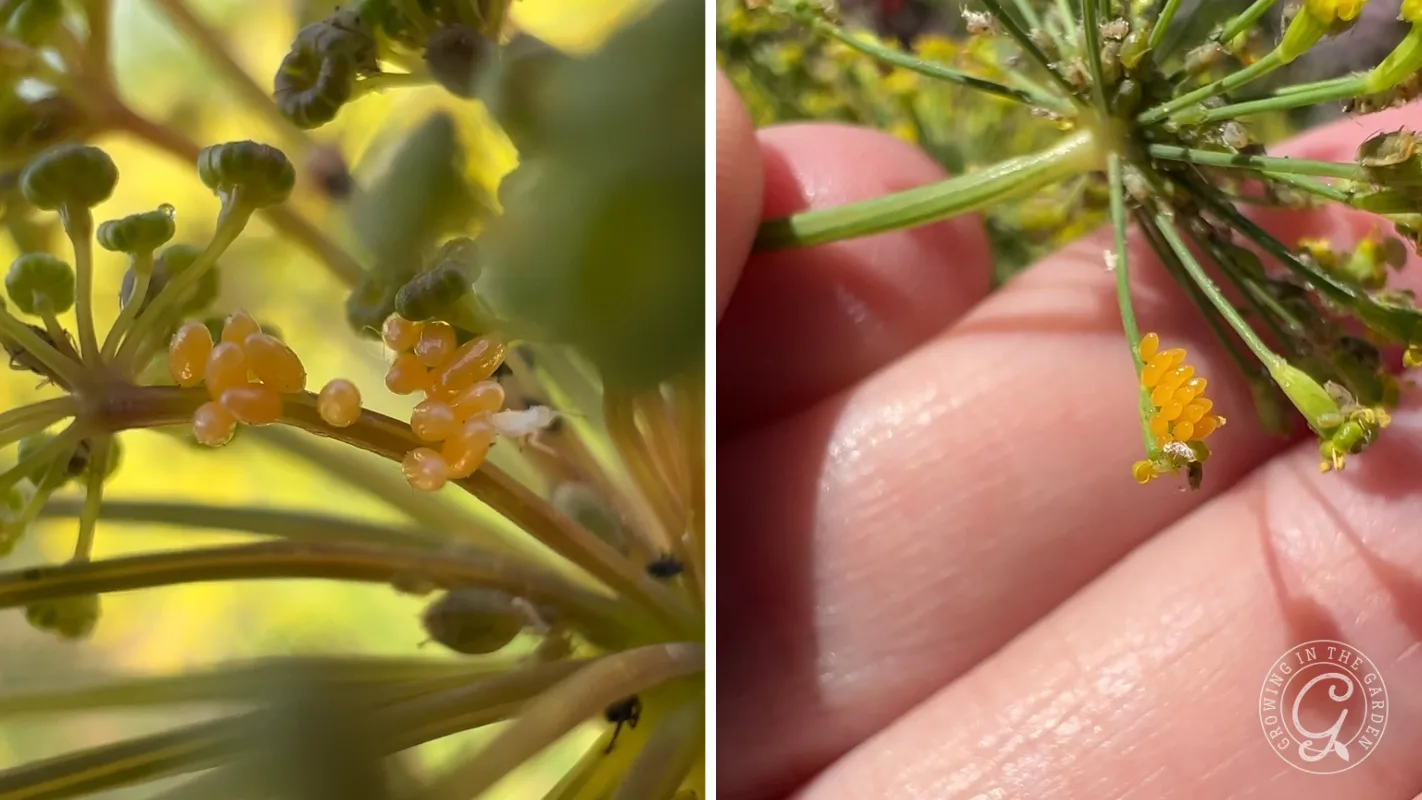
Eggs stand out among the green foliage—an egg-yolk yellow oblong cylinder. Usually, they are clustered neatly, though it is not predictable, and therefore more reliable to recognize the color and shape. Amount can also vary; I have seen as few as five or as many as twenty.
There are, however, a few eggs that could be mistaken for ladybug eggs. This is where placement matters. The ladybug will lay the cluster vertically, and it can be on the underside of a leaf, but just as readily on the side of a stem, the top of a flower bud, or a shade cloth. The key is to notice where they are laid—specifically, the plant.
From the Colorado Potato beetle (Leptinotarsa decemlineata), which focuses its eggs on the underside of nightshade plant leaves, to the Mexican Bean beetle (Epilachna varivestis), which focuses on several plants, especially beans—many of these beetles lay similar-looking eggs.
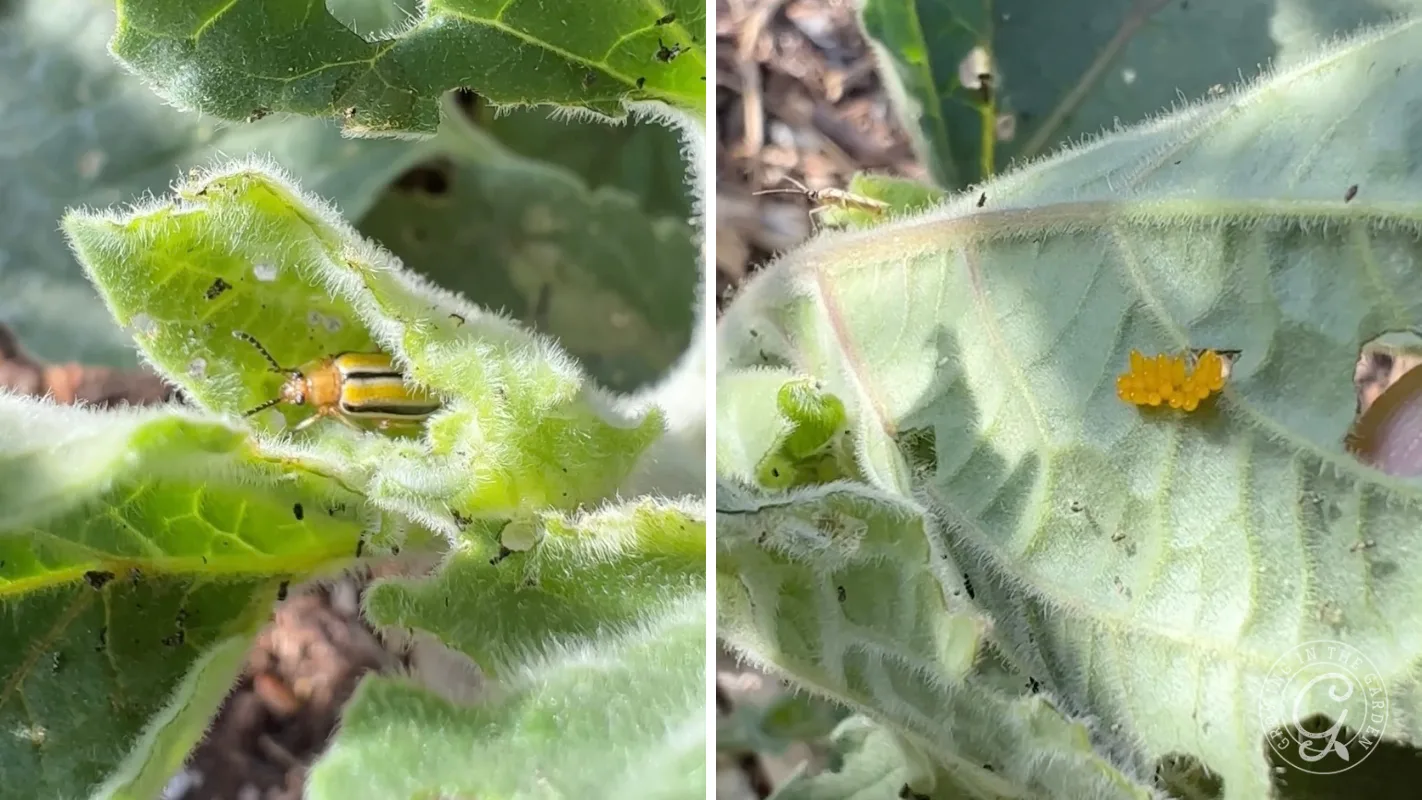
When it comes to identifying the eggs we do want in our gardens, not only do the shape and coloring matter, but also the location—specifically, its relation to the aphid colony. If there are no aphids, the eggs most likely belong to a different type of insect.
For a full look at the ladybug lifecycle and what each stage looks like, see Ladybugs in the Garden: Lifecycle and How to Attract Them.
Lacewing Eggs
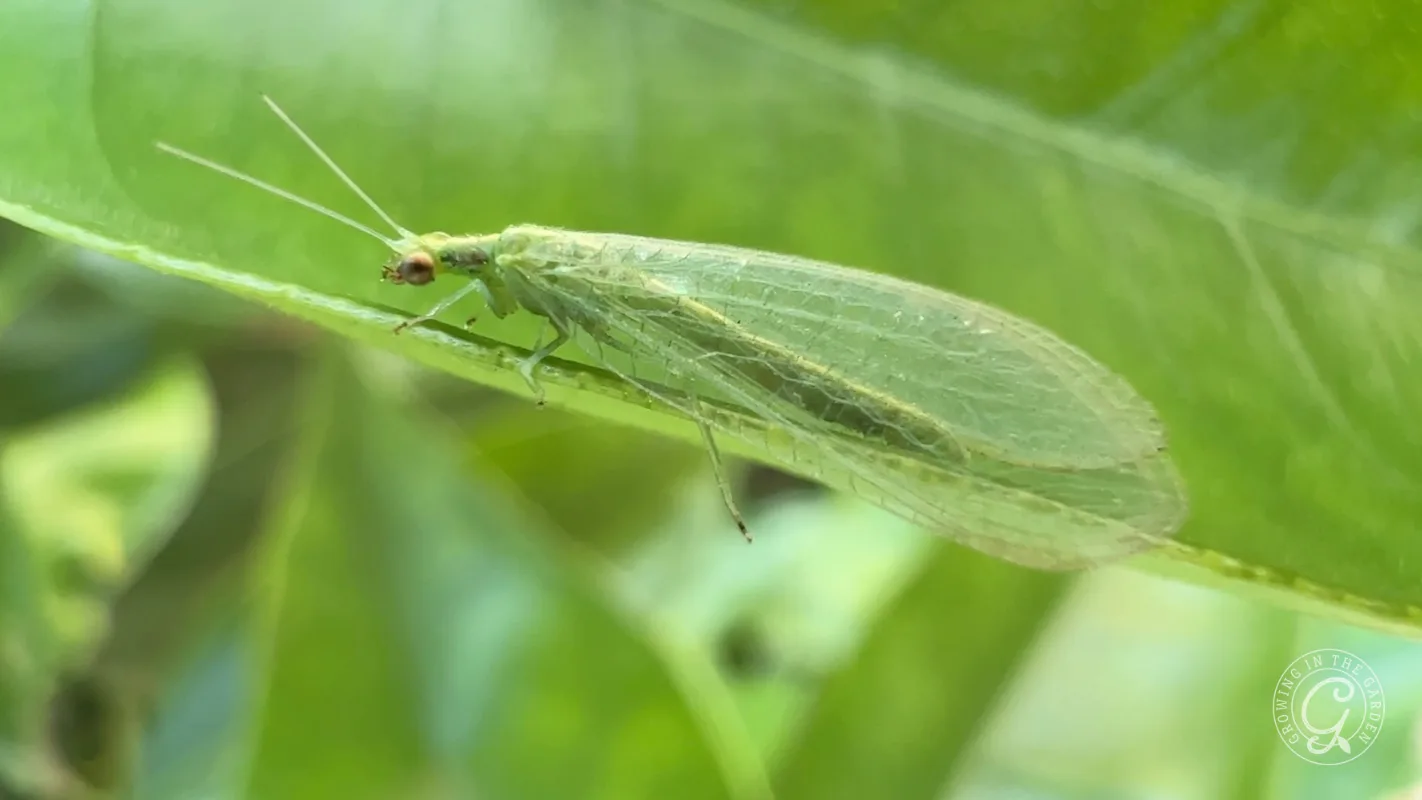
Unlike the ladybug, the lacewing will not lay eggs in any particular location. While females deposit eggs near aphids, they can also be found in many other areas far removed from insects.
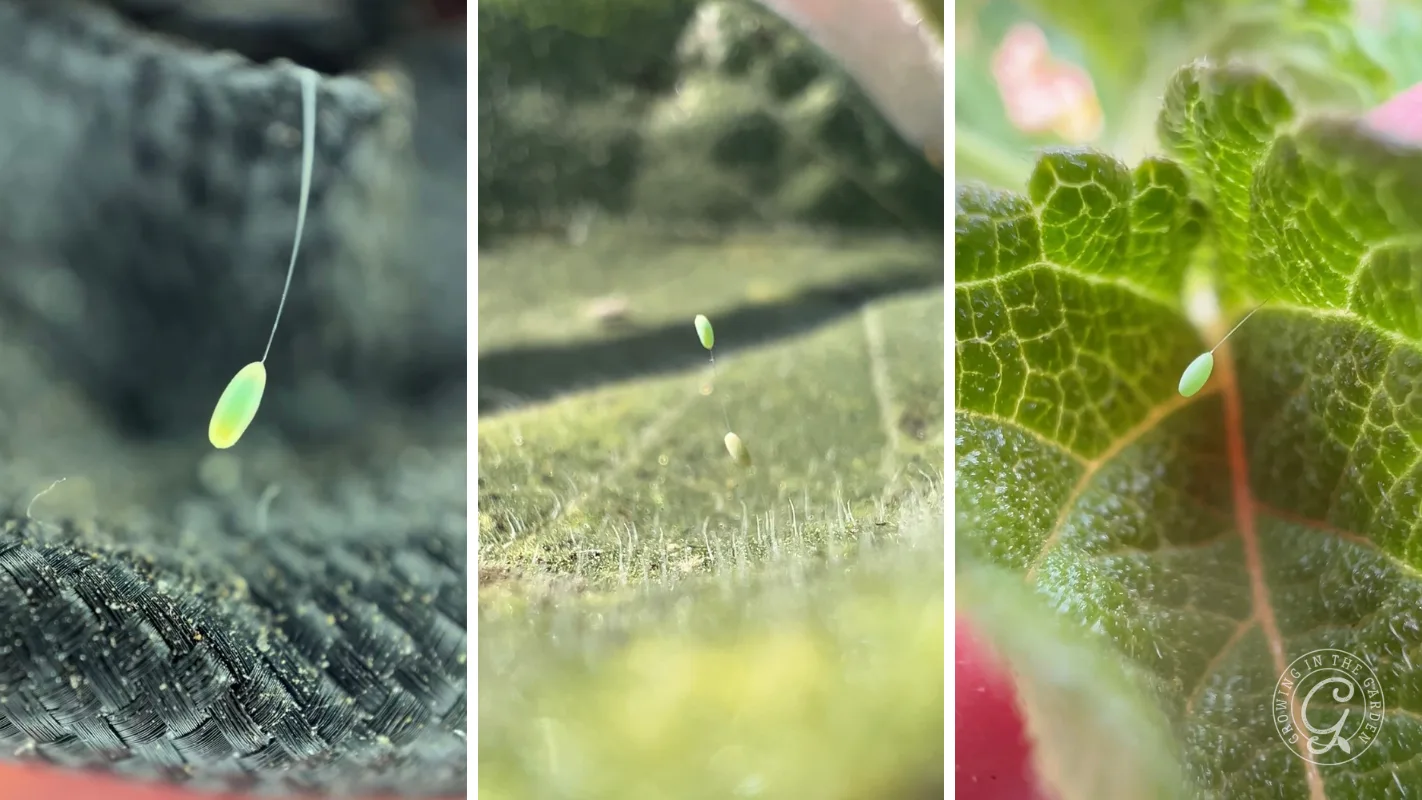
Finding these oblong, slightly green cylinders on a single thread of silk among leaves is expected. However, they have also been found on outdoor furniture, fence posts, and shade cloth—basically anything outside that is sturdy enough.
The good news is that once you have spotted lacewing eggs, you can be certain as to what you have discovered, as there are no pest eggs that look similar.
For a full look at the lacewing lifecycle, including what larvae, cocoons, and adults look like, see How to Attract Lacewings for Natural Pest Control.
Assassin Bug Eggs
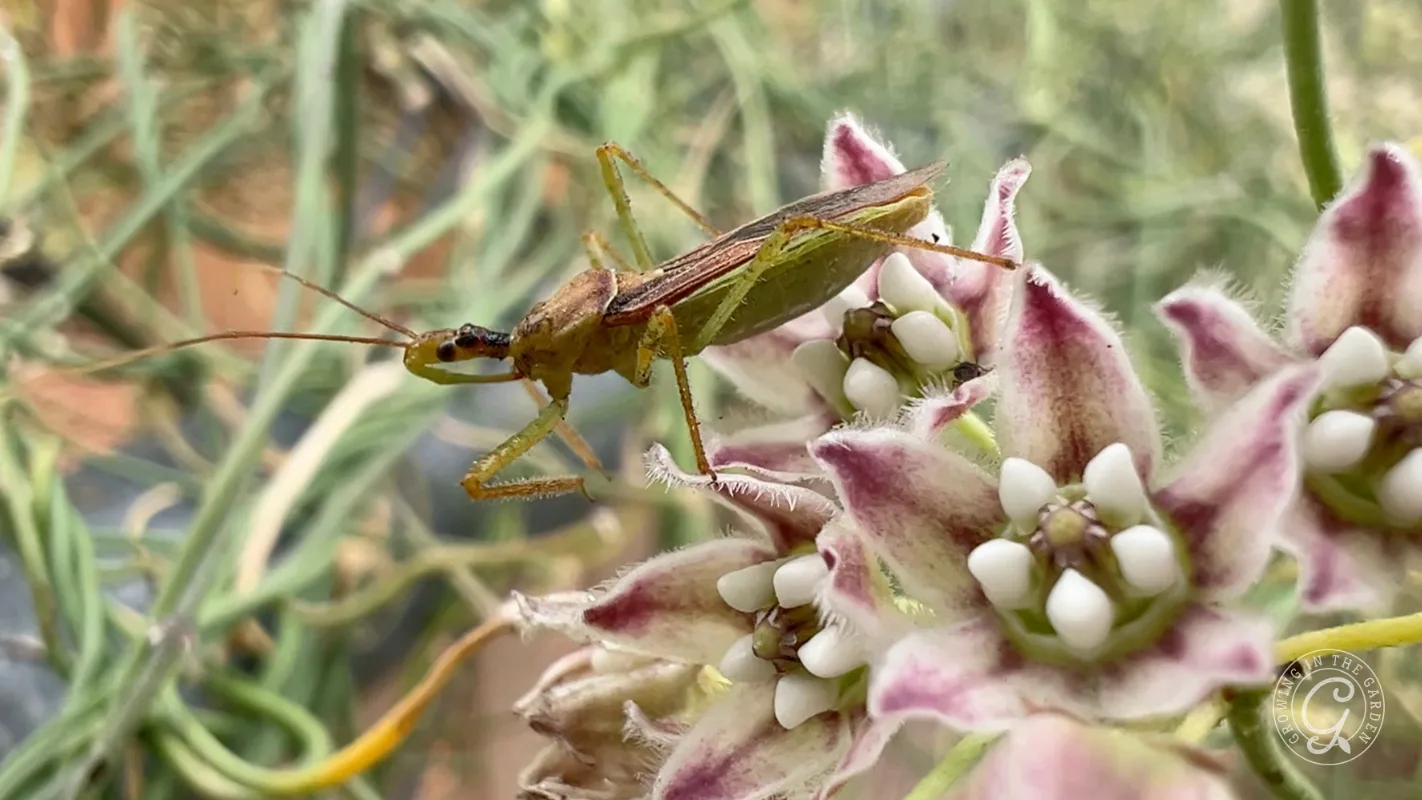
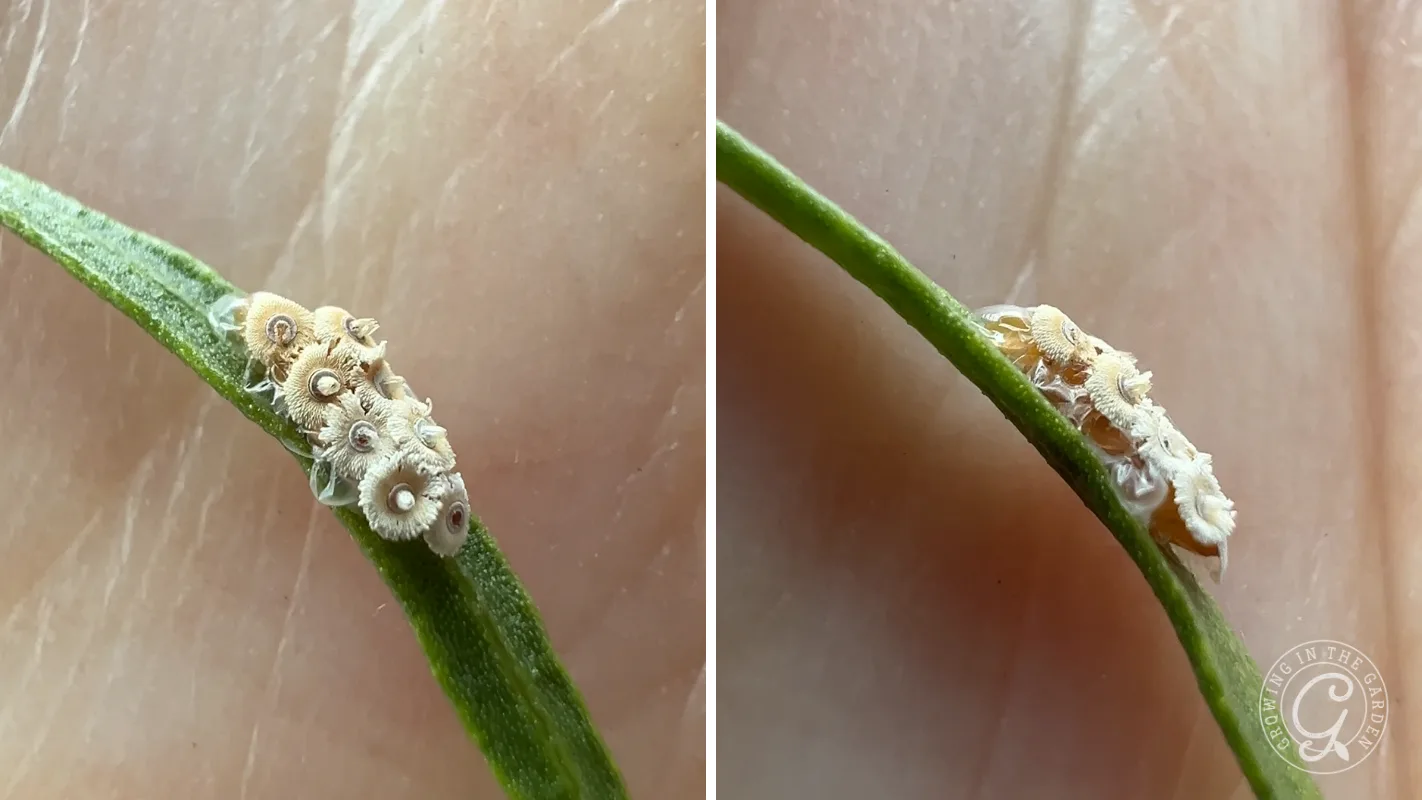
If there is a group of eggs that would be difficult to confuse with other eggs, it would be assassin bugs.
While their amber coloring is similar to a few other bug eggs, the barrel shape with a white top along with a hexagon pattern makes these unique.
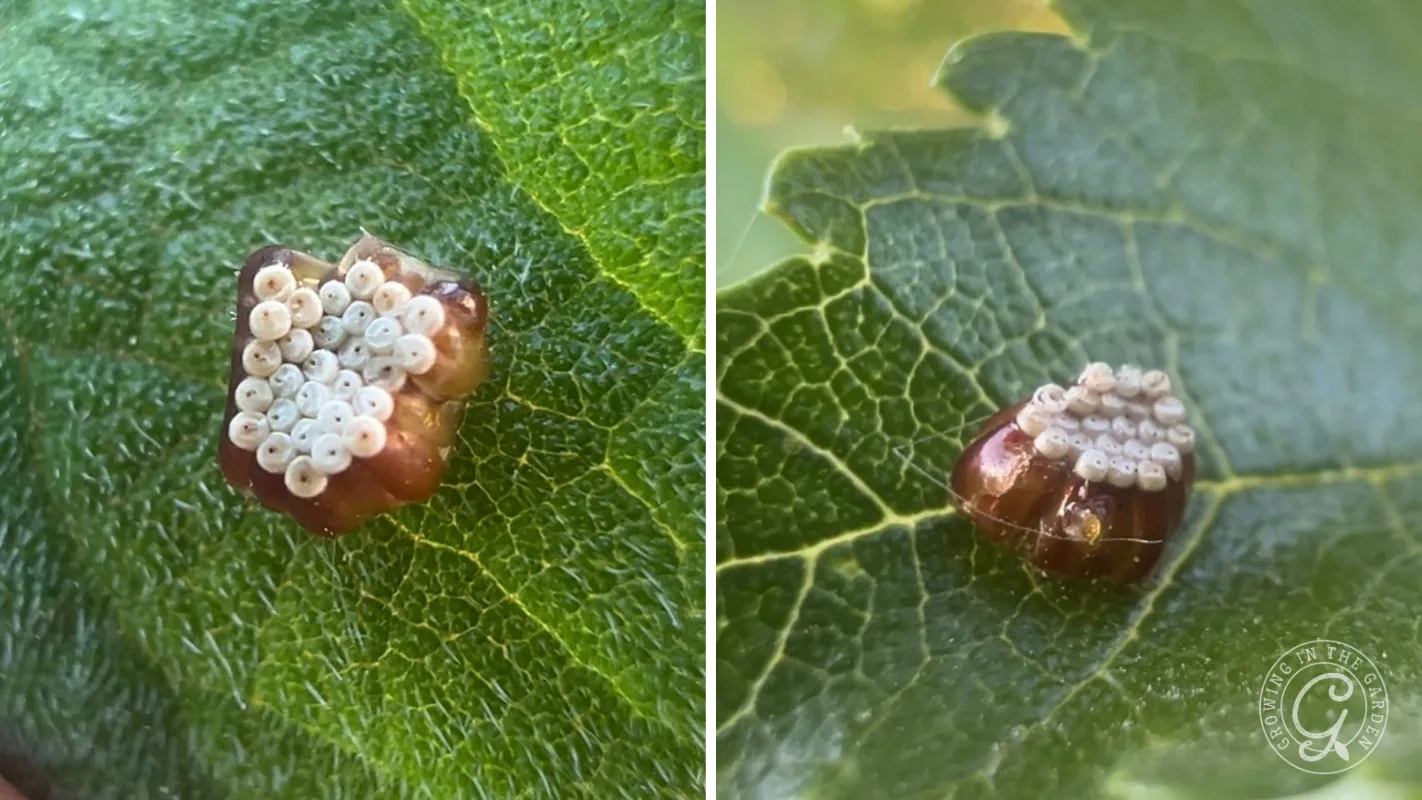
The only assassin species that could pose a challenge are the Spined Assassins (Sinea diadema). Still cylindrical amber eggs, but the cluster is similar to rows, and the topping has a flared collar.
The other true bugs—stink bugs, leaf-footed bugs, and squash bugs—all have different patterns to their laying style: straight line, scattered, or rows. These are often found tucked away on the plant or on the underside of leaves, whereas assassin bug eggs can be almost anywhere, and often on the top of a leaf.
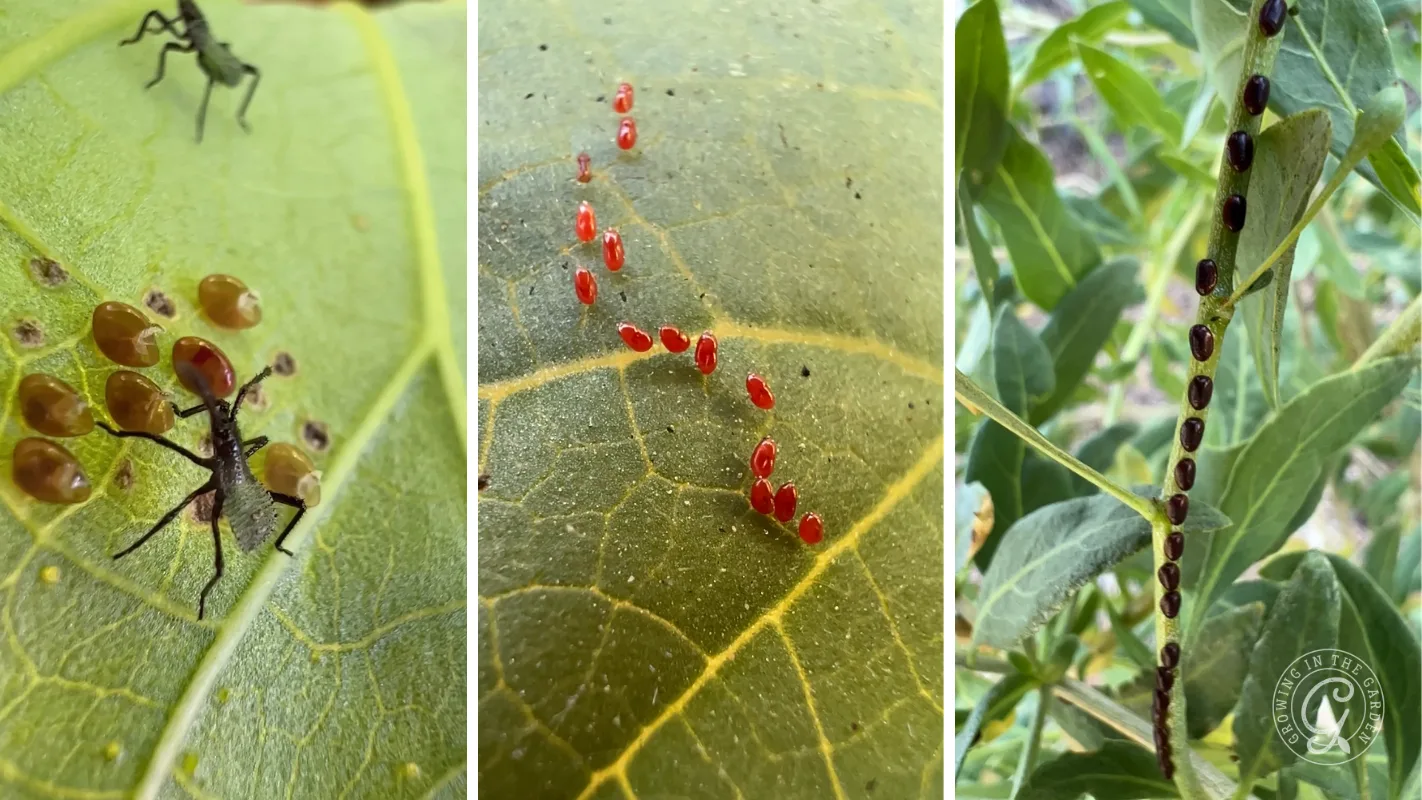
To learn more about getting rid of squash bugs and leaf-footed bugs check out these guides.
Hoverfly Eggs
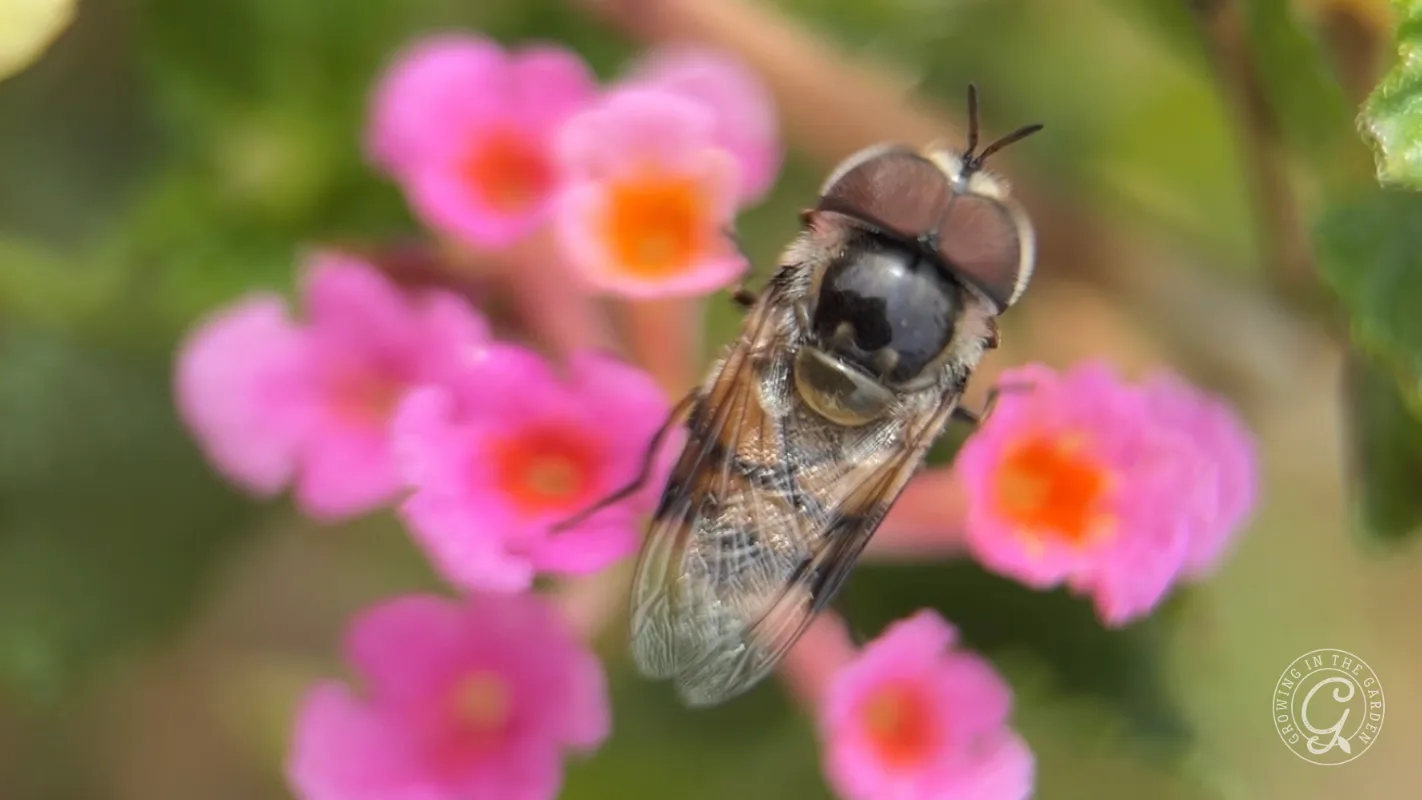
These are not eggs you are going to commonly find in the garden. This does not suggest there are no eggs, but rather the egg itself is small. Finding something the size of a grain of rice is not easy. That said, if you are dealing with aphids, there is a good chance you will find this small grain among the colony.
Considering the size, there are few eggs that the hoverfly egg would be confused with, though whiteflies might pose an issue. Whitefly eggs are also small, but they are even smaller and clustered. More of the issue is mistaking the hoverfly egg for a whitefly adult, which can be quickly sorted out as the whiteflies will move when disturbed. For more information on identifying and getting rid of whiteflies read this guide.
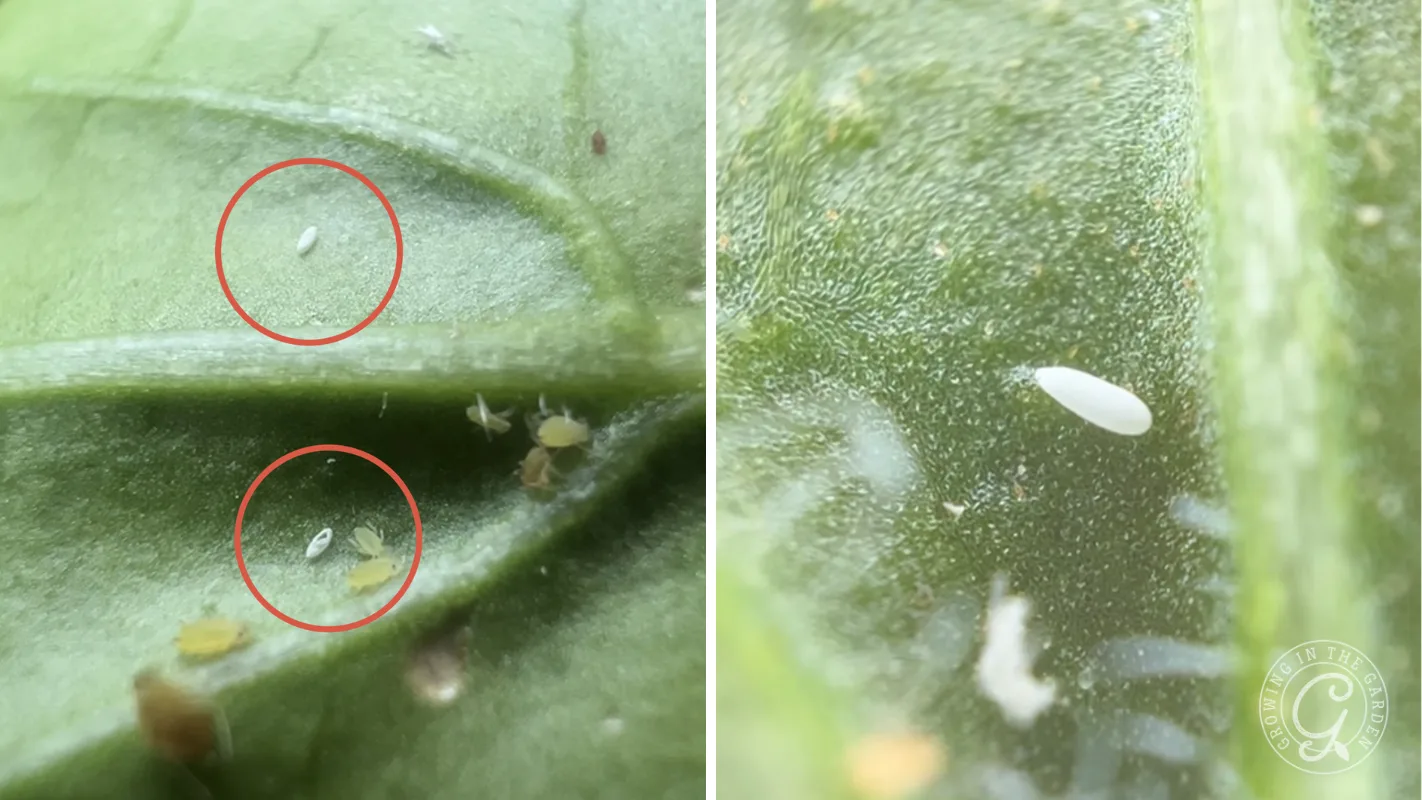
This guide to hoverflies in the garden covers the full lifecycle, including what the larvae, pupa, and adults look like.
Parasitic Wasp Eggs and Cocoons
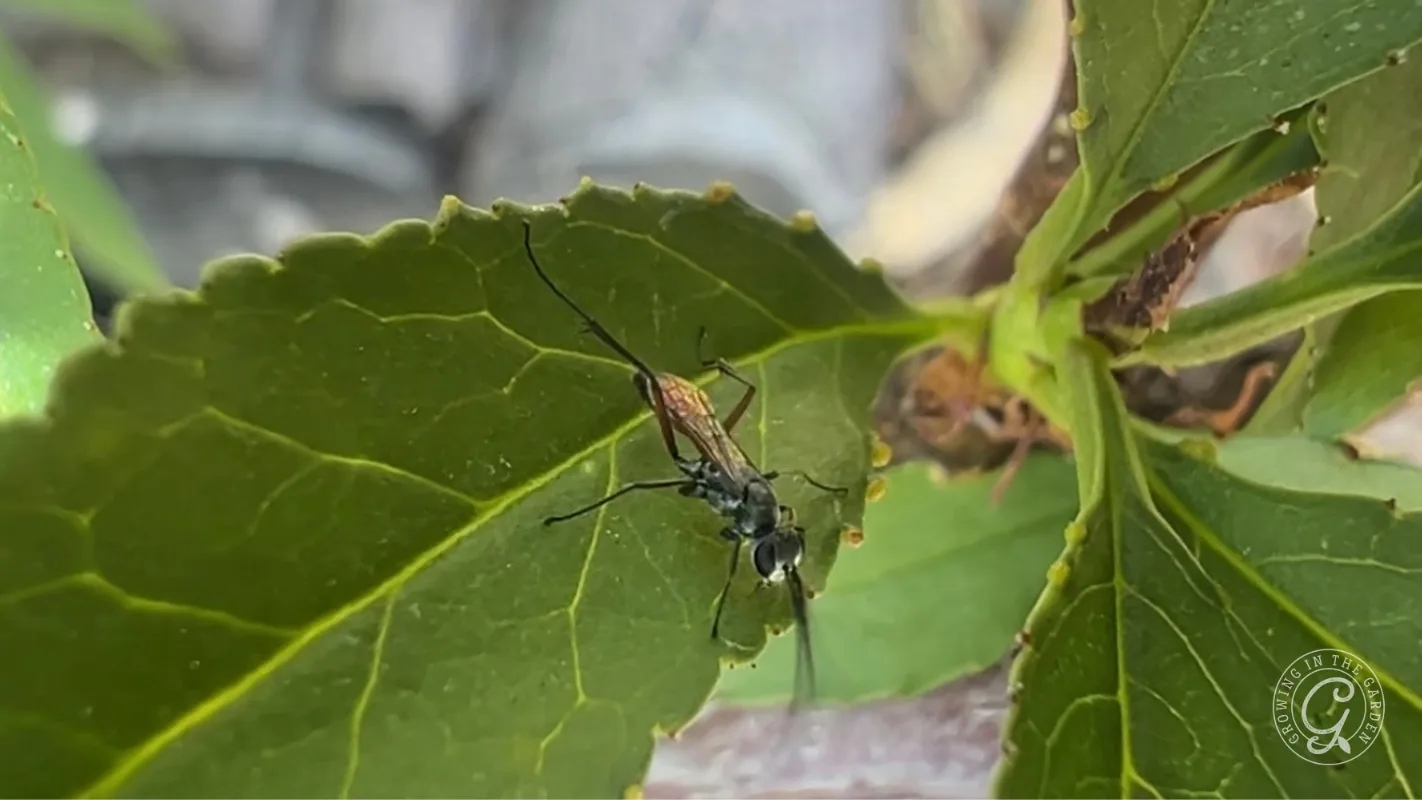
The last one to cover in this post is not entirely an egg, but rather the egg is deposited into a host. Considering the hosts are often bugs and insects we want to remove, it seems a good point to mention this beneficial insect.
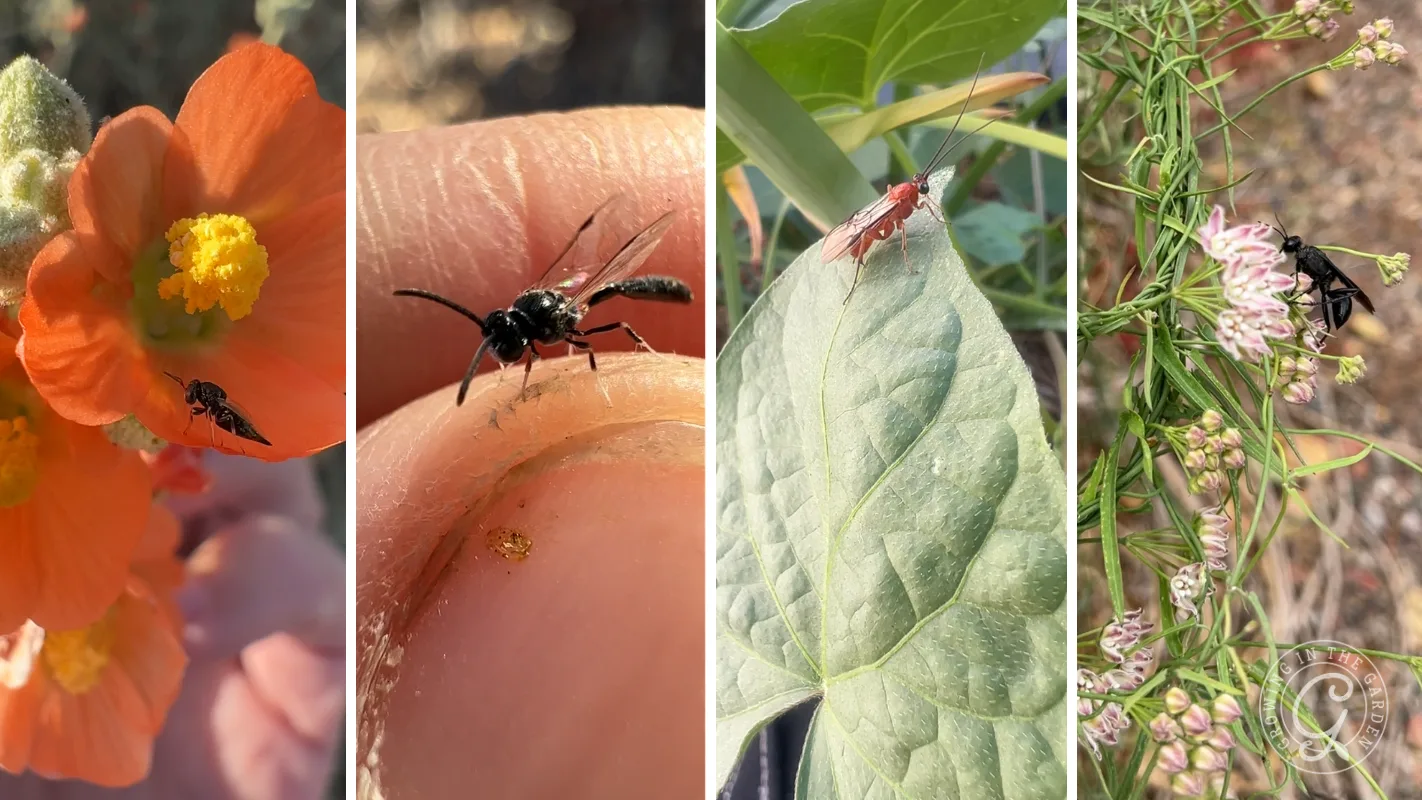
From hornworms to aphids, there are parasitic wasps targeting such garden pests. We are not suggesting sitting back and allowing plants to be consumed. Rather, we need to look for signs that help has already shown up.
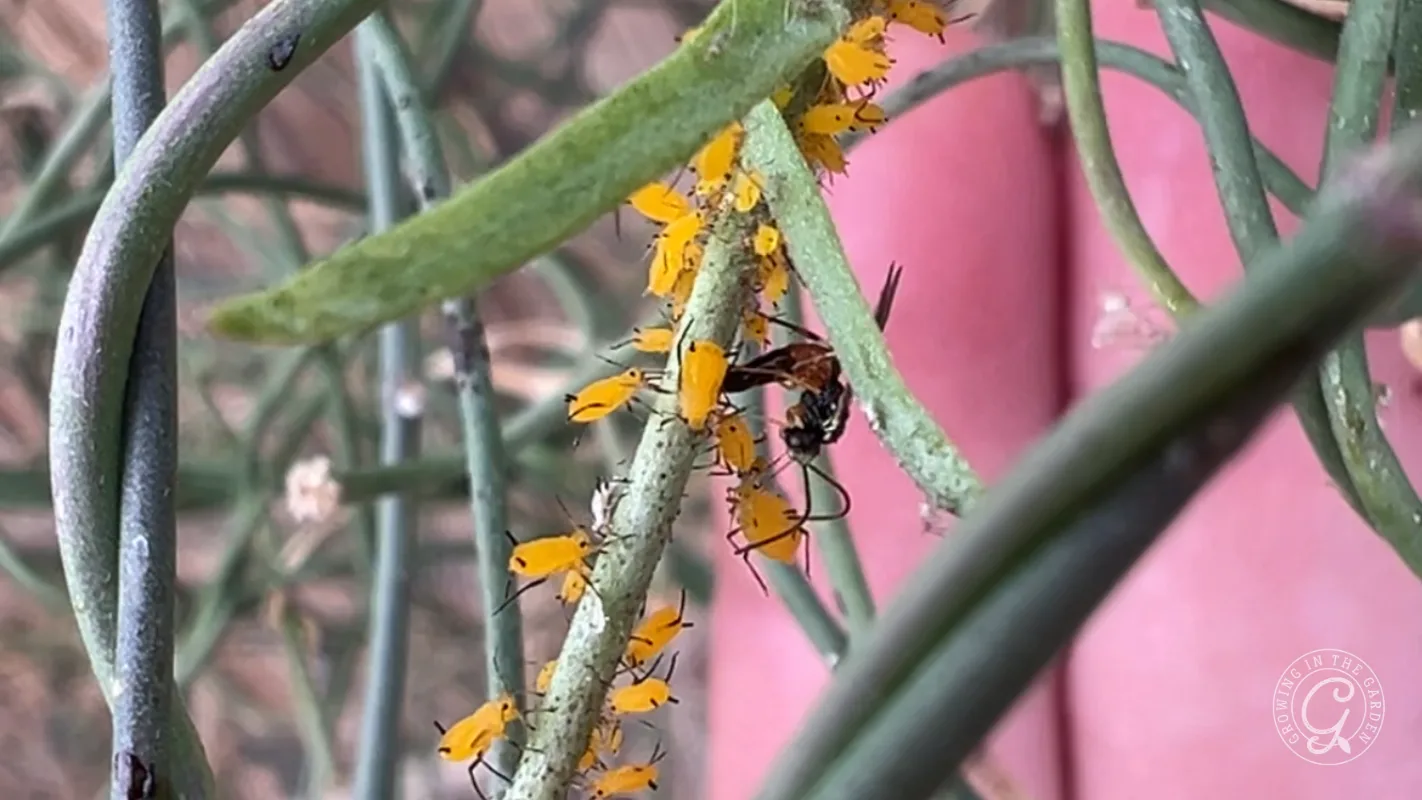
For the aphids, it is not too difficult to recognize once you start to notice the difference. A female will deposit the egg inside the aphid, where it will hatch and the larvae will consume the aphid from within. During this process, the aphid will bloat up, turn a tan or brown color, and become what is known as an aphid mummy.
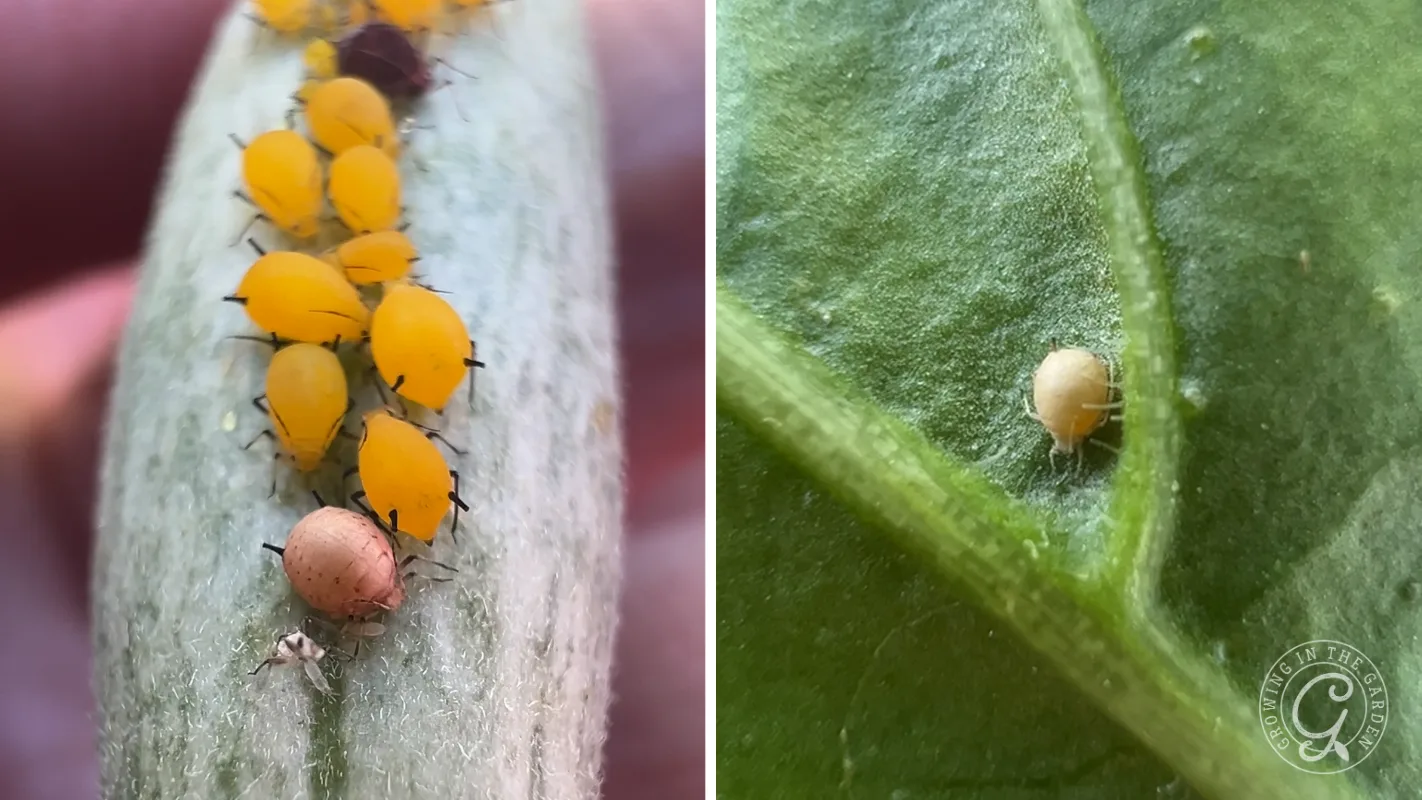
Once the larvae have reached maturity, they will create a hole and emerge as adults, ready to find another aphid for the process to start again.
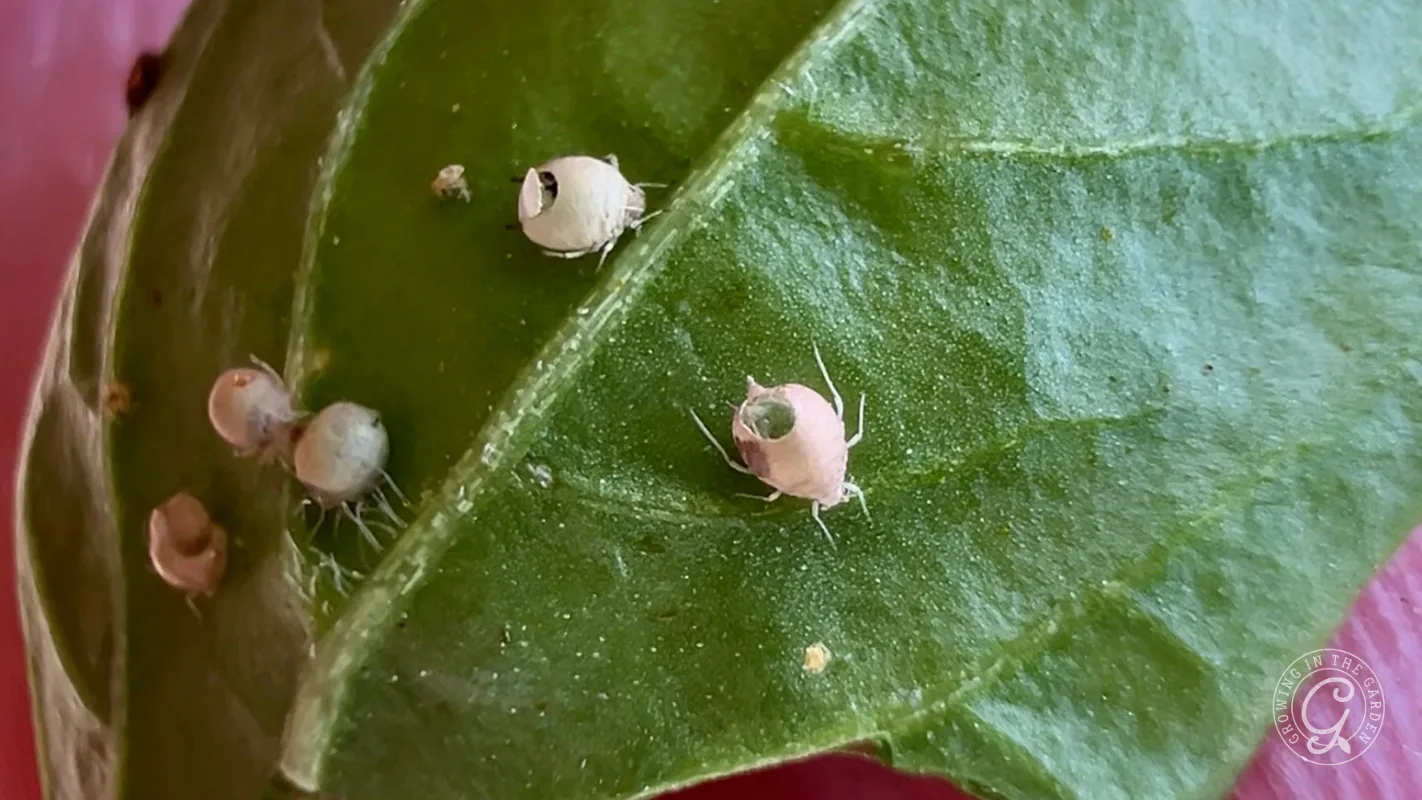
The second method involves cocoons. One of the more common images described usually involves white masses stuck on the body of a hornworm. For the most part the method is the same—the wasp deposits her egg inside a host. In this case, however, she deposits more than one egg. Once they have reached maturity, they burrow out of the hornworm to spin a white cocoon on the caterpillar’s back. Hornworms are one of the caterpillars these wasps target. Jean’s tomato hornworm guide shows what that relationship looks like and follows the hornworm all the way to its adult moth stage.
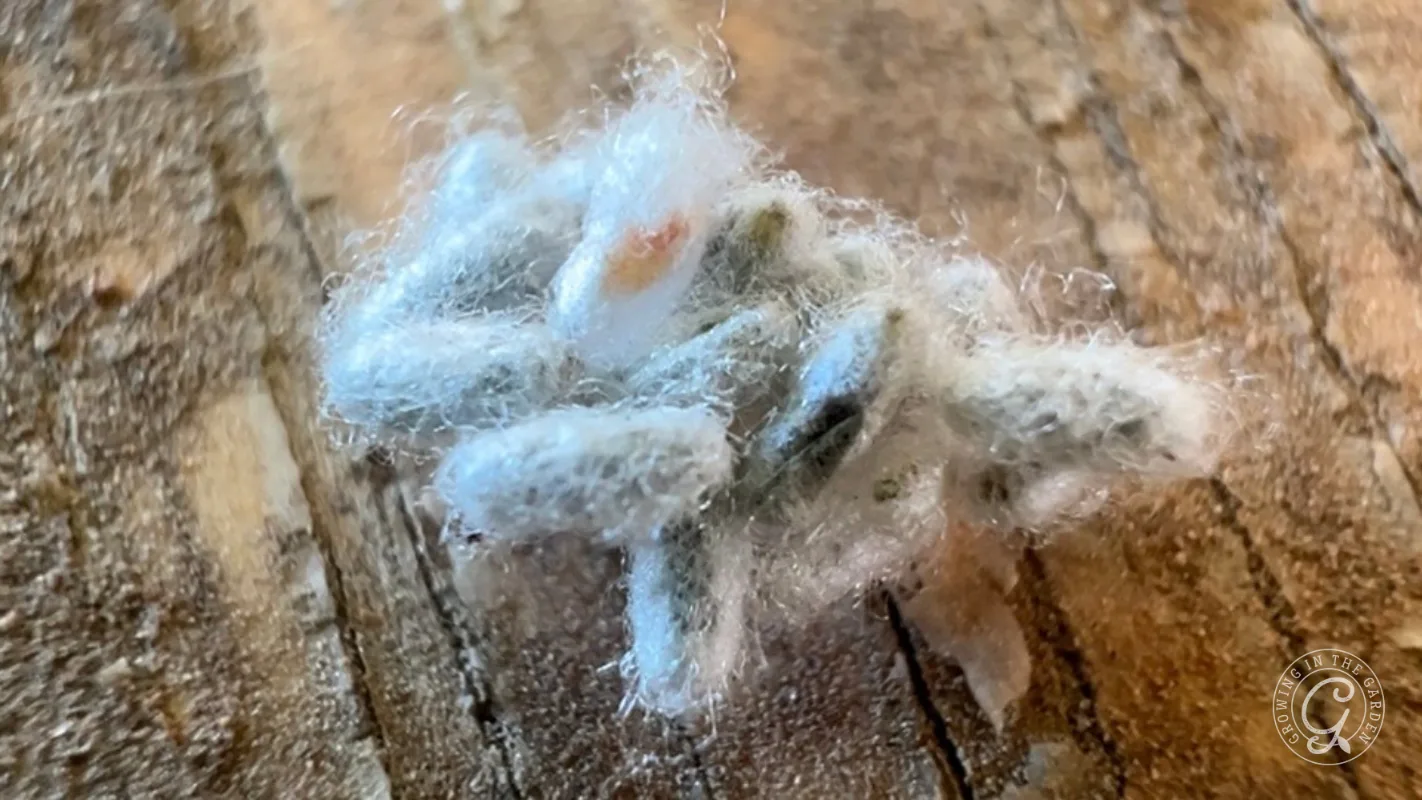
One can sometimes find a cluster of these white cocoons in a random location—perhaps the host detached or the cluster became separated. In this rare case, a cluster was found on a shade cloth.
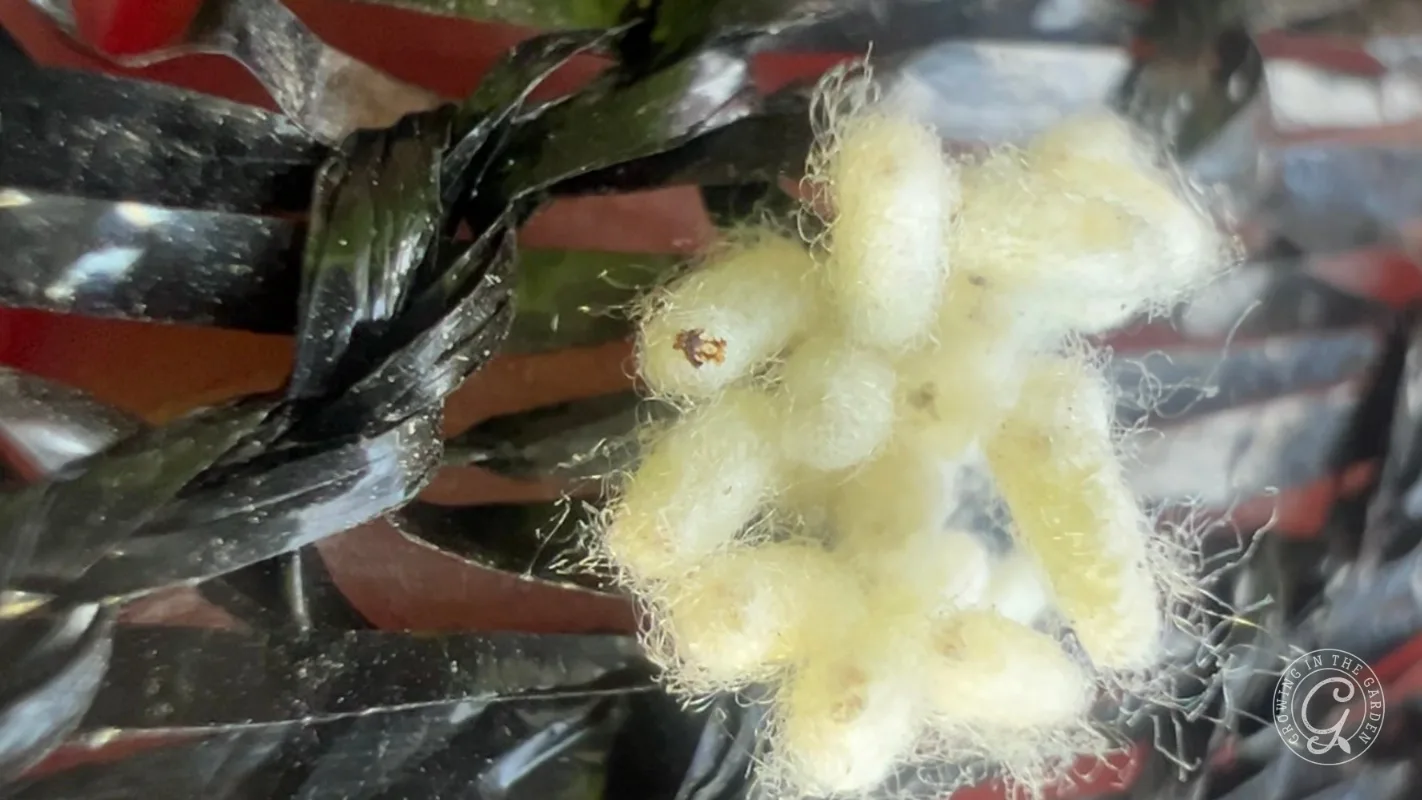
As far as other insect eggs that could be mistaken for wasp cocoons, there are none that I am aware of, though caterpillar cocoons can look similar. The main difference: caterpillar cocoons are single, while wasp cocoons are generally a cluster.
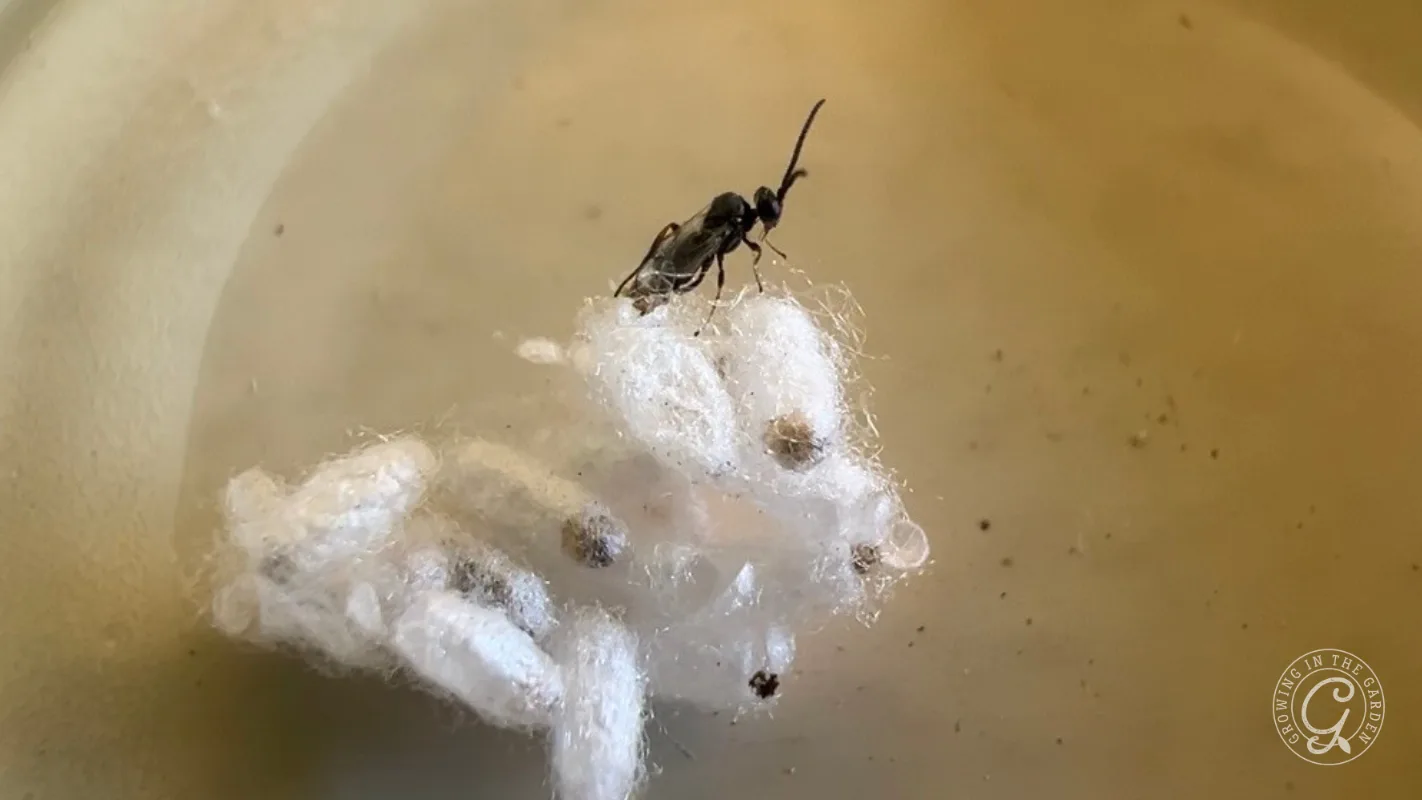
For a full guide to aphid mummies and parasitic wasps, see Aphid Mummies and Parasitic Wasps in the Garden.
Yes, it can be a bit overwhelming when you first start out. The eggs may look similar, but as we observe our garden more closely, we can begin to recognize patterns. Ultimately, identifying the eggs is not solely based on shape and color—the location matters just as much.
Beneficial Insect Egg FAQs
Do not wipe them off immediately. First note what plant they are on. Then notice the color of the eggs along with how they are laid out — neat row, small cluster, and so on. If still uncertain, leave them alone and check regularly. Catching them close to when they hatch makes identification and intervention easier if needed.
Location, color, shape, and pattern. The type of plant you find the eggs on and whether there are other pests such as aphids present will help with identification. For example, finding football-shaped copper-colored eggs on the underside of a squash plant laid out in a neat pattern, you are most likely looking at squash bug eggs.
Leave enough pests for the beneficial insects to know there will be food for their offspring. Provide shelter such as some leaf litter and plant diversity. Water is also important — a simple dish or tray that can also be used for bees works well. Finally, patience. It does take time for the beneficial insects to show up.
Assassin bug eggs are amber-colored barrels with a white top and a distinct hexagon pattern. The Spined Assassin (Sinea diadema) lays similar cylindrical amber eggs but in rows with a flared collar on top. You will often find them on the top of a leaf rather than tucked on the underside.
Yes. Hoverfly larvae feed on aphids, making them a valuable addition to the garden. Adults feed on nectar and pollen and are effective pollinators. The eggs are tiny—about the size of a grain of rice—and are most often found within an aphid colony.
Wasp cocoons are almost always found in a cluster. Caterpillar cocoons are typically single. If you find a white mass on a hornworm or on a nearby surface, it is almost certainly wasp cocoons — leave them alone and let the wasps emerge.
About the Author
For more than thirty years, Jean has been growing plants and spending time in nature, both in California and Arizona. With a background in fine art, she honed her skills in observation, a critical element for anyone striving to have a garden. Currently, she is finishing her doctoral studies in ecology (special focus on entomology), while helping others to work with nature in order to have a thriving ecosystem. You can find more of her work as “Red Shoe Gardener” on YouTube and Instagram.

This was very informative! I often find different eggs on plants and not sure if they should be left to destroyed. Now I have a much better idea of what to look for. This article is definitely a keeper! Thanks so much!
Angela I hope you are handling treatments well! I went through a series of radiation and chemo 3 years ago. I have no idea what you will receive
You have the will to live and a positive attitude and THEY will help you through this!
Thank you! I learn so much from Jean’s articles.