
Aphid Mummies and Parasitic Wasps in the Garden
If you have been dealing with aphids in your garden and wondering when things will get better, this post is for you. My friend Jean Elston, who is finishing her doctoral studies in entomology, introduces one of the most surprising beneficial insects in the low-desert garden: the parasitic wasp. She explains exactly what to look for to know they are already working in your garden.
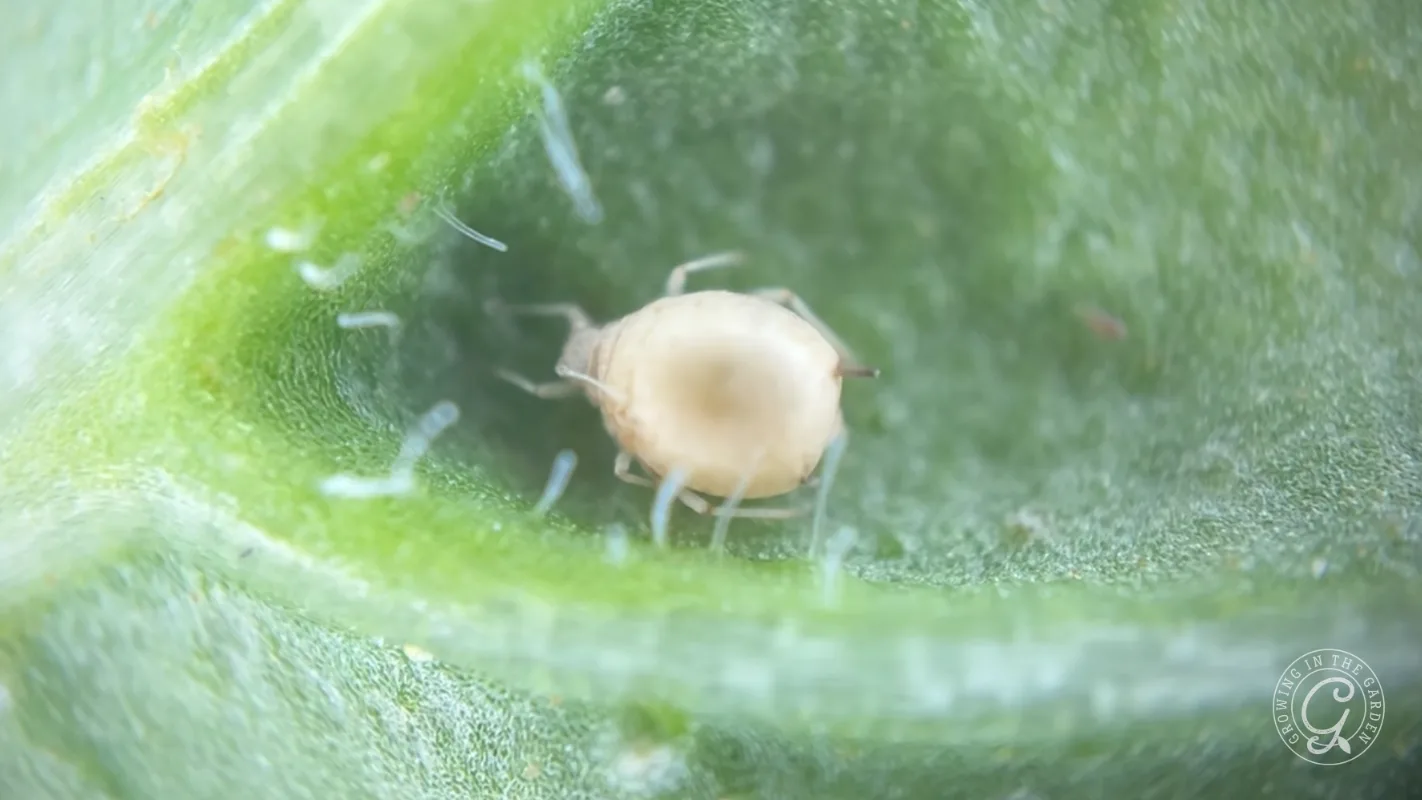
This is the third post in Jean’s series on beneficial insects, following her guides to ladybugs and lacewings in the garden. The short version: if you are seeing small, bloated, tan-colored aphids that are not moving, do not remove them. Jean’s incredible photos make it clear why.
Key Takeaways
- Aphids are common garden pests that reproduce quickly and can damage plants.
- Parasitic wasps lay their eggs inside aphids, leading to the formation of aphid mummies, which indicate that control is underway.
- Aphid mummies appear tan and bloated; they should not be removed from plants as they contain developing wasps that help manage aphid populations.
- To attract parasitic wasps, grow flowers like dill, yarrow, and sweet alyssum while avoiding pesticides.
- Patience is key; monitor for changes and allow beneficial insects to naturally control aphid infestations.
What We’ll Cover:
Guest post and photos by Jean Elston. This post is part of her series Low Desert Garden Insects.
Dealing with Aphids
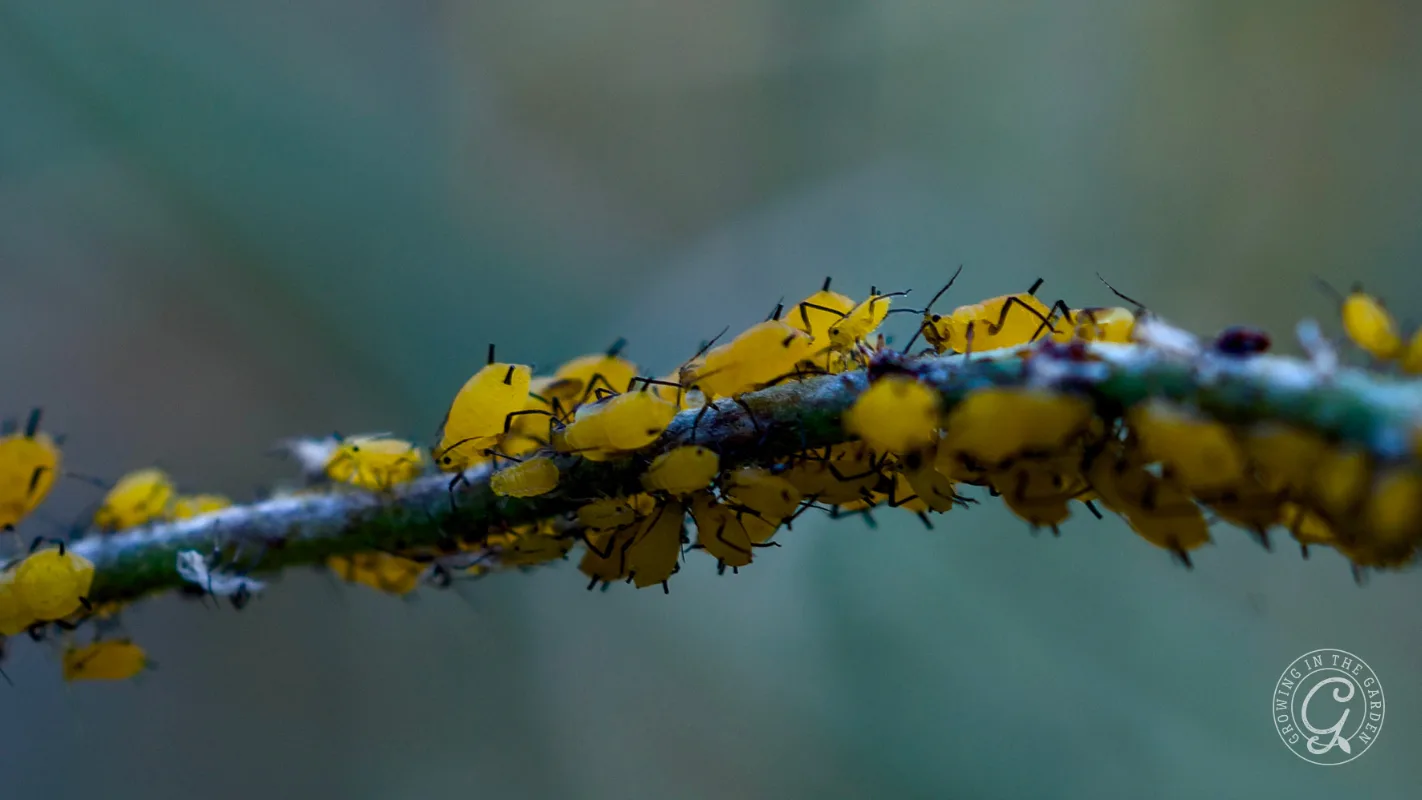
Most gardeners would probably rank aphids as their top five most frustrating pests to deal with in the garden. With our sometimes mild winters here in the low desert, we can often find ourselves tackling these pests year-round.
Never fails that you have plants looking great, thriving with spring growth, and then, overnight, you have tiny bugs sucking the life from your hard work. It is not your imagination.
There are many species of aphids, almost one for every plant we are trying to grow, and yes, they do multiply rapidly. Unlike many insects, aphids typically do not lay eggs, instead relying on live birth. This adds a layer of difficulty, as there are no eggs to look for and manage. Another challenge is the fact that many aphids are born pregnant. Newly born aphids are capable of giving birth to the next generation within a week. One can easily see how these bugs rapidly become a problem.
The good news is that there are many insects relying on these small creatures as a food source. Ladybugs and lacewings are the ones most gardeners know, but they are not the only ones helping out; they are just the most visible. There are others working just as hard, though often harder to notice. Hoverfly larvae are doing the same job and are often overlooked entirely. See this guide to hoverflies in the garden for what to look for.
This is where parasitic wasps come in.
What Are Parasitic Wasps?
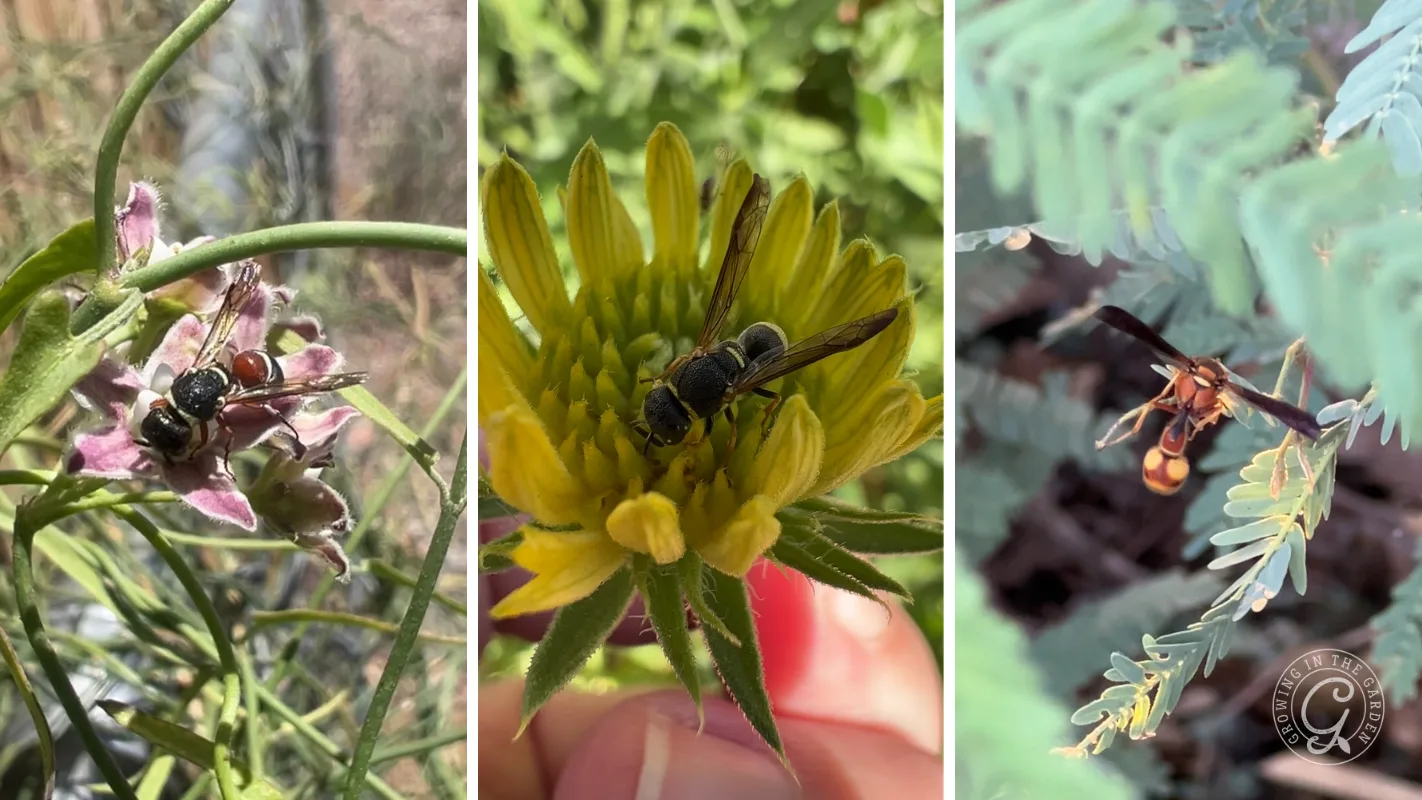
When most of us hear “wasp,” we picture yellow jackets or similar species: aggressive, social, and unwelcome near a picnic. Parasitic wasps are something else entirely. They are generally solitary and, while they can look menacing, are not aggressive or harmful to humans.
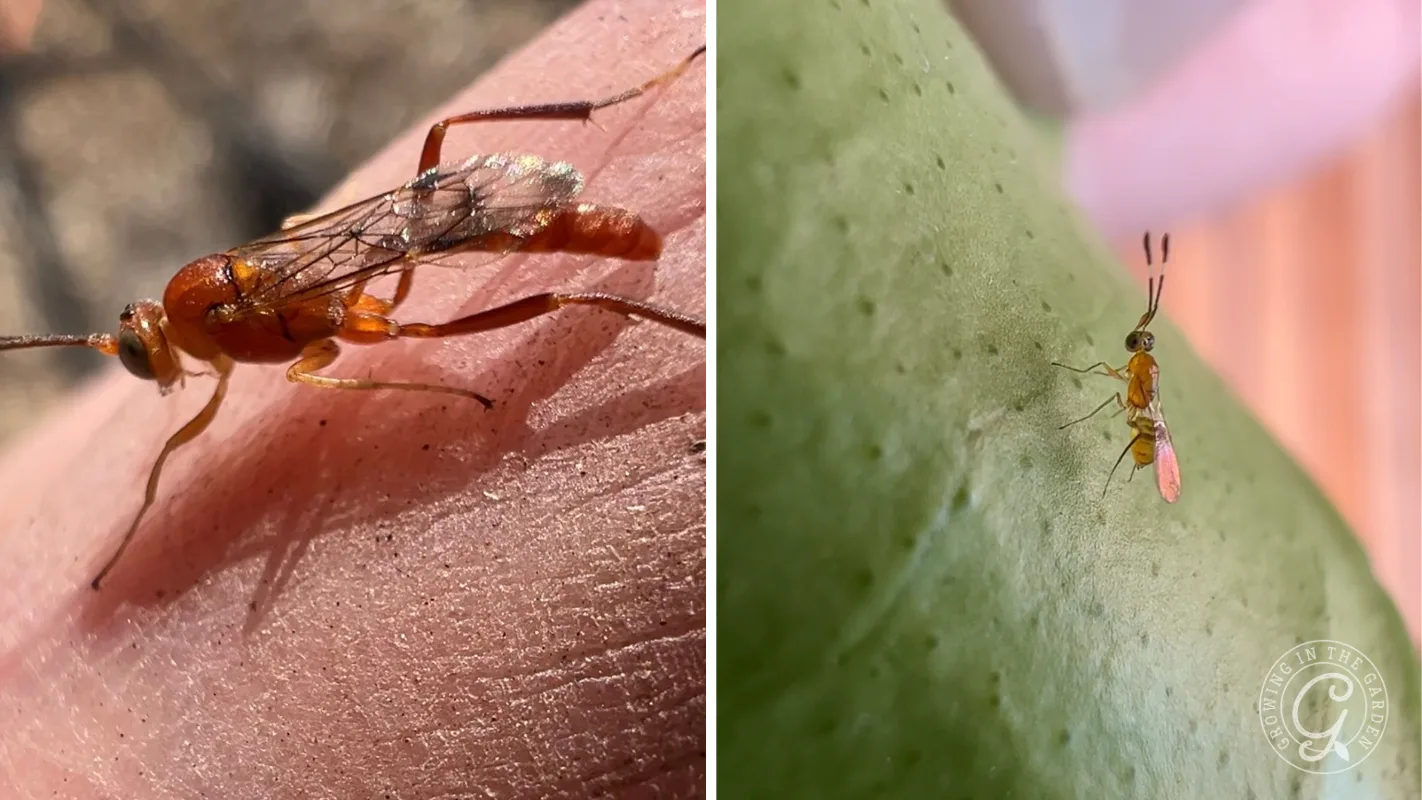
What prey a parasitic wasp focuses on depends on its size and overall behavior. Some create mud nests, while others dig holes, gathering spiders or caterpillars for their future larvae to consume. The ones we are focusing on here do something different; they lay their eggs directly inside their prey.
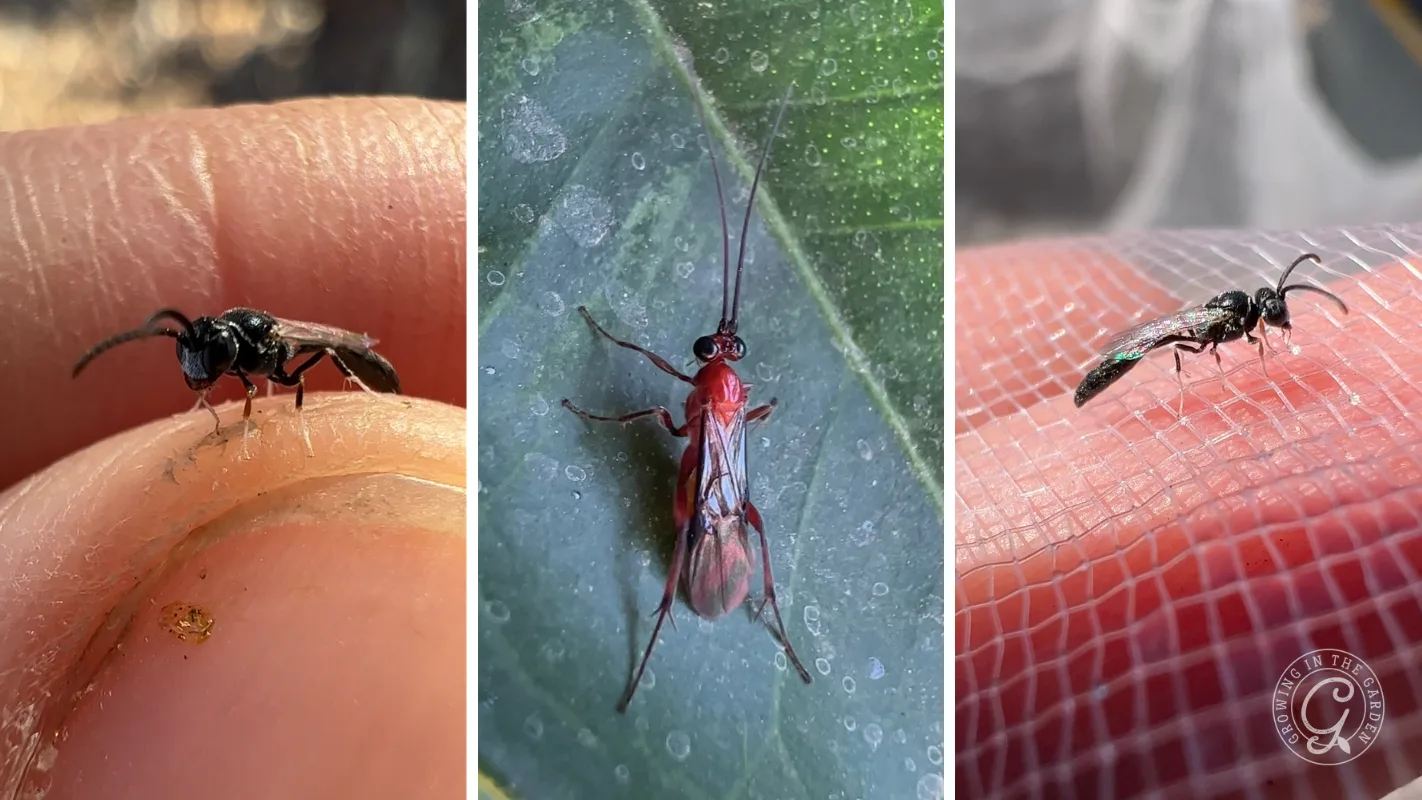
It turns out there are wasps that use aphids for exactly this purpose. The process is rarely witnessed directly, because many of these wasps are tiny, some roughly the size of your thumbnail, others even smaller.
How Parasitic Wasps Control Aphids
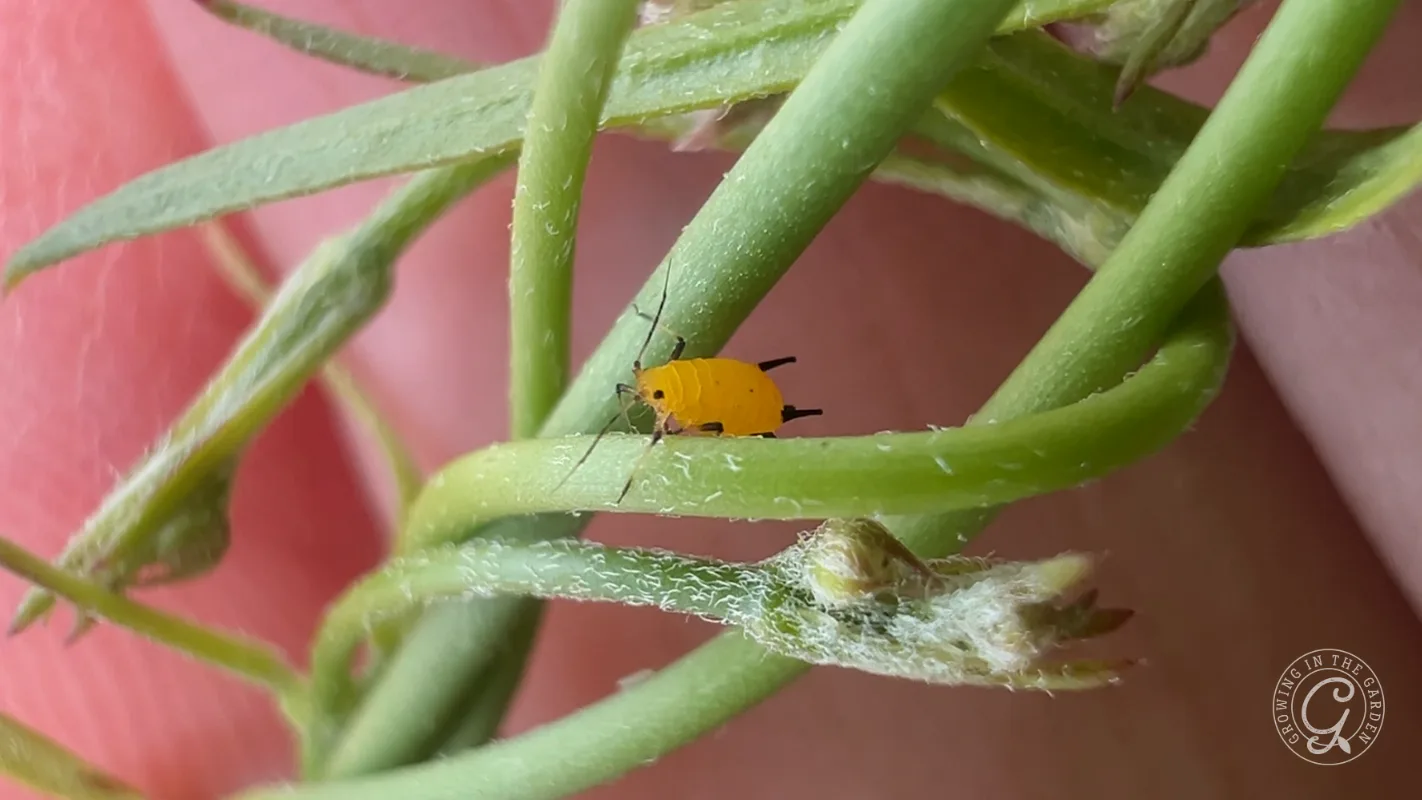
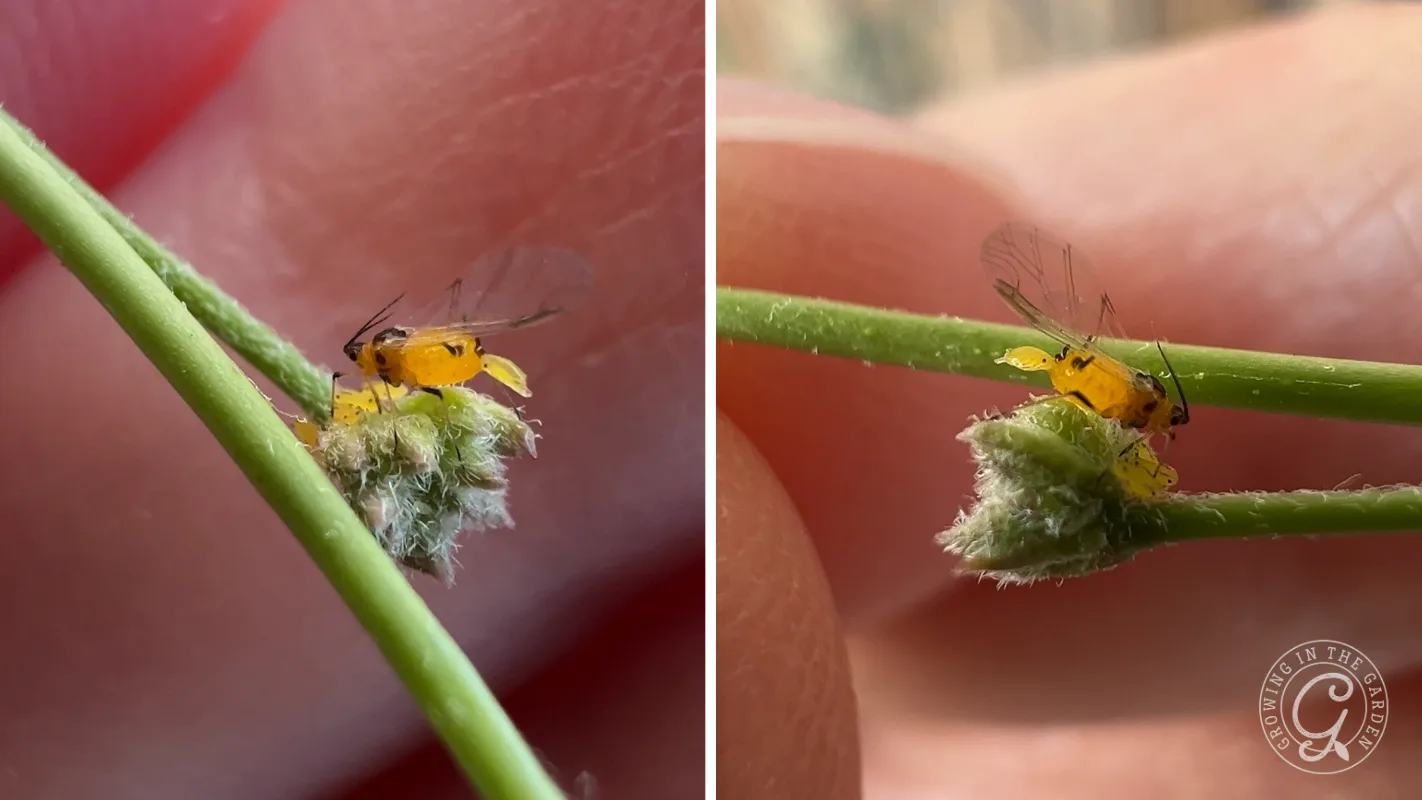
Aphids come in a variety of colors. In my garden, I most often deal with the yellow oleander aphid (Aphis nerii) and occasionally the green peach aphid (Myzus persicae). A healthy aphid will be its usual color and moving around the plant.
Once parasitic wasps have discovered an aphid colony, there will be a visible shift in how the aphids look and behave. Using her needle-like tail (called an ovipositor), the female wasp deposits a single egg into the aphid, repeating as often as possible. In her two-or three-week lifespan, a single wasp can parasitize up to 500 aphids.
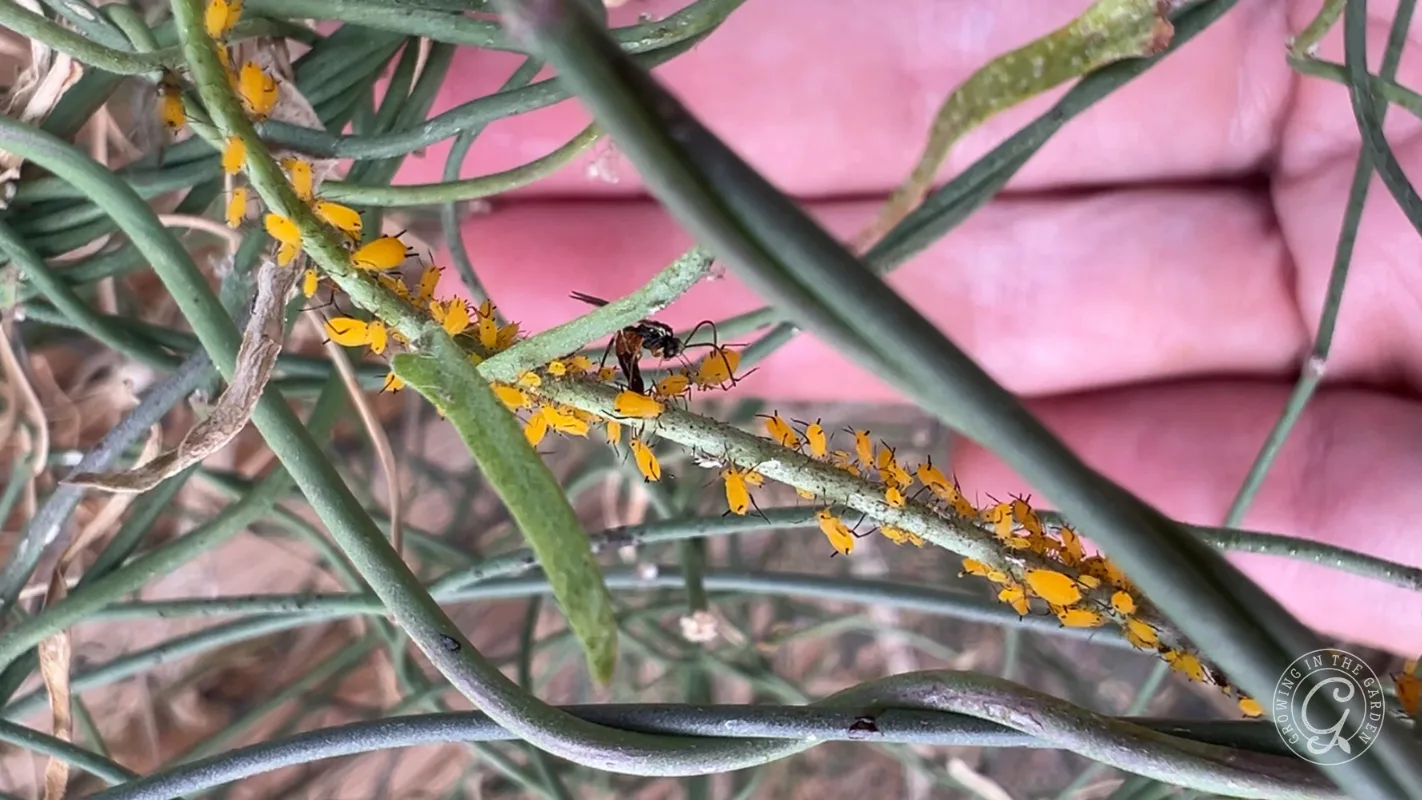
Within three days the larva hatches inside the aphid. Slowly the aphid shuts down as the larva consumes it from the inside. The process takes up to two weeks, though warmer temperatures can speed up development — which means in the low desert, the cycle often moves quickly.
What Are Aphid Mummies?
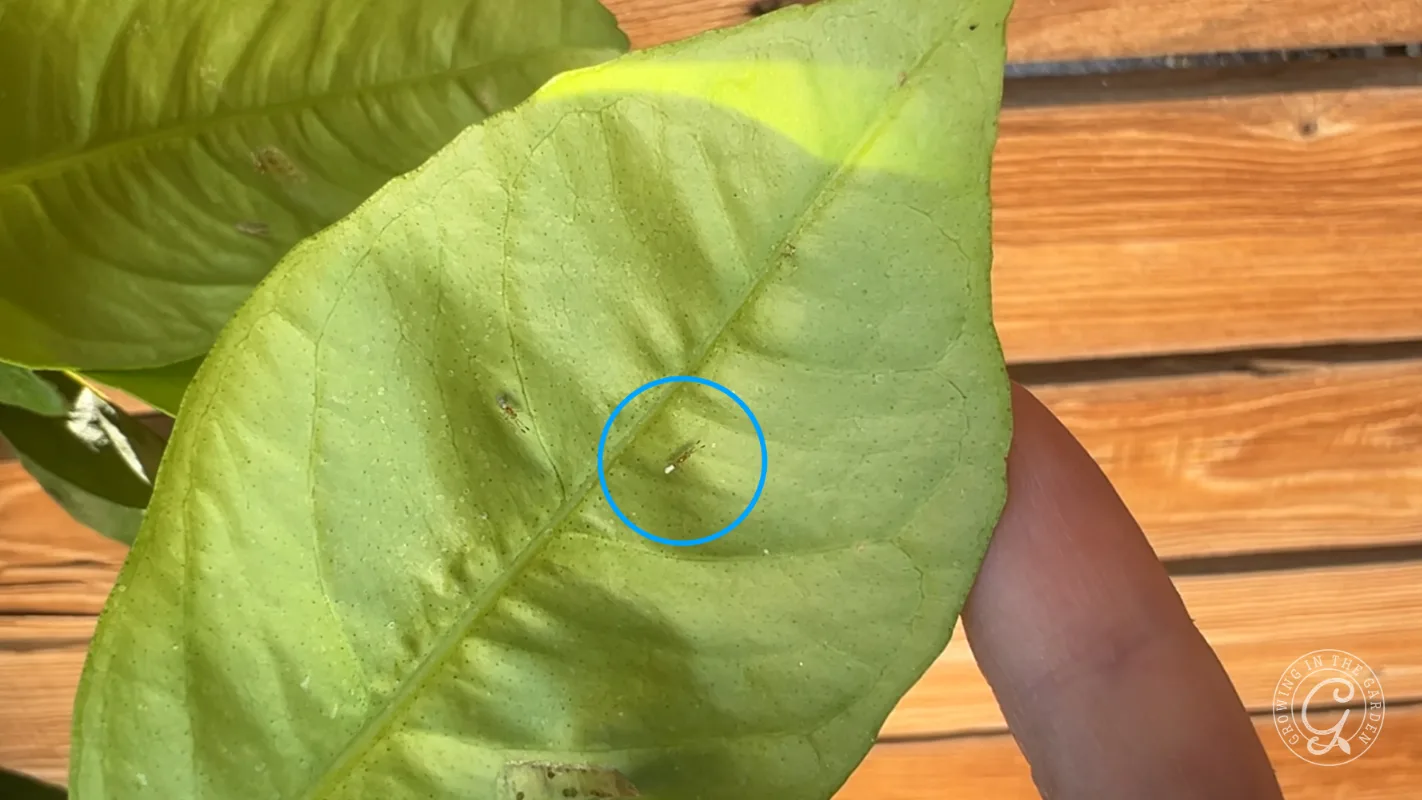
During parasitization, the aphid’s skin begins to harden. It takes on a tan, reddish-brown, or golden color and appears bloated compared to the healthy ones around it.
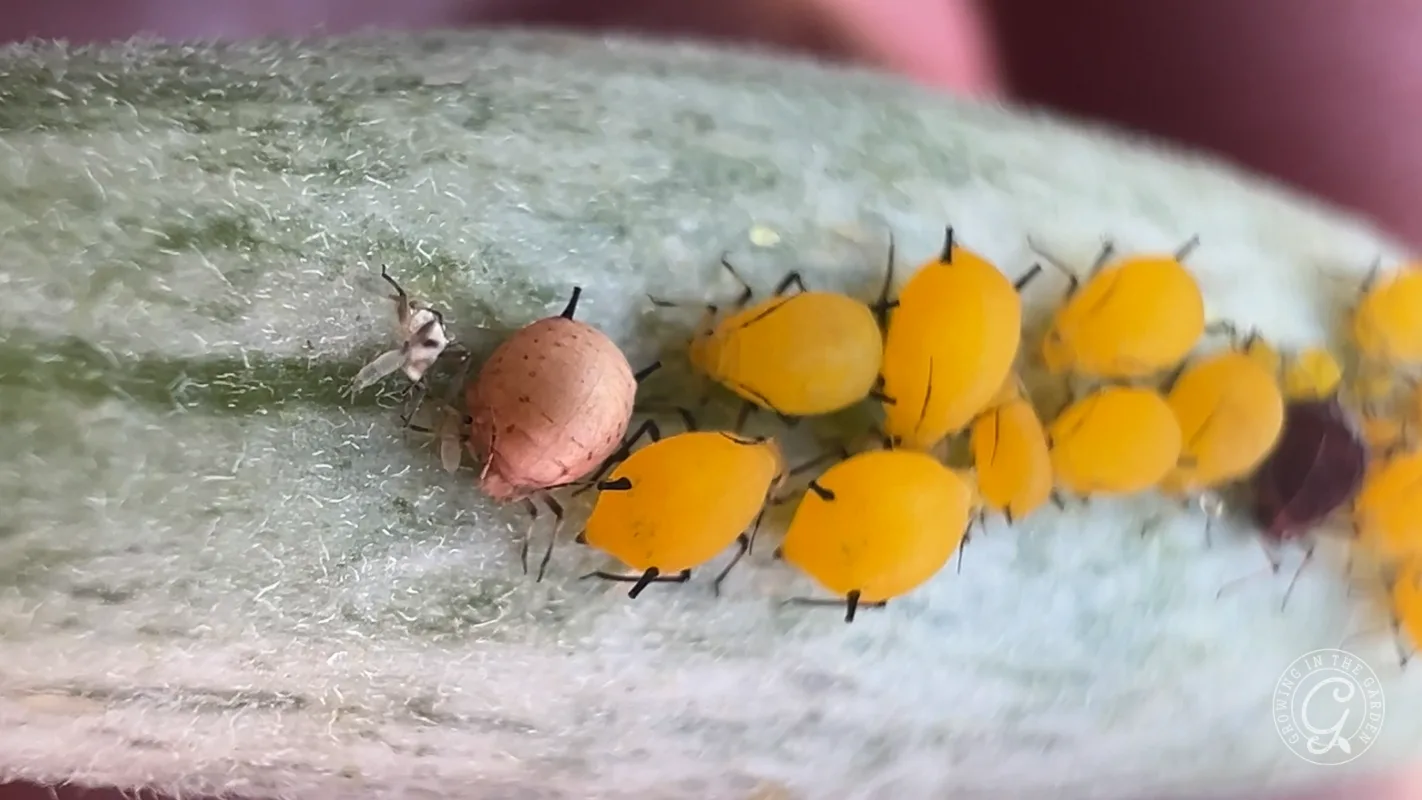
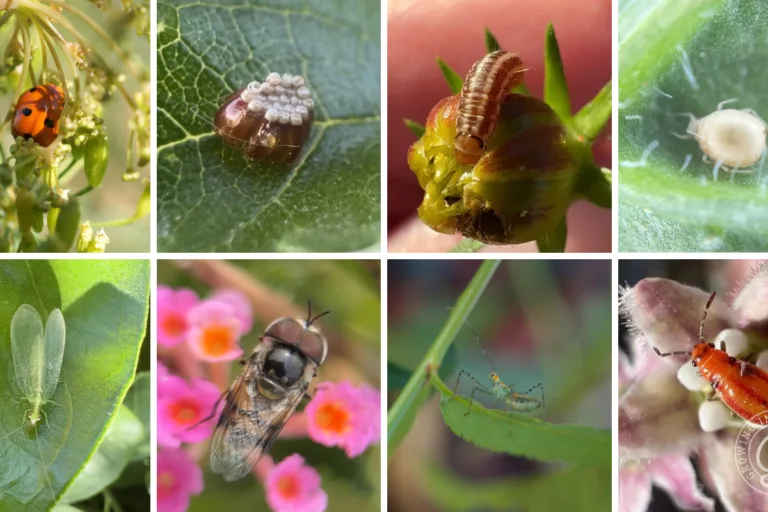
This is what is known as an aphid mummy. Once the process is complete, the hardened casing serves as the enclosure in which the larva pupates. It’s important to recognize aphid mummies rather than simply wiping them away, as they are a sign that beneficial insects are helping control aphids naturally. Learn how to distinguish aphid mummies from beneficial insect eggs and harmful pest eggs in this guide. Knowing what the adults and nymphs look like is just as important as recognizing the eggs. This guide to common garden insects and their lookalikes covers assassin bugs, hoverflies, true bugs, and more.
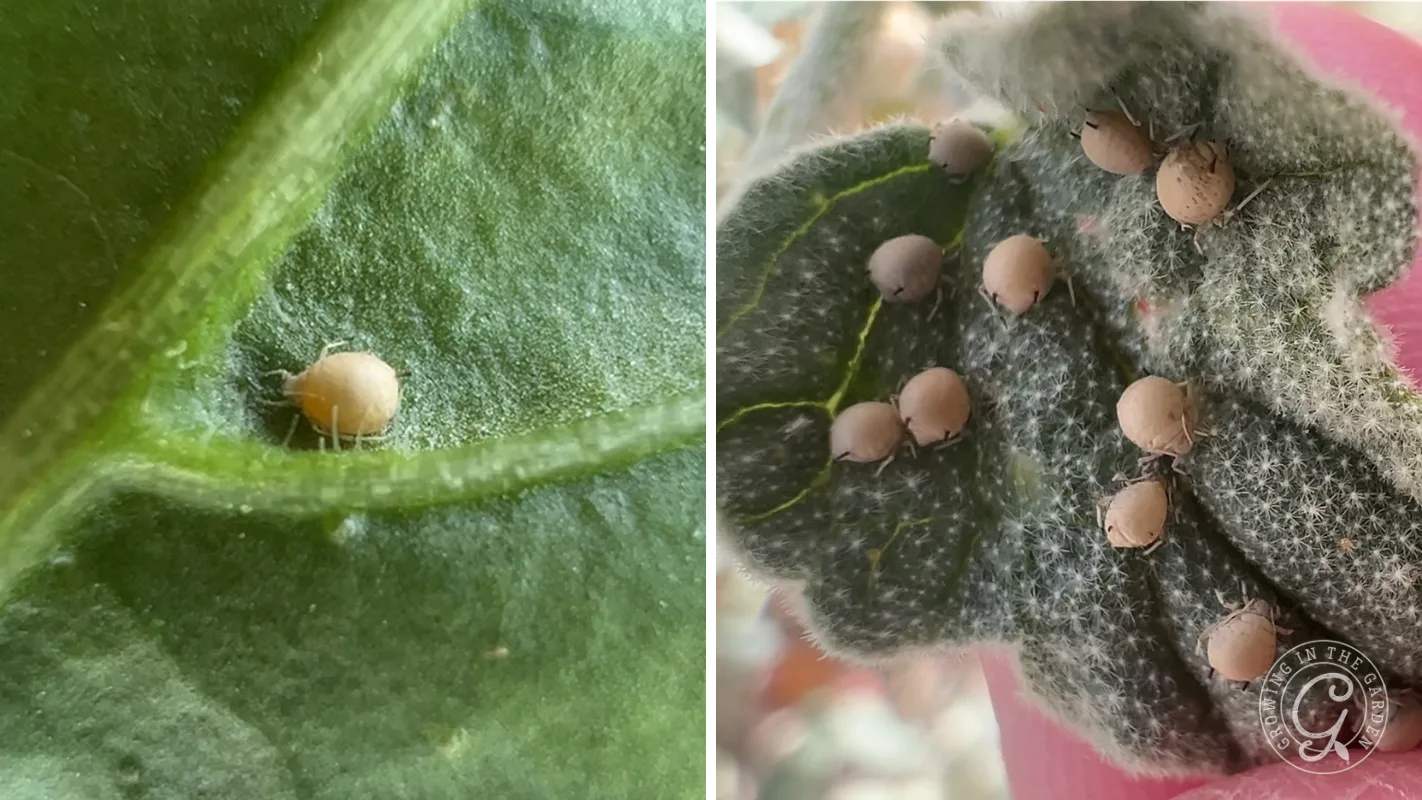
This roughly week-long pupation is a critical time to leave the aphid mummies alone. The next generation of wasps are developing inside, and removing the mummies removes the very help that is on the way.
Once fully developed, the new adults chew a round hole in the casing to emerge.
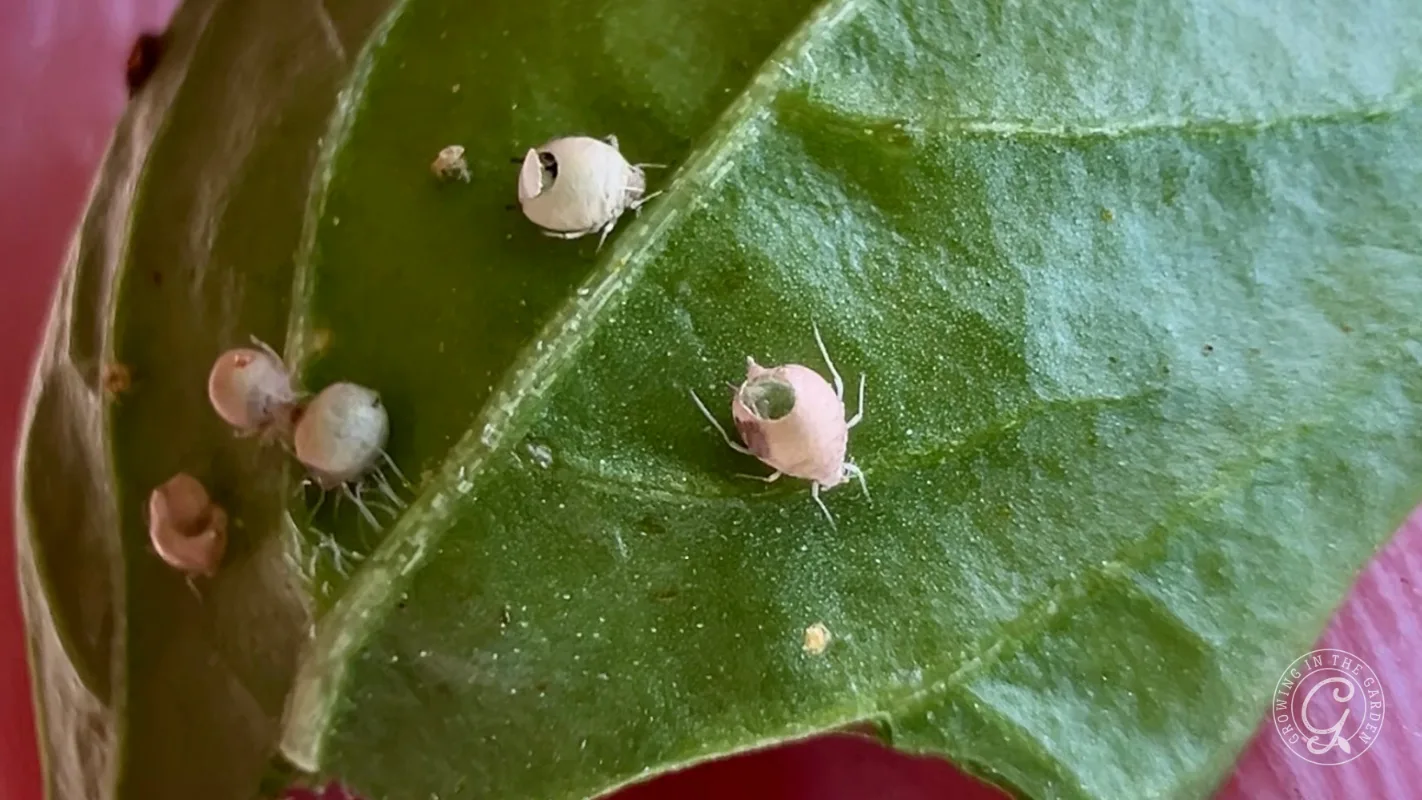
From depositing the egg to emerging from the mummified aphid, the entire process takes about two weeks.
How to Attract Parasitic Wasps to Your Garden
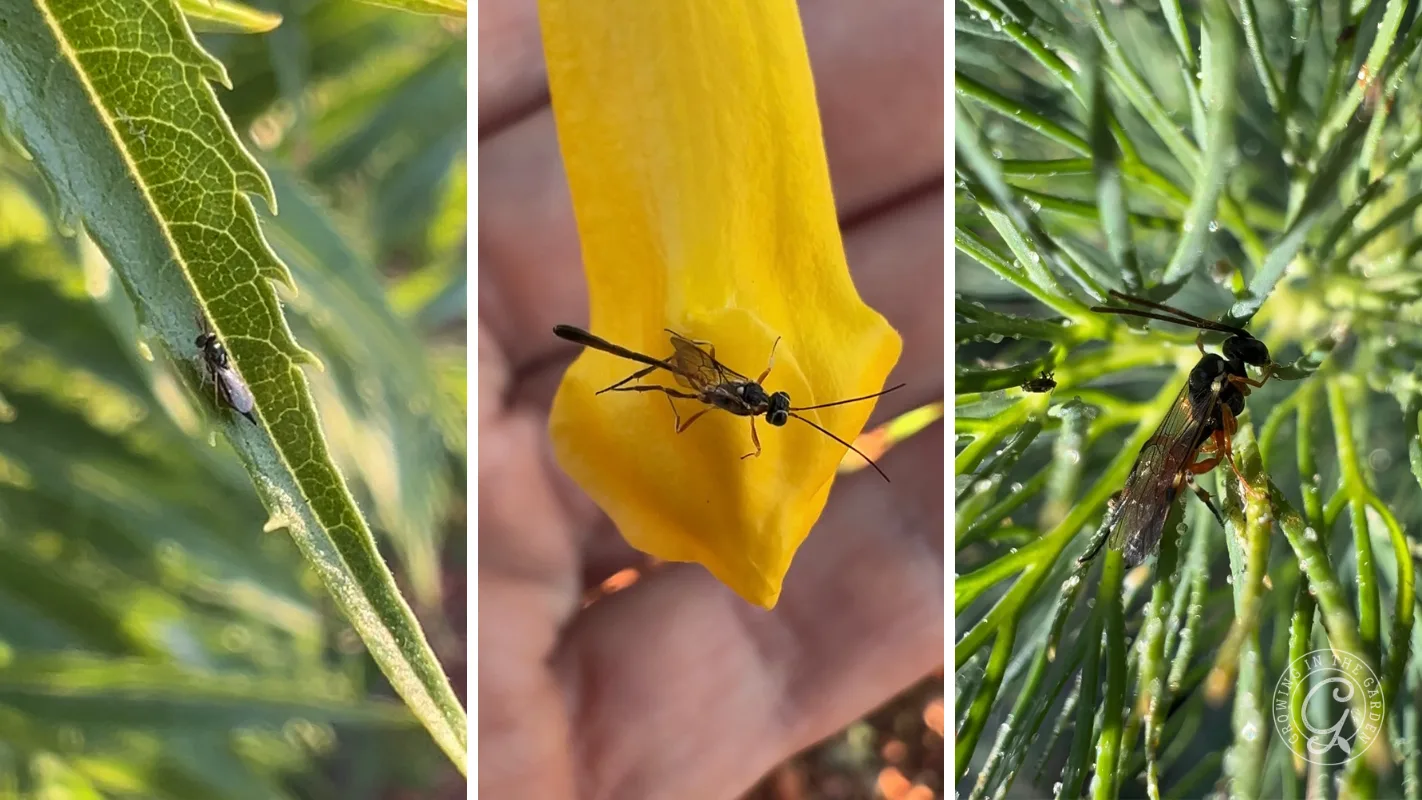
Attracting the adults is straightforward. They enjoy a wide range of flowers, and many of the same plants that attract ladybugs and lacewings will work here, too. Dill, yarrow, and sweet alyssum are solid choices that attract a number of beneficials, not just the wasps. For a broader list of plants worth growing for this purpose, this guide to plants that attract beneficial insects and pollinators is a good starting point.
Having the adult females show up is the easy part. Keeping them is where the real challenge lies — it requires allowing a number of aphids to remain. This does not mean letting a plant be completely ruined, but it does mean embracing some damage and thinking about aphids as food for other insects rather than simply a problem to eliminate. For a full approach to preventing garden pests organically, that mindset is really where it starts.
What to Watch For
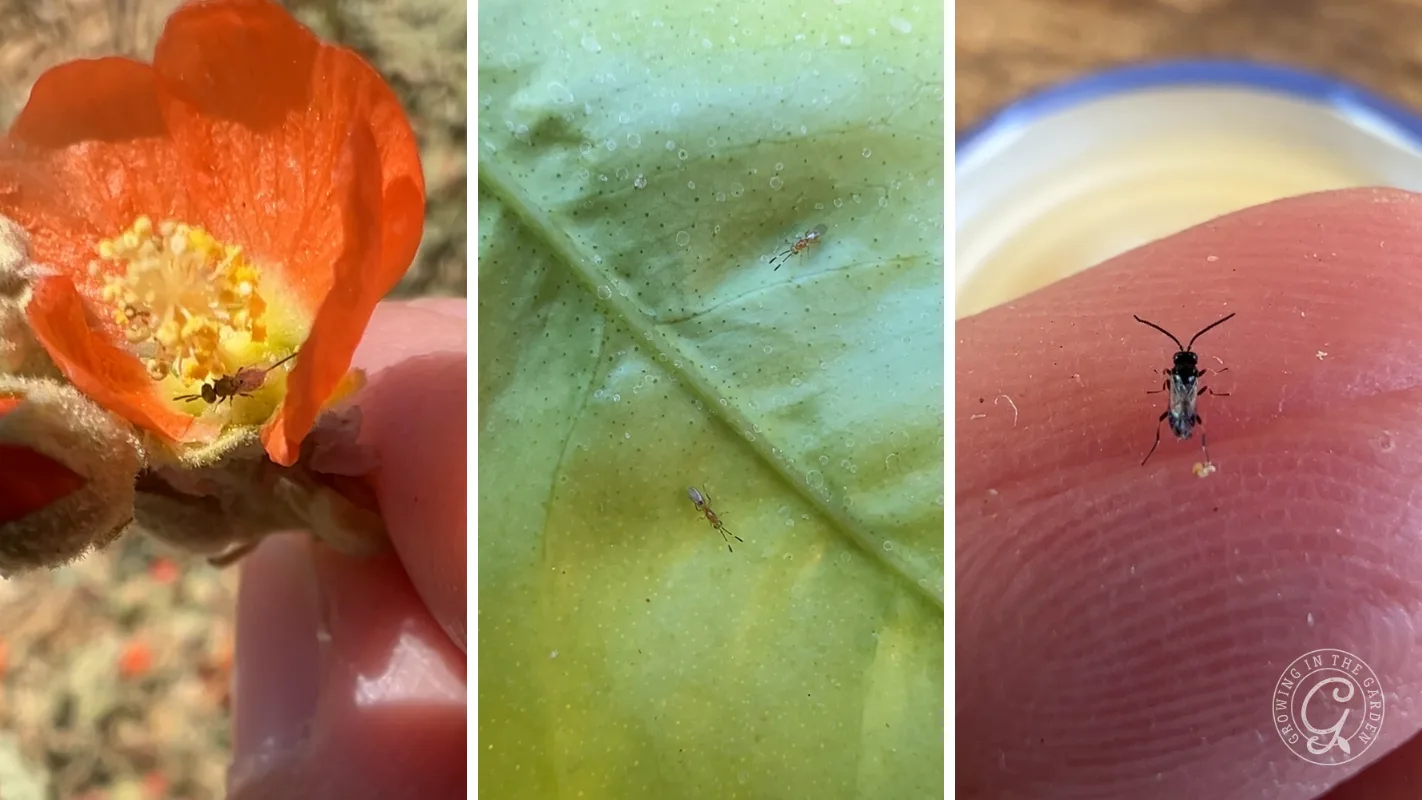
We need to monitor our spaces, to be a student of our gardens and notice the activity that is happening. If you have aphids on a particular plant, check on it daily. Take photos. Do not be afraid of getting up close.
Are you seeing any mummified bodies? Finding casings with holes in them? If so, leave them alone and let the predators finish the job.
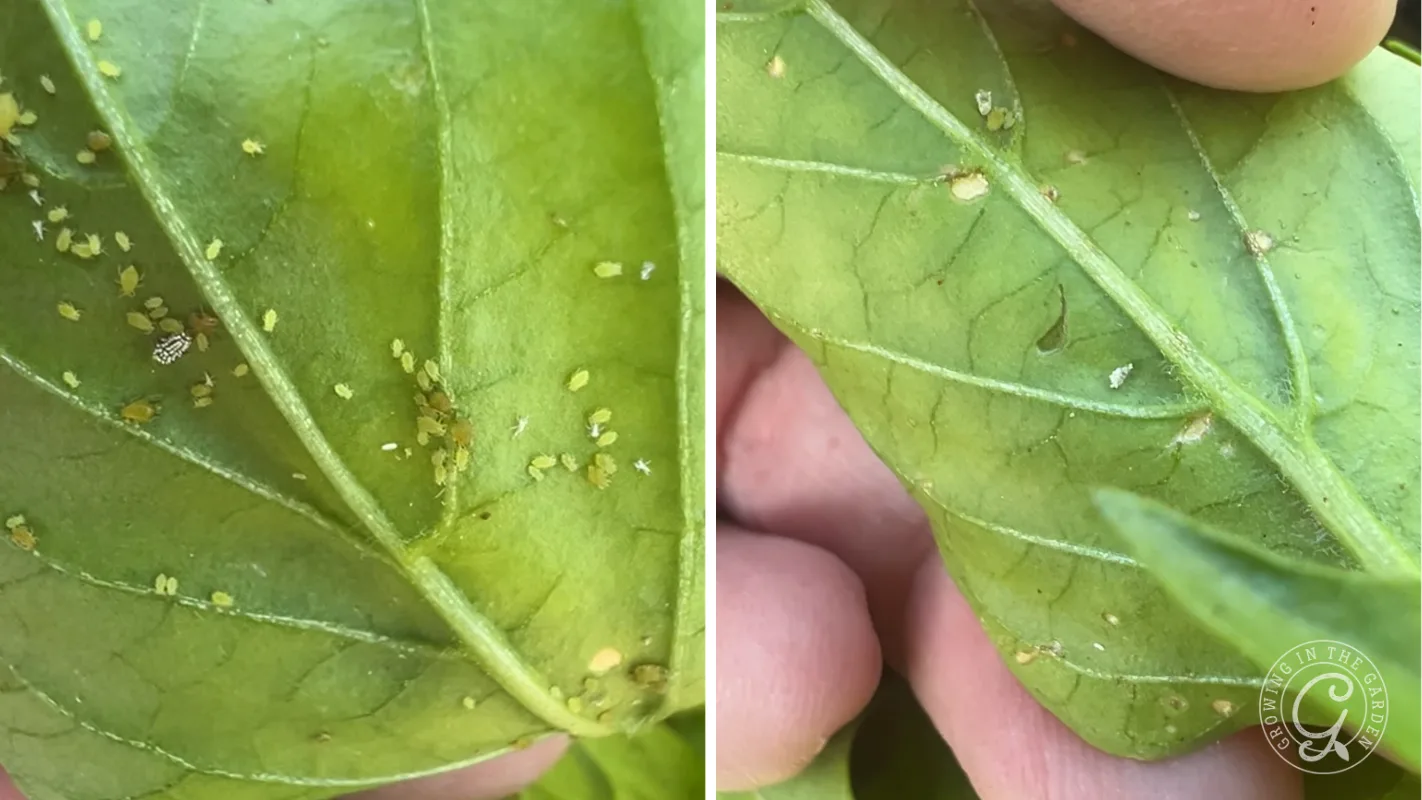
In my experience, if you are patient — sometimes handpicking a little to prevent a full infestation while help arrives — the predators will show up and ultimately handle the situation far better than any intervention could. In less than a week of finding numerous aphids along with the ants that were enjoying the honeydew they produced, the plant was still. Between the parasitic wasps and the ladybug larvae, all the aphids were gone. With them went the ants, since there was no reason to remain.
The difficult part is the in between. Having the patience to trust that you have provided a space which encourages the beneficials to show up. Embracing a bit of damage, knowing that ultimately your garden will be healthier for it in the long run.
Parasitic Wasp FAQs
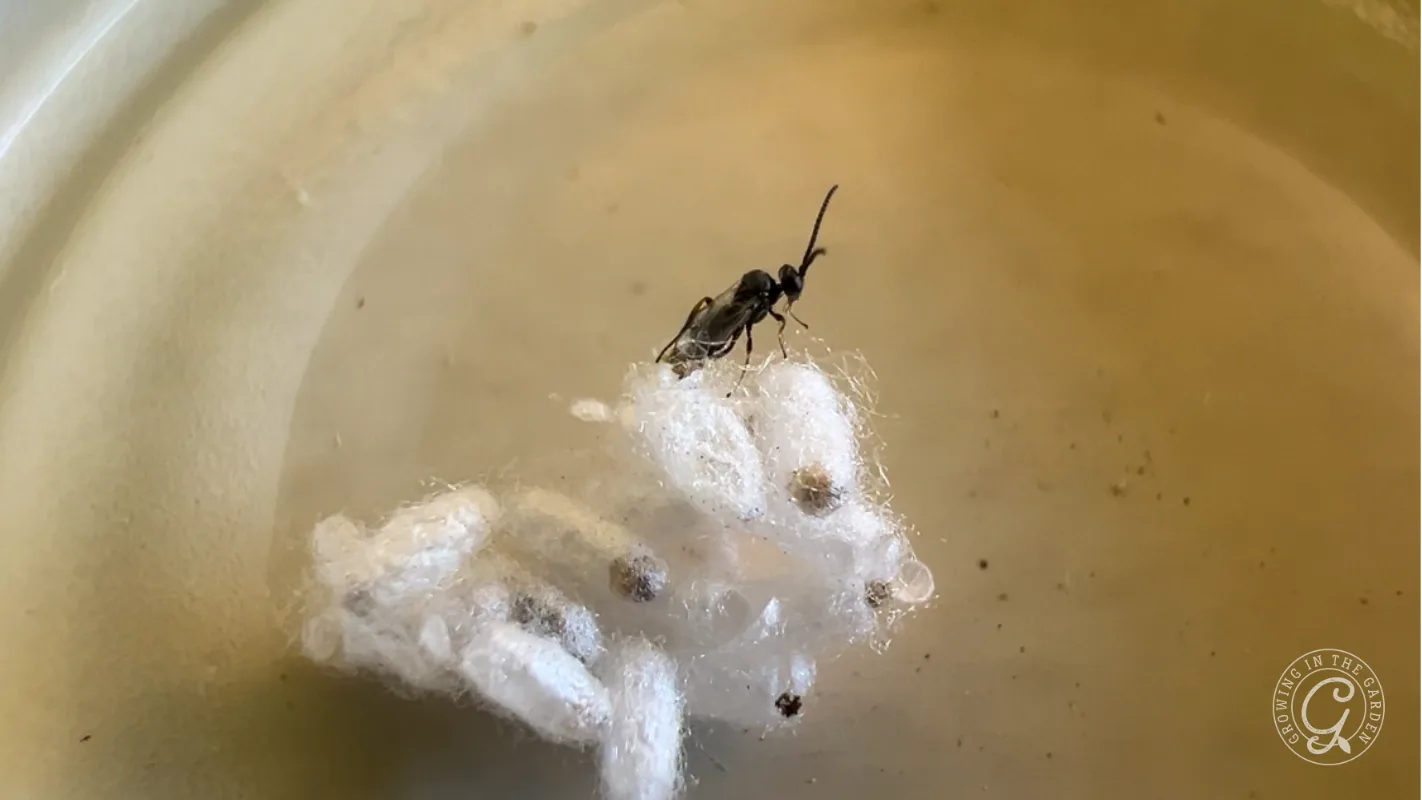
A number of species that have the ability to deposit their eggs within or on a host of garden pests. When the eggs hatch, the larvae consume the host.
As with most beneficial insects, parasitic wasps need food, water, and shelter. The main two things to provide are a water source and flowers. A small saucer works well if you are already using one for bees, and many of the flowers you grow for other beneficials will help the wasps too — dill, yarrow, and sweet alyssum are reliable choices. Avoiding broad-spectrum pesticides, including those labeled organic, is equally important.
By laying eggs inside the garden pest — such as an aphid or hornworm — or depositing them on the host. Once the eggs hatch, the larvae consume the host and eventually kill it as they develop.
A variety of pests, including aphids, caterpillars, whitefly, mealybugs, scale, stink bugs, and leaf miners.
No. Parasitic wasps do not sting or threaten people.
Aphid mummies are aphids that have been parasitized by a wasp. Once the wasp larva begins consuming the aphid from the inside, the aphid’s body hardens and turns tan, reddish-brown, or golden. When you see bloated, discolored aphids that are not moving among a healthy colony, those are mummies — and they mean the wasps are already working.
No. Leave them alone. The mummy is the protective casing for the developing wasp larva inside. Removing them removes the next generation of beneficial wasps before they have a chance to emerge and continue the cycle.
About the Author
For more than thirty years, Jean has been growing plants and spending time in nature in both California and Arizona. With a background in fine art, she honed her skills in observation, a critical element for anyone striving to have a garden. Currently, she is finishing her doctoral studies in ecology (with a special focus on entomology), while helping others work with nature to support a thriving ecosystem. You can find more of her work as “Red Shoe Gardener” on YouTube and Instagram.
Leave a comment on Aphid Mummies and Parasitic Wasps in the Garden