
How to Grow Roses in Hot Summer Climates
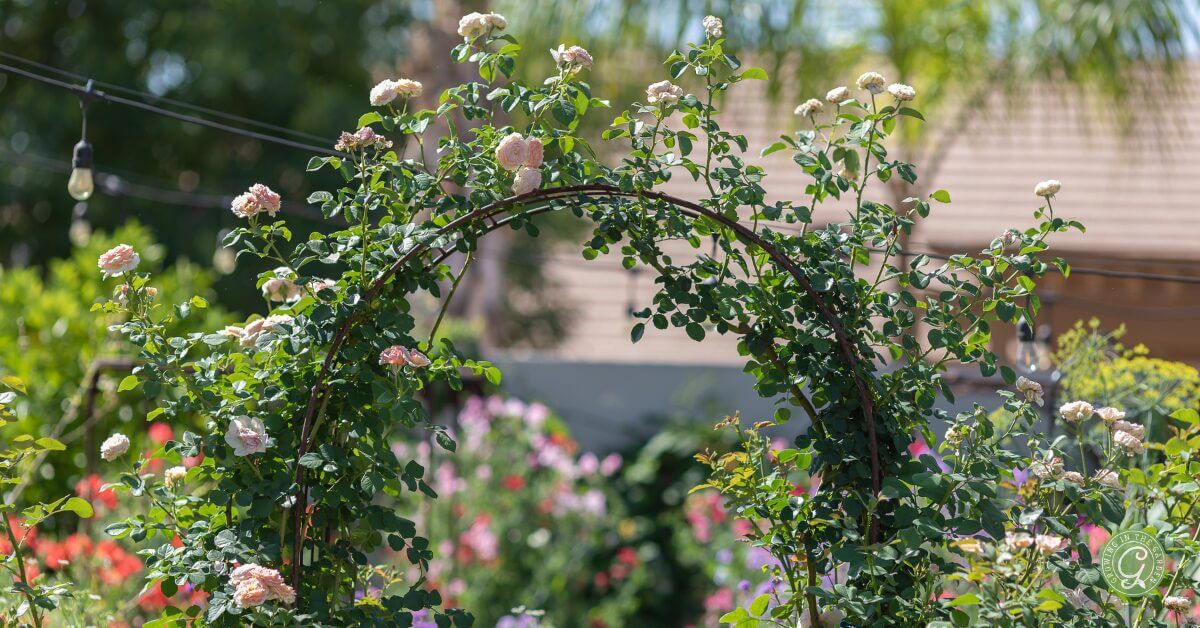
Growing roses can be daunting, especially in Arizona, where the desert climate can be formidable for any plant. Although the summer heat can be challenging, growing beautiful roses is still possible. Learn how to grow roses in hot summer climates with these tips.
What We’ll Cover:
- Where to plant roses in Arizona and other hot summer climates:
- Rose planting tips for hot summer climates:
- When to plant roses in Arizona:
- How to plant bare-root roses:
- How to plant container-grown roses:
- Planting roses in a container:
- How and when to water roses in hot climates:
- How and when to fertilize roses in Arizona:
- How and when to prune roses in Arizona and other hot summer climates:
- Extra care tips for roses during the summer in hot summer climates:
- FAQ: Roses in Arizona and Other Hot Summer Climates

Where to plant roses in Arizona and other hot summer climates:
Choose a location in your yard where your roses can receive sunlight from morning to mid-afternoon with at least 6 hours of sun and afternoon shade. Avoid planting close to brick walls or heavily graveled areas where heat will radiate during the summer.

When planting, allow at least 3-5 feet (0.9-1.5 meters) between roses. Air circulation is crucial for roses. Check your specific type of rose for additional spacing requirements.
Rose planting tips for hot summer climates:
Select varieties listed as “heat-tolerant” when deciding which roses to plant.

Firefighters rose on Fortuniana rootstock is a proven performer in hot summer climates.

James Galway from David Austin is another rose that grows well in the low desert.
Are you thinking about adding more roses to your garden? I get all of my roses from Heirloom Roses. I love that they are own-root roses (no grafts!) and that they meet the highest standards for disease resistance. You know you are getting robust, disease-free roses with strong roots when you get them from Heirloom Roses. Use Code GARDENAZ26 for 20% off any roses, bulbs, and perennials.
Leslie’s picks for the low desert of Arizona:
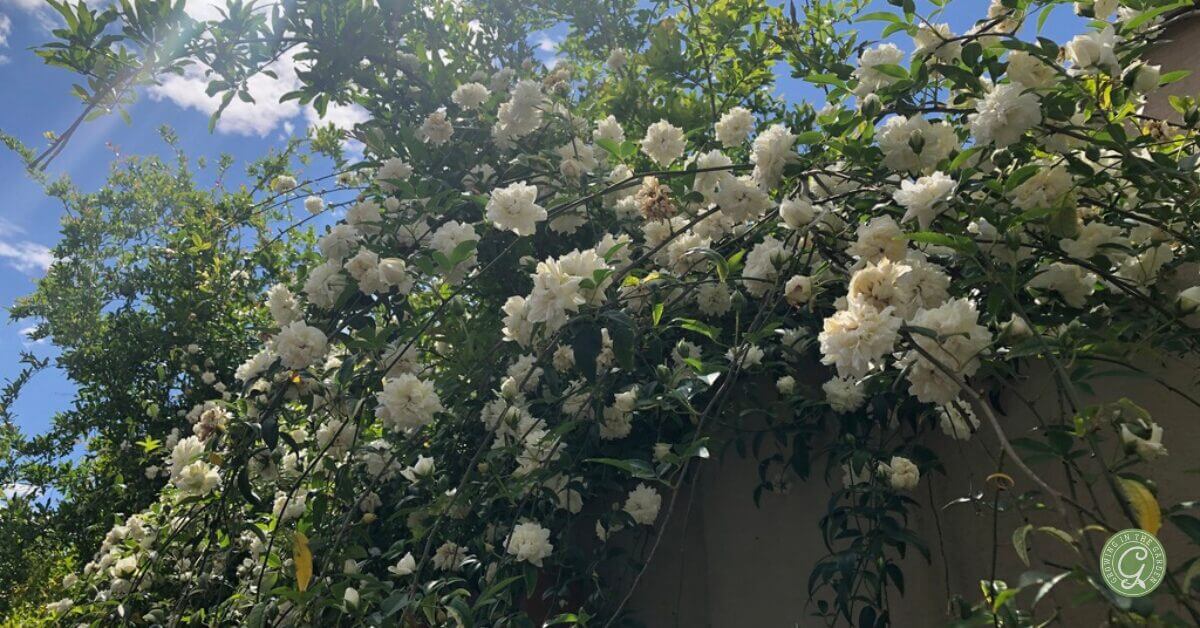
Iceberg, Mr. Lincoln, Joseph’s Coat, Double Delight, Double Knockout, Sol Desire, Lady Banks, Miracle on the Hudson, Paradise, and Lavender Crush.


When to plant roses in Arizona:
Plant bare-root roses from mid-December – January. Plant container-grown roses in the fall, winter, and early spring. Avoid planting during the hot summer months.
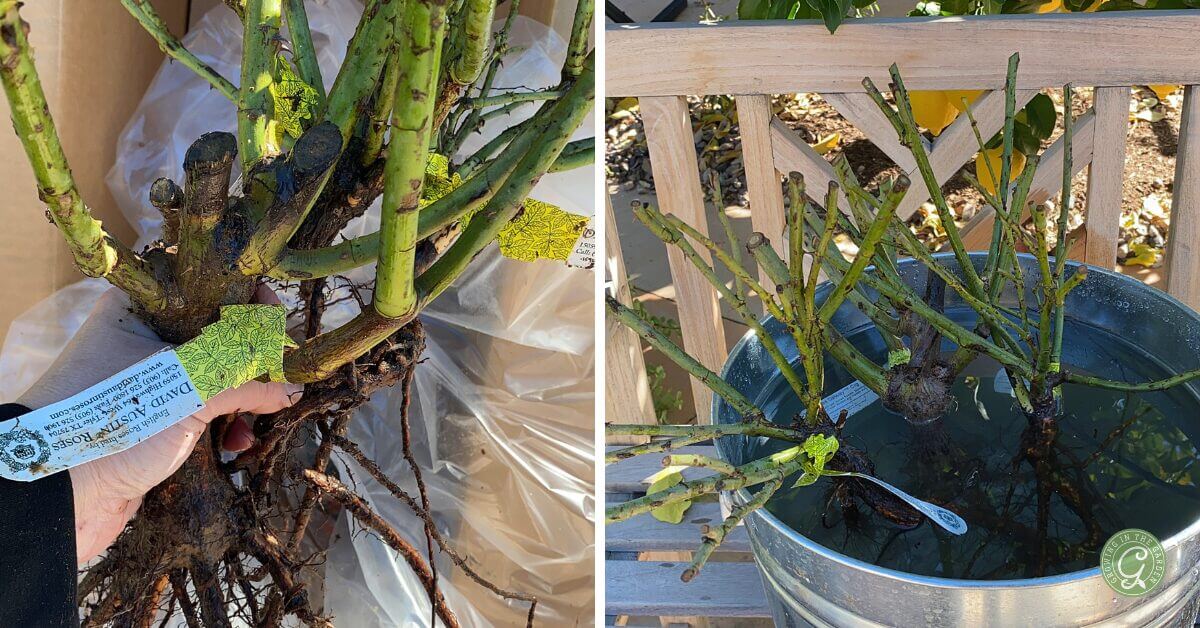
How to plant bare-root roses:
- Soak the entire root in water for at least 24 hours before planting. Add a couple of drops of B-1 or Super Thrive to the bucket of water before soaking to stimulate growth.
- Cut soaked rose canes at an angle with a sharp pair of bypass pruners to about 10″ (25 cm) long with the nodes facing outwards.
- Dig a hole 2’ (61 cm) deep and 2’ (61 cm) wide.
- Combine the removed soil from the hole with a raised bed mix (combination of coconut coir/compost/perlite).
- Fill the bottom of the hole with 6″ (15 cm) of the mix, spread the roots apart gently, and plant deep enough to cover the roots.
- Fill the remaining space with the leftover soil mixture.
- Pat soil firmly and top with a 4” (10 cm) layer of wood chip mulch and water well.
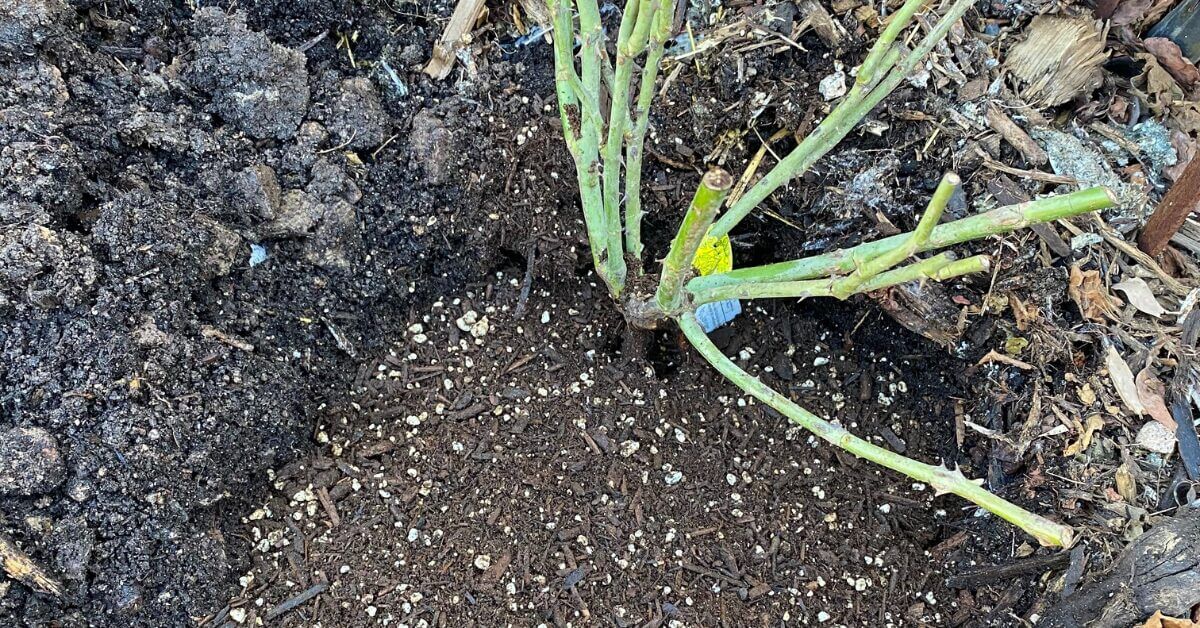
How to plant container-grown roses:
- Dig a hole 2’ (61 cm) deep and 2’ (61 cm) wide.
- Add a 6″ (15 cm) layer of aged manure to the bottom of the hole.
- Combine the removed soil from the hole with a raised bed mix (combination of coconut coir/compost/perlite).
- Plant the rose in the center of the hole 2-3″ (5-8 cm) higher than the soil level to compensate for settling soil.
- Backfill the hole with the soil mixture.
- Top with a 4” (10 cm) layer of wood chip mulch and water well.
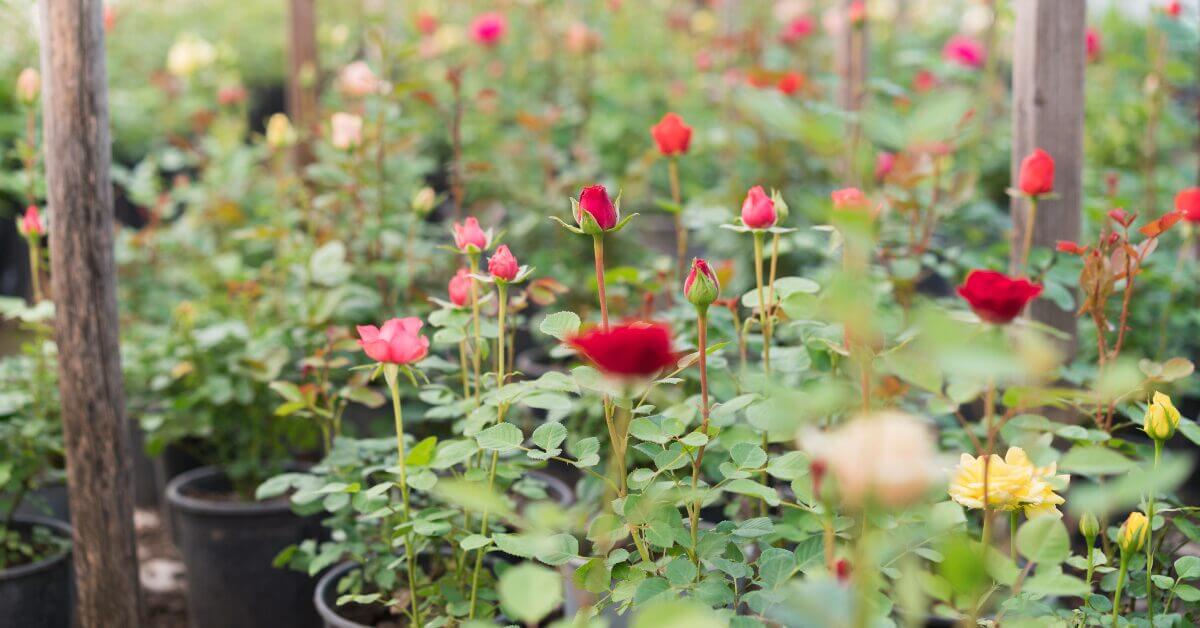
Planting roses in a container:
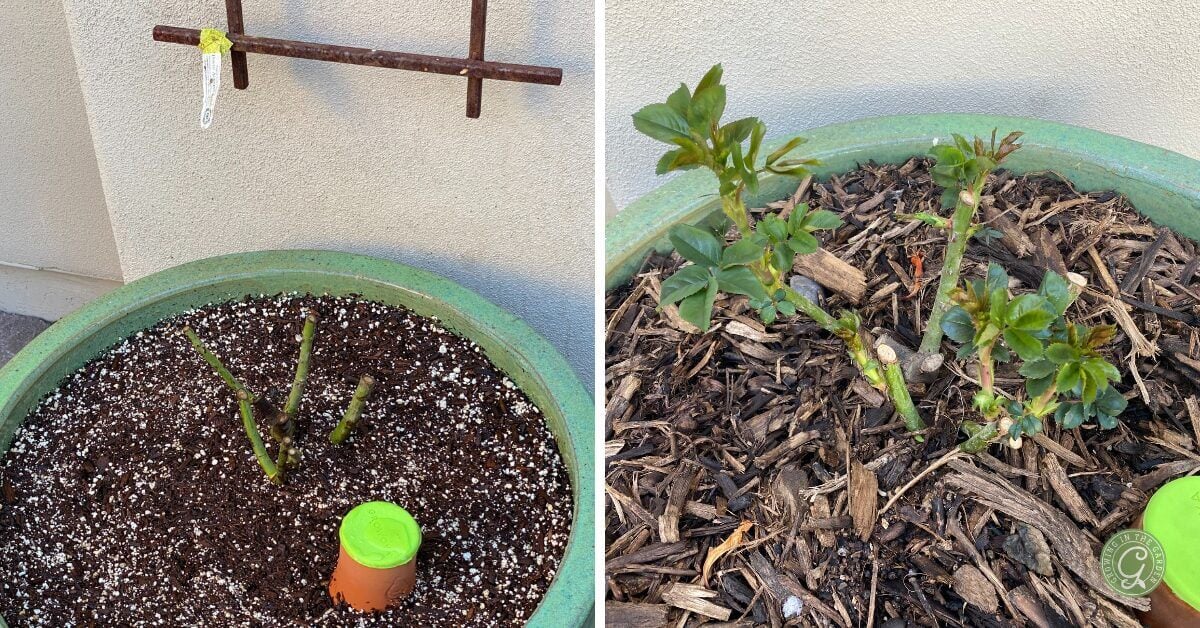
Choose a container three times larger than the nursery pot, at least 15 gallons (56 liters) or larger. Fill the bottom of the pot with a high-quality potting mix (like the Raised Bed & Container Mix from Arizona Worm Farm) with some organic fertilizer high in phosphate—plant at the same level as the nursery pot. Fertilize container-grown roses once a month.
Choose a location that receives afternoon shade for growing roses in containers in Arizona. They will heat up more quickly. Avoid using dark or black containers for growing roses, as they will absorb more heat.
How and when to water roses in hot climates:

Roses are thirsty plants and require regular water, especially during the warmer months in hot summer climates.
- Water newly planted roses every day for the first week.
- In the spring and fall, water roses 2- 3 times a week slowly & deeply. Make sure to penetrate the entire root zone. Water in the morning if possible.
- During the heat of summer, water roses as often as every other day. Get more tips for surviving a heatwave in this guide.
- In the winter, water roses about once a week or when the soil is dry.
- Container-grown roses will generally require a bit more water. You can use a moisture meter to determine the water needed. The meter should always read “moist”. Be sure your containers have holes at the bottom for proper drainage.
How and when to fertilize roses in Arizona:
Spring and Early Summer Fertilizing:
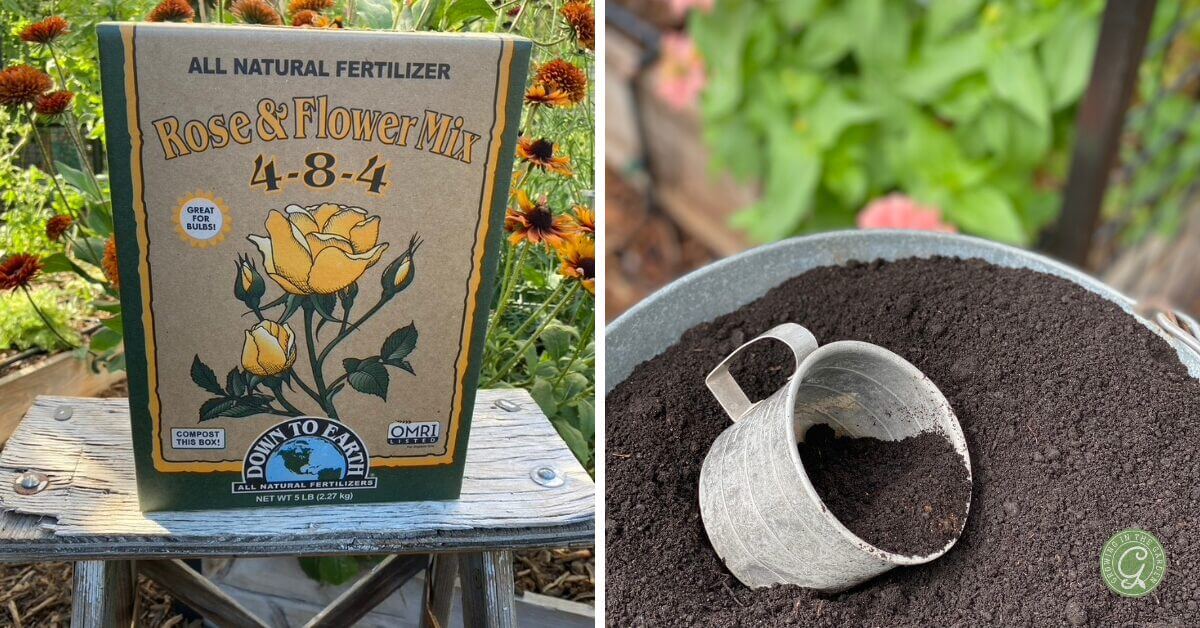
- Begin feeding roses when you see new growth in the spring. Roses are heavy feeders and will require fertilizer every 6-8 weeks during the spring and fall. Use organic, high-phosphorus food (4-8-4) to increase blooming. Water well before and after fertilizing.
Summer Fertilizing:
- Avoid using fertilizer from June to August. Instead, at the end of May, add a 2″ layer of compost and worm castings at the base of each rose bush to equal about a 2′ diameter surrounding the bush. Then, top off with a thick layer of mulch.
Late summer or fall rose fertilizing:
- Apply rose fertilizer. Nitrogen supports green growth (blood meal, fish emulsion, alfalfa meal). Phosphorus supports flowering (bone meal, rock phosphate). Water deeply before and after feeding.
- Add about 2 inches of organic mulch, keeping it a couple of inches away from canes. Loosen and break up the soil in the watering well so water and amendments can reach the roots.
- If leaves look pale, consider a chelated iron drench. When in doubt about amendments, test soil pH first.
Note for newly planted roses (first year)
Use a liquid-only fertilizer during the first growing season. Skip granular products; they’re too strong for new, fine roots and can burn or even kill a young rose. I use Founder’s Fish Fertilizer for young and newly planted roses.
How and when to prune roses in Arizona and other hot summer climates:
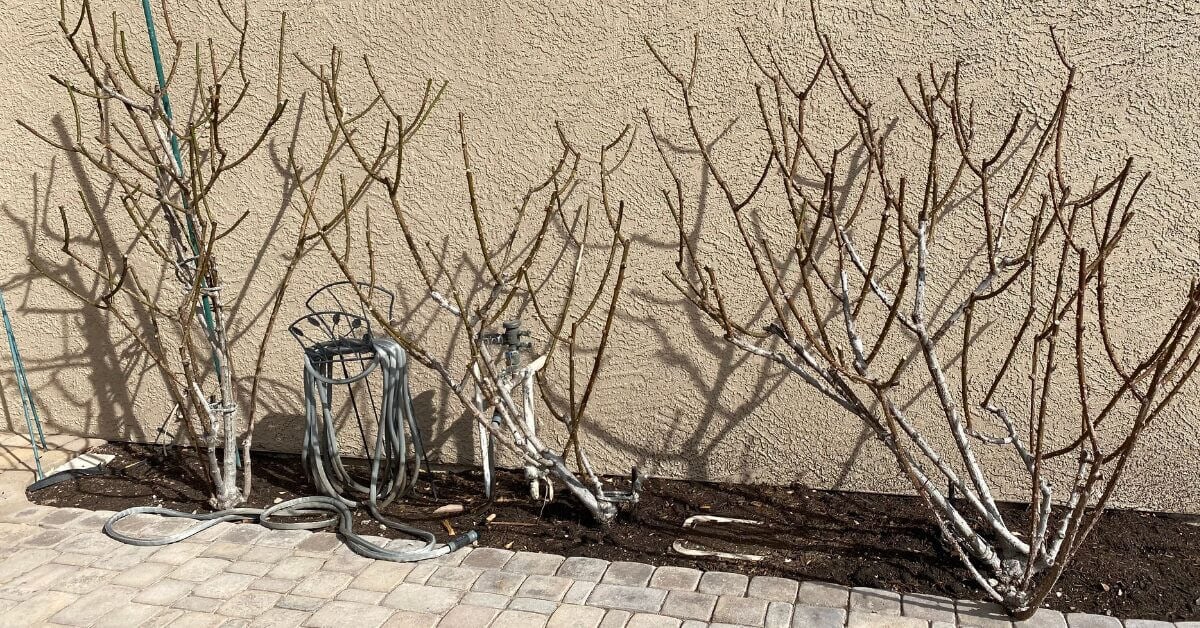
Pruning promotes the highest quantity and quality of blooms for the following season. An unpruned rose bush will still produce flowers, though they will be fewer and much smaller.
Regularly deadhead and remove dried spent leaves throughout the growing season. Remove the dried flowers by cutting down to the next leaf with 5 leaflets.
Note for newly planted roses (first year)
Skip the first winter & fall pruning for at least a full year after you plant. Let them focus on root growth. In the first season, remove only dead, damaged, or crossing canes; light shaping and deadheading are fine.
Winter rose pruning:
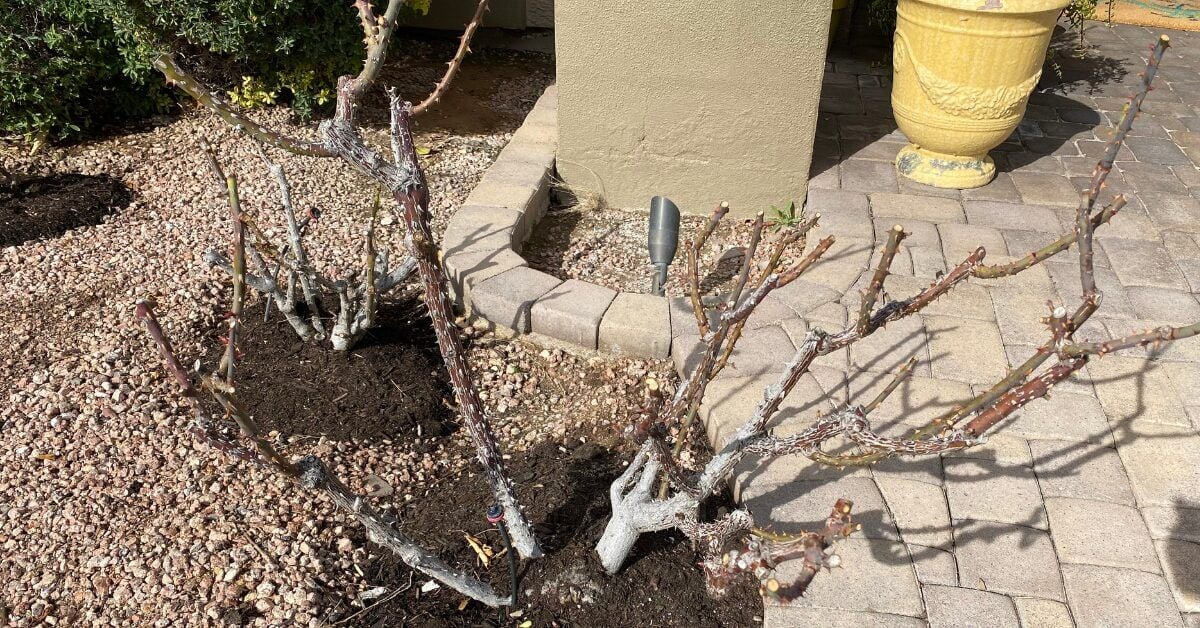
Heavy pruning should be done during dormancy from mid-December through January. Focus on opening the bush’s center to allow sun and air flow circulation. Always cut at a 45-degree angle facing downwards. Seal the canes after cutting to prevent borers and other pests and diseases from entering.
- Remove all dead wood, crossing branches, touching canes, and non-producing canes.
- Prune out about one-third to no more than half of the previous season’s growth length.
- Remove all suckers below the graft (grafted roses only).
You can also size-control some roses during this period by cutting them back down to 18-24” (45-60cm).
If you see clusters of soft-bodied insects (aphids) on new stems or buds, read this guide to see what to do and when to ignore them.
Late summer or fall rose pruning:
At the end of summer, once nighttime temperatures are 70°F (21°C) or below, lightly prune and fertilize roses to encourage a fall flush of blooms.
- Remove weeds and all fallen leaves from around the base. Bag and toss debris if you’ve seen thrips or disease. Learn how to get rid of thrips here.
- Remove twiggy, spindly summer growth, crossing canes, and any dead wood. Cut back to a healthy outward-facing five-leaflet leaf just below the tired summer growth.
- Keep soil evenly moist, not soggy. With good care, a strong flush should arrive in about 45 to 50 days. Save heavy pruning for winter (late January) in the low desert.
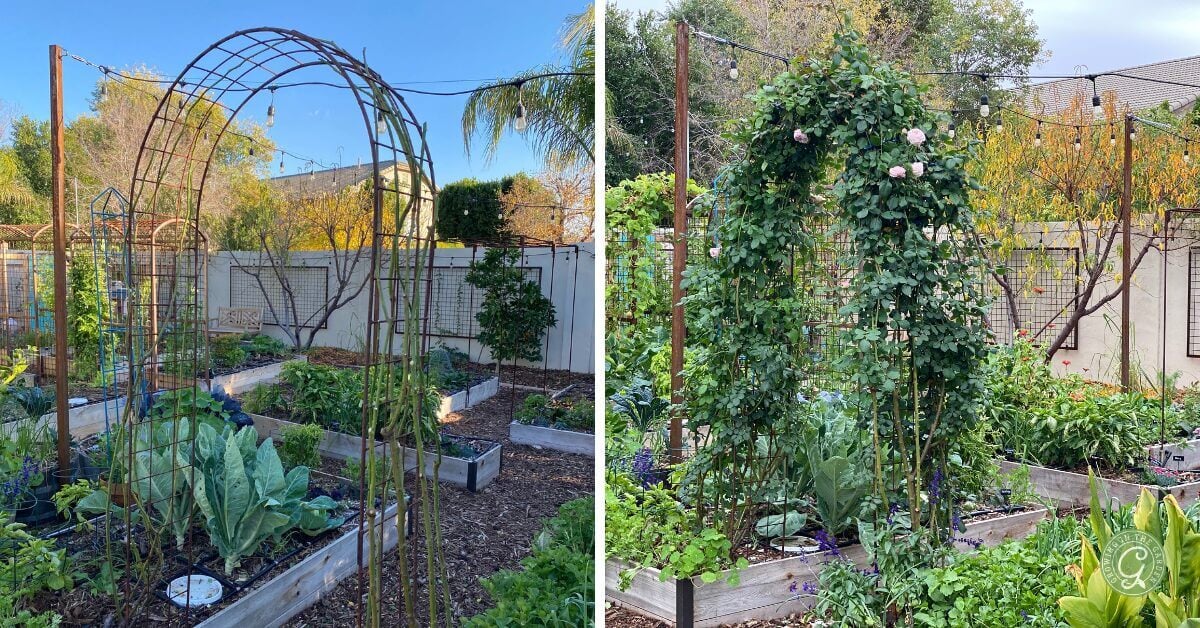
To fall-prune climbing roses, remove the long outward-growing canes. Shorten and selectively remove the lateral (sideways) branches.
Apply additional mulch after the winter and late summer prunings. Mulch helps retain moisture and continuously breaks down as organic matter while improving the soil condition.
Extra care tips for roses during the summer in hot summer climates:
- Adding shade during the scorching summer months can be beneficial and prevent stress and sunburn.
- During the summer, do not prune or deadhead roses. Pruning tells the plant it’s time to grow. During the summer, roses should enter a dormant state and not push out new growth or blooms. Pruning also exposes the freshly cut stem, and that tender area is easily scorched.
- Expect that roses will not look their best during the hottest months of the year.

FAQ: Roses in Arizona and Other Hot Summer Climates
Aim for at least 6 hours of sun with morning to mid-afternoon light and afternoon shade. Avoid heat-reflecting spots like south- or west-facing block walls and large gravel areas.
Most shrubs need 3–5 ft (0.9–1.5 m) between plants for airflow. Check your variety’s mature width and adjust.
Plant bare-root roses mid-December through January. Plant container roses in fall, winter, or early spring. Avoid summer planting.
Yes. Use at least a 15-gallon (56 L) light-colored pot with excellent drainage. Place where it gets morning sun and afternoon shade. Container roses dry out faster, so water and feed a bit more frequently.
Well-draining soil amended with compost and a quality raised-bed or container mix. Keep 2–4 in (5–10 cm) of wood-chip mulch on top, pulled a couple of inches back from canes.
Newly planted: daily for the first week.
Spring/fall: deep soak 2–3 times per week.
Summer: as often as every other day.
Winter: about weekly or when the top few inches are dry. Periodically leach salts with a long, deep watering.
Feed every 6–8 weeks in spring and again in fall. Skip June–August. In late May, top-dress with about 2 in (5 cm) of compost and worm castings, then mulch. Water before and after feeding.
For blooms, choose an organic fertilizer with phosphorus (e.g., 4-8-4). Nitrogen sources like blood meal, fish emulsion, and alfalfa meal support lush growth. If leaves are pale, a chelated iron drench can help. When unsure, test soil pH first.
Only if there’s a confirmed magnesium deficiency. It is not a cure-all and can contribute to salt buildup in alkaline soils.
Heavy prune in winter dormancy (mid-December through January). Open the center, remove dead, crossing, and unproductive canes, and reduce by about one-third to one-half. Seal large cuts to deter cane borers.
Light fall prune once nights are consistently 70°F (21°C) or below to set a fall flush. Expect blooms in about 45–50 days.
No. In peak heat, let plants rest. Resume deadheading and light shaping when temperatures ease.
Soak roots 24 hours, trim canes to ~10 in (25 cm) with outward-facing buds, dig a 2 ft x 2 ft (61 cm x 61 cm) hole, backfill with native soil blended with raised-bed mix, plant with roots spread, water well, and mulch 4 in (10 cm).
Dig 2 ft x 2 ft (61 cm x 61 cm). Add ~6 in (15 cm) aged manure at the bottom, blend backfill with raised-bed mix, set the plant 2–3 in (5–8 cm) above grade to allow for settling, water well, and mulch.
Use liquid-only fertilizers the first season. Skip granular products until roots establish.
Look for “heat-tolerant” choices. Proven performers include Firefighter (especially on Fortuniana rootstock), James Galway, Iceberg, Mr. Lincoln, Joseph’s Coat, Double Delight, Double Knockout, Sol Desire, Miracle on the Hudson, Paradise, Lavender Crush, and Lady Banks.
Own-root roses are resilient and regrow true if cut back hard. Fortuniana rootstock is prized in hot, sandy conditions for vigor and bloom production. Both can do well if sited and cared for properly.
Start with sanitation: remove fallen petals/leaves, and avoid overhead watering on buds. A firm water rinse can reduce pests. Encourage beneficial insects. If needed, use targeted controls and follow labels. Avoid spraying oils/soaps during hot afternoons.
Common causes include iron chlorosis from high pH, inconsistent watering, or salt buildup. Deep-water to leach salts, apply chelated iron if needed, and improve drainage.
Afternoon shade is ideal. In extreme heat, temporary 50% shade cloth can reduce stress and sunburn.
They can attract dogs. If you use them, apply sparingly, bury, and water in. Consider alternatives if pets dig.
The abundant sunshine and low humidity are beneficial when growing roses in hot summer climates. Don’t be afraid to add roses to your landscape.
Most importantly, remember to stop and smell your roses and share them with your friends and family to receive the whole experience of rose gardening. Enjoy!

Thank you to Leslie Blanchard for contributing to this post.
Leslie has been gardening for as long as she can remember. She has an associate degree in Urban Horticulture, is a Certified Master Gardener, and has completed the Desert Landscape Certification School at the Desert Botanical Gardens.
She’s worked at San Diego Zoo’s Botanical Garden and 5-star hotels all over the West Coast, caring for their tropical plants and flowers. She is the recipient of a Plantscape Industry Alliance Award. Leslie is the Head Grower, Garden, and Greenhouse Manager at Arizona Worm Farm. She offers garden consultations and finds great joy in helping people become successful gardeners.
If this post about how to grow roses in hot climates was helpful, please share it.


Hello Angela,
I have a Eden Climber from Heirloom Roses in one of my garden beds. I planted it in late Spring (around March). To my surprise, it is still alive but barely. There is no new growth, and it looks like how it did when I planted it. I have bought all of the supplements from Heirloom Roses to include the Fish Fertilizer, Bone Meal and Mint Compost. My beds also have worms from AZ Worm Farm. I am not sure what to do to get her to grow. I have not pruned her much. Any advice will be greatly appreciated. I lost my Old John and am hoping I don’t lose Eden as well. Thank you for your time.
Does it get enough sunlight? My roses that struggle seem to get less sun. If your soil is good (which it sounds like it is), you could also check your watering. You could also contact the Heirloom roses customer service, they may have more suggestions. I hope she takes off for you this fall.
Hello Angela,
Really enjoy your blog – always lots of great info!
Do you have any concerns about growing roses on metal arbors or trellises? I’m concerned about damage to the canes from contact with the metal which can get very hot.
Thanks for your thoughts.
It hasn’t been an issue for mine. It’s hot for sure, but I haven’t noticed that the arbor material makes a difference. I don’t prune them back until after summer and there is usually plenty of foliage surrounding the canes.
Pruning mature roses, best way…. thanks!
JoAnne
Remove all dead wood, crossing branches, touching canes, and non-producing canes.
Prune out about one-third to no more than half of the previous season’s growth length.
Remove all suckers below the graft.