
Why Queen Palms Struggle (and What to Plant Instead)
In the Phoenix area, queen palms are one of the most common dead plants I see. They can survive here, but most never look as good as they do in other climates. They struggle through our hot summers and often become high-maintenance projects. If you want a palm in the low desert, there are better choices that handle our heat, wind, hard water, and alkaline soil with fewer problems.

Key Takeaways: Why Queen Palms Struggle
- Queen palms often fail in Arizona due to extreme heat, alkaline soil, and hard water, making them high-maintenance plants.
- Common signs of a struggling queen palm include yellow fronds, brown tips, and frizzled top growth.
- Consider more suitable palms, such as the Mexican blue palm and Mediterranean fan palm, for a more care-free experience.
- If you already have a queen palm, focus on proper watering, using palm fertilizer, and managing heat stress.
- For shade, consider planting desert-adapted trees instead of palms to achieve better cooling and reduced maintenance.
What We’ll Cover:
- Why Skip Queen Palms in Arizona
- What it Looks Like When a Queen Palm is Failing
- Why Queen Palms Struggle
- Better Palm Choices for the Low Desert
- If What You Really Want is Shade, Skip Palms Altogether
- Already Have a Queen Palm? Do This Before You Give Up
- Other “Regret Plants” to Skip in the Low Desert (and Better Picks)
Why Skip Queen Palms in Arizona
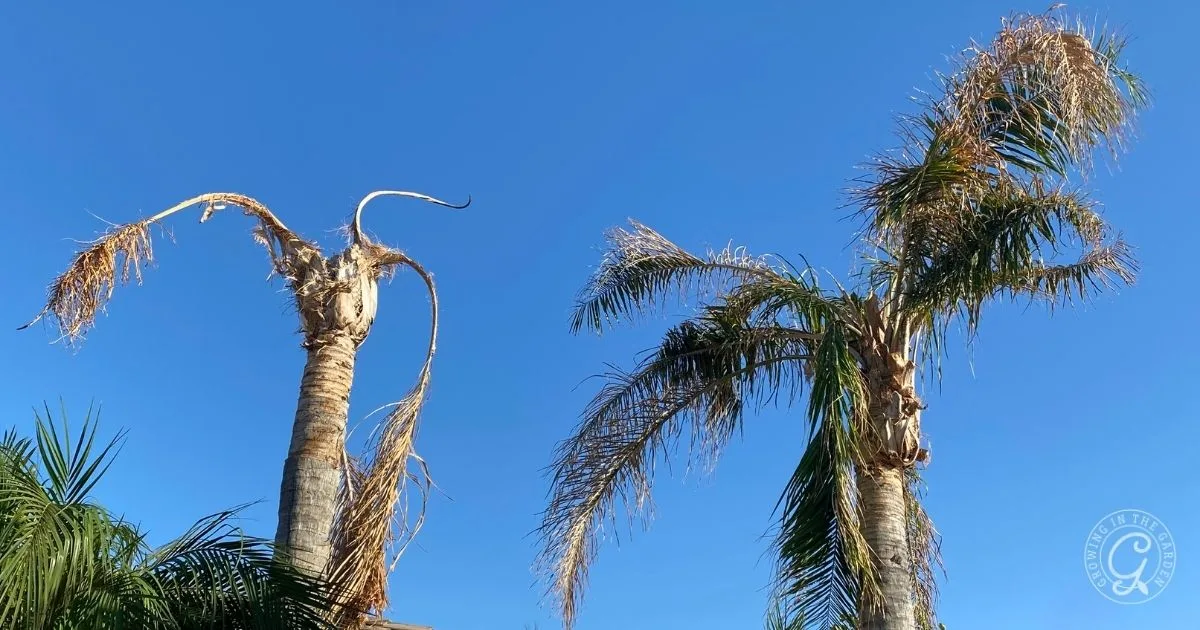
Queen palms are not desert-adapted. In our climate, they commonly struggle with:
- Extreme summer heat and very low humidity
- Drying winds and reflected heat from walls, rock mulch, and pavement
- Alkaline soil that ties up nutrients
- Hard water and salt buildup that stress roots
- Ongoing nutrient deficiencies (manganese is the big one, but potassium and others can also show up)
The result is a palm that can look “off” most of the year unless you water and feed it consistently, and even then, it may never look great. If your queen palm looks worse every summer, my post on gardening in extreme heat explains what helps most during a heatwave and what to avoid.
What it Looks Like When a Queen Palm is Failing
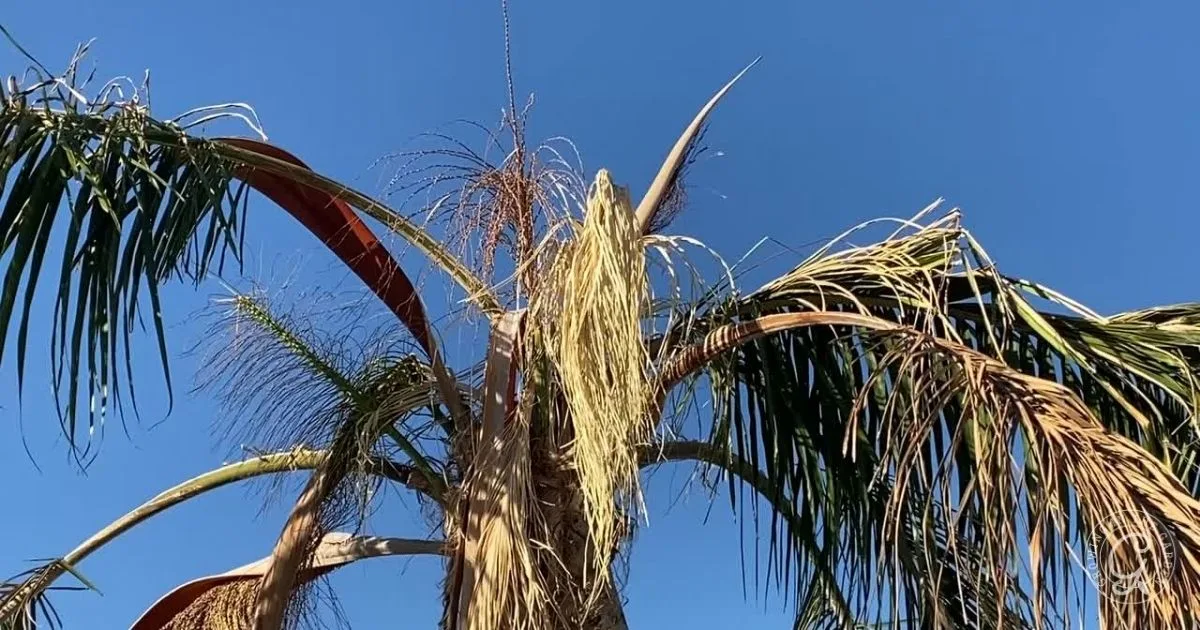
These are the red flags homeowners usually notice:
- Yellow, pale fronds that do not fully green up after fertilizing
- Brown tips and crispy edges on otherwise green fronds
- Thin canopy with fewer full, arching fronds than you expected
- New growth that looks frizzled, stunted, or distorted (classic “frizzle top”)
- Overall scorched look by late summer, even with irrigation
- In severe decline: all fronds brown, trunk may ooze, or the center spear leaf may fail
If the newest center growth is collapsing or pulling out easily, that is a “call a pro” situation.
Why Queen Palms Struggle
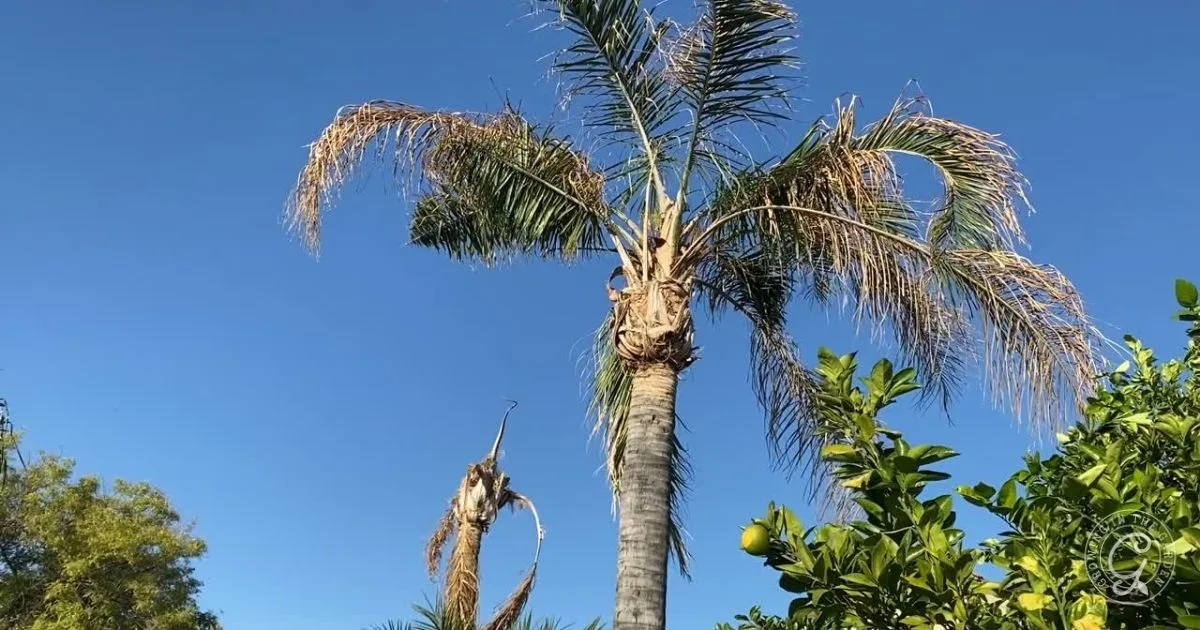
Alkaline soil
Low desert soils are typically alkaline. When soil pH is high (alkaline), certain micronutrients become harder for plants to absorb. Queen palms are especially known for manganese deficiency, which shows up as frizzled, weak new growth.
Heat and wind
Even when you water regularly, the combination of intense sun, hot nights, and wind can desiccate fronds. Queen palms do better in protected, less exposed locations, which many desert front yards are not.
Hard water and salts
Our irrigation water often leaves salts behind. Over time, salt buildup can burn roots and make it harder for the palm to take up water and nutrients. This is why “just water more” does not always fix the problem.
High maintenance
Queen palms typically require more frequent summer irrigation and more careful fertilizing (including micronutrients) than better-adapted palms. If you want low-maintenance landscaping, queen palms usually work against that goal. If you’re considering a queen palm near a pool, I’d choose something that’s going to be easier to maintain. I compiled a full list in the best plants for around a pool in the low desert.
If you’re weighing a queen palm against other options, see how it compares in the best trees for Arizona yards.
Better Palm Choices for the Low Desert
If you want the palm look with fewer problems, start with these:
- Mexican blue palm (Brahea armata)
Tough, desert-friendly, striking blue foliage. - Mediterranean fan palm (Chamaerops humilis)
Great smaller palm for courtyards and around pools, often one of the easiest palms to keep attractive.
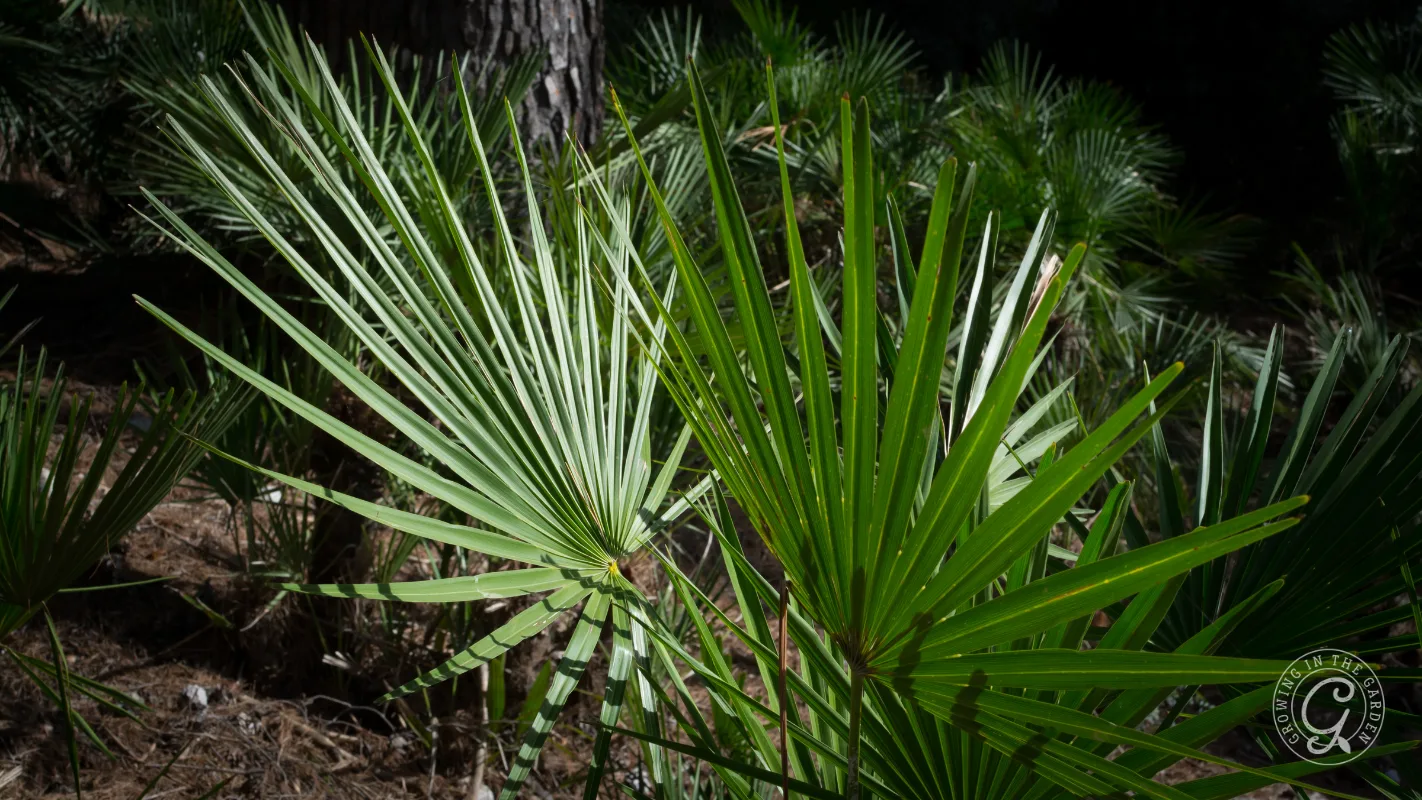
Tip: Before you buy, look around your neighborhood for mature examples that look consistently good, not just newly planted ones.
If What You Really Want is Shade, Skip Palms Altogether
A palm canopy does not cool a yard as well as a shade tree. If your goal is outdoor comfort and lower water use, consider desert-adapted shade trees instead:
- Desert willow
- Palo verde
- Mesquite
- Texas ebony
- Desert ironwood (slower, excellent long-term tree)
You will usually get better shade, better cooling, and fewer long-term issues. In the low desert, a little shade can make a big difference, and these ideas for how to create shade in the garden work in all kinds of yards.

- If you want plants that actually like our heat and alkaline soil, start with this list of desert shrubs that perform well here.
- For a tough evergreen option that handles our conditions, here is how to grow Texas mountain laurel in the low desert.
- If your real goal is a lower-water yard, these water-saving tips for desert gardening will help you make choices that reduce water use without sacrificing beauty.
- For more options that look good and use less water, this list of low-water groundcovers for hot climates has several good picks.

Already Have a Queen Palm? Do This Before You Give Up
If you are trying to keep one looking decent:
- Stop over-pruning. Only remove fully dead fronds.
- Water deeply and consistently in summer. Avoid frequent shallow watering. If you are trying to keep an existing queen palm looking decent, start with the basics in my guide on how to water your garden.
- Use a real palm fertilizer with micronutrients, not just a general fertilizer.
- Take frizzle top seriously. Manganese deficiency is common and needs the right correction.
- Reduce reflected heat if possible (more shade on the trunk area, less rock right at the base, add mulch where it makes sense).
- If the palm is rapidly declining, consider a soil test and consult a certified arborist. Palms do not bounce back quickly once the growing point is damaged.
Other “Regret Plants” to Skip in the Low Desert (and Better Picks)
If you want plants that look good with less water, fewer nutrient issues, and less ongoing maintenance, here are a few common choices that often disappoint in our heat and alkaline soils.
Male mulberry and male olive
- Why skip: In Phoenix, pollen-producing types are restricted due to allergy concerns.
- Better pick: Desert willow, palo verde, mesquite (for shade), or fruit trees like citrus, pomegranate, fig (for harvest). If you want a tree you will actually enjoy living with in the low desert, this list of best fruit trees for low desert Arizona is a great place to start.
Gardenia, azalea, rhododendron (acid-loving shrubs)
- Why skip: Often turn yellow and struggle in alkaline soil unless you constantly adjust nutrient levels.
- Better pick: Texas sage, hopseed bush, jojoba
White birch, pin oak (acid-loving trees)
- Why skip: Common chlorosis and stress in alkaline desert soils, especially in summer heat.
- Better pick: Desert willow, palo verde, mesquite
Willow, cottonwood (riparian, high-water trees)
- Why skip: High water demand, and they decline fast if irrigation slips.
- Better pick: Desert willow, palo verde, desert ironwood (slower but very tough)
Eucalyptus (especially near patios, pools, walls, and sidewalks)
- Why skip: Messy litter, can have aggressive roots, and limb drop can be a safety issue.
- Better pick: Texas ebony (evergreen), mesquite (filtered shade), palo verde
Photinia hedges
- Why skip: Often look pale and stressed in alkaline soil, and become a repeat-fertilize cycle.
- Better pick: Hopseed bush, Texas sage, feathery cassia
Ficus nitida hedges (Indian laurel fig)
- Why skip: Cold snaps can burn it back, and hard pruning can expose trunks to sunscald.
- Better pick: Hopseed bush, Texas sage, jojoba
Sources
- University of Arizona Cooperative Extension: Arizona Landscape Palms and their Management, UA Cooperative Extension
- University of Arizona Cooperative Extension: Arizona Landscape Palms, UA Cooperative Extension
- UF/IFAS Extension: Manganese Deficiency in Palms, Ask IFAS – Powered by EDIS
- Bartlett Tree Experts: Queen Palm in Arizona, Bartlett Tree Experts
- Bartlett Tree Experts: Plant Health Care Recommendations for Queen Palm, Bartlett Tree Experts
- Cronkite News (AZPBS): Record heat proves to be a queen palm’s worst enemy, Cronkite News
Leave a comment on Why Queen Palms Struggle (and What to Plant Instead)