
10 Best Fruit Trees for Low Desert Arizona: Plus 3 to Skip
In this post, I’m sharing the 10 best fruit trees for Arizona’s low desert and other hot, dry climates, plus three I’d skip. These are the trees that have the best chance of giving you a harvest you will actually use.
I’ve planted so many fruit trees with high hopes, only to be frustrated by no harvests. Now I take a practical approach: Will it produce? Will we eat it? Is it easy to grow? If it checks those boxes, it earns a spot in my garden and my limited yard space.
My fruit guide makes it much easier to match fruit trees to your planting window and climate. Arizona Fruit Planting Guide: A Visual Guide for Low Desert Fruit
Key Takeaways from this Hot Climate Fruit Tree Guide
- Plant fruit trees that produce reliably in Low Desert Arizona, such as pomegranates, peaches, and figs.
- Use the criteria: will it produce here, will we eat it, and is it easy to grow when selecting trees.
- Avoid high-maintenance trees like avocados and fruit you won’t eat, keeping your garden practical.
- Follow planting guidelines to establish roots before the heat, and consider your yard’s climate.
- Check out the Arizona Fruit Planting Guide for additional options and insights.
What We Will Cover in This Best Fruit Tree Guide:

How to Choose the Best Fruit Trees for the Low Desert
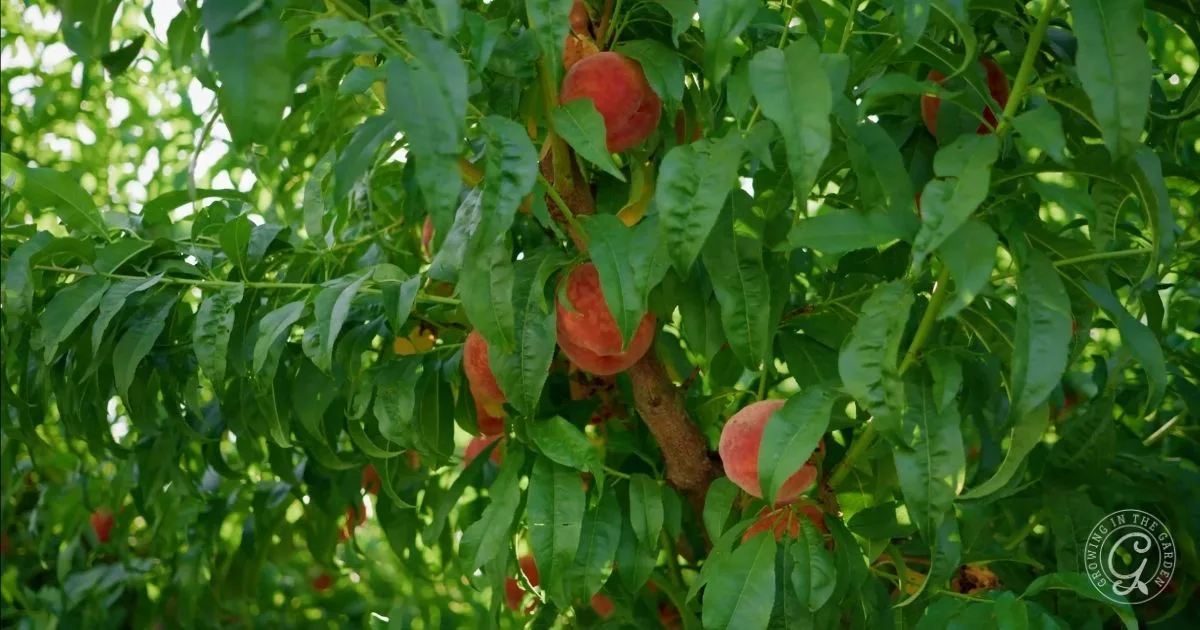
Hot-climate fruit growing gets a whole lot easier when you choose varieties that fruit without a high chill hour requirement, can handle intense summer heat, and fit the amount of care you’re realistically willing to give.
I’ve found these three questions are still the best filter as I decide what to plant:
- Will it produce here? (chill hours needed and heat tolerance matter)
- Will we eat it? (taste and how you plan to use it)
- Is it easy to grow? (water needs, pruning, and pest pressure)
Chill hours are the number of hours in winter when temperatures stay roughly between 32 and 45°F (0 to 7°C). Many fruit trees need a certain amount of chill to break dormancy and set blooms and fruit normally in spring. In the low desert, choosing low-chill varieties is key because our winters do not provide many chill hours.
Planting Basics for Fruit Trees in Hot Climates
Even the best fruit tree will struggle if it is planted incorrectly. Use my resources to help you plant your fruit trees correctly and help ensure a long, fruitful life.
- Planting Bare-Root and Container Fruit Trees: A Step-by-Step Guide
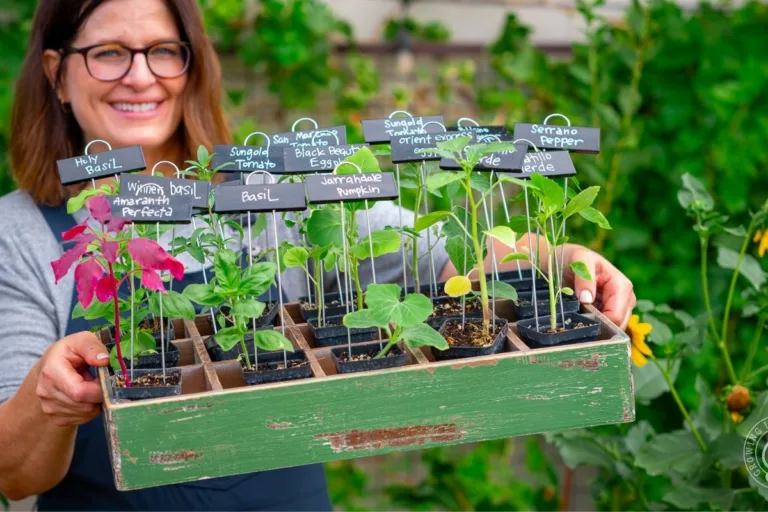
- Labeling Trees: The Last Step in Planting
- Nutrients, Fertilizer, Transplants, and Stressed Plants
Top 10 Fruit Trees for Low Desert Arizona That Produce Reliable Harvests
These ten trees produce well in the low desert. I think you will like the fruit too. That matters because fruit trees take time, water, and space. If you are going to give up ground space or container space, it needs to be worth it.
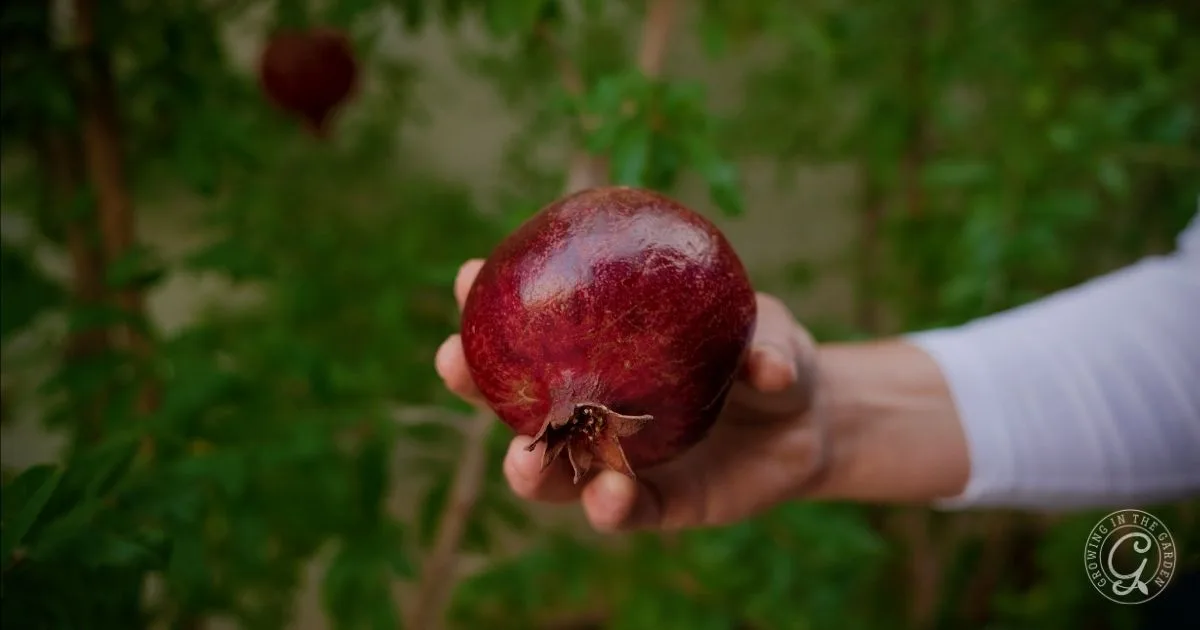
1. Pomegranate
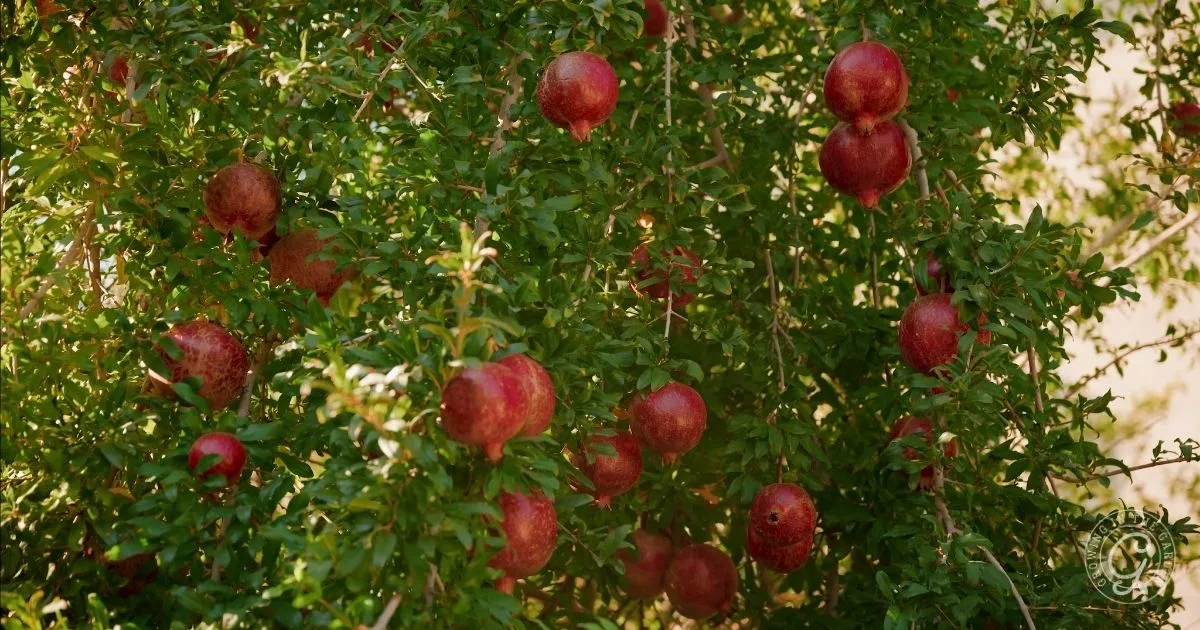
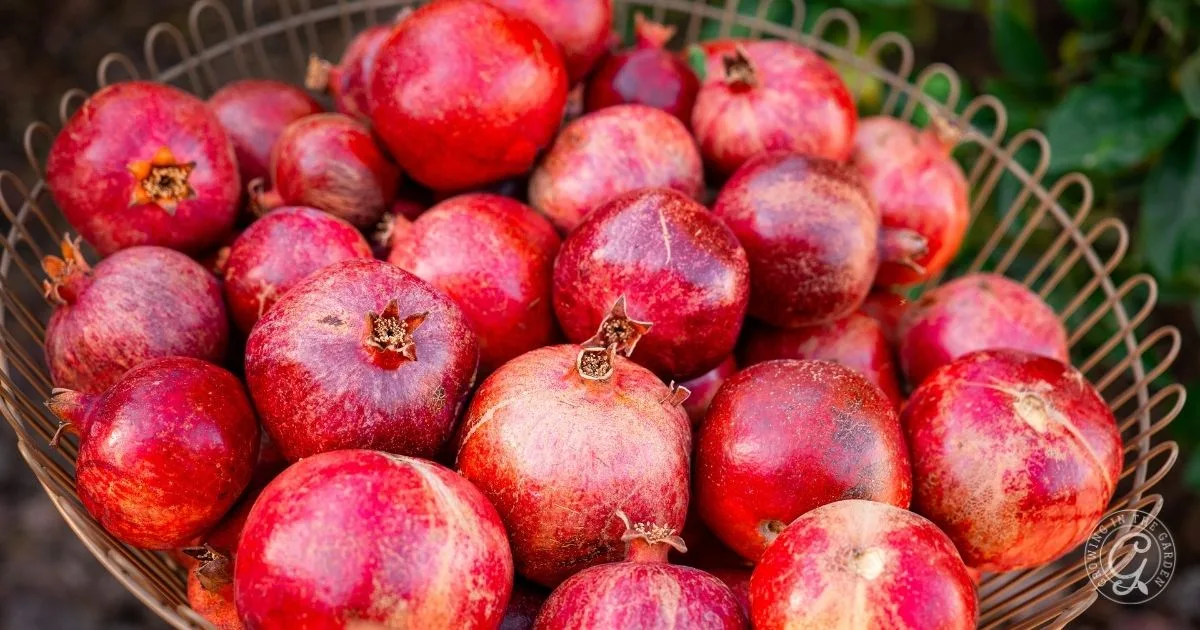
Why plant it: Pomegranates are one of the most reliable fruiting plants for hot, dry climates. They handle full sun, tolerate alkaline soils, and can be productive with less fuss than many fruit trees.
Read my pomegranate growing guide for more details about how to grow pomegranates.
Reasons to plant:
- Easy to grow from cuttings
- Produces within a few years
- No thinning required
- Minimal pruning needed for fruit; mostly shaping if you want it
What to watch for: Leaf-footed bugs can be an issue, especially later in the season.
Varieties to try: Wonderful is a classic choice. I’ve also had good luck with Early Wonderful.
Good alternatives: If you love the low-maintenance, high-reward vibe of pomegranates, figs are another great fit.
2. Peach (low chill varieties)
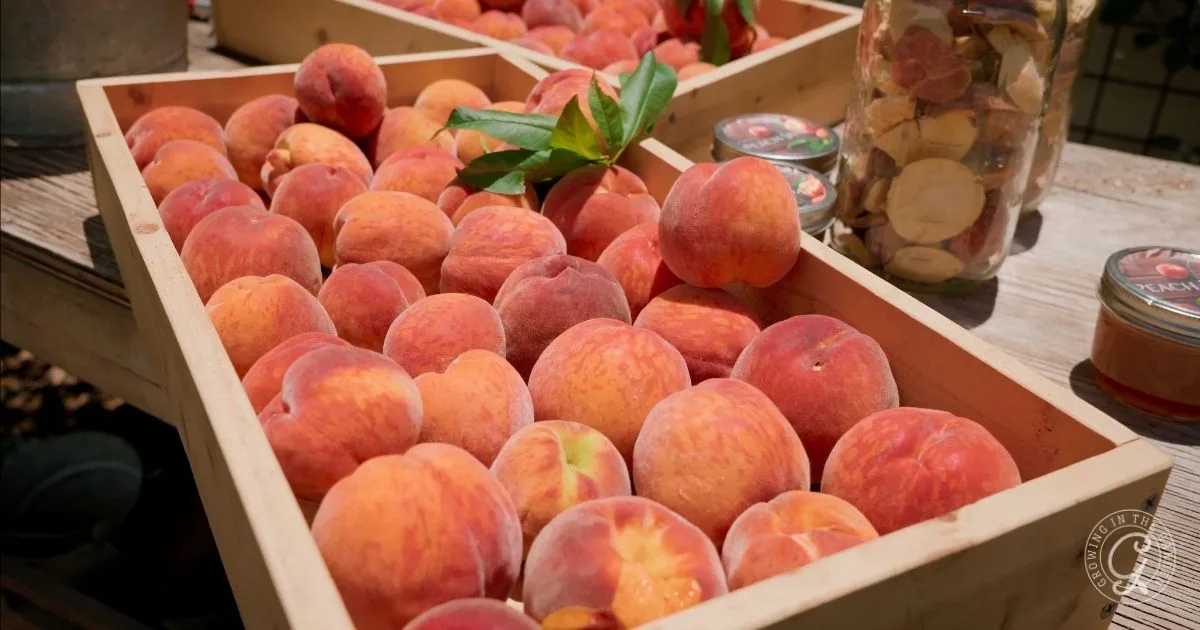
Why plant it: The right low-chill peaches can produce early, taste incredible, and finish before the most intense heat. They are one of the best “real harvest” fruit trees for the low desert when you choose the right variety.
Peaches do best when you commit to two practices: regular pruning and thinning. Pruning helps keep it productive. Thinning enables you to get larger fruit and protects the branches from breaking.
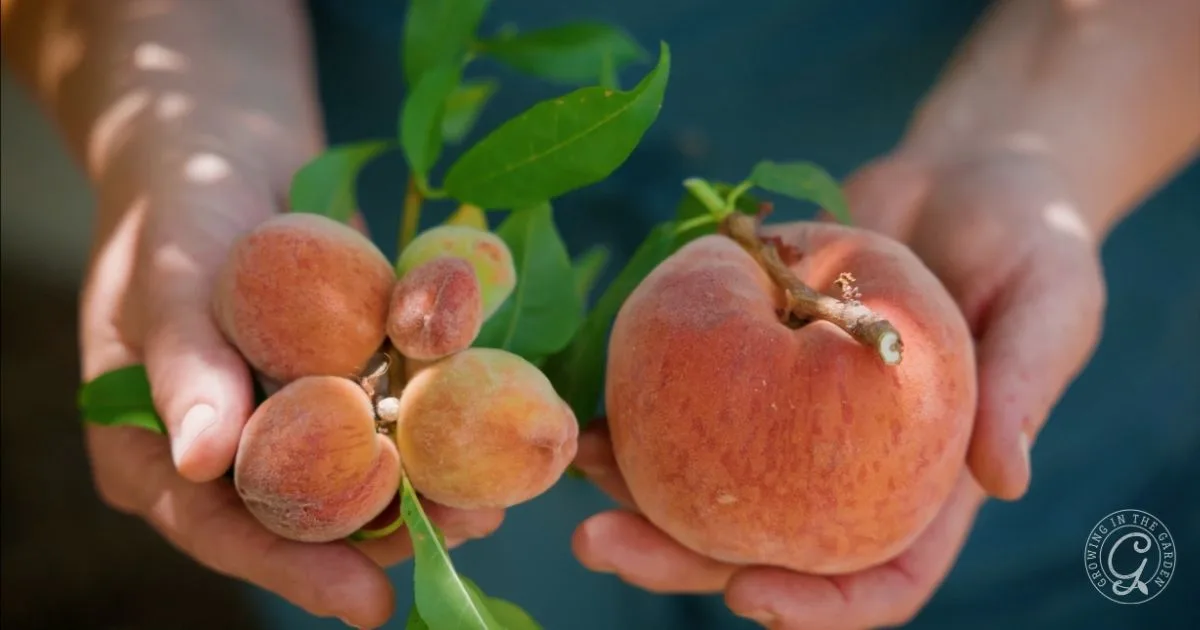
Varieties to try: Desert Gold and Florida Prince are my favorite low-chill options.
Good alternatives: If you want to grow more stone fruit, low-chill plum or apricot varieties can be worth trying. Apricots are a low desert favorite because they ripen early in late spring. Here’s my guide on how to grow apricots in Arizona and which low-chill varieties do best. See other recommended varieties in this guide: Arizona Fruit Planting Guide: A Visual Guide for Low Desert Fruit.
More peach help:
How to Grow Peach Trees: Tips for Growing the Juiciest Peaches
3. Fig
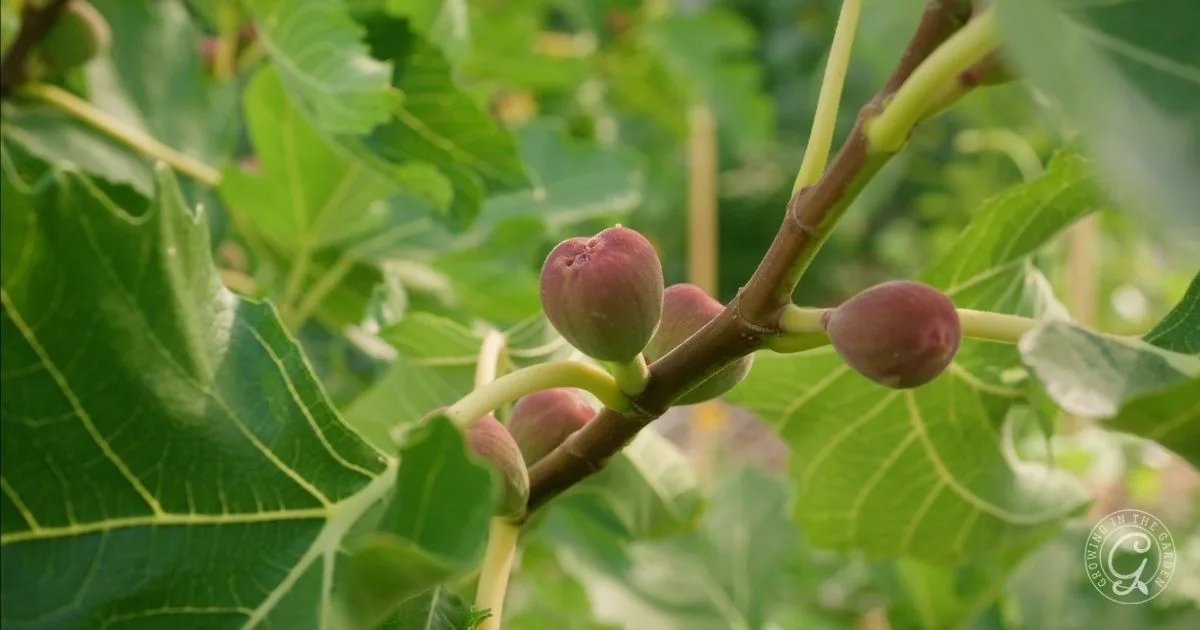
Why plant it: Figs thrive in heat and tolerate less-than-perfect soil. They are generous producers, and they grow well in the ground or in a large container if you don’t have room for these large trees. Learn more in this fig growing guide.
Reasons to plant:
- Heat tolerant
- Productive once established
- Great for fresh eating and drying
Varieties to try: Black Mission and Kadota are common favorites. Other varieties to consider: Brown Turkey, Conadria.
Good alternatives: Pomegranates are a great companion tree if you want another dependable producer with similar toughness.
4. Anna apple (low chill apple for the low desert)
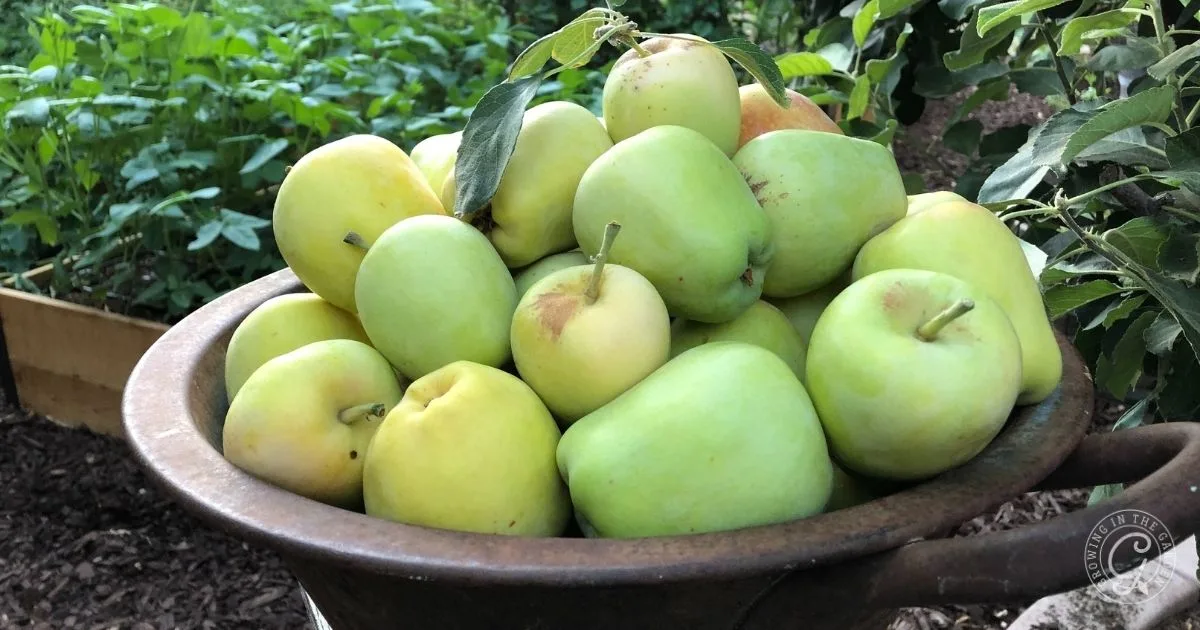
Why plant it: Anna is my top choice for an apple in the low desert because it needs very few chill hours and produces heavily once established. Learn more in this apple growing guide.
Reasons to plant:
- Heavy producer when mature
- Taste good fresh, and also excellent for preserving
- Often starts producing well around year three
Varieties and pollination options: Anna can produce on its own, but it often does even better with a compatible pollinator nearby. A common pairing is Dorsett Golden.
Good alternatives: If you want a second apple to support pollination and increase your harvest, consider Dorsett Golden or Ein Shemer.
5. Lemon
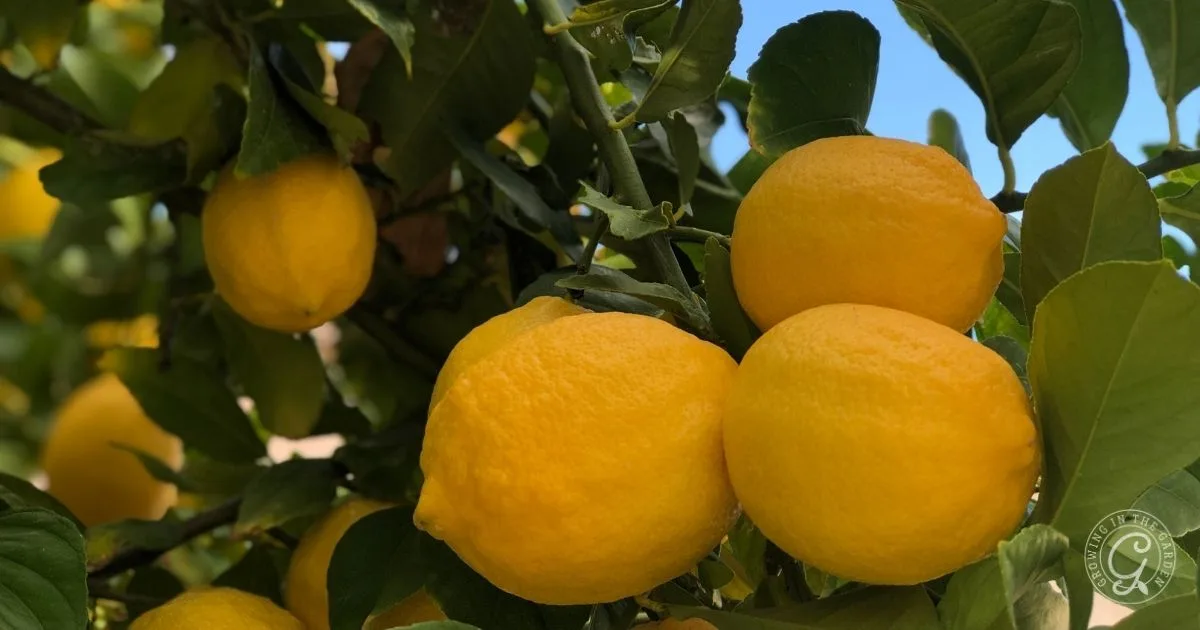
Why plant it: If your household uses and enjoys lemons, this is one of the most useful fruit trees you can grow. You can harvest lemons for months, and preserving juice and zest is simple.
Reasons to plant:
- Reliable producer in warm climates
- Long harvest window
- One of the most useful fruits in the kitchen
Varieties to try: Meyer or Lisbon. Meyer is a better option if space is limited.
Citrus care links:
6. Lime
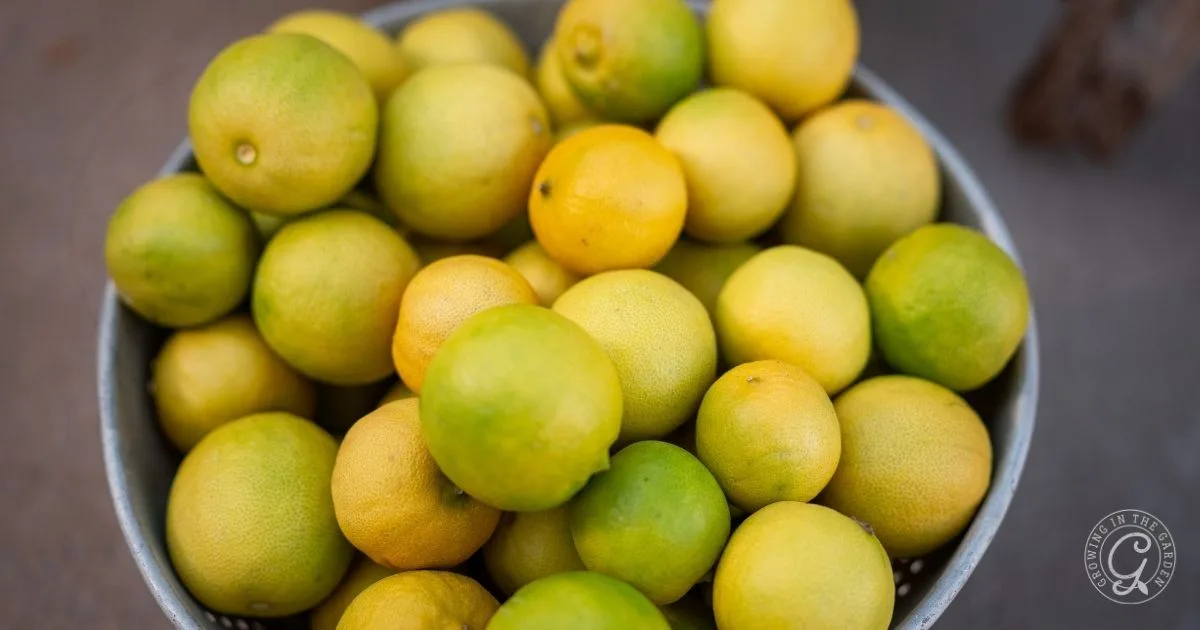
Why plant it: There’s something so satisfying about harvesting homegrown limes. Most of the year, I find myself running outside to grab a lime or two, and I can usually find a couple.
Hot-climate tip: Choose a warm spot in your yard. Limes are more frost sensitive than other types of citrus, especially the first few years while the tree is getting established.
Varieties to try: Key Lime or Bearss.
Good alternatives: If you want a citrus tree with a little more cold tolerance, consider a lemon or calomondin, depending on your yard and your winter lows.
7. Orange

Why plant it: Low Desert Arizona is one of the few places where many citrus varieties can grow outdoors year-round with occasional freeze protection. If oranges are something you like to eat, they are worth the space.
How to choose an orange you will use:
- Easy to peel or want to grow in a container: Clementine
- Like juice: Valencia
- Fresh eating: Navel
Care notes: Give oranges (especially Navels) afternoon shade and deep, regular watering.
Varieties to try: Navel, Valencia, and Clementine are great starting points.
Citrus makes a genuinely good landscape tree, not just a fruit tree. See where it fits among the best trees for Arizona yards.
8. Mulberry
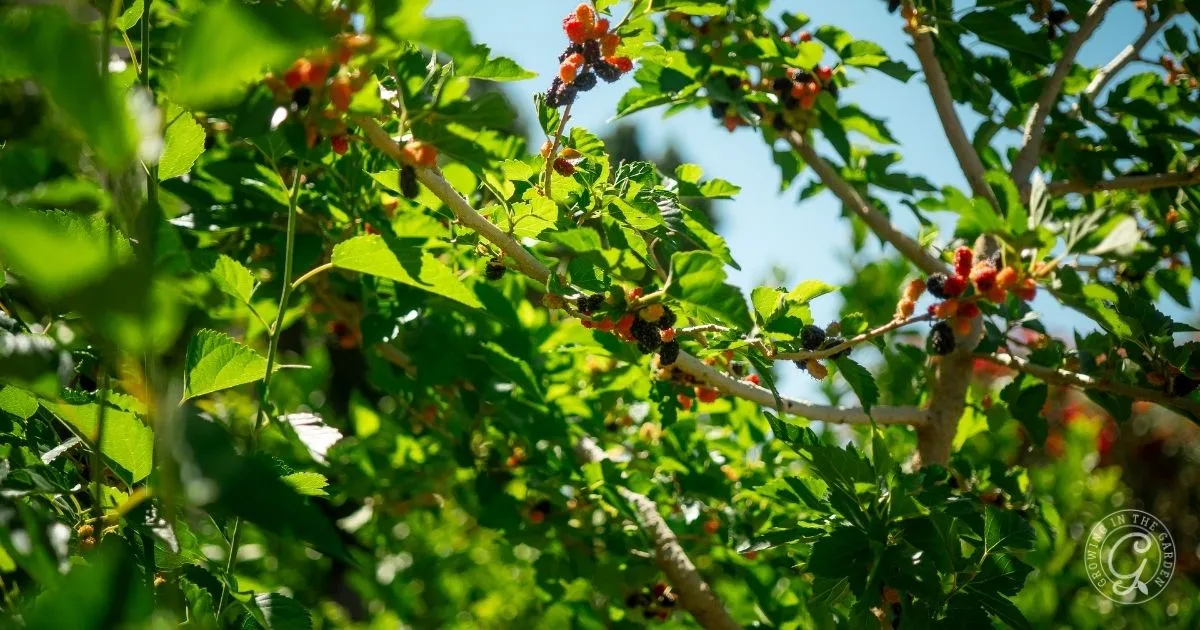
Why plant it: Like pomegranates, mulberries can grow easily from cuttings. They are heavy producers within just a year or two.
Reasons to plant:
- Fast-growing shade tree
- Heavy producer
- Great fresh, in smoothies, and for sharing
Varieties to try: Pakistan or Black Beauty for large, sweet berries. If you want a smaller footprint, consider dwarf or everbearing types, if you can find them locally.
Hot-climate tip: Give it room. Mulberries want to be big.
Good alternatives: If you want high production in less space, grapes are a great option.
Want the full details on planting, watering, pruning, and harvest timing? Here is my guide on how to grow mulberries in a hot, dry climate.
9. Barbados cherry (acerola)
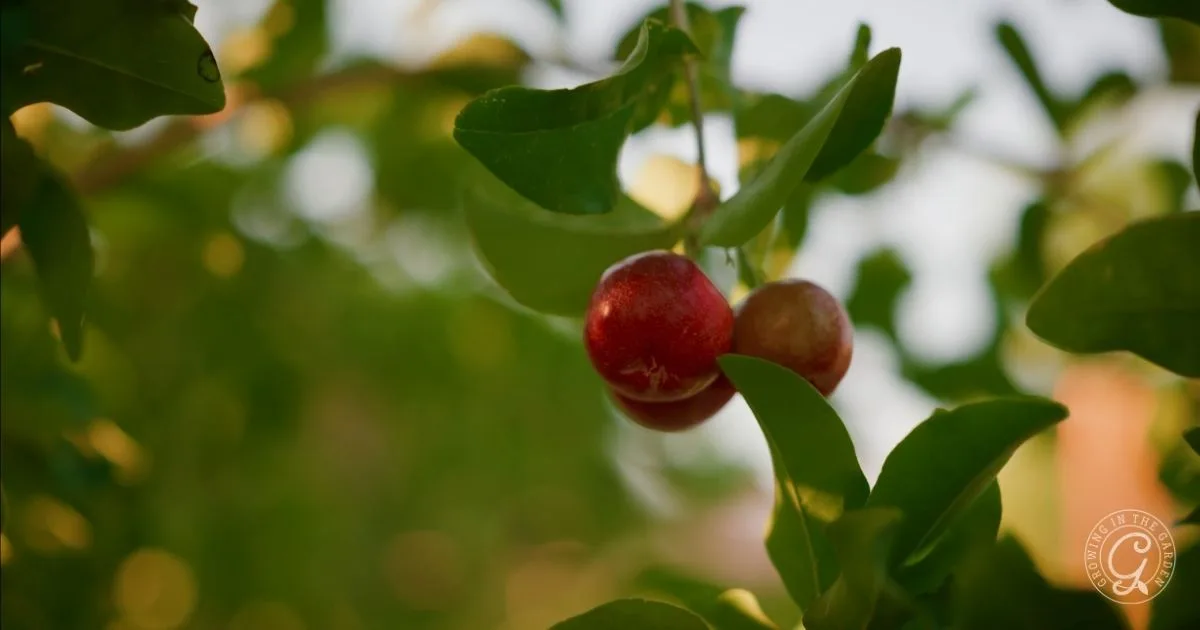
Why plant it: This tropical-style fruit tree doesn’t mind full sun. It is heat-tolerant and desert-adapted. It often produces well beginning around year three.
Reasons to plant:
- Fruit is tangy and packed with vitamin C
- Fun, different harvest that grows well in heat
- Can work in the ground or in a large container
How to use it: Eat fresh or add the cherries to fresh-squeezed lemonade for tropical flavor.
Varieties to try: Many are sold simply as Barbados cherry or acerola.
Good alternatives: If you want another heat-loving, less common fruit option, guavas are a good choice.
Read this guide for more information about how to grow Barbados cherries.
10. Grapes (not a tree, but worth planting)
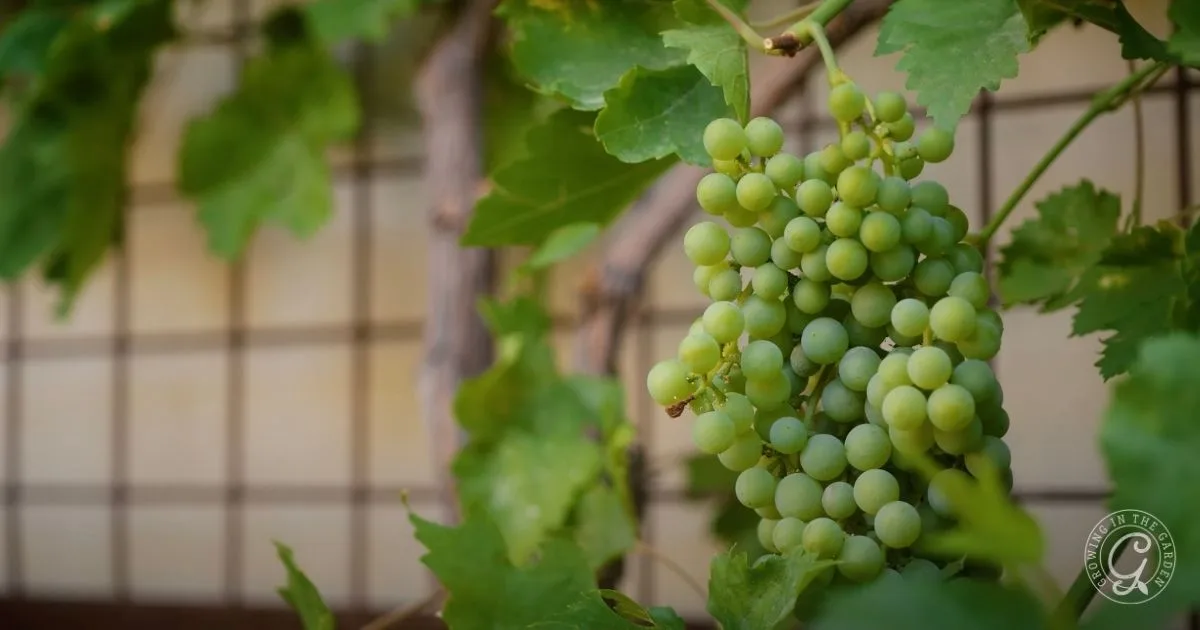
Why plant it: Okay, not technically a tree, but vines take up less space, and the fruit production makes them worth it. Grapes love our dry heat.
Reasons to plant:
- High production in a small footprint
- Great for fresh eating, raisins, and sharing
- Perfect for training along a fence or trellis
Keys to success: Learn how to prune them and water deeply but less often once established. Good pruning is the difference between a leafy vine and a productive one. Learn more about how to grow grapes in this guide.
Varieties to try: Flame Seedless and Thompson Seedless are reliable choices. Other desert-friendly table grapes to consider: Perlette, Beauty Seedless.
Three fruit trees I’d skip in Low Desert Arizona
Skip 1: Apples that need more chill hours than we have
I’ve tried them. I planted gorgeous espaliered Fuji and Gala trees, and they looked amazing, but not one apple. Our winters just aren’t long or cold enough for many traditional apple varieties.
If you want apples in the low desert, stick with low-chill options like Anna, and consider a compatible pollinator like Dorsett Golden.
Skip 2: Fruit you don’t like or won’t use
If you don’t like lemons, don’t plant a lemon tree. It sounds simple, but fruit trees take time, space, water, and care. Try to sample varieties before you commit, and plant what you will actually use.
Skip 3: High-maintenance dreams
Avocado, I’m looking at you. It might be possible, but it takes extra water, shade, and frost protection. For me, it’s not worth the effort. If I’m giving up soil space and water for a tree, it needs to produce consistently.
When you are choosing trees for your yard, it also helps to avoid common “regret plants,” and here is why I recommend skipping Queen palms in the low desert.
What to Plant Next
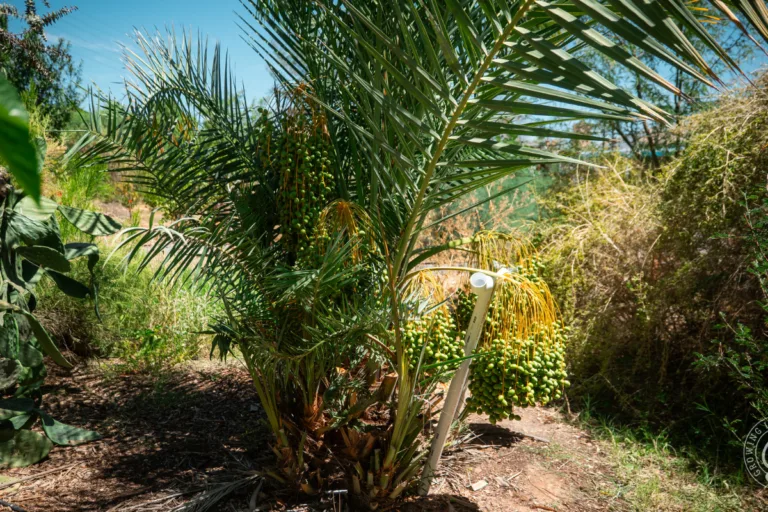
Date palms almost made this list. They love our heat, produce for decades, and need less water than you’d expect, but hand pollination puts them in a category of their own. If you’re curious, here’s everything you need to know about growing date palms in the low desert.
If you already have one or two of the basics covered, the best “next tree” is usually the one you will actually use. Revisit the three questions: Will it produce here? Will we eat it? Is it easy to grow? If yes, it earns the space.
Those are my top picks for fruit trees that perform in the low desert, and the ones I’d skip. What’s producing in your yard? What trees did I miss, and what should I plant next?
FAQ: Fruit trees for Low Desert Arizona
Citrus, pomegranates, figs, low-chill peaches, Anna apples, mulberries, Barbados cherry, and grapes are all good options when planted correctly and matched to your microclimate.
Anna can set fruit on its own, but many gardeners see better production with a compatible pollinator nearby, such as Dorsett Golden.
In the low desert, planting during cooler weather helps trees establish roots before extreme heat. Plant from October through March.
Sources
- University of Arizona Cooperative Extension: Deciduous Fruit and Nuts for the Low Desert
- University of Arizona Cooperative Extension: Growing Fig Trees in the Home Garden
- University of Arizona Cooperative Extension: Growing Grapes in the Home Garden
- University of California IPM: Leaf-footed bug information and fruit tree pest notes

Leave a comment on 10 Best Fruit Trees for Low Desert Arizona: Plus 3 to Skip