
How to Grow Mulberries (Low Desert Guide)
Mulberries feel almost too easy once they are established. They handle heat, tolerate alkaline soils, don’t require thinning, and reward you with buckets of fruit. We love mulberry season at our house. The easy fruit does come with a couple of precautions. The two big issues are the mess (ripe berries stain) and the fact that some Arizona cities restrict certain mulberry varieties due to pollen. Here is how to grow mulberries successfully, with practical tips for hot climates like the low desert.
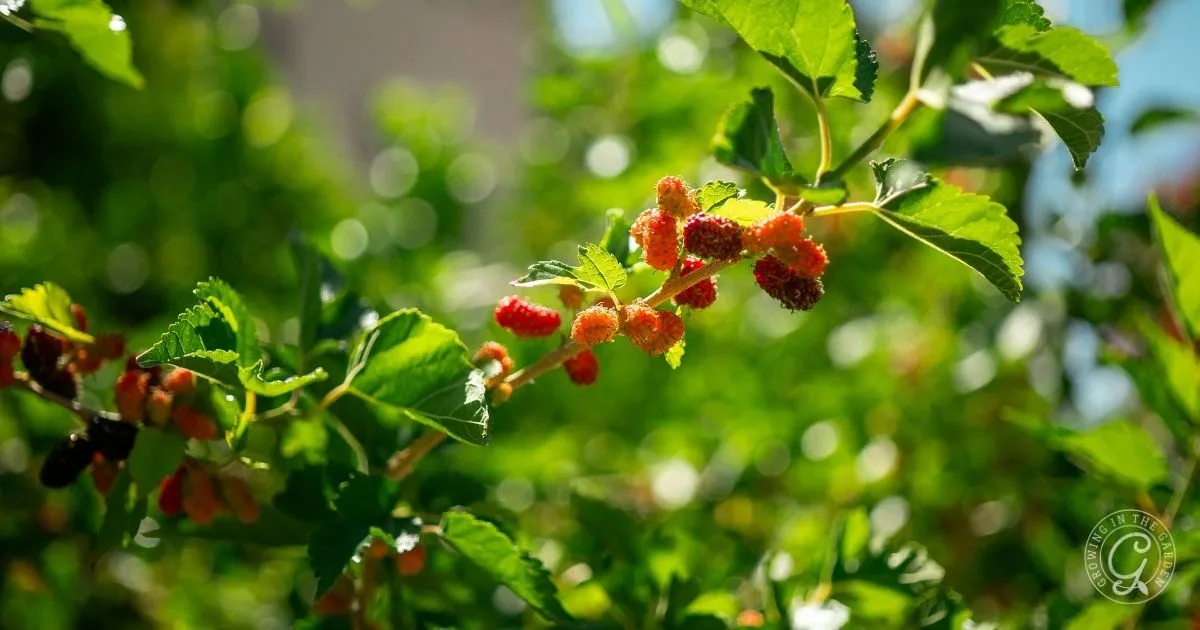
Key Takeaways: How to Grow Mulberries
- Mulberries thrive in hot climates and alkaline soils, offering high fruit yields, but can be messy due to staining.
- Plant mulberries in full sun, allow ample space, and avoid planting near hardscape to minimize cleanup.
- Before planting, check local regulations regarding pollen-producing varieties, especially in Arizona.
- Consistent deep watering is essential for young trees, while established ones need less frequent deep watering for optimal fruit quality.
- Use thoughtful pruning techniques to maintain a manageable tree height and ensure good fruit production.
What We’ll Cover:
- Mulberry Quick Facts
- What Do Mulberries Taste Like? Do They Have Seeds?
- Before you Plant
- Mulberry Varieties for a Home Garden
- Best Place to Plant a Mulberry
- When to Plant in the Low Desert
- How to Plant a Mulberry
- Watering Mulberries in a Hot, Dry Climate
- Fertilizing Mulberries
- Pruning Mulberries, and How to Keep Them Pickable
- Harvesting Mulberries
- Propagating Mulberries From Cuttings
- Common Issues
- Extra Low Desert Tip: Protect Young Trunks From Sunscald
- Mulberry FAQ
Mulberry Quick Facts
Sun: Full sun is best.
Soil: Well-drained is ideal, but mulberries tolerate a wide range of soils, including alkaline soils.
Water: Drought-tolerant once established, but better fruit with consistent deep watering.
Mature size: Often very large, commonly 30–60 ft tall/wide (9–18 m), depending on species and pruning.
Mess factor: High. Plant well away from patios, sidewalks, driveways, and parked cars.
Cold needs: Generally low chill compared with many deciduous fruit trees, but performance varies by species and cultivar.
What Do Mulberries Taste Like? Do They Have Seeds?
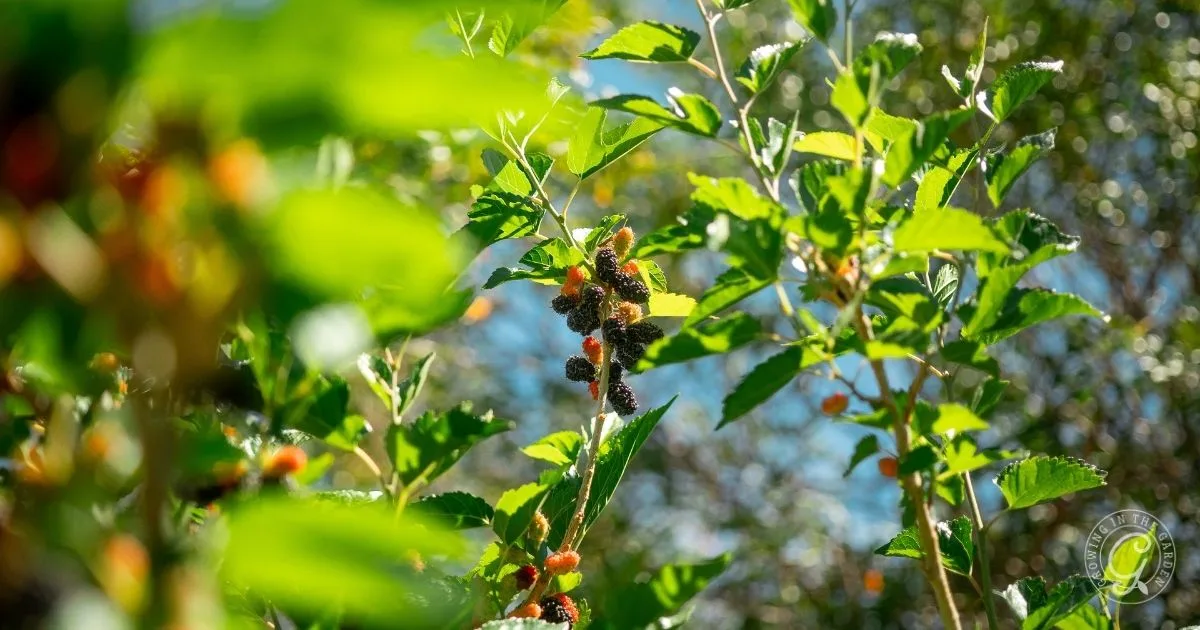
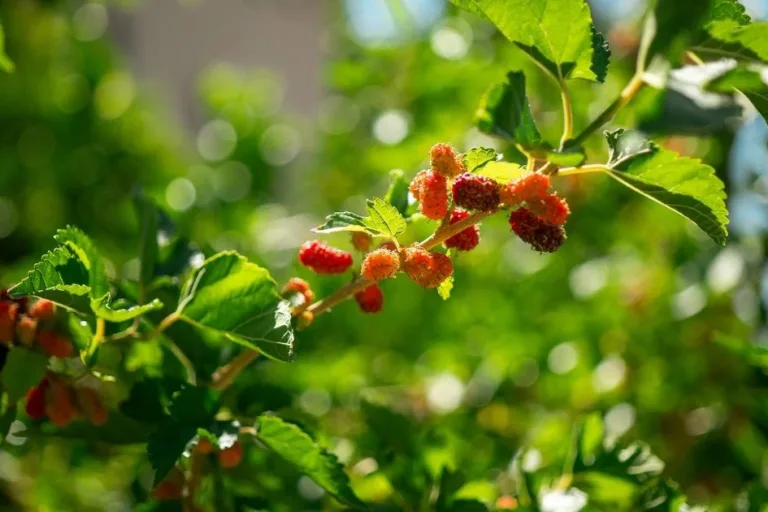
Mulberries are usually sweet, often with a sweet-tart “berry” flavor that reminds me of blackberries. Flavor depends a lot on the type and variety. Some are very sweet with little tartness, while others have a better balance of sweet and tart.
Mulberries have seeds, but they are small and soft, similar to the tiny seeds in blackberries.
Before you Plant
Mulberry pollen can be a major allergy trigger, and some communities have banned or restricted planting of pollen-producing mulberries, often citing Morus alba (white mulberry). For example, Tempe lists pollen-producing mulberry trees (Morus alba) as prohibited and notes that only pollenless, fruitless varieties/cultivars may be allowed in certain contexts.
If you live in the Phoenix metro, take a minute to check your city’s current rules before buying a tree.
Mulberry Varieties for a Home Garden
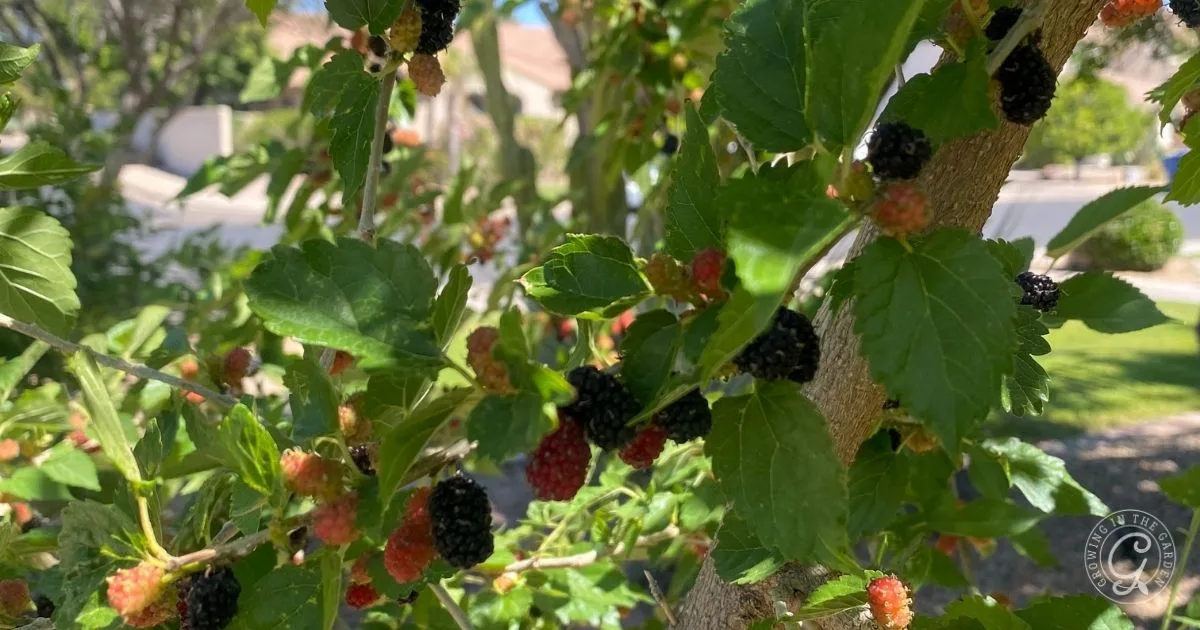
Hot-climate tip: If you want fruit, buy a named fruiting variety from a reputable nursery and ask whether it fruits reliably without a second tree.
White mulberry (Morus alba)
- Very adaptable, heat- and drought-tolerant, and tolerant of alkaline soils.
- Can become weedy or invasive in some regions and can hybridize with native mulberries in parts of the U.S.
- Many “fruitless” mulberries are male selections grown for shade, and those are often the ones tied to pollen complaints and restrictions.
Red mulberry (Morus rubra)
- Native to parts of the eastern U.S.
- Fruit is loved by wildlife (and people), but fallen fruit can rot and smell if it piles up where it is not cleaned up.
Black mulberry (Morus nigra)
- Fruit is smaller than that of other types, but is often considered the best-flavored, with a richer sweet-tart taste.
- Can be slow to begin bearing compared with other mulberries, so patience may be required.
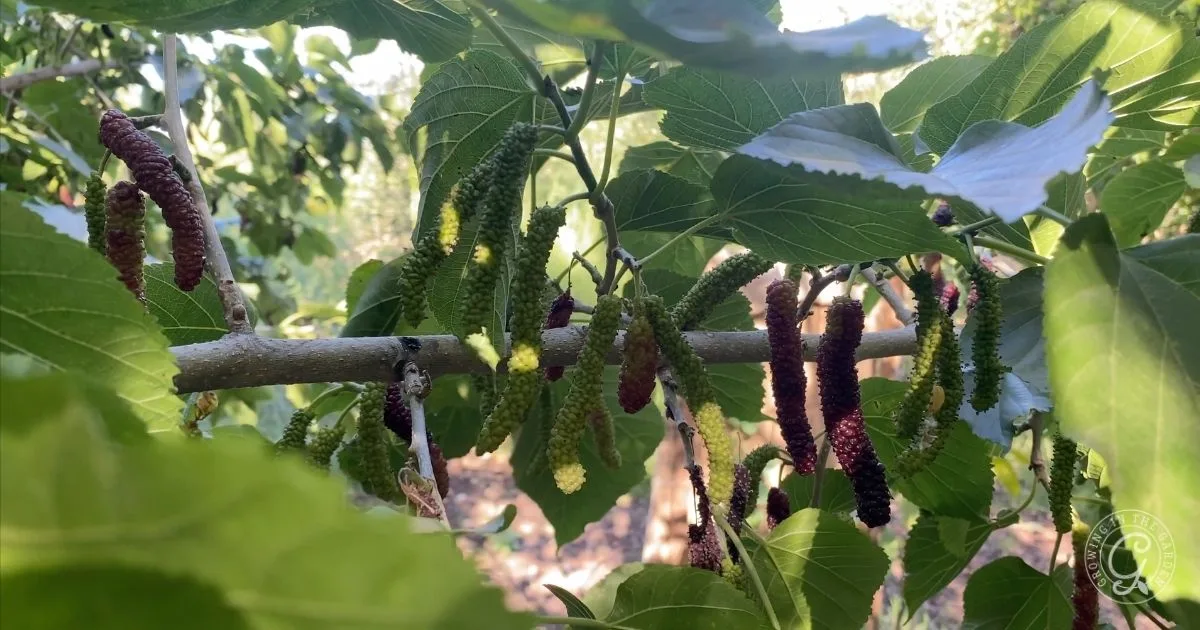
Pakistan mulberry (Morus macroura) and other long-fruited types
- Frequently recommended in warm climates because the fruit can be large and the trees can handle heat well. Availability varies by area.
Some mulberries have male and female flowers on separate trees. Others can be monoecious. Some cultivars can set fruit without pollination, and cross-pollination is often not necessary for fruit set. This is why buying a known fruiting variety matters. If you plant a “fruitless” mulberry, it will not suddenly start fruiting later.
Best Place to Plant a Mulberry
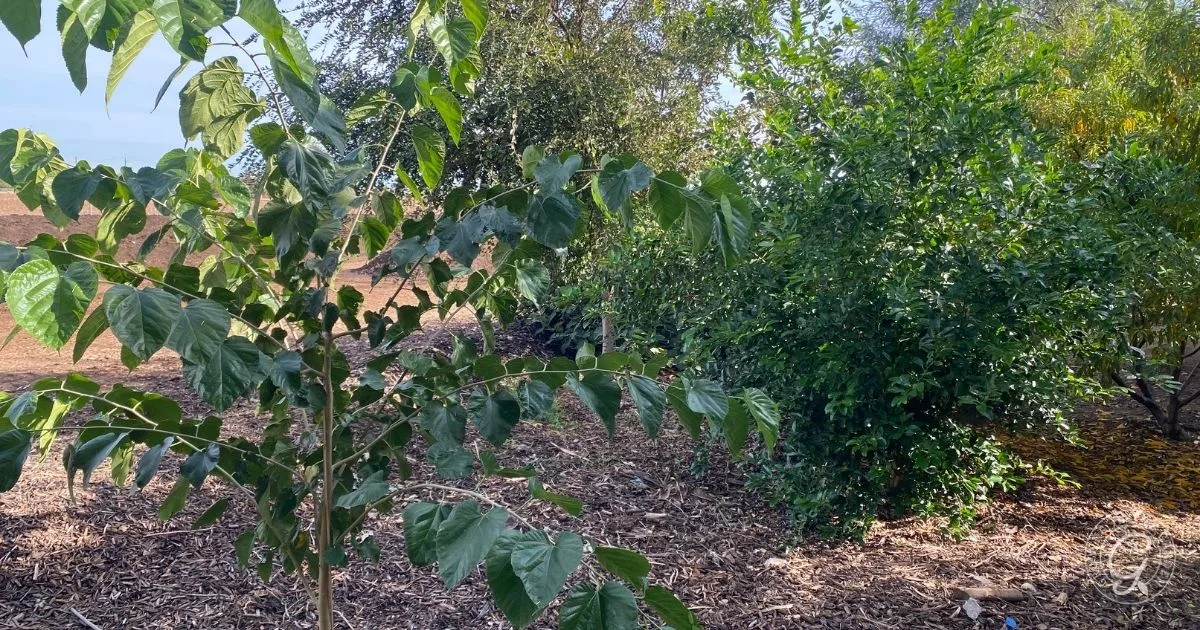
- Give it space, don’t crowd other fruit trees. Many mulberries become large shade trees. Plan for the canopy spread.
- Keep it away from hardscape. Ripe mulberries stain concrete, pavers, and anything parked underneath. Birds will also help themselves. You will see evidence of this. (My driveway is messy from birds during mulberry season!)
- Avoid planting near garden areas. Roots will invade and fill your raised beds.
Keep at least 15 ft (4.6 m) between mulberries and other large trees, and more if you have the room.
Which other fruit trees grow well in the low desert?
- If you are building out a backyard fruit lineup, start with my list of 10 Best Fruit Trees for Low Desert Arizona.
- For planting dates and a quick visual of fruits that do well here, see my Arizona Fruit Planting Guide.
- If you want to spread harvests across seasons, this guide on what to plant for year-round fruit tree harvests in Arizona helps you plan it out.
I also grow these fruit trees in my garden. Click on the name of the fruit tree to learn more.
When to Plant in the Low Desert
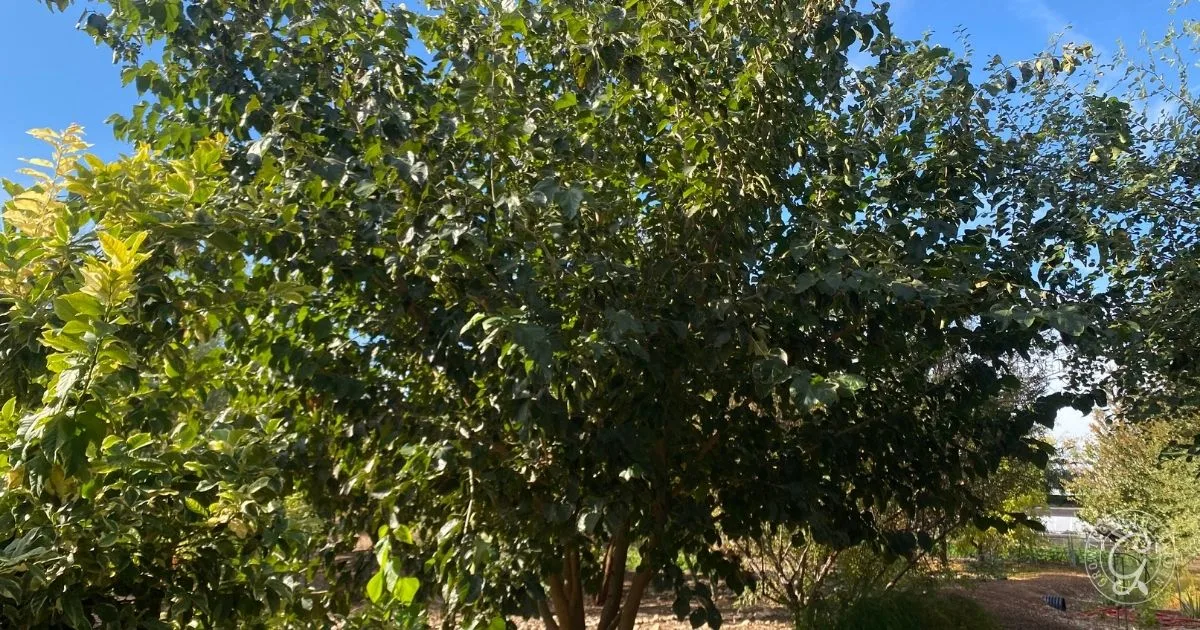
In the low desert, fruit trees establish best when planted in cooler weather so roots can grow before summer heat arrives. I recommend planting from October through March. Try to avoid planting right before extreme heat unless you are prepared to baby it through the first summer.
For a quick look at the best planting times for other fruit in the low desert, see my Arizona fruit planting guide.
How to Plant a Mulberry
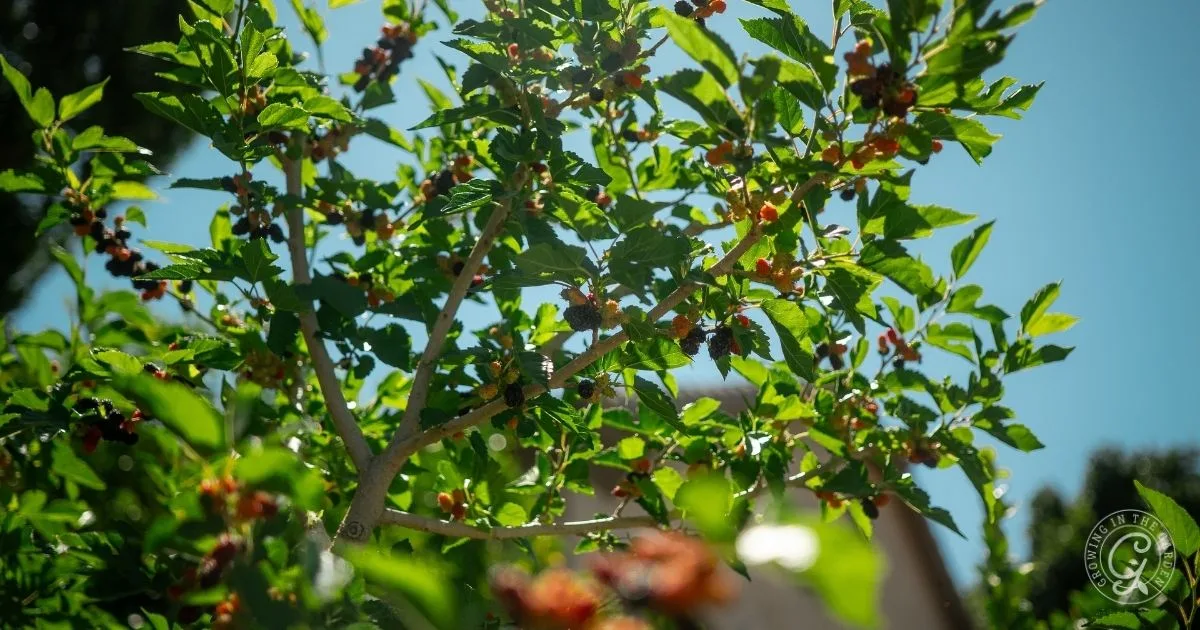
For a simple step-by-step planting guide, see Planting Bare Root and Container Fruit Trees.
- Dig a wide hole (wider than deep) and loosen the surrounding soil so roots can expand.
- Plant at the same depth as the tree was growing in its pot. If grafted, keep the graft union above soil level.
- Water deeply at planting to settle the soil around the roots.
- Mulch with 4–6 inches (10–15 cm) of coarse organic mulch to reduce evaporation and soil temperature swings, but keep mulch a few inches back from the trunk.
Watering Mulberries in a Hot, Dry Climate
Mulberries can tolerate drought once established, but here is the important nuance: tolerating drought is not the same as producing great fruit in drought.
- Year 1–2: Deep, consistent watering is key, especially through the first summer.
- Established trees: Water deeply and less frequently, expanding the wetted area as the canopy grows.
- Watch the fruit: If fruit shrivels or drops early, inconsistent watering is a common contributor.
Mulberries can survive on less, but you will usually get better fruit size and quality when the tree is not swinging between too dry and too wet. Learn more here: How to Water Your Garden.
Fertilizing Mulberries
Mulberries are not heavy feeders compared with many fruit trees.
- Top-dress with compost and worm castings in late winter or early spring. Learn more here: Organic Fruit Tree Fertilizing: Four Simple Steps.
- If growth is weak or leaves look pale, use a light application of a balanced fertilizer and reassess irrigation first (watering issues are more common than nutrient deficiencies).
Additional support for fruit trees: Nutrient+ can help promote healing, growth, and fruiting. Apply three times a year: Valentine’s Day, Memorial Day, and Labor Day. Use alongside mulch, compost, and worm casting applications.
Pruning Mulberries, and How to Keep Them Pickable
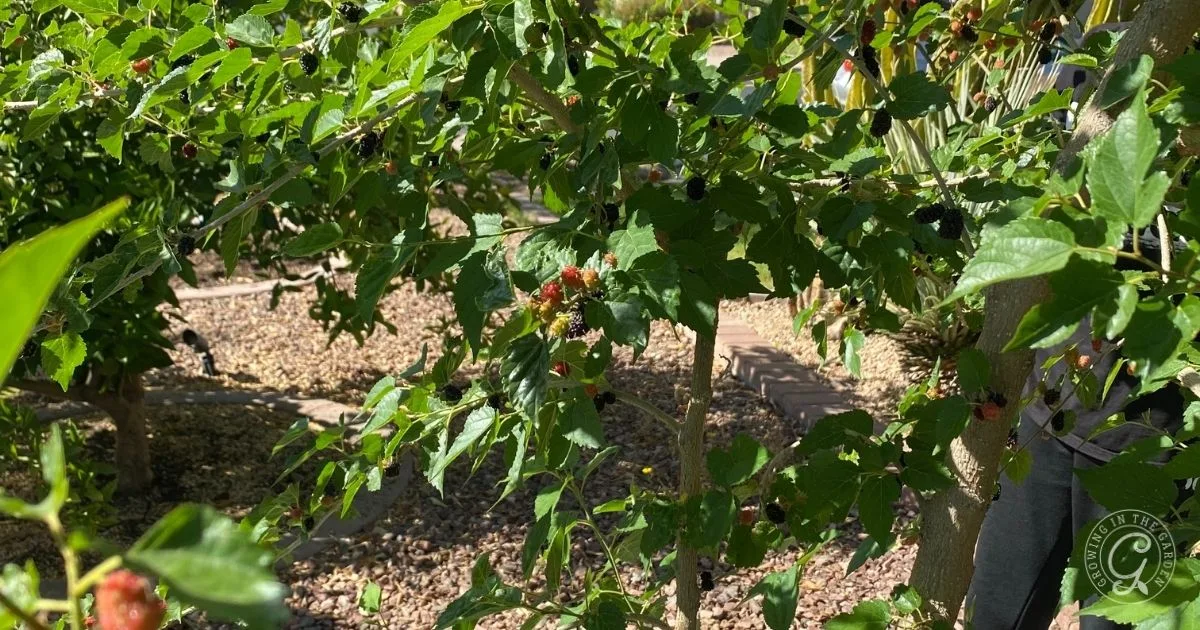
Mulberries can turn into “too tall to harvest” very quickly. If you want fruit you can actually reach, start training early.
When to prune
- Light structural pruning is typically easiest while the tree is dormant.
- Some mulberries can “bleed” sap when pruned, and pruning during late fall or winter is often recommended to reduce that issue.
What to prune
- Remove dead, damaged, crossing, and inward-growing branches.
- Focus on building a strong structure early, because mulberries can have weaker wood and are prone to breakage in the wind when poorly structured.
- Mulberries can form flowers and fruit in the axils of current-season growth, and on spurs on older wood. That means you want a balance. If you remove too much of last year’s growth every winter, you can reduce fruiting potential.
- After the tree has a good framework, keep pruning minimal and use selective summer pinching or shortening of side shoots to encourage short fruiting spurs, rather than heavy winter cutting.
Avoid topping
Topping creates weak, fast regrowth and sets you up for ongoing problems. Instead, reduce height by cutting back to a well-placed lateral branch and keep reductions moderate.
Harvesting Mulberries
Mulberries ripen over a period of time, not all at once, with most coming from spring to early summer.
Harvest tips:
- Pick when the berries are fully colored, soft, and come off easily.
- I like to lay a sheet or tarp down and gently shake the branches to drop ripe berries onto it. Kids love doing this.
- Wear gloves to avoid stained hands.
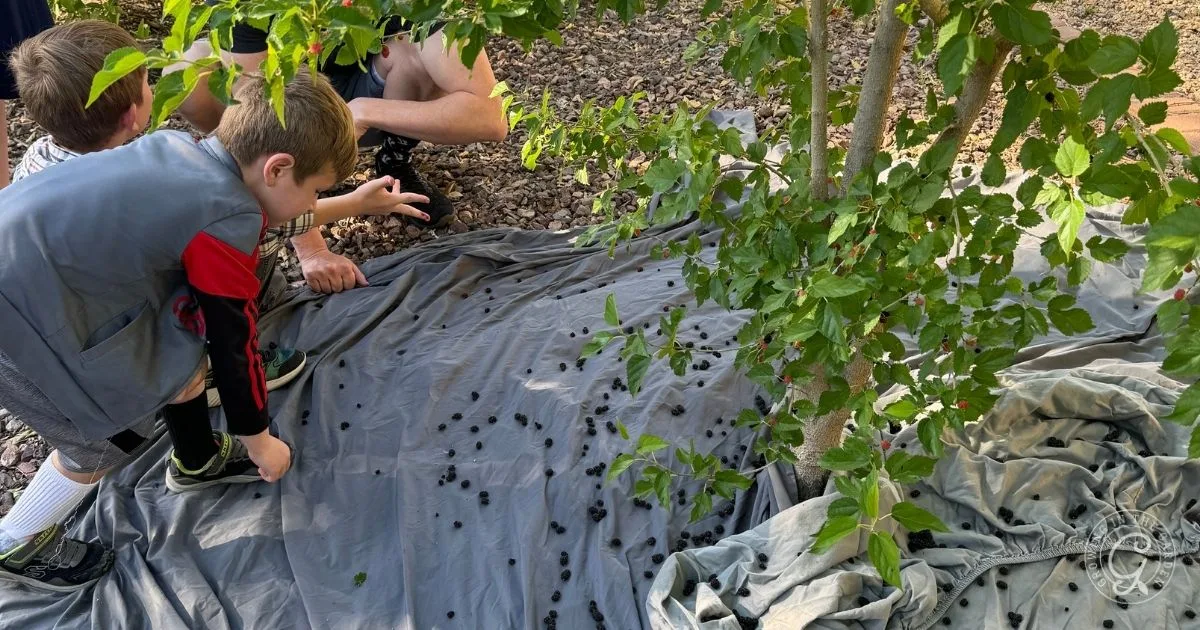
Birds: Birds love mulberries. You can net smaller trees, but netting large trees is difficult. There are usually enough berries to share.
Propagating Mulberries From Cuttings
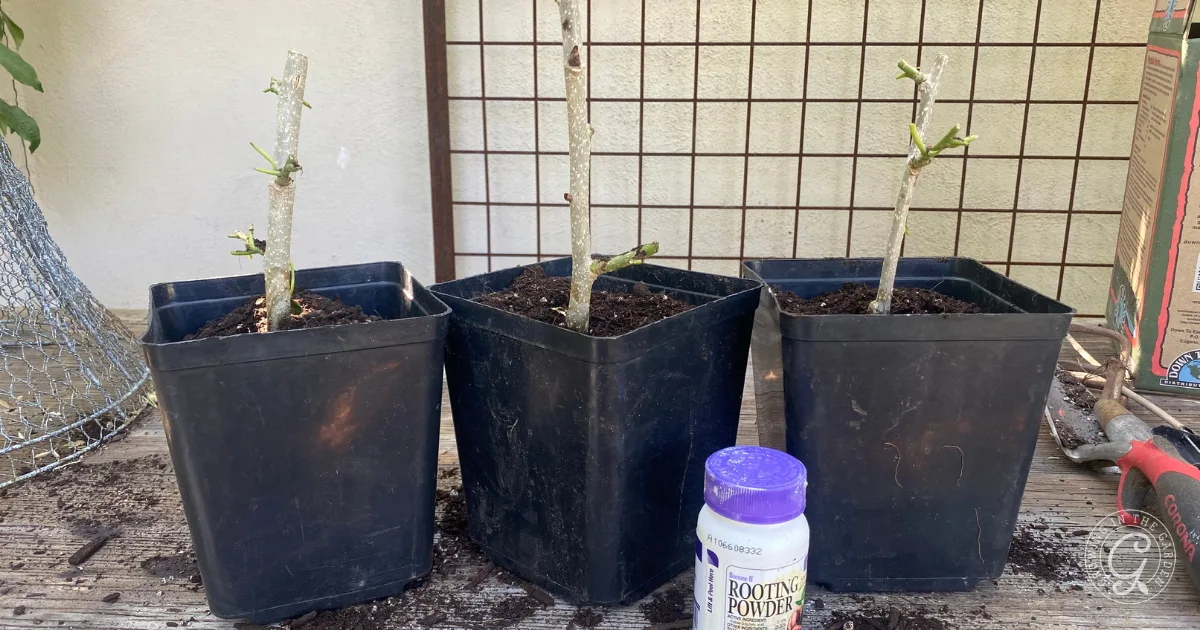
Mulberries are one of the easier fruit trees to start from cuttings, especially white mulberry (Morus alba) and many of its cultivars.
Two common cutting types:
Hardwood cuttings (dormant season)
- Take pencil-thick cuttings from healthy one-year wood while the tree is dormant.
- Cut lengths are often around 6–12 inches (15–30 cm), with several buds.
- Plant with the buds pointing up, burying roughly the lower half to two-thirds in a well-draining medium.
- Keep evenly moist (not soggy) until rooted.
Softwood or semi-hardwood cuttings (warm season)
- Taken from flexible, current-season growth that has started to firm up.
- Rooting is usually faster, but success depends more on keeping humidity up (bright shade, covered pot, or misting setup).
- Use a clean, sharp cut, remove lower leaves, and consider rooting hormone for better consistency.
Important note: Rooting success varies by species. Black mulberry (Morus nigra) is often reported to be harder to root from cuttings than white or hybrid types.
Common Issues
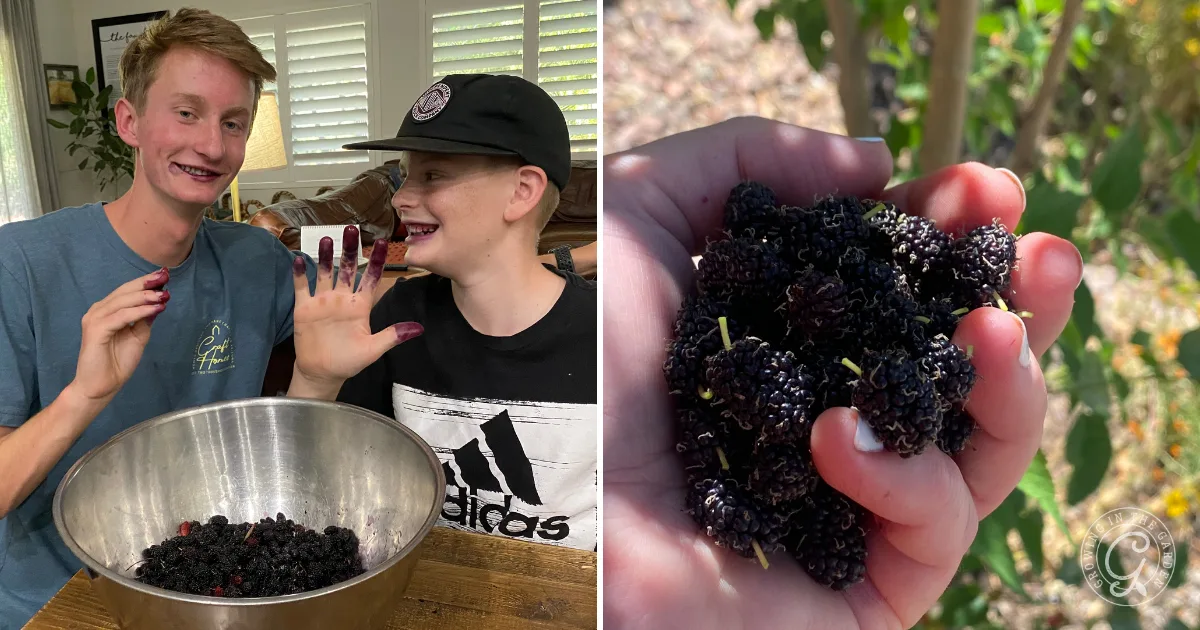
Staining and mess: The number one complaint. Plan your location accordingly.
Seedlings: Some mulberries can self-seed and become weedy. Pull seedlings early if they pop up where you do not want them.
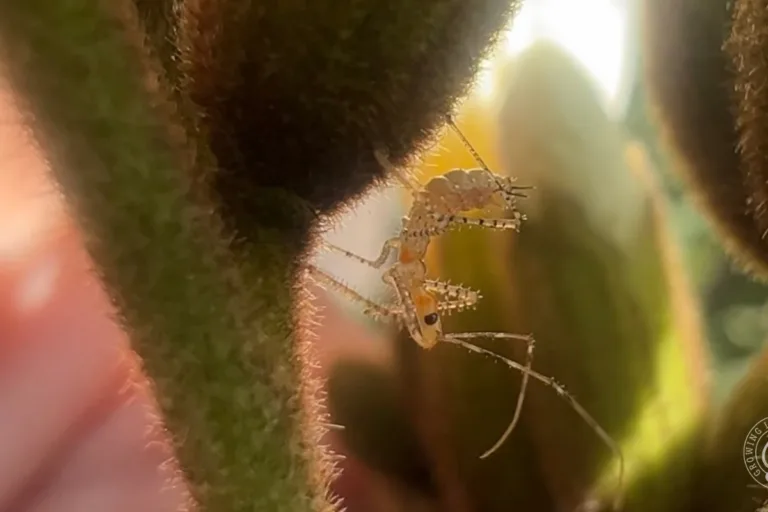
Pests and diseases: Often minor, but you can see whiteflies, leaf-footed bugs, mites, scale, leaf spot, powdery mildew, blight, or cankers depending on conditions and variety.
Extra Low Desert Tip: Protect Young Trunks From Sunscald
In hot climates, young trees can get sunscald on exposed bark, especially on the south and west sides, and especially if they were “limbed up” at the nursery and do not have low branches shading the trunk.
To help prevent sunscald:
- Keep the tree well irrigated
- Avoid stripping off all lower branches
- Use trunk protection (tree wrap) or paint exposed trunk and limbs with a suitable white trunk paint
- Mulch to reduce reflected heat, keeping it off the trunk
Sunburn can damage trunks and invite pests, so the trunk-protection tips in How to Protect Citrus Bark from Sunburn are helpful.
Mulberry FAQ
No. Mulberries are small berries that ripen over a stretch of time, so there is no typical thinning step like with stone fruit. If your tree sets heavily, focus on consistent watering and harvest often to reduce dropped fruit and mess.
Yes, at least a little. Pruning is mostly about size control, strong structure, and keeping fruit within reach. If you never prune, many mulberries become very large and difficult to harvest.
Most gardeners do structural pruning during dormancy and keep summer pruning light. Mulberries can bleed sap when pruned, so many growers avoid heavy pruning at times when sap flow is high and stick to dormant-season pruning for bigger cuts.
Mulberries can fruit on current-season growth and on short fruiting spurs on older wood. The practical takeaway is to avoid cutting back all last year’s growth every winter. Light, selective pruning usually keeps production steady.
Usually not, but it depends on the type and cultivar. Some mulberries are male, some female, and some have both flower types. The safest approach is to buy a named fruiting variety from a reputable nursery and confirm it is a fruiting selection, not a fruitless shade tree.
Common reasons include planting a fruitless male variety, the tree is still young, heavy pruning removed much of the fruiting wood, inconsistent watering during bloom and fruiting, or the tree is stressed from heat, poor drainage, or improper planting depth.
Grafted trees often fruit sooner than seedlings. Many start within a few years, but timing varies by species, cultivar, and growing conditions. Seed-grown trees can take longer and may not match the parent tree’s fruit quality.
It is possible short-term, but mulberries want to become large trees. If you try it, choose a smaller-growing selection, use a very large container, and plan for frequent watering and regular root and canopy pruning. Most gardeners get better results in the ground.
Yes. The fruit stains and drops as it ripens. Plant away from patios, decks, pools, sidewalks, and driveways. Consider using a tarp under the tree during peak ripening.
Pick ripe berries that come off easily, or lay a sheet or tarp under the tree and gently shake branches to drop ripe fruit. Harvest every day or every other day during peak season to reduce mess and maintain high quality.
Often, yes. Many mulberries, especially white mulberry types and some hybrids, root readily from hardwood cuttings taken during dormancy. Black mulberry is often harder to root. If you want a specific variety, rooting a cutting can be a great way to clone it.
Established trees handle heat well, but young trees need consistent deep watering and trunk protection from sunscald. Mulch helps a lot in summer by keeping soil temperatures more stable.
Sources
- University of Arizona Cooperative Extension, Sunscald (Backyard Gardener #25). (UA Cooperative Extension)
- City of Tempe, Trees: Prohibited Trees (includes pollen-producing mulberry trees, Morus alba). (City of Tempe)
- University of Florida IFAS EDIS, Morus rubra, Red Mulberry (FR326). (Ask IFAS – Powered by EDIS)
- Royal Horticultural Society (RHS), How to grow mulberries. (RHS)
- California Rare Fruit Growers, Mulberry (Fruit Facts). (crfg.org)
- University of Arizona Cooperative Extension, Pruning Deciduous Fruit Trees (Backyard Gardener #121).
- UF/IFAS Extension Marion County, Mulberry: a fast-growing fruit tree. (blogs.ifas.ufl.edu)

Leave a comment on How to Grow Mulberries (Low Desert Guide)