
How to Grow Barbados Cherries (Low Desert Guide)
This Barbados cherry has been one of the biggest surprises in my small desert yard. I planted it along a west-facing edge where I wanted perennial fruit and smaller trees, and I half expected it to limp through its first summer. Instead, it started fruiting within a year, and this year it’s loaded.
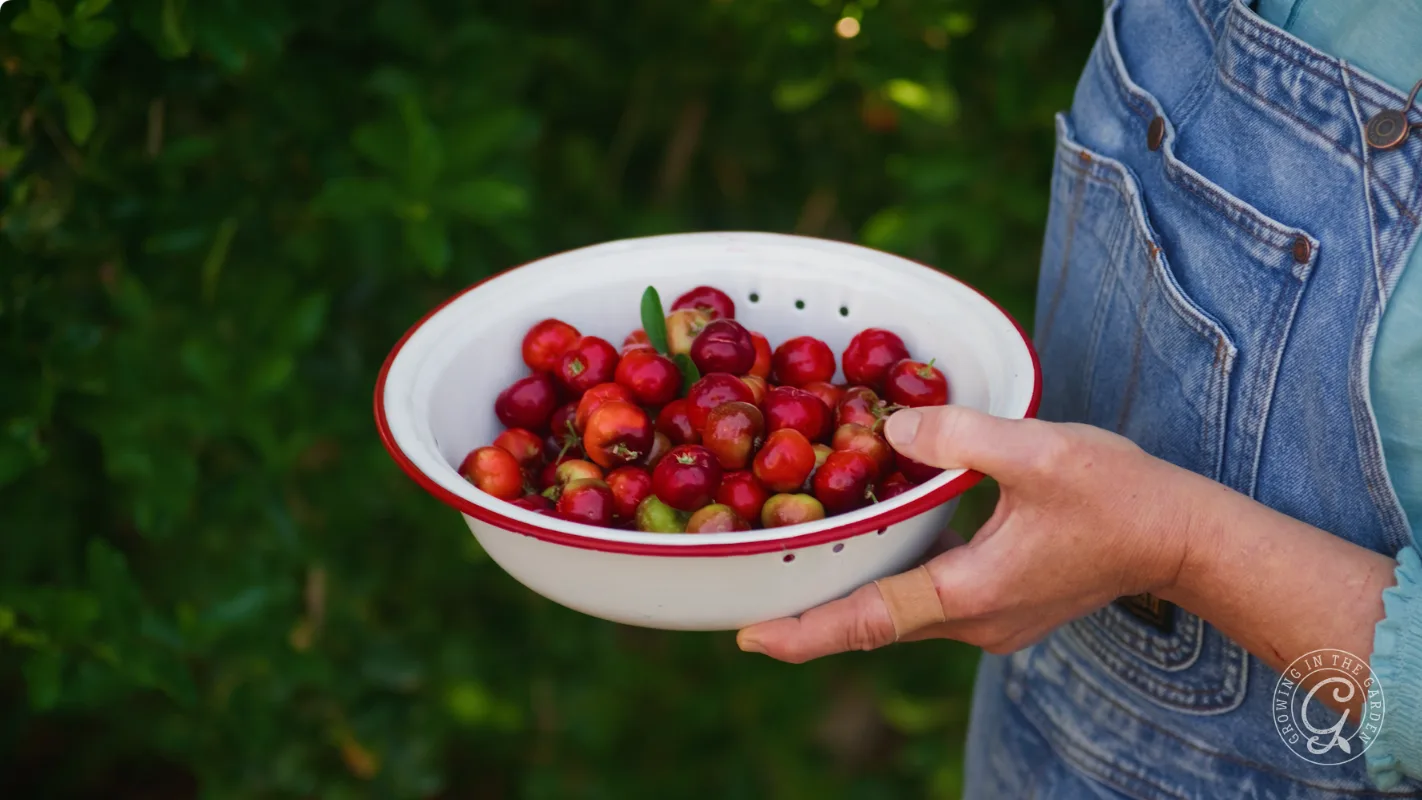
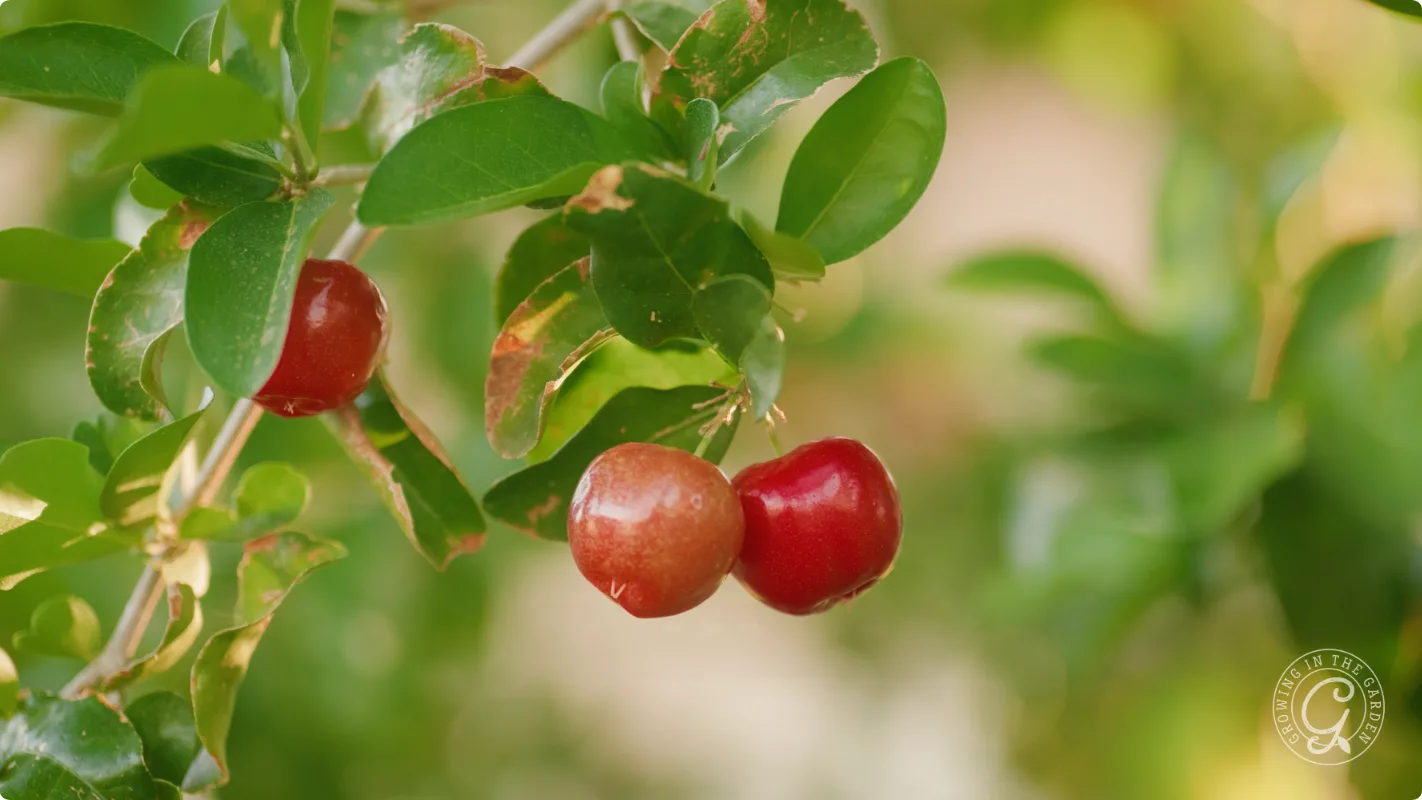
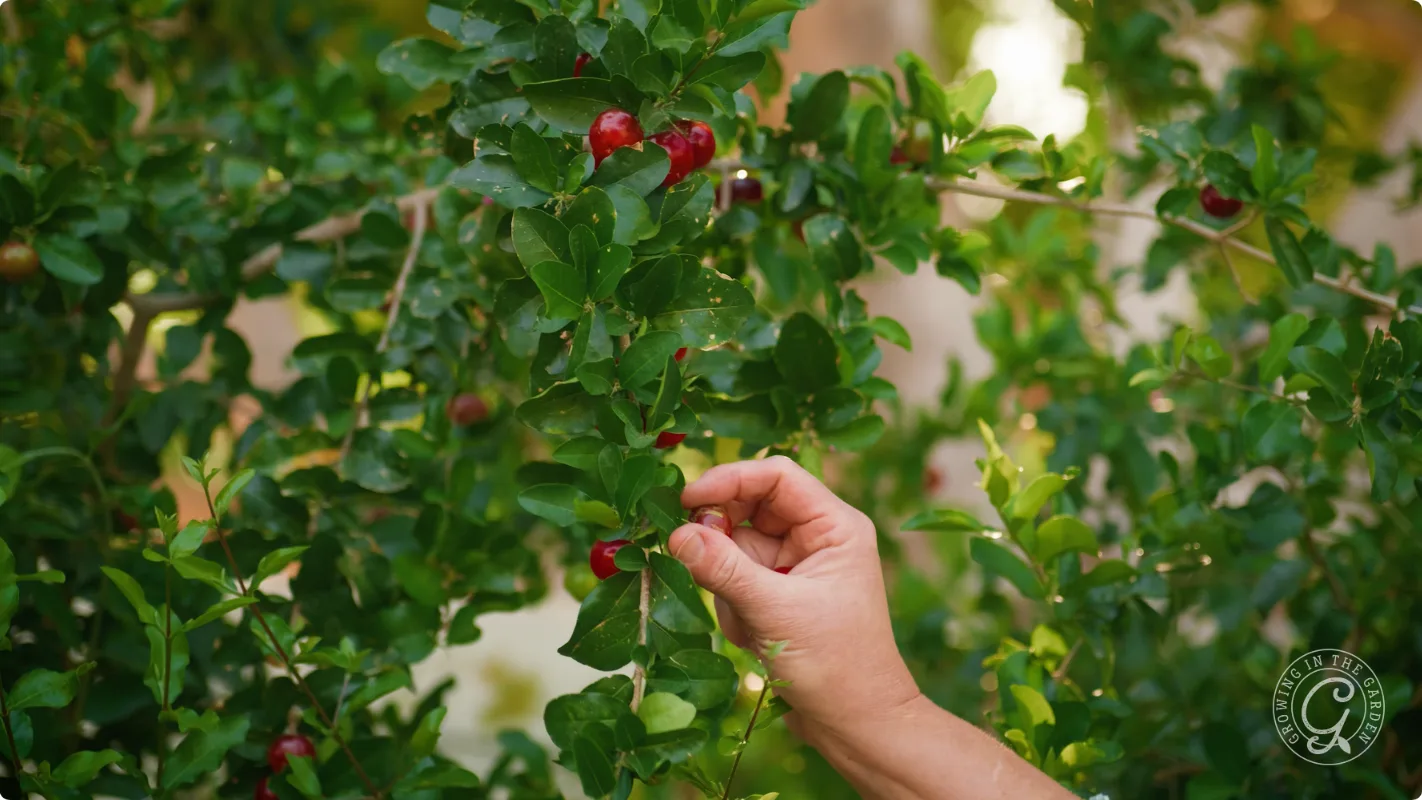
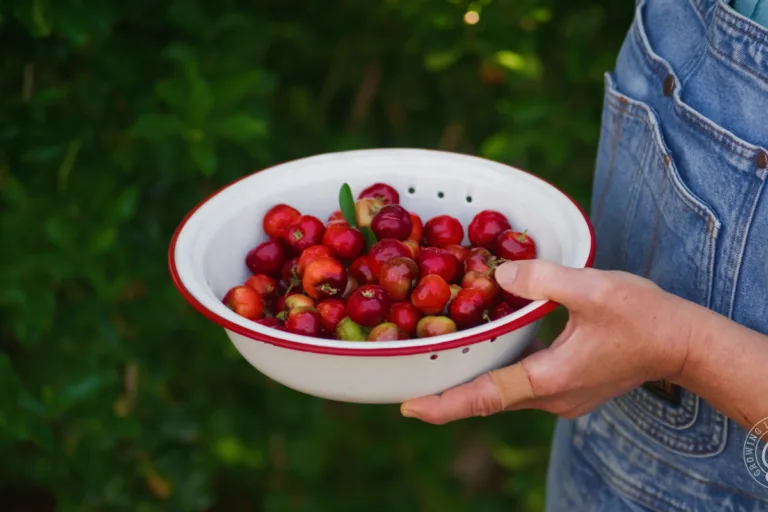
If you’ve tasted a ripe Barbados cherry (also called acerola or West Indian cherry), you know why gardeners get excited about it. The fruit is small, bright red, and famously high in vitamin C. The plant is a pretty evergreen shrub or small tree with pink flowers that bloom over a long warm season.
Key Takeaways: Growing Barbados Cherries
- Barbados cherries are self-pollinating, so one plant will fruit on its own. You don’t need a second tree.
- It’s frost sensitive. Site selection and freeze protection matter most in the first couple of winters.
- It grows best in full sun, but young plants in the low desert often need afternoon protection through June and July.
- Mine started fruiting within a year and has produced more each season. Good drainage and steady water during bloom make the difference.
- The fruit has a thin skin and bruises fast, which is why you never see it in grocery stores. Pick it ripe and use it quickly.
What We’ll Cover:
- Why I Grow Barbados Cherry
- Quick Facts
- Can Barbados Cherry Grow in the Low Desert?
- Do You Need More Than One Plant?
- When to Plant in the Low Desert
- Where to Plant Barbados Cherry
- How to Plant Barbados Cherry in the Ground
- Growing Barbados Cherry in Containers
- Watering in the Low Desert
- Fertilizing
- Pruning and Keeping it Small
- Flowering, Fruiting, and Harvest
- What the Fruit Tastes Like
- Common Problems in the Low Desert
- Barbados Cherry FAQs
- Low Desert Success Tips

Why I Grow Barbados Cherry
I have a west-facing edge of my garden that gets great sun and gets pretty hot in summer. I wanted perennial fruit and smaller trees there, so I planted a few things to see what would survive: two ultra dwarf Anna apples, guavas, a fig, a goji berry, grapes, and this Barbados cherry. The grapes have done well. The Barbados cherry is the one that surprised me.
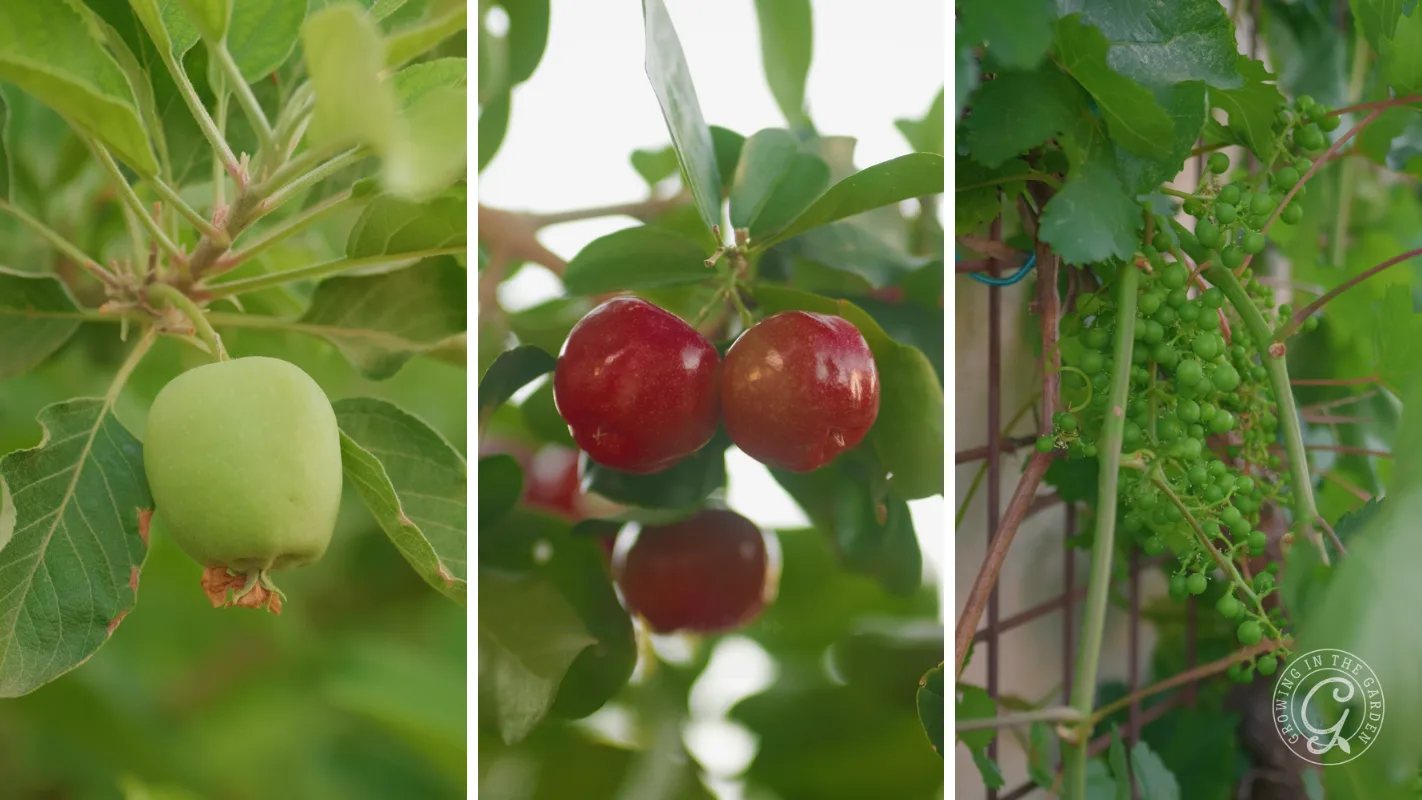
I first tasted Barbados cherry at a home garden tour, realized I liked it, and wanted it in my yard. If you can try it before you buy it, do that. If you don’t like the fruit, don’t grow the tree.
Would I plant it again? Without question.
Quick Facts
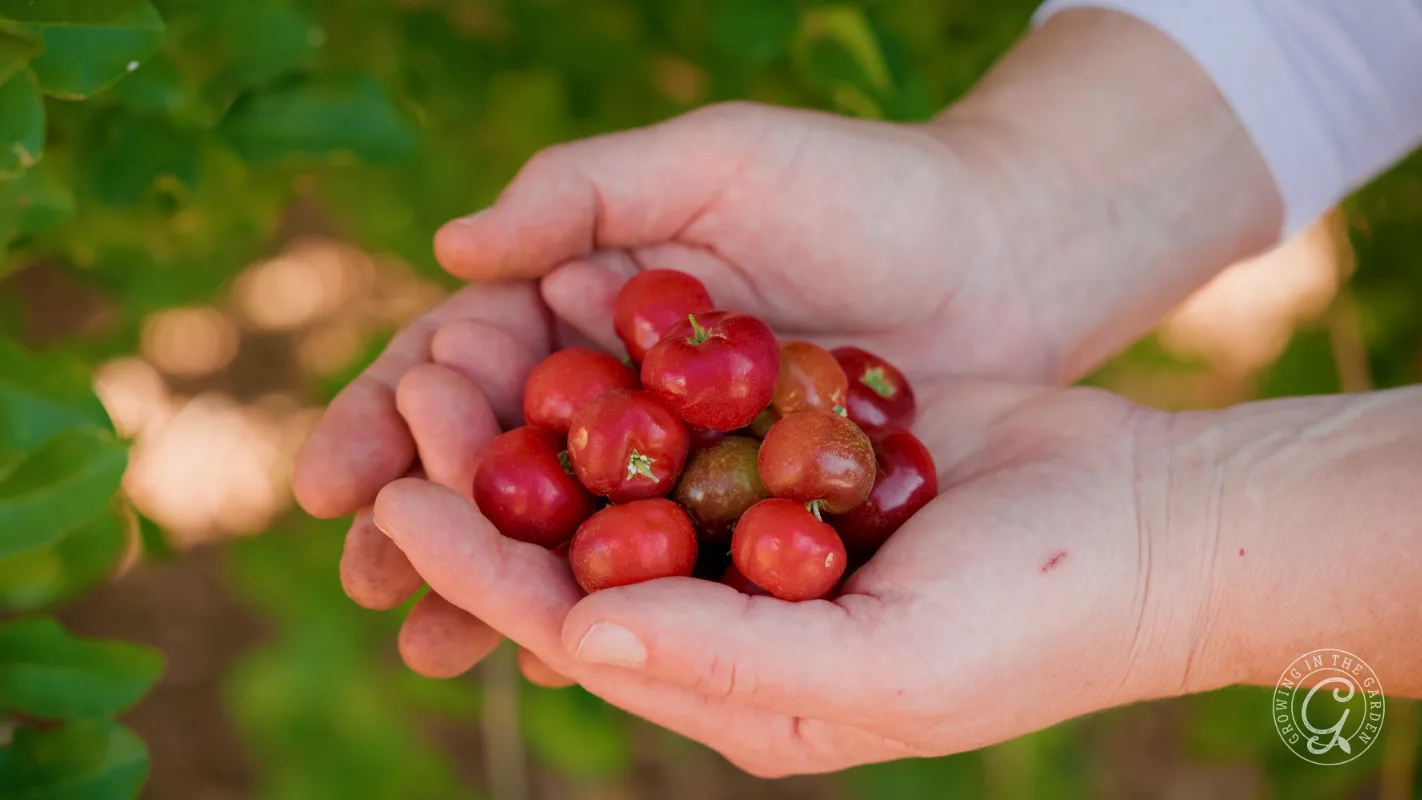
The name is a little misleading. Botanically, this is Malpighia, a tropical-to-subtropical shrub, and it behaves nothing like a Bing or Rainier cherry tree.
- Plant type: Subtropical fruiting shrub or small tree. Can reach 10 to 12 ft tall and wide, but you can keep it much smaller with pruning.
- Pollination: Self-pollinating. One plant fruits on its own.
- Hardiness: Grows best in USDA zones 9 to 11. Young plants are the most cold-sensitive.
- Sun: Full sun for best flowering and fruit. Young plants may want afternoon protection during peak summer.
- Soil: Tolerates a range of soils but needs good drainage.
- Fruiting: Fruit ripens about 30 days after bloom. It can bloom several times through the warm months.
- Evergreen: Stays green year-round in a mild winter and holds its leaves, so it works well near a patio or seating area.
- Harvest note: Thin skin, bruises easily, and does not store long. Refrigerate or freeze soon after picking.
Can Barbados Cherry Grow in the Low Desert?
Barbados cherry is best suited to warm climates, so here our occasional freezes make site selection and freeze protection a big part of success. Plant it in a warm microclimate and plan to cover it during cold snaps, especially while it’s young.
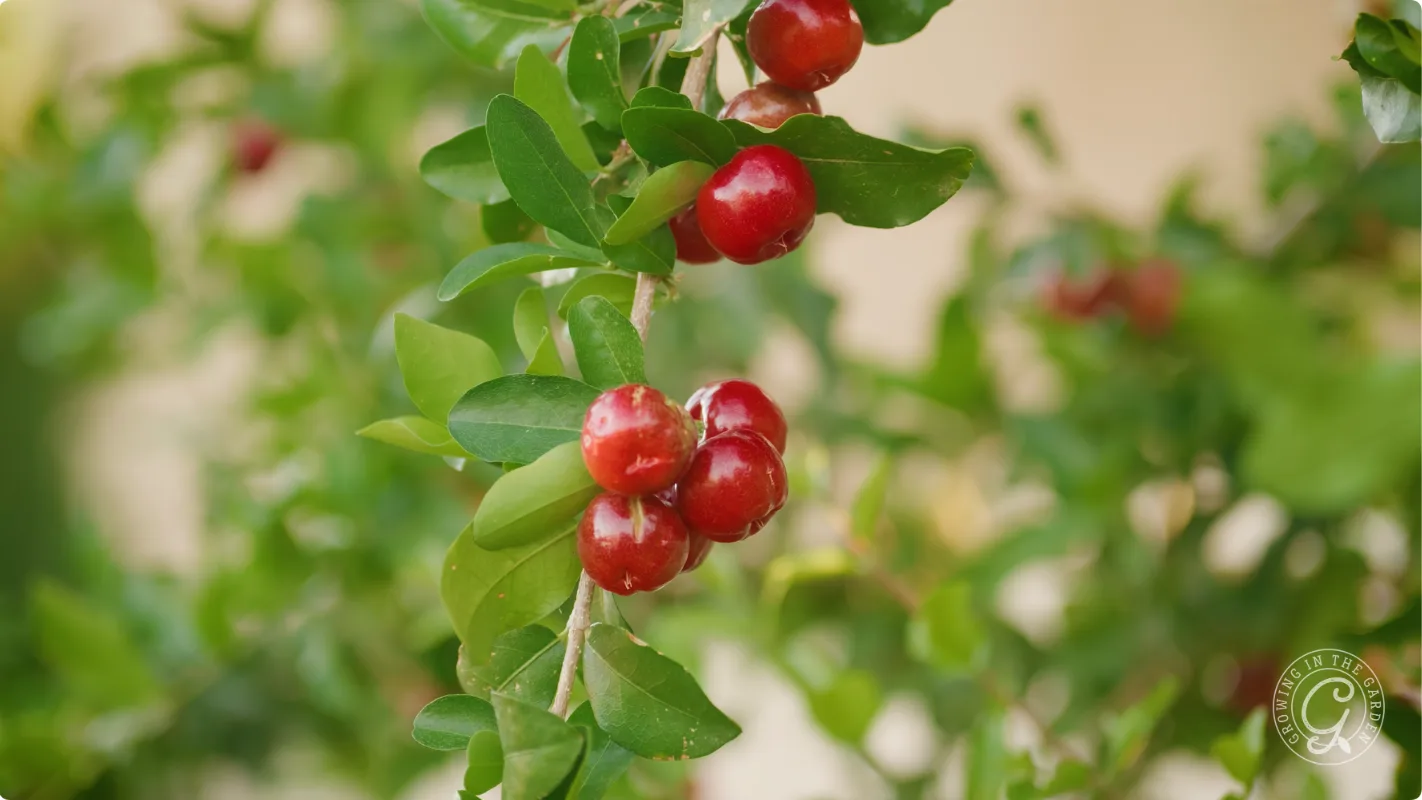
We had such a mild winter this year that even my low-chill peach trees set very little fruit. The Barbados cherry was covered in blossoms and fruit anyway.
Which other fruit trees grow well in the low desert?
- If you are building out a backyard fruit lineup, start with my list of 10 Best Fruit Trees for Low Desert Arizona.
- For planting dates and a quick visual of fruits that do well here, see my Arizona Fruit Planting Guide.
- If you want to spread harvests across seasons, this guide on what to plant for year-round fruit tree harvests in Arizona helps you plan it out.
- If you are adding more fruit to your yard, you might also like my guides to How to Grow Figs in Arizona and A Guide to Growing Grapes at Home.
- If you are growing deciduous fruit too, here are my low-desert guides for apricots and apples.
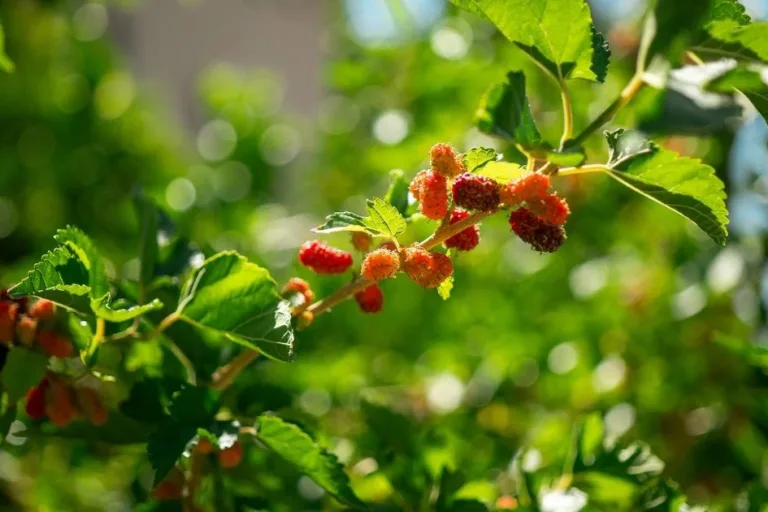
- If you are building a heat-loving fruit lineup, mulberries are another reliable option, and this guide shows you how to grow them: how to grow mulberries in a hot, dry climate.
Do You Need More Than One Plant?
No. Barbados cherry is self-pollinating, so a single plant will set fruit on its own. You can grow just one type of tree and still get a harvest. That makes it a good pick for a small yard where you don’t have room for a matched pair.
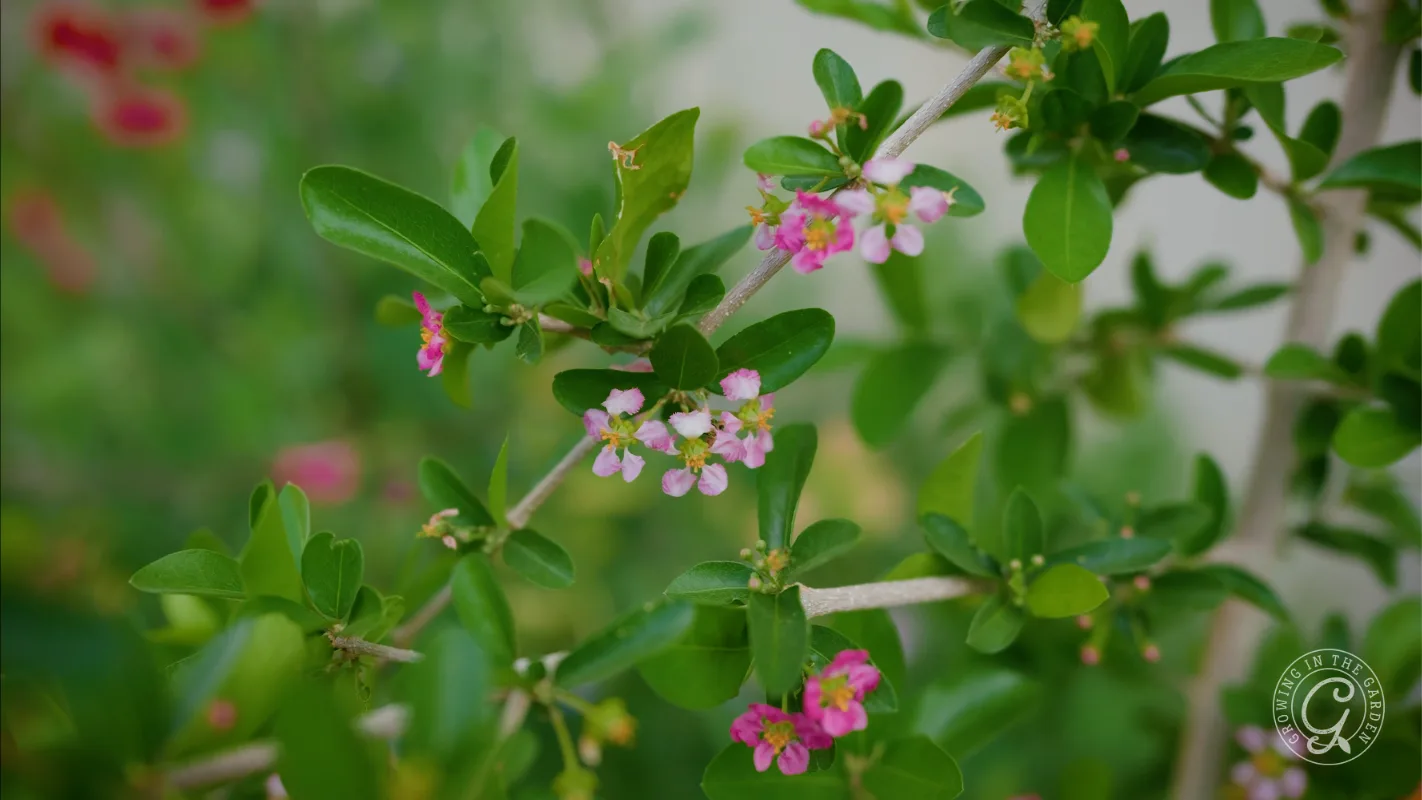
The flowers are mostly worked by bees. If your plant blooms heavily but sets very little fruit, check for low bee activity during bloom, water stress, too much nitrogen pushing leafy growth, or a cold snap hitting the flowers.
Where to Plant Barbados Cherry
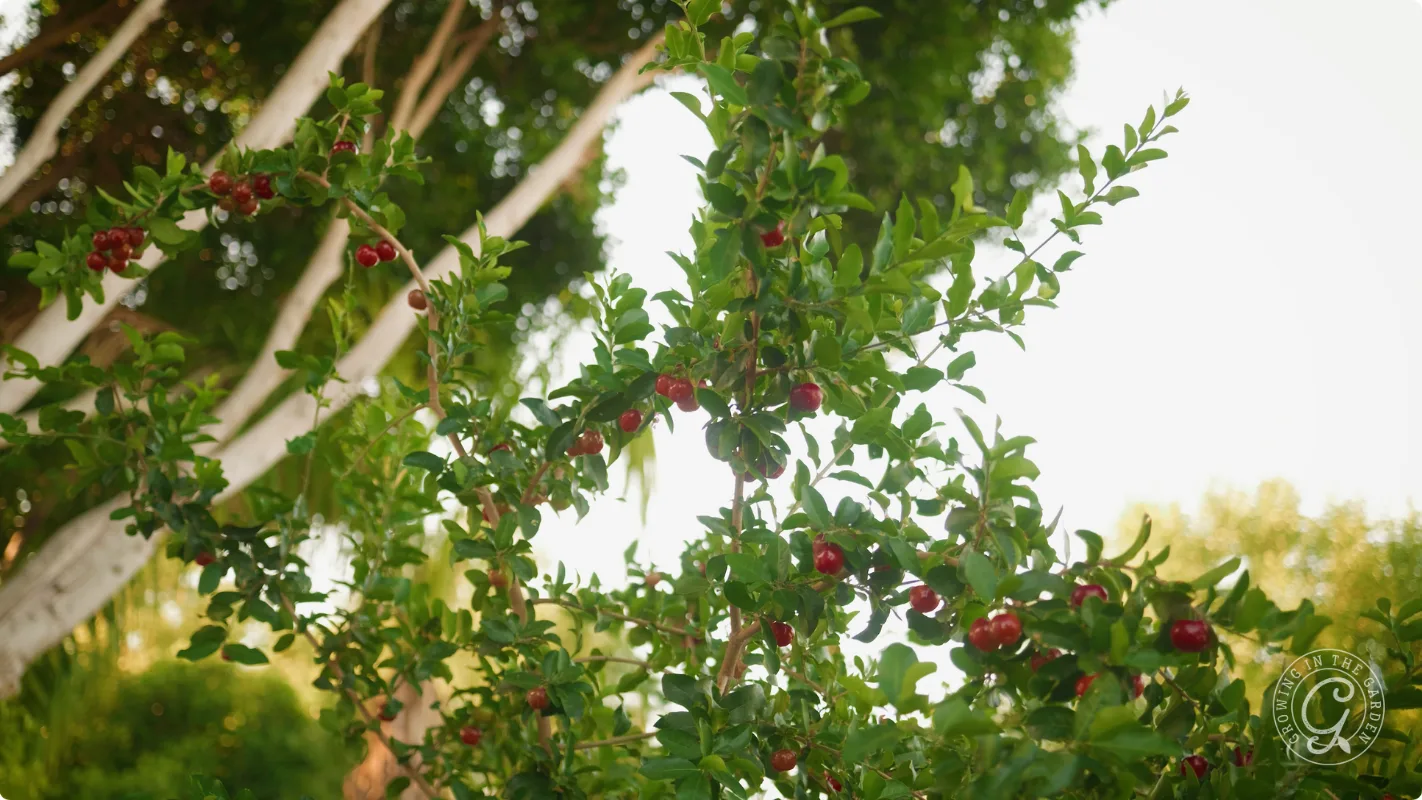
Barbados cherry fruits grow best with plenty of sun. Mine gets western-facing sun and handles those hot conditions well once established. If it doesn’t get enough sun, you won’t get much fruit.
- Give it full sun in the cooler months. Young trees may want afternoon protection in summer, whether that’s filtered shade, shade cloth, or light shade from a high-canopy tree. Sunburn can damage trunks and invite pests, so the tips in How to Protect Citrus Bark from Sunburn apply here too.
- It can have a shallow root system and may struggle in windy spots. Stake young plants for the first season if needed.
- If your yard gets hard freezes, growing it in a container you can move is the safer route.
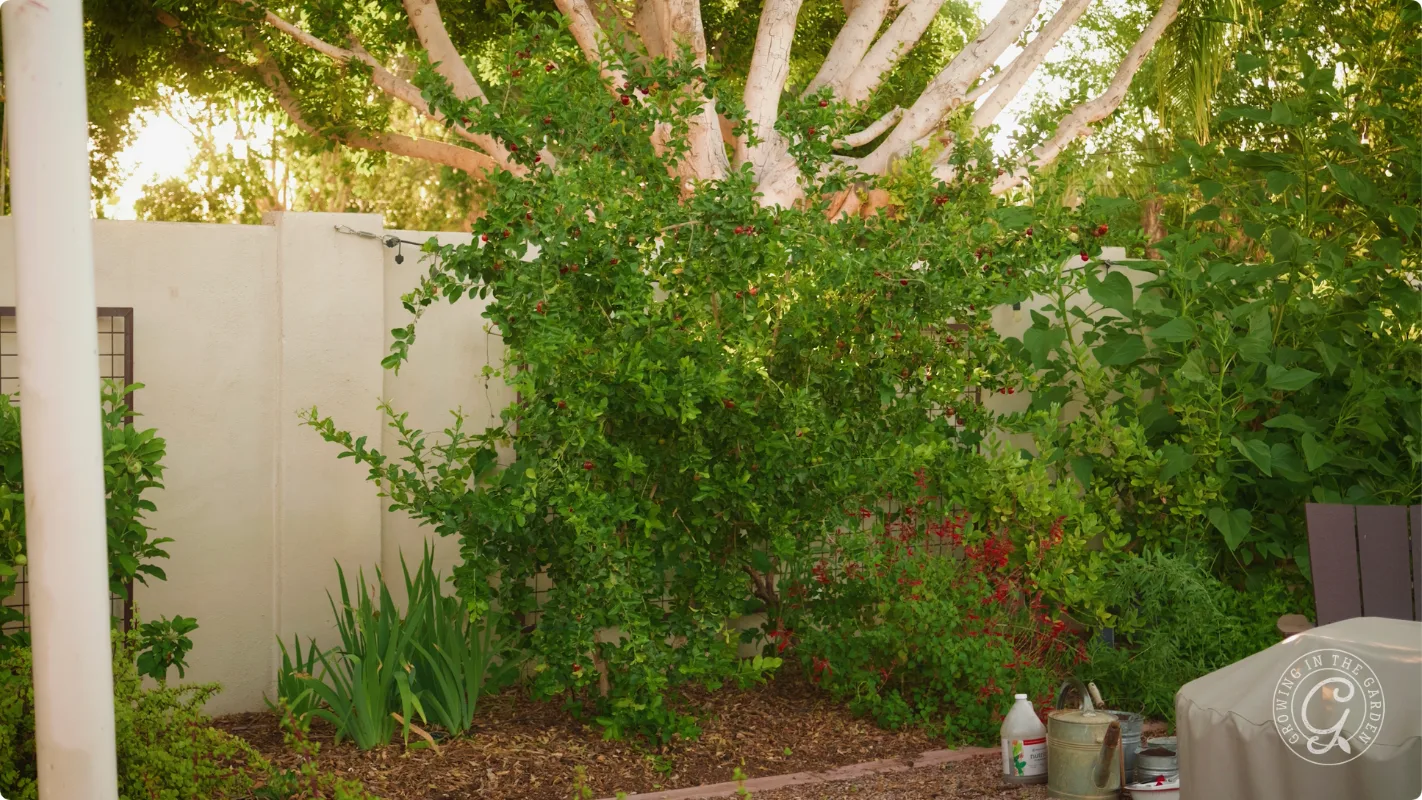
A bonus for placement: it’s evergreen and holds its leaves year-round, so it looks good all the time. I have mine by a seating area, and it isn’t messy, other than keeping the ripe cherries picked.
Soil and drainage
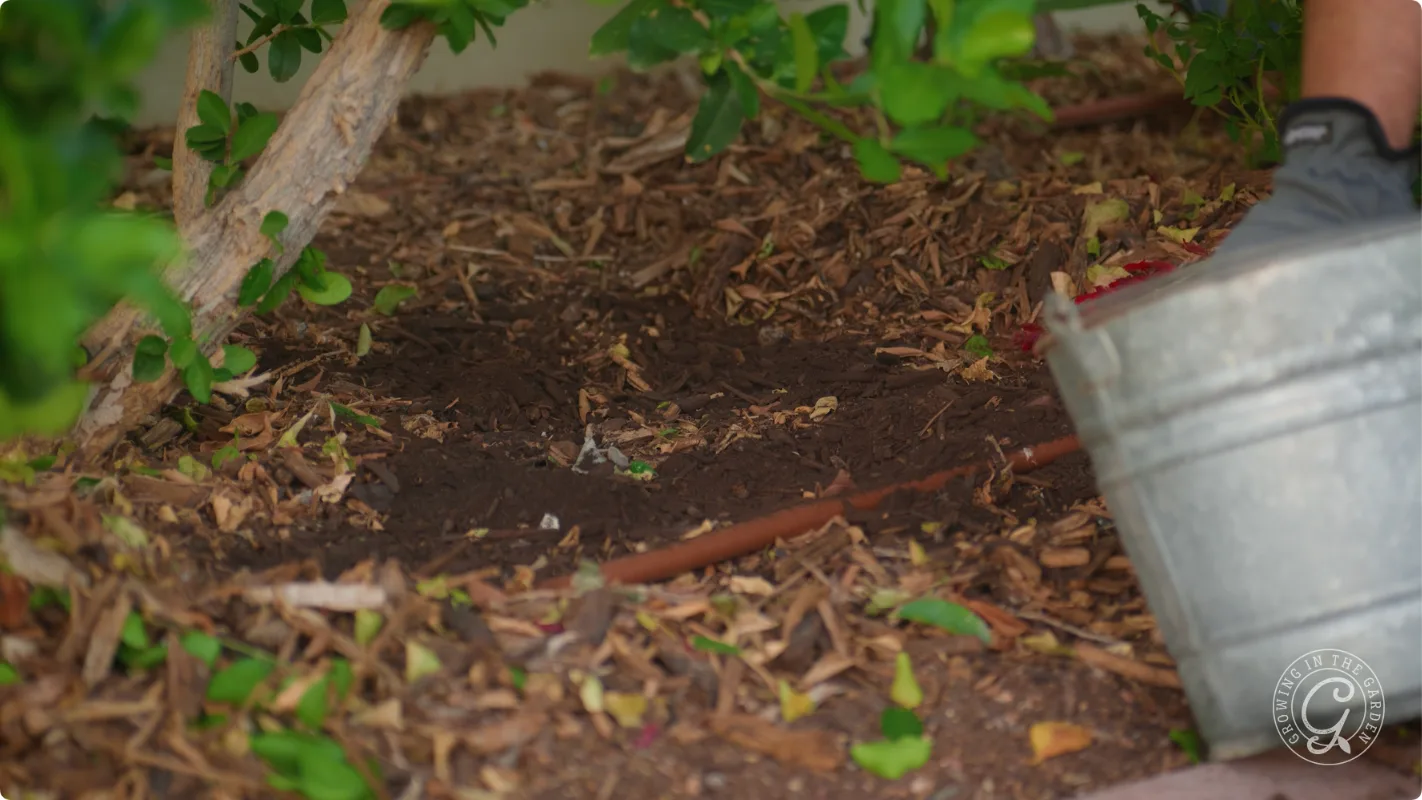
It tolerates different soil types, but it needs water to drain out of the hole. Dig your hole, fill it with water, and make sure it drains. Then add a thick 3 to 5 inch layer of mulch after planting, the same as I do with everything in the low desert. Mulch protects the soil, feeds the plant as it breaks down, and keeps everything happier.
How to Plant Barbados Cherry in the Ground
For a full walkthrough, see “Planting Bare-Root and Container Fruit Trees.”
- Dig a hole about twice as wide as the root ball but no deeper.
- Set the plant so the top of the root ball sits level with or slightly above the surrounding soil.
- Backfill with native soil. Don’t load the hole with compost.
- Water deeply right after planting to settle the soil.
- Add compost and worm castings on top, then mulch, keeping it back a few inches from the trunk.
Don’t build a hole full of rich soil. You want the roots to spread out into the surrounding ground, not circle inside a pocket of good stuff. The compost and worm castings on top feed the soil, and that soil feeds the plant. Feed from the surface and let the roots run.
I bought it in a 5-gallon container at a local nursery, and when I pulled it out, the roots had completely circled the pot. I loosened them up and didn’t think it would survive. But it’s been just fine. Tropical nurseries are your best bet for finding one, and it’s getting easier to find as it grows in popularity.
Spacing
How you plan to grow it sets your spacing:
- Single shrub or tree: 10 to 15 ft between plants.
- Hedge or screen: 5 to 6 ft apart for a thicker screen.
Growing Barbados Cherry in Containers
Barbados cherry does very well in containers, which is what makes it a good option if freezes are a concern. You can move the pot to a protected spot when it’s cold.
Mine is in the ground, and I think in-ground is a little easier overall. Containers dry out faster and heat up faster, and because this plant is frost-sensitive, it’s more exposed to cold in a pot. If in-ground isn’t an option for you, a container works well. Just choose the largest one you can manage. A whiskey barrel size is a good target.
Many of the same container principles carry over from my How to Successfully Grow Citrus in Containers guide.
Watering in the Low Desert
Newly planted shrubs need consistent moisture. In warm, dry weather, you may water several times a week at first, then ease off as the plant establishes.
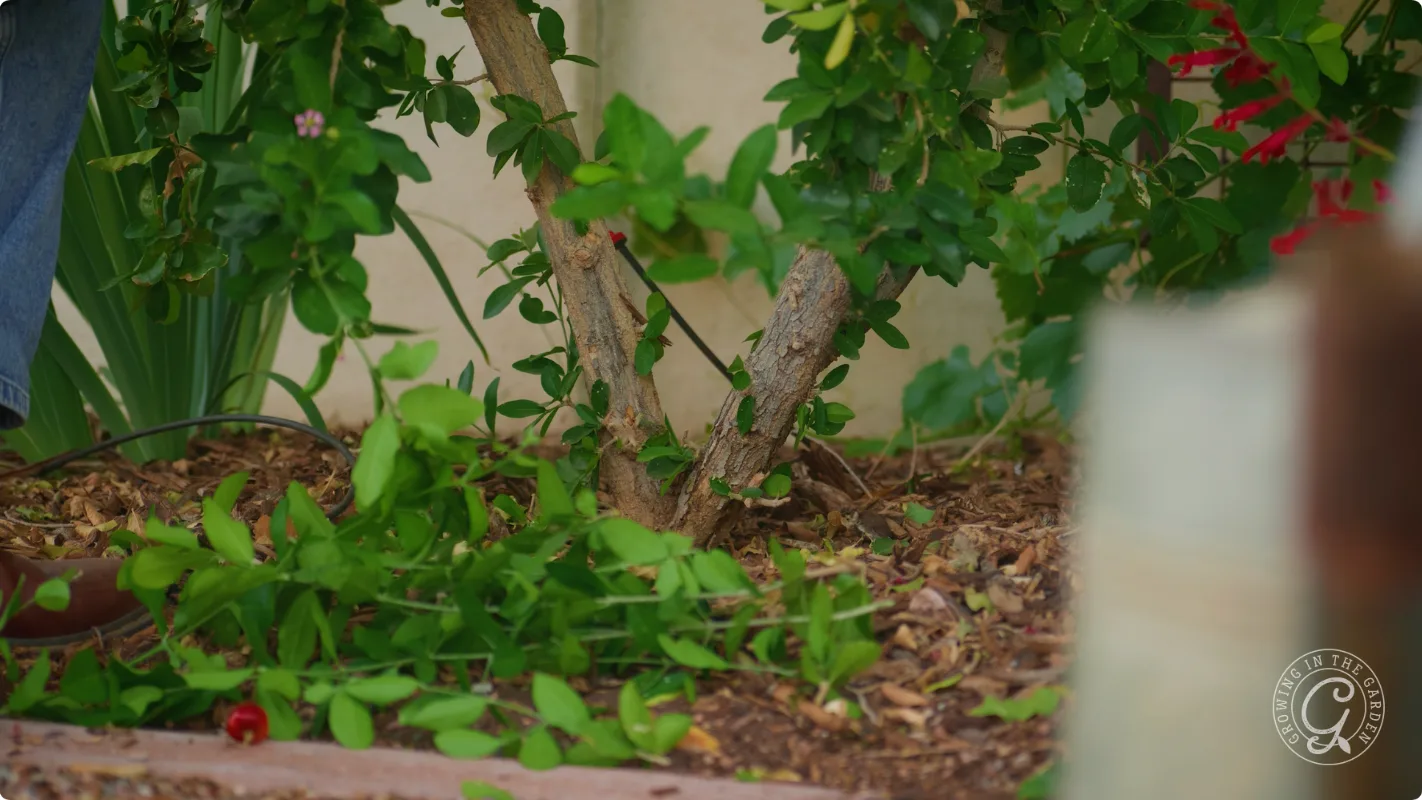
I have it on drip irrigation and don’t give it any supplemental water. It can handle some drought, but flowering and fruit set both improve with steady water during dry stretches. If you want a harvest, keep the water consistent while it’s blooming and setting fruit. More on that here: How to Water Your Garden.
Fertilizing
Feed your soil, and your Barbados cherry will respond with growth and fruit. My whole routine is compost, worm castings, and Nutrient+ about three times a year:
- Early spring, after it comes through winter.
- Before summer, from the end of May to June, to get it ready for the heat.
- After summer, around September.
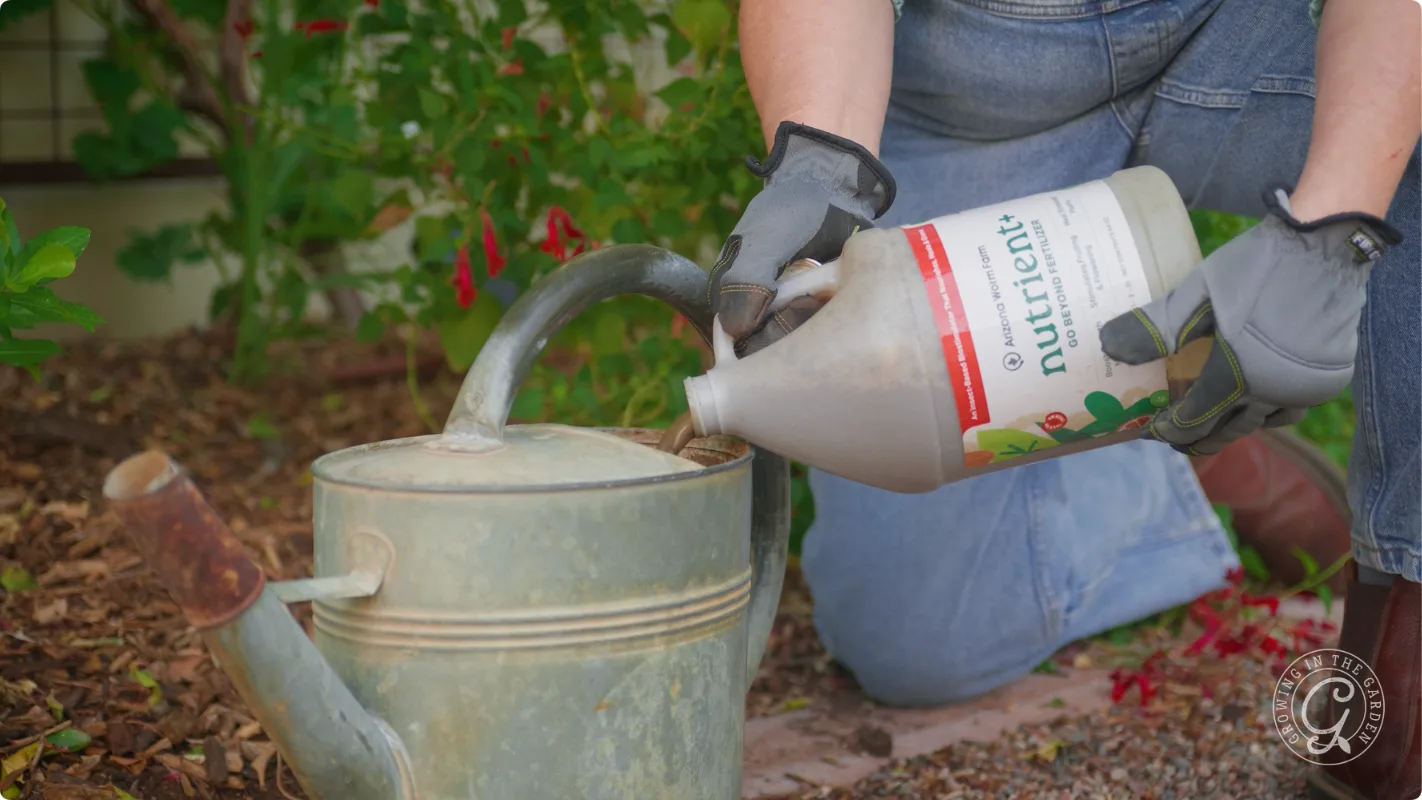
If the mulch has broken down, I add fresh mulch right on top. Otherwise, I pull the mulch back, sprinkle worm castings around the plant, replace the mulch, water it in, then come through with Nutrient+. I feel like the Nutrient+ encourages more blooms, and more blooms mean more fruit. Yellowing leaves can point to a micronutrient deficiency, so keep that compost and worm-casting habit steady. More detail in Organic Fruit Tree Fertilizing: Four Simple Steps.
For containers, add a balanced fertilizer in late winter, plus a lighter water-soluble fertilizer during active growth.
Pruning and Keeping it Small
Barbados cherry doesn’t need heavy pruning the way a lot of fruit trees do. Mostly, you’re shaping it and pulling out anything dead or crossing. You can keep it to whatever size you want. I keep mine to a height I can harvest from without a ladder.
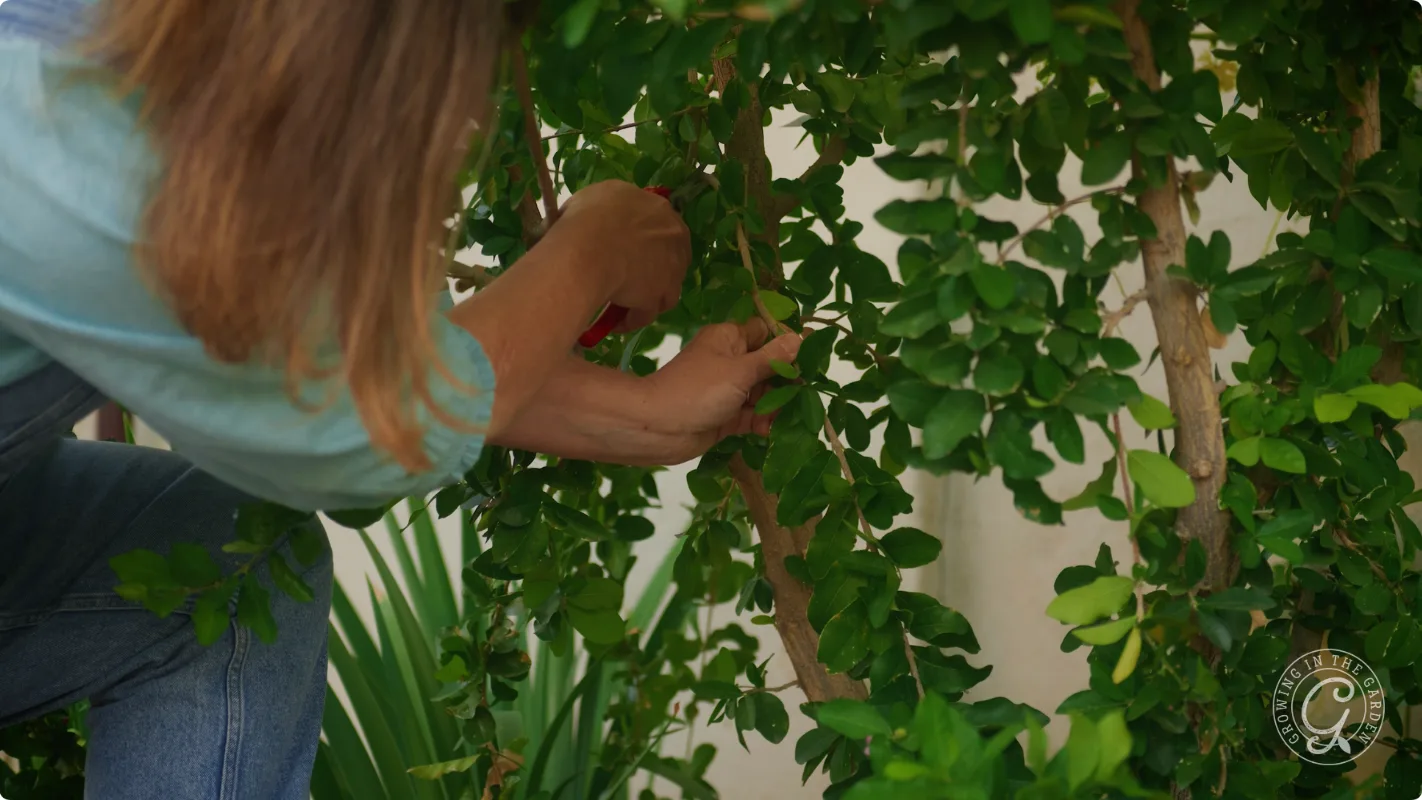
On my plant, I keep it as a multi-trunk tree and remove the low branches that reach into our seating area. You could just as easily train it to a single trunk. It’s forgiving, so prune it to fit your space.
It’s frost sensitive, so wait to prune until after your last frost. A big pruning right before a freeze leaves fresh cuts exposed to cold damage. If frost does nip it, wait until your last frost passes, then cut back the damaged parts. For shaping without stressing the plant, follow the same approach I use when pruning desert shrubs across the yard.
Flowering, Fruiting, and Harvest
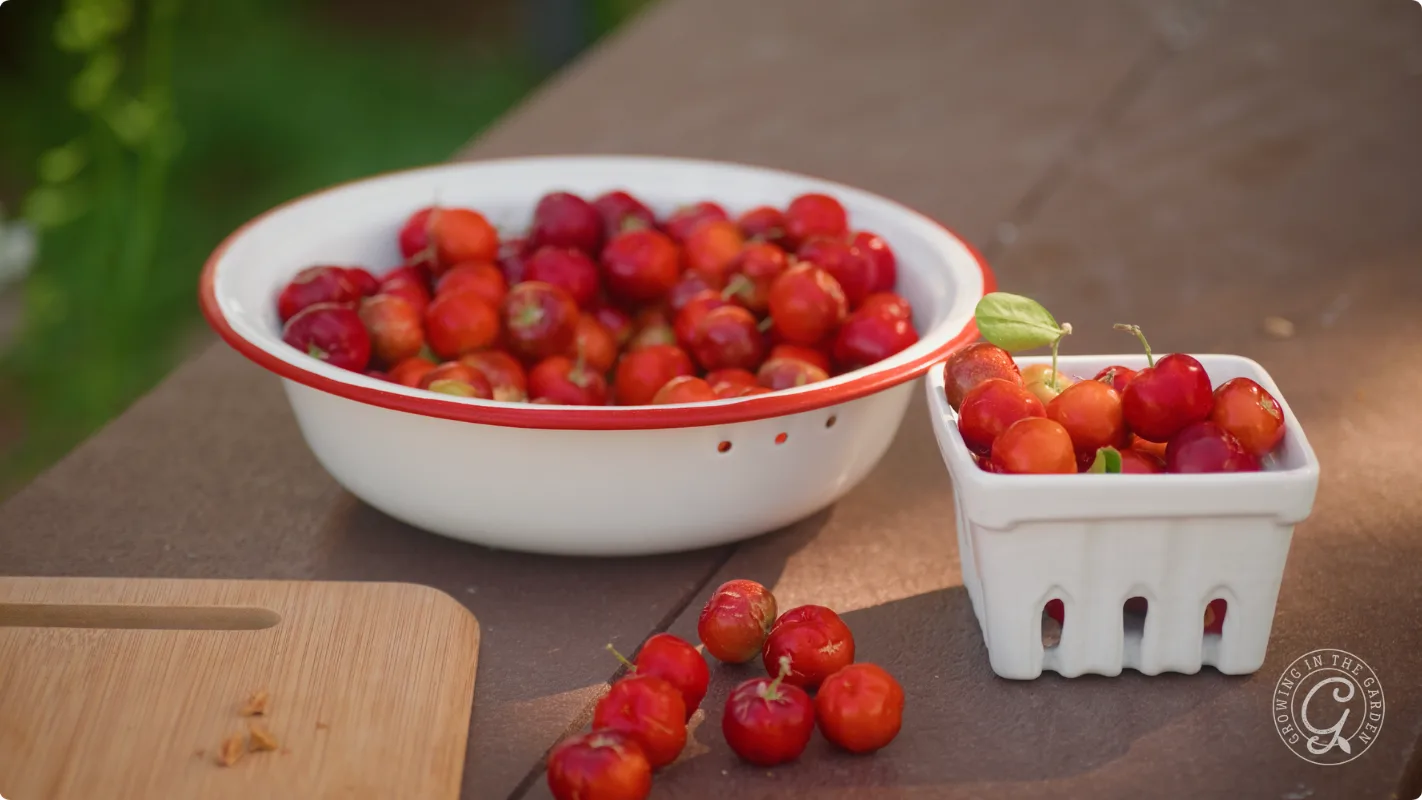
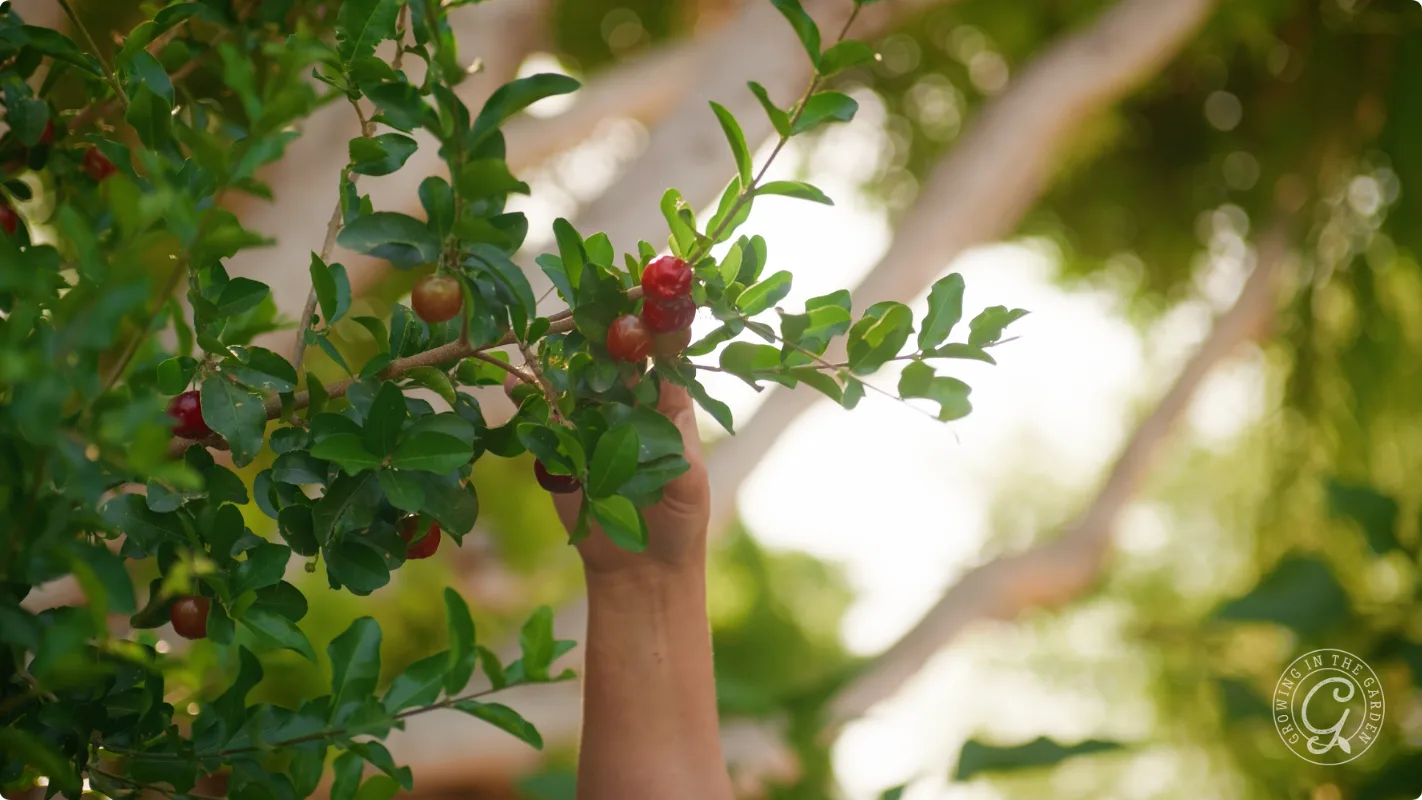
Barbados cherry blooms several times through the warm season. When it warms up, you’ll often see a flush of pink blossoms, and about 30 days later, the fruit follows. From what I’ve seen, you get more and more fruit each year as the plant matures.
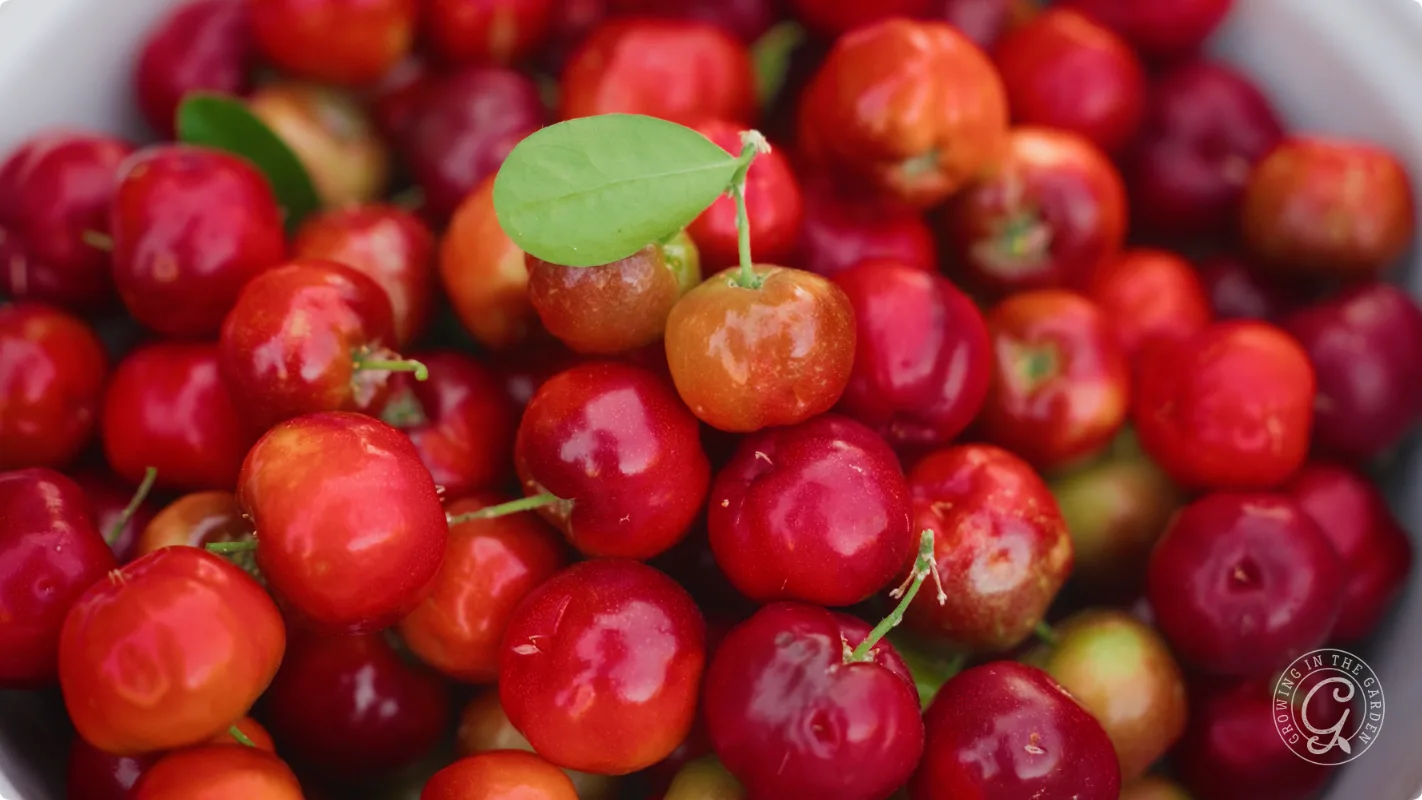
You’ll know the fruit is ripe when it turns bright red and softens slightly. Pick gently, because ripe fruit bruises easily. Once it’s fully ripe, it drops from the tree on its own, so harvest regularly.
The fruit has a thin skin and doesn’t last long, which is why you never see it in the grocery store. Eat it right away, refrigerate it, or freeze it. I like juicing it and adding the juice into fresh-squeezed homemade lemonade. It gives the lemonade a nice tart kick and a big dose of vitamin C.
What the Fruit Tastes Like
It’s called a cherry because the fruit looks like one, but the flavor is its own thing: sweet, tart, and a little tropical, with some cranberry and citrus in the mix. We like it. It has a distinct flavor, so trying it first is worth doing if you can.
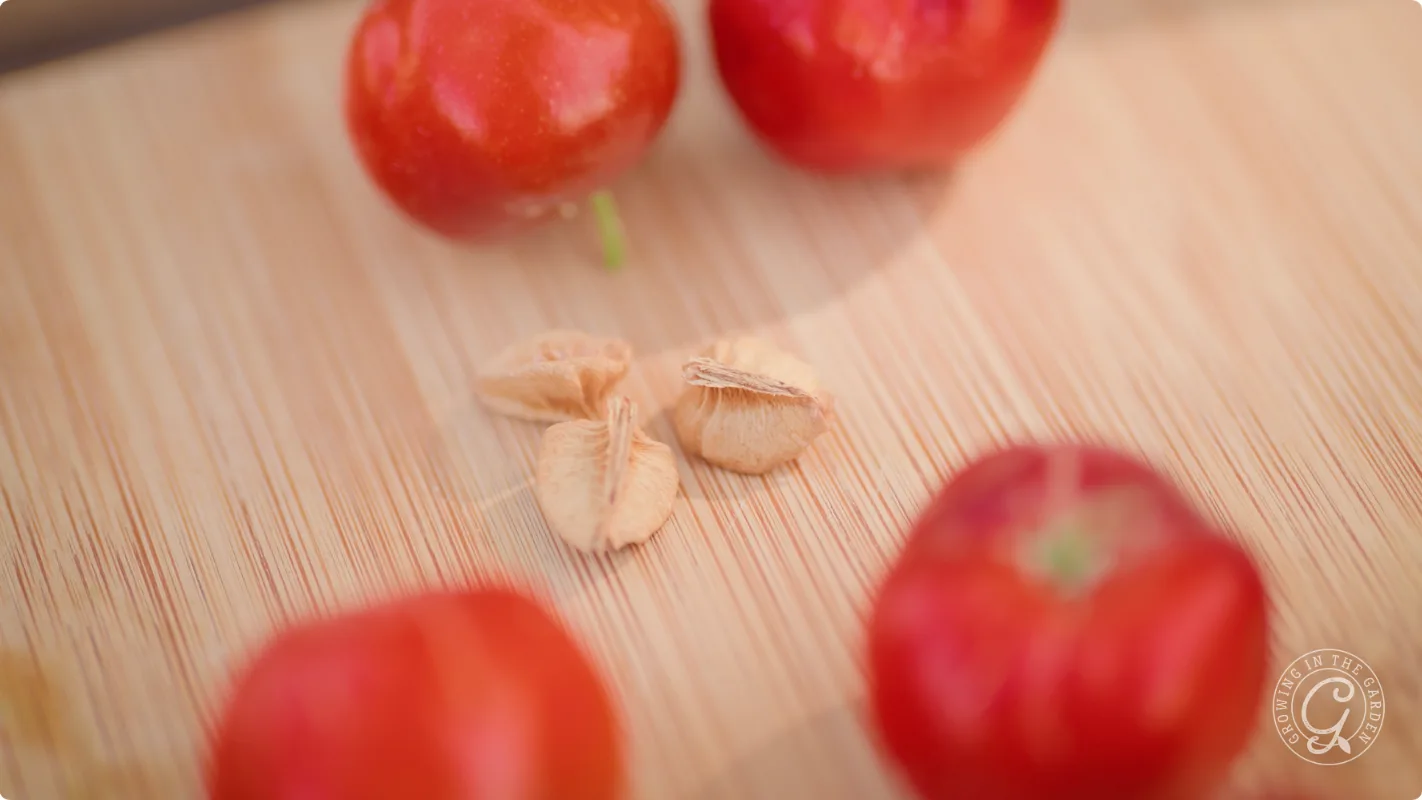
A regular cherry has one pit. Barbados cherry has three small seeds inside instead. They’re smaller than a pit, and as long as the fruit is nice and large, it’s never bothered me. The easiest approach is to pop the fruit into your mouth and spit out the seeds, or run it through a small citrus press or juicer.
Common Problems in the Low Desert
Freeze damage
This is the biggest issue, and young plants are the most vulnerable. Cover plants when temperatures approach freezing. A warm microclimate helps, and containers can move under a patio or into a garage overnight. Larger, established trees may take some frost damage and bounce back after you cut them back. For more strategy, see How to Protect Your Garden from Frost in Mild Winter Climates.
Salt buildup
Barbados cherry isn’t salt-tolerant, and in the low desert, salts build up from irrigation water and evaporation, especially in containers. Mulch consistently, water deeply enough to push salts below the root zone, and for containers, water until excess drains out now and then to leach the salts.
Pests
I haven’t had major pest problems on mine, but keep an eye out for aphids, leaf-footed bugs, and spider mites. Let beneficial insects handle the aphids. Hand-pick the leaf-footed bugs. For spider mites, spraying the plant down with water keeps populations in check.
Skin irritation from leaf hairs
Some gardeners react to the fine hairs on the leaves. Gloves and long sleeves are a good idea when you’re pruning or harvesting.
Barbados Cherry FAQs
No. Barbados cherry is self-pollinating, so a single plant will fruit on its own. One plant is plenty for most home gardens.
Mine started producing within a year of planting, and it has set more fruit each season since. Fruit ripens about 30 days after each bloom.
You can, but seedlings don’t always grow true to the parent, so the fruit can be hit or miss. For good fruit, buy a named variety or a plant grown from a cutting.
That’s normal. Unlike a true cherry with a single pit, Barbados cherry has three small seeds inside each fruit.
In a mild winter, it stays evergreen and holds its leaves, which is why it works well near a patio. A hard freeze can cause some leaf drop or twig damage, especially on young plants.
Yes. It does very well in containers, which also lets you move it to shelter during a freeze. Use the largest pot you can manage, around a whiskey barrel size.
Low Desert Success Tips
- Protect from freezes, especially the first couple of years.
- Give it good drainage and mulch deeply.
- Water consistently while establishing, then keep irrigation steady through bloom and fruit set.
- Watch for salt buildup, especially in containers.
- Give it wind protection while it’s young.
- Keep it pruned to a height you can harvest without a ladder.
Sources
- University of Florida IFAS Extension (St. Lucie County) article on growing Barbados cherry (acerola)
- University of Florida IFAS EDIS publication: Malpighia glabra, Barbados Cherry (FP390)
- University of Arizona Campus Arboretum plant profile for Malpighia (Barbados cherry)
- California Rare Fruit Growers Fruit Facts: Acerola (Barbados cherry)
- Mississippi State University Extension: guidance on growing Barbados cherry with extra care in home gardens

Does the Barbados Cherry attract ‘undesirables’ such as roof rats?
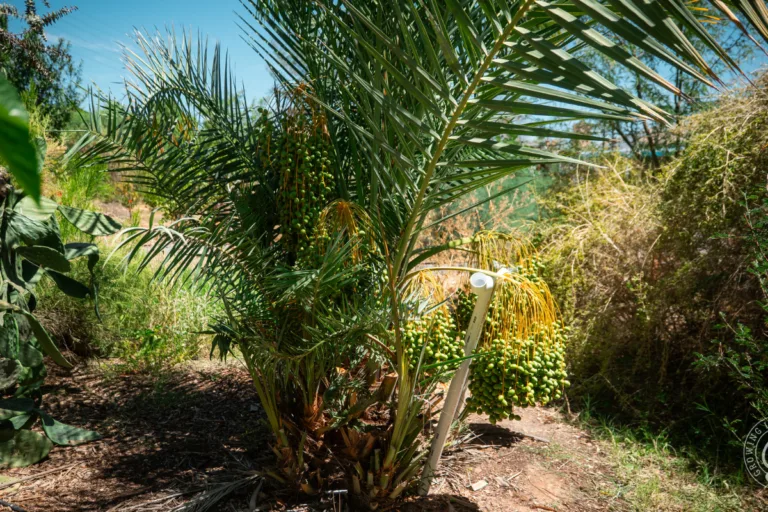
Good question. I wouldn’t avoid planting one solely because of rats, especially if you already grow other fruit. Citrus, dates, birdseed, pet food, and dense shelter are often bigger contributors to an established roof-rat problem.
Where can you find Barbados Cherry plants in the Phoenix area? I have searched numerous locations without success and would love to add this plant to my garden. Thanks.
I got this at Green Life nursery next to Arizona Worm Farm. You may have better luck in the fall finding it.
Just watched the video on barbados cherry. Going to have to try! Guess waiting for fall best now, right. We are in Tucson. Do you know a grower or nursery here? Don’t mind traveling to Phx area. Need to go to Worm Farm by then anyways. What nursery there?
I got mine at the nursery next to Arizona Worm Farm – Green Life.
Great post as always! Have you tried growing these from seed?
No. The trees don’t always grow true to type. It’s better to grow from a named variety if you can.