
How to Grow Date Palms in the Low Desert
I knew almost nothing about how to grow dates before I visited Jacq Davis at Epic Yard Farm in Tempe. Date palms were street or farm trees to me. Pretty, but not something I thought of as a backyard fruit crop.
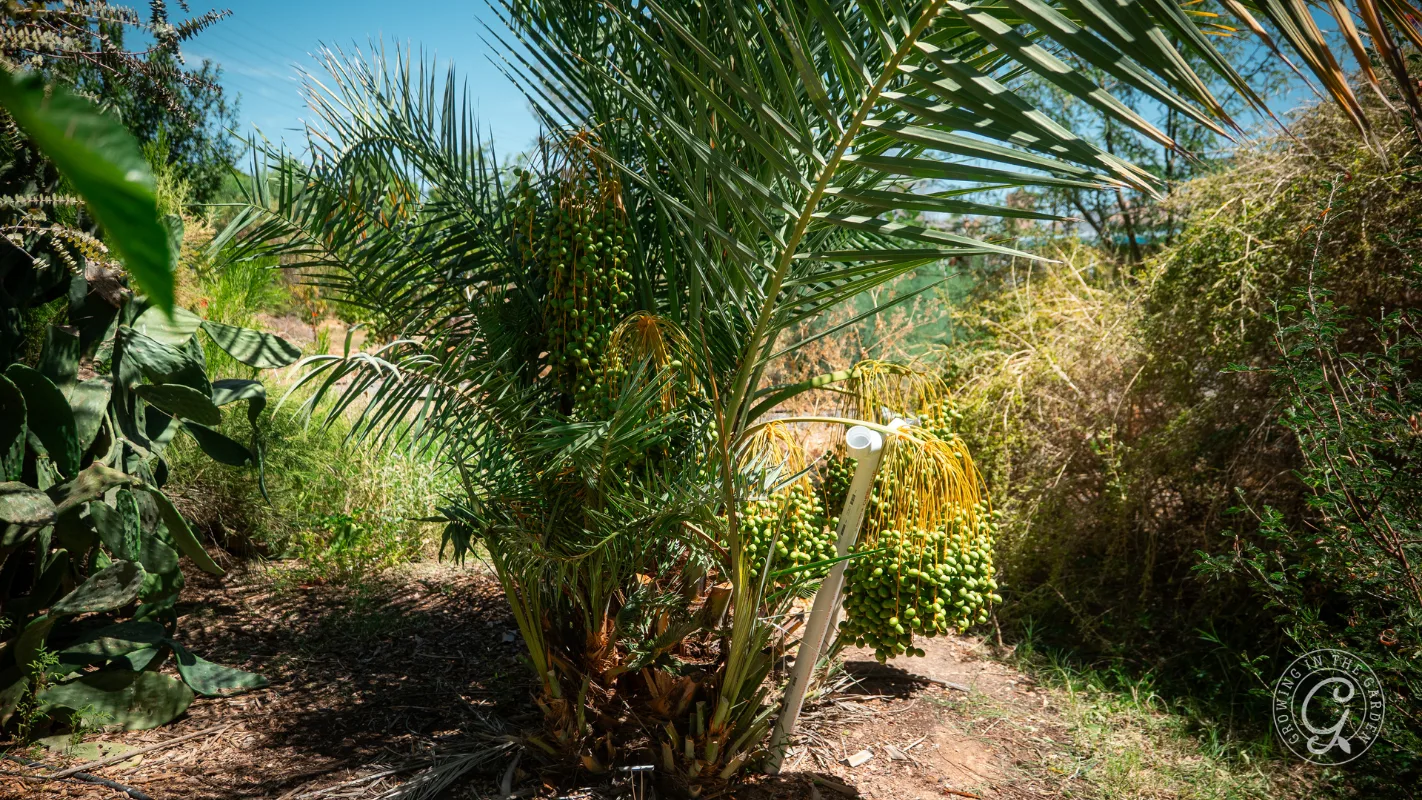
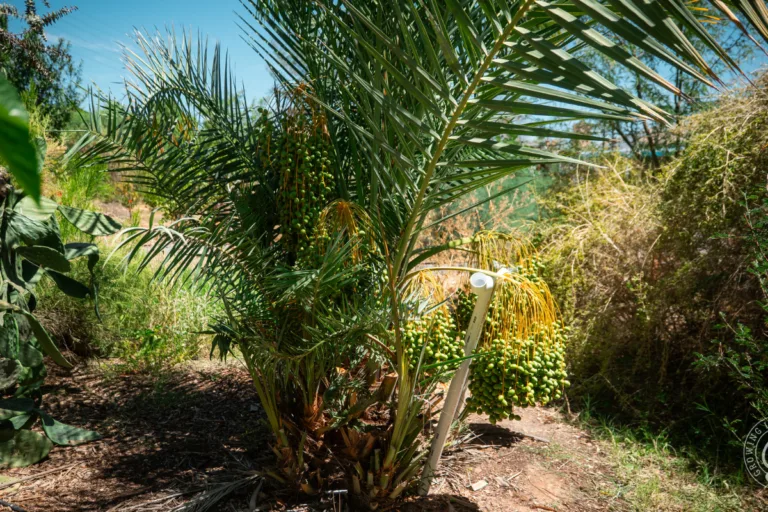
Then Jacq showed me her Black Sphinx date palm, loaded with close to 100 pounds of developing fruit, and walked me through hand pollination, harvest, and everything in between. By the end of the visit, I understood why she calls this palm her pride and joy. This guide shares what she taught me about growing dates during the tour, plus answers to the follow-up questions I sent her afterward.
If you have the space and a little patience, dates might be one of the most rewarding fruit crops you can grow in the low desert.
Key Takeaways: How to Grow Date Palms
- Learn how to grow dates in the low desert for rewarding fruit production.
- Dates thrive in hot climates, are long-lasting crops, and can yield significant harvests.
- You need a female date palm and male pollen for successful fruiting; hand pollination is necessary.
- Choose reliable varieties like Black Sphinx and Barhi; avoid starting from seed due to unpredictable results.
- Proper care includes consistent watering, fertilization, harvest protection, and managing offshoots.
What We’ll Cover:
- Why Grow Dates in the Low Desert
- Male and Female Trees: Why Some Palms Never Fruit
- Hand Pollination
- Choosing a Variety
- Why You Shouldn’t Grow Dates From Seed
- Where to Buy a Female Date Palm in the Valley
- When to Plant
- What to Expect: The Timeline
- Caring for a Fruiting Date Palm
- Managing Offshoots
- Protecting the Fruit
- Harvest
- How to Grow Date Palms FAQs
Why Grow Dates in the Low Desert
Date palms are everywhere in Phoenix, but most were planted for landscaping, not fruit. Our heat is exactly what dates want.
They’re also the ultimate plant-once crop. Jacq compares them to asparagus, which can produce for 20 to 25 years. A date palm can produce for 100 years or more. And because they ripen in early fall, dates fill a harvest gap for anyone planning fruit harvests year-round.
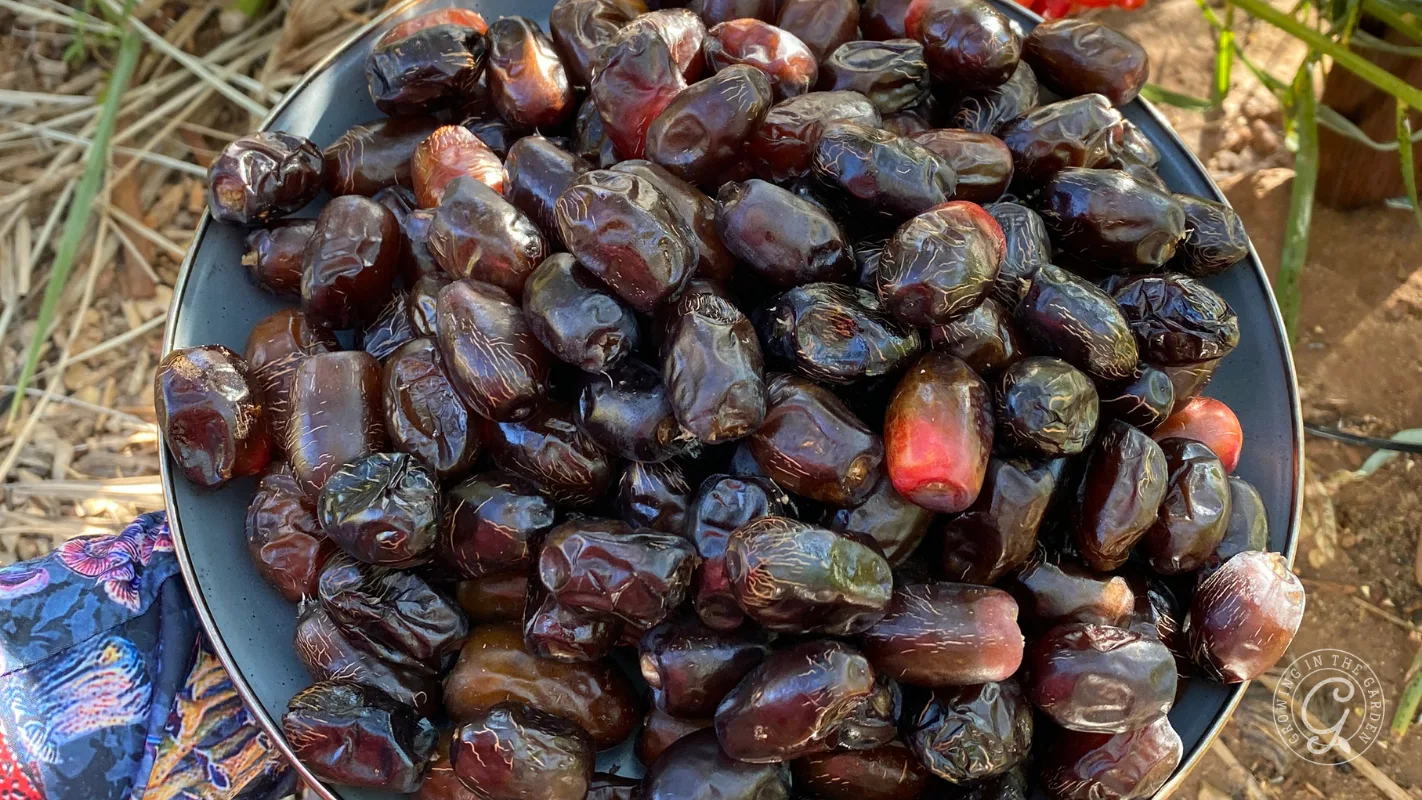
The production is incredible. Her Black Sphinx produced around 100 pounds of dates in only its second crop. Dates sell for around $10 a pound, so if you want to sell or trade part of your harvest, this is a backyard crop that can pay for itself. Jacq shares hers with neighbors and sells the extra.
The water cost is lower than you might think, too. A date palm grown for fruit needs more water than one grown as a landscape tree, but as Jacq puts it, it’s really not that much more than a peach tree.
Male and Female Trees: Why Some Palms Never Fruit
I didn’t realize this, but date palms are either male or female, and only female trees produce fruit.
Commercial date farms grow whole fields of females with just one or two males mixed in to provide pollen. As a home grower, you need a female palm to get dates, and you need male pollen every spring.
You have a few options for pollen:
- Buy pollen from a commercial date farm
- Get pollen from a friend or local grower with a mature male palm
- Plant your own male palm, like Jacq did
The pollen doesn’t need to match your variety. Any date palm pollen will pollinate any female date palm. It does need to be a true date palm, though.
Hand Pollination
Date palms are wind-pollinated in nature, but if you want an actual crop, you hand-pollinate.
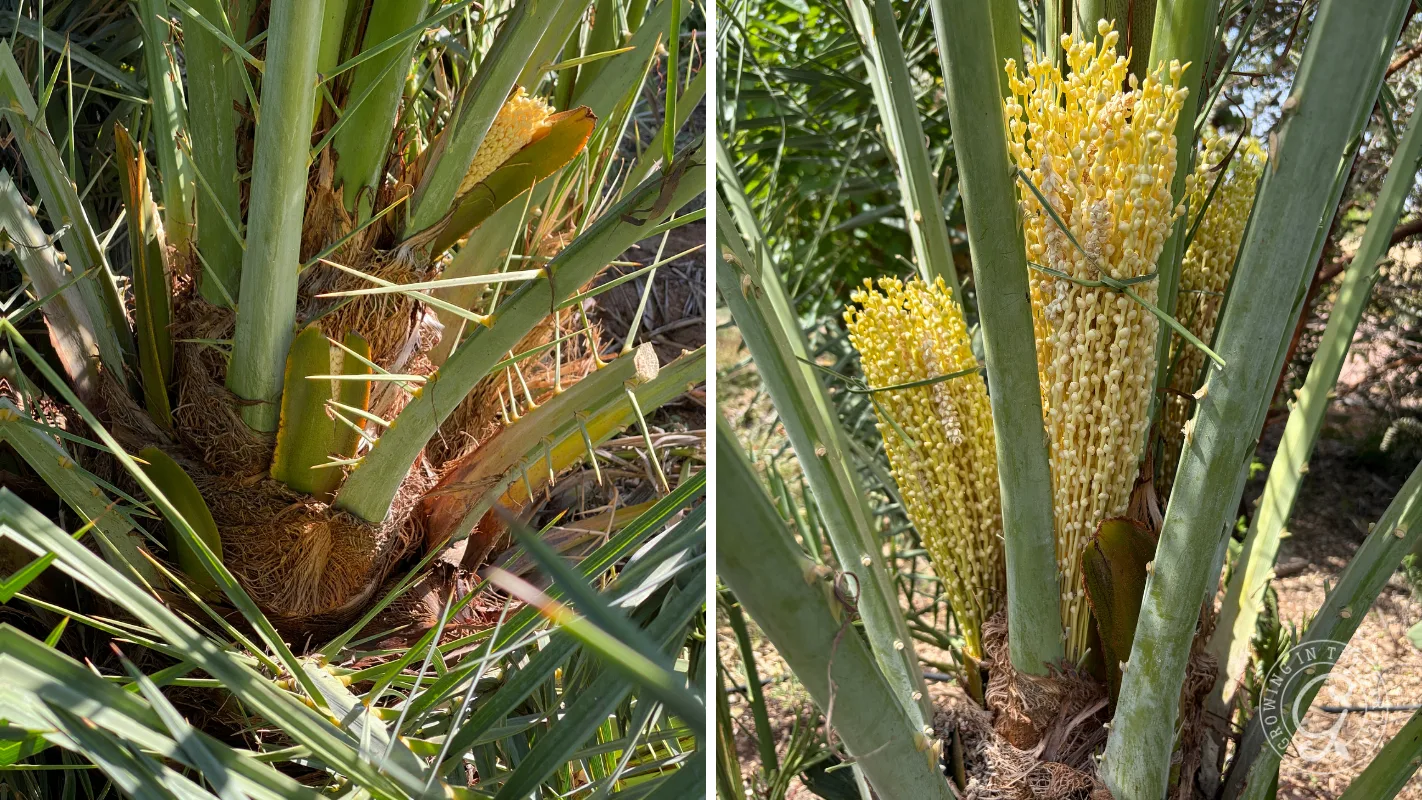
The tricky part is timing. Male flowers come on earlier than female flowers, so growers harvest the male pollen when it’s ready, keep it dry, and store it until the females bloom. Jacq’s local source collects and freezes pollen around March, so it’s viable the moment the female palms start blooming.
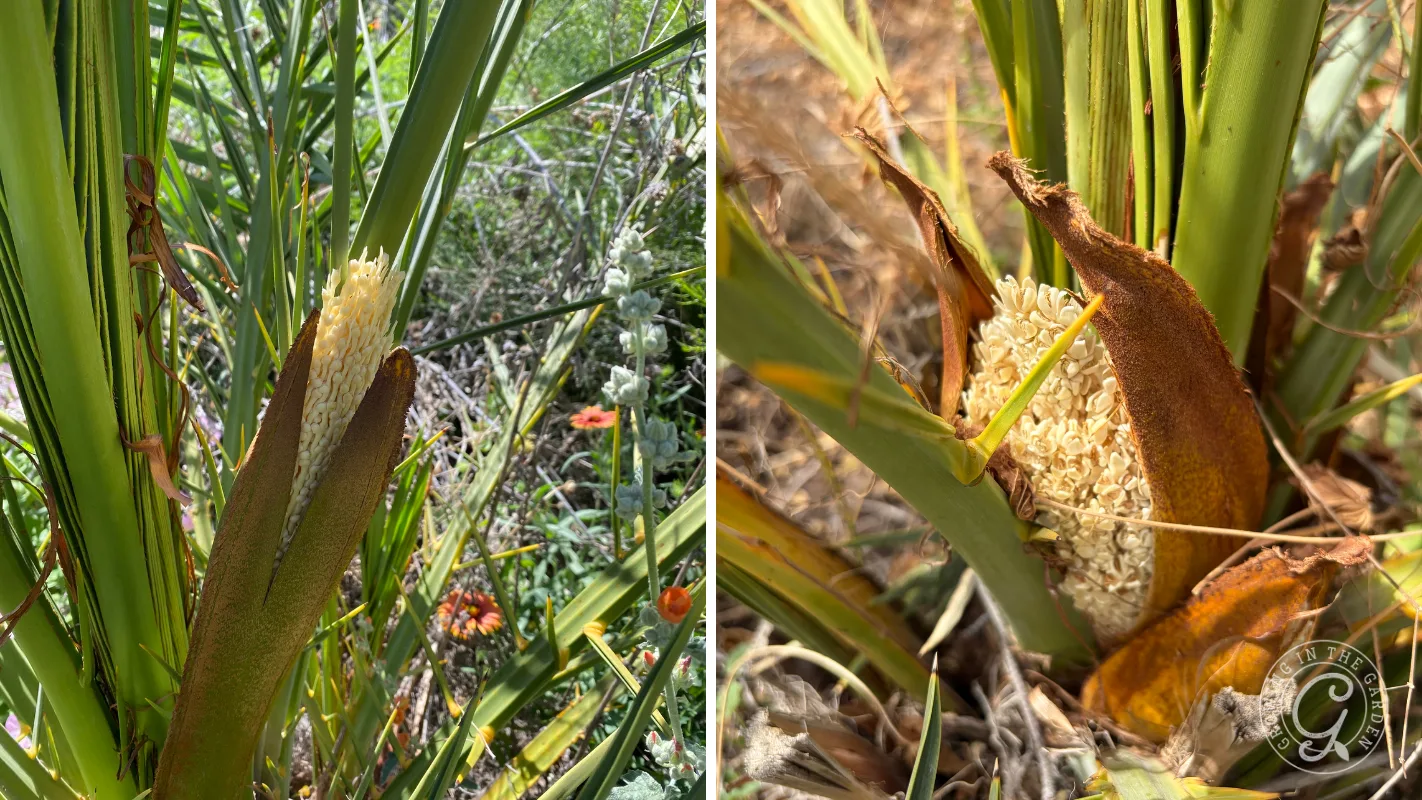
Jacq’s young male palm pushed out its first flowers this year, and she collected pollen from it to pollinate her females in late March.
The application is simple. Jacq describes it as fairy dusting. You take the male pollen and dust it onto the female flowers, the same basic idea as hand pollinating squash blossoms.
Choosing a Variety
Jacq grows two female varieties; here’s a little bit about both.
Black Sphinx is the Phoenix heritage date. This variety has history in the low desert, and it’s the palm Jacq calls her pride and joy. The dates ripen over time rather than all at once, starting in early September and continuing through mid-October.
Barhi is the rare one. Most dates have to dry and caramelize on the tree before you eat them. Barhi you can eat fresh, at the yellow, crunchy stage, when they’re sweet and juicy with a texture closer to an apple. You can also leave them to dry into the familiar caramelized date. Fresh Barhi shows up in Middle Eastern markets around late September and early October if you want to taste one before committing to a tree.
Jacq’s advice here applies to any fruit tree: sample the fruit before you plant it. A date palm is a decades-long commitment. Make sure you love what it grows. If you’re still deciding which trees deserve your yard space, start with my 10 best fruit trees for low desert Arizona.
Why You Shouldn’t Grow Dates From Seed
It’s tempting. Every date has a seed, and the seeds sprout easily. For most people, it’s better not to grow from seed. Date seedlings don’t match the parent tree. Plant a seed from a delicious date, and you could wait five to ten years to find out the fruit is mediocre. Worse, you could end up with a male palm and no fruit at all.
But if a seedling does turn out to produce good fruit, it’s genetically unique and yours to name. That’s actually how heritage varieties get started. But for a reliable harvest, buy an offshoot from a known female tree.
Where to Buy a Female Date Palm in the Valley
Check local nurseries for availability. Many have them rooted. Check labels so you are sure what you are getting.
Jacq also recommends connecting with Matthew Tate, a local date palm grower who is active in Valley Facebook gardening groups. She bought her male palm from him, and he’s her source for pollen, harvest bags, and offshoot digging. He can also connect gardeners with date palm pups for sale from other local growers.
When to Plant
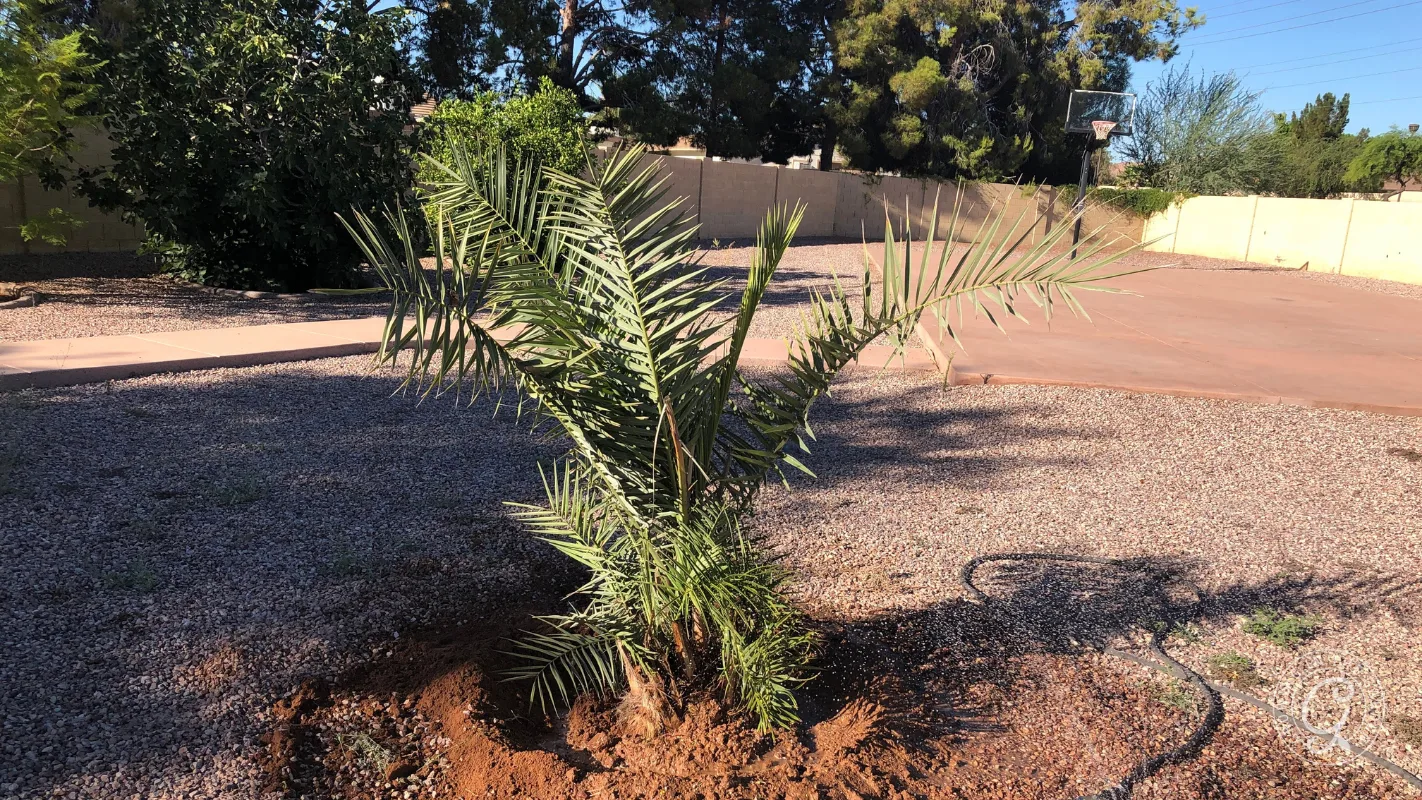
Jacq planted her Black Sphinx in July and her Barhi in late September, and she’d plant at the same times again.
Date palms prefer to be planted in the warmer months so their roots are actively growing right away. Planting into warm soil lowers the chance of root rot. Most low desert fruit trees go in during fall and winter, but dates are the exception. For planting windows for other fruit, see my Arizona Fruit Planting Guide.
What to Expect: The Timeline
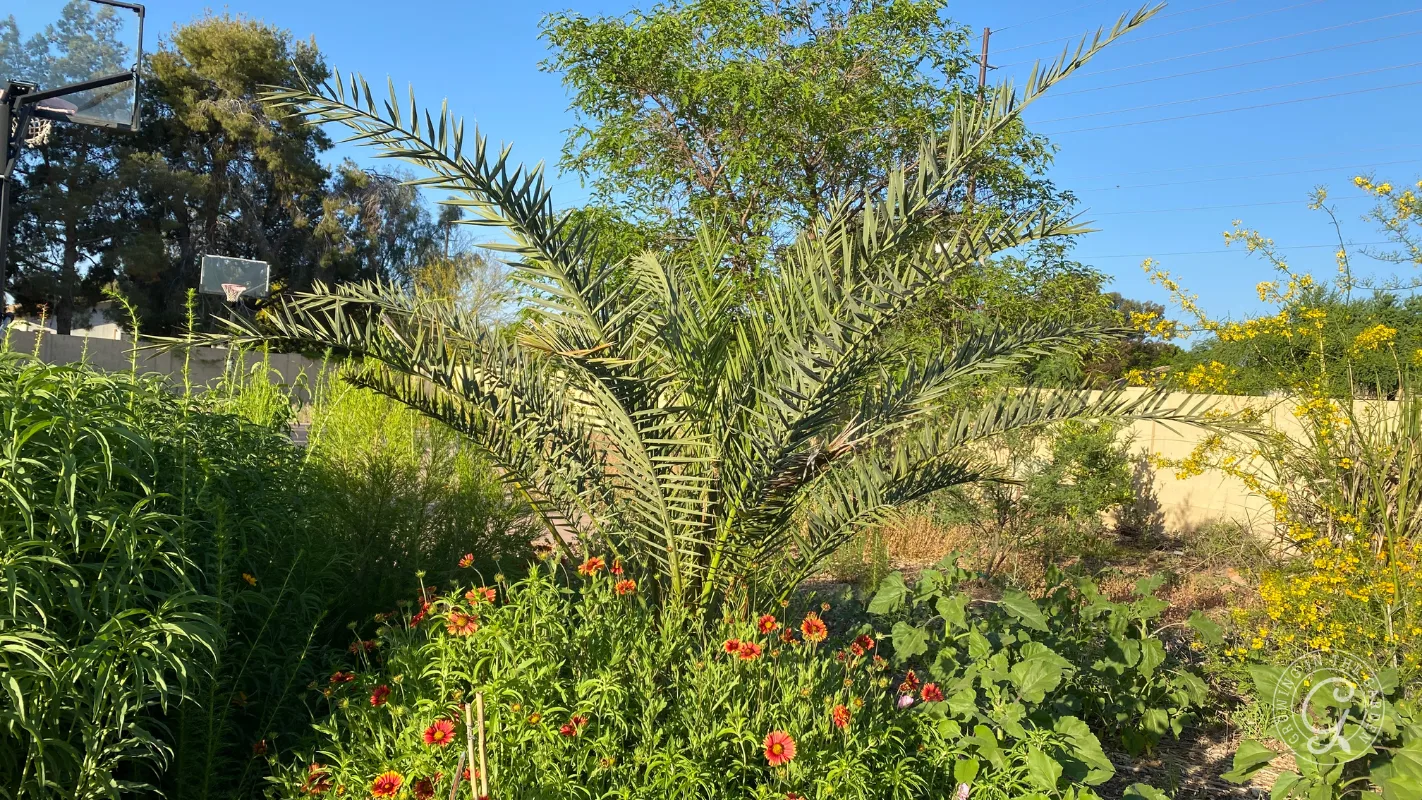
Jacq planted her Black Sphinx in summer 2019, when it was about her height and roughly two and a half years old. It produced its first crop within about five years of planting, and its second crop, the 100-pound one, the following year. It will take another 15 years or so to reach the tall street-tree height most people picture.
Production comes years before the palm gets big. You don’t need to wait for a towering tree to harvest dates.
Caring for a Fruiting Date Palm
Water. Even though date palms thrive in our dry desert climate, consistent water through the summer while fruit is developing is important. Commercial farms have traditionally flood irrigated. In winter, when the palm isn’t actively growing, you can cut back on watering.
Fertilizer. Jacq applies quality fertilizer and compost from fall through winter to boost spring flowering. She and another local date grower have both had good results applying Tony’s Magic Flower 1-5-1 from Earth’s Original Organics through the winter. She’s planning to try Nutrient+ from Arizona Worm Farm this winter.
Support the clusters. Date clusters get heavy enough to snap the stalk that carries them. Jacq rigs PVC poles under the fruiting arms to carry the weight. When you see her palm in the video, you’ll see the supports doing their job under roughly 100 pounds of fruit.
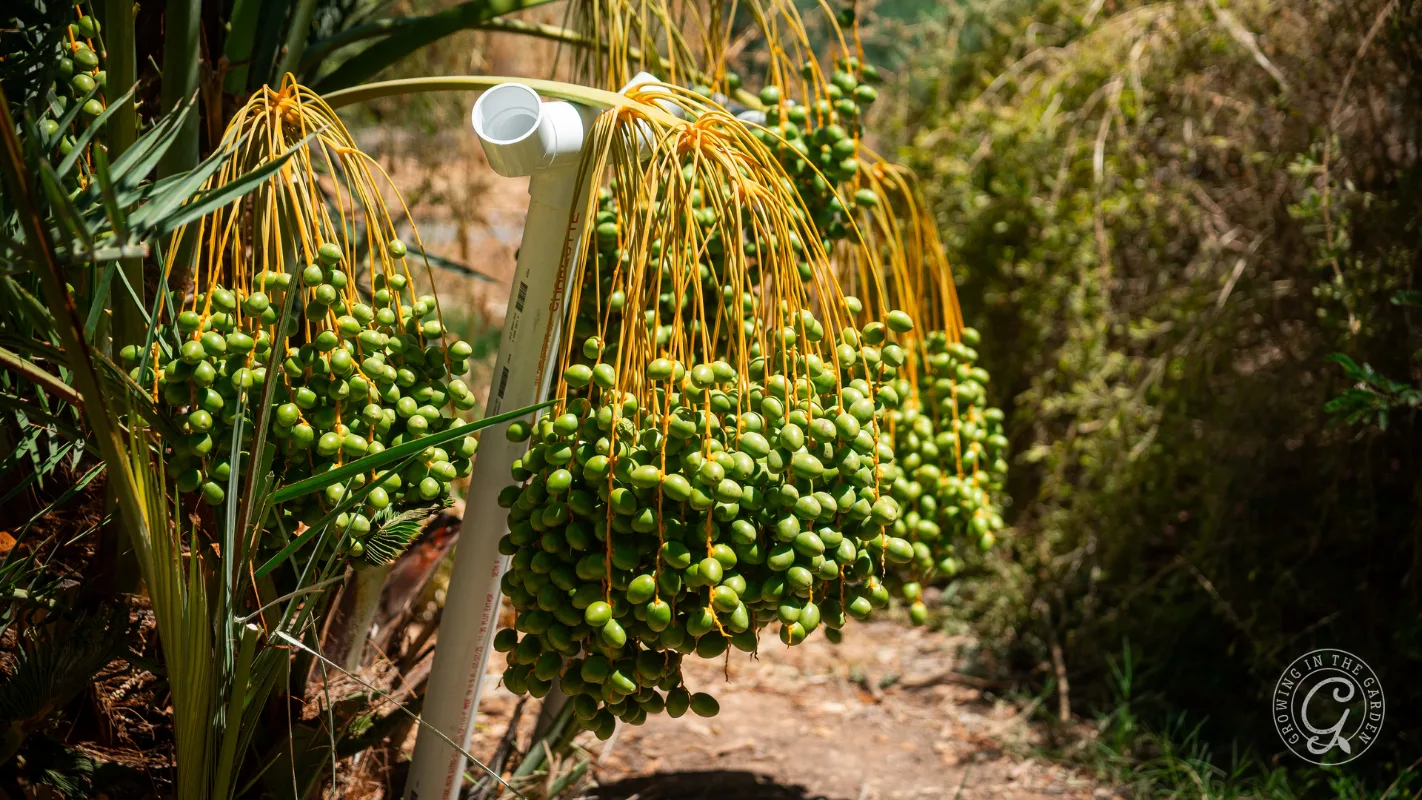
Thinning. Commercial farmers remove up to half the fruit on each cluster to increase the size of what remains. Jacq kept her clusters full the first time, then decided she’d thin about a third going forward to reduce weight on the stems and grow slightly larger fruit.
Prune the spikes. Date fronds carry serious spikes near the trunk. Prune them off early, and you can reach in to work on the palm without getting stabbed.
Spacing. The standard recommendation is to leave a 30-foot radius for the mature fronds. Jacq plants closer anyway and lets other plants grow around the base. She finds the companions keep the root zone cool and moist, and the palm returns the favor by shading a nearby peach tree through the summer afternoons.
Managing Offshoots
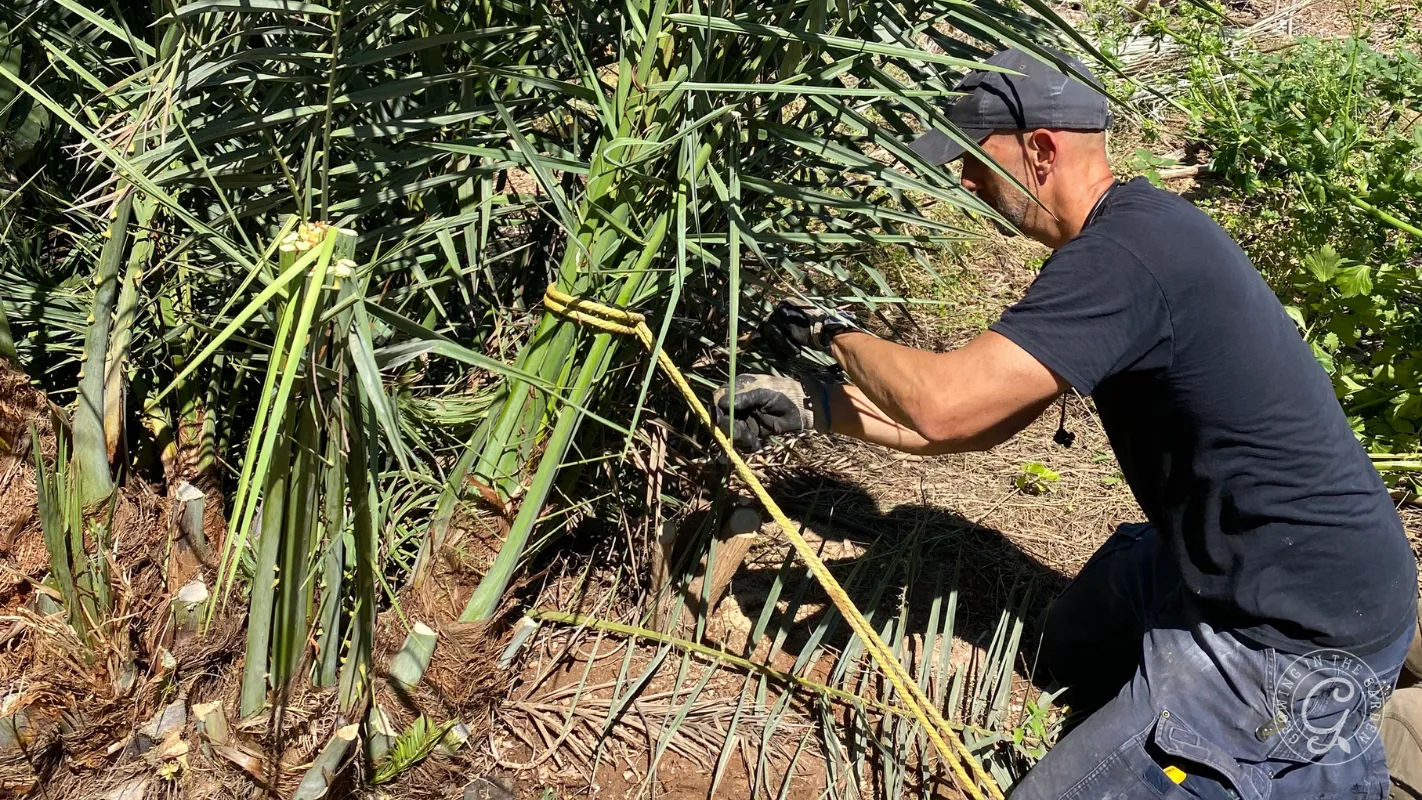
Female date palms produce offshoots, called pups, around their base, and some varieties produce far more than others. Black Sphinx produces lots of them, and they need to be managed so you can care for the palm and reach the fruit.
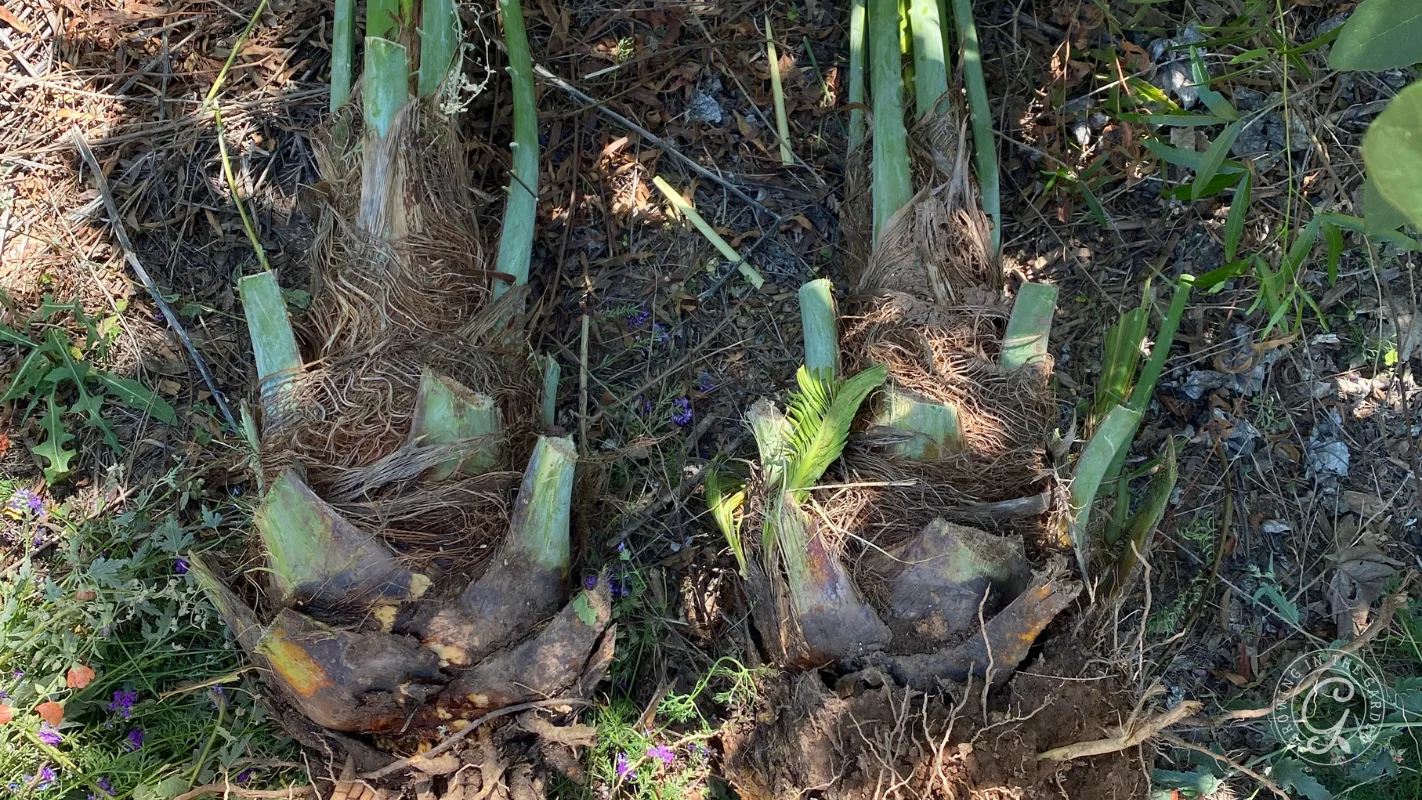
If you want to sell or share the pups, wait until they’re at least two to three years old, large enough to send out new roots after being dug and potted. Digging them is a process that takes some effort. Jacq calls in help with specialized tools rather than doing it herself, and the pups sell for a good price.
Protecting the Fruit
Birds love dates. So do rats. So do ants.
Jacq protects her ripening clusters with special mesh date bags. The bags keep birds and most critters out while the fruit finishes on the tree.
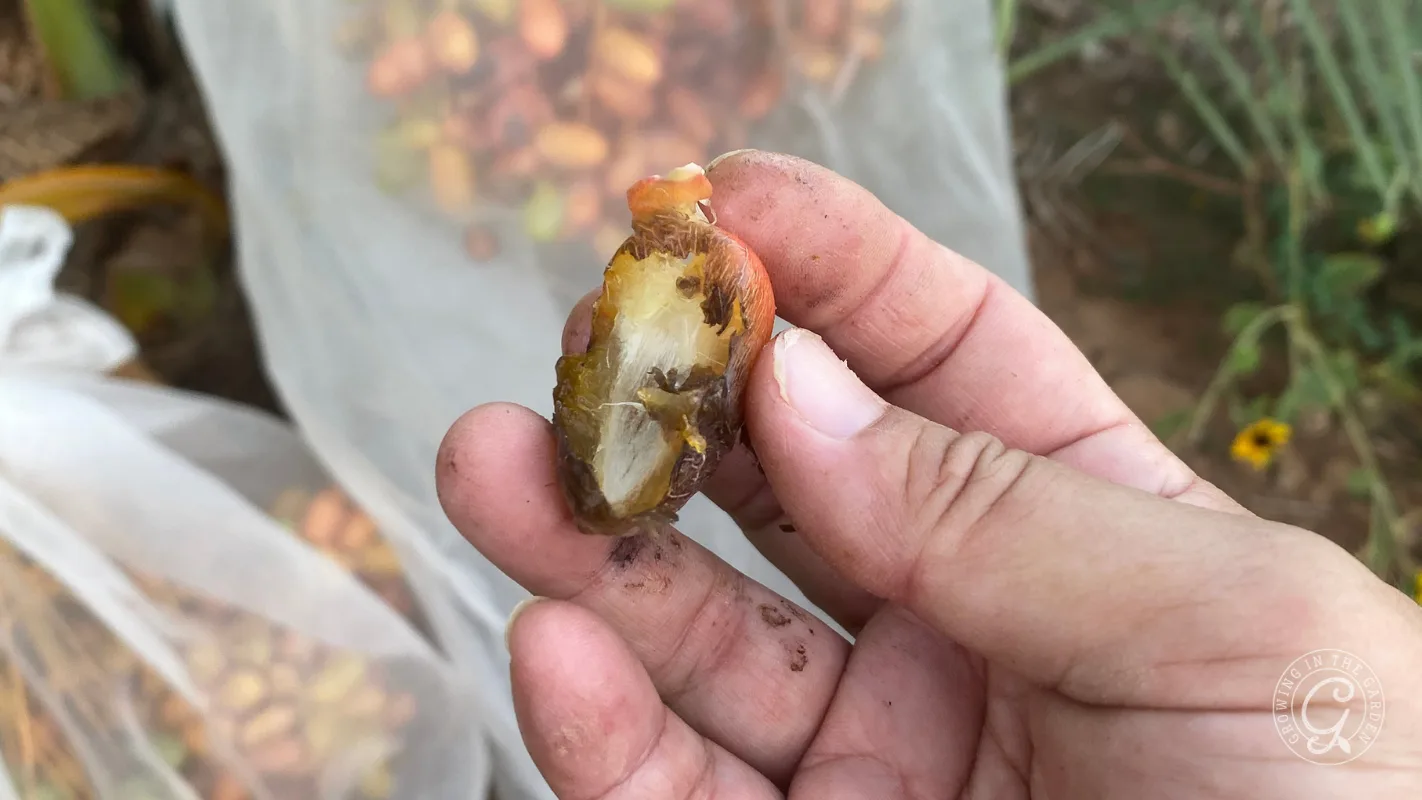
In 2024, she had a serious rat and mouse problem, and they chewed through the bags. Through that harvest season, she opened the bags daily, pulled damaged fruit, harvested what was ripe and intact, and re-bagged the clusters. After a year of aggressive trapping, she expects this season to be much better.
The bags work best once the rodent population is under control.
Harvest
Black Sphinx dates ripen gradually and unevenly, so Jacq picks as they ripen rather than cutting whole clusters. Harvest starts in early September and continues daily through mid-October.
Barhi gives you a choice. Pick at the fresh yellow stage in early fall, or leave the dates to dry and caramelize on the tree.
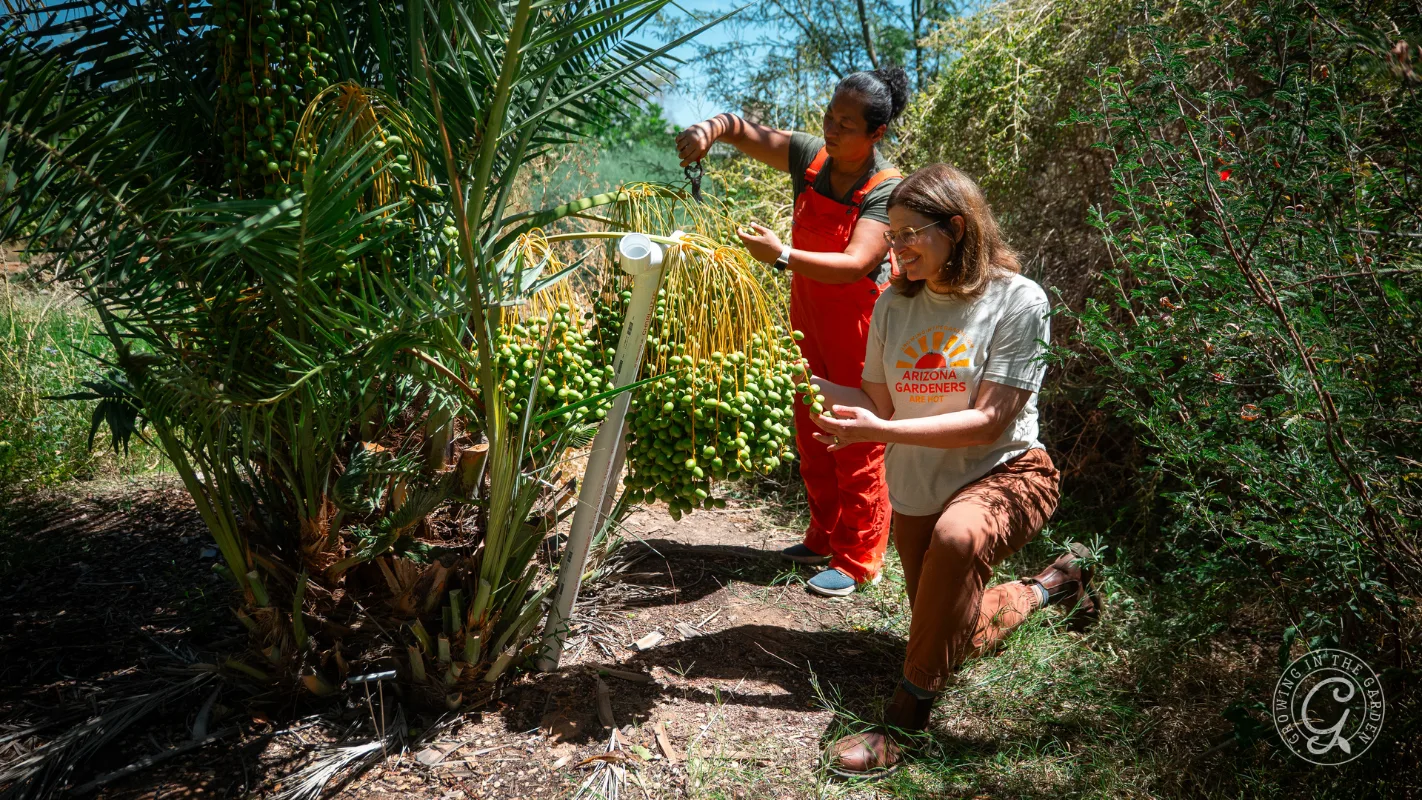
Then comes the good problem: what to do with the harvest. Jacq eats them, shares with neighbors, trades for crops she doesn’t grow, and sells the extra.
How to Grow Date Palms FAQs
You need one female palm and male pollen each spring. You can buy pollen or source it locally rather than growing your own male.
Jacq’s Black Sphinx produced its first crop about five years after planting a young palm. Offshoots from mature trees are faster than seed-grown palms, which take much longer and are a gamble anyway.
It will sprout, but the fruit won’t match the date you ate, and it could turn out to be a fruitless male. Buy an offshoot from a known female variety instead.
More than a landscape palm, not much more than a peach tree. Water consistently through summer while fruit develops and cut back in winter.
Black Sphinx ripens from early September through mid-October. Fresh-eating Barhi hits its yellow crunchy stage in early fall.
Yes, and so do ants. Mesh date bags protect ripening clusters and help keep rodent populations down.
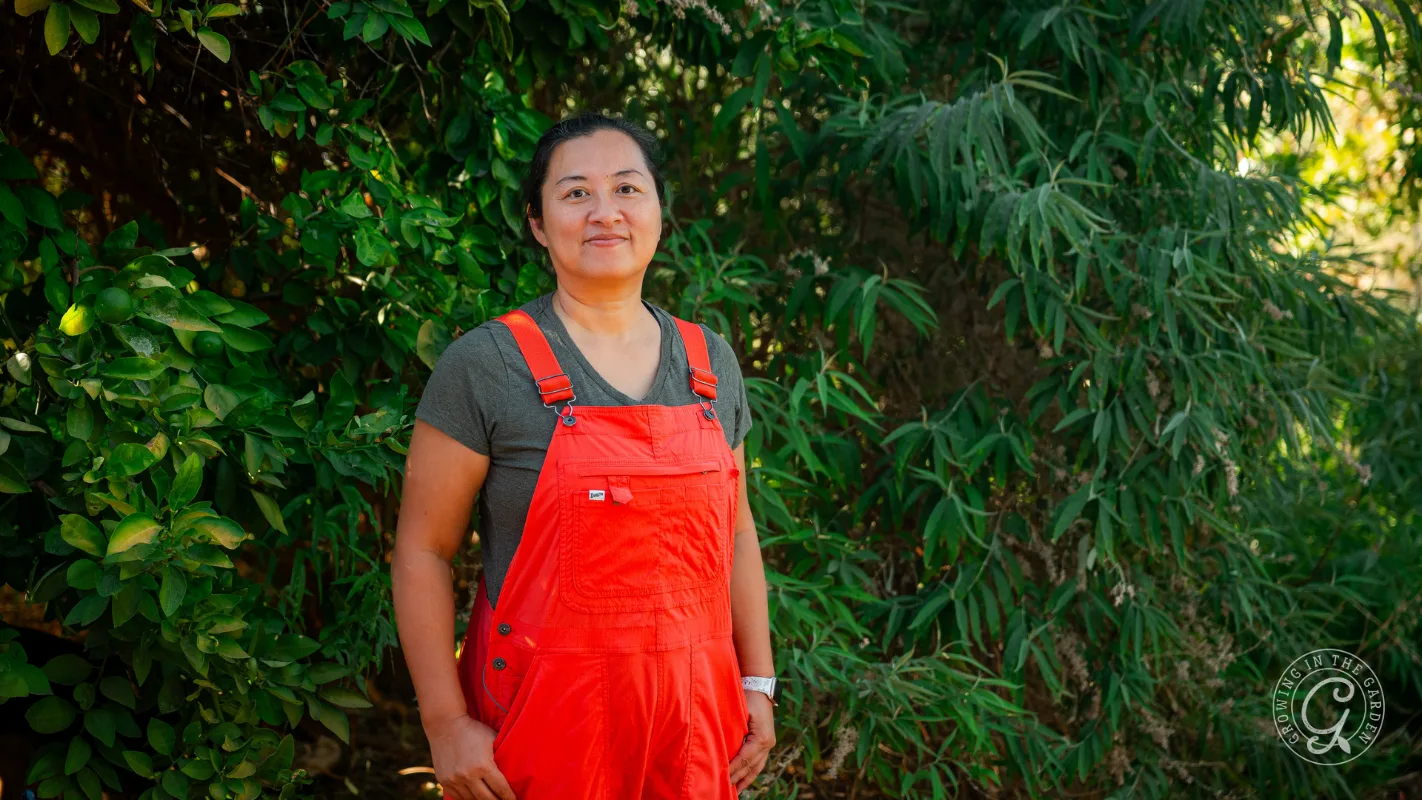
A huge thank you to Jacq Davis of Epic Yard Farm in Tempe for sharing what she has learned about growing dates. Watch my full tour of her permaculture food forest, and follow her on YouTube, Facebook, and Instagram.
Leave a comment on How to Grow Date Palms in the Low Desert