
How to Attract Hummingbirds to Your Arizona Garden
I love sharing my garden with hummingbirds. My favorite moment is when they get used to me being out there and just go about their business, feeding, chasing each other off, doing their thing a few feet away like I’m not even there. I’ll grab my phone and get a photo sometimes, but mostly I just enjoy it. It’s one of the moments in my garden where I feel closest to nature.
I’ve invited Jean Elston to share more about the hummingbirds we see here in the low desert. Jean spends a lot of time observing and photographing wildlife, and I always learn something from her articles. She explains how to tell different hummingbirds apart and shares some interesting observations about their behavior.
I’ll also share my favorite plants for attracting hummingbirds throughout the year, along with a few things you can do besides planting flowers.
Key Takeaways: Attracting Hummingbirds
- Anna’s and Costa’s hummingbirds can be found in Arizona’s low desert year-round, while other species visit seasonally.
- Plant flowers that bloom at different times of the year to provide nectar throughout the seasons.
- Hummingbirds eat insects as well as nectar, so avoiding pesticides helps protect their food supply.
- Flowering plants and suitable habitat can attract hummingbirds naturally.
What We’ll Cover:
- Hummingbirds in the Low Desert
- How to Tell Anna’s and Costa’s Hummingbirds Apart
- Hummingbirds You’re Likely to See in the Low Desert
- What Hummingbirds Eat and Which Plants They Visit
- Best Plants to Attract Hummingbirds in Arizona
- A Few More Good Options
- Other Ways to Encourage Hummingbirds
- Should You Use a Feeder?
- Attracting Hummingbirds FAQs
Hummingbirds in the Low Desert
By Jean Elston
Having been around hummingbirds all of my life, I could not imagine living in an area without them. To see them darting among the flowers and then having a quick rest on a branch, every time I hear the sound it causes me to pause to enjoy their presence.
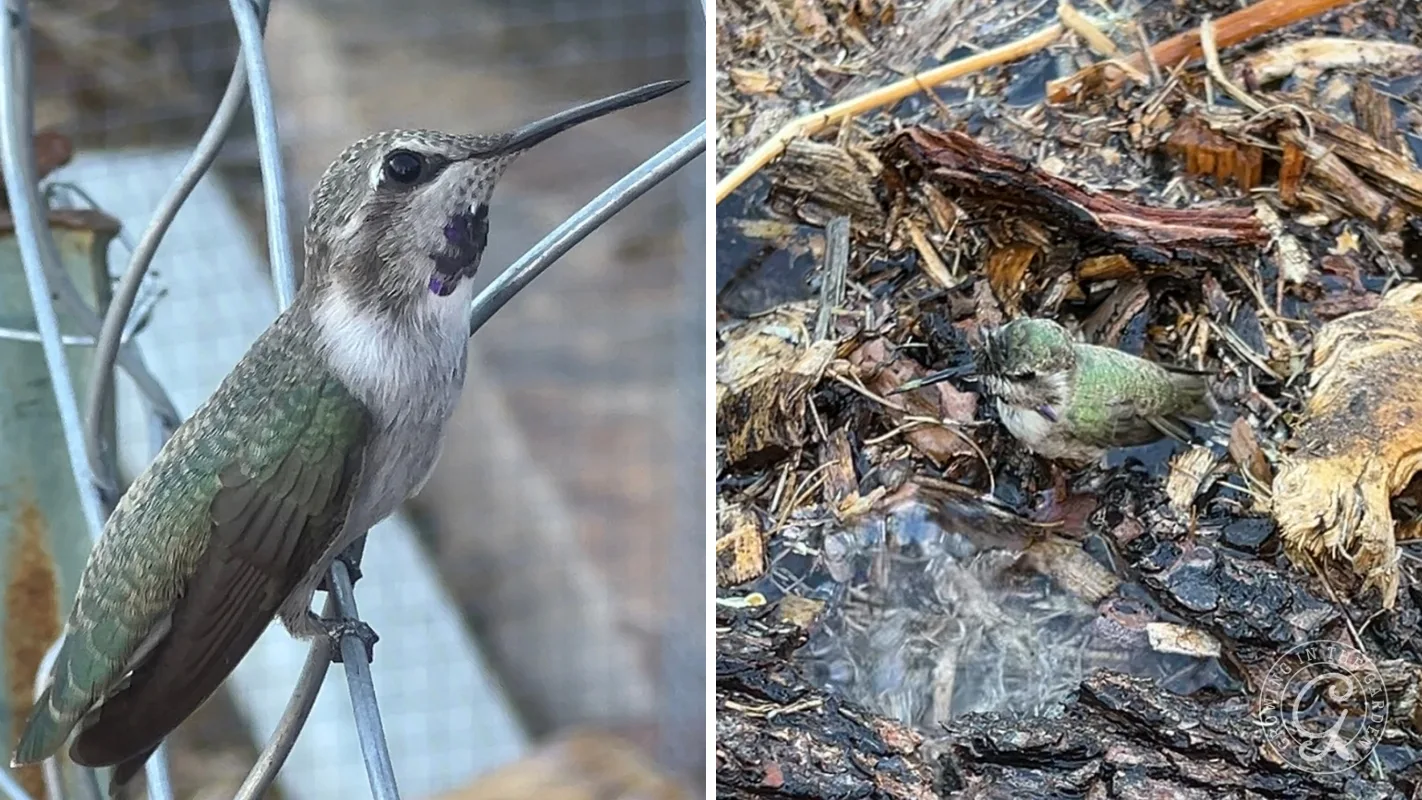
Costa’s Hummingbird
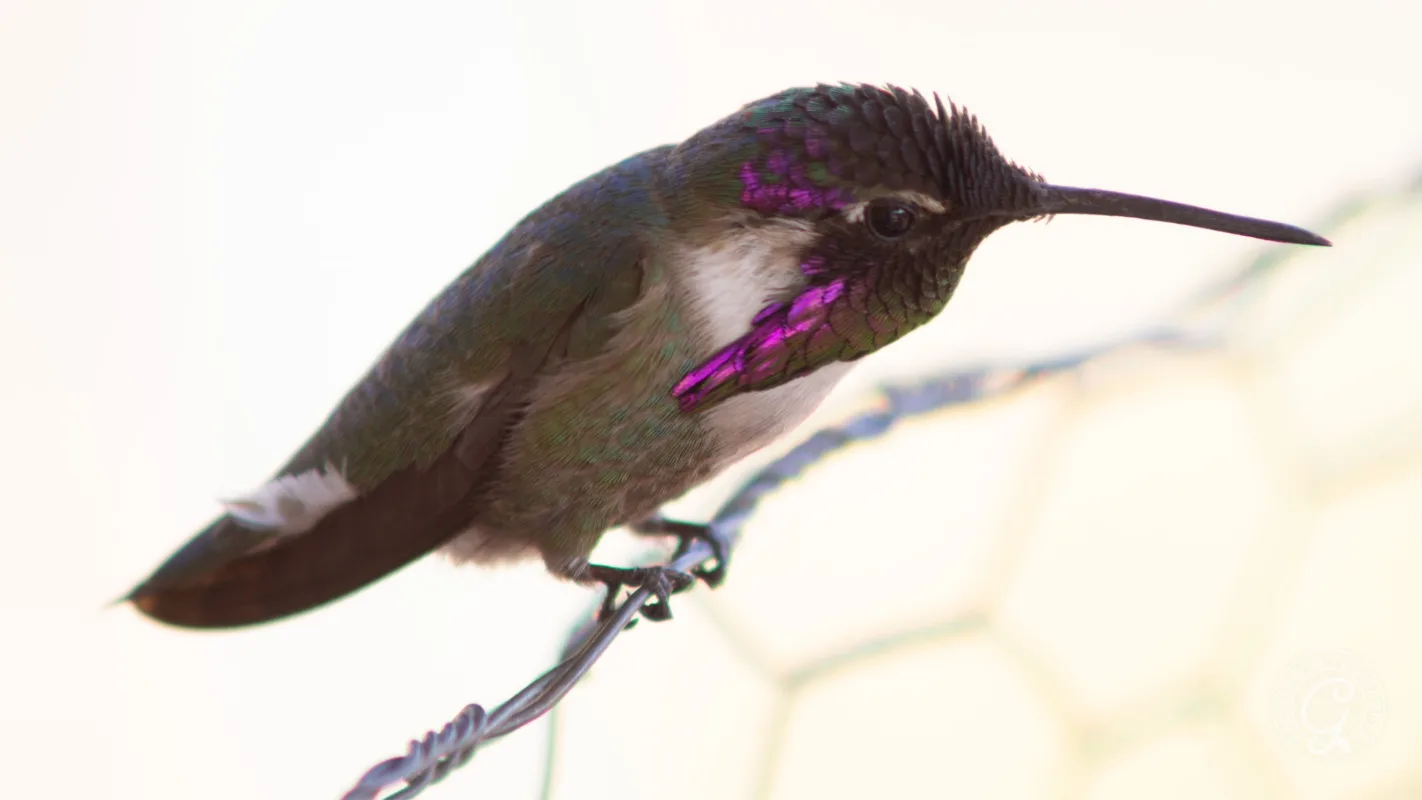
When I first moved to Arizona, I had vaguely heard about Costa’s hummingbirds (Calypte costae), as they are in the southern part of California, but had never been lucky enough to see one. Given their small range, from the northern part of Mexico along the coast into Baja and then parts of Arizona, they truly are a rare sight for most of the country.
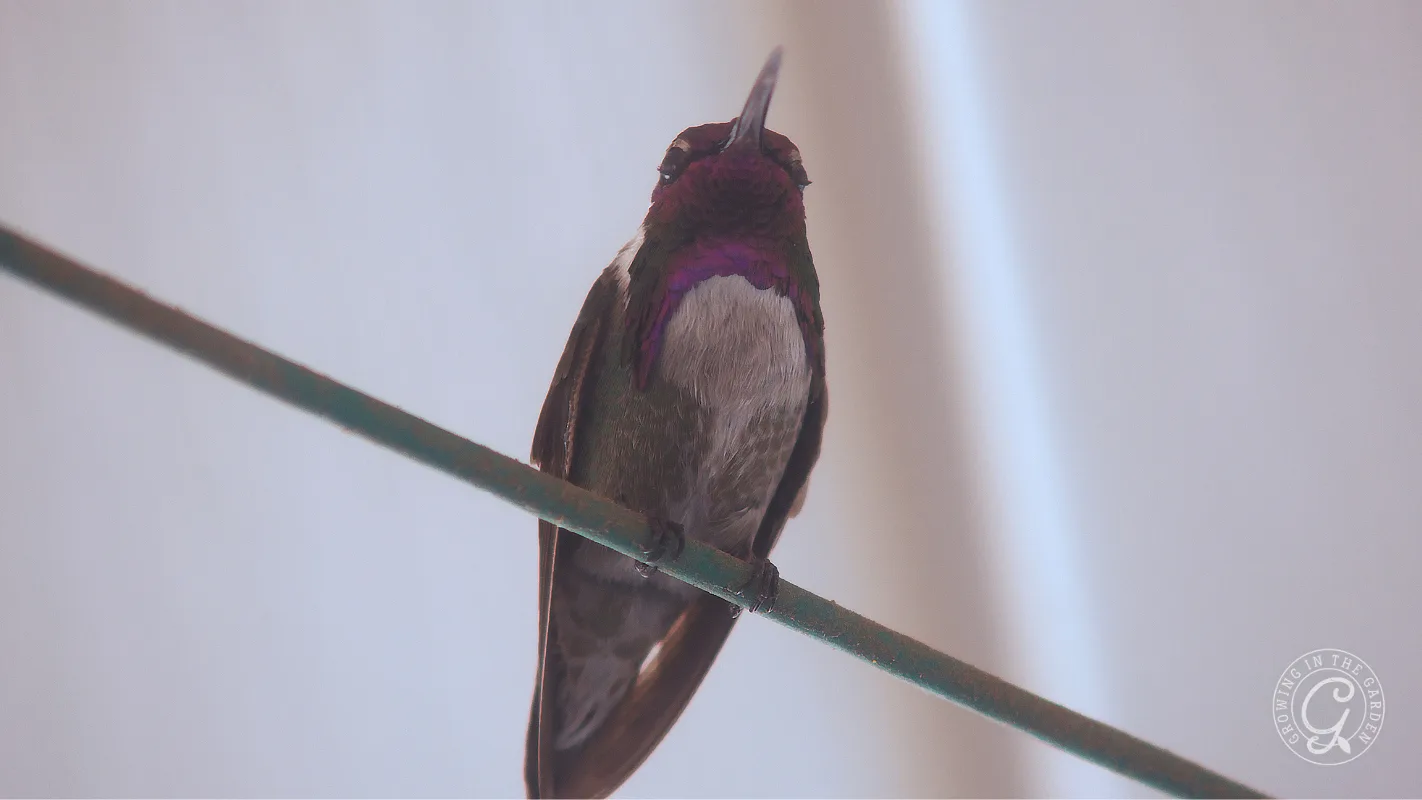
Here in the low desert we are lucky to have these beautiful tiny gems year round. And they are truly tiny, weighing maybe three grams. The way the males in particular hunch over when perched makes them appear even smaller.
What I did not expect is how territorial they can be. Perhaps making up for their compact size. When one lands on a small branch, trusting me with being able to study it closer, I do not take the opportunity for granted. From the shape of the body, to the way the tiny feet grip the branch, and how it stretches right before taking off again. What is truly impressive for most male hummingbirds is the turning of the head.
How to Tell Anna’s and Costa’s Hummingbirds Apart
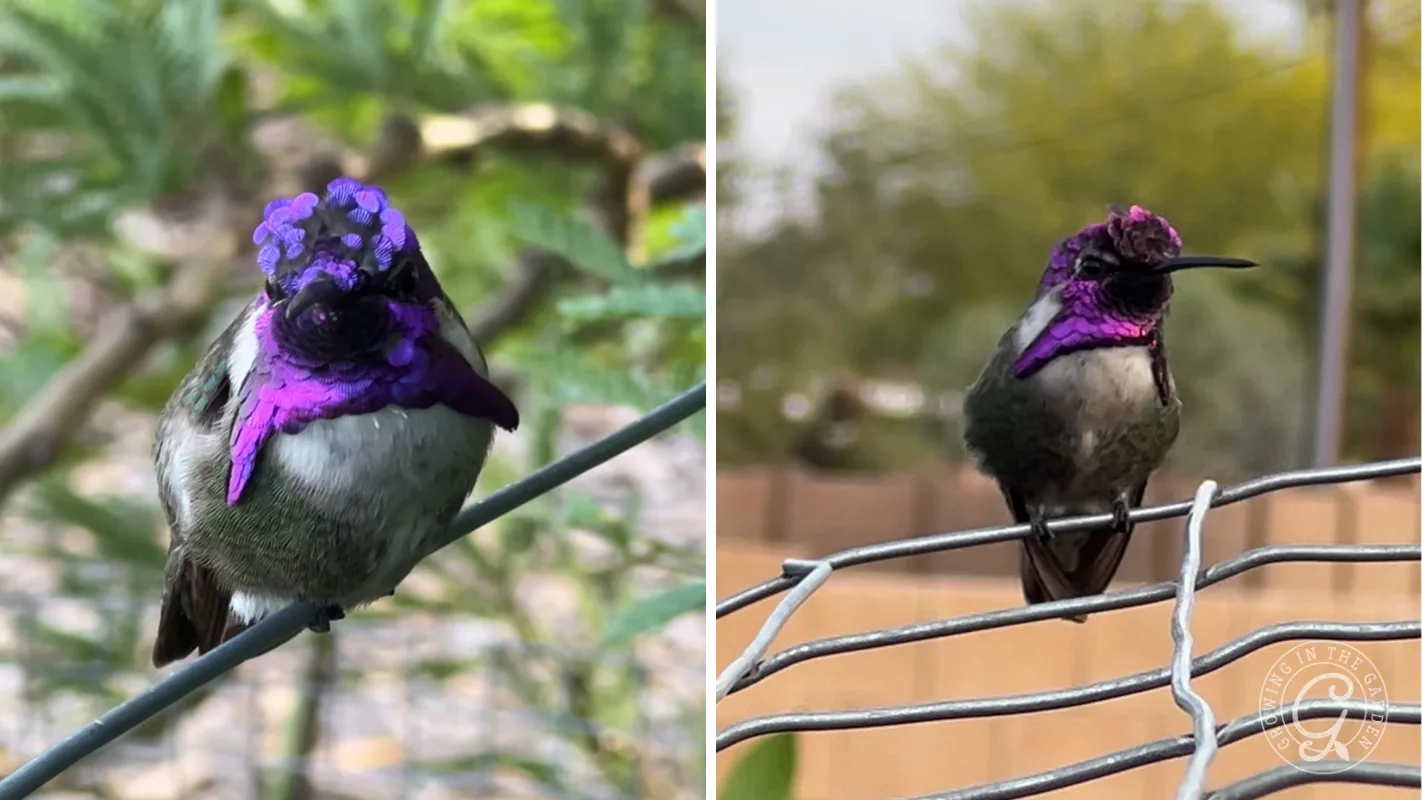
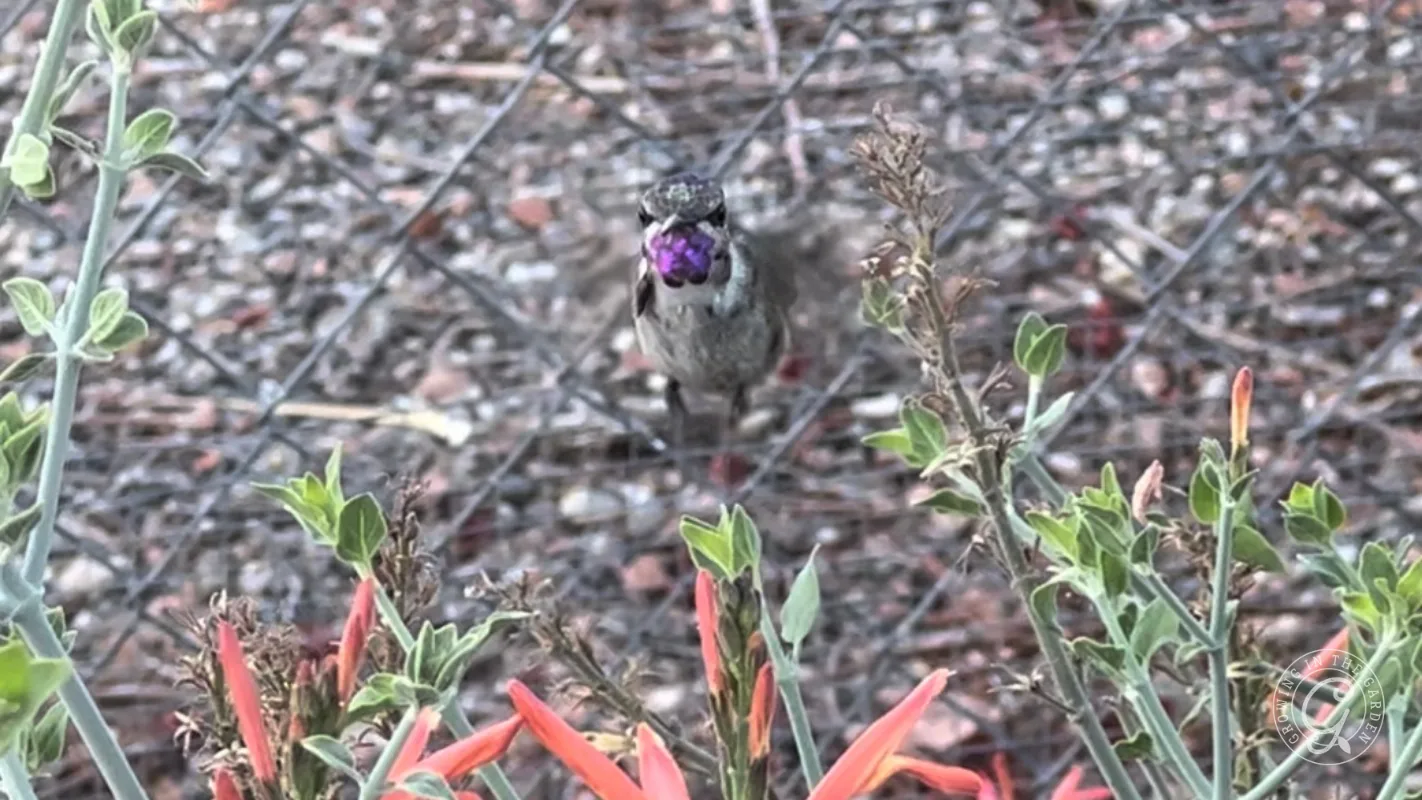
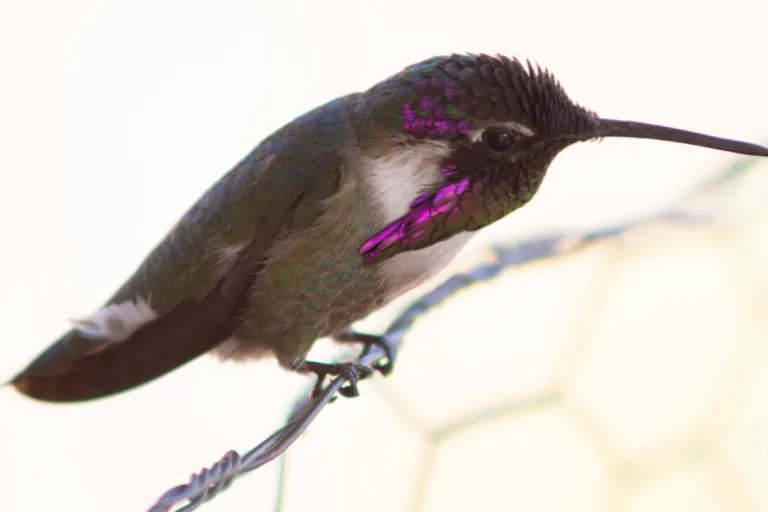
I had been used to seeing Anna’s hummingbirds (Calypte anna) in California and they are here in Arizona as well, staying year round alongside the Costa’s. While the male Anna’s are a red-pink coloring on their head, the Costa’s are a brilliant purple along with an impressive gorget that flares at the sides. At times it looks as though it should glow in the dark.
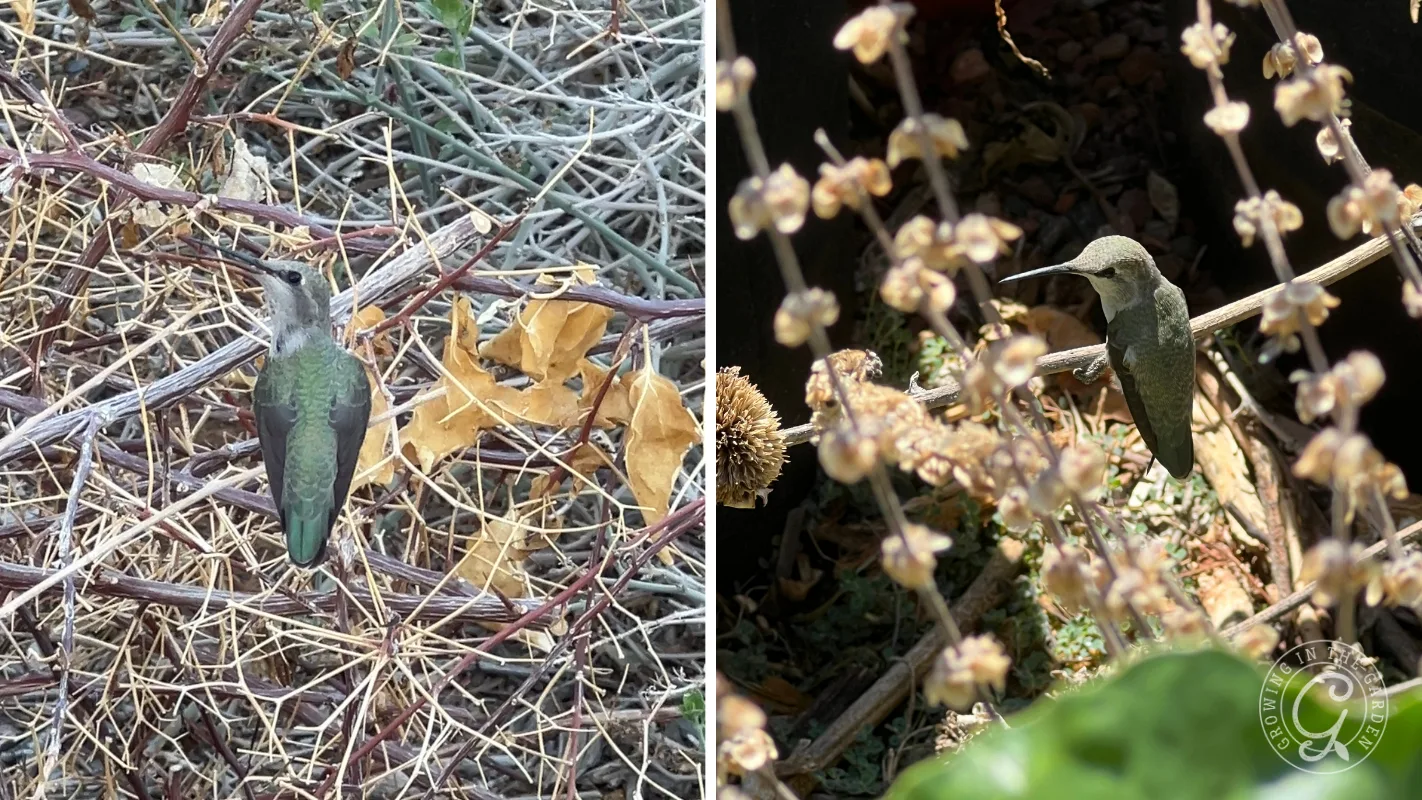
While it is easy to distinguish between the males of the two species, the females can be more difficult. At a quick glance, there is almost nothing to separate a female Costa’s from an Anna’s hummingbird. If one is able to get a close up view of the “underside” that is probably the most noticeable difference, as Costa’s have cleaner white feathers whereas the Anna’s have a more gray-green or gray belly.
Hummingbirds You’re Likely to See in the Low Desert
Now every garden is different and there are hummingbirds species that manage to exist together. Technically this should be the case for my area, Anna’s and Costa’s should be able to thrive in this space together.
That is not always the reality though and in my case, a mature male has decided my entire property is his space. While he allows a few juveniles into the area and certainly welcomes females, another male, no matter the species is a potential threat. Arizona though is home to a great variety of hummingbirds, at least seventeen, so even in our low-desert region it is not unusual to have a few others passing through at certain times of the year.
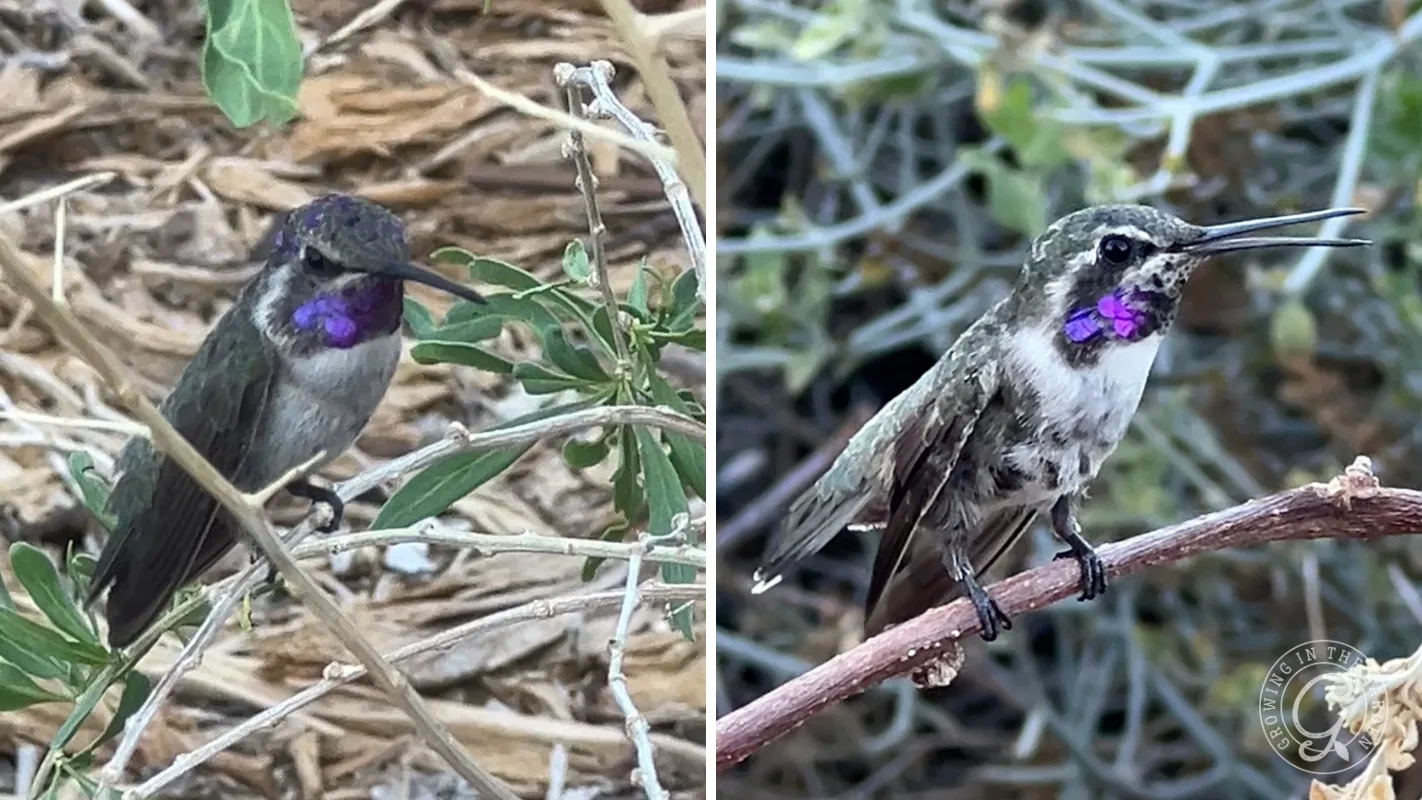
Two others you might have visiting the garden are Black-chinned (Archilochus alexandr) and Broad-tailed (Selasphorus platycercus), though that does not mean there are not others passing through as well.
There can be some similarities between the Black-chinned and the Costa’s mostly the purple coloring. As the name implies, they have a black stripe under their “chin,” a huge contrast from the Costa’s hummingbird that has a solid purple color for their entire head. As for the Broad-tailed, it looks similar to Anna’s in terms of the coloring, the difference is the Anna’s male once again has the entire head covered in color compared to just the lower portion for the Broad-tailed.
Both are here for breeding season, often the males showing up first to stake a territory and the females following. So in early spring, around mid-March is a good time to be looking for the various hummingbirds that are coming to this area for breeding. By late September they have headed back to Mexico for winter.
What Hummingbirds Eat and Which Plants They Visit
Of course this is by no means a complete list of every hummingbird that could show up, it all depends on the location of your garden and the space you have created. This brings us to what they are feeding on.
Yes we are familiar with hummingbirds needing flower nectar, but it may surprise you to realize they need protein as well.
It is not unusual to see a hummingbird hovering in the air and almost looking lost, to suddenly appear to grab an invisible object. From mosquitoes to gnats, they are including a number of tiny flying insects into their diet.
There are a number of plants to grow to encourage more to show up, and Angela will be going over more in greater detail, along with how to truly develop a home for them, but I do want to mention the few plants that I have found the hummingbirds enjoying consistently.
Appropriately named Chuparosa (Justicia californica), the common name coming from Spanish for hummingbird, is a great choice if you have enough space. It supports a number of native bees and other wildlife as well
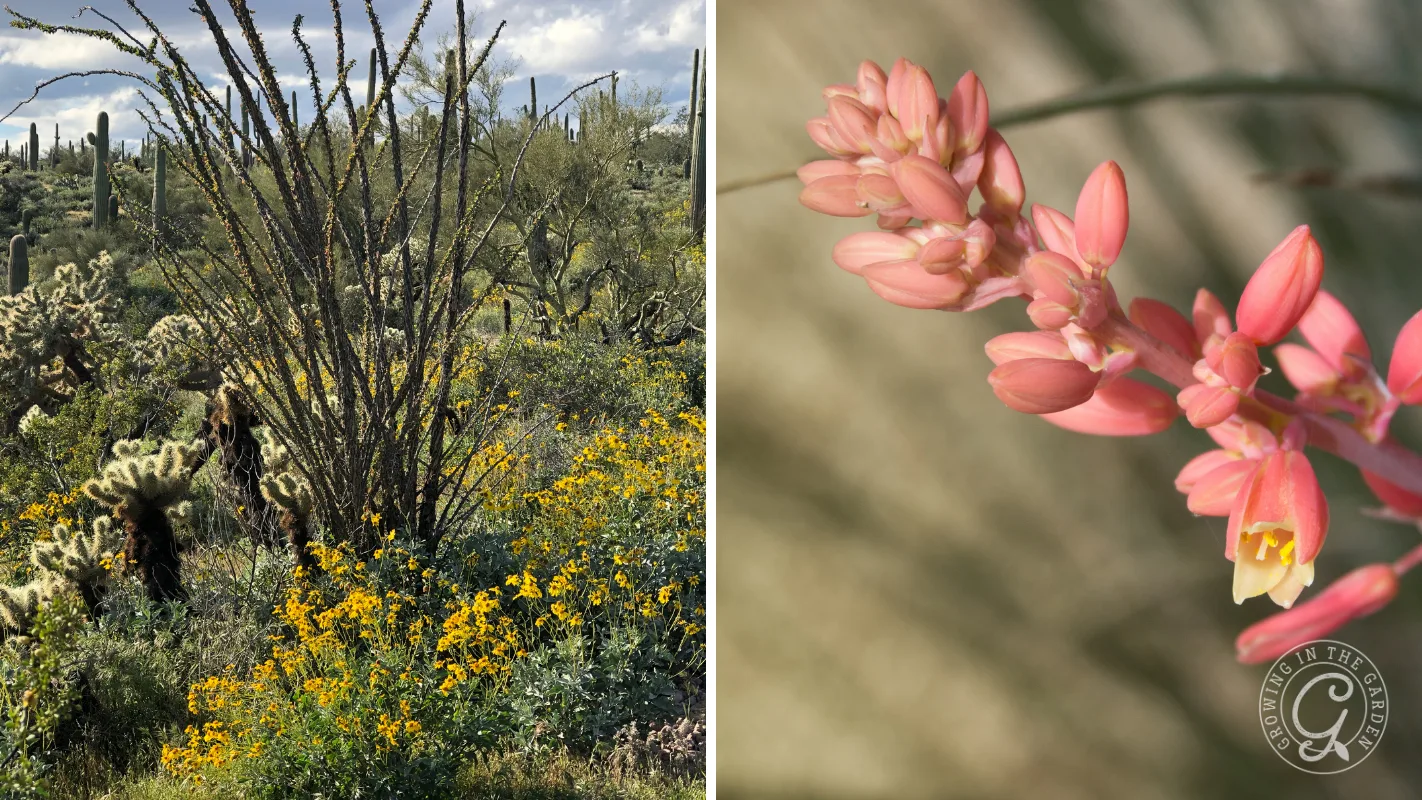
Ocotillo (Fouquieria splendens) is not just for the flowers, sometimes they are even nesting in cavities or spaces. Does seem to be a good way to keep out potential predators.
Yellow Bells (Tecoma stans), Desert Willow (Chilopsis linearis) and Fairy-duster (Calliandra eriophylla) are also great native plants that not just the hummingbirds will enjoy.
Truly though I have found hummingbirds are not entirely picky when it comes to finding nectar, evening attempting to extract nectar from red shoes if you are wearing them
Best Plants to Attract Hummingbirds in Arizona
Angela Judd
One of the best things we can do to encourage hummingbirds is grow plants that provide nectar throughout the year. Here are some of my favorite plants for attracting hummingbirds in my low-desert garden.
Bloom times overlap in the low desert, and weather can shift flowering earlier or later. I’ve grouped these plants by their typical bloom seasons, but many will provide nectar for longer than one season.
Spring Bloomers
| Plant | Mature size |
| Texas Mountain Laurel | 10 x 8 ft |
| Blue Palo Verde | 30 x 30 ft |
| Foothills Palo Verde | 15 x 15 ft |
| Ocotillo | 12 x 10 ft |
| Desert Lavender | 10 x 8 ft |
| Canyon Penstemon | 1.5 x 2 ft |
| Golden Columbine | 2 x 2 ft |
| Globe Mallow | 3 x 3 ft |
| Giant Hesperaloe (may continue flowering into summer) | 5 x 5 ft |
| Firecracker Penstemon | 1 x 1.5 ft |
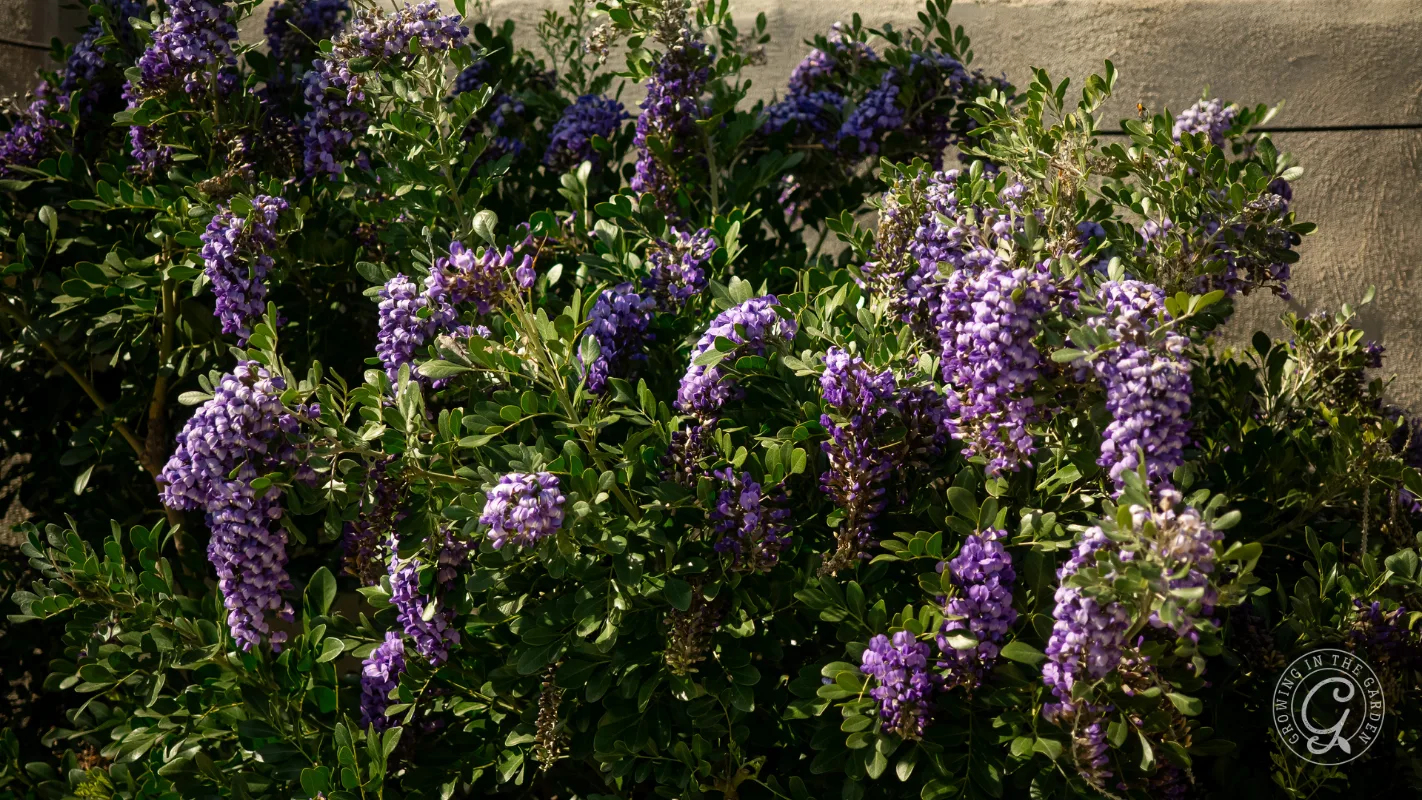
Texas mountain laurel, blue palo verde, and foothills palo verde are all covered in my native plants for Arizona guide. Ocotillo is another excellent spring choice. Its bright red flowers provide nectar for hummingbirds, and it can handle some of the hottest spots in your yard. Learn more in my reflected heat plants guide.
Desert lavender is a fragrant, gray-leaved native shrub with small spring flowers that pull in bees, butterflies, and hummingbirds all at once. Canyon penstemon is a short-lived native perennial, plant it in fall for spring flowers, and let it reseed. Golden columbine is one of the few plants on this list that wants shade, a good choice under a tree canopy rather than out in the open sun. Globe mallow puts on a show of orange, white, or pink blooms most springs, especially after a wet winter. Giant hesperaloe is a larger relative of red yucca, with tall greenish-white flower stalks that draw both hummingbirds and bees.
Summer Bloomers
| Plant | Mature size |
| Firebush | 4 x 4 ft |
| Flame Honeysuckle | 3 x 4 ft |
| Ava’s Hummingbird Mint | 3 x 2 ft |
| Hummingbird Trumpet (bloom often extends into fall) | 1 x 2 ft |
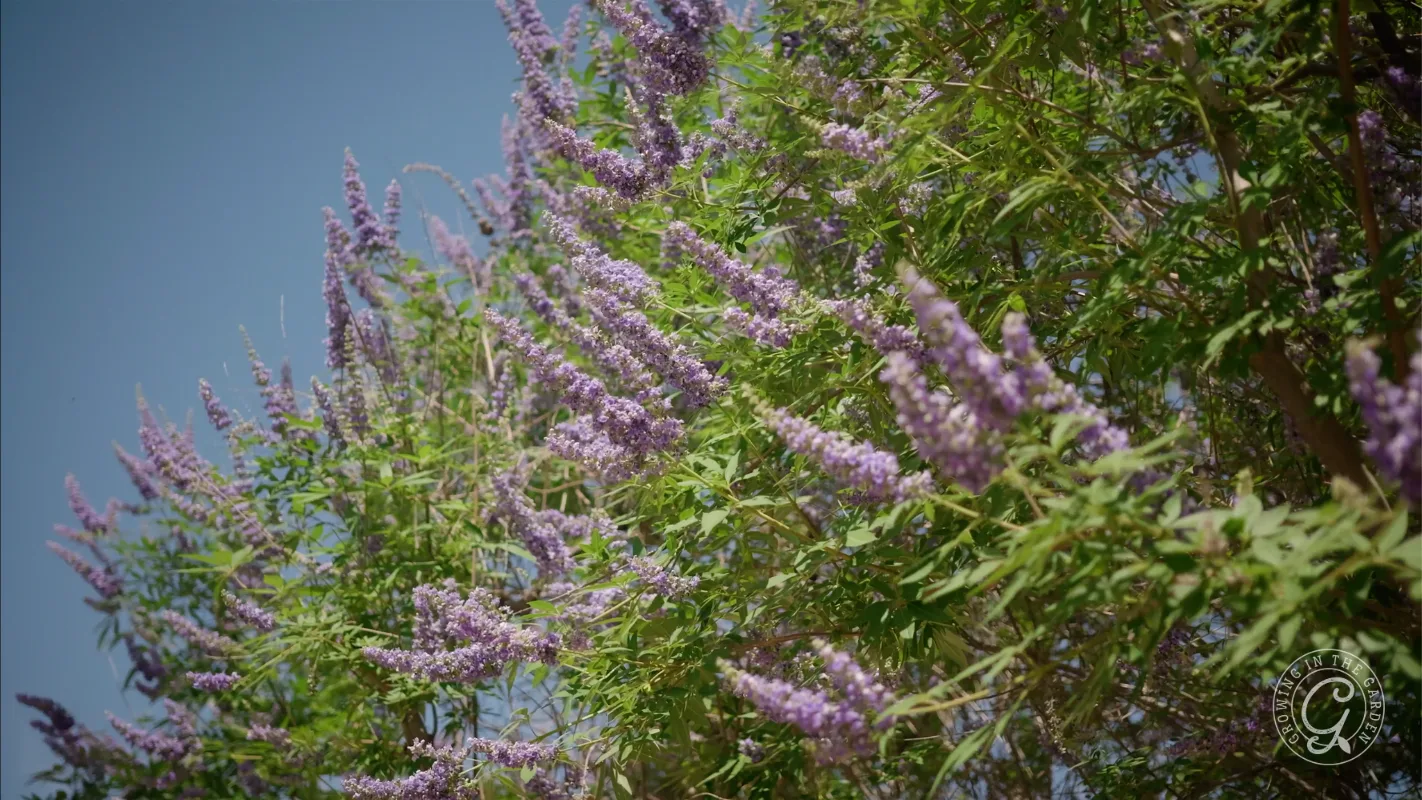
| Chaste Tree | 20 x 20 ft |
Chaste tree is covered in more depth in my best trees for a low desert yard guide, and it’s one of the better hummingbird trees for a yard that needs some real size.
Firebush earns its name, bright red-orange tubular flowers through the hottest part of summer. Flame honeysuckle carries similar orange-red color and keeps blooming into fall. Ava’s hummingbird mint, a hybrid Agastache, is a monsoon-season favorite that also draws bees and butterflies. Hummingbird trumpet, sometimes sold as California fuchsia, has bright red flowers that open right as other things start to fade in the heat.
Fall Bloomers
| Plant | Mature size |
| Autumn Sage | 2 x 2 ft |
| Mexican Bush Sage (late summer through fall) | 4 x 4 ft |
| Baja Fairy Duster | 5 x 5 ft |
| Yellow Bird of Paradise | 6 x 5 ft |
| Baja Ruellia | 4 x 5 ft |
| Orange Bells | 8 x 5 ft |
| Arizona Yellow Bells (blooms earlier and continues through fall) | 6 x 6 ft |
Autumn sage, Baja fairy duster, yellow bells, and orange bells are covered in my full sun plant guide. All four can provide flowers well into fall, when migrating hummingbirds may be passing through.
Jean has also observed hummingbirds visiting fairy duster in her own garden.
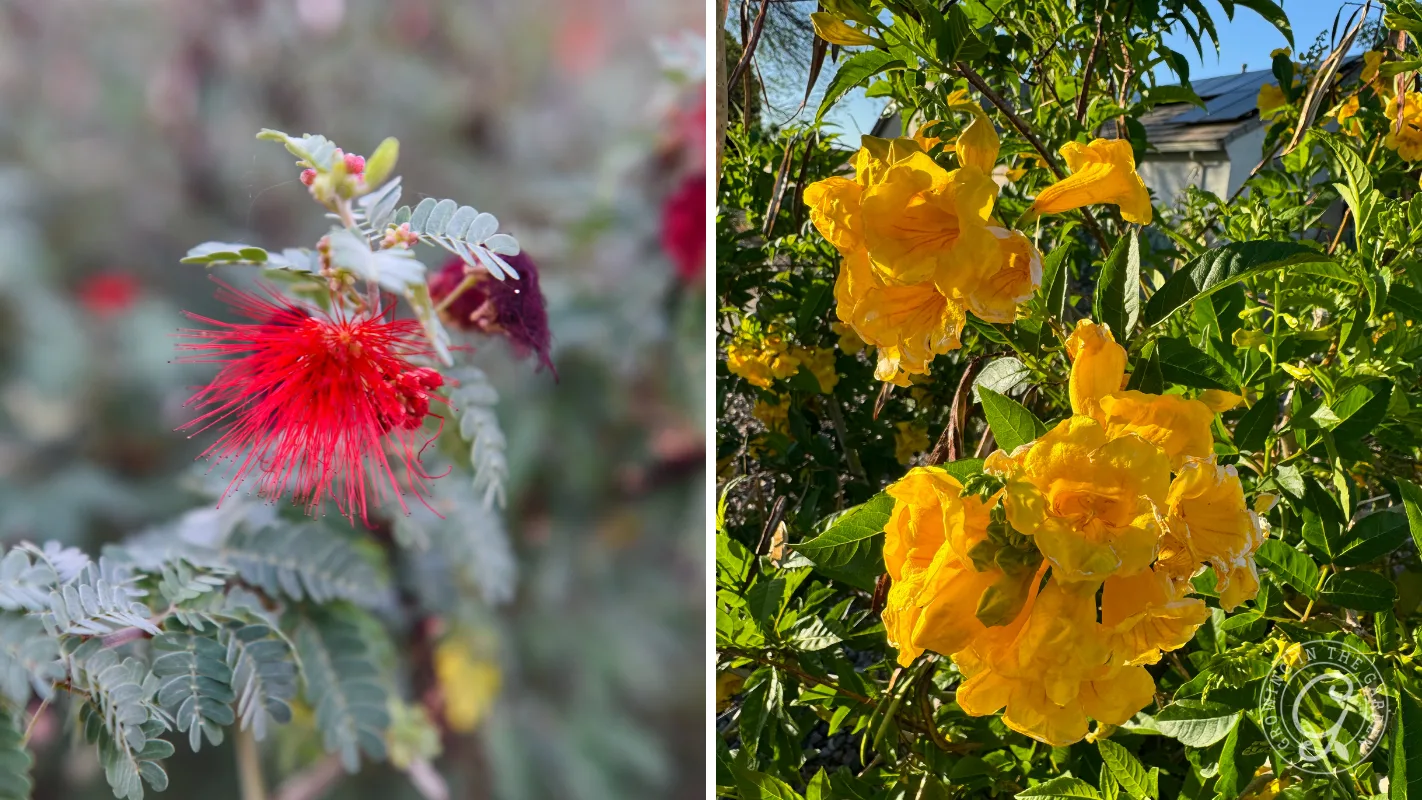
Mexican bush sage puts on velvety purple and white flower spikes from late summer through fall. Baja ruellia has purple, bell-shaped flowers over an unusually long season and tolerates a bit of shade better than most plants on this list. Arizona yellow bells carry yellow trumpet clusters from spring through fall, a true Sonoran and Chihuahuan Desert native.
Winter Bloomers
| Plant | Mature size |
| Chuparosa | 4 x 4 ft |
| Red Justicia | 3 x 3 ft |
| Rosemary | 2 x 4 ft |
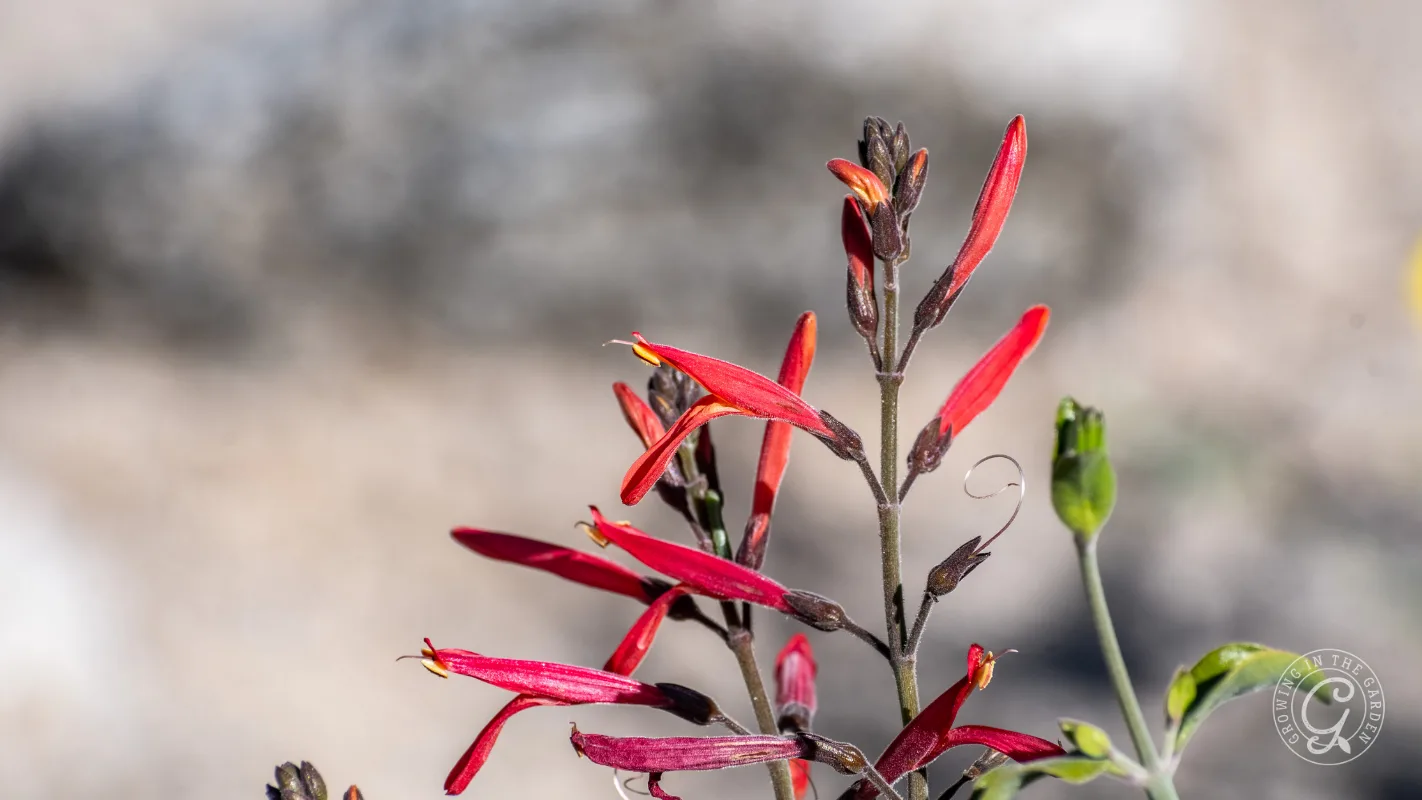
Chuparosa is one of my favorite cool-season hummingbird plants. Its bright orange-red tubular flowers provide nectar through much of our mild low-desert winter. It’s also one of the plants Jean has observed hummingbirds visiting in her own garden.
Red justicia is another good choice for winter color, with bright red flowers from fall through spring. Both are worth considering if your garden doesn’t have much blooming during the cooler months.
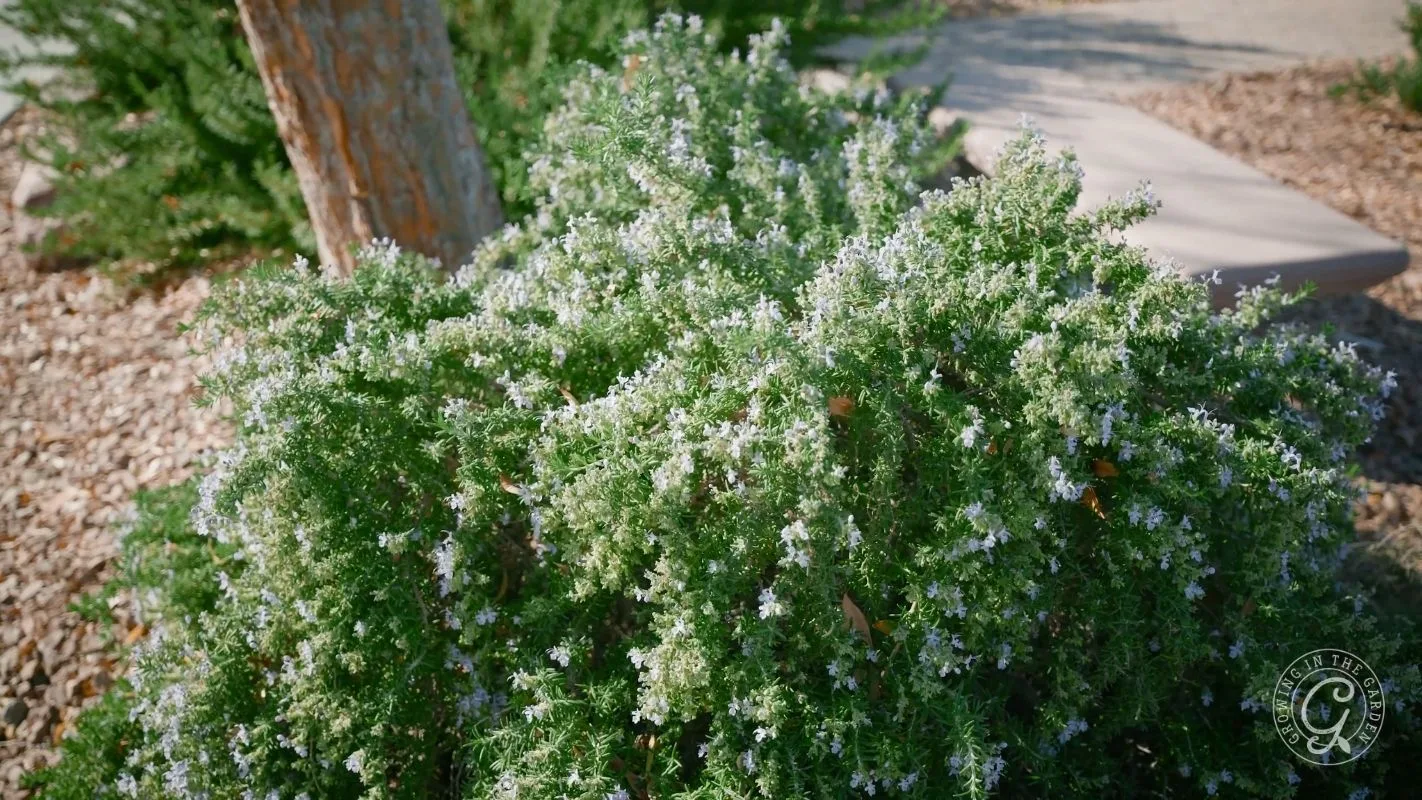
Rosemary is easy to overlook as a hummingbird plant since most people grow it for the kitchen, but the small blue winter flowers pull in hummingbirds along with bees. I first noticed this watching them work a blooming rosemary hedge on a garden tour at Jacq’s Epic Yard Farm, and I’ve paid more attention to mine ever since. Also covered in my full sun plant guide and my best plants for a low desert pool.
A Few More Good Options
Duranta erecta, better known as skyflower or golden dewdrop, is another near year-round bloomer worth adding, small purple flowers that hummingbirds visit heavily whenever it’s in bloom. I already have a full guide to growing skyflower if you want the details. One caution worth repeating here: the berries that follow the flowers are toxic to kids and pets, so plant it where that’s not a concern.
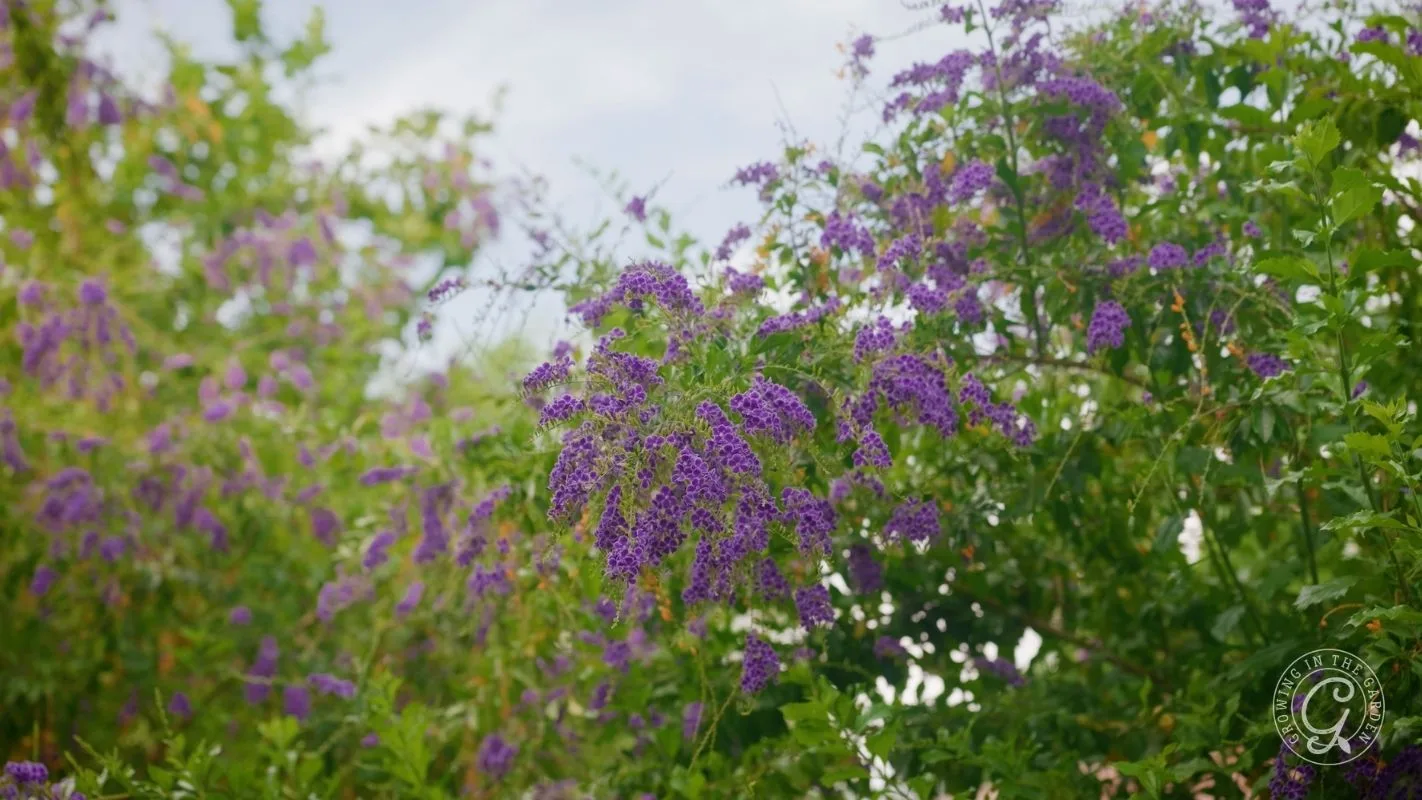
If you only have room for a few plants, look for ones with the longest bloom windows first, then fill in around them for whatever season is thin.
Other Ways to Encourage Hummingbirds
Plants do most of the work, but a few other things help:
Hummingbirds prefer a mister or a small drip over a still birdbath; they like to fly through fine spray rather than land and bathe in a basin.
Leave a few thin, bare branches exposed for perching. Hummingbirds may spend more time resting and watching their territory than actually feeding, and they need a clear, exposed spot to do it from.
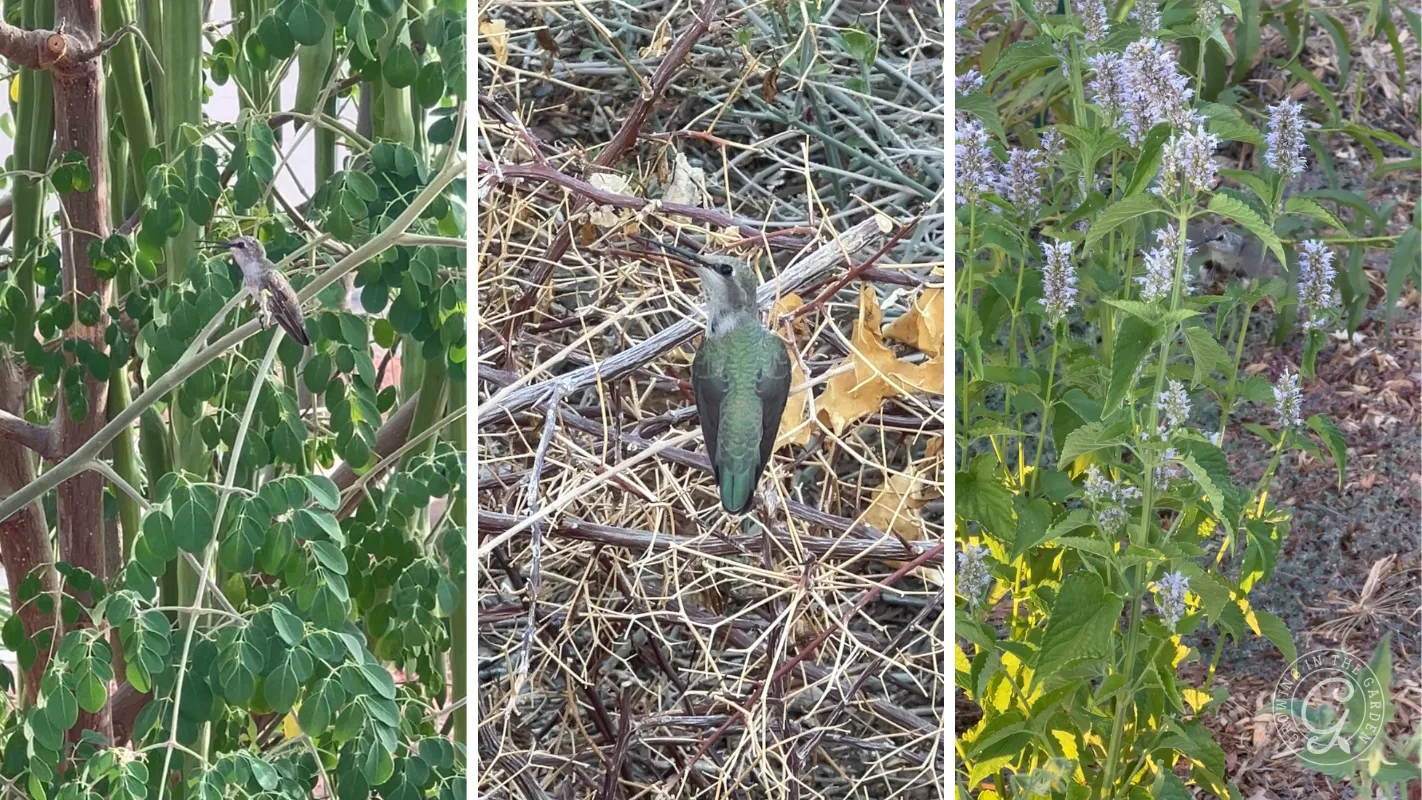
Skip the pesticides. Hummingbirds eat a lot of small insects and spiders for protein, especially while raising chicks, and a yard that’s been sprayed clean of bugs is a yard with less for them to eat.
Leave some spider webs alone, too. I learned this from Jacq at Epic Yard Farm on a garden tour, hummingbirds actually use spider silk to help build and bind their nests. It’s strong and stretchy, which lets the tiny nest expand as the chicks grow.
Should You Use a Feeder?
I don’t use a hummingbird feeder. For me, flowering plants are the better long-term investment. They provide nectar without concerns about spoiled sugar water or added dye, and they support the insects hummingbirds also need.
Feeders can help during spring and fall migration, when fewer plants may be blooming. However, sugar water spoils quickly in our extreme summer heat. Audubon recommends emptying and cleaning feeders daily or every other day during hot weather. An unmaintained feeder can do more harm than good.
If you already use a feeder and keep it clean, there’s no reason to stop. But if you’re deciding where to put your time and effort, plants provide food, shelter, and insects with less upkeep. That’s why I’ve chosen to grow flowers instead.
Attracting Hummingbirds FAQs
Plants with red, orange, or hot pink tubular flowers attract the most attention. Chuparosa, baja fairy duster, red justicia, and the various penstemons and salvias on this list are reliable performers in the low desert.
Anna’s and Costa’s hummingbirds can be found year-round. Black-chinned hummingbirds visit seasonally, while broad-tailed hummingbirds are occasional visitors during migration.
Females are difficult; they look nearly identical, though Costa’s tend to have a cleaner white belly while Anna’s lean more gray-green. Males are easier: Anna’s have a pink-to-red gorget that turns coppery bronze with age, while Costa’s are violet, with a gorget that flares dramatically to the sides.
Native flowering plants are the better long-term choice, especially in extreme summer heat, since sugar water spoils quickly and an unclean feeder can do more harm than good. A well-maintained feeder can supplement plants during migration, but it shouldn’t replace them.
Hummingbirds use plant down, small leaves, and spider silk to build tiny, stretchy nests. The spider silk lets the nest expand as the chicks grow, so leaving a few spider webs alone in your yard can actually help.
Red, orange, and hot pink draw their attention first, though they’ll visit a wide range of colors once they find a reliable source of flowers.
About Jean Elston
For more than thirty years, Jean has been growing plants and spending time in nature, both in California and Arizona. With a background in fine art, she honed her skills in observation, a critical element for anyone striving to have a garden. Currently, she is finishing her doctoral studies in ecology (special focus on entomology), while helping others to work with nature in order to have a thriving ecosystem. You can find more of her work as “Red Shoe Gardener” on YouTube and Instagram. She’s also contributed photos and observations to my Low Desert Garden Insects series.
Sources
- Arizona Municipal Water Users Association (AMWUA). Landscape Plants for the Arizona Desert.
- National Audubon Society. Hummingbird Feeding FAQs.
- Jean Elston, entomologist and Growing in the Garden contributor: firsthand species, identification, and behavior observations, plus original photos.

Leave a comment on How to Attract Hummingbirds to Your Arizona Garden