
What Vine to Plant Where in Your Low Desert Yard
I have at least ten different vines growing across my yard right now. Learning where to plant them in my yard has taken some trial and error. But now that each of these is thriving, I love seeing the way they green up the space and add seasonal color. There’s a coral vine I cut to the ground every spring, star jasmine I can smell before I see it, and a passionfruit vine that once climbed over my fence and covered my neighbor’s pool fence before I noticed.
Vines are some of the easiest plants I grow. Most aren’t bothered much by pests or disease; they fill a space fast, and some even give you food. The tricky part is matching the right vine to the right spot. A vine that thrives on a shaded east wall can fry on a west-facing block wall in July. Most also take a season or two to settle in before they take off, so don’t give up on a new vine that looks like it’s just sitting there. I’ll walk you through all ten and where each one does best, whether you’ve got full sun, a hot reflected wall, a pergola to cover, or a protected spot with afternoon shade.
Key Takeaways: What Vine to Plant Where
- The article discusses ten types of vines suitable for different sun exposures and conditions in home gardens.
- Coral vine, pink trumpet vine, and sky flower thrive in full sun, while yellow orchid, bougainvillea, and cat’s claw can handle hot walls.
- For pergolas, tangerine crossvine provides shade and beautiful blooms, along with grapes and passionfruit that offer fruit.
- Star jasmine and lavender star flower perform best in afternoon shade, although Japanese honeysuckle requires careful management due to its invasiveness.
- Understanding your planting conditions helps in selecting the right vine from the detailed planting guide provided.
What We’ll Cover:

Full Sun
If you have a spot that takes full sun all day, you’ve got some beautiful options. These three handle it well.
Coral vine (queen’s wreath)
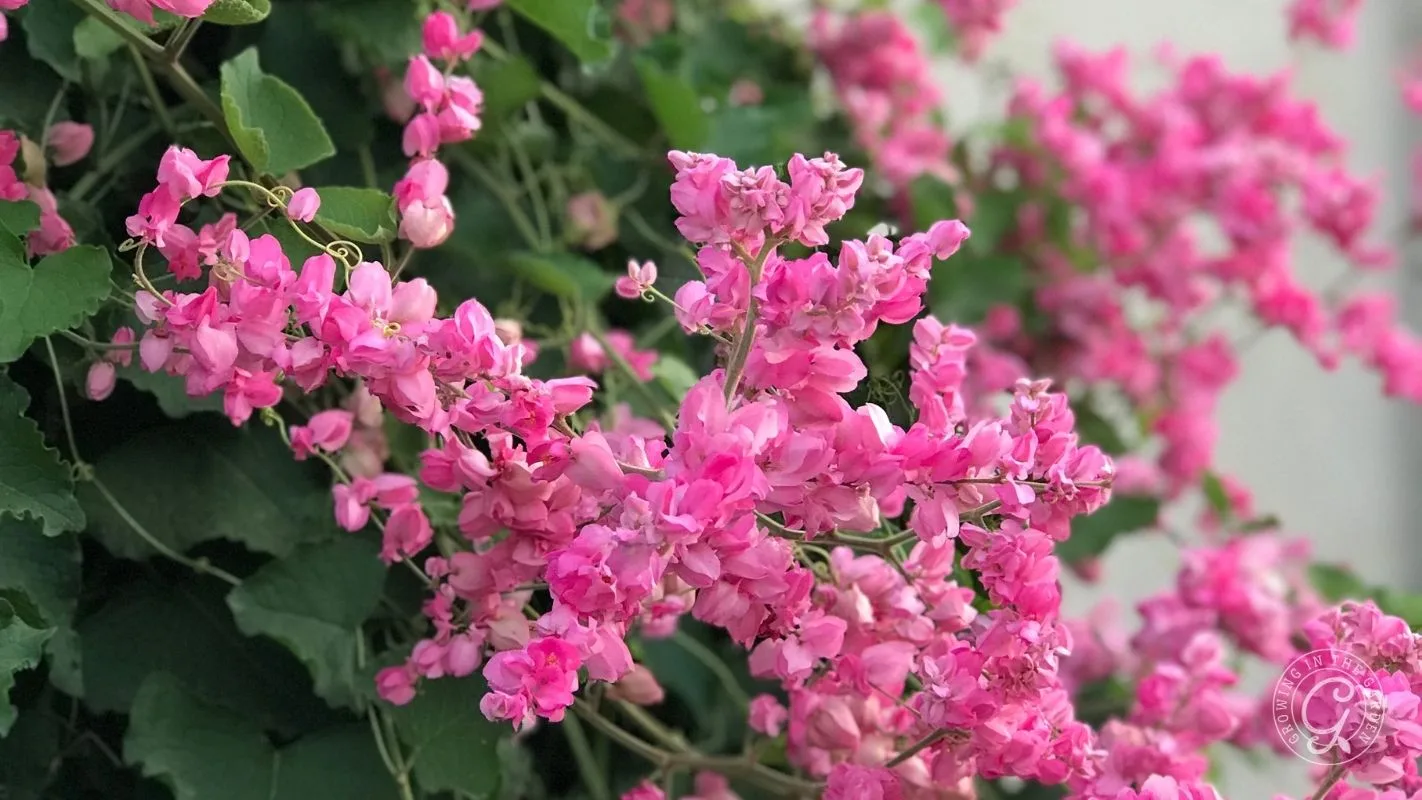
I first saw coral vine at the Master Gardeners’ demonstration garden, full and covered in pink flowers. They told me you cut it back to the ground every spring, and it regrows, and I didn’t believe something that pretty could come back that fast in our heat. It does. The bees love it; it blooms from late summer through fall, and it thrives in hot, full-sun spots while also tolerating a little shade. Give it a full-sun spot with room to ramble, like a back fence or a sunny corner you want filled fast.
Give it something to climb, and once it’s established, it gets by on low water. I pulled mine out a while back, missed it, and just replanted, so I’m waiting on blooms again. It can be invasive in other climates, but here in the low desert, it stays in line. Here’s more on growing coral vine if you want one.
Pink trumpet vine
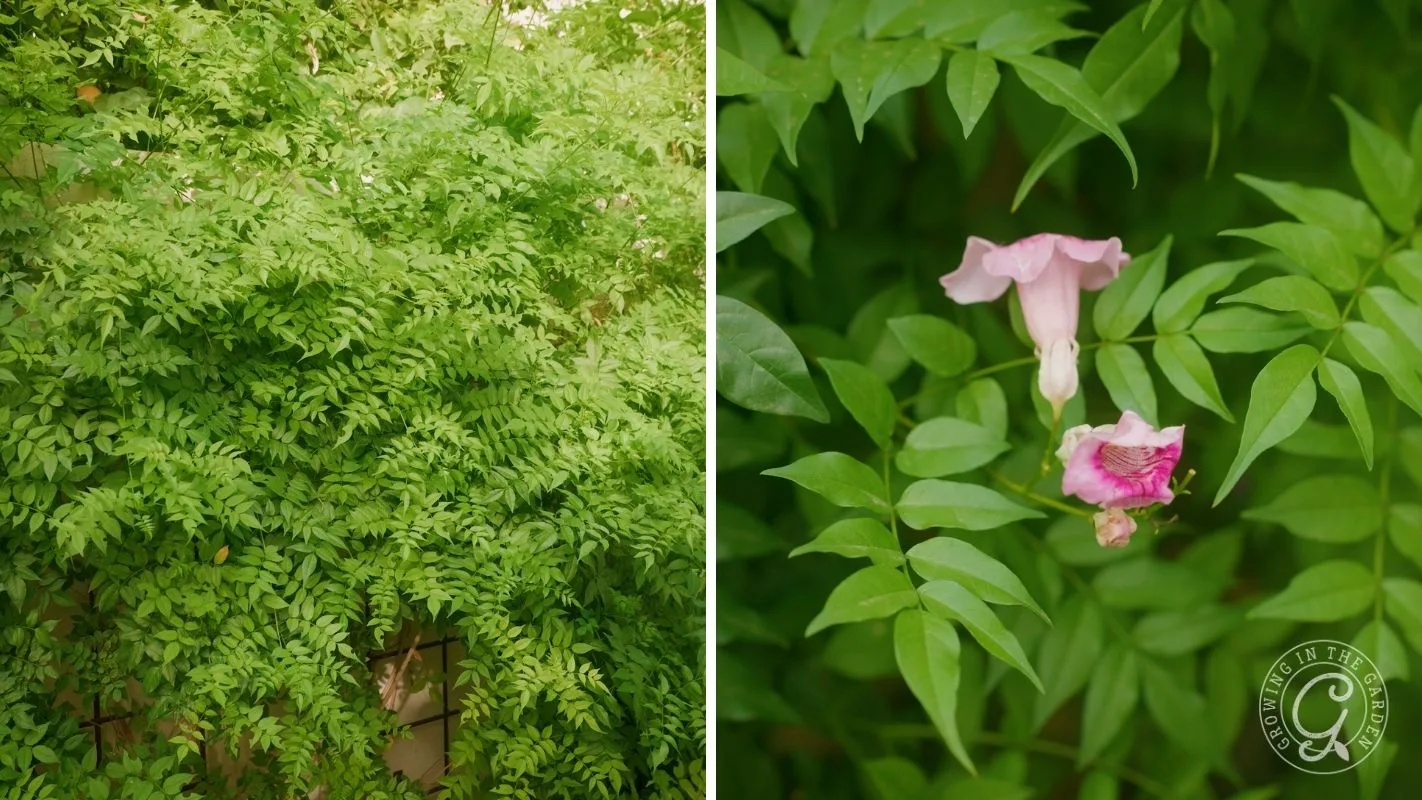
I have three pink trumpet vines, including one on an east-facing wall and one on a north-facing wall. They took a year or two to get going, then filled right in. This is a South African native. Keep an eye on the branches and runners that root along the ground, and trim them back to push branching and keep the vine out of your neighbor’s yard. It needs support to climb and makes an excellent screen. Give it regular deep water through the summer.
Plant it where you want a screen on a sunny-to-part-shade wall, and give it regular deep watering through the summer.
Skyflower
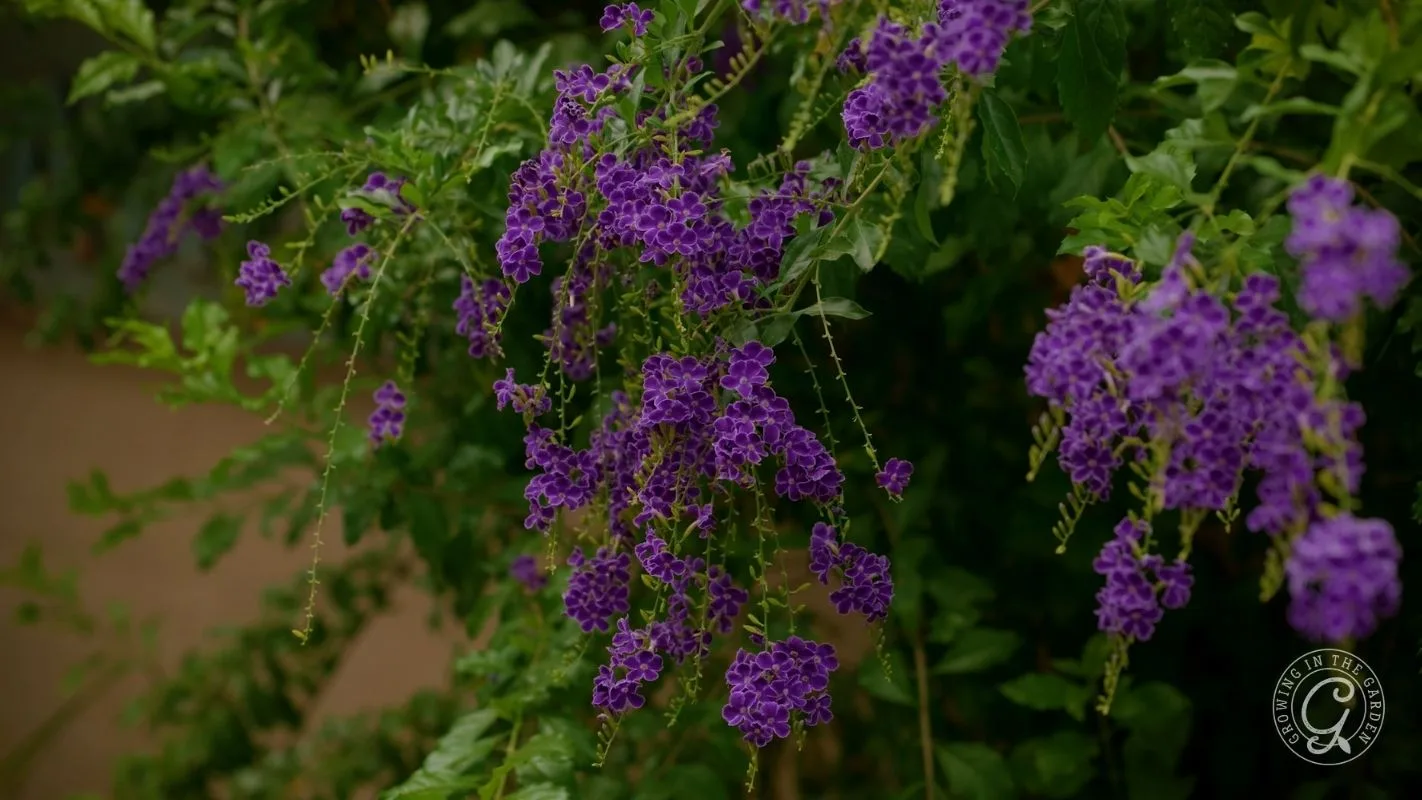
Skyflower is one of the most versatile plants I grow. You can train it up as a living screen or let it fill in as a background shrub, and it handles most exposures, including full sun once it’s established. Mine are covered in deep purple blooms right now, set against glossy evergreen leaves, and the pollinators stay busy on them. It’s native to the Gulf Coast, so it blooms best when it’s hot.
If you want it vertical, give it something to climb, since it won’t grab on by itself. It also wants regular water through the heat. More on growing sky flower as a vine or shrub. Because it takes sun or part shade, plant this when you’re not sure what your spot does. Put it anywhere you want, a tall screen or a full background shrub.
Hot Walls and Reflected Heat
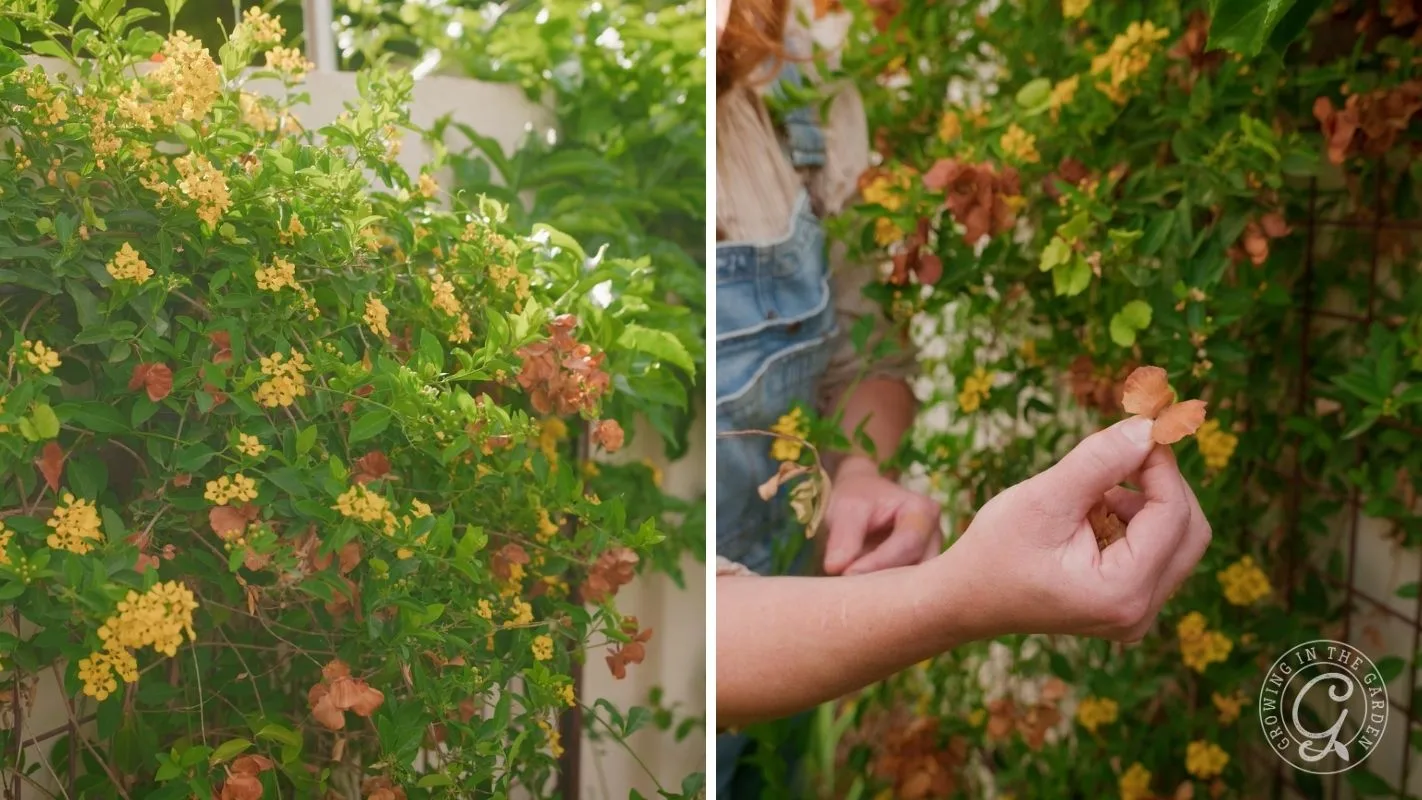
Full sun is one thing. A block or stucco wall that throws reflected heat back at the plant in summer is another. Not every full-sun vine is happy there, so choose carefully. If you want the hardiness and heat-tolerance numbers for any vine here, my visual guide to low desert vines lays out the grow data for each one.
Yellow orchid vine
Yellow orchid vine is native to Baja California, evergreen, and a lot slower-growing than the others here. The flowers are pretty, but the paper-like seed pods are the real show; they look like little butterflies. Mine has taken full western sun for several years with hardly any water, pruning, or maintenance. Watch the base and cut back the runners so it doesn’t spread. One bonus: it blooms at the opposite time of year from coral vine, so planting the two together gives you color across more of the year.
Bougainvillea (what to know before you plant it)
I don’t grow bougainvillea, but if you’ve lived here any length of time, you’ve seen it everywhere, and that’s because it can take reflected heat better than almost anything. If you’ve got a brutal hot wall, it works. But it has thorns, gets very large, and constantly drops papery bracts, so near a pool, a walkway, or anywhere cleanup matters, it can be a headache. My neighbor has some gorgeous plants, which are about as close as I want them to my pool. If you do plant it, it’s drought-tolerant once established and gets by on a deep soak every week or so in summer. It’s frost-tender here, so plant it in spring once the cold has passed.
Cat’s claw (plant with caution)
Cat’s claw is another vine that handles tough, hot walls, and I don’t grow it on purpose. If you want fast coverage on a really hot wall, it will deliver. But it climbs on its own and can damage a wall or fence. Plant it only where you’re sure you can keep up with it. It runs on low water and stays mostly green year-round, which is part of why it spreads the way it does.
Pergolas and Arbors
Over a pergola or arbor, vines add shade, soften the structure, and turn a hot spot into a usable one.
Tangerine crossvine
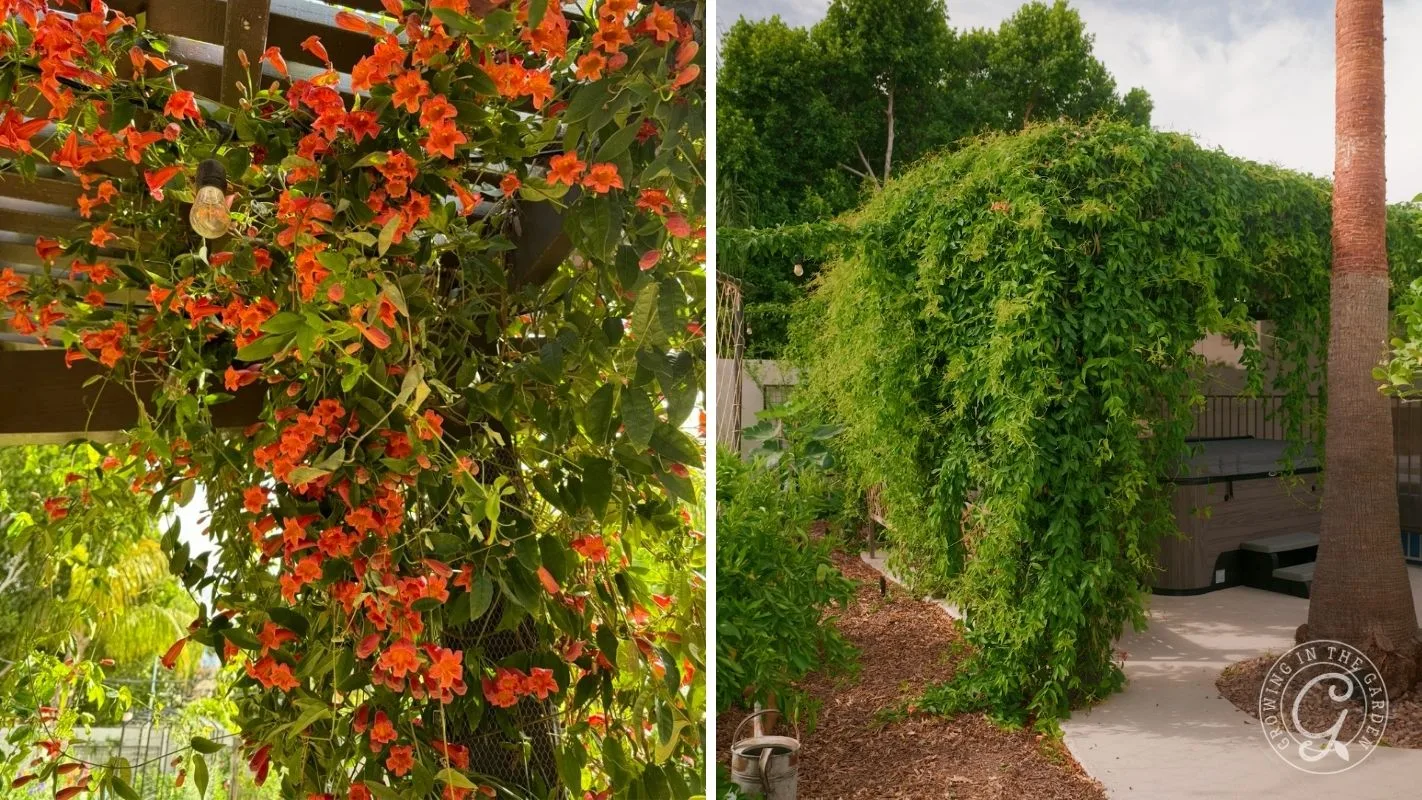
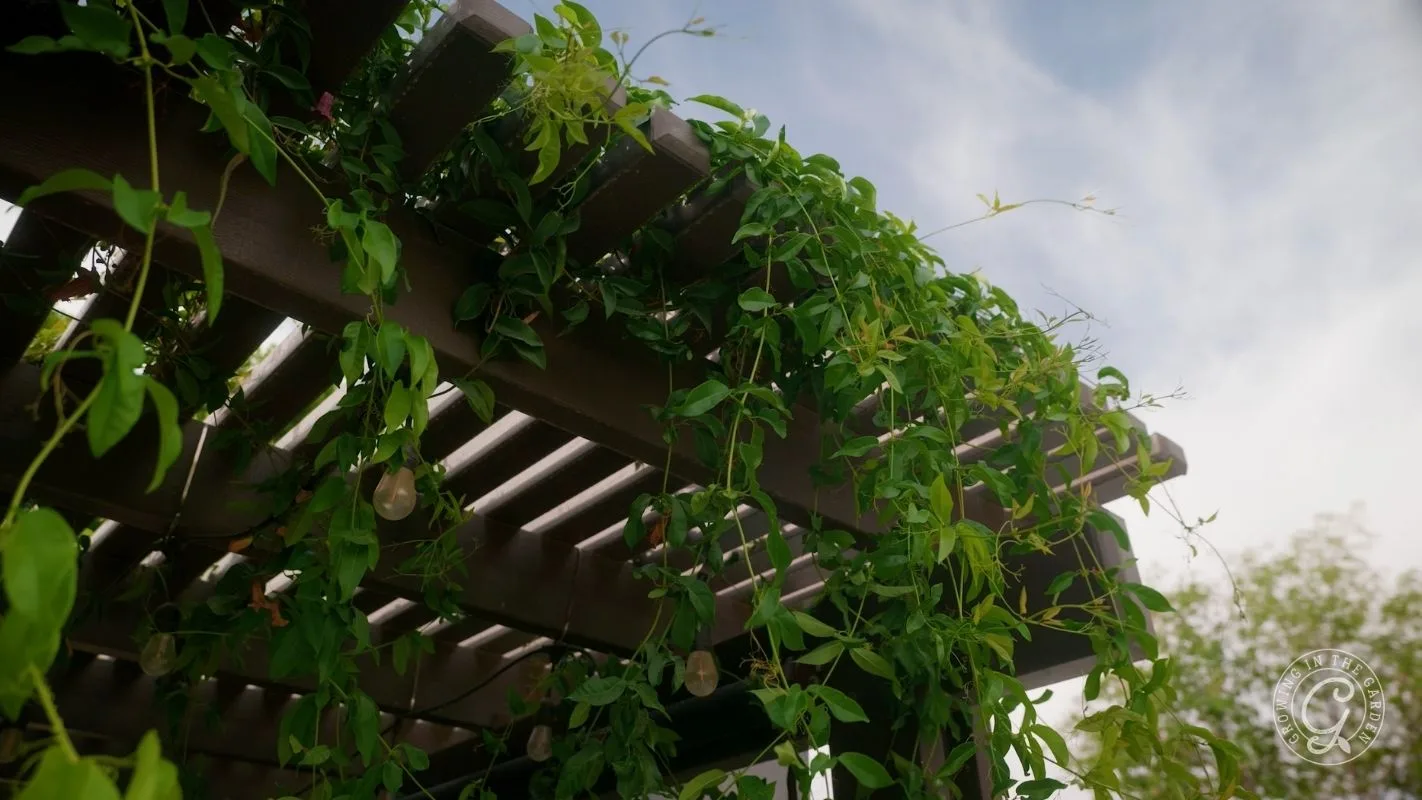
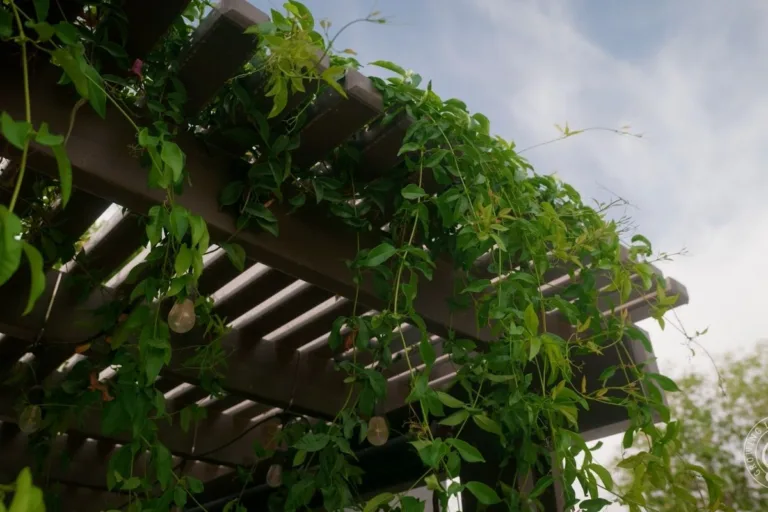
I have three tangerine crossvines planted at the base of one pergola. They’ve been in three or four years now, and looking through them gives that whole corner secret-garden vibes. It’s a full-sun-to-part-shade vine with dramatic coverage and bright seasonal flowers. It’s drought-tolerant once established but looks best with regular summer water, and it holds its leaves year-round. It climbs on its own, though I had to give it a little help getting up the slippery pergola, and I keep it trimmed so it doesn’t wander into the garden. This is the one to plant at the base of a pergola or arbor you want covered, in full sun to part shade.
That pergola and crossvine together also give afternoon shade and create a cooler microclimate for part of my garden. If shade is your real goal, vines are one of my favorite ways to create shade in the garden, the same way I use sunflowers for afternoon shade in summer.
Grapes
Grapes cover an arbor well and shade the space underneath while you wait for the harvest. Mine grow on a full-sun, western wall and handle the heat once established. I tried some on a north-facing wall and they struggled, so give them sun. Grapes need support, winter pruning, and feeding, so they’re more work than most vines on this list. They’re deciduous, so you get summer shade and winter sun, and they want deep, regular water through the heat. Here’s my full guide to growing grapes at home.
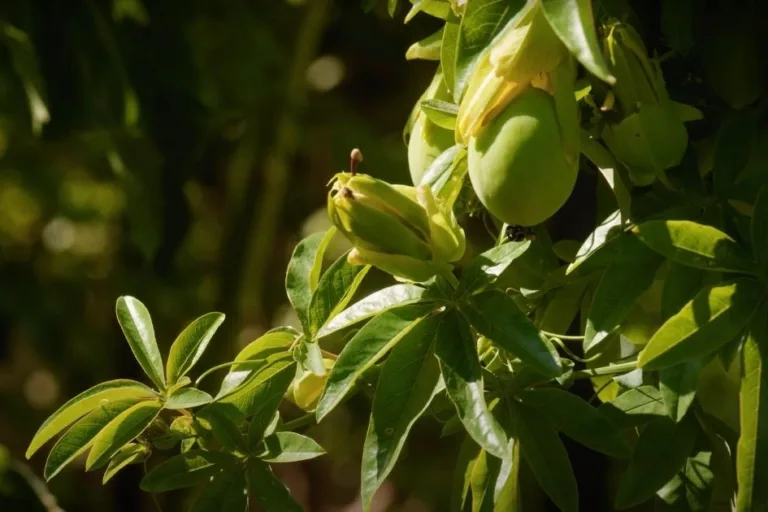
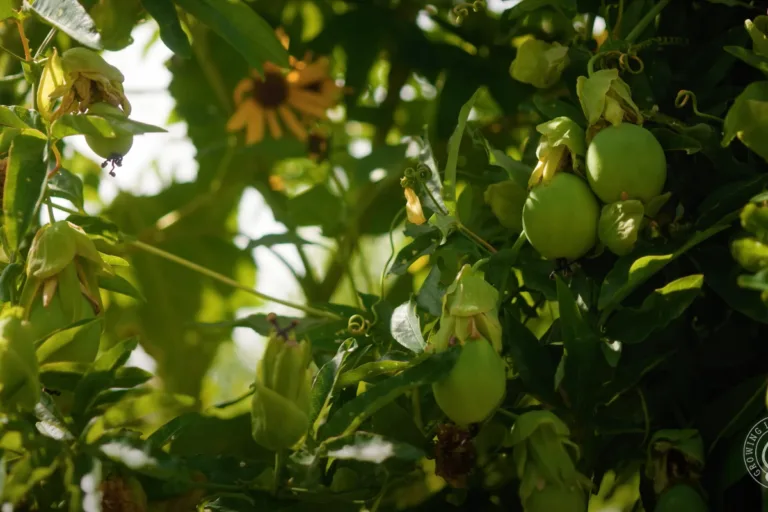
Passionfruit
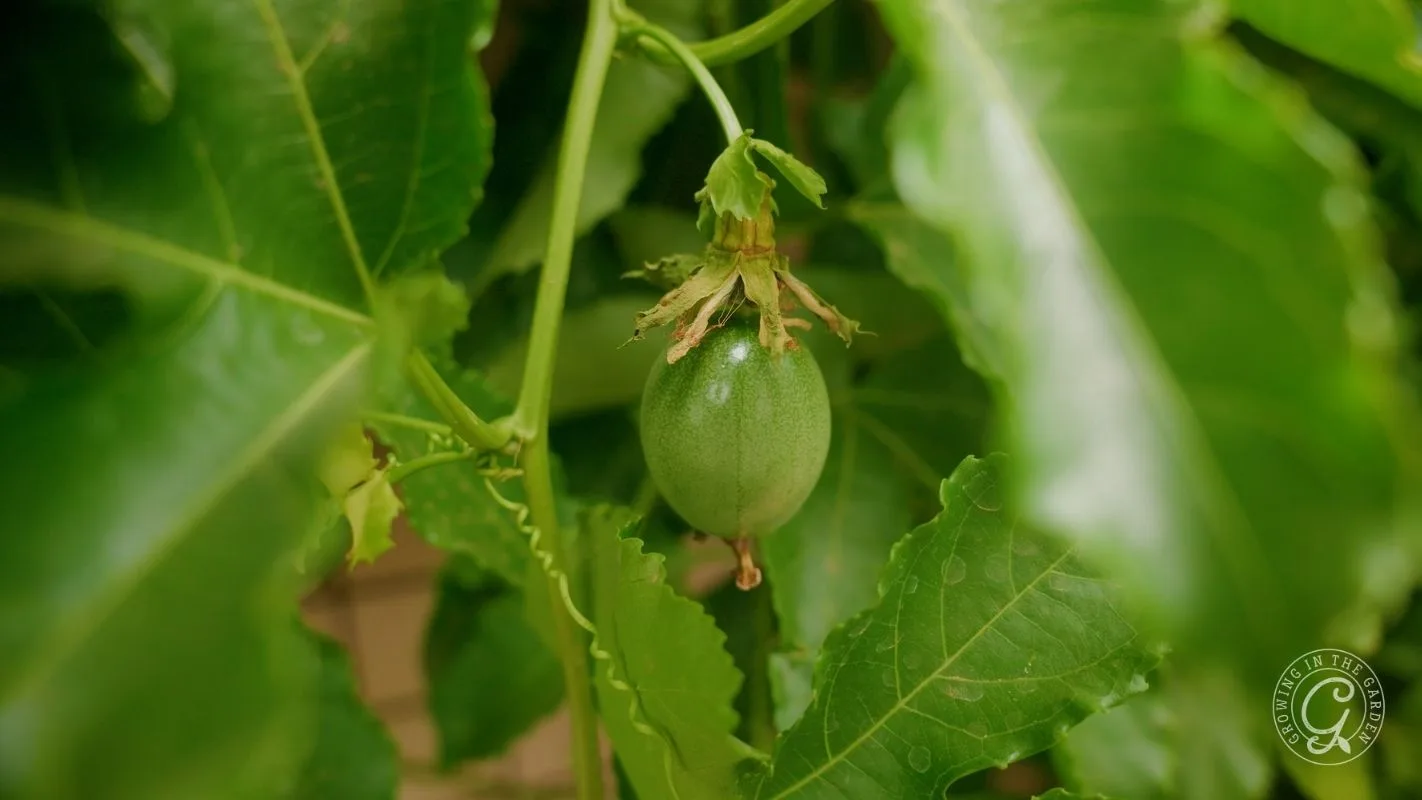
Passionfruit doesn’t like full sun; it really needs some afternoon shade. It dies back in a hard freeze, but after our mild winter, mine is huge, flowering, and setting fruit. Our summers are hot enough that I don’t get as much fruit as in milder climates, but what I do get is edible and delicious. It’s the thirstiest vine here, wanting regular water, support, and room to climb, and it can get wild. A couple of years ago, I cut mine back and realized it had gone over the fence and nearly covered my neighbor’s pool fence. They’d probably gotten used to their free passionfruit. Give it a pergola or sturdy trellis with afternoon relief, and keep it away from any fence you share unless you plan to stay after it.
My chickens, meanwhile, love the cooler microclimate the vine creates near their run. If you want the ornamental cousin, I’ve got a guide to growing passion flower vine, too.
Afternoon Shade and Protected Spots
These vines do best in a protected spot.
Star jasmine
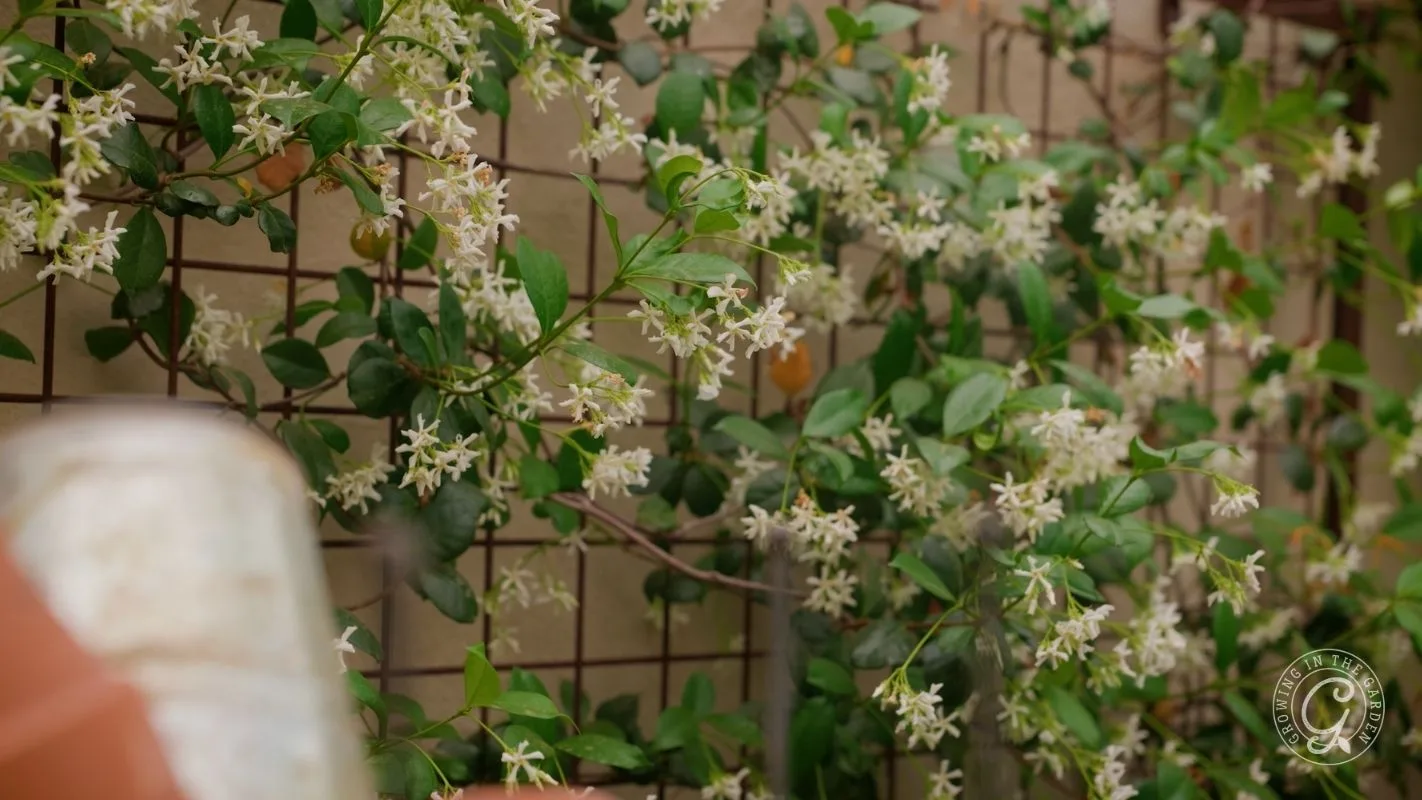
Star jasmine needs afternoon shade, particularly the first couple of years, and gets a little more sun-tolerant once it’s settled. It needs regular water. The spring bloom is my favorite of the year. You’ll smell it before you spot it. Every few years, I cut it back hard, and it returns with lush new growth and less dead undergrowth. I have it behind my potting table, along the pool fence, and on an east-facing wall. For a sheltered spot where you want fragrance, it’s a top choice.
Lavender star flower
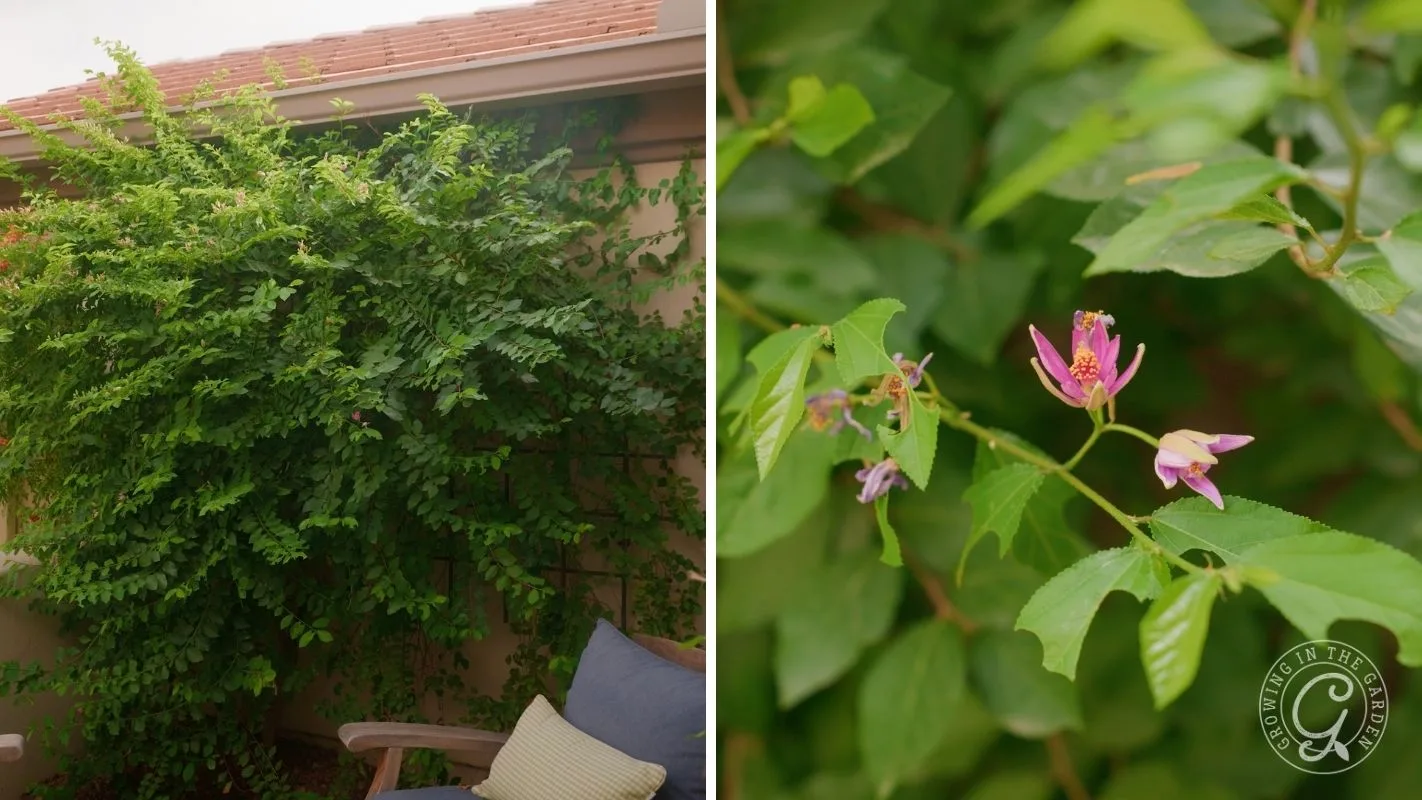
Lavender star flower is another good pick for a protected corner. Mine grows in a shaded courtyard in my front yard, blooms on and off all year, drops very little litter, and asks for almost nothing beyond a cutback every few years. It stays evergreen with modest water. Save it for a protected corner that gets some afternoon relief, like a courtyard or a covered entry
Japanese honeysuckle
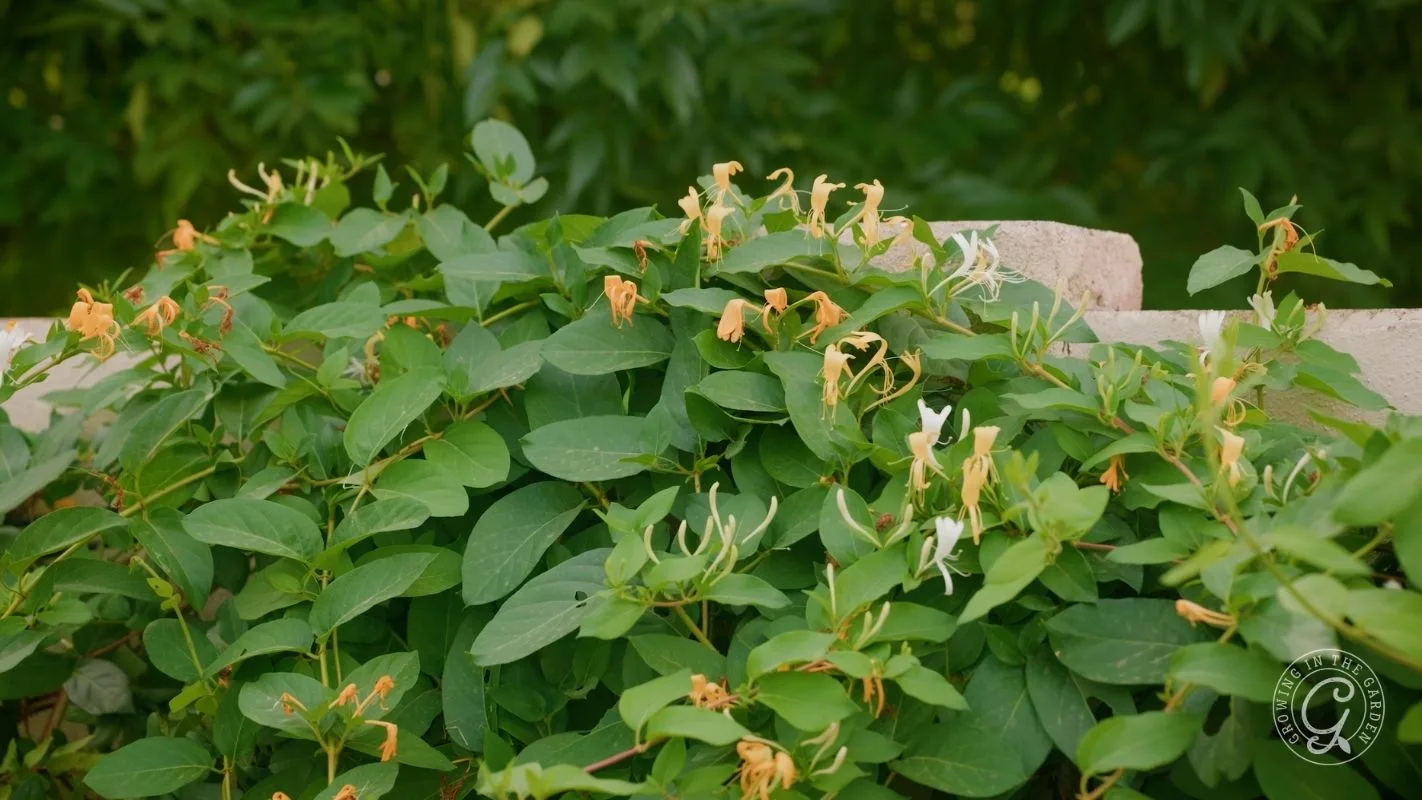
I grow Japanese honeysuckle along a back fence, where it gets afternoon shade and greens up the wall. It holds its leaves through our mild winters and takes regular water. It belongs in the be-careful category, though. It’s invasive, and I only keep it because I’m hands-on and stay after the runners. If you’re not going to watch it, don’t plant it. It will take over.
How to Match the Vine to Your Spot
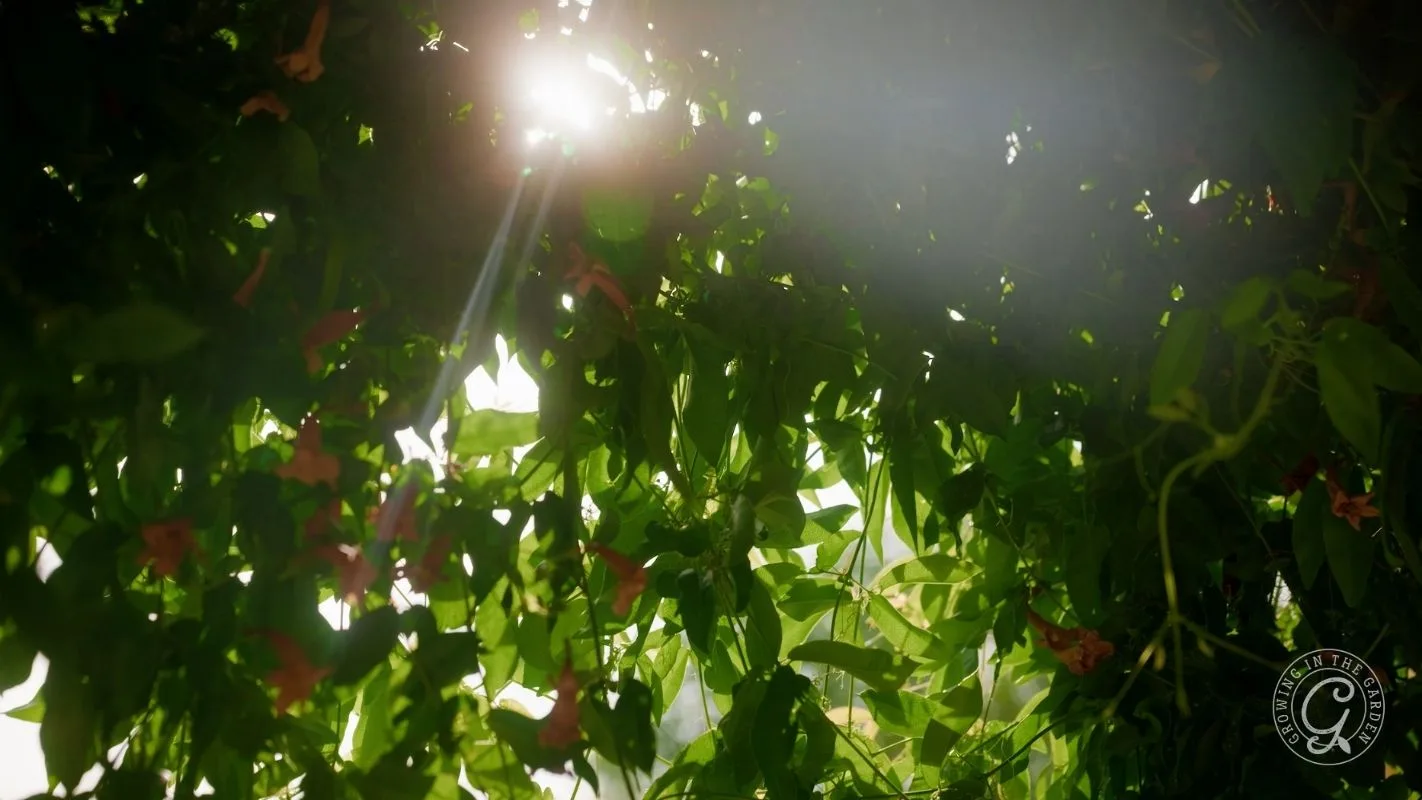
Determine the kind of sun the area gets in the summer before you pick the plant.
- Full sun all day, coral vine, pink trumpet, or possibly sky flower if you have good soil.
- A hot reflected wall, yellow orchid vine if you want low fuss, or bougainvillea and cat’s claw if you accept the tradeoffs.
- A pergola or arbor, tangerine crossvine, grapes, or passionfruit. A protected spot with afternoon shade, star jasmine, or lavender star flower.
If you’re after annual color from seed instead of a permanent vine, I rounded those up separately in vines that grow from seed. I cover plant choices like these every month inside Growing in the Garden Academy if you want to garden along with me.
What Vine to Plant Where FAQs
Coral vine, pink trumpet vine, and sky flower all handle full sun here. Coral vine and sky flower bloom hardest in the heat, and all three need something to climb.
Yellow orchid vine has taken full western reflected sun in my yard for years with very little water or pruning. Bougainvillea and cat’s claw also tolerate hot walls, but bougainvillea is thorny and messy, and cat’s claw can damage walls and fences if you don’t stay on top of it.
Star jasmine and lavender star flower do best in a protected spot with afternoon shade, especially while they establish. Japanese honeysuckle handles shade too, but it’s invasive and needs constant watching.
Tangerine crossvine gives fast, dramatic coverage and seasonal flowers. Grapes and passionfruit also cover a pergola well and add fruit, though both need more pruning and water than most vines.
Star jasmine, lavender star flower, sky flower, and tangerine crossvine hold their leaves through most winters, with crossvine the most reliable. Cat’s claw, yellow orchid vine, and pink trumpet usually stay green too, but can nip back in a hard freeze. Coral vine dies to the ground every winter and grapes drop their leaves, so neither one gives year-round cover.
Most do. Coral vine, pink trumpet, sky flower, yellow orchid vine, grapes, passionfruit, and star jasmine all need support to grow vertically. Tangerine crossvine and cat’s claw can climb on their own, though I still give crossvine a little help on slick surfaces.
I’d be cautious with cat’s claw and Japanese honeysuckle, since both can take over or damage structures. Bougainvillea is beautiful and heat-tough, but think twice before planting it near a pool or walkway because of the thorns and dropped bracts.


what would work best in a planter along the north side of a wall, where it gets winter shade and brutal summer sun. I have a rosemary that is working, but everything else burns to a crisp.
Coral vine could tolerate that. It dies back when it gets cold in the winter, but it tolerates full sun.
Can you tell me what you used for a trellis for your vines (the ones not on a pergola)? It looks like some sort of metal with squares. Where do you find it and how did you mount it (or did you just prop it up against the walls)? Thank you!
They are on a wall mounted trellis. They were put into the block wall fence with block wall screws. You can see more details in this post. Hope this helps!