
Using Sunflowers for Shade in Hot Summer Climates
The hottest light in a desert garden comes from the afternoon sun on the west and southwest side. For years, I’ve blocked it with something that costs little or nothing and often comes back on its own: sunflowers.
In this guide, I’ll share how I use branching sunflowers to shade my beds through the worst of the summer heat, which varieties I use, where to put them, and how to keep them going all season. It’s one way I handle summer gardening in Arizona, when the afternoon sun is unbearable.
Key Takeaways: Sunflowers for Shade
- Sunflowers provide natural shade against the harsh afternoon sun in desert gardens, growing quickly and tall to protect other plants.
- Use branching sunflowers for effective coverage; avoid single-stalk varieties that do not create sufficient shade.
- Plant sunflowers on the west side of your garden for best results, ensuring they receive enough sunlight and are in poor soil to minimize competition.
- Timing is key: plant sunflowers from February to August as the soil warms, and continue planting to maintain coverage through summer.
- These plants are low-maintenance, self-seed after the first few years, and attract beneficial wildlife like pollinators and birds.
What We’ll Cover:

The Afternoon Sun is the Problem
The afternoon sun cooks a desert garden. That low western light hits hard and bakes everything. If you’ve watched plants look fine in the morning and fried by four in the afternoon, that western exposure is usually why. If you’re still deciding whether your garden needs shade at all, I make the full case for shade in my article on why I add shade to my garden in summer.
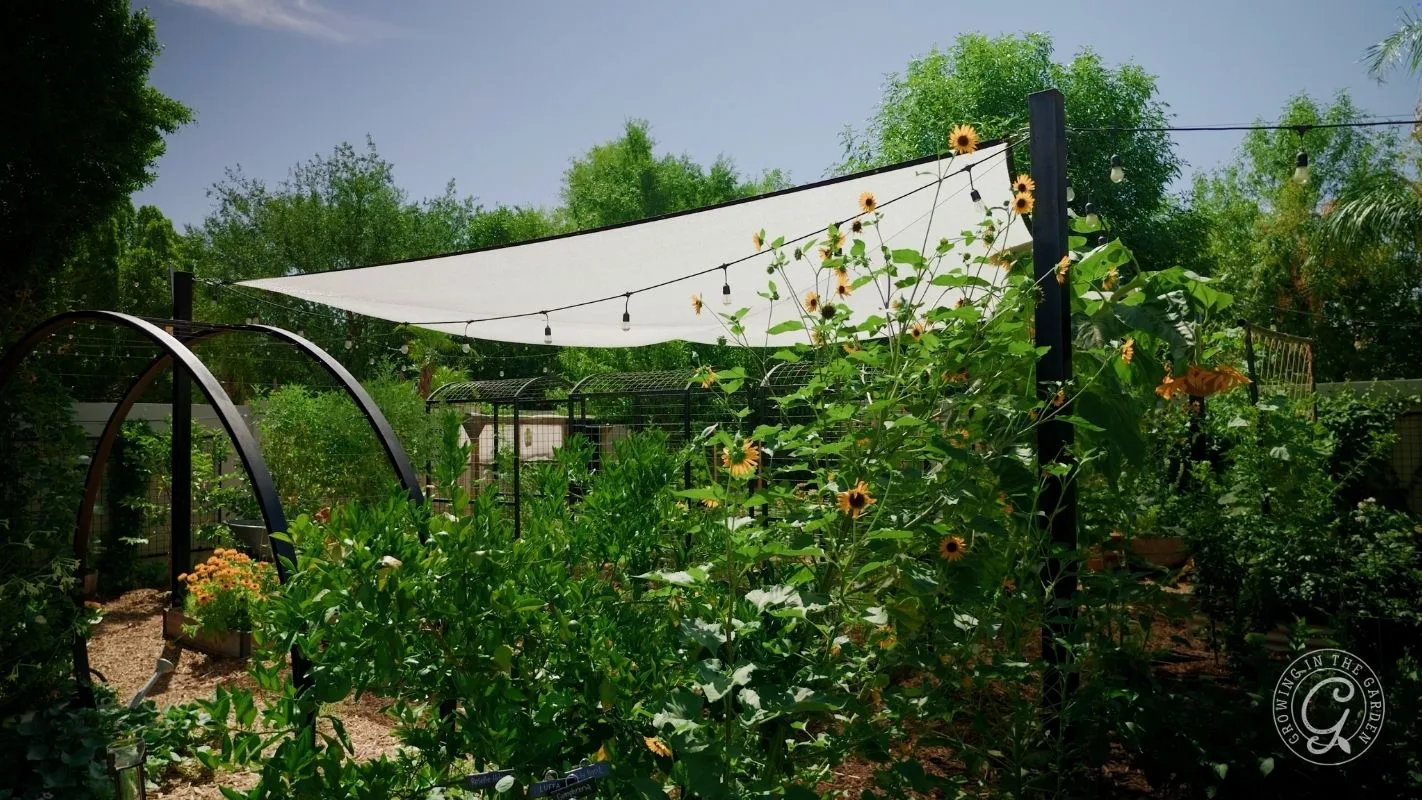
A shade structure helps, but only with part of the problem. My ten-foot structure blocks the sun when it’s high overhead in the middle of the day. Once the sun drops low in the late afternoon, it comes in sideways from the west, under and around the structure, and hits the garden beds.
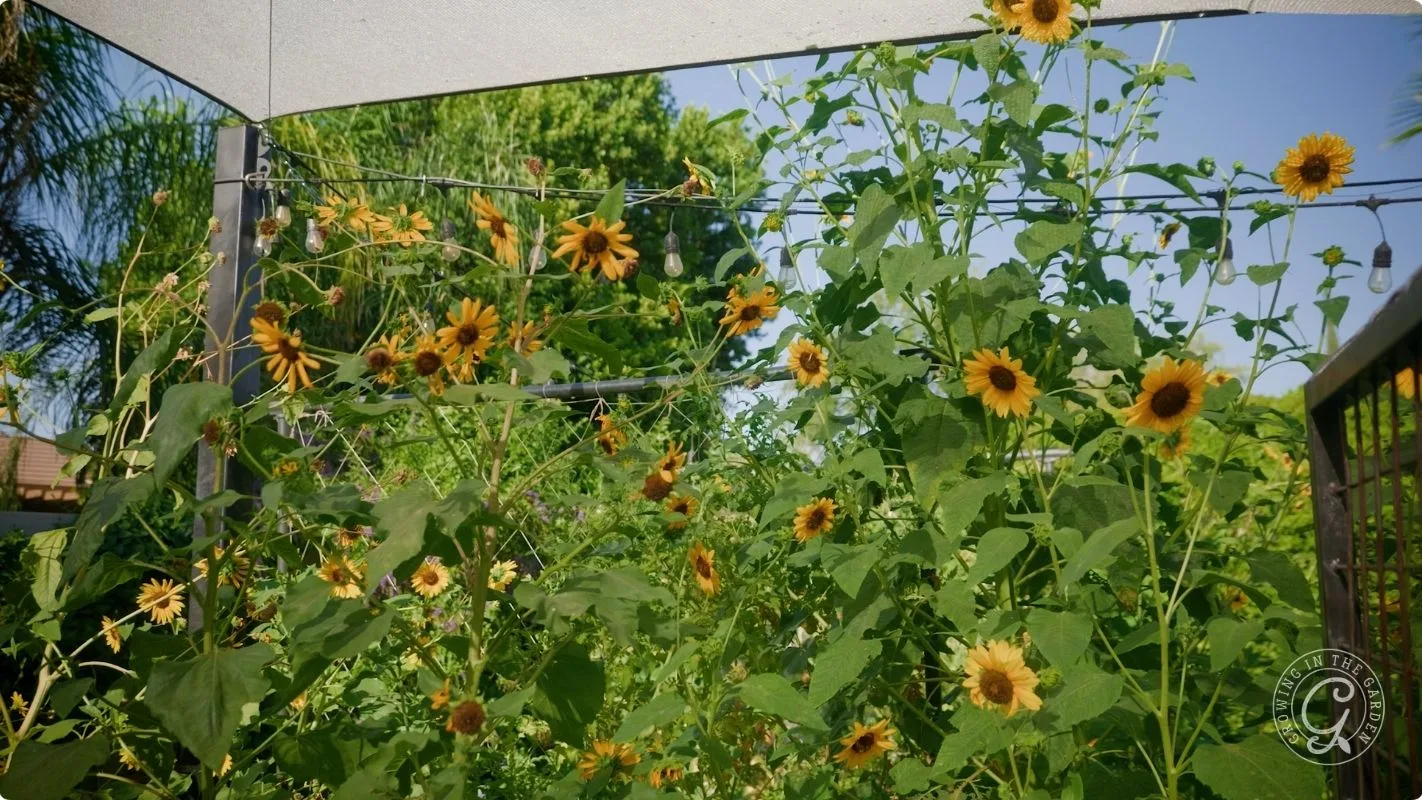
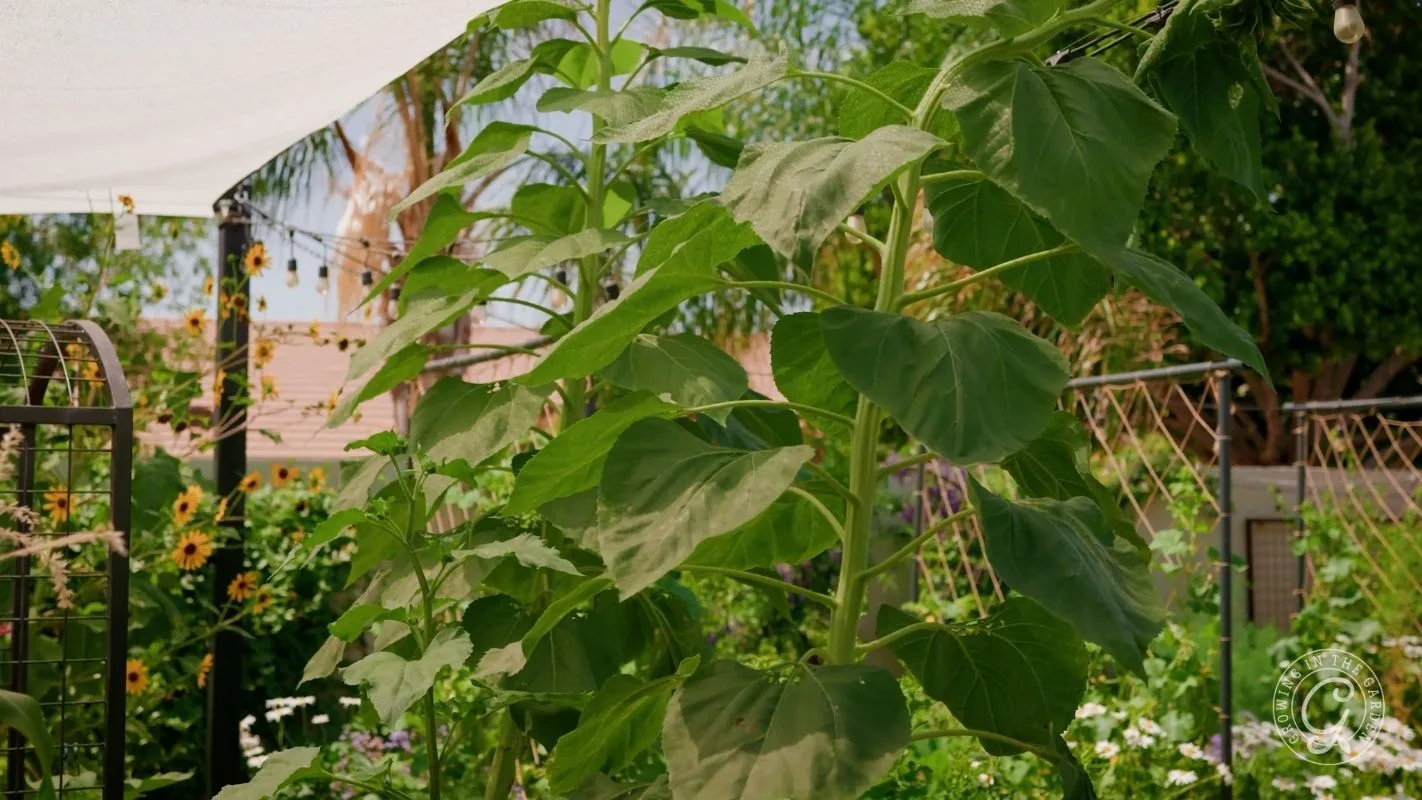
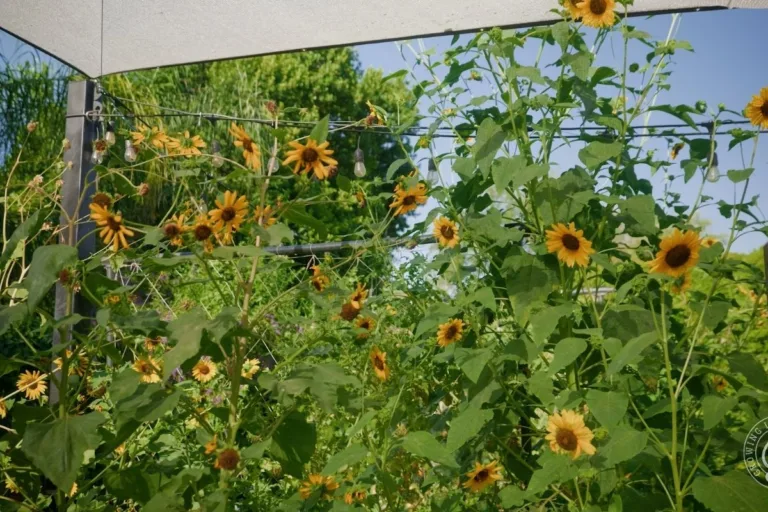
That’s where these tall branching sunflowers make a difference. The tallest in my row are around fifteen feet, taller than the shade structure, and they run in a line along the west side of my beds. When the sun drops, they take that late light before it reaches the plants. The row shades my beds all summer, and it costs me next to nothing.
Shade is one piece of getting a low-desert garden through hot summers. For the bigger picture, here are ten ways I prepare my hot-climate garden for summer.
Why I Use Sunflowers for Shade
There are a lot of reasons to love using sunflowers as shade:
- They grow fast and tall
- Sunflowers are easy to plant from seed right where you need them
- After the first year or two, they reseed themselves, so I’m not buying new seeds or starting over each season.
- They block areas where overhead shade cloth doesn’t
- Sunflowers attract pollinators, lovebirds, lesser goldfinches, and other wildlife to the garden
That said, sunflowers aren’t the only way to make shade, and they aren’t always the right one. If you want quick coverage for a specific bed, shade cloth may be the best option; I use both. For a rundown of the ideas, see how to create shade in the garden. Sunflowers are the slower, living version that pays you back with flowers, seeds, and birds.
Which Sunflowers Work Best?
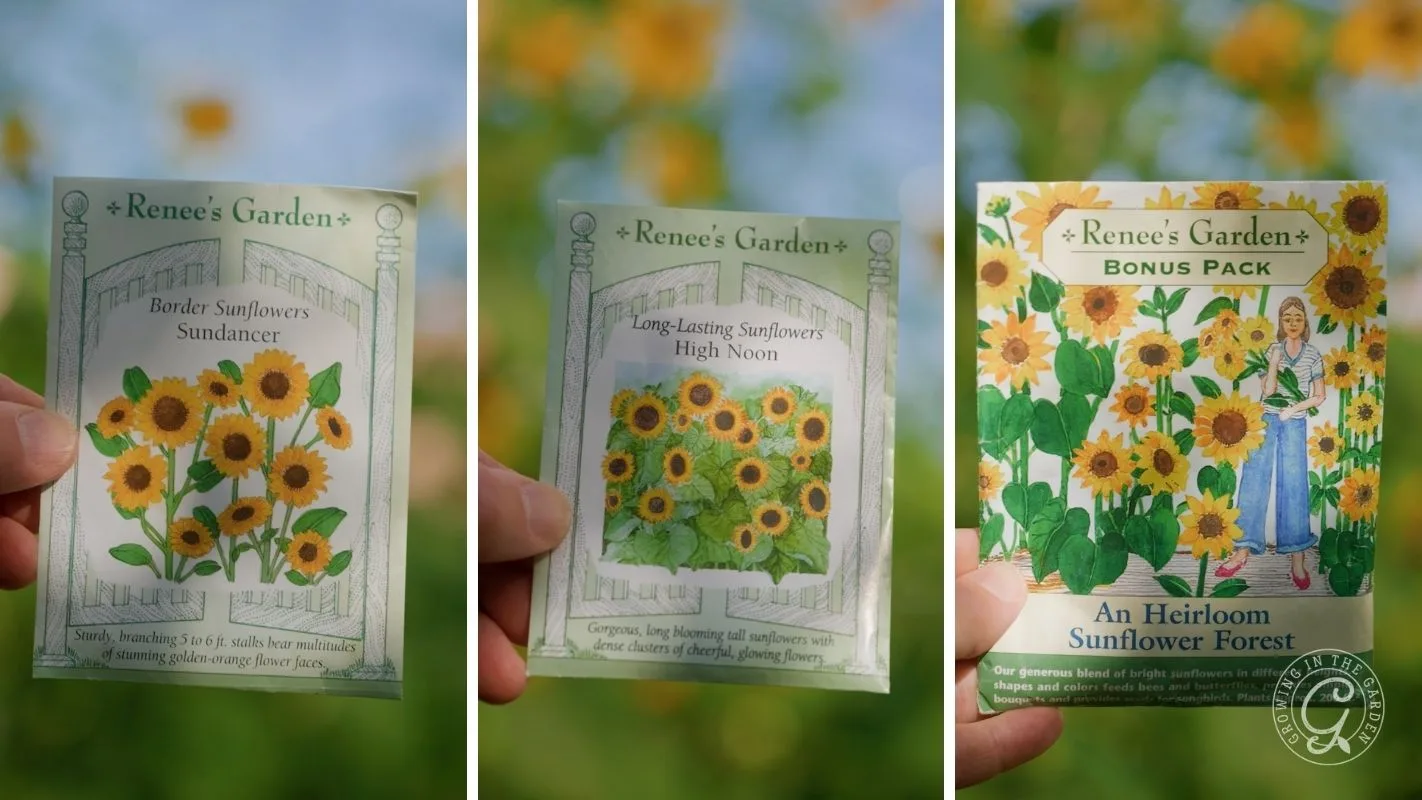
I don’t use the big single-stalk types, like mammoths or the ones grown for edible seed. These types put up one stalk and one head, and then they’re finished. They don’t create real shade.
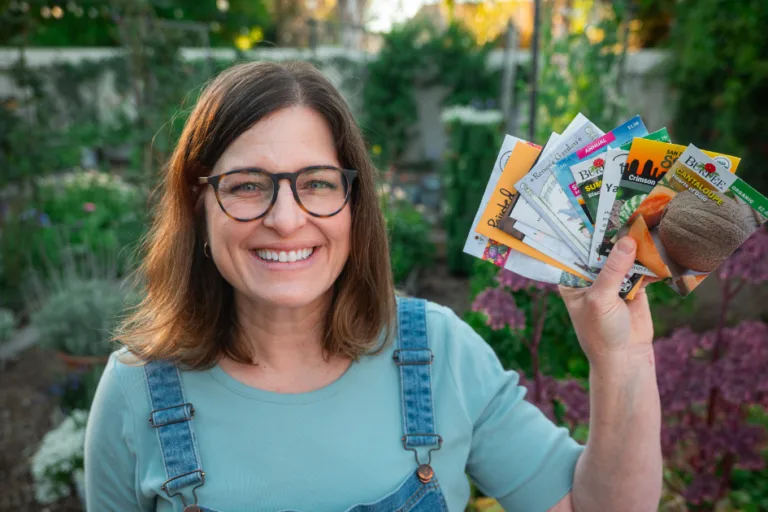
You want branching sunflowers. The ones I grow are common sunflower, High Noon, Sun Dancer, and a Sunforest mix. If you buy a packet of mixed seeds, the smaller seeds are often the branching types.
I’ve even pulled over on the side of the road and grabbed seeds from plants I liked. Try a few kinds, pay attention to which ones branch and fill out, and you’ll figure out what works in your garden. If you’re new to growing them, my guide on how to grow sunflowers covers the basics.
If you want another tall, heat-loving option, Mexican sunflowers work in a similar way, and the pollinators love them. Here’s what I’ve learned about growing Mexican sunflowers (Tithonia).
Where to Plant Sunflowers for Shade
Look at your yard and figure out where the afternoon sun hits hardest. That’s where these go, on the west or southwest side, between that hot light and whatever you’re trying to protect. Anywhere the afternoon sun is brutal, a few tall sunflowers on that side will help.
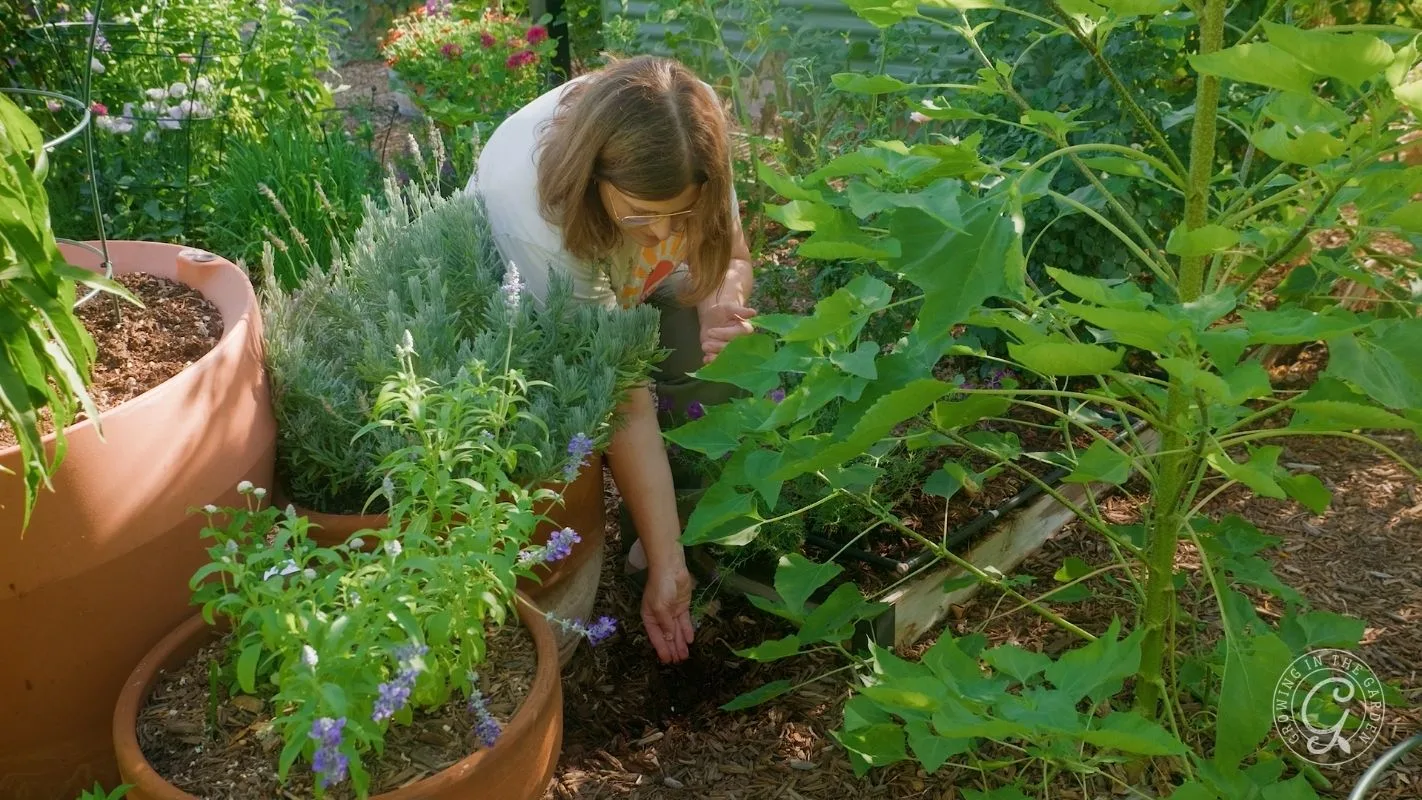
I grow mine on the outside of my beds, out in the wood chips, in poor soil with hardly any extra water. They pull what they need from the bed right next to them, so they’re not competing with my vegetables for prime space. If a bed is too hot to grow much in over the summer, a heat-tolerant cover crop is another good way to use that space until fall, which I cover in taking the summer off with heat-tolerant cover crops.
When to Plant Sunflowers for Shade
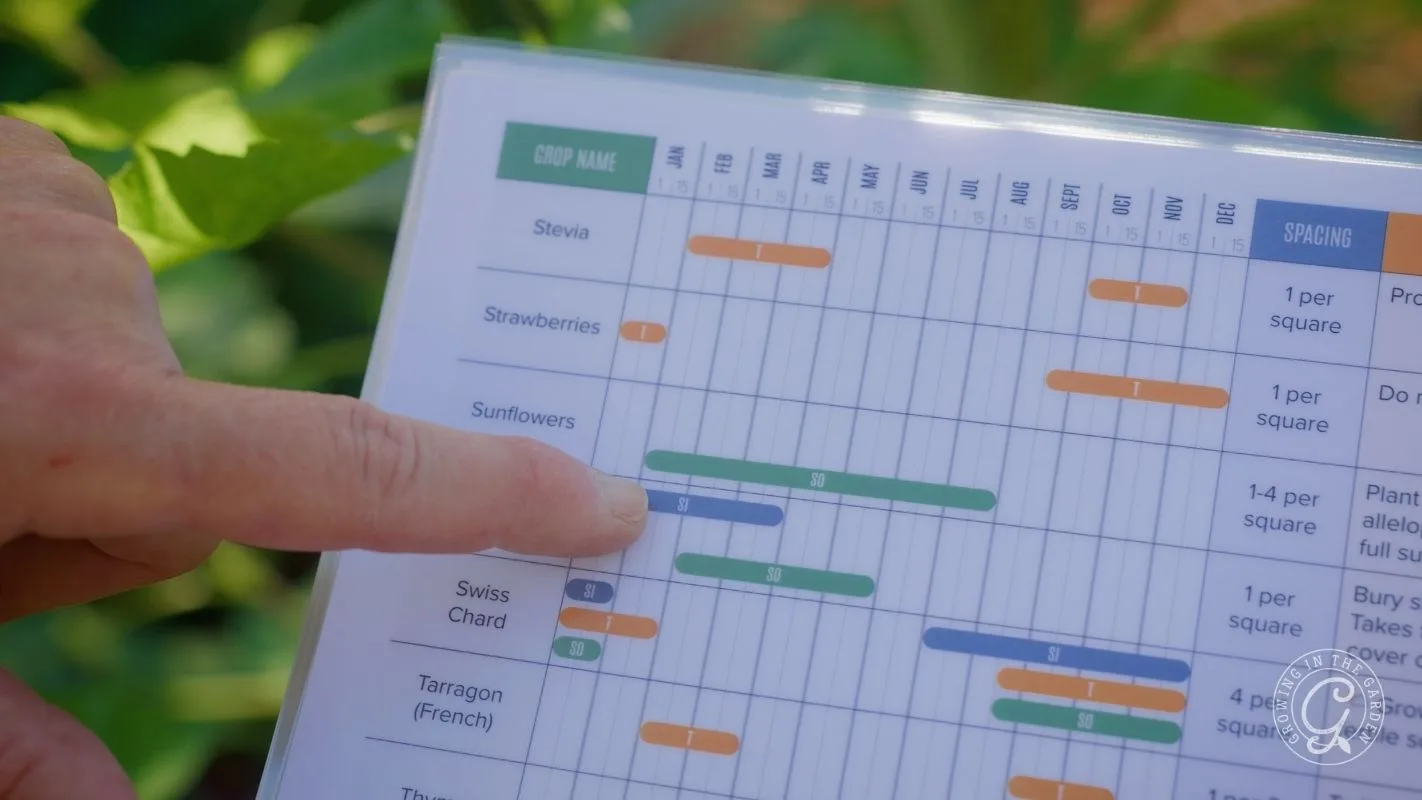
I plant as the soil warms up in spring. The window here is long, from February through August, and the seeds go straight into the ground. Within a month or two, right as it starts to get hot, you look up, and they’re huge. They grow alongside the heat, so the shade arrives just when you need it.
Each plant lasts a couple of months. To keep coverage going, I plant a few more seeds nearby while the current ones are still blooming, so the next round is already growing before the first ones finish or topple in a monsoon.
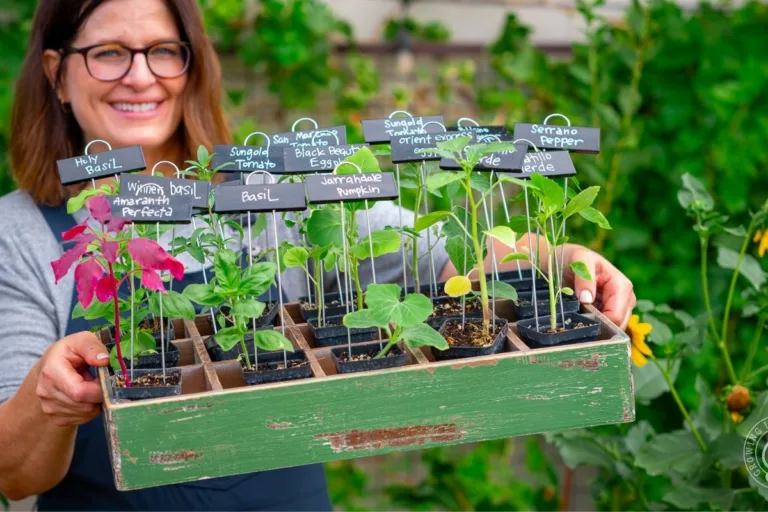
Young seedlings still need water to get established, even though the big plants barely need any. If it just rained or rain is coming, that’s a good time to plant a few seeds. See the Low Desert Vegetable Planting Guide in my shop.
How to Care for Them Through the Heat
Once they’re up, they’re low-maintenance, but a few things make a difference.
- Thin them. Watch how close the seedlings come up to each other. If they are too close together they will stay small. Give each plant room to reach full size.
- Give them support. Our monsoon winds will flatten a tall sunflower. I plant mine next to some kind of support and bungee the tallest ones to it so they don’t topple in a storm. Read the full guide to gardening during monsoon season.
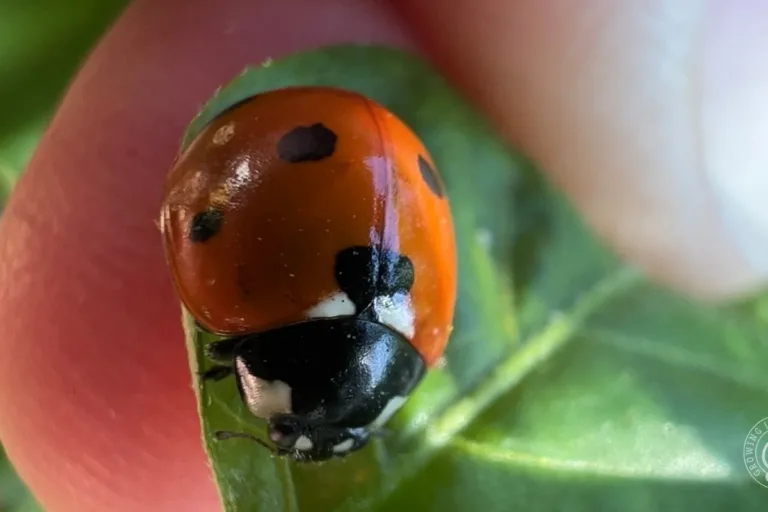
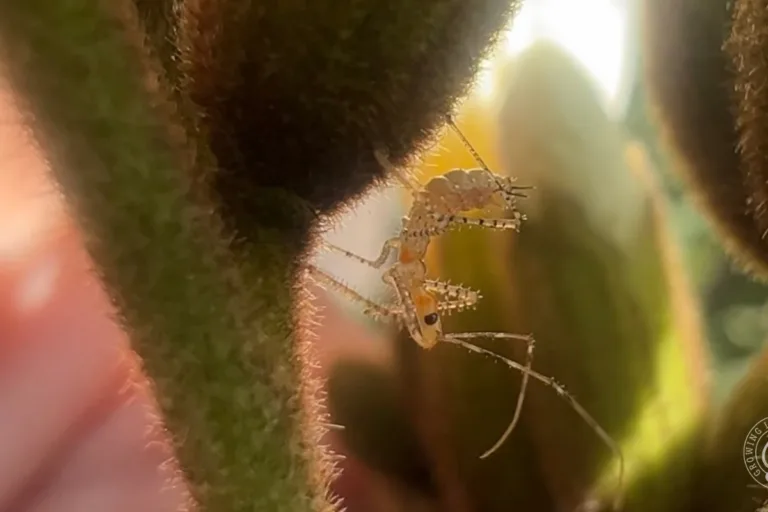
- Leave most pests alone. Young plants seem to attract some pests, but I don’t treat them, and the beneficial insects almost always take care of it for me. Here’s what to do about black bugs on sunflowers.
- Manage the lower branches. As they grow, if a branch is blocking another plant or getting in your way, just cut it off.
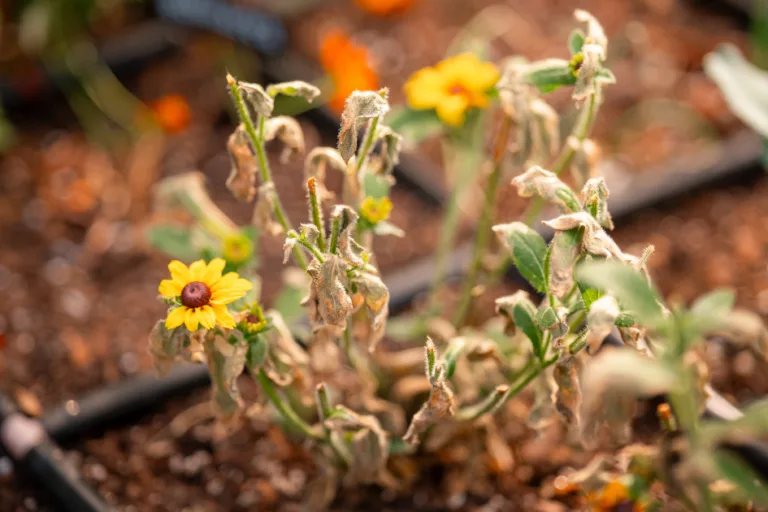
- Pull powdery mildew right away. You’ll see it show up on some leaves. Pull those leaves off as soon as you spot powdery mildew so it doesn’t spread.
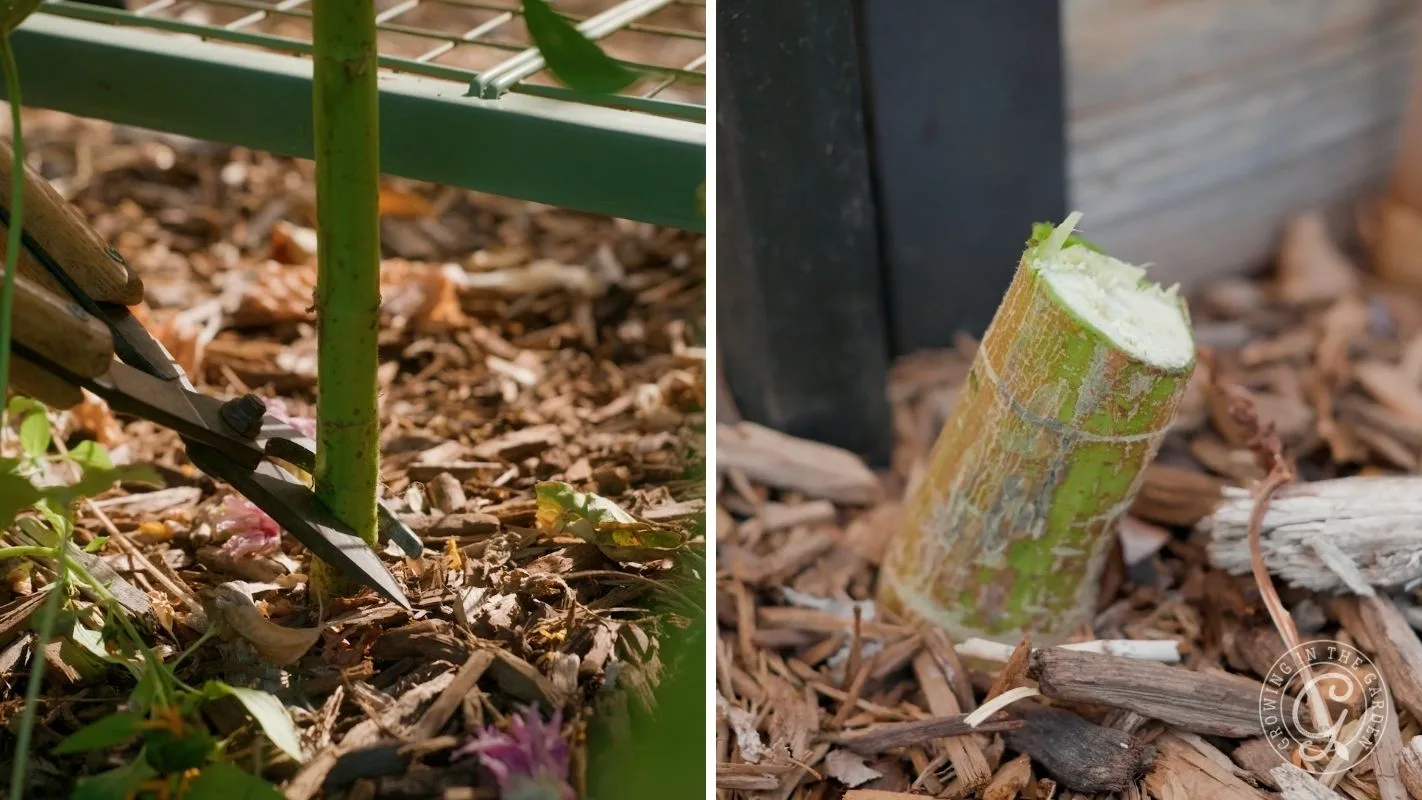
- When one is done, cut it at the base. Don’t pull it out. The root ball is huge. Cut the stalk off at ground level and let the root rot in place. You can pull the little stub out a month or two later if it bothers you.
Saving Seed and Letting Them Reseed
After the first year or two, these mostly plant themselves. The birds drop seeds everywhere, and I get volunteers coming up all over the garden. When those volunteers start showing up, that’s your cue to plant. You can also dig up a volunteer seedling and move it to wherever you want shade.
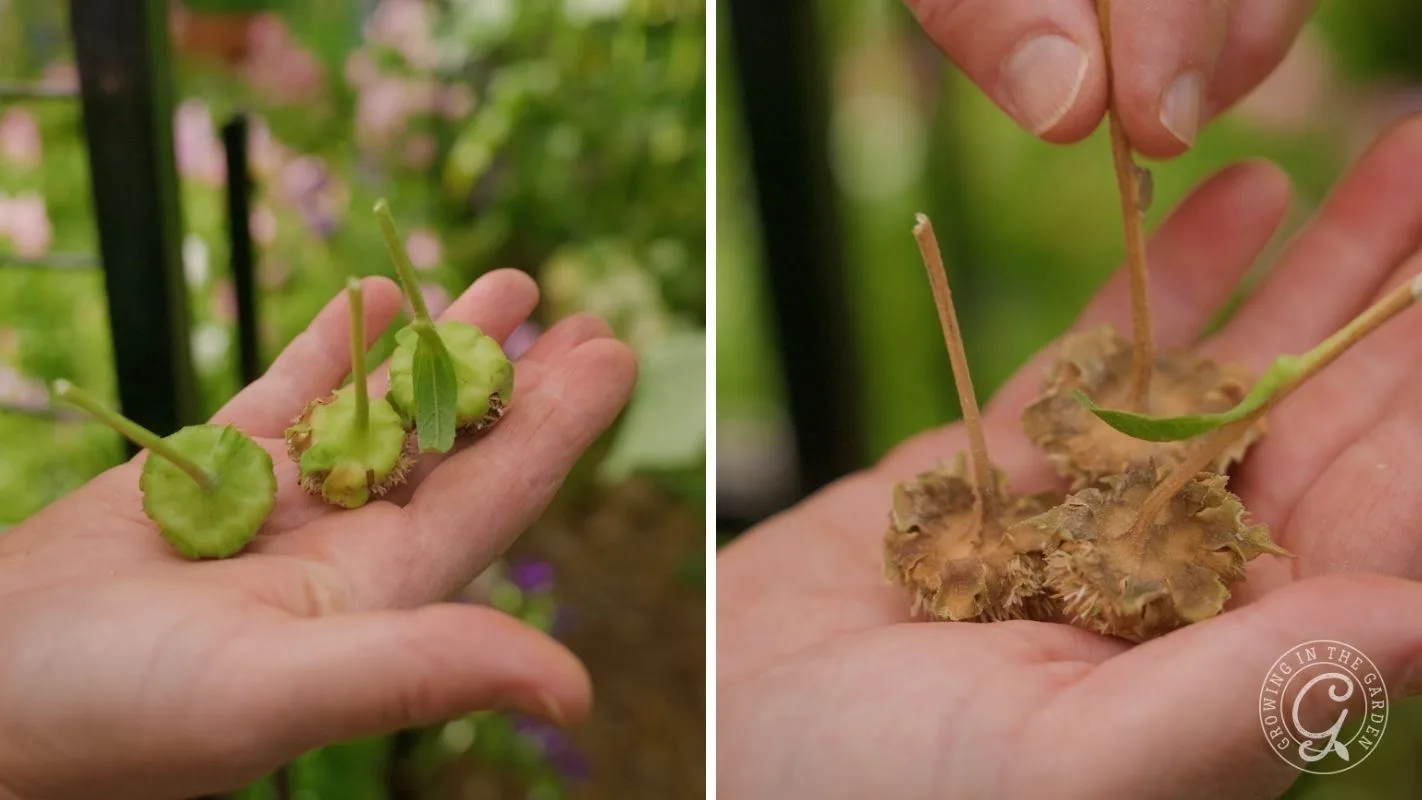
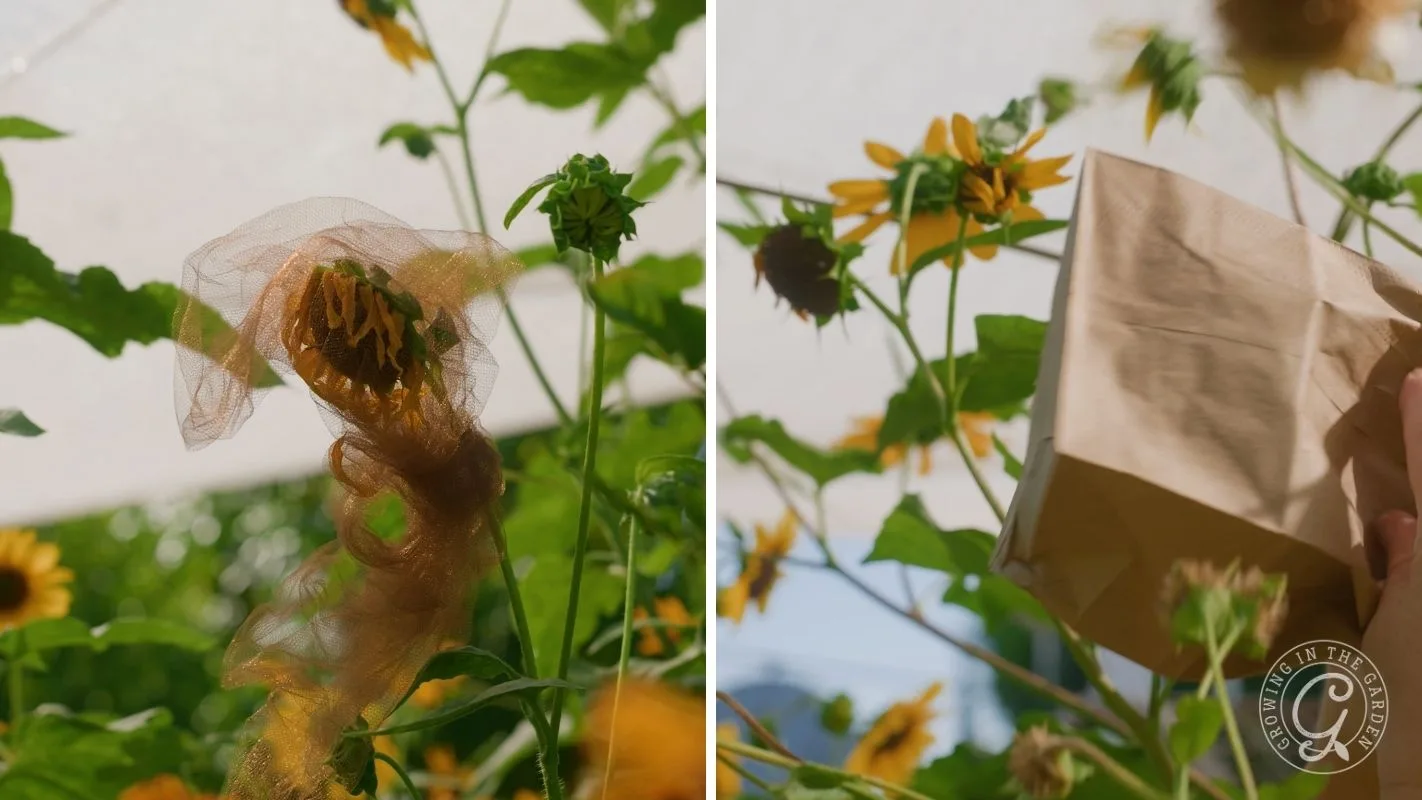
If you want to save your own seed, let the heads fully develop on the plant. The back of the head turns yellow, then brown. That’s when you cut it off and put it in a paper sack to finish drying. The birds will probably strip most of the heads clean, which is part of the fun, but it means you have to plan ahead if you want seed for yourself. Cover a few of the larger heads with tulle or a paper sack to protect the ones you want to keep. Learn more about how to save seeds in this guide.
Why I Love Using Sunflowers for Shade
Sunflowers are one of my favorite parts of my summer garden. The plants give me free shade through the worst of the heat, the flowers pull in pollinators, and the birds love the seeds. I’ve got lovebirds and lesser goldfinches in here all the time. In a hot desert summer, that kind of beauty and life is a welcome sight.
Take a look at your own yard. Where does the afternoon sun hit the hardest? Plant a few sunflowers there and let them grow. If you’ve grown sunflowers for shade, tell me what’s worked for you in the comments.
Using Sunflowers for Shade FAQs
Branching types, not single-stalk varieties. Single-stalk sunflowers like mammoths grow one head and stop. Branching sunflowers such as common sunflower, Hi Noon, Sun Dancer, and Sunforest mixes fill out and create real coverage.
Mine reach ten to fifteen feet in a good summer, taller than my shade structure.
February through August. I start as the soil warms in spring and plant a few more every so often to keep the shade going through summer.
Established plants are fairly drought-tolerant. They pull what they need from the bed beside them. Young seedlings do need water to get established, so plant before or after rain when you can.
They reseed themselves. After the first year or two, birds drop seeds, and you get volunteers coming up on their own. Those volunteers are also your cue that it’s time to plant.
Plant them next to a support and bungee the tallest ones to it. The winds here may flatten a tall sunflower otherwise.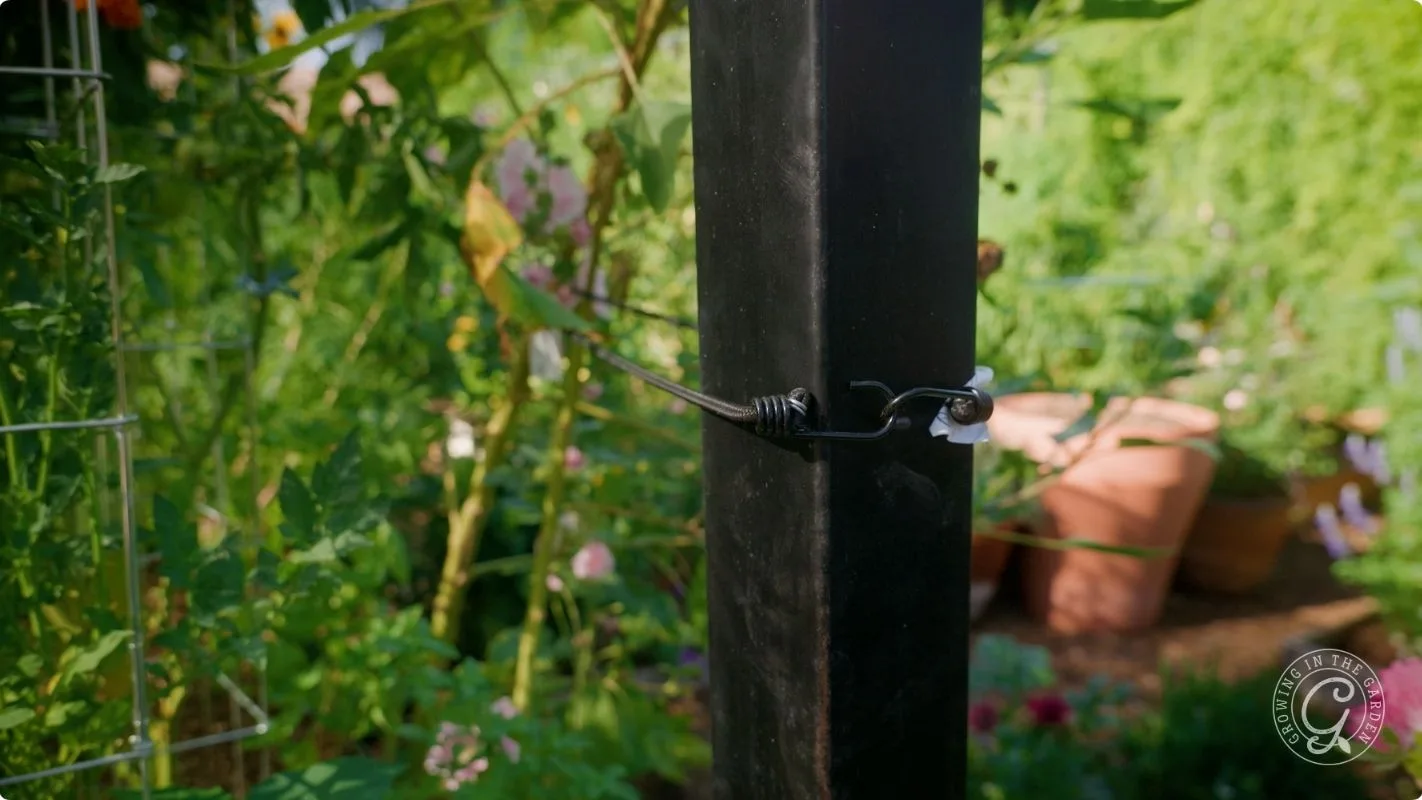
Any suggestions for keeping ground squirrels and rabbits from eating the seeds and plants? I would love to use sunflowers for shade but the crazy critters eat everything in sight! I’ve resigned to using metal raised beds on metal legs just to have a sliver of success. I live on 3 acres of open land just south of Phoenix.
That is challenging. The best reports I’ve heard from people in those conditions are barrier methods where they enclose the entire garden. That’s certainly difficult.