
How to Freeze Basil
How to Freeze Basil: A Gardener’s Guide to Preserving Your Harvest
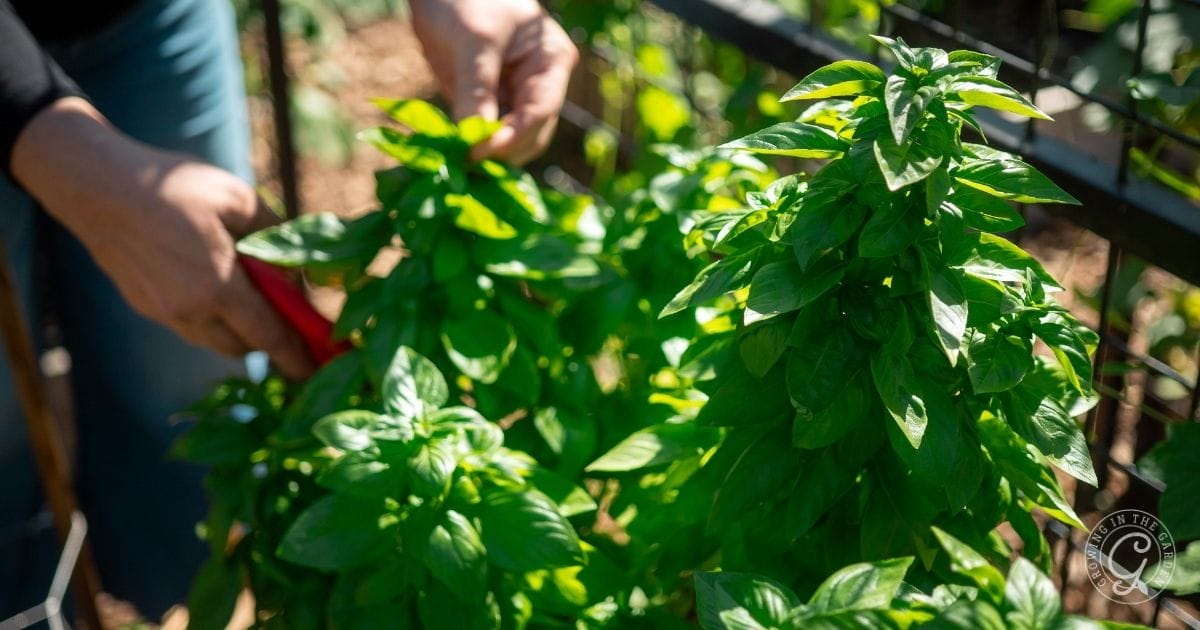
For gardeners and home cooks, basil is a summertime staple. However, when the cold weather hits, it can be challenging to grow fresh basil. Freezing basil is a simple and effective way to ensure you have a steady supply of this flavorful herb throughout the year. In this guide, I’ll detail the steps to freeze basil so you can enjoy its delicious taste all year round.
Freezing basil is an easy and cost-effective way to preserve the flavor of this herb throughout the year. Following the steps below, you can ensure your frozen basil stays fresh and delicious. So next time you have a bountiful basil harvest, don’t let it go to waste. Freeze it. Happy gardening and happy cooking.

For more basil growing and harvesting tips, read this post about how to grow basil.
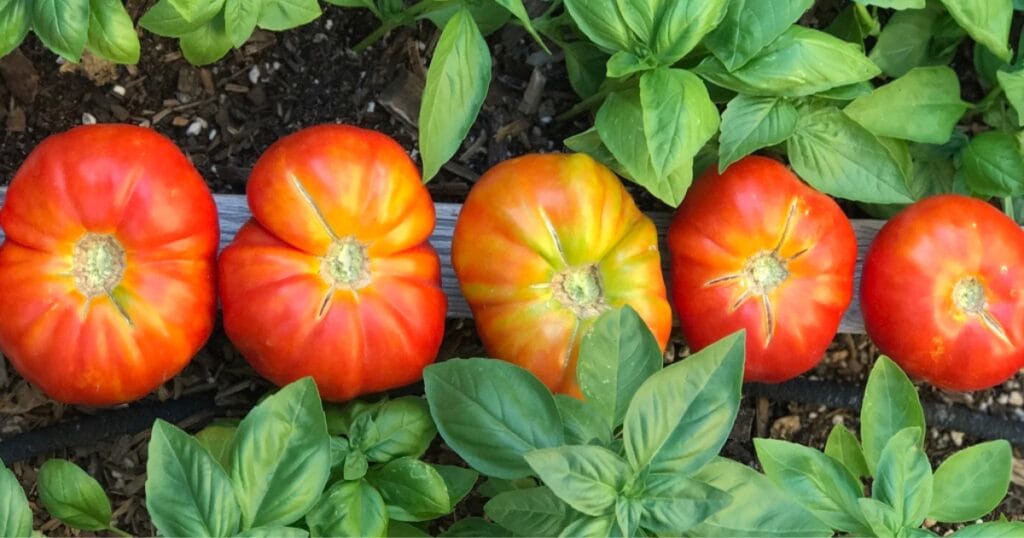
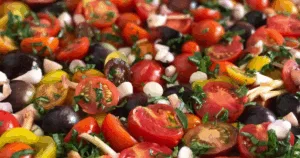
I love adding frozen basil to Garden-Fresh Tomato & Basil Pasta. Get the recipe here.
How to Freeze Basil
- Harvest Fresh Basil
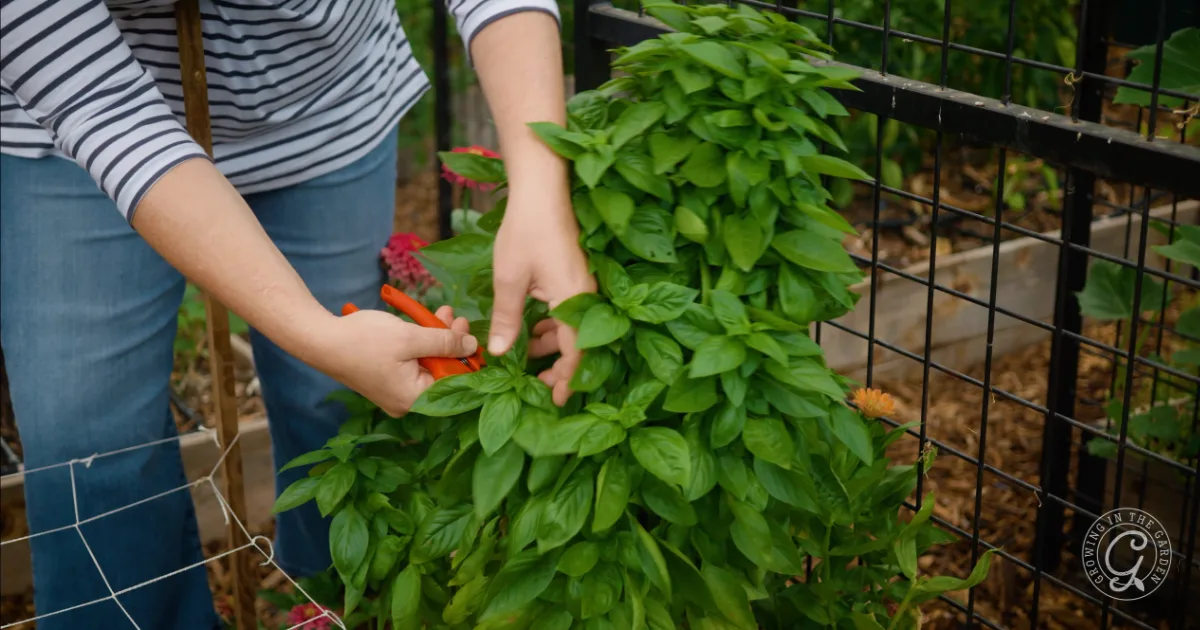
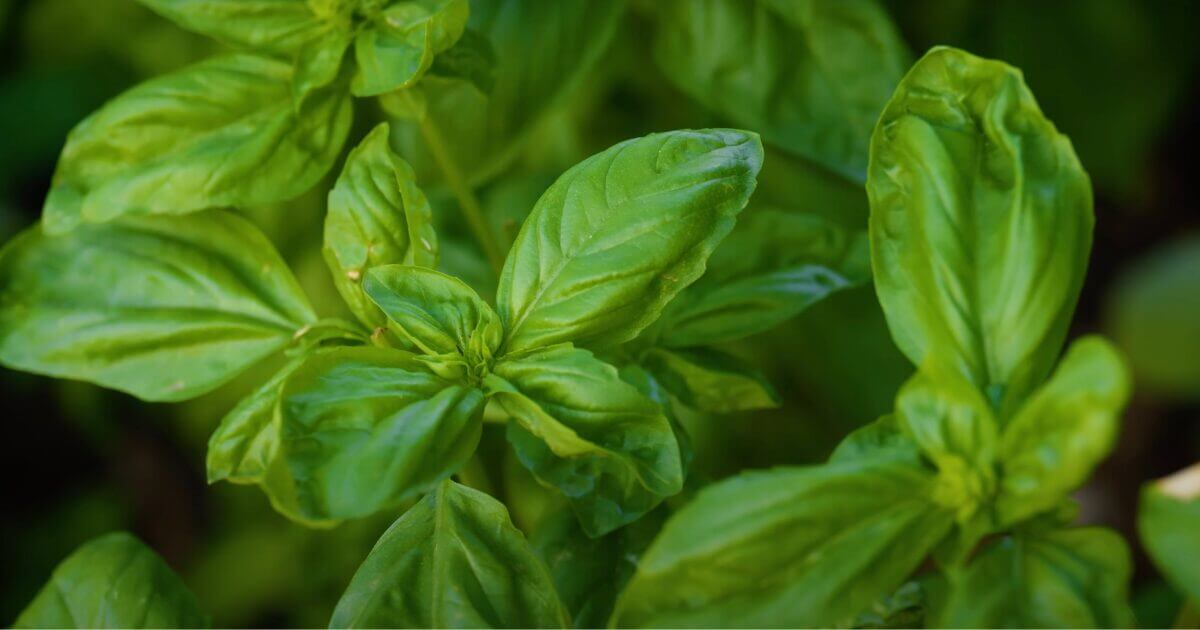
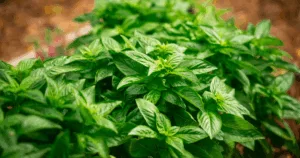
Harvesting fresh leaves is the first step to freezing basil. It is best to use fresh leaves as wilted or yellowed leaves will not taste good. Harvest the leaves early in the morning for the freshest taste.

- Remove Leaves From the Stem
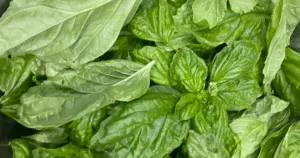
The next step is to remove the leaves from the stem. You can do this by pinching off the leaves with your fingers or by using a pair of scissors. Discard any yellow or wilted leaves, stems, and flowers.
If you’re growing my favorite variety of basil, Emerald Towers basil, removing the leaves is simple. This variety of basil grows on long, slender stems. Pull down on the stem with one hand while lifting with the other, and the leaves will come right off the stem (similar to rosemary). - Wash Basil Leaves
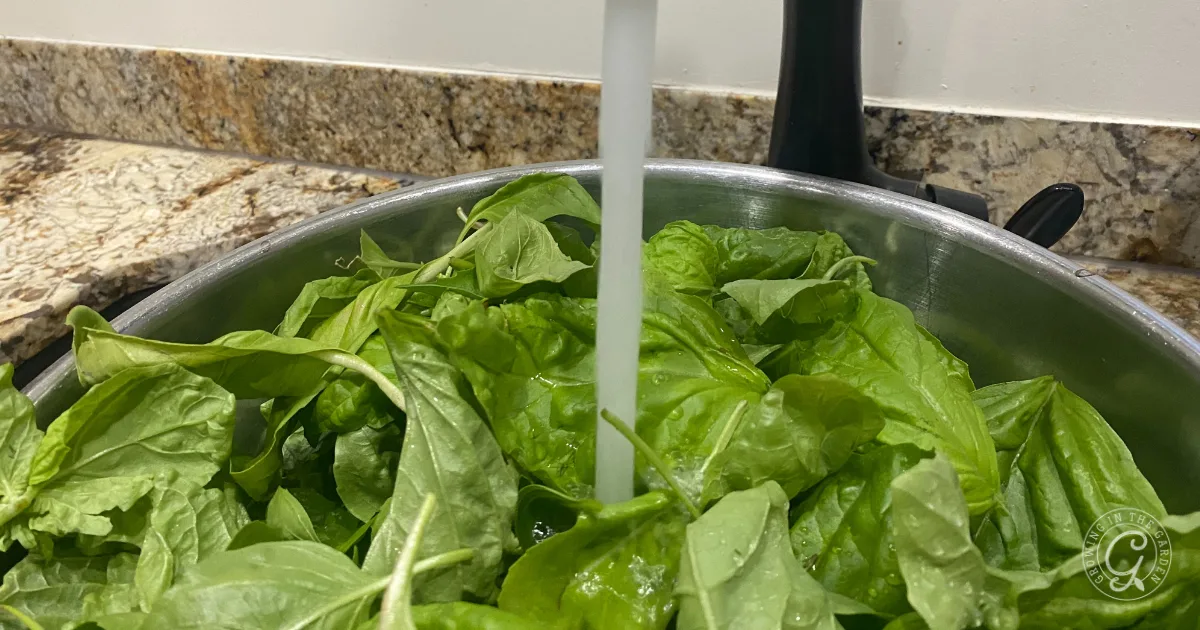
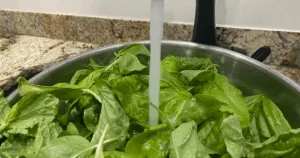
After you have removed the leaves, wash them in a bowl of water to remove any dirt, debris, or pests clinging to them. Agitate the basil leaves lightly with your hand while they are in the water to make sure that you remove everything.
- Dry Basil Leaves
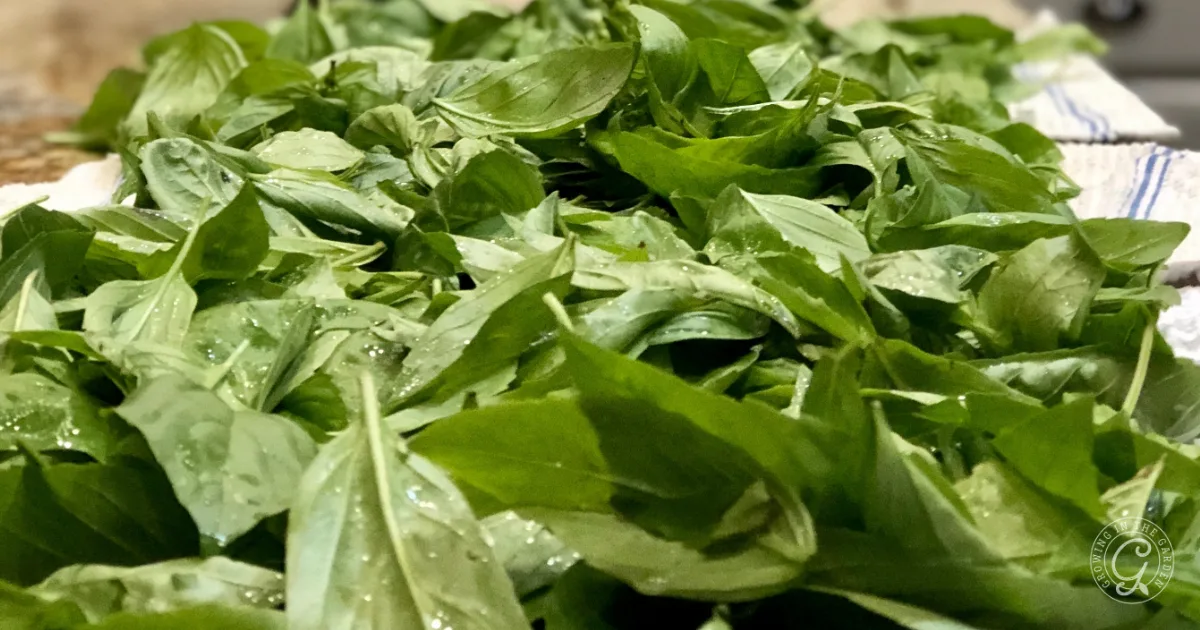
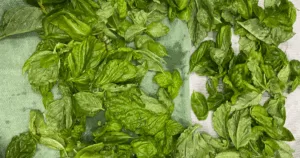
Once the basil leaves are clean, you will want to let them dry. Spread them out in a single layer on a clean dish towel and let them dry until they are mostly dry. Take care not to bruise the leaves.
Alternatively, you can put them in a salad spinner to eliminate the excess moisture. Dry basil leaves will freeze better than wet leaves, so make sure that the leaves are mostly dry before moving on to the next step. - Freeze the Basil Leaves
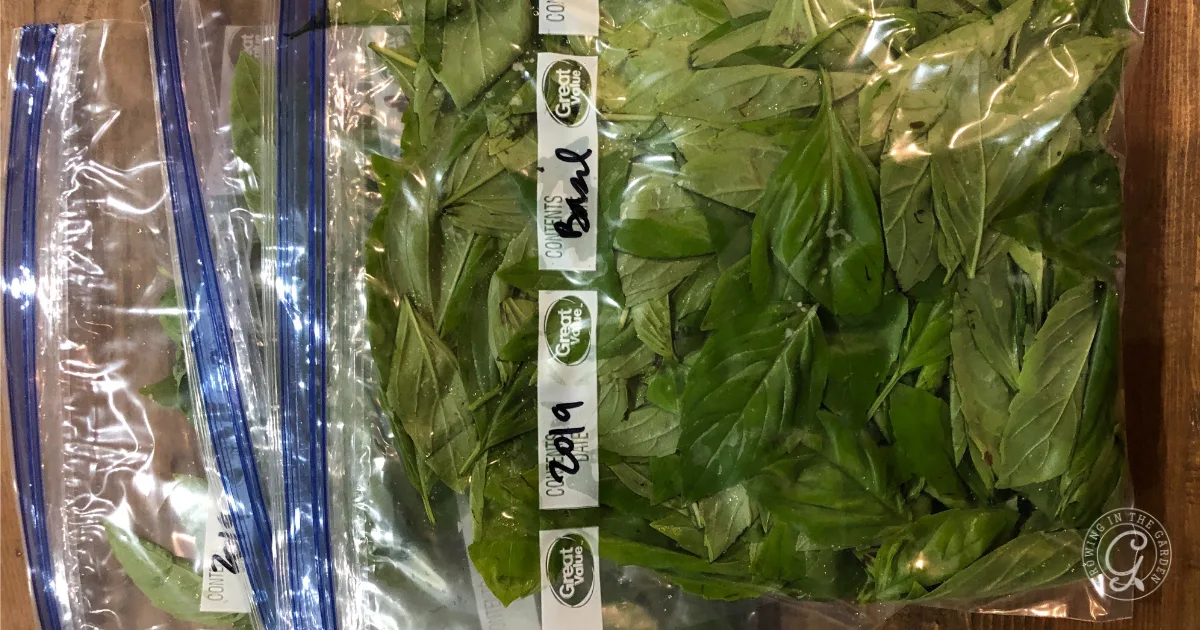
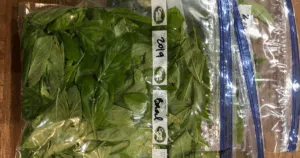
When the leaves are dry, add them to a freezer-safe ziplock-style bag. Remove as much air from the bag as possible before sealing it.
The frozen basil will last for about a year, but the best flavor is in the first six months. (Usually about the time next season’s basil harvests begin!) Make sure to take as much air as possible out of the bag before freezing. - Use Frozen Basil Similar to Fresh
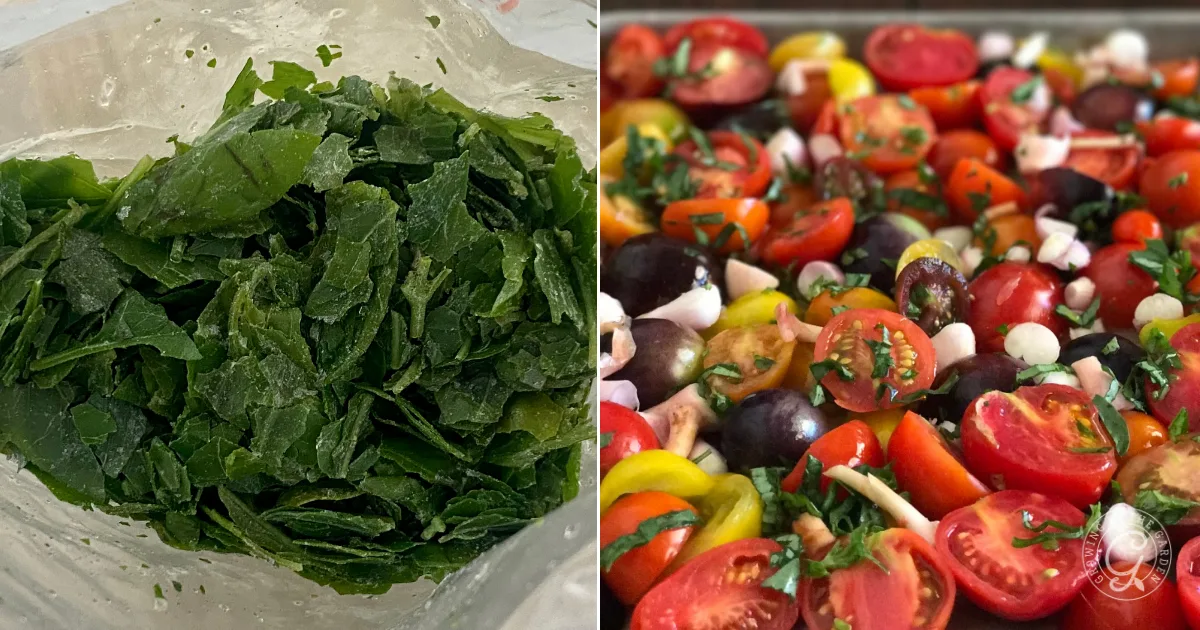
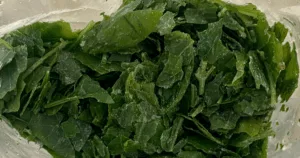
To use, crumble the bag’s contents while still frozen (defrosted basil doesn’t crumble as easily but it crumbles perfectly when frozen). Sprinkle in soups, pasta salad, or however you like to use basil. The texture changes, but the delicious flavor remains. Use the same amount as you would fresh basil.
I also like preserving basil by freeze-drying, but freezing basil is the quickest way to preserve basil and gives me a constant supply until next year’s harvest is ready.

How to Freeze Basil
Equipment
Method
- Harvesting fresh leaves is the first step to freezing basil. It is best to use fresh leaves as wilted or yellowed leaves will not taste good. Harvest the leaves early in the morning for the freshest taste.

- The next step is to remove the leaves from the stem. You can do this by pinching off the leaves with your fingers or by using a pair of scissors. Discard any yellow or wilted leaves, stems, and flowers.
- If you’re growing my favorite variety of basil, Emerald Towers basil, removing the leaves is simple. This variety of basil grows on long, slender stems. Pull down on the stem with one hand while lifting with the other, and the leaves will come right off the stem (similar to rosemary).

- After you have removed the leaves, wash them in a bowl of water to remove any dirt, debris, or pests clinging to them. Agitate the basil leaves lightly with your hand while they are in the water to make sure that you remove everything.
- Once the basil leaves are clean, you will want to let them dry. Spread them out in a single layer on a clean dish towel and let them dry until they are mostly dry. Take care not to bruise the leaves.
- Alternatively, you can put them in a salad spinner to eliminate the excess moisture. Dry basil leaves will freeze better than wet leaves, so make sure that the leaves are mostly dry before moving on to the next step.
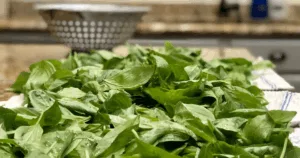
- When the leaves are dry, add them to a freezer-safe ziplock-style bag. Remove as much air from the bag as possible before sealing it. The frozen basil will last for about a year, but the best flavor is in the first six months. (Usually about the time next season’s basil harvests begin!) Make sure to take as much air as possible out of the bag before freezing.
- To use, crumble the bag’s contents while still frozen (defrosted basil doesn’t crumble as easily but it crumbles perfectly when frozen). Sprinkle in soups, pasta salad, or however you like to use basil. The texture changes, but the delicious flavor remains. Use the same amount as you would fresh basil.
- I also like preserving basil by freeze drying, but freezing basil is the quickest way to preserve basil and gives me a constant supply until next year’s harvest is ready.
Tried this recipe?
Let us know how it was!If this post about how to freeze basil was helpful, please share it.



This is my favorite way to use extra basil!
Interesting post. We love fresh basil, especially when making pesto. Can you use frozen basil to make pesto or is the water content to high. BTW: I am a fellow master gardener. Thanks
Hi. If you want to make pesto, I’d make pesto before freezing the basil. The texture changes and you’re right, the water content would be too high.