
How to Grow Chinese Long Beans (Yardlong Beans)
Most beans quit in the low desert by June. Chinese long beans, also called yardlong or asparagus beans, are just getting started. If you’ve ever planted green beans in a hot summer climate, you know the pattern. They grow, give you a handful of pods, then the heat hits and they’re done. Crispy leaves, no more flowers, nothing to pick. I’ve watched it happen in my own Mesa garden more times than I can count. But asparagus beans keep climbing, flowering, and handing me a harvest almost every day right through the summer.
In this post, I’ll show you how to grow Chinese long beans and when to plant them so they establish before the worst of the heat, how to trellis them, and how to harvest so they keep producing. If you’re not sure what to plant in hot summer climates, my low desert vegetable planting guide includes planting dates for most crops throughout the year.
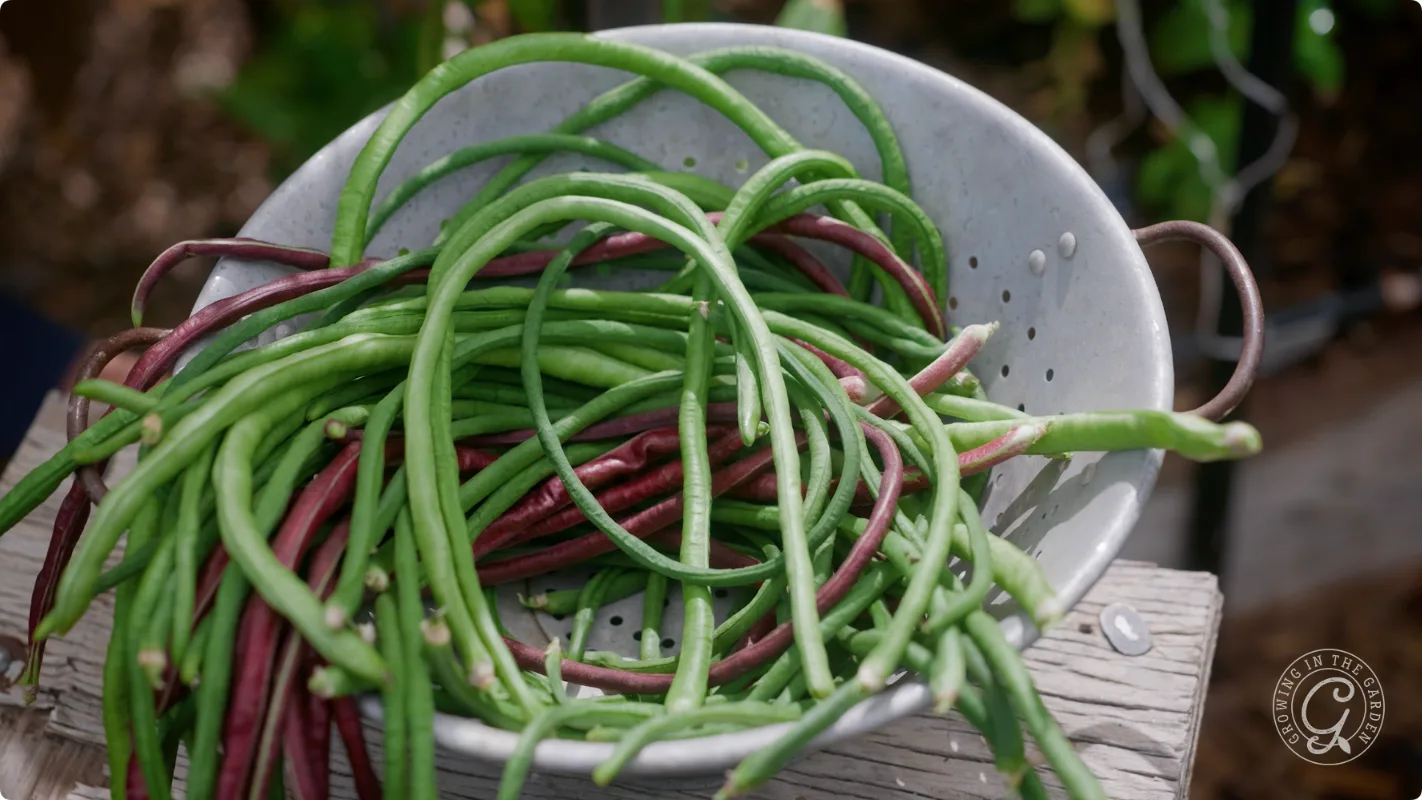
Key Takeaways: Growing Yardlong Beans
- Chinese long beans thrive in heat, unlike regular snap beans, which struggle in high temperatures.
- Plant yardlong beans after the last frost, ideally from mid-March to July, so they can establish before extreme heat.
- Provide support for these vigorous climbers, as asparagus beans can grow up to 12 feet tall.
- Water regularly and manage pests like aphids and spider mites to ensure healthy growth.
- Harvest beans when they are 10-12 inches long for the best flavor, and continue picking to promote more production.
What We’ll Cover
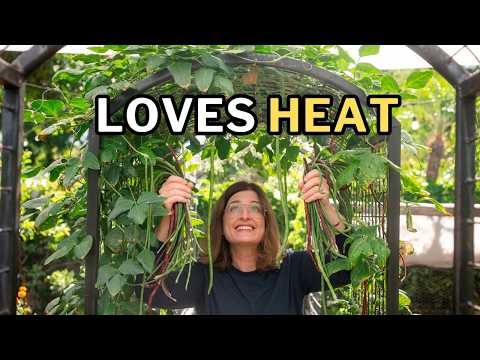
Why Chinese Long Beans Handle Desert Heat
Regular snap beans drop their flowers once temperatures get above the mid-80s. Asparagus beans keep setting pods right through it. That’s because they aren’t really green beans. They’re a relative of the cowpea from the tropics of Southeast Asia, and they’re built for heat and humidity. Once the monsoon moisture arrives, they increase production even more.
A few things make the difference. They’ve got deeper roots. The leaves and pods have a waxy coating that holds water in. And because they came from a hot, humid part of the world, our summer is closer to home for them than it is for a green bean.
You’ll see them slow down a little in the dry heat of June, then take off again when the monsoon humidity arrives. That’s normal.
This is the same reason I lean on a short list of plants that actually like our summers. If you want to see what else earns its spot when everything else gives up, here’s what survives an Arizona summer garden.
When to Plant Yardlong Beans
Asparagus beans are a warm-season crop. Wait until after the last frost, when the soil has warmed to at least 60˚F (15˚C). They need a long growing season with warm temperatures, so late spring to early summer is the ideal time to plant them. These beans need at least 75 days of frost-free weather to reach maturity, making them perfect for hot climates where other vegetables may struggle.
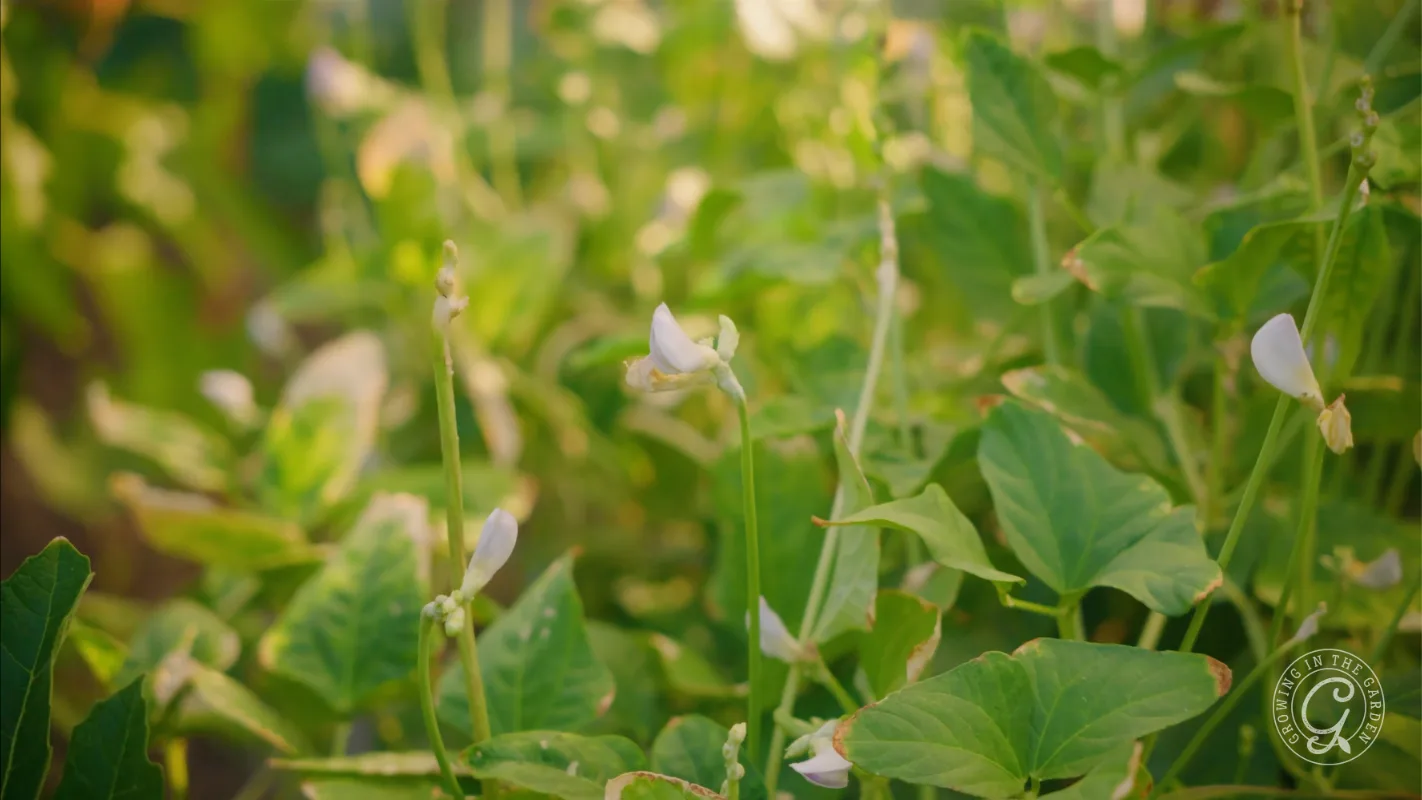
Here in the low desert, you can plant asparagus beans anywhere from mid-March through July. The timing within that window is what makes the difference. You want them in the ground before it gets really hot, or planted when the monsoon humidity arrives.
Selecting the Right Location
Asparagus beans thrive in well-drained soil, and while they don’t require particularly rich soil, adding compost at planting will improve growth. You can also use a nitrogen-fixing inoculant on the seeds or in the soil to boost growth. No additional fertilizer is recommended.
Beans make excellent companions for tomatoes and cucumbers, especially since they help enrich the soil. For more ideas on what to plant near cucumbers, check out this post on cucumber companion plants. This crop can also play an important role in the Three Sisters Grow Bag Garden, a traditional companion-planting method adapted for containers—learn how to incorporate it alongside corn and squash (or their alternatives) for the best results.
Full sun is crucial, so choose a location with at least 6-8 hours of direct sunlight. In hot climates, a spot that offers afternoon shade can help prevent plant stress.
These heat-loving beans grow best when the air temperature is between 77-95˚F (25-35˚C). To maximize yield, avoid planting yard-long beans in areas where legumes (like peas or other beans) were grown the previous year to prevent soil-borne diseases.
Looking for more warm-season beans? Learn how to grow lima beans for a productive and delicious crop that does well in hot climates.
Planting and Caring for Asparagus Beans
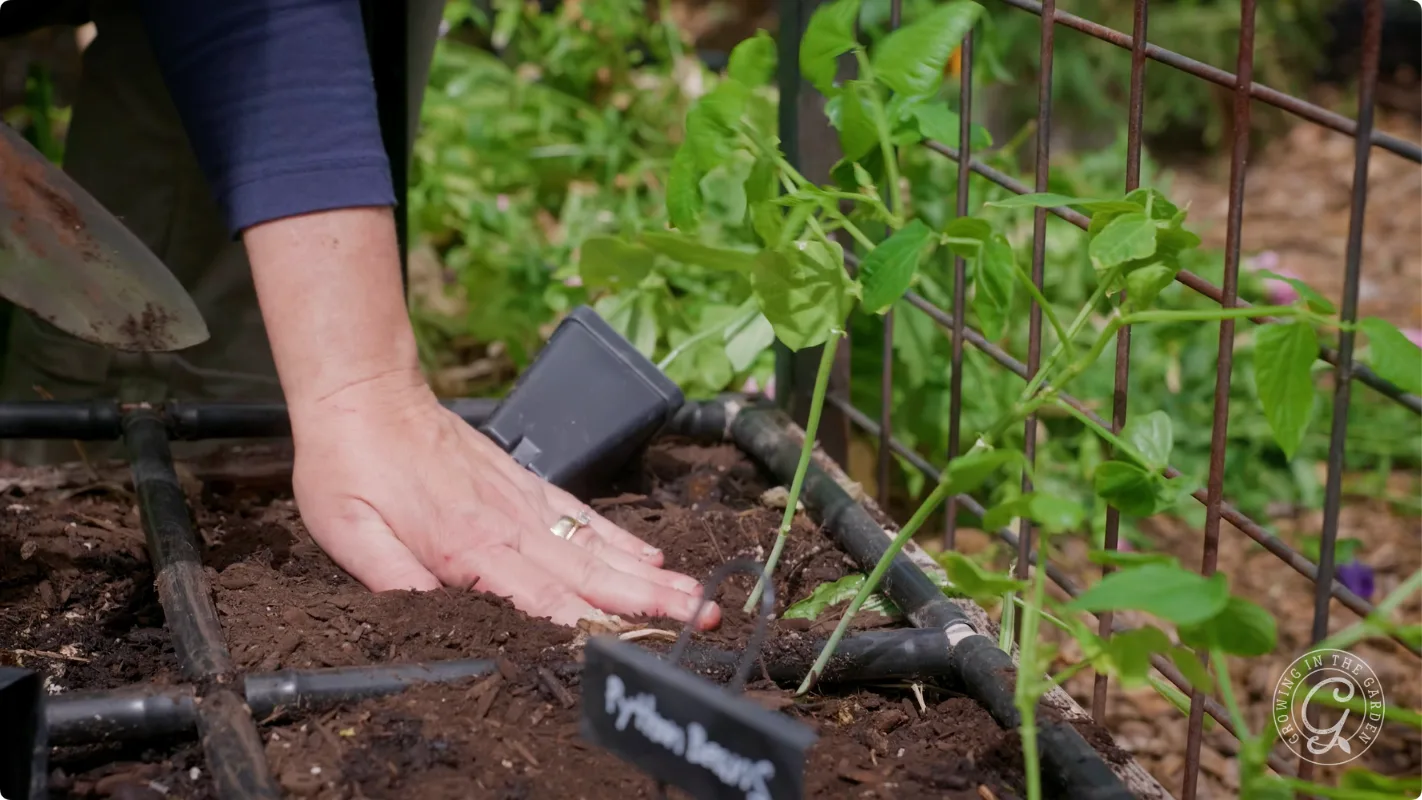
Plant the seeds about an inch deep and three inches apart. If you’re growing them up a pole, plant four to six seeds around the base of each one. Get asparagus bean seeds here.
Seeds are the most economical option, and they germinate quickly in warm soil. I’ve also been surprised by how well transplants do. So if you’re waiting on your soil to warm up, or you come across a few starts, don’t be afraid to use them. Good soil gives them a strong start, which is one more reason I keep up with in-bed worm composting.
One more tip from experience. If rollie pollies are eating your bean seedlings, sprinkle a little iron phosphate slug and snail bait around them. It keeps the seedlings from disappearing overnight.
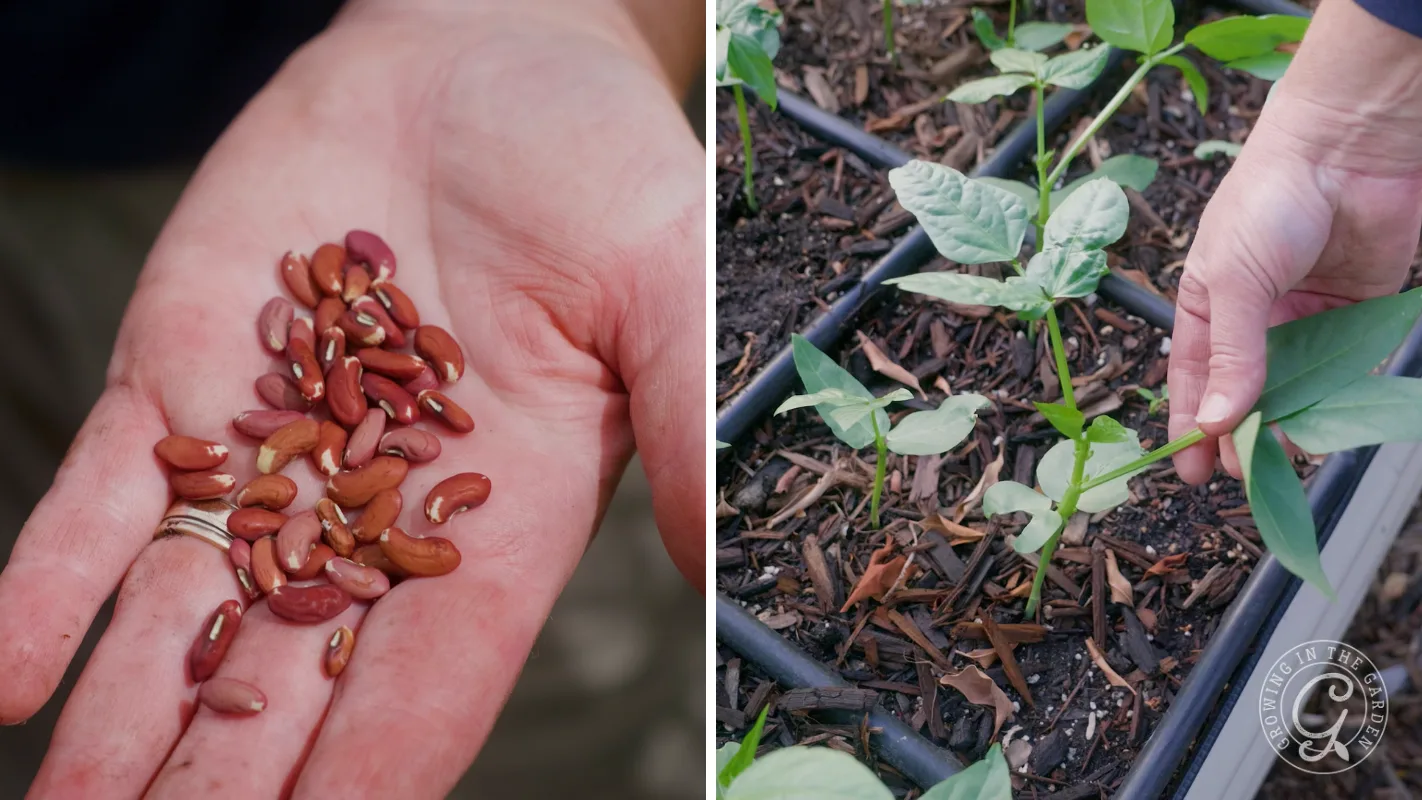
Consistent moisture is vital for healthy plants. Water deeply once a week, increasing frequency in hot, dry weather. Be careful not to water the leaves, which can lead to fungal diseases.
Common Pests and Diseases of Yard Long Beans:
- Pests: Aphids, spider mites, and bean beetles can be problematic. Regularly check your plants for signs of infestation, and handpick pests to keep them under control.
- Diseases: Watch for bacterial blight and mosaic virus; avoid them by ensuring good air circulation and not working in wet foliage.
Support for Vertical Growth
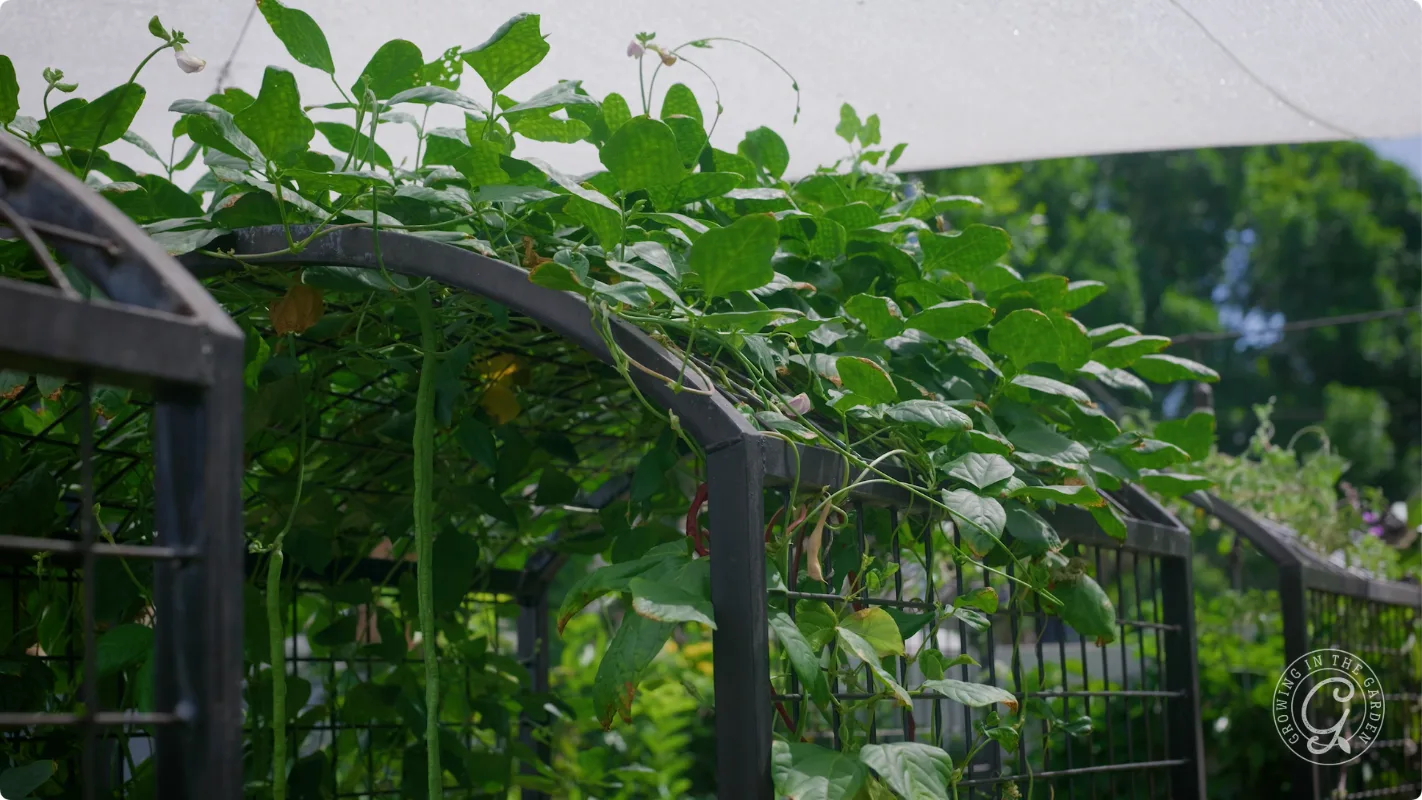
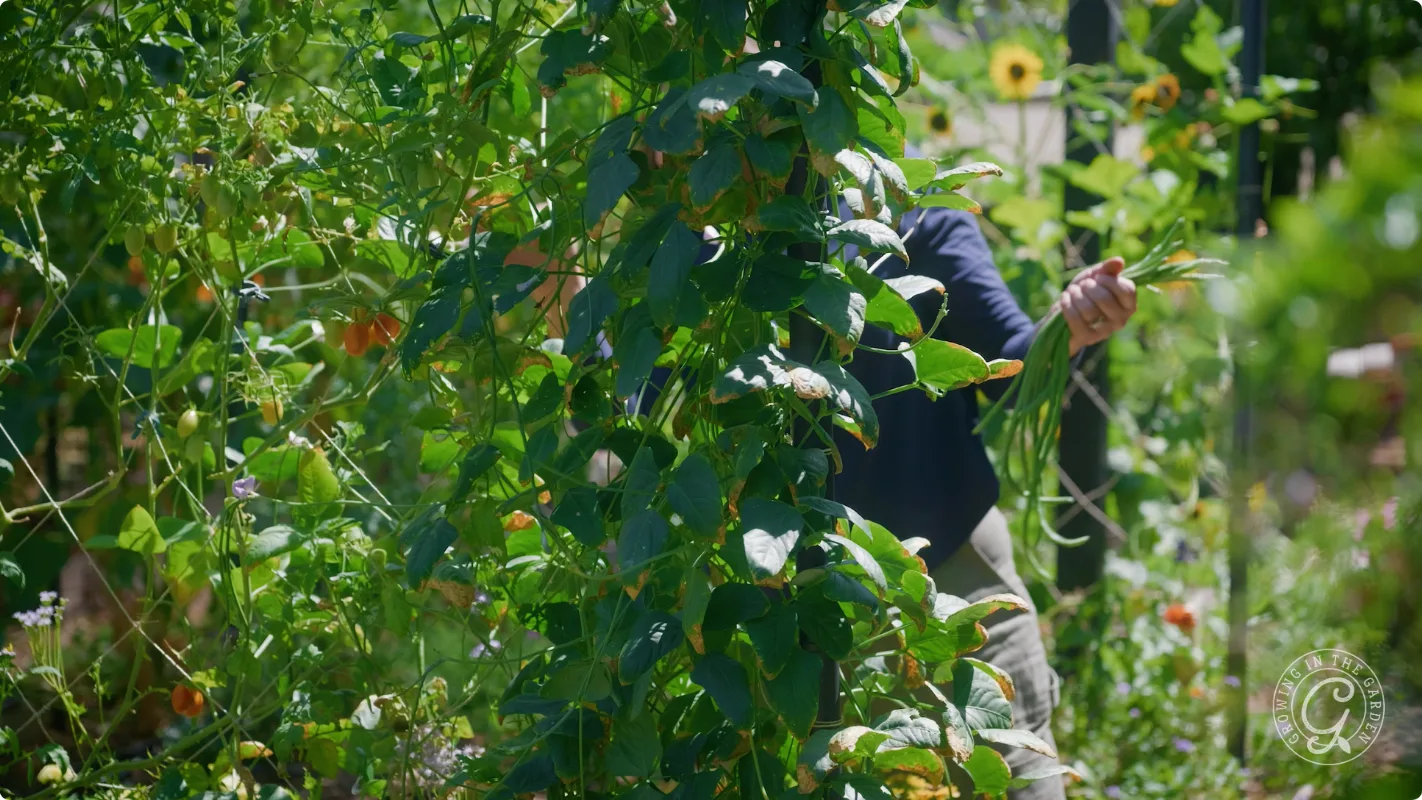
Asparagus beans are vigorous climbers, often reaching heights of 10-12 feet (3-3.6 m) or more. Because asparagus beans grow so quickly, it helps to have support in place early, and these inexpensive vertical gardening ideas give you several simple options. Plant your beans at the base of a trellis, fence, or cattle panel to support this growth. Once they reach the top of your trellis, snip the ends to keep them in bounds.
Harvesting Asparagus Beans
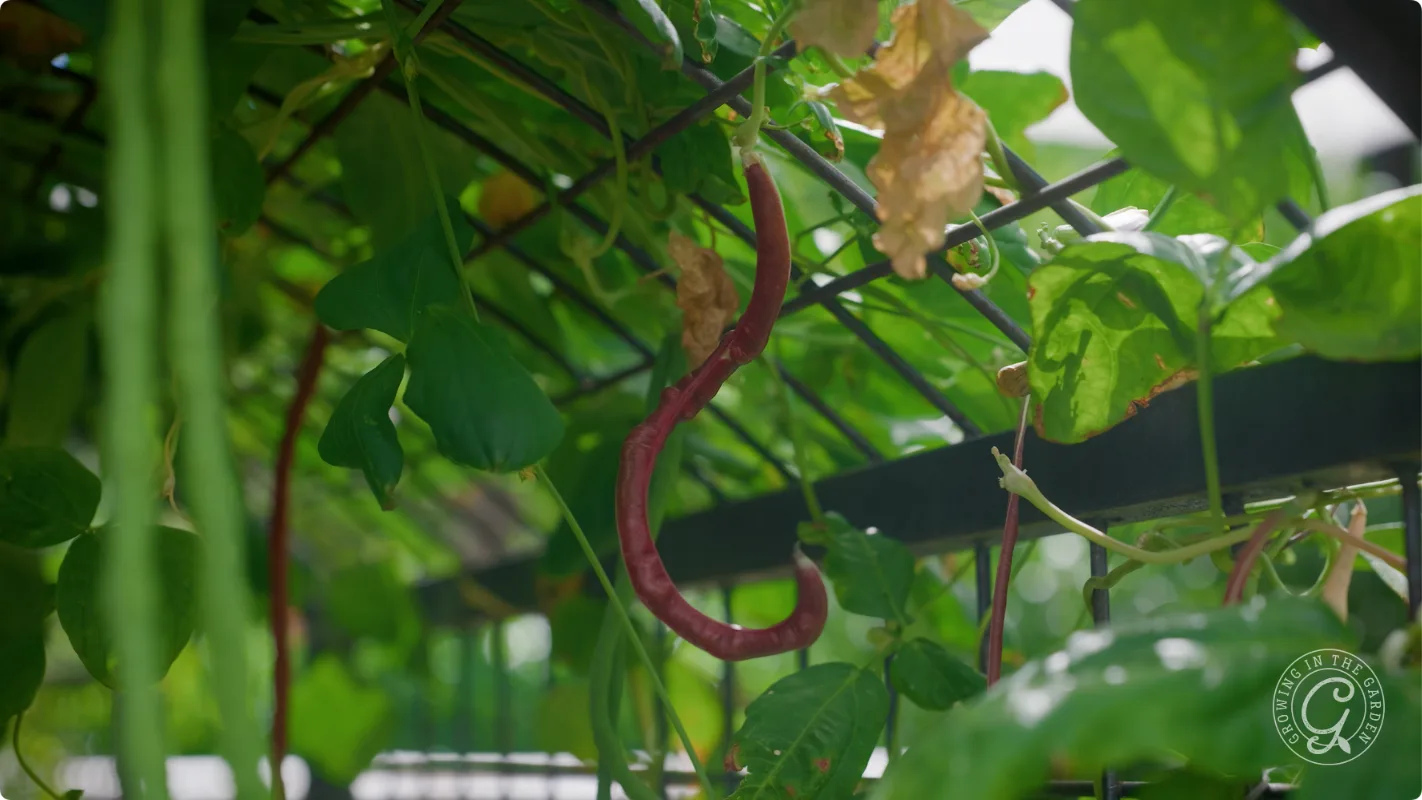
Although they’re often called “yard-long” beans, you should harvest asparagus beans for the best flavor when they are about 10-12 inches (25-30 cm) long. Pick them while they are still slender and before the seeds inside fully develop. The flavor will deteriorate if the pods become soft or spongy, as the beans are over-mature.
To harvest, twist the beans off the vine rather than pulling them to avoid damaging the plant. These beans often grow in pairs at the terminal bud, and removing them gently will encourage further production.
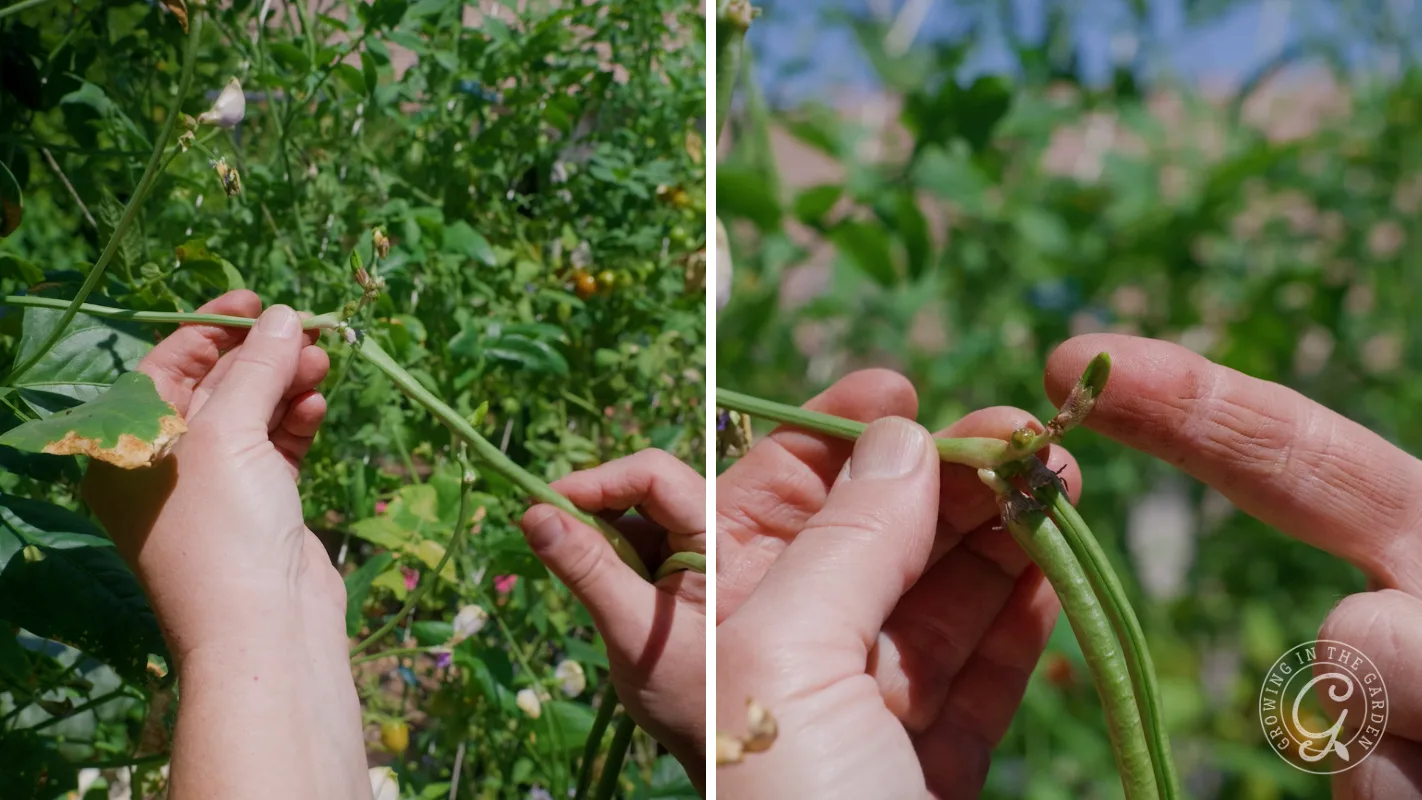
Tip: Harvest yard-long beans regularly to promote more beans. If you leave beans on the vine for too long, the plant will slow down production as it focuses on maturing its seeds.
Edamame beans offer another delicious garden option—check out my tips for growing edamame successfully at home.
Saving Yardlong Bean Seeds for Next Season
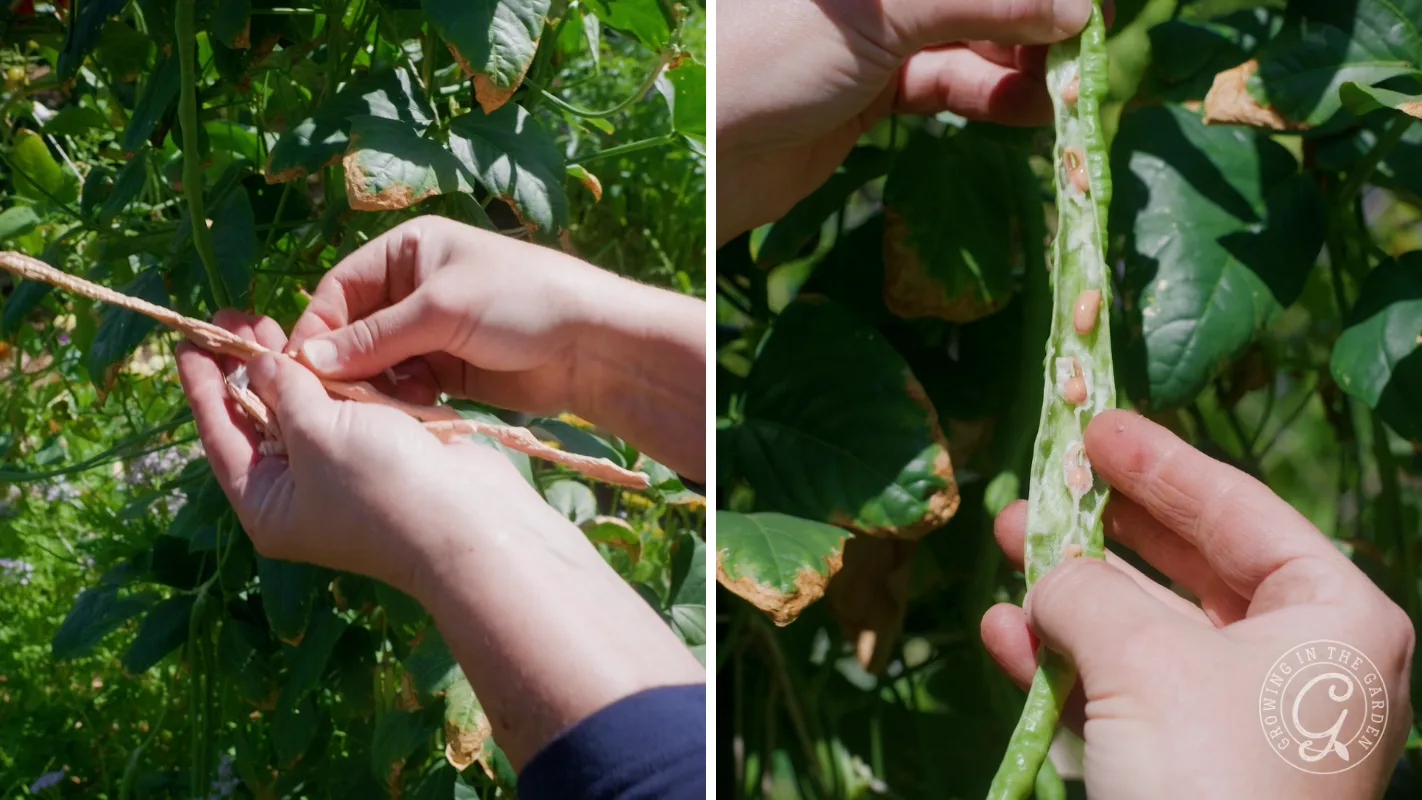
If you want to save seeds for next year, leave a few pods on the healthiest plants until the seeds inside are fully developed and the pods turn dry and papery. Once mature, remove the pods, shell the seeds, and store them in a cool, dry place. Seed-saving ensures you have a stock of asparagus beans ready to plant for the following growing season.
What to Do With All Those Beans
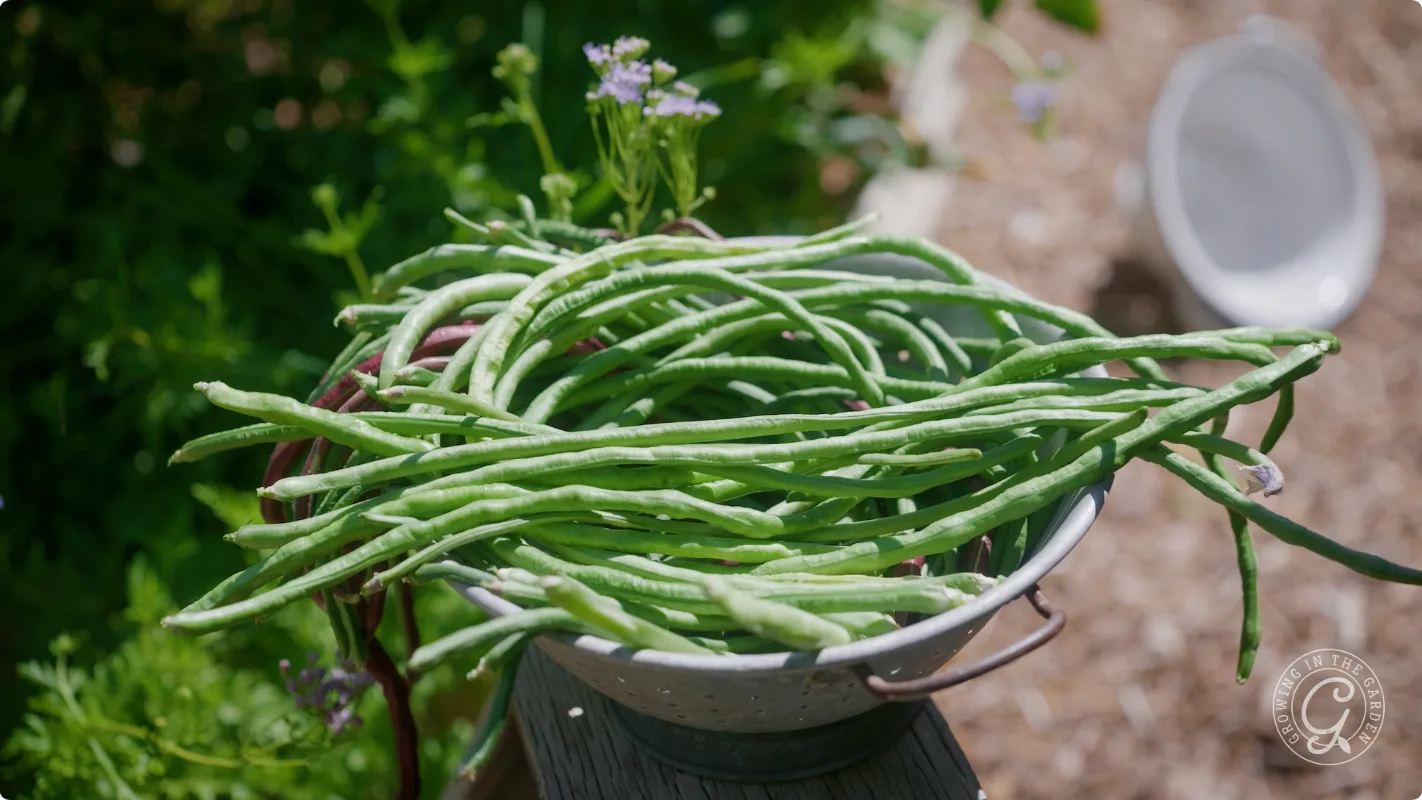
Once you’ve got a basket of these, the question is how to cook them. Because they’re denser and hold less water than a green bean, they’re built for quick, high-heat cooking.
My favorite way is a 15-minute garlic-ginger-and-sesame stir-fry. I wrote the full method up separately so this post can stay focused on growth. Here’s the recipe: Blistered Chinese Long Beans with Garlic, Ginger, and Sesame.
Chinese Long Bean FAQ’s
Yes. Asparagus beans, yardlong beans, and snake beans are all names for the same plant, a relative of the cowpea grown for its long, tender pods.
Plant anytime from mid-March through July in the low desert. Aim to get them established before the worst of the dry heat, or plant them as the monsoon humidity comes in. Wait until your soil is above 60 degrees in spring.
Snap beans drop their flowers once temperatures climb past the mid-eighties, so they stop setting pods. Asparagus beans keep producing in that same heat because of deeper roots and a waxy coating that holds moisture.
Pick them when they’re firm and about the thickness of a pencil. If they feel spongy or limp, they’ve gone too far and will be tough.

I’ve grown yardlong beans for 2 years now. I felt like last year I didn’t get “enough” beans so doubled my plants this year and have about 40 plants. I am getting beans but the volume isn’t near what I expected this year either and they are still only 2 feet tall. Some of my other vegetables need the shade cloth, could this be holding them back?
They are ok with some shade when it’s hot and dry especially. If they don’t get enough sun they might struggle. What percentage is the shade cloth. What is your soil and watering like?
Hi! We planted a whole pack of seeds and 4 germinated. They are growing tho and with some help, climbing the hog panel that we turned on its side (one shoot has surpassed that height; reaching for the stars??). my question is: how big around should I let the beans get for optimal flavor?
Thanks for your site-very informative!
Depends on the type of bean, but usually around 10-12 inches long. Pick them before they get puffy and the seeds inside begin to develop.
Thanks for your article on Asparagus beans. Informative for those of us determined to make things grow here in Tucson.
I have a question though… Do the bean plants ever get tendrils and climb the support… or do I need to train and tie the vine to the trellis? Mine are ever so slowly getting taller— probably 2 ft tall or so…. And although the extreme edges of the leaves are a tad crispy, overall, I think they are thriving. But… nary a tendril in sight. I don’t want to let them keep getting taller without knowing if I need to tie them up… do I just need to let them do their thing?
Thanks.
Hi April – good question! They actually don’t have tendrils – the vine itself is what will wrap and climb around your support. It may need help finding it initially, but I’ve never had to tie the vines to the support. You can let them do their thing. Yay for easy crops!
How do you cook yours? Do you cut like a green bean, or do you take out the beans and eat then? Struggling with what to do with all these beans! These are fun to grow and do well in a grow bag that holds 10 gallons of soil. I have allyssum growing at the base — like that too and provides shade. 🙂
It depends on when I harvest them. If I catch them young, then we eat them similar to green beans (we love them in stir-fry) If they get away from me and get large then it’s a struggle because they aren’t as tender.
Hi, where can I find seeds for yardlong beans?
I get mine from Botanical Interests, here’s a link: https://shrsl.com/42vwi
Hi – what do asparagus beans taste like? Are they similar to regular green beans?
Thanks!
They are good, but not quite as good as regular beans,in my opinion. Not as fresh tasting if that makes sense.
Hi – I planted my asparagus beans in mid-March, but 4 months later, they still haven’t started flowering. Should I be worried? They’re creeping up the trellis, so I know they’re growing a few inches a week.
Hopefully soon. That does seem slow, but hopefully, once they get going they will produce well for you.