
How to Grow Lentils: A Beginner’s Guide
Lentils are one of those crops that feel a little surprising to grow at home. They are a classic pantry staple, but the plants are actually pretty in the garden and easy to care for once they are up and growing. Freshly harvested lentils also cook up with a sweeter, “cleaner” flavor than older lentils that have been sitting in storage.
A staple in Mediterranean cuisines, the protein-rich red lentil is a relative of the pea and is nearly as easy to grow. Learn how to grow lentils with the tips in this guide.
Key Takeaways
- Lentils are easy to grow and yield a sweeter flavor when freshly harvested.
- Plant lentils during cooler seasons for optimal growth; in colder climates, sow early spring, while in warmer climates, sow fall through winter.
- Lentils thrive in full sun and well-drained soil, ideally with a pH of 6.0-8.0.
- Once established, water lentils deeply and less often while maintaining mulch to suppress weeds.
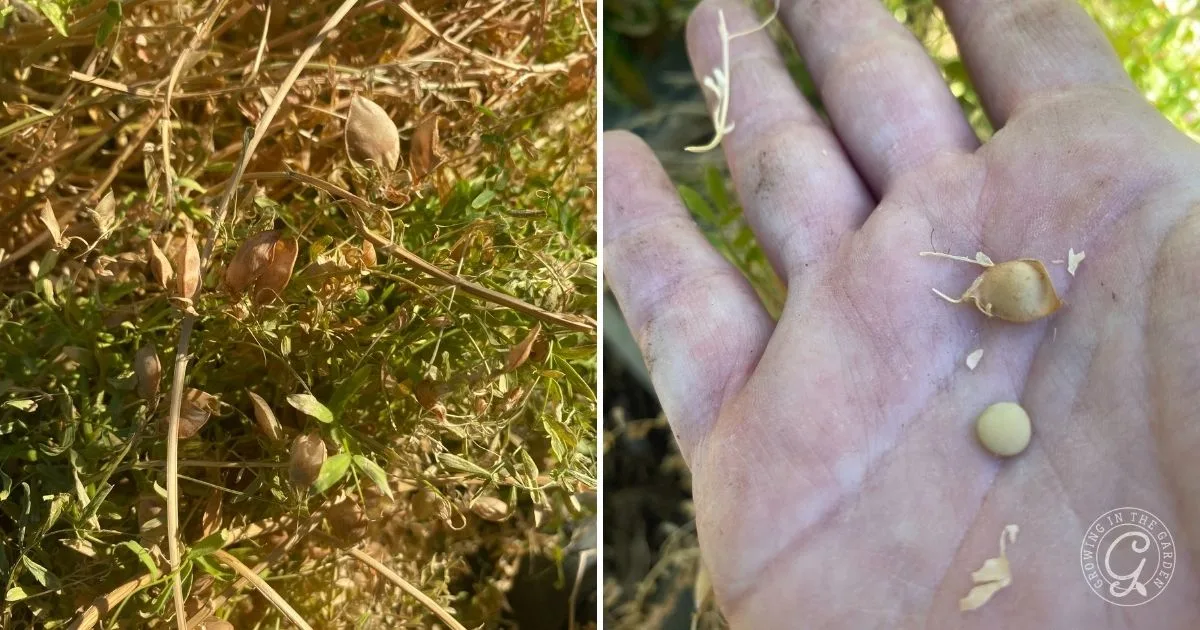
- Harvest lentils when most pods are tan and use proper storage techniques to maintain freshness.
Table of contents
How much can you expect to harvest?
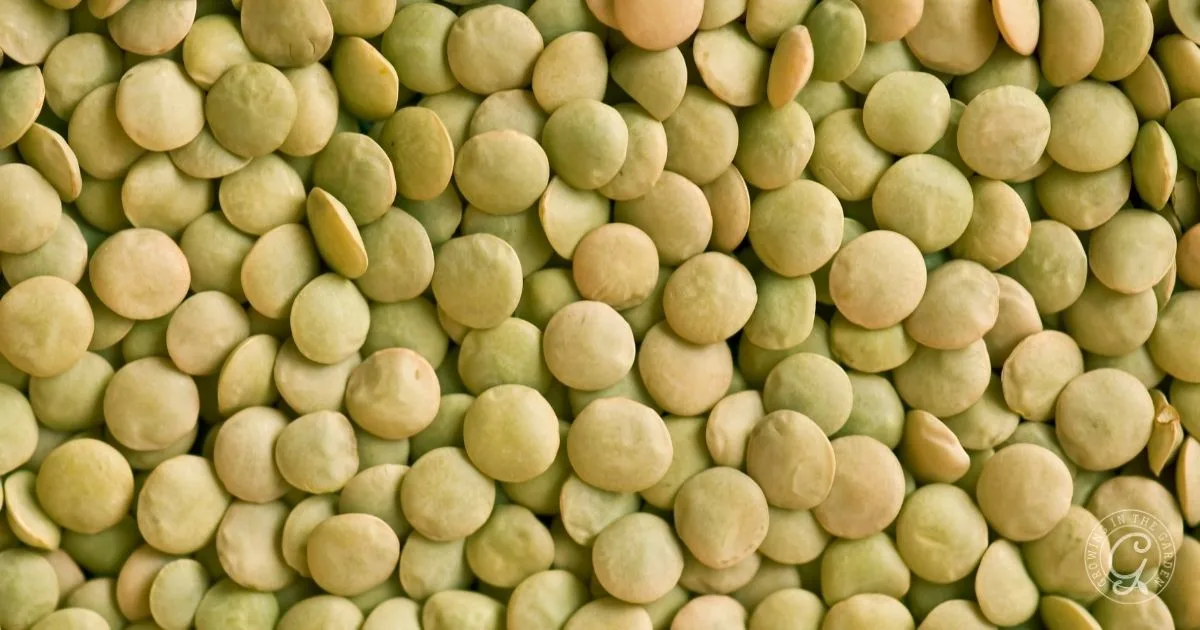
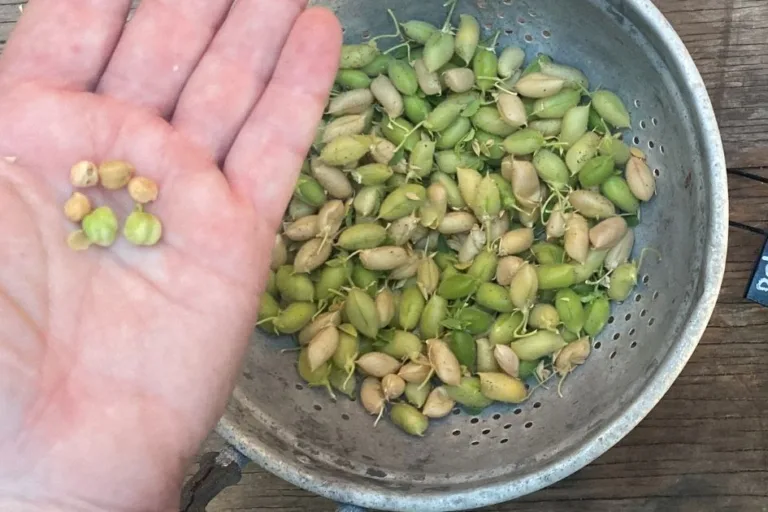
Lentils are fun to grow, but they are not a high-yield crop in a small home garden. Each pod usually holds 1–3 lentils (often 2), so you need a decent-sized patch to end up with a substantial pantry amount.
A realistic dry yield for home gardeners is about 0.3 to 0.7 ounces (8 to 20 g) of dried lentils per square foot under good conditions. That means:
- 10 sq ft: about 3–7 oz (85–200 g)
- 25 sq ft: about 8–18 oz (225–510 g), roughly ½–1+ lb
- 50 sq ft: about 1–2+ lb (450–900+ g)
- 100 sq ft: about 2–4+ lb (0.9–1.8+ kg)
If your goal is to harvest about 1 pound of dried lentils, plan to grow roughly 25–50 square feet (more if you have a wet spring, high weed pressure, or birds).
Tip: Even in a small space, lentils are still worth growing. Treat them like a “try it and learn” crop, enjoy the process, and consider them a bonus harvest rather than a staple that replaces store-bought bags.
When to plant lentils
General planting dates (most climates)
Lentils are a cool-season legume. Plant them so they grow and flower during mild weather.
- Colder climates: Sow early spring, about 1–2 weeks before your last spring frost (lentil seedlings tolerate frost well).
- Mild winter, hot summer climates: Lentils do best as a fall through winter crop so they can mature before intense heat.
Low desert of Arizona planting dates
Low desert tip: Plant earlier in that window when you can. Lentils need time to grow through winter and then dry down in late spring.
Best site and soil for lentils
- Sun: Full sun
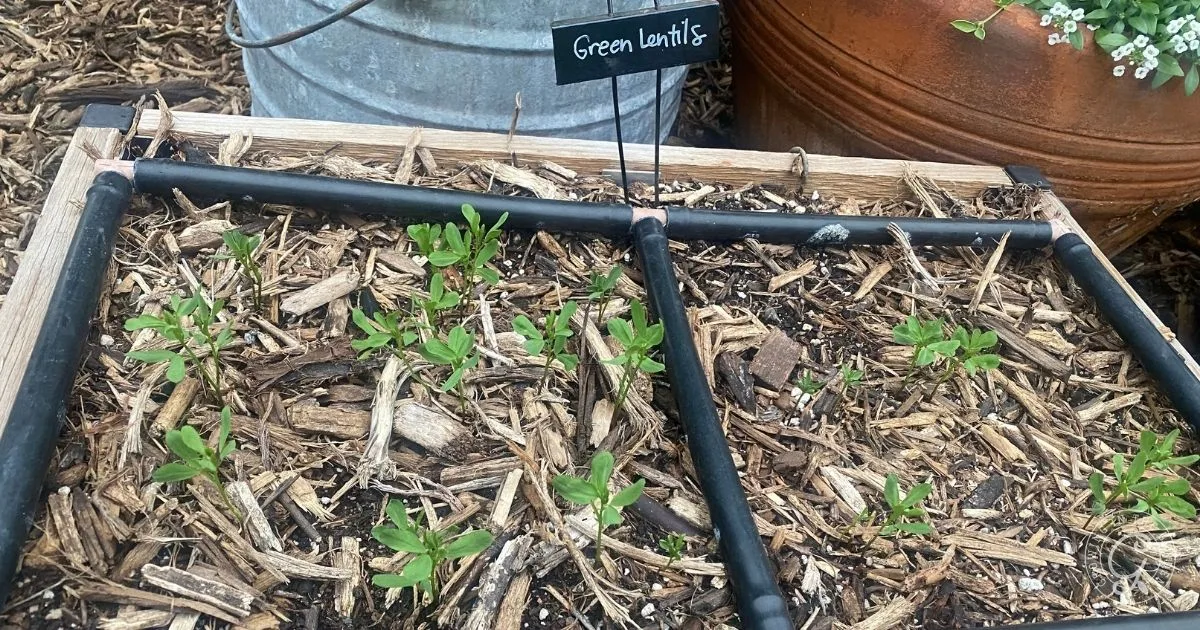
- Soil: Light, well-drained soil is ideal. Lentils really struggle in waterlogged soil.
- Soil pH: Lentils do well in slightly acidic to mildly alkaline soil. A range around 6.0–8.0 is generally a good target.
If your soil is heavy or stays wet, grow lentils in a raised bed or amend with compost to improve structure and drainage.
How to plant lentils
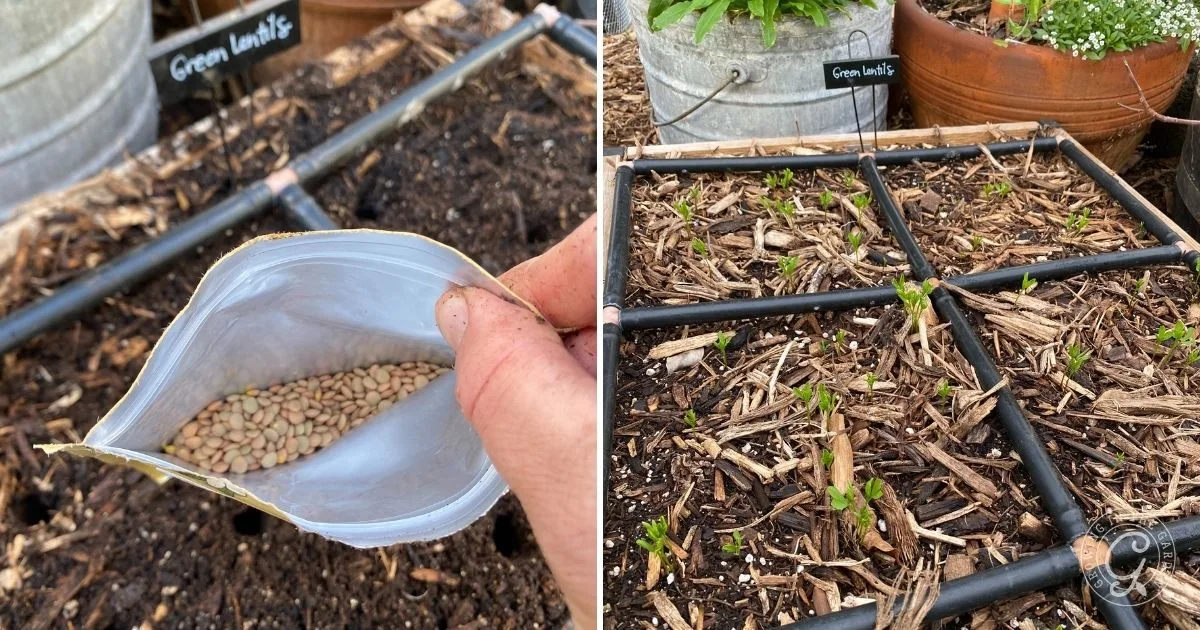
- Sow seeds 1 inch deep (2.5 cm).
- Space seeds 3–4 inches apart (8–10 cm).
- Row spacing: about 18 inches (45 cm) makes weeding and harvesting easier.
- Plant a patch, not a single row. Lentils are small plants and yield is better when you grow several plants together.
Do lentils need a trellis?
Usually no. Lentils have pea-like tendrils but stay relatively short (often around 12–20 inches tall / 30–50 cm). They may lean on neighboring plants, so a simple low support (a few twigs, short pea fence, or growing in a patch) can help keep pods off the soil, especially if you irrigate often.
Optional but helpful: inoculate your seeds
Lentils are legumes, and they can fix nitrogen with the right bacteria. If you have never grown lentils (or peas) in that bed, an inoculant labeled for peas, vetch, and lentils can improve growth and yield.
Watering and care
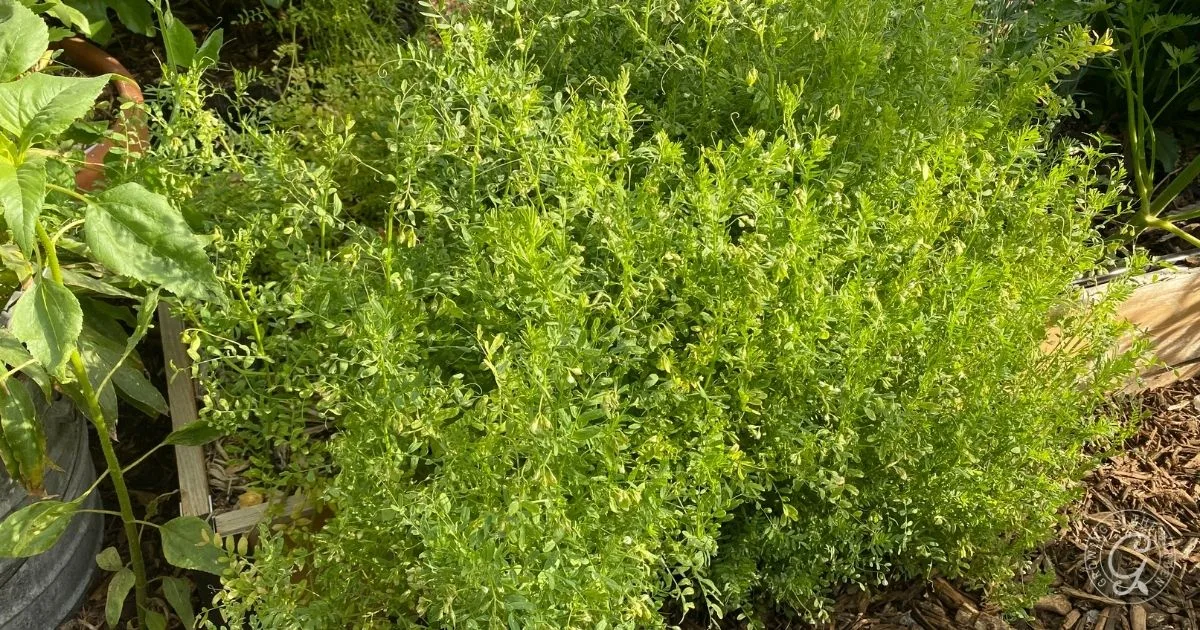
Lentils are low-maintenance once established, but a few habits make a big difference.
- Water to establish: Keep soil lightly moist until seeds sprout.
- Then water deeply, less often: Lentils prefer a soak and dry cycle rather than constantly wet soil.
- Mulch or weed regularly: Lentils do not compete well with weeds. A light mulch layer helps.
- Back off watering once pods start drying: When you see pods beginning to turn from green to tan, reduce watering to help the plant finish drying down.
Low desert tip: Lentils can handle winter cold well, but if an unusual hard freeze hits while plants are flowering, cover them overnight.
Days to maturity and what to expect
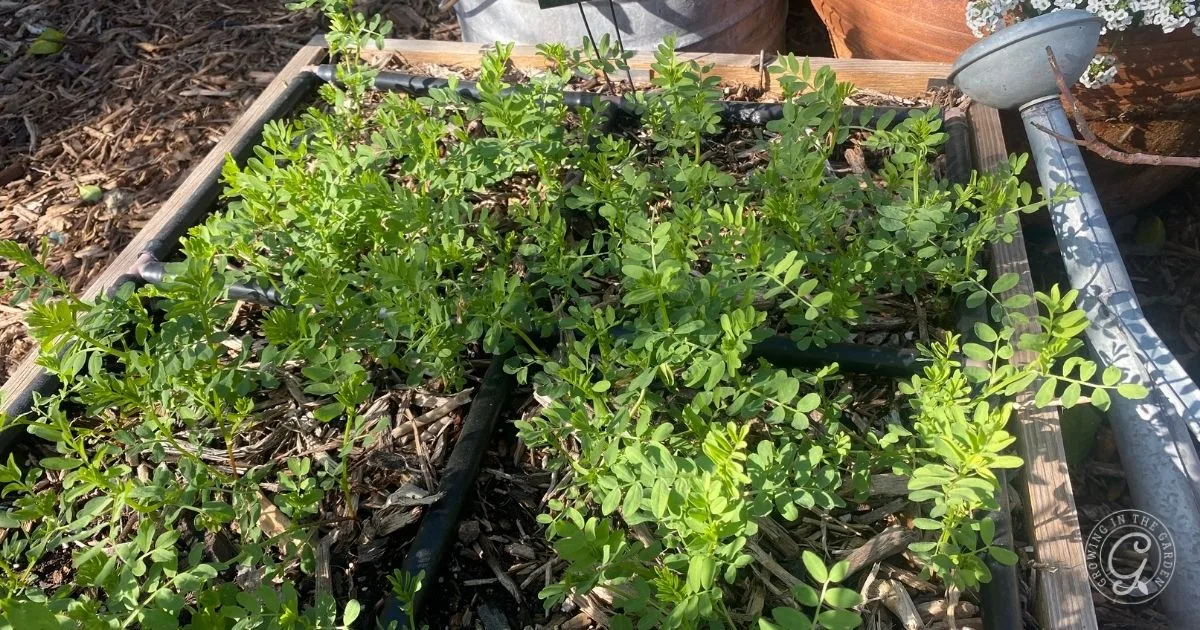
You will see a wide range depending on temperatures:
- In warm, steady spring conditions, lentils can mature in roughly 80–110 days.
- In a fall-winter planting (like the low desert), it often takes longer because growth slows in the coldest months. Plan for something closer to 100–150 days from sowing to dry harvest.
Common problems
Powdery mildew
Mildew shows up most often when plants are crowded or airflow is poor. Learn more about how to treat powdery mildew in this guide.
Seedling rot or weak stands
This is almost always tied to soil staying too wet.
- Improve drainage
- Avoid overwatering early on
- Do not plant in a low spot that holds water
Weevils in stored lentils
If weevils are a recurring issue, rotate planting areas and avoid growing lentils where peas or beans were grown recently. After harvest, freeze well-dried pods or lentils briefly to kill any weevils, then store them airtight.
Rainy or humid weather near harvest
Wet weather when pods are drying can cause mature seeds to sprout or rot in the pods. If rain is forecast and most plants are ready, pull the plants and dry them under cover with good airflow.
Harvesting and storing lentils
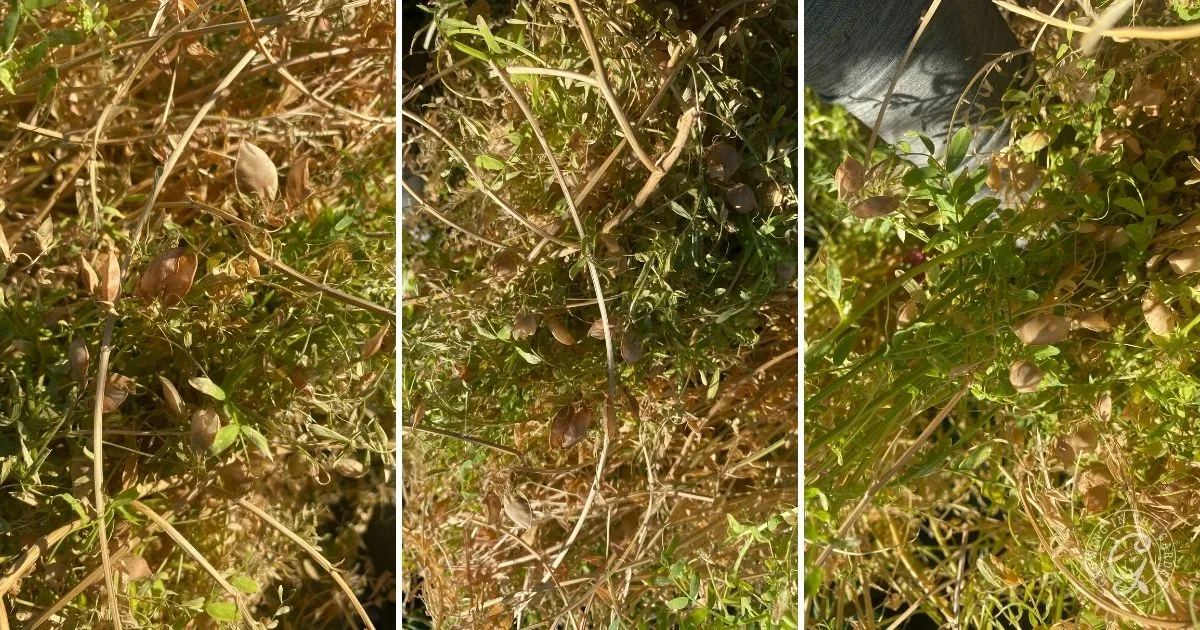
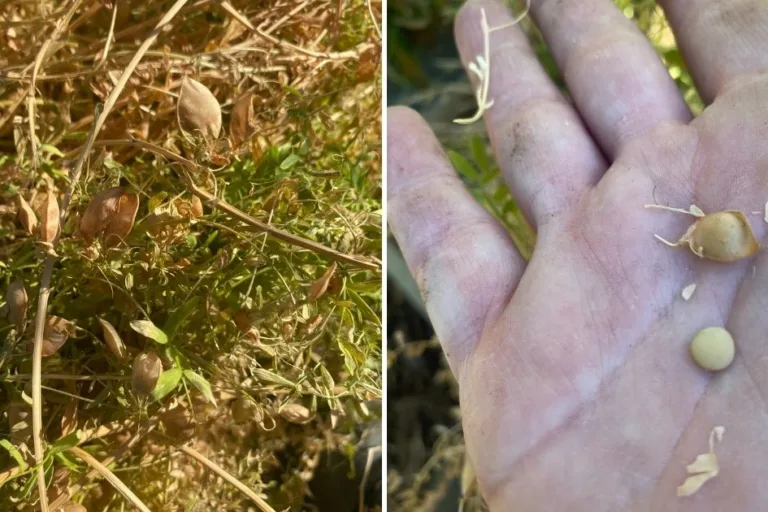
Lentils mature from the bottom of the plant upward.
Harvest timing:
- Plants begin to yellow and dry
- The bottom pods turn brown/tan
- Seeds inside rattle slightly when shaken
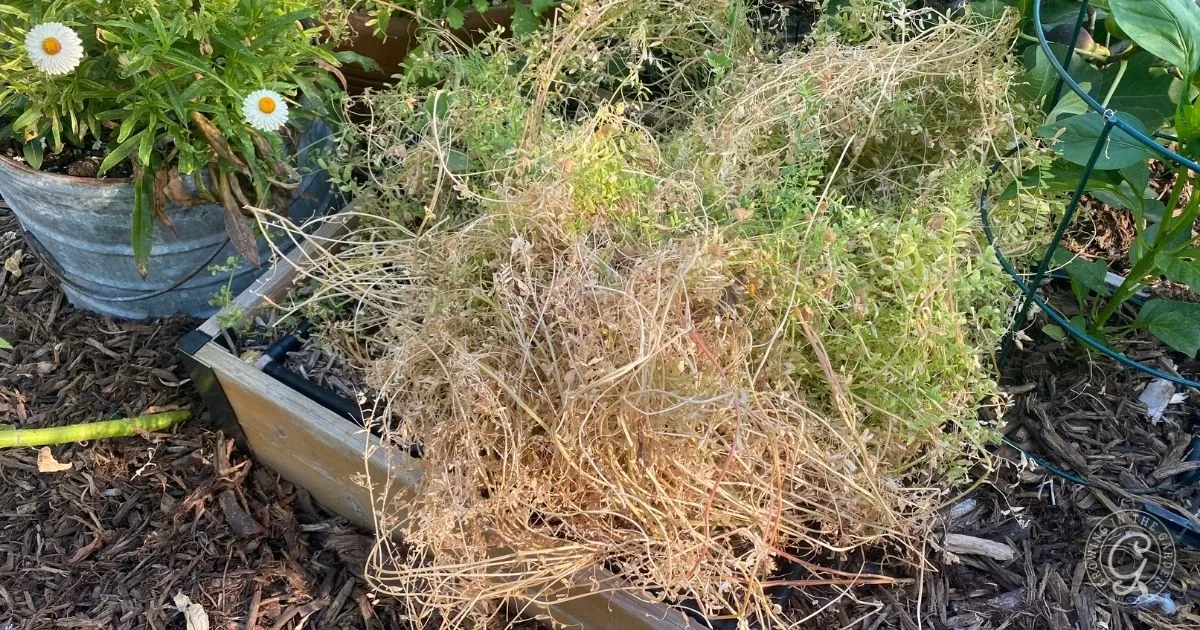
How to harvest:
- Pull plants (or cut off at soil level if possible) when most foliage has died back, and most pods are tan.
- Hang plants (roots up) or lay them out in a dry, well-ventilated spot to finish drying.
- Once pods are fully dry, shell them.
Storage tip: Lentils often keep better stored in their pods until you are ready to use them. For long-term storage, keep them very dry and store in airtight jars or containers.
Varieties to grow
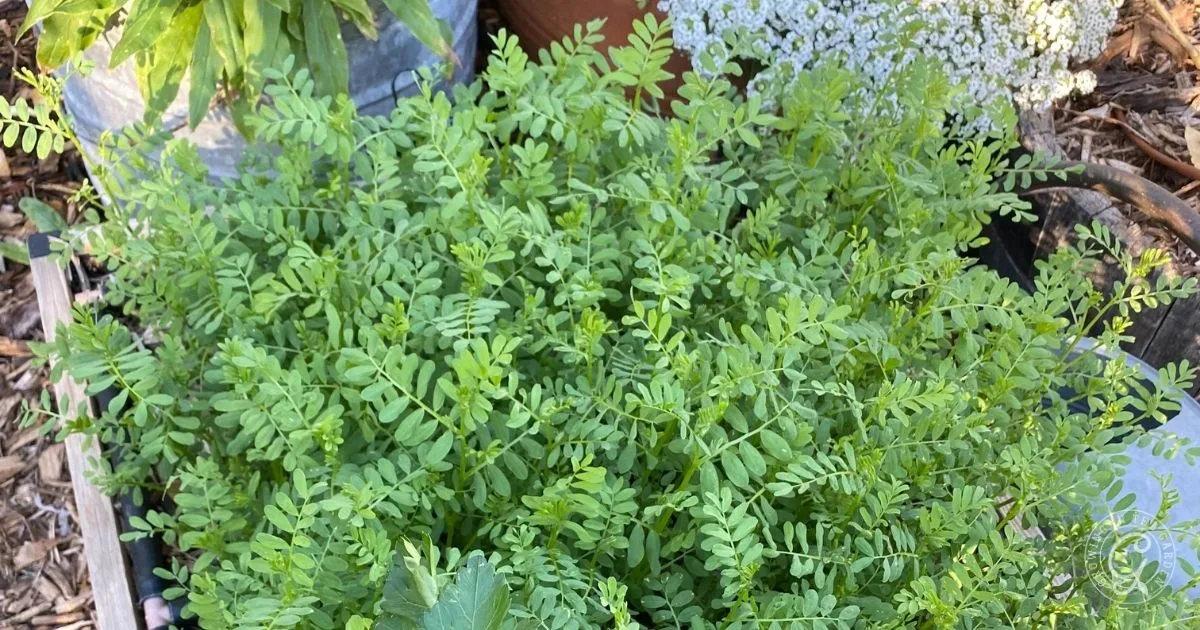
If you are unsure, start with any lentil sold as “seed for planting” from a reliable source.
- French green (Puy-style)
- Black (beluga-type)
- Brown or green
- Red lentils (these are often sold split for cooking, but you can grow whole red-type lentils if you buy seed meant for planting)
Want to grow another bean, too?
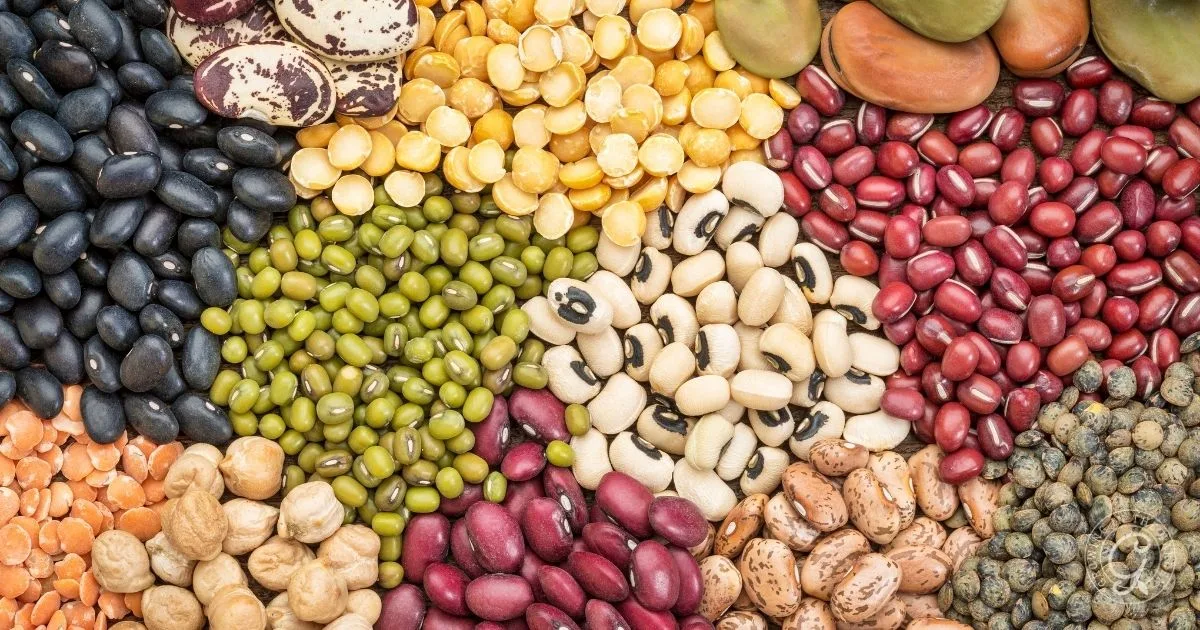
Lentils are a cool-season legume. If you want to add another type of “bean,” match it to the season:
- Cool-season: fava beans and garbanzo
- Mild-season (spring/fall): green beans and borlotti beans
- Warm-season (more heat-tolerant warm-season option): lima beans
- Hot-season: black-eyed peas, asparagus beans (yardlong beans), and tepary beans

Leave a comment on How to Grow Lentils: A Beginner’s Guide