
How to Grow Peanuts: Complete Guide & Tips for Hot Climates
Growing peanuts in the garden is rewarding and fun. The first time I realized peanuts grew underground was while volunteering at the Master Gardener Demonstration Garden. Pam Perry pulled up a peanut plant, revealing clusters of peanuts beneath the soil. I was shocked and excited to discover that peanuts thrive in warm (even hot!) climates. Now, I’m always happy when I can find space in my garden to plant this crowd-pleasing crop.
In this guide, you’ll learn how to grow peanuts successfully, with planting tips, raised bed advice, and special considerations for hot, dry climates like Arizona.
What We Will Cover
How Do Peanuts Grow?
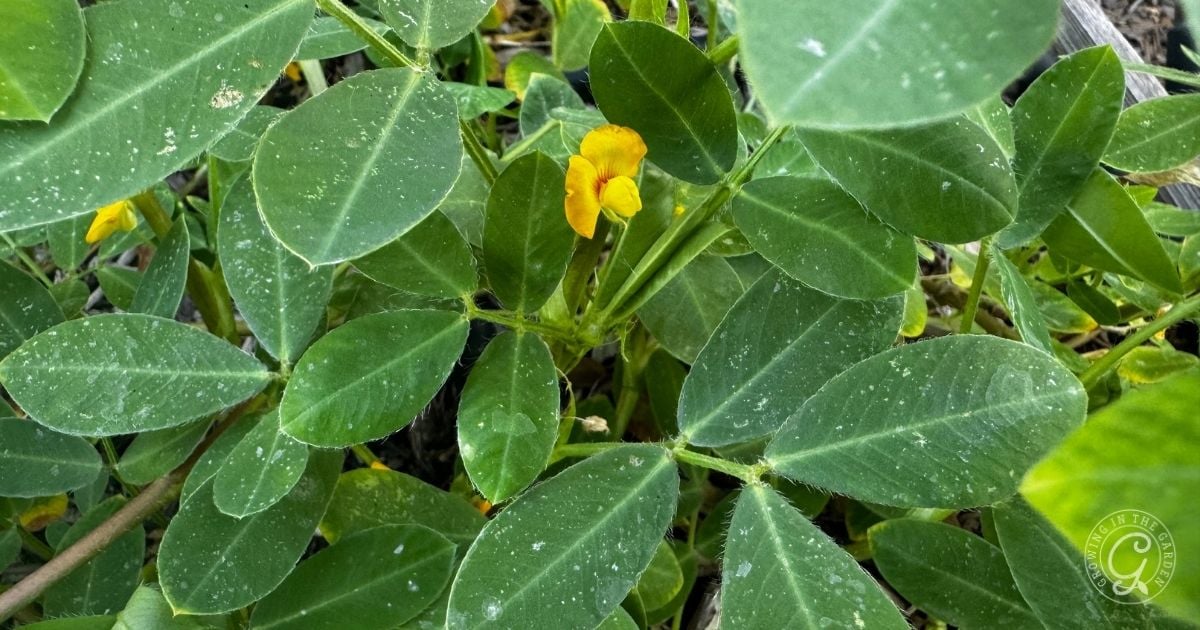
Peanuts are unique legumes. Unlike beans and peas, peanuts flower above ground but form their seeds underground. After flowering, the peanut plant produces a peg—a slender stem that grows downward into the soil. Peanuts develop at the end of these pegs beneath the soil surface. Each peg forms one peanut pod, so loose soil is essential for a good harvest.
How to Grow Peanuts: General Growing Information
When to Plant Peanuts
- General Timing: Plant peanuts after the last frost when soil temperatures are consistently above 65°F (18°C).
- Low Desert (Arizona) Planting Dates: Mid-March through April is ideal.
Find more planting dates for Arizona in my Low Desert Planting Guides and Calendars.
Where to Plant Peanuts
Peanuts need full sun (at least 6–8 hours daily). Choose a spot with loose, sandy loam soil rich in organic matter.
Soil Preparation
Incorporate compost and worm castings into your soil to improve soil structure and nutrient availability. Avoid high-nitrogen fertilizers. Peanuts are legumes and can fix their own nitrogen. Too much nitrogen will give you lots of leaves but fewer peanuts. You can use my favorite soil mix.
Planting Peanuts
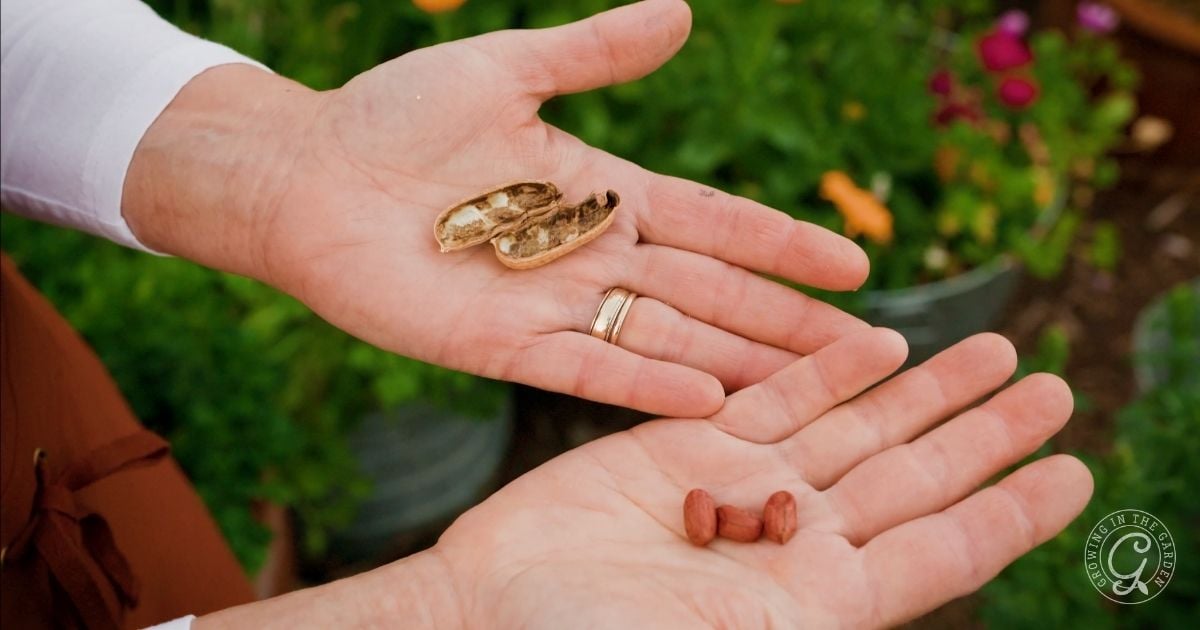
Remove peanuts gently from their shells before planting, taking care not to damage the seeds to ensure the best germination.
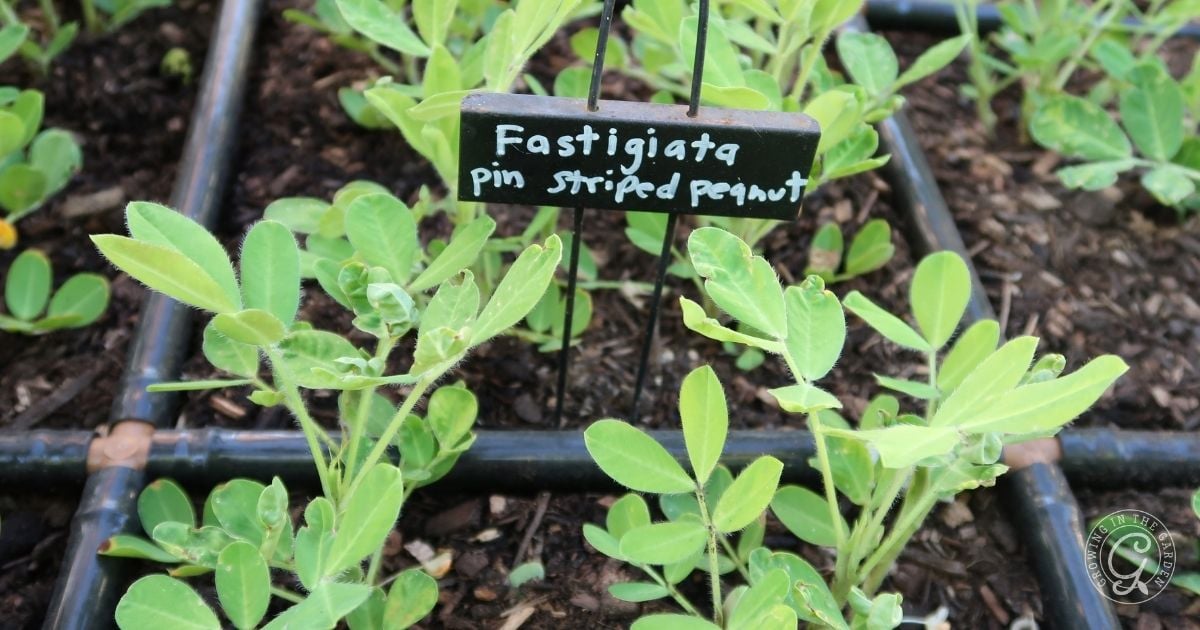
- Plant peanuts 1½–2 inches (4–5 cm) deep.
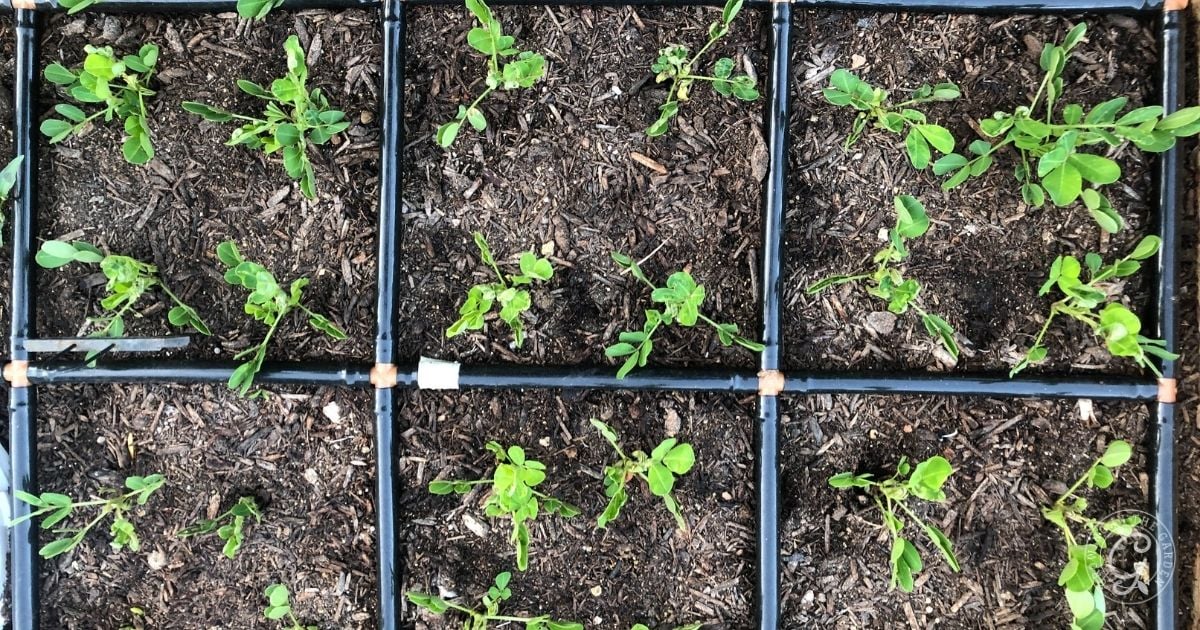
- Space seeds 6–8 inches (15–20 cm) apart in rows about 24–36 inches (61–91 cm) apart.
- Square Foot Gardening Spacing: Plant 1-4 peanut plants per square foot.
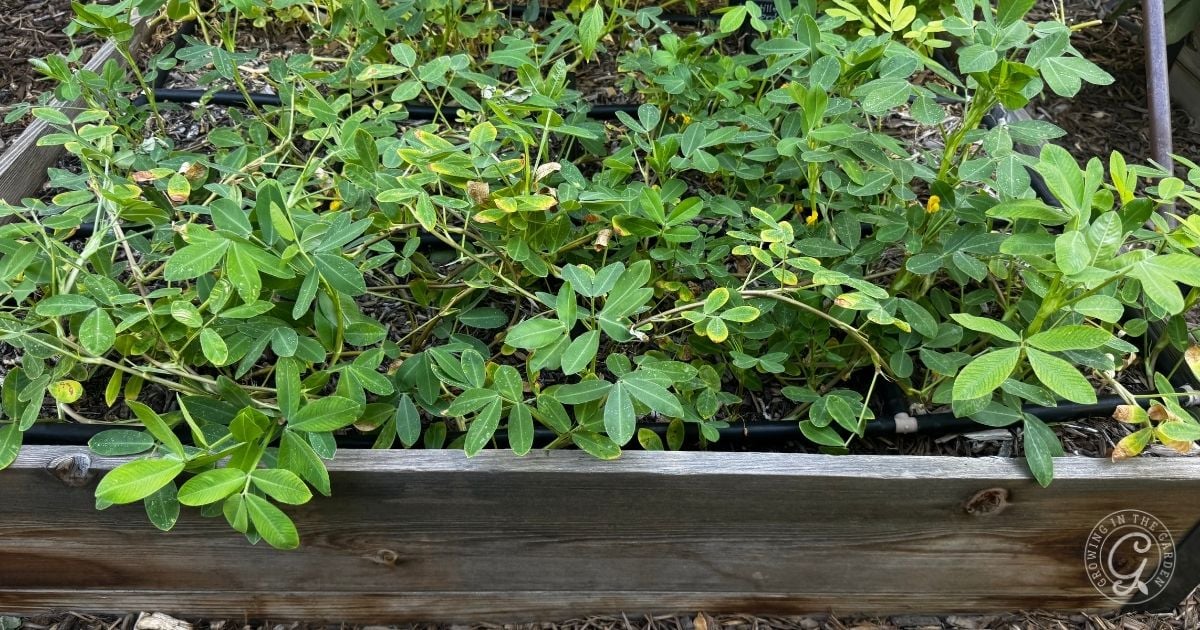
Peanut plants grow about 12–18 inches tall and spread about 2–3 feet.
Extra Tips for Growing Peanuts in Hot, Dry Climates
- Mulching is Essential: Apply a light layer of straw or organic mulch around your plants to conserve moisture, regulate soil temperature, and minimize weed growth. Avoid heavy mulching directly beneath the plant to ensure peanut pegs can easily reach the soil.
- Water Wisely: Peanuts require consistent moisture but don’t like waterlogged conditions. Use drip irrigation or ollas to provide steady moisture at the root zone.
- Shade Cloth: Consider using shade cloth during extreme heat waves to prevent plants from getting stressed.
Apply mulch lightly around peanut plants to conserve moisture, but avoid piling it too deeply under the plants so the peanut pegs can easily reach the soil. As plants grow and begin flowering, gently mound soil around the base of the plant if needed to help pegs reach the soil.
Consistent moisture is crucial, especially when peanuts are flowering and pegs are developing. Water deeply, then let the top inch of soil dry slightly before watering again. Avoid soggy soil.
Growing Peanuts in Raised Beds
- Ensure your raised beds are at least 12 inches (30 cm) deep to give peanuts adequate room to grow.
- Keep soil loose and avoid stepping on it to prevent compaction.
- Raised beds make harvesting peanuts easier and protect them from pests like gophers and moles.
- Ensure plants have enough room for pegs to reach down into the soil.
Harvesting and Roasting Peanuts
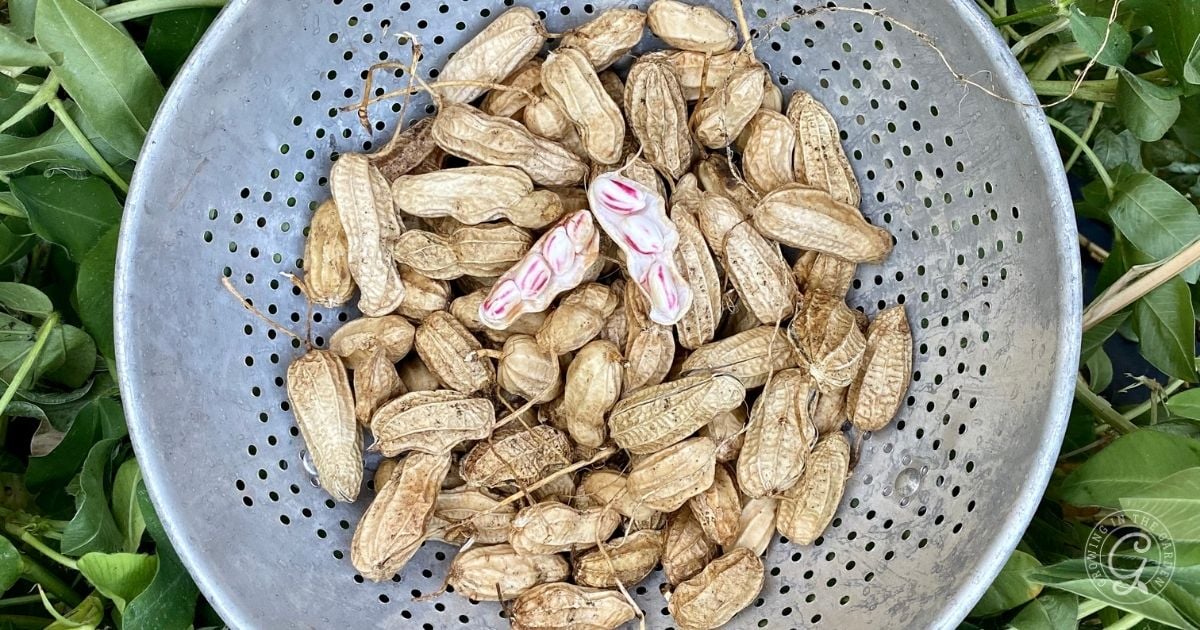
Peanuts generally take about 120–150 days from planting to harvest. Peanuts are ready to harvest when the leaves begin to yellow, usually around 4–5 months after planting. When you see the leaves start to yellow, dig down and see if the peanuts are fully formed. If they aren’t, leave them in the ground longer to develop.
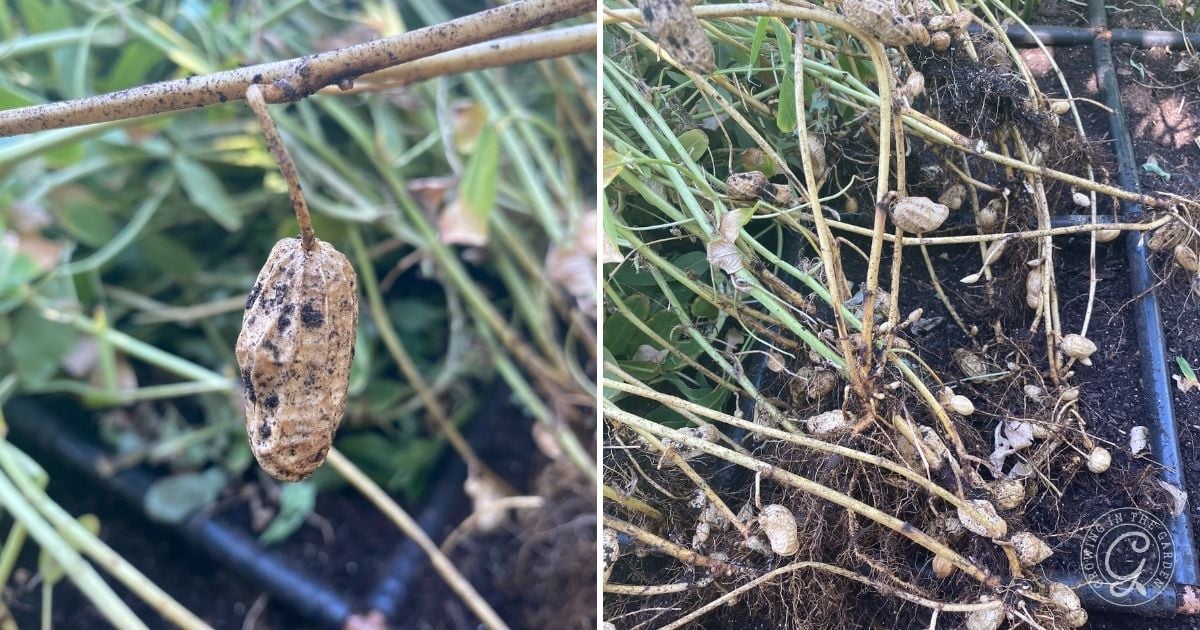
To harvest, carefully loosen the soil around the plant, lift it out, and shake off excess dirt. Try to harvest leaving the peanuts attached to the plant. Don’t remove the peanuts from the plant after harvesting. Allow peanuts to dry on the plant for 2–3 weeks in a dry, shaded area.
Wait! Don’t remove the peanuts from the plant after harvesting. Let them stay attached until fully dry (2-3 weeks). This improves flavor and extends storage life.
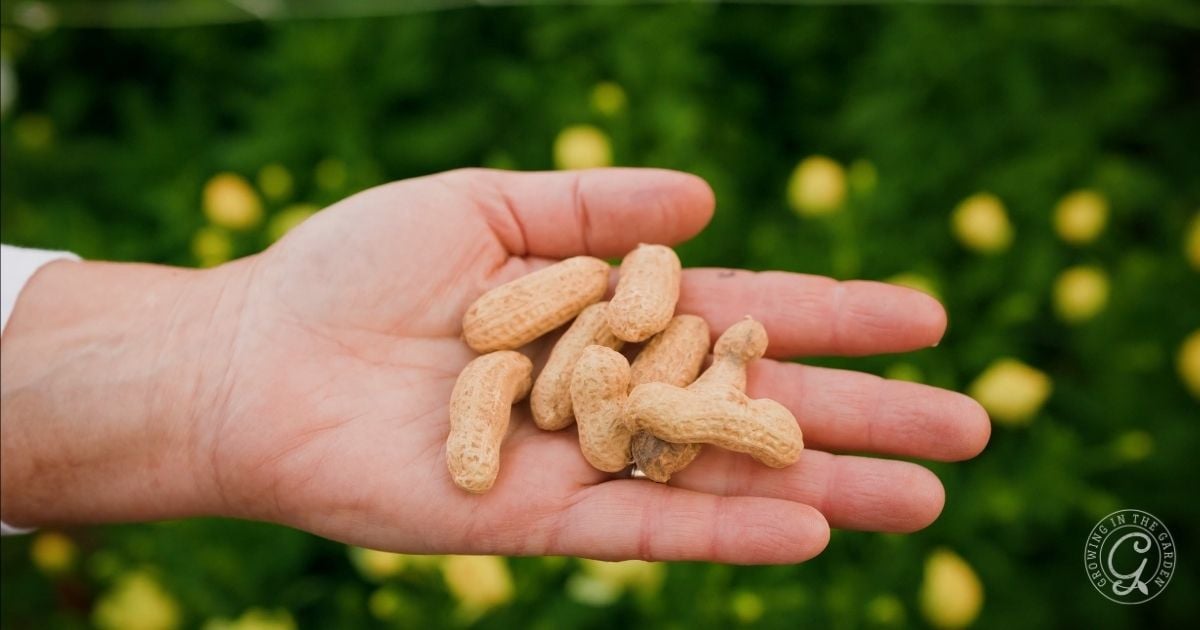
After your peanuts have dried for 2–3 weeks, they’re ready to roast and enjoy.
Remove the peanuts from the plant and shell them if desired. You can roast peanuts in the shell or shelled.
To roast in the oven:
- Preheat oven to 350°F
- Spread peanuts in a single layer on a baking sheet
- Roast for 15–25 minutes, stirring once or twice
- Roast until they reach your desired level of crunch
Let peanuts cool before eating. The flavor continues to develop as they cool. If roasting shelled peanuts, the roasting time is usually shorter. Keep an eye on them so they don’t burn.
FAQ: How to Grow Peanuts
Yes, peanuts can be grown in large containers or grow bags that are at least 18 inches (46 cm) deep.
Typically 120 – 150 days
Loose, sandy loam soil enriched with compost is ideal.
Yes, at least 6–8 hours per day.
Yes, as long as they are raw and not roasted or salted.
Each plant can yield between 25–50 peanuts, depending on growing conditions.
After the last frost when the soil temperature is consistently above 65°F (18°C). Mid-March through April for Arizona gardeners.
Harvest when leaves turn yellow and begin to wither.
Not effectively; they require direct sun and space for the pegs to bury underground.
Peanuts need consistent moisture but not overly wet conditions. Aim for about 1 inch (2.5 cm) of water weekly, more in extreme heat.
Yes, remove the shell carefully without damaging the seeds before planting to improve germination rates.
Enjoy growing this fascinating and delicious crop in your garden!
If this post was helpful, please share it.

Do peanuts need to be fed while growing, i.e. fertilizer? Thanks!
No. You don’t need to fertilize them.
I just dug up my plants and found a few peanuts have started to sprout. It’s fall now so I assume they aren’t going to make it. Toss them?
What should I do differently next time?
Sounds like they need more time. If you can leave them in longer then they may do better. If you are freezing soon, it may not work. Plant earlier in the season if possible next time.
Hi, Angela! Where do you find your peanut seeds? (I’m also in the Valley.) Is there are variety that you’ve found that grows best, here? Thanks!
In the Valley look for peanut varieties with a shorter “days to harvest” time so they can mature before our summer heat or fall cool-down. Spanish and Valencia types often do well here because they mature faster than Virginia or Runner types.
There are many varieties of peanuts, which would grow best in the Phoenix area? I cant wait to have a go at it. Thanks
In the Phoenix area, look for peanut varieties with a shorter “days to harvest” time so they can mature before our summer heat or fall cool-down. Spanish and Valencia types often do well here because they mature faster than Virginia or Runner types.