
How to Grow Purple Hyacinth Bean Vine
Purple hyacinth bean vine is one of my favorite vines to grow from seed. One plant can quickly cover a trellis, and it gives me beautiful fall blooms when much of my garden is still recovering from summer. This year, I have it growing in several spots: over my arch trellises, on my moongate, and in containers. The butterflies and hummingbirds love it, too.
You do have to be patient for the flowers, though. My vines grow all summer but don’t bloom much until temperatures cool down in fall. If you’re growing it in the low desert, expect lots of leaves in August and flowers later in the season.
Key Takeaways: Purple Hyacinth Bean Vine
- In the low desert, plant seeds from mid-March through the end of May, once nights stay above 50ºF.
- Put the trellis or support in at planting time. The roots don’t like being disturbed.
- Expect the vine to stall in summer. Most of the blooms come once temperatures drop in fall, and they keep going until frost.
- Thrips are the main pest I deal with on this vine.
- Save seeds once the pods turn silvery and feel full. I don’t recommend eating them.
- Frost kills the vine, so most low desert gardeners grow it as an annual.
What We’ll Cover:
- What Is Purple Hyacinth Bean Vine?
- When Do I Plant Hyacinth Bean Vine in the Low Desert?
- Where I Grow Hyacinth Bean Vine in My Garden
- How I Plant Hyacinth Bean Seeds
- What Hyacinth Bean Vine Does in Summer
- Why My Hyacinth Bean Vine Blooms in Fall
- Dealing With Thrips on Hyacinth Bean Vine
- How I Save Hyacinth Bean Seeds
- Can You Eat Hyacinth Beans?
- What Happens to Hyacinth Bean Vine in Winter?
- Purple Hyacinth Bean Vine FAQs
What Is Purple Hyacinth Bean Vine?
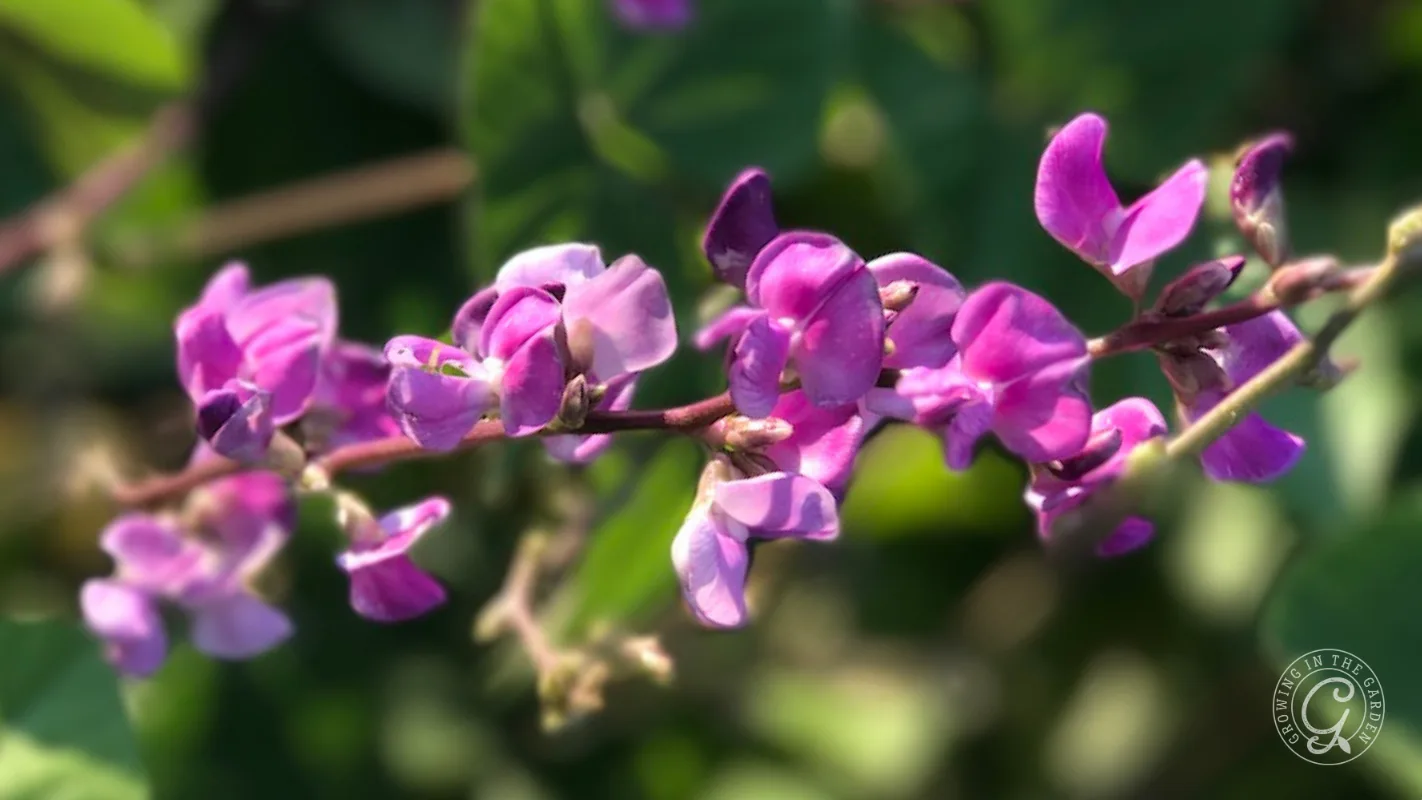
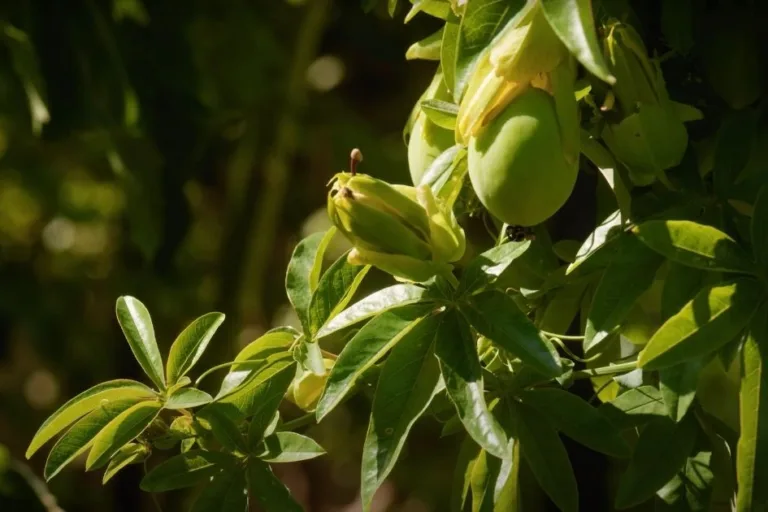
Purple hyacinth bean (Lablab purpureus) is a fast-growing vine in the legume family, along with garden beans and peas. It has purple stems, purple-tinted leaves, clusters of pink and purple flowers, and glossy purple seed pods. Most U.S. gardeners grow it as an ornamental.
Hyacinth bean has an interesting history. Thomas Jefferson may have grown it at Monticello in the early 1800s, and you can still see it growing in Monticello’s gardens today.
Hyacinth bean is a tender perennial in zones 10 and 11, but it’s usually grown as an annual in colder climates. Here in Mesa, frost can kill the vine, so I usually plant new seeds each spring. During our warmer winters, though, it may survive and grow again the following year.
When Do I Plant Hyacinth Bean Vine in the Low Desert?
I plant from mid-March through the end of May. The seeds want warm soil, and nights should stay above 50ºF. If the weather turns cold after you plant, the seedlings slow down or stop growing until it warms up again.
Planing by May gives it time to get established before the heat of summer. Earlier planting gives it more time to cover the support before the fall bloom starts. My guides on what to plant in March in the low desert and what to plant in May in Arizona list other seeds to plant during the same window.
In colder climates, plant after your last frost once nights stay above 50ºF. You can also start seeds indoors a few weeks early, but plant them outside while they’re still small.
Where I Grow Hyacinth Bean Vine in My Garden
Most of my hyacinth bean vines grow in full sun. A few get afternoon shade, and those do fine too. The soil needs to drain well, because the roots rot if they sit in soggy soil.
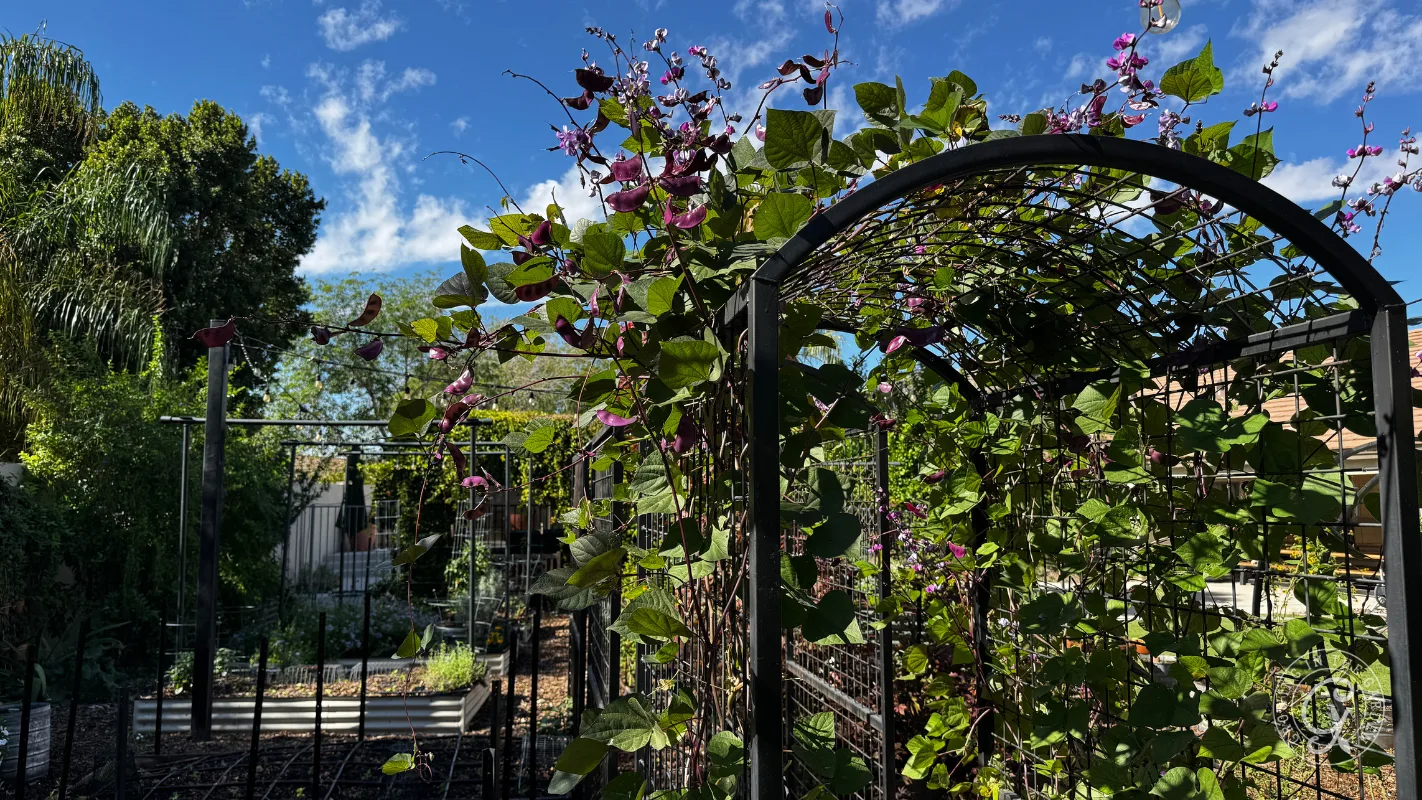
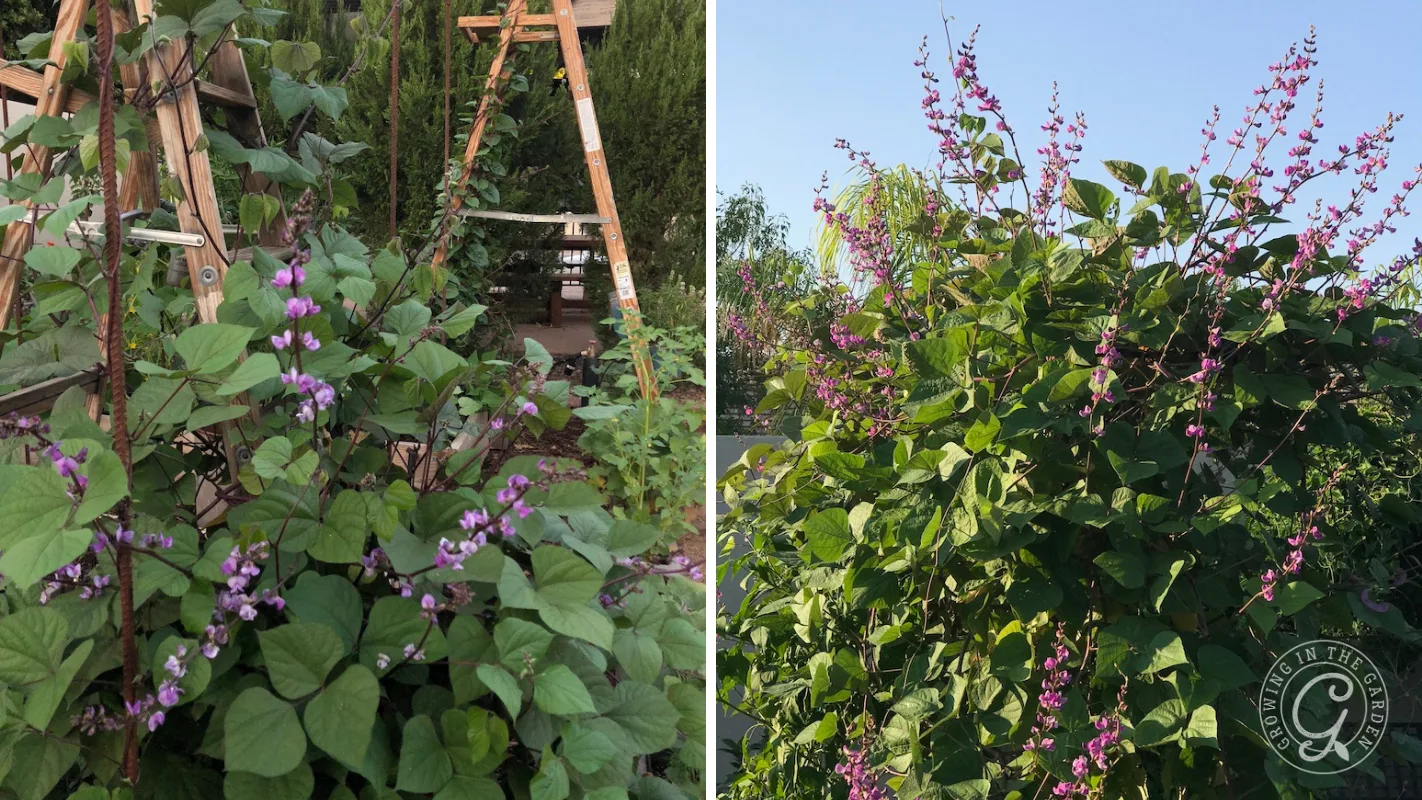
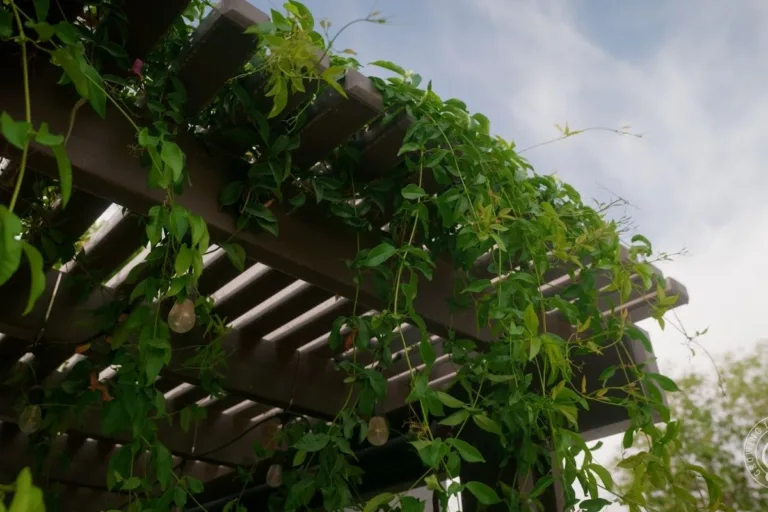
Give it something to climb. Mine grow 10 to 20 feet in a season and a few feet wide. I grow them over the arch trellises along my garden walkways and on my moongate, and a couple of plants are enough to cover an arch. The tendrils sometimes need a nudge to find the support, but once they grab on, they twine up, across, and sometimes back down again.
Put the support in when you plant. The roots grow close to the surface and don’t like being disturbed, which puts hyacinth bean on my list of crops with sensitive roots that do best sown in place.
This year I’m also growing hyacinth bean in containers. Use a pot at least 12 inches deep and give the vine a tall, sturdy support from the start. My post on which size container to use explains how pot size affects watering and root space.
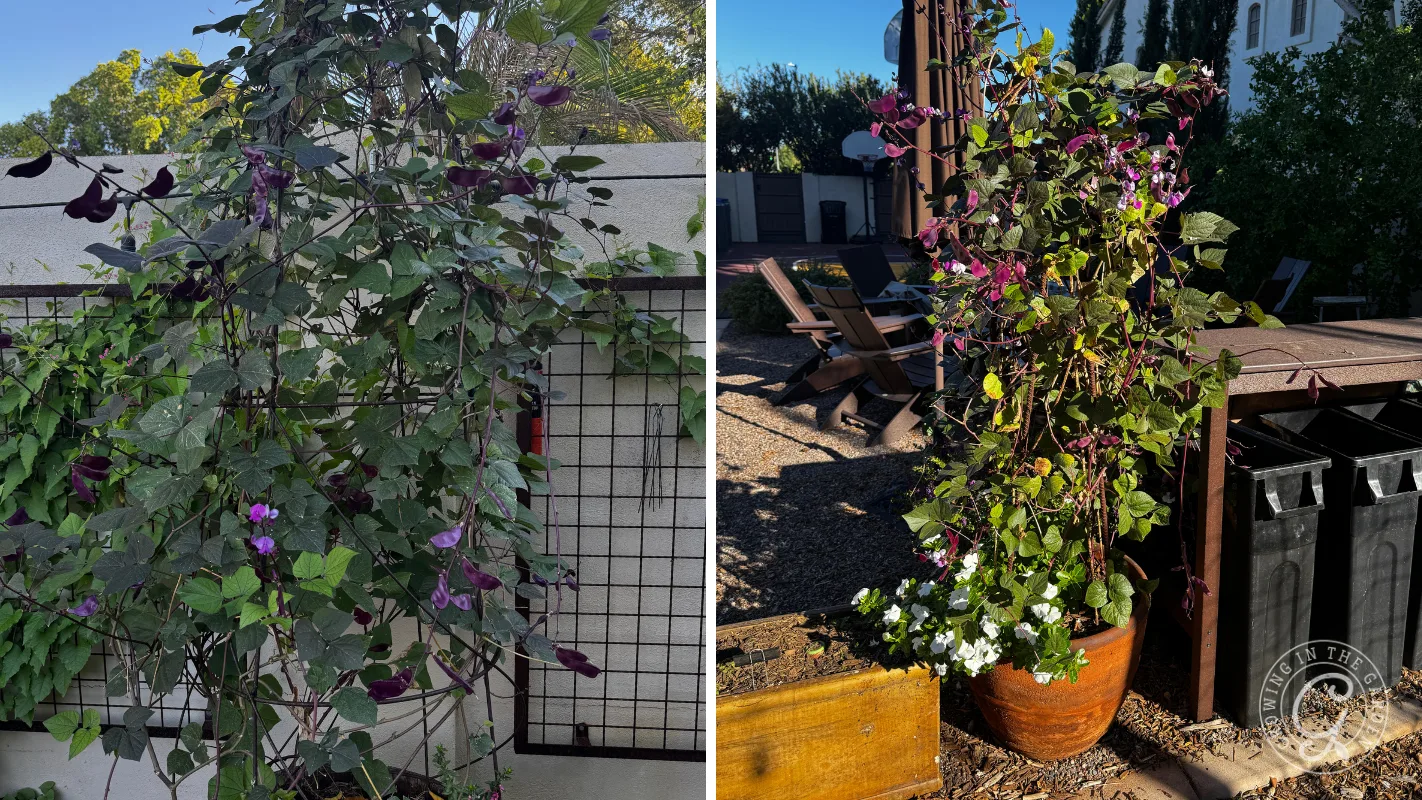
If you’re still deciding which vine fits which spot in your yard, my guide to what vine to plant where in your low desert yard matches vines to full sun, hot walls, arbors, and shade.
How I Plant Hyacinth Bean Seeds
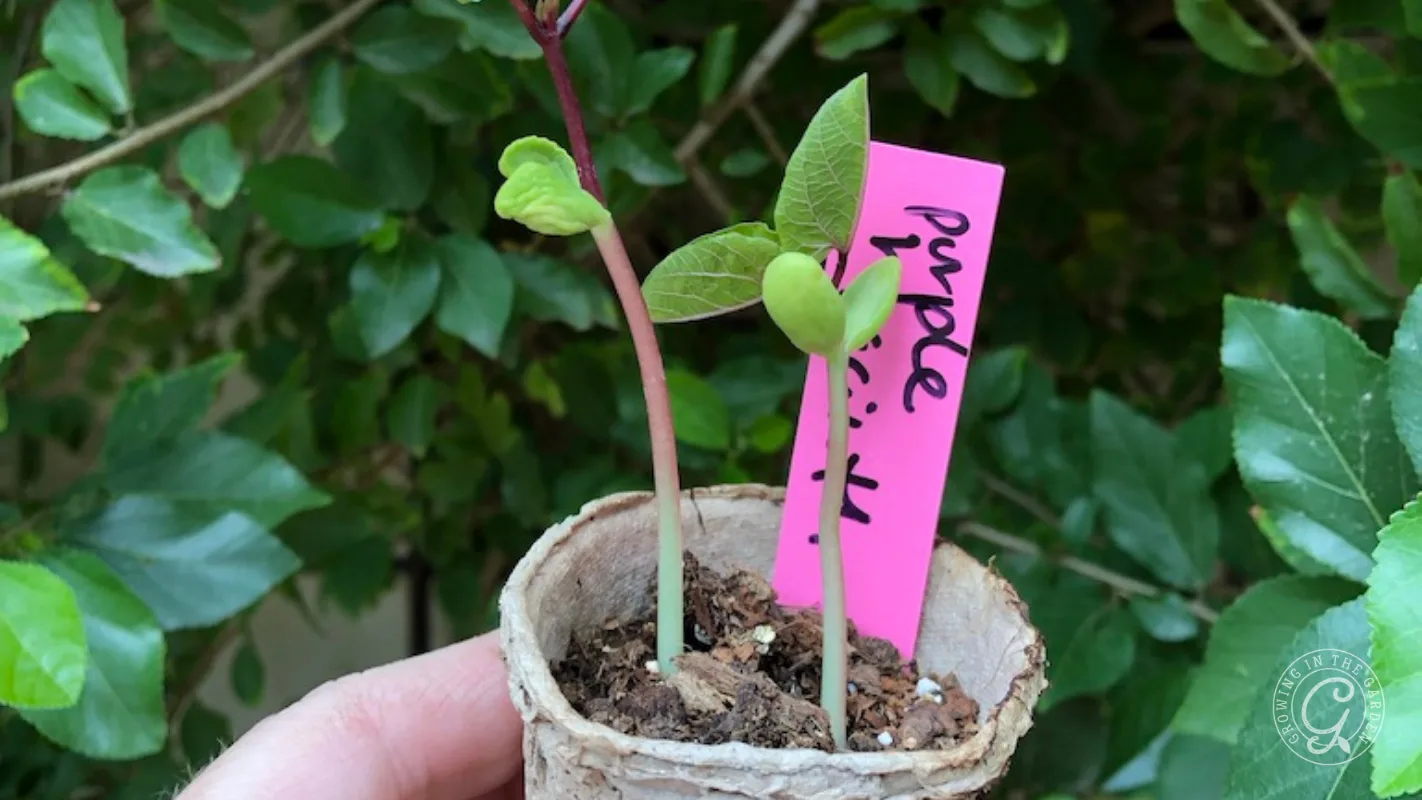
I direct sow hyacinth bean seeds in the garden. Plant them 1 inch deep and 6 inches apart, then keep the soil moist until the seedlings come up. My post on planting seeds directly outside has tips on soil prep and watering. My favorite hyacinth bean seeds are from Renee’s Garden.
What Hyacinth Bean Vine Does in Summer
In my garden, hyacinth bean seems to slow down a bit in summer. It stays alive, but growth slows way down during our hot summers. I don’t usually cover mine with shade cloth. Some of my vines get natural afternoon shade, and the ones in full sun hang on too. Keep watering consistent so the soil doesn’t dry out completely, and keep it alive until fall.
Why My Hyacinth Bean Vine Blooms in Fall
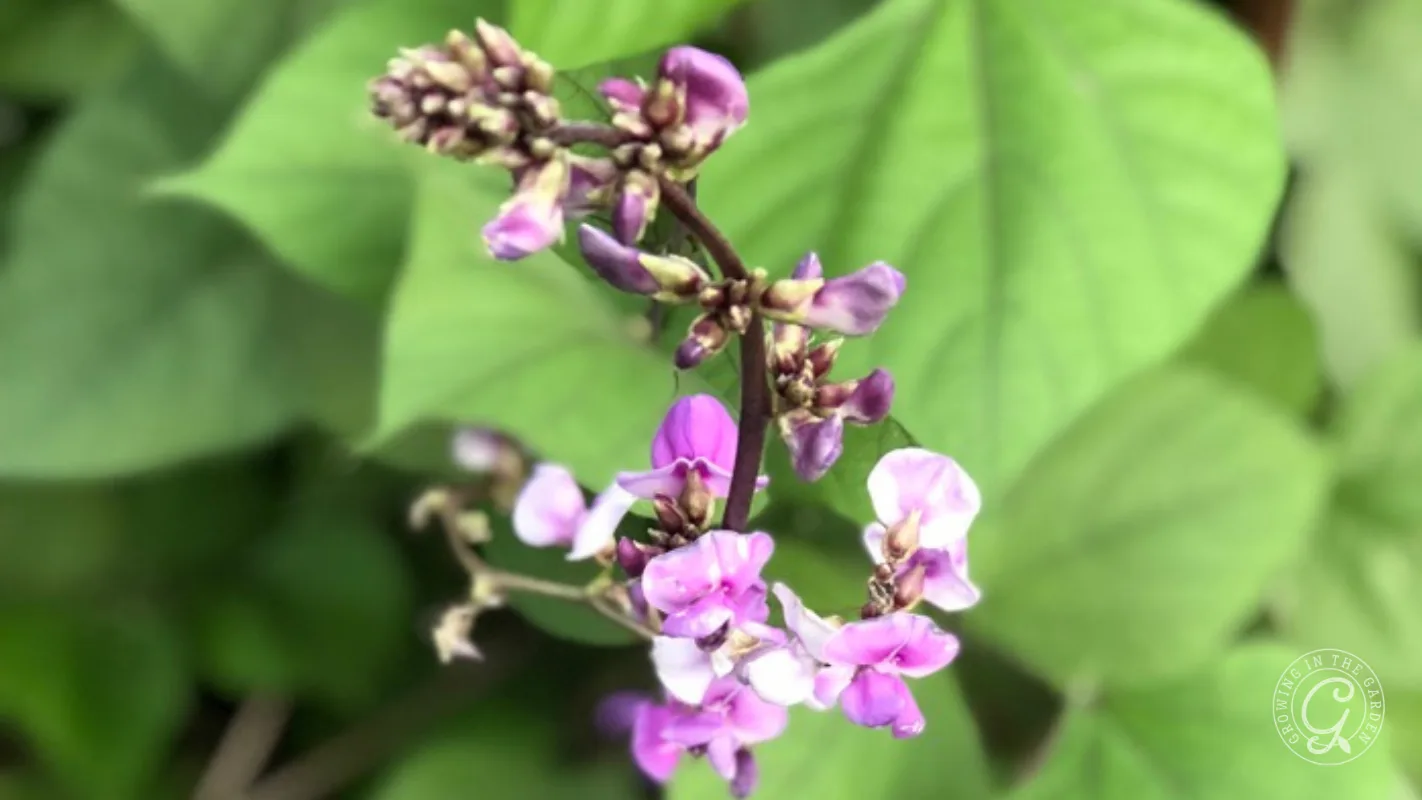
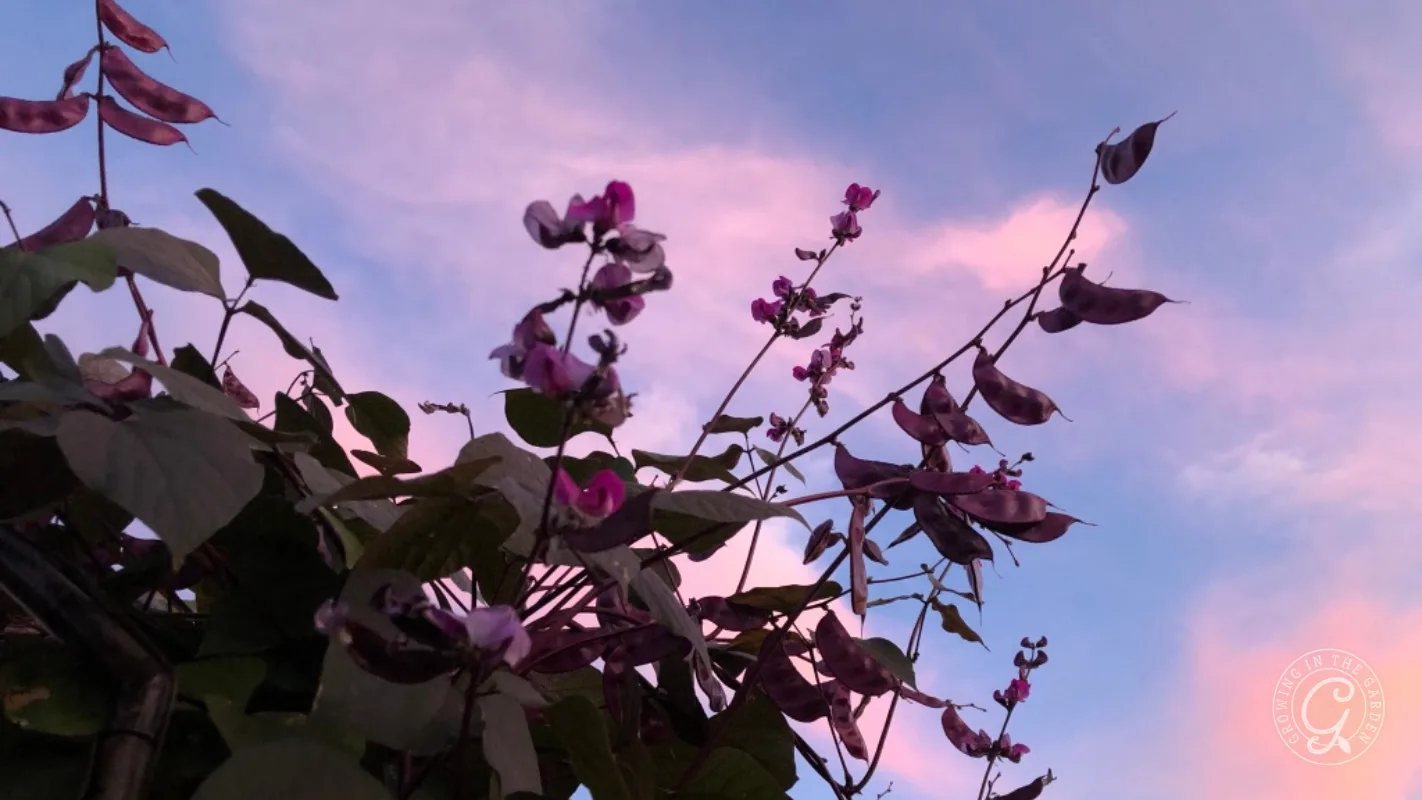
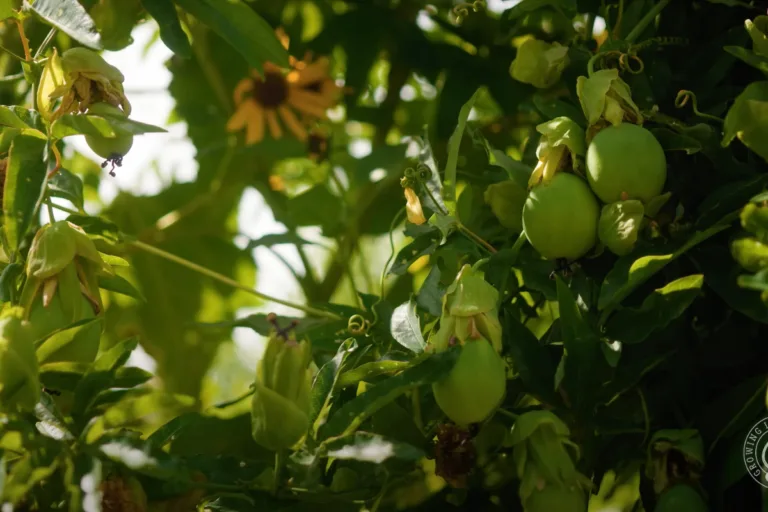
My vines start blooming once temperatures come down in fall, and they keep blooming until frost. The flowers grow on long stalks that stick out from the vine. Each cluster looks like a spray of pea blossoms, and the flowers turn into flat, glossy purple pods. The pods are as pretty as the flowers.
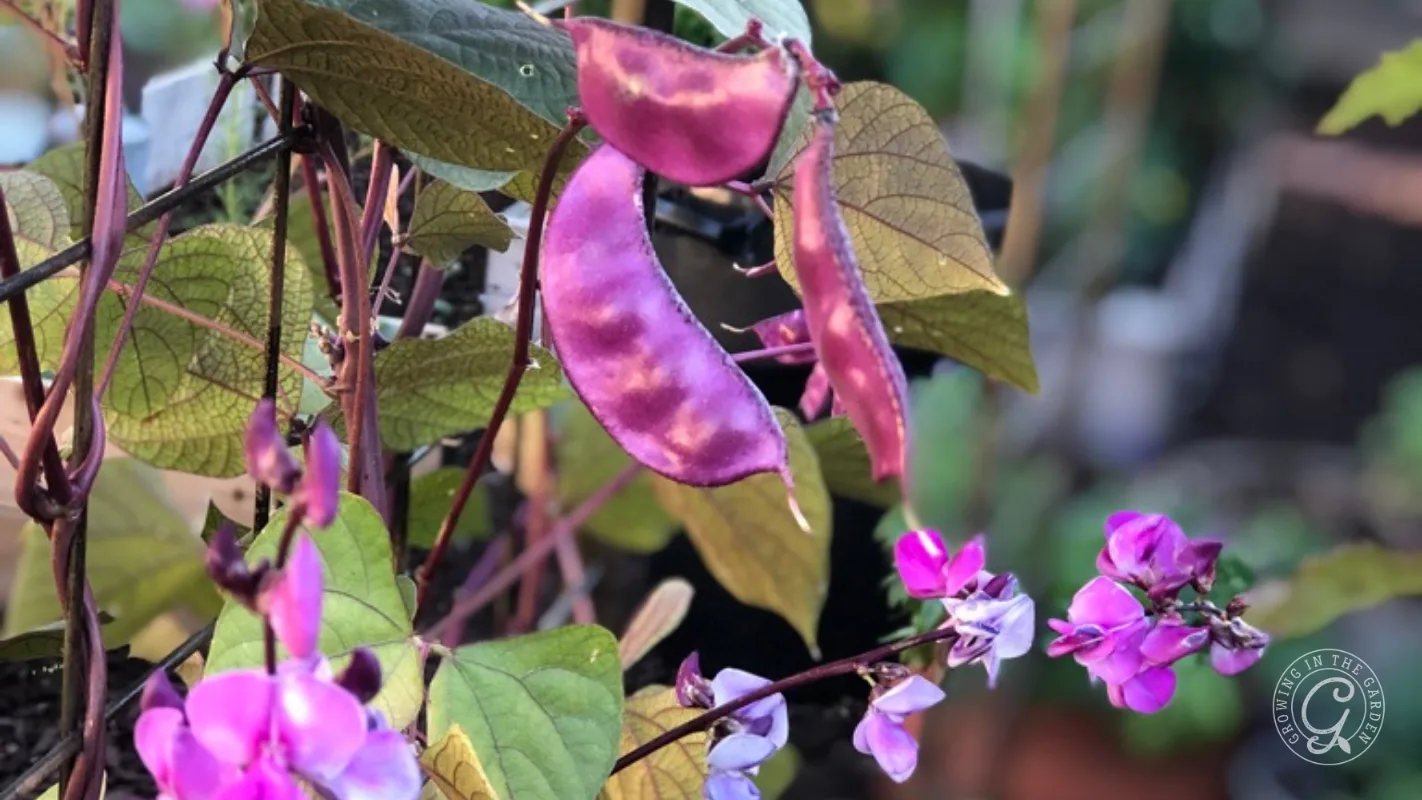
This is when the butterflies and hummingbirds show up. If you’re planting for pollinators, my butterfly and hummingbird guides have more plants they visit.
If your vine is healthy but hasn’t bloomed, give it time. One year my blooms didn’t start until late September. A vine in too much shade may also bloom less.
Using Hyacinth Bean in Flower Arrangements
Both the flower stems and pods work in arrangements. Cut flower stems when about 80% of the flowers on the stem are open. For pods, cut when about half the pods on the stem are shiny and firm. I share more tips in my post on quick and easy garden flower arrangements.
Dealing With Thrips on Hyacinth Bean Vine
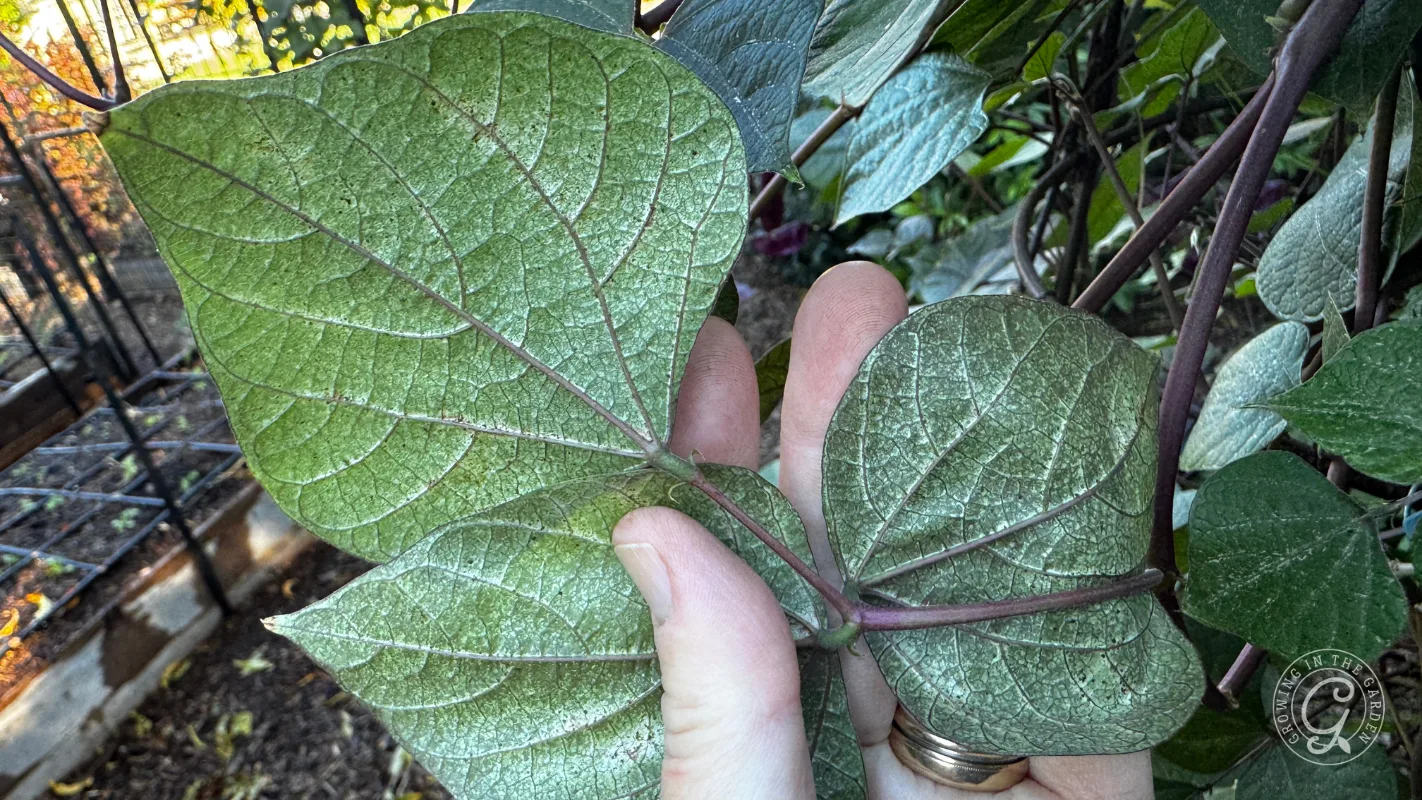
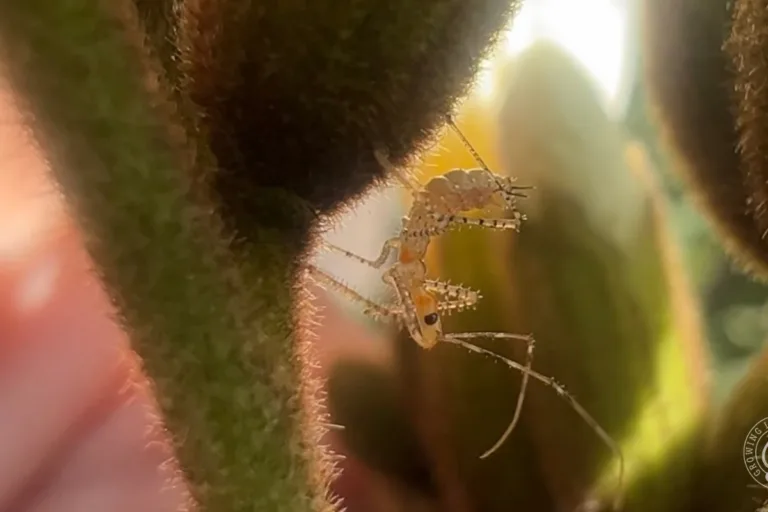
Thrips are the worst pest I’ve had on hyacinth bean, and they were especially troublesome this summer. Thrips damage shows up as scarred, silvery, or bronzed leaves. I picked off the worst-affected leaves and sprayed Captain Jack’s Deadbug Brew a couple of times while the thrips were bad, before the vines started blooming. The vines look good this fall.
Captain Jack’s contains spinosad, which can harm bees while it’s wet. Spraying before the flowers open keeps it off the blooms the bees and butterflies visit. Follow the label directions. My post on how to get rid of thrips covers more ways to manage them.
How I Save Hyacinth Bean Seeds
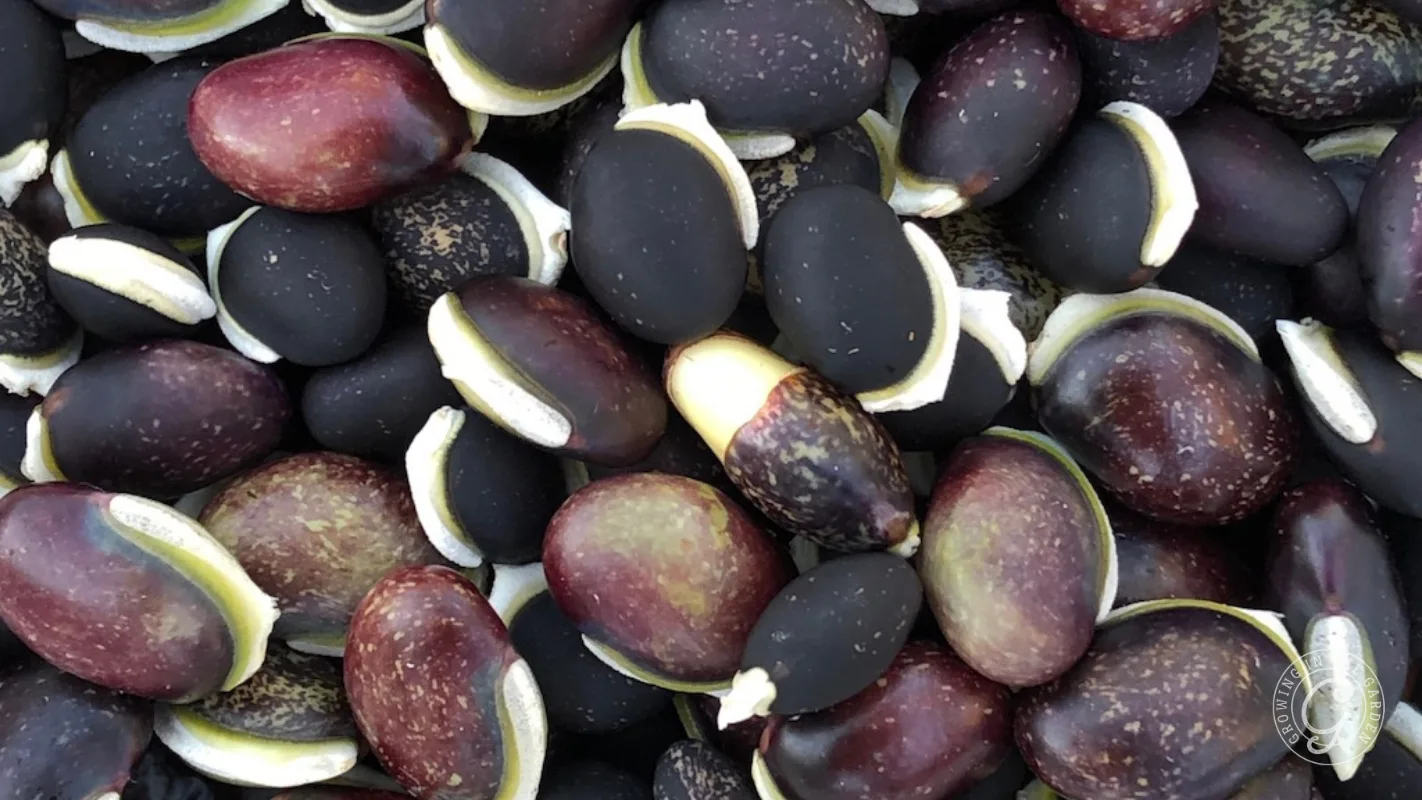
Let the pods develop fully on the plant. They’re ready when they change from bright purple to a silvery purple and feel full and firm. Pick the pods and let them finish drying in a paper sack, then shell out the seeds. Once the seeds are completely dry, store them in a lidded glass jar.
If you’d rather leave the seeds in the pods until spring, that works too. Make sure the pods are completely dry first so they don’t mold.
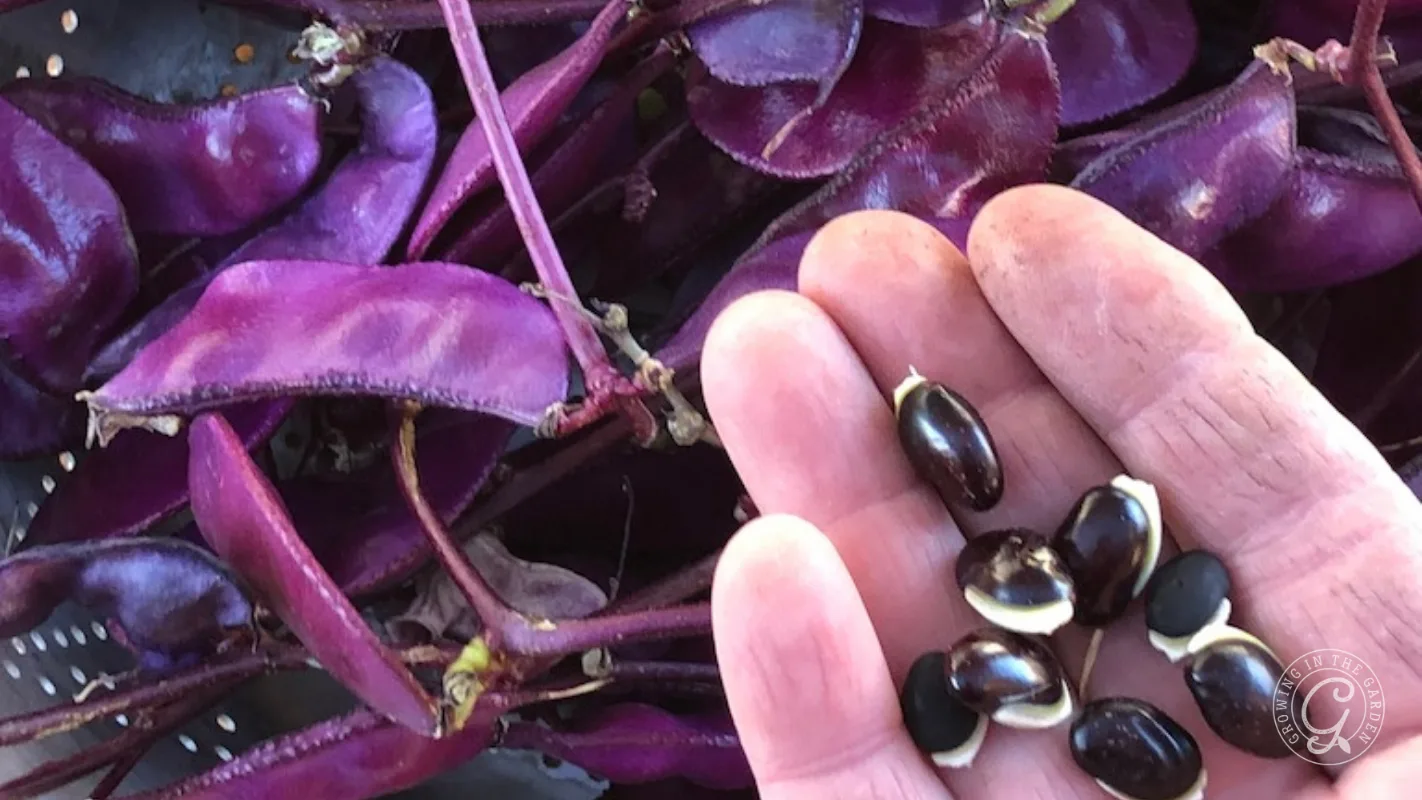
I share my seeds at seed swaps and at my classes. Hyacinth bean seeds are big and easy to handle, so they’re a good one to give to new gardeners. My post on saving seeds from your garden covers the basics. I keep mine labeled and dry with these seed storage and organization tips.
Can You Eat Hyacinth Beans?
I don’t recommend eating them. Hyacinth bean is grown as a food crop in parts of Asia and Africa, but the dried seeds contain a cyanogenic glycoside, and NC State Extension notes they’re only safe after thorough boiling with several changes of water. I don’t know enough about preparing them to tell you how to do it safely, so I grow mine for the flowers, the pods, and the seeds I share.
What Happens to Hyacinth Bean Vine in Winter?
Frost kills hyacinth bean vine. I usually take mine out and replant from seed in spring. This year I’m experimenting. Our winters seem to be trending warmer, so I’m leaving some vines in to see what happens.
If you like this vine, try a few other vines that grow easily from seed. My Arizona vine planting guide for low desert vines has more options for every season.
Purple Hyacinth Bean Vine FAQs
I’m not sure how toxic the plant is to pets. The seeds contain a cyanogenic glycoside, so if your dog or cat tends to chew on plants or pods, check with your vet or choose a different vine.
In zones 10 and 11, it can grow as a perennial. In the low desert, frost usually kills it, so I grow it as an annual and replant from seed each spring.
In hot climates, give it time. My vines bloom once temperatures drop in fall, and some years the first flowers don’t open until late September. Too much shade can also reduce blooms.
It can. If you leave the pods on the vine and let them drop, some seeds may sprout on their own.
Yes. I grow it in containers. Use a pot at least 12 inches deep and add a tall, sturdy support at planting time, since the roots don’t like being disturbed later.


I have a couple questions. The bean is poisonous, does that mean the plant its self would be to cats? Also you mentioned you replant every year. If you leave the seed pods in tack don’t pick them. They reseed themselves? Thank you for your time.
I’m not sure how toxic the plant is to cats. If you let them drop seeds they may reseed themselves.
My friend says to leave the harvested bean pods unopened until spring. Everything I have read says to remove the seeds from the pods, let them dry and put in paper envelopes over winter. Does it matter?
No, it doesn’t matter. I would make sure the pods have fully dried before you remove the beans. I like to store my seeds in a paper sack while they continue to dry to prevent mold. You can learn more here: https://growinginthegarden.com/how-to-save-seeds/
For the first time in over 10 years, my hyacinth bean plant did NOT BLOOM! It grew and grew nice and tall, but I never had any flowers on it. I had shared the seeds, from my plant the year before, with my daughter…her plant climbed up and around her outside stairs, but also NO BLOOMs. Does anyone have an idea what caused this? Thanks.
If it’s still growing, it may still bloom. My blooms just started this year.
Where can you buy the seeds
Renee’s Garden Seeds has them.
Any tips for vase life? They are beautiful in arrangements.
To harvest for the flowers, harvest when 80% of flowers on stem are open. For the pods, harvest when 1/2 on stem are shiny and firm to touch. You can also use the tips in this blogpost for more cut flower tips: https://growinginthegarden.com/quick-and-easy-garden-flower-arrangements/
Comment: A friend shared a single purple hyacinth bean and the result was just amazing. I have saved the pods and hope to plant several in the same spot for better trellis coverage next year.
Question: Should I be guiding the vines to get better coverage High & Low?
Question: Could it be that “dear” find the flowers as a desirable food source? One day I had flowers galore and the next it seemed something had eaten every flower it could get to.
Thank you!
The vines will climb independently but can use help if you want them to climb a particular area. I am not sure if deers avoid them or not. Deers will eat most things if hungry enough.
Hi Angela!
I just found you on YouTube then Pinterest and then your blog so I’m super excited! I’m in Queen Creek and love these purple hyacinth vines. Is there still time to plant them from seed or have I missed the window? I bought several of the hot weather plants today that you’ve recommended so I’m looking forward to pretty flowers and color in my garden! Thank you for all of the great advice.
Welcome! It’s not to late to plant the vine. Best of luck to you!
What does the vine look like during the winter months? Does it remain green or should it be cut to the ground? Also, what is the spread of the vine?
Growing in the valley is so unique and I’m soooo appreciative for all that you share and love your website and YouTube videos!
Thanks Susan. It is very cold/frost sensitive and will die. I usually replant each year. If we have a mild winter then it may not die. The vine will grow very long (10-20 feet tall) and a few feet wide.
I can do that with some, but a few are older and I don’t think they use the internet.
Thank-you for your very prompt reply! Just discovered your website and love it.
How can I print this article? I want to include it with seeds I am giving away. Thanks!
You could always share a link so they can read the article online.
Can you grow these if you have dogs? If not what vine do you recommend?
If you feel like your dogs would eat them, then you may need to choose something else. You could grow other types of vining beans that are edible.
The dogs usually don’t eat poisonous plants, they are very smart!
QUESTION: How should I store my harvested seeds over the winter?
Store in a paper sack or envelope until they are completely dry. After they are dry you can store them in a lidded glass jar.
Cook the pod before eating them. Unripe pods are popular veggie dish in South Asia.