
Native Bees in Arizona Gardens and How to Attract Them
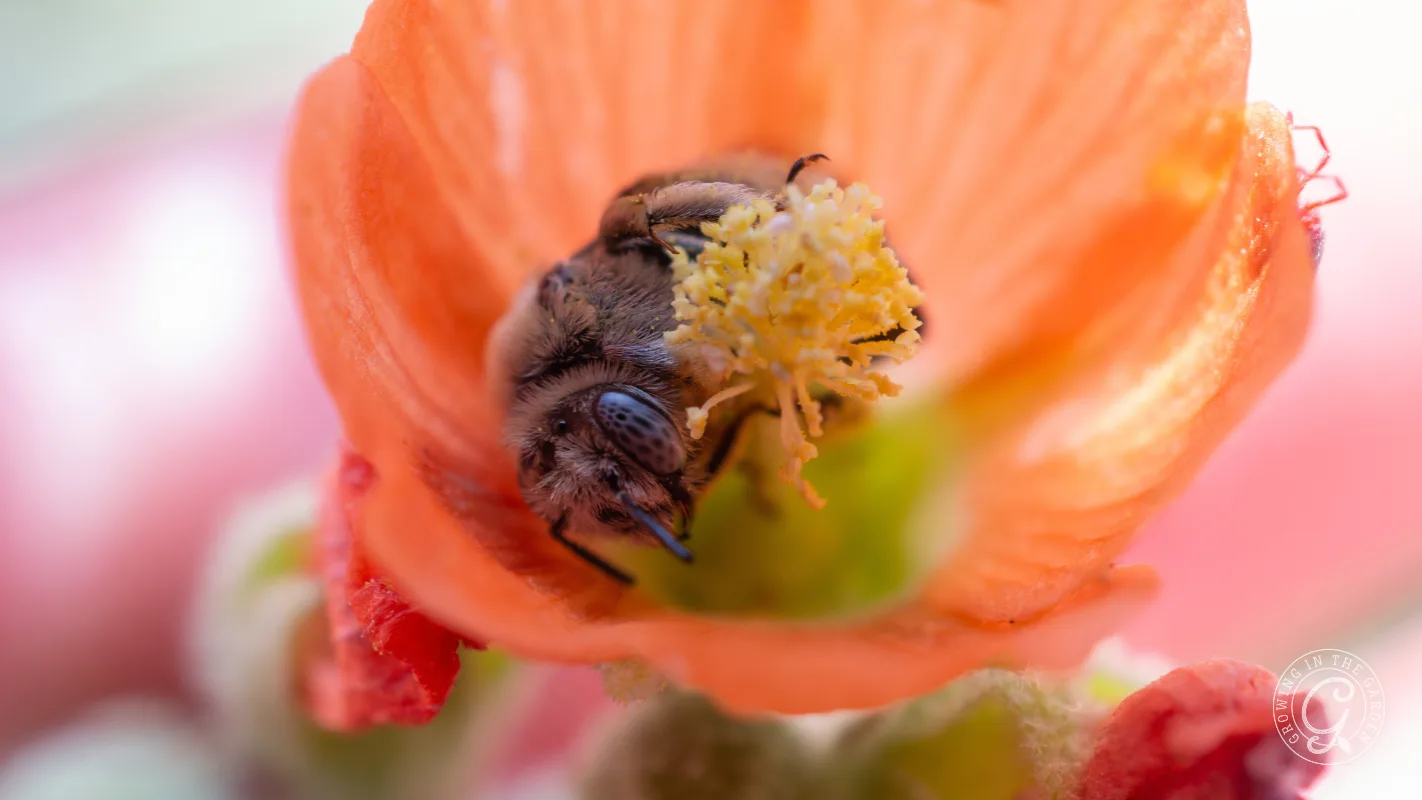
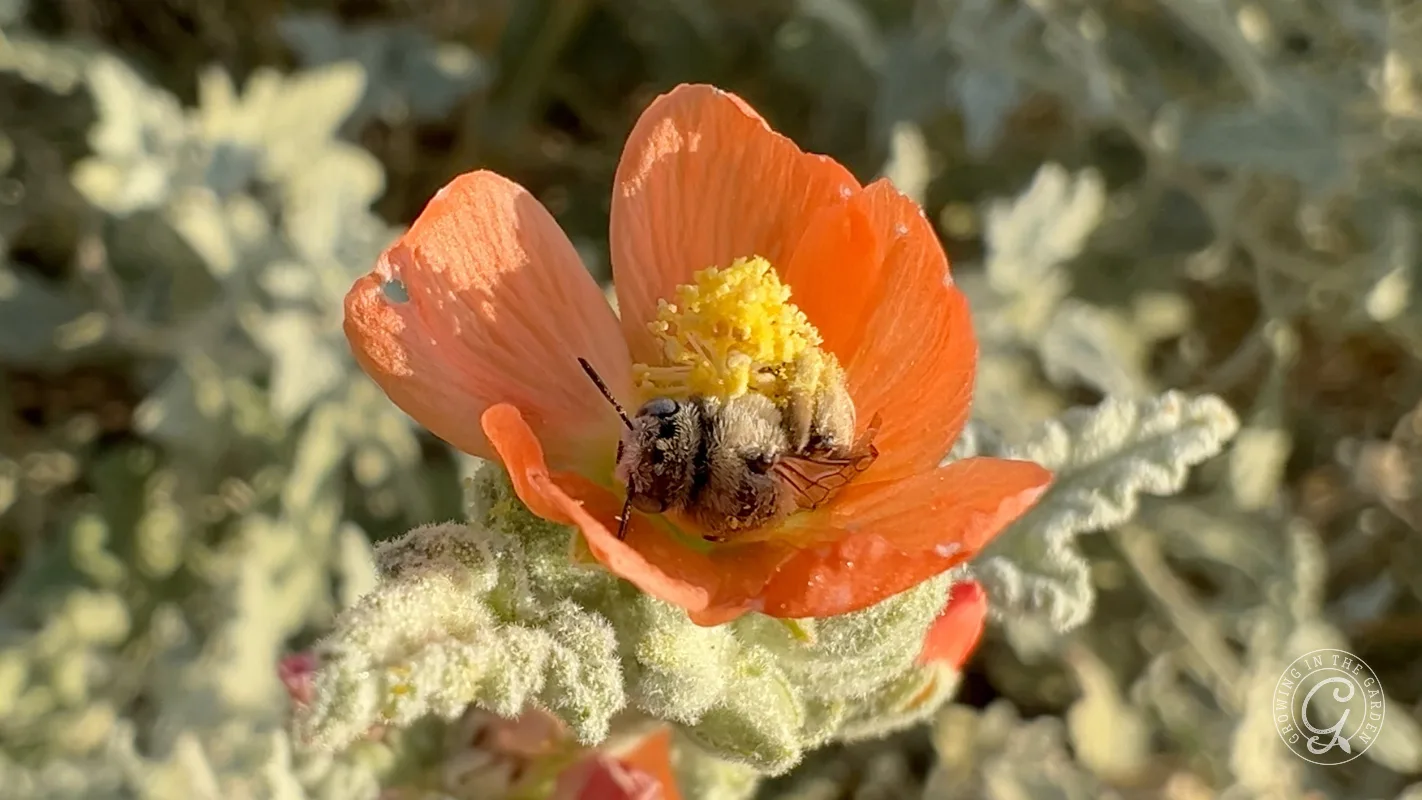
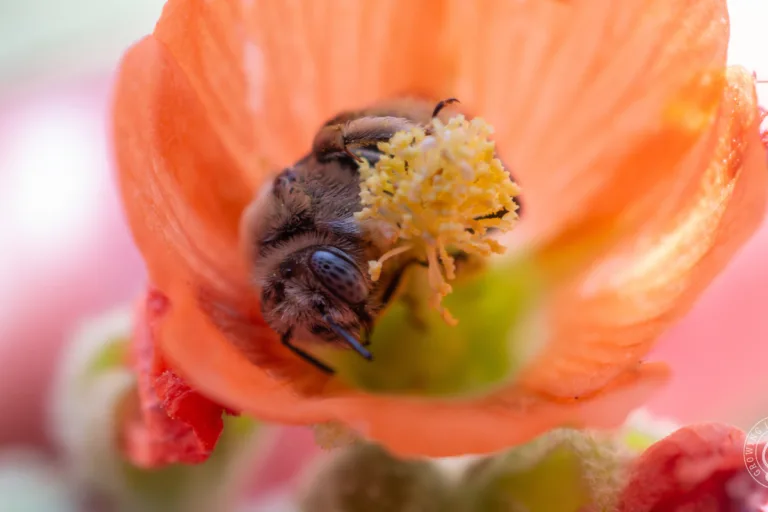
I’m lucky to have a wide variety of bees in my garden. Over the years, it’s been fascinating to see the different types of bees on different kinds of blooms, and I’m always grateful when my garden is buzzing with life.
Most of us think of honey bees first, but they’re only a small part of the story. In this guide, my friend Jean, who is finishing her doctoral studies in ecology with a focus on entomology, introduces the native bees you’re likely to see in a low desert garden, from carpenter bees and Sonoran bumblebees to tiny sweat bees. She explains why honey bees can be poor pollinators for some plants, and shares the two simple changes that make a garden a home for native bees: bare soil and nesting materials.
This post is part of the series Low Desert Garden Insects with Jean Elston.
Honey bees aren’t native to North America, and most native bees live alone. They don’t make honey or build hives. Many crops we grow, like tomatoes, peppers, and squash, evolved alongside native bees. To attract native bees, grow a variety of plants that bloom in different seasons, avoid chemicals, leave a few patches of bare soil for ground-nesting bees, and leave some dead stems and branches standing.
Key Takeaways: Native Bees & How to Attract Them
- Native bees play a crucial role in pollination but get less attention than honey bees, which often dominate the conversation.
- There are various types of native bees, including carpenter bees, bumblebees, leaf-cutter bees, sweat bees, and digger bees, each with unique behaviors.
- Native bees do not make honey or live in hives; most are solitary and rely on bare soil for nesting.
- To attract native bees, gardeners can encourage diversity, provide nesting materials, and leave some bare ground while avoiding chemicals.
- Supporting native bees can lead to a healthier and more productive garden, benefiting both plants and the ecosystem.
Guest post and photos by Jean Elston
Honey bees dart around the garden, collecting from every flower they can find. They’re fascinating, but they aren’t the only ones stuffing themselves with nectar. Unfortunately, we often think of them as the only ones involved in pollination.
Yes, they’re great pollinators for many garden plants, but thousands of other bees live alongside them, working for their share.
Some of these bees search for one particular flower, having developed a relationship that helps both bee and plant survive in our challenging, dry climate. Others are more opportunistic, though they can struggle to compete with honey bees.
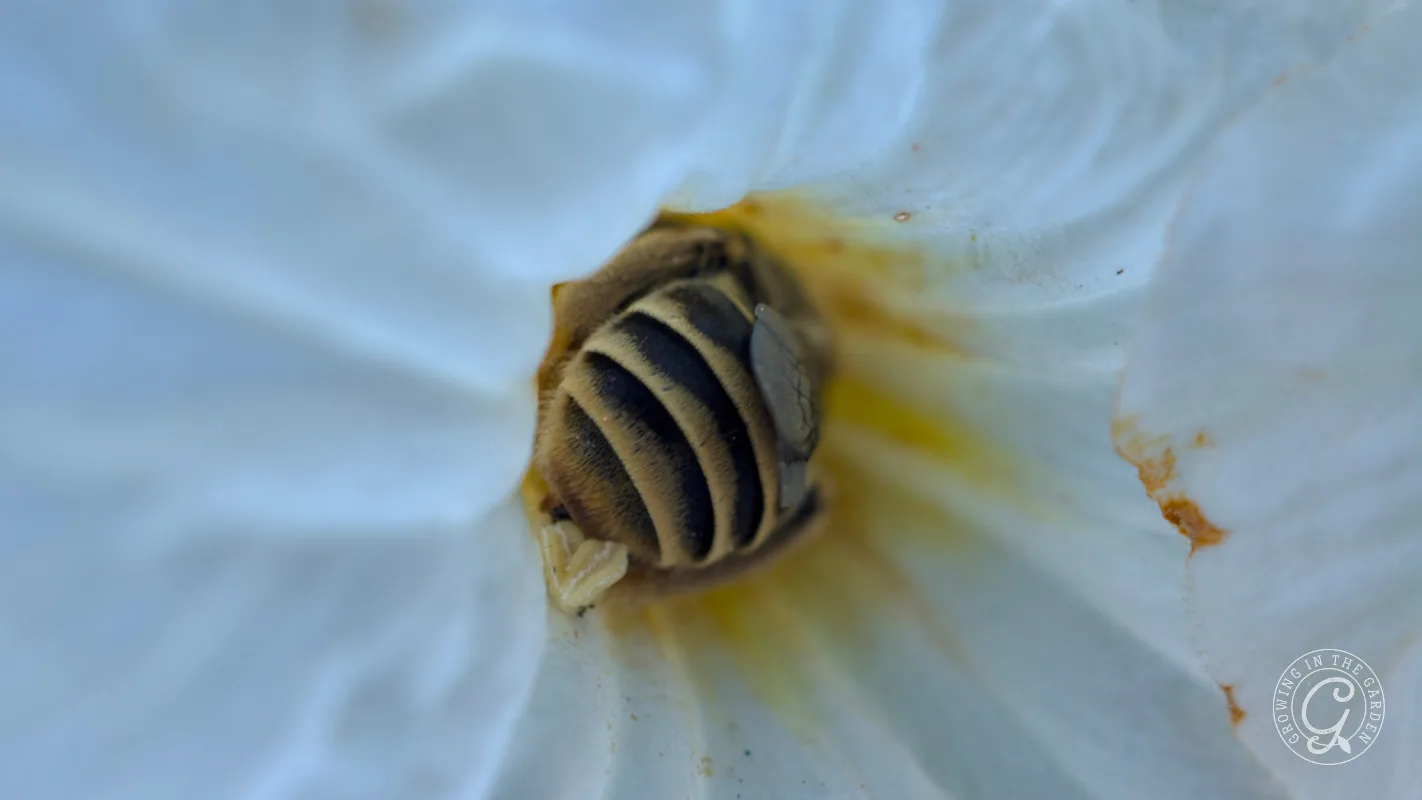
So what makes native bees important? Can we grow a garden we still harvest from while supporting them?
Before we get into those details, let’s start with bees in general and some of the species we often see in our area.
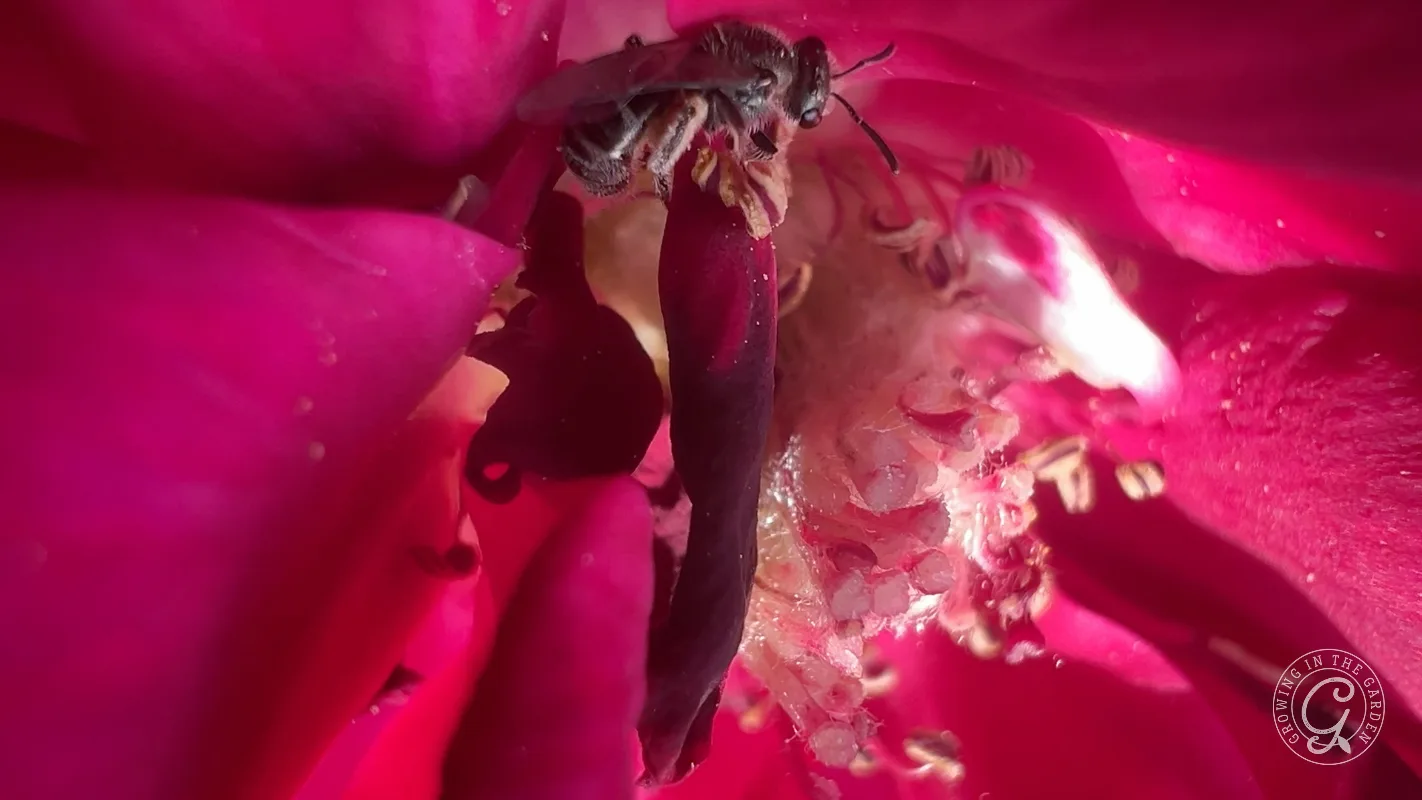
The Sometimes Forgotten Bees
A big reason native bees get less attention is honey.
Most native bees don’t make honey. They drink nectar, collect pollen for their young, and pollinate flowers in the process. They do all of this without building hives or making the sticky substance so many people enjoy. Because most of them live alone, it’s not hard to see why we don’t give them enough attention, and maybe even take them for granted.
First, let’s look at what a honey bee is. Then we can see how our native bees are different.
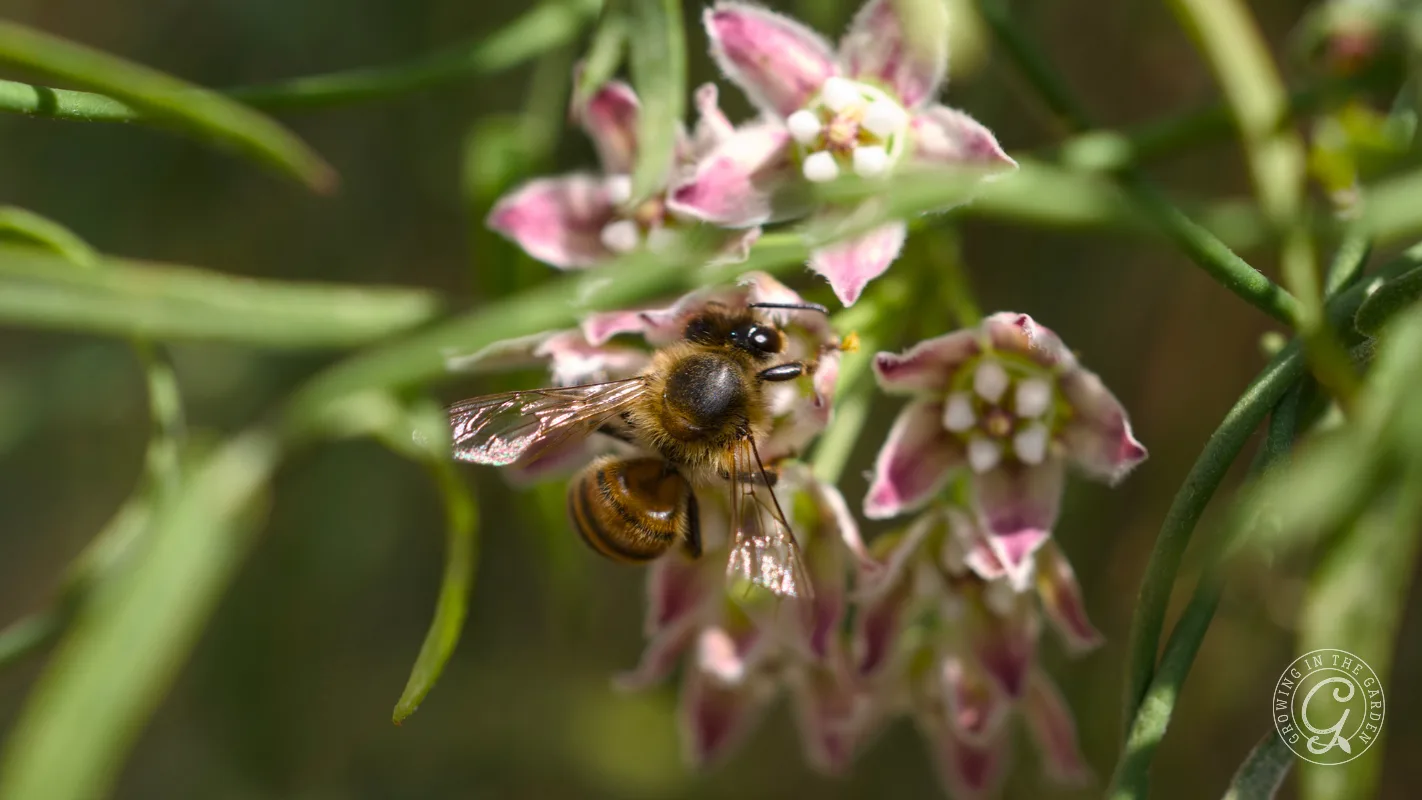
Colonists brought the Western Honey Bee (Apis mellifera) from England to Virginia in the early 1600s. It took a long time for honey bees to make their way west, and they didn’t arrive in California until the mid-1800s.
It makes sense that colonists would bring them along. Honey bees provided honey, plus wax for candles, polish, and waterproofing. Colonists also brought crops like apples, peaches, and cherries that would have been unfamiliar to native bees.
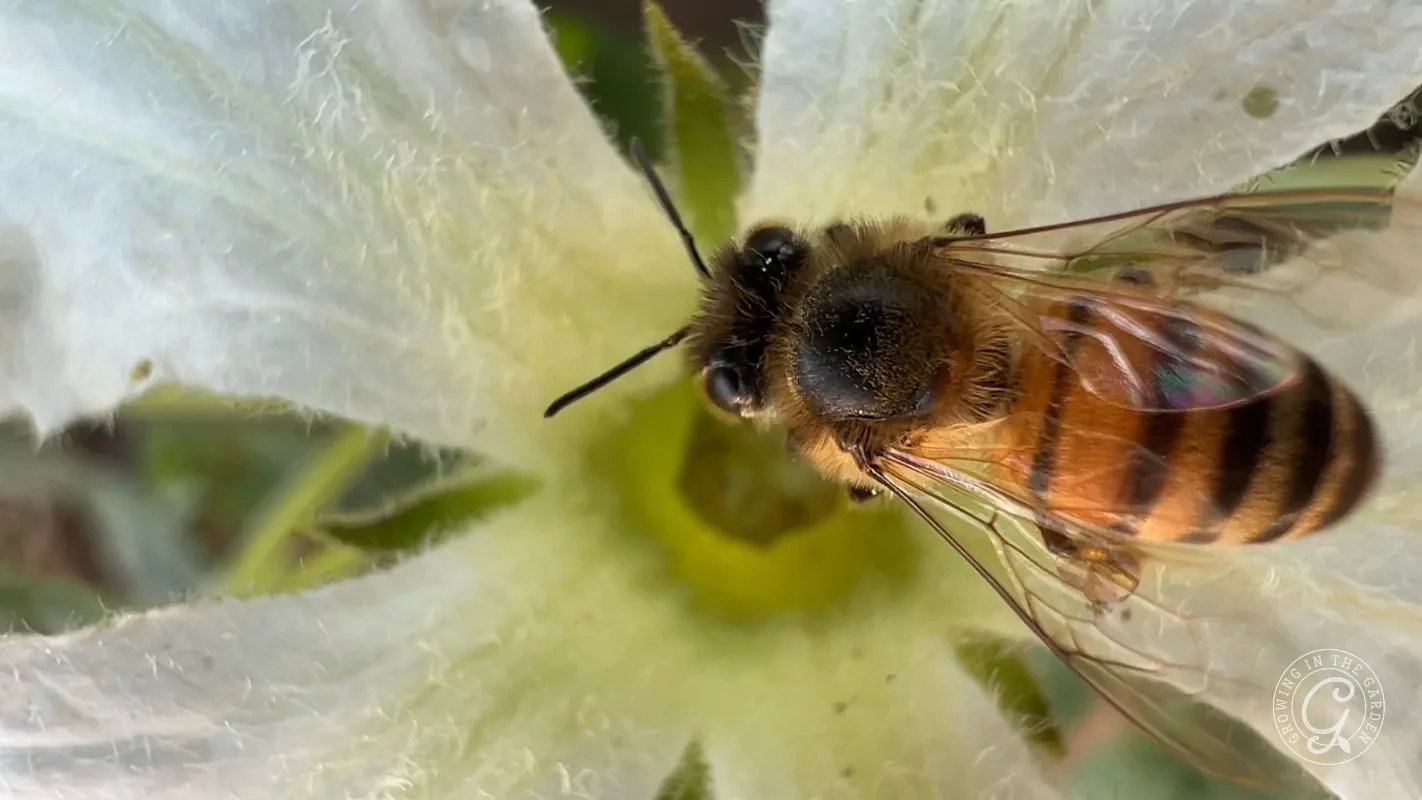
Most native bees don’t build hives, but honey bees are known for their hives and large colonies. They aren’t the only bees that make honey, though. People in parts of South America and Southern Asia have also kept certain stingless bees for their honey.
A honey bee hive holds one queen, a few thousand drones, and tens of thousands of worker bees, all working together to keep the colony going. A colony like this is easy to house and move from place to place to pollinate fruit and vegetable crops.
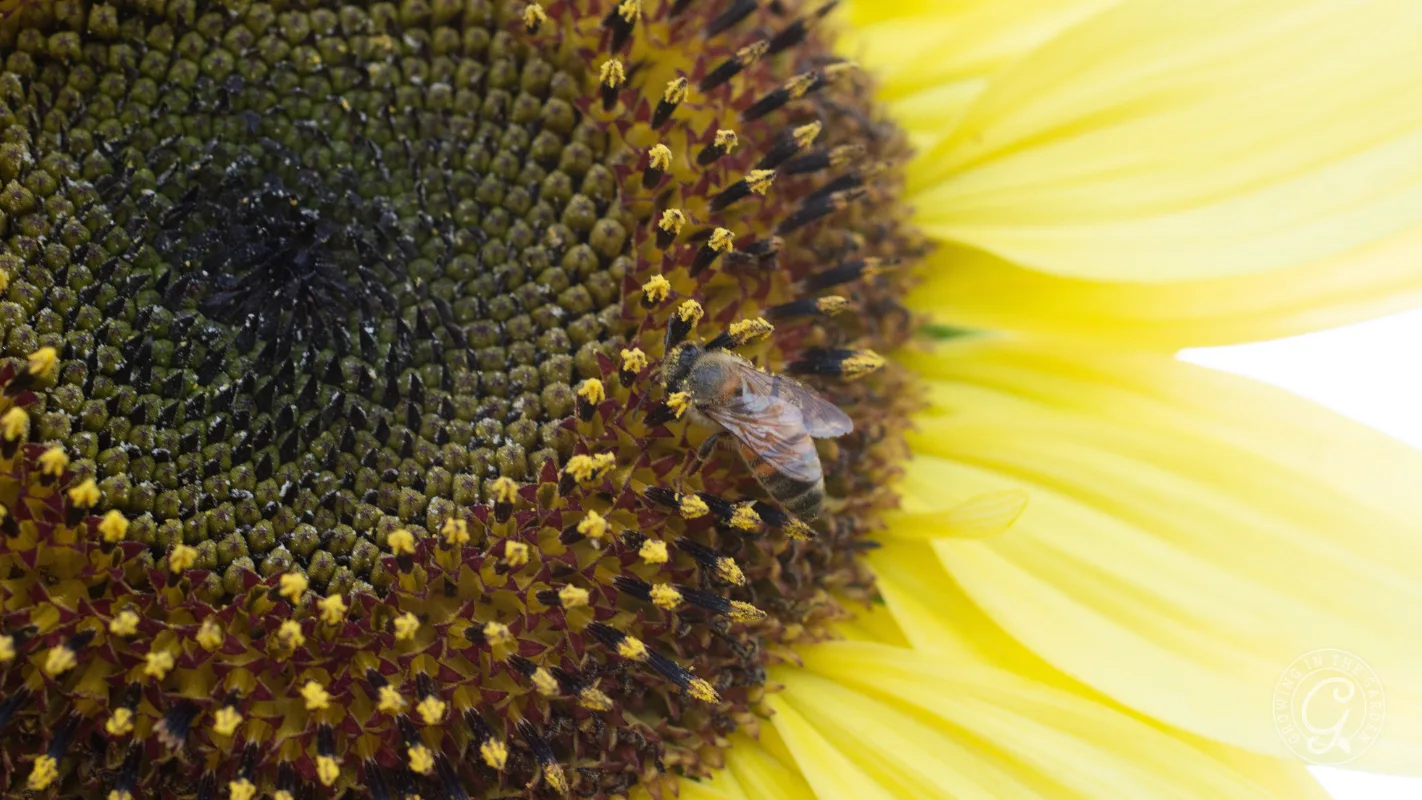
Are Honey Bees the Best Pollinators for Your Garden?
The generalist nature of honey bees is what makes them so useful for crops. Working at incredible speed, they collect from every blossom they can, from dawn to dusk. That same generalist habit can make them inefficient pollinators for a surprising number of plants. That’s not something we often hear or think about.
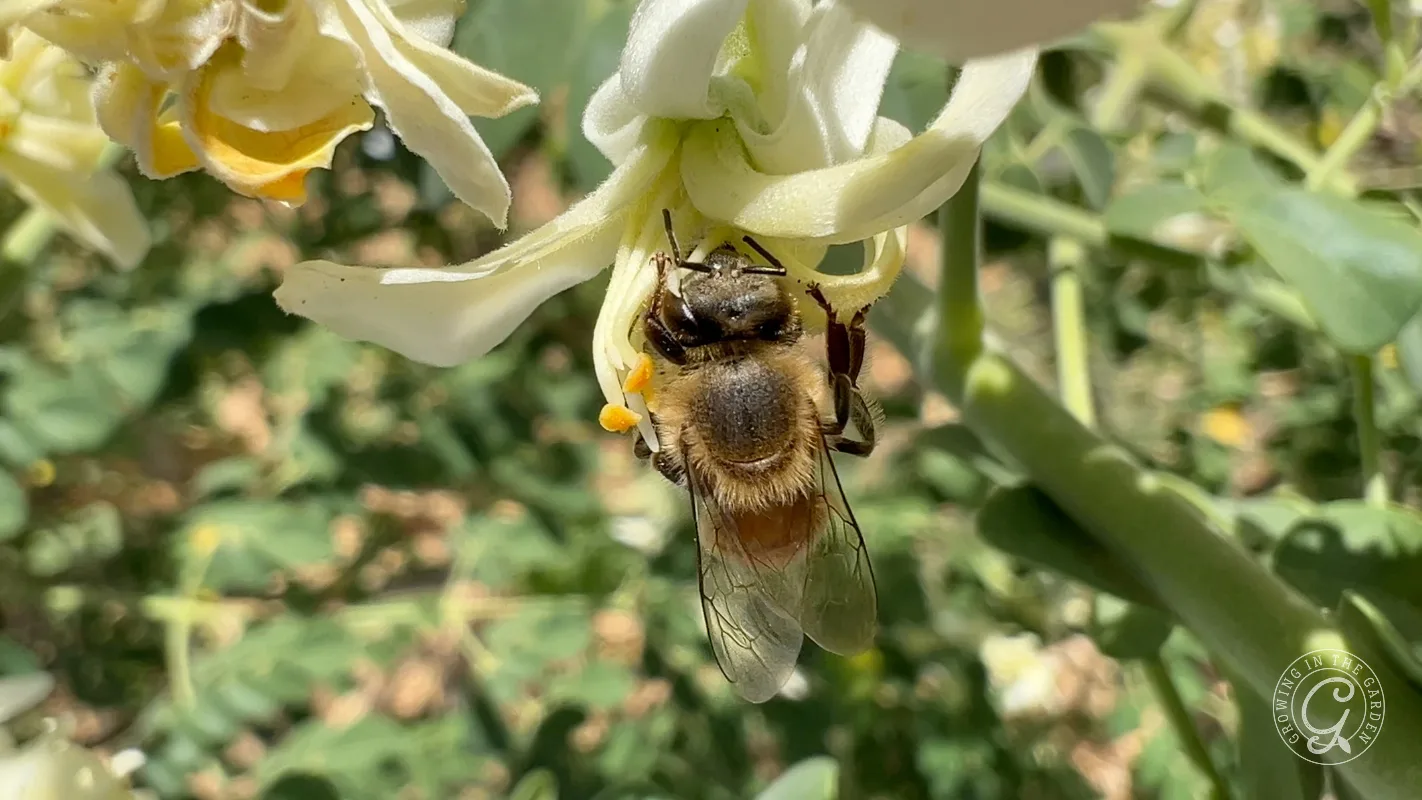
Honey bees are great at pollinating certain plants, including some we grow for food, but they can also reduce pollination. Many plants need a specialized pollinator, and honey bees often act as pollen thieves, which makes it harder for those plants to reproduce.
In fact, many garden crops don’t need insect pollination at all. Many beans are self-pollinating, sweet potatoes grow from tubers, and grasses like wheat, rice, and corn are wind-pollinated.
Even our beloved tomatoes evolved with native bees, since tomatoes, peppers, squash, and many other crops are native to the Americas.
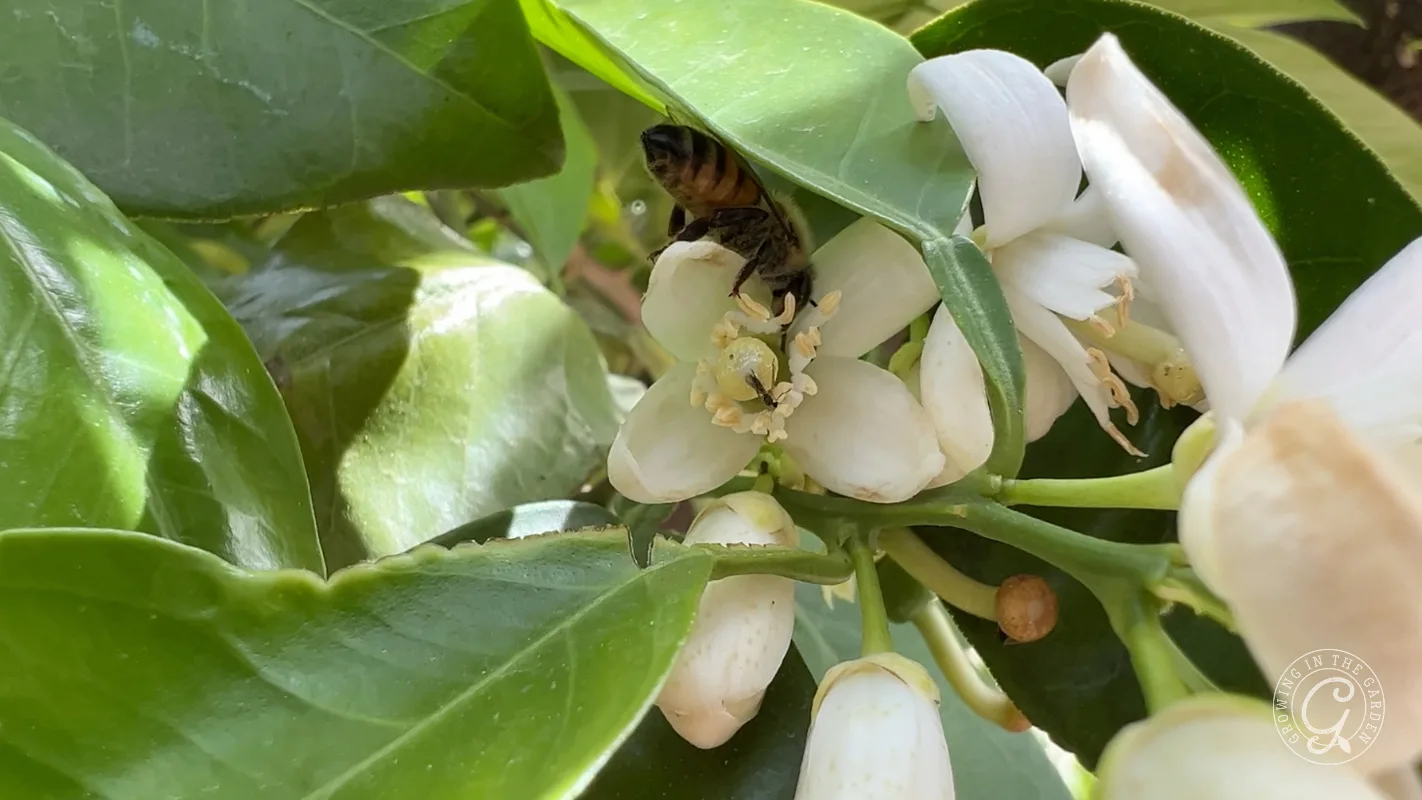
None of this means honey bees should be wiped out. They’re here, and in my garden, honey bees and native bees have both done well side by side. Honey bees are definitely the ones working the orange and peach blossoms in spring.
The point is to recognize that honey bees are helpful, but they aren’t the only ones helping. With some plants, they might even get in the way of pollination.
Where Native Bees Fit in a Vegetable Garden
So where do native bees fit into the garden? Do we only grow native plants for the bees and give up the vegetable garden? Of course not.
As I mentioned, we grow a number of plants, like tomatoes, that don’t need honey bees. Often a breeze is enough to produce fruit. At the same time, many of us grow fruit trees that do need honey bees.
There’s room for both. Native bees are often better adapted to the heat, and having them around creates a garden that’s productive for everyone.
This is a good place to cover some of the native bees you might find in your garden. Then we’ll get to a few tips for encouraging them.
Native Bees You’ll See in Arizona Gardens
Carpenter Bees
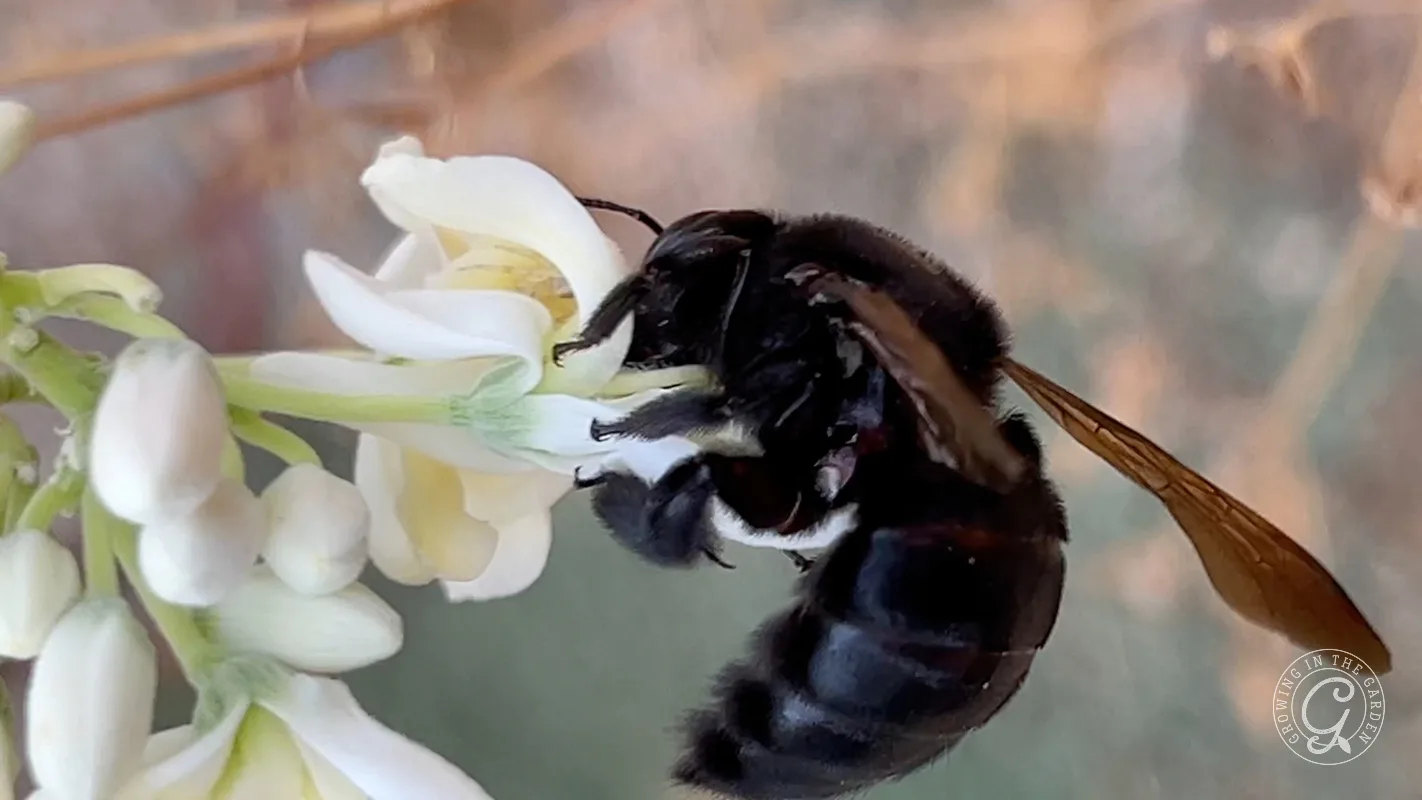
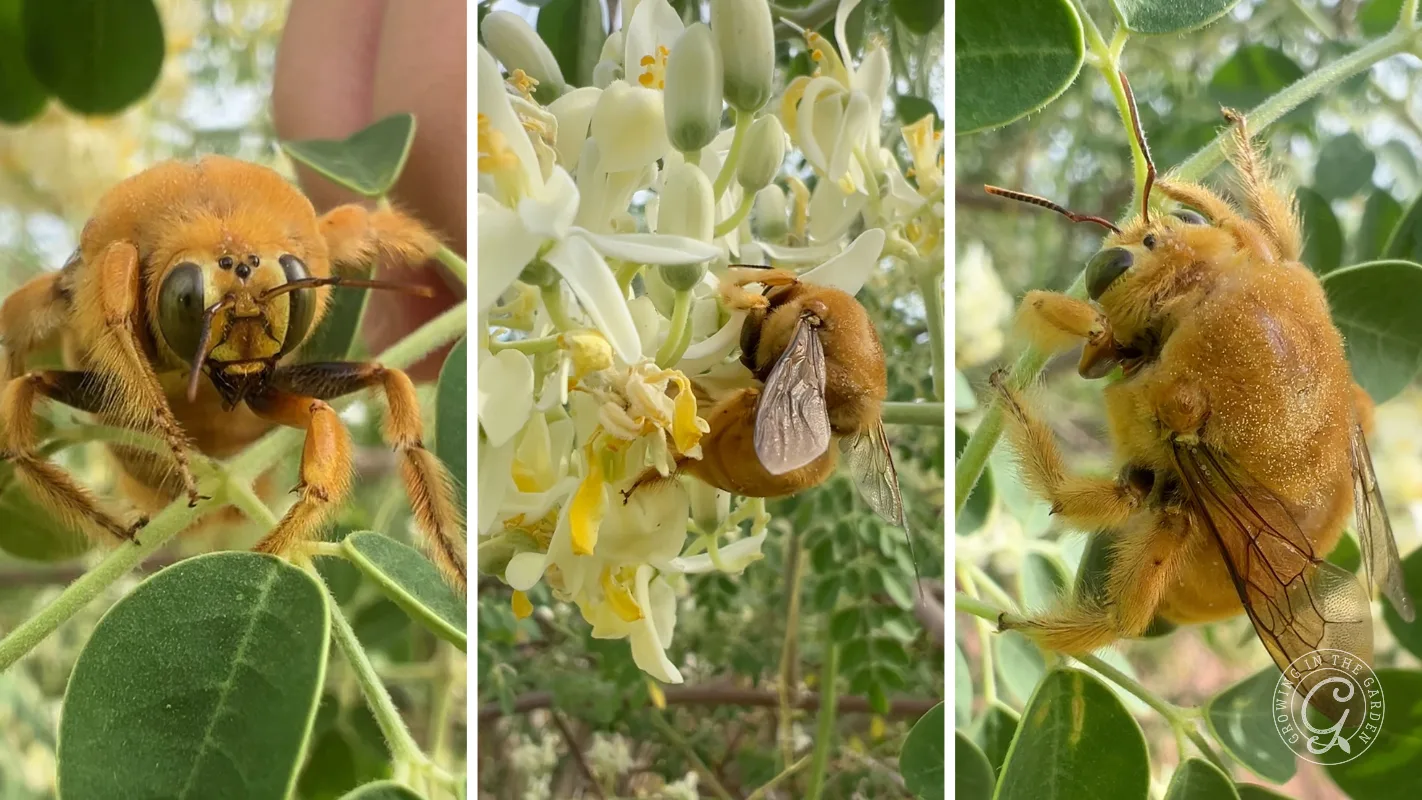
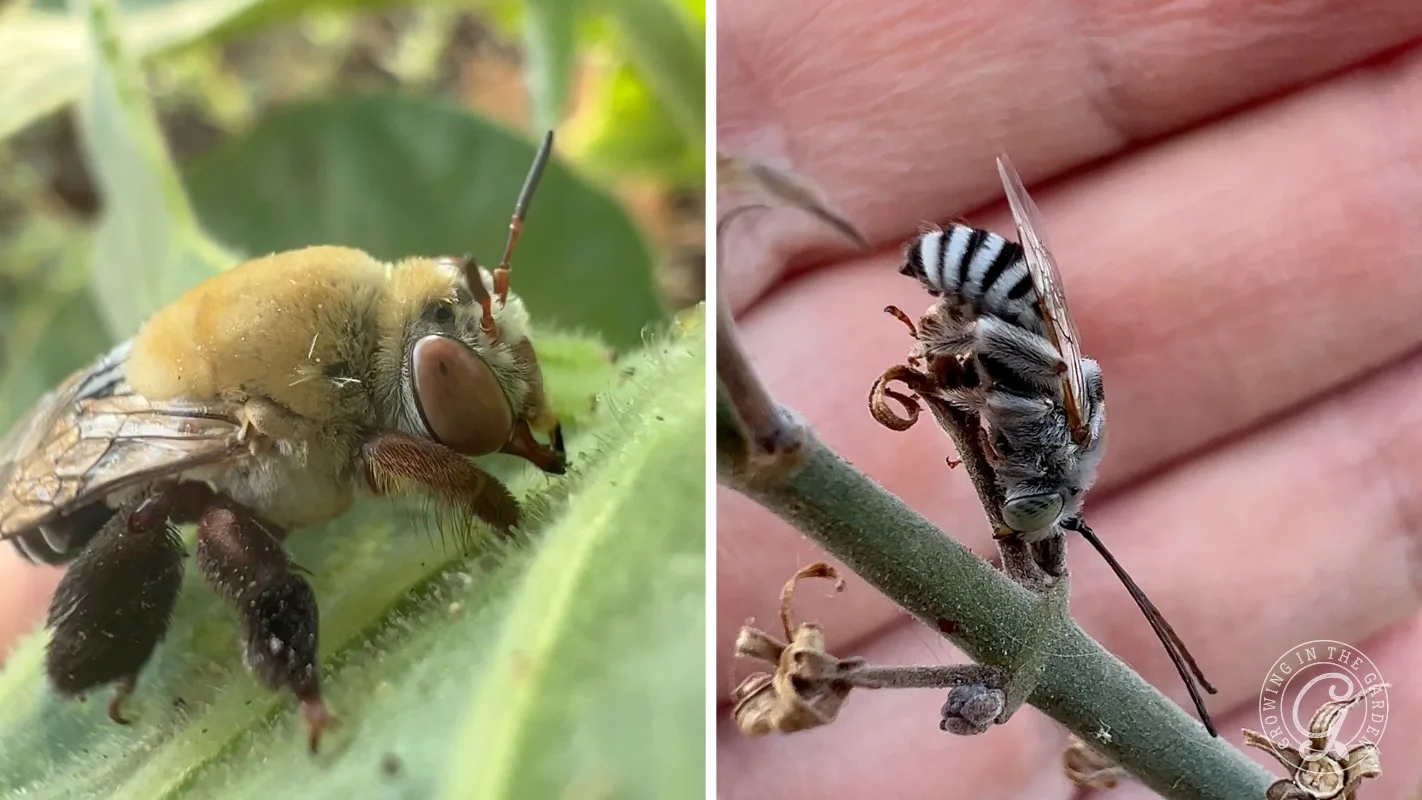
If there’s one bee you can’t overlook, it’s the carpenter bee (Xylocopa genus).
These large, powerful bees look intimidating as they buzz past, sounding like a plane coming in for a landing. Their name might worry you, since the females do use their strong mandibles to tunnel into wood. But they usually choose dead wood, yucca stalks, and maybe a dead agave. They can cause problems, but not as often as you might think.
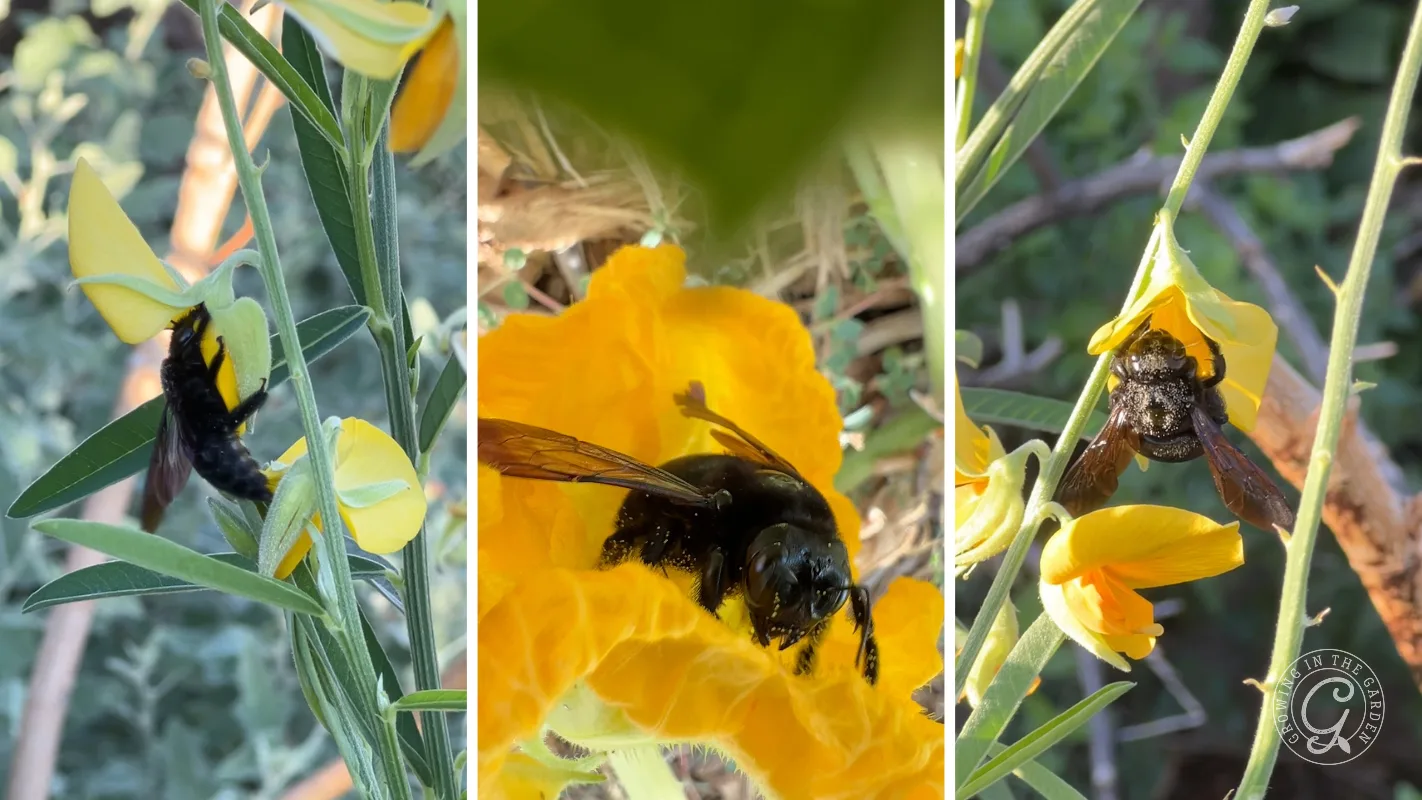
What I enjoy most is that they’re buzz pollinators. This is called floral sonication: they vibrate their bodies like a tuning fork to shake pollen loose. It’s one of the best ways to pollinate because it releases more pollen that covers the bee’s fine hair.
They do sometimes rob nectar, piercing the base of a flower to get to the sugary treat. I haven’t seen this become a big issue, but it probably depends on how many visit your garden.
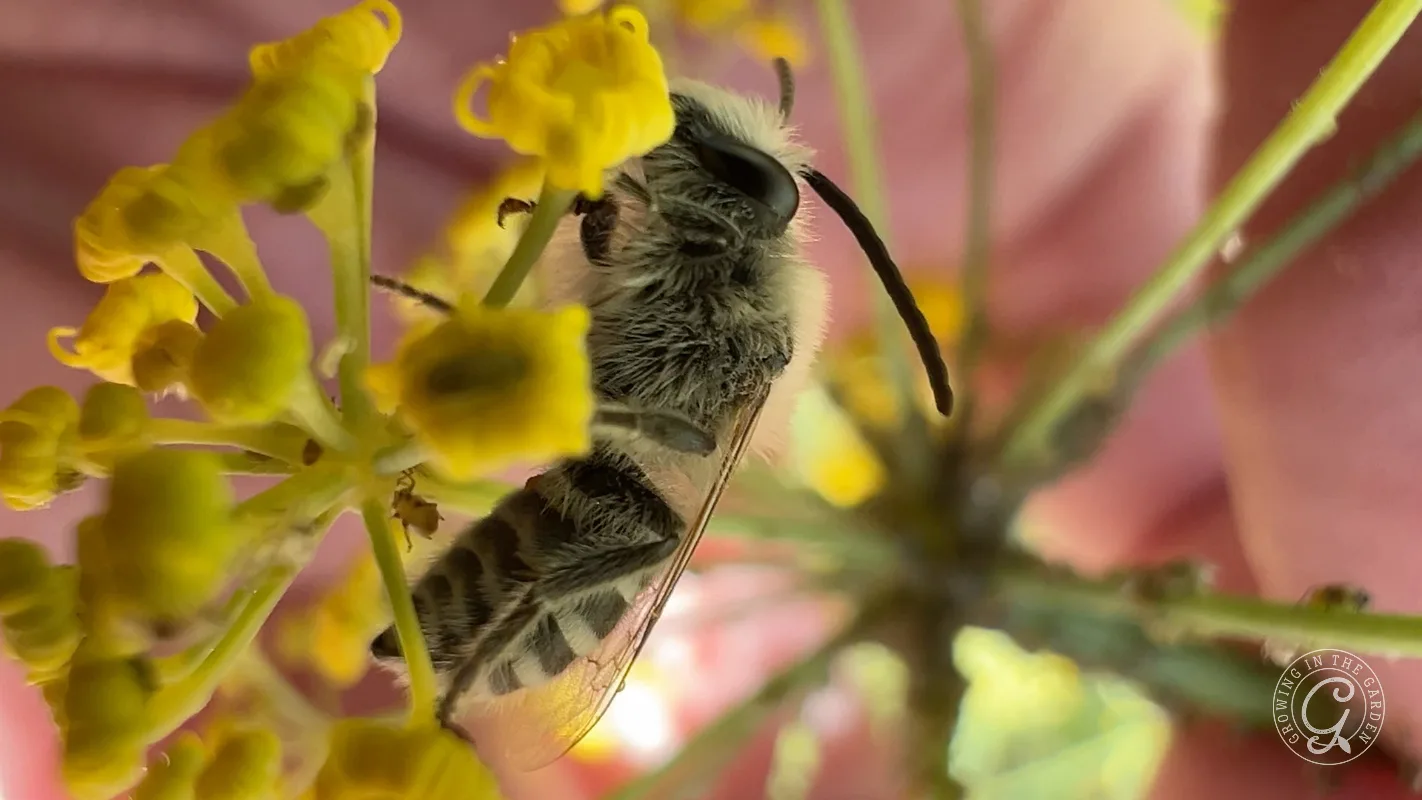
If you think the females are hard to miss, the males are even more unusual-looking. They’re often called “teddy bears.”
Sonoran Bumblebee
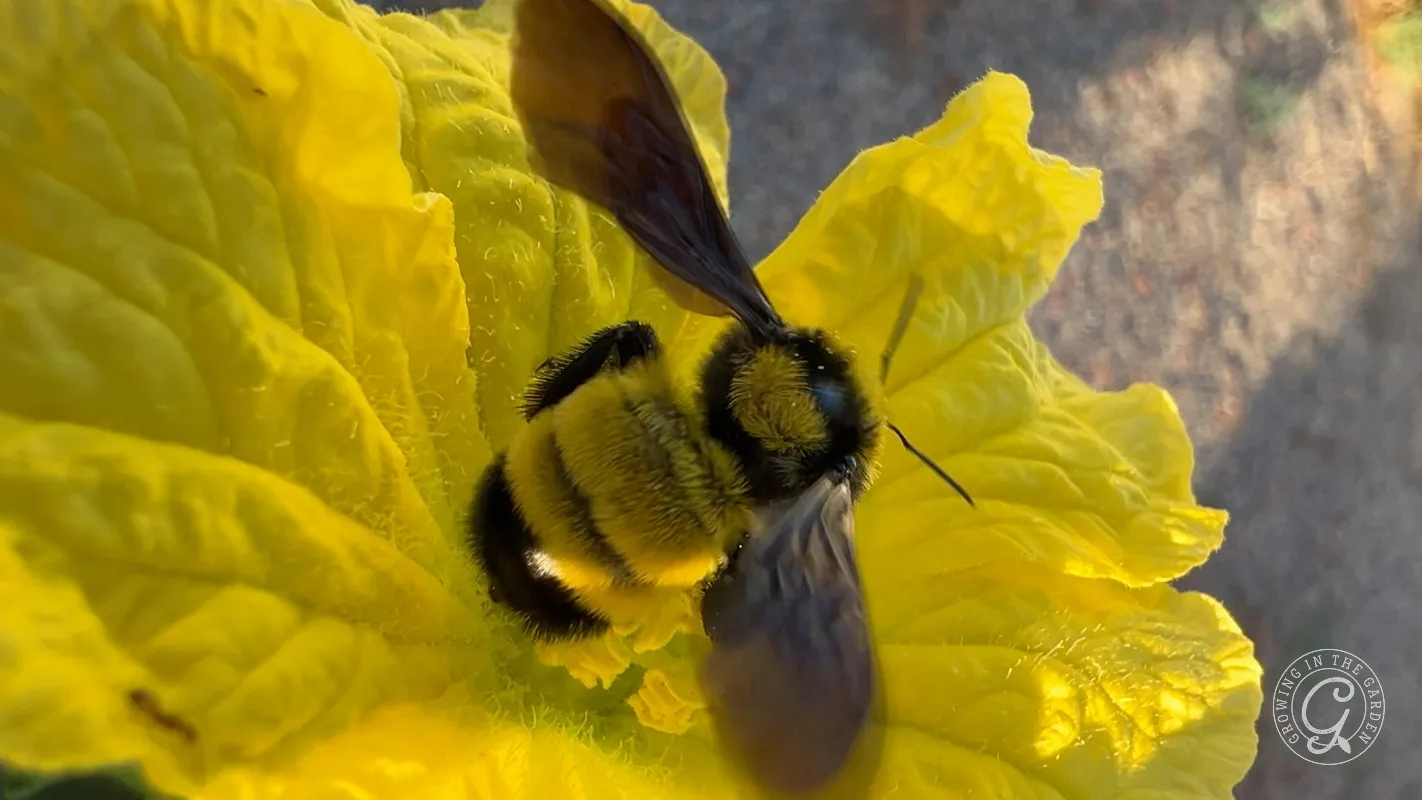
Another large bee worth mentioning is the bumblebee.
And it’s not just any bumblebee. We have our own local bumblebee here in the Southwest. The Sonoran Bumblebee (Bombus sonorus) is just as fluffy and colorful as the bumblebees most of us know, and brighter than its close relative, the American Bumblebee (B. pensylvanicus).
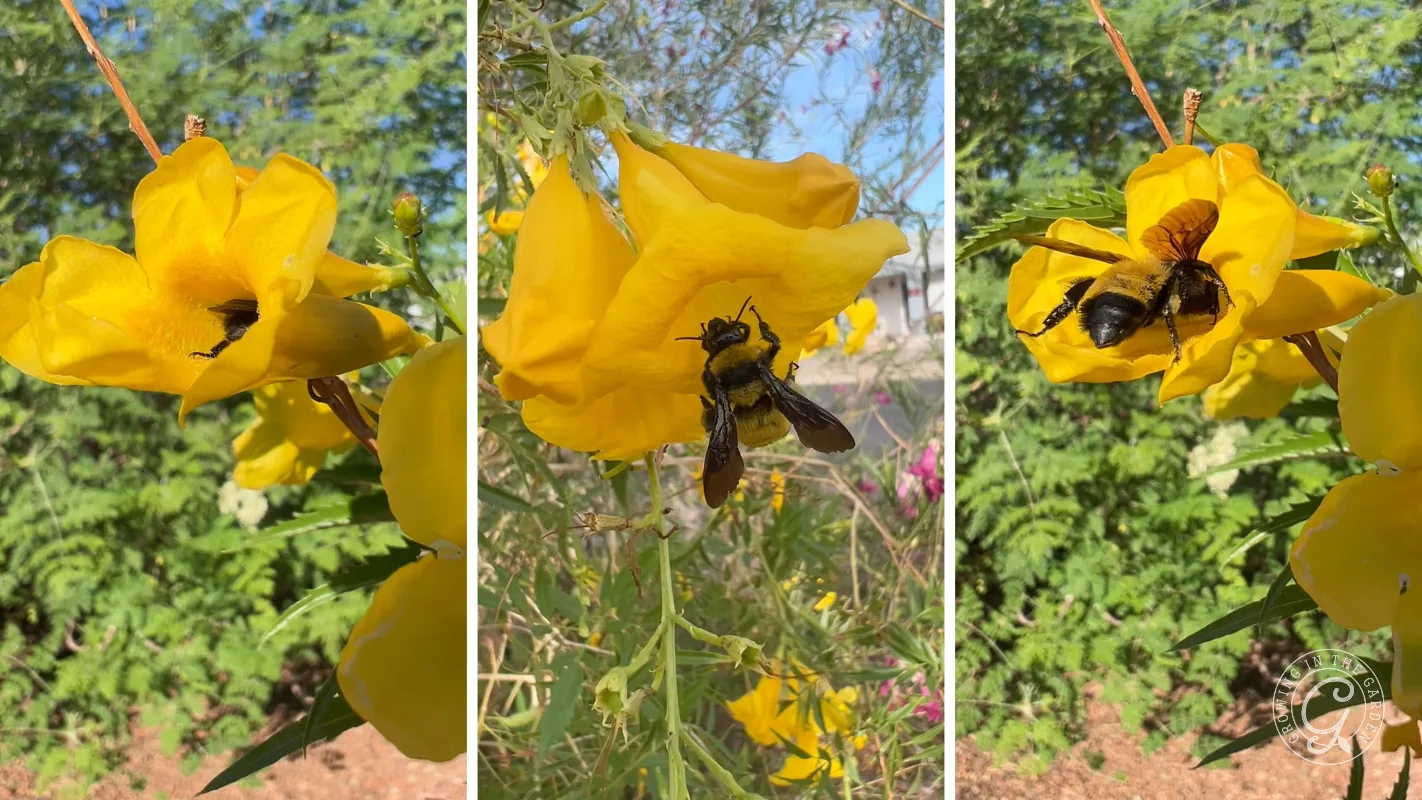
It visits flowers much like carpenter bees do. Where it differs is nesting. Bumblebees nest in underground cavities.
Leaf-Cutter Bees
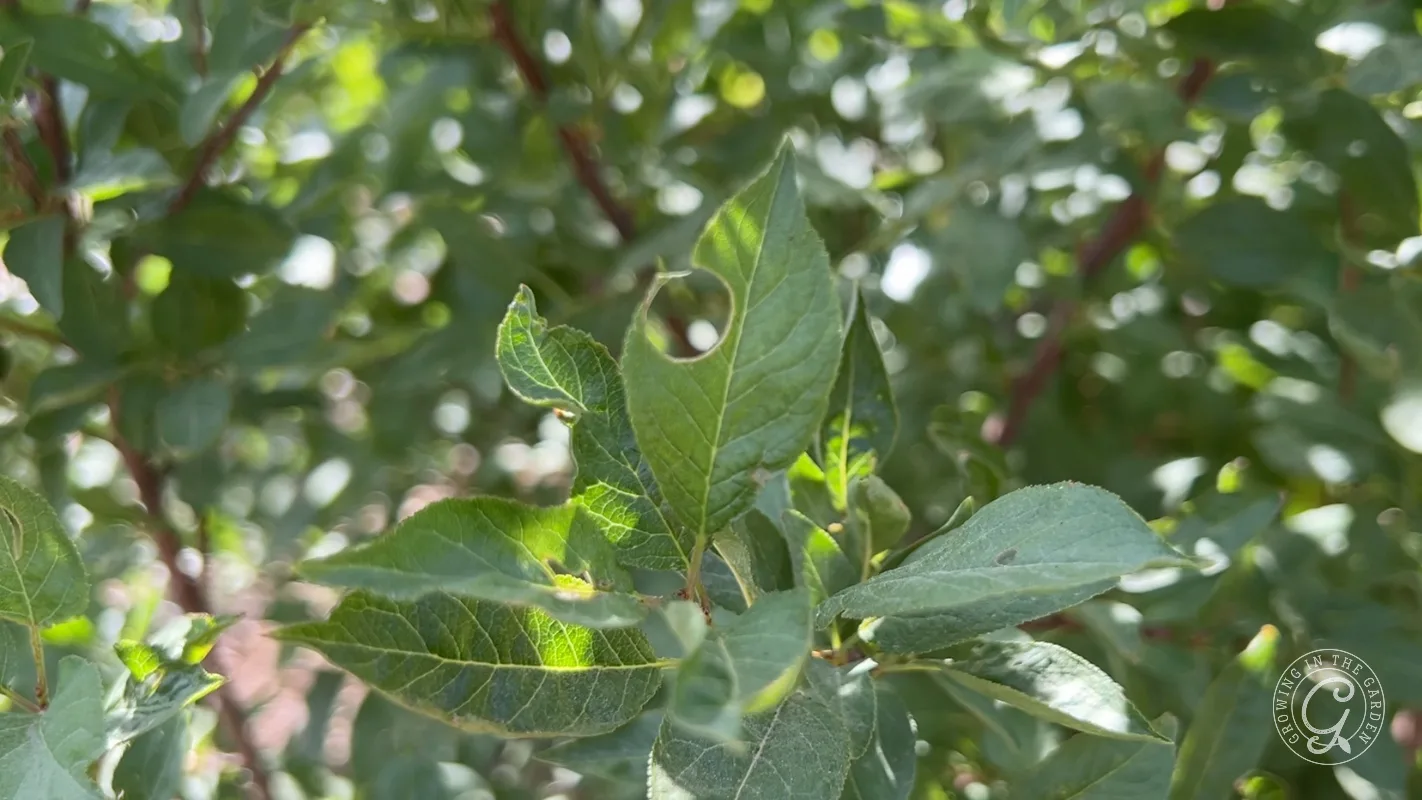
We rarely see them in action. Instead, we find ourselves wondering what made the cutouts in the leaves. The aptly named leaf-cutter bees belong to a family that also includes resin bees and mason bees. They’re the landscapers of the garden.
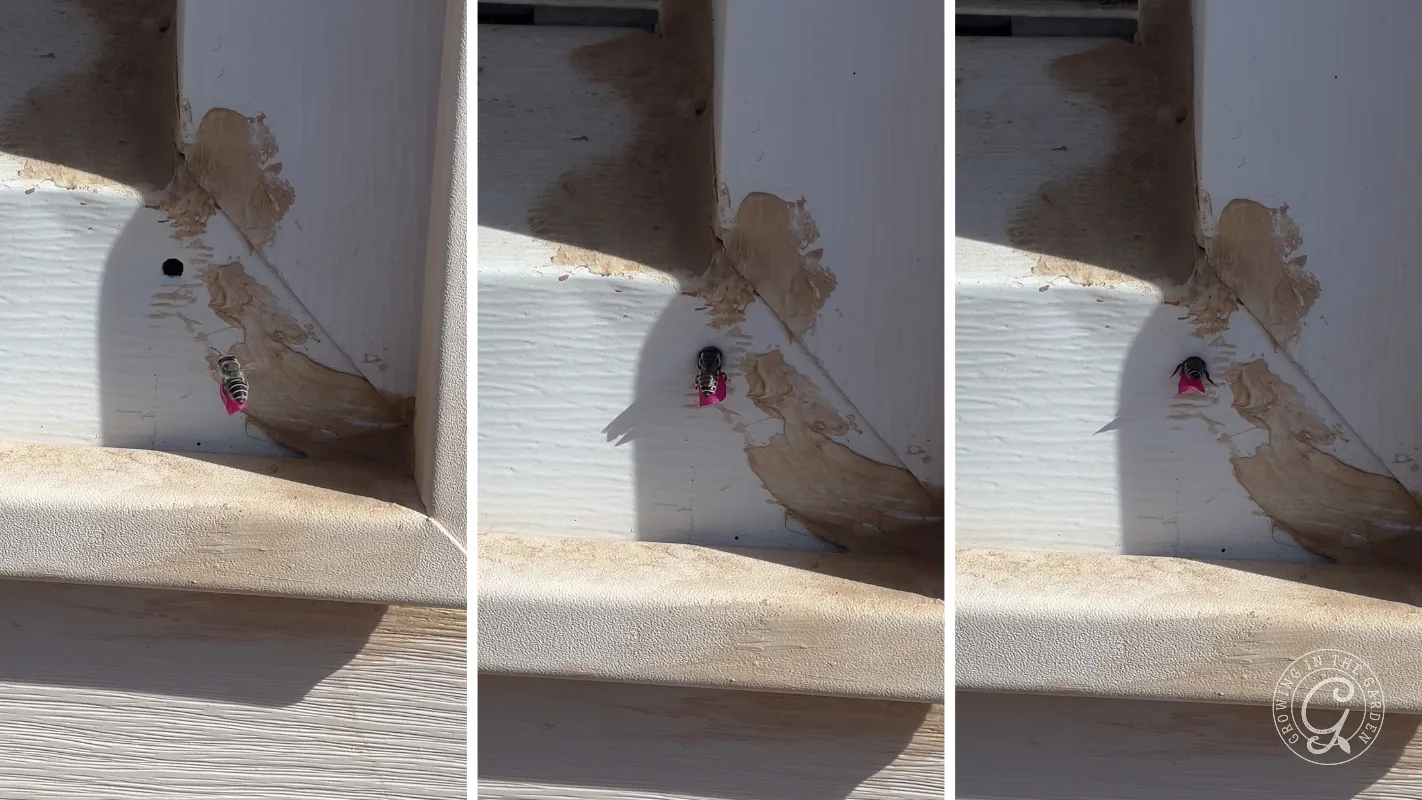
They’re particular about their leaves. In my garden, grape leaves are a popular choice, though they’ve also taken pepper and jujube leaves. I’ve even watched a bee carry off a piece of colorful bougainvillea.
They don’t eat the leaves. The female carries each piece back to a hole where she’s building a nest, and the leaves become part of the nursery where her young develop.
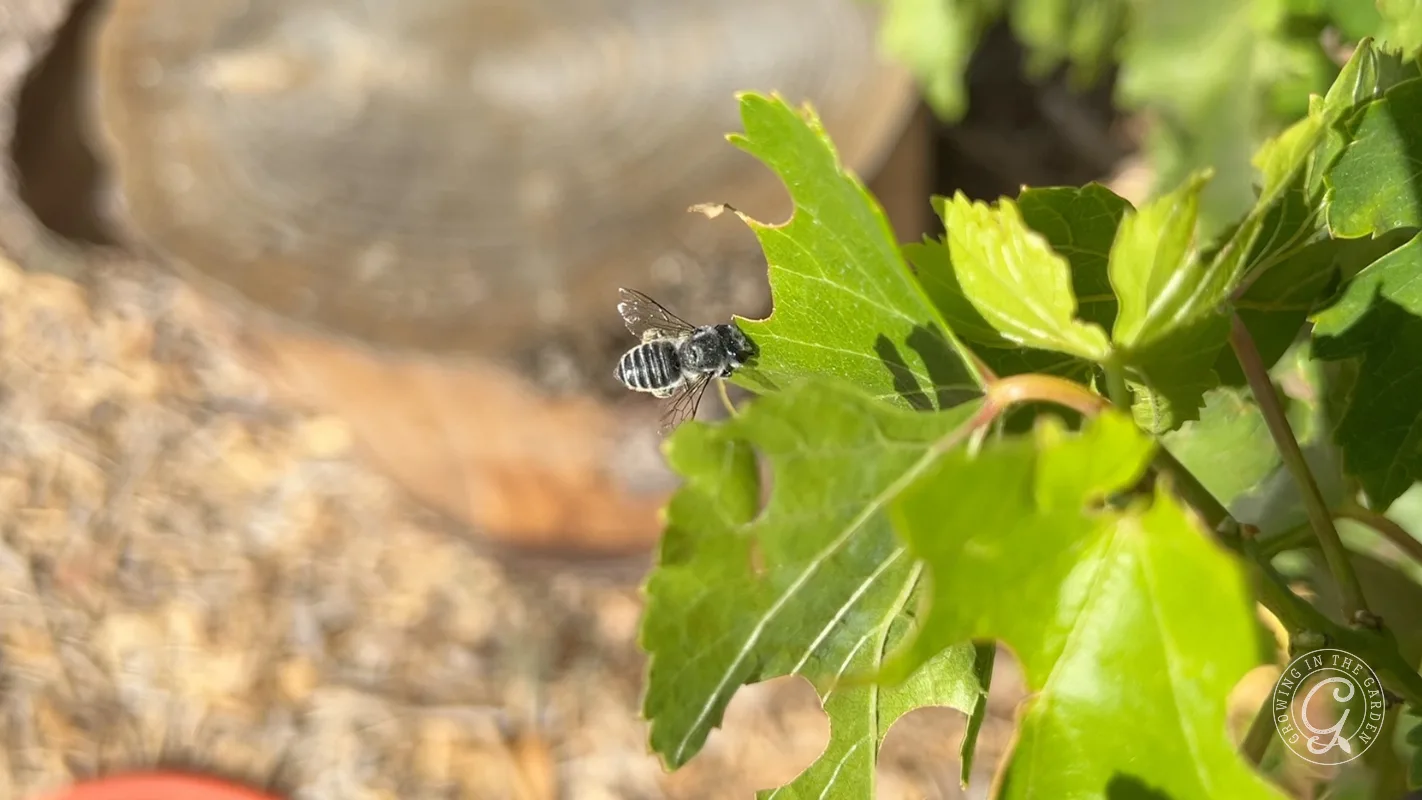
The best part for our gardens? They’re exceptional pollinators. From alfalfa to fruits and wildflowers, they aren’t picky about where their next meal comes from.
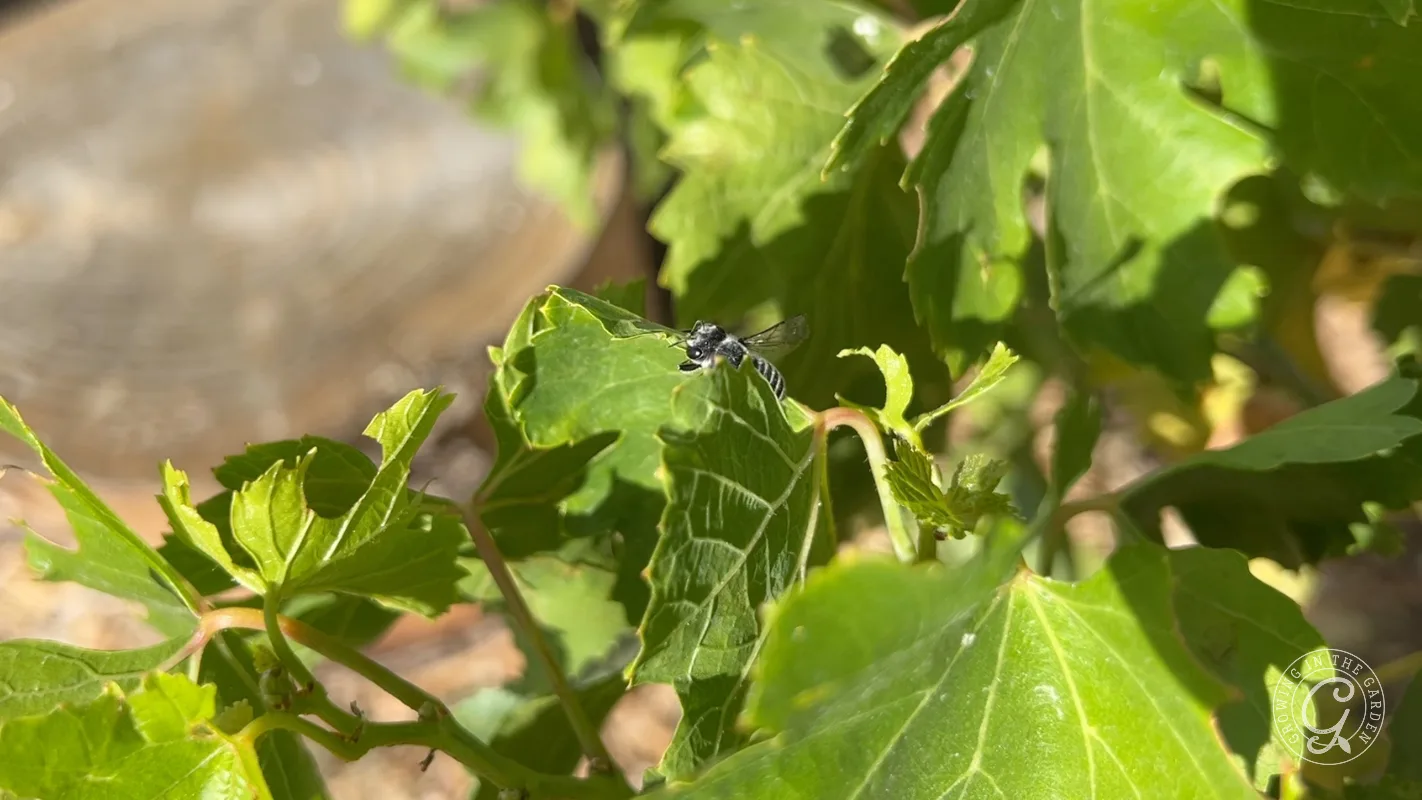
It’s another reminder that not every nibble or mark on a leaf means the plant is under attack. Often, it shows the garden has become a home.
Sweat Bees
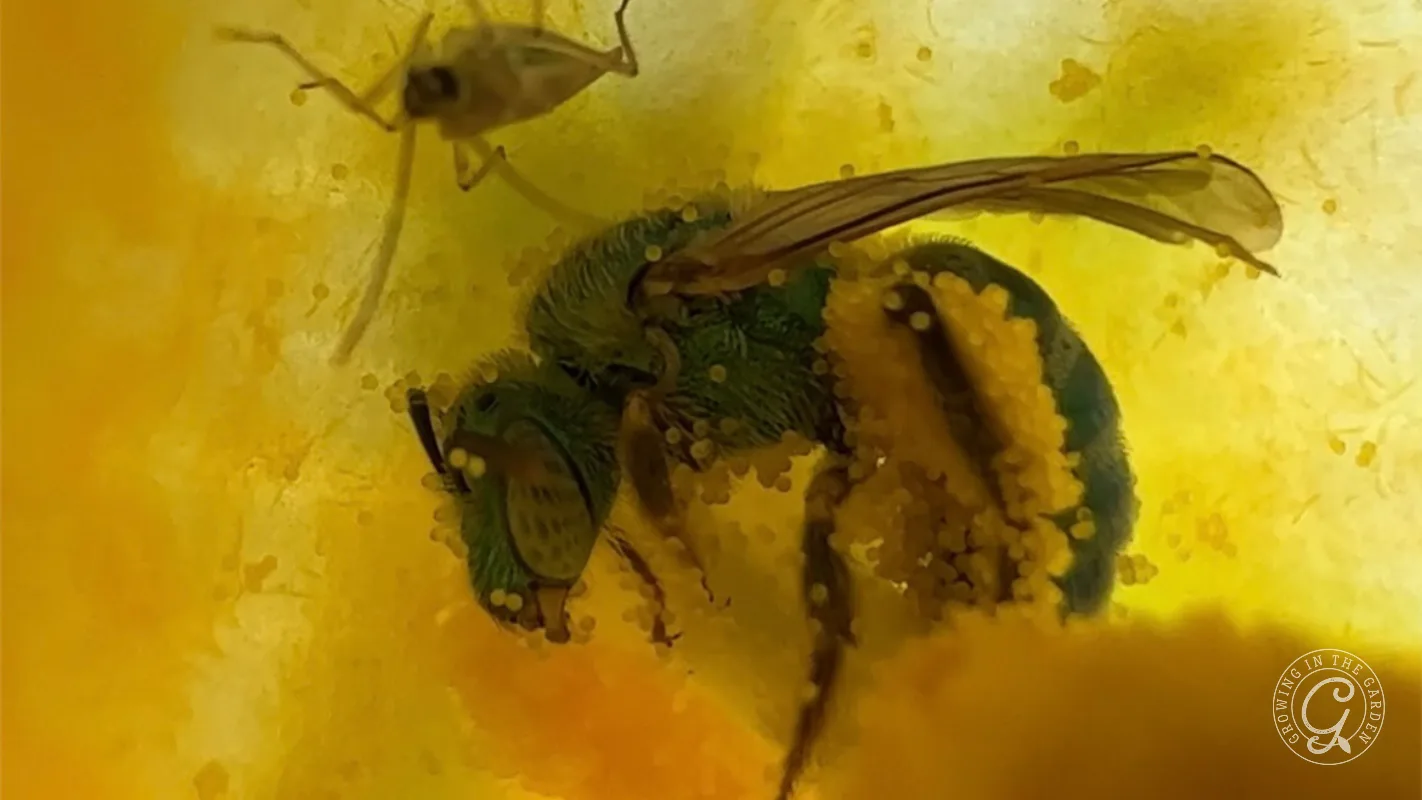
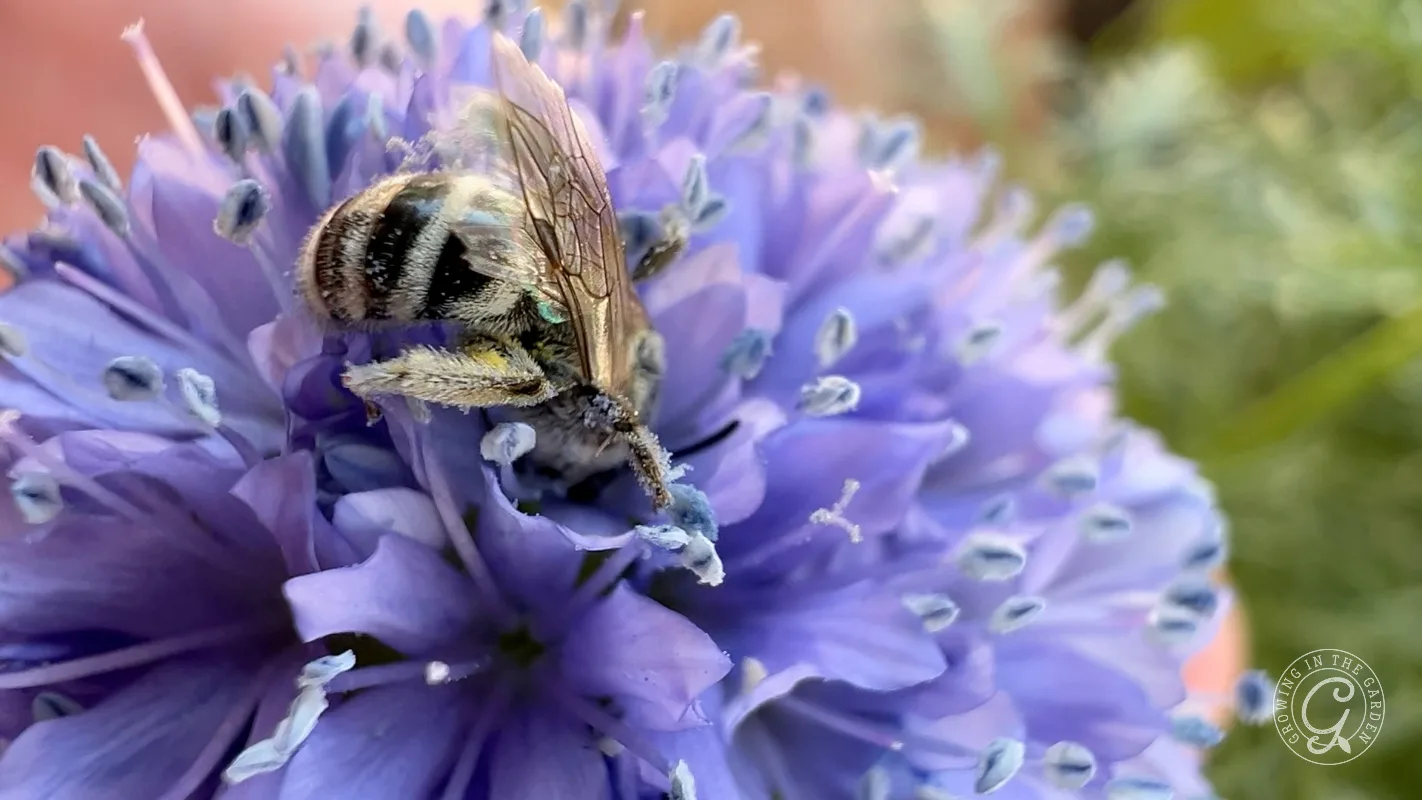
If our area has a native generalist pollinator, it’s probably the sweat bees (Halictidae family).
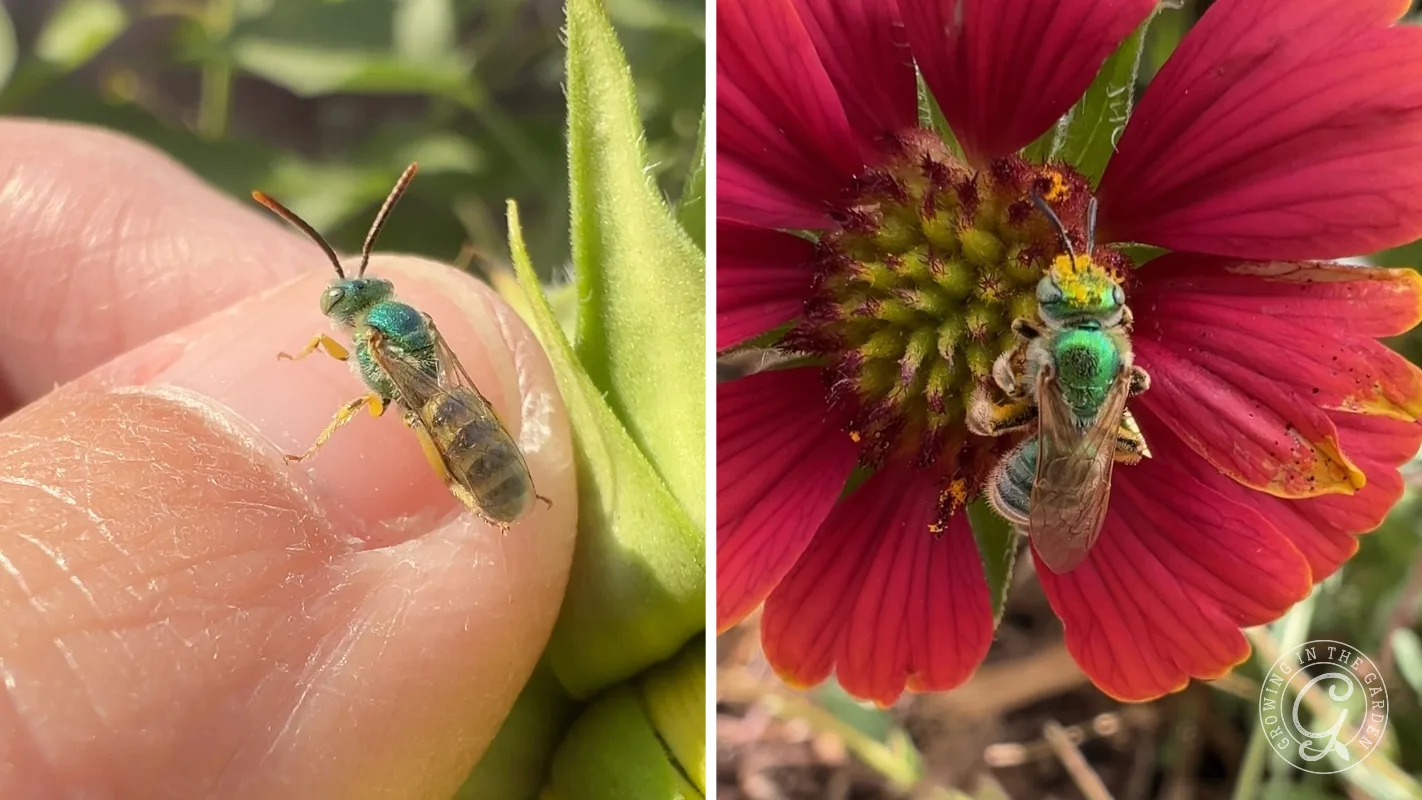
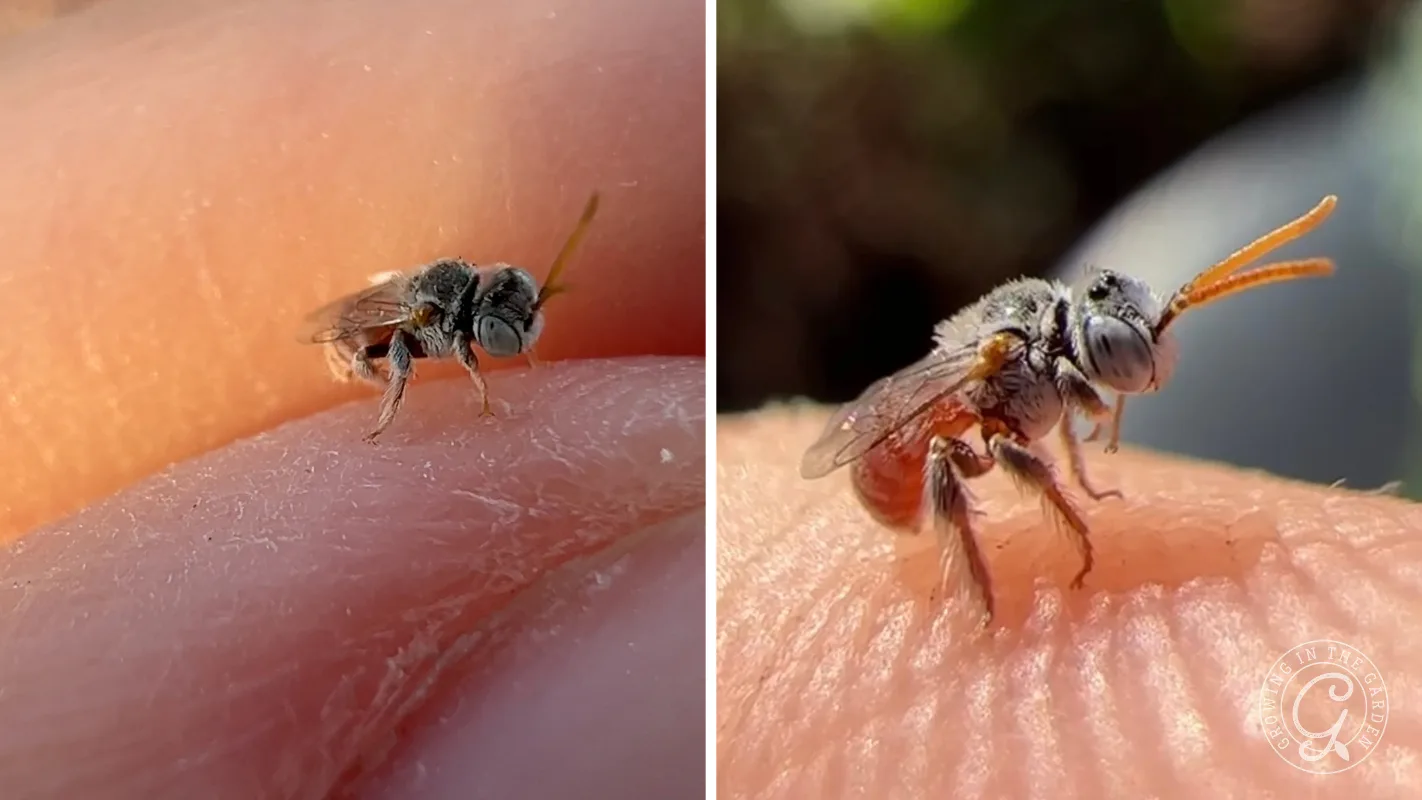
The metallic green ones (Agapostemon species) are frequent visitors in my garden, though sweat bees come in different colors and stripes. Other common ones in the garden are Ligated Sweat Bees (Halictus ligatus) and tiny sweat bees in the Lasioglossum genus.
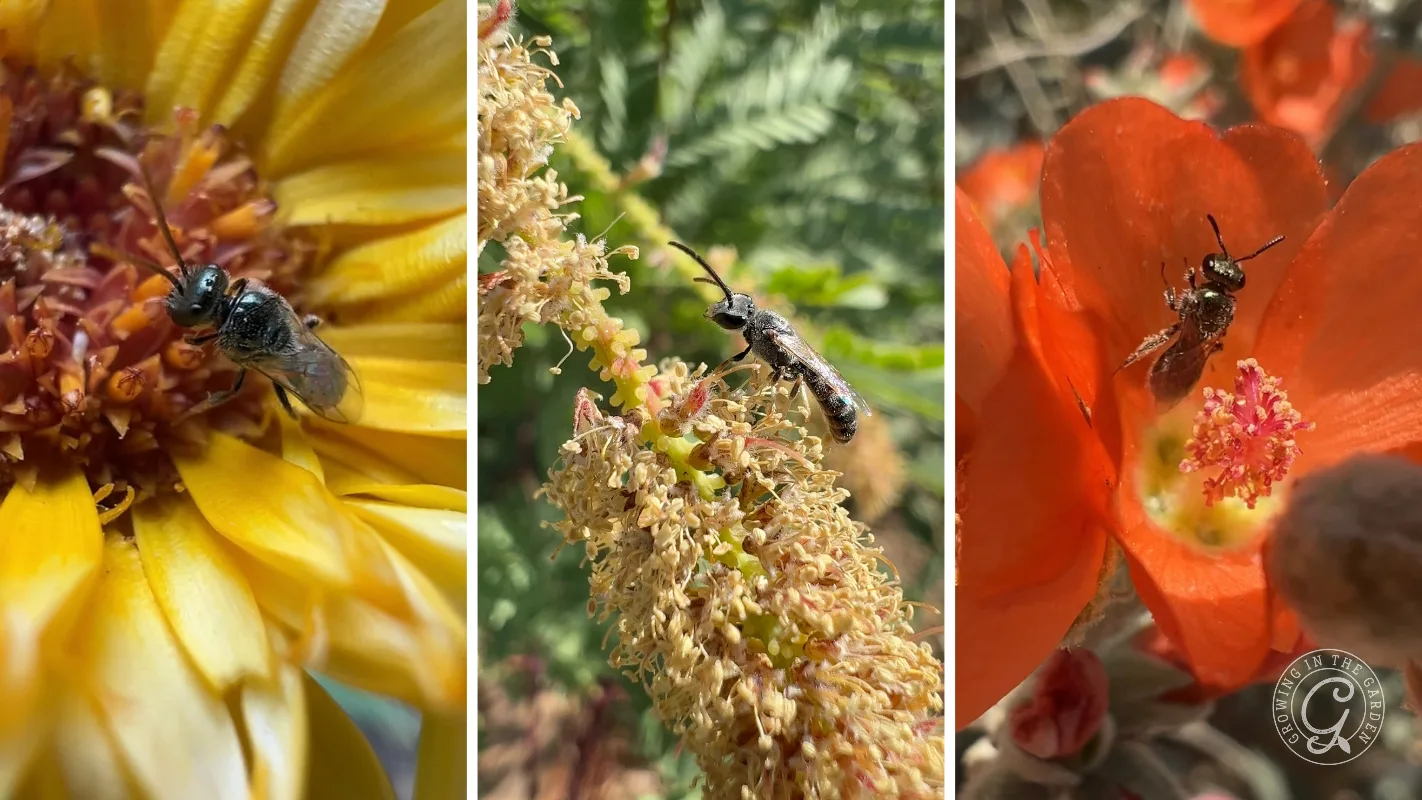
Yes, they get their name because they’re attracted to the moisture and salts on our skin. If one lands on you, there’s no reason to panic. They really don’t want to sting.
Digger Bees
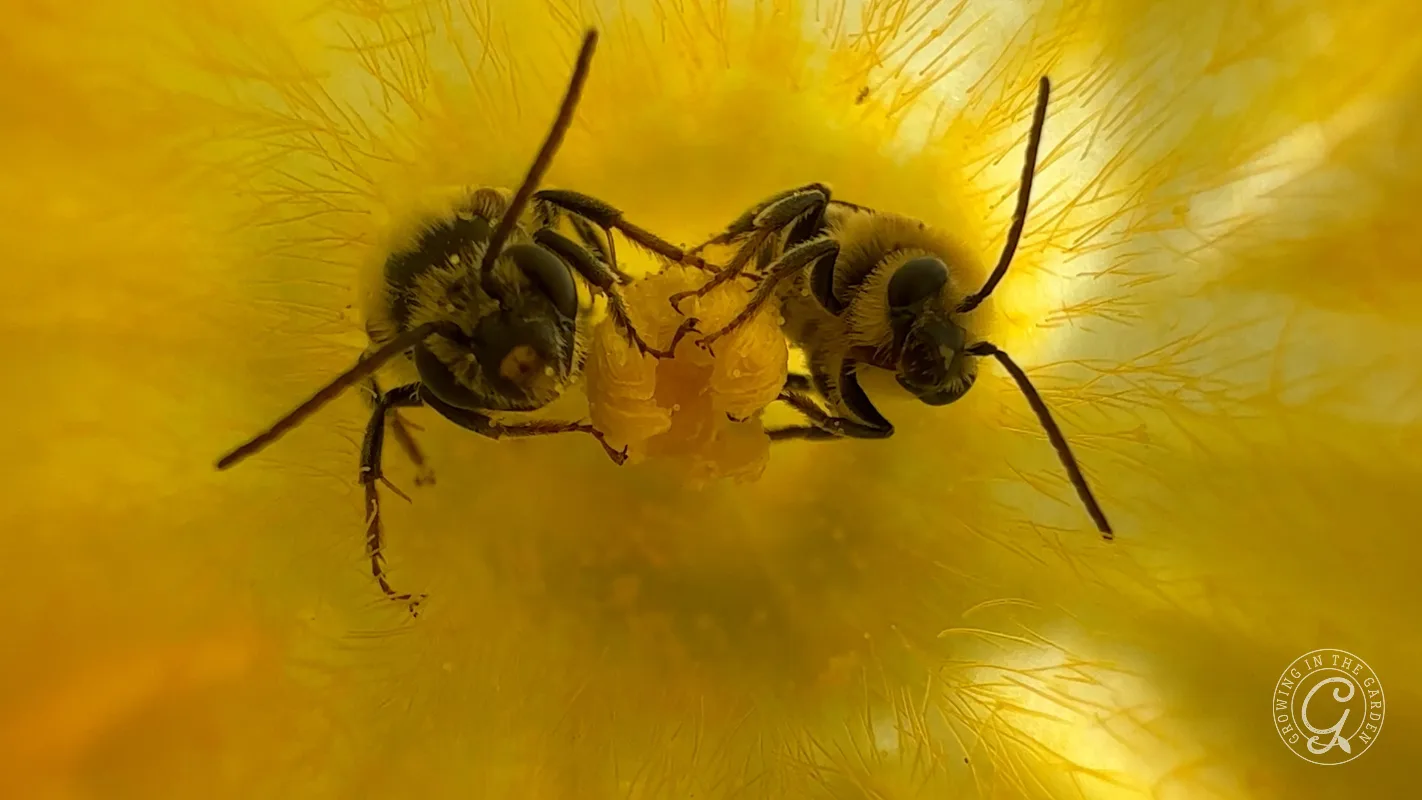
Digger bees are probably one of the hardest groups to pin down. That’s mostly because the name covers several groups. Some are considered “true diggers,” while others are ground nesters that aren’t considered diggers at all. It honestly gets a bit complicated.
Some are generalists, buzzing around any open flower, while others focus intently on one plant.
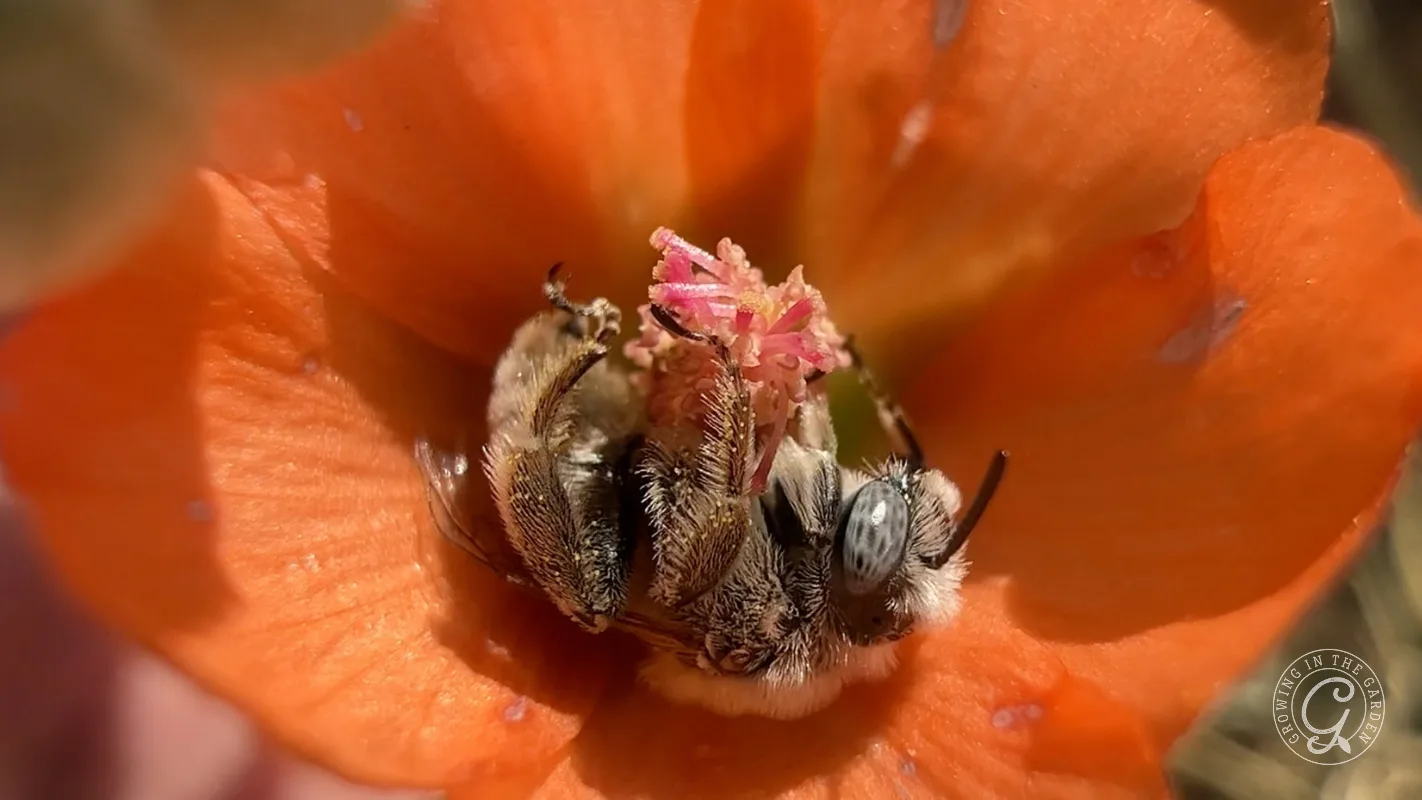
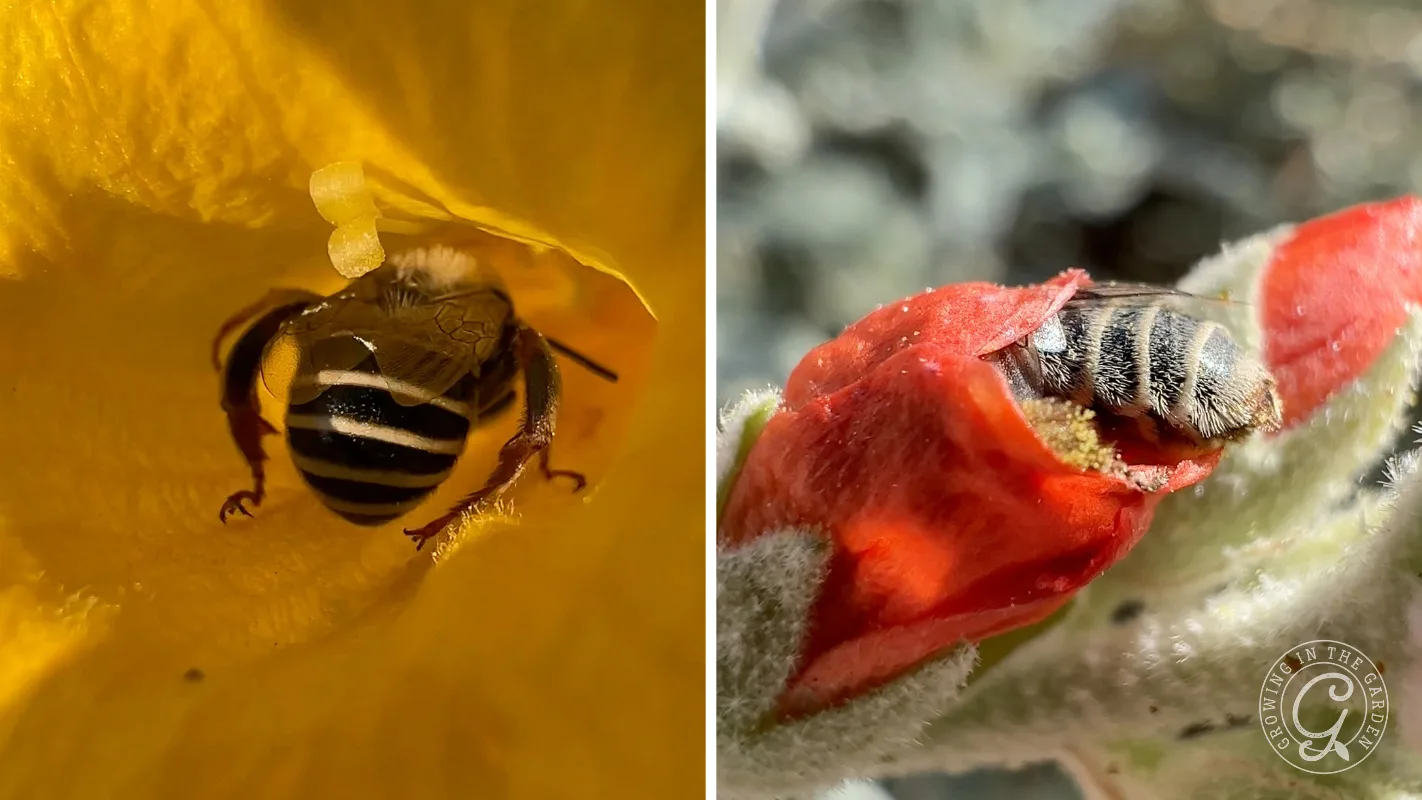
From squash and gourd bees to bees that visit only palo verde, digger bees vary widely in which flowers they visit, and in size, too.
This specialization shows something important about native bees. Not every bee is just a smaller version of a honey bee.
How to Make Your Garden a Home for Native Bees
We don’t need to make many changes to invite native bees into the garden. Most of what helps them, we should already be doing.
Avoiding chemicals, planting for different seasons, and observing are all approaches that encourage insects overall.
Only two things need to be tailored for bees: soil and nesting materials.
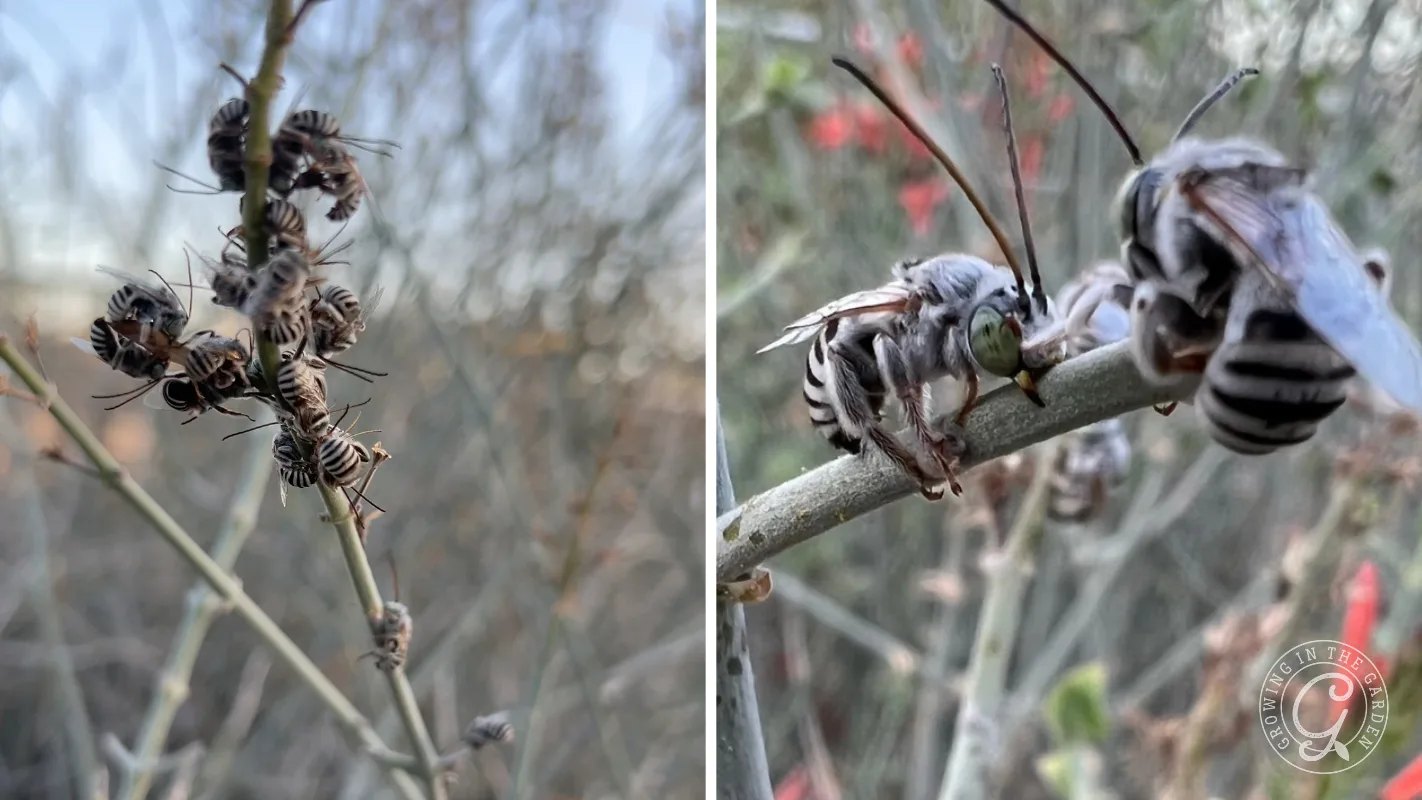
Many native bees nest in the ground, so they need bare soil to dig their nests. Yes, we want to mulch our gardens and keep most of the ground covered, but we can still leave a few bare spots for the bees.
Nesting materials, like dead branches, stems, and old stalks, mean allowing some wildness in the garden. There’s nothing wrong with wanting your garden to look a certain way, but not every corner needs to be tidy.
If we provide food throughout the year with plants that bloom at different times, leave some bare ground, and build a garden that supports other beneficial insects, the bees will show up.
A garden full of bees is a healthy sign. They all have a role. Our low desert can be challenging, but with a few small efforts, it can be remarkably productive.
Frequently Asked Questions About Native Bees
No. At least 70% of native Arizona bees are solitary. Each female builds and provisions her own nest.
Rarely. Male bees can’t sting at all, and females that can sting only do so as a last resort, usually when they’re trapped or roughly handled.
Most species dig small tunnels in bare soil, often leaving a tiny dirt mound with a small entrance. The rest nest in plant stems, dead wood, or even abandoned beetle tunnels.
Grow a diversity of plants, with natives alongside others. Leave a few areas of bare soil, without mulch, for bees to nest in. And limit or stop using chemicals, which helps everyone in the garden.
About the Author
For more than thirty years, Jean has grown plants and spent time in nature, both in California and Arizona. With a background in fine art, she honed her skills in observation, a critical element for anyone striving to have a garden. Currently, she is finishing her doctoral studies in ecology (with a special focus on entomology) while helping others work with nature to build a thriving ecosystem. You can find more of her work on YouTube and Instagram at @redshoegardener.
Leave a comment on Native Bees in Arizona Gardens and How to Attract Them