
Dragonflies vs. Damselflies: How to Attract Both to Your Garden
When I visited Jean’s garden, I pointed out what I thought was a dragonfly. Jean told me it was a damselfly. I hate to admit it, but I didn’t know they were two different insects, and I definitely didn’t know how to tell them apart. Learning more about both has been fascinating.
My friend Jean, who is finishing her doctoral studies in ecology with a focus on entomology, explains how to tell dragonflies and damselflies apart, what they eat, and when they show up in the low desert. She also covers something I didn’t expect: most of their mosquito control happens underwater, where the nymphs eat mosquito larvae before they ever fly. You don’t need a pond to attract them. A few dead stems left standing can be enough.
This post is part of the series Low Desert Garden Insects with Jean Elston.
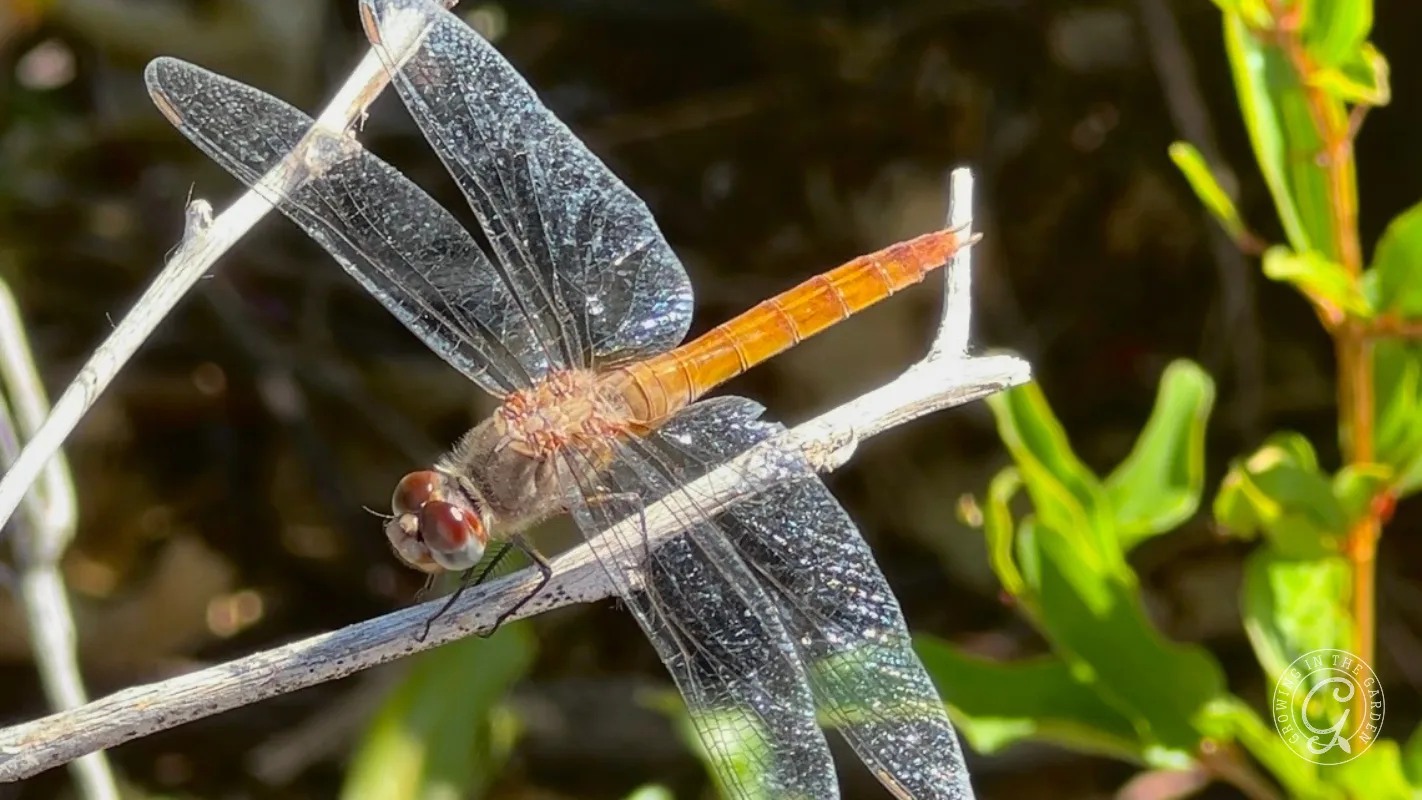
Dragonflies and damselflies are related but different insects. At rest, damselflies fold their wings along their bodies, while dragonflies hold theirs open. Both eat almost any insect they can catch, and their water-dwelling nymphs eat mosquito larvae. To attract them, avoid spraying insecticides, leave sticks and dead stems for perching, and add a small natural water feature if you have the space.
Key Takeaways: Dragonflies vs. Damselflies
- Dragonflies and damselflies are closely related but distinct insects, with key differences in wing position and hunting styles.
- Dragonflies are aerial predators that hunt insects mid-air, while damselflies usually catch insects from plants.
- Both insects help control mosquito populations, especially in their larval stage, by feeding on mosquito larvae in water.
- Creating a habitat for dragonflies and damselflies involves providing perches and a natural environment, such as dead stems or minimal landscaping.
- In Arizona, these insects thrive with adequate water and food; they appear seasonally, especially in late summer and fall.
What we will cover:
- How to Tell Dragonflies and Damselflies Apart
- What Do Dragonflies and Damselflies Eat?
- Dragonflies, Damselflies, and Mosquitoes: It All Starts With Water
- How to Attract Dragonflies and Damselflies to Your Garden
- When Do Dragonflies and Damselflies Show Up in Arizona?
- Bonus Fact: How Dragonfly Eyes Work
- Frequently Asked Questions About Dragonflies and Damselflies
- About the Author
Guest post and photos by Jean Elston
Branches of all shapes and sizes decorate the yard. Not all of them are attached to a living plant. Many have been placed on purpose to attract these amazing insects. On October mornings, the garden seems filled with them darting across the sky, then landing delicately on the tip of a branch.
There is no question that both dragonflies and damselflies fascinate us.
The diversity of both insects in Arizona, even in our low desert region, can be a surprise. The state has over sixty species of damselflies and more than eighty species of dragonflies, which shows that even in the desert, insects tied to water can do well.
Still, you might wonder how they help in the garden, since it isn’t always clear what they eat. There’s also the question of whether they’re the same insect, and whether damselflies are just smaller dragonflies. And if they’re this amazing to have around, how do we create a home for them?
First, the differences.
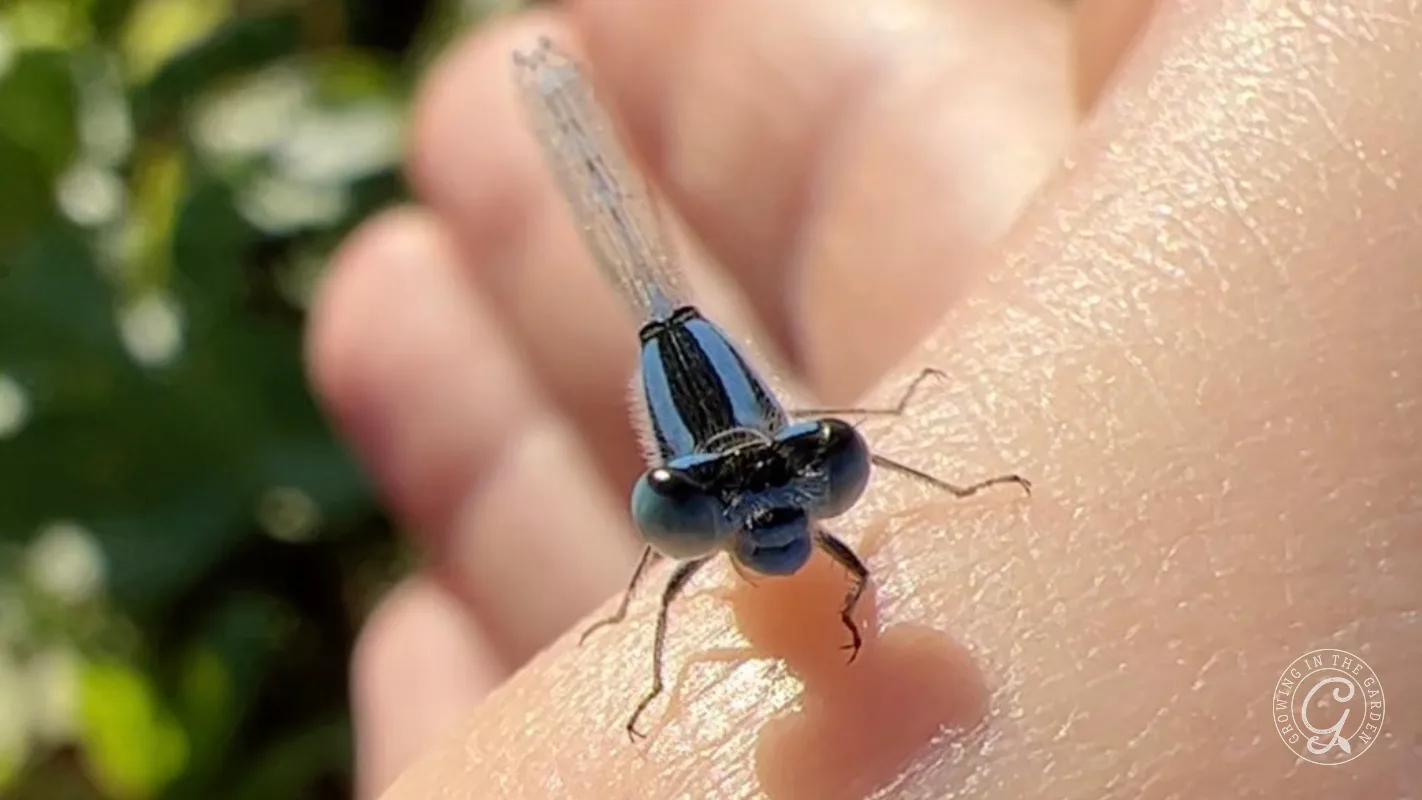
How to Tell Dragonflies and Damselflies Apart
Dragonflies and damselflies belong to the same insect order (Odonata) and share a similar lifecycle, but they branch off into different suborders and families. They’re closely related cousins, but not siblings.
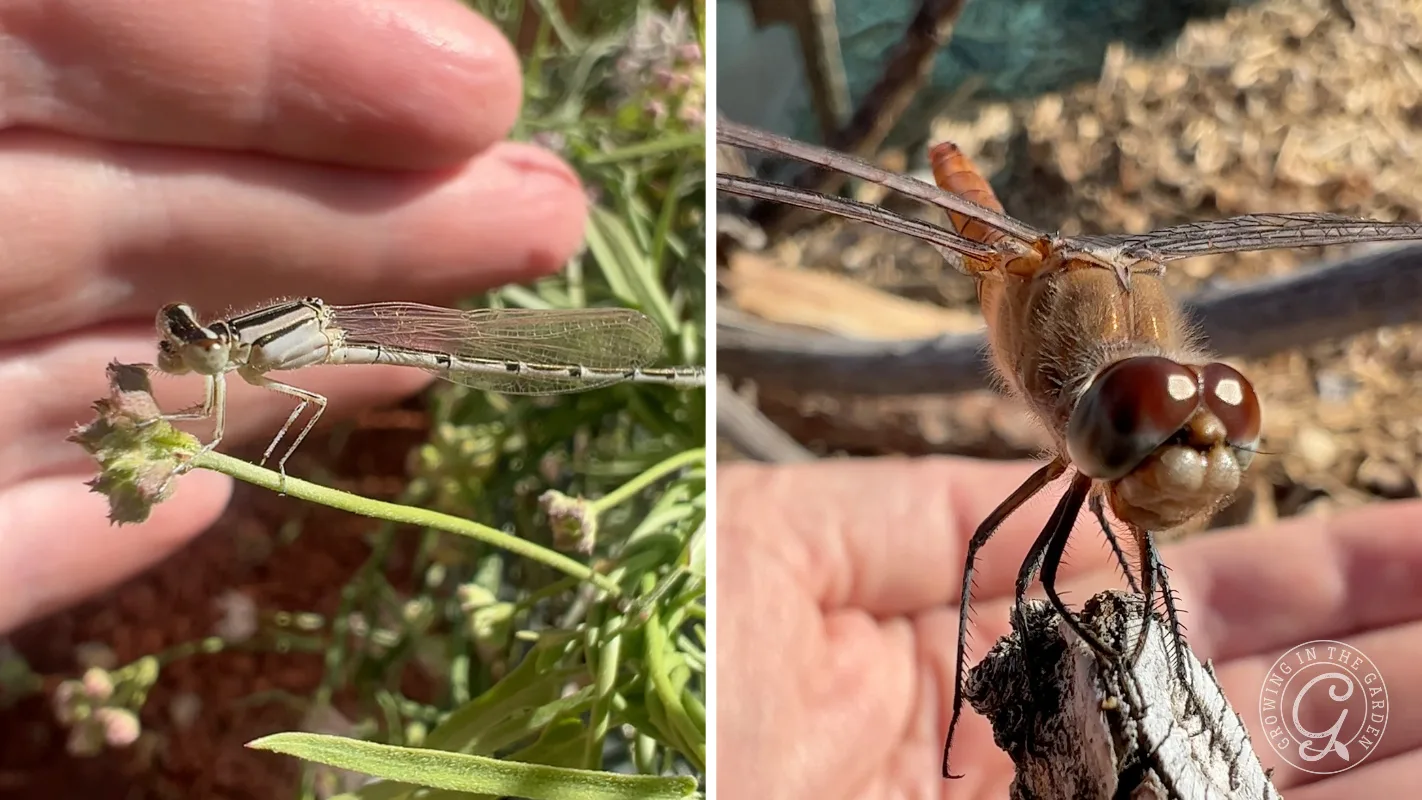
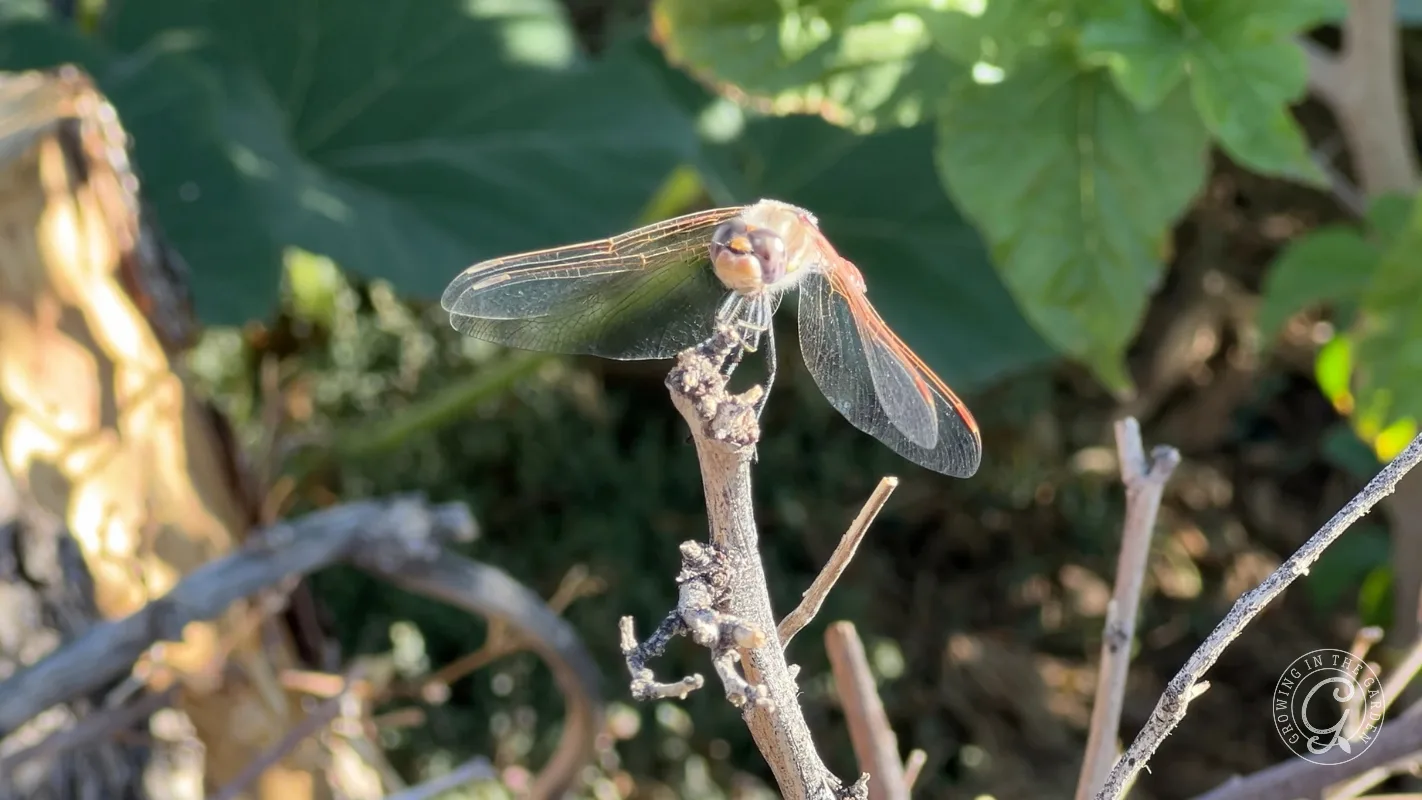
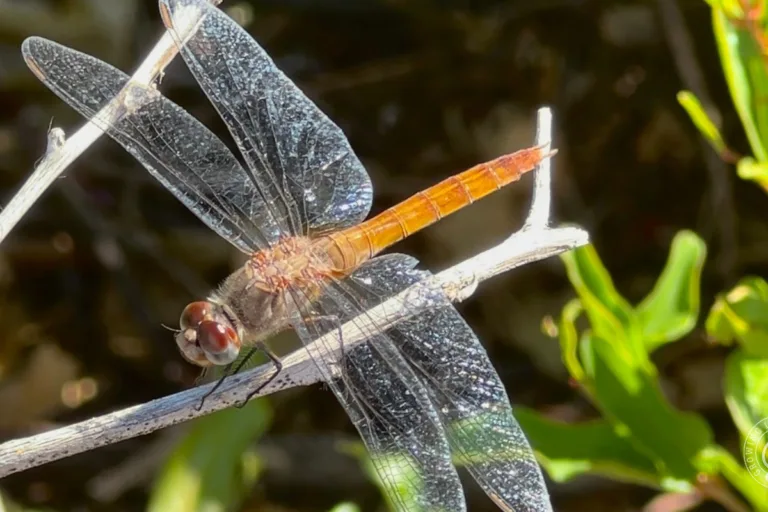
The damselflies in our gardens are usually smaller, even delicate. They’ll perch on branches, but you’re more likely to find them on stems and blades of grass. The easiest way to tell them apart is when they’re resting. With rare exceptions, damselflies fold their wings back along the body, while dragonflies keep their wings open.
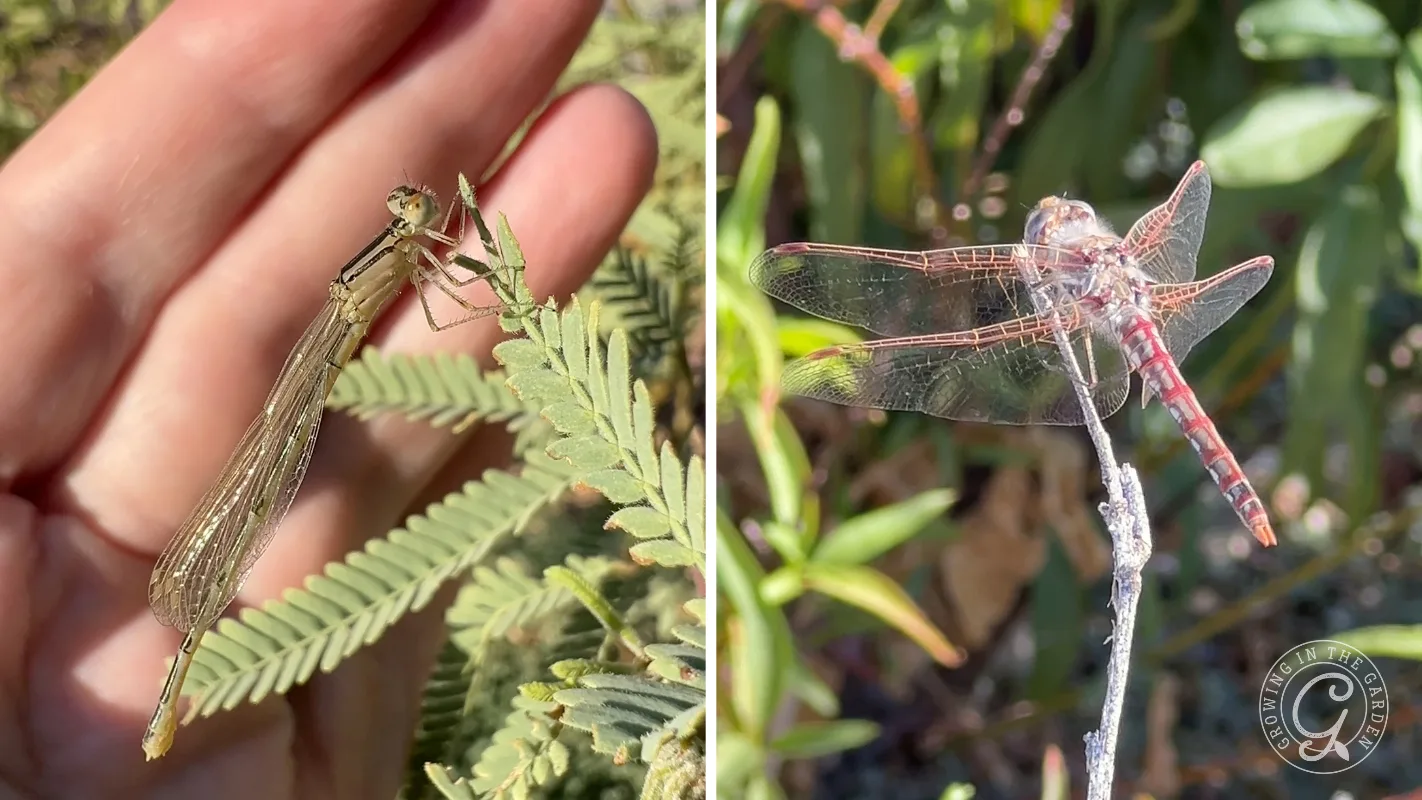
Their hunting styles differ too. Dragonflies are amazing aerial predators and catch almost every insect they chase in mid-air. Damselflies pluck insects from plants instead, partly because they aren’t as agile in the air.
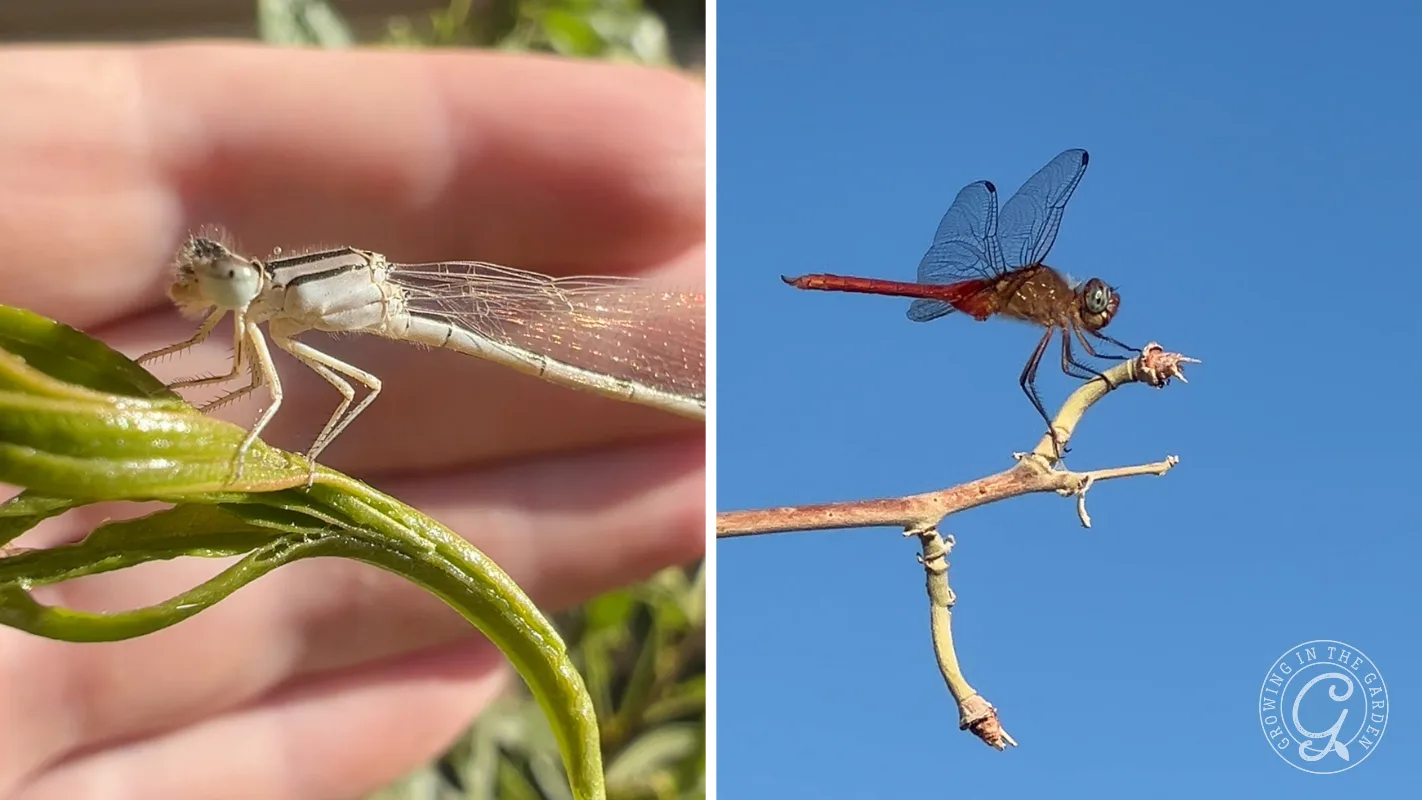
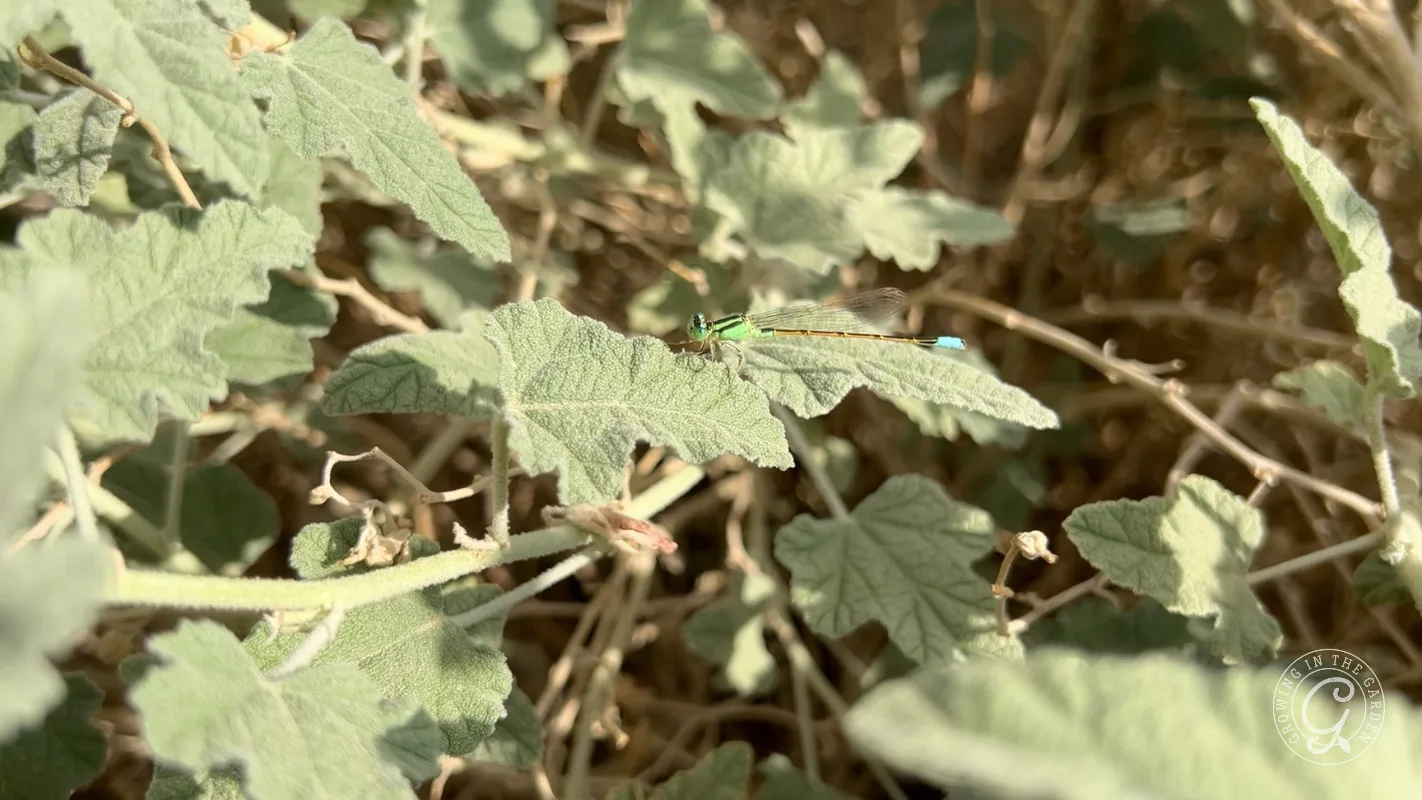
So damselflies hover among grass stems and bushes, plucking insects off the plants, while dragonflies hunt overhead. But what are they eating?
What Do Dragonflies and Damselflies Eat?
Despite their different hunting styles, they eat a lot of the same insects.
Dragonflies are often praised for eating mosquitoes, and that’s a big reason people want to attract them. The adults do eat mosquitoes, but their larval form, which I’ll cover shortly, does more for mosquito control.
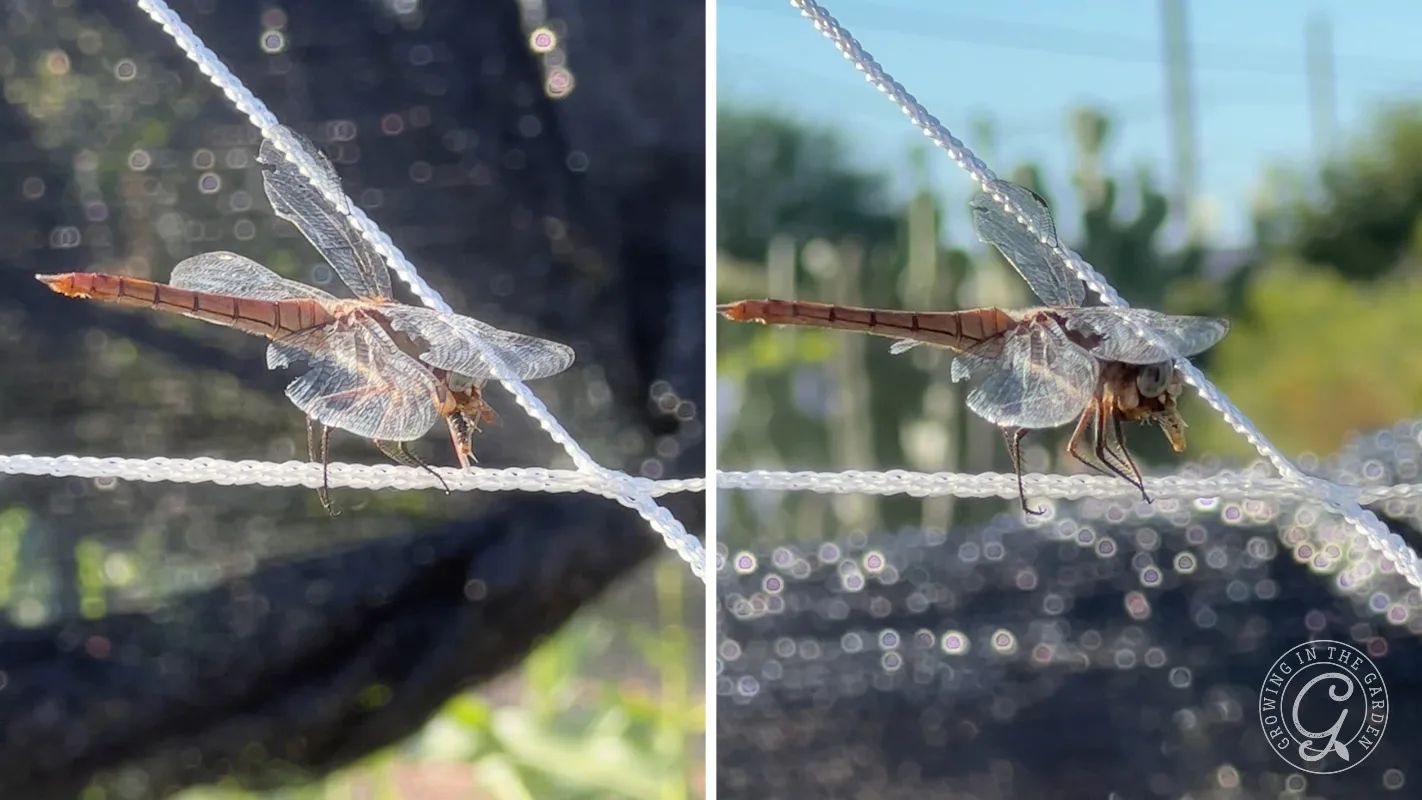
The only insects a damselfly or dragonfly won’t eat are the ones too large to catch or quick enough to get away. They eat everything from midges and gnats to mayflies, moths, bees, wasps, and even each other.
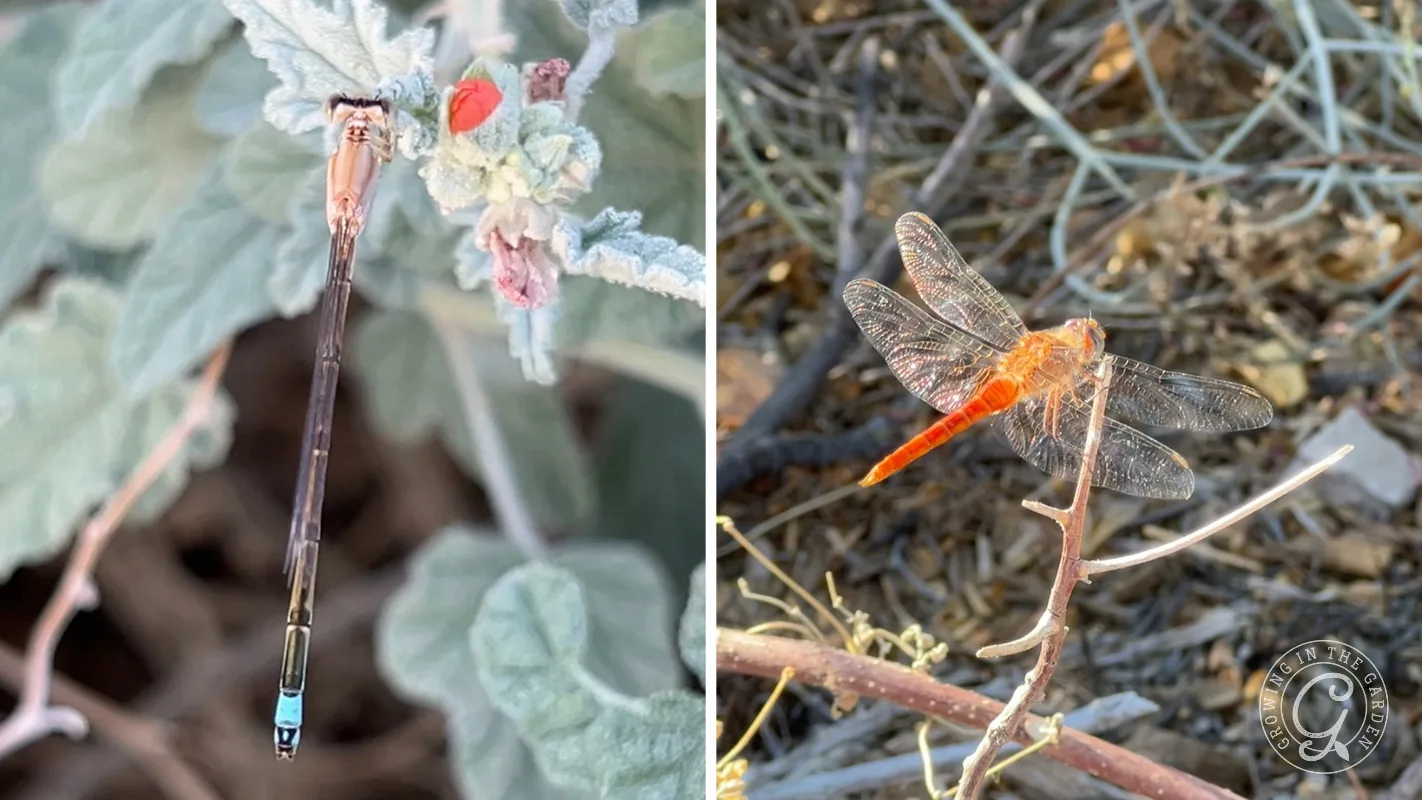
A dragonfly will try to eat almost anything. A damselfly, because of its size, is a little more limited.
If the adults are this voracious, what are the young doing? In fact, where are the young?
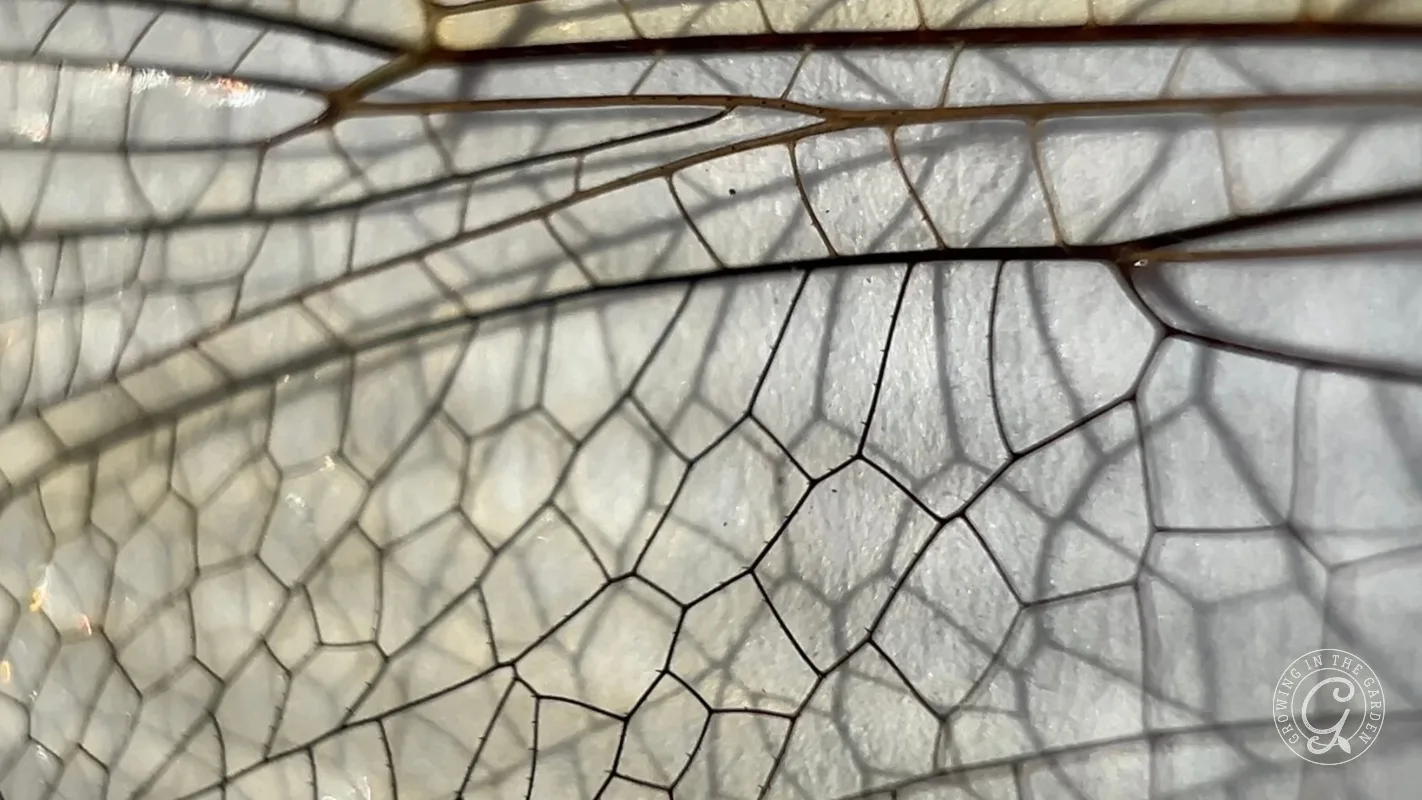
Dragonflies, Damselflies, and Mosquitoes: It All Starts With Water
This is probably the biggest reason it’s hard to picture these insects in Arizona: they spend much of their lives in water. Yet Arizona, even our low desert region, has plenty of habitat for them.
Any area with fresh water, from springs to ponds to a garden tub, can provide a home for these insects.
Water matters so much because of the young. Both insects lay their eggs in water and need gentle streams or still ponds to breed. That brings us back to mosquitoes.
Most of us know not to leave standing water, since it doesn’t take much for mosquitoes to breed. But mosquito larvae are exactly what dragonfly and damselfly nymphs feast on, so they take care of mosquitoes before they ever become adults.
Does this mean you must have a pond or water feature for dragonflies or damselflies to show up?
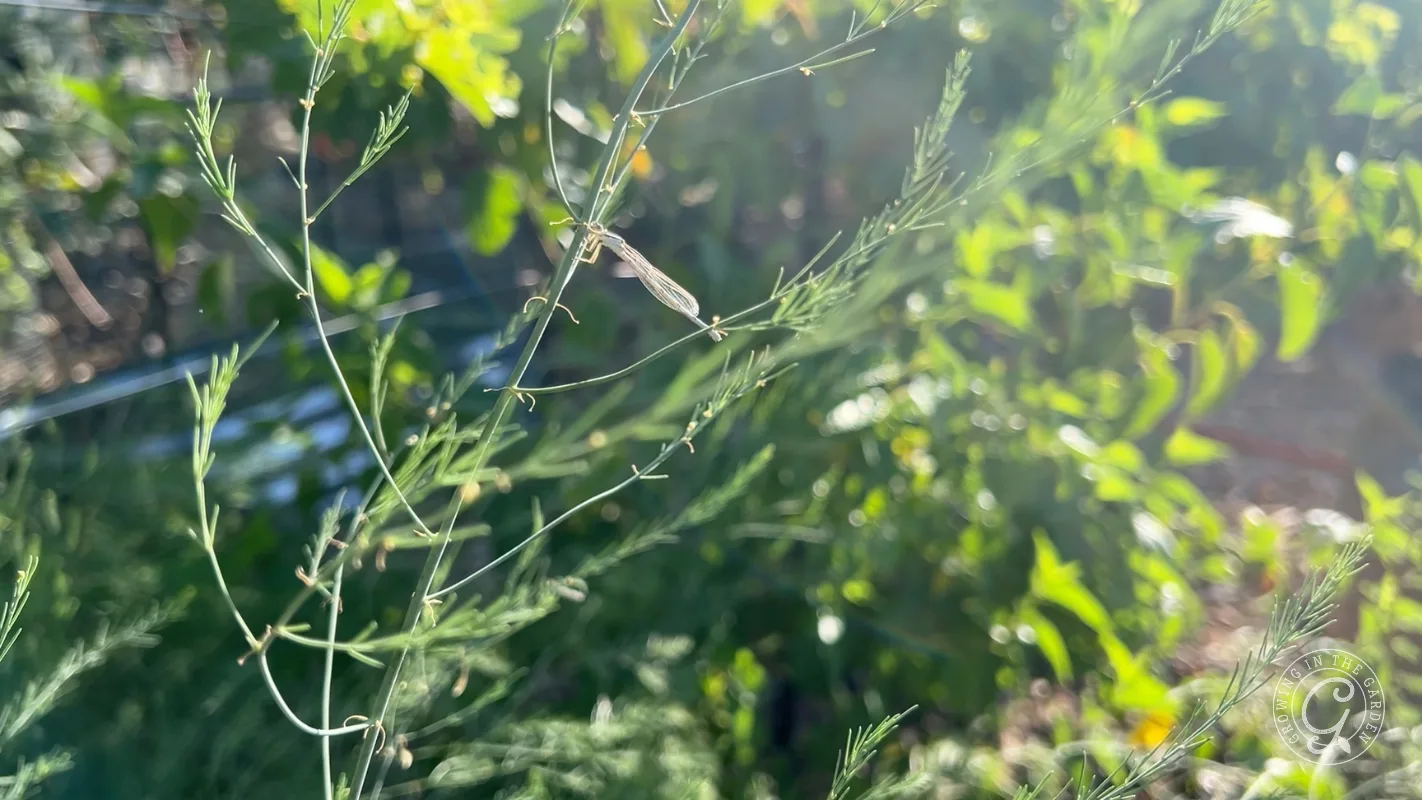
No. They’ll show up as long as there are insects for them to eat. A water feature can be a great option if you have the space and don’t mind a little extra work. It doesn’t have to be complicated. A naturalistic container with some plants and other natural elements can be perfect.
There are other ways to encourage them to spend time in the garden, and they take even less effort.
How to Attract Dragonflies and Damselflies to Your Garden
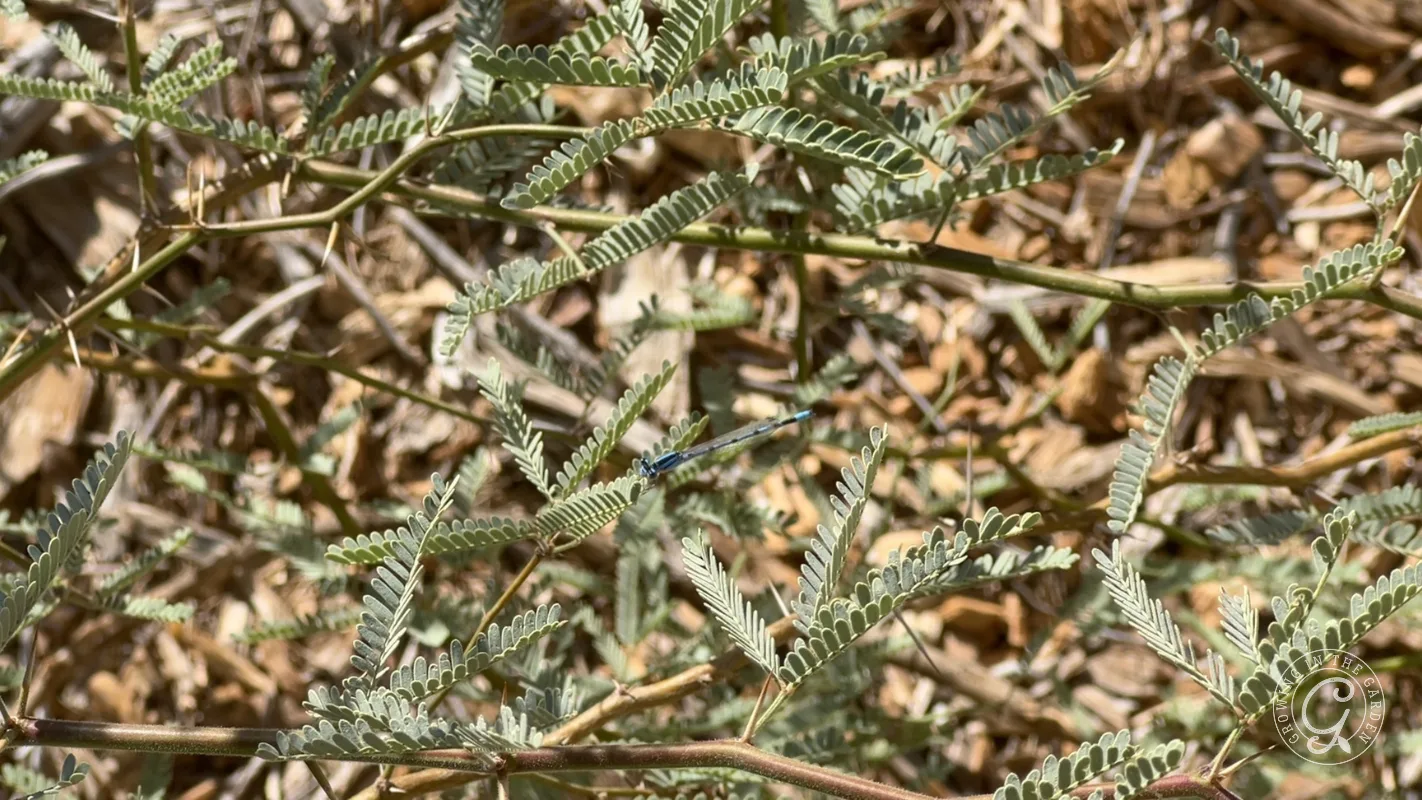
Damselflies seem content to perch on any stem, blade of grass, or twig. Dragonflies can be pickier.
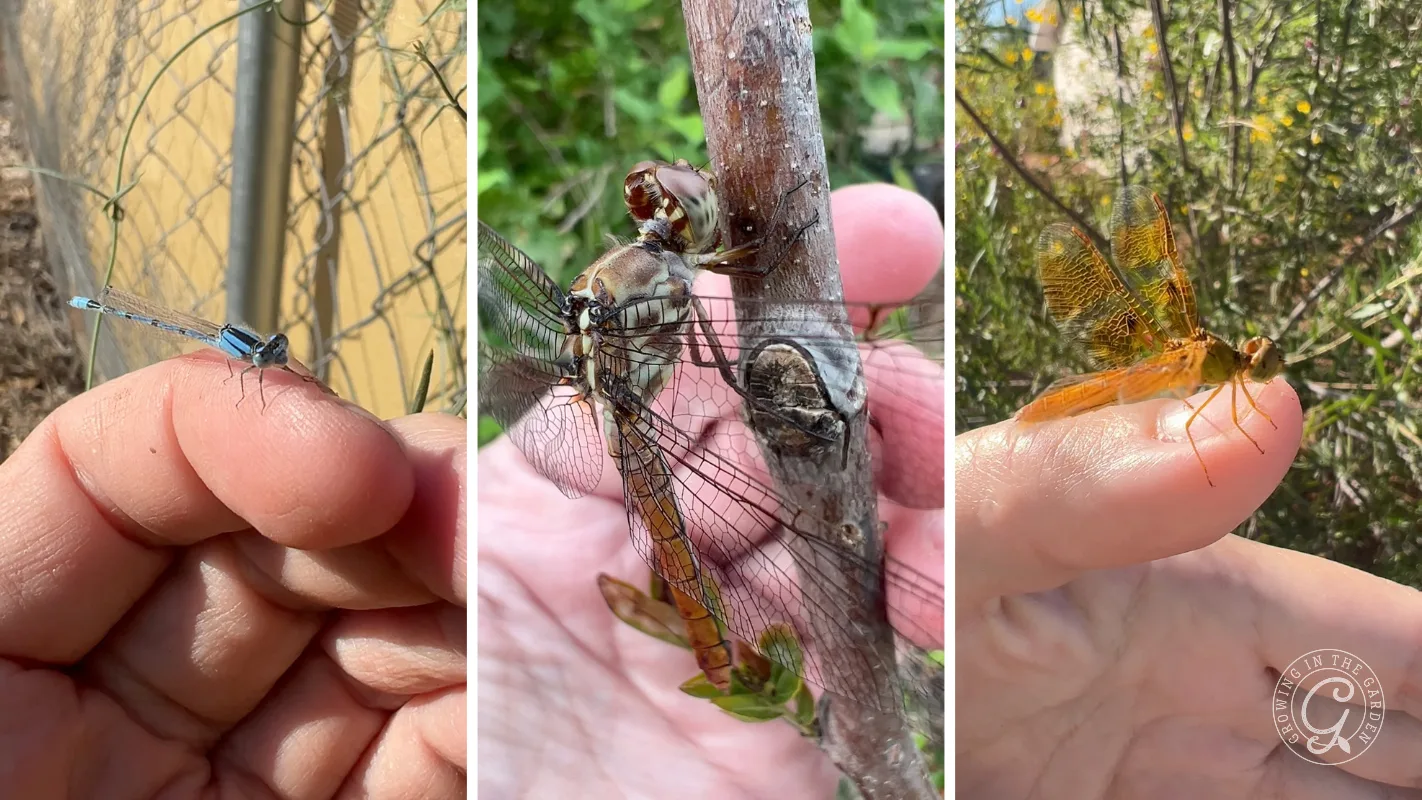
They will perch low to the ground, and sometimes in spots you’d never expect, as I’ve found several times. Still, they prefer vertical perches where they can watch for their next meal.
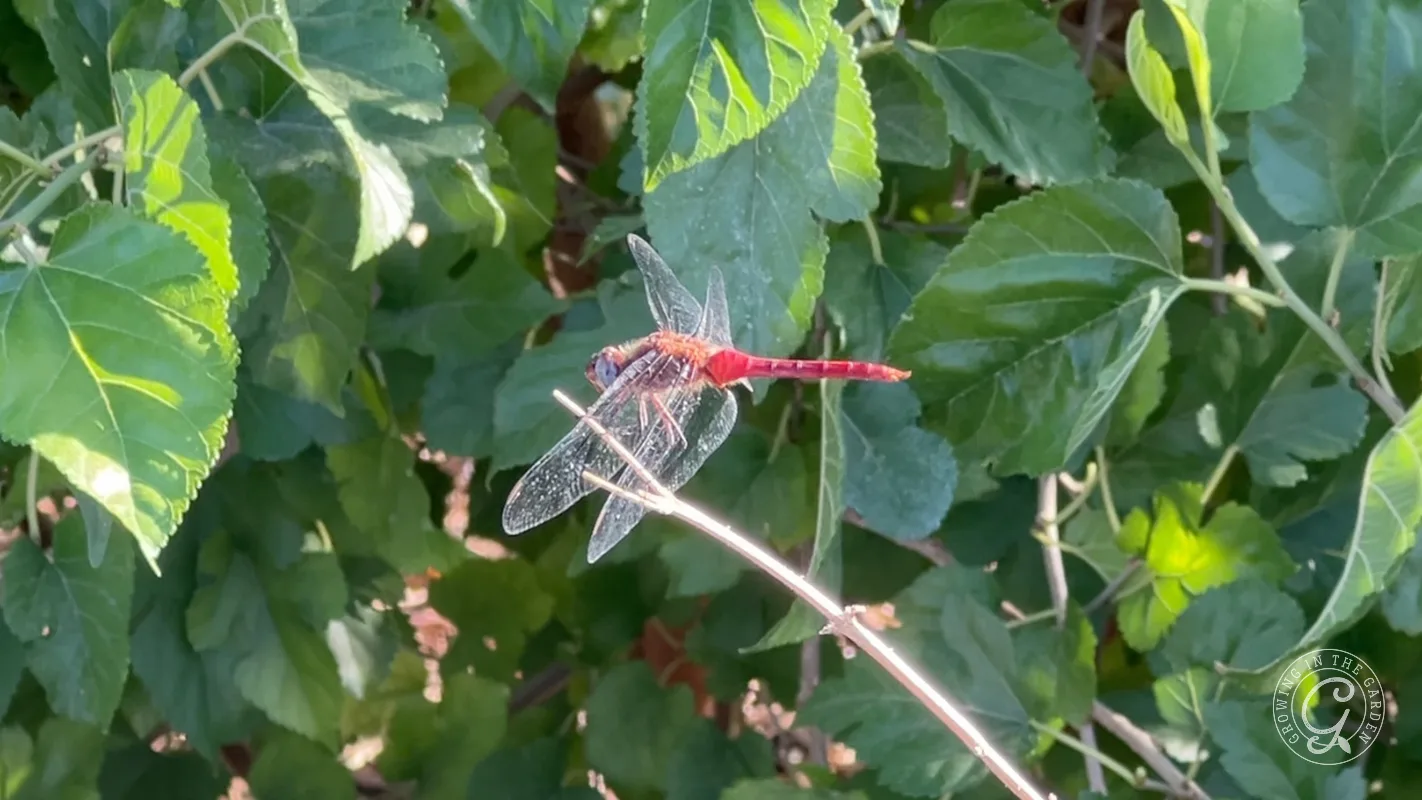
Dead stems, sticks, exposed twigs, and even fencing all make good hunting platforms. From one of these perches, a dragonfly watches the air for prey. Once it spots something with those enormous compound eyes, it launches an attack, then often returns to the same spot several times.
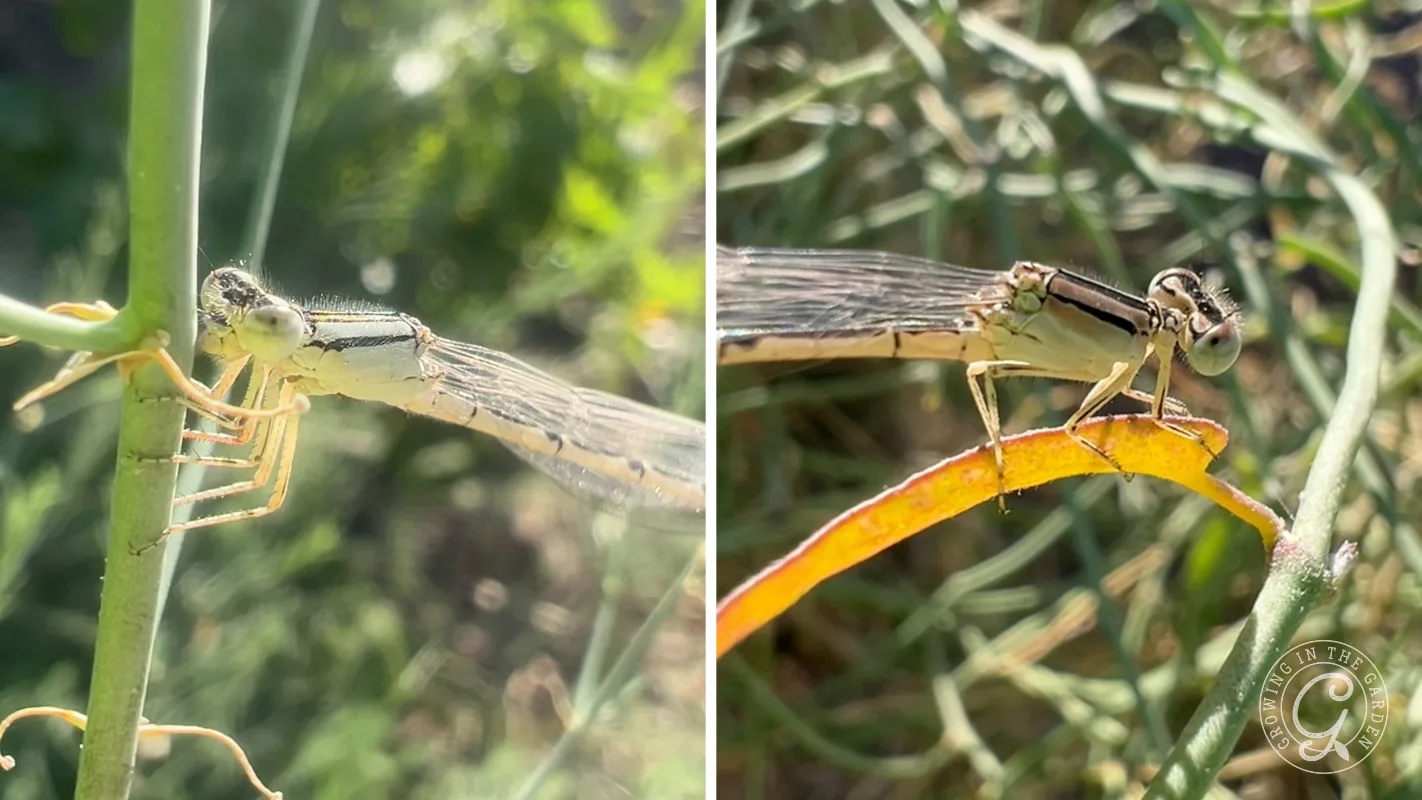
Damselflies, on the other hand, are often found among bushes, hovering from leaf to leaf and plucking insects as they go. They lack the strength for aerial hunting, but they catch many insects the dragonflies miss.
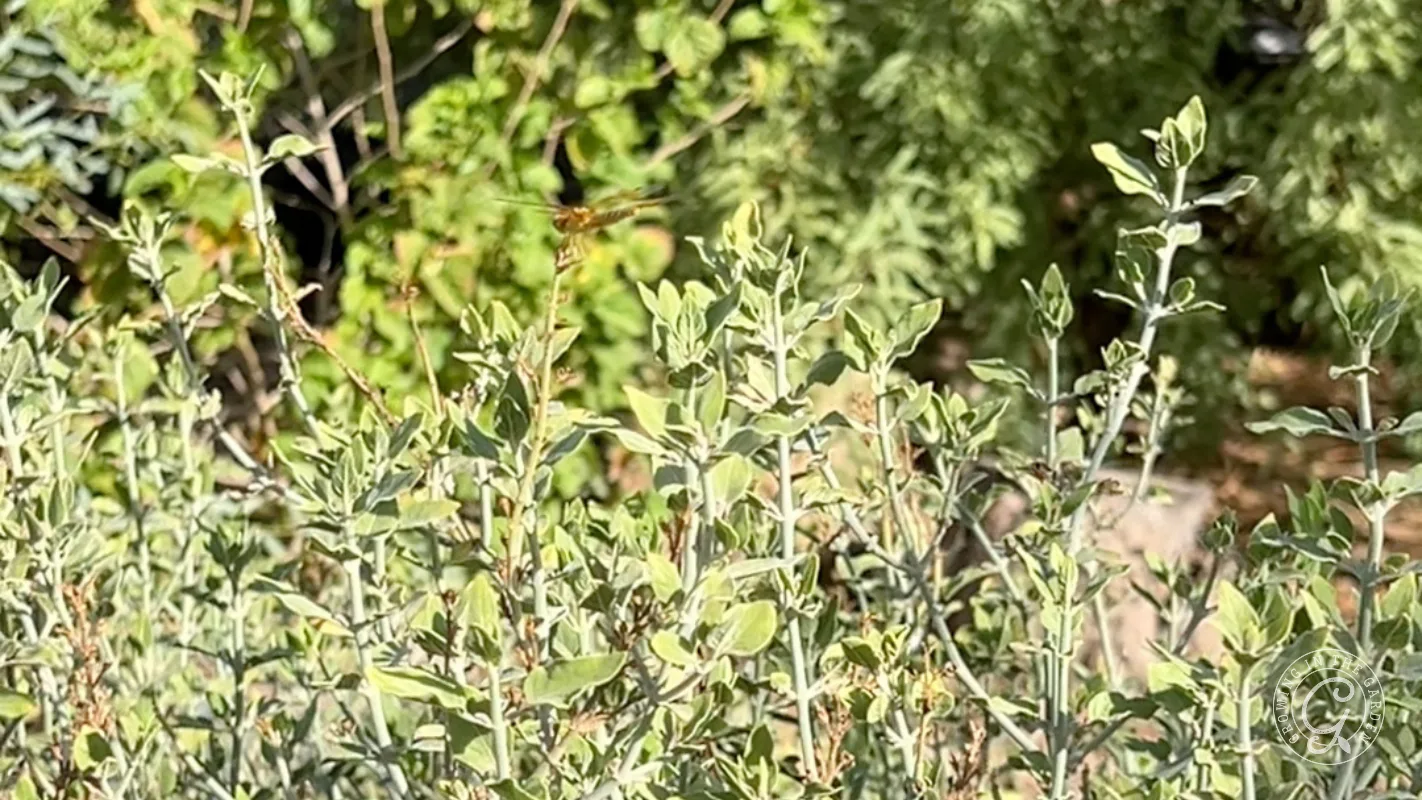
That means having a garden that isn’t tidy in every corner. A dead plant can still be useful. A few standing stems help create habitat, giving dragonflies and damselflies places to hunt with shelter nearby.
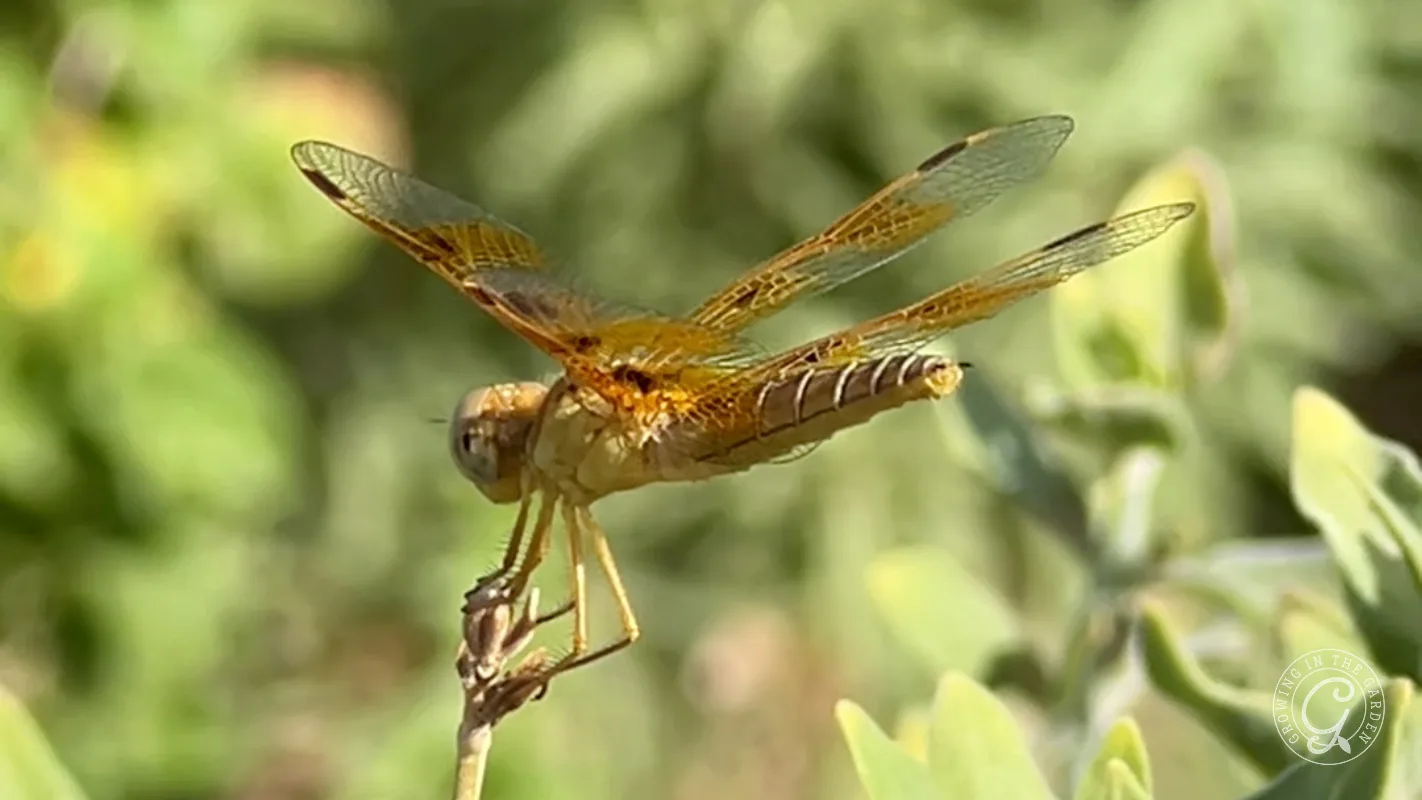
The garden doesn’t have to become a chaotic mess. Dragonflies and damselflies need insects to eat, and the best way to support them is to let a few corners stay more natural.
When Do Dragonflies and Damselflies Show Up in Arizona?
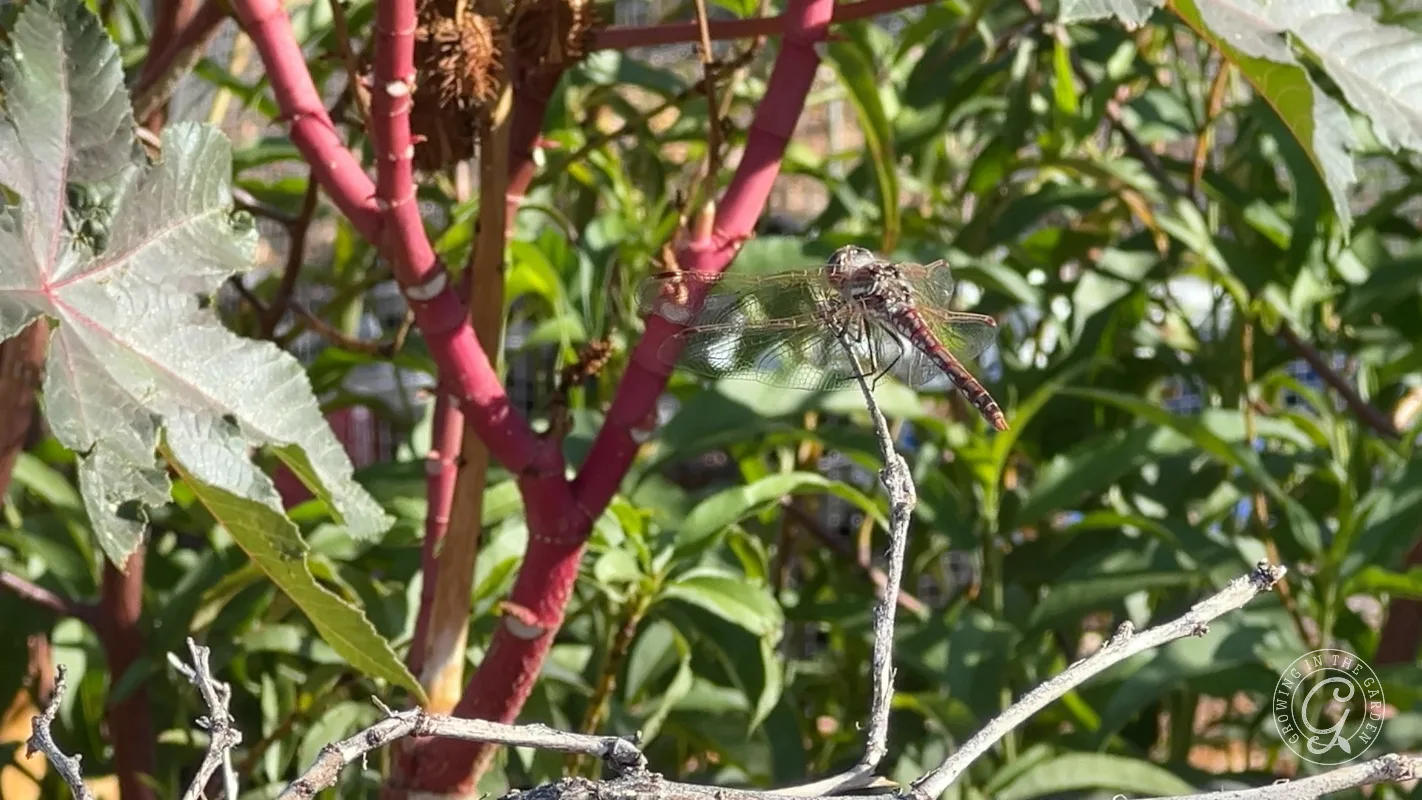
Even in the best garden habitat, dragonflies and damselflies come and go with the seasons. When they arrive and leave depends on your location and the species. Learn more about the different seasons that beneficial insects have.
In my area, a few dragonflies are around all year, but most show up in late summer and into fall. Damselflies are here year-round, though different species show up at different times.
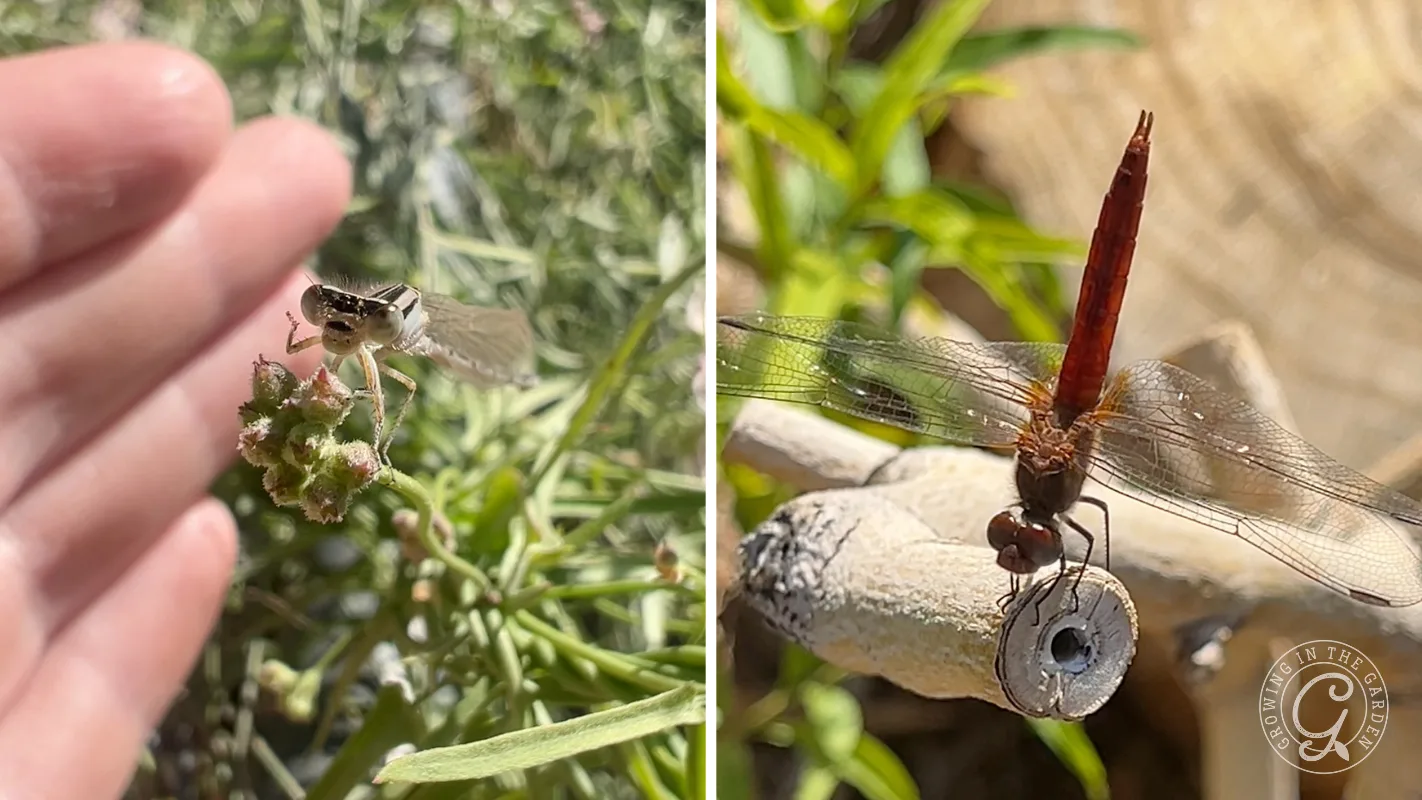
Weather plays a role too, especially monsoon season, which changes aquatic habitats and how many insects are available. A poor monsoon season means fewer breeding sites and less activity.
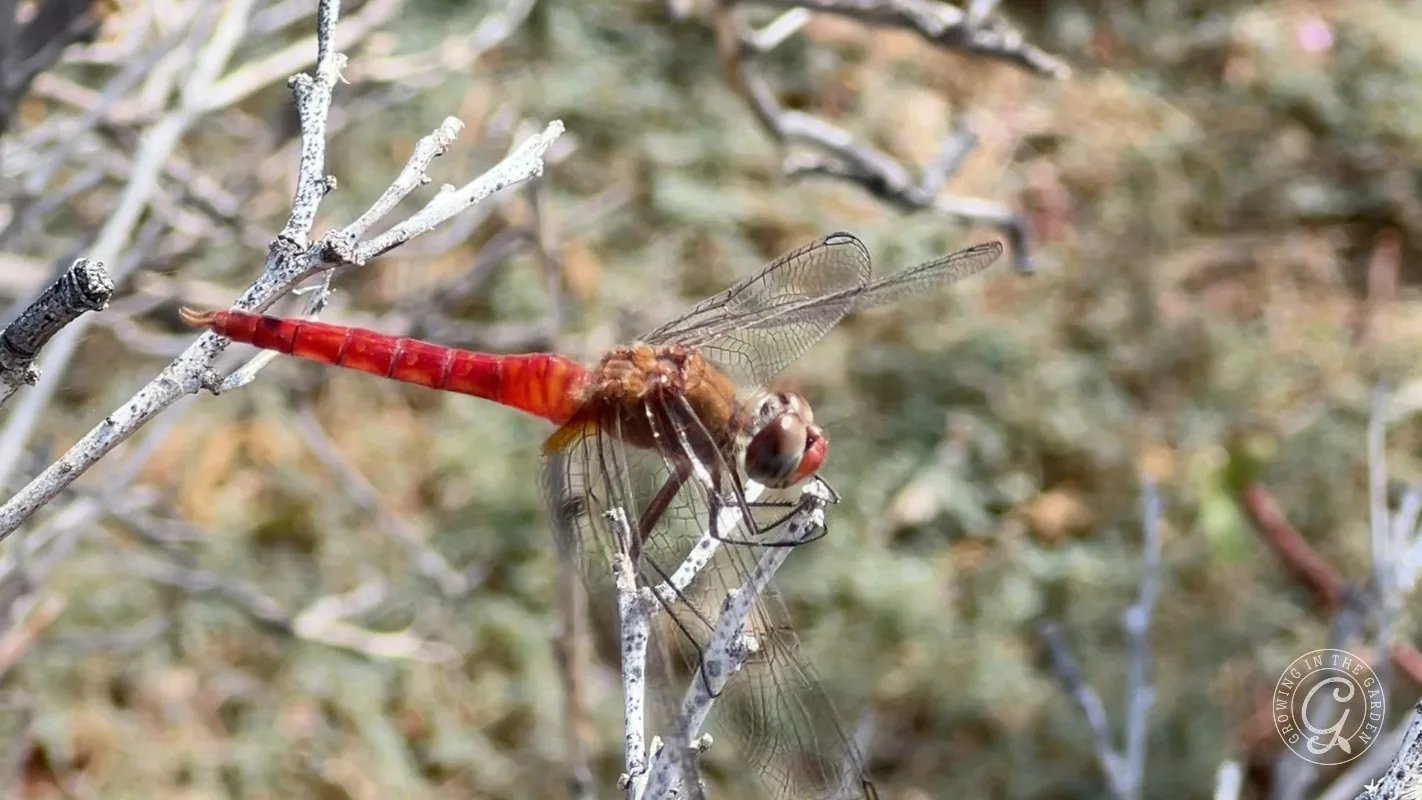
If we create a space where they can find food, they will show up. The number of species is remarkable, from the Red-tailed Pennant to meadowhawks, some with colors far more vibrant than you’d expect.
Attracting dragonflies and damselflies works the same way as attracting all the other insects we want. Give them food, water, and shelter, and you can enjoy watching them, hopefully as they come to think of your garden as home.
Bonus Fact: How Dragonfly Eyes Work
I mentioned compound eyes, which may be an unfamiliar term. Their eyes are made up of tiny individual units called ommatidia. Each one works a bit like a pixel on a computer screen, with its own lens taking in information. Depending on the species and eye size, thousands of these ommatidia send information to the brain, which pieces it together into a complete picture.
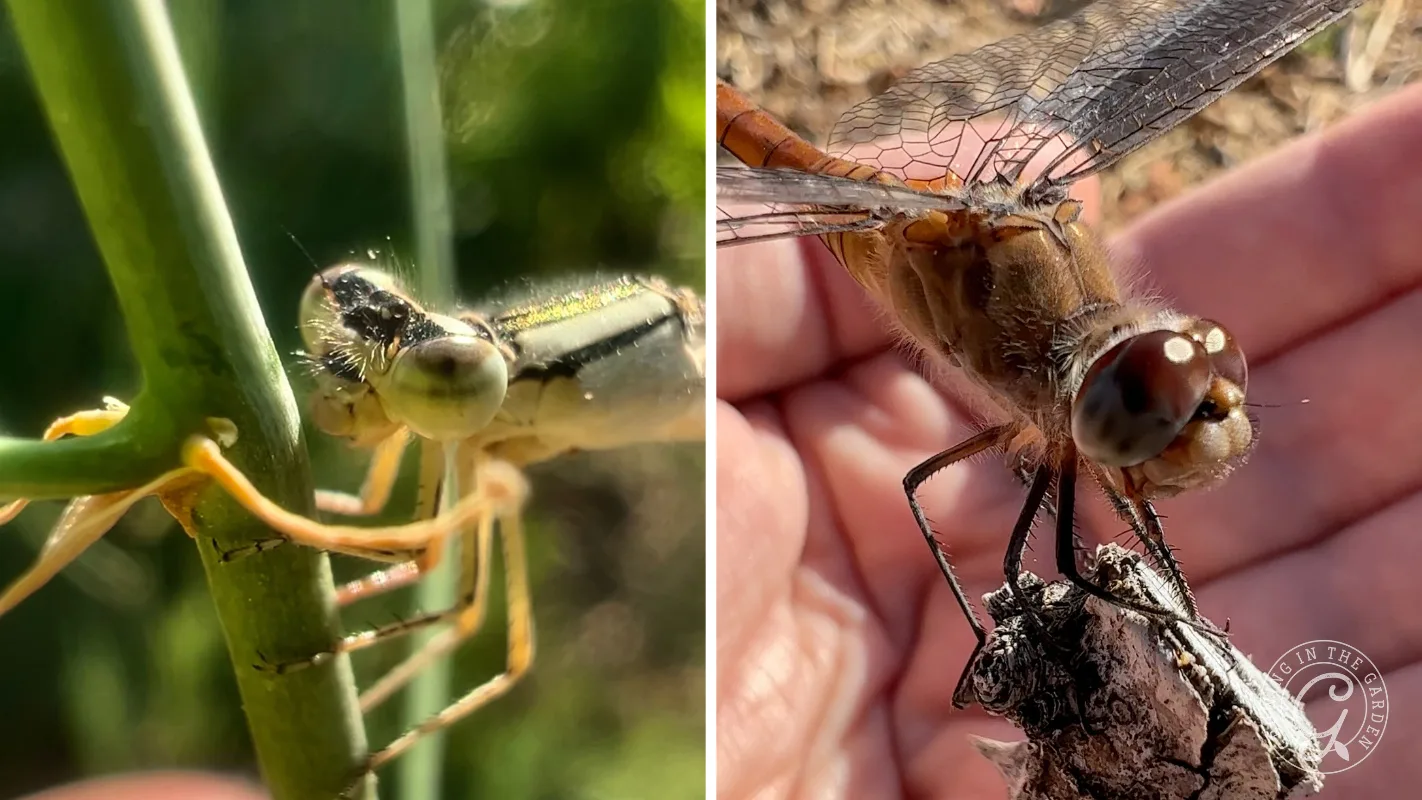
What does this mean for a dragonfly? Its vision would be poor for recognizing a face, but it’s excellent at picking up fast movement. For a predator hunting flying insects, that’s a big advantage.
Frequently Asked Questions About Dragonflies and Damselflies
No. They don’t bite or harm people.
No. They’re closely related and eat similar insects, but they’re different insects. The easiest way to tell them apart is how they hold their wings at rest.
Yes, even as adults. But they have a bigger impact at the larval stage, when dragonfly and damselfly nymphs eat mosquito larvae in the water.
The most important step is to avoid spraying chemicals that kill the insects they eat. Next, give them plenty of places to perch. If you have the space and interest, a natural pond helps, but it isn’t essential.
Both eat anything they can catch, from midges and gnats to moths and wasps. Larger dragonflies will even eat smaller dragonflies when they get the chance.
About the Author
For more than thirty years, Jean has been growing plants and spending time in nature, both in California and Arizona. With a background in fine art, she honed her skills in observation, a critical element for anyone striving to have a garden. Currently she is finishing her doctoral studies in ecology (special focus on entomology), while helping others to work with nature in order to have a thriving ecosystem. You can find more of her work on YouTube and Instagram at @redshoegardener.
Leave a comment on Dragonflies vs. Damselflies: How to Attract Both to Your Garden