
Praying Mantis in the Garden: Arizona’s Patient Predator
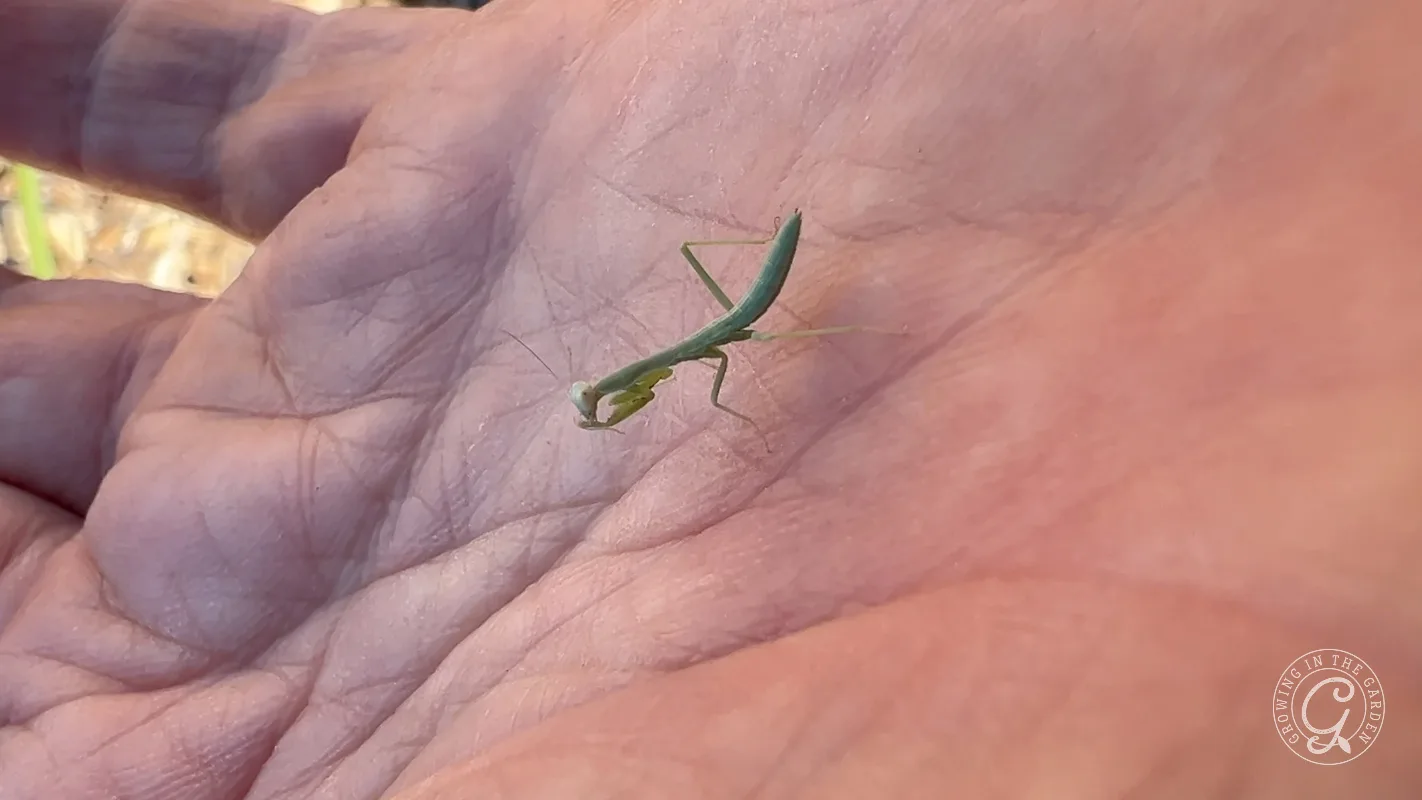
One of my favorite garden memories is watching a large praying mantis lay her ootheca on the trunk of the vitex tree in my front yard. At first I didn’t know what was happening. Then I saw the egg case take shape and realized how lucky I was to witness it. My kids were with me, so they got to see it too, and I filmed the whole thing. I love sharing my garden with these majestic creatures, and I’m grateful every time I see one.
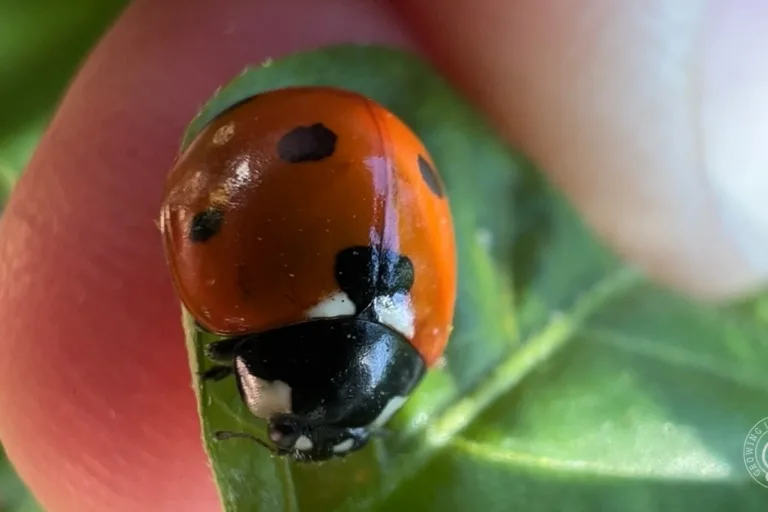
My friend Jean, who is finishing her doctoral studies in ecology with a focus on entomology, covers how praying mantises hunt, why they show up in the low desert during the summer heat, how to find their egg cases, and how to tell the native Arizona mantises from the introduced ones. She also explains why she doesn’t recommend buying mantis egg cases. If you’ve read her post on ladybugs, the timing will make sense. Mantises move in right about when the ladybugs leave.
Key Takeaways: Praying Mantis in the Garden
- Praying mantises are fascinating garden predators that can be native or introduced species in Arizona.
- Native mantises include Arizona Mantis and Arizona Unicorn Mantis, while introduced species like the Chinese Mantis are more common.
- These insects are ambush predators that eat various insects, including beneficial ones, so they aren’t a foolproof solution for pest control.
- Attracting praying mantises involves providing food, water, and shelter without specific plants to draw them in.
- Avoid purchasing mantis eggs as most sold are non-native; instead, create a habitat that supports local mantises.
What We’ll Cover:
- A Unique Posture for a Unique Insect
- Close Encounters: When Mantises Show Up and What They Eat
- How to Attract Praying Mantises to Your Garden
- Where to Find Praying Mantises and Their Egg Cases
- Native vs. Introduced Praying Mantises in Arizona
- Praying Mantis Species in Arizona
- Frequently Asked Questions About Praying Mantises
Praying mantises are ambush predators that eat whatever they can catch, including bees and butterflies. They’re a helpful part of the garden, but they can’t handle pest control on their own. Arizona has native mantises, though the ones you’ll see most often are introduced. Skip buying egg cases, since most sold aren’t native. Attract mantises the same way you attract other beneficial insects: food, water, and shelter.
This post is part of the series Low Desert Garden Insects with Jean Elston.

Guest post and photos by Jean Elston
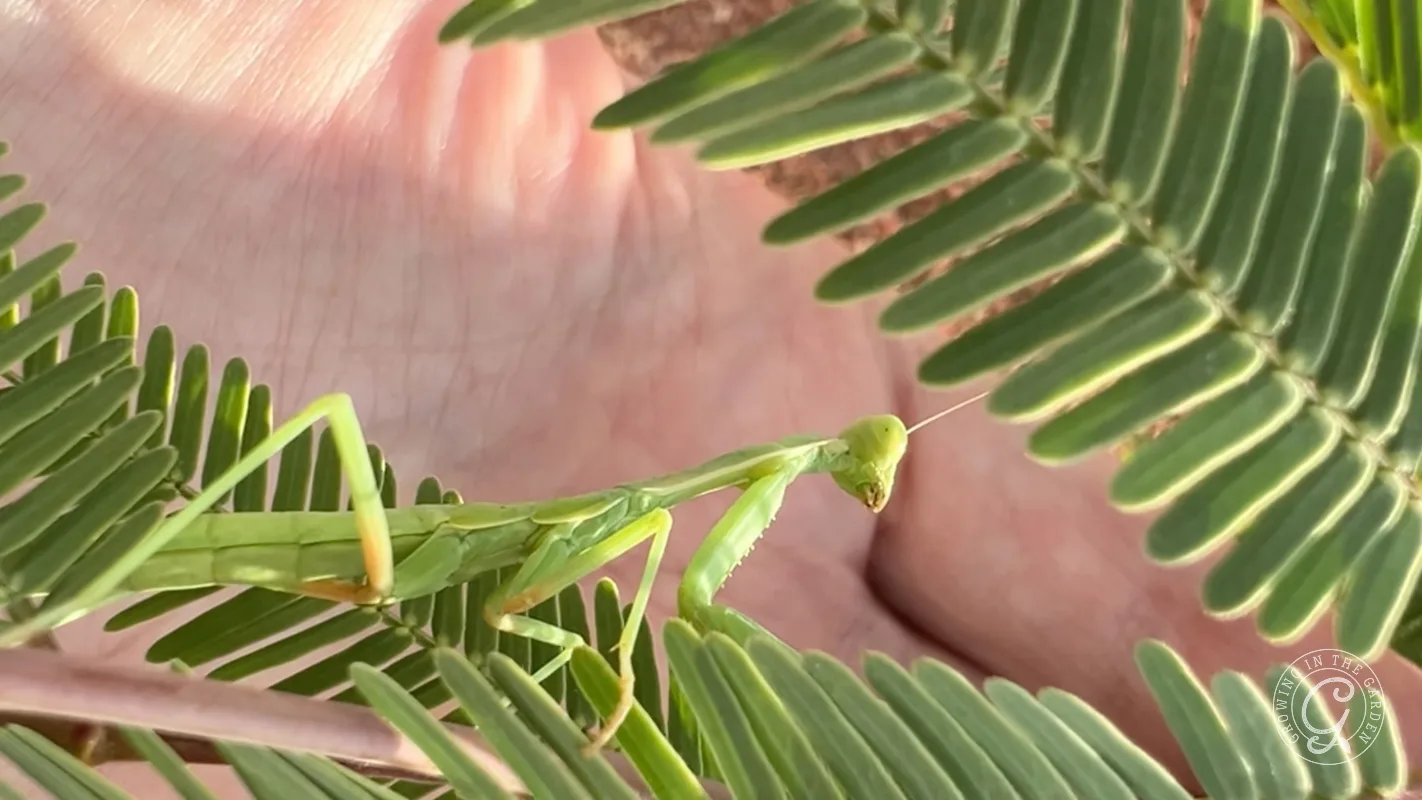
When we think about the insects we hope to find in the garden, this one ranks near the top of the list. One moment you’re bent over checking on tomatoes, and the next you’re face-to-face with a triangular head tilted toward you.
With their strange posture, eyes that seem to look right into your soul, and their ability to hide in plain sight, praying mantises continue to fascinate us. Yes, they look intimidating, but they’re one of the best predators to find in the garden.
A Unique Posture for a Unique Insect
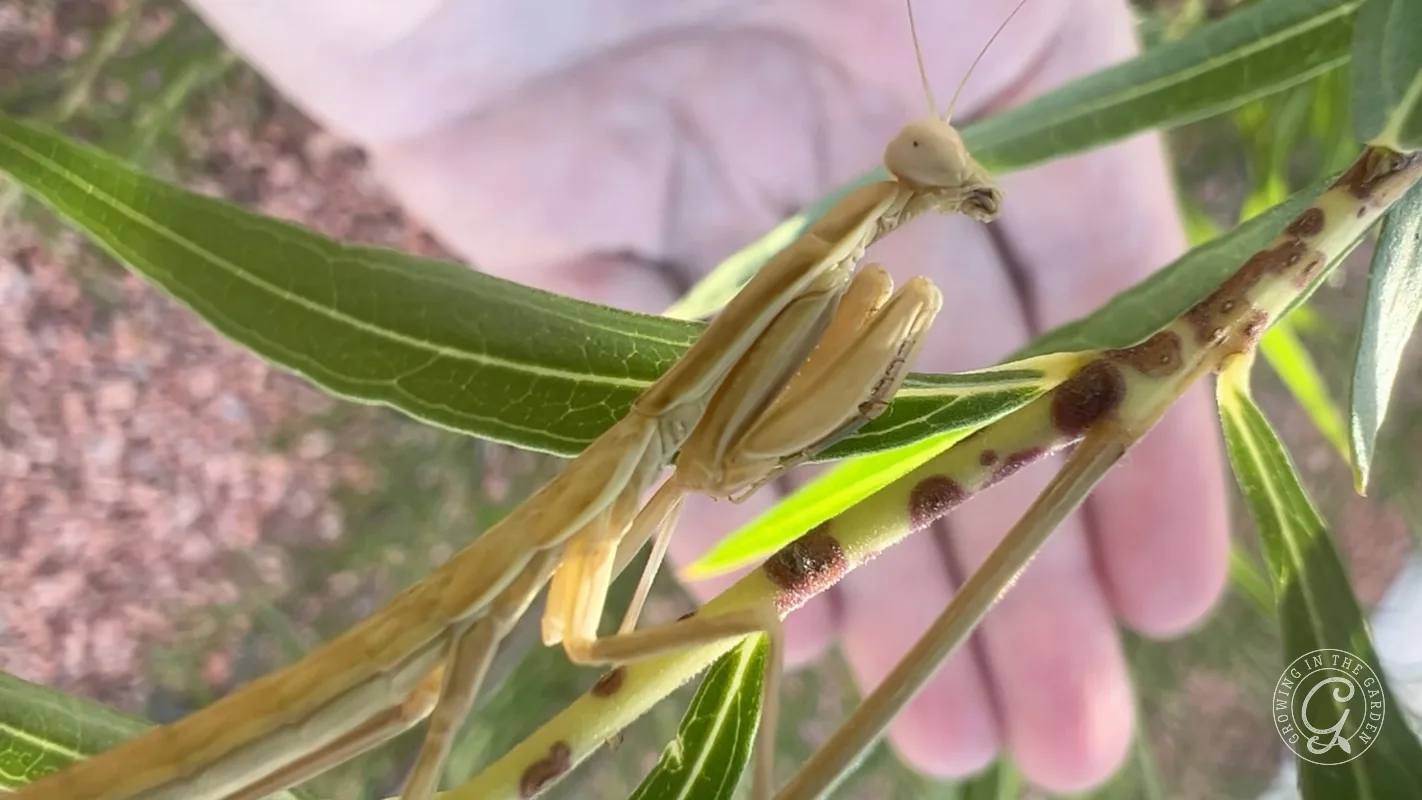
Their prayer-like posture gave them the name “praying mantis,” but these predators are anything but passive.
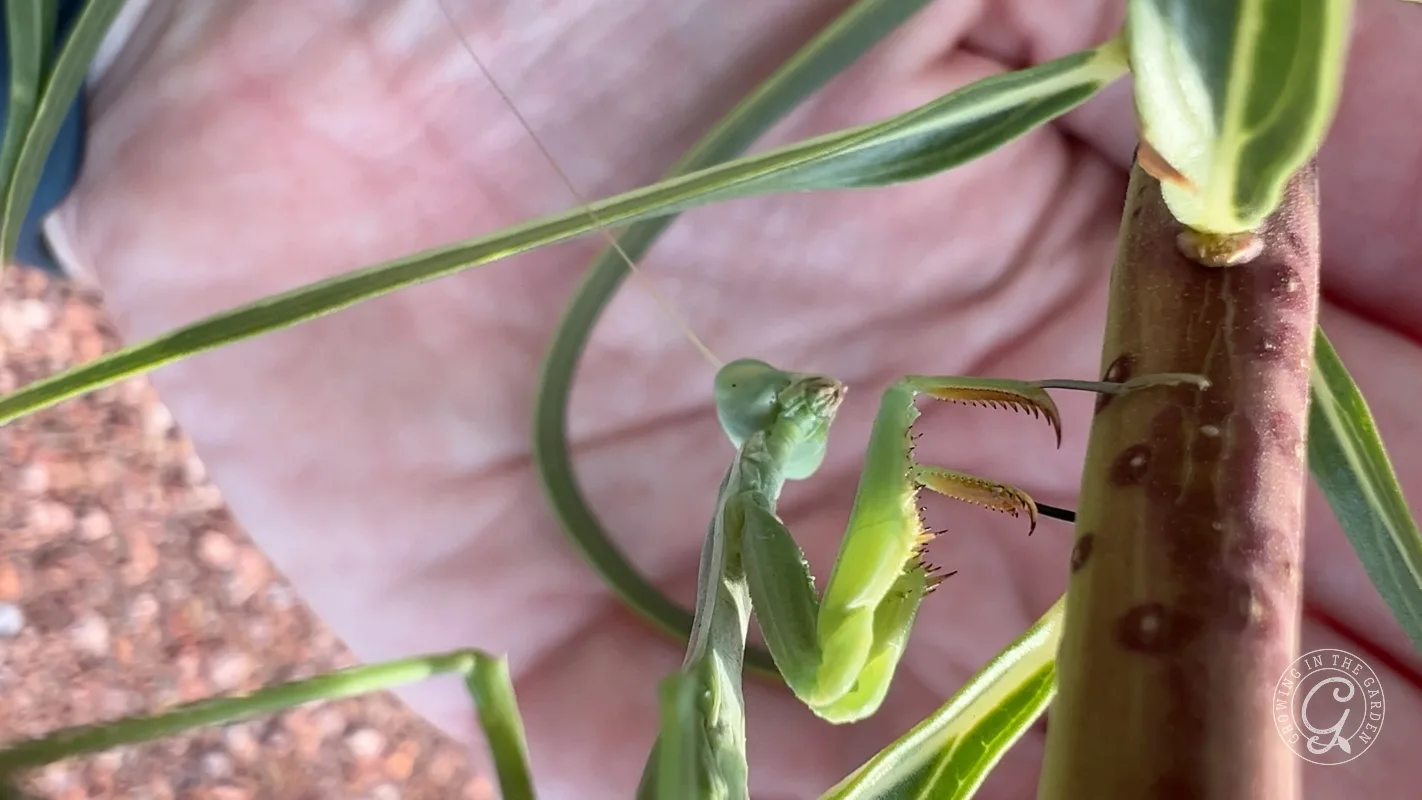
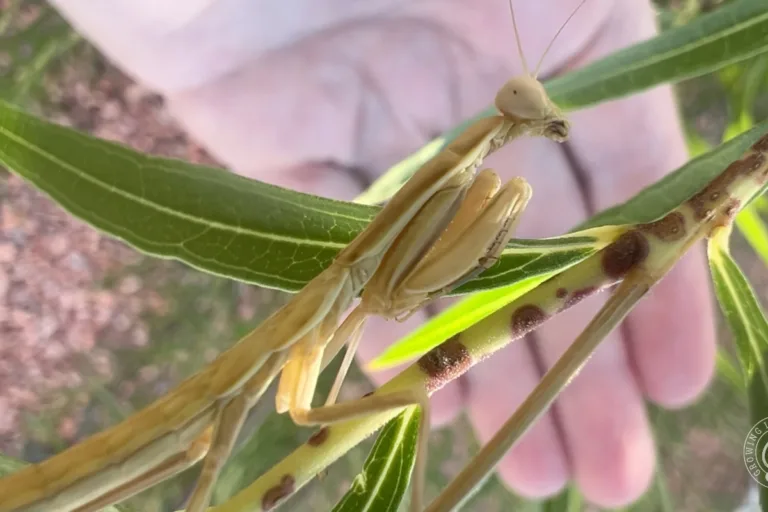
Those powerful front legs are built to catch prey with incredible speed and accuracy, then hold on tight while the mantis feeds.
A bigger surprise for Arizona gardeners is that we have native mantises, along with several non-native species that show up in the garden too. All of them have the same goal: eating other insects.
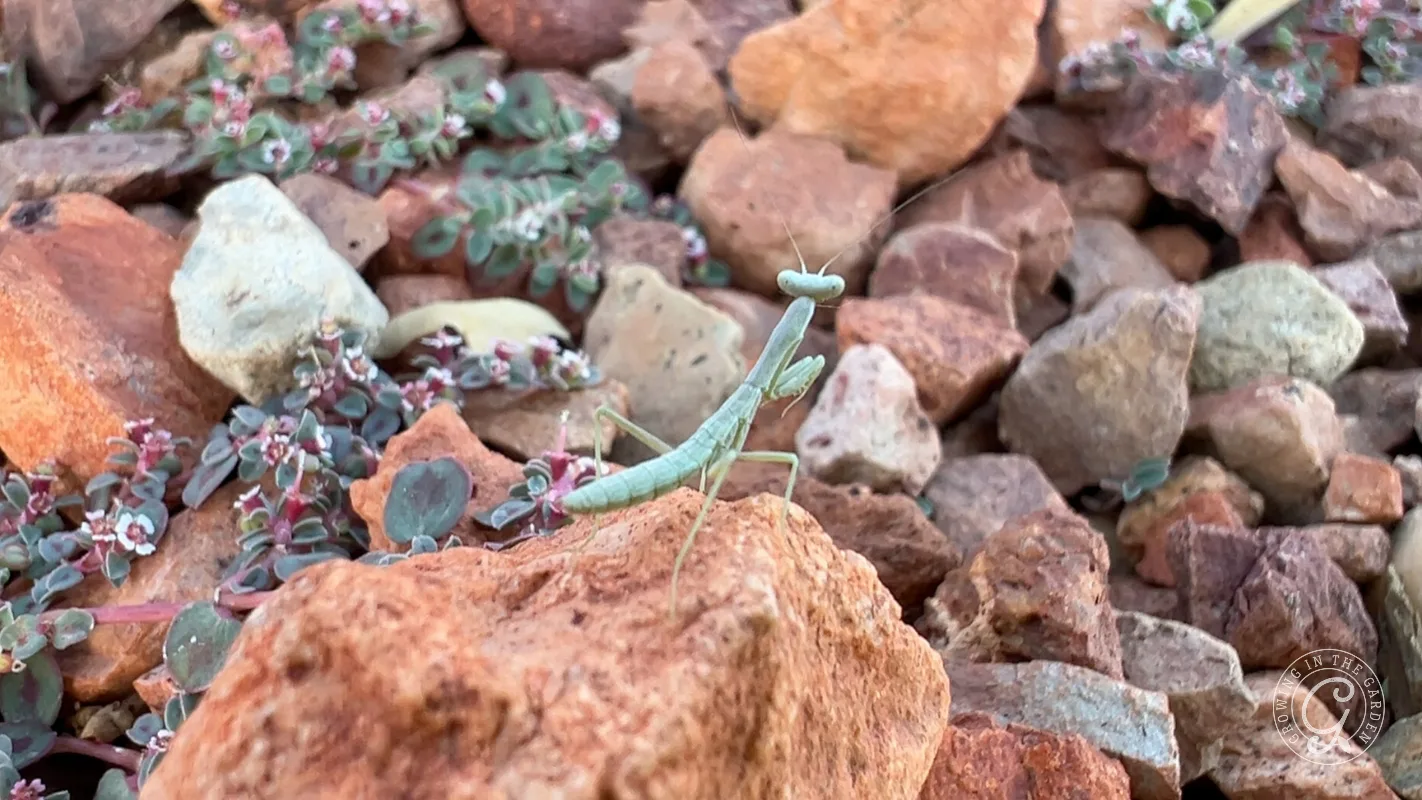
Most species are hard to tell apart at a glance. The exception is the Arizona Unicorn Mantis (Pseudovates arizonae), which has a distinctive horn-like extension on its head. Other native species commonly found in Arizona gardens include the Arizona Mantis (Stagmomantis limbata) and the Arizona Tan Mantis (Stagmomantis gracilipes).
Sadly, for various reasons, you’re more likely to find non-native species in the garden. In my own space, the Mediterranean Mantis (Iris oratoria) is common. There’s also the Chinese Mantis (Tenodera sinensis), which is quite large, and the European Mantis (Mantis religiosa), which has become established in a few areas.
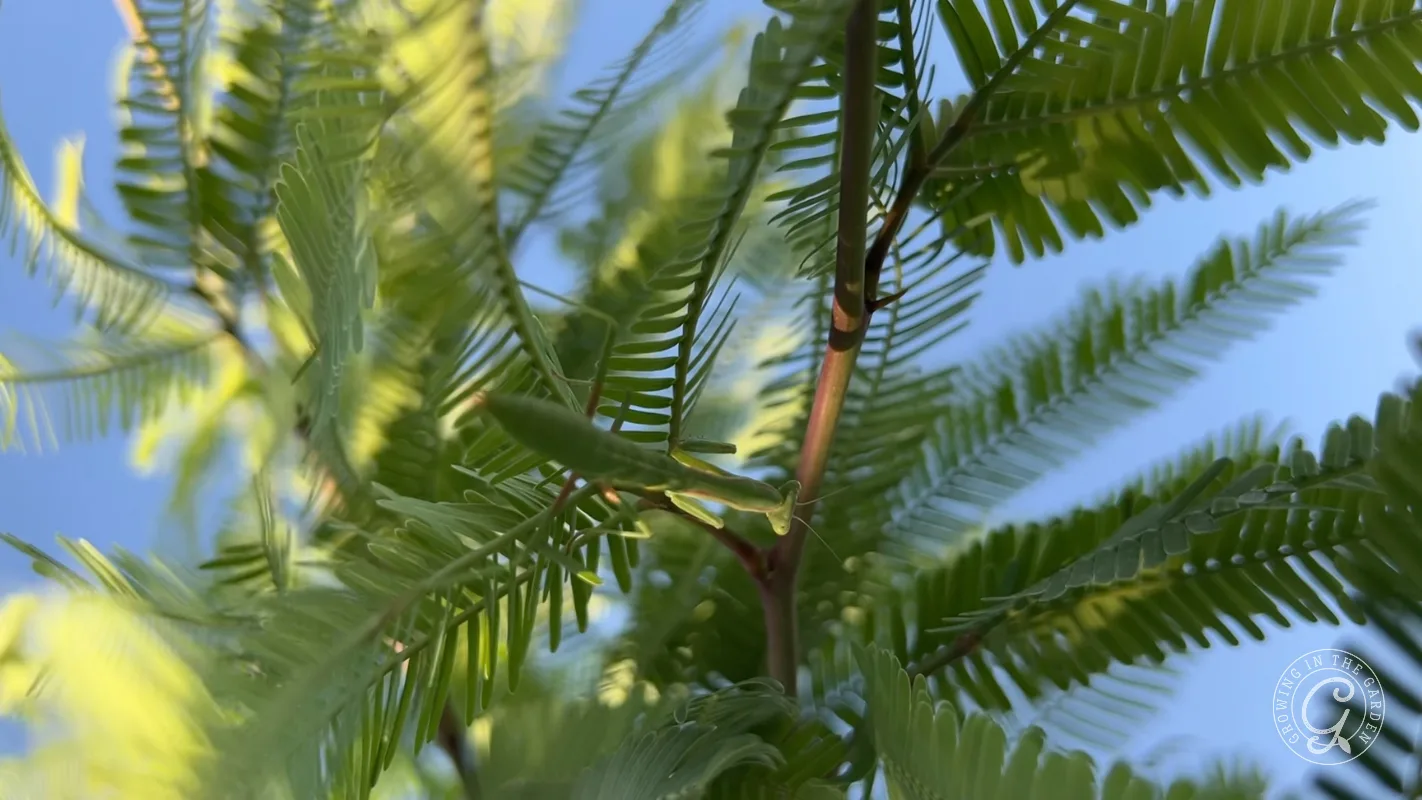
Even when you know what you’re looking for, finding these insects can be a real challenge. Their coloring ranges from green to brown, so they blend in with the surrounding plants.
That camouflage, combined with their patience, makes them remarkable. It’s not unusual for one to sit motionless for a long time, waiting in that prayer-like position for an insect to come within striking distance.
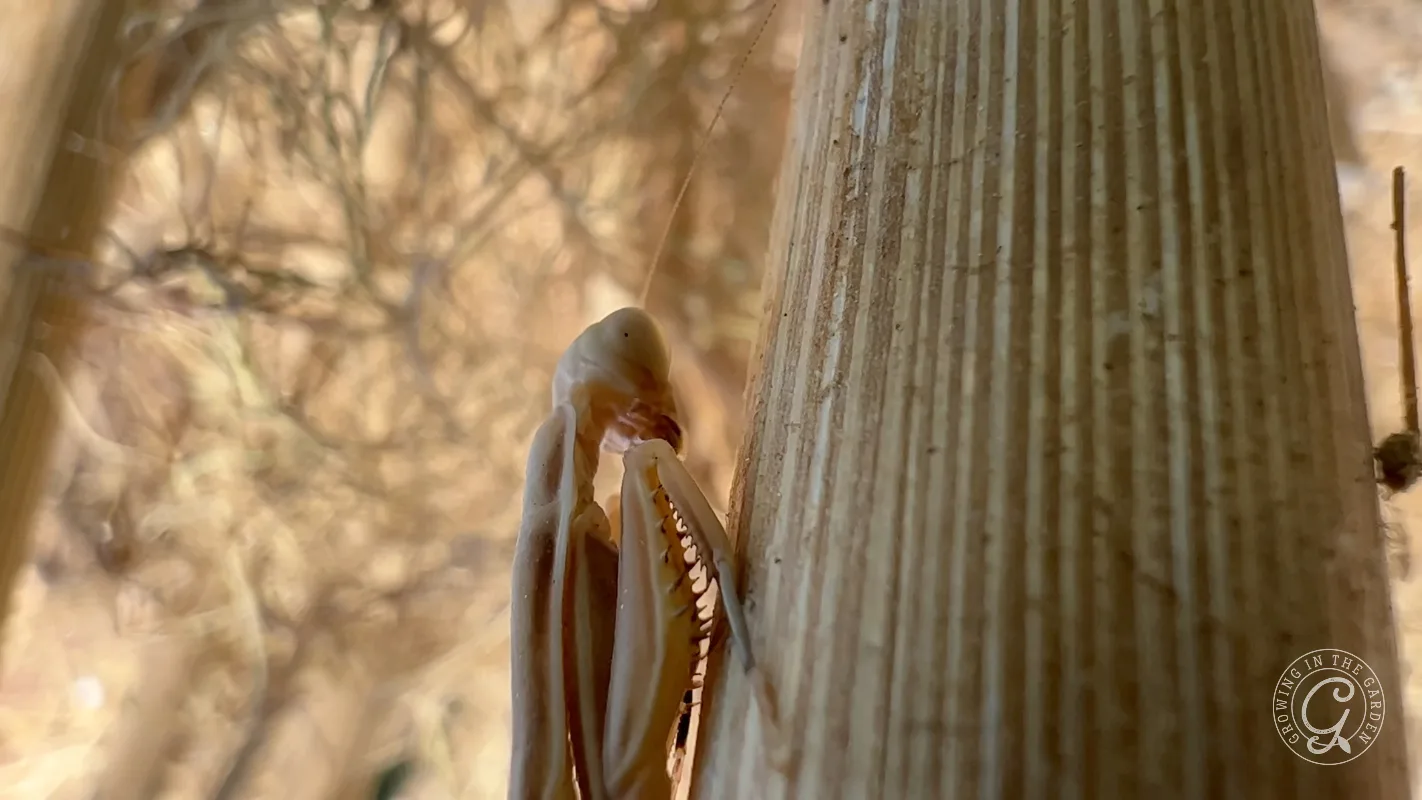
Even more remarkable is their speed. When prey comes close enough, they go from motionless to striking in the blink of an eye, grabbing it with those spiny front legs.
Close Encounters: When Mantises Show Up and What They Eat
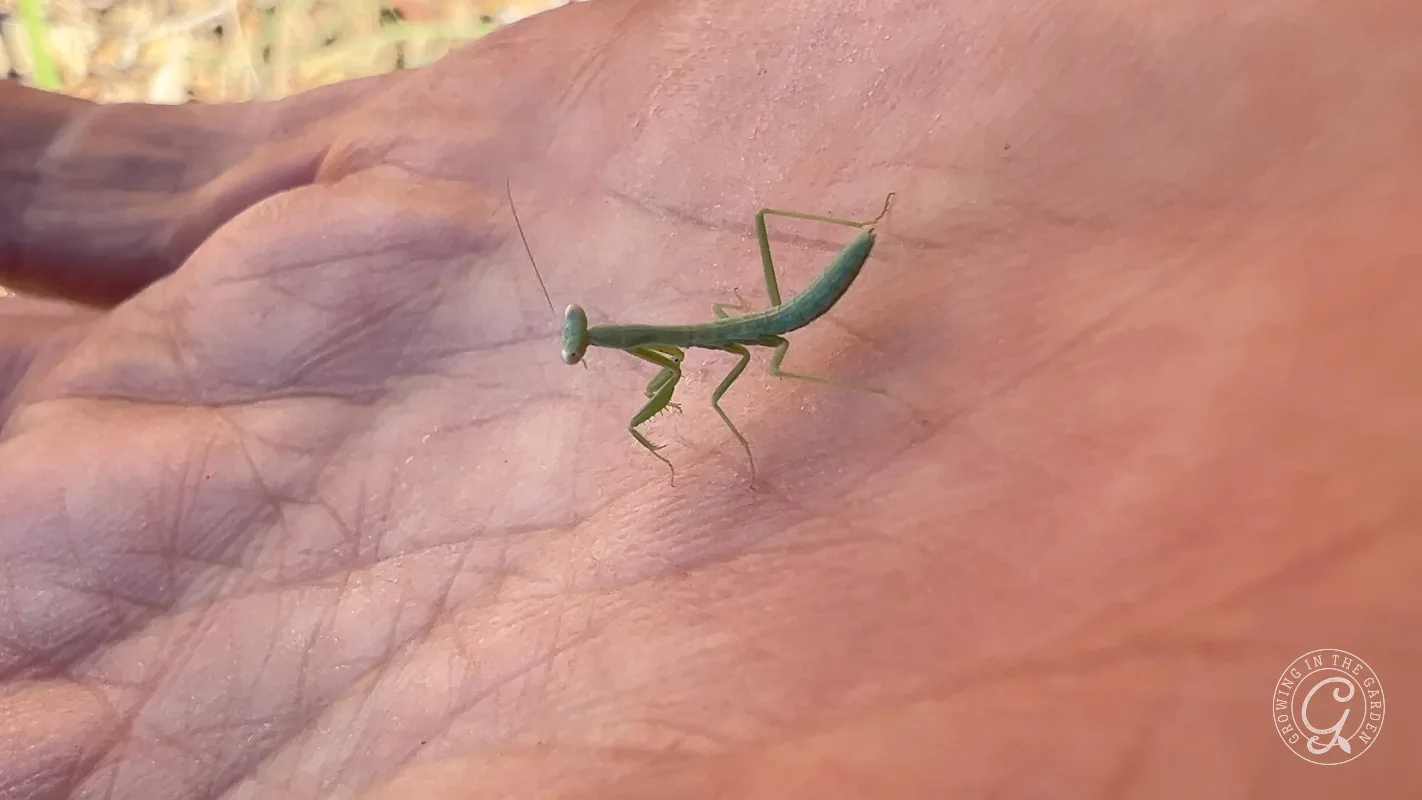
Like most insects, mantises have a season. Here in the low desert, in my garden at least, they tend to show up during the intense heat of summer. Just as lady beetles leave in late May for cooler areas, praying mantises move in, filling the gap other predators leave behind. For more information on the bugs you might see in your garden throughout the year, read Arizona’s Beneficial Insects Through the Seasons.
Most of us know praying mantises are predators, but it’s worth understanding what that means. They’re ambush predators that eat anything they can grab. What they eat varies by species and size, but it includes flies, moths, grasshoppers, crickets, and even beetles. It sounds like the perfect solution.
However, nature is more complicated.
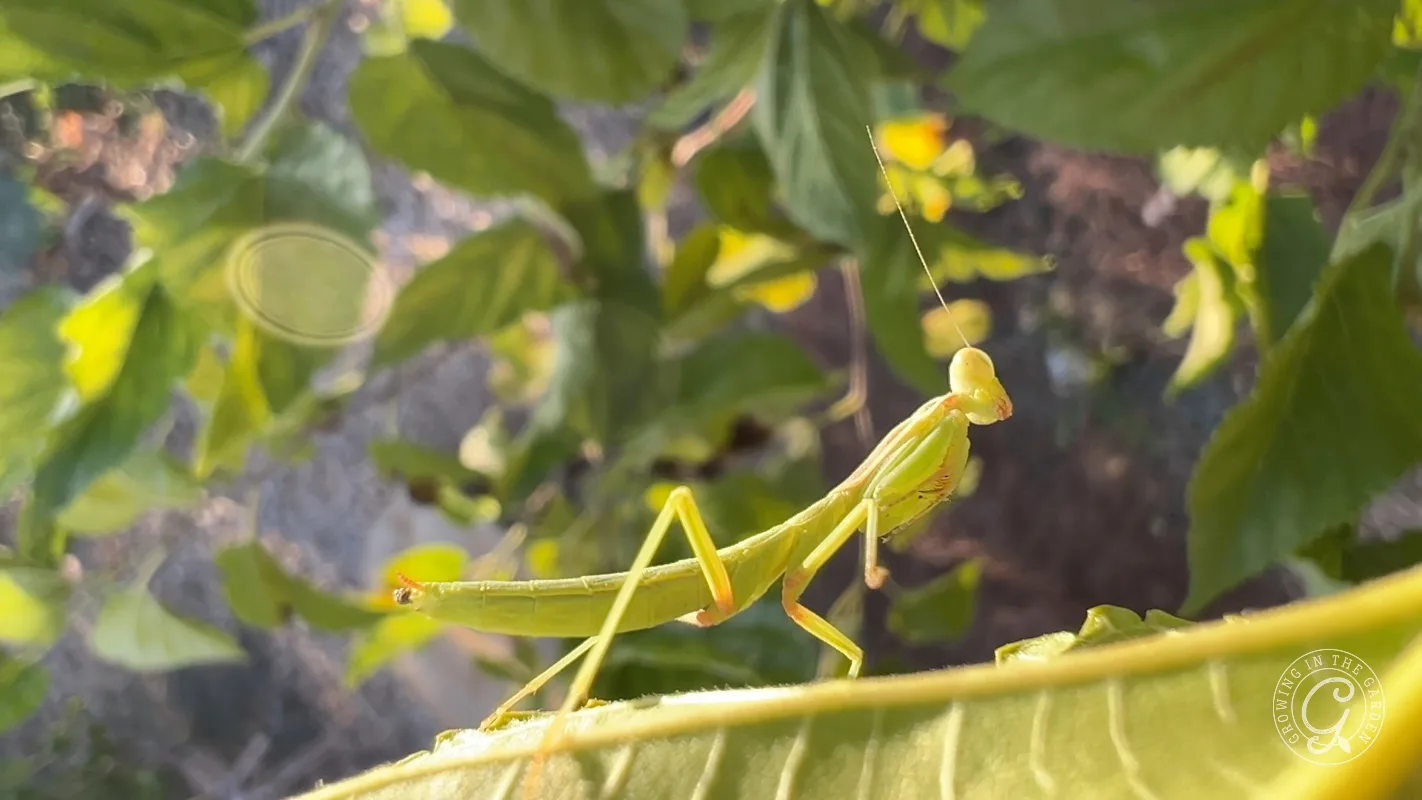
Like an assassin bug, a mantis doesn’t distinguish between “good” and “bad” bugs. If a bee, butterfly, or other insect comes within reach, it gets eaten too. That’s a big reason not to think of praying mantises as a one-stop solution for a healthy garden.
A single mantis hunts for itself. It isn’t patrolling the whole garden and eliminating every aphid or caterpillar it finds. Its diet is opportunistic, and it spends a lot of time simply waiting for prey.
A healthy mix of different predators makes a garden far more resilient than relying on a single species.
How to Attract Praying Mantises to Your Garden
Since we don’t want our gardens built around a single species, there’s no need to change anything to attract praying mantises. The same approach to attracting beneficials will attract them too.
Food. Water. Shelter.
When we think of food, we usually think of the harvest we’re eating or the insects nibbling on it. We also need to think about the insects that see other insects as their next meal. No particular plant attracts praying mantises, but a good diversity of native and other plants brings in a wide range of insects that will make themselves at home.
Praying mantises get most of the water they need from the insects they eat, but in the heat of a low desert summer, they’ll benefit from a little extra. It doesn’t have to be complicated. If you already have small water dishes out for bees and other insects, that’s enough. They’ll also drink when the garden is watered and from rain that collects on leaves.
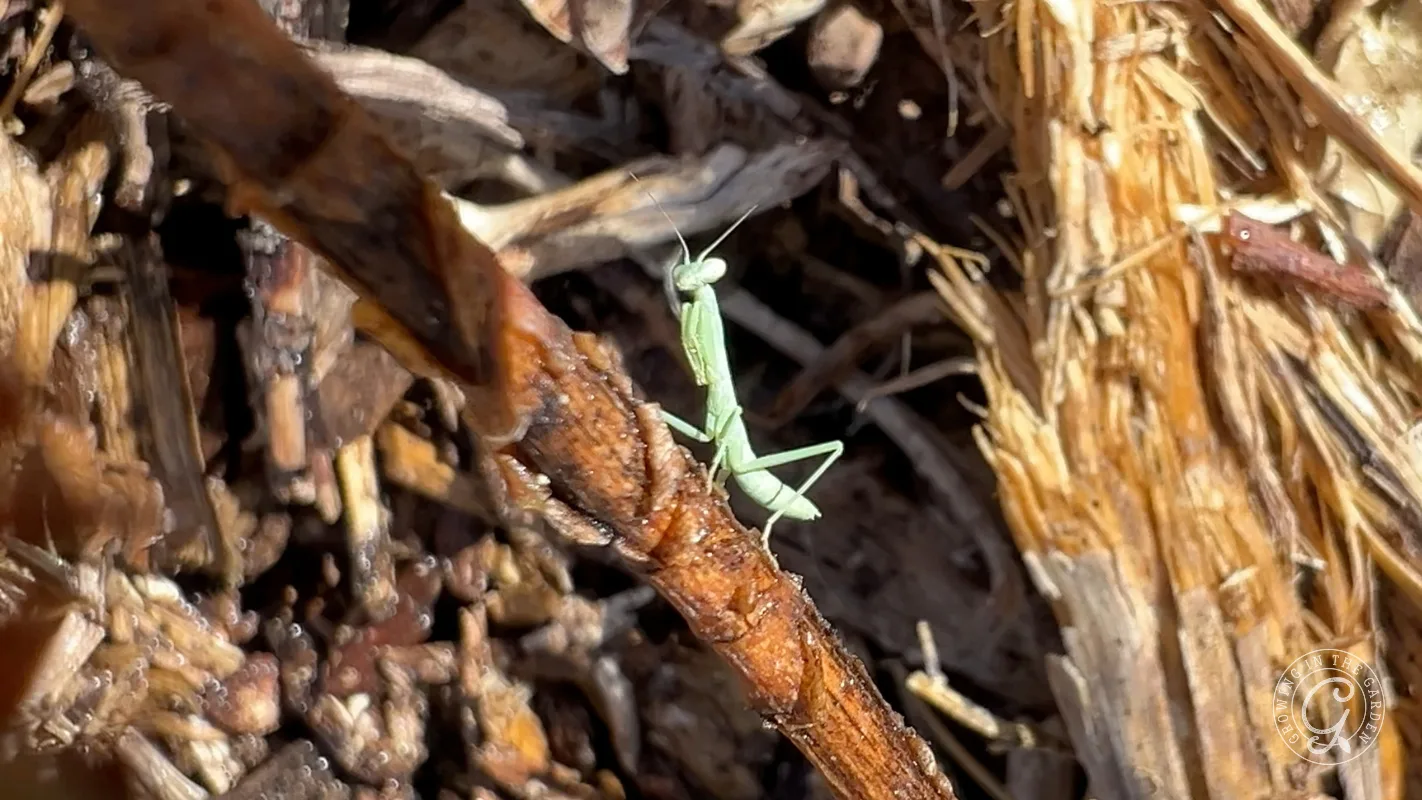
Shelter matters for both the mantis and the insects it hunts. A mix of plant heights, some dense growth, and a few dead branches works well for predator and prey.
Where to Find Praying Mantises and Their Egg Cases
Even in a garden full of insect activity, there will be plenty of times you don’t see certain insects.
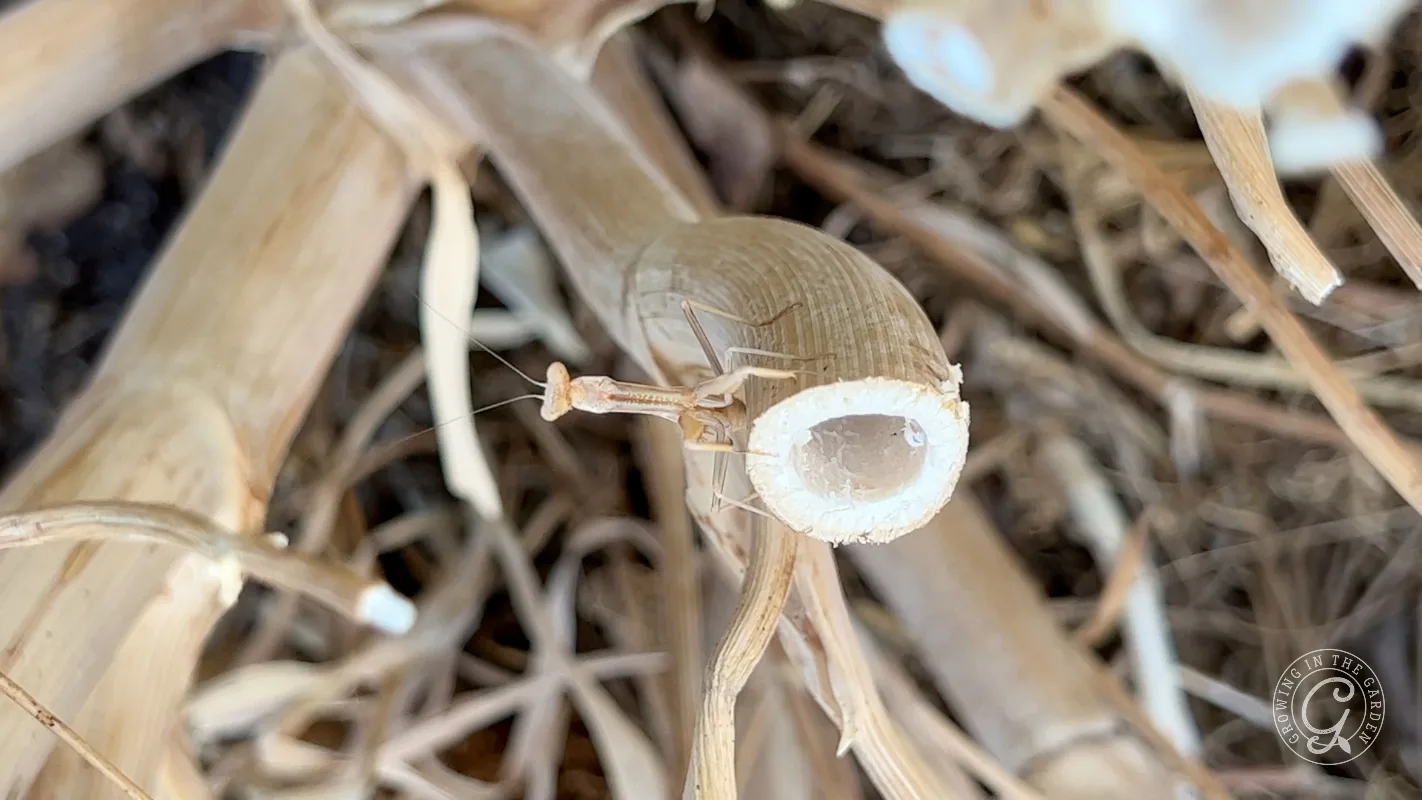
Of all the predators that show up in the garden, praying mantises can be one of the hardest to find. Start by looking on stems, the undersides of leaves, and taller plants. Early morning is a good time to look, since many insects seem calmer about being approached.
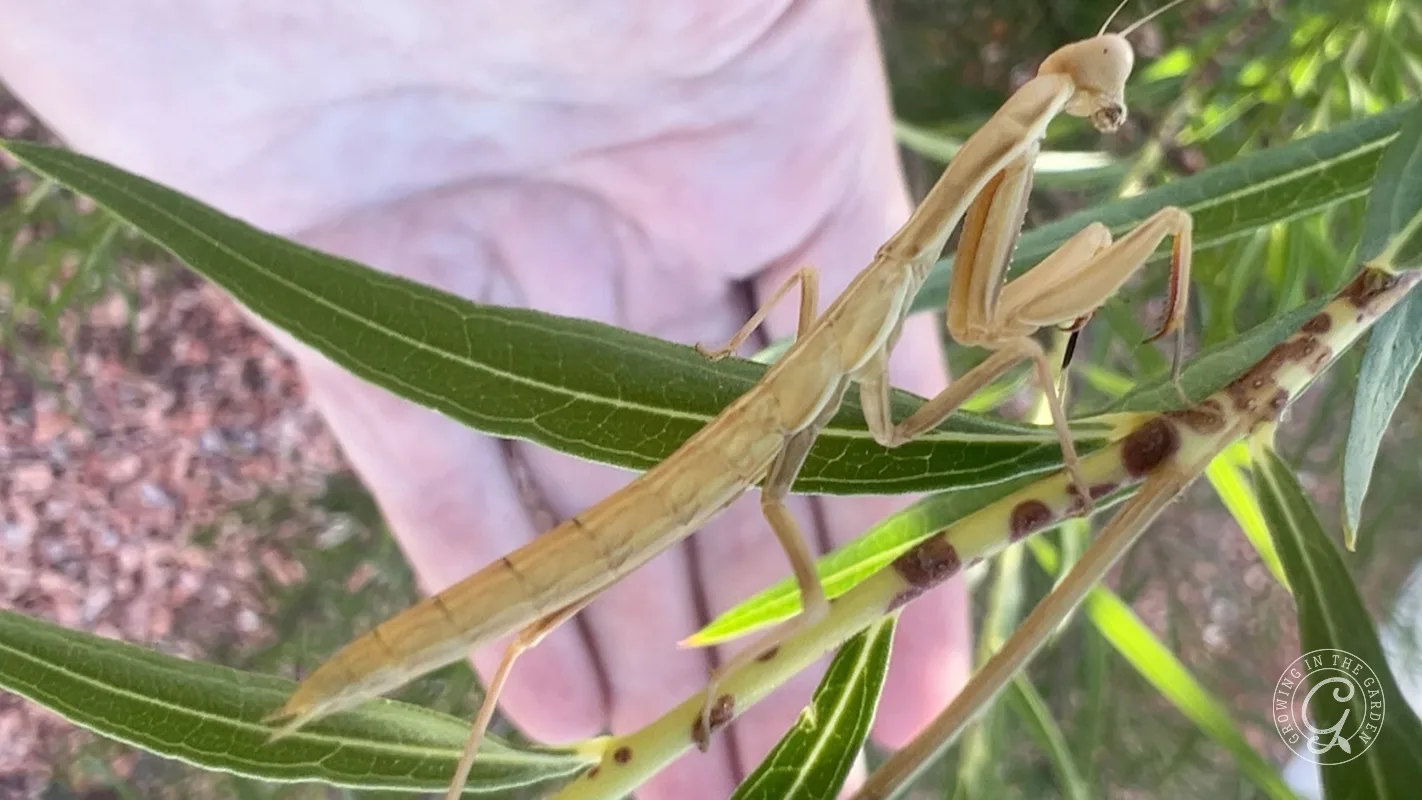
There may be stretches when you find only one, or none at all. That doesn’t mean they’re gone or that you’ve done something wrong. Most of the time it means they’re doing exactly what they should: hunting without being seen.
As hard as it is to find an adult, finding the egg case, called an ootheca, can be even harder.
The ootheca protects the developing eggs. In our area, it often allows them to over-winter and hatch in spring. That’s why we rarely see mantises in winter: the adults have left or died, and the young haven’t hatched yet.
Finding a small, hardened mass on a stem or twig among the thousands of branches in your garden is no easy feat. The egg case also looks different depending on the species. Most of our native Arizona mantises lay egg cases that are flat, narrow, and pressed tight against the branch or twig. Non-native species like the Chinese Mantis (Tenodera sinensis) lay egg cases that look like a round, puffy toasted marshmallow or golf ball wrapped around a stem. Those are much harder to miss.
That brings up one of the harder parts of this topic: native vs. introduced species.
Native vs. Introduced Praying Mantises in Arizona
As I mentioned, Arizona does have native praying mantises, and you can absolutely find them in our gardens.
The problem is that introduced species sometimes outcompete the native ones. The Chinese Mantis (Tenodera sinensis) is much larger and eats insects our native mantises wouldn’t, including other mantises.
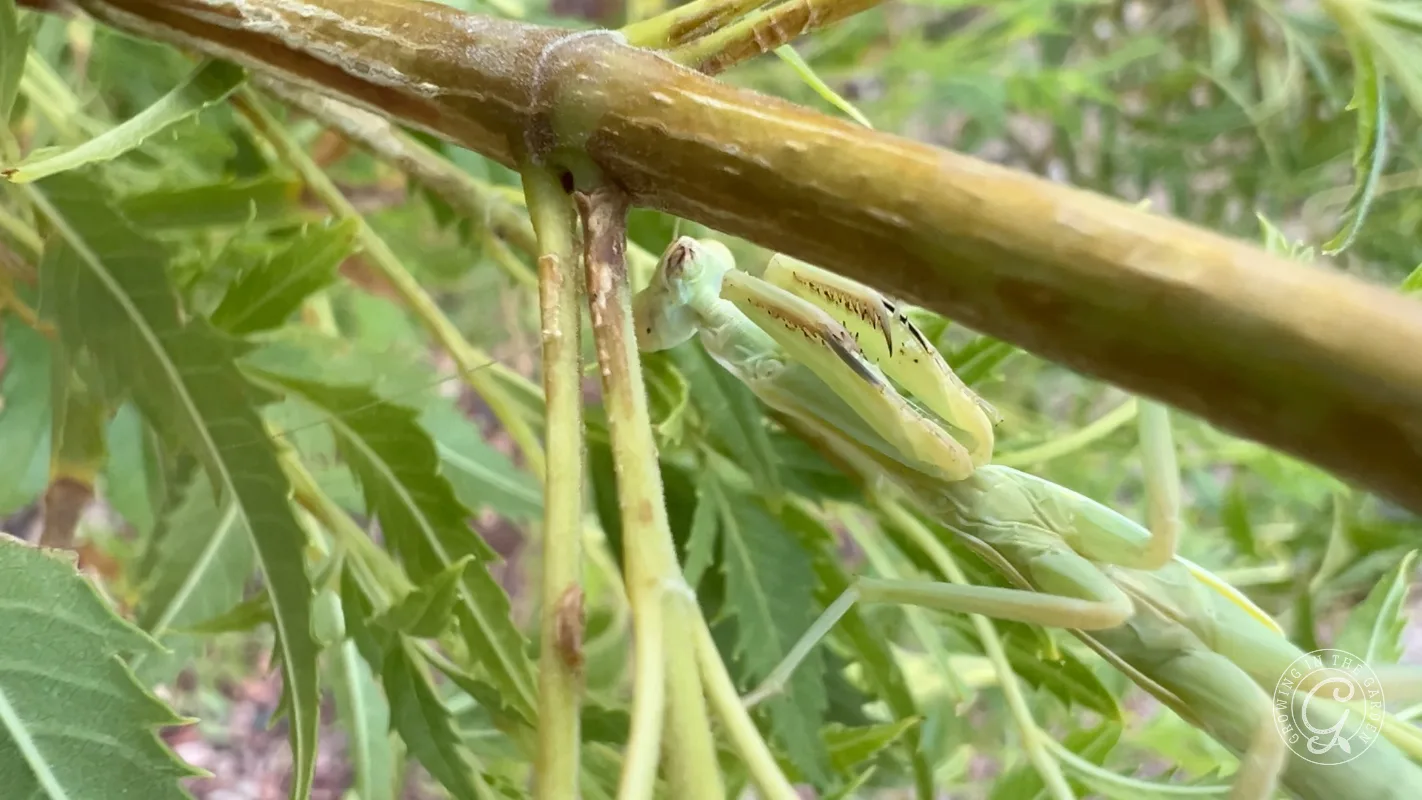
There’s little we can do to remove the introduced species. What we can do is encourage our native mantises to become more established. Native mantises often lay their egg cases on mesquite and other desert plants in the Fabaceae (legume) family.
Beyond that, the one real step we can take is to stop buying and releasing mantis egg cases. Most, if not all, of the ones sold aren’t native to the United States, let alone Arizona.
Instead, combine patience with creating a habitat that invites the mantises already in your area to make your garden part of their home.
Praying Mantis Species in Arizona
Native species
Arizona Mantis (Stagmomantis limbata)
Around three inches long as an adult, with a distinct blue upper lip (technically called the labrum). The wings are an opaque green or beige with a pale edge, giving it another common name: the Bordered Mantis. The hind wings are clearer, and the wings cover most of the abdomen. The head also has a unique shape, spreading outward into a slight T-shape.
Arizona Tan Mantis (Stagmomantis gracilipes)
Less common than S. limbata, this species stands out for its slender legs. The common name suggests a tan or light brown color, but it can also look green. It’s similar in size to related species and hard to identify without a closer look.
Arizona Unicorn Mantis (Pseudovates arizonae)
This one is extremely rare to find in the garden. The common name comes from the horn-like shape on top of its head. It’s only found in Arizona, and its body blends in extremely well with twigs.
Introduced species
Chinese Mantis (Tenodera sinensis)
As the common name suggests, this species is native to Asia. It was introduced to North America in the late 1800s and has spread across the country. At up to five inches long, it’s the largest mantis in the region and easily dwarfs our native species. Besides its size, look for a slender green or brown body, a vertical stripe down the face, and a distinct yellow spot between the front legs.
European Mantis (Mantis religiosa)
Found throughout Europe, Asia, and Africa, it’s unclear when this species arrived in North America. It’s similar in size to the Arizona natives, or a bit smaller, at two to three inches long. Color doesn’t help separate it from other mantises, since it comes in green, brown, and even yellow. What sets it apart is a black-ringed spot on the underside of the front legs.
Mediterranean Mantis (Iris oratoria)
This is the mantis we’re most likely to find in our gardens. It’s native to the Mediterranean region and parts of Asia and Africa, and was first noticed in California around the 1930s. In size and color it’s similar to the others, no more than three inches long and green or beige. Look for a red-orange spot on the underside of the abdomen. When it feels truly threatened, it puts on a real display, arching its back and spreading its wings to reveal an orange-red patch with dark violet eyespots.
Frequently Asked Questions About Praying Mantises
No. Most egg cases sold are non-native species. It’s far better to create a garden that encourages praying mantises to show up on their own.
Provide food (other insects), water (a shallow dish like one you’d use for bees), and shelter (a variety of plants at different densities), and avoid chemicals as much as possible.
It’s extremely rare, but yes, they can bite if they feel threatened.
They eat live prey such as crickets, flies, grasshoppers, and even spiders. They’ll eat almost anything they can grab.
Yes. Some species have a single ear on the underside of the thorax that can detect bat echolocation, since bats prey on praying mantises.
About the Author
For more than thirty years, Jean has been growing plants and spending time in nature, both in California and Arizona. With a background in fine art, she honed her skills in observation, a critical element for anyone striving to have a garden. Currently she is finishing her doctoral studies in ecology (special focus on entomology), while helping others to work with nature in order to have a thriving ecosystem. You can find more of her work on YouTube and Instagram at @redshoegardener.
Leave a comment on Praying Mantis in the Garden: Arizona’s Patient Predator