
The Best Organic Garden Fertilizer For Healthy Soil
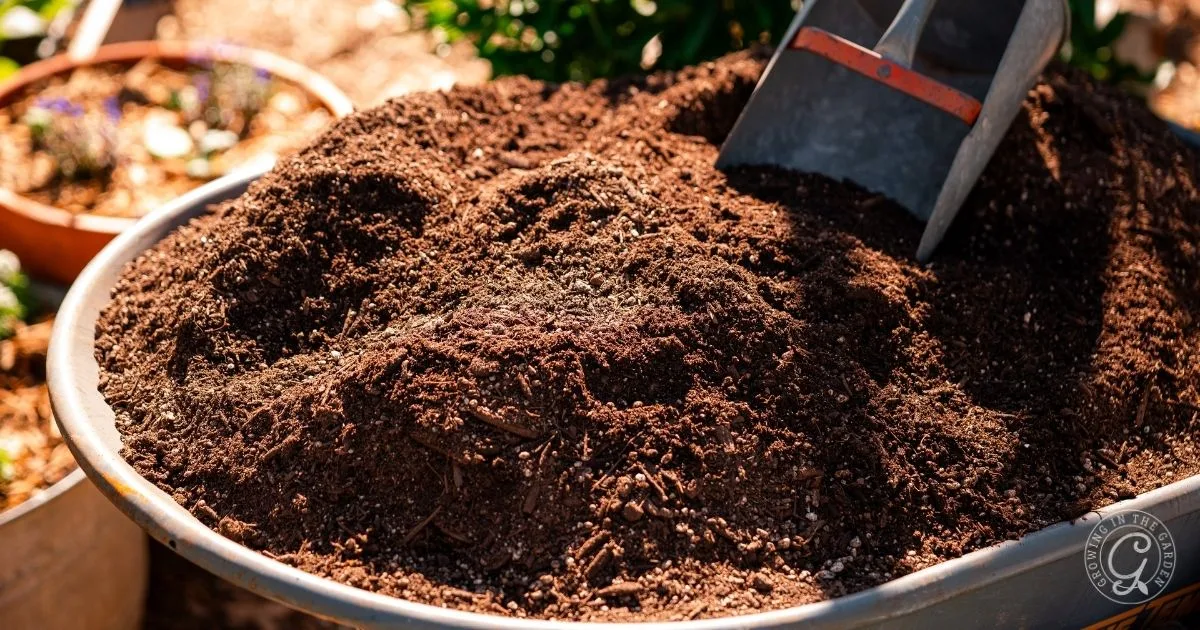
Why the “best” organic fertilizer starts with healthy soil
When I first started gardening, I spent a lot of time looking for the “best” organic fertilizer. Over time I learned that the real secret is not a single product. The most reliable results come from feeding the soil that feeds your plants.
In my garden now, I focus on:
- Building soil with compost
- Adding biology and gentle nutrients with worm castings
- Using an organic fertilizer, for an extra boost when plants need it
I still think a simple, balanced dry organic fertilizer mix can be helpful, especially when you are filling new raised beds. I used the classic Edward C. Smith recipe for several seasons, and I will share that mix below. Before we get to the recipe, it helps to understand what plants actually need and why.
What we will cover:
- Why the “best” organic fertilizer starts with healthy soil
- Plant nutrients 101: macronutrients and micronutrients
- What N-P-K means in your garden
- How I fertilize my garden now
- When and how often to fertilize
- A simple DIY organic fertilizer mix you can use
- Test your soil before adding more fertilizer
- Putting it all together
- Related Links
Plant nutrients 101: macronutrients and micronutrients
Plants need several nutrients to grow well. These are usually divided into two groups: macronutrients and micronutrients.
- Macronutrients are needed in larger amounts:
carbon, hydrogen, oxygen, nitrogen, phosphorus, potassium, calcium, magnesium, and sulfur - Micronutrients are needed in smaller amounts but are just as important:
boron, copper, iron, manganese, molybdenum, zinc, and others
Most of the carbon, hydrogen, and oxygen plants need come from air and water. In the garden, we focus on the nutrients that are often used up in the soil and need to be replaced, especially nitrogen (N), phosphorus (P), and potassium (K). These three nutrients are the numbers listed on fertilizer labels as N-P-K.
What N-P-K means in your garden
Nitrogen (N): leafy growth
Nitrogen is crucial for healthy leafy growth and is a key part of chlorophyll. Plants use more nitrogen than any other nutrient.
Signs of low nitrogen:
- Overall poor plant growth
- Pale green or yellow leaves
Signs of too much nitrogen:
- Lots of soft, leafy growth with few flowers or fruits
- Bitter-tasting greens
Organic sources of nitrogen:
- Blood meal
- Fish emulsion
- Compost and worm castings (gentle, slower release)
Phosphorus (P): roots, flowers, fruits
Phosphorus encourages strong root growth and supports flowers, fruits, and seeds. It also helps plants with photosynthesis and overall vigor.
Signs of low phosphorus:
- Poor root growth
- Stunted plants
- Purplish or dark leaves on some crops
Caution about too much phosphorus:
- Excess phosphorus can build up in soil over time
- High levels can interfere with beneficial mycorrhizal fungi
Organic sources of phosphorus:
Because phosphorus can build up, I recommend testing your soil before adding a lot of P-rich amendments, especially in long-term beds.
Potassium (K): strength and stress tolerance
Potassium improves yield and quality, helps plants resist disease and stress, and supports strong root systems. It also helps regulate water use and photosynthesis.
Signs of low potassium can include:
- Weak or spindly plants
- Poor quality fruits
- Sometimes smaller or less flavorful harvests
Organic sources of potassium:
How I fertilize my garden now
Over the years, my approach to fertilizing has shifted from chasing numbers on a bag to focusing on living, healthy soil. Here is what I use most often in my Arizona garden:
1. Compost
Compost adds organic matter, improves soil structure, and provides a wide range of nutrients in a slow, steady way.
- Compost is about 1/3 of the soil mixture I use when I fill new raised beds. Learn more about my favorite soil mixture.
- I add a layer of compost to beds at the beginning of the spring and fall planting seasons to fill the beds back up and replace the organic matter that decomposed during the previous season. Learn more about the best way to fill raised beds.
2. Worm castings
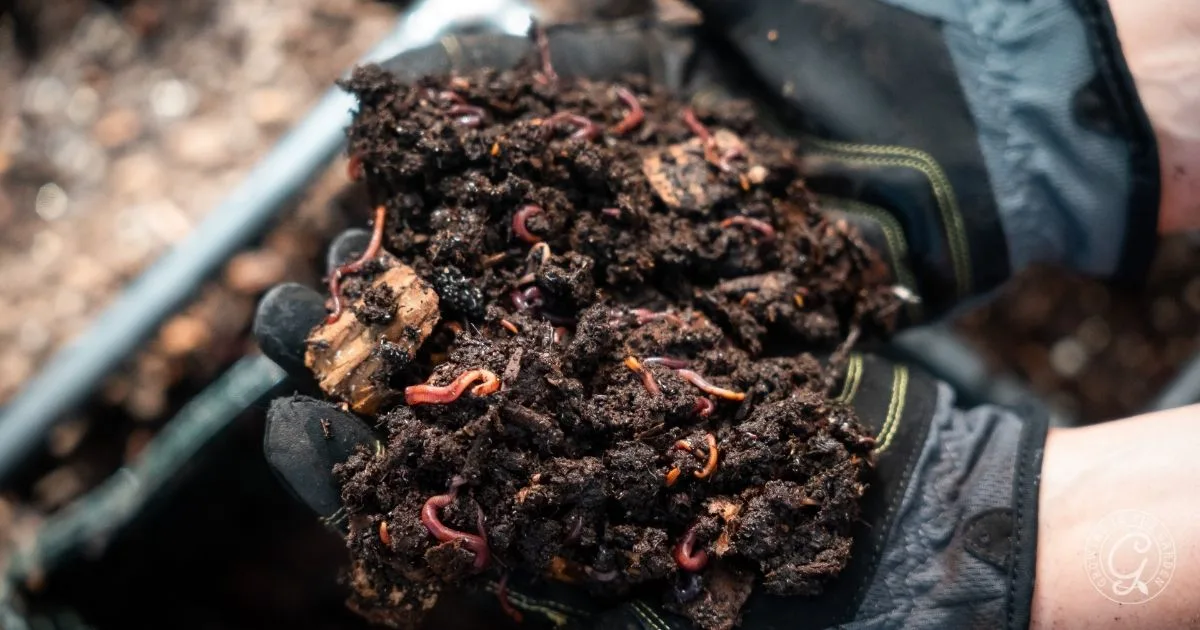
Worm castings are one of my favorite garden “fertilizers.” They are full of beneficial microbes and gentle nutrients.
- The soil mixture I use to fill my raised beds contains worm castings.
- Each bed has an in-bed vermicomposting bin. This creates fresh worm castings within the bed.
- I use them in seed starting mixes.
- I sprinkle a light layer around hungry crops during the growing season.
3. Organic fertilizer
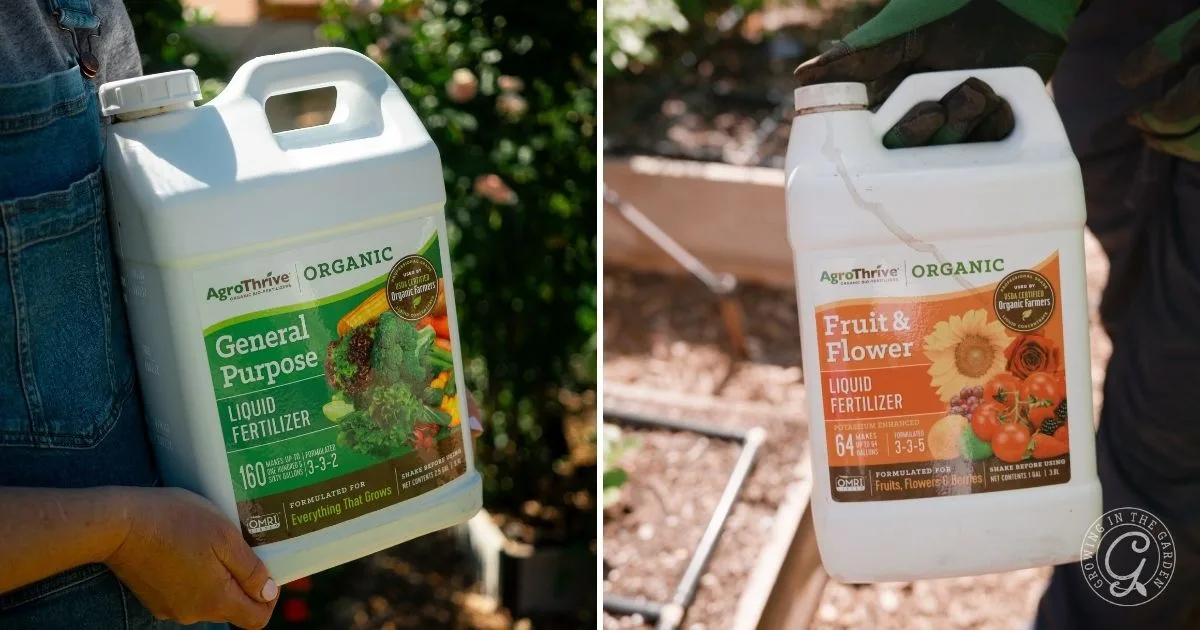
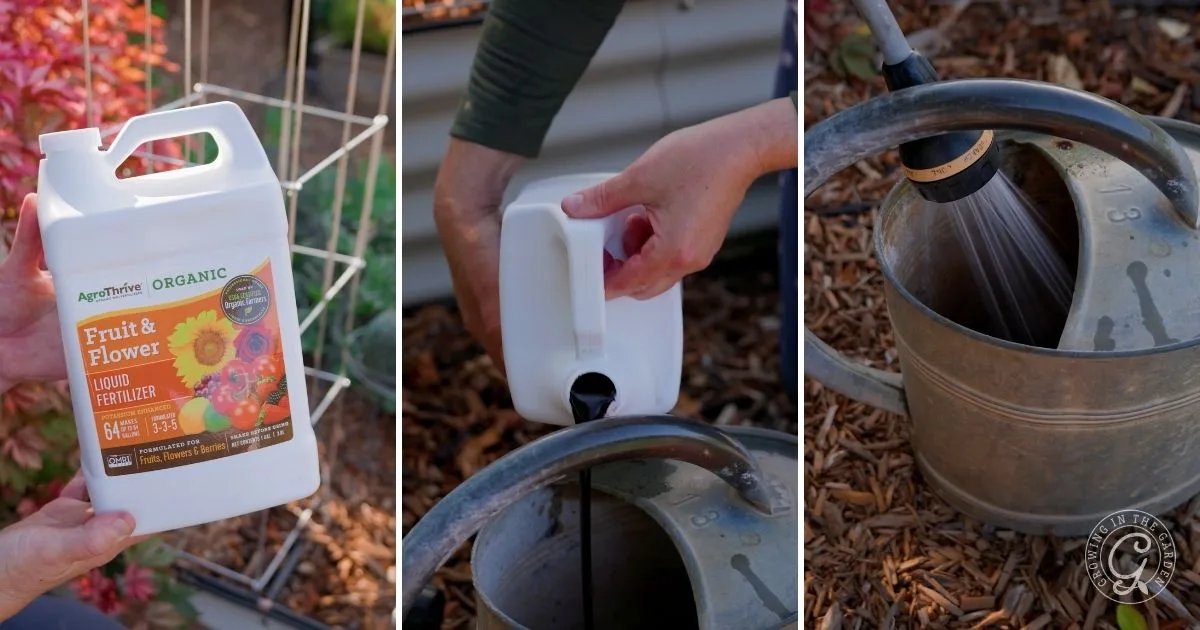
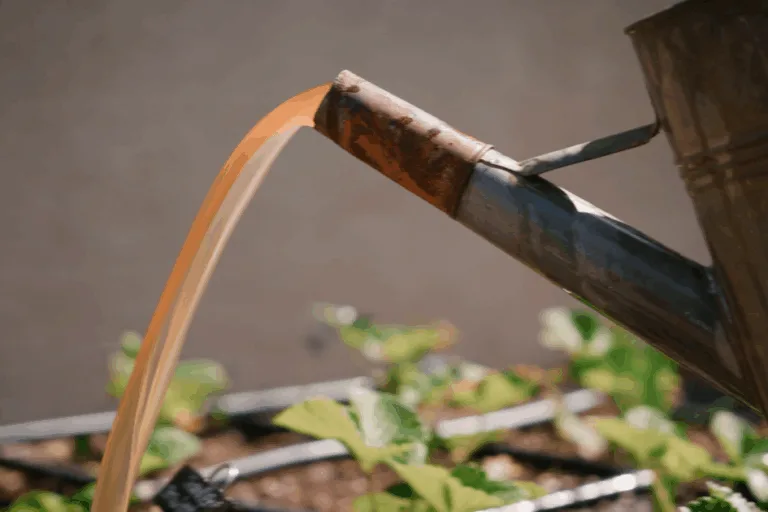
When plants need a little extra help, especially in containers or for heavy feeders, I use a liquid organic fertilizer. The one I use is AgroThrive. Learn more about how to use liquid organic fertilizer.
- I dilute it according to the label and water it in at the root zone.
- I use the full dose on established plants that are actively growing, and a half dose on new transplants.
- In the heat of summer, I am careful not to overfertilize. I focus on deep watering and shade first.
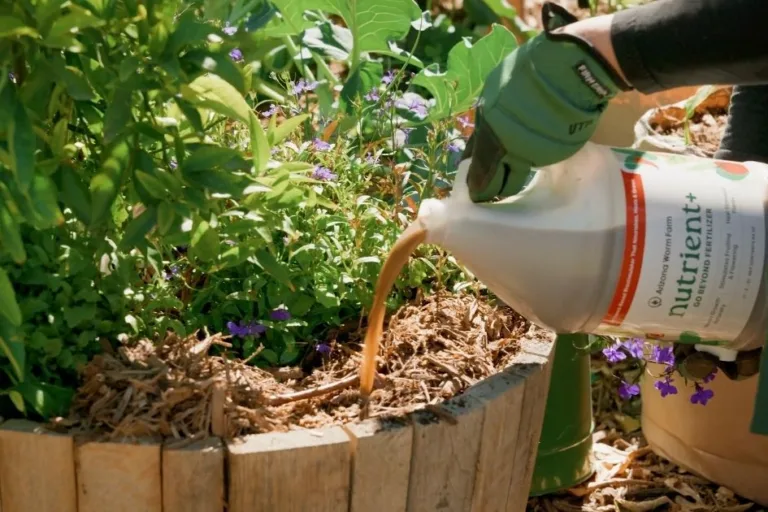
4. Nutrient+
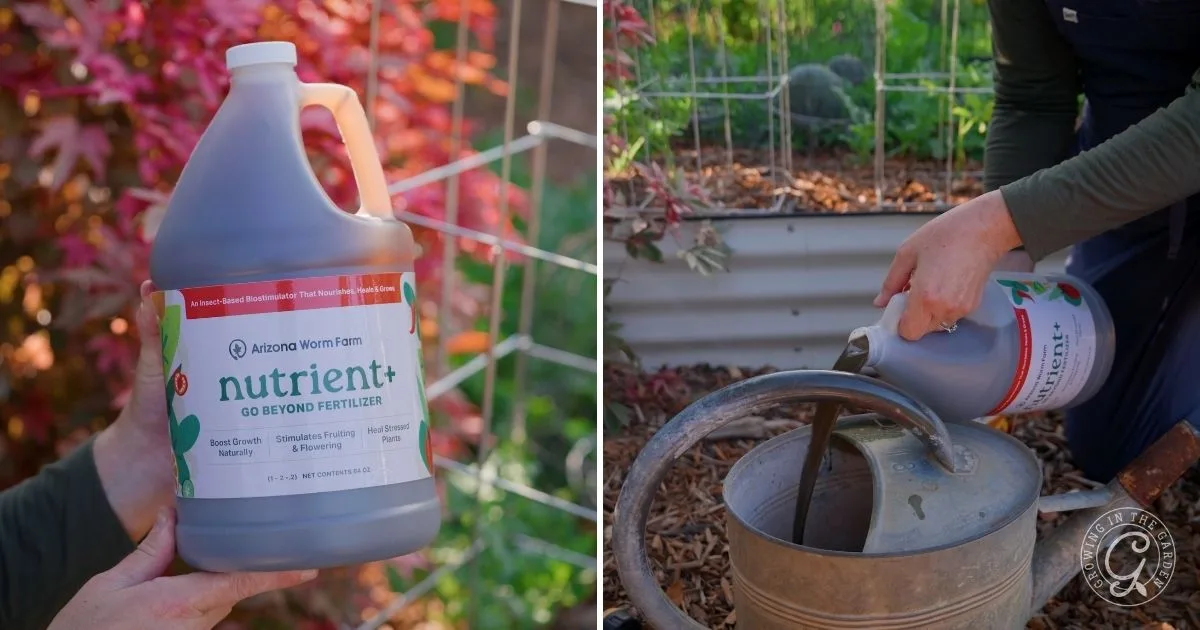
Support and recovery for transplants and stressed plants. It is made from Black Soldier Fly larvae and works as both a gentle fertilizer and a biostimulant. I use it:
- When I transplant, to help the roots get established
- On plants that are recovering from sunburn, frost, or damage
Purchase Nutrient + here. Learn more about how to use Nutrient+ fertilizer.
What is Nutrient+
Nutrient+ is a liquid product made from emulsified Black Soldier Fly larvae. It feeds plants with NPK and trace nutrients, but it also acts as a biostimulant. It contains chitin and other compounds that can help support plant recovery after stress like sunburn, frost, or broken branches.
When and how often to fertilize
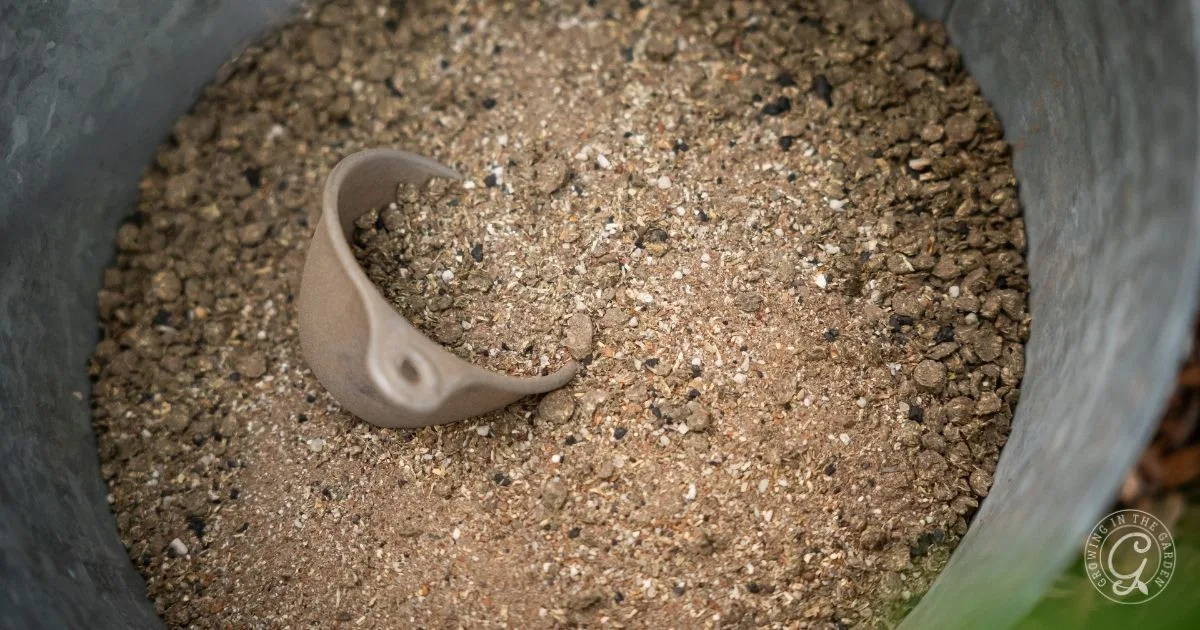
Every garden is different, but these general guidelines can help.
New raised beds
- Mix compost into your soil blend.
- If your base mix is very new or low in nutrients, you can add a balanced organic fertilizer (like the DIY mix below or a pre-made organic granular) and mix it in before planting.
At planting
- Add compost and a small amount of worm castings in the planting area.
- For long-season crops (tomatoes, peppers, squash, artichokes), you can add a small amount of organic granular fertilizer to the planting hole area, mixed well into the surrounding soil.
Learn more about how to amend your soil before planting in this guide.
During the growing season
- Watch your plants. If they are growing well and have good color, you may not need extra fertilizer.
- If growth slows or leaves start to pale, a diluted liquid organic fertilizer can help.
- For long-season crops, a light side-dressing of compost, worm castings, or a gentle granular fertilizer mid-season can keep them going.
When not to fertilize
- Avoid fertilizing very stressed, wilted, or heat-stressed plants. Focus on water and shade first. Summer is not the time to fertilize most plants if you live in a hot summer climate.
- Be cautious with strong fertilizers in very dry soil. Always water before and after applying granular fertilizers.
A simple DIY organic fertilizer mix you can use
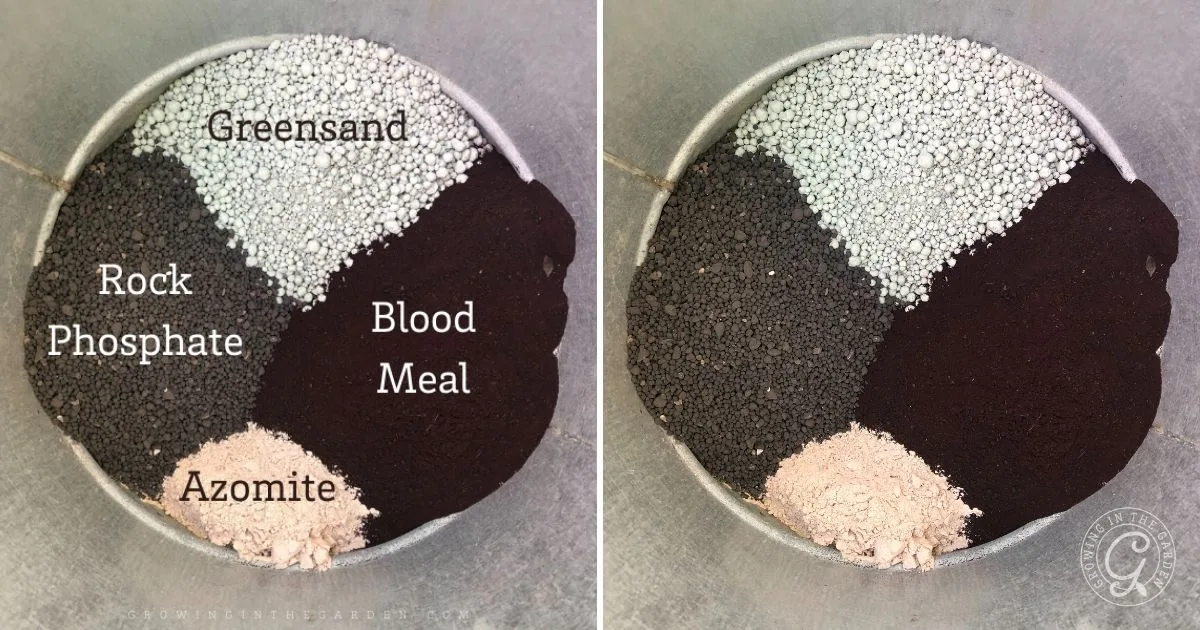
When I fill new raised beds, I often use a simple dry fertilizer mix based on the recipe from garden author Edward C. Smith. It provides the major nutrients and many trace minerals in an organic form. I still like this mix as a balanced option for new soil mixes or long-season crops if your soil test shows you need it.
Each batch below amends about 2 to 3 cubic feet of new soil mix.
DIY organic fertilizer mix:
- 1/3 cup blood meal (nitrogen)
- 1 tablespoon azomite (trace elements)
- 1/3 cup rock phosphate (phosphorus)
- 1/3 cup greensand (potassium and trace elements)
Mix these ingredients together and blend thoroughly into your soil mix when you are:
- Filling new raised beds
- Refreshing older soil that tests low in nutrients
For square foot gardens, use approximately:
- About 1 cup per 7 square feet
- Or roughly 1/7 cup per square
Always water well after adding this mix so the nutrients start to move into the root zone.
Test your soil before adding more fertilizer
Before you add a lot of any fertilizer, it is worth knowing what your soil actually needs. This is the soil test kit I use. It is simple to use at home and gives enough information to make good decisions about fertilizing.
A soil test can:
- Show which nutrients are lacking or already high
- Help you avoid overdoing phosphorus or potassium
- Tell you your soil pH (how acidic or alkaline your soil is)
Soil pH matters because if the soil is too acidic or too alkaline, some nutrients become unavailable to plants even if they are present in the soil.
Putting it all together
There is no single bag or recipe that is the “best organic garden fertilizer” for every garden. The best results come when you:
- Build healthy soil with compost and organic matter
- Increase microbiology with worm castings and in-bed vermicomposting bins
- Use liquid and dry organic fertilizers thoughtfully, based on what your plants and soil actually need
Start by feeding the soil, then choose fertilizers that support that living system, not replace it. Your plants will tell you the rest.
If you found this helpful, please share it so other gardeners can learn how to fertilize organically and keep their soil healthy too.


If the blood meal is a 13-0-0 and rock phosphate is 0-3-0, how does using 1/3 cup of each create a balanced 10-10-10 NPK ratio?
Also, it seems greensand is no longer available domestically. Have you found anything to use as a replacement?
This is Edward Smith’s recipe (see the heading) so I’m not sure how he calculated the balanced ratio. As far as a replacement for greensand, I’m not sure. Good question. Wish I could be of more help.
Can you explain when to use the Alaska Fish Plant Food Fertilizer and also the Organic Liquid Kelp Fertilizer you recommend?
MY soil is too alkaline. 8.5 How can I lower it?
My vegetable garden is already established. The plants are not growing to their potential and the veggies are quiet small.
Any help will be greatly appreciated. Phx AZ
Here’s an article that may be helpful with specific information: https://hgic.clemson.edu/factsheet/changing-the-ph-of-your-soil/
Thank you for putting the best organic garden fertilizer in this article. Really helpful to all gardeners. Keep sharing more gardening and fertilizer tips.
Do you still recommend adding this fertilizer recipe to the “Growing in the Garden Raised Bed Mix” from the Arizona Worm Farm?
That’s a good question. Yes, to give your plants a good boost from the start, I think it’s a good idea to add some.