
Fall Perennial Herb Care: Revive and Maintain Your Herbs
Fall is the best time to give your perennial herbs a fresh start, especially if you’re gardening in a hot climate. After a long, dry summer, many herbs look tired, but with a little care now, they’ll bounce back and reward you with fresh growth, flavor, and pollinator activity well into winter.
Looking for a complete seasonal overview? Read my post on Fall Gardening in Arizona for tips on vegetables, flowers, and more.
Key Takeaways: Fall Perennial Herb Care
- Fall is the best time for annual herbs to rejuvenate after summer; they will thrive with proper care.
- Trim lightly, feed the soil, and adjust watering to improve plant health during fall perennial herb care.
- Specific care tips include shaping rosemary, pruning lavender, and ensuring good drainage for thyme and oregano.
- Monitor your herbs closely; fall is an ideal time to repot struggling plants for better growth.
- A simple reset now will prepare your herbs for productive winter and spring growth.
What We’ll Cover:
General Fall Care Tips for Perennial Herbs
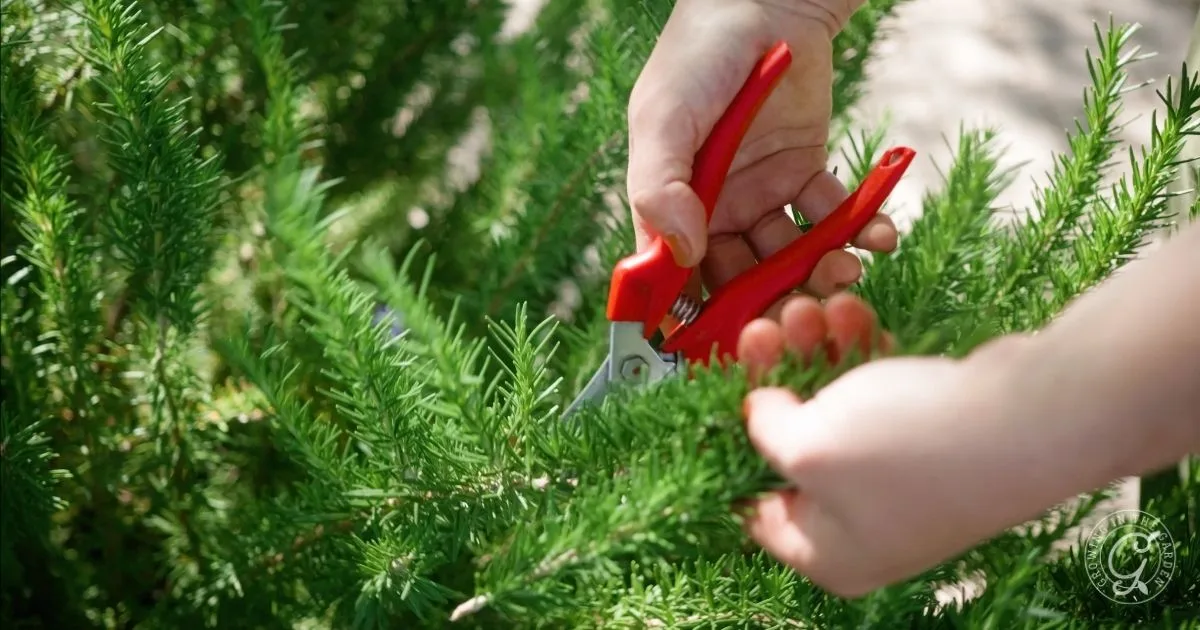
- For most herbs, trim lightly, avoiding hard cuts: Focus on removing dead or damaged stems and gently shaping the soft growth. Avoid cutting into woody stems unless the plant is dormant.
- Feed the soil, not the plant: Use a light top-dressing of compost and worm castings to rebuild soil life. Avoid heavy fertilizers; most herbs prefer lean conditions.
- Water less often, but deeply: As nights cool, let the top few inches of soil dry between waterings to avoid rot.
- Mind the mulch: Add a thin layer of mulch to insulate roots, but keep it away from the crown of the plant to prevent rot.
- Check on tired herbs: Fall is a great time to repot struggling herbs—this post explains how to repot and divide container herbs step by step.
Specific Perennial Fall Care Tips by Herb
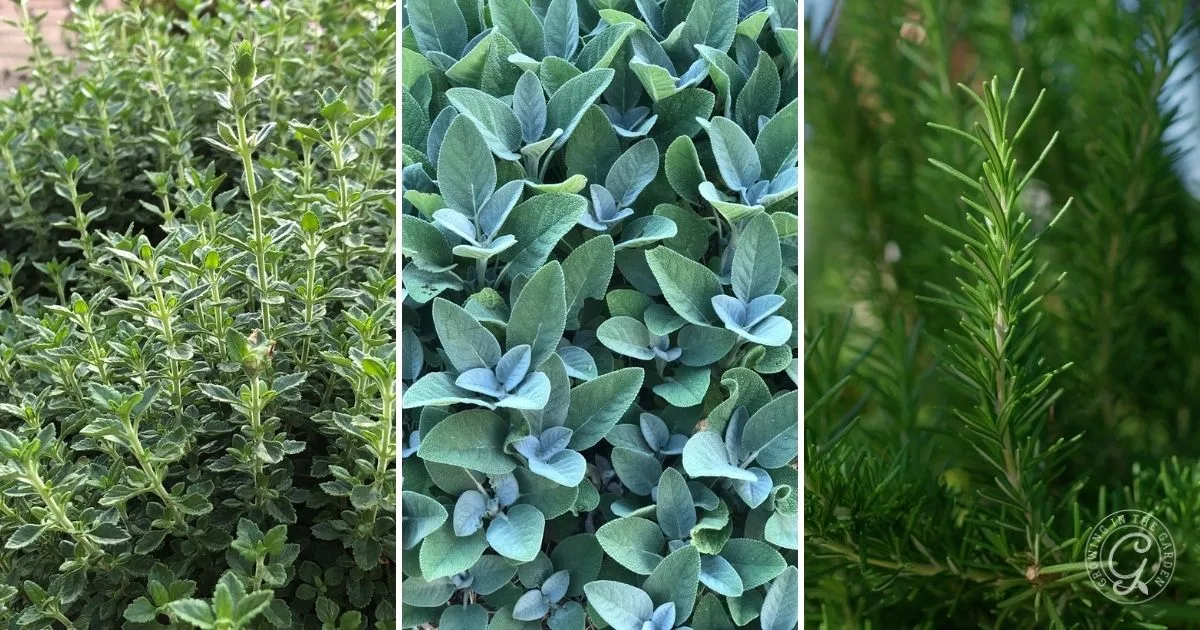
Rosemary
- Lightly shape the plant without cutting into woody stems.
- Improve airflow by thinning if needed.
- Avoid overwatering as the weather cools.
- Learn how to grow rosemary.
Lavender
- Prune only soft green growth, not woody stems.
- Keep mulch and compost away from the crown.
- Use gravel mulch to keep the base dry.
- Learn how to grow lavender.
Thyme
- Trim lightly to where new growth is visible.
- Replace woody or dead plants; fall is a great time to replant.
- Avoid soggy soil and buried crowns.
- Learn how to grow thyme.
Oregano
- Shear back by one-third to encourage basal growth.
- Divide if center is woody and outer edges are vigorous.
- Feed lightly and water when the top few inches are dry.
- Learn how to grow oregano.
Mint
- Cut back to 2–3 inches above soil.
- Remove dead thatch and top-dress with compost.
- Ensure consistent moisture and deep watering.
- Learn how to grow mint.
Sage
- Replace if it shows no green below top few inches.
- Plant new sage in well-draining soil with morning sun.
- Prune in spring, not fall, once it’s established.
- Learn how to grow sage.
Chives & Garlic Chives
- Let bloom in fall if flowering.
- Cut back in late fall or early winter.
- Divide clumps every few years if crowded.
- Learn how to grow chives.
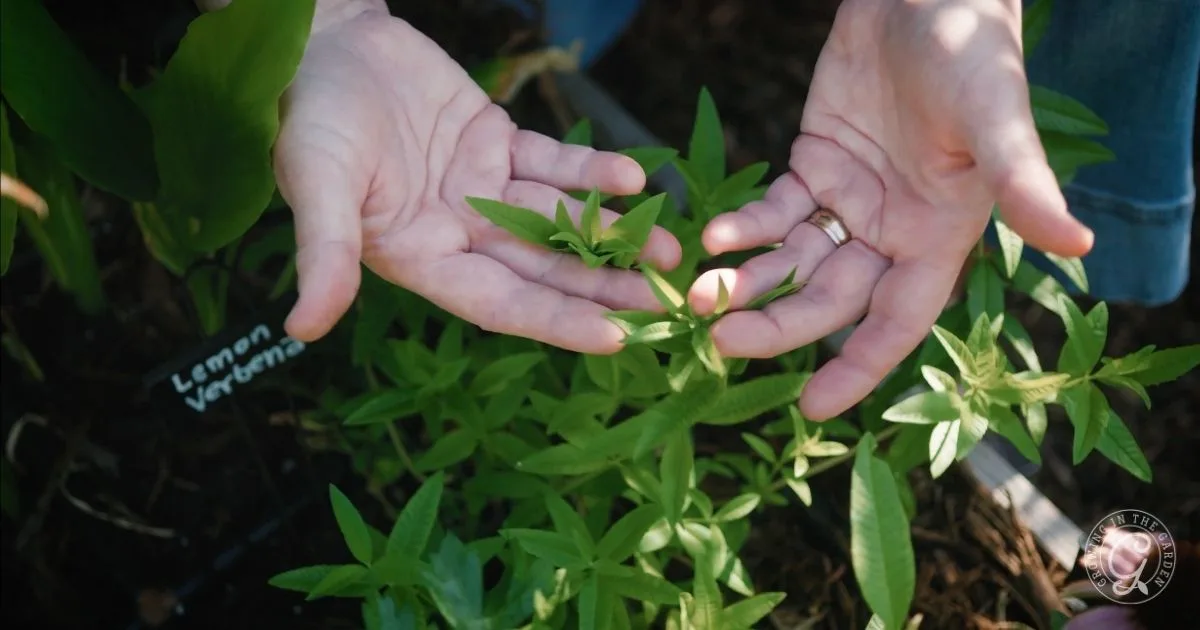
Lemon Verbena
- Tip prune lightly to a pair of buds.
- Expect leaf drop as nights cool.
- Keep protected from frost and reduce water if dormant.
- Learn how to grow lemon verbena.
French Tarragon
- Prune lightly and shape.
- Avoid heavy feeding; prefers lean, well-drained soil.
- Protect from hard frost; treat as semi-tender perennial.
- Learn how to grow French tarragon.
Ginger
- Dig down and check the rhizomes. If they are forming well and stalks are drying back it may be getting close to harvest.
- Dig down and harvest rhizomes, or leave some in place to overwinter.
- Learn more about successfully growing ginger in this guide.
Fall Perennial Herb Care Final Thoughts
A simple fall reset with light pruning, compost top-dressing, and adjusted watering can set your perennial herbs up for months of healthy growth. Take a few minutes now to care for them, and they’ll be stronger and more productive heading into winter and spring.
I also do a full garden reset in fall, not just herbs. Use this summer-to-fall garden transition guide to prep beds, adjust watering, and make room for new plants.
Additional Perennial Herb Growing Resources
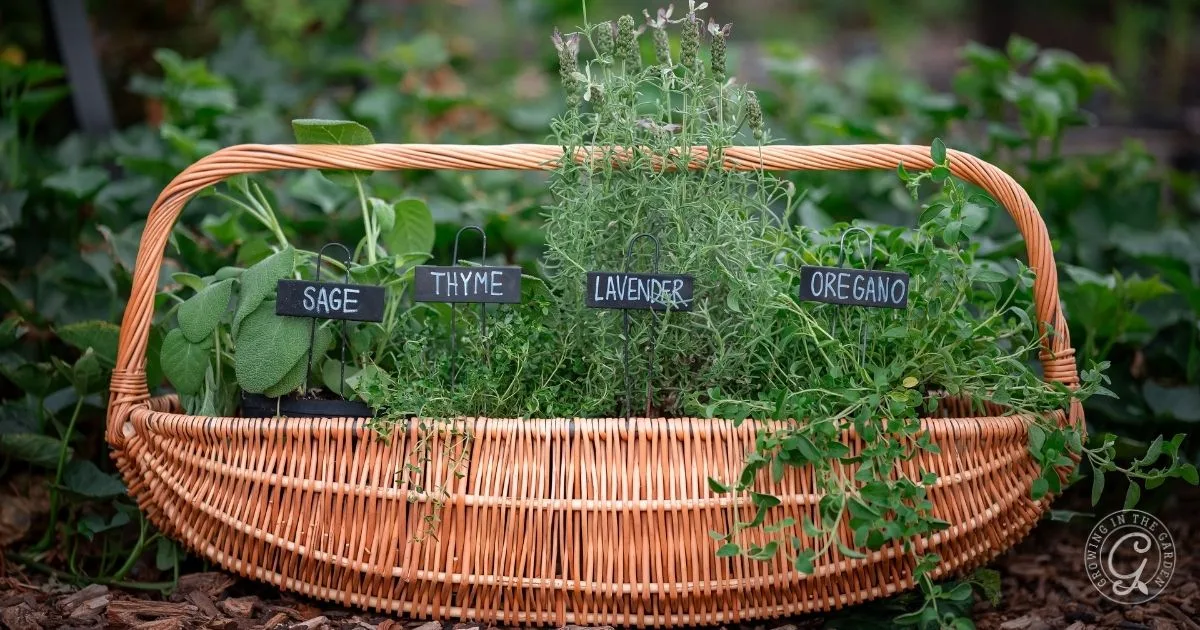
- Browse my Arizona Herb Planting Guide for a visual planting reference.
- Read how to grow herbs in hot summer climates.
- See my top 10 perennial herbs for hot summer climates.
- Want to preserve your herbs? Here’s how to freeze dry them.


Leave a comment on Fall Perennial Herb Care: Revive and Maintain Your Herbs