
When and How to Repot Herbs in Containers
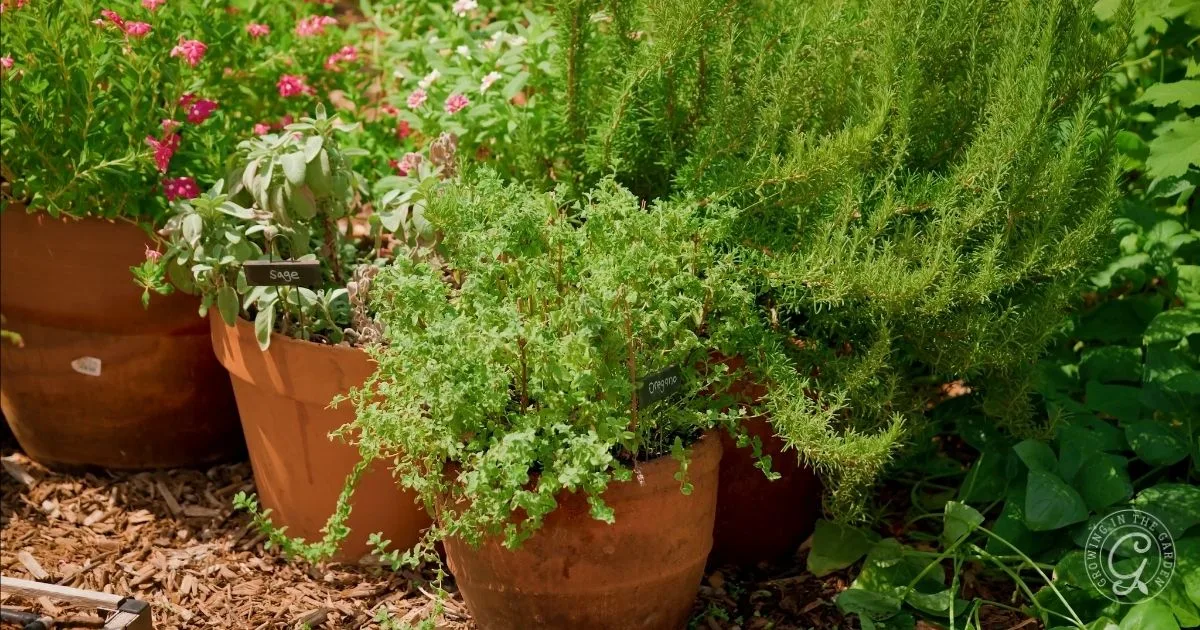
Herbs grown in containers are convenient, space-saving, and productive—but they do need occasional repotting or dividing to keep growing strong. If your herbs have slowed down, look root-bound, or aren’t holding moisture like they used to, it might be time to give them more space.
Key Takeaways: Repotting Herbs in Containers
- Herbs grown in containers need occasional repotting or dividing for optimal growth and health.
- Signs that it’s time to repot include roots out of drainage holes, wilting after watering, and slow growth.
- The best times to repot are fall and early spring, depending on your climate.
- To repot herbs, choose a pot 1–2 inches wider, inspect roots, add fresh potting mix, and water thoroughly.
- Dividing herbs every couple of years refreshes the plant and allows sharing; popular herbs for dividing include chives and mint.
What We Will Cover:
Why Repot Herbs?
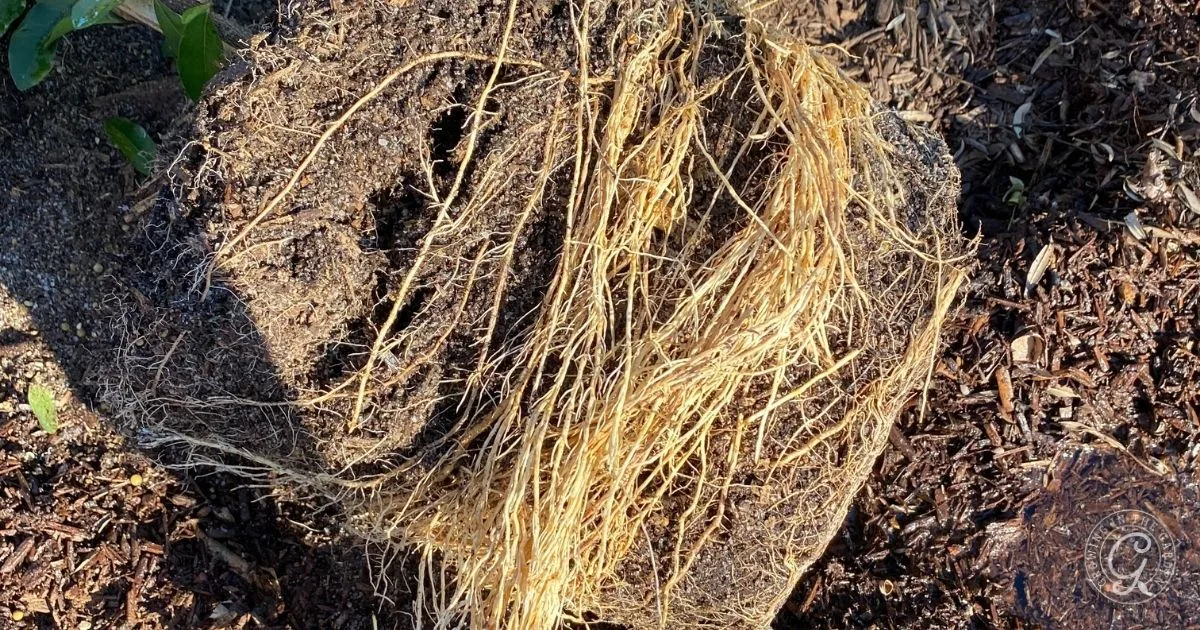
Over time, the roots of your herbs can fill the container and become crowded. This limits their ability to take up water and nutrients.
Repotting gives your herbs room to grow and restores healthy soil structure.
If you’re not sure where to start with container herb gardening, read this guide: How to Grow Herbs in Containers.
Signs It’s Time to Repot Herbs
If you notice any of the following, it’s probably time to repot:
- Roots are growing out of the drainage holes
- The plant wilts quickly after watering
- Soil dries out faster than usual or becomes compacted
- Growth has slowed or stopped despite good light and water
- The plant lifts easily out of the pot or the root ball is circling
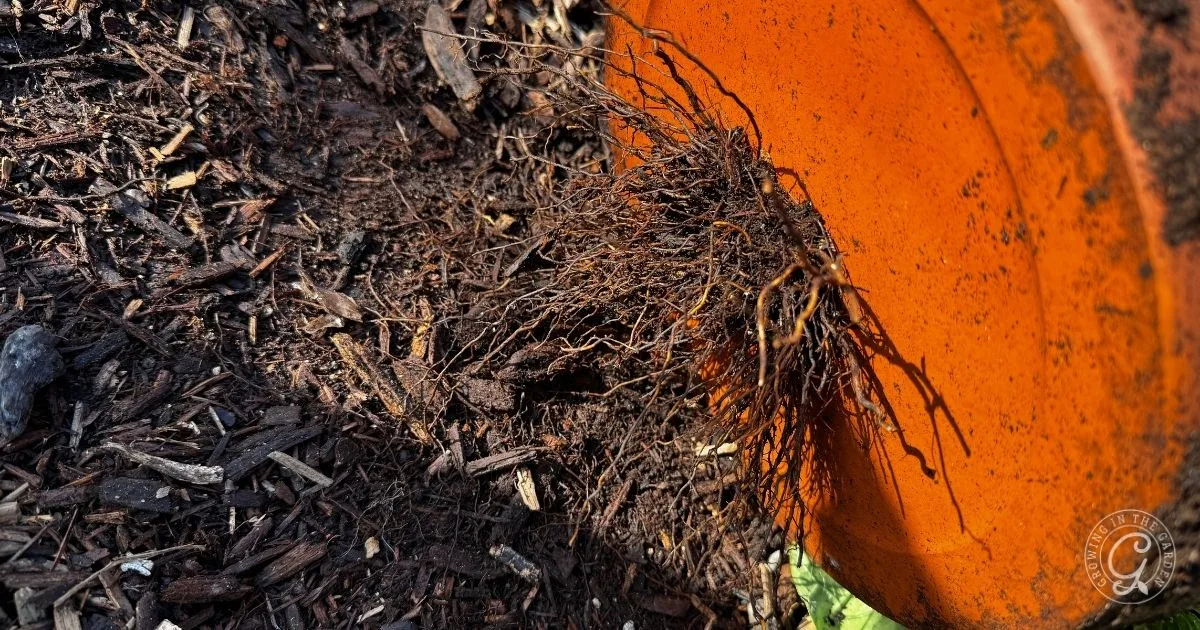
These are all signs your herb is root-bound or the soil is no longer supporting healthy growth.
Best Time to Repot Herbs
Fall and early spring are ideal times to repot herbs in most climates. In hot climates, fall is best—cooler temperatures and milder sun allow plants to recover quickly. In cold climates, wait until early spring if herbs have gone dormant indoors.
How to Repot a Potted Herb
Repotting is easy. Here’s a simple step-by-step guide:
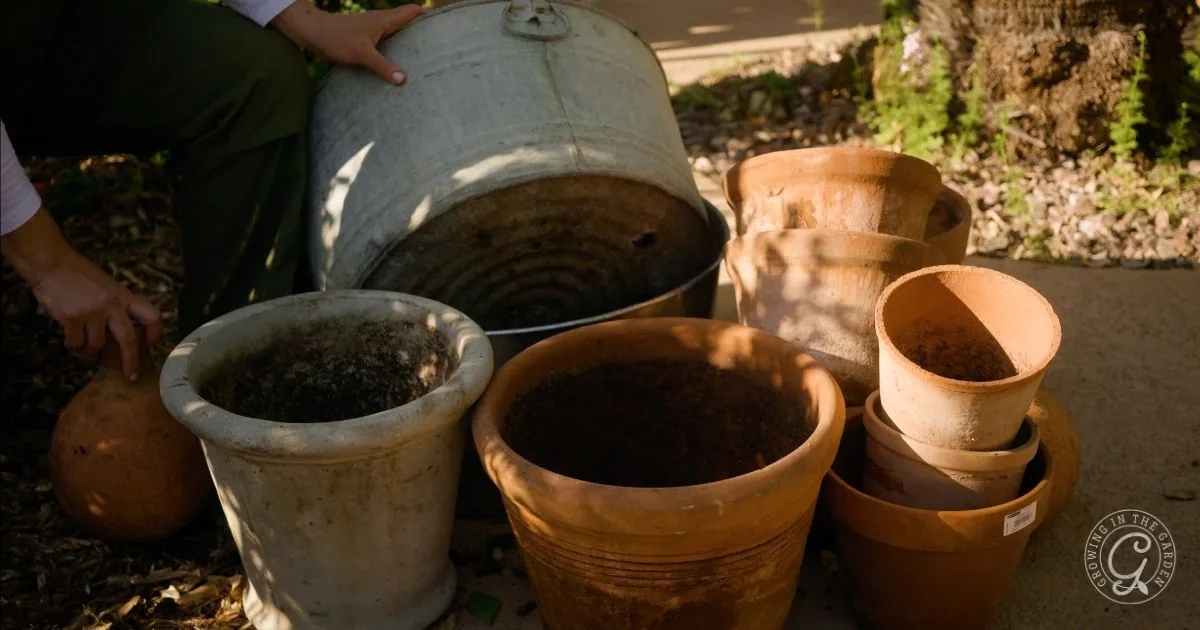
- Choose the right size pot: Go up just one size—about 1–2 inches wider in diameter. Learn how to choose the right pot here.
- Remove the plant: Gently loosen the plant from the pot and shake off some of the old soil.
- Inspect the roots: Trim away any dead or circling roots.
- Add fresh potting mix: Use a high-quality potting mix suited for herbs. Avoid heavy, moisture-retentive soils for Mediterranean herbs.
- Replant at the same depth: Keep the crown of the plant level with the soil surface.
- Water thoroughly: Let water drain through the pot to settle the soil.
- Place in a protected spot: Give the plant a few days in partial sun before returning it to full exposure.
Dividing Herbs in Containers
Some herbs grow in tight clumps and benefit from dividing every couple of years. This refreshes the plant and gives you extras to replant or share.
Herbs that divide well:
- Chives
- Garlic chives (How to Grow Garlic Chives)
- Oregano (How to Grow Oregano)
- Thyme (How to Grow Thyme)
- Mint (How to Grow Mint)
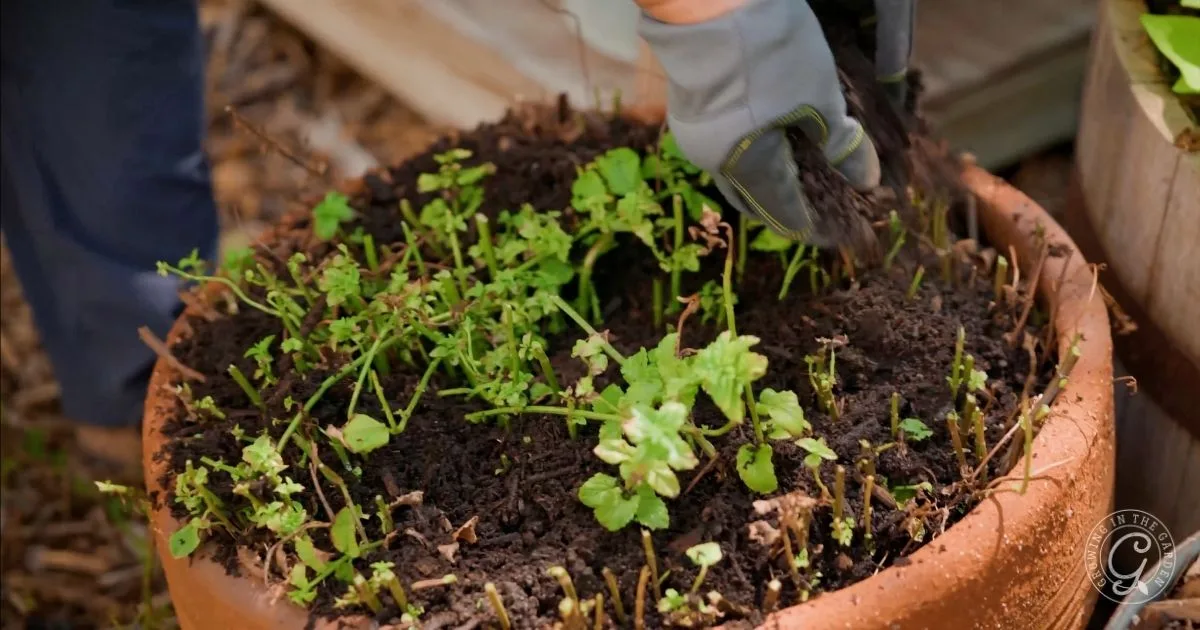
How to divide:
- Remove the root ball from the pot
- Use a sharp knife or garden spade to slice through the crown
- Discard the woody center and replant the vigorous outer sections in fresh soil
Tips for Success After Repotting
- Water deeply but let the top inch of soil dry between waterings
- Avoid feeding for the first 1–2 weeks while roots settle
- Mulch lightly but keep it away from the crown
- Watch for signs of transplant stress (wilting, yellowing) and adjust light or watering as needed
If repotted herbs still stay dry after watering or the soil pulls away from the edges, see how to fix hydrophobic soil in the desert garden for tips on rewetting hydrophobic container soil.
Final Thoughts
Regular repotting and occasional dividing keep container herbs productive, flavorful, and looking their best. Most herbs are easy to manage in pots when you give them the space and conditions they need.
Want more herb care tips? Read:


Leave a comment on When and How to Repot Herbs in Containers