
How to Grow Herbs in Containers: A Complete Guide
Growing herbs in containers is one of the easiest and most rewarding ways to enjoy fresh flavor from your garden. Herbs are forgiving, low-maintenance, and quick to reward you with fresh harvests. Plus, they attract pollinators, boost garden beauty, and add nutrition to every meal. Don’t be afraid to start gardening—an herb garden is a great first step.
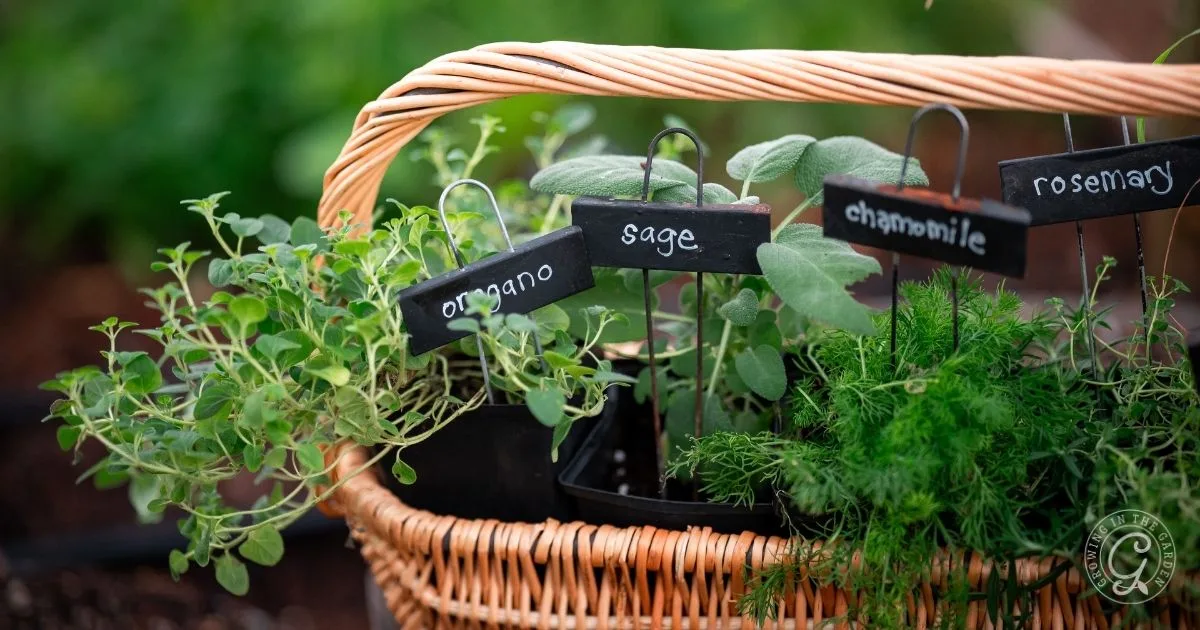
Key Takeaways: Growing Herbs in Containers
- Growing herbs in containers is easy and rewarding; it’s perfect for beginners and small spaces.
- Control your herbs’ growing conditions, easily manage invasive species, and simplify care by keeping them close to home.
- Select the best herbs for containers like basil, cilantro, and mint, while using the right container size for each.
- Provide seasonal care and adjust watering as needed; moving tender herbs indoors before frost is crucial.
- Discover additional resources for successful container gardening, including guides, videos, and classes.
Table of Contents
- Why Grow Herbs in Containers?
- Best Herbs to Grow in Containers
- Container Size Guide
- Choosing the Right Container for Herbs
- Tips for Growing Herbs in Containers in Hot Climates
- Tips for Growing Herbs in Containers in Cold Climates
- Watering Herbs in Containers
- Seasonal Herb Care in Containers
- Repotting and Dividing Herbs
- Special Note on Mint and Fennel
- Frequently Asked Questions About Growing Herbs in Containers
- Growing Herbs in Containers: Final Thoughts
- My Container Gardening Resources:
Why Grow Herbs in Containers?
If you’re new to gardening, herbs are a perfect place to start. They grow quickly, don’t require much space, and many don’t mind life in a pot.
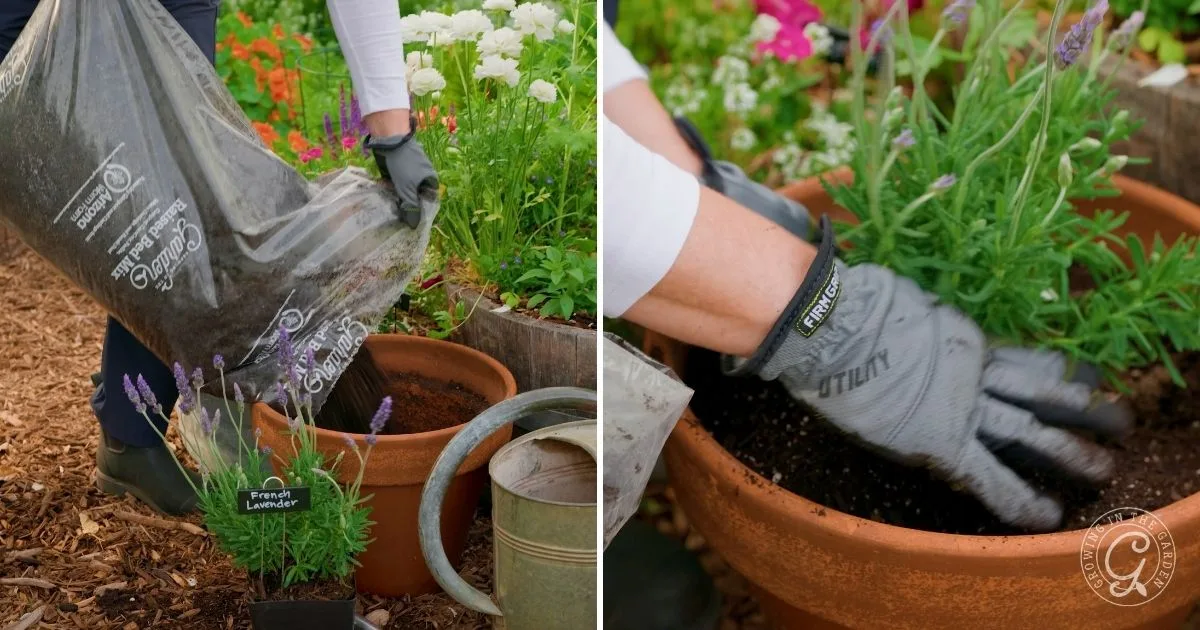
- Control growing conditions: You can tailor soil, water, and sun exposure for each herb.
- Save space: Great for patios, balconies, or small gardens.
- Manage invasive herbs: Mint and fennel are best grown in containers to prevent spreading or disrupting nearby plants.
- Easier care and harvest: Keep herbs close to the kitchen or entryway for quick snips and simple maintenance.
- Climate control: Containers can be moved indoors or into shelter during extreme weather.
Best Herbs to Grow in Containers
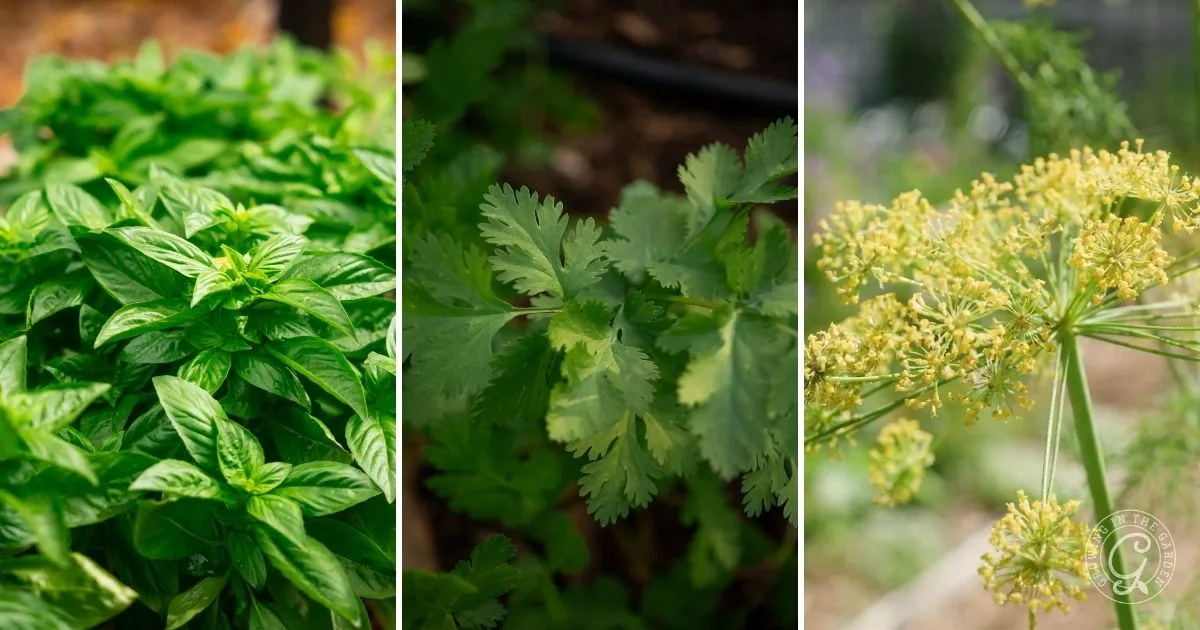
Most herbs do well in containers, especially annuals and compact perennials. If you’re just getting started, pick a few favorites you use in the kitchen. You’ll be amazed at how much you can harvest from a single plant. (Click on each herb name to read the growing guide.)
Great choices for containers:
Tender herbs to move indoors in cold climates:
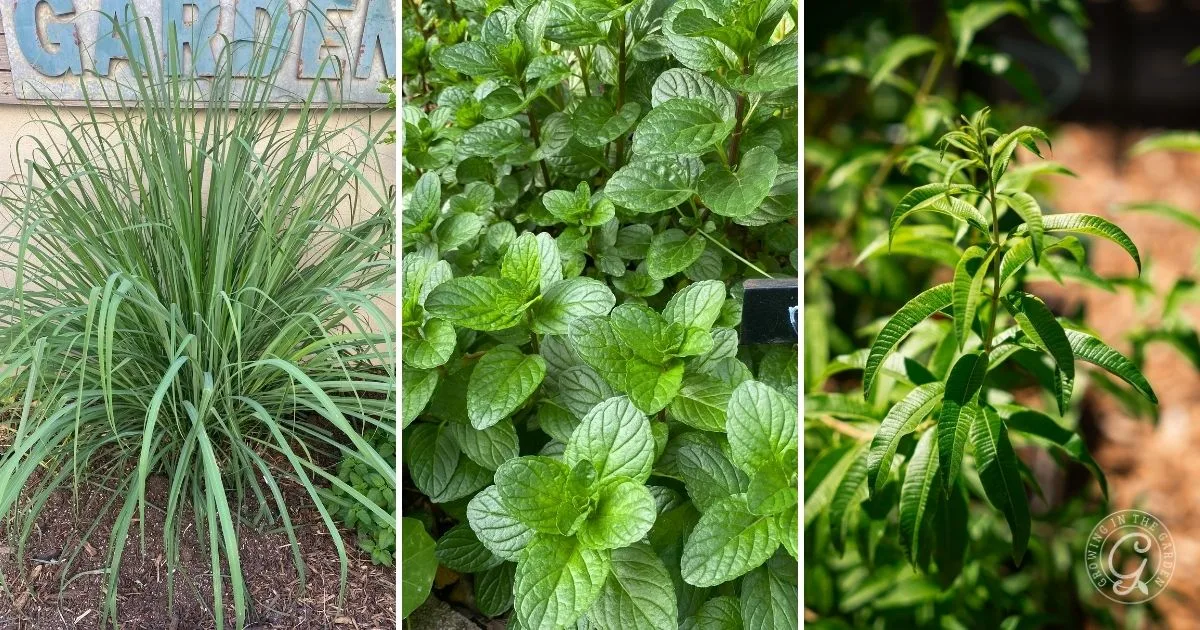
These herbs can’t handle frost, so bring them inside before freezing temperatures arrive.
- Basil
- Lemongrass
- Lemon verbena
- Tarragon
- Mint
- Stevia
Herbs better suited for the ground:
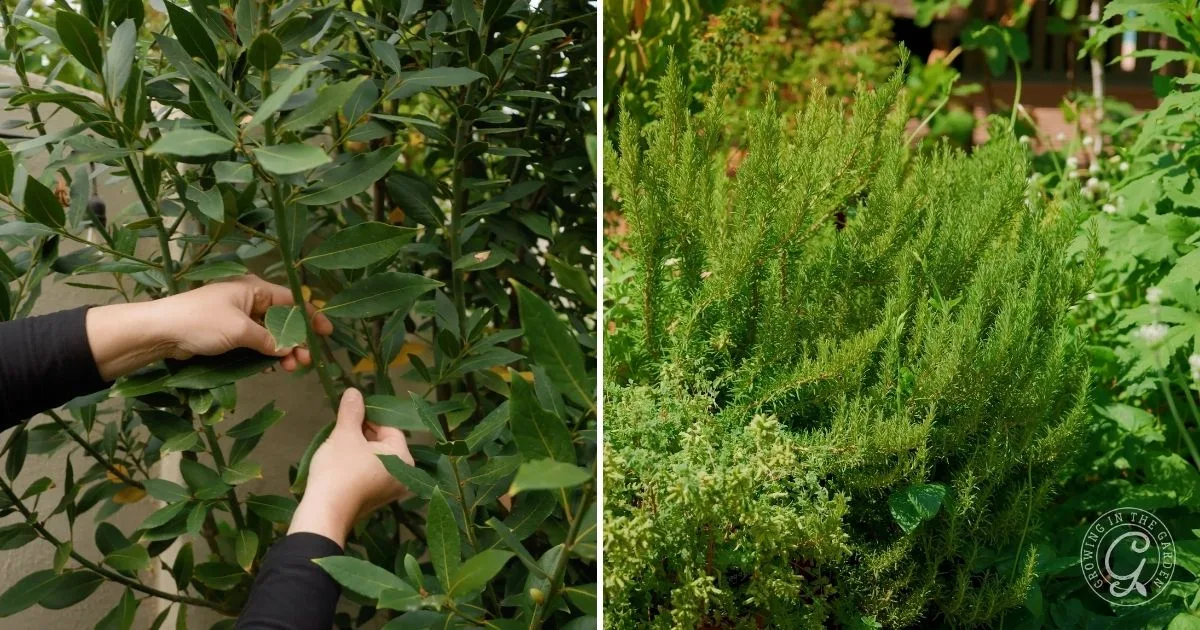
Some herbs get large or woody over time and may outgrow their container life. If you garden in a mild climate, they’ll be happier in the ground long-term.
- Mature rosemary (if winters are mild)
- Bay laurel
Container Size Guide
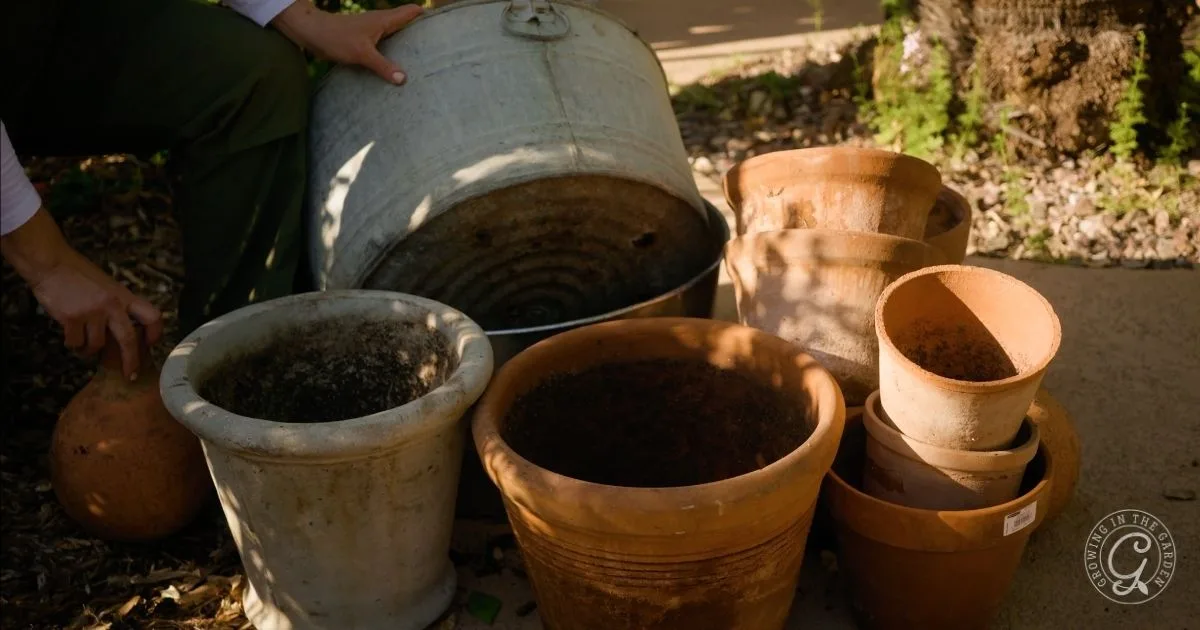
Choosing the right container size is one of the most important parts of growing herbs successfully. Larger containers retain moisture longer, protect roots from temperature swings, and give your plants room to thrive. Especially in hot climates, small pots dry out too quickly. Read this article for a full guide on how to choose the right sized container.
| Herb | Minimum Container Size |
|---|---|
| Basil | 1–3 gallons |
| Chives | 1–2 gallons |
| Cilantro | 1–3 gallons |
| Dill | 1–3 gallons |
| Fennel (bulbing) | 3–5 gallons |
| Mint | 5–10+ gallons |
| Oregano | 5–10+ gallons |
| Parsley | 1–3 gallons |
| Rosemary | 10–15+ gallons |
| Sage | 3–5 gallons |
| Tarragon | 3–5 gallons |
| Thyme | 2–3 gallons |
| Lemon balm | 3–5 gallons |
Choosing the Right Container for Herbs
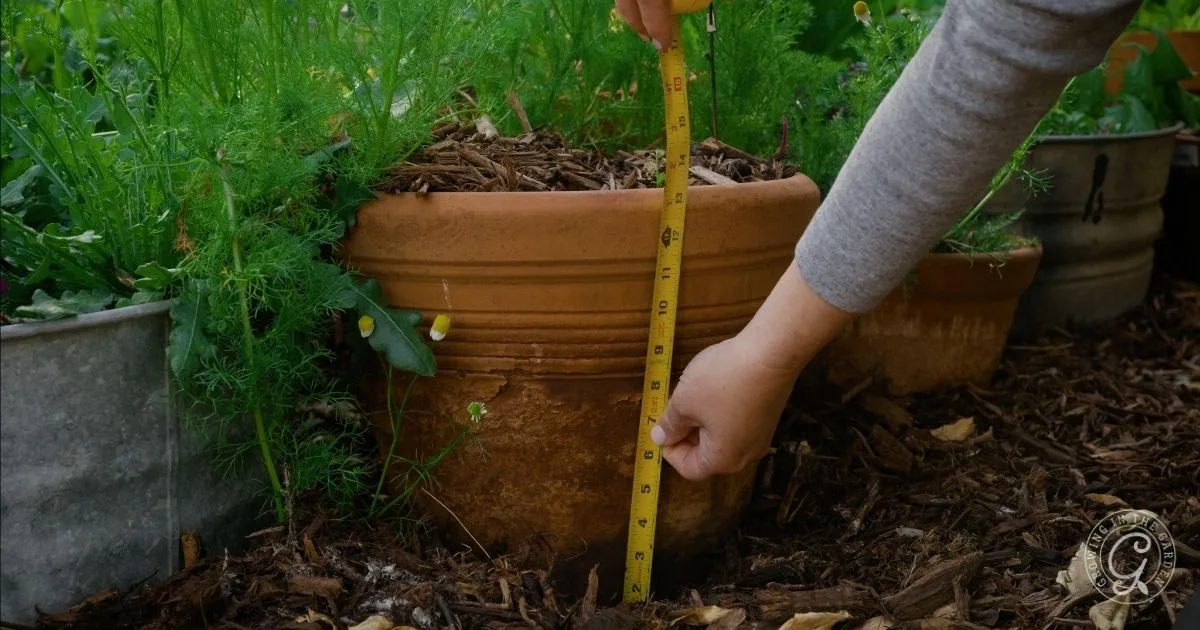
Not all containers are created equal. The material, size, and drainage all play a role in how well your herbs grow. Here’s what to consider before you pot up your herbs.
- Drainage is essential: Always use containers with drainage holes.
- Material matters:
- Terracotta: Breathable, but dries quickly. My top choice for most herbs.
- Plastic: Lightweight and retains moisture well.
- Fabric grow bags: Excellent drainage, may dry quickly in summer.
- Self-watering containers: Good for thirsty annuals.
- Color counts: Lighter colors reflect heat; darker pots heat up quickly.
- Depth and width: Deep enough to support root growth and wide enough for air circulation.
Herbs are a great place to start, but if you want help beyond herbs, use this vegetable container size chart to decide which size container to use for other crops too.
Tips for Growing Herbs in Containers in Hot Climates
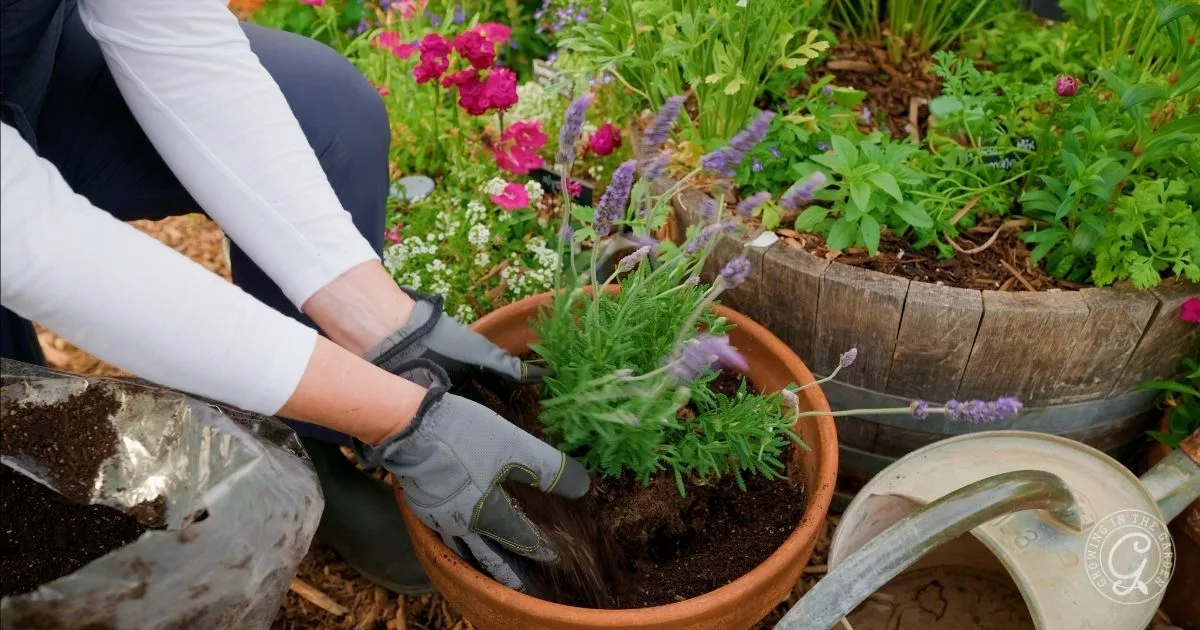
If you garden in a hot climate, summer can be tough on containers. But with a few simple adjustments, you can keep your herbs thriving.
- Use larger containers to buffer against heat and rapid drying.
- Place containers where they get morning sun and afternoon shade.
- Group containers together to provide an insulating effect.
- Mulch the surface to reduce evaporation.
- Avoid small black pots in full sun.
- Avoid using oyas for Mediterranean herbs like thyme, rosemary, and lavender; they prefer to dry slightly between waterings.
Tips for Growing Herbs in Containers in Cold Climates
Cold winters don’t have to end your herb garden. With the right containers and timing, you can extend your growing season or keep your herbs going indoors.
- Move tender herbs indoors before the first frost.
- Group containers together and protect with row covers or frost cloth.
- Use rolling plant caddies or lightweight pots for easy movement.
- Terracotta may crack—use plastic or insulated containers outdoors in winter.
Watering Herbs in Containers
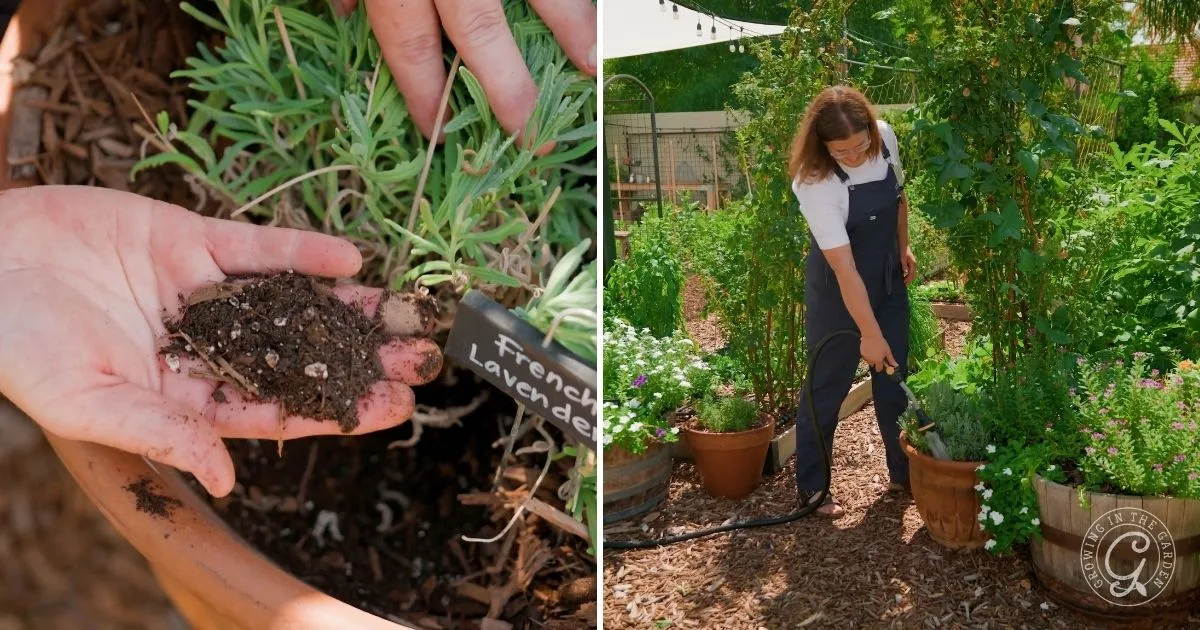
Container herbs dry out more quickly than in-ground plants, so consistent watering is key. Learn to read your plants and soil so you don’t over- or under-water.
- Check soil daily in summer; water when the top inch is dry.
- Water deeply until it drains out the bottom.
- Avoid soggy soil—good drainage is key.
- Use oyas for water-loving herbs like basil or parsley, but not for drought-tolerant herbs.
Read this for more information about the best way to water containers.
Seasonal Herb Care in Containers
Each season brings different needs. Use this simple care calendar to keep herbs healthy all year long.
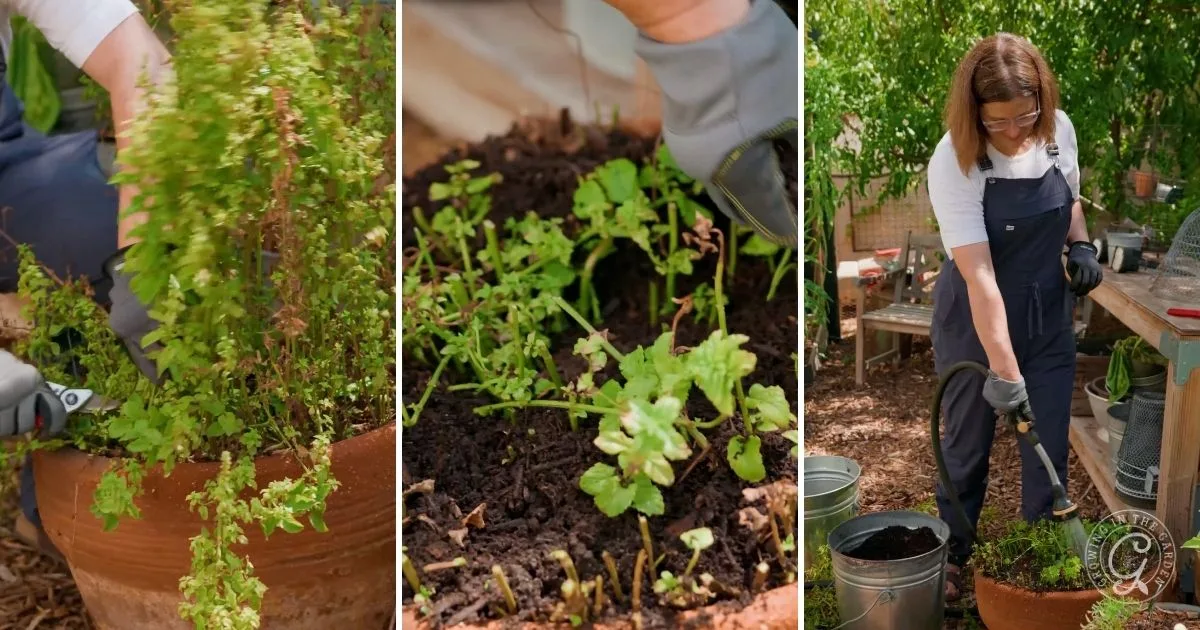
Spring:
- Refresh soil mix or replace the top few inches.
- Prune perennials to encourage new growth.
- Start new herbs from seed or transplants.
Summer:
- Water consistently.
- Provide shade during extreme heat.
- Harvest frequently to promote growth.
Fall:
- Cut back tired annuals.
- Top-dress perennials with compost.
- Replant or divide overcrowded herbs.
- Plant perennial herbs in mild winter climates.
Once planted, most perennial herbs benefit from seasonal maintenance—this fall care guide shows you what each herb needs.
Winter:
- Protect from frost.
- Reduce watering if herbs go dormant.
- Move tender herbs indoors if needed.
- This is often the time you harvest ginger. When you grow ginger in a container it makes it simple to harvest. Learn more about how to grow ginger in this guide.
Repotting and Dividing Herbs
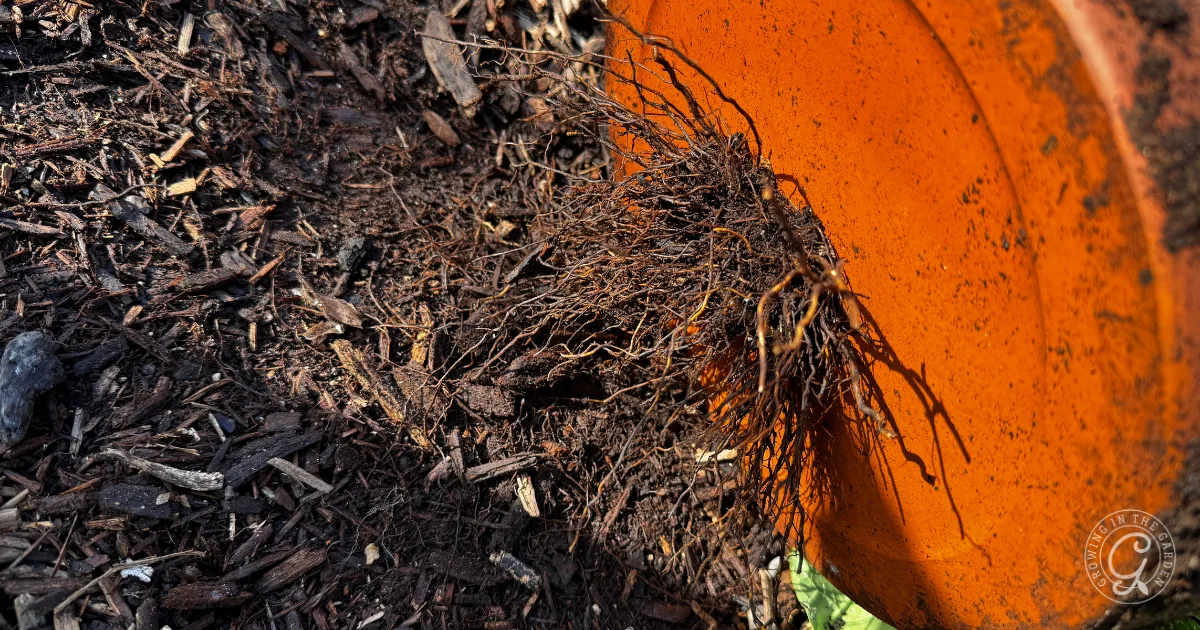
After a while, herbs in containers may need more space. Repotting keeps container herbs growing well.
Signs it’s time to repot:
- Roots growing out of drainage holes
- Wilting between waterings
- Soil pulling away from pot edges
- Stunted growth or circling roots
How to repot:
- Choose a pot 1–2 inches wider.
- Loosen roots before placing in new soil.
- Water deeply after repotting.
Go to this article for a comprehensive guide to repotting herbs.
Dividing clump-forming herbs:
Some herbs grow in tight clumps that benefit from division every couple of years.
- Chives, oregano, mint, and thyme benefit from dividing every 2–3 years.
- Use a sharp knife or spade to separate and replant in fresh soil.
Special Note on Mint and Fennel
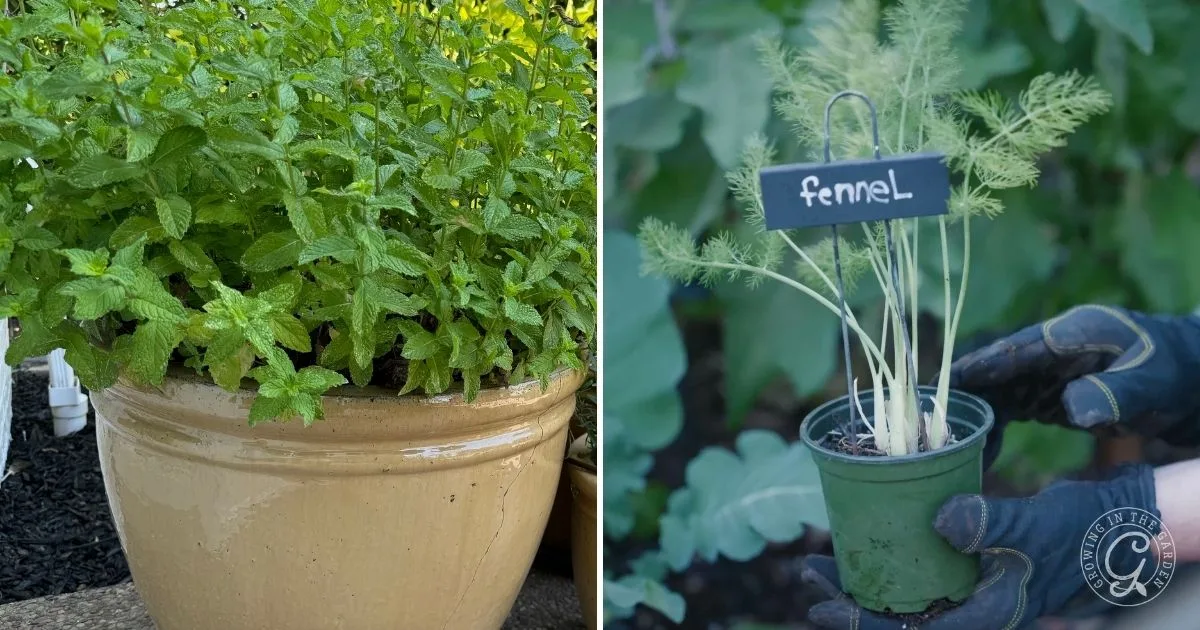
Both mint and fennel are best grown in containers—not just because they grow well there, but because they can cause problems when planted in the ground.
- Mint: Extremely vigorous and spreads quickly underground. Always grow in containers unless you want it to take over.
- Fennel: Releases compounds that can inhibit the growth of nearby plants. Best kept in a dedicated container to avoid affecting other herbs.
Frequently Asked Questions About Growing Herbs in Containers
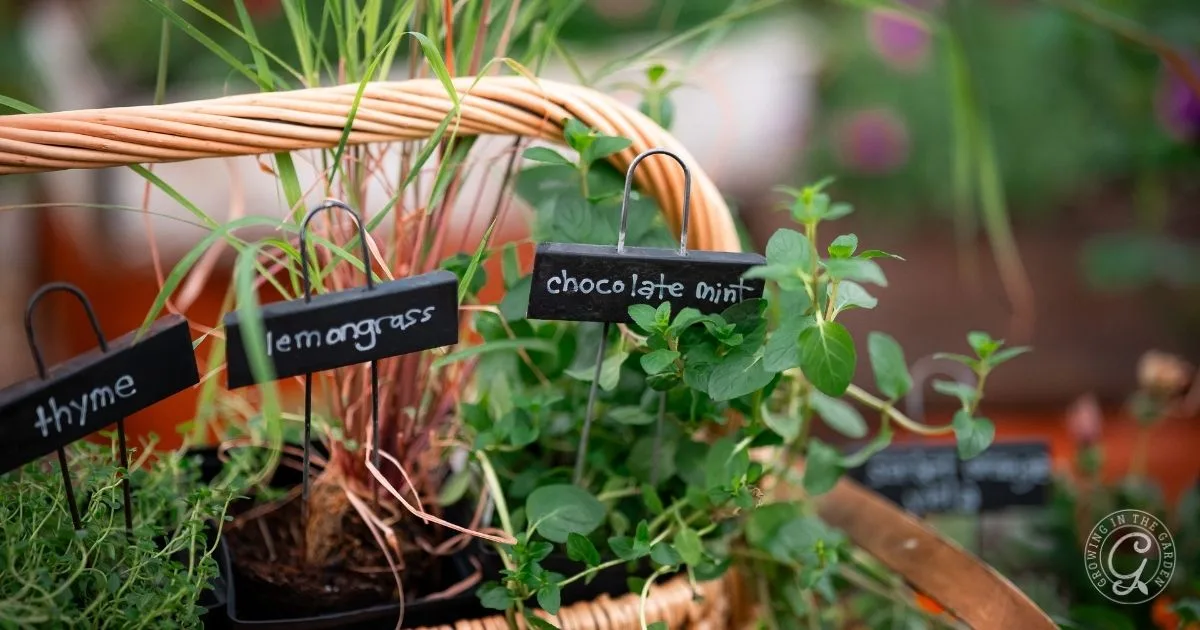
Basil, cilantro, parsley, mint, thyme, oregano, chives, and rosemary all grow well in containers. Just match the pot size to the plant’s needs.
Most herbs do well in containers that are at least 6–12 inches deep. Larger, woody herbs like rosemary prefer 12–18 inches.
Yes, many herbs like basil, parsley, and chives can grow indoors if they get enough light. A sunny windowsill or grow light helps.
Check daily in summer. Water when the top inch of soil feels dry, and make sure excess water can drain out the bottom.
A light top-dressing of compost or worm castings is usually enough. Avoid heavy feeding—most herbs prefer lean soil.
Growing Herbs in Containers: Final Thoughts
Container herb gardening is flexible, space-saving, and ideal for beginners and experienced gardeners alike. With the right setup and a little seasonal care, you can grow a productive herb garden all year long.
Looking for more tips? Read my guides on herb planting in Arizona, herbs for hot climates, and perennial herbs that thrive in heat.
My Container Gardening Resources:
For more resources, I have several videos and blog posts and even classes that provide step-by-step guides, tips, and tricks for successful container gardening.
- Container Gardening for Beginners: 10 Steps for Success
- 20 Best Vegetables for Container Gardening
- Gardening in Grow Bags: 5 Tips for Success
- The Best Way to Water Containers
- Container Gardening Playlist on YouTube
- How to Grow in Elevated Garden Beds
- GreenStalk Gardening Tips
I cover container gardening and much more inside Growing in the Garden Academy, where I teach monthly gardening classes and share real-time updates from my Arizona garden. Join us on Patreon to start learning today and don’t forget to check out my class tailored specifically to this topic: Container and Grow Bag Gardening.
If you enjoy container gardening, you’ll love the benefits of elevated beds—check out my guide, How to Grow in Elevated Garden Beds, to learn how to get started
Looking for more small-space gardening ideas? Don’t miss my post on GreenStalk Gardening Tips, where I share what’s worked (and what hasn’t) in my Arizona garden.
To learn more about gardening in containers, read my book on this topic. Learn more about the book “How to Grow Your Own Food: A Beginner’s Guide to Container Gardening” in this post or purchase the book here.



Leave a comment on How to Grow Herbs in Containers: A Complete Guide