
How to Grow Foxglove in Hot Climates: Seeds, Plugs, and Timing
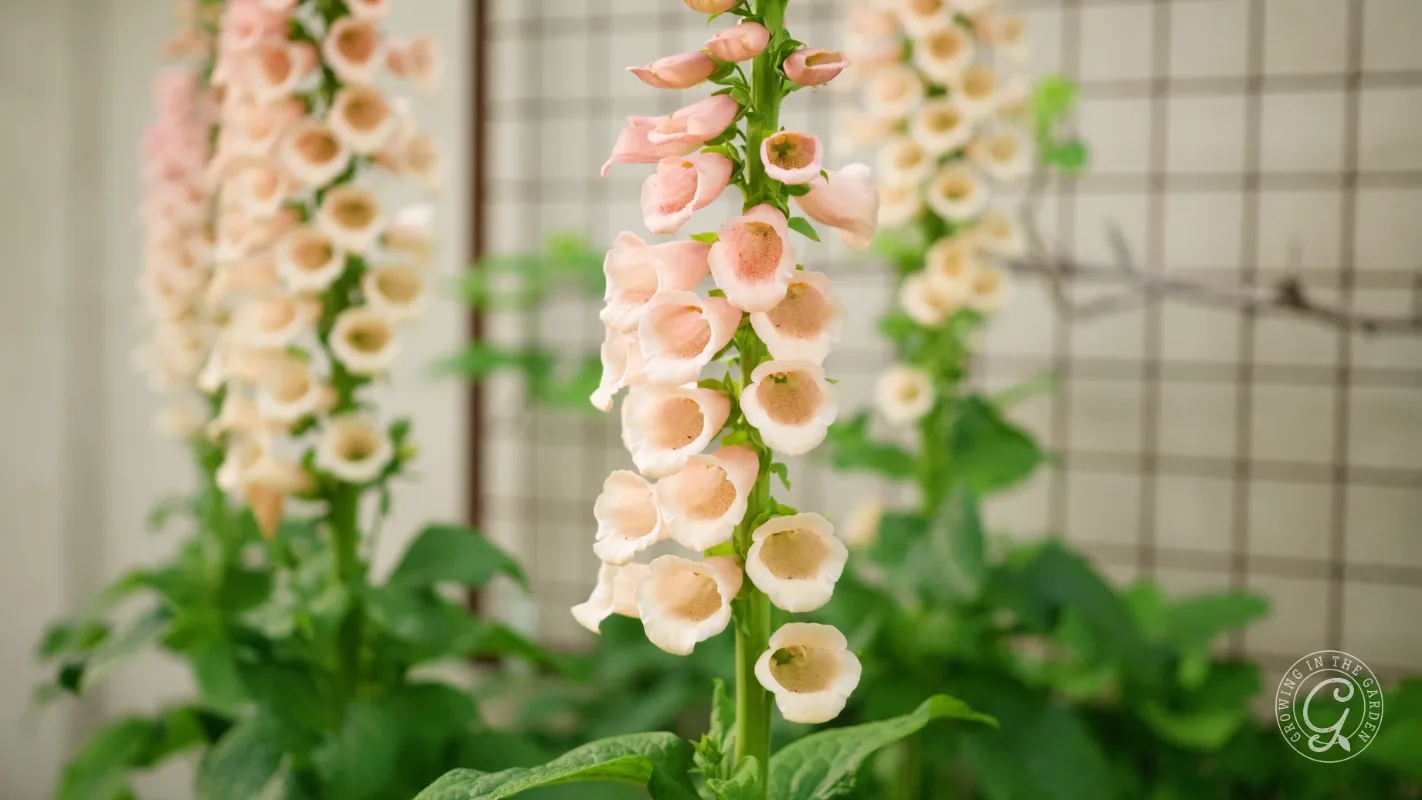
Foxgloves remind us that some flowers are worth waiting for. I’ve grown foxglove in my Mesa garden every year for more than 10 years. In cooler climates, it’s a biennial that needs two years to bloom. Here, summer finishes it off before it ever gets a second year. So I grow first-year blooming varieties as cool-season annuals, and they bloom from March until the heat ends them in May or June.
Timing is everything. I store my seeds in the freezer year-round, then put them under lights in July or August. Some years I skip seeds and order plugs instead. Either way, I usually get them planted in October.
Key Takeaways: How to Grow Foxglove in Hot Climates
- Pick first-year bloomers. Dalmatian and Camelot are my favorites. Classic biennial foxglove won’t bloom before our summer heat arrives.
- Chill, then sow. I store seeds in the freezer year-round, then sow them on the soil surface under grow lights in July or August.
- Plugs are the shortcut. Plugs from Farmer Bailey are the cheapest way I’ve found to skip starting from seed.
- Plant small, plant in fall. Transplants go out in September or October in beds, in the ground, or in containers.
- Expect blooms March to May. Cut faded spikes; side spikes will follow.
- They won’t come back after a desert summer. Start fresh each year.
- All parts are poisonous if eaten. Plant them away from kids and pets that chew on plants.
What We’ll Cover:
- Why Foxglove Acts Like an Annual in Hot Climates
- The Foxglove Varieties I Grow
- How I Cold-Stratify and Start Foxglove Seeds
- Buying Plugs or Transplants Instead of Seeds
- When I Plant Foxglove in the Low Desert
- Where Foxglove Grows Best in My Garden
- 5. Caring for Foxglove Through Winter and Spring
- 6. How I Get More Blooms From Each Plant
- Is Foxglove Safe to Grow Around Kids and Pets?
- Frequently Asked Questions About Growing Foxgloves

Why Foxglove Acts Like an Annual in Hot Climates
Common foxglove is a biennial. In the first year, it grows a low clump of leaves; in the second, it sends up flower spikes. In cooler climates, plants can reseed and come back year after year.
That isn’t what happens in my garden. Our summers are too hot for foxglove to make it to a second year. In more than 10 years, not a single plant has survived the summer or reseeded. So I grow first-year blooming varieties as cool-season annuals and start fresh every fall.
Important: All parts of foxglove are poisonous if ingested. Use care when growing them around children and pets.
The Foxglove Varieties I Grow
First-year varieties are bred to bloom within months of sowing. That’s what makes foxglove possible in a hot climate.
Some of my favorite options to grow are:
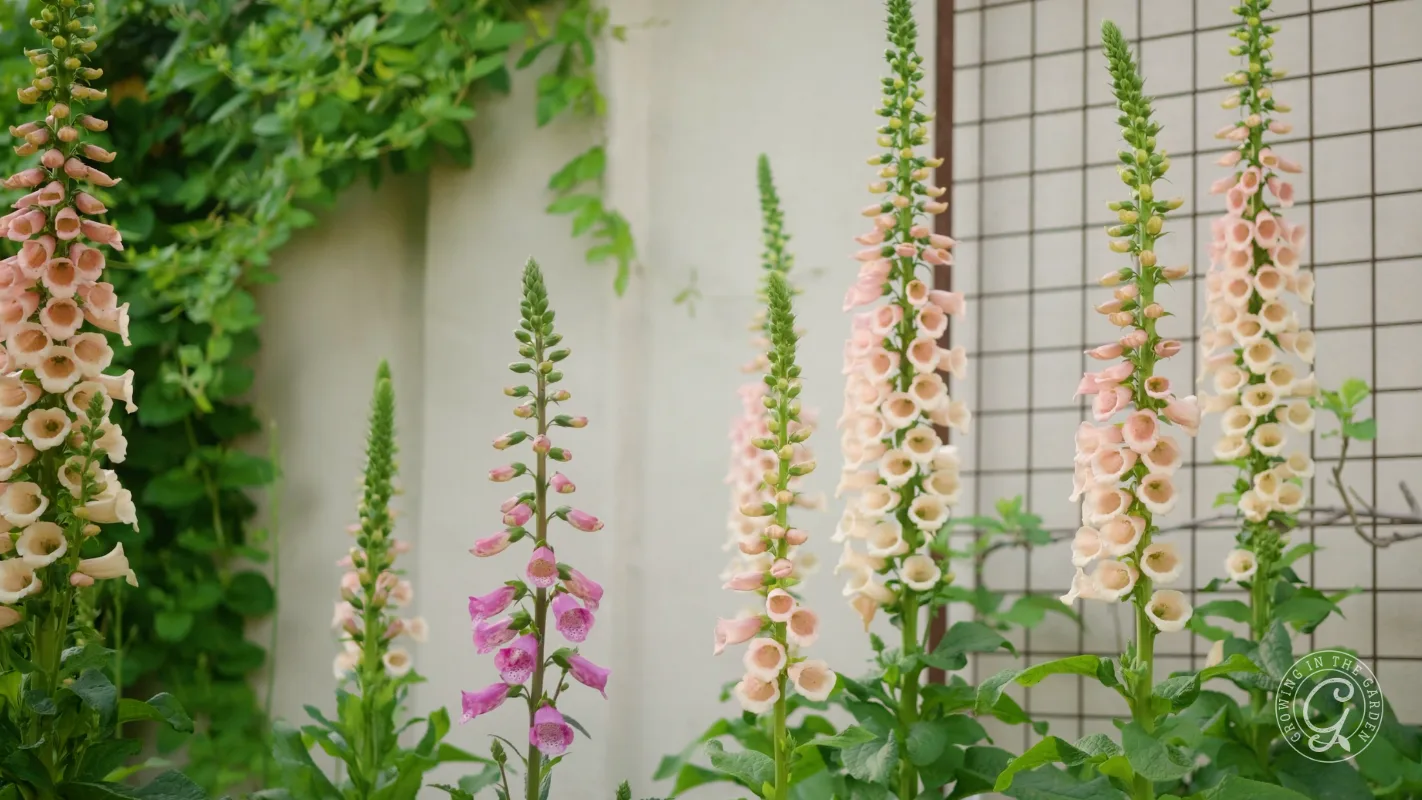
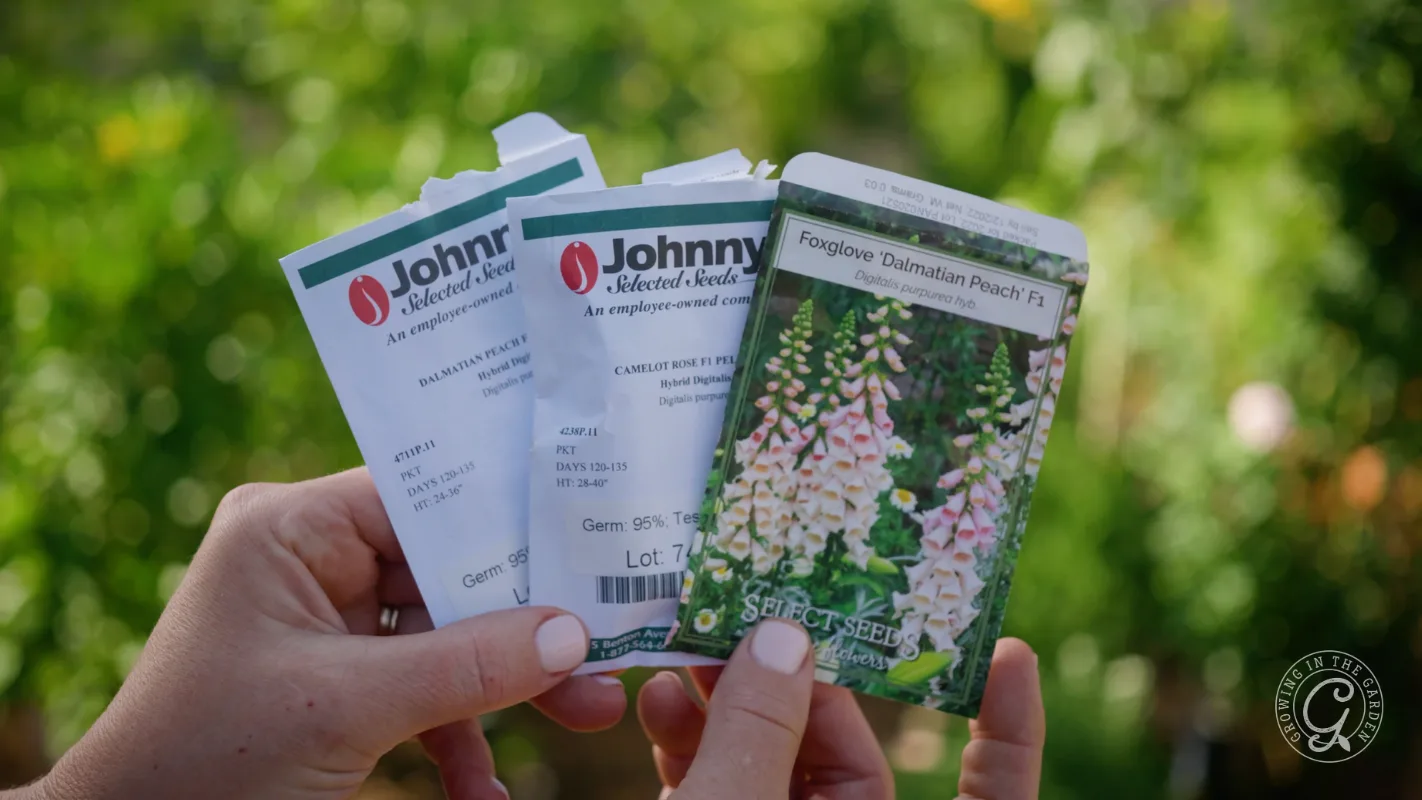
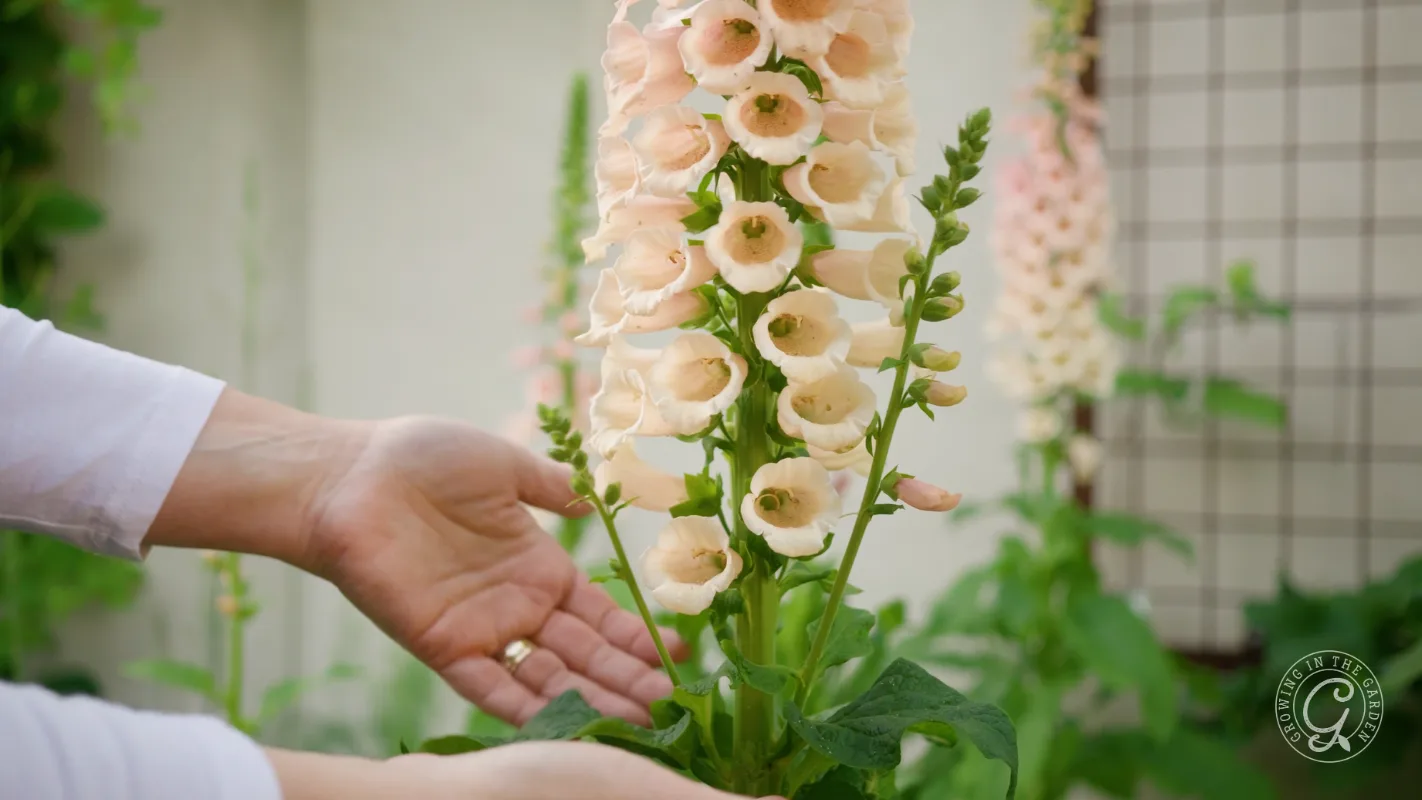
- Dalmatian Peach: My favorite. Dalmatian Peach has creamy peach flowers, and the series comes in other colors too. They bloom the first year reliably.
- Camelot: My other go-to. Large, full center spikes and good side shoots in lavender, rose, and white.
- Foxy: Another first-year bloomer in white, cream, purple, and rose, up to 3 feet tall.
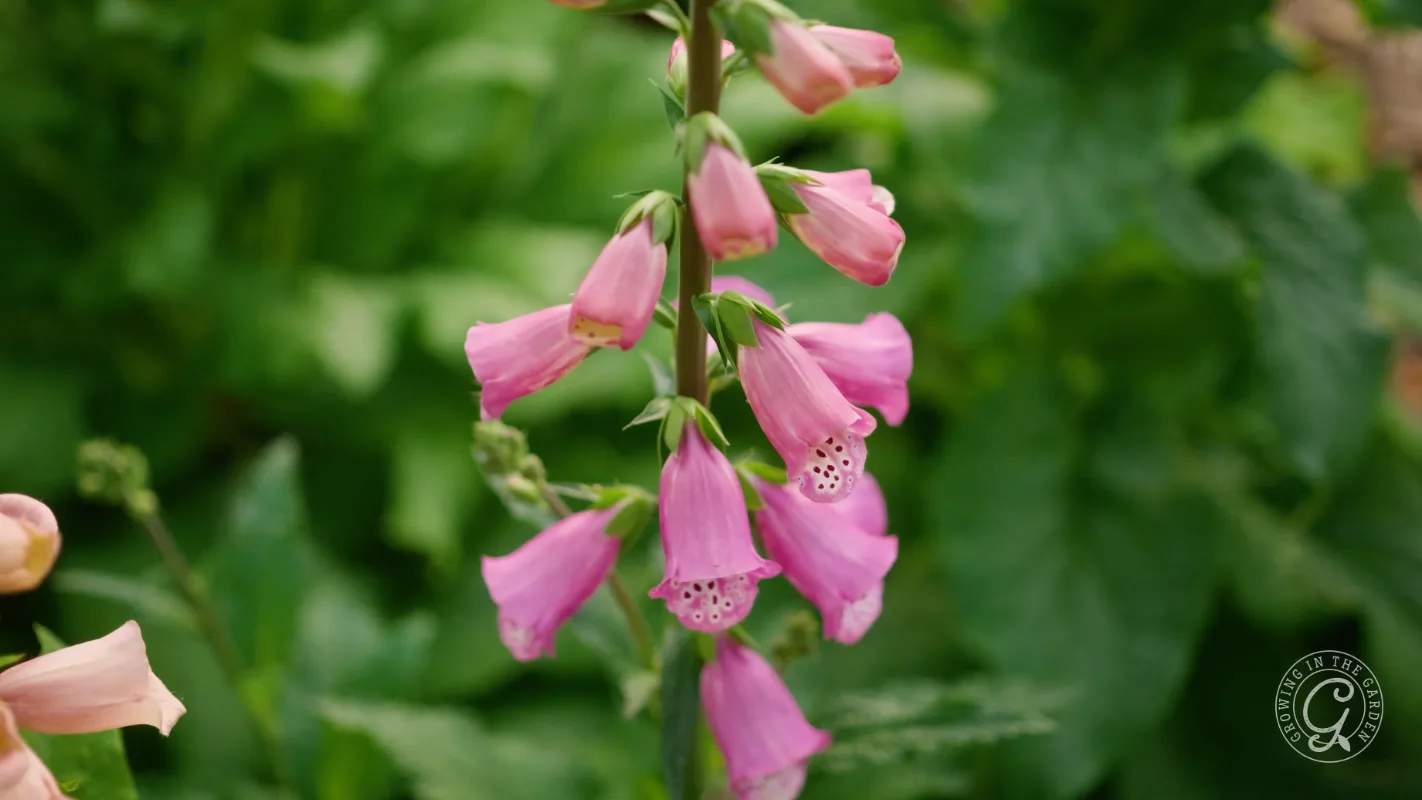
- Carousel Mix: Spotted throats. Typically 3 to 3½ feet tall in cooler gardens.
How I Cold-Stratify and Start Foxglove Seeds
I keep my foxglove seeds in the freezer year-round. That way, they’re always chilled when I’m ready to sow, and I don’t have to plan a separate cold-stratification step.
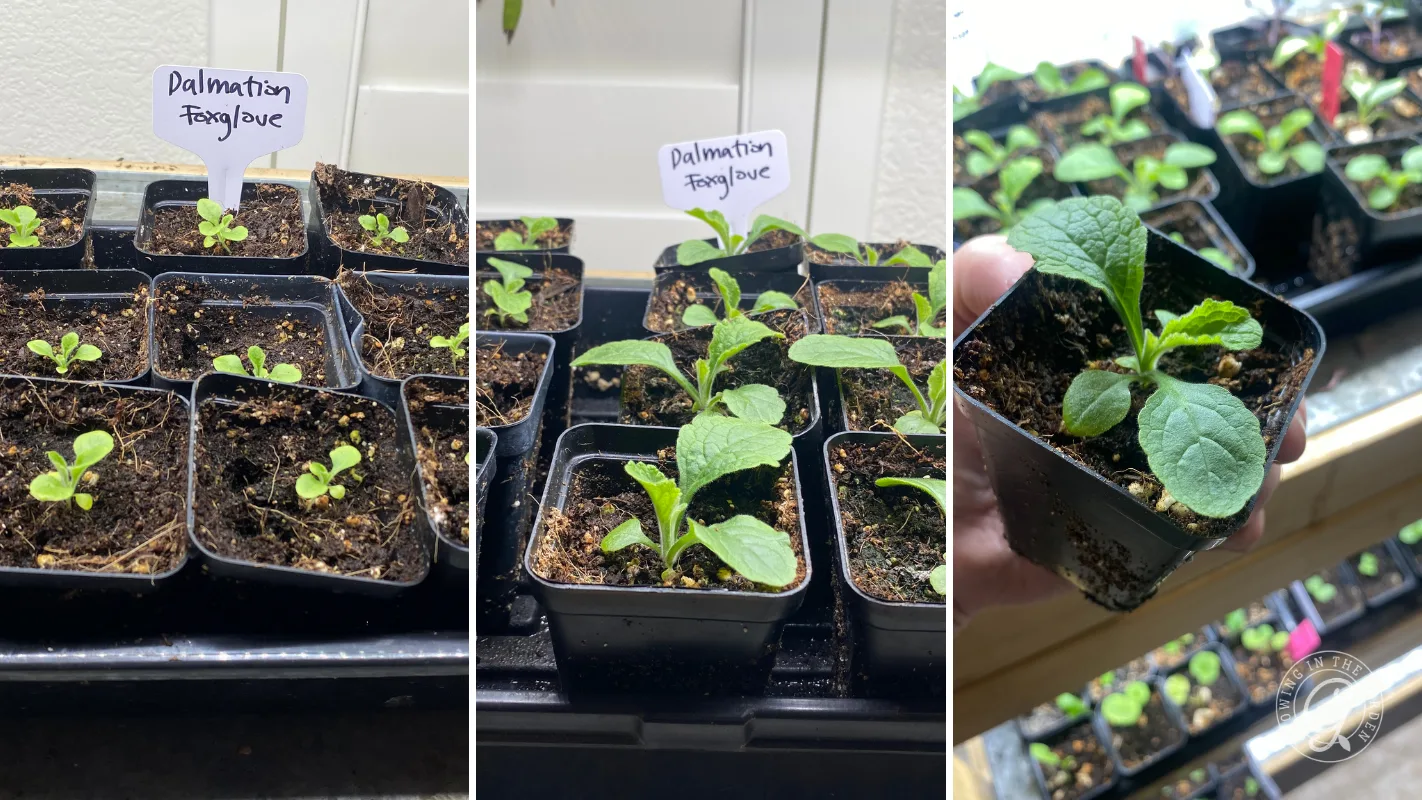
Then I sow them indoors under grow lights in July or August, about 12 weeks before they go outside. Foxglove seeds need light to germinate, so press them onto the soil surface and cover them very lightly with vermiculite. A humidity dome helps keep the surface moist until they sprout.
Learn how to start seeds indoors successfully before you plant! If you’re just getting started, here are my favorite seed-starting supplies.
Buying Plugs or Transplants Instead of Seeds
If summer seed starting sounds like too much, buy plugs. I order foxglove plugs from Farmer Bailey. They’re the most economical way I’ve found to get a lot of plants. Farmer Bailey sells by the tray. If you want fewer, their sister site, GardenClubPlants, sells smaller packs.
Local nurseries sometimes carry larger foxglove transplants. They cost more per plant, but they’re an easy way to add a few.
When I Plant Foxglove in the Low Desert
| Month | What I do |
|---|---|
| July to August | Chill seeds, then sow indoors under lights |
| September to October | Plant seedlings or plugs outside |
| November to February | Leafy growth, little to do |
| March to May | Blooms |
| May to June | Heat finishes the plants, so I pull them |
My transplants are often quite small when they go out. That’s fine. Planting in September or October gives them the whole cool season to grow before they bloom. Outside the low desert, plant out about 6 weeks before your first fall frost.
One thing I enjoy about growing foxgloves is watching how much they change throughout the season.
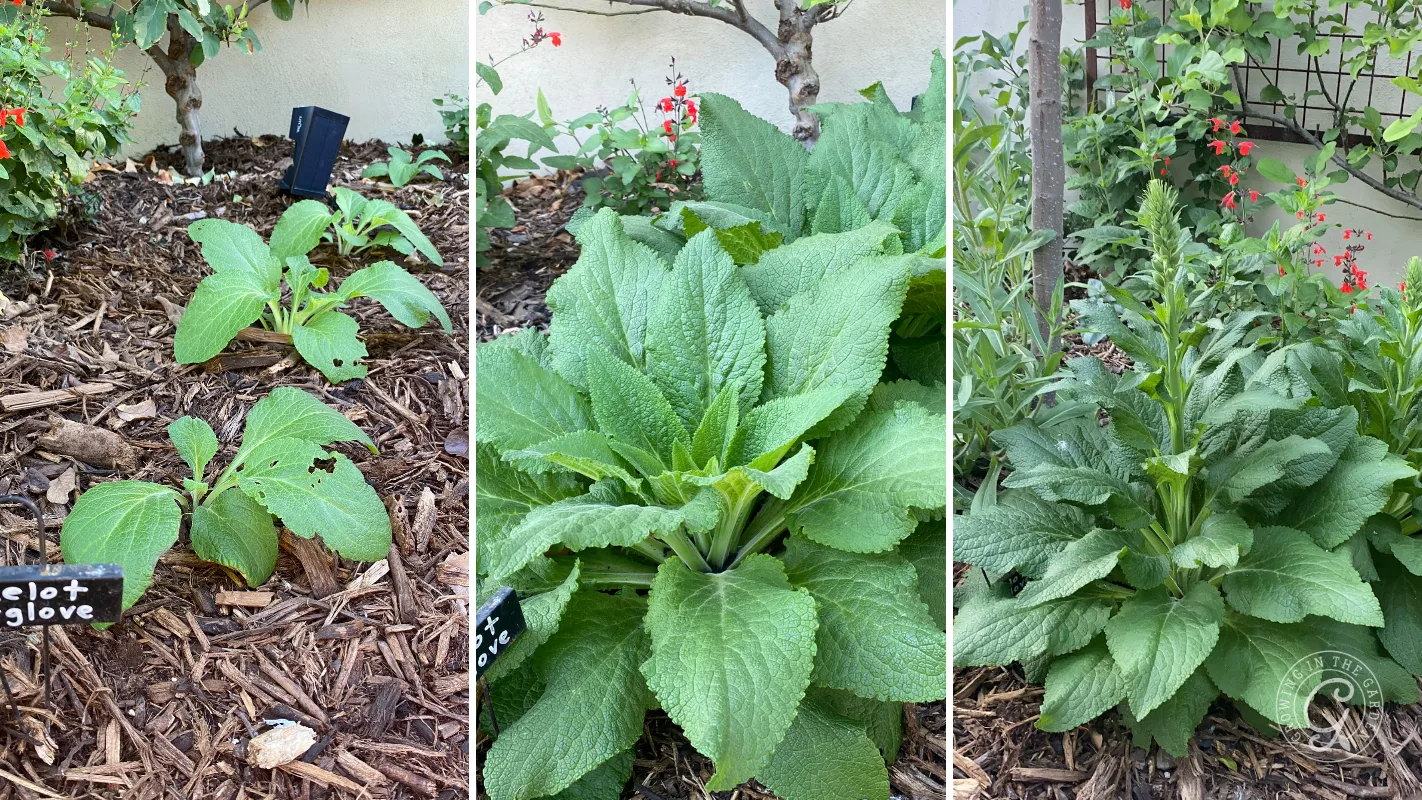
After transplanting, they develop a low cluster of leaves. During the cooler winter months, they don’t appear to be doing much. It’s easy to wonder whether they’ll ever grow into those tall flowering plants.
Then, as temperatures begin warming in spring, the plants take off. Flower spikes emerge, grow taller, and eventually open into rows of bell-shaped blooms. It’s a good reminder that some flowers need time to establish before they put on their spring show.
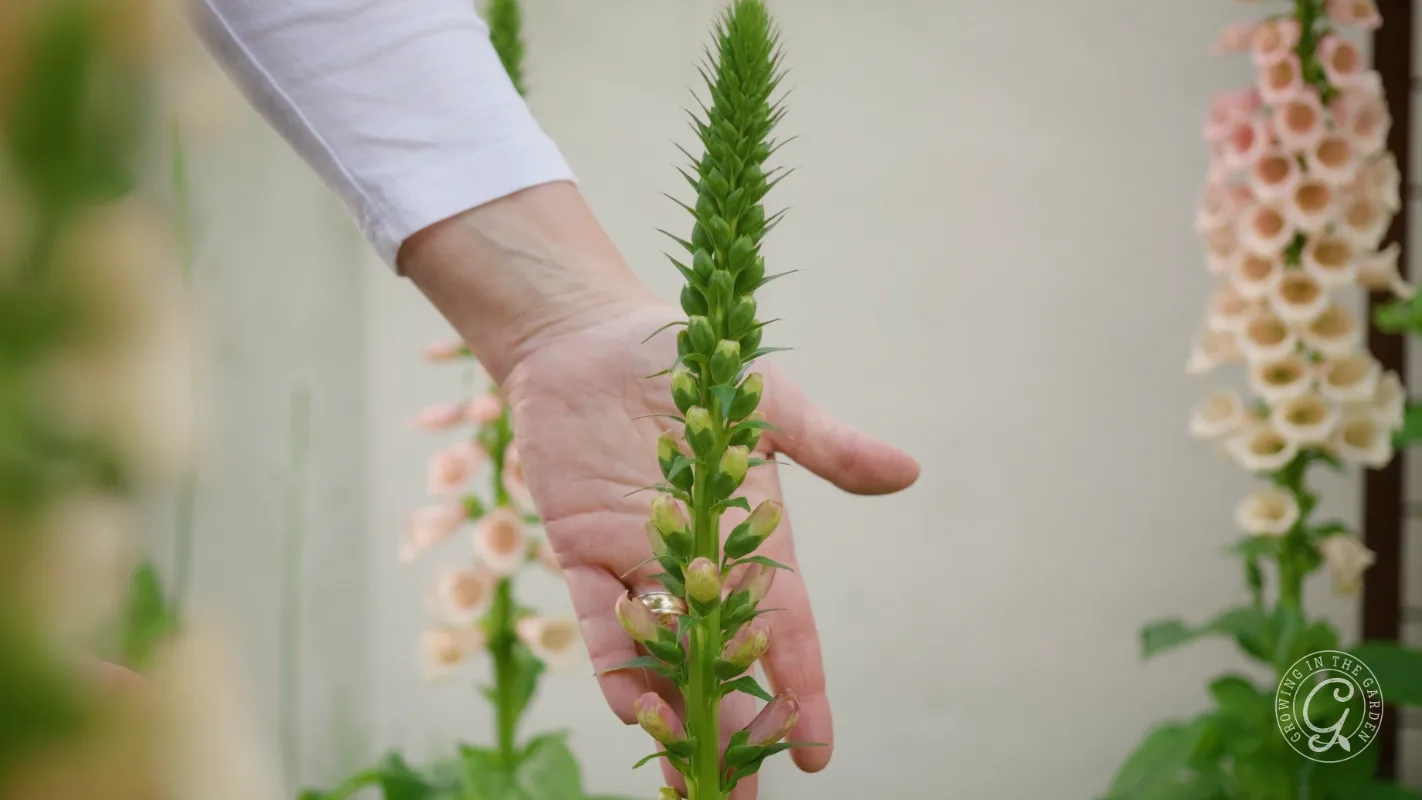
Planting early gives foxgloves the long, cool growing season they need. If you wait until spring to plant, the heat may arrive before the plants have time to produce their best flowers.
In cooler climates, planting dates will be different. Traditional biennial foxgloves can also be grown over two seasons where temperatures allow.

The Perpetual Annual Flower Planting Calendar, available in my shop, helps you learn when to plant flowers in the low desert of Arizona and whether to plant seeds or transplants.
Where Foxglove Grows Best in My Garden
I grow foxglove in the ground, in raised beds, and in containers. All three work well.
In a hot climate, morning sun and afternoon shade is ideal. Because they grow during the cooler months, I don’t need shade cloth. Foxglove doesn’t mind shadier spots, and a little shade helps them last longer into spring. They also look striking against a fence or at the back of a border.
Soil and spacing: Use well-draining soil amended with compost. Avoid spots that stay soggy in winter, which can rot the roots. Space plants about 12 inches apart to enjoy them in the garden, or about 6 inches apart if you’re growing them for cut flowers.
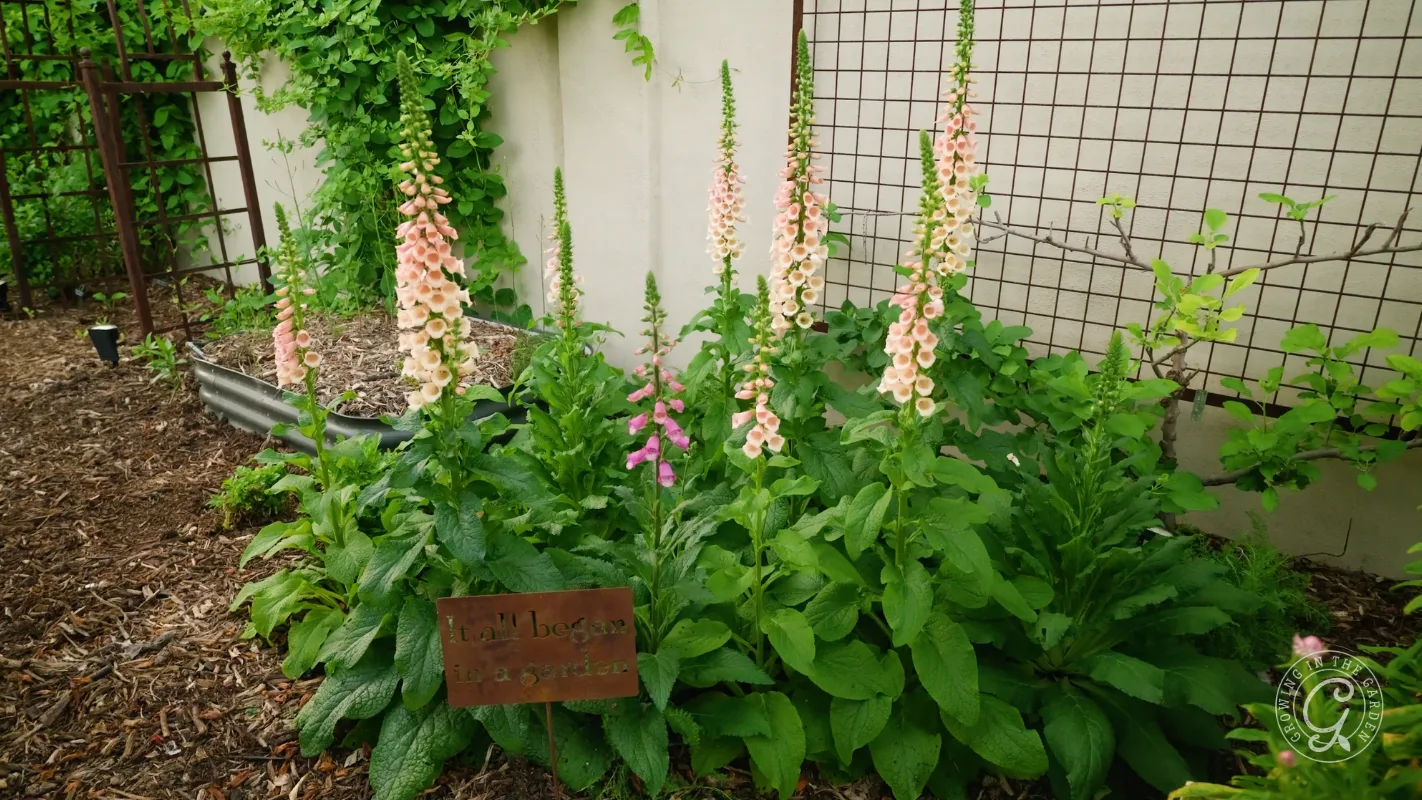
Consider what will grow in front of them. Their tall flowers make a beautiful backdrop for shorter cool-season blooms. To see some of my favorite blooms to grow alongside foxgloves, look at this list of 10 Cool-Season Flowers.
5. Caring for Foxglove Through Winter and Spring
After planting, foxglove settles in and barely grows. In the coldest months, it goes a little dormant. That’s normal. Foxglove is hardy down to -10°F, and growth takes off once spring warms up.
- Water: Keep the soil evenly moist but not soggy.
- Mulch: A layer of mulch keeps the soil moist and cool as spring warms up.
- Staking: Tall spikes can flop in the wind. A simple stake keeps them upright.
- Pests: In more than 10 years of growing foxglove, I haven’t had pest problems. That’s one reason I recommend it to new flower growers.
Foxgloves can also develop root rot, powdery mildew, and other fungal diseases. Good airflow, well-draining soil, and keeping foliage from staying constantly wet can help prevent problems.
6. How I Get More Blooms From Each Plant
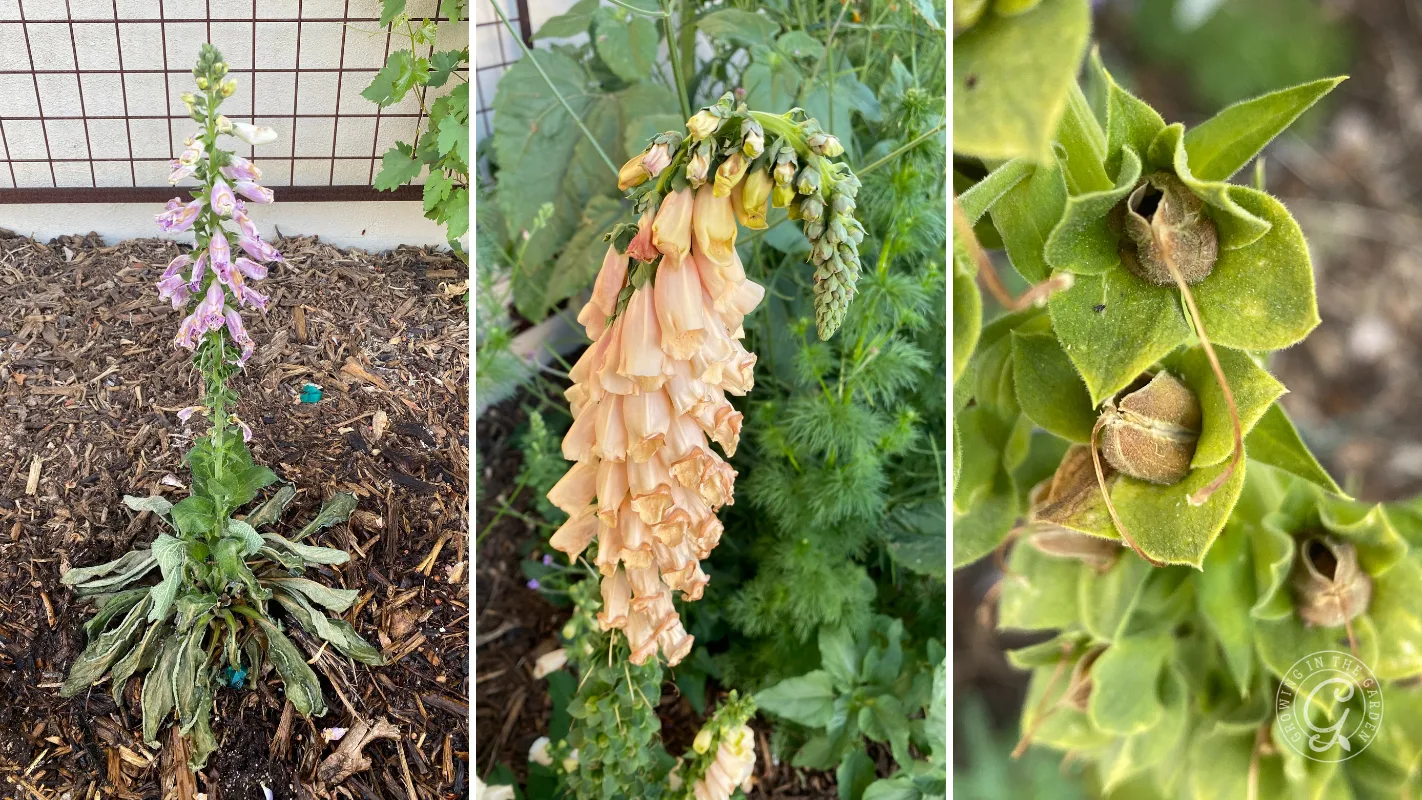
Most years I let foxglove bloom in the garden. As the main spike fades, I cut it back, and side spikes follow. That’s the best way to stretch the bloom season, though here it ends by late April or May no matter what.
For a vase, cut spikes when the first flowers open. Once bees pollinate the flowers, they drop quickly, so cutting early gives you a longer vase life. They last about a week.
If you want seeds, leave a spike in place. Each flower forms a small pod. Leave it on the plant until it’s dry and the seeds are fully developed. See how to save seeds.
Find more cut flower arrangement ideas in this guide. Cut stems during the cooler part of the morning and place them in clean water right away. Remove leaves that would sit below the water line. Foxglove blooms can last about a week in a vase, depending on the variety and conditions.
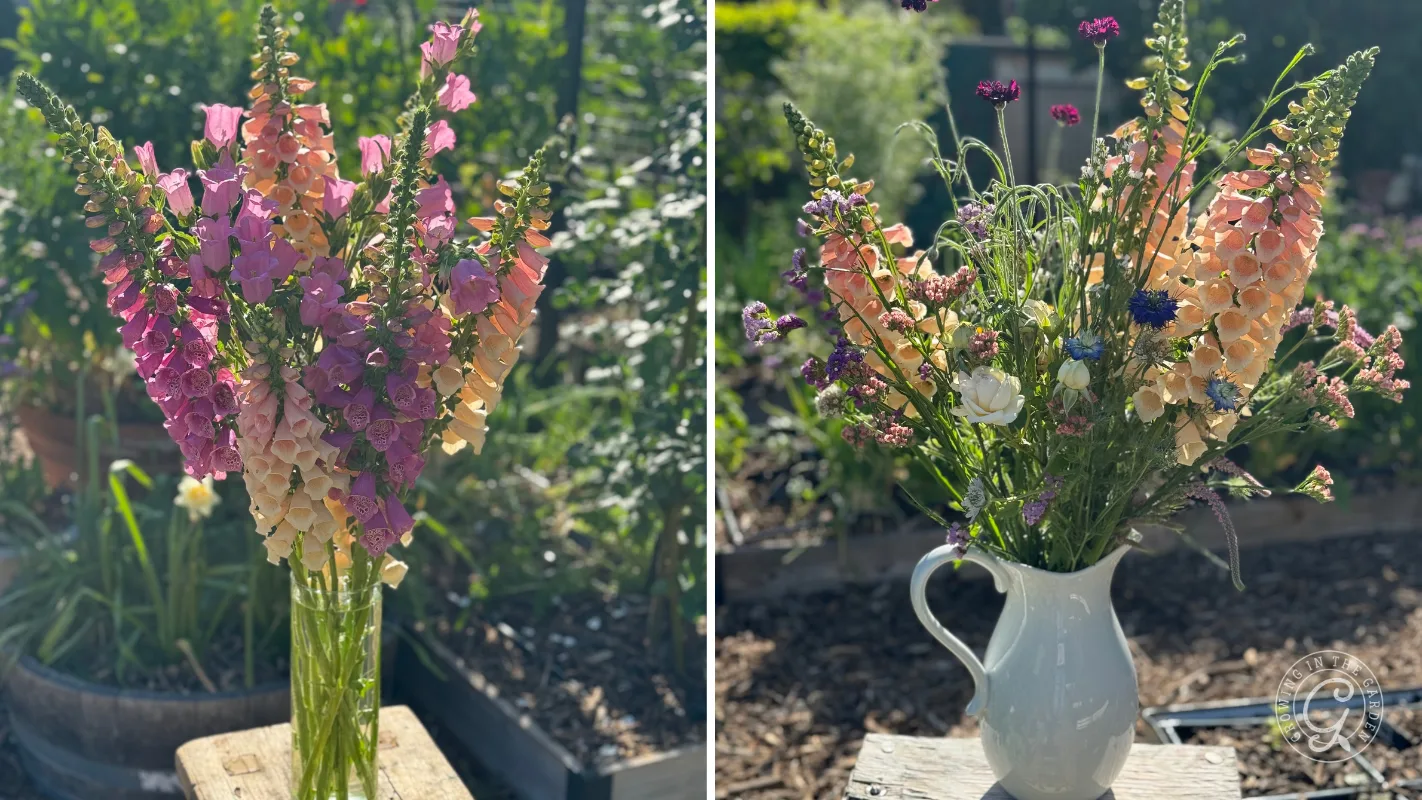
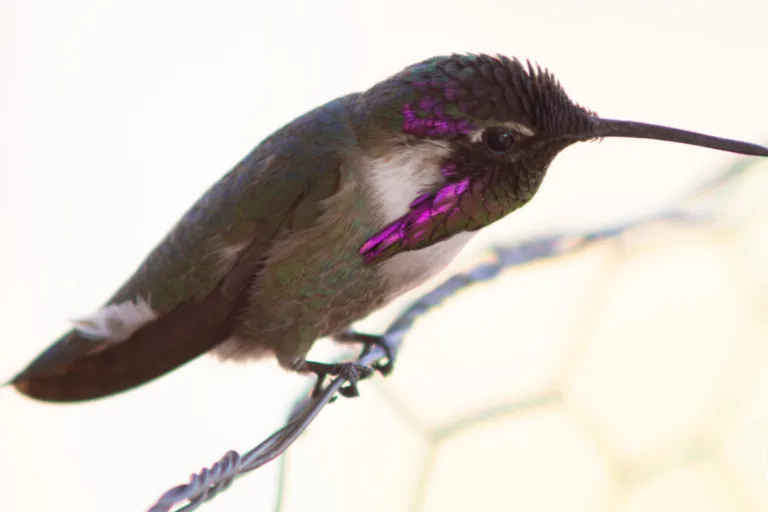
As much as I enjoy using them in arrangements, I also love leaving them in the landscape. It’s fun to watch hummingbirds visit the tubular flowers, and bees enjoy them too.
Is Foxglove Safe to Grow Around Kids and Pets?
All parts of foxglove are poisonous if eaten. It’s the plant that the heart medication digitalis comes from.
The risk is from eating it, not from touching it. I don’t wear gloves when I handle mine, but it’s smart to wash your hands afterward. Nobody at my house has bothered them. Still, plant foxglove away from areas where small children or pets might chew on it.
Frequently Asked Questions About Growing Foxgloves
In cool climates, foxglove often reseeds and seems to come back. In hot climates it doesn’t. In more than 10 years in the low desert, I’ve never had a plant survive summer or reseed, so I plant new ones every fall.
Yes, if you get the timing right. Start seeds in July or August or buy plugs, then plant in September or October. I haven’t had pest problems with mine.
I store my foxglove seeds in the freezer year-round, so they’re always chilled when I sow them under grow lights. Sow on the surface, because the seeds need light to sprout.
In hot climates, start seeds indoors in July or August and plant seedlings outside in September or October. They bloom March through May.
Cut the main spike as it fades and side spikes will follow. In hot climates, foxglove finishes by late April or May no matter what. For summer color, grow heat-loving flowers instead.
No, not in the US. Tasmania, Australia, banned the sale and import of all foxglove species in 2025 because it spreads there as a weed. Minnesota lists Grecian foxglove, a different species, as a noxious weed. The usual concern is that foxglove is poisonous if eaten.
Yes. All parts of foxglove are toxic if ingested. Keep children and pets from eating any part of the plant, and wash your hands after handling it.
Just had to report back, we followed all your steps and today we have our first Foxglove seedlings coming up! I thought this process would be much more difficult, but with your help we’ve been successful! Thank you.
Yay!!!! They are going to be so pretty. You’ll love them. Congrats!
I’m getting started with starting seeds indoors. Do you recommend a light for these seedlings or is in-front of a very sunny window sufficient?
Definitely a light. Here’s a blog post with more information: https://growinginthegarden.com/how-to-start-seeds-indoors-10-steps-for-success/
@Angela Judd, thank you! In this post you mention to cold stratify your Foxglove seeds. After you put them in the bag with most peat moss/seed starting soil, you place it in the fridge correct? It doesn’t say in the post. Should I check the moisture level at all while they cold stratify? Thank you!
Yes, in the fridge. I’ll add that to the post. If its in a plastic bag the moisture level is usually fine.
Thank you Angela, i will try it this season!!!
I love foxgloves! I’m hoping to do more landscaping this fall at our new house. I’m in Phoenix as well, do you have a nursery recommendation for flowers?
I like Whitfil, A&P, and Summerwinds – be an informed consumer and look for healthy transplants no matter where you shop. Best of luck with your new landscape!