
How to Keep Tree Roots Out of Raised Beds
One of my raised beds wasn’t growing well. Plants in other parts of the garden, planted at the same time, were doing great, and everything in this one bed looked meh. The plants struggled all season, and I couldn’t figure out why.
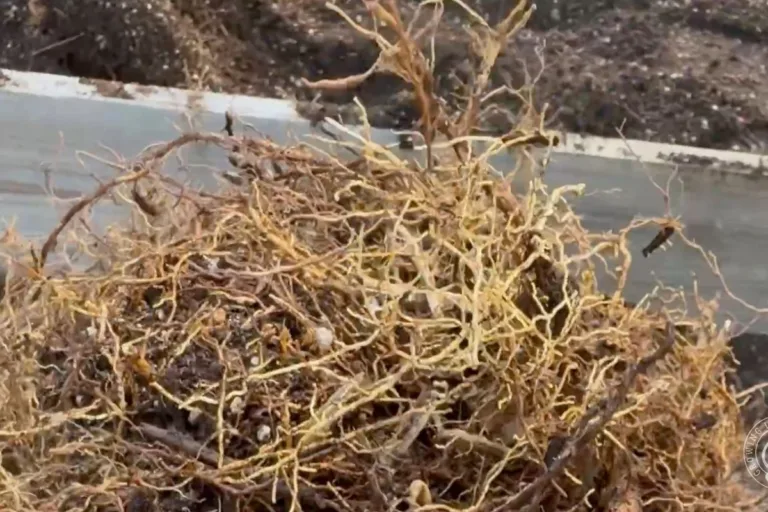
By the time the season ended, a lot of the crops in that bed had given me nothing to harvest. I dug down to see if something was going on underground, maybe root knot nematodes or another soil issue. As soon as I started digging, I recognized citrus roots, and I was shocked at how far they’d spread. They had worked their way through most of the bed. No wonder the plants struggled. They never had a chance.
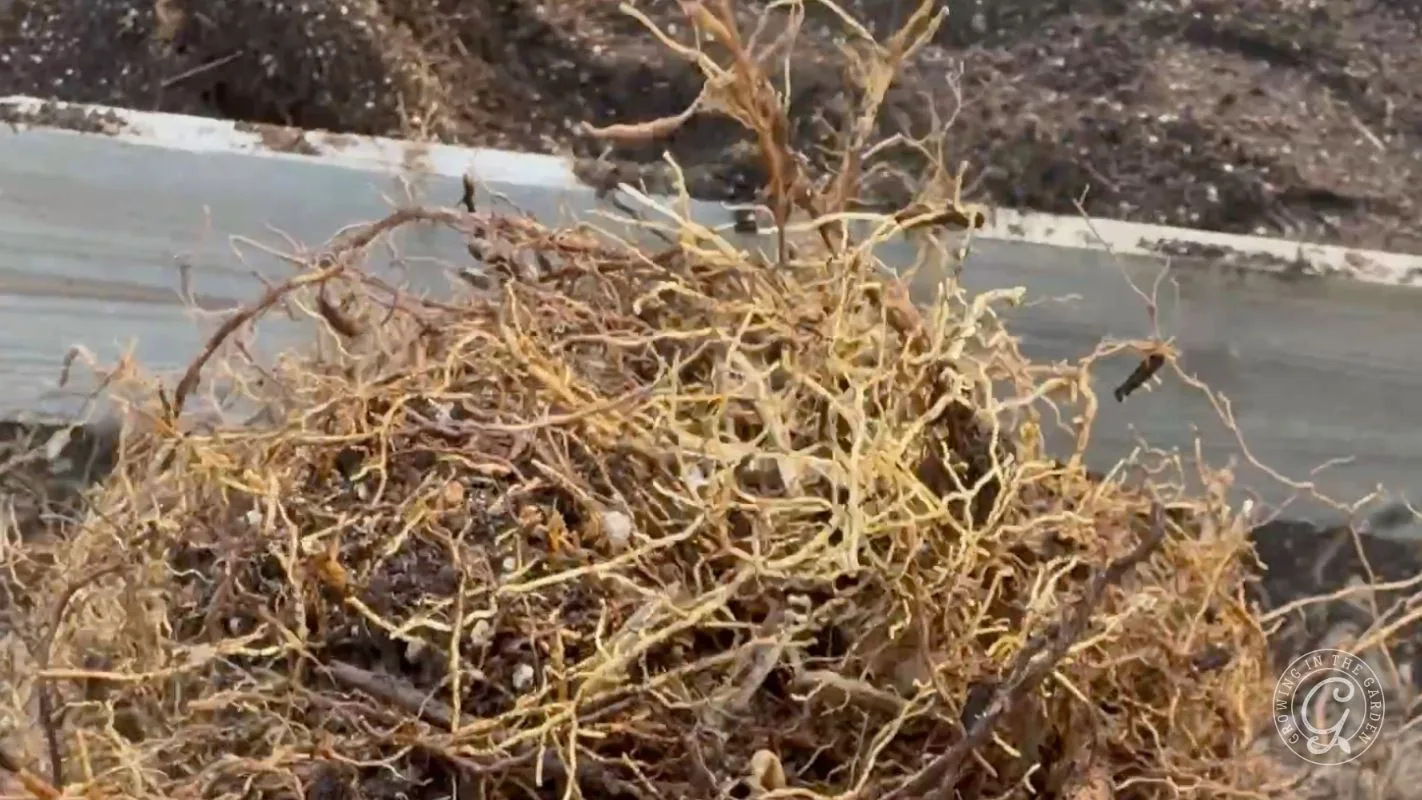
If you’ve got a bed that underperforms no matter what you try, and there’s a tree anywhere near it, even on the other side of a wall, it’s worth checking for tree roots. In this post, I share how to tell if roots are the problem, what I did to fix it, and the other options worth considering.
Key Takeaways: Keeping Roots Out of Raised Beds
- Tree roots can negatively impact raised beds by competing for water and nutrients, leading to poor plant growth.
- Signs of tree root intrusion include stunted plants, faster drying soil, and proximity to trees or walls.
- Installing a solid root barrier and digging out existing roots provides a practical solution to keep tree roots out of raised beds.
- Other prevention methods include avoiding planting near trees, using elevated beds, and root pruning on a schedule.
- Understanding root growth patterns and barriers is crucial for anyone gardening near trees, especially in desert regions.
What We’ll Cover:
How to Tell If Tree Roots Are Getting Into Your Raised Bed
A few signs point to roots before you ever dig:
- The bed underperforms other beds, even when you planted them at the same time.
- Plants stay stunted or pale, or just look off, no matter how you feed or water them.
- The bed dries out noticeably faster than your other beds.
- There’s a tree within reach, even if it’s across a fence or wall.
Roots spread far wider than the canopy, often two to three times the width of the branches, so a tree that looks well clear of your bed can still be feeding from it. Surface-rooting trees are the usual offenders. Citrus, ash, mulberry, elm, and most fast-growing shade trees send out shallow feeder roots that go looking for the easiest water and richest soil around. A freshly filled, well-watered raised bed is exactly that.
The same root problems that hit a raised bed can hit a pool shell and plumbing. See the best plants for around a pool in the low desert to avoid this problem before it happens.
The only way to be sure is to dig. Push a trowel down along the inside edge of the bed, and if you hit a mat of fine roots that clearly aren’t from your plants, you’ve found your answer.
What I Found When I Dug Into Mine
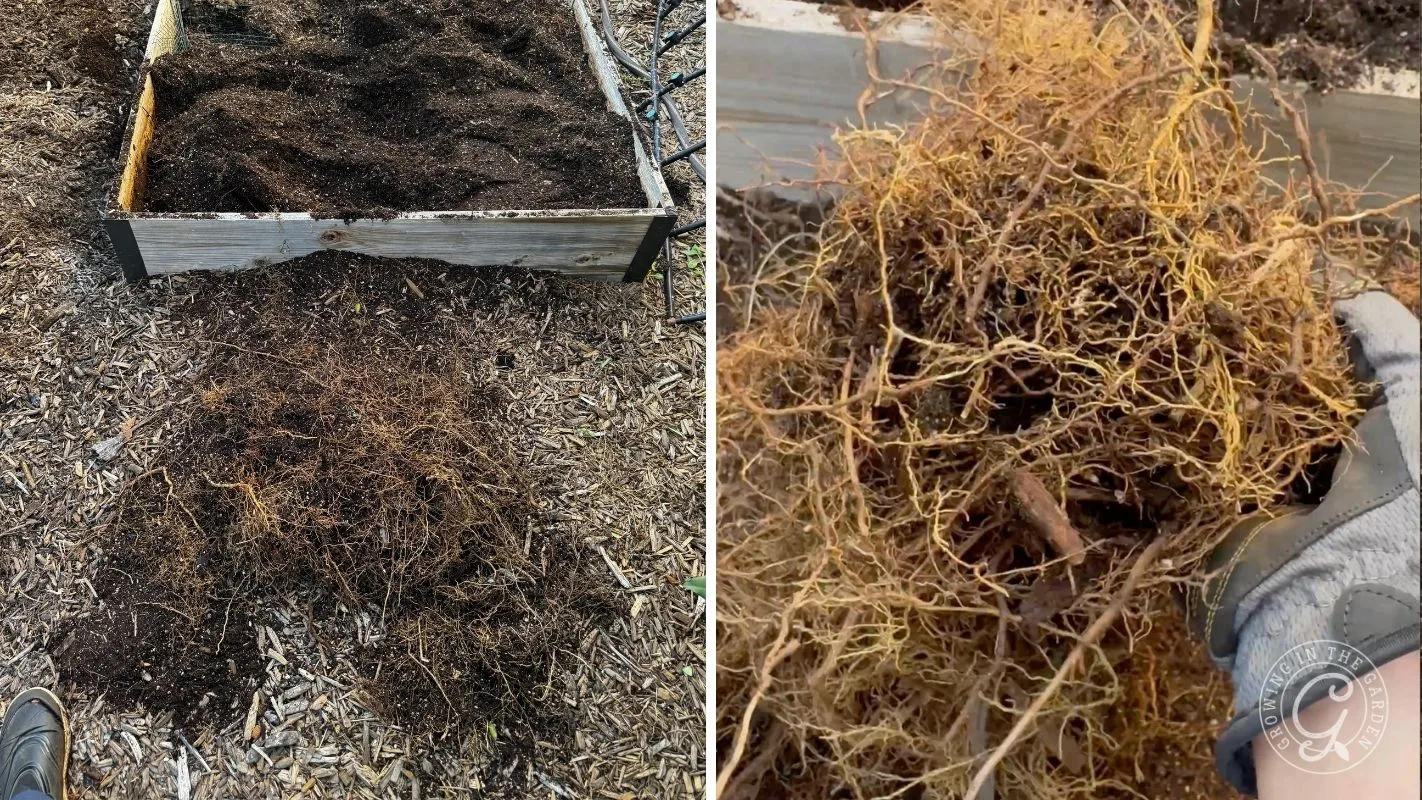
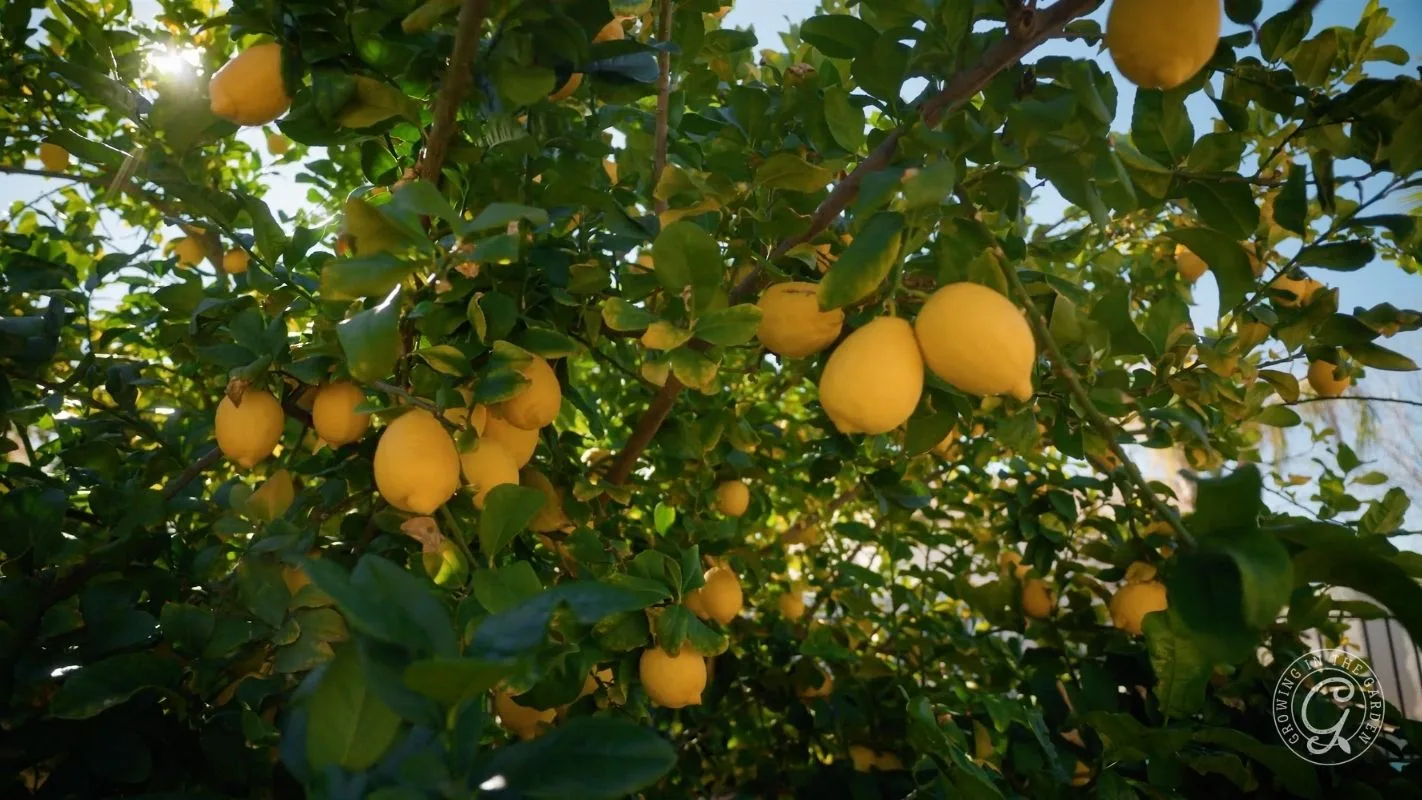
That bed is in my side yard. The citrus roots were coming from my neighbor’s very happy lemon tree on the other side of our shared block wall. It had reached straight under and turned my raised bed into its own feeding and drinking ground.
Those roots were pulling the water and nutrients out of the bed. A raised bed full of loose, rich, well-watered soil is an easy target, and the lemon tree found it.
How I Installed a Root Barrier Down the Side Yard
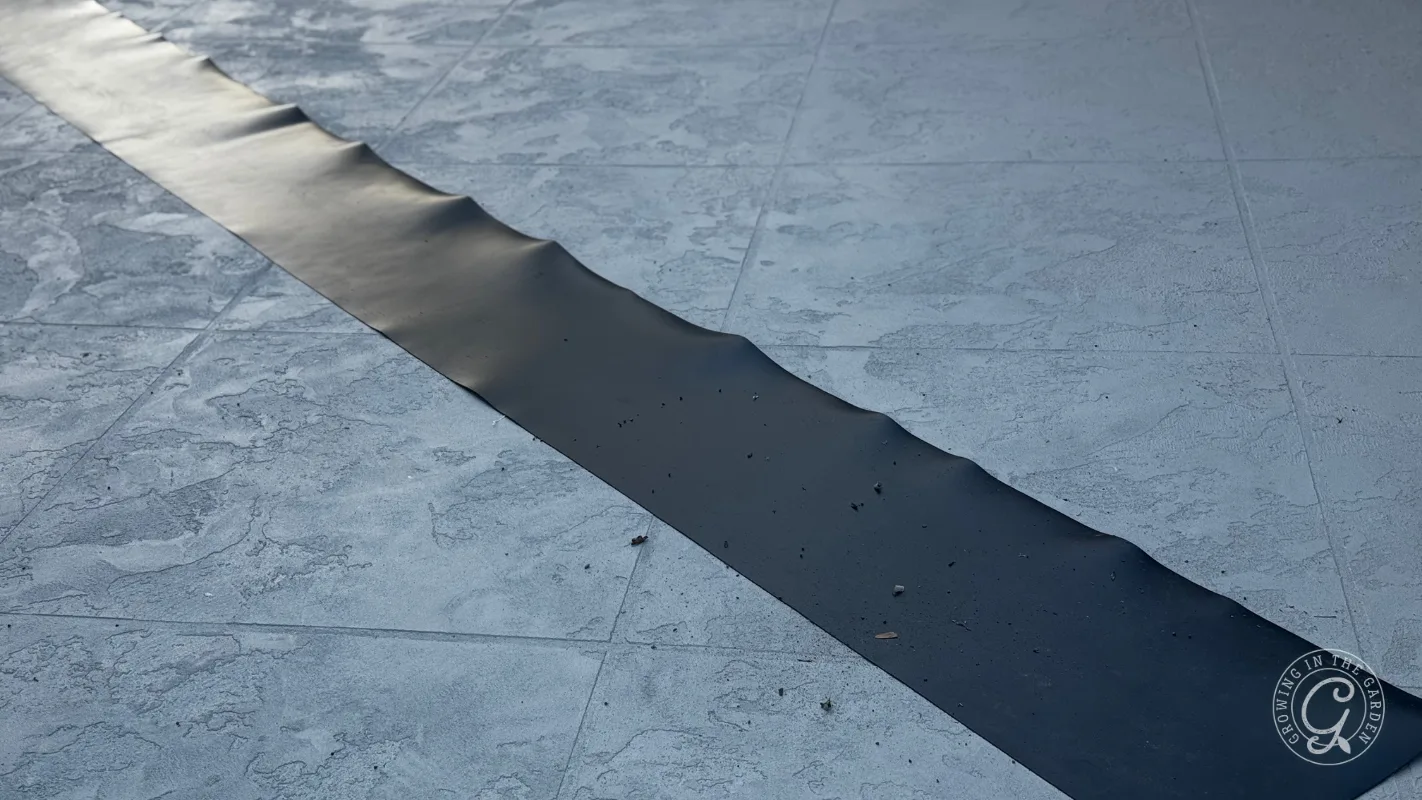
- Step 1: Unroll the root barrier and lay it flat in the sun for a few hours. This helps relax the material so it’s easier to install.
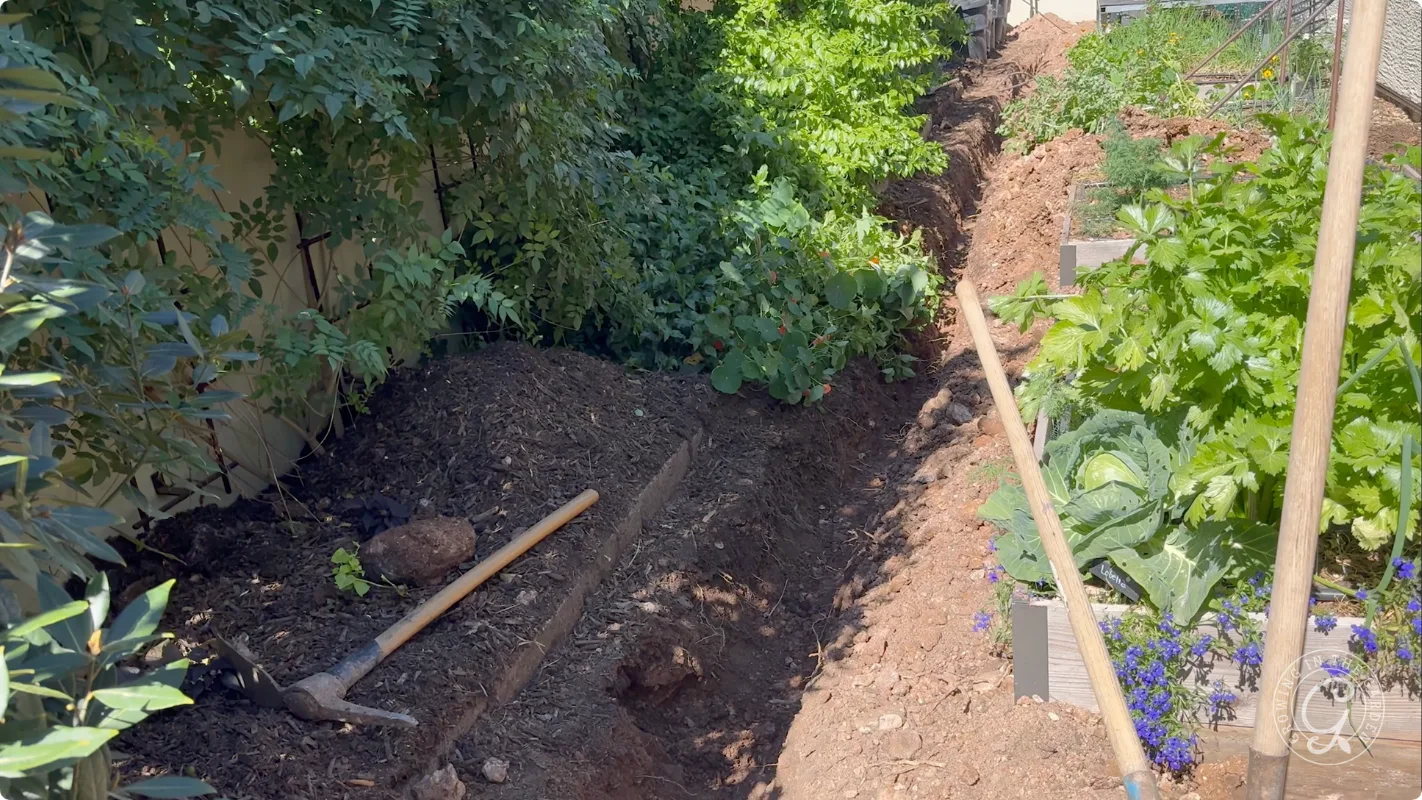
- Step 2: Dig a trench along the side of the bed where tree roots are entering. Make it deep enough to accommodate the full height of the root barrier.
- Step 3: Pull or cut out any feeder roots growing into the bed or trench. Removing existing roots gives your plants a fresh start before installing the barrier.
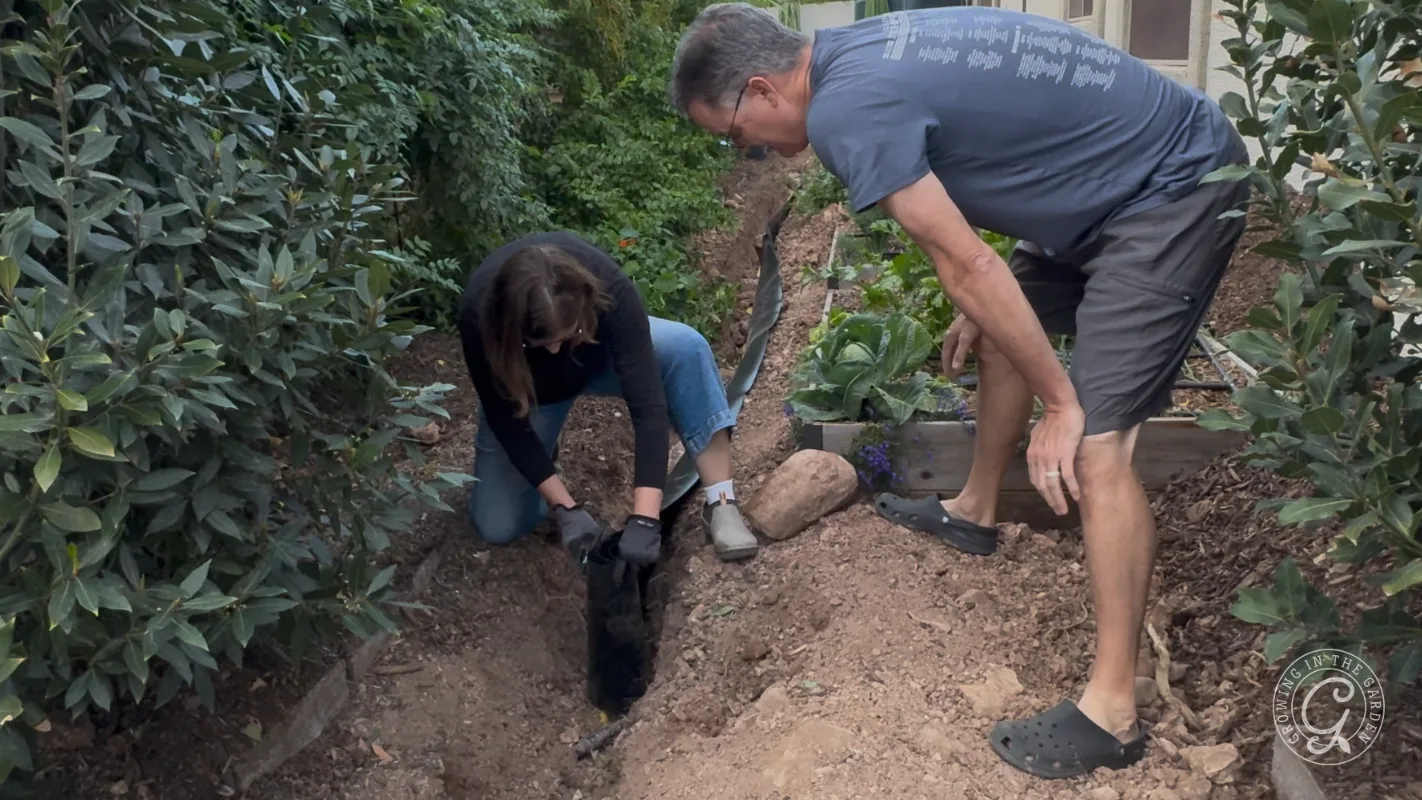
- Step 4: Place the root barrier vertically in the trench, ensuring it extends from the bottom to just above the soil line to help prevent roots from growing over the top.
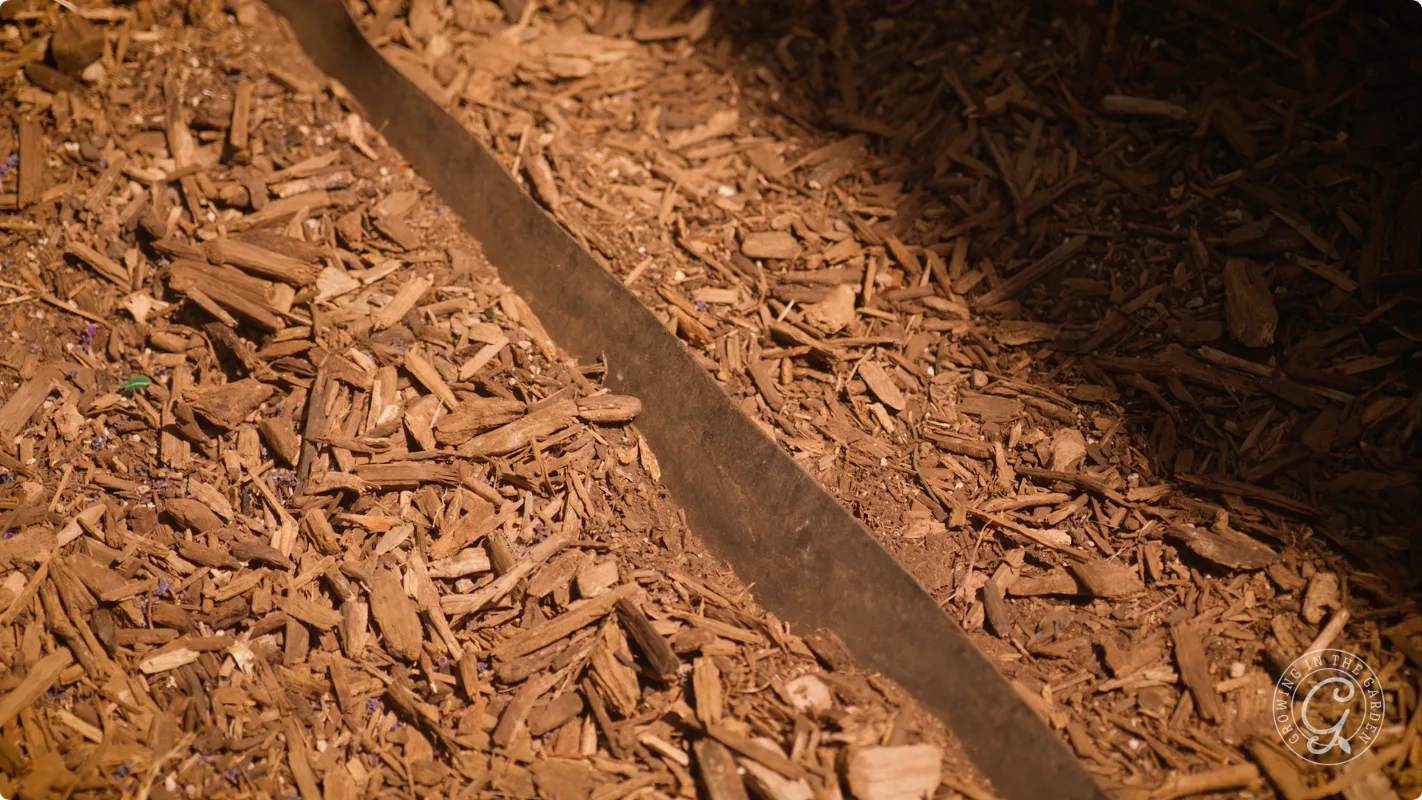
- Step 5: Backfill the trench, refill the raised bed with soil as needed, and replant. With the barrier in place, your plants will have a better chance to grow without competing with invasive tree roots.
Once I knew what I was dealing with, I dug down and pulled out all the feeder roots I could reach. Then I installed an 18-inch root barrier and ran it 30 feet down the entire length of that side yard, not just around the one bed. The one I used is a 60 mil root barrier that comes in an 18 inch by 20 foot roll and runs about $54 a roll. It also comes in a 24 inch depth.
One tip that saved me a lot of frustration: the barrier comes in a big roll, and out of the box it keeps bending and curling back into itself. I laid it out flat in the sun for a while first, and the warmth relaxed it enough to lie straight. That made it much easier to set into the trench without fighting it the whole time.
Digging the trench is the hardest part of this job, especially in desert soil. I got lucky on the timing. We were having a new gas line run out to the pool and hot tub, and the crew dug a trench along the entire length of the garden. I set the barrier in before they backfilled, so the whole run was already open where I needed it. The two workers dug it with a pickaxe and shovels, and it took them about half a day. A good rain a couple of weeks earlier had softened the ground, which helped. If you’re digging this yourself in dry desert soil, soak the area well first, because caliche and baked dirt are brutal to get through.
If you’re cutting through a lot of tree roots to get the barrier in, do it in the fall or the cool season. Hacking through roots in the heat of summer can stress or even kill the tree.
I ran it as one continuous line along the entire garden. My side yard garden has four raised beds in a row. The citrus roots were getting into the front bed, the one closest to my neighbor’s lemon tree, but running the barrier the whole length protects all four beds at once. It blocks the lemon, and it also keeps out the roots of the vines and plants I have growing up against that wall. I’ve got skyflower and pink trumpet vine climbing the block to cut the reflected heat, plus lemongrass along the base, and all of those send out roots too.
A few things to keep in mind.
- If possible, go deeper than the roots. 18 inches caught the citrus feeder roots that were the problem for me. A bigger or deeper-rooted tree may need 24 inches or more, and if the barrier is too shallow, roots simply dive under it.
- Use a solid barrier, not fabric or anything perforated. Roots grow through holes. A continuous physical wall is what redirects them down and away.
- Run it in a line between the bed and the tree.
- Leave an inch or two of the barrier above the soil line so surface roots can’t crest over the top.
- Overlap any seams where two pieces meet.
I refilled the beds with the same raised-bed mix I use everywhere else, replanted, and mulched heavily so the beds could finally hold onto their water.
Other Ways to Keep Tree Roots Out of Raised Beds
A deep barrier worked for my setup because the roots came from one side, and I had a long run of beds to protect. The best approach for you depends on your yard, your budget, and how close the tree is. Here are some options:
Don’t Plant Near Trees
The simplest fix is to keep raised beds well away from trees from the start, ideally outside the reach of the roots. This prevents the problem rather than fighting it later. The catch is that roots spread far past the canopy, small yards rarely have a truly root-free spot, and you can’t move a neighbor’s tree. Keep existing trees in mind as you are deciding where to place a new raised bed.
Install a Physical Root Barrier
This is what I did. A solid barrier hopefully redirects roots downward and away from the bed, and it keeps working for years once it’s in place. The downside is the labor. You’re digging a deep trench, and you have to get the depth right or the roots go under it.
Seal or Line the Bottom of the Bed
Lining the base of the bed with a solid barrier stops roots from pushing up from directly below. It can help if your beds sit on bare ground over shallow roots. But a sealed bottom can leave water sitting in the bed, which causes its own problems,.
Use Elevated Beds or Grow Tables
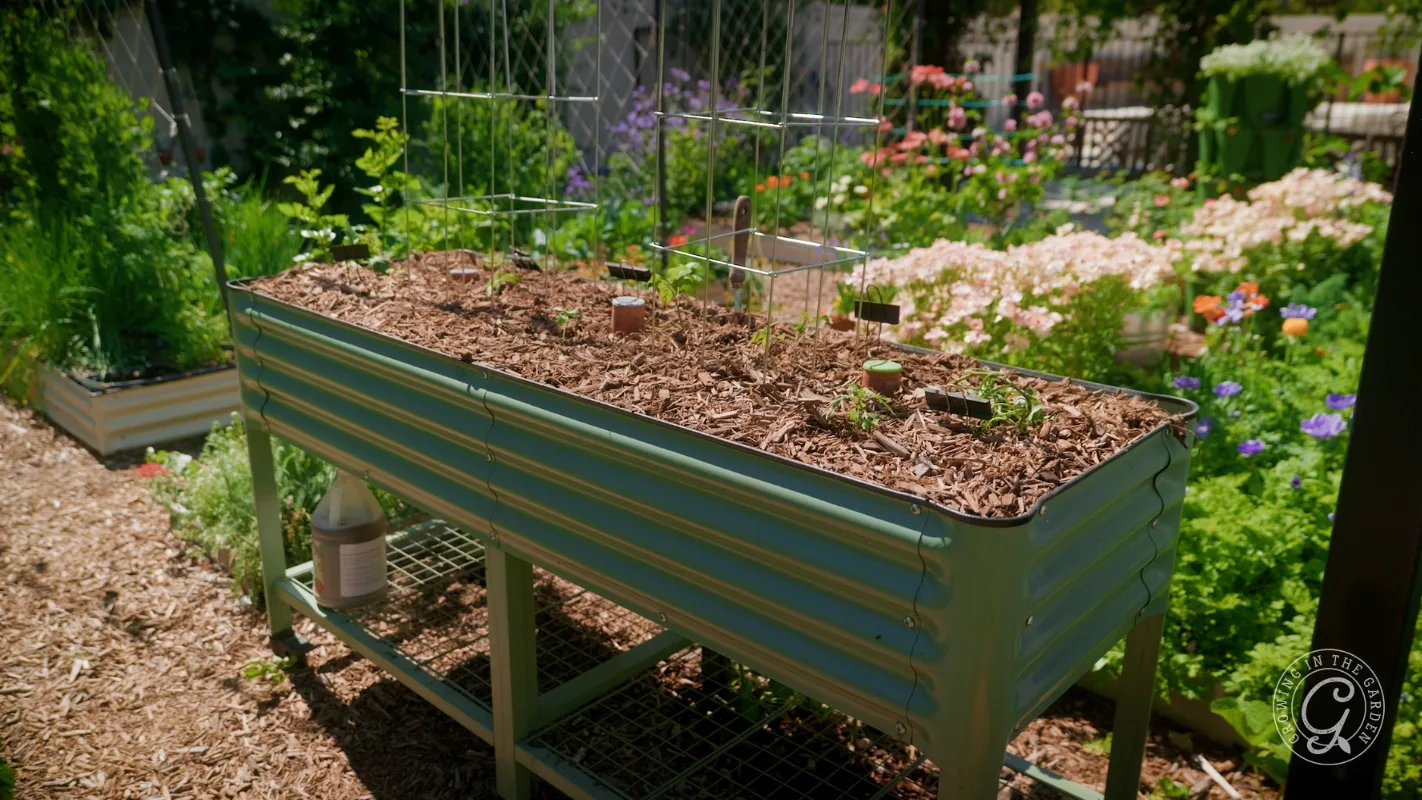
A raised bed on legs, with an air gap underneath, keeps the soil entirely out of reach of roots. Nothing climbs up through open air. But elevated beds and grow tables hold less soil and dry out faster. They make the most sense for small plantings or spots where you can’t dig at all. Learn more about gardening in elevated beds in this guide.
Root-Prune or Trench on a Schedule
You can cut through invading roots with a sharp spade or trench along the bed edge once or twice a year. It’s cheap and you don’t have to install anything. The problem is that it’s temporary. Roots grow right back, so you’re signing up for the same chore every season, and heavy root pruning can stress the tree, so do it in the cool season.
Treated Root Barriers
Some barriers use copper or a root-inhibiting treatment to chemically and physically deflect roots. They can help where digging a very deep trench isn’t practical. The downsides are cost, uncertainty about how long the treatment lasts, and some gardeners’ preference not to use a treated product around food crops. I haven’t used these, so I can’t speak to them from my own garden.
What Usually Doesn’t Work
Two things that won’t stop tree roots are landscape fabric and hardware cloth. Landscape fabric is made to slow weeds, and woody roots push right through or around it. Hardware cloth stops burrowing animals like gophers, but roots thread straight through the mesh.
Did the Root Barrier Fix It?
The barrier is in, and I’m hopeful. That side of the garden is where the roots were coming from, so blocking that run should give those beds a real chance to grow the way the rest of the garden does. I’m watching how the next season goes and will update this once I’ve grown a full season behind the barrier.
Underground is the first place I look now when a bed dries out fast or struggles for no clear reason, before I second-guess the other things that quietly hold a raised bed back.
Why Desert Gardeners Deal With This So Often
If you garden in the low desert, dealing with tree roots in our gardens is a common issue. There’s a citrus tree on nearly every lot, block walls run shared right along property lines, and our caliche makes digging a deep trench slow, hard work. Roots from a neighbor’s tree can be working through your beds without you ever seeing the tree that’s doing it.
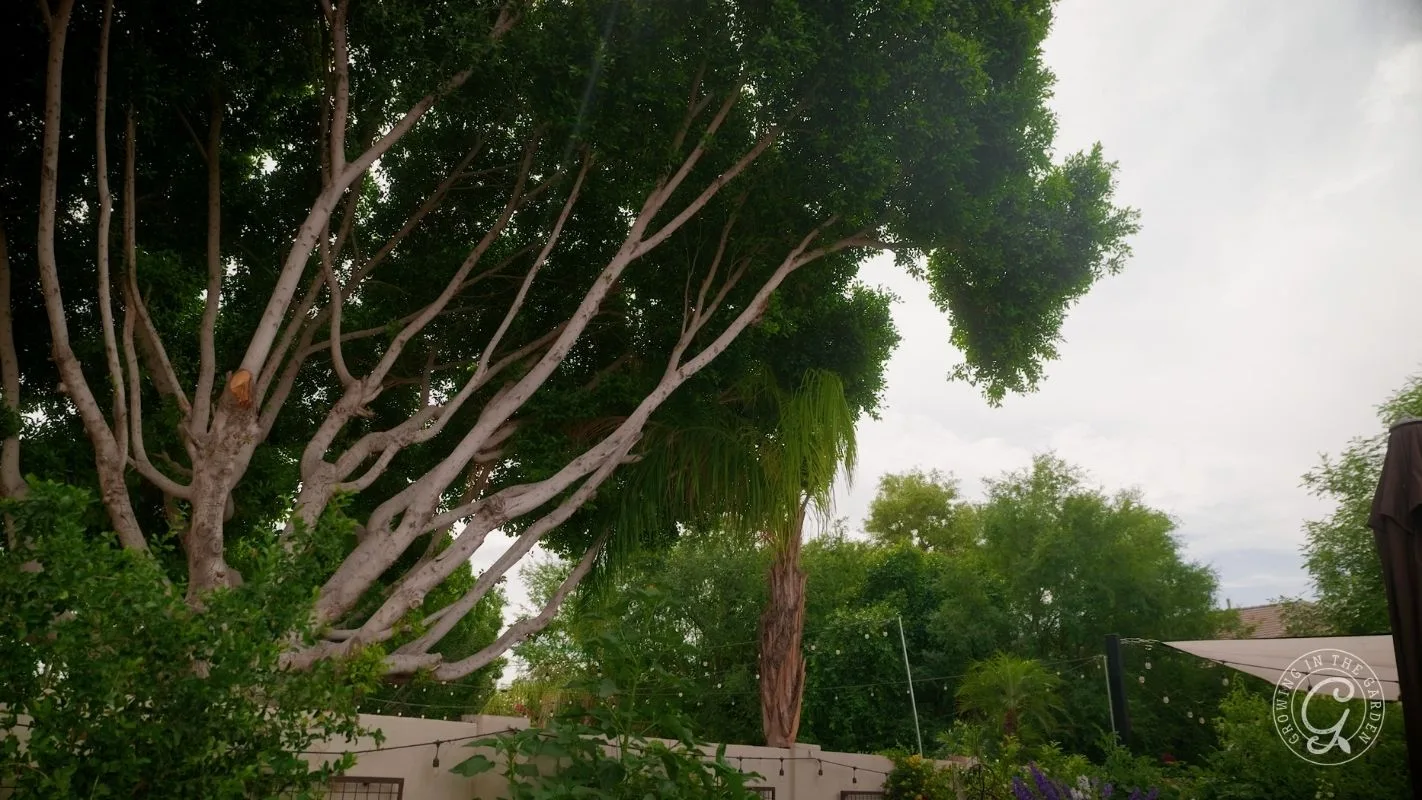
Citrus isn’t the only culprit. On the other side of my yard, my neighbors have huge ficus trees, and I’m finding those roots all over my yard. I need to add root barriers over here as well. The in-ground area next to the fence, right up against those ficus, will be the hardest spot of all, because the roots are well established. Before you plant a tree near your garden, see which ones actually fit your space in the best trees for Arizona yards.
Keeping Roots Out of Raised Beds FAQs
Deep enough to get below the roots you’re dealing with. For the shallow citrus feeder roots invading my bed, an 18-inch barrier did the job. Larger or deeper-rooted trees may require 24 inches or more. A barrier that’s too shallow just sends roots underneath it.
Invading tree roots are a common and often overlooked cause. The same goes for a bed that just underperforms the ones next to it. If one bed near a tree or wall dries out ahead of the rest, or struggles all season for no clear reason, it’s worth ruling out roots before you assume the way you’re watering the bed or your soil is the issue. Dig down along the edge and check for a mat of fine roots that aren’t from your plants.
No. Tree roots grow up into the loose, watered soil of a raised bed from below, and in from the sides when the bed is open at the bottom. The bed is what draws them in.
Yes. Feeder roots grow toward water and rich soil, and a filled, watered raised bed is an easy target. They come up from below and in from the sides at soil level.
Further than you’d think. Roots commonly spread two to three times wider than the canopy, so clearing the branch line isn’t enough. When you can, site beds well outside the root zone, and remember a neighbor’s tree counts too.
No. Landscape fabric is built to slow weeds, and tree roots grow through and around it. A solid physical barrier is what redirects woody roots.
A struggling bed near a tree is likely invaded by neighboring roots. Getting the roots out and putting a barrier between the bed and the tree is one way to help the bed recover.


I would be interested in finding out if having flood irrigation mitigates this issue at all. If the trees are getting regular deep water and feeding, will they try so hard to get into nearby raised beds? My new garden with 8 raised beds is going to be somewhat near citrus on two sides. I am also going to put a 10″ concrete wall around it to keep out the irritation water. Maybe that will help too?
Good question. Correct watering can help roots to grow deeper, but proximity to raised beds with more frequent watering and rich soil may still cause issues. Let me know how it goes.