
Arizona Vegetable Planting Calendar: When to Plant in the Low Desert
Gardening in the low desert often confuses people, and it’s almost always about timing. Our seasons run opposite to most gardening advice. A lot of the country plants tomatoes in May. Here, May is when you harvest tomatoes, not when you plant them. It’s helpful to see the whole planting year at once, so you know what goes in the ground each month, and you can stop planting things at the wrong time.
That’s why I made a planting calendar for the low desert, the Perpetual Herb, Fruit & Vegetable Planting Calendar. It puts all twelve months in one place, so you can see how the whole year fits together, month by month.
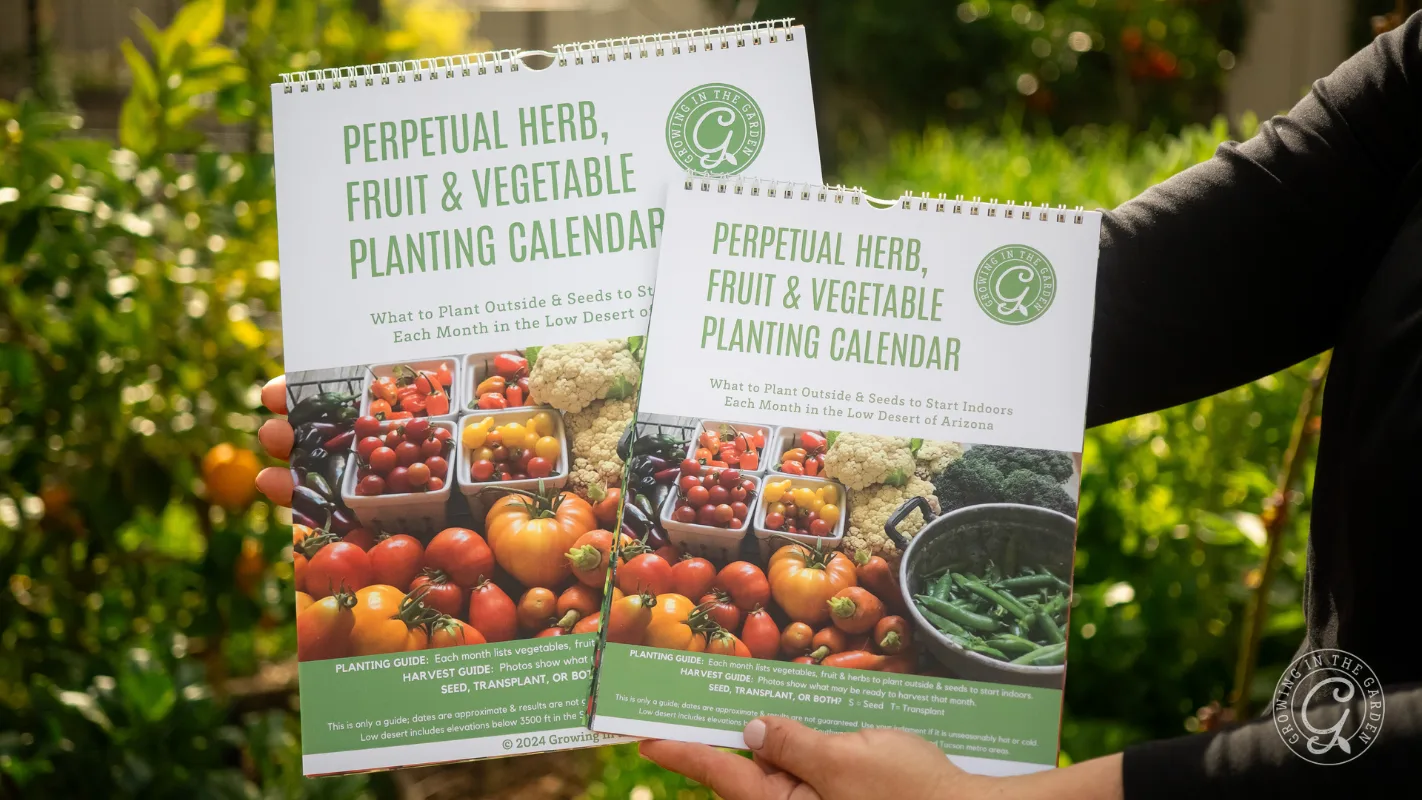
This calendar is a month-by-month planting and harvest guide for the low desert, printed on archival paper to hang on your wall or stand on an easel. Each month shows what to plant, whether to start from seed or transplant, and photos of what I’m harvesting from my own garden. It’s perpetual, so you use it year after year.
Key Takeaways: Arizona Vegetable Planting Calendar
- The Arizona vegetable planting calendar helps gardeners navigate the unique timing of planting in the low desert, which contrasts with traditional advice.
- Key windows include late February and March for warm-season crops, May for heat-loving plants, and October for cool-season crops.
- The Perpetual Vegetable, Fruit and Herb Calendar offers a month-by-month planting guide and harvesting tips, available in durable formats.
- Monitor conditions such as monsoon onset and nighttime temperatures to decide when to plant in mid-July and mid-September.
- For detailed planting information, the calendar pairs well with additional guides specific to vegetables, fruits, and herbs.
The Key Windows in the Low Desert Planting Year
You don’t need to memorize all twelve months, but a few windows are crucial, so if you can familiarize yourself with those, you’ll begin to understand when to plant in the low desert.
Late February and March
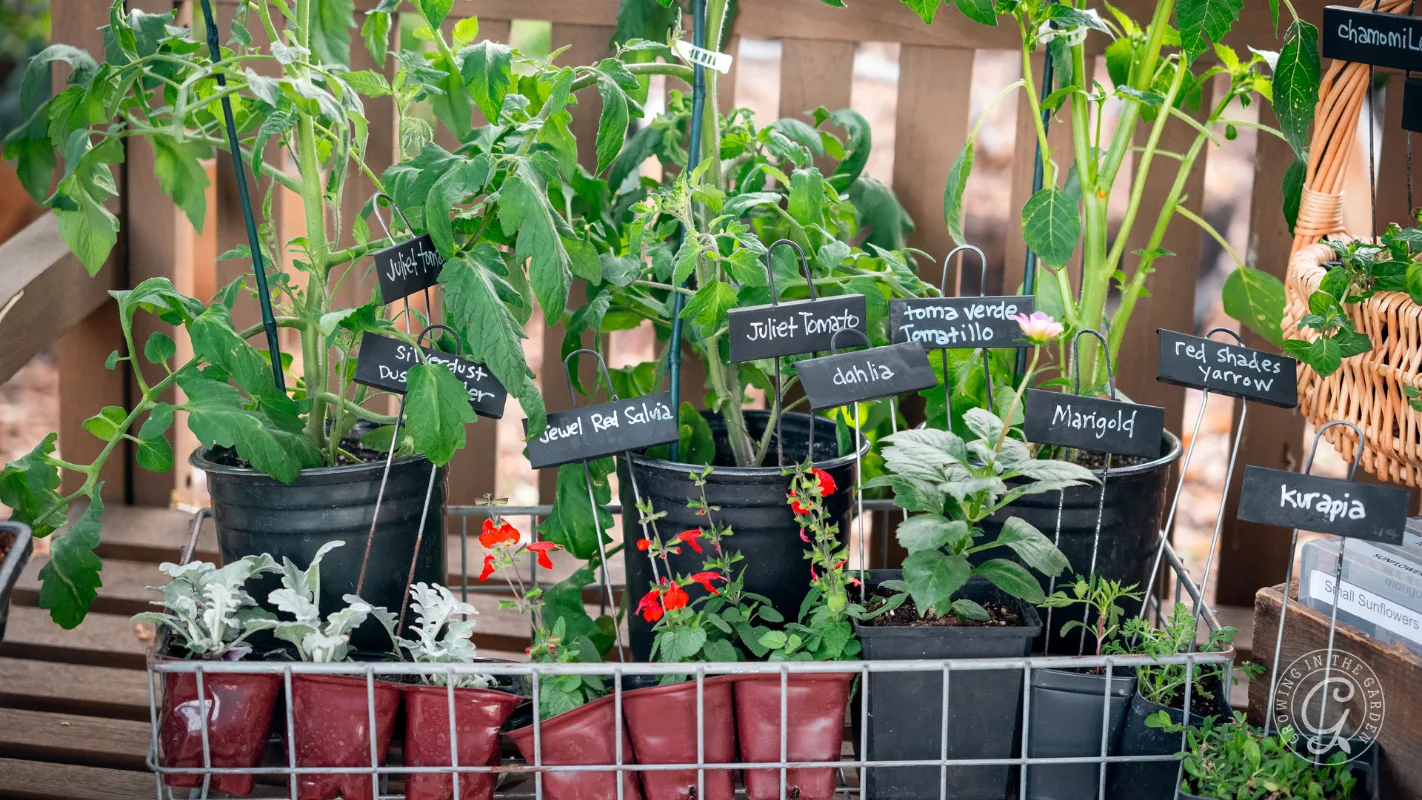
This is your main spring window for warm-season crops, and the end of February and March are key. Plant as soon as you can after your last frost date. Tomatoes and peppers need to go in early enough to set fruit before June. Plant them too late, and the flowers get too hot and won’t produce.
May
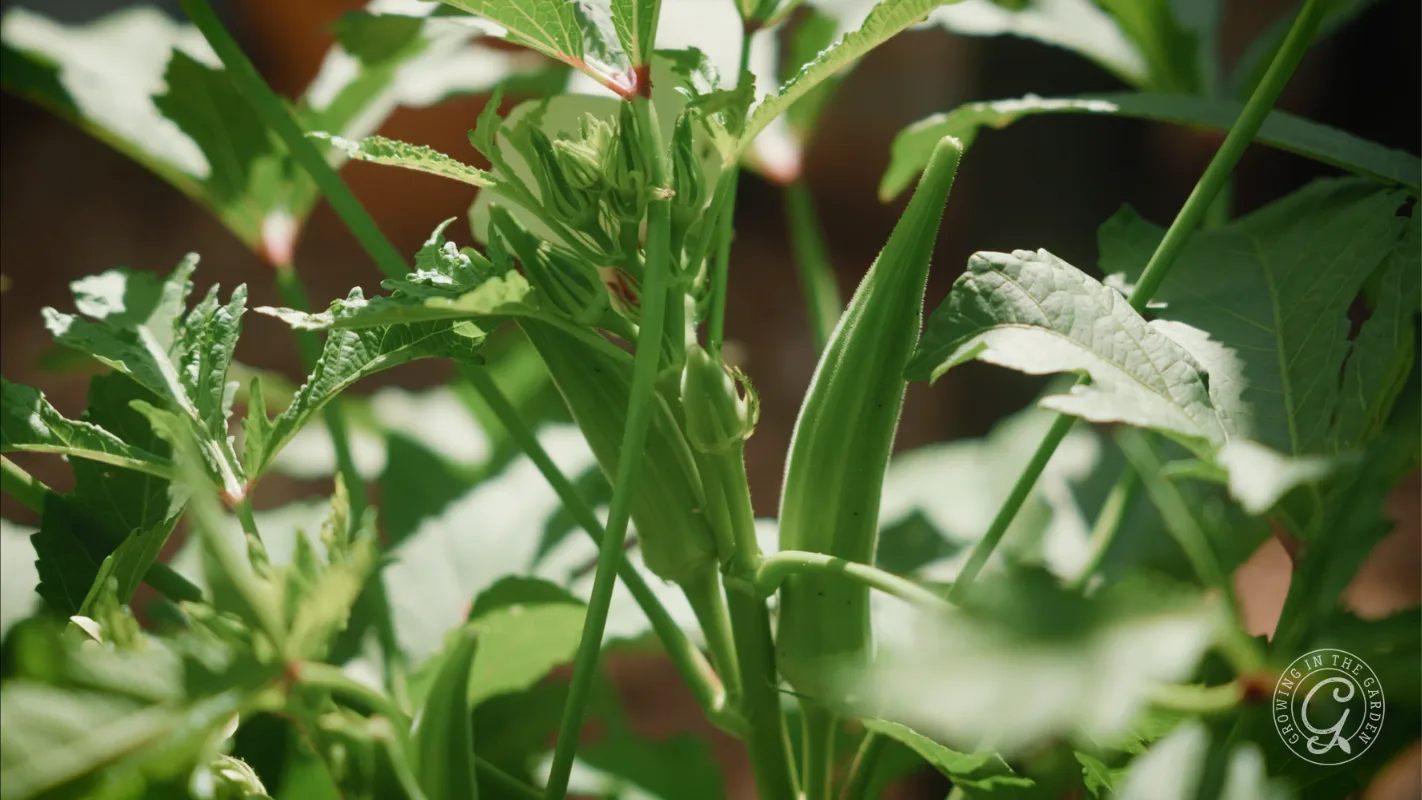
By May, it’s time for the crops that like the heat. Okra, black-eyed peas, melons, sweet potato, and Armenian cucumbers need to be in the ground and growing before the real heat hits. If you wait too long, they won’t get established in time.
Mid-July and August
If the monsoon comes in with good moisture by mid-July, it’s go time for another round of warm-season crops. If it’s still dry, wait. Hold off until August instead. Go by what the monsoon is doing that year. See when and what to plant during monsoon season for a more complete guide. Timing is only half of it. When you’re planting into heat, how you move transplants outside matters just as much as the date.
Mid-September, If the Heat Breaks
Some years, the heat breaks and nighttime temperatures start dropping by mid-September, and that’s your green light to start cool-season crops. Other years, it’s still brutally hot, and the overnight lows stay high, and planting then just cooks your seedlings. When it hasn’t cooled off yet, wait for October. Watch the forecast and your nighttime lows, and let those tell you.
October
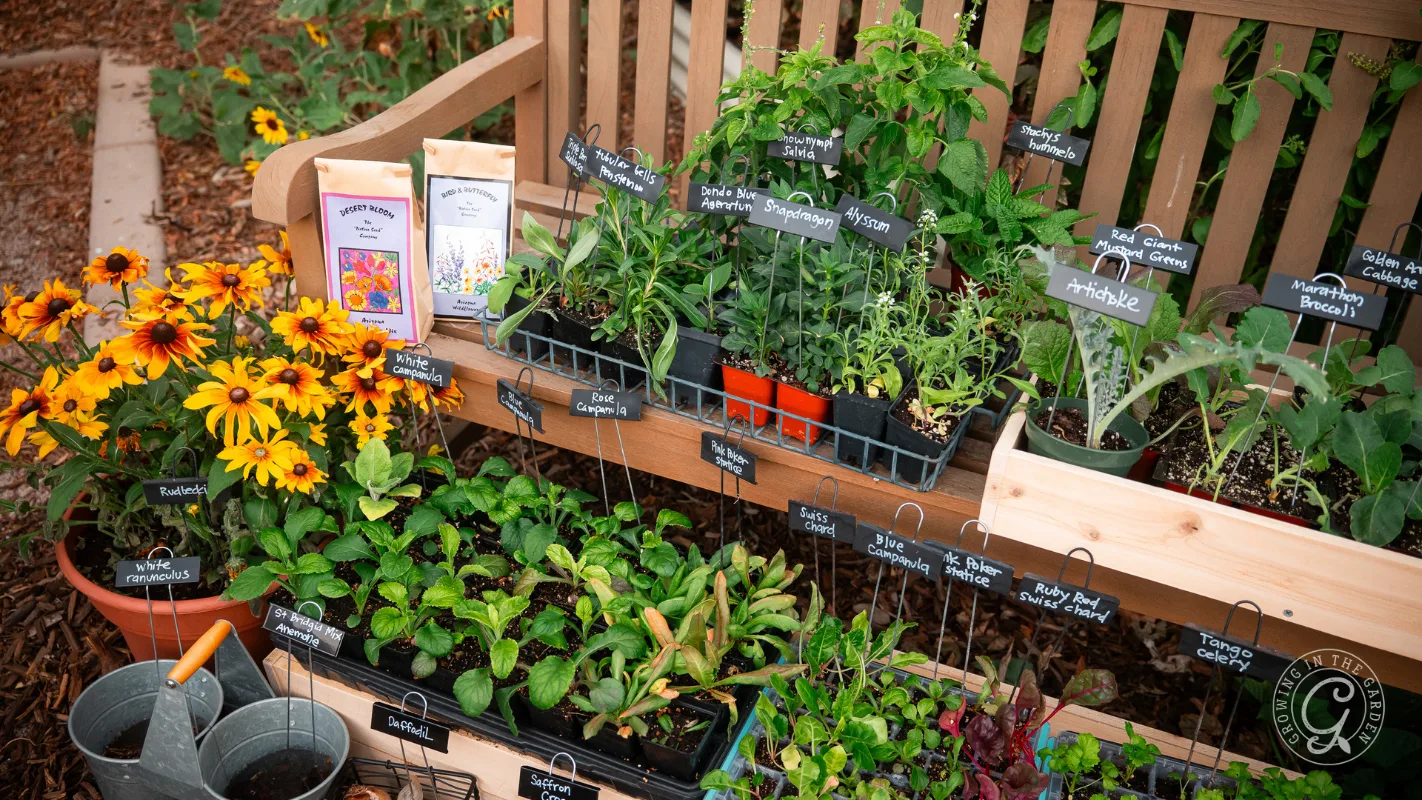
October is the key planting month. The heat has finally broken, the soil is still warm, and cool-season crops take right off. This is when I fill every spot in every bed. If there’s one month a year plant, it’s this one.
Why Timing Works Differently in the Low Desert
The low desert lies below about 3,500 feet and covers the Phoenix and Tucson areas. Our last frost is usually around February 15, and the first fall frost lands around December 2. Find your frost dates here. In between, we get a long, hot summer and a mild winter. We average 320 sunny days a year, 100 of them at or above 100 degrees, and only about 8 inches of rain.
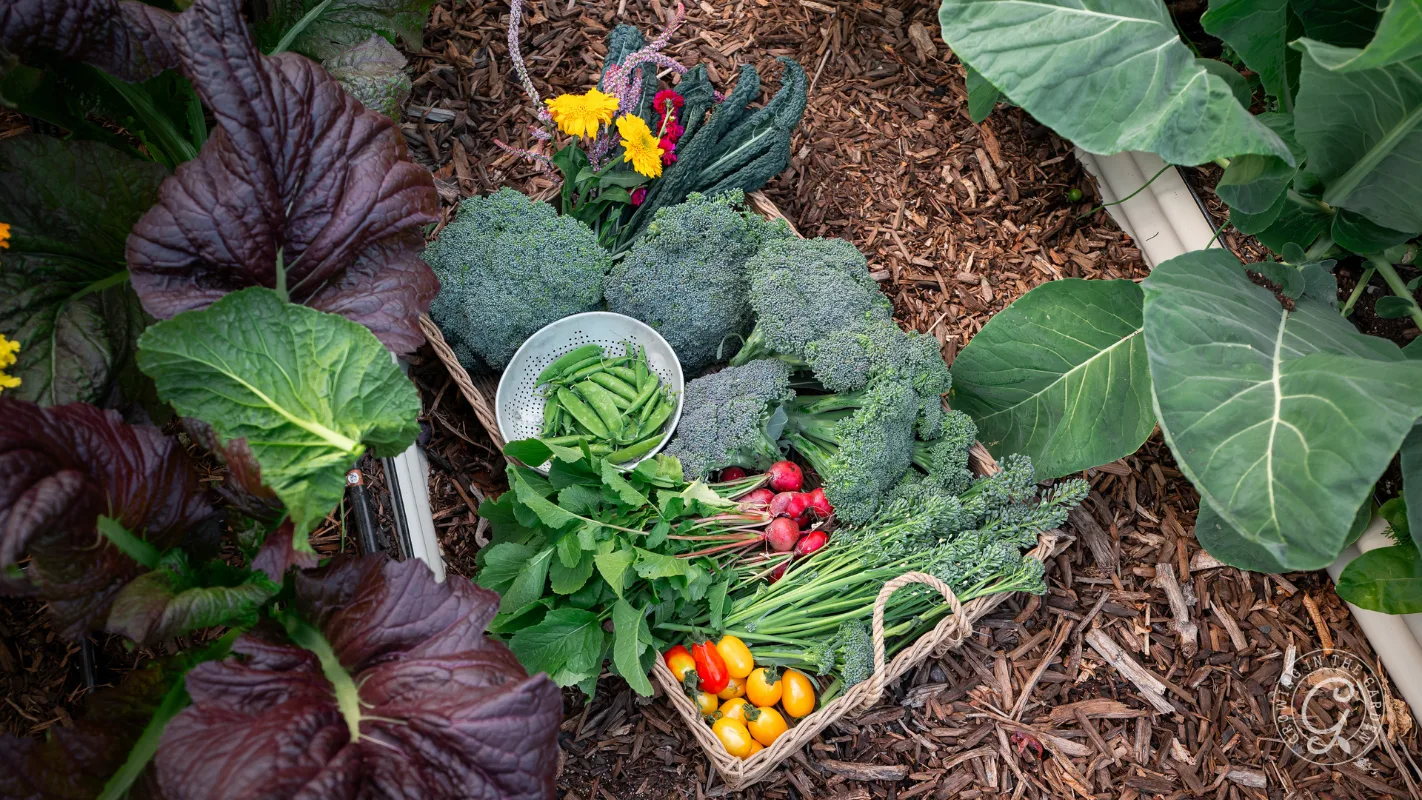
All that heat is why our timing runs backward from most gardening advice. In a lot of the country, tomatoes go in around Mother’s Day in mid-May. Do that here and your plants run out of time before summer. In the low desert, tomatoes go in late February or March, with a second chance when the monsoon shows up.
Where to Get the Full Month-by-Month Planting Lists
When you want the exact list for a given month, you’ve got three ways to get it.
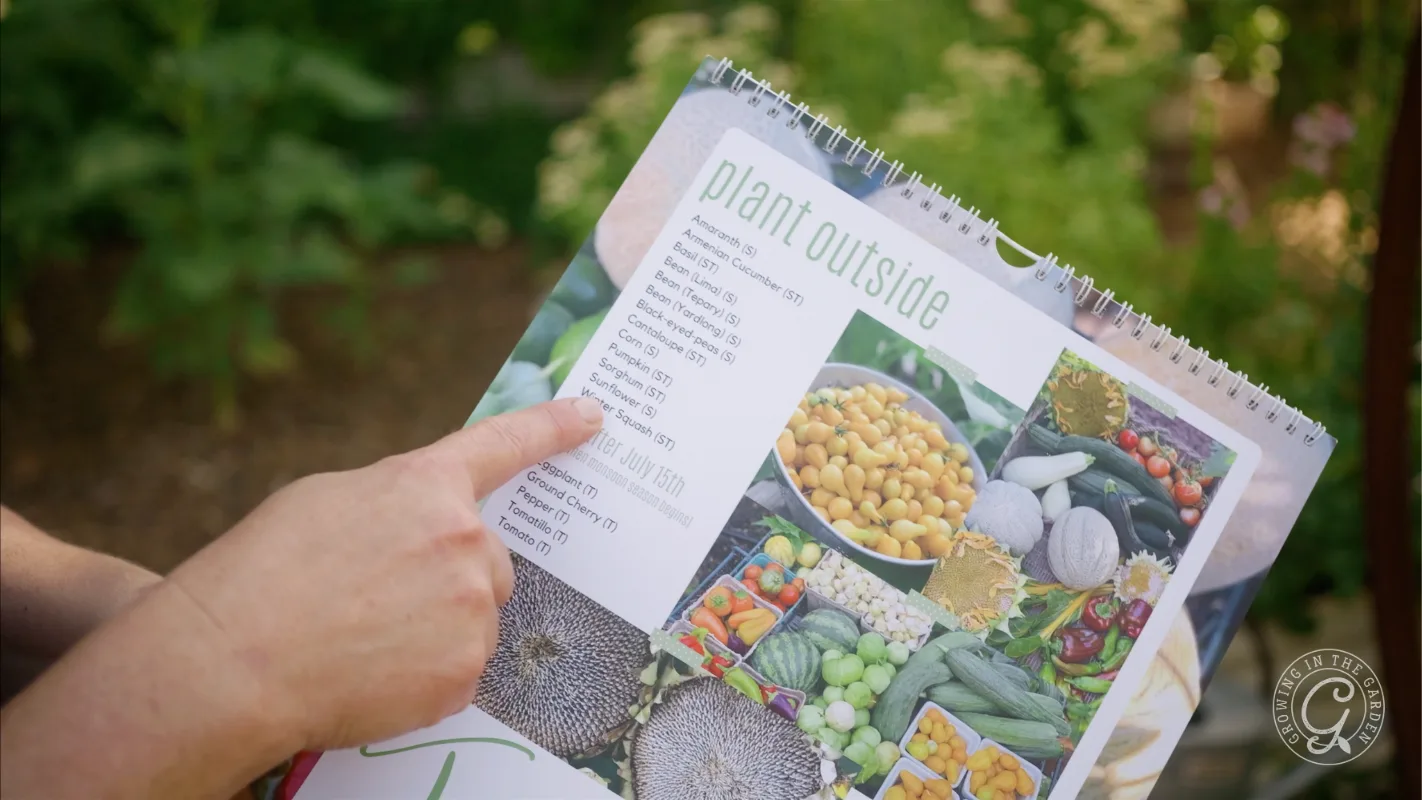
The Perpetual Vegetable, Fruit and Herb Calendar is the one I use. It lays out every month, tells you whether to plant from seed or transplant, and shows harvest photos from my own garden. It’s the quickest way to see the whole year in one place. The calendar features:
- Large 11″ × 14″ or 8.5” x 11” format—perfect for hanging on a wall or displaying on an easel.
- Beautiful full-color botanical illustrations for every month of the year.
- Each month shows what to plant, whether to start from seed or transplant, and photos of what I’m harvesting from my garden that month, so you can see what’s possible when you follow it.
- Perpetual calendar—use it year after year without replacing it.
- Heavyweight 30-pound paper for durability and a premium feel.
- Printed on archival-quality, acid-free paper that’s elemental chlorine-free and made with 30% recycled content.
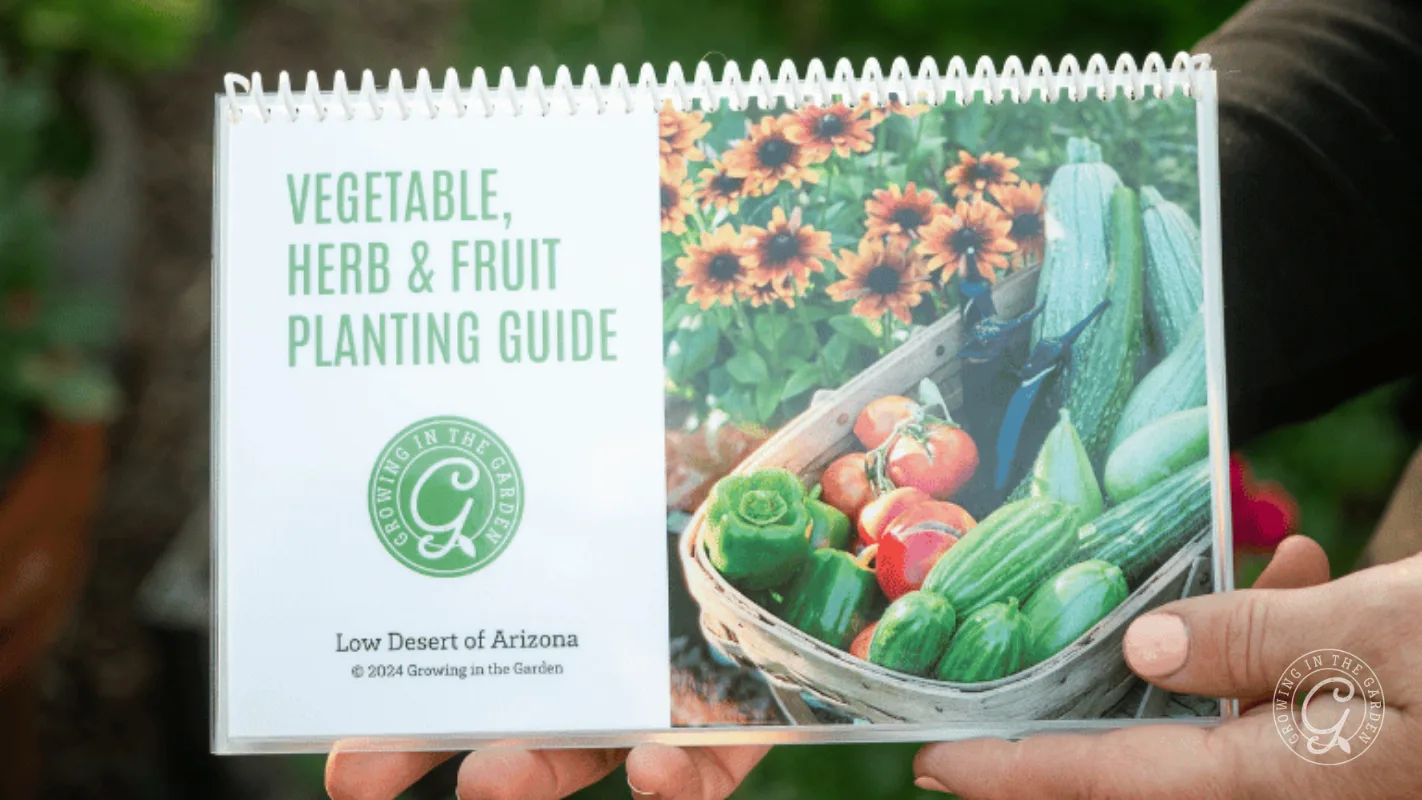
If you’d rather go crop by crop, my Arizona Vegetable Planting Guide gives the full-year schedule for each vegetable. It answers “when do I plant beets?” The calendar answers, “What do I plant in October?”
For a closer look at any single month, I’ve got a what-to-plant post for every month of the year, with the specific crops, flowers, and jobs for that time of year.
Other Low Desert Planting Tools
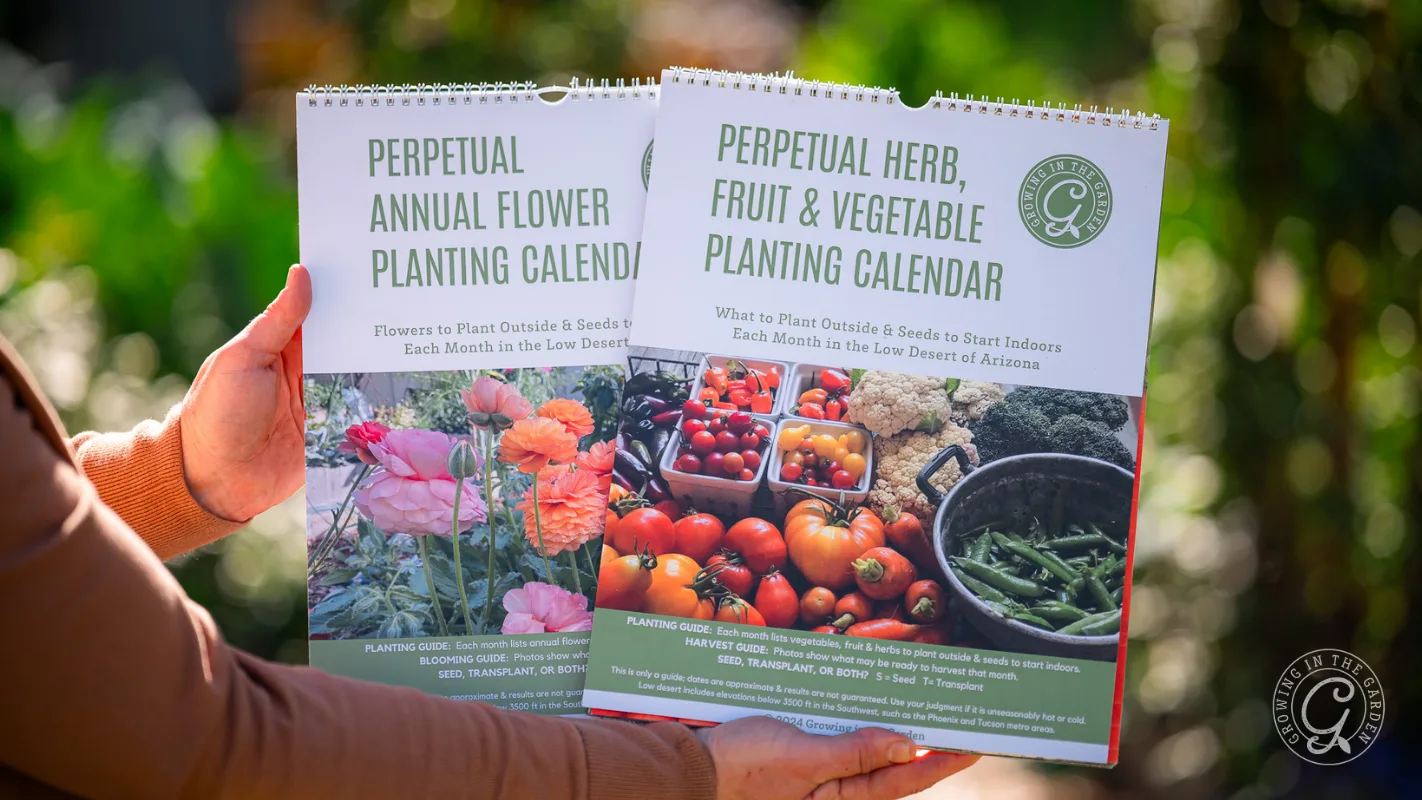
The Perpetual Annual Flower Planting Calendar does the same thing for flowers, with the timing and seed-or-transplant guidance for our climate. And if you start a lot from seed, the vegetable seed labels and flower seed labels have the planting dates printed right on them, so your seed box works as a quick reference too.
Looking for more Arizona gardening resources? Explore our planting guides for vegetables, fruit, herbs, annual flowers, flowering bulbs, and vines to find the best planting times for each.
Arizona Vegetable Planting Calendar FAQs
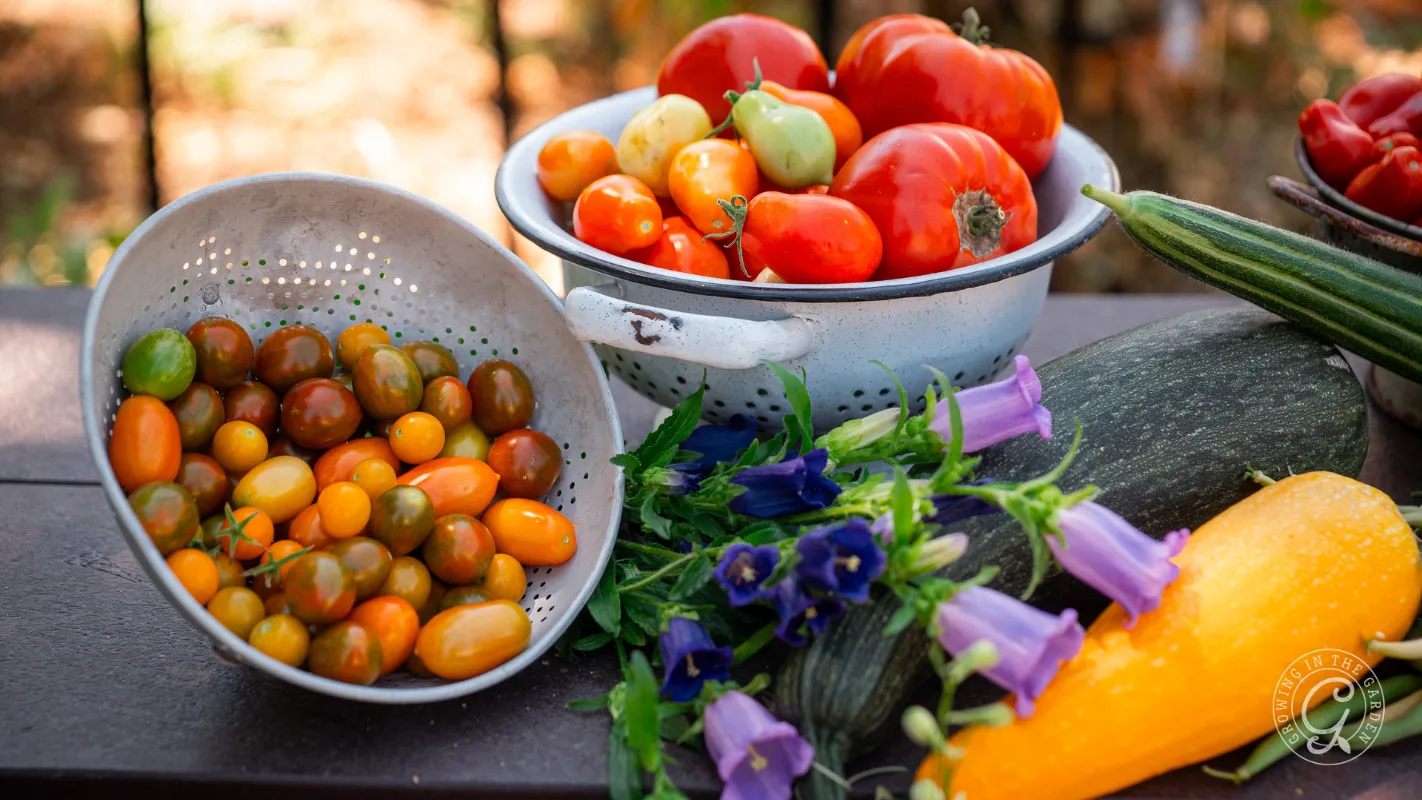
The two big windows are late February through March for warm-season crops like tomatoes and peppers, and October for cool-season crops. Heat-loving crops go in by May, and you get a second warm season window when the monsoon arrives in mid to late July.
It depends on the month and the weather that year. In spring, plant warm-season crops. By May, switch to heat-lovers.In fall, start cool-season crops. Check my monthly what-to-plant posts or the wall calendar for the full list for the current month.
October. The heat has broken, the soil is still warm, and cool-season crops get established fast. I fill every bed in October.
Tomatoes planted in May don’t have time to set fruit before the heat arrives in June, and the flowers drop once it gets too warm. In the low desert, plant tomatoes in late February or March, with a second window when the monsoon.
The calendar is written specifically for the low desert of Arizona, including areas like the Phoenix metro, Tucson, Casa Grande, Maricopa, Yuma, Lake Havasu, and other low-elevation desert areas with hot summers and mild winters.
It may also be similar in nearby low-desert areas, but planting times can still vary depending on your elevation, microclimate, and first and last frost dates.
If you garden at a higher elevation, in a colder winter area, or somewhere with a very different climate, I wouldn’t recommend using the low desert planting calendar. My website and blog can still be helpful for general gardening information, but the calendar itself is best for low desert gardeners.
The planting calendar is a quick month-by-month reference that shows you what to plant and when in the low desert.
The planting guide has more details for each crop, including planting information and growing tips. So the calendar is best for a simple “what can I plant this month?” reference, and the guide is better when you want more help with how to plant and grow each crop successfully.
Many gardeners like having both, but if you’re choosing one, the calendar is the simplest place to start.



I love your information and your videos, I live in Florence, AZ. I don’t know if this is considered the low desert or not it is in Pinal county it used to be all farmland and citrus groves around here but has been mostly plowed under for housing. Any way I am trying to start container growing, so far I am having success with a Moringa tree, in the ground but most things I have tried to grow in the ground have been a fail. I have a very happy sweet potato plant in a 5 gal bucket, and I am trying to grow a jalapeno plant but it seems to be going pretty slow.
I will keep plugging along and following your guidance and suggestions. thank you for all you do, I think your garden is beautiful.
Best of luck to you. Sweet potatoes are a great choice.