
How to Grow Leeks in the Low Desert
Leeks are easy to grow, but in the low desert, you have to get the timing right. They need a long, cool stretch to size up, around 120 to 150 days, and our cool season is short. Plant early enough, and they grow through winter pretty easily. Plant late and it gets too hot before they’re ready.
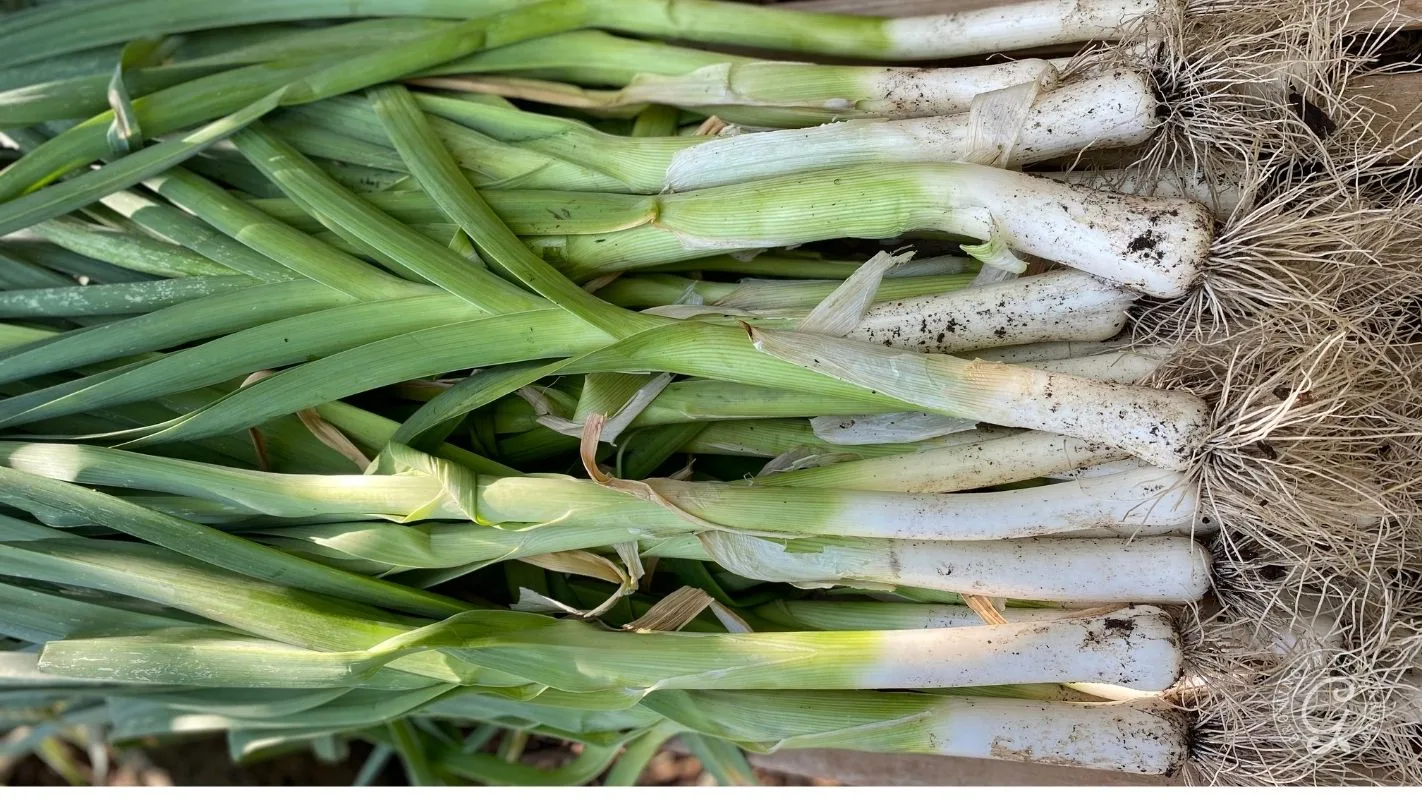
I like to start mine from seed instead of waiting for transplants. Leek transplants are hard to find at the right time here, and they usually show up too late or at the very end of the planting window. Starting seeds indoors in late summer lets me set out strong transplants in November with the whole cool season ahead of them. My leeks run about 1.5 to 2 inches across, sometimes wider in a good year. Not grocery store size, but we use every one, mostly in soup.
Key Takeaways
- Leeks thrive in the low desert as a cool-season crop; plant early for best results, ideally transplants in November.
- Starting leeks from seed gives better timing control; begin seeds indoors in late summer for strong transplants.
- Provide leeks with full sun and well-draining soil, and practice crop rotation to reduce pests.
- Water consistently and feed monthly for healthy growth; watch for stress-induced bolting, which signals a need to harvest quickly.
- Clean leeks thoroughly before storage, and they can be frozen for convenient use later in soups.
What We’ll Cover:
- When to Plant Leeks in the Low Desert
- Why I Start Leeks From Seed
- Where to Plant Leeks in the Garden
- How to Plant Leek Transplants
- Hilling and Mulching for Longer White Stems
- Watering and Feeding Leeks
- Why Leeks Bolt and What to Do
- How to Harvest Leeks Before the Heat
- How to Clean, Store, and Freeze Leeks
- Other Alliums to Grow in the Low Desert
- Growing Leeks FAQs
When to Plant Leeks in the Low Desert
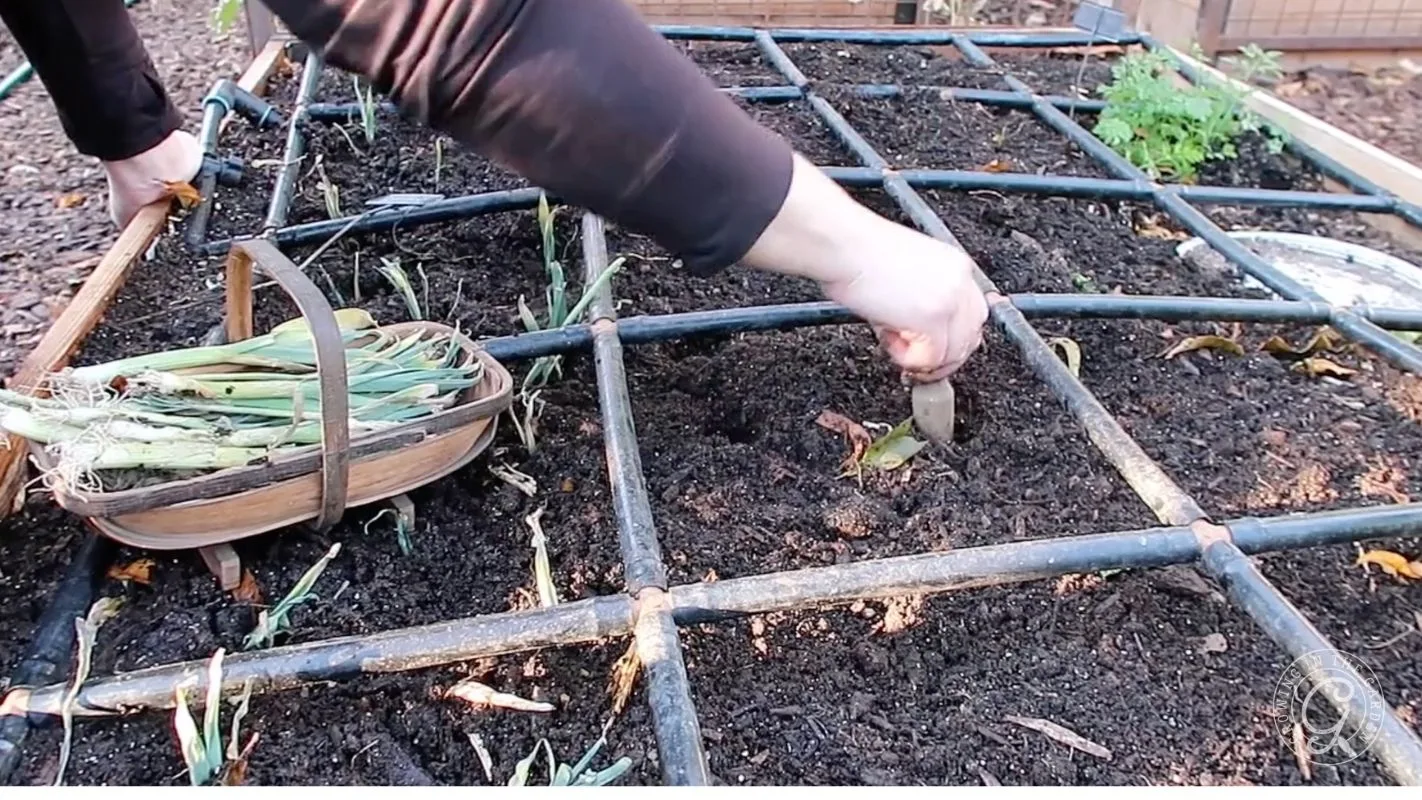
In the low desert of Arizona, leeks are a cool-season crop. My schedule:
- Start seeds indoors from August through November.
- Direct sow outdoors from October through November.
- Set transplants out from November through January, though I aim for November.
The earlier they go in, the better. November is my target for transplants because it gives them the longest run before the spring heat. By April, you want leeks already close to harvest size.
Leeks grow best between 55 and 75°F, which covers most of our winter. For planting dates on everything else going in around the same time, see my low desert vegetable planting guide.
Why I Start Leeks From Seed
Leeks have a long season, so plan ahead. Starting from seed gives you control over timing.
- Start leek seeds indoors in trays 8 to 12 weeks before you plant them out.
- When seedlings reach about 2 inches, pot them up into their own containers.
- Feed every couple of weeks with diluted fish emulsion.
- Plant them out when they’re pencil-thick and 6 to 12 inches tall.
- Trim the roots to about an inch first. It makes them easier to set in the hole.
If you find transplants at a nursery at the right time, grab them. Just don’t count on it. I’ve been burned by late transplants enough that I’d rather start a tray of leek seeds in late summer and know they’ll be ready.
Where to Plant Leeks in the Garden
Leeks want full sun, at least 8 hours, and loose, rich, well-draining soil for that long stalk and shallow root system.
- Plant in rich, well-draining raised bed soil and work in finished compost or a balanced organic fertilizer first.
- Rotate where you plant alliums each year to reduce pests like root maggots. I move where I grow onions around my beds for the same reason.
- Good companions: beets, carrots, celery, spinach. Keep leeks away from beans and peas.
How to Plant Leek Transplants
The goal is a long white stalk, and you get there by planting deep and hilling as they grow. Deep planting keeps the lower stem out of the sun so it stays white.
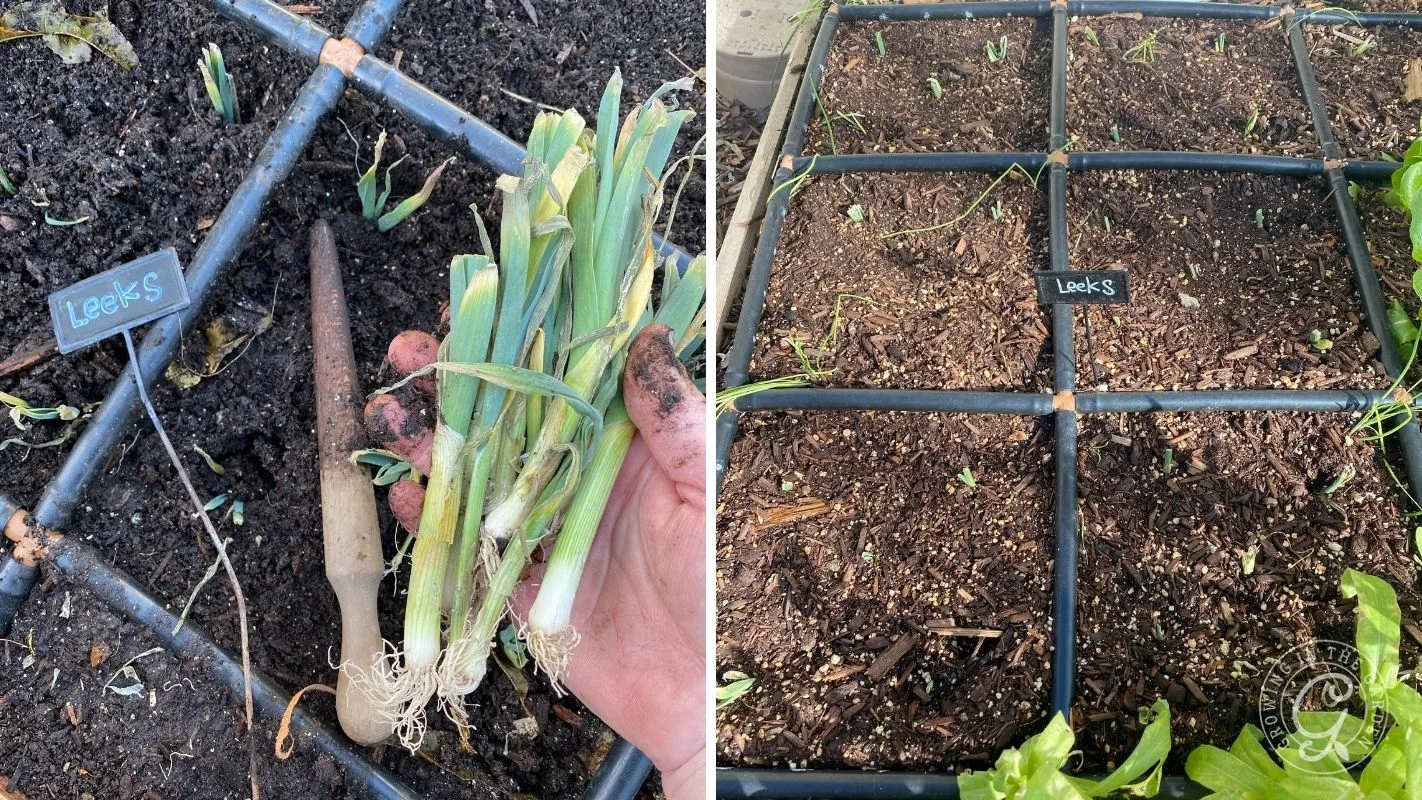
How I set transplants:
- Make a hole about 6 inches deep with a dibber.
- Drop one transplant in so most of the stalk sits below the soil line, with just the top few inches of leaf showing.
- Water it in instead of packing soil back around it. The water settles the soil around the roots without crushing them, and it keeps loose dirt out of the center crown, where it’s hard to rinse out later.
Plant 5 to 9 per square foot. Tighter spacing, closer to 9, gives you more leeks that run thinner. Looser, around 5, gives you fewer but fatter stalks. I plant tight most years because I’d rather fill the freezer than grow a handful of big ones. Square foot garden spacing covers the grid if you want it.
Hilling and Mulching for Longer White Stems
As leeks grow, mound soil up around the stems a little at a time. Every bit you cover turns into more white stalk. I usually mulch with wood chips. It blanches the lower stem (like hilling does) and keeps soil from washing into the leaf folds. Both hilling and mulching work well here.
Watering and Feeding Leeks
Leeks have shallow roots and don’t like to dry out, so steady water beats deep, occasional soaking.
- Water well after planting.
- Water deeply after each feeding.
- Between feedings, water once the top inch of soil is dry.
- Yellow-tinged leaves usually mean too much water. Ease off.
Feed about once a month through the season to push leafy growth, and water it in. I use this fertilizer.
Why Leeks Bolt and What to Do
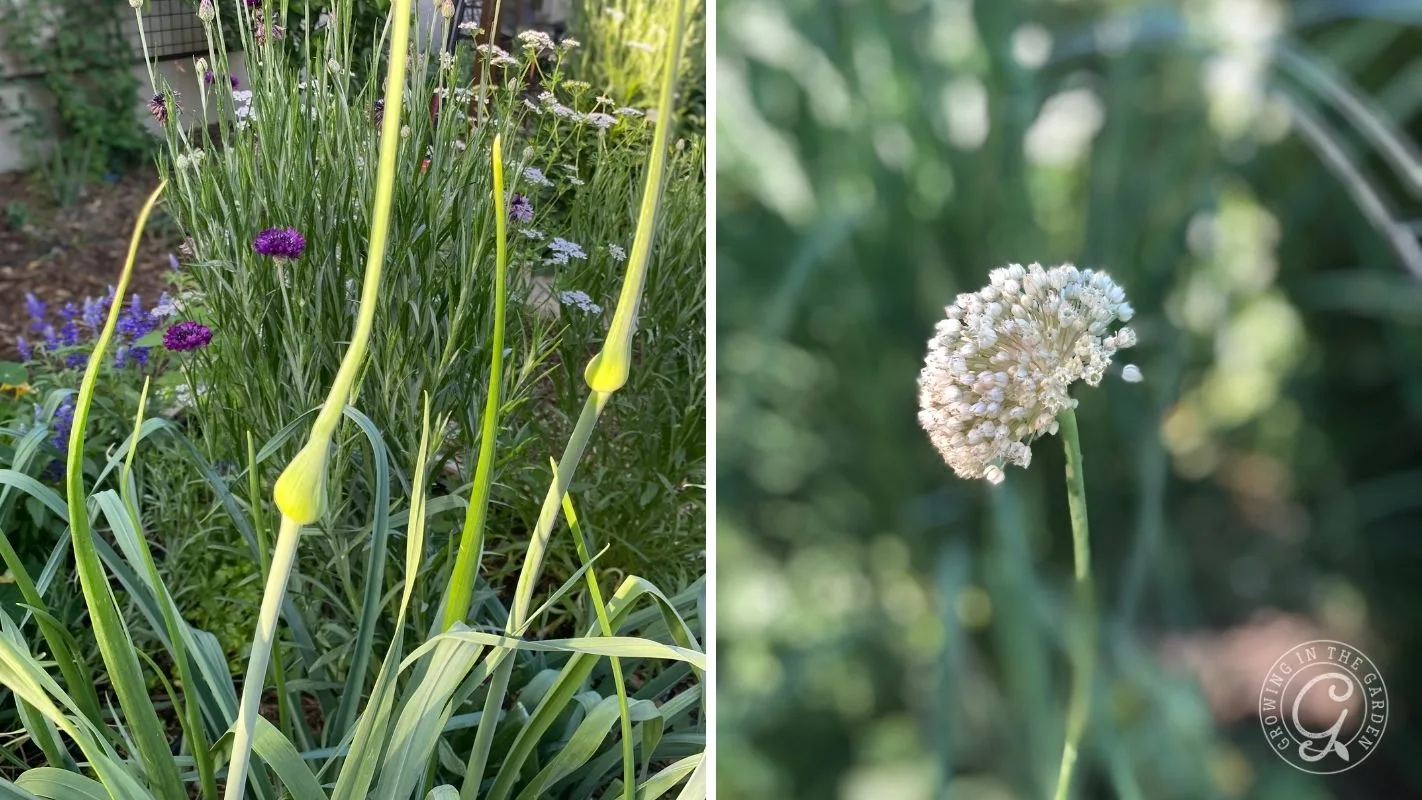
Leeks bolt under stress, and our wild temperature swings are a common trigger. A warm stretch, then a cold snap, then warm again, and a few will send up a flower stalk. When the center goes thick and tall and a flower head forms, the leek has bolted.
A bolted leek won’t store, so use it right away before the stalk turns woody. I harvest the bolting ones first.
I don’t love seeing them bolt, but if a few go near the end of the season, I leave a couple of flowers standing for the bees. I wasn’t going to eat those stalks anyway.
Onions do the same thing. What to do when onions bolt covers the why and how, and it applies to leeks too.
How to Harvest Leeks Before the Heat
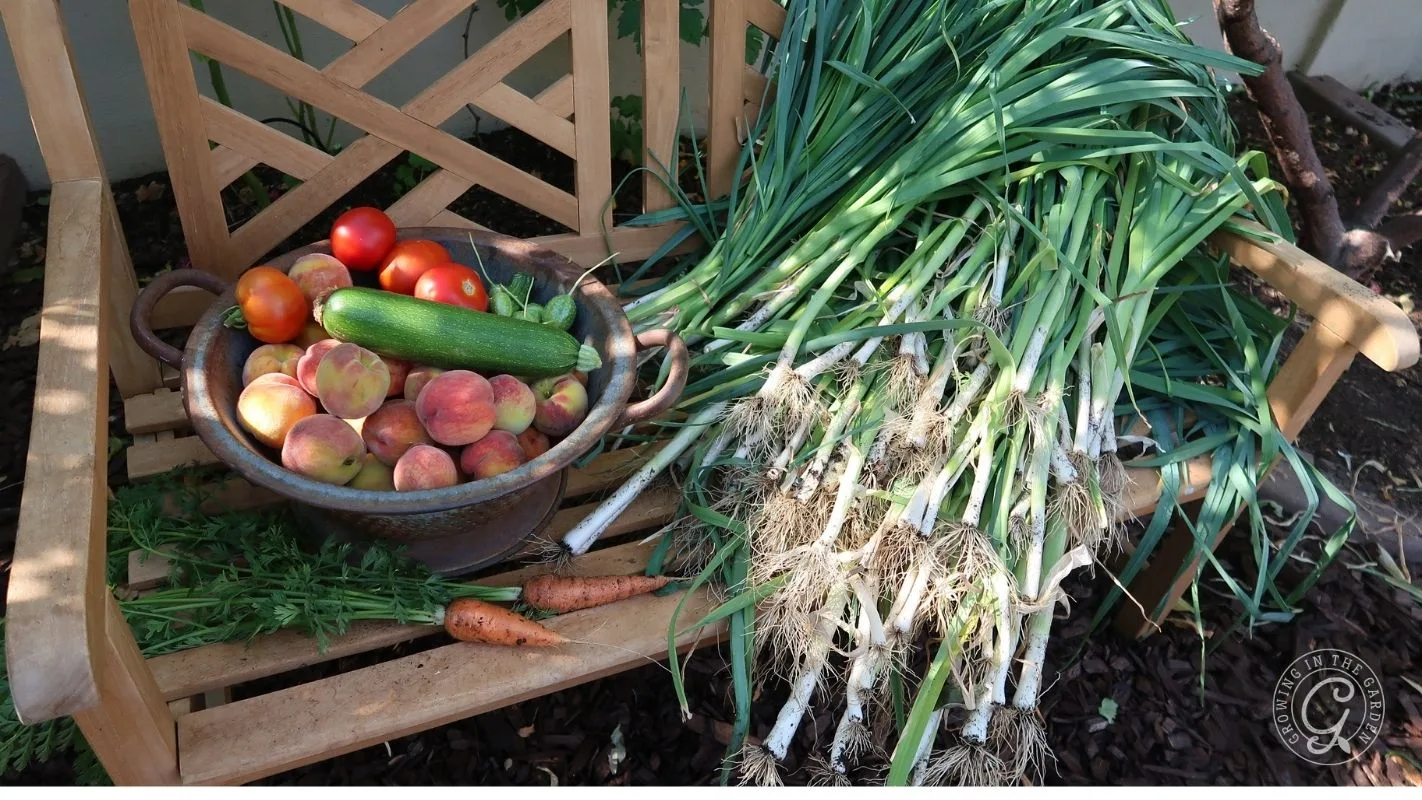
Start harvesting once the leeks are big enough to use, usually around 1 to 2 inches across. I pull a couple at a time through the winter, taking the biggest first and leaving the rest to grow.
Once the heat starts looming in spring, the season’s over, whether the leeks are ready or not. I harvest everything that’s left at once rather than let it sit in warming soil.
Digging them out is the tricky part. They snap off at the base if you yank them, so loosen the soil deep around the stalk with a garden fork first, then ease them out. Trim the leaves if you want them easier to handle.
How to Clean, Store, and Freeze Leeks
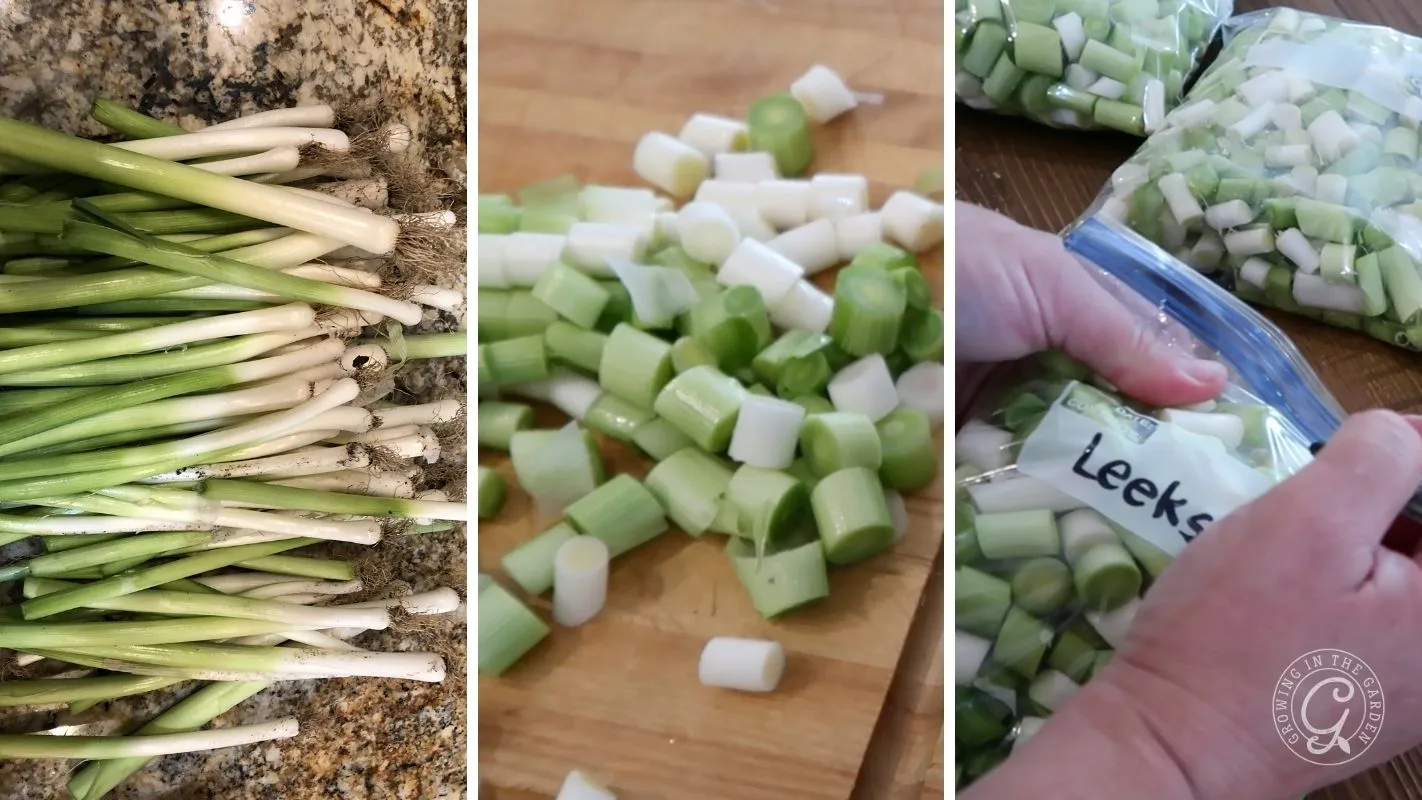
Grit gets trapped in the layers, so leeks need a good cleaning. Slice lengthwise, fan the layers open under running water, and rinse until the dirt’s gone.
In the fridge, leeks keep about a week in a bag to hold moisture. Most of mine go in the freezer. I clean and slice them, then freeze them, ready to drop straight into soup. Don’t thaw them first; they hold their flavor better going in frozen. A bag of leeks in the freezer is half the reason I grow them.
Other Alliums to Grow in the Low Desert
Leeks are in the onion family, and most alliums share the same cool-season window here, so they’re easy to plan together.
- How to grow garlic in the low desert is another fall-planted allium that overwinters like leeks do.
- If your garlic comes up looking strange, with heads that split into a tangle of tiny cloves, that’s witch’s broom in garlic.
- For a perennial allium that takes our heat better than most, plant garlic chives.
Growing Leeks FAQs
Yes. Leeks grow well in the low desert as a cool-season crop. Plant early, ideally setting transplants out in November, so they have the full winter to size up before spring heat ends the season.
Around 120 to 150 days from transplant to harvest. That long season is why getting them in early matters so much here.
Stress, usually from big temperature swings. A warm spell followed by a cold snap can push a plant to flower. Bolted leeks won’t store, so harvest and use them right away.
You can, but eat them fast. Once a leek bolts the center turns tough. Use the bolted ones first and don’t store them.
In the low desert, yes. Leeks are frost tolerant and handle our mild winters fine, so you can leave them in and harvest as needed. Just get them out before spring heat sets in.
Usually tight spacing, a short season, or both. Space them farther apart for fatter stalks, and give them as long a runway as you can. Thin leeks are common here because our cool season is short. They still taste great.
Leeks are biennial, growing one season and flowering the next. In the low desert we grow them as an annual cool-season crop and harvest before summer, so they don’t carry over.

Can you leave your leak in the garden for the winter when it come up in the spring?
Leeks can overwinter in the garden. They are fairly frost tolerant and can survive temperatures as low as 20°F. Mulch them well if you plan to overwinter them. You can harvest as needed.