
How to Grow Marigolds and Use Them as a Companion Plant
Marigolds were the first seeds I ever saved. I crumbled open a dried bloom, saw all those seeds packed inside, and realized I could grow the whole plant again for free. It felt like magic then, and it still does. That’s one reason I plant marigolds in almost every garden bed.
They’re also one of the most commonly recommended companion plants for vegetable gardens. Marigolds can be useful, but not always for the reasons you hear repeated. The variety you choose, where you plant it, and how long it grows all make a difference.
I garden in the low desert of Arizona, where marigolds grow well for much of the year but often struggle during the hottest part of summer. In this guide, I’ll show you how to grow marigolds from seed or transplants, when to plant them, which varieties to choose, how to save seeds, and what research says about using marigolds for pests and root-knot nematodes.
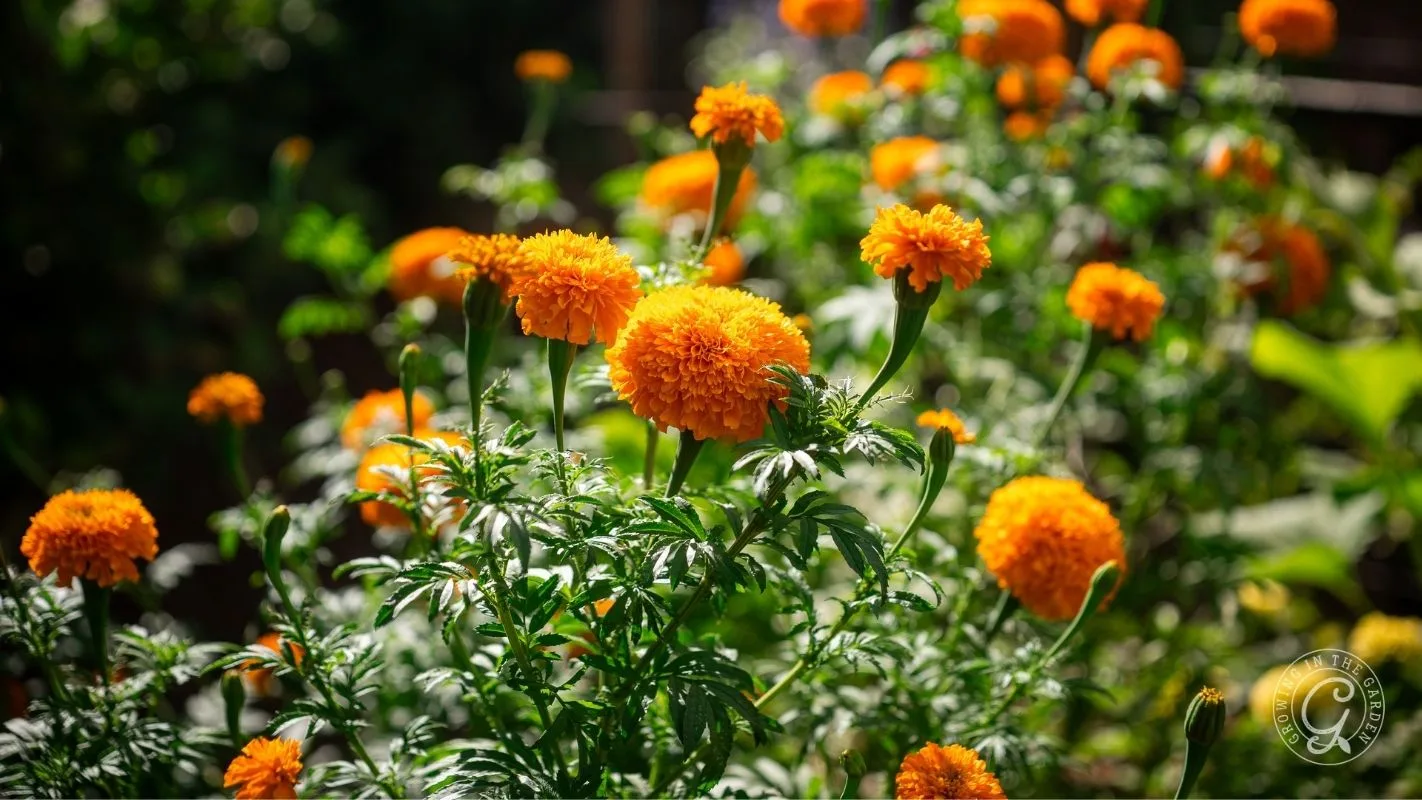
Key Takeaways: How to Grow Marigolds
- Marigolds are easy to grow from seeds or transplants; plant them after the last frost when soil reaches 60°F.
- French marigolds are compact, while African marigolds are taller with larger blooms; choose based on desired size.
- For best results, provide full sun, well-draining soil, and avoid over-fertilizing with nitrogen.
- Marigolds attract beneficial insects and can help manage pests and root-knot nematodes when planted properly.
- Learn how to save marigold seeds and treat them as a succession crop for continuous blooms throughout the season.
What We’ll Cover:
- When Should You Plant Marigolds?
- How Do You Plant and Care for Marigolds?
- Do Marigolds Survive Summer in the Low Desert?
- Why Aren’t My Marigolds Getting Big?
- Which Marigold Varieties Should You Grow?
- What Problems Do Marigolds Have?
- Are Marigolds Good Cut Flowers?
- How Do You Save Marigold Seeds?
- Marigolds as Companion Plants
- What Marigolds Don’t Do
- Do Marigolds Get Rid of Root-Knot Nematodes?
- Growing Marigolds FAQs
Prefer to watch?

When Should You Plant Marigolds?
Marigolds are warm-season annuals. Plant them after your last frost date, once soil has warmed to at least 60°F.
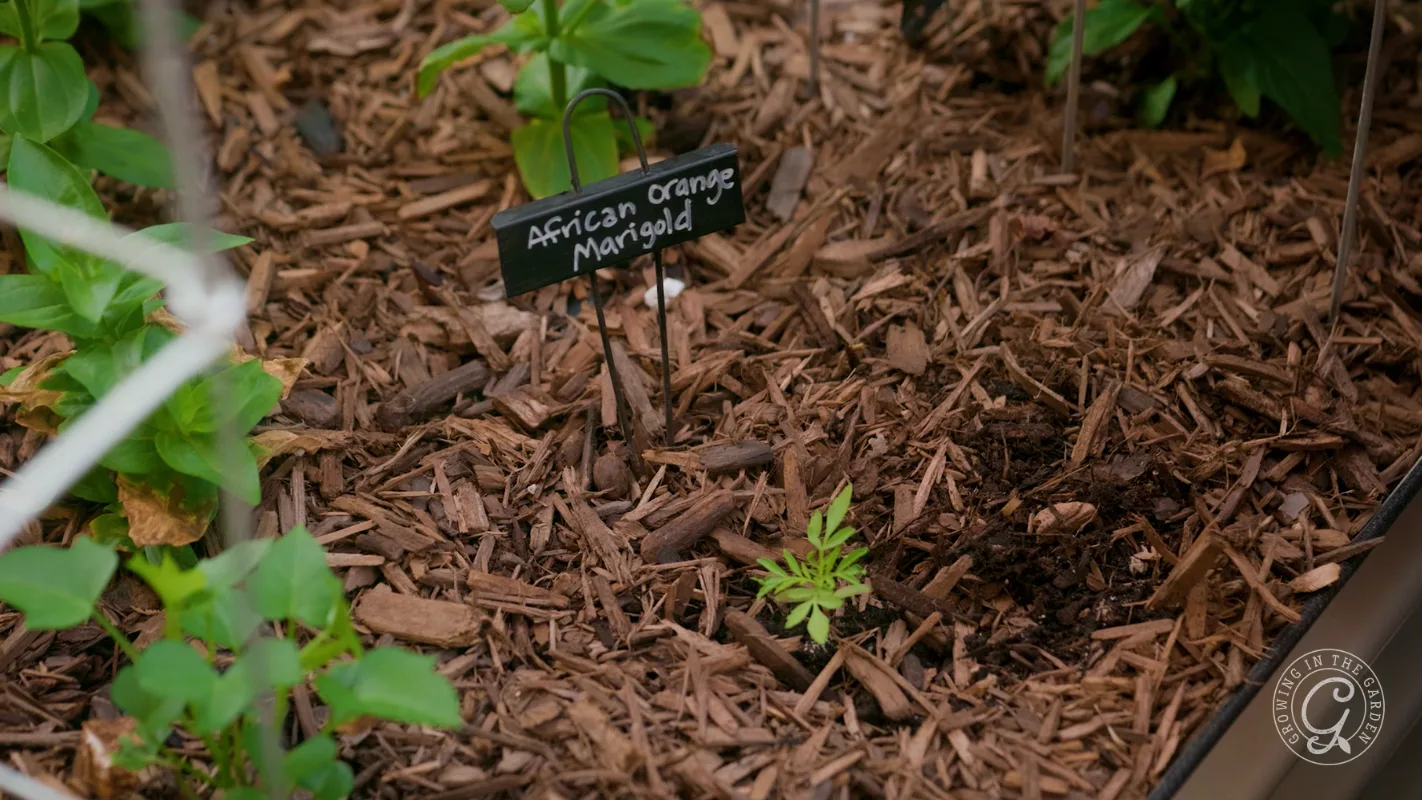
In most of the country, that means starting seeds indoors six to eight weeks before your last frost, or sowing directly once nights stay reliably above 50°F. They germinate fast, usually in five to seven days.
In the low desert of Arizona:
- Start seeds indoors: January through April, and August through September
- Plant seeds or transplants outside: February through May, and September into October
For everything else happening in those windows, see my low desert guides for the Arizona garden in February and the Arizona garden in September.
I plant both seasons. Fall plantings give me the long mild stretch that follows, and spring plantings give me flowers by the time tomatoes are setting fruit. Our season is long enough that marigolds work well as a succession crop. I harvest seeds and tuck them into empty spots as I go, then watch them come up as the weather shifts.
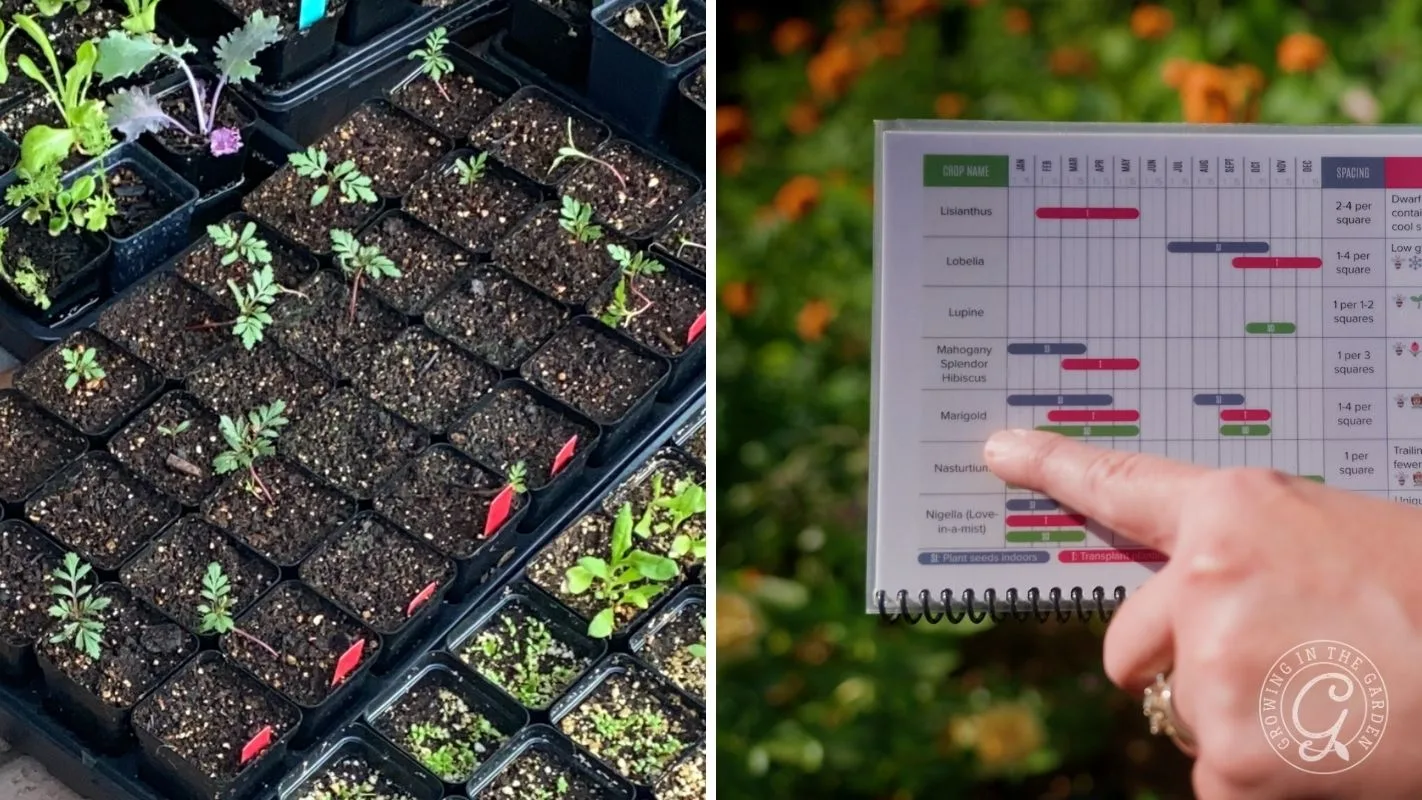
If you want a month-by-month reference for flower timing here, the Perpetual Annual Flower Planting Calendar in my shop covers when to plant flowers in the low desert and whether to start with seeds or transplants.
How Do You Plant and Care for Marigolds?
Marigolds are forgiving. You can start them from seed indoors, sow them directly outside, or buy transplants.
Starting from seed. Plant seeds about ¼ inch deep. To start them inside, follow these steps for starting seeds indoors successfully, beginning four to six weeks before planting out. Move them outside when they’re three to five inches tall. Marigolds also grow very well sown straight into the garden.
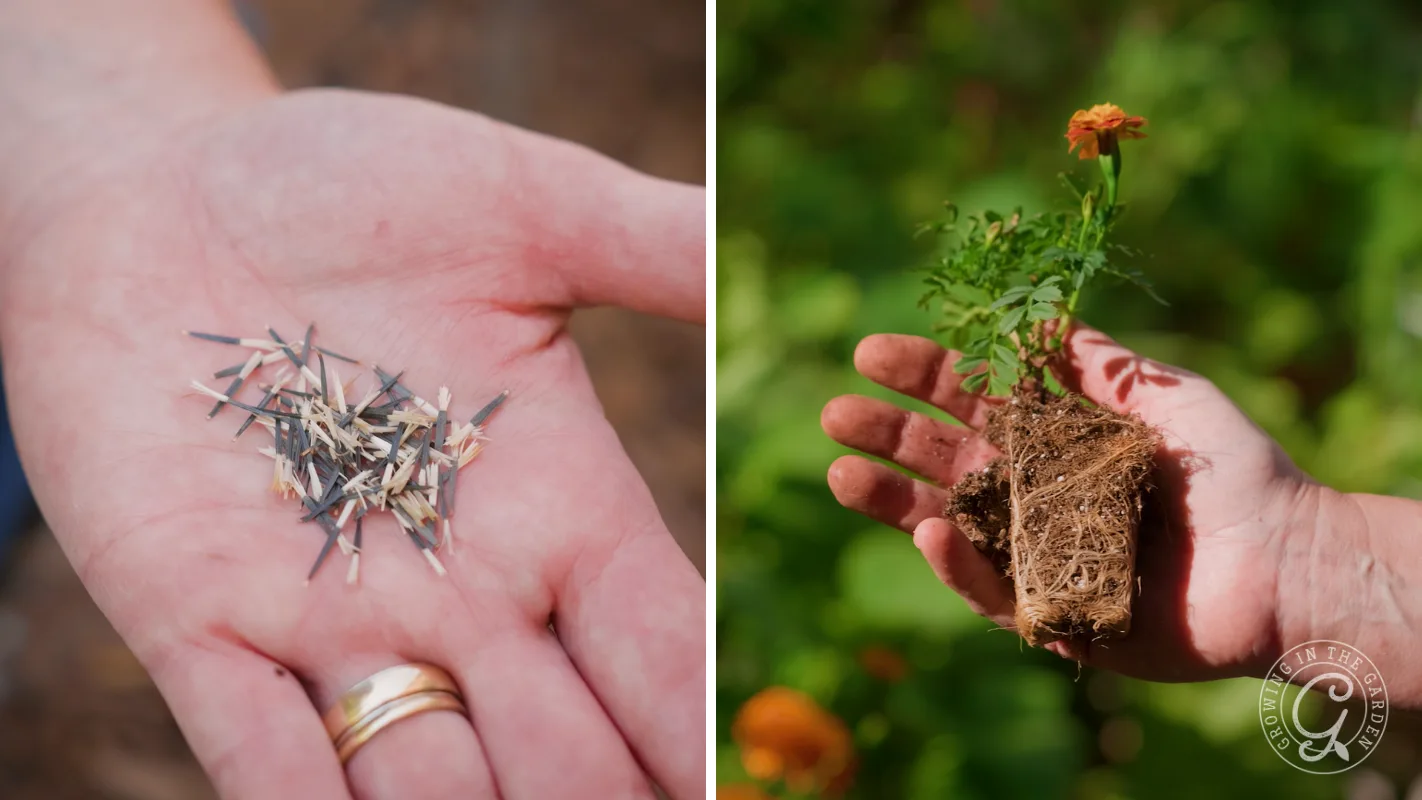
Buying transplants. Look for young, bushy plants with few blooms or none at all. If there are blooms, I cut them off before planting. The plant puts its energy into roots instead, and you get a better plant. Learn how I plant transplants for successful growing seasons.
Sun. Full sun in most climates, six to eight hours minimum. In the low desert, afternoon shade helps them last longer once it gets hot.
Soil and spacing. Marigolds want well-draining soil and grow equally well in raised beds and containers. Space six to eighteen inches apart depending on the variety. French types stay compact. African types need more room.
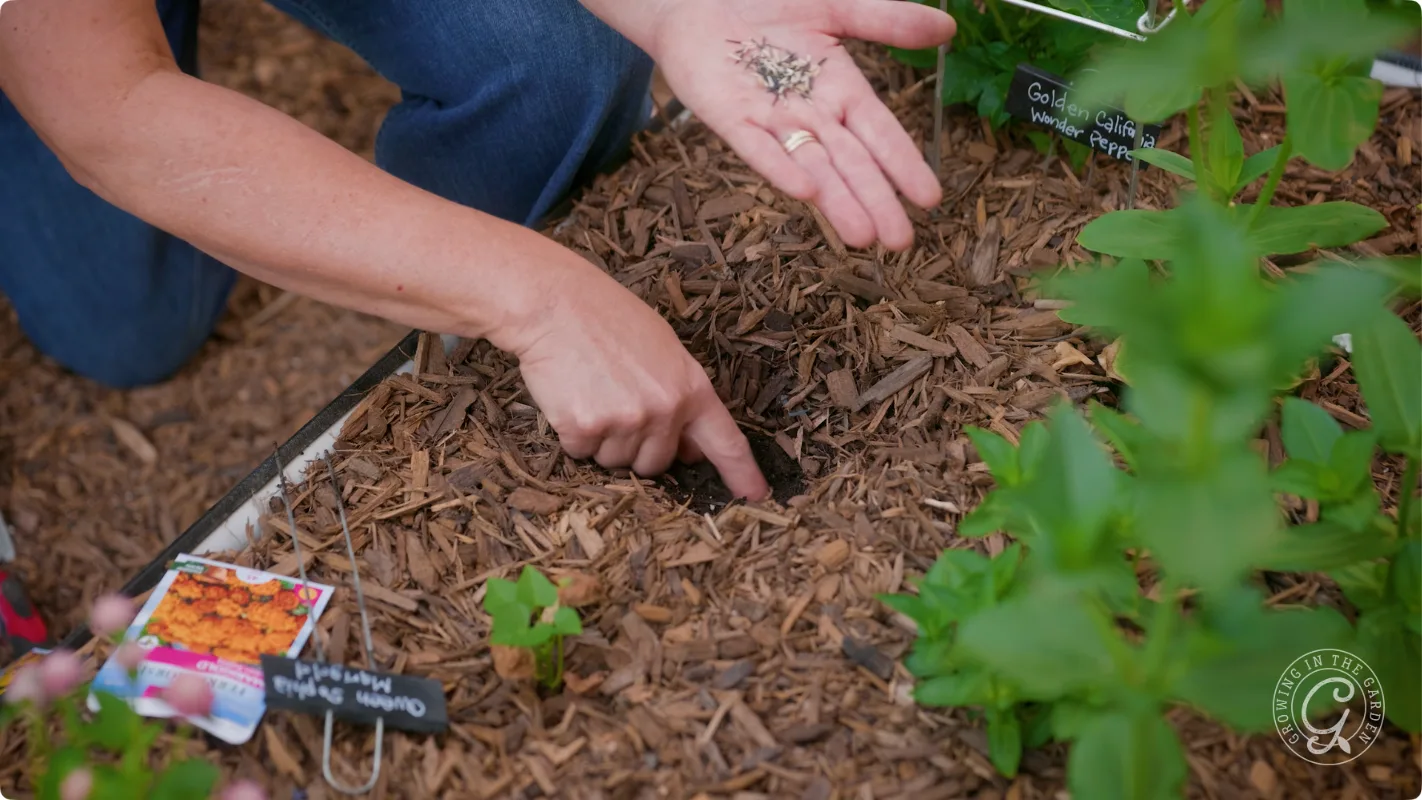
Water. Keep seedlings consistently moist until they’re established. After that, let the soil dry somewhat between waterings. Marigolds are drought-tolerant once rooted and will rot in soggy soil. Mulch helps hold moisture and keeps soil temperatures down.
Feeding. Don’t. Too much nitrogen gives you lush foliage and almost no flowers.
Pinching. When plants are six to twelve inches tall, pinch the growing tip off right above a leaf node. It feels wrong the first time. You’re cutting the top off a perfectly healthy plant. Do it anyway. Without pinching, you get one main stem with blooms at the top. With it, the plant branches, you get more stems and flowers. I show the technique on other crops in this guide on how to pinch flowers for more blooms.
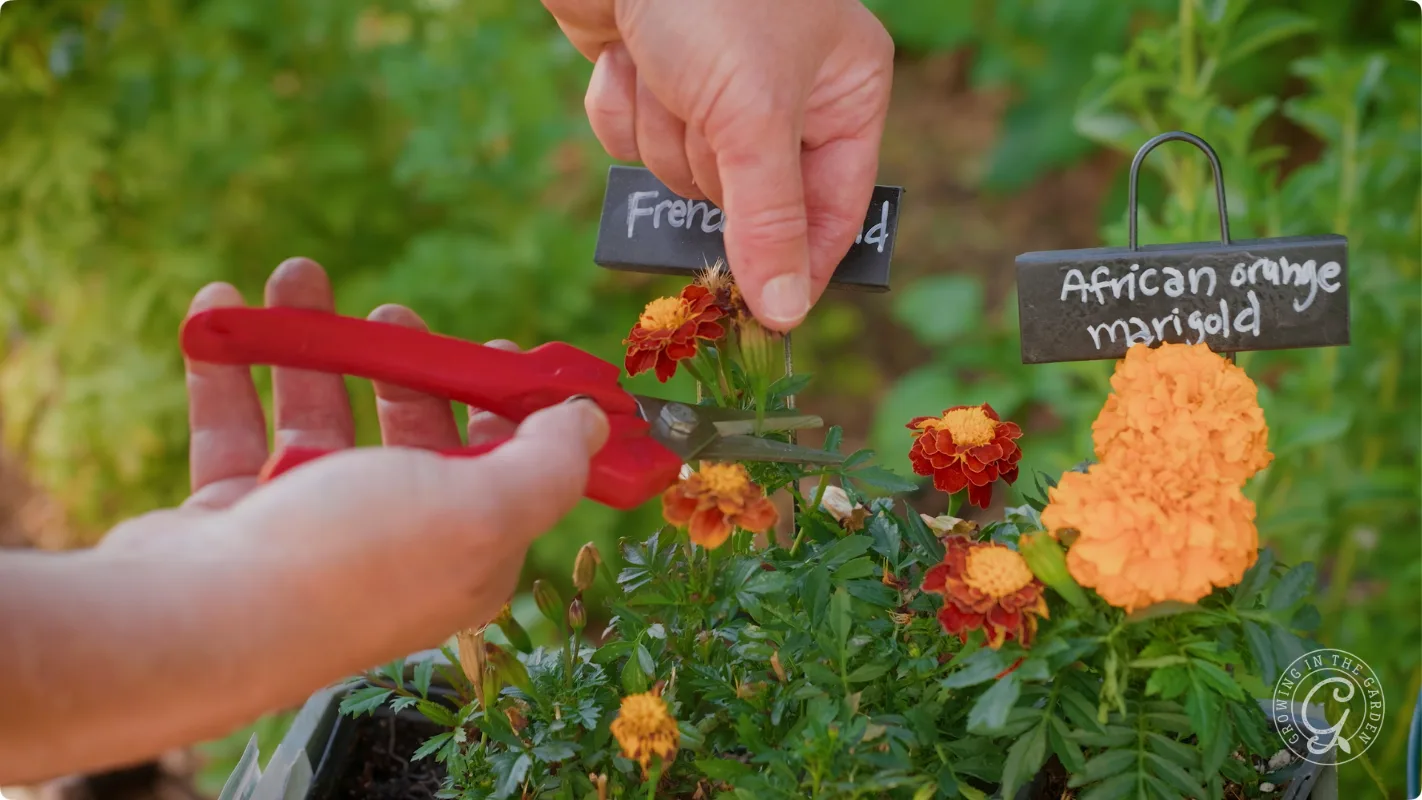
Deadheading. Remove spent blooms to keep plants producing. Taller African varieties may need staking.
Do Marigolds Survive Summer in the Low Desert?
Marigolds are often described as heat-loving flowers, and they are tougher than many annuals. But heat-tolerant is not the same as heat-proof. During the hottest part of summer in the low desert, some plants may decline or die. In my garden, the ones that get natural afternoon shade usually last longer and continue growing and flowering.
I’ve also noticed that seeds don’t develop as well during extreme summer heat, even when the plants are still blooming. If you want to save marigold seeds, spring or fall is usually more reliable than midsummer.
Marigolds may not last through the entire year here, and that’s fine. Our growing season is long, and marigolds are inexpensive and quick to grow from seed. I treat them as a succession crop and plant another round as temperatures begin cool. That keeps them growing in my garden for much of the year.
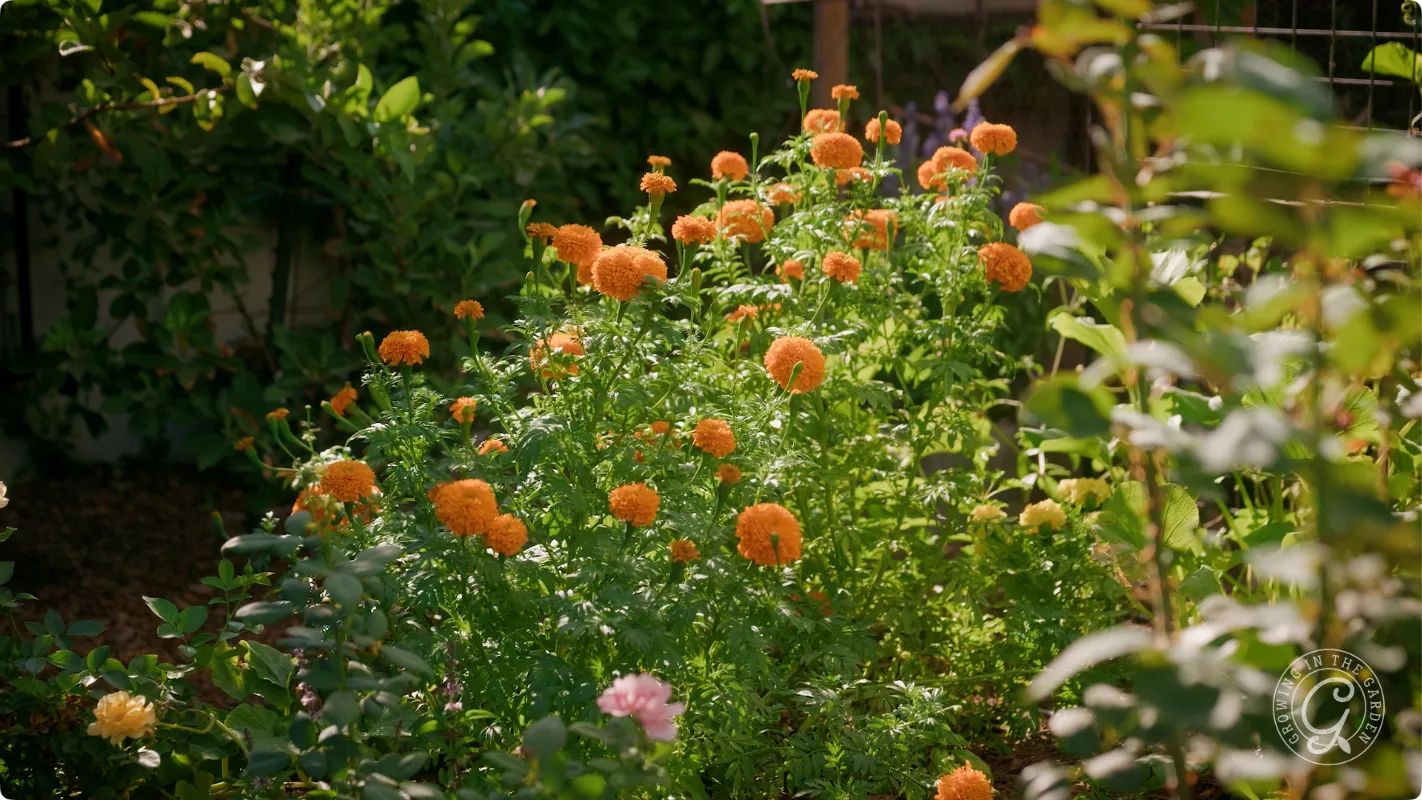
In hot, humid climates, French marigolds often perform better through summer than large-flowered African types. Look for cultivars specifically described as heat- and humidity-tolerant. In Florida, Extension recommends French marigolds for year-round growing, while African marigolds generally perform best in spring.
Why Aren’t My Marigolds Getting Big?
If you’ve seen the large marigolds in my garden and wondered why yours don’t get that big, you may be growing a French marigold and comparing it to an African marigold. They’re different species with very different growth habits.
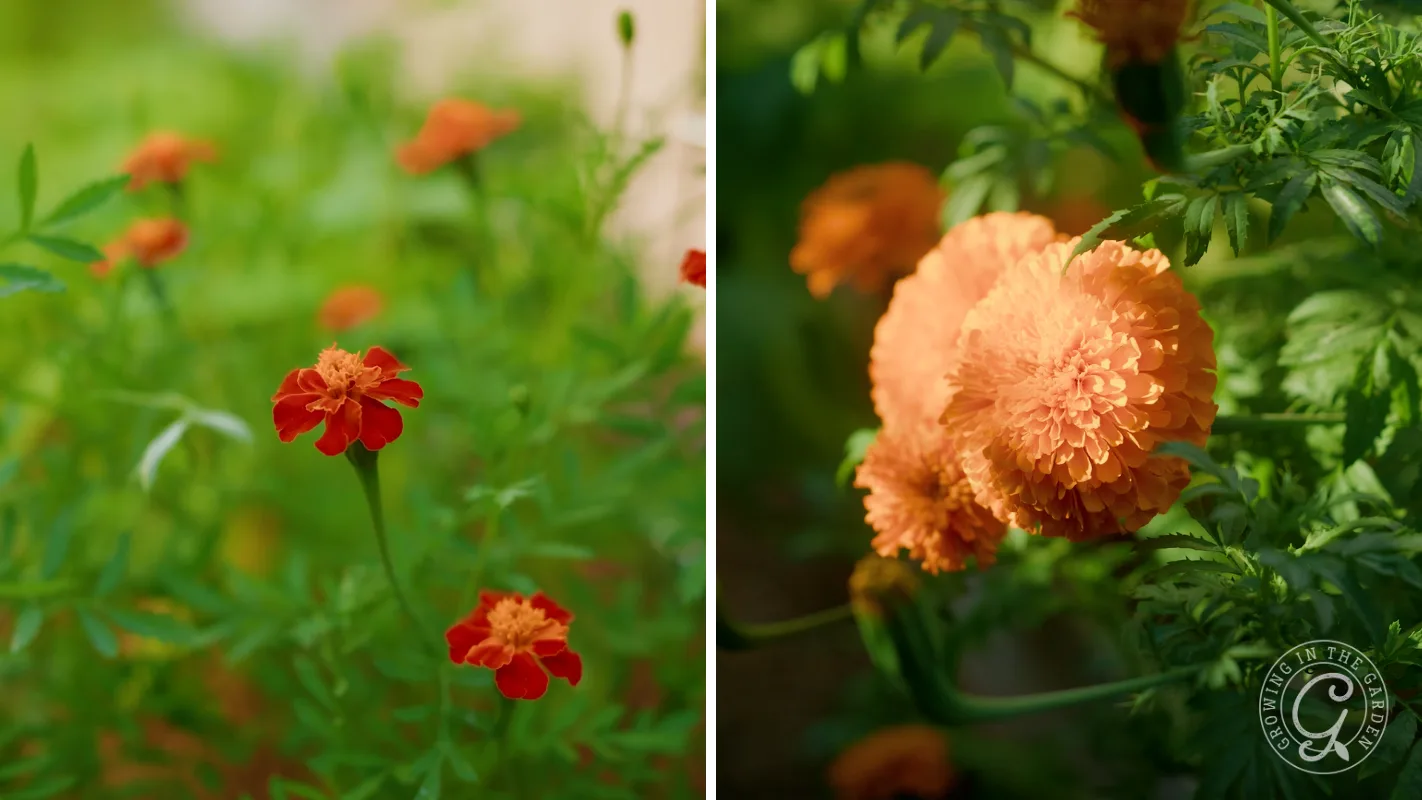
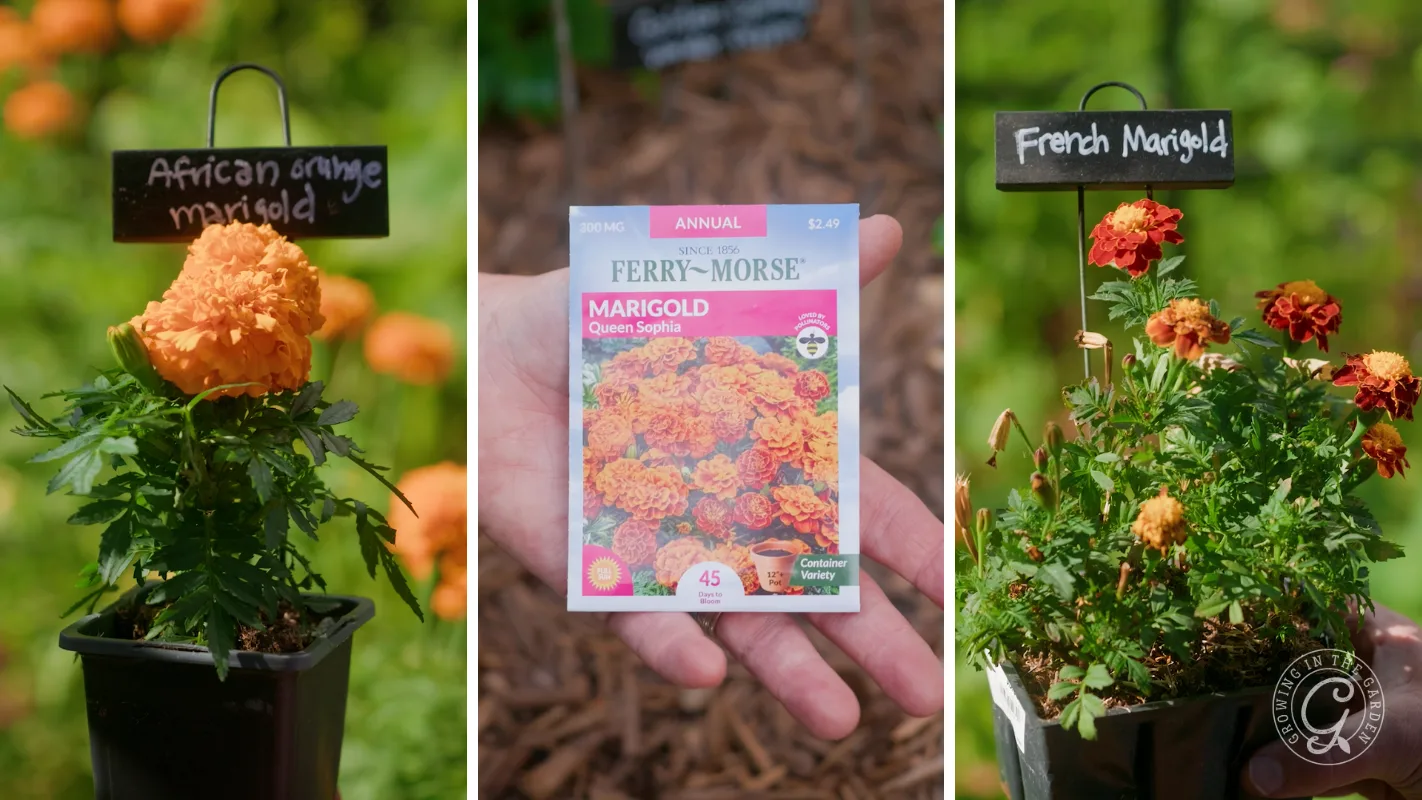
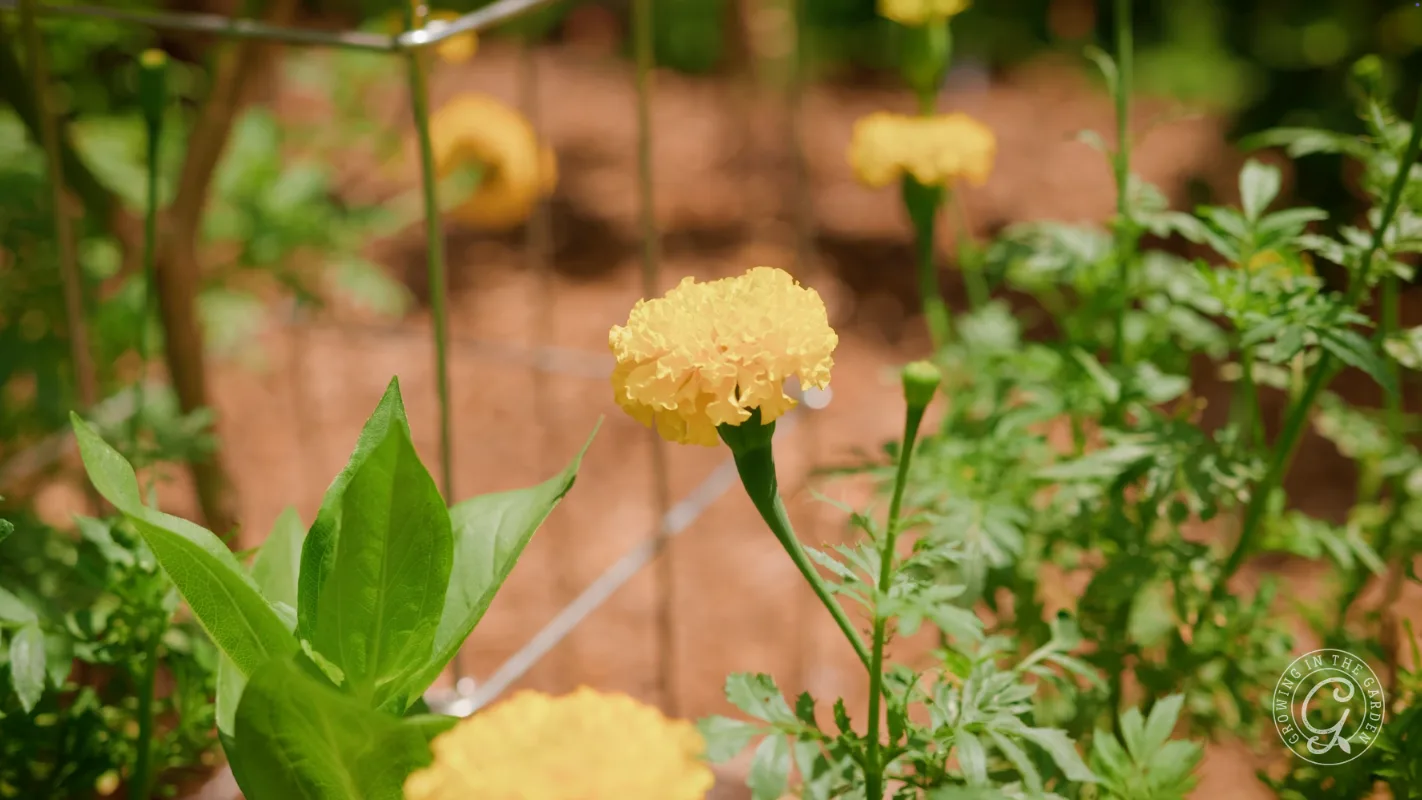
French marigolds (Tagetes patula) are the smaller, bushier type. They’re compact and easy to tuck into garden beds and containers without taking over.
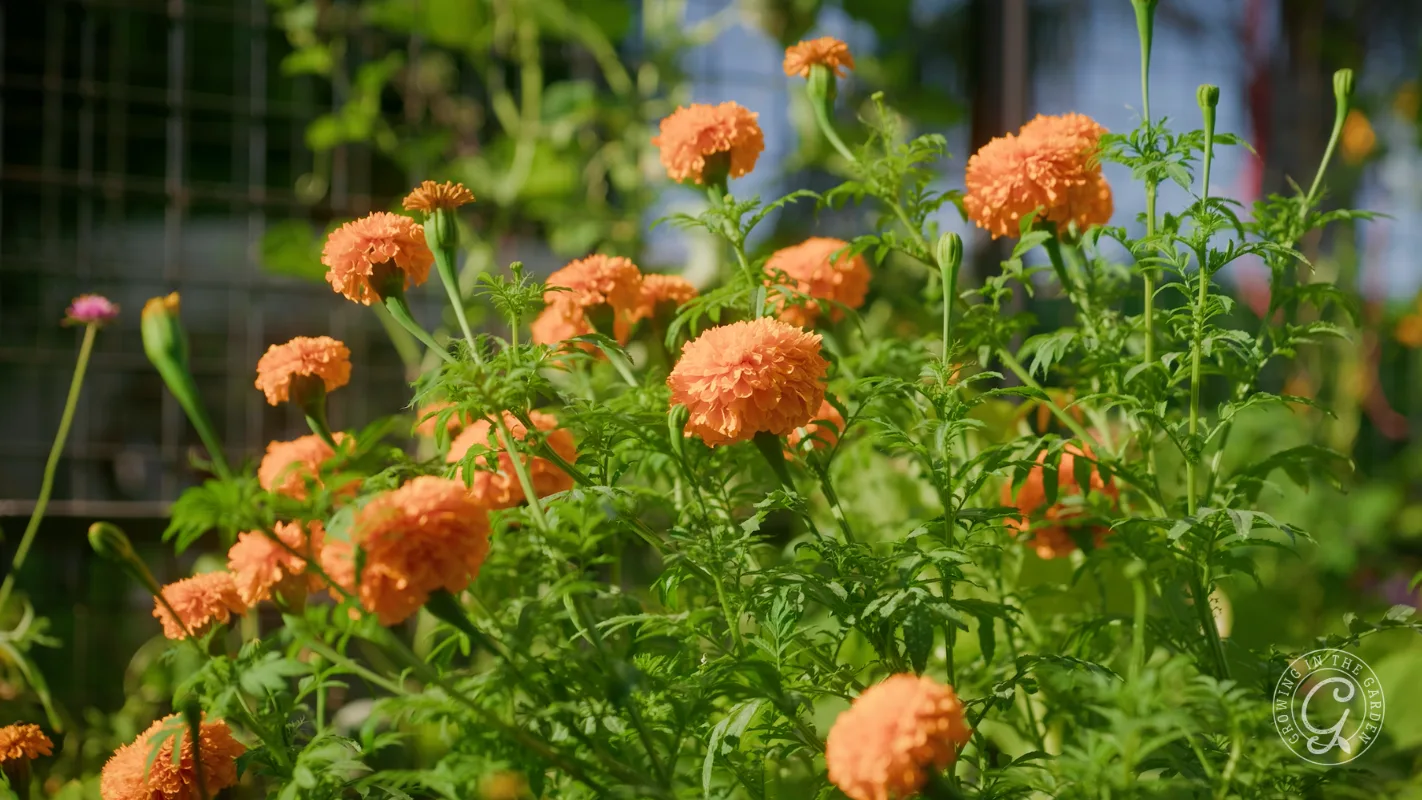
African marigolds (Tagetes erecta) grow taller and produce much larger blooms. These are the ones that make a big statement in the garden.
Check the mature size on the seed packet. If your marigolds are small and you wanted tall plants with large flowers, choose an African variety next time.
If your plants are large and leafy but aren’t producing many flowers, too much nitrogen may be the problem. Marigolds don’t need much fertilizer, and overfeeding can encourage foliage at the expense of blooms. Too little sunlight can also reduce flowering.
Which Marigold Varieties Should You Grow?
French marigolds:
- Queen Sophia stays compact, which makes it easy to tuck into the edges and corners of beds.
African marigolds:
- African Orange and Moonlight are both larger plants with substantial blooms. Moonlight is a pale lemon color and makes a better cut flower than the bright oranges.
- Mission Giant Orange Hybrid is exactly what it sounds like. It’s amazing to see how big it grows from one small seed.
Shop marigold seeds at Botanical Interests
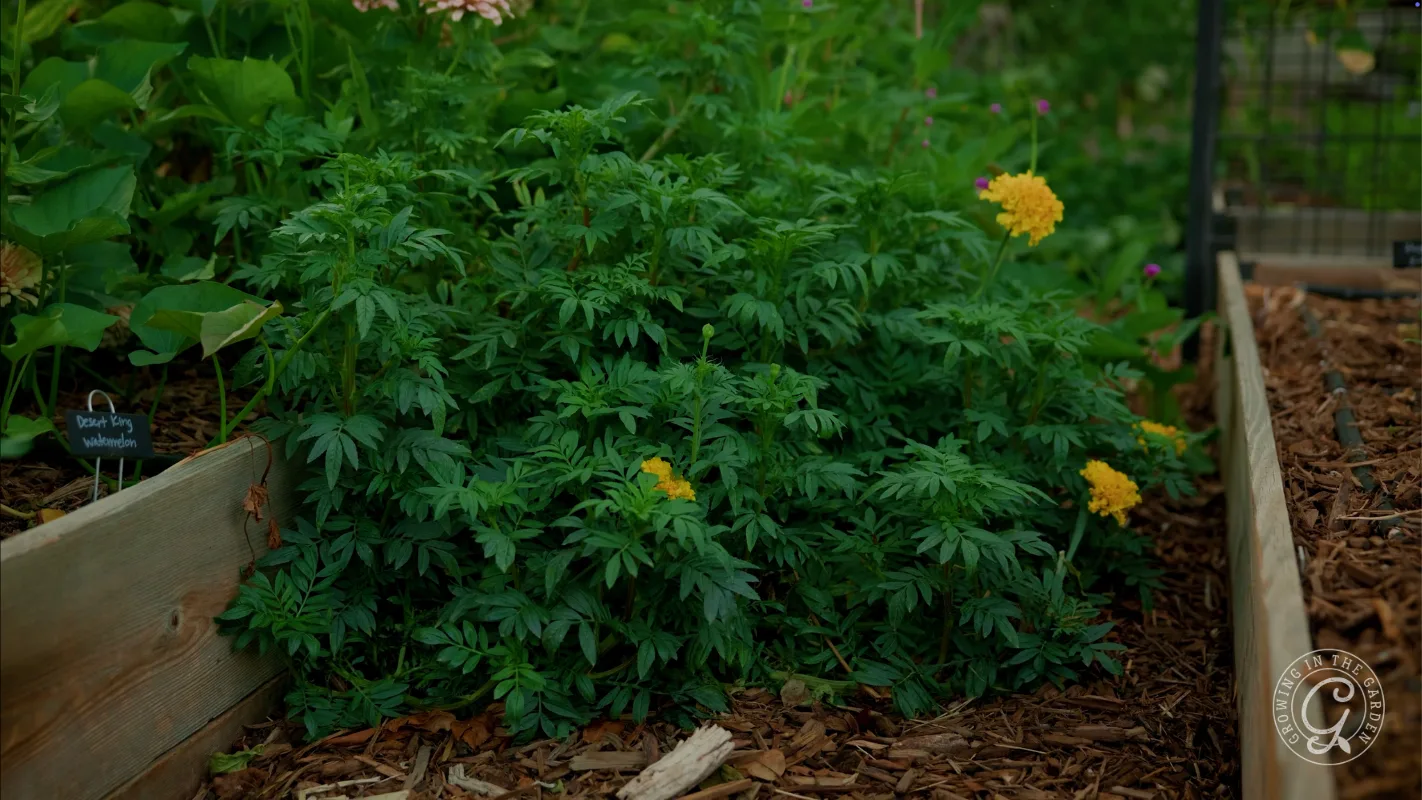
I leave a couple of empty spots in every bed for companion plants, and marigolds fill them fast. Small French types go on the edges and corners. I plant them near tomatoes, peppers, squash, and eggplant, and they do well in containers if bed space is tight.
They pair well with other flowers that like the same conditions. Put low-growing alyssum in front and taller zinnias behind. Gomphrena and strawflowers handle the same heat. For more pairings, see my guide to companion plants for warm-season gardens.
What Problems Do Marigolds Have?
Spider mites. These are the problem I run into most, and they get worse in hot, dry weather. Some varieties are especially susceptible. This guide covers how to prevent and control spider mites organically.
Thrips. Marigolds host thrips, and thrips can carry tomato spotted wilt virus to tomatoes and peppers. This guide walks through how to get rid of thrips organically if they show up.
Root rot. Marigolds will rot in consistently soggy soil. Let them dry somewhat between waterings once established.
Are Marigolds Good Cut Flowers?
The tall African types give you multiple stems per plant and work as a filler in bouquets. Varieties bred for cutting come in softer colors with a milder scent. Johnny’s Selected Seeds carries a good selection. Read this article for more flower varieties that look amazing in bouquets.
To grow marigolds as cut flowers:
- Pinch stems when they’re six inches tall for more blooms per plant.
- Harvest when flowers are halfway open.
- Strip all foliage off the main stem.
- Blooms last seven to ten days in a vase with floral preservative.
How Do You Save Marigold Seeds?
Buy one packet, and you may never need to buy marigold seeds again.
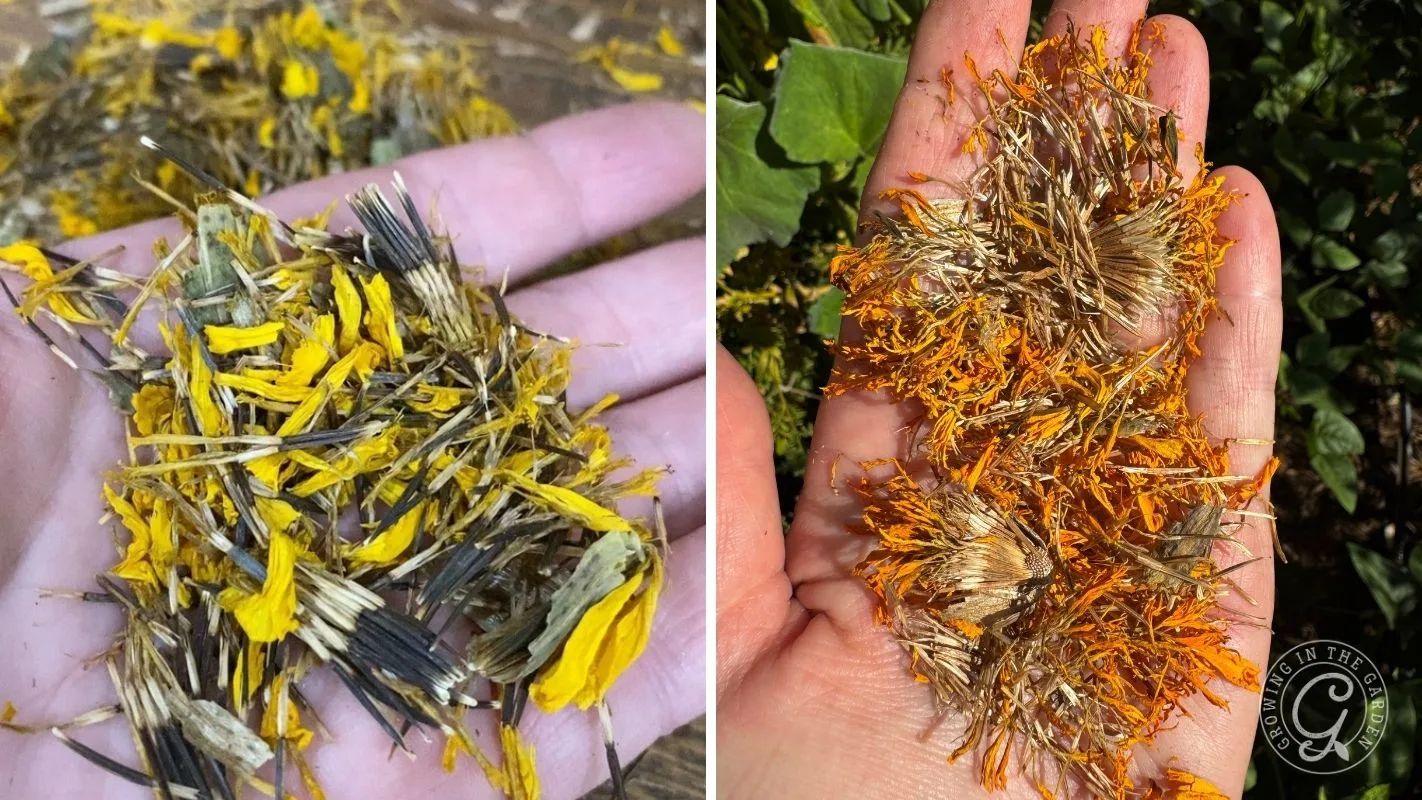
- Leave your best blooms on the plants early in the season. Don’t wait until it gets too hot; seeds may not develop properly in hot temperatures. Faded-looking seeds that aren’t dark brown or black on the bottom did not fully develop and may not be viable.
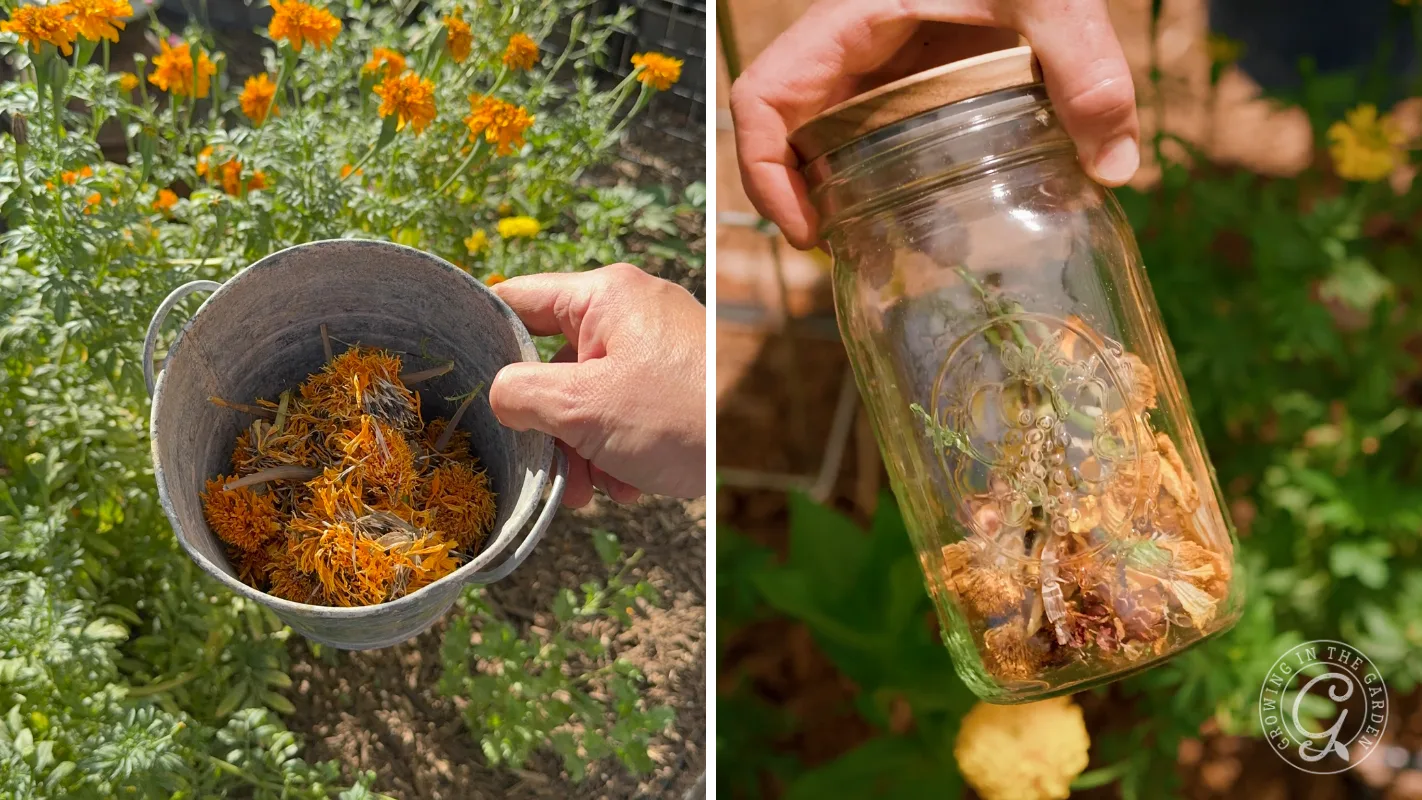
- Let them dry and turn brown on the plant. Snip the faded flowers and put them in a paper bag to finish drying.
- When they’re fully dry, crumble the heads and the seeds fall out.
- Store fully dried seeds in a glass jar. They last three to five years.
Hybrid varieties don’t always come true to type. Mission Giant Orange is a hybrid, so seed saved from it may give you something different next year. Open-pollinated varieties are more reliable if you want the same plant again. For more on this, see my guide on how to save seeds from your garden.
Sometimes I don’t bother being organized about it at all. I’ll harvest seeds and then walk around the garden tucking them into empty spots in the beds as I go.

Marigolds as Companion Plants
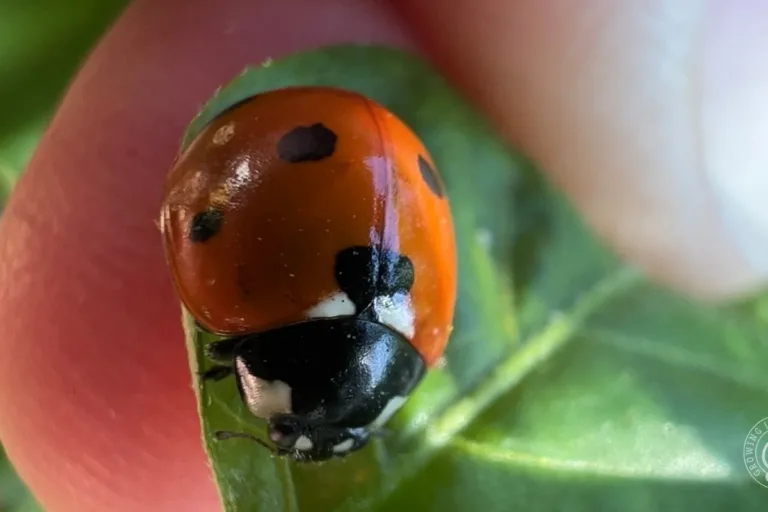
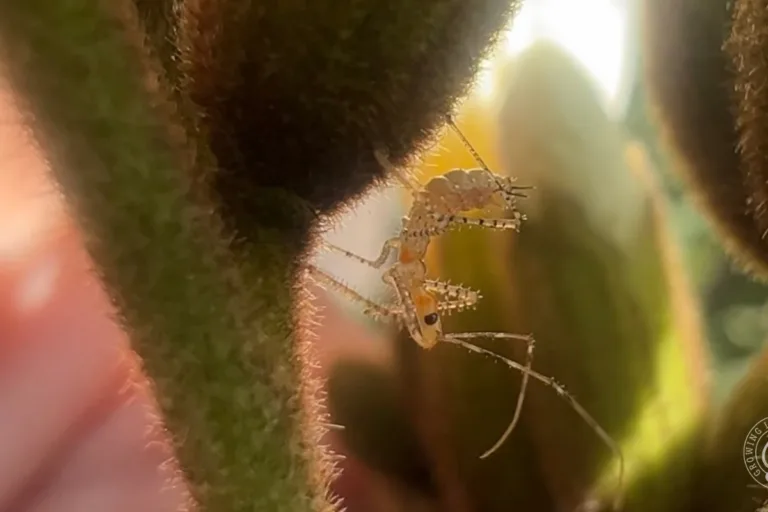
Marigolds attract syrphid flies, hoverflies, parasitic wasps, and ladybugs. Syrphid flies look like small bees, but their larvae eat aphids. Parasitic wasps go after caterpillars. When you have more of those insects around, you have more balance in your garden.
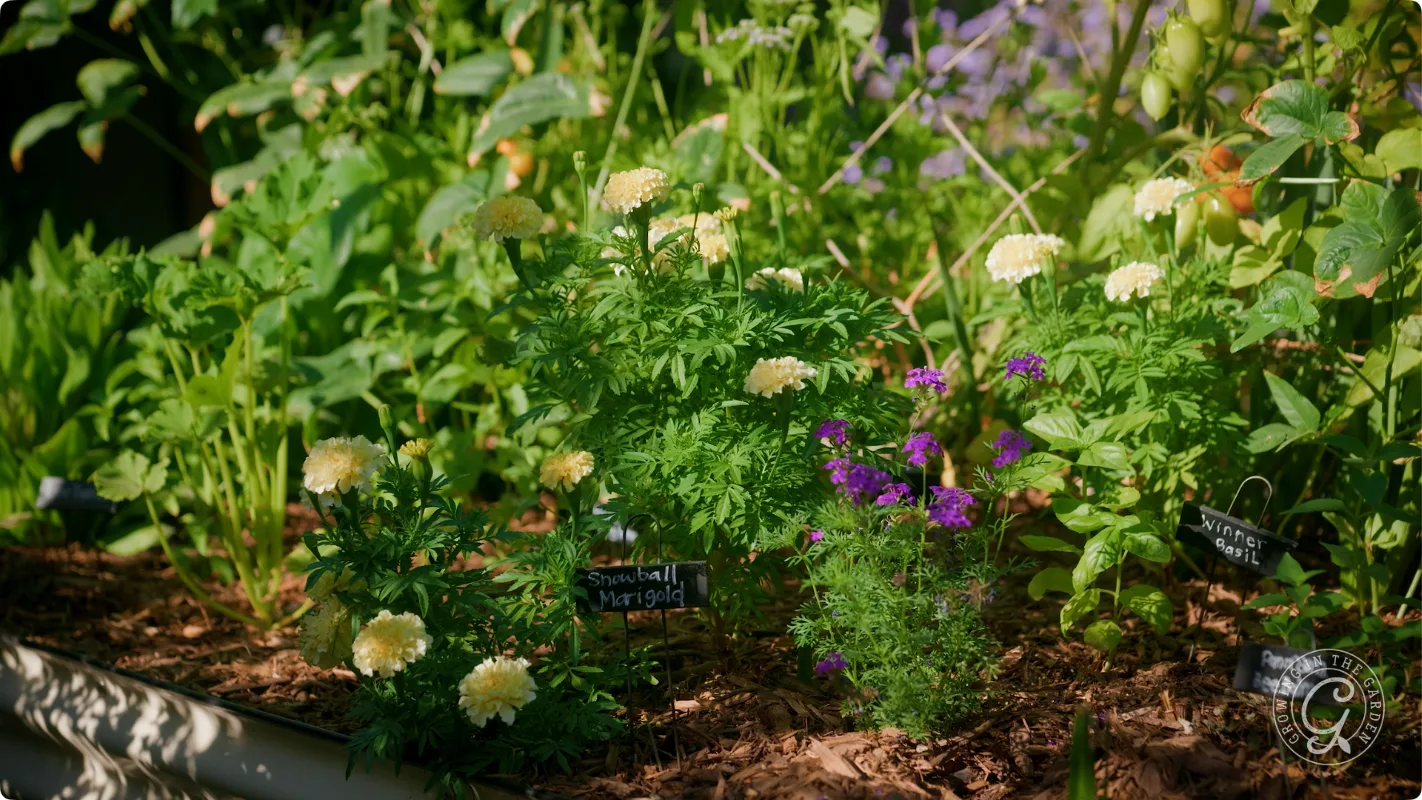
Research shows that when marigolds were grown alongside sweet peppers, parasitoid wasp numbers doubled. Marigolds planted next to onions supported a greater variety and number of parasitoids than onions grown alone. Marigolds also work as a food source that extends the life of aphid parasitoids. Once you learn to recognize that not all insects are bad, you start seeing how much work is already happening in your beds.
A 2019 study found that French marigolds planted with tomatoes slowed the buildup of whitefly populations, and identified limonene as the compound responsible. Timing is important. The marigolds had to be there from the start of the season. Adding them after whiteflies had already built up did almost nothing. That trial ran in a glasshouse rather than an open garden. Plant your marigolds early with your tomatoes. They’ll help. They won’t handle whiteflies on their own.
If whiteflies are already a problem for you, planting marigolds now won’t solve it. Use these organic methods to get rid of whiteflies in the garden instead, and plant the marigolds for next season.
What Marigolds Don’t Do
If you plant one marigold next to a tomato and expect it to handle every pest problem, you’re going to be disappointed. Just because we can smell something strongly doesn’t mean an insect can, or that it cares. Use these steps for how to get rid of aphids on garden plants when they show up.
They won’t fix poor soil or bad watering. One marigold in an otherwise empty bed won’t do what a diverse mix of vegetables, herbs, and flowers will do. Marigolds are a good addition to a healthy garden. They aren’t a shortcut to one.
Do Marigolds Get Rid of Root-Knot Nematodes?
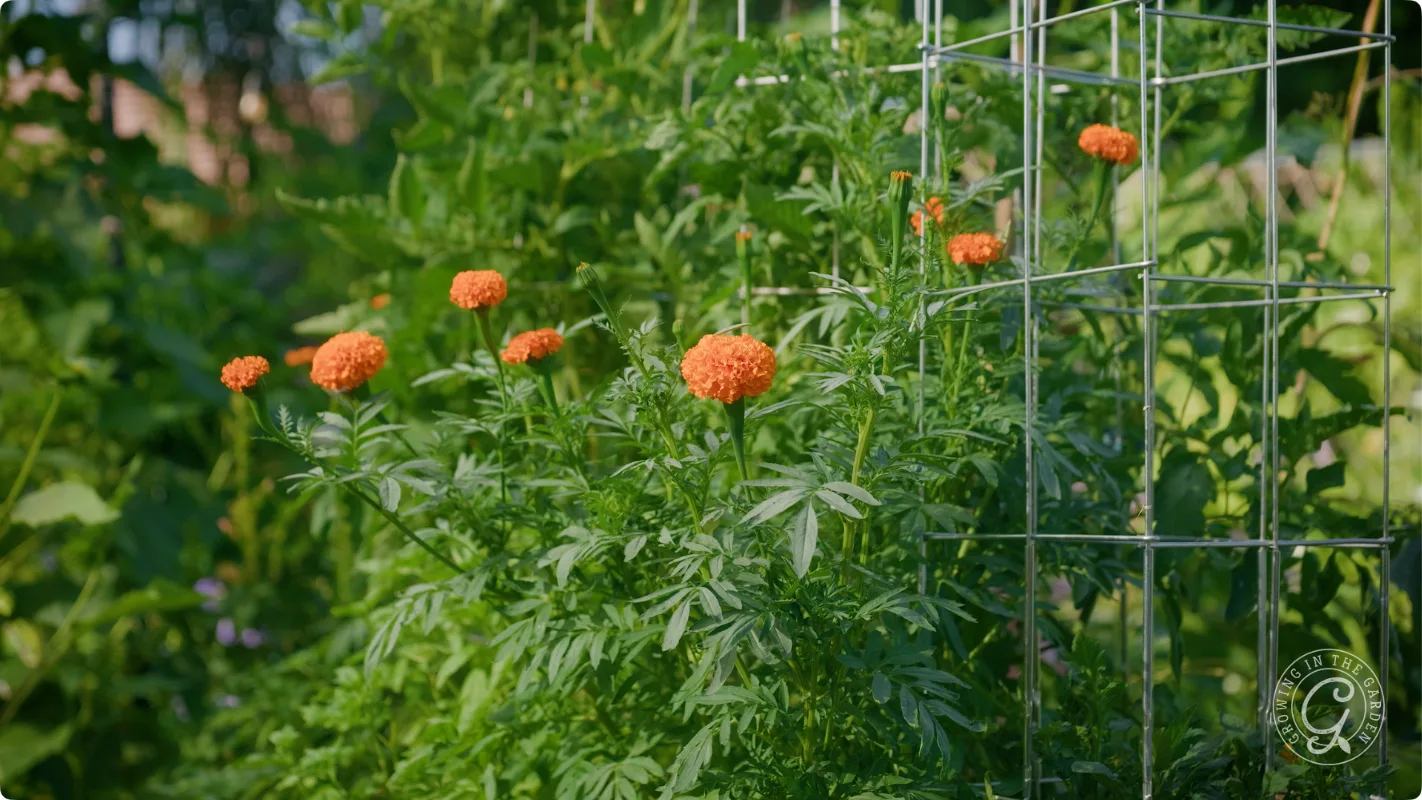
In the low desert, root-knot nematodes are a problem, especially with tomatoes, Swiss chard, and beets. I’ve had them. The tomatoes and Swiss chard in one of my beds came out with nematode damage, so this season I planted out the bed with marigolds, following the directions below.
Tucking one marigold next to a tomato does nothing. When marigolds are grown alongside vegetables, they don’t protect those crops. Marigolds don’t repel nematodes. Their roots produce a compound called alpha-terthienyl that kills nematodes once they enter the root. A nematode that goes into a marigold root gets poisoned. A nematode moving through the soil can just head for the tomato root next door instead.
How to Use Marigolds for Nematodes
You have to grow them as a cover crop in the bed where the vegetable crop will go later.
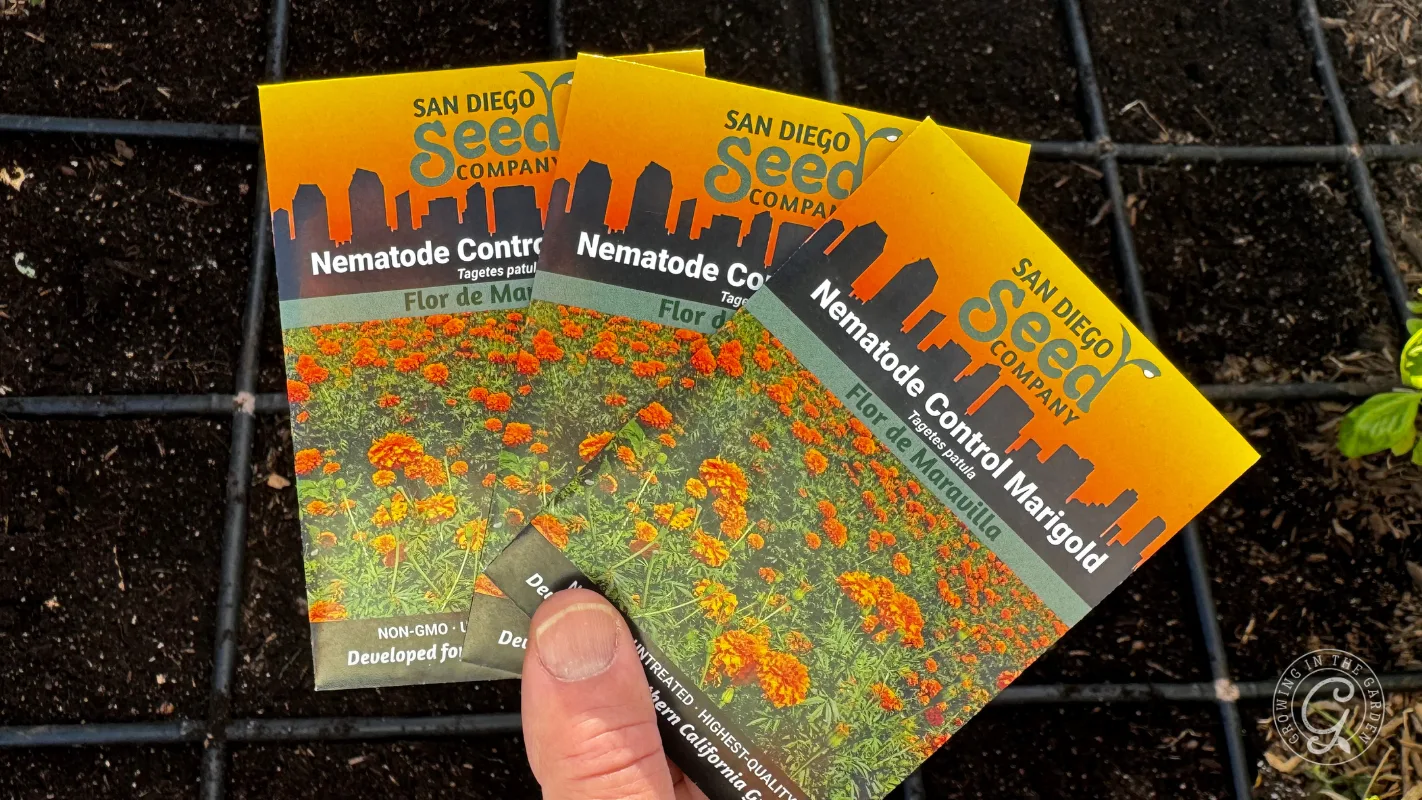
- Pick the right variety. Not all marigolds work. French marigolds (Tagetes patula) have the strongest track record against root-knot nematodes. Get seeds here. ‘Single Gold’ is the most studied. The African marigold ‘Cracker Jack’ works as a trap crop, letting nematodes into the roots but blocking their reproduction. Ordinary ornamental bedding varieties mostly haven’t been tested, so their effect is unknown.
- Plant densely. Research plantings use roughly 20 plants per square meter, which works out to about two plants per square foot. Eight inches apart gets you close. This is a solid block, not a few plants tucked into corners.
- Grow them for two to four months. The suppression happens while the roots are alive and growing. Longer is better.
- Keep the bed weeded. Nematodes survive and multiply on weed roots.
- Then plant your vegetable crop. Turning the marigolds in doesn’t add much nematicidal effect on its own, since the compounds are only strongly active in living roots. Do it for the organic matter if you want, but the work already happened.
Pay Attention to Soil Temperature
Several marigold varieties lose their effect when soil temperatures are above 86°F. ‘Cracker Jack’ only reduced root-knot nematode numbers between 50 and 86°F. Two other varieties failed completely above 86°F.
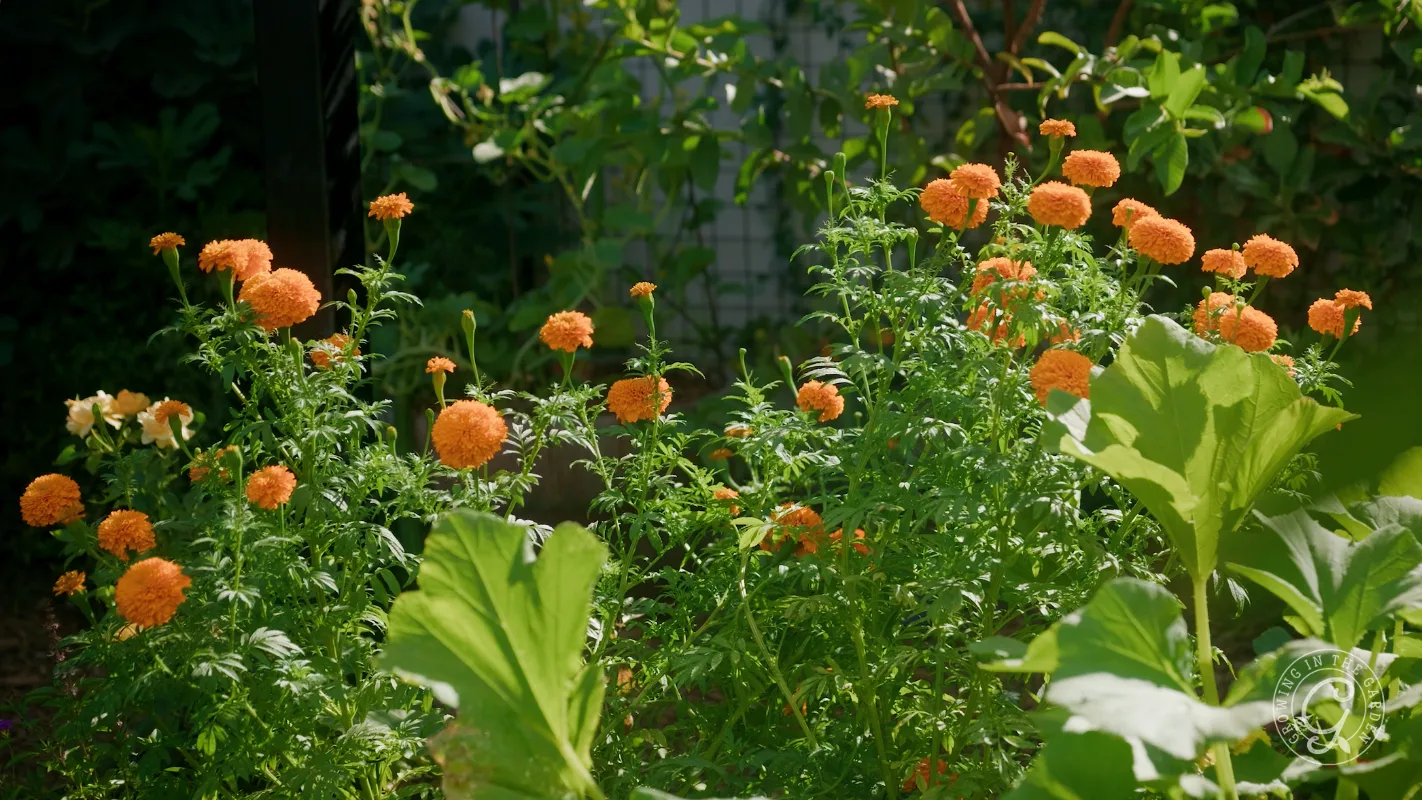
I planted my bed full of marigolds in late summer, and I’m growing them through fall. As soil temperatures drop through October and November, the planting moves into the range where the research shows the strongest effect. Then the bed is ready for a crop.
If you have root-knot nematodes, this is one of the better organic tools available.
Growing Marigolds FAQs
Marigolds are warm-season annuals. Plant after your last frost date once soil reaches 60°F. Start seeds indoors six to eight weeks before last frost, or sow directly once nights stay above 50°F. In the low desert of Arizona, plant outside February through May and again September into October.
French marigolds (Tagetes patula) are smaller and bushier, which makes them easy to tuck into beds and containers. African marigolds (Tagetes erecta) grow taller with much larger blooms. Check the mature size on the seed packet.
They’re tougher than many annuals, but heat-tolerant is not the same as heat-proof. In the low desert, some plants decline or die during the hottest part of summer, while plants with afternoon shade usually last longer.
Yes. Leave your best blooms on the plant to dry and turn brown, snip them, finish drying them in a paper bag. Store them in a glass jar, and they’ll last three to five years. Hybrid varieties may not grow true to type. Seeds don’t develop well in extreme heat, so save seed in spring or fall rather than midsummer.
Not most of the ones they’re recommended for. What marigolds do well is bring in beneficial insects like hoverflies and parasitic wasps, and one study found French marigolds slowed whitefly buildup on tomatoes when planted from the start of the season.
Only when grown as a cover crop. Planting one marigold next to a tomato does nothing. Marigold roots kill nematodes that enter them, so nematodes simply move to the vegetable roots nearby instead. To suppress nematodes, plant French marigolds densely at about two plants per square foot in the bed where your crop will go, grow them for two to four months, keep the bed weeded, then plant your vegetables.
Some do. Many modern cultivars have been bred for large double flower heads, and the pollen and nectar in those blooms are harder for bees to reach. Single-flowered varieties closer to the wild species are a better choice for pollinators.
Sources
- Conboy, N.J., et al. (2019). Companion planting with French marigolds protects tomato plants from glasshouse whiteflies through the emission of airborne limonene. PLOS ONE.
- Wang, K-H., Hooks, C.R.R., and Ploeg, A. (2007). Protecting Crops from Nematode Pests: Using Marigold as an Alternative to Chemical Nematicides. University of Hawai’i at Manoa, PD-35.
- Marigolds (Tagetes spp.) for Nematode Management. University of Florida IFAS Extension, ENY-056.
- Latheef, M.A. and Irwin, R.D. (1979). The effect of companionate planting on lepidopteran pests of cabbage. The Canadian Entomologist.


Hello, I was wondering when and how to plant marigolds so that I have cut flowers for Dia De Los Muertos in Phx az on Nov. 1st and 2nd?
I’d get them planted as soon as possible. You should have blooms by then. Look at the days to bloom number on the seed packet to get an idea how long different varieties take. You could also buy transplants. They should be still be blooming by then as well.